

Hepatic estrogen receptor α is critical for regulation of gluconeogenesis and lipid metabolism in males
Open accessThe DOI matches its Crossref record; 55 of the 55 references it cites were found in a registry or an index.
Abstract
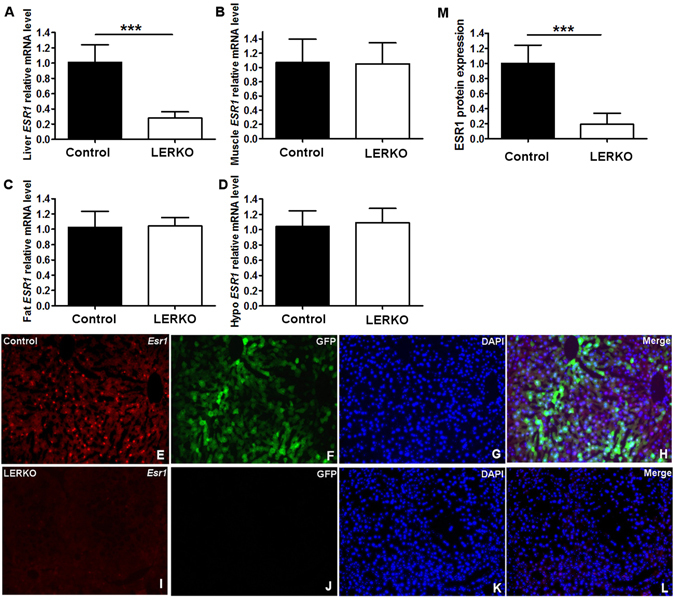
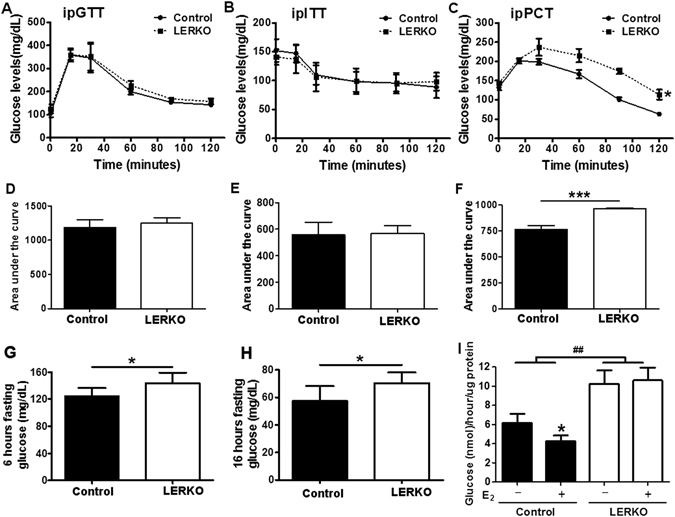
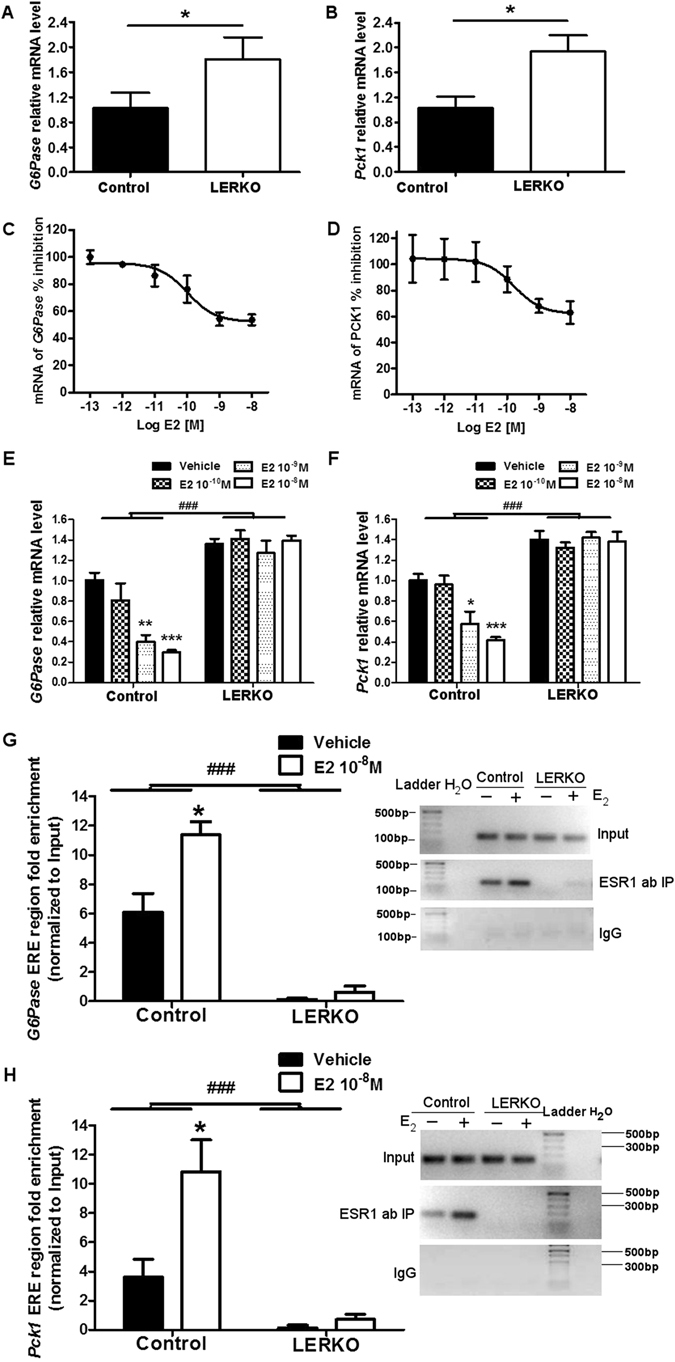
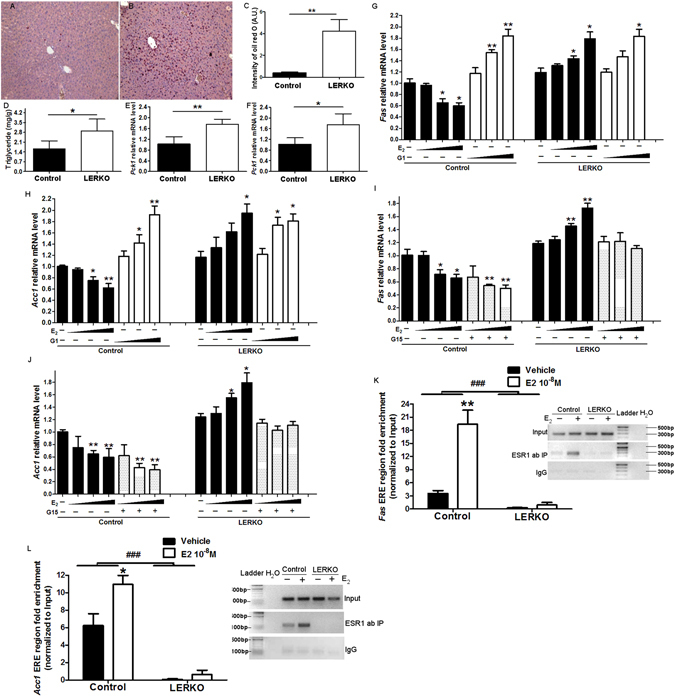
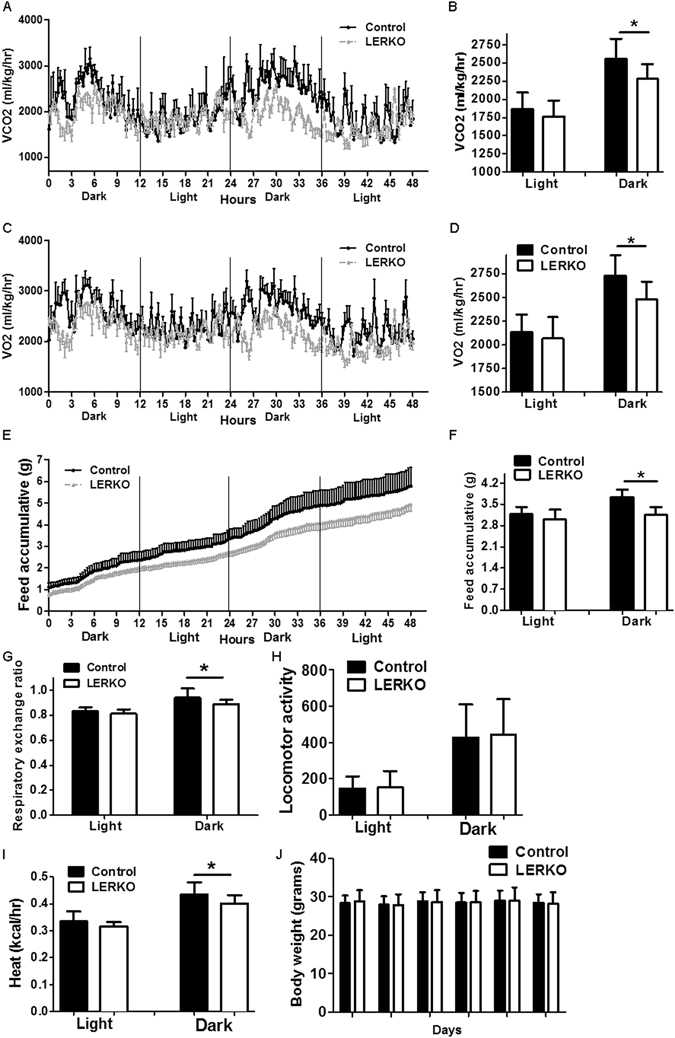
Impaired estrogens action is associated with features of the metabolic syndrome in animal models and humans. We sought to determine whether disruption of hepatic estrogens action in adult male mice could recapitulate aspects of the metabolic syndrome to understand the mechanistic basis for the phenotype. We found 17β-estradiol (E 2) inhibited hepatic gluconeogenic genes such as phosphoenolpyruvate carboxykinase 1 (Pck-1) and glucose 6-phosphatase (G6Pase) and this effect was absent in mice lacking l iver e strogen r eceptor α (Esr1) (LERKO mice). Male LERKO mice displayed elevated hepatic gluconeogenic activity and fasting hyperglycemia. We also observed increased liver lipid deposits and triglyceride levels in male LERKO mice, resulting from increased hepatic lipogenesis as reflected by increased mRNA levels of fatty acid synthase (Fas) and acetyl-CoA carboxylase (Acc1). ChIP assay demonstrated estradiol (E 2) induced ESR1 binding to Pck-1, G6Pase, Fas and Acc1 promoters. Metabolic phenotyping demonstrated both basal metabolic rate and feeding were lower for the LERKO mice as compared to Controls. Furthermore, the respiratory exchange rate was significantly lower in LERKO mice than in Controls, suggesting an increase in lipid oxidation. Our data indicate that hepatic E 2/ESR1 signaling plays a key role in the maintenance of gluconeogenesis and lipid metabolism in males.
Overview
The claims and statistics of this paper haven’t been checked yet.
Free: it reads the open-access text and checks the first 5 claims that cite a source we can check. Create a free account to check every claim.
Integrity signals
Registry
Cites
Statistics
Figures
Verification
Claims the paper makes
The claims and statistics of this paper haven’t been checked yet.
Free: it reads the open-access text and checks the first 5 claims that cite a source we can check. Create a free account to check every claim.
Claims other papers make about this one
Each is checked against this paper’s own text: does it say what the citing paper says it does?
The source backs part of the claim, not all of it — or backs it for a different population, condition or comparison.
In the citing paper
“Loss of ERα in hepatocytes appears to impair glucose tolerance and increase lipid accumulation in the liver, worsening adiposity and IR in both male and female mice, with one study reporting a greater effect in female mice (158, 159).”
From Metabolic impact of endogenously produced estrogens by adipose tissue in females and males across the lifespan (2025) · cites this paper as [159]
Experimental — accuracy not yet measuredThe check wasn’t confident either way, so it gives no verdict — never disputed.
In the citing paper
“Orally ingested estrogens have also been reported to induce acute cholestasis, causing a decrease in bile flux which is detrimental to cholesterol homeostasis (159).”
From Metabolic impact of endogenously produced estrogens by adipose tissue in females and males across the lifespan (2025) · cites this paper as [159]
Experimental — accuracy not yet measured
Self-check
Percentages, sums and reported differences re-computed from the paper’s own numbers.
The self-check needs the paper’s full text.
Citations
Cites
A SIMPLE METHOD FOR THE ISOLATION AND PURIFICATION OF TOTAL LIPIDES FROM ANIMAL TISSUES
Folch, J., Lees, M., & Stanley, G. H. S. (1957) · Journal of Biological Chemistry · doi:10.1016/s0021-9258(18)64849-5 · Cited by 65,189
A transmembrane intracellular estrogen receptor mediates rapid cell signaling
Revankar, C. M., Cimino, D. F., Sklar, L. A., Arterburn, J. B., & Prossnitz, E. R. (2005) · Science · doi:10.1126/science.1106943 · Cited by 2,302
Nonalcoholic Fatty Liver Disease: A Systematic Review
Rinella, M. E. (2015) · JAMA · doi:10.1001/jama.2015.5370 · Cited by 2,267
Ding, E. L., Song, Y., Malik, V. S., & Liu, S. (2006) · JAMA · doi:10.1001/jama.295.11.1288 · Cited by 1,354
Griffin, M. E., Marcucci, M. J., Cline, G. W., Bell, K., Barucci, N., Lee, D., Goodyear, L. J., Kraegen, E. W., White, M. F., & Shulman, G. I. (1999) · Diabetes · doi:10.2337/diabetes.48.6.1270 · Cited by 1,267
The role of hepatic lipids in hepatic insulin resistance and type 2 diabetes
Perry, R. J., Samuel, V. T., Petersen, K. F., & Shulman, G. I. (2014) · Nature · doi:10.1038/nature13478 · Cited by 1,136
Aromatase-deficient (ArKO) mice have a phenotype of increased adiposity
Jones, M. E. E., Thorburn, A. W., Britt, K. L., Hewitt, K. N., Wreford, N. G., Proietto, J., Oz, O. K., Leury, B. J., Robertson, K. M., Yao, S., et al. (2000) · Proceedings of the National Academy of Sciences · doi:10.1073/pnas.97.23.12735 · Cited by 729
Estrogen deficiency induces bone loss by enhancing T-cell production of TNF-α
Cenci, S., Weitzmann, M. N., Roggia, C., Namba, N., Novack, D., Woodring, J., & Pacifici, R. (2000) · Journal of Clinical Investigation · doi:10.1172/jci11066 · Cited by 705
Distinct Hypothalamic Neurons Mediate Estrogenic Effects on Energy Homeostasis and Reproduction
Xu, Y., Nedungadi, T. P., Zhu, L., Sobhani, N., Irani, B. G., Davis, K. E., Zhang, X., Zou, F., Gent, L. M., Hahner, L. D., et al. (2011) · Cell Metabolism · doi:10.1016/j.cmet.2011.08.009 · Cited by 597
Estrogen Regulation of Growth Hormone Action
Leung, K.-C., Johannsson, G., Leong, G. M., & Ho, K. K. Y. (2004) · Endocrine Reviews · doi:10.1210/er.2003-0035 · Cited by 542
Khan, D., & Ansar Ahmed, S. (2016) · Frontiers in Immunology · doi:10.3389/fimmu.2015.00635 · Cited by 454
Fatty acid synthase and liver triglyceride metabolism: Housekeeper or messenger?
Jensen-Urstad, A. P. L., & Semenkovich, C. F. (2012) · Biochimica et Biophysica Acta (BBA) - Molecular and Cell Biology of Lipids · doi:10.1016/j.bbalip.2011.09.017 · Cited by 406
Estrogen biology: New insights into GPER function and clinical opportunities
Prossnitz, E. R., & Barton, M. (2014) · Molecular and Cellular Endocrinology · doi:10.1016/j.mce.2014.02.002 · Cited by 400
Human fatty acid synthesis is stimulated by a eucaloric low fat, high carbohydrate diet.
Hudgins, L. C., Hellerstein, M., Seidman, C., Neese, R., Diakun, J., & Hirsch, J. (1996) · Journal of Clinical Investigation · doi:10.1172/jci118645 · Cited by 361
Stubbins, R. E., Holcomb, V. B., Hong, J., & Núñez, N. P. (2012) · European Journal of Nutrition · doi:10.1007/s00394-011-0266-4 · Cited by 346
Zhu, L., Brown, W. C., Cai, Q., Krust, A., Chambon, P., McGuinness, O. P., & Stafford, J. M. (2013) · Diabetes · doi:10.2337/db11-1718 · Cited by 326
GPR30 Does Not Mediate Estrogenic Responses in Reproductive Organs in Mice
Otto, C., Fuchs, I., Kauselmann, G., Kern, H., Zevnik, B., Andreasen, P., Schwarz, G., Altmann, H., Klewer, M., Schoor, M., et al. (2009) · Biology of Reproduction · doi:10.1095/biolreprod.108.071175 · Cited by 278
Ribas, V., Drew, B. G., Zhou, Z., Phun, J., Kalajian, N. Y., Soleymani, T., Daraei, P., Widjaja, K., Wanagat, J., de Aguiar Vallim, T. Q., et al. (2016) · Science Translational Medicine · doi:10.1126/scitranslmed.aad3815 · Cited by 259
CREB and FoxO1: two transcription factors for the regulation of hepatic gluconeogenesis
Oh, K.-J., Han, H.-S., Kim, M.-J., & Koo, S.-H. (2013) · BMB Reports · doi:10.5483/bmbrep.2013.46.12.248 · Cited by 222
Chan, Q. K. Y., Lam, H.-M., Ng, C.-F., Lee, A. Y. Y., Chan, E. S. Y., Ng, H.-K., Ho, S.-M., & Lau, K.-M. (2010) · Cell Death & Differentiation · doi:10.1038/cdd.2010.20 · Cited by 210
Sharma, G., Hu, C., Brigman, J. L., Zhu, G., Hathaway, H. J., & Prossnitz, E. R. (2013) · Endocrinology · doi:10.1210/en.2013-1357 · Cited by 210
Klair, J. S., Yang, J. D., Abdelmalek, M. F., Guy, C. D., Gill, R. M., Yates, K., Unalp‐Arida, A., Lavine, J. E., Clark, J. M., Diehl, A. M., et al. (2016) · Hepatology · doi:10.1002/hep.28514 · Cited by 201
Torre, S. D., Rando, G., Meda, C., Stell, A., Chambon, P., Krust, A., Ibarra, C., Magni, P., Ciana, P., & Maggi, A. C. (2011) · Cell Metabolism · doi:10.1016/j.cmet.2011.01.002 · Cited by 157
Wu, M. S., Singh, S. B., Wang, J., Chung, C. C., Salituro, G., Karanam, B. V., Lee, S. H., Powles, M., Ellsworth, K. P., Lassman, M. E., et al. (2011) · Proceedings of the National Academy of Sciences · doi:10.1073/pnas.1002588108 · Cited by 156
Genome-Wide Identification of Estrogen Receptor α-Binding Sites in Mouse Liver
Gao, H., Fält, S., Sandelin, A., Gustafsson, J.-A., & Dahlman-Wright, K. (2008) · Molecular Endocrinology · doi:10.1210/me.2007-0121 · Cited by 153
An Essential Role for Liver ERα in Coupling Hepatic Metabolism to the Reproductive Cycle
Della Torre, S., Mitro, N., Fontana, R., Gomaraschi, M., Favari, E., Recordati, C., Lolli, F., Quagliarini, F., Meda, C., Ohlsson, C., et al. (2016) · Cell Reports · doi:10.1016/j.celrep.2016.03.019 · Cited by 152
Estrogen signaling prevents diet-induced hepatic insulin resistance in male mice with obesity
Zhu, L., Martinez, M. N., Emfinger, C. H., Palmisano, B. T., & Stafford, J. M. (2014) · American Journal of Physiology-Endocrinology and Metabolism · doi:10.1152/ajpendo.00579.2013 · Cited by 130
Hsieh, Y.-C., Yu, H.-P., Frink, M., Suzuki, T., Choudhry, M. A., Schwacha, M. G., & Chaudry, I. H. (2007) · American Journal Of Pathology · doi:10.2353/ajpath.2007.060883 · Cited by 112
Cheung, K. K. T., Luk, A. O. Y., So, W. Y., Ma, R. C. W., Kong, A. P. S., Chow, F. C. C., & Chan, J. C. N. (2015) · Journal of Diabetes Investigation · doi:10.1111/jdi.12288 · Cited by 102
Singh, S. P., Wolfe, A., Ng, Y., DiVall, S. A., Buggs, C., Levine, J. E., Wondisford, F. E., & Radovick, S. (2009) · Biology of Reproduction · doi:10.1095/biolreprod.108.075259 · Cited by 99
Self-citationUpregulation of miR-125b by estrogen protects against non-alcoholic fatty liver in female mice
Zhang, Z.-C., Liu, Y., Xiao, L., Li, S.-F., Jiang, J.-H., Zhao, Y., Qian, S.-W., Tang, Q.-Q., & Li, X. (2015) · Journal of Hepatology · doi:10.1016/j.jhep.2015.07.037 · Cited by 98
Sárvári, M., Hrabovszky, E., Kalló, I., Solymosi, N., Tóth, K., Likó, I., Széles, J., Mahó, S., Molnár, B., & Liposits, Z. (2011) · Journal of Neuroinflammation · doi:10.1186/1742-2094-8-82 · Cited by 78
Estrogen Signalling and the Metabolic Syndrome: Targeting the Hepatic Estrogen Receptor Alpha Action
Matic, M., Bryzgalova, G., Gao, H., Antonson, P., Humire, P., Omoto, Y., Portwood, N., Pramfalk, C., Efendić, S., Berggren, P., et al. (2013) · PLoS ONE · doi:10.1371/journal.pone.0057458 · Cited by 72
The roles of membrane estrogen receptor subtypes in modulating dopamine transporters in PC‐12 cells
Alyea, R. A., Laurence, S. E., Kim, S. H., Katzenellenbogen, B. S., Katzenellenbogen, J. A., & Watson, C. S. (2008) · Journal of Neurochemistry · doi:10.1111/j.1471-4159.2008.05491.x · Cited by 71
Lundholm, L., Bryzgalova, G., Gao, H., Portwood, N., Fält, S., Berndt, K. D., Dicker, A., Galuska, D., Zierath, J. R., Gustafsson, J.-Å., et al. (2008) · Journal of Endocrinology · doi:10.1677/joe-08-0192 · Cited by 70
Both Estrogen Receptor α and β Stimulate Pituitary GH Gene Expression
Avtanski, D., Novaira, H. J., Wu, S., Romero, C. J., Kineman, R., Luque, R. M., Wondisford, F., & Radovick, S. (2014) · Molecular Endocrinology · doi:10.1210/me.2013-1245 · Cited by 65
Bedogni, G., Gastaldelli, A., Manco, M., Col, A. D., Agosti, F., Tiribelli, C., & Sartório, A. (2010) · Nutrition Metabolism and Cardiovascular Diseases · doi:10.1016/j.numecd.2010.05.003 · Cited by 61
Estradiol, SHBG and leptin interplay with food craving and intake across the menstrual cycle
Krishnan, S., Tryon, R. R., Horn, W. F., Welch, L., & Keim, N. L. (2016) · Physiology & Behavior · doi:10.1016/j.physbeh.2016.08.010 · Cited by 60
Hamilton, D. J., Minze, L. J., Kumar, T., Cao, T. N., Lyon, C. J., Geiger, P. C., Hsueh, W. A., & Gupte, A. A. (2016) · Physiological Reports · doi:10.14814/phy2.12913 · Cited by 55
Estrogens exert a rapid apoptotic action in anterior pituitary cells
Zárate, S., Jaita, G., Zaldivar, V., Radl, D. B., Eijo, G., Ferraris, J., Pisera, D. A., & Seilicovich, A. (2009) · American Journal of Physiology-Endocrinology and Metabolism · doi:10.1152/ajpendo.90785.2008 · Cited by 50
Coyoy-Salgado, A., Guerra‐Araiza, C., & Camacho‐Arroyo, I. (2016) · Hormone and Metabolic Research · doi:10.1055/s-0042-110320 · Cited by 50
Hussain, Y., Ding, Q., Connelly, P. W., Brunt, J. H., Ban, M. R., McIntyre, A. D., Huff, M. W., Gros, R., Hegele, R. A., & Feldman, R. D. (2015) · Arteriosclerosis, Thrombosis, and Vascular Biology · doi:10.1161/atvbaha.114.304326 · Cited by 50
Transcriptional Co-activator p300 Maintains Basal Hepatic Gluconeogenesis
He, L., Naik, K., Meng, S., Cao, J., Sidhaye, A. R., Ma, A., Radovick, S., & Wondisford, F. E. (2012) · Journal of Biological Chemistry · doi:10.1074/jbc.m112.385864 · Cited by 49
Estrogen receptor alpha gene variants associate with type 2 diabetes and fasting plasma glucose
Dahlman, I. A., Vaxillaire, M., Nilsson, M., Lecœur, C., Gu, H. F., Cavalcanti-Proença, C., Efendić, S., Östenson, C. G., Brismar, K., Charpentier, G., et al. (2008) · Pharmacogenetics and Genomics · doi:10.1097/fpc.0b013e32831101ef · Cited by 48
Loss of Adipose Fatty Acid Oxidation Does Not Potentiate Obesity at Thermoneutrality
Lee, J., Choi, J., Aja, S. M., Scafidi, S., & Wolfgang, M. J. (2016) · Cell Reports · doi:10.1016/j.celrep.2016.01.029 · Cited by 48
Sárvári, M., Deli, L., Kocsis, P., Márk, L., Maász, G., Hrabovszky, E., Kalló, I., Gajári, D., Vastagh, C., Sümegi, B., et al. (2014) · Brain Research · doi:10.1016/j.brainres.2014.06.020 · Cited by 47
Sárvári, M., Kalló, I., Hrabovszky, E., Solymosi, N., Rodolosse, A., & Liposits, Z. (2016) · Frontiers in Cellular Neuroscience · doi:10.3389/fncel.2016.00149 · Cited by 47
Neto, J. M., Gordinho, L., Belda, E. J., Marín, M., Monrós, J. S., Fearon, P., & Crates, R. (2013) · PLoS ONE · doi:10.1371/journal.pone.0063248 · Cited by 45
Chen, H., Hu, B., Gacad, M. A., & Adams, J. S. (1998) · Journal of Biological Chemistry · doi:10.1074/jbc.273.47.31352 · Cited by 40
Gallagher, C. J., Keene, K. L., Mychaleckyj, J. C., Langefeld, C. D., Hirschhorn, J. N., Henderson, B. E., Gordon, C. J., Freedman, B. I., Rich, S. S., Bowden, D. W., et al. (2007) · Diabetes · doi:10.2337/db06-0303 · Cited by 35
Keene, K. L., Mychaleckyj, J. C., Smith, S. G., Leak, T. S., Perlegas, P. S., Langefeld, C. D., Herrington, D. M., Freedman, B. I., Rich, S. S., Bowden, D. W., et al. (2008) · Human Genetics · doi:10.1007/s00439-008-0482-z · Cited by 31
Sexual dimorphism in the glucose homeostasis phenotype of the Aromatase Knockout (ArKO) mice
Sinderen, M. L. V., Steinberg, G. R., Jørgensen, S. B., Honeyman, J. E., Chow, J. D. Y., Simpson, E. R., Jones, M. E. E., & Boon, W. C. (2016) · The Journal of Steroid Biochemistry and Molecular Biology · doi:10.1016/j.jsbmb.2016.05.013 · Cited by 24
Efstathiadou, Z. A., Sakka, C., Pοlyzos, S. A., Goutou, M., Stakias, N., Bargiota, Α., & KOUKOULIS, G. N. (2015) · Metabolism · doi:10.1016/j.metabol.2015.01.006 · Cited by 22
Bedogni, G., Gastaldelli, A., Tiribelli, C., Agosti, F., Col, A. D., Fessehatsion, R., & Sartório, A. (2014) · Journal of Endocrinological Investigation · doi:10.1007/s40618-014-0101-x · Cited by 16
Huang, Z., Liu, J., Ma, L., Wan, X., He, X., Fang, D., Liao, Z., & Li, Y. (2013) · Hormone and Metabolic Research · doi:10.1055/s-0033-1357193 · Cited by 8
Cited by
Yan, H., Yang, W., Zhou, F., Li, X., Pan, Q., Shen, Z., Han, G., Newell-Fugate, A., Tian, Y., Majeti, R., et al. (2019) · Diabetes · doi:10.2337/db18-0638 · Cited by 338
“6A), and expression of G6pc and Pck1 (Fig.”
BackgroundInfluentialThe Role of Estrogen in Insulin Resistance
De Paoli, M., Zakharia, A., & Werstuck, G. H. (2021) · The American Journal of Pathology · doi:10.1016/j.ajpath.2021.05.011 · Cited by 290
Estrogen as a key regulator of energy homeostasis and metabolic health
Mahboobifard, F., Pourgholami, M. H., Jorjani, M., Dargahi, L., Amiri, M., Sadeghi, S., & Tehrani, F. R. (2022) · Biomedicine & Pharmacotherapy · doi:10.1016/j.biopha.2022.113808 · Cited by 154
Reproductive Endocrinology of Nonalcoholic Fatty Liver Disease
Grossmann, M., Wierman, M. E., Angus, P., & Handelsman, D. J. (2019) · Endocrine Reviews · doi:10.1210/er.2018-00158 · Cited by 142
“Continued Study (Reference) Study Design Effects on Lipid Accumulation Effects on Glucose Metabolism Other Effects Chow et al., 2011 (81) Heine et al., 2000 (82) aERKO Increased hepatic triglyceride and cholesterol content Impaired glucose tolerance (GTT), increased serum insulin No change in body weight Increased adi…”
BackgroundInfluentialCherubini, A., Ostadreza, M., Jamialahmadi, O., Pelusi, S., Rrapaj, E., Casirati, E., Passignani, G., Norouziesfahani, M., Sinopoli, E., Baselli, G., et al. (2023) · Nature Medicine · doi:10.1038/s41591-023-02553-8 · Cited by 136
“As ER-α activity can be pharmacologically modulated and ER-α is also transcriptionally active in men 8 , additional studies are required to evaluate whether these findings may account for the acceleration of disease progression at a late stage in some men with FLD.”
Background
Metadata
- Authors
- Qiu, S., Vazquez, J. T., Boulger, E., Liu, H., Xue, P., Hussain, M. A., & Wolfe, A.
- Affiliations
- Johns Hopkins University (US)
- Ponce Health Sciences University (PR)
- Corresponding author
- Wolfe, Andrew
- Venue
- Scientific Reports
- Published
- 2017-05-10
- Volume
- 7
- Issue
- 1
- Pages
- 1661-1661
- ISSN
- 2045-2322 (ISSN-L)
- PMC
- PMC5431852
- OpenAlex
- W2610476257
- Cited by
- 135
- References
- 55
- Citations by year
- 2026: 11 · 2025: 15 · 2024: 18 · 2023: 16 · 2022: 14 · 2021: 15 · 2020: 21 · 2019: 14 · 2018: 7 · 2017: 4
- FWCI
- 8.33
- Type
- journal article
- Language
- en
- Open access
- gold
- doi.org
- Licence
- cc-by
- creativecommons.org/licenses/by/4.0 (tdm)
- creativecommons.org/licenses/by/4.0 (vor)
- Locations
- Scientific Reports (publishedVersion, cc-by)
- PubMed Central (publishedVersion, cc-by)
- PubMed (publishedVersion)
- DOAJ (DOAJ: Directory of Open Access Journals) (submittedVersion, cc-by-sa)
- Funders
- University of Wisconsin-Madison
- Johns Hopkins University
- National Institutes of Health (DK-079637)
- Robert Wood Johnson Medical School, Rutgers, The State University of New Jersey
- National Institute of Diabetes and Digestive and Kidney Diseases (T32DK007751, P30DK079637, R01DK101591)
- Eunice Kennedy Shriver National Institute of Child Health and Human Development (R01HD068777)
- Topics
- Life Sciences › Biochemistry, Genetics and Molecular Biology › Endocrinology › Estrogen and related hormone effects
- Health Sciences › Medicine › Endocrinology, Diabetes and Metabolism › Diet, Metabolism, and Disease
- Life Sciences › Neuroscience › Endocrine and Autonomic Systems › Regulation of Appetite and Obesity
- Keywords
- ESR1, estradiol, gluconeogenesis, hepatic lipid metabolism, metabolic syndrome, PCK1, glucose-6-phosphatase, fatty acid synthase, acetyl-CoA carboxylase 1, hepatic lipogenesis, fasting hyperglycemia, liver fat deposition, transcriptional regulation, male mice
- MeSH terms
- Animals, Body Weight, Energy Metabolism, Estradiol, Gene Expression Regulation, Gluconeogenesis, Glucose, Insulin, Liver, Male, Organ Specificity, Signal Transduction, Mice, Knockout, Pyruvic Acid, Estrogen Receptor alpha, Lipid Metabolism, Gene Knockdown Techniques
About these checks
Registry, retraction, Cites and statistics results are computed, not judged, with one exception: a printed reference that no index lists is read once by a model before it counts as a citation error. Claims are extracted by a model and kept only when their quote appears verbatim in the text; each cited source is then checked, with a model’s help, for whether it says what the claim relies on. Those verdicts can be wrong — read the claim’s quote and the cited source before relying on one.
Statistics and arithmetic are recomputed, not judged.
Confidence bands are shown only for fields calibrated on our annotated test set. None is calibrated yet, so no band is shown.
What counts as a claim ›How we measure confidence ›How we check this ›
Are you an author, or do you see a problem with this page? Request a review
Data sources
Bibliographic data: Semantic Scholar, OpenAlex, Crossref.
Contains information from the Semantic Scholar Academic Graph Datasets, made available under the ODC Attribution License (ODC-BY 1.0).
Semantic Scholar’s data is described in: Kinney, R., et al. (2023). The Semantic Scholar Open Data Platform. arXiv:2301.10140.
