

Hepatic estrogen receptor α is critical for regulation of gluconeogenesis and lipid metabolism in males
Open accessThe DOI matches its Crossref record; 55 of the 55 references it cites were found in a registry or an index.
Abstract
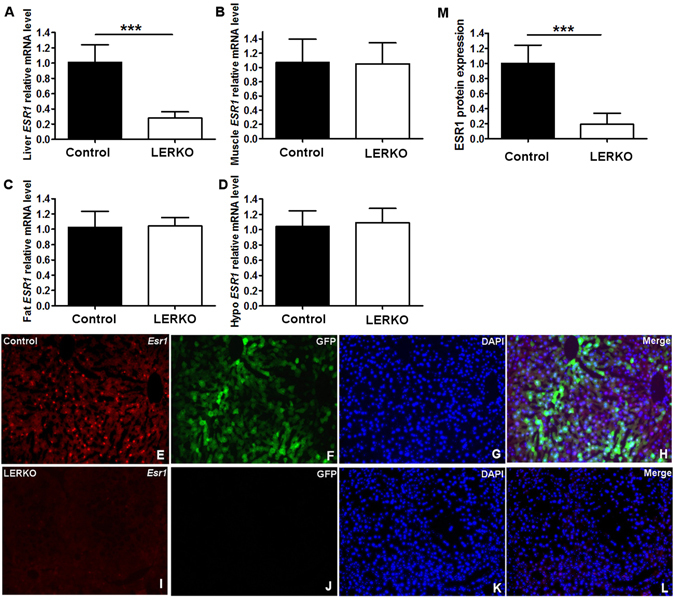
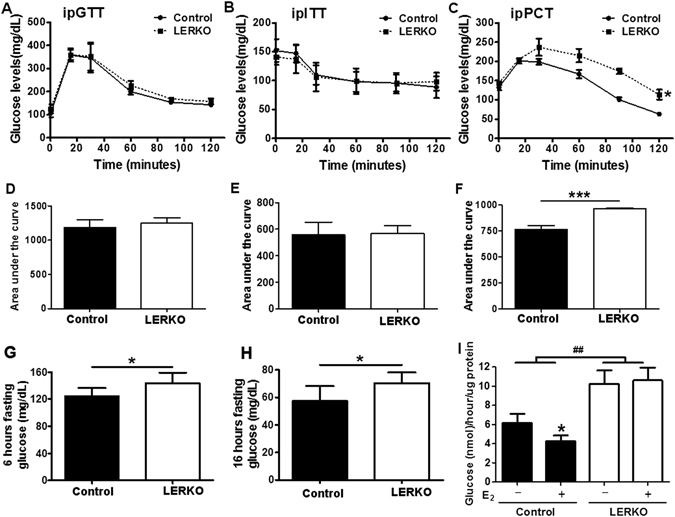
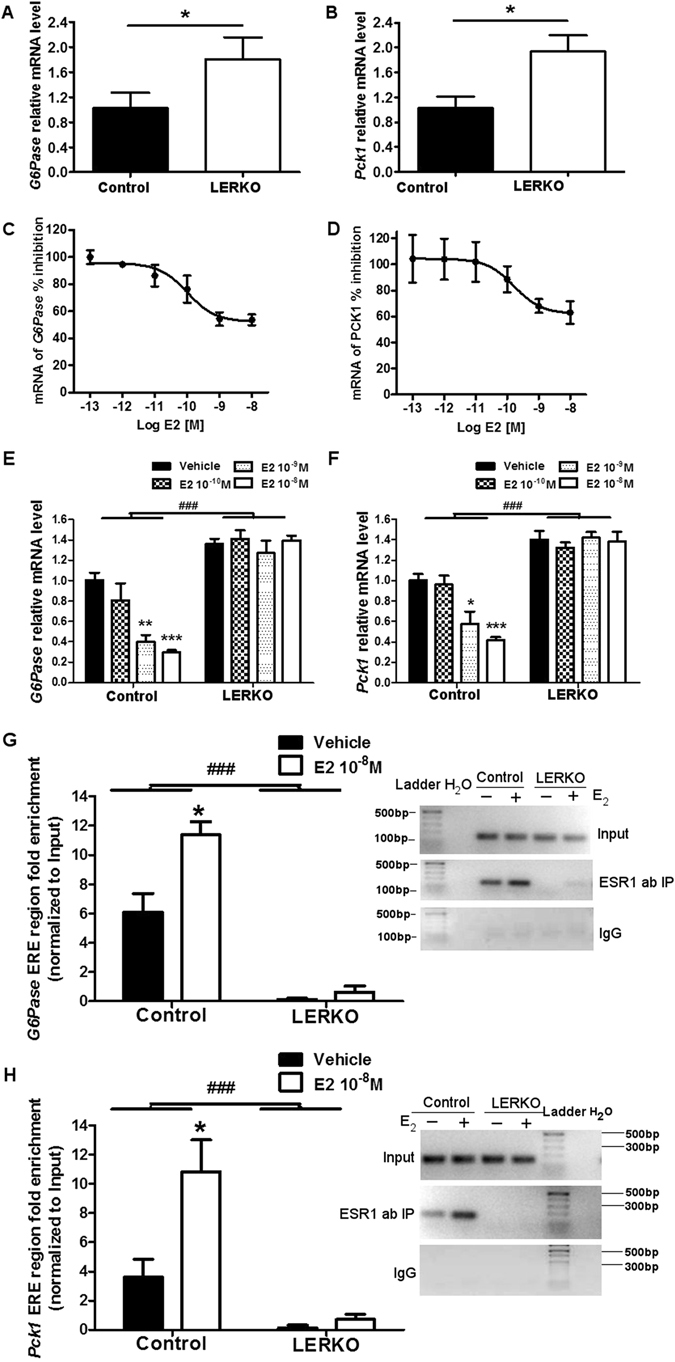
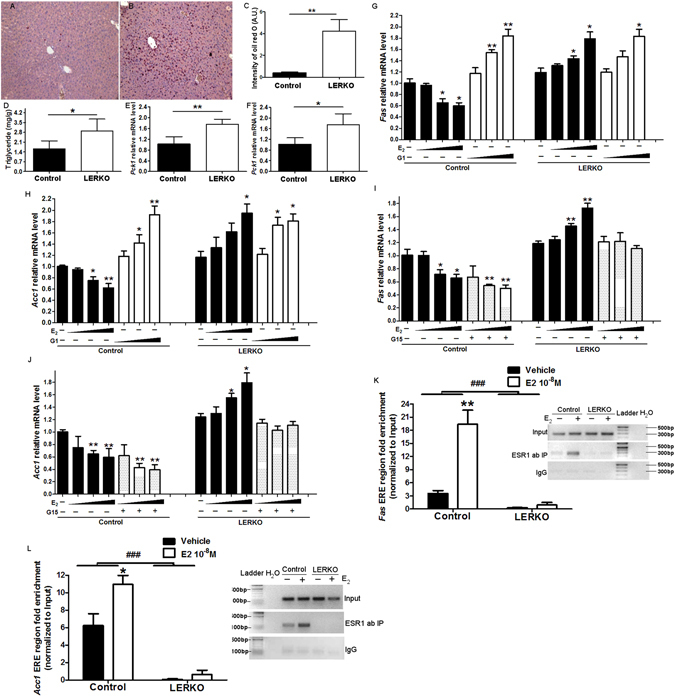
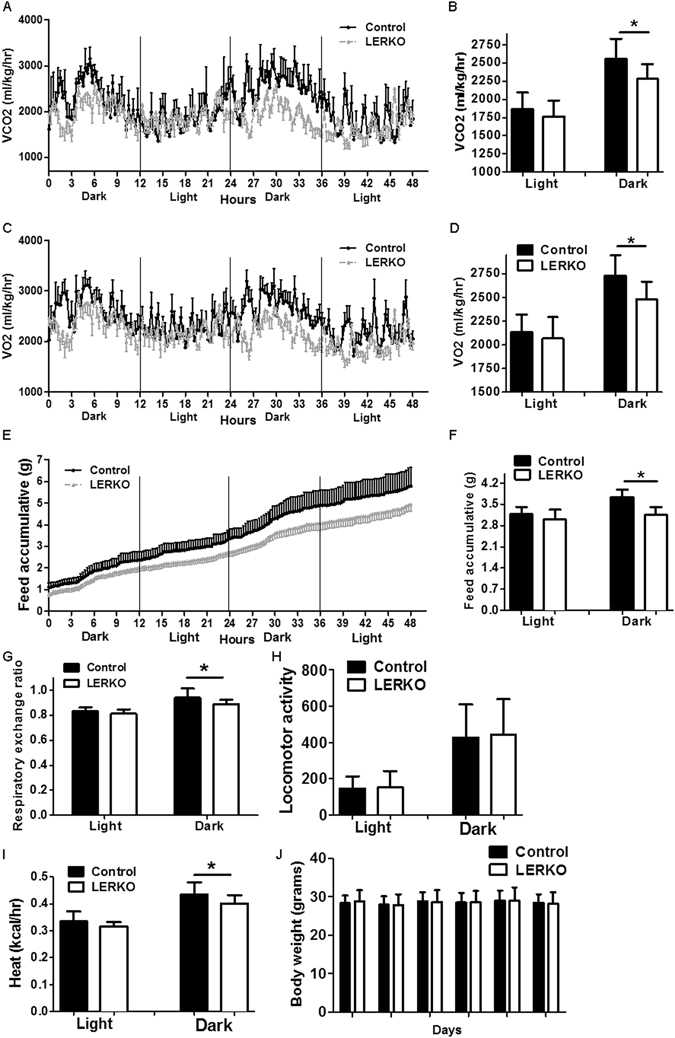
Impaired estrogens action is associated with features of the metabolic syndrome in animal models and humans. We sought to determine whether disruption of hepatic estrogens action in adult male mice could recapitulate aspects of the metabolic syndrome to understand the mechanistic basis for the phenotype. We found 17β-estradiol (E 2) inhibited hepatic gluconeogenic genes such as phosphoenolpyruvate carboxykinase 1 (Pck-1) and glucose 6-phosphatase (G6Pase) and this effect was absent in mice lacking l iver e strogen r eceptor α (Esr1) (LERKO mice). Male LERKO mice displayed elevated hepatic gluconeogenic activity and fasting hyperglycemia. We also observed increased liver lipid deposits and triglyceride levels in male LERKO mice, resulting from increased hepatic lipogenesis as reflected by increased mRNA levels of fatty acid synthase (Fas) and acetyl-CoA carboxylase (Acc1). ChIP assay demonstrated estradiol (E 2) induced ESR1 binding to Pck-1, G6Pase, Fas and Acc1 promoters. Metabolic phenotyping demonstrated both basal metabolic rate and feeding were lower for the LERKO mice as compared to Controls. Furthermore, the respiratory exchange rate was significantly lower in LERKO mice than in Controls, suggesting an increase in lipid oxidation. Our data indicate that hepatic E 2/ESR1 signaling plays a key role in the maintenance of gluconeogenesis and lipid metabolism in males.
Overview
The claims and statistics of this paper haven’t been checked yet.
Free: it reads the open-access text and checks the first 5 claims that cite a source we can check. Create a free account to check every claim.
Integrity signals
Registry
Cites
Statistics
Figures
Verification
Claims the paper makes
The claims and statistics of this paper haven’t been checked yet.
Free: it reads the open-access text and checks the first 5 claims that cite a source we can check. Create a free account to check every claim.
Claims other papers make about this one
Each is checked against this paper’s own text: does it say what the citing paper says it does?
The source backs part of the claim, not all of it — or backs it for a different population, condition or comparison.
In the citing paper
“Loss of ERα in hepatocytes appears to impair glucose tolerance and increase lipid accumulation in the liver, worsening adiposity and IR in both male and female mice, with one study reporting a greater effect in female mice (158, 159).”
From Metabolic impact of endogenously produced estrogens by adipose tissue in females and males across the lifespan (2025) · cites this paper as [159]
Experimental — accuracy not yet measuredThe check wasn’t confident either way, so it gives no verdict — never disputed.
In the citing paper
“Orally ingested estrogens have also been reported to induce acute cholestasis, causing a decrease in bile flux which is detrimental to cholesterol homeostasis (159).”
From Metabolic impact of endogenously produced estrogens by adipose tissue in females and males across the lifespan (2025) · cites this paper as [159]
Experimental — accuracy not yet measured
Self-check
Percentages, sums and reported differences re-computed from the paper’s own numbers.
The self-check needs the paper’s full text.
Citations
Cites
A SIMPLE METHOD FOR THE ISOLATION AND PURIFICATION OF TOTAL LIPIDES FROM ANIMAL TISSUES
Folch, J., Lees, M., & Stanley, G. H. S. (1957) · Journal of Biological Chemistry · doi:10.1016/s0021-9258(18)64849-5 · Cited by 65,189
A transmembrane intracellular estrogen receptor mediates rapid cell signaling
Revankar, C. M., Cimino, D. F., Sklar, L. A., Arterburn, J. B., & Prossnitz, E. R. (2005) · Science · doi:10.1126/science.1106943 · Cited by 2,302
Nonalcoholic Fatty Liver Disease: A Systematic Review
Rinella, M. E. (2015) · JAMA · doi:10.1001/jama.2015.5370 · Cited by 2,267
Ding, E. L., Song, Y., Malik, V. S., & Liu, S. (2006) · JAMA · doi:10.1001/jama.295.11.1288 · Cited by 1,354
Griffin, M. E., Marcucci, M. J., Cline, G. W., Bell, K., Barucci, N., Lee, D., Goodyear, L. J., Kraegen, E. W., White, M. F., & Shulman, G. I. (1999) · Diabetes · doi:10.2337/diabetes.48.6.1270 · Cited by 1,267
The role of hepatic lipids in hepatic insulin resistance and type 2 diabetes
Perry, R. J., Samuel, V. T., Petersen, K. F., & Shulman, G. I. (2014) · Nature · doi:10.1038/nature13478 · Cited by 1,136
Aromatase-deficient (ArKO) mice have a phenotype of increased adiposity
Jones, M. E. E., Thorburn, A. W., Britt, K. L., Hewitt, K. N., Wreford, N. G., Proietto, J., Oz, O. K., Leury, B. J., Robertson, K. M., Yao, S., et al. (2000) · Proceedings of the National Academy of Sciences · doi:10.1073/pnas.97.23.12735 · Cited by 729
Estrogen deficiency induces bone loss by enhancing T-cell production of TNF-α
Cenci, S., Weitzmann, M. N., Roggia, C., Namba, N., Novack, D., Woodring, J., & Pacifici, R. (2000) · Journal of Clinical Investigation · doi:10.1172/jci11066 · Cited by 705
Distinct Hypothalamic Neurons Mediate Estrogenic Effects on Energy Homeostasis and Reproduction
Xu, Y., Nedungadi, T. P., Zhu, L., Sobhani, N., Irani, B. G., Davis, K. E., Zhang, X., Zou, F., Gent, L. M., Hahner, L. D., et al. (2011) · Cell Metabolism · doi:10.1016/j.cmet.2011.08.009 · Cited by 597
Estrogen Regulation of Growth Hormone Action
Leung, K.-C., Johannsson, G., Leong, G. M., & Ho, K. K. Y. (2004) · Endocrine Reviews · doi:10.1210/er.2003-0035 · Cited by 542
Cited by
Yan, H., Yang, W., Zhou, F., Li, X., Pan, Q., Shen, Z., Han, G., Newell-Fugate, A., Tian, Y., Majeti, R., et al. (2019) · Diabetes · doi:10.2337/db18-0638 · Cited by 338
“6A), and expression of G6pc and Pck1 (Fig.”
BackgroundInfluentialThe Role of Estrogen in Insulin Resistance
De Paoli, M., Zakharia, A., & Werstuck, G. H. (2021) · The American Journal of Pathology · doi:10.1016/j.ajpath.2021.05.011 · Cited by 290
Estrogen as a key regulator of energy homeostasis and metabolic health
Mahboobifard, F., Pourgholami, M. H., Jorjani, M., Dargahi, L., Amiri, M., Sadeghi, S., & Tehrani, F. R. (2022) · Biomedicine & Pharmacotherapy · doi:10.1016/j.biopha.2022.113808 · Cited by 154
Reproductive Endocrinology of Nonalcoholic Fatty Liver Disease
Grossmann, M., Wierman, M. E., Angus, P., & Handelsman, D. J. (2019) · Endocrine Reviews · doi:10.1210/er.2018-00158 · Cited by 142
“Continued Study (Reference) Study Design Effects on Lipid Accumulation Effects on Glucose Metabolism Other Effects Chow et al., 2011 (81) Heine et al., 2000 (82) aERKO Increased hepatic triglyceride and cholesterol content Impaired glucose tolerance (GTT), increased serum insulin No change in body weight Increased adi…”
BackgroundInfluentialCherubini, A., Ostadreza, M., Jamialahmadi, O., Pelusi, S., Rrapaj, E., Casirati, E., Passignani, G., Norouziesfahani, M., Sinopoli, E., Baselli, G., et al. (2023) · Nature Medicine · doi:10.1038/s41591-023-02553-8 · Cited by 136
“As ER-α activity can be pharmacologically modulated and ER-α is also transcriptionally active in men 8 , additional studies are required to evaluate whether these findings may account for the acceleration of disease progression at a late stage in some men with FLD.”
BackgroundLee, C., Kim, J., & Jung, Y. (2019) · Cells · doi:10.3390/cells8101259 · Cited by 139
Sex-based differences in insulin resistance
Gado, M., Tsaousidou, E., Bornstein, S. R., & Perakakis, N. (2024) · Journal of Endocrinology · doi:10.1530/joe-23-0245 · Cited by 139
Torre, S. D. (2020) · Frontiers in Endocrinology · doi:10.3389/fendo.2020.572490 · Cited by 143
“In the hepatocytes, estrogens, mainly acting through ERα, limit gluconeogenesis (241, 288) preventing increased HGP and insulin resistance (288), limit the uptake of FFAs, inhibit DNL (153) and promotes FA oxidation (289) and export (287), thus preventing lipid deposition in the liver and the generation of lipotoxicit…”
BackgroundInfluentialPalma, R., Pronio, A., Romeo, M., Scognamiglio, F., Ventriglia, L., Ormando, V. M., Lamazza, A., Pontone, S., Federico, A., & Dallio, M. (2022) · Journal of Clinical Medicine · doi:10.3390/jcm11133649 · Cited by 125
Critical role of estrogen in the progression of chronic liver diseases
Ezhilarasan, D. (2020) · Hepatobiliary & Pancreatic Diseases International · doi:10.1016/j.hbpd.2020.03.011 · Cited by 96
Maggi, A., & Della Torre, S. (2018) · Molecular Metabolism · doi:10.1016/j.molmet.2018.02.012 · Cited by 84
“However, in all these studies, the exact role of the hepatic ERa remains to be clarified [14,41,42] In view of the major function of liver in mammalian physio-pathology, a better understanding of the sex-specific mechanisms driving food partitioning and xenobiotics metabolism is mandatory for the comprehension of the…”
BackgroundBeyond the X Factor: Relevance of Sex Hormones in NAFLD Pathophysiology
Torre, S. D. (2021) · Cells · doi:10.3390/cells10092502 · Cited by 101
“, Fasn, Acaca) and to impaired FOXO1 phosphorylation, resulting in an insulin-resistant phenotype characterized by enhanced HGP, glucose intolerance, increased hepatic lipogenesis, lipid deposition and inflammation in the liver [80,126,138,395,396].”
BackgroundInfluentialYang, M., Liu, Q., Huang, T., Tan, W., Qu, L., Chen, T., Pan, H., Chen, L., Liu, J., Wong, C.-W., et al. (2020) · Theranostics · doi:10.7150/thno.47037 · Cited by 84
“with increased lipogenesis being an important contributing factor [55].”
BackgroundHuang, Y., Sun, F., Tan, H., Deng, Y., Sun, Z., Chen, H., Li, J., & Chen, D. (2019) · Environmental Science & Technology · doi:10.1021/acs.est.9b04369 · Cited by 86
Muhammad, J. S., Bajbouj, K., Shafarin, J., & Hamad, M. A. (2020) · Epigenetics · doi:10.1080/15592294.2020.1770917 · Cited by 95
“Gender disparity in the incidence of HCC, being 2 to 4 times higher in males than in females [2–4], has been attributed to the protective effects of Estrogen (17-β oestradiol; E2) in young women [5].”
BackgroundEstrogens and female liver health
Chen, K. L., & Madak‐Erdogan, Z. (2017) · Steroids · doi:10.1016/j.steroids.2017.10.015 · Cited by 87
“Studies in liver ERα knock-out mice (LERKO) showed that liver ERα is required for preventing aberrant hepatic lipid deposition in both males and females [69,70].”
BackgroundExploring the effects of estrogen deficiency and aging on organismal homeostasis during menopause
Camon, C., Garratt, M., & Correa, S. M. (2024) · Nature Aging · doi:10.1038/s43587-024-00767-0 · Cited by 89
“ERα in the liver has an important role in glucose and insulin-like growth factor 1 (IGF-1) signaling in rodents 80,82 .”
Galmés-Pascual, B. M., Martínez-Cignoni, M. R., Morán-Costoya, A., Bauzá-Thorbrügge, M., Sbert-Roig, M., Valle, A., Proenza, A. M., Lladó, I., & Gianotti, M. (2020) · Free Radical Biology and Medicine · doi:10.1016/j.freeradbiomed.2020.02.016 · Cited by 68
Reproductive risk factors across the female lifecourse and later metabolic health
Nichols, A. R., Chavarro, J. E., & Oken, E. (2024) · Cell Metabolism · doi:10.1016/j.cmet.2024.01.002 · Cited by 76
Sex modulates hepatic mitochondrial adaptations to high-fat diet and physical activity
McCoin, C. S., Schulze, A. T. V., Allen, J., Fuller, K. N. Z., Xia, Q., Koestler, D. C., Houchen, C. J., Maurer, A., Dorn, G. W., Shankar, K., et al. (2019) · American Journal of Physiology-Endocrinology and Metabolism · doi:10.1152/ajpendo.00098.2019 · Cited by 52
Khristi, V., Ratri, A., Ghosh, S., Pathak, D., Borosha, S., Dai, E., Roy, R., Chakravarthi, V. P., Wolfe, M. W., & Rumi, M. A. K. (2019) · Molecular and Cellular Endocrinology · doi:10.1016/j.mce.2019.04.005 · Cited by 53
Mann, S. N., Hadad, N., Nelson Holte, M., Rothman, A. R., Sathiaseelan, R., Ali Mondal, S., Agbaga, M.-P., Unnikrishnan, A., Subramaniam, M., Hawse, J., et al. (2020) · eLife · doi:10.7554/elife.59616 · Cited by 49
Jaroenlapnopparat, A., Charoenngam, N., Ponvilawan, B., Mariano, M., Thongpiya, J., & Yingchoncharoen, P. (2023) · Menopause · doi:10.1097/gme.0000000000002133 · Cited by 48
Effects of ERβ and ERα on OVX-induced changes in adiposity and insulin resistance
Zidon, T. M., Padilla, J., Fritsche, K. L., Welly, R. J., McCabe, L., Stricklin, O. E., Frank, A. P., Park, Y.-M., Clegg, D. J., Lubahn, D. B., et al. (2020) · Journal of Endocrinology · doi:10.1530/joe-19-0321 · Cited by 50
Estrogen receptor beta in astrocytes modulates cognitive function in mid-age female mice
Itoh, N., Itoh, Y., Meyer, C., Suen, T. T., Cortez-Delgado, D., Lomeli, M. R., Wendin, S., Somepalli, S. S., Golden, L. C., MacKenzie‐Graham, A. J., et al. (2023) · Nature Communications · doi:10.1038/s41467-023-41723-7 · Cited by 61
Fornes, D. D., White, V., Higa, R., Heinecke, F., Capobianco, E., & Jawerbaum, A. (2017) · Molecular and Cellular Endocrinology · doi:10.1016/j.mce.2017.08.004 · Cited by 53
Magueresse‐Battistoni, B. L. (2020) · Chemosphere · doi:10.1016/j.chemosphere.2020.129212 · Cited by 49
Sex differences in non-alcoholic fatty liver disease: hints for future management of the disease
Salvoza, N. C., Giraudi, P. J., Tiribelli, C., & Rosso, N. (2020) · Exploration of Medicine · doi:10.37349/emed.2020.00005 · Cited by 46
“A study on male mice lacking ER-α (LERKO mice) showed elevated gluconeogenic activity and fasting hyperglycemia, suggesting the role of E2/ERα signaling in glucose metabolism [49].”
BackgroundEstrogen Receptor-α Suppresses Liver Carcinogenesis and Establishes Sex-Specific Gene Expression
O’Brien, M. H., Pitot, H. C., Chung, S., Lambert, P. F., Drinkwater, N. R., & Bilger, A. (2021) · Cancers · doi:10.3390/cancers13102355 · Cited by 50
“In contrast, in an alternative model where hepatic Esr1 was deleted after development (using tail-vein injection of an adeno-associated construct carrying a liver-specific thyroxine-binding globulin-driven Cre), rather than early in development as in the albumin-Cre model, glucose and lipid metabolism were altered in…”
ResultWu, C., Shields, J. N., Akemann, C., Meyer, D. N., Connell, M. L., Baker, B. B., Pitts, D. K., & Baker, T. R. (2020) · The Science of The Total Environment · doi:10.1016/j.scitotenv.2020.143736 · Cited by 45
Andrisse, S., Feng, M., Wang, Z., Awe, O., Yu, L., Zhang, H., Bi, S., Wang, H., Li, L., Joseph, S., et al. (2021) · The FASEB Journal · doi:10.1096/fj.202100961r · Cited by 47
Self-citationDkhar, B., Khongsti, K., Thabah, D., Syiem, D., Satyamoorthy, K., & Das, B. (2017) · Journal of Cellular Biochemistry · doi:10.1002/jcb.26356 · Cited by 39
“Recently, it has been reported that 17β-estradiol (E2) inhibits PEPCK-C and glucose-6 phosphatase expression, and this effect is absent in mice lacking liver estrogen receptor α.(20) Since PEPCK-C is considered as an indicator of hepatic insulin resistance, it is an attractive drug target in the treatment of T2DM.”
BackgroundModelling female physiology from head to Toe: impact of sex hormones, menstrual cycle, and pregnancy
Abo, S., Smith, D., Stadt, M., & Layton, A. (2022) · Journal of Theoretical Biology · doi:10.1016/j.jtbi.2022.111074 · Cited by 35
Iñigo, M. R., Amorese, A. J., Tarpey, M. D., Balestrieri, N. P., Jones, K. G., Patteson, D. J., Jackson, K. C., Torres, M. J., Lin, C.-T., Smith, C. D., et al. (2020) · Molecular Metabolism · doi:10.1016/j.molmet.2019.12.010 · Cited by 29
“For example, induced knockdown of liver ERa by injection of adeno-associated virus-Cre in 2-3-month-old male ERa-floxed mice results in hepatic steatosis with a modest increase in fasting glucose that is attributed to decreased inhibition of gluconeogenic enzymes in the liver [25].”
BackgroundCioni, B., Ratti, S., Piva, A., Tripodi, I., Milani, M., Menichetti, F., Langella, T., Botti, L., Cecco, L. D., Chiodoni, C., et al. (2023) · Molecular Cancer Research · doi:10.1158/1541-7786.mcr-22-0370 · Cited by 28
Liu, M., Pan, J., Dong, Z., Cheng, Y., Gong, J., & Wu, X. (2019) · PLoS ONE · doi:10.1371/journal.pone.0226698 · Cited by 29
“In vertebrate animals, it is well-known that cellular estrogen signaling was mediated primarily via the estrogen receptor (ER), a family of nuclear hormone receptor-type transcription factors [95].”
BackgroundRitter, M. J., Amano, I., Imai, N., Oliveira, L. S. D., Vella, K. R., & Hollenberg, A. N. (2021) · Molecular Metabolism · doi:10.1016/j.molmet.2021.101315 · Cited by 33
Lee, A. A., & Den Hartigh, L. J. (2025) · Frontiers in Endocrinology · doi:10.3389/fendo.2025.1682231 · Cited by 32
Sex hormone-binding globulin suppresses NAFLD-triggered hepatocarcinogenesis after menopause
Lee, S. R., Lee, Y. H., Yang, H. J., Lee, H. W., Lee, G., An, B., Jeung, E., Park, B.-K., & Hong, E. (2019) · Carcinogenesis · doi:10.1093/carcin/bgz107 · Cited by 26
Stephenson, E. J., Stayton, A. S., Sethuraman, A., Rao, P., Meyer, A., Gomes, C., Mulcahy, M. C., McAllan, L., Puchowicz, M. A., Pierre, J. F., et al. (2022) · Nature Communications · doi:10.1038/s41467-022-33840-6 · Cited by 33
RISING STARS: Sex differences in toxicant-associated fatty liver disease
Wahlang, B. (2023) · Journal of Endocrinology · doi:10.1530/joe-22-0247 · Cited by 29
4-Hexylphenol influences adipogenic differentiation and hepatic lipid accumulation in vitro
Sun, Z., Cao, H., Liu, Q. S., Liang, Y., Fiedler, H., Zhang, J., Zhou, Q., & Jiang, G. (2020) · Environmental Pollution · doi:10.1016/j.envpol.2020.115635 · Cited by 25
Lin, R., Jia, Y. X., Wu, F., Meng, Y., Sun, Q., & Jia, L. (2019) · International Journal of Environmental Research and Public Health · doi:10.3390/ijerph16214152 · Cited by 26
“Moreover, increased levels of FAS and ACC1 mRNA in male ERα knockout mice were observed to lead to increased liver lipid deposition and TG levels [48].”
BackgroundSanchez, P. B. M., Krizanac, M., Štancl, P., Leopold, M., Engel, K. M., Buhl, E. M., van Helden, J., Gaßler, N., Schiller, J., Karlić, R., et al. (2024) · Cell Death Discovery · doi:10.1038/s41420-024-01860-4 · Cited by 29
“These genes have functions during NAFLD, particularly regulating TAG synthesis in steatosis, gluconeogenesis, and lipid metabolism [24, 25].”
BackgroundHepatic adaptation to chronic metabolic stress primes tumorigenesis
Tzouanas, C. N., Shay, J. E. S., Sherman, M. S., Rubin, A. J., Mead, B. E., Dao, T. T., Tao, J., Lehrich, B. M., Eng, G. M., Patterson-Fortin, J., et al. (2025) · Cell · doi:10.1016/j.cell.2025.11.031 · Cited by 39
Liver receptor homolog-1 (NR5A2) orchestrates hepatic inflammation and TNF-induced cell death
Lambrecht, R., Delgado, M. E., Gloe, V., Schuetz, K., Plazzo, A. P., Franke, B., Phan, T. S., Fleming, J. R., Mayans, O. M., & Brunner, T. (2023) · Cell Reports · doi:10.1016/j.celrep.2023.113513 · Cited by 23
Bitter Taste Receptor Ligand Improves Metabolic and Reproductive Functions in a Murine Model of PCOS
Wu, S., Xue, P., Grayson, N., Bland, J. S., & Wolfe, A. (2018) · Endocrinology · doi:10.1210/en.2018-00711 · Cited by 25
Self-citationSrisowanna, N., Choijookhuu, N., Yano, K., Batmunkh, B., Ikenoue, M., Huynh, N. N., Yamaguchi, Y., & Hishikawa, Y. (2019) · ACTA HISTOCHEMICA ET CYTOCHEMICA · doi:10.1267/ahc.19018 · Cited by 22
Metabolic Messengers: oestradiol
Hevener, A. L., & Correa, S. M. (2025) · Nature Metabolism · doi:10.1038/s42255-025-01317-7 · Cited by 21
“Experimental disruption of hepatic oestrogen action in adult mice recapitulates aspects of the metabolic syndrome 85 .”
Fuller, K. N. Z., McCoin, C. S., Allen, J., Bell-Glenn, S., Koestler, D. C., Dorn, G. W., & Thyfault, J. P. (2020) · Journal of Applied Physiology · doi:10.1152/japplphysiol.00035.2020 · Cited by 19
Collins, J. M., Huo, Z., & Wang, D. (2021) · International Journal of Molecular Sciences · doi:10.3390/ijms22031461 · Cited by 23
Estrogen receptor activation remodels TEAD1 gene expression to alleviate hepatic steatosis
Sommerauer, C., Gallardo-Dodd, C. J., Savva, C., Hases, L., Birgersson, M., Indukuri, R., Shen, J. X., Carravilla, P., Geng, K., Søndergaard, J. N., et al. (2024) · Molecular Systems Biology · doi:10.1038/s44320-024-00024-x · Cited by 28
“However, the functional impact of hepatic ER α in safeguarding the liver upon dietary stress remains ambiguous, reporting its requirement (Qiu et al, 2017; Zhu et al, 2014; Meda et al, 2020; Wang et al, 2015) and dispensability (Matic et al, 2013; Hart-Unger et al, 2017; Meda et al, 2020).”
Liu, M., Wang, L., Cheng, Y., Gong, J., Zeng, C., & Wu, X. (2019) · General and Comparative Endocrinology · doi:10.1016/j.ygcen.2019.04.019 · Cited by 20
Witayavanitkul, N., Werawatganon, D., Chayanupatkul, M., Klaikeaw, N., Sanguanrungsirikul, S., & Siriviriyakul, P. (2020) · BMC Complementary Medicine and Therapies · doi:10.1186/s12906-020-02962-z · Cited by 21
“An animal model showed that estrogen when bound to liver estrogen receptor-α (ESR1) could inhibit hepatic gluconeogenic genes such as phosphoenolpyruvate carboxykinase 1 (Pck-1) and glucose 6-phosphatase (G6Pase) and decrease hepatic lipogenesis through a down-regulation of fatty acid synthase (Fas) and acetyl-CoA car…”
BackgroundTebbens, M., Schutte, M. H., Troelstra, M., Bruinstroop, E., de Mutsert, R., Nederveen, A. J., den Heijer, M., & Bisschop, P. H. L. T. (2023) · The Journal of Clinical Endocrinology & Metabolism · doi:10.1210/clinem/dgad409 · Cited by 20
Nuclear receptor CAR-ERα signaling regulates the estrogen sulfotransferase gene in the liver
Yi, M., Fashe, M. M., Arakawa, S., Moore, R., Sueyoshi, T., & Negishi, M. (2020) · Scientific Reports · doi:10.1038/s41598-020-61767-9 · Cited by 19
Mineiro, R., Santos, C. R. A., Gonçalves, I., Lemos, M. C., Cavaco, J. E. B., & Quintela, T. (2023) · Journal of Physiology and Biochemistry · doi:10.1007/s13105-023-00957-1 · Cited by 22
“For example, they are present in vascular cells [51, 90, 112], the liver [4, 70, 98], the kidney [30, 99], the skin [120], the gastrointestinal tract [12], and brain cells [67, 83], expanding the list of target tissues beyond reproductive organs.”
BackgroundThe advantages of physical exercise as a preventive strategy against NAFLD in postmenopausal women
Molina‐Molina, E., Furtado, G. E., Jones, J. G., Portincasa, P., Pedrosa, A., Teixeira, A. M., Barros, M. P., Bachi, A. L. L., & Sardão, V. A. (2022) · European Journal of Clinical Investigation · doi:10.1111/eci.13731 · Cited by 21
Liebmann, M., Pfeifer, M. A., Grupe, K., & Scherneck, S. (2022) · International Journal of Molecular Sciences · doi:10.3390/ijms23126693 · Cited by 21
Zhu, Z., Ju, J., Zhang, M., Yang, H., Wei, W., & Zhang, Y. (2021) · Comparative Biochemistry and Physiology Part C Toxicology & Pharmacology · doi:10.1016/j.cbpc.2021.109239 · Cited by 19
Savva, C., Helguero, L. A., Gonzalez-Granillo, M. A., Melo, T., Couto, D., Angelin, B., Domingues, M. R., Li, X., Kutter, C., & Korach-André, M. (2022) · Communications Biology · doi:10.1038/s42003-022-04022-3 · Cited by 18
Bajbouj, K., Shafarin, J., Taneera, J., & Hamad, M. A. (2020) · Biology · doi:10.3390/biology9040068 · Cited by 16
“Furthermore, differences in the incidence of hepatocellular carcinoma, being 2–4 times higher in males than in females [9–11], has been attributed to the protective effects of E2 [12].”
BackgroundResveratrol inhibits white adipose deposition by the ESR1-mediated PI3K/AKT signaling pathway
Yang, B. J., Wang, Q., Li, Y., Zhang, S., Sun, Y., Wei, Y., Jiang, Q., & Huang, Y. (2024) · Cellular Signalling · doi:10.1016/j.cellsig.2024.111448 · Cited by 18
Sooryanarain, H., Heffron, C. L., Mahsoub, H. M., Hassebroek, A. M., Wang, B., Tian, D., Ahmed, S. A., & Meng, X. (2022) · Journal of Virology · doi:10.1128/jvi.01008-22 · Cited by 16
The resistant starch from sorghum regulates lipid metabolism in menopausal rats via equol
Ge, Y., Wei, C., Wang, W., & Cao, L. (2020) · Journal of Food Biochemistry · doi:10.1111/jfbc.13295 · Cited by 15
Toxicogenomic signatures of estrogen-related modes of action in the zebrafish embryo
Frelih, M., Ayobahan, S. U., Marghany, F., Essfeld, F., & Eilebrecht, S. (2025) · Environmental Toxicology and Chemistry · doi:10.1093/etojnl/vgae059 · Cited by 15
Common Transcriptional Program of Liver Fibrosis in Mouse Genetic Models and Humans
Cokan, K. B., Urlep, Ž., Moškon, M., Mraz, M., Kong, X. Y., Eskild, W., Rozman, D., Juvan, P., & Režen, T. (2021) · International Journal of Molecular Sciences · doi:10.3390/ijms22020832 · Cited by 16
Dileo, E., Saba, F., Parasiliti‐Caprino, M., Rosso, C., & Bugianesi, E. (2025) · Nutrients · doi:10.3390/nu17030477 · Cited by 14
“The pathophysiologic explanation of these sex specific differences is mainly the loss of estrogens later in life and its impact on glucose metabolism [79].”
17β-Oestradiol Protects from Hepatitis C Virus Infection through Induction of Type I Interferon
Barbaglia, M. N., Harris, J. M., Smirnov, A., Burlone, M. E., Rigamonti, C., Pirisi, M., Minisini, R., & Magri, A. (2022) · Viruses · doi:10.3390/v14081806 · Cited by 12
“Importantly, ERα has been reported to regulate lipid metabolism and gluconeogenesis in hepatocytes [53], suggesting that an E2-mediated antiviral effect could be exerted through additional mechanisms.”
BackgroundZhang, Y., Zhang, M., Zhu, Z., Yang, H., Wei, W., & Li, B. (2021) · Aquatic Toxicology · doi:10.1016/j.aquatox.2021.105999 · Cited by 13
Xue, Y., Gong, Y., Li, X., Peng, F., Ding, G., Zhang, Z., Shi, J., Savul, I. S., Xu, Y., Chen, Q., et al. (2023) · Cell & Bioscience · doi:10.1186/s13578-023-01121-4 · Cited by 12
Estrogen receptor inhibition enhances cold-induced adipocyte beiging and glucose tolerance
Lapid, K., Lim, A., Berglund, E. D., & Graff, J. M. (2019) · Diabetes Metabolic Syndrome and Obesity · doi:10.2147/dmso.s190752 · Cited by 11
Isolation of Hepatocytes from Liver Tissue by a Novel, Semi-Automated Perfusion Technology
Poggel, C., Adams, T., Janzen, R., Hofmann, A., Hardt, O., Roeb, E., Schröder, S. K., Tag, C. G., Roderfeld, M., & Weiskirchen, R. (2022) · Biomedicines · doi:10.3390/biomedicines10092198 · Cited by 10
“In addition, the isolated cells express hepatic estrogen receptor α (ER-α) which plays a key role in the maintenance of gluconeogenesis and lipid metabolism [22].”
BackgroundRole of Estrogen Receptor α in Aging and Chronic Disease
Isola, J. V. V., Ko, S.-H., Ocañas, S. R., & Stout, M. B. (2023) · Advances in Geriatric Medicine and Research · doi:10.20900/agmr20230005 · Cited by 22
Stomach secretes estrogen in response to the blood triglyceride levels
Ito, T., Yamamoto, Y., Yamagishi, N., & Kanai, Y. (2021) · Communications Biology · doi:10.1038/s42003-021-02901-9 · Cited by 13
Pathogenesis and research progress of nonalcoholic fatty liver disease/nonalcoholic steatohepatitis
Shan, G.-Y., Wan, H., Zhang, Y., Cheng, J.-Y., Qiao, D.-R., Liu, Y.-Y., Shi, W., & Li, H. (2024) · World Journal of Hepatology · doi:10.4254/wjh.v16.i10.1142 · Cited by 11
Ubba, V., Joseph, S., Awe, O., Jones, D., Dsilva, M. K., Feng, M., Wang, J., Fu, X., Akbar, R. J., Bodnar, B. H., et al. (2023) · Endocrinology · doi:10.1210/endocr/bqad141 · Cited by 9
Pansa, C. C., Molica, L. R., de Oliveira-Júnior, F. C., Santello, L. C., & Moraes, K. C. M. (2023) · Journal of Biochemical and Molecular Toxicology · doi:10.1002/jbt.23595 · Cited by 9
A novel berberine‐metformin hybrid compound exerts therapeutic effects on obese type 2 diabetic rats
Jia, D. T., Li, Z. W., Zhou, X., Gao, Y., Feng, Y., Ma, M., Wu, Z., & Li, W. (2019) · Clinical and Experimental Pharmacology and Physiology · doi:10.1111/1440-1681.13085 · Cited by 9
Hope, M. C., Unger, C. A., Kettering, M. C., Socia, C. E., Al-Adhami, A., Rice, B. C., Niamira, D. S., Wiznitzer, B. P., Altomare, D., Cotham, W. E., et al. (2025) · Journal of the Endocrine Society · doi:10.1210/jendso/bvaf134 · Cited by 10
“Hepatic ER α also plays an instrumental role in regulating gluconeogenesis, lipid metabolism, and hepatic insulin resistance in males [39, 40].”
Sécula, A., Bluy, L. E., Chapuis, H., Bonnet, A., Collin, A., Gress, L., Cornuez, A., Martin, X., Bodin, L., Bonnefont, C. M. D., et al. (2022) · BMC Genomics · doi:10.1186/s12864-022-09066-7 · Cited by 11
“Altered ESR1 function is associated with obesity and metabolic dysfunction in humans [50] and it was reported to be critical for regulation of lipid metabolism in mice [51] where it regulates the synthesis of cholesterol transport proteins, enzymes for lipoprotein remodeling, and receptors for cholesterol [52].”
BackgroundCamon, C., Prescott, M., Neyt, C., Decourt, C., Stout, M. B., Campbell, R. E., & Garratt, M. (2024) · GeroScience · doi:10.1007/s11357-024-01192-2 · Cited by 8
“ERα KO animals show many symptoms of metabolic dysfunction, including impaired glucose and insulin signalling, increased adiposity and decreased energy expenditure [30, 31].”
BackgroundRaloxifene Ameliorates Glucosamine-Induced Insulin Resistance in Ovariectomized Rats
Chen, C., Cheng, T., Chang, C., Huang, H., Lin, S., Wu, M., & Kang, L. (2021) · Biomedicines · doi:10.3390/biomedicines9091114 · Cited by 9
Research progress on pathogenesis of skin pigmentation in chronic liver disease
Liu, T., Xi, T., Dong, X., & Xu, D. (2024) · Biomolecules and Biomedicine · doi:10.17305/bb.2024.11085 · Cited by 7
“Estrogen receptors (ER) are expressed not only in organs, such as the ovaries, breasts, and uterus, but also in the liver, primarily as ER-α [142].”
Wang, Y., Fahy, C., & Lü, H. (2024) · Liver Research · doi:10.1016/j.livres.2024.06.001 · Cited by 6
Li, K., Qi, Z., Xie, Z., Li, W., Yang, X., Zhai, Y., Zhou, X., Xie, X., & Song, W. (2024) · Journal of Hazardous Materials · doi:10.1016/j.jhazmat.2024.135379 · Cited by 6
Chen, Q., Mei, C., Guo, M., Wang, B., Chen, H., Zhao, J., Wang, G., & Chen, W. (2023) · Food Science and Human Wellness · doi:10.26599/fshw.2022.9250065 · Cited by 10
Sexual Dimorphism in Substrate Metabolism During Exercise
Abo, S. M. C., Casella, E., & Layton, A. T. (2024) · Bulletin of Mathematical Biology · doi:10.1007/s11538-023-01242-4 · Cited by 7
“In carbohydrate metabolism, estrogens are known to reduce glucose production in the liver via gluconeogenesis and glycogenolysis, and lower blood glucose levels (Qiu et al. 2017; Palmisano et al. 2017; Shen and Shi 2015).”
Aggerbeck, Μ., & Blanc, É. (2018) · Current Opinion in Toxicology · doi:10.1016/j.cotox.2018.01.001 · Cited by 6
Giant Island Mice Exhibit Widespread Gene Expression Changes in Key Metabolic Organs
Nolte, M. J., Jing, P., Dewey, C. N., & Payseur, B. A. (2020) · Genome Biology and Evolution · doi:10.1093/gbe/evaa118 · Cited by 7
“12(8):1277–1301. doi:10.1093/gbe/evaa118 Advance Access publication 12 June 2020 1277 ecological causes and generality of the island rule have been subject to considerable study and debate (Lomolino 2005; Meiri et al. 2008; Raia and Meiri 2011).”
BackgroundInfluentialFetke, J., Martinson, J. W., Flick, R. W., Huang, W., Bencic, D. C., See, M. J., Pilgrim, E. M., DeBry, R. W., & Biales, A. D. (2021) · Aquatic Toxicology · doi:10.1016/j.aquatox.2021.105788 · Cited by 6
“ESR1 is known to play a regulatory role in liver metabolism (Qiu et al., 2017) and its disruption in the liver is linked to metabolic disease in humans (Efstathiadou et al.”
BackgroundAge of Cafeteria Diet Onset Influences Obesity Phenotype in Mice in a Sex-Specific Manner
Бажан, Н. М., Kazantseva, A. Y., Dubinina, A., Balybina, N., Iakovleva, T., & En, M. (2024) · International Journal of Molecular Sciences · doi:10.3390/ijms252212436 · Cited by 6
“In particular, the beneficial effects of oestradiol on insulin sensitivity in the liver are well established [32–34].”
Li, Y., Li, J., Shen, Y., Xiong, Y., Li, X., & Qin, Z. (2021) · Aquatic Toxicology · doi:10.1016/j.aquatox.2021.105760 · Cited by 6
Sex steroids, SHBG and type 2 diabetes in women: what do we really know?
Verhoog, N. J. D., Africander, D., & Storbeck, K. (2026) · Diabetologia · doi:10.1007/s00125-025-06647-5 · Cited by 8
“Liver ERα plays a key role in hepatic metabolism, as its ablation in mice promotes hepatic insulin resistance and gluconeogenesis [132, 163].”
Activation of steroid hormone receptors by metabolism-disrupting chemicals
Pitkänen, S., Niskanen, J., Mysore, R., Niskanen, E. A., Palvimo, J. J., Pijnenburg, D., van Beuningen, R., Rashidian, A., Kronenberger, T., Poso, A., et al. (2025) · Toxicology and Applied Pharmacology · doi:10.1016/j.taap.2025.117335 · Cited by 5
Xie, Y., Hu, B., Gao, Y., Tang, Y., Chen, G., Shen, J., Jiang, Z., Jiang, H., Han, J., Yan, J., et al. (2022) · Animal Cells and Systems · doi:10.1080/19768354.2022.2139755 · Cited by 4
“G6Pase deficiency results in the production of acetyl-CoA via the glycolysis pathway, and acetyl-CoA participates in the biosynthesis of fatty acids and sterols via de novo lipogenesis, leading to the development of fatty liver (Qiu et al. 2017).”
BackgroundSoccio, R. E. (2020) · Wiley eBooks · doi:10.1002/9781119436812.ch28 · Cited by 4
Oh, Y., Kim, J., Park, Y. J., & Kim, Y. (2025) · Molecules · doi:10.3390/molecules30040909 · Cited by 5
Darracq-Ghitalla-Ciock, M., Rajkumari, N., Veyrenc, S., Chuffart, F., Attia, S., Hiriart, E., Vial, G., Rangarajan, S., Tubbs, E., Raveton, M., et al. (2025) · Environmental Pollution · doi:10.1016/j.envpol.2025.127044 · Cited by 4
Abdel‐Hamid, M. S., Mansour, A. M., Hassan, M. H., Abdelhady, R., Elsadek, B., El-Sayed, E.-S. M., & Salama, S. A. (2023) · Biological and Pharmaceutical Bulletin · doi:10.1248/bpb.b23-00342 · Cited by 3
Metadata
- Authors
- Qiu, S., Vazquez, J. T., Boulger, E., Liu, H., Xue, P., Hussain, M. A., & Wolfe, A.
- Affiliations
- Johns Hopkins University (US)
- Ponce Health Sciences University (PR)
- Corresponding author
- Wolfe, Andrew
- Venue
- Scientific Reports
- Published
- 2017-05-10
- Volume
- 7
- Issue
- 1
- Pages
- 1661-1661
- ISSN
- 2045-2322 (ISSN-L)
- PMC
- PMC5431852
- OpenAlex
- W2610476257
- Cited by
- 135
- References
- 55
- Citations by year
- 2026: 11 · 2025: 15 · 2024: 18 · 2023: 16 · 2022: 14 · 2021: 15 · 2020: 21 · 2019: 14 · 2018: 7 · 2017: 4
- FWCI
- 8.33
- Type
- journal article
- Language
- en
- Open access
- gold
- doi.org
- Licence
- cc-by
- creativecommons.org/licenses/by/4.0 (tdm)
- creativecommons.org/licenses/by/4.0 (vor)
- Locations
- Scientific Reports (publishedVersion, cc-by)
- PubMed Central (publishedVersion, cc-by)
- PubMed (publishedVersion)
- DOAJ (DOAJ: Directory of Open Access Journals) (submittedVersion, cc-by-sa)
- Funders
- University of Wisconsin-Madison
- Johns Hopkins University
- National Institutes of Health (DK-079637)
- Robert Wood Johnson Medical School, Rutgers, The State University of New Jersey
- National Institute of Diabetes and Digestive and Kidney Diseases (T32DK007751, P30DK079637, R01DK101591)
- Eunice Kennedy Shriver National Institute of Child Health and Human Development (R01HD068777)
- Topics
- Life Sciences › Biochemistry, Genetics and Molecular Biology › Endocrinology › Estrogen and related hormone effects
- Health Sciences › Medicine › Endocrinology, Diabetes and Metabolism › Diet, Metabolism, and Disease
- Life Sciences › Neuroscience › Endocrine and Autonomic Systems › Regulation of Appetite and Obesity
- Keywords
- ESR1, estradiol, gluconeogenesis, hepatic lipid metabolism, metabolic syndrome, PCK1, glucose-6-phosphatase, fatty acid synthase, acetyl-CoA carboxylase 1, hepatic lipogenesis, fasting hyperglycemia, liver fat deposition, transcriptional regulation, male mice
- MeSH terms
- Animals, Body Weight, Energy Metabolism, Estradiol, Gene Expression Regulation, Gluconeogenesis, Glucose, Insulin, Liver, Male, Organ Specificity, Signal Transduction, Mice, Knockout, Pyruvic Acid, Estrogen Receptor alpha, Lipid Metabolism, Gene Knockdown Techniques
About these checks
Registry, retraction, Cites and statistics results are computed, not judged, with one exception: a printed reference that no index lists is read once by a model before it counts as a citation error. Claims are extracted by a model and kept only when their quote appears verbatim in the text; each cited source is then checked, with a model’s help, for whether it says what the claim relies on. Those verdicts can be wrong — read the claim’s quote and the cited source before relying on one.
Statistics and arithmetic are recomputed, not judged.
Confidence bands are shown only for fields calibrated on our annotated test set. None is calibrated yet, so no band is shown.
What counts as a claim ›How we measure confidence ›How we check this ›
Are you an author, or do you see a problem with this page? Request a review
Data sources
Bibliographic data: Semantic Scholar, OpenAlex, Crossref.
Contains information from the Semantic Scholar Academic Graph Datasets, made available under the ODC Attribution License (ODC-BY 1.0).
Semantic Scholar’s data is described in: Kinney, R., et al. (2023). The Semantic Scholar Open Data Platform. arXiv:2301.10140.
