

Comparison of DNA-, PMA-, and RNA-based 16S rRNA Illumina sequencing for detection of live bacteria in water
Open accessThe DOI matches its Crossref record; 47 of the 47 references it cites were found in a registry or an index.
Abstract
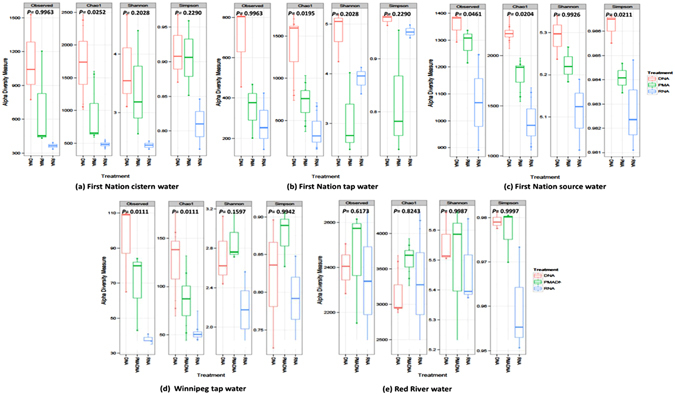
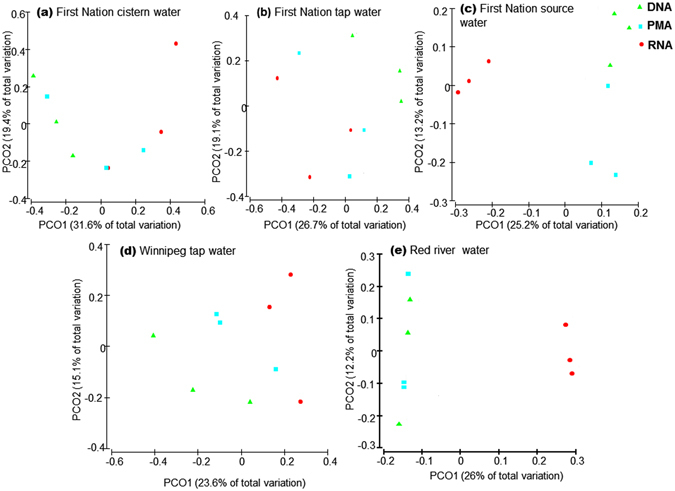
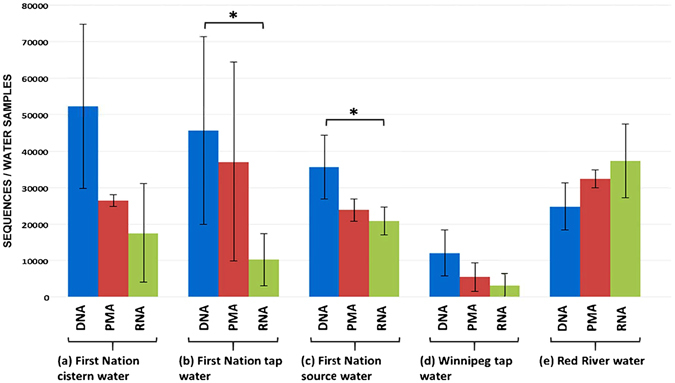
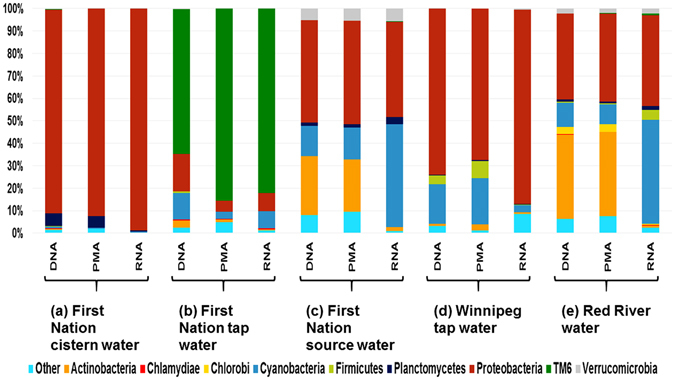
The limitation of 16S rRNA gene sequencing (DNA-based) for microbial community analyses in water is the inability to differentiate live (dormant cells as well as growing or non-growing metabolically active cells) and dead cells, which can lead to false positive results in the absence of live microbes. Propidium-monoazide (PMA) has been used to selectively remove DNA from dead cells during downstream sequencing process. In comparison, 16S rRNA sequencing (RNA-based) can target live microbial cells in water as both dormant and metabolically active cells produce rRNA. The objective of this study was to compare the efficiency and sensitivity of DNA-based, PMA-based and RNA-based 16S rRNA Illumina sequencing methodologies for live bacteria detection in water samples experimentally spiked with different combination of bacteria (2 gram-negative and 2 gram-positive/acid fast species either all live, all dead, or combinations of live and dead species) or obtained from different sources (First Nation community drinking water; city of Winnipeg tap water; water from Red River, Manitoba, Canada). The RNA-based method, while was superior for detection of live bacterial cells still identified a number of 16S rRNA targets in samples spiked with dead cells. In environmental water samples, the DNA- and PMA-based approaches perhaps overestimated the richness of microbial community compared to RNA-based method. Our results suggest that the RNA-based sequencing was superior to DNA- and PMA-based methods in detecting live bacterial cells in water.
Overview
The claims and statistics of this paper haven’t been checked yet.
Free: it reads the open-access text and checks the first 5 claims that cite a source we can check. Create a free account to check every claim.
Integrity signals
Registry
Cites
Statistics
Figures
Verification
Claims the paper makes
The claims and statistics of this paper haven’t been checked yet.
Free: it reads the open-access text and checks the first 5 claims that cite a source we can check. Create a free account to check every claim.
Claims other papers make about this one
Each is checked against this paper’s own text: does it say what the citing paper says it does?
In the citing paper
“The importance of retaining the ability for cell-free DNA detection from culture-negative samples from dead organisms is also why incorporation of a propidium monoazide treatment step to select for DNA from live organisms may not be clinically useful as an enrichment method for mNGS102.”
From Clinical metagenomics (2019) · cites this paper as [102]
Self-check
Percentages, sums and reported differences re-computed from the paper’s own numbers.
The self-check needs the paper’s full text.
Citations
Cites
1 retracted
Lagier, J.-C., Khelaifia, S., Alou, M. T., Ndongo, S., Dione, N., Hugon, P., Caputo, A., Cadoret, F., Traore, S. I., Seck, E. H., et al. (2016) · Nature Microbiology · doi:10.1038/nmicrobiol.2016.203 · Cited by 951 · cited 1×
“5 × 10⁴ CFU/ml in triplicate as follow: (1) four live bacterial species, (2) four dead bacterial species, (3) dead gram-positive and acid-fast species plus live gram-negative species, (4) dead gram-negative species plus live gram-positive and acid-fast species, and (5) HPLC grade water without any bacterial culture (n…”
MethodRetractedQIIME allows analysis of high-throughput community sequencing data
Caporaso, J. G., Kuczynski, J., Stombaugh, J., Bittinger, K., Bushman, F. D., Costello, E. K., Fierer, N., Peña, A. G., Goodrich, J. K., Gordon, J. I., et al. (2010) · Nature Methods · doi:10.1038/nmeth.f.303 · Cited by 34,887
Search and clustering orders of magnitude faster than BLAST
Edgar, R. C. (2010) · Bioinformatics · doi:10.1093/bioinformatics/btq461 · Cited by 20,826
Naïve Bayesian Classifier for Rapid Assignment of rRNA Sequences into the New Bacterial Taxonomy
Wang, Q., Garrity, G. M., Tiedje, J. M., & Cole, J. R. (2007) · Applied and Environmental Microbiology · doi:10.1128/aem.00062-07 · Cited by 19,885
FLASH: fast length adjustment of short reads to improve genome assemblies
Magoč, T., & Salzberg, S. L. (2011) · Bioinformatics · doi:10.1093/bioinformatics/btr507 · Cited by 15,366
UCHIME improves sensitivity and speed of chimera detection
Edgar, R. C., Haas, B. J., Clemente, J. C., Quince, C., & Knight, R. (2011) · Bioinformatics · doi:10.1093/bioinformatics/btr381 · Cited by 15,114
FastTree 2 – Approximately Maximum-Likelihood Trees for Large Alignments
Price, M. N., Dehal, P. S., & Arkin, A. P. (2010) · PLoS ONE · doi:10.1371/journal.pone.0009490 · Cited by 14,894
Greengenes, a Chimera-Checked 16S rRNA Gene Database and Workbench Compatible with ARB
DeSantis, T. Z., Hugenholtz, P., Larsen, N., Rojas, M., Brodie, E. L., Keller, K., Huber, T., Dalevi, D., Hu, P., & Andersen, G. L. (2006) · Applied and Environmental Microbiology · doi:10.1128/aem.03006-05 · Cited by 10,891
Ultra-high-throughput microbial community analysis on the Illumina HiSeq and MiSeq platforms
Caporaso, J. G., Lauber, C. L., Walters, W. A., Berg-Lyons, D., Huntley, J., Fierer, N., Owens, S. M., Betley, J., Fraser, L., Bauer, M., et al. (2012) · The ISME Journal · doi:10.1038/ismej.2012.8 · Cited by 8,839
UniFrac: a New Phylogenetic Method for Comparing Microbial Communities
Lozupone, C., & Knight, R. (2005) · Applied and Environmental Microbiology · doi:10.1128/aem.71.12.8228-8235.2005 · Cited by 8,227
Research works printed but not linked: 1
- Cornell, J. A. Experiments with Mixtures: Designs, Models, and the Analysis of Mixture Data. Third Edition edn, (John Wiley & Sons, 2011).
Cited by
Chiu, C. Y., & Miller, S. A. (2019) · Nature Reviews Genetics · doi:10.1038/s41576-019-0113-7 · Cited by 1,620
Perrin, Y., Bouchon, D., Delafont, V., Moulin, L., & Héchard, Y. (2018) · Water Research · doi:10.1016/j.watres.2018.11.013 · Cited by 137
Metagenomics Approaches for the Detection and Surveillance of Emerging and Recurrent Plant Pathogens
Piombo, E., Abdelfattah, A., Droby, S., Wisniewski, M., Spadaro, D., & Schena, L. (2021) · Microorganisms · doi:10.3390/microorganisms9010188 · Cited by 146
Host DNA depletion efficiency of microbiome DNA enrichment methods in infected tissue samples
Heravi, F. S., Zakrzewski, M., Vickery, K., & Hu, H. (2020) · Journal of Microbiological Methods · doi:10.1016/j.mimet.2020.105856 · Cited by 123
Garel, M., Bonin, P., Martini, S., Guasco, S., Roumagnac, M., Bhairy, N., Armougom, F., & Tamburini, C. (2019) · Frontiers in Microbiology · doi:10.3389/fmicb.2019.00453 · Cited by 113
“Beyond RNA instability and bias originating from DNA/RNA extraction and amplification, the rRNA- overcomes rDNA-based approach for detecting live prokaryotic cells in water (Li et al., 2017).”
Wang, Y., Yan, Y., Thompson, K. N., Bae, S., Accorsi, E. K., Zhang, Y., Shen, J., Vlamakis, H. C., Hartmann, E. M., & Huttenhower, C. (2021) · Microbiome · doi:10.1186/s40168-020-00961-3 · Cited by 123
Unfolding the Human Milk Microbiome Landscape in the Omics Era
Ruíz, L., García-Carral, C., & Rodríguez, J. M. (2019) · Frontiers in Microbiology · doi:10.3389/fmicb.2019.01378 · Cited by 97
Peddle, S. D., Hodgson, R. J., Borrett, R. J., Brachmann, S., Davies, T. C., Erickson, T. E., Liddicoat, C., Muñoz‐Rojas, M., Robinson, J. M., Watson, C. D., et al. (2024) · Biological reviews/Biological reviews of the Cambridge Philosophical Society · doi:10.1111/brv.13124 · Cited by 109
“Furthermore, both amplicon and shotgun metagenomics do not discern between active and inactive organisms as relic DNA in the sample is also sequenced (Li et al ., 2017; Sun & Ge, 2023).”
Progress of analytical tools and techniques for human gut microbiome research
Song, E.-J., Lee, E.-S., & Nam, Y.-D. (2018) · Journal of Microbiology · doi:10.1007/s12275-018-8238-5 · Cited by 74
Coker, J. K. C., Zhalnina, K., Marotz, C. A., Thiruppathy, D., Tjuanta, M., D’Elia, G., Hailu, R., Mahosky, T., Rowan, M. P., Northen, T. R., et al. (2022) · mSystems · doi:10.1128/msystems.00951-22 · Cited by 88
“Numerous studies have applied PMA to bacterial isolates or communities to quantify the number of live and dead cells (45, 46, 56, 57).”
BackgroundMicrofluidics for Rapid Detection of Live Pathogens
Rossi, C. S., Coulon, F., Ma, S., Zhang, Y. S., & Yang, Z. (2023) · Advanced Functional Materials · doi:10.1002/adfm.202212081 · Cited by 85
Trinh, K. T. L., & Lee, N. Y. (2022) · Pathogens · doi:10.3390/pathogens11091057 · Cited by 87
Metcalf, R., White, H. L., Ormsby, M. J., Oliver, D. M., & Quilliam, R. S. (2022) · Environmental Pollution · doi:10.1016/j.envpol.2022.120955 · Cited by 80
“…the environment often harbour potential pathogens and FIOs (Rodrigues et al., 2019; Shi et al., 2021; Kelly et al., 2021; Metcalf et al., 2022b); although most of this evidence has come from 16 S rRNA sequencing studies, which does not differentiate between live and dead bacteria (Li et al., 2017).”
BackgroundWang, Y., Thompson, K. N., Yan, Y., Short, M. I., Zhang, Y., Franzosa, E. A., Shen, J., Hartmann, E. M., & Huttenhower, C. (2023) · Microbiome · doi:10.1186/s40168-022-01449-y · Cited by 86
“Sequencing targeting the 16S rRNA transcripts has been widely used for viability assessment in various environments, including microbial communities sampled from soil [16, 17], water [11], indoor environments [18], and human bodies [19].”
BackgroundJiang, L., Chen, L., & Zhu, L. (2019) · Water Research · doi:10.1016/j.watres.2019.06.015 · Cited by 68
Srinivas, M., O’Sullivan, Ó., Cotter, P. D., van Sinderen, D., & Kenny, J. G. (2022) · Foods · doi:10.3390/foods11203297 · Cited by 75
“Live, metabolically active microbes in a sample can also be selected for and characterised using methods such as metatranscriptomics and metaproteomics where only mRNA or actively-expressed proteins, respectively, are sequenced [53,56,58].”
BackgroundGodoy, R. G., Marcondes, M. Â., Pessôa, R., Nascimento, A., Victor, J. R., Duarte, A. J. D. S., Clissa, P. B., & Sanabani, S. S. (2020) · Scientific Reports · doi:10.1038/s41598-020-66386-y · Cited by 63
Bulk and Active Sediment Prokaryotic Communities in the Mariana and Mussau Trenches
Liu, R., Wang, Z., Wang, L., Li, Z., Fang, J., Wei, X. L., Wei, W., Cao, J., Wei, Y., & Xie, Z. (2020) · Frontiers in Microbiology · doi:10.3389/fmicb.2020.01521 · Cited by 64
“…communities utilized ribosomal RNA gene (rDNA) as their molecular target, which detect the bulk community including not only the metabolically active taxa but also the dormant, deceased taxa and even extracellular DNAs that persisted in the environments (Liu et al., 2015; Li et al., 2017).”
BackgroundKowallik, V., & Mikheyev, A. S. (2021) · mBio · doi:10.1128/mbio.02966-21 · Cited by 71
“Compared to DNA, RNA degrades more rapidly in the environment with an estimated half-life of a few minutes, which is why it is used as a method to identify active microbes (74).”
MethodBotta, C., Ferrocino, I., Pessione, A., Cocolin, L., & Rantsiou, K. (2020) · Applied and Environmental Microbiology · doi:10.1128/aem.01861-20 · Cited by 59
“in response to external stimuli like ozone with greater reliability than other sequencing methods (49, 50).”
RNA-based qPCR as a tool to quantify and to characterize dual-species biofilms
Magalhães, A. P., França, Â., Pereira, M. O., & Cerca, N. (2019) · Scientific Reports · doi:10.1038/s41598-019-50094-3 · Cited by 60
Ismail, A. A., Al-Hajji, L. A., Azad, I. S., Al-Yaqoot, A., Habibi, N., Alseidi, M., & Ahmed, S. (2022) · Journal of the Taiwan Institute of Chemical Engineers · doi:10.1016/j.jtice.2022.104627 · Cited by 50
Bacterial community dynamics and disinfection impact in cooling water systems
Pinel, I., Moed, D. H., Vrouwenvelder, J. S., & van Loosdrecht, M. C. M. (2020) · Water Research · doi:10.1016/j.watres.2020.115505 · Cited by 48
“Since 16S rRNA gene amplicon sequencing does not differentiate between live, dormant and damaged cells (Li et al., 2017), the association of relative abundance with total cell count can help quantify the abundance of bacterial groups and identify growth or decay of specific taxonomic orders.”
BackgroundBroman, E., Sachpazidou, V., Pinhassi, J., & Dopson, M. (2017) · Frontiers in Microbiology · doi:10.3389/fmicb.2017.02453 · Cited by 54
“Therefore, RNA-seq is suggested as a better alternative (Li et al., 2017).”
MethodStinson, L. F., Keelan, J. A., & Payne, M. S. (2019) · Letters in Applied Microbiology · doi:10.1111/lam.13119 · Cited by 46
“This method has previously been used to selectively amplify DNA from intact bacterial cells in the adult human gut (Chu et al. 2017), the preterm infant gut (Young et al. 2017), water (Li et al. 2017), and even space dust (Checinska et al. 2015).”
BackgroundMethodStevick, R. J., Post, A. F., & Gómez-Chiarri, M. (2021) · Animal Microbiome · doi:10.1186/s42523-020-00066-0 · Cited by 55
“The differences in microbial composition observed in oyster gut samples between the 16S rRNA gene and the metatranscriptomics data were not unexpected, considering that metatranscriptomes reflect actively transcribing taxa, while the 16S rRNA gene amplicon method detects both live and recently dead microbes [83].”
BackgroundErkorkmaz, B. A., Gat, D., & Rudich, Y. (2023) · Communications Earth & Environment · doi:10.1038/s43247-023-00679-8 · Cited by 43
Ferro, S., Amorico, T., & Deo, P. (2018) · Food Control · doi:10.1016/j.foodcont.2018.04.016 · Cited by 45
Salgar-Chaparro, S. J., & Machuca, L. L. (2019) · Frontiers in Microbiology · doi:10.3389/fmicb.2019.02587 · Cited by 54
SARS‐CoV‐2, other respiratory viruses and bacteria in aerosols: Report from Kuwait's hospitals
Habibi, N., Uddin, S., Al‐Salameen, F., Al-Amad, S., Kumar, V., Alotaibi, M. A., Razzack, N. A., Shajan, A. B., & Shirshikar, F. (2021) · Indoor Air · doi:10.1111/ina.12871 · Cited by 43
Wutkowska, M., Vader, A., Mundra, S., Cooper, E. J., & Eidesen, P. B. (2019) · Frontiers in Microbiology · doi:10.3389/fmicb.2018.03243 · Cited by 51
“It was recently shown that using rRNA as sequencing template was superior to rDNA in detecting live bacterial cells in water (Li et al., 2017).”
MethodCano‐Díaz, C., Maestre, F. T., Eldridge, D. J., Singh, B. K., Bardgett, R. D., Fierer, N., & Delgado‐Baquerizo, M. (2020) · Global Ecology and Biogeography · doi:10.1111/geb.13173 · Cited by 48
“Second, we are using amplicon sequencing DNA-based analyses (as described at the end of this section), which characterize not only the active portion of cyanobacterial communities but also the dormant one at the time of sampling (Li et al., 2017).”
MethodUncovering Viable Microbiome in Anaerobic Sludge Digesters by Propidium Monoazide (PMA)-PCR
Ni, J., Hatori, S., Wang, Y., Li, Y., & Kubota, K. (2019) · Microbial Ecology · doi:10.1007/s00248-019-01449-w · Cited by 40
Macey, M. C., Fox‐Powell, M. G., Ramkissoon, N. K., Stephens, B. P., Barton, T., Schwenzer, S. P., Pearson, V. K., Cousins, C. R., & Olsson‐Francis, K. (2020) · Scientific Reports · doi:10.1038/s41598-020-67815-8 · Cited by 47
Rovira, P., Brugnini, G., Rodríguez, J., Cabrera, M. C., Saadoun, A., de Souza, G., Luzardo, S., & Rufo, C. (2023) · Foods · doi:10.3390/foods12040694 · Cited by 48
Huang, J., Liang, Z., Liu, Y., Zhou, J., & He, F. (2022) · Analytical Chemistry · doi:10.1021/acs.analchem.2c02538 · Cited by 38
Bairoliya, S., Kumar, A., & Cao, B. (2019) · Environmental Science & Technology Letters · doi:10.1021/acs.estlett.9b00185 · Cited by 36
Self-citationShifts in composition and activity of oral biofilms after fluoride exposure
López-López, A., & Mira, A. (2020) · Microbial Ecology · doi:10.1007/s00248-020-01531-8 · Cited by 26
“We analyzed the sequence datasets derived from the DNA (total bacterial composition) and the cDNA (active bacterial composition) 16S rRNA gene libraries separately, in order to reveal the total and metabolically active members of the community, as DNA-based identification cannot always discriminate between live and de…”
MethodKowallik, V., & Mikheyev, A. S. (2021) · Institutional Repositories DataBase (IRDB) · Cited by 35
Devi, P., Maurya, R., Mehta, P., Shamim, U., Yadav, A., Chattopadhyay, P., Kanakan, A., Khare, K., Vasudevan, J. S., Sahni, S., et al. (2022) · Microbiology Spectrum · doi:10.1128/spectrum.02311-21 · Cited by 39
Wilson, D. J., Middleton, J. R., Adkins, P. R. F., & Goodell, G. M. (2018) · Journal of Clinical Microbiology · doi:10.1128/jcm.01381-18 · Cited by 31
“Because all diagnostic tests were performed on fresh colonies in the present study, there was no issue with detection of nonviable bacteria, but detection of nonviable organisms can occur with MALDI-TOF MS and 16S rRNA methods, which is a problem when trying to diagnose active cases of mastitis (25, 26).”
BackgroundSiponen, S., Jayaprakash, B., Hokajärvi, A.-M., Gomez‐Alvarez, V., Inkinen, J., Ryzhikov, I., Räsänen, P., Ikonen, J., Pursiainen, A., Kauppinen, A., et al. (2023) · Water Research · doi:10.1016/j.watres.2023.120858 · Cited by 30
“An RNA-based approach gives an estimation of live (either dormant or metabolically active) members of the bacterial community, as ribosomal RNA is actively produced and regulated by living cells and it degrades more quickly than DNA after cell death (Li et al., 2017).”
Effect of wastewater treatment plant discharge on the bacterial community in a receiving river
Lu, Q., Mao, J., Xia, H., Song, S., Chen, W., & Zhao, D. (2022) · Ecotoxicology and Environmental Safety · doi:10.1016/j.ecoenv.2022.113641 · Cited by 29
Bacterial and fungal communities in indoor aerosols from two Kuwaiti hospitals
Habibi, N., Uddin, S., Behbehani, M., Salameen, F. A., Razzack, N. A., Zakir, F., Shajan, A. B., & Alam, F. (2022) · Frontiers in Microbiology · doi:10.3389/fmicb.2022.955913 · Cited by 34
“The reaction mix was assembled by adding 18 μl of master mix to 2 μl of RNA and incubated for 5 min at 20C (priming), 20 min at 46C (revere transcription), and 1 min at 95C (RT inactivation) (Li et al., 2017).”
MethodShi, Q., Chen, Z., Yan, H., Xu, M., Cao, K.-F., Mao, Y., Chen, X., & Hu, H. (2023) · The Science of The Total Environment · doi:10.1016/j.scitotenv.2023.165199 · Cited by 29
RetractedJohnston, J., Vilardi, K. J., Cotto, I., Sudarshan, A. S., Bian, K., Klaus, S., Bachmann, M., Parsons, M., Wilson, C., Bott, C. B., et al. (2024) · Environmental Science & Technology · doi:10.1021/acs.est.4c04375 · Cited by 32
Miralles, M. M., Maestre‐Carballa, L., Gómez, M. L., & Martínez‐García, M. (2019) · Foods · doi:10.3390/foods8100480 · Cited by 39
“The analysis of 16S rRNA as a biomarker for metabolic activity has been frequently employed to identify the active bacterial fraction in a sample [19,39].”
BackgroundMethodAcharya, K., Halla, F. F., Massawa, S. M., Mgana, S. M., Komar, T., Davenport, R. J., & Werner, D. (2020) · Journal of Environmental Management · doi:10.1016/j.jenvman.2020.111319 · Cited by 27
Mbelele, P. M., Mpolya, E. A., Sauli, E., Mtafya, B., Ntinginya, N. E., Addo, K. K., Kreppel, K. S., Mfinanga, S., Phillips, P. P. J., Gillespie, S. H., et al. (2021) · Journal of Clinical Microbiology · doi:10.1128/jcm.02927-20 · Cited by 25
Yap, M., O’Sullivan, Ó., O’Toole, P. W., & Cotter, P. D. (2022) · Frontiers in Microbiology · doi:10.3389/fmicb.2022.1036643 · Cited by 30
“, 2021), while RNA-based methods examine the activity of cells, as RNA has a shorter average half-life than DNA (Emerson et al., 2017; Li et al., 2017; Gomez-Silvan et al., 2018; Yang et al., 2020).”
BackgroundMethodInfluentialThe prevalence and transcriptional activity of the mucosal microbiota of ulcerative colitis patients
Moen, A. E. F., Lindstrøm, J. C., Tannæs, T. M., Vatn, S., Ricanek, P., Vatn, M. H., Jahnsen, J., Frengen, A. B., Dahl, F. A., You, P., et al. (2018) · Scientific Reports · doi:10.1038/s41598-018-35243-4 · Cited by 34
Hospital and urban wastewaters shape the matrix and active resistome of environmental biofilms
Buelow, E., Dauga, C., Carrion, C., Mathé‐Hubert, H., Achaibou, S., Gaschet, M., Jové, T., Chesneau, O., Kennedy, S., Ploy, M.-C., et al. (2023) · Water Research · doi:10.1016/j.watres.2023.120408 · Cited by 31
Lee, C. E., Messer, L. F., Holland, S. I., Gutiérrez, T., Quilliam, R. S., & Surget, S. M. (2023) · Critical Reviews in Environmental Science and Technology · doi:10.1080/10643389.2023.2224182 · Cited by 26
“This technique cannot distinguish between active, inactive, or dead cells (Li et al., 2017), meaning any assumptions made based on taxonomic markers are skewed by present dead and dormant bacteria (Tarafdar et al., 2022).”
BackgroundKalinowska, A., Pierpaoli, M., Jankowska, K. M., Fudala‐Książek, S., Remiszewska-Skwarek, A., & Łuczkiewicz, A. (2022) · The Science of The Total Environment · doi:10.1016/j.scitotenv.2022.154630 · Cited by 26
Messman, R. D., & Lemley, C. O. (2023) · Translational Animal Science · doi:10.1093/tas/txad057 · Cited by 25
“To support this hypothesis further, the only sequencing technique utilized is 16S rRNA gene amplification which does not discriminate between dead or alive bacteria (Li et al., 2017).”
MethodKiely, C. J., Pavli, P., & O'Brien, C. L. (2018) · Internal Medicine Journal · doi:10.1111/imj.13998 · Cited by 26
Legrand, T. P. R. A., Wos‐Oxley, M. L., Wynne, J. W., Weyrich, L. S., & Oxley, A. P. A. (2021) · Journal of Applied Microbiology · doi:10.1111/jam.15113 · Cited by 23
“Due to this advantageous property, PMA has thus been used on a wide range of samples to discriminate between viable and nonviable bacterial cells and/or spores in microbiome-related studies, including human saliva, human sputum, human stool, rex rabbits gut contents and water (Rawsthorne et al. 2009; Rogers et al. 201…”
BackgroundWoodruff, K. L., Hummel, G. L., Austin, K. J., Lake, S. L., & Cunningham-Hollinger, H. C. (2022) · Journal of Animal Science · doi:10.1093/jas/skac264 · Cited by 28
How to Verify Non-Presence—The Challenge of Axenic Algae Cultivation
Pokorny, L., Hausmann, B., Pjevac, P., & Schagerl, M. (2022) · Cells · doi:10.3390/cells11162594 · Cited by 25
“recommended the use of RNA-based sequencing instead of DNA-based methods for reliably detecting living cells [43].”
BackgroundMethodTop abundant deep ocean heterotrophic bacteria can be retrieved by cultivation
Sanz-Sáez, I., Sánchez, P., Salazar, G., Sunagawa, S., de Vargas, C., Bowler, C., Sullivan, M. B., Wincker, P., Karsenti, E., Pedrós‐Alió, C., et al. (2023) · ISME Communications · doi:10.1038/s43705-023-00290-0 · Cited by 23
“The Malaspina Surface and Malaspina vertical-size fraction pro fi les datasets were sequenced at the Research and Testing Laboratory facility (https://rtlgenomics.com) also with Illumina MiSeq platform and the 2 × 250bp paired-end approach.”
Nanopore 16S sequencing enhances the detection of bacterial meningitis after neurosurgery
Jang, Y., Kim, S., Kim, N., Son, H., Ha, E. J., Koh, E. J., Phi, J. H., Park, C., Kim, J. E., Kim, S., et al. (2022) · Annals of Clinical and Translational Neurology · doi:10.1002/acn3.51517 · Cited by 21
“16S amplicon sequencing itself does not yet determine complete resolution of bacterial infection because it can also detect DNA from dead bacteria.(41) In addition, the negative PCR determination might not have been accurate because it is dependent on the inspector’s visual view of the electrophoresis band.”
BackgroundMalayil, L., Ramachandran, P., Chattopadhyay, S., Cagle, R., Hittle, L. E., Ottesen, A., Mongodin, E. F., & Sapkota, A. R. (2020) · Water Research · doi:10.1016/j.watres.2020.116185 · Cited by 21
Analysis of Cultivable Microbial Community during Kimchi Fermentation Using MALDI-TOF MS
Kim, E., Yang, S.-M., & Kim, H. (2021) · Foods · doi:10.3390/foods10051068 · Cited by 22
“The DNA-based identification methods tend to overestimate bacterial abundance in a sample and fail to reflect the presence of microbial subpopulations with different viability states [28,29].”
BackgroundBlais, M., Matveev, A., Lovejoy, C., & Vincent, W. F. (2022) · Frontiers in Microbiology · doi:10.3389/fmicb.2021.760282 · Cited by 28
“The combined use of rRNA and rDNA provided a more reliable identification of this core assemblage, as rRNA is considered a more accurate guide to the presence of living cells (Li et al., 2017).”
MethodYamamoto, K., Hackley, K. C., Kelly, W. R., Panno, S. V., Sekiguchi, Y., Sanford, R. A., Liu, W., Kamagata, Y., & Tamaki, H. (2019) · Scientific Reports · doi:10.1038/s41598-019-49996-z · Cited by 22
Unravelling biogeochemical drivers of methylmercury production in an Arctic fen soil and a bog soil
Zhang, L., Philben, M., Taş, N., Johs, A., Yang, Z., Wullschleger, S. D., Graham, D. E., Pierce, E. M., & Gu, B. (2022) · Environmental Pollution · doi:10.1016/j.envpol.2022.118878 · Cited by 23
Quantifying the viability of lactic acid bacteria using ratiometric fluorescence assays
Chen, Y., Sun, J., Luo, M., Cao, Y., Chen, Q., & He, S. (2024) · Microchemical Journal · doi:10.1016/j.microc.2024.111485 · Cited by 19
Du, Y.-J., Wang, Z., Liu, K., Chai, G., Chi, Y., Li, T., Duan, Y., Xia, T., Liu, D., & Che, R. (2025) · iMetaOmics. · doi:10.1002/imo2.70011 · Cited by 19
“Most importantly, some studies have identified serious limitations regarding PMA treatment in reflecting complex live microbial communities [20, 60].”
Sources of variability for viability PCR using propidium monoazide
Jansriphibul, K., Krohn, C. C., & Ball, A. S. (2025) · Microbiological Research · doi:10.1016/j.micres.2025.128224 · Cited by 21
Abramov, S. M., Straub, D., Tejada, J., Grimm, L., Schädler, F., Bulaev, A., Thorwarth, H., Amils, R., Kappler, A. A., & Kleindienst, S. (2021) · Applied and Environmental Microbiology · doi:10.1128/aem.02290-21 · Cited by 20
“Another advantage of the RNA-based approach is the high degradation rate of RNA in the environment (compared to DNA), which reduces the chance to obtain false-positive results of microbial community analysis (47).”
BackgroundCuetero-Martínez, Y., Flores-Ramírez, A., Cobos‐Vasconcelos, D. D. L., Garrido, J. F. A., López‐Vidal, Y., & Noyola, A. (2022) · Chemosphere · doi:10.1016/j.chemosphere.2022.137383 · Cited by 18
Lousada, M. B., Edelkamp, J., Lachnit, T., Fehrholz, M., Jiménez, F., & Paus, R. (2023) · BMC Research Notes · doi:10.1186/s13104-023-06302-5 · Cited by 20
“In the future, this technique can be redefined by complementing 16S rRNA gene sequencing with RNA in situ hybridisation for selected bacteria of interest [19] and techniques aimed at increasing the measurement of viable bacteria [43].”
MethodLight–dark cycles may influence in situ soil bacterial networks and diurnally‐sensitive taxa
Fickling, N. W., Abbott, C. A., Brame, J. E., Cando‐Dumancela, C., Liddicoat, C., Robinson, J. M., & Breed, M. F. (2024) · Ecology and Evolution · doi:10.1002/ece3.11018 · Cited by 17
“Additionally, 16S rRNA amplicon sequencing may not effectively detect change over a short interval due to the stability of DNA and the inability to dif - ferentiate between live and dead bacteria (Li et al., 2017).”
BackgroundHuman‐ and infrastructure‐associated bacteria in greywater
Nagarkar, M., Keely, S. P., Brinkman, N. E., & Garland, J. L. (2021) · Journal of Applied Microbiology · doi:10.1111/jam.15118 · Cited by 21
“Culture-based assays like colony-forming unit (CFU) counts are limited to organisms that can grow in selective media but are valuable in their ability to detect viable cells, which DNA sequencing methods cannot effectively discern (Li et al. 2017).”
BackgroundYan, P., Shen, C., Zou, Z., Fan, L., Li, X., Zhang, L., Zhang, L., Dong, C., Fu, J., Han, W., et al. (2022) · Agronomy · doi:10.3390/agronomy12081751 · Cited by 20
Suárez‐Moo, P., Lamelas, A., García-Bautista, I., Barahona-Pérez, L. F., Sandoval-Flores, G., Valdés-Lozano, D. S., Toledano-Thompson, T., Polanco‐Lugo, E., & Valdez-Ojeda, R. A. (2020) · PeerJ · doi:10.7717/peerj.10339 · Cited by 17
Protists modulate active bacterial community composition in paddy field soils
Fujino, M., Suzuki, K., Harada, N., & Asiloglu, R. (2023) · Biology and Fertility of Soils · doi:10.1007/s00374-023-01733-5 · Cited by 16
“Indeed, a comparison of DNA- and RNA-based methods showed that 16S rRNA sequencing is superior to the DNA-based method to exclude dead bacterial DNA (Li et al. 2017).”
BackgroundDučić, M., Barcenilla, C., Cobo-Díaz, J. F., López, M., Álvarez‐Ordóñez, A., & Maradona, M. P. (2022) · Food Research International · doi:10.1016/j.foodres.2022.112162 · Cited by 16
Differences in the Active Endometrial Microbiota across Body Weight and Cancer in Humans and Mice
Kaakoush, N. O., Olzomer, E. M., Kosasih, M., Martin, A. R., Fargah, F., Lambie, N., Susic, D. F., Hoehn, K. L., Farrell, R., & Byrne, F. L. (2022) · Cancers · doi:10.3390/cancers14092141 · Cited by 17
“This method, compared with sequencing DNA, captures actively replicating bacteria and reduces potential bias from dead microbes, relic DNA, and contaminants, and is well suited to samples with a lower abundance of microbes [19,20].”
MethodBaede, V. O., Barray, A., Tavakol, M., Lina, G., Vos, M. D., & Rasigade, J. (2022) · Scientific Reports · doi:10.1038/s41598-022-21453-4 · Cited by 17
Low microbial biomass within the reproductive tract of mid-lactation dairy cows: A study approach
Lietaer, L., Pascottini, O. B., Hernandez‐Sanabria, E., Kerckhof, F., Lacoere, T., Boon, N., Vlaminck, L. E. M., OPSOMER, G., & de Wiele, T. V. (2021) · Journal of Dairy Science · doi:10.3168/jds.2020-19554 · Cited by 17
“Nevertheless, standard DNA-based NGS techniques are unable to distinguish cell-free DNA from DNA from viable (and also dead) cells, nor among resident bacteria from pathogens or accidentally introduced bacteria (Li et al., 2017; O’Callaghan et al., 2020).”
BackgroundMedina, W. R. M., Eramo, A., & Fahrenfeld, N. L. (2021) · Microbial Ecology · doi:10.1007/s00248-021-01775-y · Cited by 15
Egbadon, E., Wigley, K., Nwoba, S. T., Carere, C. R., Weaver, L., Baronian, K. H. R., Burbery, L., & Gostomski, P. A. (2023) · Chemosphere · doi:10.1016/j.chemosphere.2023.140528 · Cited by 14
Towards a Rational Basis for the Selection of Probiotics to Improve Silkworm Health and Performance
Suraporn, S., Liu, J., Ren, F., Wang, L., Feng, M., Terenius, O., & Swevers, L. (2025) · Insects · doi:10.3390/insects16020162 · Cited by 15
“Results need to be treated with caution, however, since DNA sequencing does not discriminate between dead and live microorganisms or between dormant and growing cells, a limitation which could be addressed by RNA-based sequencing [44].”
Wang, H., Shankar, V., & Jiang, X. (2022) · Microbiology Spectrum · doi:10.1128/spectrum.01845-21 · Cited by 14
“from dead cells, investigators used a pretreatment viability assay with propidium monoazide (PMA) before DNA extraction (18).”
MethodKleyer, H., Tecon, R., & Or, D. (2019) · Applied and Environmental Microbiology · doi:10.1128/aem.02057-19 · Cited by 14
“The use of propidium monoazide, which penetrates only membrane-compromised cells and inhibits PCR amplification, could help detect only living bacteria in the community (39).”
Kim, B.-C., Moon, C., Jeon, B. S., Angenent, L. T., Choi, Y., & Nam, K. (2021) · Chemical Engineering Journal · doi:10.1016/j.cej.2021.131587 · Cited by 15
Li, X., & Liu, D. (2022) · Food Research International · doi:10.1016/j.foodres.2022.111229 · Cited by 14
Advantages of selective medium for surveillance of Tenacibaculum species in marine fish aquaculture
Kumanan, K., von Ammon, U., Fidler, A. E., Symonds, J. E., Walker, S. P., Carson, J., & Hutson, K. S. (2022) · Aquaculture · doi:10.1016/j.aquaculture.2022.738365 · Cited by 13
Reiche, T., Hageskal, G., Mareș, M., Hoel, S., Tøndervik, A., Heggeset, T. M. B., Haugen, T., Sperstad, S. B., Trøen, H. H., Bjørkøy, S., et al. (2025) · Applied and Environmental Microbiology · doi:10.1128/aem.02401-24 · Cited by 13
Yang, J., Lee, J., Choi, J., Ma, L., Heaton, E. A., & Howe, A. (2022) · Microbiology Spectrum · doi:10.1128/spectrum.02116-21 · Cited by 17
Cuetero-Martínez, Y., Cobos‐Vasconcelos, D. D. L., Garrido, J. F. A., López‐Vidal, Y., & Noyola, A. (2022) · Current Medicinal Chemistry · doi:10.2174/0929867329666220802093415 · Cited by 14
Spatial recovery of the murine gut microbiota after antibiotics perturbation
Taguer, M., Xiao, J., Crawford, R., Shi, H., Cheng, M. P., Citron, M., Hannigan, G. D., & Kasper, S. H. (2024) · mBio · doi:10.1128/mbio.00707-24 · Cited by 13
“This differs from standard 16S sequencing approaches where exogenous DNA and DNA from dead bacteria may get captured, along with the biases associated with amplification and sequencing in analysis (37).”
Challenges for pathologists in implementing clinical microbiome diagnostic testing
Gerasimova, Y., Ali, H., & Nadeem, U. (2024) · The Journal of Pathology Clinical Research · doi:10.1002/2056-4538.70002 · Cited by 18
“Furthermore, to ensure reliable analyses, maintaining a comprehensive database of the environmental normal fl ora of the laboratory and typical contaminants is essential [27,91].”
BackgroundOral Treatment With Ileal Spores Triggers Immunometabolic Shifts in Chicken Gut
Redweik, G. A. J., Kogut, M. H., Arsenault, R. J., & Mellata, M. (2020) · Frontiers in Veterinary Science · doi:10.3389/fvets.2020.00629 · Cited by 13
The effects of removing dead bacteria by propidium monoazide on the profile of salivary microbiome
Ren, Q., Wei, F., Yuan, C., Zhu, C., Zhang, Q., Quan, J., Sun, X., & Zheng, S. (2021) · BMC Oral Health · doi:10.1186/s12903-021-01832-5 · Cited by 13
“Besides PMA, Ethidium monoazide (EMA) [29], Surface-Enhanced Raman Scattering (SERS) [30], hand-held double monochromator [31] and RNA-based 16S rRNA sequencing [32] could also be used to separate or remove dead bacteria.”
MethodMancabelli, L., Milani, C., Anzalone, R., Alessandri, G., Lugli, G. A., Tarracchini, C., Fontana, F., Turroni, F., & Ventura, M. (2021) · Frontiers in Microbiology · doi:10.3389/fmicb.2021.749373 · Cited by 12
Hugon, A. M., & Golos, T. G. (2023) · Biology of Reproduction · doi:10.1093/biolre/ioad042 · Cited by 11
“Shotgun sequencing has the additional benefit of increased prediction functional information of microbial genes [35].”
InfluentialGenomic surveillance for tackling emerging plant diseases, with special reference to wheat blast
Islam, T. (2024) · CABI Reviews · doi:10.1079/cabireviews.2024.0050 · Cited by 16
Siponen, S., Ikonen, J., Gomez‐Alvarez, V., Hokajärvi, A.-M., Ruokolainen, M., Jayaprakash, B., Kolehmainen, M., Miettinen, I. T., Pitkänen, T., & Torvinen, E. (2025) · Journal of Applied Microbiology · doi:10.1093/jambio/lxaf004 · Cited by 10
“However, this DNA-based method does not provide information on whether bacteria are dead or alive (Li et al. 2017).”
Influential
Metadata
- Authors
- Li, R., Tun, H. M., Jahan, M., Zhang, Z., Kumar, A., Dilantha Fernando, W. G., Farenhorst, A., & Khafipour, E.
- Affiliations
- Yunnan Agricultural University (CN)
- University of Alberta (CA)
- University of Manitoba (CA)
- Corresponding author
- Farenhorst, Annemieke
- Khafipour, Ehsan
- Venue
- Scientific Reports
- Published
- 2017-07-18
- Volume
- 7
- Issue
- 1
- Pages
- 5752-5752
- ISSN
- 2045-2322 (ISSN-L)
- PMC
- PMC5515937
- OpenAlex
- W2734785751
- Cited by
- 203
- References
- 47
- Citations by year
- 2026: 16 · 2025: 33 · 2024: 33 · 2023: 22 · 2022: 31 · 2021: 29 · 2020: 16 · 2019: 15 · 2018: 7 · 2017: 1
- FWCI
- 8.05
- Type
- journal article
- Language
- en
- Update notices
- correction (2018-11-22)
- Open access
- gold
- doi.org
- Licence
- cc-by
- creativecommons.org/licenses/by/4.0 (tdm)
- creativecommons.org/licenses/by/4.0 (vor)
- Locations
- Scientific Reports (publishedVersion, cc-by)
- PubMed Central (publishedVersion, cc-by)
- PubMed (publishedVersion)
- Topics
- Physical Sciences › Environmental Science › Ecology › Microbial Community Ecology and Physiology
- Physical Sciences › Environmental Science › Ecology › Environmental DNA in Biodiversity Studies
- Life Sciences › Biochemistry, Genetics and Molecular Biology › Molecular Biology › Genomics and Phylogenetic Studies
- Keywords
- 16S rRNA gene sequencing, live bacteria detection, propidium monoazide, drinking water microbiology, water quality monitoring, false positive detection
- MeSH terms
- Azides, Bacteria, DNA, Bacterial, Propidium, RNA, Ribosomal, 16S, Water Microbiology, Reproducibility of Results, Microbial Viability, High-Throughput Nucleotide Sequencing, Microbiota
About these checks
Registry, retraction, Cites and statistics results are computed, not judged, with one exception: a printed reference that no index lists is read once by a model before it counts as a citation error. Claims are extracted by a model and kept only when their quote appears verbatim in the text; each cited source is then checked, with a model’s help, for whether it says what the claim relies on. Those verdicts can be wrong — read the claim’s quote and the cited source before relying on one.
Statistics and arithmetic are recomputed, not judged.
Confidence bands are shown only for fields calibrated on our annotated test set. None is calibrated yet, so no band is shown.
What counts as a claim ›How we measure confidence ›How we check this ›
Are you an author, or do you see a problem with this page? Request a review
Data sources
Bibliographic data: Semantic Scholar, OpenAlex, Crossref.
Contains information from the Semantic Scholar Academic Graph Datasets, made available under the ODC Attribution License (ODC-BY 1.0).
Semantic Scholar’s data is described in: Kinney, R., et al. (2023). The Semantic Scholar Open Data Platform. arXiv:2301.10140.
