

Comparison of DNA-, PMA-, and RNA-based 16S rRNA Illumina sequencing for detection of live bacteria in water
Open accessThe DOI matches its Crossref record; 47 of the 47 references it cites were found in a registry or an index.
Abstract
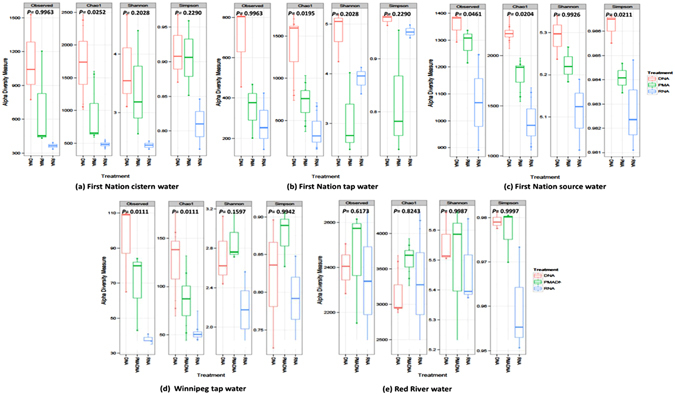
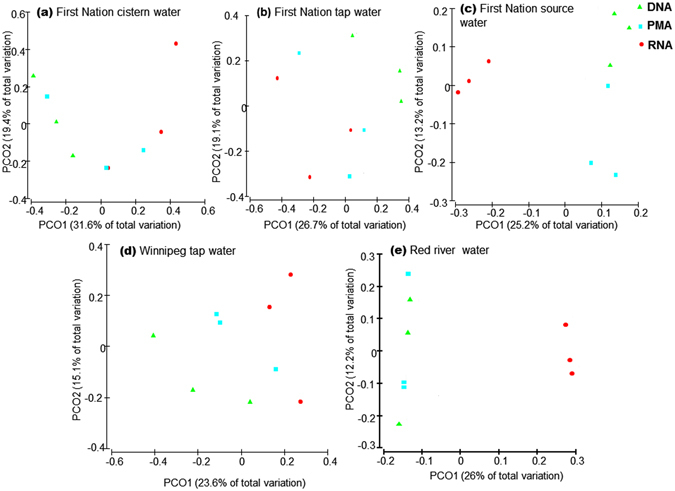
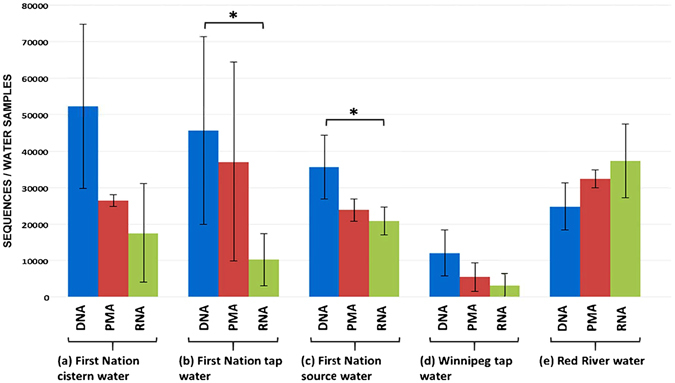
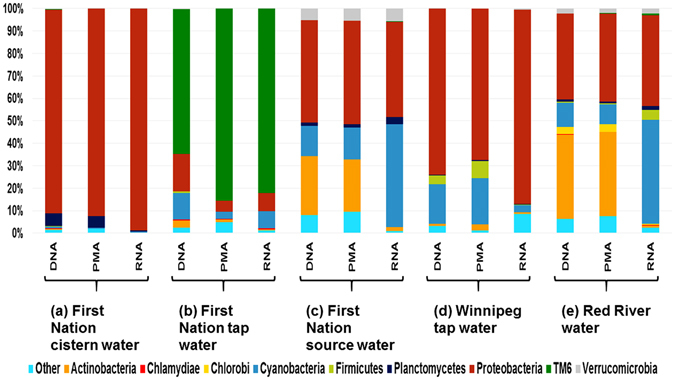
The limitation of 16S rRNA gene sequencing (DNA-based) for microbial community analyses in water is the inability to differentiate live (dormant cells as well as growing or non-growing metabolically active cells) and dead cells, which can lead to false positive results in the absence of live microbes. Propidium-monoazide (PMA) has been used to selectively remove DNA from dead cells during downstream sequencing process. In comparison, 16S rRNA sequencing (RNA-based) can target live microbial cells in water as both dormant and metabolically active cells produce rRNA. The objective of this study was to compare the efficiency and sensitivity of DNA-based, PMA-based and RNA-based 16S rRNA Illumina sequencing methodologies for live bacteria detection in water samples experimentally spiked with different combination of bacteria (2 gram-negative and 2 gram-positive/acid fast species either all live, all dead, or combinations of live and dead species) or obtained from different sources (First Nation community drinking water; city of Winnipeg tap water; water from Red River, Manitoba, Canada). The RNA-based method, while was superior for detection of live bacterial cells still identified a number of 16S rRNA targets in samples spiked with dead cells. In environmental water samples, the DNA- and PMA-based approaches perhaps overestimated the richness of microbial community compared to RNA-based method. Our results suggest that the RNA-based sequencing was superior to DNA- and PMA-based methods in detecting live bacterial cells in water.
Overview
The claims and statistics of this paper haven’t been checked yet.
Free: it reads the open-access text and checks the first 5 claims that cite a source we can check. Create a free account to check every claim.
Integrity signals
Registry
Cites
Statistics
Figures
Verification
Claims the paper makes
The claims and statistics of this paper haven’t been checked yet.
Free: it reads the open-access text and checks the first 5 claims that cite a source we can check. Create a free account to check every claim.
Claims other papers make about this one
Each is checked against this paper’s own text: does it say what the citing paper says it does?
In the citing paper
“The importance of retaining the ability for cell-free DNA detection from culture-negative samples from dead organisms is also why incorporation of a propidium monoazide treatment step to select for DNA from live organisms may not be clinically useful as an enrichment method for mNGS102.”
From Clinical metagenomics (2019) · cites this paper as [102]
Self-check
Percentages, sums and reported differences re-computed from the paper’s own numbers.
The self-check needs the paper’s full text.
Citations
Cites
1 retracted
Lagier, J.-C., Khelaifia, S., Alou, M. T., Ndongo, S., Dione, N., Hugon, P., Caputo, A., Cadoret, F., Traore, S. I., Seck, E. H., et al. (2016) · Nature Microbiology · doi:10.1038/nmicrobiol.2016.203 · Cited by 951 · cited 1×
“5 × 10⁴ CFU/ml in triplicate as follow: (1) four live bacterial species, (2) four dead bacterial species, (3) dead gram-positive and acid-fast species plus live gram-negative species, (4) dead gram-negative species plus live gram-positive and acid-fast species, and (5) HPLC grade water without any bacterial culture (n…”
MethodRetractedQIIME allows analysis of high-throughput community sequencing data
Caporaso, J. G., Kuczynski, J., Stombaugh, J., Bittinger, K., Bushman, F. D., Costello, E. K., Fierer, N., Peña, A. G., Goodrich, J. K., Gordon, J. I., et al. (2010) · Nature Methods · doi:10.1038/nmeth.f.303 · Cited by 34,887
Search and clustering orders of magnitude faster than BLAST
Edgar, R. C. (2010) · Bioinformatics · doi:10.1093/bioinformatics/btq461 · Cited by 20,826
Naïve Bayesian Classifier for Rapid Assignment of rRNA Sequences into the New Bacterial Taxonomy
Wang, Q., Garrity, G. M., Tiedje, J. M., & Cole, J. R. (2007) · Applied and Environmental Microbiology · doi:10.1128/aem.00062-07 · Cited by 19,885
FLASH: fast length adjustment of short reads to improve genome assemblies
Magoč, T., & Salzberg, S. L. (2011) · Bioinformatics · doi:10.1093/bioinformatics/btr507 · Cited by 15,366
UCHIME improves sensitivity and speed of chimera detection
Edgar, R. C., Haas, B. J., Clemente, J. C., Quince, C., & Knight, R. (2011) · Bioinformatics · doi:10.1093/bioinformatics/btr381 · Cited by 15,114
FastTree 2 – Approximately Maximum-Likelihood Trees for Large Alignments
Price, M. N., Dehal, P. S., & Arkin, A. P. (2010) · PLoS ONE · doi:10.1371/journal.pone.0009490 · Cited by 14,894
Greengenes, a Chimera-Checked 16S rRNA Gene Database and Workbench Compatible with ARB
DeSantis, T. Z., Hugenholtz, P., Larsen, N., Rojas, M., Brodie, E. L., Keller, K., Huber, T., Dalevi, D., Hu, P., & Andersen, G. L. (2006) · Applied and Environmental Microbiology · doi:10.1128/aem.03006-05 · Cited by 10,891
Ultra-high-throughput microbial community analysis on the Illumina HiSeq and MiSeq platforms
Caporaso, J. G., Lauber, C. L., Walters, W. A., Berg-Lyons, D., Huntley, J., Fierer, N., Owens, S. M., Betley, J., Fraser, L., Bauer, M., et al. (2012) · The ISME Journal · doi:10.1038/ismej.2012.8 · Cited by 8,839
UniFrac: a New Phylogenetic Method for Comparing Microbial Communities
Lozupone, C., & Knight, R. (2005) · Applied and Environmental Microbiology · doi:10.1128/aem.71.12.8228-8235.2005 · Cited by 8,227
Research works printed but not linked: 1
- Cornell, J. A. Experiments with Mixtures: Designs, Models, and the Analysis of Mixture Data. Third Edition edn, (John Wiley & Sons, 2011).
Cited by
Items 101–200 of 211
Adami, G. R., Li, W., Green, S. J., Kim, E. M., & Wu, C. D. (2025) · Scientific Reports · doi:10.1038/s41598-025-87382-0 · Cited by 12
Faaz, R. A., & Abdullah, F. A. (2022) · Journal of Advanced Veterinary and Animal Research · doi:10.5455/javar.2022.i567 · Cited by 19
“Bacterial DNA or RNA can cause diseases; thus, it might serve as a precise target for bacterial DNA amplification and detection [22].”
BackgroundDisentangling the Functional Role of Fungi in Cold Seep Sediment
Shekarriz, E., Chen, J., Xu, Z., & Liu, H. (2023) · Microbiology Spectrum · doi:10.1128/spectrum.01978-22 · Cited by 13
A phage amplification-assisted SEA-CRISPR/Cas12a system for viable bacteria detection
Xiao, X., Zhang, C., Zhang, L., Zuo, C., Wu, W., Cheng, F., Wu, D., Xie, G., Mao, X., & Yang, Y. (2024) · Journal of Materials Chemistry B · doi:10.1039/d4tb02178a · Cited by 9
Relic DNA obscures bacterial diversity and interactions in ballast tank sediment
Xue, Z., He, H., Han, Y., Tian, W. D., Li, S., Guo, J., Yu, P., Qiao, L., & Zhang, W. (2024) · Environmental Research · doi:10.1016/j.envres.2024.120715 · Cited by 11
Kumanan, K., Carson, J., Hunter, R. B. J., Rolton, A., von Ammon, U., Bandaranayake, C., Angelucci, C., Morrison, R. N., Walker, S. P., Symonds, J. E., et al. (2025) · Journal of Fish Diseases · doi:10.1111/jfd.14088 · Cited by 9
“…affected farmed fish and experimentally challenged fish using ddPCR (Table 2, Figure 6) suggests that non-viable cells or nucleic acids of this pathogen had gained entry to internal organ via haematogenous spread from the site of infection from the skin (Assefa and Abunna 2018; Li et al. 2017).”
Nakai, R., Wakana, I., & Niki, H. (2021) · iScience · doi:10.1016/j.isci.2021.102720 · Cited by 9
Environmental RNA metabarcoding for ballast water microbial diversity: Minimizing false positives
Xue, Z., Tian, W. D., Han, Y., Li, S., Guo, J., He, H., Yu, P., & Zhang, W. (2024) · The Science of The Total Environment · doi:10.1016/j.scitotenv.2024.176902 · Cited by 9
Culturomics Approaches Expand the Diagnostic Accuracy for Sexually Transmitted Infections
Wolf, E. A., Rettig, H. C., Lupatsii, M., Schlüter, B., Schäfer, K., Friedrich, D., Graspeuntner, S., & Rupp, J. (2021) · International Journal of Molecular Sciences · doi:10.3390/ijms221910815 · Cited by 15
Slinger, J., Wynne, J. W., & Adams, M. B. (2021) · Frontiers in Animal Science · doi:10.3389/fanim.2021.756101 · Cited by 9
Microbial viability assessment with PMA-qPCR: challenges, opportunities, and future directions
Tekgül, Z. B., & Adıgüzel, A. (2025) · Archives of Microbiology · doi:10.1007/s00203-025-04552-4 · Cited by 11
Daniels, S., Hepworth, J., & Moore-Colyer, M. J. S. (2020) · PLoS ONE · doi:10.1371/journal.pone.0242373 · Cited by 11
Sun, L., & D’Amico, D. J. (2023) · Food Microbiology · doi:10.1016/j.fm.2023.104319 · Cited by 9
McQuillan, J. S., Alrefaey, A., Turner, A. D., Morrell, N., Stoner, O., Brown, A. R., Kay, S., Cooke, S., & Bage, T. (2023) · Harmful Algae · doi:10.1016/j.hal.2023.102497 · Cited by 8
EMA- Versus PMA-Amplicon-Based Sequencing to Elucidate the Viable Bacterial Community in Rainwater
Reyneke, B., Waso, M., Ndlovu, T., Clements, T., Havenga, B., Khan, S., & Khan, W. (2022) · Water Air & Soil Pollution · doi:10.1007/s11270-022-05578-w · Cited by 8
Malayil, L., Chattopadhyay, S., Mongodin, E. F., & Sapkota, A. R. (2021) · Environmental Microbiome · doi:10.1186/s40793-021-00382-1 · Cited by 10
“On the other hand, the use of culture-independent, DNA-based techniques such as PCR and sequencing alone do not provide information on the viability of detected vibrios in water sources, since DNA detected through these methods can be derived from either dead or live organisms [40, 43, 84].”
BackgroundTamrakar, K., Miller, P. W., Dolan, M. C., & Wijeratne, A. (2025) · BMC Methods · doi:10.1186/s44330-025-00027-6 · Cited by 7
“However, prior studies showed that RNA-based sequencing outperforms DNA based sequencing in detecting micro-organisms, directly correlating with their active involvement within the community [9, 10].”
Salgar-Chaparro, S. J., Machuca, L. L., Lepková, K., Pojtanabuntoeng, T., & Darwin, A. (2019) · NACE CORROSION Conference · doi:10.5006/c2019-13343 · Cited by 12
Green, S. J., Torok, T., Allen, J., Eloe‐Fadrosh, E. A., Jackson, S. A., Jiang, S. C., Levine, S. S., Levy, S., Schriml, L. M., Thomas, W. K., et al. (2023) · Astrobiology · doi:10.1089/ast.2022.0044 · Cited by 8
Vulnerability of Arctic Ocean microbial eukaryotes to sea ice loss
Jackson, V. L. N., Grevesse, T., Kilias, E. S., Onda, D. F. L., Young, K. F., Allen, M. J., Walsh, D. A., Connie Lovejoy, C., & Monier, A. (2024) · Scientific Reports · doi:10.1038/s41598-024-77821-9 · Cited by 7
“Moreover, rRNA sequencing has been suggested to be superior to rDNA approaches 81 , for instance, in its sensitivity to environmental conditions 82,83 .”
Zhan, L., Song, D., Gu, Q., Yan, T., & Ma, C. (2019) · Canadian Journal of Microbiology · doi:10.1139/cjm-2019-0114 · Cited by 7
Al‐Ahmad, A., Wollensak, K., Rau, S. J., Solarte, D. L. G., Paschke, S., Lienkamp, K., & Staszewski, O. (2021) · Microorganisms · doi:10.3390/microorganisms9071427 · Cited by 8
Noble, T. H., Truong, H. H., Rombenso, A., Simon, C. J., Wade, N. M., & Wynne, J. W. (2021) · Applied Microbiology and Biotechnology · doi:10.1007/s00253-020-11052-6 · Cited by 7
Zhang, X., Shao, F., Cao, J., He, Y., Zhang, B., Zhang, B., Jun, S., Febrisiantosa, A., Feng, A., Yang, J., et al. (2025) · Food Bioscience · doi:10.1016/j.fbio.2025.107697 · Cited by 6
Mongodin, E. F., Saxena, V., Iyyathurai, J., Lakhan, R., Ma, B., Silverman, E., Lee, Z. L., & Bromberg, J. S. (2021) · Current Opinion in Organ Transplantation · doi:10.1097/mot.0000000000000929 · Cited by 6
“An environment where the communities of microbes have been killed and rendered sterile, for example, through autoclaving in the laboratory or by immune processes in the human body, may still contain bio-active DNA molecules that can be sequenced (Fig.”
InfluentialMicrobial ecology of Australian commercial rice koji and soybean miso
Allwood, J. G., Wakeling, L., & Bean, D. C. (2023) · JSFA reports · doi:10.1002/jsf2.112 · Cited by 8
Pavić, D., Grbin, D., Blagajac, A., Ćurko, J., Fiket, Ž., & Bielen, A. (2023) · Environmental Science and Pollution Research · doi:10.1007/s11356-023-28179-4 · Cited by 7
“2020), analyses based on environmental RNA (eRNA) are preferable since they target the living microbial fraction (Li et al. 2017).”
BackgroundLong, A. E., Pitta, D., Hennessy, M. L., Indugu, N., Vecchiarelli, B., Luethy, D., Aceto, H. W., & Hurcombe, S. D. A. (2024) · BMC Veterinary Research · doi:10.1186/s12917-024-04166-w · Cited by 8
“The use of RNA as a marker of metabolic activity potential of organisms is based off the knowledge that only functional cells produce RNA as part of normal cell function and reproduction [33, 34].”
BackgroundInfluentialHillgén, O., Palviainen, M., Laurén, A., Könönen, M., Ojala, A., Pumpanen, J., & Peltomaa, E. (2024) · Environmental Microbiology Reports · doi:10.1111/1758-2229.70041 · Cited by 8
“Furthermore, when studying only the active community, the samples often contain 16S rRNA genes from dead or dormant cells (Li et al., 2017).”
A hunting ground for predatory bacteria at the Zhenbei seamount in the South China Sea
Li, Z., Zou, D., Liu, R., Pan, J., Huang, J., Ma, J., Huang, L., He, J., Fu, L., Zheng, X., et al. (2025) · ISME Communications · doi:10.1093/ismeco/ycaf042 · Cited by 5
“Thetwopredatorsarewidely distributed in various habitats but, to the best of our knowledge, have not been shown to be predominant microbes in marine waters by using rDNA-based analysis and were not often detected even in rRNA-based surveys in some oceanic habitats [16, 25, 26, 75–77].”
Lyte, J. M. (2025) · Poultry Science · doi:10.1016/j.psj.2025.106181 · Cited by 6
Testing the Purity of Limnospira fusiformis Cultures After Axenicity Treatments
Schagerl, M., Kaptejna, A., Polz, F., Ali, S. S., Huo, S., Séneca, J., Pjevac, P., & Hechtl, V. (2025) · Cells · doi:10.3390/cells14020136 · Cited by 5
Lot-to-lot variation in the microbiota during the brewing process of kimoto-type Japanese rice wine
YAMANE, M., SAKAI, S., HIRAI, M., TAKAYAMA, M., SASAYAMA, K., DOUCHI, K., Kawabata, S., Ikeda, S., & SUGAWARA, M. (2024) · Bioscience of Microbiota Food and Health · doi:10.12938/bmfh.2023-092 · Cited by 5
“We performed an RNA-based 16S rRNA amplicon analysis, a technique that allows the targeting of more viable bacteria [21], to evaluate the microbiota during the manufacture of Lots A–D.”
Specialization of Alcanivorax species in colonizing diverse plastics
Mattelin, V., Rombouts, A., Landuyt, J. V., Scoma, A., & Boon, N. (2024) · Environmental Microbiology · doi:10.1111/1462-2920.16698 · Cited by 4
Liu, D., Freches, E., Naas, C., Behrens, S., & Meinelt, T. (2022) · Aquaculture · doi:10.1016/j.aquaculture.2022.739138 · Cited by 4
Kumanan, K., Carson, J., Hunter, R. B. J., Rolton, A., von Ammon, U., Bandaranayake, C., Angelucci, C., Morrison, R. N., Walker, S. P., Symonds, J. E., et al. (2024) · bioRxiv (Cold Spring Harbor Laboratory) · doi:10.1101/2024.03.06.583827 · Cited by 4
“…challenged fish using ddPCR (Table 2 and Figure 7) suggests, although there were no viable bacterial cells in fish internal organs but non-viable cells or nucleic acid of this pathogens had gained entry to internal organ via haematogenous spread from cite of infection from the skin [106, 107].”
BackgroundDyroff, A. I., López-Valiñas, Á., Magalhaes, H. B., Podico, G., Canisso, I. F., Almiñana, C., & Bauersachs, S. (2025) · Scientific Reports · doi:10.1038/s41598-025-00969-5 · Cited by 3
Mizuno, M., Ogata, Y., Nishihara, Y., Nishio, M., Katano, H., & Sekiya, I. (2025) · Regenerative Therapy · doi:10.1016/j.reth.2025.10.019 · Cited by 3
“Moreover, because DNA-based detection includes non-viable cells, it was not possible to confirm the absence of reagent-derived E. coli nucleic acids or to distinguish viable pathogens from their non-viable counterparts [31 – 33].”
Yue, L., Liang, Y., Zhong, P., Fang, L., Yun, Z., Su, Q., Li, C., Xiang, M., Zhang, J., Wang, J., et al. (2025) · Nature Communications · doi:10.1038/s41467-025-65848-z · Cited by 6
Escherichia coli -associated follicular cystitis in dogs: Clinical and pathologic characterization
Viitanen, S. J., Tuomisto, L., Salonen, N., Eskola, K., & Kegler, K. (2023) · Journal of Veterinary Internal Medicine · doi:10.1111/jvim.16719 · Cited by 3
“30 ISH demonstrated E. coli also in 1 dog that had not received antimicrobial treatment and had negative urine and biopsy cultures, highlighting this technique as a sensitive additional diagnostic test complementing traditional mural biopsy culture in dogs with recurrent UTIs.”
InfluentialPeña-Salinas, M. E., Speth, D. R., Utter, D. R., Spelz, R. M., Lim, S., Zierenberg, R. A., Caress, D. W., Núñez, P. G., Vázquez, R., & Orphan, V. J. (2024) · PeerJ · doi:10.7717/peerj.17724 · Cited by 3
“We also note that as this is a DNA-focused study, some of the recovered 16S rRNA gene diversity may also be af fi liated with non-viable cells ( Li et al., 2017 ).”
Plant health in the era of metagenomics: Current state and future prospects
Fadiji, A. E., Ayangbenro, A. S., Akanmu, A. O., & Babalola, O. O. (2024) · Elsevier eBooks · doi:10.1016/b978-0-323-91631-8.00014-7 · Cited by 3
Gómez, L., Brandão, J. C., Navarro, A., Martines, A., Sanseverino, I., Porcel-Rodríguez, E., Marinov, D., Ableitner, O., Allerberger, F. J., Atsma, A., et al. (2025) · Environmental Research · doi:10.1016/j.envres.2025.121786 · Cited by 2
Biodiversity Indicators for Wetland Condition Assessment and Monitoring
de Mello, K., García, E. A., Kopf, R. K., & Richards, A. E. (2025) · Springer eBooks · doi:10.1007/978-3-032-05809-6_6 · Cited by 2
Brown, J. A., & Ricke, S. C. (2025) · Journal of Applied Microbiology · doi:10.1093/jambio/lxaf276 · Cited by 4
Niestępski, S., Harnisz, M., Korzeniewska, E., & Filipkowska, Z. (2022) · Analytical Methods · doi:10.1039/d2ay00526c · Cited by 2
Quantitative whole-tissue 3D imaging reveals bacteria in close association with mouse jejunum mucosa
Poceviciute, R., Bogatyrev, S. R., Romano, A. E., Dilmore, A. H., Mondragón-Palomino, O., Takko, H., Pradhan, O., & Ismagilov, R. F. (2023) · npj Biofilms and Microbiomes · doi:10.1038/s41522-023-00423-2 · Cited by 2
“…detection of bacterial 16S rRNA molecule by imaging would provide stronger evidence for bacterial viability and activity than 16S rRNA gene analysis because RNA is less stable in the environment than DNA after cell death 36 and 16S rRNA can be more abundantly expressed in dividing bacteria 37 .”
Lewis, J. D., & Salipante, S. J. (2024) · Journal of Clinical Microbiology · doi:10.1128/jcm.00243-24 · Cited by 2
“We designed RNAspecific RT-LAMP assay primers that spanned the target gene’s intron such that it fell between both the FIP and BIP primers and also between the F1 and F2 domains targeted by the FIP primer itself (8, 20).”
MethodWu, X., Raymond, J. J., Liu, Y., Odermatt, A. J., Sin, W., Teo, D. B. L., Natarajan, M., Ng, I. C., Birnbaum, M. E., Lu, T. K., et al. (2025) · Small Methods · doi:10.1002/smtd.202500253 · Cited by 2
Pivrncova, E., Böhm, J., Bartoň, V., Klánová, J., & Linhartová, P. B. (2025) · International Breastfeeding Journal · doi:10.1186/s13006-025-00738-0 · Cited by 3
“However, it is important to note that metagenomic analyses do not differentiate between DNA originating from living or dead bacterial cells [6, 7].”
Brisbin, M. M., Acord, M., Davitt, R., Bent, S. M., Mooy, B. A. S. V., Flaum, E., Norlin, A., Turner, J. S., Krinos, A. I., Alexander, H., et al. (2025) · Journal of Phycology · doi:10.1111/jpy.70051 · Cited by 3
Sánchez, M. C., Hernández, P., Velapatiño, Á., Cuba, E., Ciudad, M. J., & Yurrita, L. C. (2024) · Antibiotics · doi:10.3390/antibiotics13111000 · Cited by 1
Comparison of Two DNA Labeling Dyes Commonly Used to Detect Metabolically Active Bacteria
Malayil, L., Chattopadhyay, S., Sripathi, N., Mongodin, E. F., & Sapkota, A. R. (2025) · Microorganisms · doi:10.3390/microorganisms13051015 · Cited by 1
Marrella, M., Figuccia, S., Saadoun, J. H., Levante, A., Godani, F., Ricci, A., Bernini, V., & Lazzi, C. (2025) · Food Control · doi:10.1016/j.foodcont.2025.111476 · Cited by 1
Beloussov, V., Strochkov, V. M., Sandybayev, N. T., Lavrinenko, A. V., & Solomadin, M. (2026) · Diagnostics · doi:10.3390/diagnostics16010154 · Cited by 2
“Although methods such as propidium monoazide (PMA) treatment or RNA-based sequencing can address this issue [96,97], they were not applied in our study and should be considered in future work.”
Jiang, B., Zhao, H., Yan, C., Wang, M., Wang, Z., Feng, Y., Wang, S., Yuan, J., & Ke, Y. (2026) · European Journal of Clinical Microbiology & Infectious Diseases · doi:10.1007/s10096-026-05428-1 · Cited by 1
“…pneumoniae , the simultaneous amplification and test - ing method (SAT), an RNA-based NAAT utilizing isothermal RNA amplification and real-time fluorescence detection, can overcome the limitations of DNA-based quantitative real-time PCR in discriminating viable from non-viable pathogens [18, 19].”
Bairoliya, S., Mugunthan, S., Cheng, D., Liu, Y., Kjelleberg, S. J., Yin, X., & Cao, B. (2026) · npj Clean Water · doi:10.1038/s41545-026-00572-9 · Cited by 1
“…Sudarsan Mugunthan 1,4 , Dan Cheng 1 , Yi-Nan Liu 1,2 , Staffan Kjelleberg 1,4 , Xiaole Yin 2 & Bin Cao 1,2,3 To assure the safe distribution of drinking water, it is critical to identify and limit adaptations that allow microorganisms to thrive in an oligotrophic system under disinfectant stress.”
Case Report: First report of peritoneal dialysis-related peritonitis caused by Pseudomonas fulva
Feng, T., Zhan, Y., Zhang, Y., & Zhong-xin, L. (2026) · Frontiers in Medicine · doi:10.3389/fmed.2026.1844767 · Cited by 1
Liu, W., Nian, H., Fan, S., Li, Y., Zheng, Q., Cui, L., Li, L., & Pang, X. (2026) · Food Bioscience · doi:10.1016/j.fbio.2026.109483 · Cited by 1
Kaur, H., Kaura, R. L., Tiirik, K., Truu, M., Truu, J., Kook, M., Danilian, D., Kisand, V., Mehraliyeva, L., Ahonen, M. H., et al. (2026) · Microbiome · doi:10.1186/s40168-026-02480-z · Cited by 1
“Although recent reports have doubted the accuracy of this treat-ment in live-dead analysis [61–63], we performed PMA treatment for all real-life samples and presented their comparisons.”
Priyadarshini, A., Gupta, A. A., Rani, K., & Singh, T. (2021) · Springer protocols handbooks/Springer protocols · doi:10.1007/978-1-0716-1378-8_14 · Cited by 1
Weitzman, C. L., Hawley, D. M., Rostama, B., May, M. A., & Belden, L. K. (2024) · MicrobiologyOpen · doi:10.1002/mbo3.1398 · Cited by 2
“While relic DNA can result in overestimates of community richness through DNA ‐ based amplicon sequencing (Lennon et al., 2018), RNA ‐ based amplicon sequencing can also overestimate the living community, though to a lesser extent due to faster RNA degradation (Li et al., 2017).”
BackgroundMethodResultInfluentialAmhmed, M., Kieft, B., AlMegbel, A. M., Häkkinen, L., Haapasalo, M., Liu, H., & Shen, Y. (2025) · Bioactive Materials · doi:10.1016/j.bioactmat.2025.02.023 · Cited by 4
“However, 16S rRNA sequencing generally examines total bacterial communities and cannot distinguish between live and dead cells [65 – 67].”
Chlorate addition enhances perchlorate reduction in denitrifying membrane-biofilm reactors
Vega, M., Ontiveros‐Valencia, A., Vargas, I. T., & Nerenberg, R. (2022) · Applied Microbiology and Biotechnology · doi:10.1007/s00253-022-11976-1 · Cited by 1
“A potential explanation for the higher abundance of SRB is that the microbial abundance of SRB might not be completely related to their activity, as the biological samples may contain DNA of bacteria that are inactive (dead) but still persist in the biofilm (Li et al. 2017).”
BackgroundElucidating the mechanisms of anastomotic leakage: a new point of view
van Praagh, J. (2020) · University of Groningen research database (University of Groningen / Centre for Information Technology) · doi:10.33612/diss.119066366 · Cited by 1
Brown, J. A., & Ricke, S. C. (2025) · bioRxiv (Cold Spring Harbor Laboratory) · doi:10.1101/2025.04.16.649186 · Cited by 1
Next Generation Sequencing Methods: Pushing the Boundaries
Finnegan, L. A., Crispie, F., Claesson, M. J., Cotter, P. D., & Kenny, J. G. (2020) · Elsevier eBooks · doi:10.1016/b978-0-08-100596-5.22688-7
Cell-Free DNA Sequencing, Pathogen Detection, and the Journey to Value
Girdwood, S. T., Morrison, J. M., & Forster, C. S. (2020) · Hospital Pediatrics · doi:10.1542/hpeds.2020-0115
Low Temperature Induces Infectious Nonresuscitatable VBNC Cells in Ralstonia PseudosolanacearumPreprint
Faridi, N., Raj, S. M. P., Bhatt, S., Agrawal, A., Pande, V., & Bala, M. (2021) · Research Square · doi:10.21203/rs.3.rs-312710/v1
Using prophylactics to improve resistance against Enterobacteriaceae in chickens
Redweik, G. A. J. (2021) · Iowa State University Digital Repository (Iowa State University) · doi:10.31274/etd-20210609-158
Wang, Y., Yan, Y., Thompson, K. N., Bae, S., Accorsi, E. K., Zhang, Y., Shen, J., Vlamakis, H. C., Hartmann, E. M., & Huttenhower, C. (2021) · Figshare · doi:10.6084/m9.figshare.13627196
Wang, Y., Yan, Y., Thompson, K. N., Bae, S., Accorsi, E. K., Zhang, Y., Shen, J., Vlamakis, H. C., Hartmann, E. M., & Huttenhower, C. (2021) · Figshare · doi:10.6084/m9.figshare.13627205
Wang, Y., Yan, Y., Thompson, K. N., Bae, S., Accorsi, E. K., Zhang, Y., Shen, J., Vlamakis, H. C., Hartmann, E. M., & Huttenhower, C. (2021) · Figshare · doi:10.6084/m9.figshare.13627199
Wang, Y., Yan, Y., Thompson, K. N., Bae, S., Accorsi, E. K., Zhang, Y., Shen, J., Vlamakis, H. C., Hartmann, E. M., & Huttenhower, C. (2021) · Figshare · doi:10.6084/m9.figshare.13627193
Wang, Y., Yan, Y., Thompson, K. N., Bae, S., Accorsi, E. K., Zhang, Y., Shen, J., Vlamakis, H. C., Hartmann, E. M., & Huttenhower, C. (2021) · Figshare · doi:10.6084/m9.figshare.13627208
Wang, Y., Yan, Y., Thompson, K. N., Bae, S., Accorsi, E. K., Zhang, Y., Shen, J., Vlamakis, H. C., Hartmann, E. M., & Huttenhower, C. (2021) · Figshare · doi:10.6084/m9.figshare.13627202
Wang, Y., Yan, Y., Thompson, K. N., Bae, S., Accorsi, E. K., Zhang, Y., Shen, J., Vlamakis, H. C., Hartmann, E. M., & Huttenhower, C. (2021) · Figshare · doi:10.6084/m9.figshare.13627211
Stewart, A. T. M., Cashman, A., Agard, J. B. R., Chadee, D. D., & Ramsubhag, A. (2025) · PLOS Water · doi:10.1371/journal.pwat.0000380
Vibrio spp. dominate the microbiome of the endosymbiotic algae in healthy coral tissuesPreprint
Smith, A. L., Jung, K. N., Keim, C., Stahr, L. G., Schechter, M., Ewedemi, A., & Cárdenas, A. (2025) · bioRxiv (Cold Spring Harbor Laboratory) · doi:10.1101/2025.08.07.668945
Single-cell quantification of the microbiota by flow cytometry: MicFLYPreprint
Tin, C. M., Vargas, B. C., Abbott, D. A., Lohar, A. R., Taylor, T. C., Valishev, I. A., Weinshel, S. N., Lian, V., Sullinger, K. J., Butoryak, M., et al. (2025) · bioRxiv (Cold Spring Harbor Laboratory) · doi:10.1101/2025.09.18.677130
Yang, C., Pasupuleti, L. A., Mandadi, K. K., & Ancona, V. (2025) · Phytobiomes Journal · doi:10.1094/pbiomes-08-25-0059-sc
Bairoliya, S., Mugunthan, S., Cheng, D., Liu, Y., Kjelleberg, S. J., & Cao, B. (2025) · bioRxiv (Cold Spring Harbor Laboratory) · doi:10.1101/2025.10.18.683149
Long, A. E., Pitta, D., Hennessy, M. L., Indugu, N., Vecchiarelli, B., Luethy, D., Aceto, H. W., & Hurcombe, S. D. A. (2024) · Figshare · doi:10.6084/m9.figshare.26747492
Long, A. E., Pitta, D., Hennessy, M. L., Indugu, N., Vecchiarelli, B., Luethy, D., Aceto, H. W., & Hurcombe, S. D. A. (2024) · Figshare · doi:10.6084/m9.figshare.26747486
Long, A. E., Pitta, D., Hennessy, M. L., Indugu, N., Vecchiarelli, B., Luethy, D., Aceto, H. W., & Hurcombe, S. D. A. (2024) · Figshare · doi:10.6084/m9.figshare.26747510
Wang, Y., Yan, Y., Thompson, K. N., Bae, S., Accorsi, E. K., Zhang, Y., Shen, J., Vlamakis, H. C., Hartmann, E. M., & Huttenhower, C. (2021) · Figshare · doi:10.6084/m9.figshare.13627190
Long, A. E., Pitta, D., Hennessy, M. L., Indugu, N., Vecchiarelli, B., Luethy, D., Aceto, H. W., & Hurcombe, S. D. A. (2024) · Figshare · doi:10.6084/m9.figshare.26241298
Long, A. E., Pitta, D., Hennessy, M. L., Indugu, N., Vecchiarelli, B., Luethy, D., Aceto, H. W., & Hurcombe, S. D. A. (2024) · Figshare · doi:10.6084/m9.figshare.26747507
Long, A. E., Pitta, D., Hennessy, M. L., Indugu, N., Vecchiarelli, B., Luethy, D., Aceto, H. W., & Hurcombe, S. D. A. (2024) · Figshare · doi:10.6084/m9.figshare.26747501
Long, A. E., Pitta, D., Hennessy, M. L., Indugu, N., Vecchiarelli, B., Luethy, D., Aceto, H. W., & Hurcombe, S. D. A. (2024) · Figshare · doi:10.6084/m9.figshare.26747513
Ren, Q., Wei, F., Yuan, C., Zhu, C., Zhang, Q., Quan, J., Sun, X., & Zheng, S. (2021) · Figshare · doi:10.6084/m9.figshare.16664609
Long, A. E., Pitta, D., Hennessy, M. L., Indugu, N., Vecchiarelli, B., Luethy, D., Aceto, H. W., & Hurcombe, S. D. A. (2024) · Figshare · doi:10.6084/m9.figshare.26747498
Long, A. E., Pitta, D., Hennessy, M. L., Indugu, N., Vecchiarelli, B., Luethy, D., Aceto, H. W., & Hurcombe, S. D. A. (2024) · Figshare · doi:10.6084/m9.figshare.26747489
Long, A. E., Pitta, D., Hennessy, M. L., Indugu, N., Vecchiarelli, B., Luethy, D., Aceto, H. W., & Hurcombe, S. D. A. (2024) · Figshare · doi:10.6084/m9.figshare.26747495
Long, A. E., Pitta, D., Hennessy, M. L., Indugu, N., Vecchiarelli, B., Luethy, D., Aceto, H. W., & Hurcombe, S. D. A. (2024) · Figshare · doi:10.6084/m9.figshare.26747504
Long, A. E., Pitta, D., Hennessy, M. L., Indugu, N., Vecchiarelli, B., Luethy, D., Aceto, H. W., & Hurcombe, S. D. A. (2024) · Figshare · doi:10.6084/m9.figshare.26241184
Lousada, M. B., Edelkamp, J., Lachnit, T., Fehrholz, M., Jimenez, F., & Paus, R. (2024) · Figshare · doi:10.6084/m9.figshare.26573038
Ehasz, G., Almosd, L., Ahamed, P., Bakacs, M. E., Fenyk, H., & Fahrenfeld, N. L. (2025) · The Science of The Total Environment · doi:10.1016/j.scitotenv.2025.181271
Olmstead, M., Nest, K. V., Swistek, S. E., Cohnstaedt, L. W., Oppert, B., & Shults, P. T. (2025) · Journal of Economic Entomology · doi:10.1093/jee/toaf283 · Cited by 1
Metadata
- Authors
- Li, R., Tun, H. M., Jahan, M., Zhang, Z., Kumar, A., Dilantha Fernando, W. G., Farenhorst, A., & Khafipour, E.
- Affiliations
- Yunnan Agricultural University (CN)
- University of Alberta (CA)
- University of Manitoba (CA)
- Corresponding author
- Farenhorst, Annemieke
- Khafipour, Ehsan
- Venue
- Scientific Reports
- Published
- 2017-07-18
- Volume
- 7
- Issue
- 1
- Pages
- 5752-5752
- ISSN
- 2045-2322 (ISSN-L)
- PMC
- PMC5515937
- OpenAlex
- W2734785751
- Cited by
- 203
- References
- 47
- Citations by year
- 2026: 16 · 2025: 33 · 2024: 33 · 2023: 22 · 2022: 31 · 2021: 29 · 2020: 16 · 2019: 15 · 2018: 7 · 2017: 1
- FWCI
- 8.05
- Type
- journal article
- Language
- en
- Update notices
- correction (2018-11-22)
- Open access
- gold
- doi.org
- Licence
- cc-by
- creativecommons.org/licenses/by/4.0 (tdm)
- creativecommons.org/licenses/by/4.0 (vor)
- Locations
- Scientific Reports (publishedVersion, cc-by)
- PubMed Central (publishedVersion, cc-by)
- PubMed (publishedVersion)
- Topics
- Physical Sciences › Environmental Science › Ecology › Microbial Community Ecology and Physiology
- Physical Sciences › Environmental Science › Ecology › Environmental DNA in Biodiversity Studies
- Life Sciences › Biochemistry, Genetics and Molecular Biology › Molecular Biology › Genomics and Phylogenetic Studies
- Keywords
- 16S rRNA gene sequencing, live bacteria detection, propidium monoazide, drinking water microbiology, water quality monitoring, false positive detection
- MeSH terms
- Azides, Bacteria, DNA, Bacterial, Propidium, RNA, Ribosomal, 16S, Water Microbiology, Reproducibility of Results, Microbial Viability, High-Throughput Nucleotide Sequencing, Microbiota
About these checks
Registry, retraction, Cites and statistics results are computed, not judged, with one exception: a printed reference that no index lists is read once by a model before it counts as a citation error. Claims are extracted by a model and kept only when their quote appears verbatim in the text; each cited source is then checked, with a model’s help, for whether it says what the claim relies on. Those verdicts can be wrong — read the claim’s quote and the cited source before relying on one.
Statistics and arithmetic are recomputed, not judged.
Confidence bands are shown only for fields calibrated on our annotated test set. None is calibrated yet, so no band is shown.
What counts as a claim ›How we measure confidence ›How we check this ›
Are you an author, or do you see a problem with this page? Request a review
Data sources
Bibliographic data: Semantic Scholar, OpenAlex, Crossref.
Contains information from the Semantic Scholar Academic Graph Datasets, made available under the ODC Attribution License (ODC-BY 1.0).
Semantic Scholar’s data is described in: Kinney, R., et al. (2023). The Semantic Scholar Open Data Platform. arXiv:2301.10140.
