

Melatonin-mediated mitophagy protects against early brain injury after subarachnoid hemorrhage through inhibition of NLRP3 inflammasome activation
Open accessThe DOI matches its Crossref record; 40 of the 40 references it cites were found in a registry or an index.
Abstract
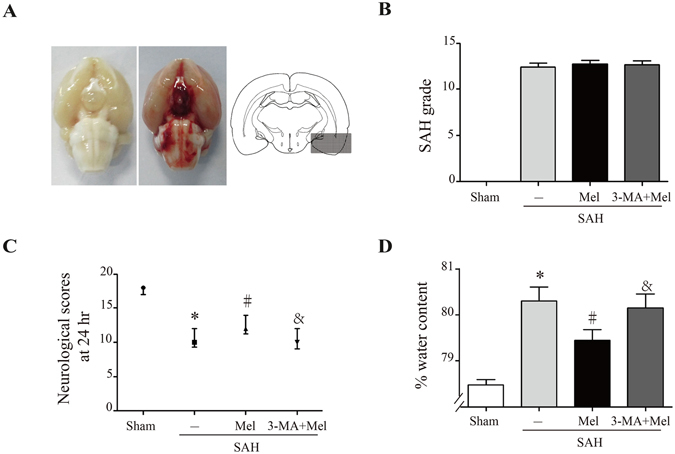
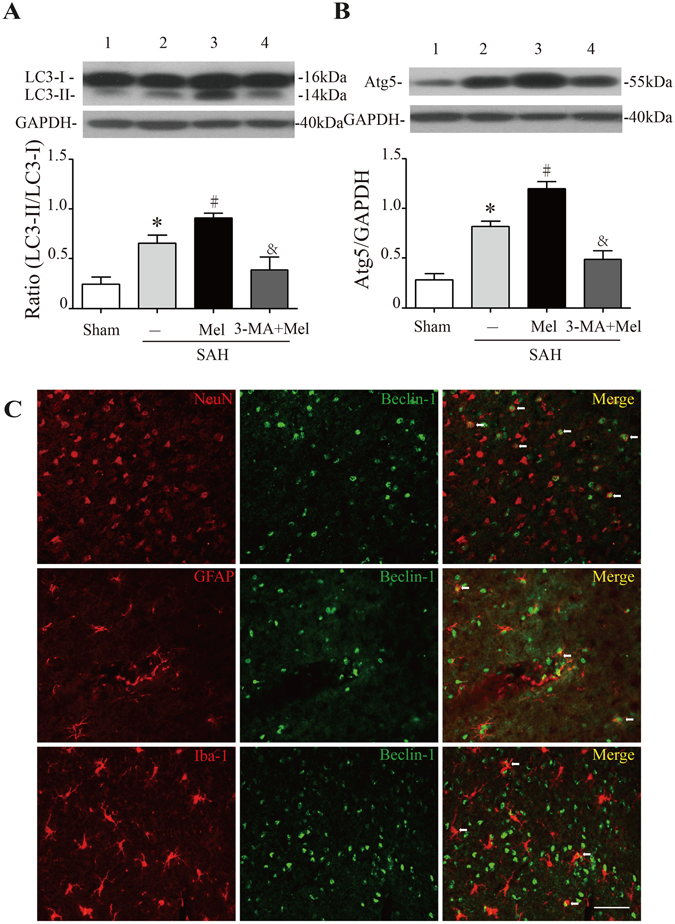
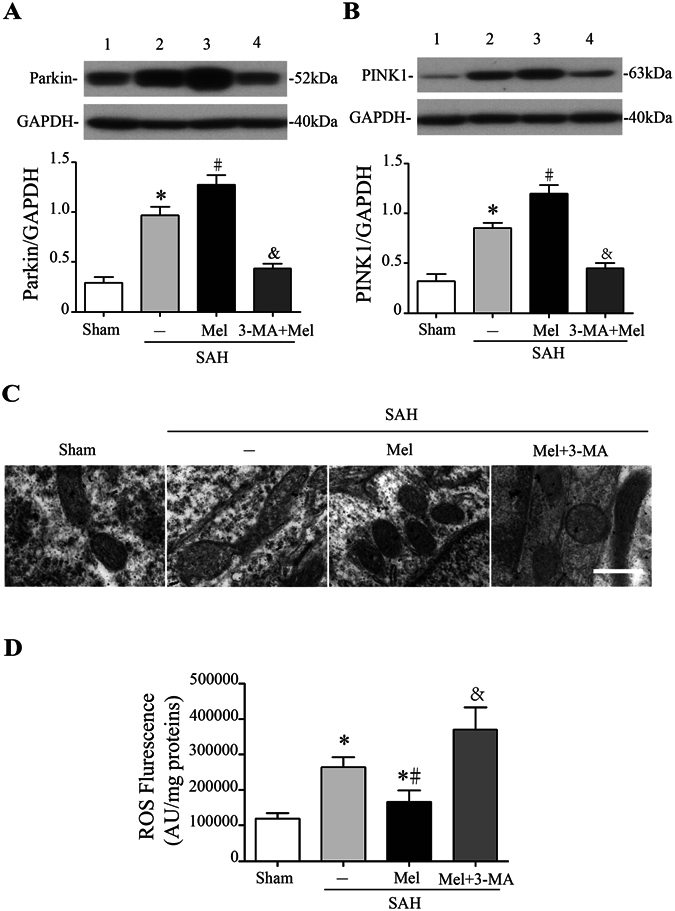
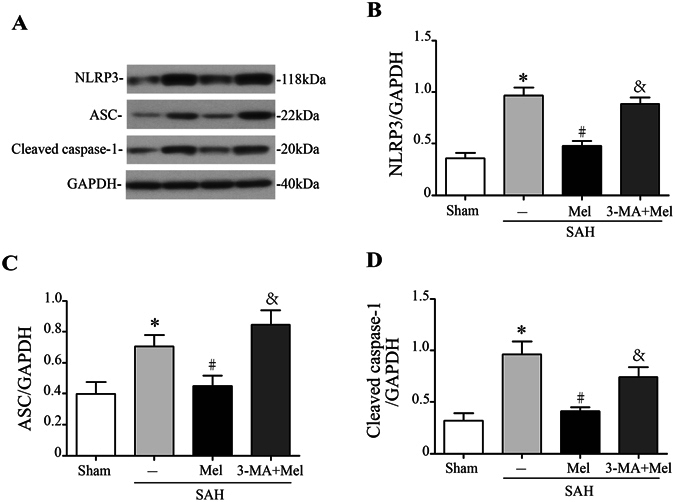
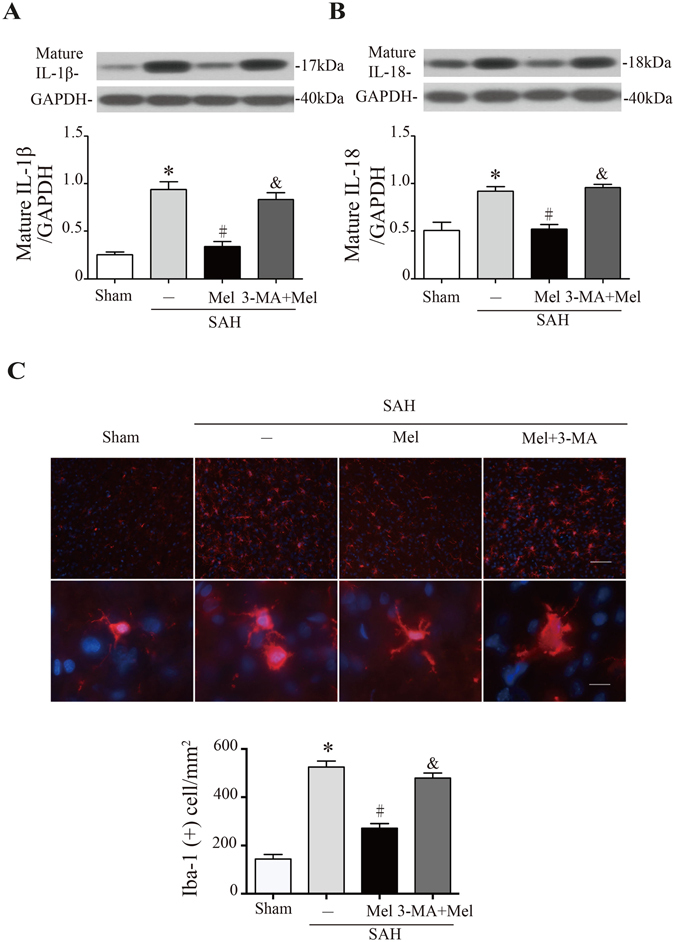
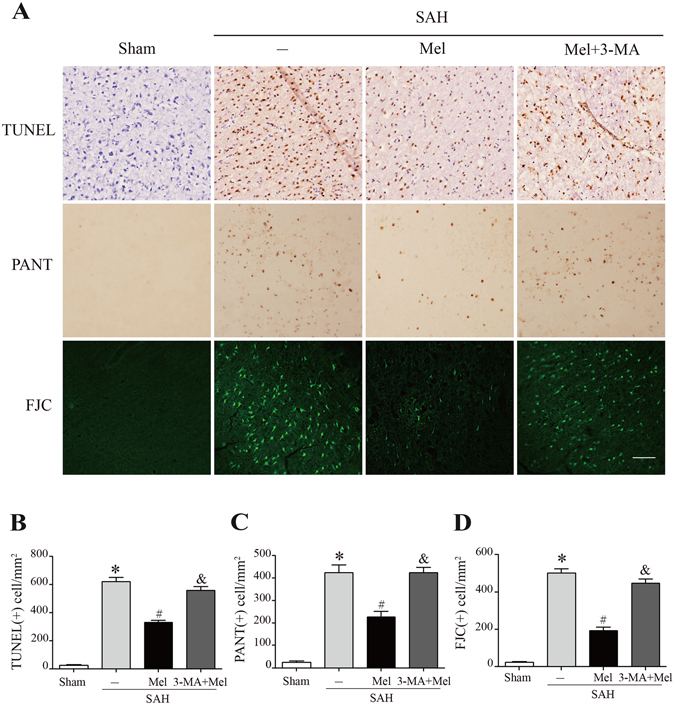
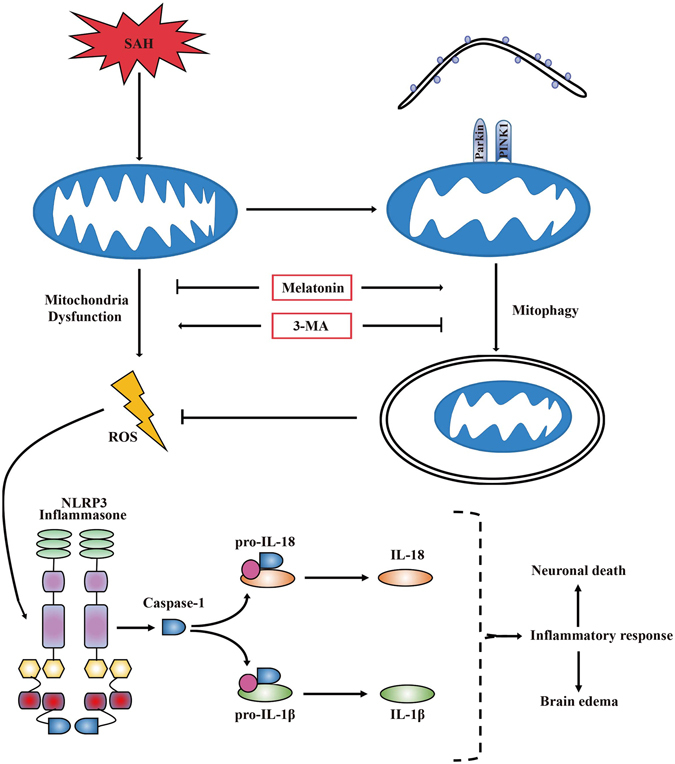
The NLRP3 inflammasome is activated in the early period following subarachnoid hemorrhage(SAH), resulting in inflammatory responses. Recent studies have shown that activation of NLRP3 inflammasome is suppressed by autophagy, but the potential mechanism is unclear. In this study, we examined whether mitophagy was involved in the beneficial effect of melatonin and its relationship with NLRP3 inflammasome activation after SAH. In total, 130 adult-male SD rats were randomly divided into four groups: sham group, SAH + vehicle group, SAH + melatonin group, and SAH + 3-methyladenine (3-MA) + melatonin group. Brain samples were used for brain water content analysis, ROS assay, Western blot, immunohistochemistry and transmission electron microscopy. The results showed that melatonin treatment markedly increased the expression of both autophagy markers(LC3-II/LC3-I and Atg 5), and mitophagy markers(Parkin and PINK-1) following SAH induction. Additionally, melatonin treatment attenuated pathological changes in mitochondria and reduced ROS generation, which are closely related to NLRP3 inflammasome activation. Consequently, melatonin-mediated upregulation of proteins associated with mitophagy inhibited NLRP3 inflammasome activation and significantly reduced pro-inflammatory cytokine levels after SAH. Conversely, 3-MA, an autophagy inhibitor, reversed these beneficial effects of melatonin on mitophagy and the NLRP3 inflammasome. These results suggest that mitophagy-associated NLRP3 inflammasome inhibition by melatonin is neuroprotective against early brain injury post-SAH in rats.
Overview
The claims and statistics of this paper haven’t been checked yet.
Free: it reads the open-access text and checks the first 5 claims that cite a source we can check. Create a free account to check every claim.
Integrity signals
Registry
Cites
Statistics
Figures
Verification
Claims the paper makes
The claims and statistics of this paper haven’t been checked yet.
Free: it reads the open-access text and checks the first 5 claims that cite a source we can check. Create a free account to check every claim.
Claims other papers make about this one
Each is checked against this paper’s own text: does it say what the citing paper says it does?
The cited source says what the claim attributes to it.
In the citing paper
“Recent research with brain injury models in mice and rats show that this anti-inflammatory effect is at least partially due to suppression of NLR family pyrin domain containing 3 (NLRP3) inflammasome signaling, where melatonin reduces both expression of components of the NLRP3 inflammasome and the levels of proinflammatory cytokines (10, 11).”
From Melatonin Attenuates LPS-Induced Acute Depressive-Like Behaviors and Microglial NLRP3 Inflammasome Activation Through the SIRT1/Nrf2 Pathway (2019) · cites this paper as [11]
The cited source says what the claim attributes to it.
In the citing paper
“Two recent studies have shown that melatonin inhibits NLRP3 inflammasome activation and oxidative stress in experimental acute brain injury (10, 11).”
From Melatonin Attenuates LPS-Induced Acute Depressive-Like Behaviors and Microglial NLRP3 Inflammasome Activation Through the SIRT1/Nrf2 Pathway (2019) · cites this paper as [11]
In the citing paper
“Melatonin also regulates mitochondrial dynamics and biogenesis (11, 55).”
From Melatonin Attenuates LPS-Induced Acute Depressive-Like Behaviors and Microglial NLRP3 Inflammasome Activation Through the SIRT1/Nrf2 Pathway (2019) · cites this paper as [11]
Self-check
Percentages, sums and reported differences re-computed from the paper’s own numbers.
The self-check needs the paper’s full text.
Citations
Cites
How mitochondria produce reactive oxygen species
Murphy, M. P. (2009) · Biochemical Journal · doi:10.1042/bj20081386 · Cited by 8,207
A role for mitochondria in nlrp3 inflammasome activation
Zhou, R., Yazdi, A. S., Menu, P., & Tschopp, J. (2011) · Nature · doi:10.1038/nature09663 · Cited by 5,602
Schroder, K., & Tschopp, J. (2010) · Cell · doi:10.1016/j.cell.2010.01.040 · Cited by 5,475
Interplay between Cortical Spreading Depolarization and Seizures
Kramer, D. R., Fujii, T., Ohiorhenuan, I., & Liu, C. Y. (2017) · Stereotactic and Functional Neurosurgery · doi:10.1159/000452841 · Cited by 3,696
Connolly, E. S., Rabinstein, A. A., Carhuapoma, J. R., Derdeyn, C. P., Dion, J., Higashida, R. T., Hoh, B. L., Kirkness, C. J., Naidech, A. M., Ogilvy, C. S., et al. (2012) · Stroke · doi:10.1161/str.0b013e3182587839 · Cited by 3,512
Youle, R. J., & Narendra, D. P. (2011) · Nature Reviews Molecular Cell Biology · doi:10.1038/nrm3028 · Cited by 3,273
The ubiquitin kinase PINK1 recruits autophagy receptors to induce mitophagy
Lazarou, M., Sliter, D. A., Kane, L. A., Sarraf, S. A., Wang, C., Burman, J. L., Sideris, D. P., Fogel, A. I., & Youle, R. J. (2015) · Nature · doi:10.1038/nature14893 · Cited by 2,774 · cited 2×
“Mitophagy, selective autophagy of mitochondria, mediates the clearance of damaged mitochondria by a pathway containing PINK1 and Parkin proteins 15, 16 .”
BackgroundThe pathways of mitophagy for quality control and clearance of mitochondria
Ashrafi, G., & Schwarz, T. L. (2013) · Cell Death & Differentiation · doi:10.1038/cdd.2012.81 · Cited by 1,900 · cited 8×
“Moreover, a recently identified specific mitophagy pathway showed that PINK1 and the E3 ubiquitin ligase Parkin accumulated on damaged mitochondria, promoted their segregation from the mitochondrial network, and targeted these organelles for autophagic degradation 15, 32, 33 .”
BackgroundInfluentialGarcia, J. H., Wagner, S., Liu, K.-F., & Hu, X.-J. (1995) · Stroke · doi:10.1161/01.str.26.4.627 · Cited by 1,483 · cited 1×
“22 .”
Specific Aquaporins Facilitate the Diffusion of Hydrogen Peroxide across Membranes
Bienert, G. P., Møller, A. L. B., Kristiansen, K. A., Schulz, A., Møller, I. M., Schjoerring, J. K., & Jahn, T. P. (2007) · Journal of Biological Chemistry · doi:10.1074/jbc.m603761200 · Cited by 1,306
Cited by
Items 101–163 of 163
Rajkhowa, B., Mehan, S., Sethi, P., & Prajapati, A. (2022) · Neurotoxicity Research · doi:10.1007/s12640-022-00480-z · Cited by 19
Inflammasomes in stroke: a triggering role for acid‐sensing ion channels
Vats, K., Sarmah, D., Kaur, H., Wanve, M., Kalia, K., Borah, A., Dave, K. R., Yavagal, D. R., & Bhattacharya, P. (2018) · Annals of the New York Academy of Sciences · doi:10.1111/nyas.13852 · Cited by 18
Umbelliferone protects against cerebral ischemic injury through selective autophagy of mitochondria
Zhou, Z., Zhang, Y., Han, F., Chen, Z., & Zheng, Y. (2023) · Neurochemistry International · doi:10.1016/j.neuint.2023.105520 · Cited by 17
Xu, C., He, Z., & Li, J. (2022) · Frontiers in Aging Neuroscience · doi:10.3389/fnagi.2022.899678 · Cited by 17
Self-citationZhang, Y., Chen, D., Wang, Y., Wang, X., Zhang, Z., & Xin, Y. (2023) · The FASEB Journal · doi:10.1096/fj.202201523r · Cited by 17
Lü, J., Luo, Y., Mei, S., Fang, Y., Zhang, J., & Chen, S. (2020) · Current Neuropharmacology · doi:10.2174/1570159x18666200503024700 · Cited by 16
“Hemorrhagic stroke inhibits mitophagy-associated NLRP3 inflammasome 2017 Cao S et al [209]”
BackgroundEbrahim, N. A., Elnagar, M. R., El‐Gamal, R., Habotta, O. A., Albadawi, E. A., Albadrani, M. S., Bahashwan, A. S., & Hassan, H. M. (2024) · Heliyon · doi:10.1016/j.heliyon.2024.e38081 · Cited by 15
“It is well-known of its role in regulating circadian rhythm, it also has anti-inflammatory, antioxidant, anti-apoptotic, immunomodulatory, and neuroprotective effects [16, 18 – 20].”
BackgroundXu, Z., Zhang, F., Xu, H., Yang, F., Zhou, G., Tong, M., Li, Y., & Yang, S. (2022) · Bioengineered · doi:10.1080/21655979.2022.2027175 · Cited by 15
“All experiments were repeated in triplicated and the data was analyzed by the 2− ΔΔCt method [25].”
MethodWu, X., Guo, Y., Zeng, H., & Chen, G. (2022) · Journal of Clinical Medicine · doi:10.3390/jcm11154349 · Cited by 15
“The severity of the SAH was quantified using a previously reported grading scale [22].”
MethodSelf-citationNL-1 Promotes PINK1-Parkin-Mediated Mitophagy Through MitoNEET Inhibition in Subarachnoid Hemorrhage
Zhang, T., & Zhang, M. (2023) · Neurochemical Research · doi:10.1007/s11064-023-04024-5 · Cited by 14
Zhan, C.-P., Zhuge, C.-J., Yan, X.-J., Dai, W.-M., & Yu, G. (2020) · Clinica Chimica Acta · doi:10.1016/j.cca.2020.12.006 · Cited by 13
Ye, F., Wei, C., & Wu, A. (2024) · Annals of Medicine · doi:10.1080/07853890.2024.2411012 · Cited by 12
Boutin, J. A. (2018) · IntechOpen eBooks · doi:10.5772/intechopen.79524 · Cited by 14
“…Rat [106] Barberino et al. 2017 Cisplatin-induceddamage Ovaries 5–20 mg/kg Mouse [107] Berkiks et al. 2017 Ccognitive disorders Brain 5 mg/kg Rat [108] Cao et al. 2017 Subarachnoid hemorrhage Brain 150 mg/kg Rat [109] Cebi et al. 2018 Radioiodine treatment Testicles 12 mg/kg/day Rat [110] Chang…”
Yang, H., Ding, C., Cheng, M., Sheng, Z., Chen, L., Chen, J., & Wang, Y. (2023) · Scientific Reports · doi:10.1038/s41598-023-48802-1 · Cited by 11
Self-citationHe, W., Zhou, X., Wu, Q., Zhou, L., Zhang, Z., Zhang, R., Deng, C., & Zhang, X. (2022) · Journal of Molecular Histology · doi:10.1007/s10735-022-10057-x · Cited by 10
“Related studies have also confirmed that ATG5-induced autophagy was activated post-SAH and has neuroprotective effects (Cao et al. 2017; Jing et al. 2012).”
BackgroundMelatonin Alleviates Acute Gouty Inflammation In Vivo and In Vitro
Xiao, W., Zhao, L., Cao, L. S., Zhu, X., & Zou, H.-J. (2021) · Current Medical Science · doi:10.1007/s11596-021-2362-x · Cited by 9
Guo, M., Chivero, E. T., Callen, S. E., & Buch, S. J. (2021) · Journal of Personalized Medicine · doi:10.3390/jpm11100963 · Cited by 9
“Abnormal NLRP3 inflammasome activity is indeed involved in multiple neuroinflammatory diseases, including Alzheimer’s disease (AD) [21], multiple sclerosis (MS) [22], as well as in brain injury [23] and viral infections [24].”
BackgroundYoun, D. H., Kim, N., Lee, A., Han, S. W., Kim, J.-T., Hong, E. P., Jung, H., Jeong, M. S., Cho, S., Jeon, J. P., et al. (2023) · Scientific Reports · doi:10.1038/s41598-023-40747-9 · Cited by 9
Youn, D. H., Kim, B. J., Hong, E. P., & Jeon, J. P. (2021) · Journal of Korean Neurosurgical Society · doi:10.3340/jkns.2021.0169 · Cited by 9
“Cao et al. 1) also showed the neuroprotective effect of inhibiting mitophagy-associated nod-like receptor protein 3 inflammasomes against EBI after SAH.”
Cheng, Y., Dempsey, R. E., Roodsari, S. K., Shuboni‐Mulligan, D. D., George, O., Sanford, L. D., & Guo, M. (2023) · Biomedicines · doi:10.3390/biomedicines11071800 · Cited by 8
Ye, C., Ning, Z., Hu, T., Zhao, X., & Mu, W. (2025) · Comparative Biochemistry and Physiology Part A Molecular & Integrative Physiology · doi:10.1016/j.cbpa.2025.111824 · Cited by 7
Yan, A., Pan, X., Wen, X., Nie, X., & Li, Y. (2021) · Experimental and Therapeutic Medicine · doi:10.3892/etm.2021.10827 · Cited by 7
“Previous studies have indicated that the activation of the NLRP3 inflammasome is associated with inflammatory injury and neurological disorders in SAH (21,22).”
RetractedWang, J., Peng, J., Gao, L., He, J., Lin, L., Li, J., & Xia, Y. (2025) · The Kaohsiung Journal of Medical Sciences · doi:10.1002/kjm2.12951 · Cited by 6
“20 Never-theless, the specific impact of exosomes derived from OM-MSCs on neuroinflammation through the activation of mitophagy remains unexplored.”
Self-citationLi, M., Wu, W., Hu, B., Chen, H., Wang, J., Zhang, S., Guan, T., Lu, H., Zhou, J., Zhao, P., et al. (2025) · Chemico-Biological Interactions · doi:10.1016/j.cbi.2025.111773 · Cited by 6
Synthesis of N-doped ZnO/ZnCo2O4 composites for stable photocatalytic degradation of organic dyes
Liu, L., Zhao, G., Li, C., Zhou, S., Wang, Y., & Jiao, F. (2021) · Desalination and Water Treatment · doi:10.5004/dwt.2021.26908 · Cited by 6
Melatonin and neurodegeneration: From neurotoxic environment to cell resilience
Ramos, E., Gil‐Martín, E., & Romero, A. (2019) · Advances in molecular toxicology · doi:10.1016/b978-0-444-64293-6.00003-8 · Cited by 7
Zhang, X., Xu, C., Liu, Z.-Y., Zhang, D.-Y., Wang, B.-H., Wang, J., & Ding, X. (2025) · Frontiers in Bioscience-Landmark · doi:10.31083/fbl33454 · Cited by 5
Al-Shawadfy, M. G., Kamel, G. A. M., & Abd‐Allah, A. R. A. (2022) · Canadian Journal of Physiology and Pharmacology · doi:10.1139/cjpp-2022-0111 · Cited by 5
Jiang, T., Liu, Q., Liu, H., Huang, Z., Yang, M., Huang, P., Shen, Y., Song, Y., Xu, W., Zhang, X., et al. (2025) · Frontiers in Neurology · doi:10.3389/fneur.2025.1533092 · Cited by 5
Kaymak, E., Karabulut, D., Öztürk, E., Akın, A. T., & Yakan, B. (2021) · International Journal of Morphology · doi:10.4067/s0717-95022021000200659 · Cited by 4
Liu, J.-J., Liang, W., Wang, J., Zhao, Y., Wang, Y., Zhang, J., & Li, J. (2018) · Biochemical and Biophysical Research Communications · doi:10.1016/j.bbrc.2018.05.158 · Cited by 4
Self-citationZheng, H., Zhang, D., Gan, Y., Wu, Y., & Xiang, W. (2025) · BMC Neurology · doi:10.1186/s12883-025-04400-4 · Cited by 3
“Mitophagy, by clearing dysfunctional mitochondria, reduces ROS production and exerts a neuroprotective role [43].”
Application of NLRP3 Inflammasome-related Modulators in Sepsis
Yang, M., Duan, C.-J., Liu, S.-S., & Xie, J. (2022) · Journal of Exploratory Research in Pharmacology · doi:10.14218/jerp.2021.00055 · Cited by 3
Melatonin and Mitochondrial Function: Insights into Bioenergetics, Dynamics, and Gene Regulation
Carloni, S., Nasoni, M. G., Perrone, S., Bargagni, E., Gentile, C., Manucha, W. A., Reiter, R. J., Luchetti, F., & Balduini, W. (2026) · Biocell · doi:10.32604/biocell.2025.073776 · Cited by 2
Acupuncture for Post-Stroke Cognitive Impairment: Mechanisms and Clinical Evidence (2020–2025)
Chen, A., Zhao, Z., Zhang, Y., & Zhang, L. (2026) · Neuropsychiatric Disease and Treatment · doi:10.2147/ndt.s593288 · Cited by 2
“97,98 Evidence suggests the NLRP3 inflammasome critically mediates PSCI pathogenesis.”
Hu, X., Zhu, Y., Zhou, F., Peng, C., Hu, Z., & Chen, C. (2021) · Frontiers in Neurology · doi:10.3389/fneur.2021.685731 · Cited by 2
Chukwunyere, U. (2024) · Chronobiology in Medicine · doi:10.33069/cim.2024.0019 · Cited by 2
“…has been reported to mitigate brain damage by downregulating NLRP3, apoptosis-associated speck-like protein (ASC), and caspase-1 levels [47,48], reducing reactive oxygen species through mitophagy [49], and inhibiting nuclear factor kappa-light-chain-enhancer of activated B cells (NF-κB) [50].”
BackgroundSun, B., Li, Y., Lan, S., Wang, X., Ling, Y., Sawant, H., Zhang, B., Yang, J., Wang, J., Wu, P., et al. (2025) · Neurotherapeutics · doi:10.1016/j.neurot.2025.e00572 · Cited by 2
Zhang, M., Deng, X., Teng, Z., Yu, H., Hao, Z., Xu, H., Qiu, W., Cheng, J., & Wu, J. (2025) · Brain Research · doi:10.1016/j.brainres.2025.149939 · Cited by 1
Yang, J., Zou, Y., & Zhao, X. (2026) · Reviews in the Neurosciences · doi:10.1515/revneuro-2025-0115 · Cited by 1
Li, X., Huang, Y., Zhou, Q., Xu, J., Yang, Y., Li, Y., & Chen, H. (2026) · Genes & Diseases · doi:10.1016/j.gendis.2026.102348 · Cited by 1
Chirumbolo, S., & Bjørklund, G. (2018) · Food and Chemical Toxicology · doi:10.1016/j.fct.2018.08.005 · Cited by 1
Kılıç, G., Kayabaş, M., & Cancan, S. E. (2021) · Düzce Tıp Fakültesi Dergisi · doi:10.18678/dtfd.1012828 · Cited by 1
Zhang, Y., Li, J., Sun, Q., Zhou, P., Wu, P., Ji, Z., Li, Y., & Shi, H. (2025) · Neural Regeneration Research · doi:10.4103/nrr.nrr-d-25-00705 · Cited by 1
Self-citationXia, D., Jiang, X., Li, Z.-B., Dai, Y., Zhang, Z., & Yang, S. (2020) · doi:10.21203/rs.2.24591/v1 · Cited by 1
Editorial: Astrocytes, a Kaleidoscope of Diversities, a Pharmacological Horizon
Mannelli, L. D. C., Ceruti, S., & Orellana, J. A. (2021) · Frontiers in Pharmacology · doi:10.3389/fphar.2021.638239 · Cited by 1
Isaacs, A. W. (2018) · SUNScholar (Stellenbosch University)
Foro Social Catalán, un impulso a las luchas
Collderram, J. M. A., & Vivas, E. X. (2008) · Viento sur: Por una izquierda alternativa
Melatonin: A Saga of Health and Longevity
Gupta, S., Singh, A. K., Haldar, C., & Roy, A. (2023) · Healthy ageing and longevity · doi:10.1007/978-3-031-22468-3_15
Use of Melatonin as a Pre-anesthetic Agent
Shindala, M. K., Amin, S. M., & Abdulrzzaq, D. H. (2024) · Egyptian Journal of Veterinary Science · doi:10.21608/ejvs.2024.249390.1675
Autophagy and Apoptosis Following Subarachnoid Hemorrhage
孙, 景. (2025) · Advances in Clinical Medicine · doi:10.12677/acm.2025.1561763
Exploring melatonin as a therapeutic approach for mustard vesicants
Alonso, E. R., Solà, E., Garcia, J. Á. M., Ríos, C. D. L., Arribas, R. L., Egea, J., Lopez-Munoz, F. J., & Romero, A. (2025) · Elsevier eBooks · doi:10.1016/b978-0-443-30240-4.00012-0
Pan, P., Yu, C., Ouyang, J., Peng, S., Li, N., Liu, X., Xu, X., Wu, H., & Su, L. (2025) · Food Science and Human Wellness · doi:10.26599/fshw.2025.9250782
김민정 (2023) · Seoul National University Open Repository (Seoul National University)
Xie, H., Hussain, S. A., Maddu, N., & An, J. (2026) · Korean Journal of Physiology and Pharmacology · doi:10.4196/kjpp.25.294
Ma, Y., Long, H., Xiong, H., Cui, S., Zhuang, Y., Wei, H., He, Z., & Tan, J. (2026) · Free Radical Biology and Medicine · doi:10.1016/j.freeradbiomed.2026.05.001 · Cited by 1
Badawi, G. A., Shaaban, R. S., Almutairi, J. A., El-Masry, T. A., Zaki, H. F., & Ibrahim, S. M. (2026) · Pharmaceuticals · doi:10.3390/ph19050770
“Moreover, MTN inhibited NLRP3 activation by a mitophagy-mediated reactive oxygen species [86].”
Cardinali, D. P. (2026) · Physiological Mini Reviews · doi:10.2174/0116695410524950261005093336
Li, Y., Zhu, Y., Chu, B., Liu, N., Chen, S., & Wang, J. (2021) · doi:10.3389/fimmu.2021.715098.s001
Jiang, T., Liu, Q., Liu, H., Huang, Z., Yang, M., Huang, P., Shen, Y., Song, Y., Xu, W., Zhang, X., et al. (2025) · doi:10.3389/fneur.2025.1533092.s001
Zheng, Y., Tang, W., Zeng, H., Peng, Y., Yu, X., Yan, F., & Cao, S. (2022) · doi:10.3389/fneur.2022.854671.s001
Self-citationHu, X., Zhu, Y., Zhou, F., Cuiying Peng, Hu, Z., & Chen, C. (2021) · doi:10.3389/fneur.2021.685731.s005
Metadata
- Authors
- Cao, S., Shrestha, S., Li, J., Yu, X., Chen, J., Yan, F., Ying, G., Gu, C., Wang, L., & Chen, G.
- Affiliations
- Second Affiliated Hospital of Zhejiang University (CN)
- Corresponding author
- Chen, Gao
- Venue
- Scientific Reports
- Published
- 2017-05-25
- Volume
- 7
- Issue
- 1
- Pages
- 2417-2417
- ISSN
- 2045-2322 (ISSN-L)
- PMC
- PMC5445068
- OpenAlex
- W2616329870
- Semantic Scholar
- f6dd3a15fbc2d6d372997126c124c62cfc47891c
- Cited by
- 152
- References
- 40
- Citations by year
- 2026: 5 · 2025: 14 · 2024: 11 · 2023: 16 · 2022: 19 · 2021: 33 · 2020: 13 · 2019: 15 · 2018: 21 · 2017: 4
- FWCI
- 5.92
- Type
- journal article
- Language
- en
- Update notices
- correction (2024-09-18)
- Open access
- gold
- doi.org
- Licence
- cc-by
- creativecommons.org/licenses/by/4.0 (tdm)
- creativecommons.org/licenses/by/4.0 (vor)
- Locations
- Scientific Reports (publishedVersion, cc-by)
- Europe PMC (PubMed Central) (publishedVersion, cc-by)
- PubMed Central (publishedVersion, cc-by)
- PubMed (publishedVersion)
- DOAJ (DOAJ: Directory of Open Access Journals) (submittedVersion, cc-by-sa)
- Funders
- National Natural Science Foundation of China (81571106)
- Topics
- Life Sciences › Biochemistry, Genetics and Molecular Biology › Molecular Biology › Inflammasome and immune disorders
- Health Sciences › Medicine › Clinical Neurology › Intracerebral and Subarachnoid Hemorrhage Research
- Life Sciences › Biochemistry, Genetics and Molecular Biology › Cell Biology › Autophagy in Disease and Therapy
- Keywords
- melatonin, mitophagy, subarachnoid hemorrhage, NLRP3 inflammasome, early brain injury, neuroprotection, autophagy, Parkin, PINK1, reactive oxygen species, mitochondrial damage, inflammatory cytokines, 3-methyladenine
- MeSH terms
- NLR Family, Pyrin Domain-Containing 3 Protein, Animals, Brain, Male, Melatonin, Models, Biological, Neurons, Subarachnoid Hemorrhage, Biomarkers, Cytokines, Reactive Oxygen Species, Neuroprotective Agents, Inflammation Mediators, Rats, Inflammasomes, Mitophagy
About these checks
Registry, retraction, Cites and statistics results are computed, not judged, with one exception: a printed reference that no index lists is read once by a model before it counts as a citation error. Claims are extracted by a model and kept only when their quote appears verbatim in the text; each cited source is then checked, with a model’s help, for whether it says what the claim relies on. Those verdicts can be wrong — read the claim’s quote and the cited source before relying on one.
Statistics and arithmetic are recomputed, not judged.
Confidence bands are shown only for fields calibrated on our annotated test set. None is calibrated yet, so no band is shown.
What counts as a claim ›How we measure confidence ›How we check this ›
Are you an author, or do you see a problem with this page? Request a review
Data sources
Bibliographic data: Semantic Scholar, OpenAlex, Crossref.
Contains information from the Semantic Scholar Academic Graph Datasets, made available under the ODC Attribution License (ODC-BY 1.0).
Semantic Scholar’s data is described in: Kinney, R., et al. (2023). The Semantic Scholar Open Data Platform. arXiv:2301.10140.
