

Melatonin-mediated mitophagy protects against early brain injury after subarachnoid hemorrhage through inhibition of NLRP3 inflammasome activation
Open accessThe DOI matches its Crossref record; 40 of the 40 references it cites were found in a registry or an index.
Abstract
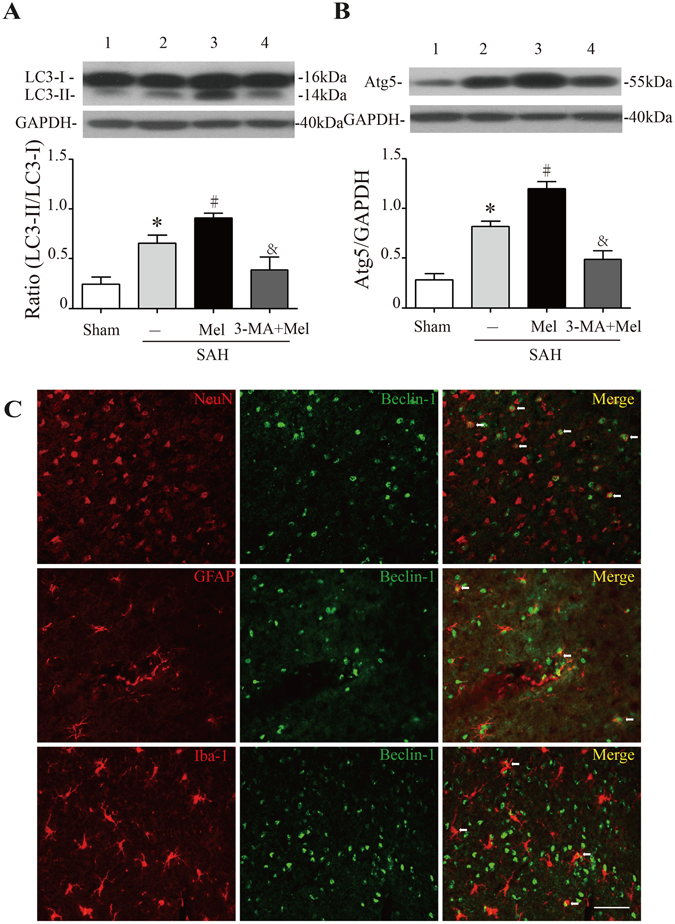
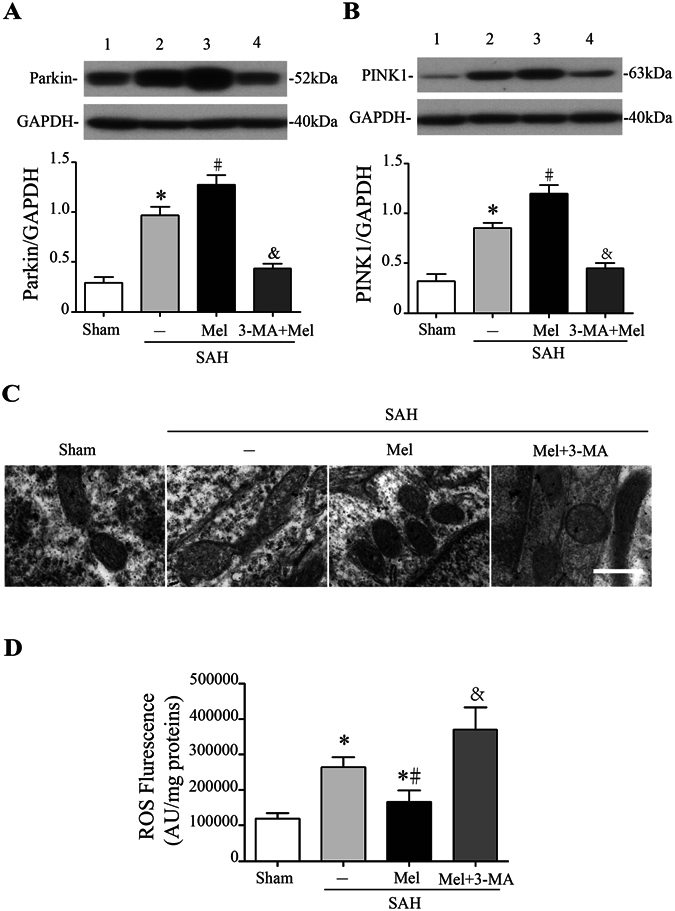
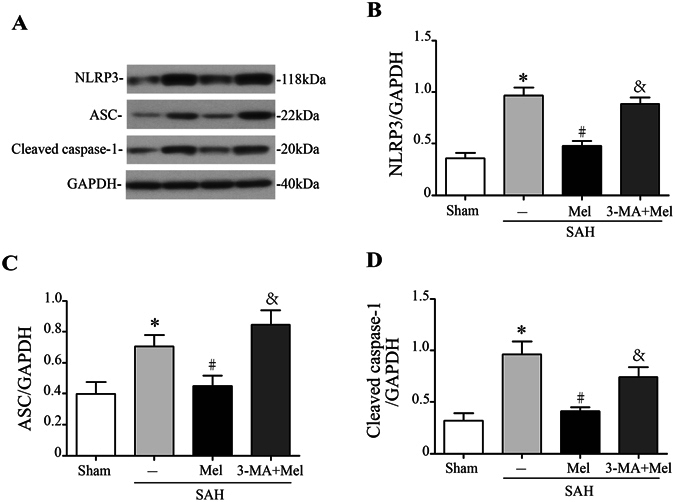
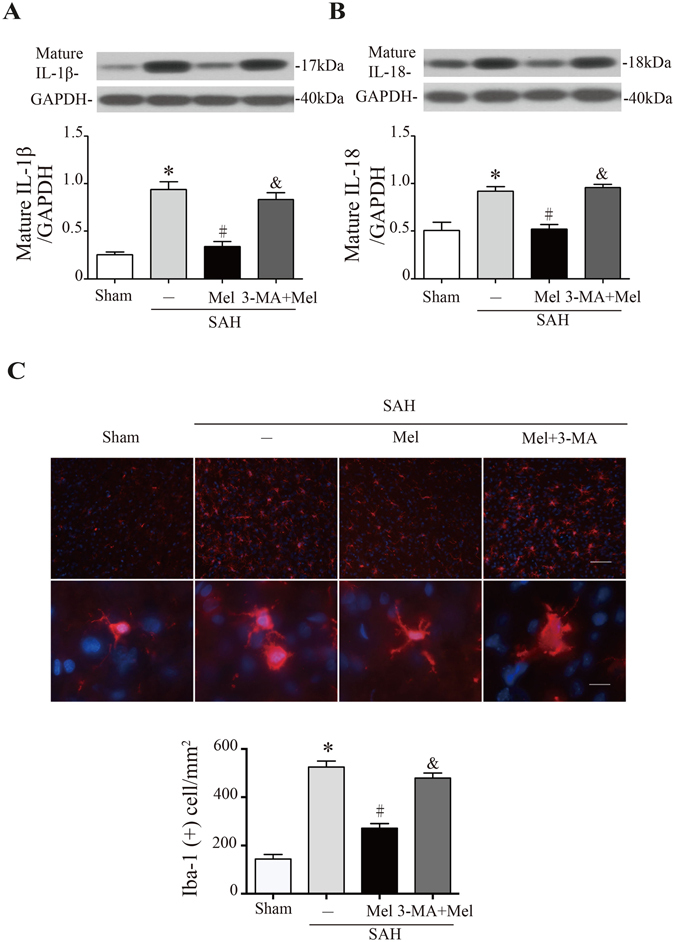
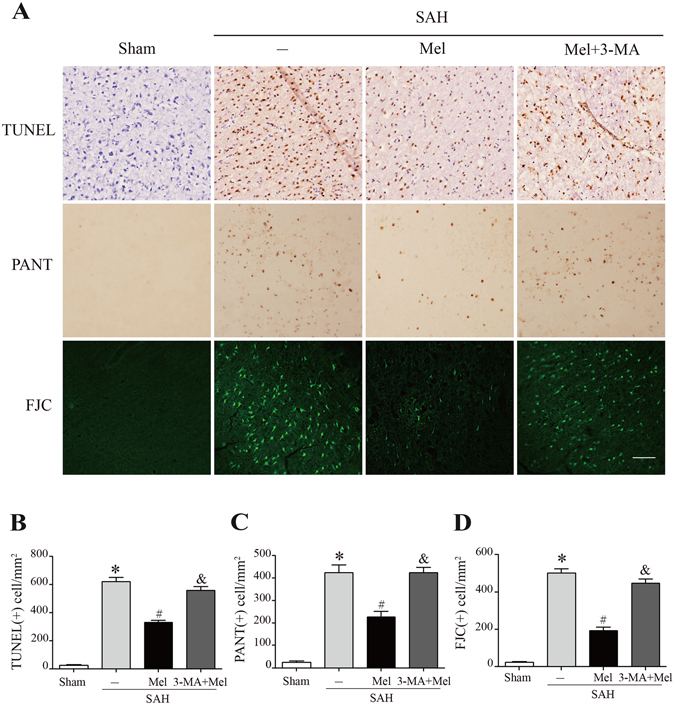
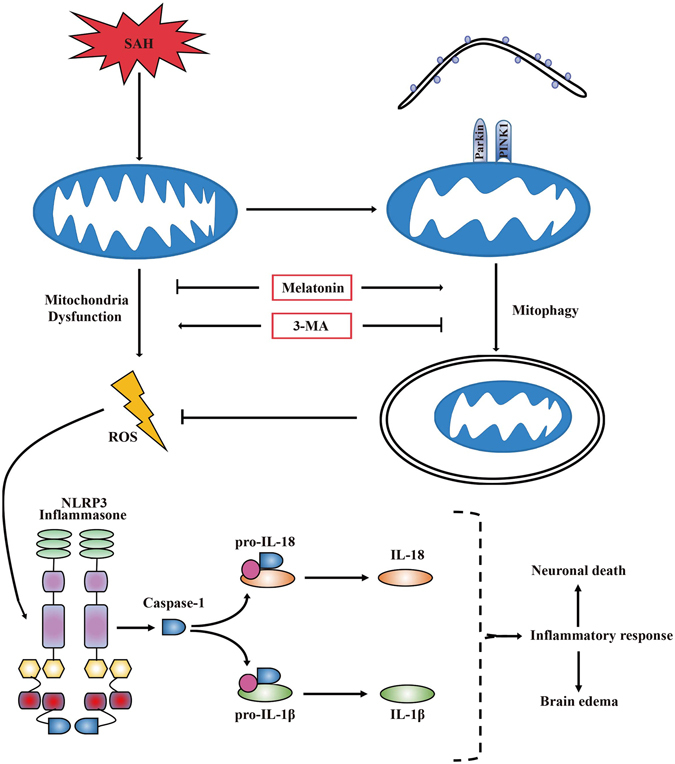
The NLRP3 inflammasome is activated in the early period following subarachnoid hemorrhage(SAH), resulting in inflammatory responses. Recent studies have shown that activation of NLRP3 inflammasome is suppressed by autophagy, but the potential mechanism is unclear. In this study, we examined whether mitophagy was involved in the beneficial effect of melatonin and its relationship with NLRP3 inflammasome activation after SAH. In total, 130 adult-male SD rats were randomly divided into four groups: sham group, SAH + vehicle group, SAH + melatonin group, and SAH + 3-methyladenine (3-MA) + melatonin group. Brain samples were used for brain water content analysis, ROS assay, Western blot, immunohistochemistry and transmission electron microscopy. The results showed that melatonin treatment markedly increased the expression of both autophagy markers(LC3-II/LC3-I and Atg 5), and mitophagy markers(Parkin and PINK-1) following SAH induction. Additionally, melatonin treatment attenuated pathological changes in mitochondria and reduced ROS generation, which are closely related to NLRP3 inflammasome activation. Consequently, melatonin-mediated upregulation of proteins associated with mitophagy inhibited NLRP3 inflammasome activation and significantly reduced pro-inflammatory cytokine levels after SAH. Conversely, 3-MA, an autophagy inhibitor, reversed these beneficial effects of melatonin on mitophagy and the NLRP3 inflammasome. These results suggest that mitophagy-associated NLRP3 inflammasome inhibition by melatonin is neuroprotective against early brain injury post-SAH in rats.
Overview
The claims and statistics of this paper haven’t been checked yet.
Free: it reads the open-access text and checks the first 5 claims that cite a source we can check. Create a free account to check every claim.
Integrity signals
Registry
Cites
Statistics
Figures
Verification
Claims the paper makes
The claims and statistics of this paper haven’t been checked yet.
Free: it reads the open-access text and checks the first 5 claims that cite a source we can check. Create a free account to check every claim.
Claims other papers make about this one
Each is checked against this paper’s own text: does it say what the citing paper says it does?
The cited source says what the claim attributes to it.
In the citing paper
“Recent research with brain injury models in mice and rats show that this anti-inflammatory effect is at least partially due to suppression of NLR family pyrin domain containing 3 (NLRP3) inflammasome signaling, where melatonin reduces both expression of components of the NLRP3 inflammasome and the levels of proinflammatory cytokines (10, 11).”
From Melatonin Attenuates LPS-Induced Acute Depressive-Like Behaviors and Microglial NLRP3 Inflammasome Activation Through the SIRT1/Nrf2 Pathway (2019) · cites this paper as [11]
The cited source says what the claim attributes to it.
In the citing paper
“Two recent studies have shown that melatonin inhibits NLRP3 inflammasome activation and oxidative stress in experimental acute brain injury (10, 11).”
From Melatonin Attenuates LPS-Induced Acute Depressive-Like Behaviors and Microglial NLRP3 Inflammasome Activation Through the SIRT1/Nrf2 Pathway (2019) · cites this paper as [11]
In the citing paper
“Melatonin also regulates mitochondrial dynamics and biogenesis (11, 55).”
From Melatonin Attenuates LPS-Induced Acute Depressive-Like Behaviors and Microglial NLRP3 Inflammasome Activation Through the SIRT1/Nrf2 Pathway (2019) · cites this paper as [11]
Self-check
Percentages, sums and reported differences re-computed from the paper’s own numbers.
The self-check needs the paper’s full text.
Citations
Cites
How mitochondria produce reactive oxygen species
Murphy, M. P. (2009) · Biochemical Journal · doi:10.1042/bj20081386 · Cited by 8,207
A role for mitochondria in nlrp3 inflammasome activation
Zhou, R., Yazdi, A. S., Menu, P., & Tschopp, J. (2011) · Nature · doi:10.1038/nature09663 · Cited by 5,602
Schroder, K., & Tschopp, J. (2010) · Cell · doi:10.1016/j.cell.2010.01.040 · Cited by 5,475
Interplay between Cortical Spreading Depolarization and Seizures
Kramer, D. R., Fujii, T., Ohiorhenuan, I., & Liu, C. Y. (2017) · Stereotactic and Functional Neurosurgery · doi:10.1159/000452841 · Cited by 3,696
Connolly, E. S., Rabinstein, A. A., Carhuapoma, J. R., Derdeyn, C. P., Dion, J., Higashida, R. T., Hoh, B. L., Kirkness, C. J., Naidech, A. M., Ogilvy, C. S., et al. (2012) · Stroke · doi:10.1161/str.0b013e3182587839 · Cited by 3,512
Youle, R. J., & Narendra, D. P. (2011) · Nature Reviews Molecular Cell Biology · doi:10.1038/nrm3028 · Cited by 3,273
The ubiquitin kinase PINK1 recruits autophagy receptors to induce mitophagy
Lazarou, M., Sliter, D. A., Kane, L. A., Sarraf, S. A., Wang, C., Burman, J. L., Sideris, D. P., Fogel, A. I., & Youle, R. J. (2015) · Nature · doi:10.1038/nature14893 · Cited by 2,774 · cited 2×
“Mitophagy, selective autophagy of mitochondria, mediates the clearance of damaged mitochondria by a pathway containing PINK1 and Parkin proteins 15, 16 .”
BackgroundThe pathways of mitophagy for quality control and clearance of mitochondria
Ashrafi, G., & Schwarz, T. L. (2013) · Cell Death & Differentiation · doi:10.1038/cdd.2012.81 · Cited by 1,900 · cited 8×
“Moreover, a recently identified specific mitophagy pathway showed that PINK1 and the E3 ubiquitin ligase Parkin accumulated on damaged mitochondria, promoted their segregation from the mitochondrial network, and targeted these organelles for autophagic degradation 15, 32, 33 .”
BackgroundInfluentialGarcia, J. H., Wagner, S., Liu, K.-F., & Hu, X.-J. (1995) · Stroke · doi:10.1161/01.str.26.4.627 · Cited by 1,483 · cited 1×
“22 .”
Specific Aquaporins Facilitate the Diffusion of Hydrogen Peroxide across Membranes
Bienert, G. P., Møller, A. L. B., Kristiansen, K. A., Schulz, A., Møller, I. M., Schjoerring, J. K., & Jahn, T. P. (2007) · Journal of Biological Chemistry · doi:10.1074/jbc.m603761200 · Cited by 1,306
The NLRP3 Inflammasome: A Sensor for Metabolic Danger?
Schroder, K., Zhou, R., & Tschopp, J. (2010) · Science · doi:10.1126/science.1184003 · Cited by 1,134
Dagda, R. K., Cherra, S. J., Kulich, S. M., Tandon, A., Park, D., & Chu, C. T. (2009) · Journal of Biological Chemistry · doi:10.1074/jbc.m808515200 · Cited by 954
Sugawara, T., Ayer, R., Jadhav, V., & Zhang, J. H. (2008) · Journal of Neuroscience Methods · doi:10.1016/j.jneumeth.2007.08.004 · Cited by 569 · cited 1×
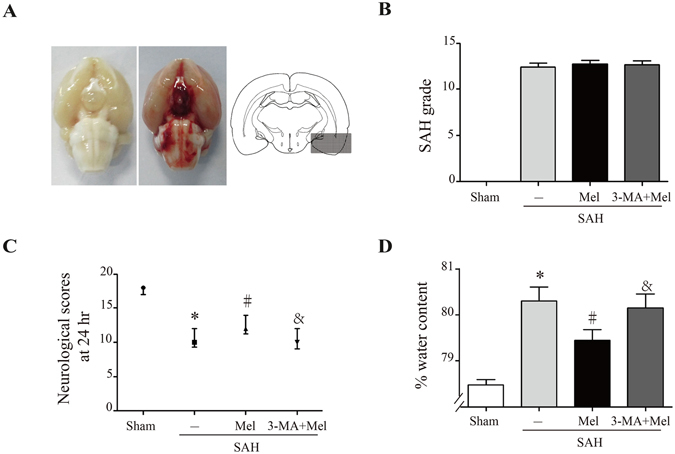
“The severity of SAH was quantified according to a previously published grading scale 34 .”
MethodMinutoli, L., Puzzolo, D., Rinaldi, M., Irrera, N., Marini, H., Arcoraci, V., Bitto, A., Crea, G., Pisani, A., Squadrito, F., et al. (2016) · Oxidative Medicine and Cellular Longevity · doi:10.1155/2016/2183026 · Cited by 505 · cited 2×
“Previous study demonstrated that ROS formation and oxidative stress promoted tissue inflammation and activated an immune response through NLRP3 inflammasome activation in some organs (brain, heart, kidney, and testis) after ischemia/reperfusion injury 24 .”
BackgroundYang-Wei Fann, D., Lee, S.-Y., Manzanero, S., Tang, S.-C., Gelderblom, M., Chunduri, P., Bernreuther, C., Glatzel, M., Cheng, Y.-L., Thundyil, J., et al. (2013) · Cell Death & Disease · doi:10.1038/cddis.2013.326 · Cited by 475
Cerebral Vasospasm after Subarachnoid Hemorrhage: Putative Role of Inflammation
Dumont, A. S., Dumont, R. J., Chow, M. M., Lin, C.-L., Calisaneller, T., Ley, K. F., Kassell, N. F., & Lee, K. S. (2003) · Neurosurgery · doi:10.1227/01.neu.0000068863.37133.9e · Cited by 441
NLRP3 inflammasome contributes to inflammation after intracerebral hemorrhage
Ma, Q., Chen, S., Hu, Q., Feng, H., Zhang, J. H., & Tang, J. (2014) · Annals of Neurology · doi:10.1002/ana.24070 · Cited by 293
Knoblach, S. M., Fan, L., & Faden, A. I. (1999) · Journal of Neuroimmunology · doi:10.1016/s0165-5728(98)00273-2 · Cited by 268 · cited 1×
“Extensive studies have shown that either of inflammatory cells and pro-inflammatory cytokines was strongly associated with brain injury and neurological dysfunction after stroke 26–29 .”
BackgroundMolecular mechanisms of early brain injury after subarachnoid hemorrhage
Ostrowski, R. P., Colohan, A. R., & Zhang, J. H. (2006) · Neurological Research · doi:10.1179/016164106x115008 · Cited by 239 · cited 1×
“The neuroinflammatory response contributes to the pathogenesis of post-SAH EBI with activated inflammatory cells and elevated pro-inflammatory cytokines 4 .”
BackgroundCerebrovascular Inflammation Following Subarachnoid Hemorrhage
Sercombe, R., Dinh, Y. R. T., & Gomis, P. (2002) · Japanese Journal of Pharmacology · doi:10.1254/jjp.88.227 · Cited by 203 · cited 2×
“We made the following observations: (1) treatment with melatonin upregulated mitophagy-associated proteins (PINK1/Parkin) and reduced mitochondrial damage and ROS generation after SAH; (2) administration of melatonin inhibited NLRP3 inflammasome activation after SAH and attenuated the inflammatory response; (3) melato…”
ResultMolecular Mechanisms for Early Brain Injury After Subarachnoid Hemorrhage
Ostrowski, R. P., Colohan, A. R. T., & Zhang, J. H. (2007) · Handbook of Neurochemistry and Molecular Neurobiology · doi:10.1007/978-0-387-30383-3_13 · Cited by 192
Chen, J., Wang, L., Wu, C., Hu, Q., Gu, C., Yan, F., Li, J., Yan, W., & Chen, G. (2014) · Journal of Pineal Research · doi:10.1111/jpi.12086 · Cited by 183 · cited 4×
“The dose and the time point of melatonin injection were chosen based on previous studies 17, 19, 35 .”
BackgroundMethodInfluentialSelf-citationRole of Interleukin-1β in Early Brain Injury After Subarachnoid Hemorrhage in Mice
Sozen, T., Tsuchiyama, R., Hasegawa, Y., Suzuki, H., Jadhav, V., Nishizawa, S., & Zhang, J. H. (2009) · Stroke · doi:10.1161/strokeaha.109.549592 · Cited by 176
Dong, Y., Fan, C., Hu, W., Jiang, S., Ma, Z., Yan, X., Deng, C., Di, S., Xin, Z., Wu, G., et al. (2016) · Journal of Pineal Research · doi:10.1111/jpi.12300 · Cited by 170 · cited 2×
“Our study showed that melatonin strongly inhibits the inflammasome-mediated inflammatory response and microglia activation after SAH, which is consistent with previous studies 19–21 .”
BackgroundResultParkin Mono-ubiquitinates Bcl-2 and Regulates Autophagy
Chen, D., Gao, F., Li, B., Wang, H., Xu, Y., Zhu, C., & Wang, G. (2010) · Journal of Biological Chemistry · doi:10.1074/jbc.m110.101469 · Cited by 168
Wang, F., Tian, X., Zhang, L., Tan, D., Reiter, R. J., & Liu, G. (2013) · Journal of Pineal Research · doi:10.1111/jpi.12069 · Cited by 168
Cisternal CSF levels of cytokines after subarachnoid hemorrhage
Gaetani, P., Tartara, F., Pignatti, P., Tancioni, F., y Baena, R. R., Baena, B., & Benedetti, F. D. (1998) · Neurological Research · doi:10.1080/01616412.1998.11740528 · Cited by 150
Li, J., Chen, J., Mo, H., Chen, J., Qian, C., Yan, F., Gu, C., Hu, Q., Wang, L., & Chen, G. (2015) · Molecular Neurobiology · doi:10.1007/s12035-015-9318-8 · Cited by 145
Self-citationJing, C., Wang, L., Liu, P.-P., Wu, C., Ruan, D., & Chen, G. (2012) · Neuroscience · doi:10.1016/j.neuroscience.2012.03.055 · Cited by 138 · cited 1×
“Rats were treated with 5-μ l intracerebral ventricular injection of auto-phagy inhibitor 3-MA (400 nmol) or vehicle (saline) 20 min before SAH onset 36 .”
MethodSelf-citationP2X7R/cryopyrin inflammasome axis inhibition reduces neuroinflammation after SAH
Chen, S., Ma, Q., Krafft, P. R., Hu, Q., Rolland, W., Sherchan, P., Zhang, J., Tang, J., & Zhang, J. H. (2013) · Neurobiology of Disease · doi:10.1016/j.nbd.2013.06.011 · Cited by 136 · cited 2×
“We demonstrated that melatonin-upregulated Figure 7.”
BackgroundBrain Water Content: a Misunderstood Measurement?
Keep, R. F., Hua, Y., & Xi, G. (2012) · Translational Stroke Research · doi:10.1007/s12975-012-0152-2 · Cited by 129 · cited 1×
“Brain edema was quantified as changes in brain water content as measured by the dry-wet method 23 and was analyzed 24 h after SAH induction.”
MethodChen, J., Chen, G., Li, J., Qian, C., Mo, H., Gu, C., Yan, F., Yan, W., & Wang, L. (2014) · Journal of Pineal Research · doi:10.1111/jpi.12173 · Cited by 105 · cited 2×
“Our study showed that melatonin strongly inhibits the inflammasome-mediated inflammatory response and microglia activation after SAH, which is consistent with previous studies 19–21 .”
MethodResultSelf-citationWang, Z., Wu, L., You, W., Ji, C., & Chen, G. (2013) · Journal of Pineal Research · doi:10.1111/jpi.12087 · Cited by 96
Self-citationErşahin, M., Toklu, H. Z., Çetınel, Ş., Yüksel, M., Yeğen, B. Ç., & Şener, G. (2009) · Journal of Pineal Research · doi:10.1111/j.1600-079x.2009.00664.x · Cited by 88
Cao, S., Zhu, P., Yu, X., Chen, J., Li, J., Yan, F., Wang, L., Yu, J., & Chen, G. (2016) · Neuroscience Letters · doi:10.1016/j.neulet.2016.04.018 · Cited by 61
Self-citationRegulation of energy metabolism in liver
Soboll, S. (1995) · Journal of Bioenergetics and Biomembranes · doi:10.1007/bf02111655 · Cited by 55 · cited 1×
“Recently, the mitochondrion has been regarded as a center for signal transduction with involvement in auto-phagy 31 .”
BackgroundLi, J., Lu, J., Mi, Y., Shi, Z., Chen, C., Riley, J., & Zhou, C. (2014) · Brain Research · doi:10.1016/j.brainres.2014.05.021 · Cited by 47
Self-citationChen, J., Qian, C., Duan, H., Cao, S., Yu, X., Li, J., Gu, C., Yan, F., Wang, L., & Chen, G. (2015) · Journal of Pineal Research · doi:10.1111/jpi.12278 · Cited by 46 · cited 1×
“The dose and the time point of melatonin injection were chosen based on previous studies 17, 19, 35 .”
MethodSelf-citationFang, Q., Chen, G., Zhu, W., Dong, W., & Wang, Z. (2009) · Mediators of Inflammation · doi:10.1155/2009/426346 · Cited by 43
Self-citationHyperbaric Oxygen for Cerebral Vasospasm and Brain Injury Following Subarachnoid Hemorrhage
Ostrowski, R. P., & Zhang, J. H. (2011) · Translational Stroke Research · doi:10.1007/s12975-011-0069-1 · Cited by 29 · cited 1×
“In SAH-induced EBI, mitochondria play a critical role by the cessation of ATP synthesis and the overproduction of ROS as a result of sudden decreases in cerebral blood flow 30 .”
Background
Cited by
Arioz, B. I., Tastan, B., Tarakcioglu, E., Tufekci, K. U., Olcum, M., Ersoy, N., Bagriyanik, A., Genc, K., & Genc, S. (2019) · Frontiers in Immunology · doi:10.3389/fimmu.2019.01511 · Cited by 516
“Two recent studies have shown that melatonin inhibits NLRP3 inflammasome activation and oxidative stress in experimental acute brain injury (10, 11).”
BackgroundMelatonin and inflammation-Story of a double-edged blade
Hardeland, R. (2018) · Journal of Pineal Research · doi:10.1111/jpi.12525 · Cited by 455
Mitochondria in Ischemic Stroke: New Insight and Implications
Liu, F., Lu, J., Manaenko, A., Tang, J., & Hu, Q. (2018) · Aging and disease · doi:10.14336/ad.2017.1126 · Cited by 322
“Melatoninmediated mitophagy attenuated the early brain injury after subarachnoid hemorrhage through inhibition of NLRP3 inflammasome activation [77].”
BackgroundMitochondria as a therapeutic target for ischemic stroke
He, Z., Ning, N., Zhou, Q., Khoshnam, S. E., & Farzaneh, M. (2020) · Free Radical Biology and Medicine · doi:10.1016/j.freeradbiomed.2019.11.005 · Cited by 267
Doblado, L., Lueck, C., Rey, C., Samhan-Arias, A. K., Prieto, I., Stacchiotti, A., & Monsalve, M. (2021) · International Journal of Molecular Sciences · doi:10.3390/ijms22083903 · Cited by 228
Metadata
- Authors
- Cao, S., Shrestha, S., Li, J., Yu, X., Chen, J., Yan, F., Ying, G., Gu, C., Wang, L., & Chen, G.
- Affiliations
- Second Affiliated Hospital of Zhejiang University (CN)
- Corresponding author
- Chen, Gao
- Venue
- Scientific Reports
- Published
- 2017-05-25
- Volume
- 7
- Issue
- 1
- Pages
- 2417-2417
- ISSN
- 2045-2322 (ISSN-L)
- PMC
- PMC5445068
- OpenAlex
- W2616329870
- Cited by
- 152
- References
- 40
- Citations by year
- 2026: 5 · 2025: 14 · 2024: 11 · 2023: 16 · 2022: 19 · 2021: 33 · 2020: 13 · 2019: 15 · 2018: 21 · 2017: 4
- FWCI
- 5.92
- Type
- journal article
- Language
- en
- Update notices
- correction (2024-09-18)
- Open access
- gold
- doi.org
- Licence
- cc-by
- creativecommons.org/licenses/by/4.0 (tdm)
- creativecommons.org/licenses/by/4.0 (vor)
- Locations
- Scientific Reports (publishedVersion, cc-by)
- Europe PMC (PubMed Central) (publishedVersion, cc-by)
- PubMed Central (publishedVersion, cc-by)
- PubMed (publishedVersion)
- DOAJ (DOAJ: Directory of Open Access Journals) (submittedVersion, cc-by-sa)
- Funders
- National Natural Science Foundation of China (81571106)
- Topics
- Life Sciences › Biochemistry, Genetics and Molecular Biology › Molecular Biology › Inflammasome and immune disorders
- Health Sciences › Medicine › Clinical Neurology › Intracerebral and Subarachnoid Hemorrhage Research
- Life Sciences › Biochemistry, Genetics and Molecular Biology › Cell Biology › Autophagy in Disease and Therapy
- Keywords
- melatonin, mitophagy, subarachnoid hemorrhage, NLRP3 inflammasome, early brain injury, neuroprotection, autophagy, Parkin, PINK1, reactive oxygen species, mitochondrial damage, inflammatory cytokines, 3-methyladenine
- MeSH terms
- NLR Family, Pyrin Domain-Containing 3 Protein, Animals, Brain, Male, Melatonin, Models, Biological, Neurons, Subarachnoid Hemorrhage, Biomarkers, Cytokines, Reactive Oxygen Species, Neuroprotective Agents, Inflammation Mediators, Rats, Inflammasomes, Mitophagy
About these checks
Registry, retraction, Cites and statistics results are computed, not judged, with one exception: a printed reference that no index lists is read once by a model before it counts as a citation error. Claims are extracted by a model and kept only when their quote appears verbatim in the text; each cited source is then checked, with a model’s help, for whether it says what the claim relies on. Those verdicts can be wrong — read the claim’s quote and the cited source before relying on one.
Statistics and arithmetic are recomputed, not judged.
Confidence bands are shown only for fields calibrated on our annotated test set. None is calibrated yet, so no band is shown.
What counts as a claim ›How we measure confidence ›How we check this ›
Are you an author, or do you see a problem with this page? Request a review
Data sources
Bibliographic data: Semantic Scholar, OpenAlex, Crossref.
Contains information from the Semantic Scholar Academic Graph Datasets, made available under the ODC Attribution License (ODC-BY 1.0).
Semantic Scholar’s data is described in: Kinney, R., et al. (2023). The Semantic Scholar Open Data Platform. arXiv:2301.10140.
