

Melatonin-mediated mitophagy protects against early brain injury after subarachnoid hemorrhage through inhibition of NLRP3 inflammasome activation
Open accessThe DOI matches its Crossref record; 40 of the 40 references it cites were found in a registry or an index.
Abstract
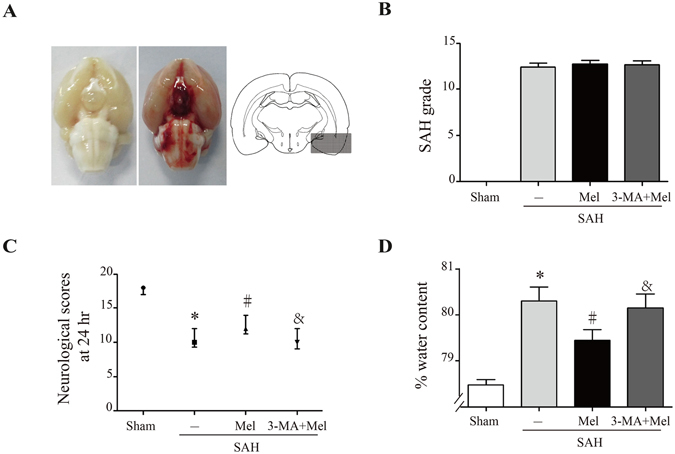
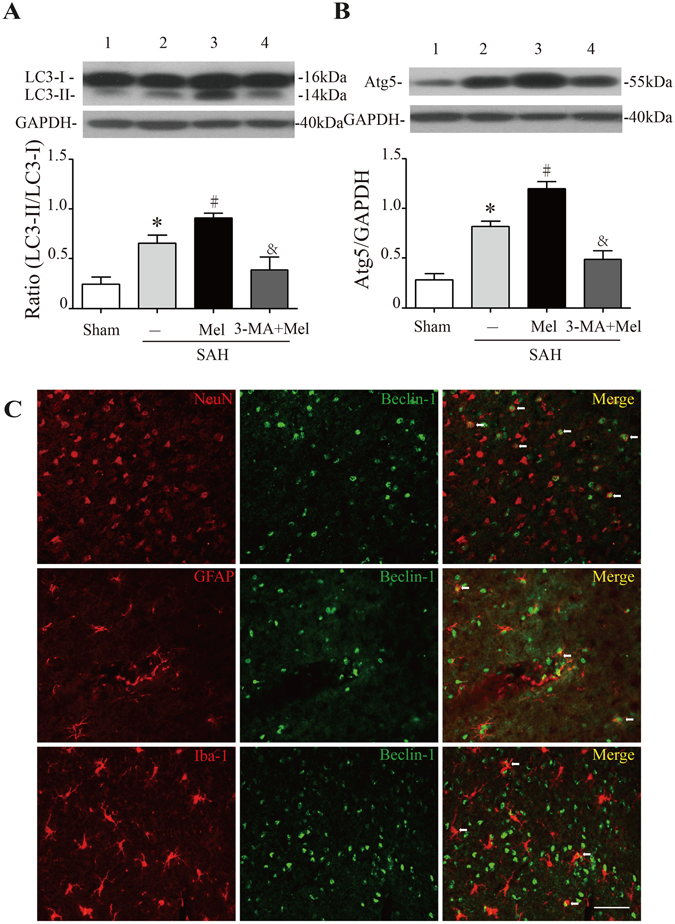
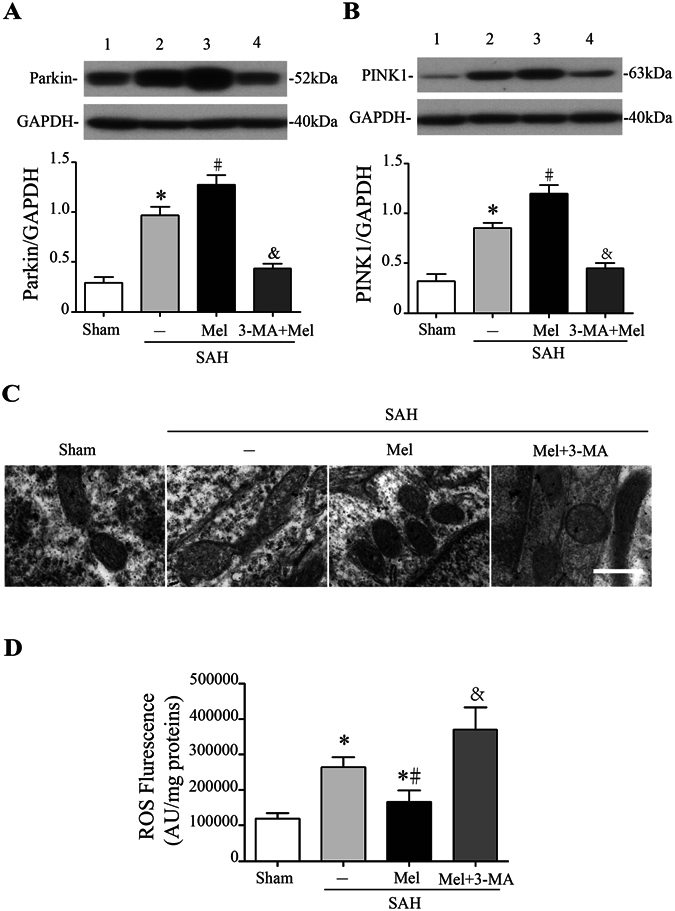
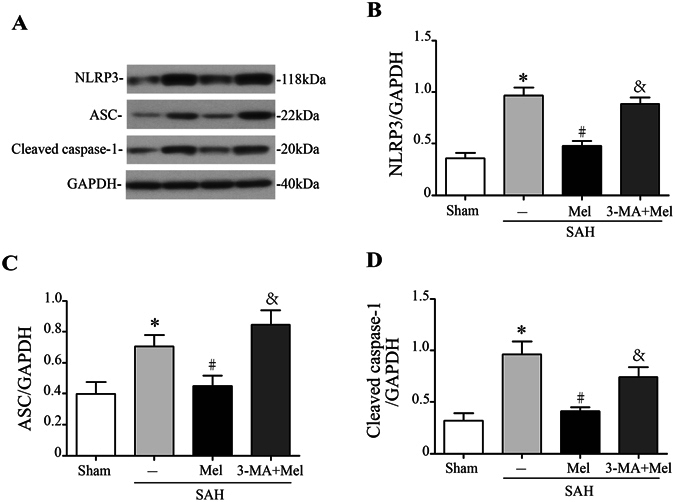
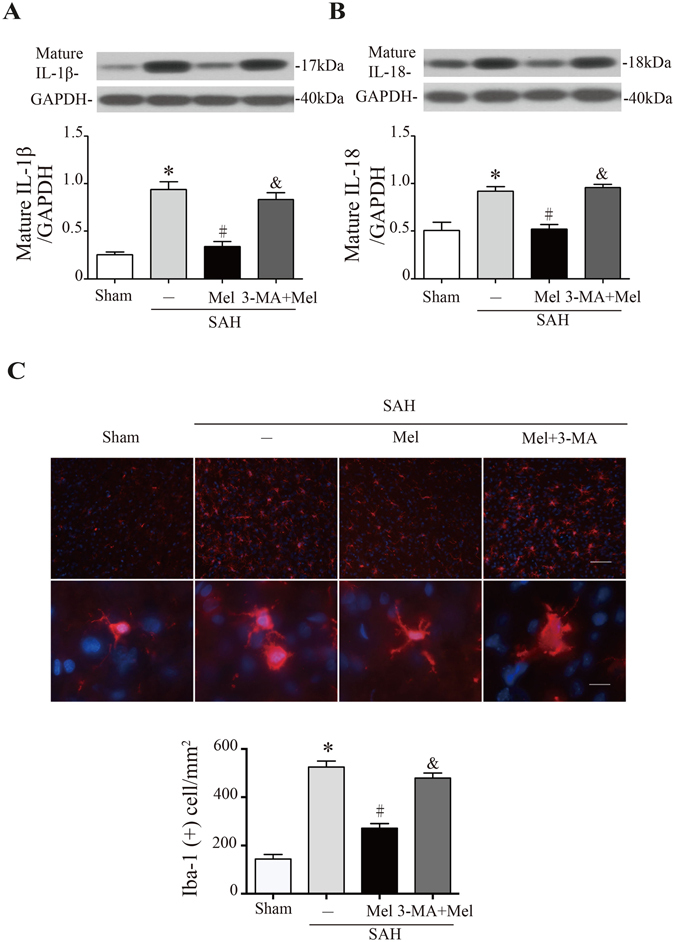
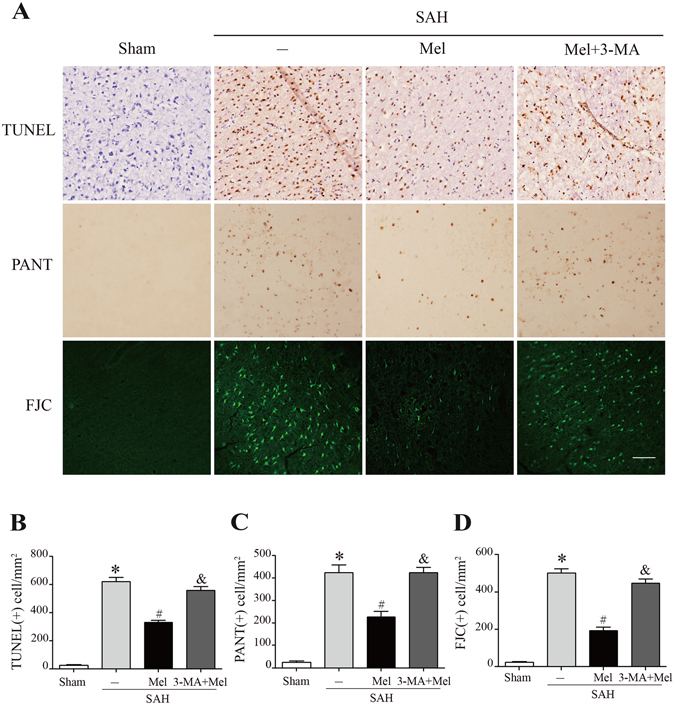
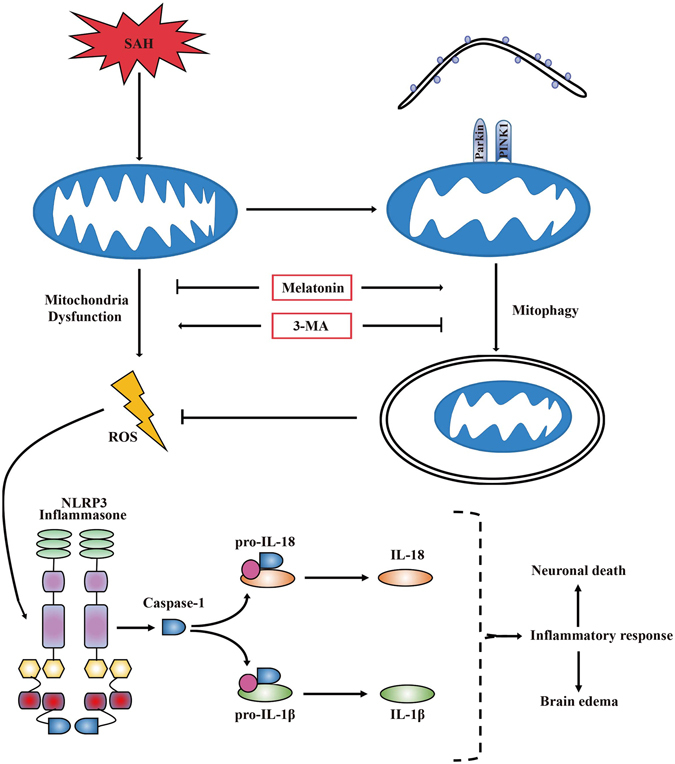
The NLRP3 inflammasome is activated in the early period following subarachnoid hemorrhage(SAH), resulting in inflammatory responses. Recent studies have shown that activation of NLRP3 inflammasome is suppressed by autophagy, but the potential mechanism is unclear. In this study, we examined whether mitophagy was involved in the beneficial effect of melatonin and its relationship with NLRP3 inflammasome activation after SAH. In total, 130 adult-male SD rats were randomly divided into four groups: sham group, SAH + vehicle group, SAH + melatonin group, and SAH + 3-methyladenine (3-MA) + melatonin group. Brain samples were used for brain water content analysis, ROS assay, Western blot, immunohistochemistry and transmission electron microscopy. The results showed that melatonin treatment markedly increased the expression of both autophagy markers(LC3-II/LC3-I and Atg 5), and mitophagy markers(Parkin and PINK-1) following SAH induction. Additionally, melatonin treatment attenuated pathological changes in mitochondria and reduced ROS generation, which are closely related to NLRP3 inflammasome activation. Consequently, melatonin-mediated upregulation of proteins associated with mitophagy inhibited NLRP3 inflammasome activation and significantly reduced pro-inflammatory cytokine levels after SAH. Conversely, 3-MA, an autophagy inhibitor, reversed these beneficial effects of melatonin on mitophagy and the NLRP3 inflammasome. These results suggest that mitophagy-associated NLRP3 inflammasome inhibition by melatonin is neuroprotective against early brain injury post-SAH in rats.
Overview
The claims and statistics of this paper haven’t been checked yet.
Free: it reads the open-access text and checks the first 5 claims that cite a source we can check. Create a free account to check every claim.
Integrity signals
Registry
Cites
Statistics
Figures
Verification
Claims the paper makes
The claims and statistics of this paper haven’t been checked yet.
Free: it reads the open-access text and checks the first 5 claims that cite a source we can check. Create a free account to check every claim.
Claims other papers make about this one
Each is checked against this paper’s own text: does it say what the citing paper says it does?
The cited source says what the claim attributes to it.
In the citing paper
“Recent research with brain injury models in mice and rats show that this anti-inflammatory effect is at least partially due to suppression of NLR family pyrin domain containing 3 (NLRP3) inflammasome signaling, where melatonin reduces both expression of components of the NLRP3 inflammasome and the levels of proinflammatory cytokines (10, 11).”
From Melatonin Attenuates LPS-Induced Acute Depressive-Like Behaviors and Microglial NLRP3 Inflammasome Activation Through the SIRT1/Nrf2 Pathway (2019) · cites this paper as [11]
The cited source says what the claim attributes to it.
In the citing paper
“Two recent studies have shown that melatonin inhibits NLRP3 inflammasome activation and oxidative stress in experimental acute brain injury (10, 11).”
From Melatonin Attenuates LPS-Induced Acute Depressive-Like Behaviors and Microglial NLRP3 Inflammasome Activation Through the SIRT1/Nrf2 Pathway (2019) · cites this paper as [11]
In the citing paper
“Melatonin also regulates mitochondrial dynamics and biogenesis (11, 55).”
From Melatonin Attenuates LPS-Induced Acute Depressive-Like Behaviors and Microglial NLRP3 Inflammasome Activation Through the SIRT1/Nrf2 Pathway (2019) · cites this paper as [11]
Self-check
Percentages, sums and reported differences re-computed from the paper’s own numbers.
The self-check needs the paper’s full text.
Citations
Cites
How mitochondria produce reactive oxygen species
Murphy, M. P. (2009) · Biochemical Journal · doi:10.1042/bj20081386 · Cited by 8,207
A role for mitochondria in nlrp3 inflammasome activation
Zhou, R., Yazdi, A. S., Menu, P., & Tschopp, J. (2011) · Nature · doi:10.1038/nature09663 · Cited by 5,602
Schroder, K., & Tschopp, J. (2010) · Cell · doi:10.1016/j.cell.2010.01.040 · Cited by 5,475
Interplay between Cortical Spreading Depolarization and Seizures
Kramer, D. R., Fujii, T., Ohiorhenuan, I., & Liu, C. Y. (2017) · Stereotactic and Functional Neurosurgery · doi:10.1159/000452841 · Cited by 3,696
Connolly, E. S., Rabinstein, A. A., Carhuapoma, J. R., Derdeyn, C. P., Dion, J., Higashida, R. T., Hoh, B. L., Kirkness, C. J., Naidech, A. M., Ogilvy, C. S., et al. (2012) · Stroke · doi:10.1161/str.0b013e3182587839 · Cited by 3,512
Youle, R. J., & Narendra, D. P. (2011) · Nature Reviews Molecular Cell Biology · doi:10.1038/nrm3028 · Cited by 3,273
The ubiquitin kinase PINK1 recruits autophagy receptors to induce mitophagy
Lazarou, M., Sliter, D. A., Kane, L. A., Sarraf, S. A., Wang, C., Burman, J. L., Sideris, D. P., Fogel, A. I., & Youle, R. J. (2015) · Nature · doi:10.1038/nature14893 · Cited by 2,774 · cited 2×
“Mitophagy, selective autophagy of mitochondria, mediates the clearance of damaged mitochondria by a pathway containing PINK1 and Parkin proteins 15, 16 .”
BackgroundThe pathways of mitophagy for quality control and clearance of mitochondria
Ashrafi, G., & Schwarz, T. L. (2013) · Cell Death & Differentiation · doi:10.1038/cdd.2012.81 · Cited by 1,900 · cited 8×
“Moreover, a recently identified specific mitophagy pathway showed that PINK1 and the E3 ubiquitin ligase Parkin accumulated on damaged mitochondria, promoted their segregation from the mitochondrial network, and targeted these organelles for autophagic degradation 15, 32, 33 .”
BackgroundInfluentialGarcia, J. H., Wagner, S., Liu, K.-F., & Hu, X.-J. (1995) · Stroke · doi:10.1161/01.str.26.4.627 · Cited by 1,483 · cited 1×
“22 .”
Specific Aquaporins Facilitate the Diffusion of Hydrogen Peroxide across Membranes
Bienert, G. P., Møller, A. L. B., Kristiansen, K. A., Schulz, A., Møller, I. M., Schjoerring, J. K., & Jahn, T. P. (2007) · Journal of Biological Chemistry · doi:10.1074/jbc.m603761200 · Cited by 1,306
Cited by
Arioz, B. I., Tastan, B., Tarakcioglu, E., Tufekci, K. U., Olcum, M., Ersoy, N., Bagriyanik, A., Genc, K., & Genc, S. (2019) · Frontiers in Immunology · doi:10.3389/fimmu.2019.01511 · Cited by 516
“Two recent studies have shown that melatonin inhibits NLRP3 inflammasome activation and oxidative stress in experimental acute brain injury (10, 11).”
BackgroundMelatonin and inflammation-Story of a double-edged blade
Hardeland, R. (2018) · Journal of Pineal Research · doi:10.1111/jpi.12525 · Cited by 455
Mitochondria in Ischemic Stroke: New Insight and Implications
Liu, F., Lu, J., Manaenko, A., Tang, J., & Hu, Q. (2018) · Aging and disease · doi:10.14336/ad.2017.1126 · Cited by 322
“Melatoninmediated mitophagy attenuated the early brain injury after subarachnoid hemorrhage through inhibition of NLRP3 inflammasome activation [77].”
BackgroundMitochondria as a therapeutic target for ischemic stroke
He, Z., Ning, N., Zhou, Q., Khoshnam, S. E., & Farzaneh, M. (2020) · Free Radical Biology and Medicine · doi:10.1016/j.freeradbiomed.2019.11.005 · Cited by 267
Doblado, L., Lueck, C., Rey, C., Samhan-Arias, A. K., Prieto, I., Stacchiotti, A., & Monsalve, M. (2021) · International Journal of Molecular Sciences · doi:10.3390/ijms22083903 · Cited by 228
Tan, D., Xu, B., Zhou, X., & Reiter, R. (2018) · Molecules · doi:10.3390/molecules23020301 · Cited by 220
Cao, Y., Li, Y., He, C., Yan, F., Li, J.-R., Xu, H.-Z., Zhuang, J.-F., Zhou, H., Peng, Y.-C., Fu, X.-J., et al. (2021) · Neuroscience Bulletin · doi:10.1007/s12264-020-00620-5 · Cited by 210
Self-citationMishra, S. R., Mahapatra, K. K., Behera, B. P., Patra, S., Bhol, C. S., Panigrahi, D. P., Praharaj, P. P., Singh, A., Patil, S., Dhiman, R., et al. (2021) · The International Journal of Biochemistry & Cell Biology · doi:10.1016/j.biocel.2021.106013 · Cited by 195
Mitophagy, a potential therapeutic target for stroke
Guan, R., Zou, W., Dai, X., Yu, X., Liu, H., Chen, Q., & Teng, W. (2018) · Journal of Biomedical Science · doi:10.1186/s12929-018-0487-4 · Cited by 184
“At 24 h after SAH, melatonin treatment further up-regulated mitophagy-mediated proteins PINK and Parkin, reduced ROS content, attenuated morphological changes in the mitochondria thus to inhibit the NLRP3 inflammasome activation [63].”
BackgroundSelf-citationMelatonin in macrophage biology: Current understanding and future perspectives
Xia, Y., Chen, S., Zeng, S., Zhao, Y., Zhu, C., Deng, B., Zhu, G., Yin, Y., Wang, W., Hardeland, R., et al. (2019) · Journal of Pineal Research · doi:10.1111/jpi.12547 · Cited by 183
Zhang, T., Wu, P., Budbazar, E., Zhu, Q., Sun, C., Mo, J., Peng, J., Gospodarev, V., Tang, J., Shi, H., et al. (2019) · Stroke · doi:10.1161/strokeaha.118.021590 · Cited by 171
Role and mechanism of ROS scavengers in alleviating NLRP3‐mediated inflammation
Sho, T., & Xu, J. (2018) · Biotechnology and Applied Biochemistry · doi:10.1002/bab.1700 · Cited by 164
Advances in stroke pharmacology
Zhou, Z., Lu, J., Liu, W.-W., Manaenko, A., Hou, X., Mei, Q., Huang, J.-L., Tang, J., Zhang, J. H., Yao, H., et al. (2018) · Pharmacology & Therapeutics · doi:10.1016/j.pharmthera.2018.05.012 · Cited by 163
Mitophagy in neurological disorders
Zhang, L., Dai, L., & Li, D. (2021) · Journal of Neuroinflammation · doi:10.1186/s12974-021-02334-5 · Cited by 154
“Melatonin reduces mitochondrial injury and ROS generation, and inhibits activation of NLRP3 inflammatory entities by upregulating mitophagy related protein (PINK1/Parkin) in rat models of subarachnoid hemorrhage (SAH), thus reducing neuronal cell death, brain edema, and neurodysfunction after SAH [103].”
BackgroundXu, H., Wang, E., Chen, F., Xiao, J., & Wang, M. (2021) · Oxidative Medicine and Cellular Longevity · doi:10.1155/2021/6687386 · Cited by 148
“Besides, elevated mitophagy contributed to the neuroprotection of rapamycin, methylene blue, melatonin, and ginsenoside Rg1 in MCAO models [116, 117].”
BackgroundXu, L., Zhang, L., Wang, Z., Li, C., Li, S., Li, L., Fan, Q., & Zheng, L. (2018) · Calcified Tissue International · doi:10.1007/s00223-018-0428-y · Cited by 144
Mitophagy and cGAS–STING crosstalk in neuroinflammation
Zhou, X., Wang, J., Yu, L., Qiao, G., Qin, D., Yuen-Kwan Law, B., Ren, F., Wu, J., & Wu, A. (2024) · Acta Pharmaceutica Sinica B · doi:10.1016/j.apsb.2024.05.012 · Cited by 131
Interaction between autophagy and the NLRP3 inflammasome
Cao, Z., Wang, Y., Long, Z., & He, G. (2019) · Acta Biochimica et Biophysica Sinica · doi:10.1093/abbs/gmz098 · Cited by 129
Microglial Function in the Effects of Early-Life Stress on Brain and Behavioral Development
Catale, C., Gironda, S., Lo Iacono, L., & Carola, V. (2020) · Journal of Clinical Medicine · doi:10.3390/jcm9020468 · Cited by 97
Li, J., Xu, H., Nie, S., Peng, Y., Fan, L., Wang, Z., Wu, C., Yan, F., Chen, J.-Y., Gu, C., et al. (2017) · Journal of Neuroinflammation · doi:10.1186/s12974-017-0959-6 · Cited by 112
“Our previous studies demonstrated NLRP3 inflammasome contribute to the neuroinflammation in early brain injury after SAH [9, 14].”
Self-citationNatural Compounds and Autophagy: Allies Against Neurodegeneration
Stacchiotti, A., & Corsetti, G. (2020) · Frontiers in Cell and Developmental Biology · doi:10.3389/fcell.2020.555409 · Cited by 111
Solar, P., Zamani, A., Lakatosová, K., & Joukal, M. (2022) · Fluids and Barriers of the CNS · doi:10.1186/s12987-022-00312-4 · Cited by 110
The Role of HDAC6 in Autophagy and NLRP3 Inflammasome
Chang, P., Li, H., Hu, H., Li, Y., & Wang, T. (2021) · Frontiers in Immunology · doi:10.3389/fimmu.2021.763831 · Cited by 109
Inflammasome and Mitophagy Connection in Health and Disease
Yuk, J.-M., Silwal, P., & Jo, E.-K. (2020) · International Journal of Molecular Sciences · doi:10.3390/ijms21134714 · Cited by 95
Mitochondrial biogenesis as a therapeutic target for traumatic and neurodegenerative CNS diseases
Simmons, E. C., Scholpa, N. E., & Schnellmann, R. G. (2020) · Experimental Neurology · doi:10.1016/j.expneurol.2020.113309 · Cited by 101
NLRP3 Inflammasome in the Pathophysiology of Hemorrhagic Stroke: A Review
Luo, Y., Reis, C., & Chen, S. (2018) · Current Neuropharmacology · doi:10.2174/1570159x17666181227170053 · Cited by 97
“However, the correlation between mitophagy and ROS reduction needs further studies [76].”
BackgroundHosseinzadeh, A., Javad-Moosavi, S. A., Reiter, R. J., Yarahmadi, R., Ghaznavi, H., & Mehrzadi, S. (2018) · Expert Opinion on Therapeutic Targets · doi:10.1080/14728222.2018.1541318 · Cited by 95
“Melatonin also induces autophagy pathways [135,136], which is an important mechanism against fibrotic process in IPF lungs with insufficient autophagy.”
BackgroundBai, R., Lang, Y., Shao, J., Deng, Y., Refuhati, R., & Cui, L. (2021) · ASN NEURO · doi:10.1177/17590914211018100 · Cited by 93
“In cerebrovascular diseases, the autophagy markers, including light chain 3-II/light chain 3-I, beclin-1, and autophagy-related gene 5, and the mitophagy marker Parkin, as well as phosphatase and tensin homolog-induced putative kinase 1 (PINK-1) expression, are negatively correlated with the NLRP3 levels (Cao et al.,…”
BackgroundCarinci, M., Vezzani, B., Patergnani, S., Ludewig, P., Lessmann, K., Magnus, T. U., Casetta, I., Pugliatti, M., Pinton, P., & Giorgi, C. (2021) · Biomedicines · doi:10.3390/biomedicines9020169 · Cited by 90
Ye, J., Chen, L., Lu, Y., Lei, S., Peng, M., & Xia, Z. (2019) · Oxidative Medicine and Cellular Longevity · doi:10.1155/2019/8639618 · Cited by 88
An updated review of autophagy in ischemic stroke: From mechanisms to therapies
Wang, X., Fang, Y., Huang, Q., Xu, P., Lenahan, C., Lü, J., Zheng, J., Dong, X., Shao, A., & Zhang, J. (2021) · Experimental Neurology · doi:10.1016/j.expneurol.2021.113684 · Cited by 90
Mitochondrial dysfunction in age-related macular degeneration: melatonin as a potential treatment
Mehrzadi, S., Hemati, K., Reiter, R. J., & Hosseinzadeh, A. (2020) · Expert Opinion on Therapeutic Targets · doi:10.1080/14728222.2020.1737015 · Cited by 86
Inflammatory Pathways Following Subarachnoid Hemorrhage
Khey, K. M. W., Huard, A., & Mahmoud, S. H. (2019) · Cellular and Molecular Neurobiology · doi:10.1007/s10571-019-00767-4 · Cited by 86
The Role of the Effects of Autophagy on NLRP3 Inflammasome in Inflammatory Nervous System Diseases
Zhao, S., Li, X., Wang, J., & Wang, H. (2021) · Frontiers in Cell and Developmental Biology · doi:10.3389/fcell.2021.657478 · Cited by 85
“From all above, it could be inferred that melatonin-induced mitophagy protected EBI after SAH by inhibiting the activation of NLRP3 inflammasome (Cao et al., 2017).”
BackgroundMitochondrial damage & lipid signaling in traumatic brain injury
Lamade, A. M., Anthonymuthu, T. S., Hier, Z. E., Gao, Y., Kagan, V. E., & Bayır, H. (2020) · Experimental Neurology · doi:10.1016/j.expneurol.2020.113307 · Cited by 80
Li, Y., Zhu, Y., Chu, B., Liu, N., Chen, S., & Wang, J. (2021) · Frontiers in Immunology · doi:10.3389/fimmu.2021.715098 · Cited by 78
Increasing Nrf2 Activity as a Treatment Approach in Neuropsychiatry
Morris, G., Walker, A. J., Walder, K., Berk, M., Marx, W., Carvalho, A. F., Maes, M., & Puri, B. K. (2021) · Molecular Neurobiology · doi:10.1007/s12035-020-02212-w · Cited by 72
Chen, L., Liu, L., Li, Y., & Gao, J. (2017) · In Vitro Cellular & Developmental Biology - Animal · doi:10.1007/s11626-017-0200-z · Cited by 75
Ikram, M. A., Park, H. Y., Ali, T., & Kim, M. O. (2021) · Journal of Inflammation Research · doi:10.2147/jir.s334423 · Cited by 74
“Interestingly, the inhibition of autophagy (through 3-MA) reversed the protective effects of melatonin against SAH-induced NLRP-3 inflammasome activation and release of the inflammatory mediators, showing the protective effects of melatonin are autophagy-dependent.(81) Figure 6 shows the effects of melatonin against t…”
BackgroundLiu, Y., Yan, J., Sun, C., Guo, L., Li, S., Zhang, L., Di, C., Gan, L., Wang, Y., Zhou, R., et al. (2018) · Redox Biology · doi:10.1016/j.redox.2018.04.012 · Cited by 73
“Very recently, several lines of evidence also demonstrate that melatonin promoted mitophagy and improved homeostasis of mitochondria to offer neuroprotection [37,38,79].”
BackgroundThe Role of Melatonin on NLRP3 Inflammasome Activation in Diseases
Arioz, B. I., Tarakcioglu, E., Olcum, M., & Genç, Ş. (2021) · Antioxidants · doi:10.3390/antiox10071020 · Cited by 71
“Findings from the rat SAH model suggest that melatonin inhibits NLRP3 activation by a mitophagy-mediated reduction in ROS [77].”
BackgroundGPCRs in NLRP3 Inflammasome Activation, Regulation, and Therapeutics
Tang, T., Gong, T., Jiang, W., & Zhou, R. (2018) · Trends in Pharmacological Sciences · doi:10.1016/j.tips.2018.07.002 · Cited by 70
The NLRP3 Inflammasome: An Important Driver of Neuroinflammation in Hemorrhagic Stroke
Shao-jun, Y., Shao, G., Chen, J., & Gong, J. (2017) · Cellular and Molecular Neurobiology · doi:10.1007/s10571-017-0526-9 · Cited by 69
“…Sprague-Dawley rat Melatonin Melatonin promotes mitophagy, inhibits NLRP3 inflammasome activation, and protects against EBI following SAH (Cao et al. 2017) HT Hyperglycemic middle cerebral artery occlusion model; Male Sprague-Dawley rat Hyperbaric oxygen Hyperbaric oxygen attenuates…”
BackgroundSelf-citationAshrafizadeh, M., Najafi, M., Kaviyani, N., Mohammadinejad, R., Farkhondeh, T., & Samarghandian, S. (2021) · Inflammation · doi:10.1007/s10753-021-01428-9 · Cited by 67
“Notably, this pathway occurs in melatonin administration [182].”
BackgroundRetractedNew Mechanisms and Targets of Subarachnoid Hemorrhage: A Focus on Mitochondria
Zhang, Z., Zhang, A., Liu, Y., Hu, X., Fang, Y., Wang, X., Luo, Y., Lenahan, C., & Chen, S. (2021) · Current Neuropharmacology · doi:10.2174/1570159x19666211101103646 · Cited by 66
“In an animal model of SAH, mitochondria-induced NLRP3 activation promoted pyroptosis and aggravated EBI [95].”
InfluentialGolubnitschaja, O., Kapinová, A., Sargheini, N., Bojková, B., Kapalla, M., Heinrich, L., Gkika, E., & Kubatka, P. (2024) · The EPMA Journal · doi:10.1007/s13167-024-00358-4 · Cited by 65
Mitochondrial Quality Control: A Pathophysiological Mechanism and Therapeutic Target for Stroke
Yang, M., He, Y. T., Deng, S., Xiao, L., Tian, M., Xin, Y., Lu, C., Zhao, F., & Gong, Y. (2022) · Frontiers in Molecular Neuroscience · doi:10.3389/fnmol.2021.786099 · Cited by 64
“Research on SAH rats has shown that both autophagy proteins (LC3-II and Atg5) and mitophagy markers (Parkin and PINK1) were increased at 24 h after SAH in ipsilateral basal cortical samples nearing the hematoma (Cao et al., 2017).”
BackgroundTargeting NLRP3 Inflammasome in Translational Treatment of Nervous System Diseases: An Update
Yu, Q., Zhao, T., Liu, M., Cao, D., Li, J., Li, Y., Xia, M., Wang, X., Zheng, T., Liu, C., et al. (2021) · Frontiers in Pharmacology · doi:10.3389/fphar.2021.707696 · Cited by 65
Self-citationNLRP3 inflammasome in sepsis (Review)
Shi, X., Tan, S., & Tan, S. (2021) · Molecular Medicine Reports · doi:10.3892/mmr.2021.12153 · Cited by 62
Chen, H., Zhou, C., Xie, K., Meng, X., Wang, Y., & Yu, Y. (2019) · Neuroscience · doi:10.1016/j.neuroscience.2019.10.046 · Cited by 62
Melatonin as an endogenous regulator of diseases: The role of autophagy
Roohbakhsh, A., Shamsizadeh, A., Hayes, A. W., Reiter, R. J., & Karimi, G. (2018) · Pharmacological Research · doi:10.1016/j.phrs.2018.01.022 · Cited by 59
Mitochondrial stress: a key role of neuroinflammation in stroke
Gao, L., Li, P., Wang, J., Zhang, J. H., & Xia, Y. (2024) · Journal of Neuroinflammation · doi:10.1186/s12974-024-03033-7 · Cited by 55
“In a study conducted on a SAH rat model, the administration of melatonin was found to reduce ROS levels by upregulating mitophagy [121, 122].”
BackgroundInfluentialLi, T., Liu, Y., Xu, W., Dai, X., Liu, R., Gao, Y., Chen, Z., & Li, Y. (2019) · Laboratory Investigation · doi:10.1038/s41374-019-0191-3 · Cited by 55
Mokhtari, T., Yue, L., & Hu, L. (2023) · Scientific Reports · doi:10.1038/s41598-023-28418-1 · Cited by 54
“Furthermore, the antidepressant effects of MLT were found to be related to the modulation of neuroinflammation by regulating hippocampal NF-κB phosphorylation and cytokines (TNFα, IL-1β, and IL-6) in the LPS-induced depression model 73,74 .”
RetractedThe role of melatonin in targeting cell signaling pathways in neurodegeneration
Shukla, M., Chinchalongporn, V., Govitrapong, P., & Reiter, R. J. (2019) · Annals of the New York Academy of Sciences · doi:10.1111/nyas.14005 · Cited by 54
Chen, Z., Wu, H., Yang, J., Li, B., Ding, J. H., Cheng, S., Bsoul, N., Zhang, C., Li, J., Liu, H., et al. (2022) · Communications Biology · doi:10.1038/s42003-022-03556-w · Cited by 52
Self-citationHu, Y., Wang, X., Li, Q., Pan, Y., & Li, X. (2020) · Molecular Medicine Reports · doi:10.3892/mmr.2020.11589 · Cited by 51
Potential immunotherapies for traumatic brain and spinal cord injury
Putatunda, R., Bethea, J. R., & Hu, W.-H. (2018) · Chinese Journal of Traumatology · doi:10.1016/j.cjtee.2018.02.002 · Cited by 49
Yao, H., Cai, C., Huang, W., Zhong, C., Zhao, T., Di, J., Tang, J., Wu, D., Pang, M., He, L., et al. (2024) · International Journal of Biological Sciences · doi:10.7150/ijbs.98051 · Cited by 47
“Mitophagy is neuroprotective due to its ability to reduce the production of ROS by clearing dysfunctional mitochondria [35].”
Ma, Y., Song, R., & Duan, C. (2025) · Frontiers in Immunology · doi:10.3389/fimmu.2025.1542369 · Cited by 47
Melatonin as an Antioxidant Agent in Stroke: An Updated Review
Wang, J., Gao, S., Lenahan, C., Gu, Y., Wang, X., Fang, Y., Xu, W., Wu, H., Pan, Y., Shao, A., et al. (2022) · Aging and Disease · doi:10.14336/ad.2022.0405 · Cited by 44
Thapak, P., & Gómez‐Pinilla, F. (2024) · Pharmacological Research · doi:10.1016/j.phrs.2024.107389 · Cited by 44
An early neuroprotective effect of atorvastatin against subarachnoid hemorrhage
Chen, Q., Wu, T., Xia, W.-Y., Shi, Z., Zhang, C., Chen, L., Chen, Q.-X., & Wang, Y. (2020) · Neural Regeneration Research · doi:10.4103/1673-5374.280326 · Cited by 43
“The severity of early brain injury was evaluated by neurological function at 72 hours after SAH using our previously described neurological grading system (Cao et al., 2017; Chen et al., 2019).”
InfluentialAutophagy regulates inflammation in intracerebral hemorrhage: Enemy or friend?
Fu, K., Xu, W., Lenahan, C., Mo, Y., Wen, J., Deng, T., Huang, Q., Guo, F., Mo, L., & Yan, J. (2023) · Frontiers in Cellular Neuroscience · doi:10.3389/fncel.2022.1036313 · Cited by 43
Tan, D. X., & Reiter, R. J. (2022) · Life Sciences · doi:10.1016/j.lfs.2022.120368 · Cited by 41
“3 autophagy including mitophagy cleans the inflammatory debris and accelerates tissue recovery from inflammation and this has been often observed in melatonin-treated animals [44,45].”
Molecular Aspects of Melatonin Treatment in Tinnitus: A Review
Hosseinzadeh, A., Kamrava, S. K., Moore, B. C. J., Reiter, R. J., Ghaznavi, H., Kamali, M., & Mehrzadi, S. (2019) · Current Drug Targets · doi:10.2174/1389450120666190319162147 · Cited by 42
The Dichotomous Role of Inflammation in the CNS: A Mitochondrial Point of View
Vezzani, B., Carinci, M., Patergnani, S., Pasquin, M., Guarino, A., Aziz, N., Pinton, P., Simonato, M., & Giorgi, C. (2020) · Biomolecules · doi:10.3390/biom10101437 · Cited by 41
“Indeed, it has been reported that melatonin administration promotes inhibition of both ROS generation and NLRP3 inflammasome activation by increasing mitophagy [228].”
BackgroundAjoolabady, A., Bi, Y., McClements, D. J., Lip, G. Y. H., Richardson, D. R., Reiter, R. J., Klionsky, D. J., & Ren, J. T. (2022) · Pharmacological Research · doi:10.1016/j.phrs.2022.106072 · Cited by 40
Ramos, E., Gil‐Martín, E., Ríos, C. D. L., Egea, J., Lopez-Munoz, F. J., Pita, R., Juberías, A., Torrado, J. J., Serrano, D. R., Reiter, R. J., et al. (2023) · Antioxidants · doi:10.3390/antiox12020397 · Cited by 40
The Potential of NLRP3 Inflammasome as a Therapeutic Target in Neurological Diseases
He, W., Hu, Z., Zhong, Y., Wu, C., & Li, J. (2023) · Molecular Neurobiology · doi:10.1007/s12035-023-03229-7 · Cited by 41
Self-citationYang, S., Chen, X., Li, S., Sun, B., & Hang, C. (2018) · Medical Science Monitor · doi:10.12659/msm.907734 · Cited by 38
“Melatonin has been reported to protect the brain against tissue damage following SAH [12]; melatonin has also recently been shown to protect against diabetic cardiomyopathy via Mst1/Sirt3 signaling pathways [13].”
BackgroundChen, X., Xi, Z., Liang, H., Sun, Y., Zhong, Z., Wang, B., Bian, L., & Sun, Q. (2019) · Frontiers in Neuroscience · doi:10.3389/fnins.2019.00760 · Cited by 37
“To date, although several studies have reported about the role of Mel on the Nrf2/ARE pathway (Jung et al., 2009, 2010; Negi et al., 2011; Wang et al., 2012; Deng et al., 2015; Kleszczynski et al., 2016; Trivedi et al., 2016; Cao et al., 2017), the mechanism is still not definitely clear.”
BackgroundGuan, R., Li, Z., Dai, X., Zou, W., Yu, X., Liu, H., Chen, Q., Teng, W., Liu, P., Liu, X., et al. (2021) · Molecular Medicine Reports · doi:10.3892/mmr.2021.12131 · Cited by 37
“Evidence has indicated the role of 3‑MA as an inhibitor of mitophagy (70,71); to the best of our knowledge, high mortality rate caused by intra‑ ventricular 3‑MA treatment has not previously been reported.”
Self-citationZhou, F., Lian, W., Yuan, X., Wang, Z., Xia, C., Yu, Y., Wang, W., Tong, Z., Cheng, Y., Xu, J., et al. (2025) · Alzheimer s Research & Therapy · doi:10.1186/s13195-025-01695-w · Cited by 37
“Mitophagy specifically degrades damaged mitochondria and is responsible for maintaining mitochondrial homeostasis and cellular survival [20, 21].”
Youn, D. H., Kim, Y., Kim, B. J., Jeong, M. S., Lee, J., Rhim, J. K., Kim, H. C., & Jeon, J. P. (2021) · Scientific Reports · doi:10.1038/s41598-021-96092-2 · Cited by 35
Melatonin and regulation of autophagy: Mechanisms and therapeutic implications
Wu, J., Bai, Y., Wang, Y., & Ma, J. (2020) · Pharmacological Research · doi:10.1016/j.phrs.2020.105279 · Cited by 34
Liu, B., Tian, Y., Li, Y., Wu, P., Zhang, Y., Zheng, J., & Shi, H. (2022) · Oxidative Medicine and Cellular Longevity · doi:10.1155/2022/1024279 · Cited by 32
“Recently, many studies showed that promoting mitophagy can alleviate neuroin fl ammation, oxidative stress, and neuronal Oxidative Medicine and Cellular Longevity apoptosis after SAH [11, 12, 14].”
Zheng, Y., Tang, W., Zeng, H., Peng, Y., Yu, X., Yan, F., & Cao, S. (2022) · Frontiers in Neurology · doi:10.3389/fneur.2022.854671 · Cited by 32
“Western blotting was performed as described previously (25).”
MethodSelf-citationSun, B., Yang, S., Li, S., & Hang, C. (2018) · Medical Science Monitor · doi:10.12659/msm.909221 · Cited by 32
“In particular, melatonin has been reported to protect the brain against post-SAH injury [17].”
BackgroundLi, F., Xie, Z., Wang, X., Xu, Y., Xiao, Z., Xiaoyan, Z., Jieke, Y., & Lai, C. (2022) · BioMed Research International · doi:10.1155/2022/8099459 · Cited by 30
“[14] found that mitophagy mediated by melatonin protected the early brain injury after subarachnoid haemorrhage by inhibiting NLRP3 inflammasome activation.”
NLRs as Helpline in the Brain: Mechanisms and Therapeutic Implications
Singh, S., & Jha, S. (2018) · Molecular Neurobiology · doi:10.1007/s12035-018-0957-4 · Cited by 30
Mitochondrial dysfunction and quality control lie at the heart of subarachnoid hemorrhage
Zhang, J.-T., Zhu, Q., Wang, J., Peng, Z., Zhuang, Z., Hang, C., & Li, W. (2023) · Neural Regeneration Research · doi:10.4103/1673-5374.381493 · Cited by 31
“Additionally, melatonin alleviated morphological changes in mitochondria with decreased ROS production (Cao et al., 2017).”
BackgroundInfluentialZhong, X., Chen, B., Li, Z., Lin, R., Ruan, S., Wang, F., Liang, H., & Tao, J. (2022) · Neurochemical Research · doi:10.1007/s11064-022-03575-3 · Cited by 28
“Moreover, studies have demonstrated that melatonin-mediated mitophagy protects against brain injury through the inhibition of NLRP3 [14].”
BackgroundInfluentialKim, M.-J., Choi, G. E., Chae, C. W., Lim, J. R., Jung, Y. H., Yoon, J. H., Park, J. Y., & Han, H. J. (2023) · Cell Death and Disease · doi:10.1038/s41419-023-05676-5 · Cited by 28
Non-Excitatory Amino Acids, Melatonin, and Free Radicals: Examining the Role in Stroke and Aging
Carretero, V. J., Ramos, E., Segura‐Chama, P., Hernández, A., Baraibar, A. M., Álvarez‐Merz, I., Lopez-Munoz, F. J., Egea, J., Solís, J. M., Romero, A., et al. (2023) · Antioxidants · doi:10.3390/antiox12101844 · Cited by 29
Mitophagy in intracerebral hemorrhage: a new target for therapeutic intervention
Chen, Y., Tang, W., Huang, X., An, Y., Li, J., Yuan, S., Shan, H., & Zhang, M. (2023) · Neural Regeneration Research · doi:10.4103/1673-5374.379019 · Cited by 27
Self-citationRole of Mitophagy in the Pathogenesis of Stroke: From Mechanism to Therapy
Zhong, W.-J., Yang, X., Zhou, H., Xie, B.-R., Liu, W., & Li, Y. (2022) · Oxidative Medicine and Cellular Longevity · doi:10.1155/2022/6232902 · Cited by 26
“They found that VDAC1 induced a signi fi cant increase of LC3-II after SAH, and the LC3-II was in turn signi fi cantly decreased after treatment with VDAC1 siRNA.”
InfluentialLuchetti, F., Nasoni, M. G., Burattini, S., Mohammadi, A., Pagliarini, M., Canonico, B., Ambrogini, P., Balduini, W., Reiter, R. J., & Carloni, S. (2022) · Cells · doi:10.3390/cells11223701 · Cited by 26
Mitophagy in acute central nervous system injuries: regulatory mechanisms and therapeutic potentials
Xu, S., Jia, J., Mao, R., Cao, X., & Xu, Y. (2024) · Neural Regeneration Research · doi:10.4103/nrr.nrr-d-24-00432 · Cited by 26
Sirtuin-3: A potential target for treating several types of brain injury
Yang, H., Zhou, Z., Liu, Z., Chen, J., & Wang, Y. (2023) · Frontiers in Cell and Developmental Biology · doi:10.3389/fcell.2023.1154831 · Cited by 23
Self-citationRole and Therapeutic Potential of Melatonin in the Central Nervous System and Cancers
Gurunathan, S., Kang, M.-H., & Kim, J. (2020) · Cancers · doi:10.3390/cancers12061567 · Cited by 23
“components of the NLRP3 inflammasome and the levels of pro-inflammatory cytokines [125,128].”
BackgroundDu, Y., Lu, Z., Yang, D.-B., Wang, D., Jiang, L., Shen, Y.-F., Du, Q., & Yu, W. (2021) · Brain Research · doi:10.1016/j.brainres.2021.147525 · Cited by 23
Advances in Cardiotoxicity Induced by Altered Mitochondrial Dynamics and Mitophagy
Yin, Y., & Shen, H. (2021) · Frontiers in Cardiovascular Medicine · doi:10.3389/fcvm.2021.739095 · Cited by 22
Shao, A., Gao, S., Wu, H., Xu, W., Pan, Y., Fang, Y., Wang, X., & Zhang, J. (2021) · Oxidative Medicine and Cellular Longevity · doi:10.1155/2021/6659282 · Cited by 22
“Melatonin (St. Louis, MO, USA) was dissolved in ethanol and diluted with 0.9% saline to obtain solution at the dosage of 150 mg/kg. Vehicle (1% ethanol in 1 mL saline) with similar ethanol content was previously showed no measurable impact on measurement results [11, 15].”
BackgroundMethodInfluentialZampol, M. A., & de Barros, M. H. (2017) · Yeast · doi:10.1002/yea.3296 · Cited by 21
“Nevertheless, in many recent studies melatonin has been described as an enhancer of mitophagy (Cao et al., 2017; Kang, Hong, & Lee, 2016; Lin et al., 2016; Prieto‐Dominguez et al., 2016; Zhou et al., 2017).”
BackgroundNLRP3 inflammasome contributes to neurovascular unit damage in stroke
Sun, J., Chi, L., He, Z., Gao, Y. J., Gao, Y., Huang, Y., & Nan, G. (2019) · Journal of drug targeting · doi:10.1080/1061186x.2018.1564925 · Cited by 21
“Melatonin can reportedly reduce BBB disruption and attenuate the levels of NLRP3, ASC, cleaved caspase-1 and IL-1b after SAH [90].”
BackgroundLempesis, I. G., Georgakopoulou, V., Reiter, R. J., & Spandidos, D. A. (2024) · International Journal of Molecular Medicine · doi:10.3892/ijmm.2024.5352 · Cited by 21
“This may speed up the process of tissue healing from inflammation (174,175).”
Nutraceutical Strategies for Targeting Mitochondrial Dysfunction in Neurodegenerative Diseases
Davì, F., Iaconis, A., Cordaro, M., Paola, R. D., & Fusco, R. (2025) · Foods · doi:10.3390/foods14132193 · Cited by 20
“Mitophagy has been demonstrated to exert neuroprotective effects by eliminating dysfunctional mitochondria, consequently reducing ROS production [52].”
Qin, M., Liu, Y., Sun, M., Li, X., Xu, J., Zhang, L., & Jiang, H. F. (2021) · Neuroreport · doi:10.1097/wnr.0000000000001642 · Cited by 20
Li, S., Yang, S., Sun, B., & Hang, C. (2019) · Europe PMC (PubMed Central) · Cited by 19
Metadata
- Authors
- Cao, S., Shrestha, S., Li, J., Yu, X., Chen, J., Yan, F., Ying, G., Gu, C., Wang, L., & Chen, G.
- Affiliations
- Second Affiliated Hospital of Zhejiang University (CN)
- Corresponding author
- Chen, Gao
- Venue
- Scientific Reports
- Published
- 2017-05-25
- Volume
- 7
- Issue
- 1
- Pages
- 2417-2417
- ISSN
- 2045-2322 (ISSN-L)
- PMC
- PMC5445068
- OpenAlex
- W2616329870
- Semantic Scholar
- f6dd3a15fbc2d6d372997126c124c62cfc47891c
- Cited by
- 152
- References
- 40
- Citations by year
- 2026: 5 · 2025: 14 · 2024: 11 · 2023: 16 · 2022: 19 · 2021: 33 · 2020: 13 · 2019: 15 · 2018: 21 · 2017: 4
- FWCI
- 5.92
- Type
- journal article
- Language
- en
- Update notices
- correction (2024-09-18)
- Open access
- gold
- doi.org
- Licence
- cc-by
- creativecommons.org/licenses/by/4.0 (tdm)
- creativecommons.org/licenses/by/4.0 (vor)
- Locations
- Scientific Reports (publishedVersion, cc-by)
- Europe PMC (PubMed Central) (publishedVersion, cc-by)
- PubMed Central (publishedVersion, cc-by)
- PubMed (publishedVersion)
- DOAJ (DOAJ: Directory of Open Access Journals) (submittedVersion, cc-by-sa)
- Funders
- National Natural Science Foundation of China (81571106)
- Topics
- Life Sciences › Biochemistry, Genetics and Molecular Biology › Molecular Biology › Inflammasome and immune disorders
- Health Sciences › Medicine › Clinical Neurology › Intracerebral and Subarachnoid Hemorrhage Research
- Life Sciences › Biochemistry, Genetics and Molecular Biology › Cell Biology › Autophagy in Disease and Therapy
- Keywords
- melatonin, mitophagy, subarachnoid hemorrhage, NLRP3 inflammasome, early brain injury, neuroprotection, autophagy, Parkin, PINK1, reactive oxygen species, mitochondrial damage, inflammatory cytokines, 3-methyladenine
- MeSH terms
- NLR Family, Pyrin Domain-Containing 3 Protein, Animals, Brain, Male, Melatonin, Models, Biological, Neurons, Subarachnoid Hemorrhage, Biomarkers, Cytokines, Reactive Oxygen Species, Neuroprotective Agents, Inflammation Mediators, Rats, Inflammasomes, Mitophagy
About these checks
Registry, retraction, Cites and statistics results are computed, not judged, with one exception: a printed reference that no index lists is read once by a model before it counts as a citation error. Claims are extracted by a model and kept only when their quote appears verbatim in the text; each cited source is then checked, with a model’s help, for whether it says what the claim relies on. Those verdicts can be wrong — read the claim’s quote and the cited source before relying on one.
Statistics and arithmetic are recomputed, not judged.
Confidence bands are shown only for fields calibrated on our annotated test set. None is calibrated yet, so no band is shown.
What counts as a claim ›How we measure confidence ›How we check this ›
Are you an author, or do you see a problem with this page? Request a review
Data sources
Bibliographic data: Semantic Scholar, OpenAlex, Crossref.
Contains information from the Semantic Scholar Academic Graph Datasets, made available under the ODC Attribution License (ODC-BY 1.0).
Semantic Scholar’s data is described in: Kinney, R., et al. (2023). The Semantic Scholar Open Data Platform. arXiv:2301.10140.
