

Heritability and responses to high fat diet of plasma lipidomics in a twin study
Open accessThe DOI matches its Crossref record; 34 of the 34 references it cites were found in a registry or an index.
Abstract
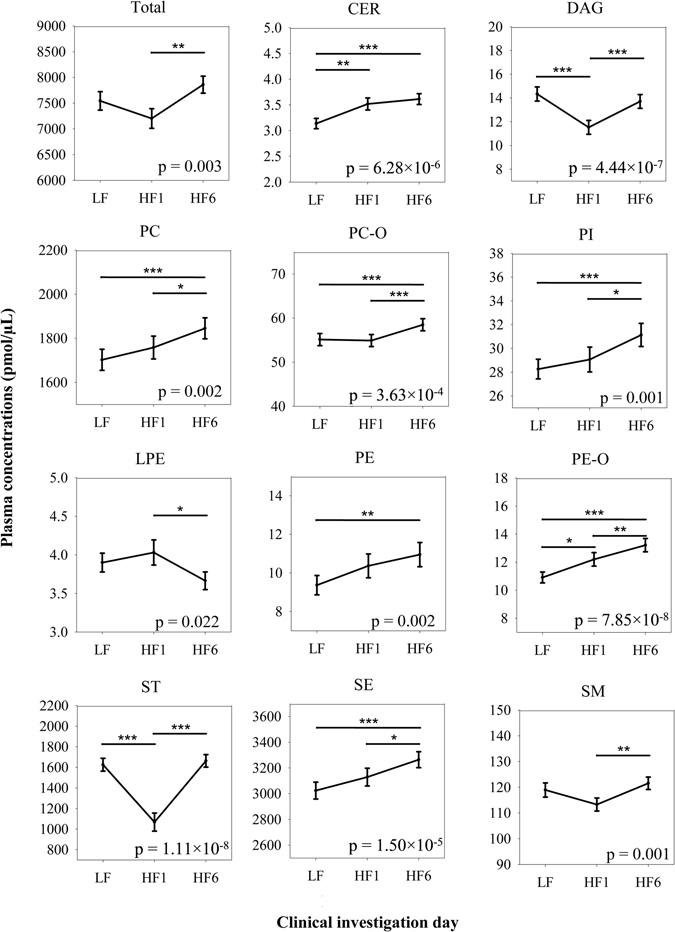
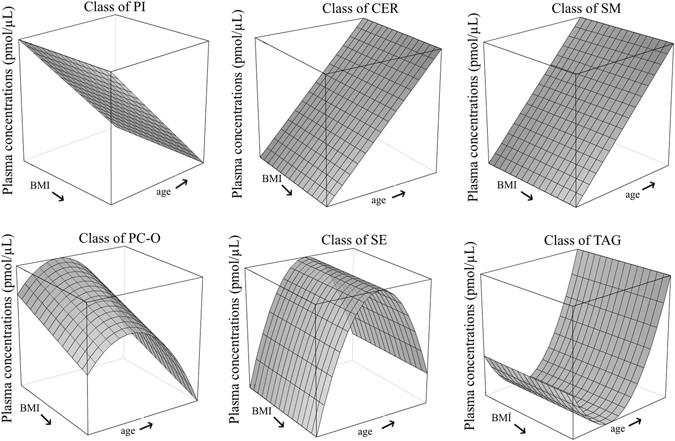
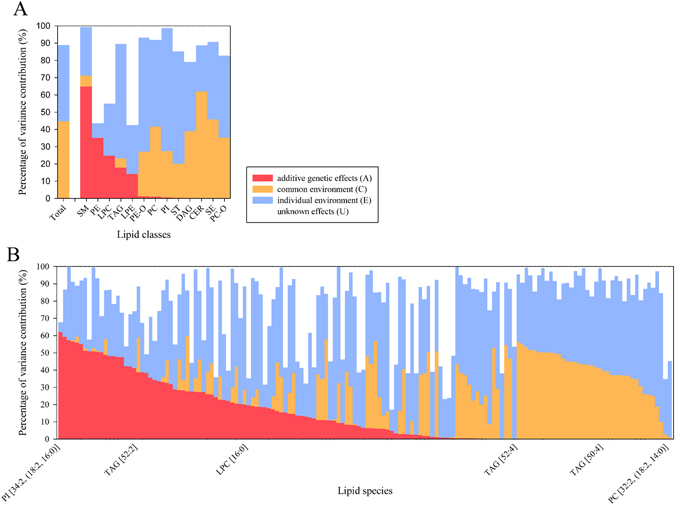
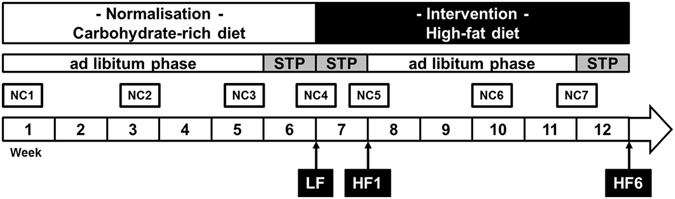
Lipidomics have a great potential as clinical tool for monitoring metabolic changes in health and disease. Nevertheless hardly anything is known about the heritability of lipids. Therefore, it is necessary to clarify how and how much we can affect these progresses in individuals. In our interventional twin study (46 healthy, non-obese twin pairs) we investigated the lipid profile in plasma samples after switching from a low fat diet to an isocaloric high fat diet (HFD) to characterize the metabolic adaptation. Additionally we used the ACE model for Additive genetics, Common and unique Environment as well as linear mixed modelling to analyse the heritability of lipids. The heritability of lipids varied between 0–62% and applied to lipid species rather than to lipid classes. Phospholipids showed the highest inheritance. In addition, sex, body mass index (BMI) and age were important modifiers. The lipid profile changed already after one week of HFD and diverged further after 5 weeks of additional HFD. Basal concentrations of specific lipids within phospholipids are strongly inherited and are likely to be associated with heritable disease risks. BMI, sex and age were major modifiers. Nutrition strongly alters specific lipid classes, and has to be controlled in clinical association studies.
Overview
The claims and statistics of this paper haven’t been checked yet.
Free: it reads the open-access text and checks the first 5 claims that cite a source we can check. Create a free account to check every claim.
Integrity signals
Registry
Cites
Statistics
Figures
Verification
Claims the paper makes
The claims and statistics of this paper haven’t been checked yet.
Free: it reads the open-access text and checks the first 5 claims that cite a source we can check. Create a free account to check every claim.
Claims other papers make about this one
Each is checked against this paper’s own text: does it say what the citing paper says it does?
In the citing paper
“An adaptive process of several weeks has also been observed with more moderate, nonketogenic macronutrient changes (150–152).”
From The carbohydrate-insulin model: A physiological perspective on the obesity pandemic (2021) · cites this paper as [152]
Self-check
Percentages, sums and reported differences re-computed from the paper’s own numbers.
The self-check needs the paper’s full text.
Citations
Cites
Friedewald, W. T., Levy, R. I., & Fredrickson, D. S. (1972) · Clinical Chemistry · doi:10.1093/clinchem/18.6.499 · Cited by 32,423
‘Small Changes' to Diet and Physical Activity Behaviors for Weight Management
Hills, A. P., Byrne, N. M., Lindstrom, R., & Hill, J. O. (2013) · Obesity Facts · doi:10.1159/000345030 · Cited by 9,493
Antihyperlipidemic and Biochemical Activities of Mcy Protein in Streptozotocin Induced Diabetic Rats
Marella, S., Maddirela, D. R., Badri, K. R., Jyothi Kumar, M. V., & Chippada, A. (2015) · Cellular Physiology and Biochemistry · doi:10.1159/000373954 · Cited by 5,938
Haslam, D. W., & James, W. P. T. (2005) · The Lancet · doi:10.1016/s0140-6736(05)67483-1 · Cited by 3,757
Inflammatory Mechanisms in Obesity
Gregor, M. F., & Hotamisligil, G. S. (2011) · Annual Review of Immunology · doi:10.1146/annurev-immunol-031210-101322 · Cited by 3,754
Lipid extraction by methyl-tert-butyl ether for high-throughput lipidomics
Matyash, V., Liebisch, G., Kurzchalia, T. V., Shevchenko, A., & Schwudke, D. (2008) · Journal of Lipid Research · doi:10.1194/jlr.d700041-jlr200 · Cited by 2,598
Chowdhury, R., Warnakula, S., Kunutsor, S., Crowe, F., Ward, H. A., Johnson, L., Franco, O. H., Butterworth, A. S., Forouhi, N. G., Thompson, S. G., et al. (2014) · Annals of Internal Medicine · doi:10.7326/m13-1788 · Cited by 1,139
McGuire, S. (2011) · Advances in Nutrition · doi:10.3945/an.111.000430 · Cited by 1,028
Genetic and Environmental Influences on Serum Lipid Levels in Twins
Heller, D. A., de Faire, U., Pedersen, N. L., Dahlen, G., & McClearn, G. E. (1993) · New England Journal of Medicine · doi:10.1056/nejm199304223281603 · Cited by 439
Pietiläinen, K. H., Sysi-Aho, M., Rissanen, A., Seppänen-Laakso, T., Yki-Järvinen, H., Kaprio, J., & Orešič, M. (2007) · PLoS ONE · doi:10.1371/journal.pone.0000218 · Cited by 418
Research works printed but not linked: 1
- Maes, H. H. In Encyclopedia of Statistics in Behavioral Science (John Wiley & Sons, Ltd 2005).
Cited by
The carbohydrate-insulin model: A physiological perspective on the obesity pandemic
Ludwig, D. S., Aronne, L. J., Astrup, A., de Cabo, R., Cantley, L. C., Friedman, M. I., Heymsfield, S. B., Johnson, J. D., King, J. C., Krauss, R. M., et al. (2021) · The American Journal of Clinical Nutrition · doi:10.1093/ajcn/nqab270 · Cited by 292
Cell-Type- and Brain-Region-Resolved Mouse Brain Lipidome
Fitzner, D., Bader, J. M., Penkert, H., Bergner, C. G., Su, M., Weil, M.-T., Surma, M. A., Mann, M., Klose, C., & Simons, M. (2020) · Cell Reports · doi:10.1016/j.celrep.2020.108132 · Cited by 286
Self-citationGrosso, G., Laudisio, D., Frias-Toral, E., Barrea, L., Muscogiuri, G., Savastano, S., & Colao, A. (2022) · Nutrients · doi:10.3390/nu14061137 · Cited by 255
“For instance, it has been reported that up to about 60% of the heritability of lipid response to a high-fat diet may depend on genetic heritage, with BMI, sex, and age being the major effect modifiers [173].”
BackgroundRuuth, M., Nguyen, S. D., Vihervaara, T., Hilvo, M., Laajala, T. D., Kondadi, P. K., Gisterå, A., Lähteenmäki, H., Kittilä, T., Huusko, J., et al. (2018) · European Heart Journal · doi:10.1093/eurheartj/ehy319 · Cited by 180
“Interestingly, plasma levels of SM have been strongly influenced by genetic effects.(39) Such influence could partly explain our observation that the aggregation susceptibility decreased in only two-thirds of the subjects in the healthy diet group.”
BackgroundGenetic architecture of human plasma lipidome and its link to cardiovascular disease
Tabassum, R., Rämö, J. T., Ripatti, P., Koskela, J. T., Kurki, M., Karjalainen, J., Palta, P., Hassan, S., Nunez-Fontarnau, J., Kiiskinen, T. T. J., et al. (2019) · Nature Communications · doi:10.1038/s41467-019-11954-8 · Cited by 175
Self-citationMass spectrometry‐based lipidomics in food science and nutritional health: A comprehensive review
Sun, T., Wang, X., Cong, P., Xu, J., & Xue, C. (2020) · Comprehensive Reviews in Food Science and Food Safety · doi:10.1111/1541-4337.12603 · Cited by 140
Competing paradigms of obesity pathogenesis: energy balance versus carbohydrate-insulin models
Ludwig, D. S., Apovian, C. M., Aronne, L. J., Astrup, A., Cantley, L. C., Ebbeling, C. B., Heymsfield, S. B., Johnson, J. D., King, J. C., Krauss, R. M., et al. (2022) · European Journal of Clinical Nutrition · doi:10.1038/s41430-022-01179-2 · Cited by 111
Heritability estimates for 361 blood metabolites across 40 genome-wide association studies
Hagenbeek, F. A., Pool, R., van Dongen, J., Draisma, H. H. M., Hottenga, J., Willemsen, G. A. H. M., Abdellaoui, A., Fedko, I. O., den Braber, A., Visser, P. J., et al. (2020) · Nature Communications · doi:10.1038/s41467-019-13770-6 · Cited by 124
Machine learning of human plasma lipidomes for obesity estimation in a large population cohort
Gerl, M. J., Klose, C. D., Surma, M. A., Fernandez, C., Melander, O., Männistö, S., Borodulin, K., Havulinna, A. S., Salomaa, V. V., Ikonen, E., et al. (2019) · PLoS Biology · doi:10.1371/journal.pbio.3000443 · Cited by 94
“Associations of BMI and obesity with lipidomes were investigated before [27, 32], and a more detailed discussion can be found in the S1 Text.”
BackgroundSelf-citationRecent Advances in the Application of Metabolomics for Nutrition and Health
González-Peña, D., & Brennan, L. (2019) · Annual Review of Food Science and Technology · doi:10.1146/annurev-food-032818-121715 · Cited by 94
Integrating lipidomics and genomics: emerging tools to understand cardiovascular diseases
Tabassum, R., & Ripatti, S. (2021) · Cellular and Molecular Life Sciences · doi:10.1007/s00018-020-03715-4 · Cited by 81
Meal timing and its role in obesity and associated diseases
Peters, B., Vahlhaus, J., & Pivovarova-Ramich, O. (2024) · Frontiers in Endocrinology · doi:10.3389/fendo.2024.1359772 · Cited by 72
“There are even speci fi c physiological variables, such as stomach fi lling before and after eating (138), or certain metabolic responses (139) that have been proven heritable.”
BackgroundLipidomes in health and disease: Analytical strategies and considerations
Wei, F., Lamichhane, S., Orešič, M., & Hyötyläinen, T. (2019) · TrAC Trends in Analytical Chemistry · doi:10.1016/j.trac.2019.115664 · Cited by 68
Orphan GPR116 mediates the insulin sensitizing effects of the hepatokine FNDC4 in adipose tissue
Georgiadi, A., Lopez‐Salazar, V., El‐Merahbi, R., Karikari, R. A., Ma, X., Mourão, A., Klepac, K., Bühler, L., Alfaro, A. J., Kaczmarek, I., et al. (2021) · Nature Communications · doi:10.1038/s41467-021-22579-1 · Cited by 61
Self-citationEffect of biological sex on human circulating lipidome: An overview of the literature
Tabassum, R., Widén, E., & Ripatti, S. (2023) · Atherosclerosis · doi:10.1016/j.atherosclerosis.2023.117274 · Cited by 59
Fernandez, C., Surma, M. A., Klose, C. D., Gerl, M. J., Ottosson, F. A., Ericson, U., Oskolkov, N., Ohro-Melander, M., Simons, K., & Melander, O. (2019) · Diabetes Care · doi:10.2337/dc19-1199 · Cited by 54
“Plasma lipid levels could be influenced by dietary intake (29,30) and physical activity (31).”
BackgroundSelf-citationLipidomics Insights in Health and Nutritional Intervention Studies
Ibáñez, C., Mouhid, L., Reglero, G., & de Molina, A. R. (2017) · Journal of Agricultural and Food Chemistry · doi:10.1021/acs.jafc.7b02643 · Cited by 42
Wash-in and washout effects: mitigating bias in short term dietary and other trials
Ludwig, D. S., Willett, W. C., & Putt, M. (2025) · BMJ · doi:10.1136/bmj-2024-082963 · Cited by 39
Matthiesen, R., Lauber, C., Sampaio, J. L., Domingues, N. S., Alves, L. S., Gerl, M. J., Almeida, M. S., Rodrigues, G. S., Gonçalves, P. D. A., Ferreira, J., et al. (2021) · EBioMedicine · doi:10.1016/j.ebiom.2021.103504 · Cited by 27
“Lipids in the plasma reflect diet and metabolic characteristics of an individual [1] but are also known to regulate inflammatory responses both positively and negatively [2 4].”
BackgroundSelf-citationJansen, L. T., Yang, N., Wong, J. M., Mehta, T. S., Allison, D. B., Ludwig, D. S., & Ebbeling, C. B. (2022) · Diabetes Care · doi:10.2337/dc21-1970 · Cited by 27
Manninen, S. M., Lankinen, M. A., Erkkilä, A. T., Nguyen, S. D., Ruuth, M. K., de Mello, V. D., Öörni, K., & Schwab, U. (2018) · Atherosclerosis · doi:10.1016/j.atherosclerosis.2018.12.017 · Cited by 25
Genetic and environmental determinants of variation in the plasma lipidome of older Australian twins
Wong, M. W. K., Thalamuthu, A., Braidy, N., Mather, K. A., Liu, Y., Ciobanu, L. G., Baune, B. T., Armstrong, N. J., Kwok, J. B., Schofield, P. R., et al. (2020) · eLife · doi:10.7554/elife.58954 · Cited by 19
Guo, X., Sarup, P. M., Jensen, J. D., Orabi, J., Kristensen, N. H., Mulder, F. A. A., Jahoor, A., & Jensen, J. (2020) · Frontiers in Plant Science · doi:10.3389/fpls.2020.575467 · Cited by 18
Peters, B., Schwarz, J., Schuppelius, B., Ottawa, A., Koppold, D. A., Weber, D., Steckhan, N., Mai, K., Grune, T., Pfeiffer, A. F. H., et al. (2025) · Science Translational Medicine · doi:10.1126/scitranslmed.adv6787 · Cited by 25
Self-citationAn Amish founder population reveals rare-population genetic determinants of the human lipidome
Montasser, M. E., Aslibekyan, S. W., Srinivasasainagendra, V., Tiwari, H. K., Patki, A., Bagheri, M., Kind, T., Barupal, D. K., Fan, S., Perry, J. A., et al. (2022) · Communications Biology · doi:10.1038/s42003-022-03291-2 · Cited by 19
Heritability of Urinary Amines, Organic Acids, and Steroid Hormones in Children
Hagenbeek, F. A., van Dongen, J., Pool, R., Harms, A. C., Roetman, P. J., Fanos, V., van Keulen, B. J., Walker, B. R., Karu, N., Pol, H. E. H., et al. (2022) · Metabolites · doi:10.3390/metabo12060474 · Cited by 13
Huang, Y., Stinson, S. E., Thodberg, M., Holm, L. A., Thielemann, R., Sulek, K., Lund, M. A. V., Fonvig, C. E., Kim, M. G., Trôst, K., et al. (2025) · EBioMedicine · doi:10.1016/j.ebiom.2024.105537 · Cited by 11
Raffo, M. A., Sarup, P. M., Jensen, J., Guo, X., Jensen, J. D., Orabi, J., Jahoor, A., & Christensen, O. F. (2025) · Theoretical and Applied Genetics · doi:10.1007/s00122-024-04806-7 · Cited by 13
“…(Gamboa-Becerra et al. 2019), milk and blood in Holstein cattle (Wittenburg et al., 2013; Aliakbari et al. 2019) and plasma and serum in humans (Frahnow et al. 2017; Hagenbeek et al. 2020), and variable ̂ h 2 for MIs (ranging from 0 to > 0.5 for the different tissues) have been found for the…”
InfluentialTwins and omics: the role of twin studies in multi-omics
Hagenbeek, F. A., van Dongen, J., Pool, R., & Boomsma, D. I. (2022) · Elsevier eBooks · doi:10.1016/b978-0-12-821514-2.00029-5 · Cited by 10
Soto-Mota, A., Jansen, L. T., Norwitz, N. G., Pereira, M. A., Ebbeling, C. B., & Ludwig, D. S. (2023) · Journal of Nutrition · doi:10.1016/j.tjnut.2023.12.017 · Cited by 10
“For all trials, outcomes such as energy intake and expenditure should be collected after (cid:6) 1 to 2 mo on test diets, based on available data on the timeframe of metabolic adaptation to major changes in macronutrients [11,12,34,38,43 – 45 , 50 ].”
BackgroundMethodTabassum, R., Rämö, J. T., Ripatti, P., Koskela, J. T., Kurki, M., Karjalainen, J. M., Hassan, S., Núñez-Fontarnau, J., Kiiskinen, T., Söderlund, S., et al. (2018) · bioRxiv (Cold Spring Harbor Laboratory) · doi:10.1101/457960 · Cited by 10
Self-citationGenetics and Not Shared Environment Explains Familial Resemblance in Adult Metabolomics Data
Pool, R., Hagenbeek, F. A., Hendriks, A. M., van Dongen, J., Willemsen, G. A. H. M., de Geus, E. J. C., van Dijk, K. W., Verhoeven, A., Suchiman, H. E. D., Beekman, M., et al. (2020) · Twin Research and Human Genetics · doi:10.1017/thg.2020.53 · Cited by 9
“A strong contribution of the common environment has also been observed for specific lipid species, while other lipid species had no or only small contributions of the common environment (Frahnow et al., 2017).”
BackgroundInfluentialSvärd, A. A., Kaur, S., Trôst, K., Suvitaival, T., Lernmark, Å., Maziarz, M., Pociot, F., Overgaard, A. J., & The DiPiS Study Group (2020) · Metabolomics · doi:10.1007/s11306-020-01730-x · Cited by 4
Soliz‐Rueda, J. R., Kessler, K., Jürchott, K., Sticht, C., Hornemann, S., Kramer, A., Pfeiffer, A. F. H., & Pivovarova‐Ramich, O. (2026) · Food Research International · doi:10.1016/j.foodres.2026.118685 · Cited by 2
Self-citationParent-of-origin effects in the life-course evolution of cardiometabolic traits
Wagh, R. S. H., Hatem, G., Andersson, J., Kunte, P. S., Bandyopadhyay, S. K., Yajnik, C. S., & Prasad, R. B. (2025) · Diabetologia · doi:10.1007/s00125-025-06396-5 · Cited by 2
Rojo-López, M. I., Castelblanco, E., Real, J., Hernández, M., Falguera, M., Amigó, N., Julve, J., Alonso, N., Franch‐Nadal, J., Granado-Casas, M., et al. (2021) · Nutrients · doi:10.3390/nu13124369 · Cited by 1
“Total cholesterol, triglycerides, high-density lipoprotein (HDL), and low-density lipoprotein (LDL) determined by conventional lipid analysis are commonly used to identify subjects with metabolic diseases at high cardiovascular (CV) risk [1,2].”
BackgroundThe genomic architecture of blood metabolites based on a decade of genome-wide analysesPreprint
Hagenbeek, F. A., Pool, R., van Dongen, J., Draisma, H. H. M., Hottenga, J., Willemsen, G. A. H. M., Abdellaoui, A., Fedko, I. O., den Braber, A., Visser, P. J., et al. (2019) · bioRxiv (Cold Spring Harbor Laboratory) · doi:10.1101/661769 · Cited by 1
Leveraging a founder population to identify novel rare-population genetic determinants of lipidomePreprint
Montasser, M. E., Aslibekyan, S. W., Srinivasasainagendra, V., Tiwari, H. K., Patki, A., Bagheri, M., Kind, T., Barupal, D. K., Fan, S., Perry, J. A., et al. (2021) · bioRxiv (Cold Spring Harbor Laboratory) · doi:10.1101/2021.05.21.445208 · Cited by 1
Parent-of-origin effects in the life-course evolution of cardio-metabolic traitsPreprint
Wagh, R. S. H., Kunte, P. S., Yajnik, C. S., & Prasad, R. B. (2021) · medRxiv · doi:10.1101/2021.10.28.21265599
“As previously reported, these traits were robustly heritable from early childhood as when studied in adults (3; 14-16).”
BackgroundAvaliação do perfil de microRNAs exossomais em portadores de hipercolesterolemia familial
de Freitas, R. C. C. (2022) · Digital Library of Theses and Dissertations (Universidade de São Paulo) · doi:10.11606/t.9.2022.tde-29072022-230948
Landstra, E. N., Imtiaz, M. A., Talevi, V., Eichelmann, F., Schulze, M. B., Aziz, N. A., & Breteler, M. M. B. (2024) · medRxiv · doi:10.1101/2024.12.04.24318368
Genetic determinants of plasma lipids in Greenlanders
Hjerresen, J. P., Jørsboe, E., & Andersen, M. K. (2026) · Current Opinion in Lipidology · doi:10.1097/mol.0000000000001023
Hernández-Banqué, C., Jové-Juncà, T., Portero‐Otín, M., Òbis, È., González-Rodríguez, O., Ballester, M., & Quintanilla, R. (2026) · Genetics Selection Evolution · doi:10.1186/s12711-026-01030-3
Bertram, J., Lazaratos, M., KRUSE, M., Hornemann, S., Mosig, A. S., Frahnow, T., Osterhoff, M. A., Busjahn, A., Ost, A.-C., Schürmann, A., et al. (2026) · Science Advances · doi:10.1126/sciadv.aef5698
“In this study, representing a secondary analysis of the previously published NutriGenomic Analysis in Twins (NUGAT) trial ( 12 – 14 ), we aimed to identify transcriptomic, metabolic, and inflammatory responses upon intake of WD rich in saturated fat in healthy individuals in the absence of weight…”
Self-citationLewin, S., Hartley, C., Vidal, T. M. L., Rose, J. J. A., Costanzo, A., Jadhav, S. R., Bromfield, J. I., Keast, R., Mitchell, S., Flavel, M., et al. (2026) · Frontiers in Nutrition · doi:10.3389/fnut.2026.1923420
“Previous dietary intervention studies have demonstrated that microbiome responses to substantial changes in macronutrient intake may develop over several weeks and can follow non -linear trajectories (46, 47).”
Sex-Dependent Lipidomic Remodeling in Plasma and Feces Following High-Fat Diet Intake in Adult Rats
González-LasHeras, S., Forsten, R., Rio-Aigé, K., Castell, M., Costabile, A., Melgar, S., Pérez-Cano, F. J., Massot‐Cladera, M., & Rodríguez-Lagunas, M. J. (2026) · Nutrients · doi:10.3390/nu18183014
“This observation contrasts with the commonly reported increase in circulating lipid levels associated with HFD [35–38] and may indicate the activation of compensatory mechanisms, such as enhanced lipid clearance, storage in peripheral tissues, or redistribution across metabolic pathways [39–41].”
Metadata
- Authors
- Frahnow, T., Osterhoff, M. A., Hornemann, S., Kruse, M., Surma, M. A., Klose, C., Simons, K., & Pfeiffer, A. F. H.
- Affiliations
- German Center for Diabetes Research (DE)
- German Institute of Human Nutrition (DE)
- Lipotype (Germany) (DE)
- Corresponding author
- Frahnow, Turid
- ORCID
- Venue
- Scientific Reports
- Published
- 2017-06-16
- Volume
- 7
- Issue
- 1
- Pages
- 3750-3750
- ISSN
- 2045-2322 (ISSN-L)
- PMC
- PMC5473837
- OpenAlex
- W2626616553
- Semantic Scholar
- 2fa7408e0049383948a94a9382e8e85f59508846
- Cited by
- 46
- References
- 34
- Citations by year
- 2026: 6 · 2025: 5 · 2024: 2 · 2023: 2 · 2022: 7 · 2021: 7 · 2020: 7 · 2019: 6 · 2018: 3 · 2017: 1
- FWCI
- 1.90
- Type
- journal article
- Language
- en
- Open access
- gold
- doi.org
- Licence
- cc-by
- creativecommons.org/licenses/by/4.0 (tdm)
- creativecommons.org/licenses/by/4.0 (vor)
- Locations
- Scientific Reports (publishedVersion, cc-by)
- Europe PMC (PubMed Central) (publishedVersion, cc-by)
- PubMed Central (publishedVersion, cc-by)
- PubMed (publishedVersion)
- Informationszentrum Lebenswissenschaften (ZB MED) (submittedVersion, cc-by)
- DOAJ (DOAJ: Directory of Open Access Journals) (submittedVersion, cc-by-sa)
- Publikationen an der Universität Bielefeld (Universität Bielefeld) (submittedVersion)
- Refubium (Universitätsbibliothek der Freien Universität Berlin) (submittedVersion, cc-by)
- Universitätsbibliothek der FU Berlin Hochschulschriftenstelle u. Dokumentenserver (cc-by)
- Funders
- Bundesministerium für Bildung und Forschung (0 315 424)
- Leibniz-Gemeinschaft
- Topics
- Life Sciences › Biochemistry, Genetics and Molecular Biology › Molecular Biology › Metabolomics and Mass Spectrometry Studies
- Life Sciences › Biochemistry, Genetics and Molecular Biology › Genetics › Nutrition, Genetics, and Disease
- Life Sciences › Biochemistry, Genetics and Molecular Biology › Biochemistry › Lipid metabolism and biosynthesis
- Keywords
- lipidomics, high-fat diet, twin studies, ACE model, phospholipids, body mass index, sex differences, age effects
- MeSH terms
- Adult, Dietary Fats, Female, Humans, Male, Phospholipids, Twins, Dizygotic, Twins, Monozygotic, Body Mass Index
About these checks
Registry, retraction, Cites and statistics results are computed, not judged, with one exception: a printed reference that no index lists is read once by a model before it counts as a citation error. Claims are extracted by a model and kept only when their quote appears verbatim in the text; each cited source is then checked, with a model’s help, for whether it says what the claim relies on. Those verdicts can be wrong — read the claim’s quote and the cited source before relying on one.
Statistics and arithmetic are recomputed, not judged.
Confidence bands are shown only for fields calibrated on our annotated test set. None is calibrated yet, so no band is shown.
What counts as a claim ›How we measure confidence ›How we check this ›
Are you an author, or do you see a problem with this page? Request a review
Data sources
Bibliographic data: Semantic Scholar, OpenAlex, Crossref.
Contains information from the Semantic Scholar Academic Graph Datasets, made available under the ODC Attribution License (ODC-BY 1.0).
Semantic Scholar’s data is described in: Kinney, R., et al. (2023). The Semantic Scholar Open Data Platform. arXiv:2301.10140.
