

Spatiotemporal neural characterization of prediction error valence and surprise during reward learning in humans
Open accessPublished version of a preprint
The DOI matches its Crossref record; 93 of the 93 references it cites were found in a registry or an index.
Abstract
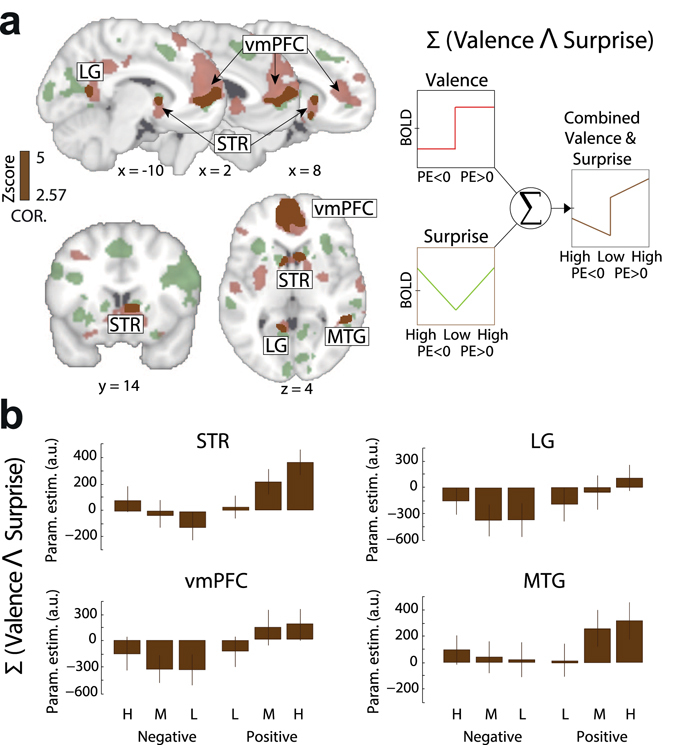
Reward learning depends on accurate reward associations with potential choices. These associations can be attained with reinforcement learning mechanisms using a reward prediction error (RPE) signal (the difference between actual and expected rewards) for updating future reward expectations. Despite an extensive body of literature on the influence of RPE on learning, little has been done to investigate the potentially separate contributions of RPE valence (positive or negative) and surprise (absolute degree of deviation from expectations). Here, we coupled single-trial electroencephalography with simultaneously acquired fMRI, during a probabilistic reversal-learning task, to offer evidence of temporally overlapping but largely distinct spatial representations of RPE valence and surprise. Electrophysiological variability in RPE valence correlated with activity in regions of the human reward network promoting approach or avoidance learning. Electrophysiological variability in RPE surprise correlated primarily with activity in regions of the human attentional network controlling the speed of learning. Crucially, despite the largely separate spatial extend of these representations our EEG-informed fMRI approach uniquely revealed a linear superposition of the two RPE components in a smaller network encompassing visuo-mnemonic and reward areas. Activity in this network was further predictive of stimulus value updating indicating a comparable contribution of both signals to reward learning.
Overview
The claims and statistics of this paper haven’t been checked yet.
Free: it reads the open-access text and checks the first 5 claims that cite a source we can check. Create a free account to check every claim.
Integrity signals
Registry
Cites
Statistics
Figures
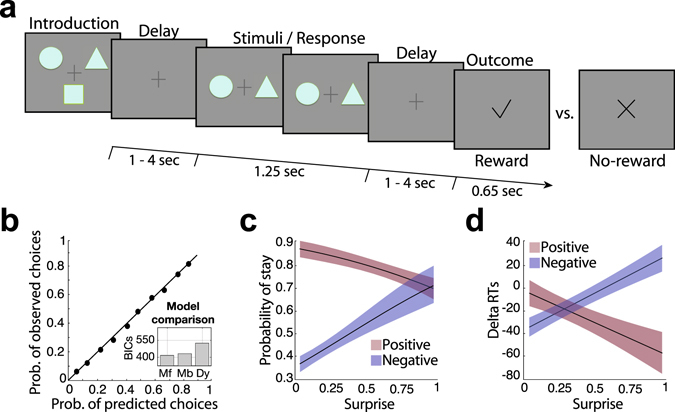
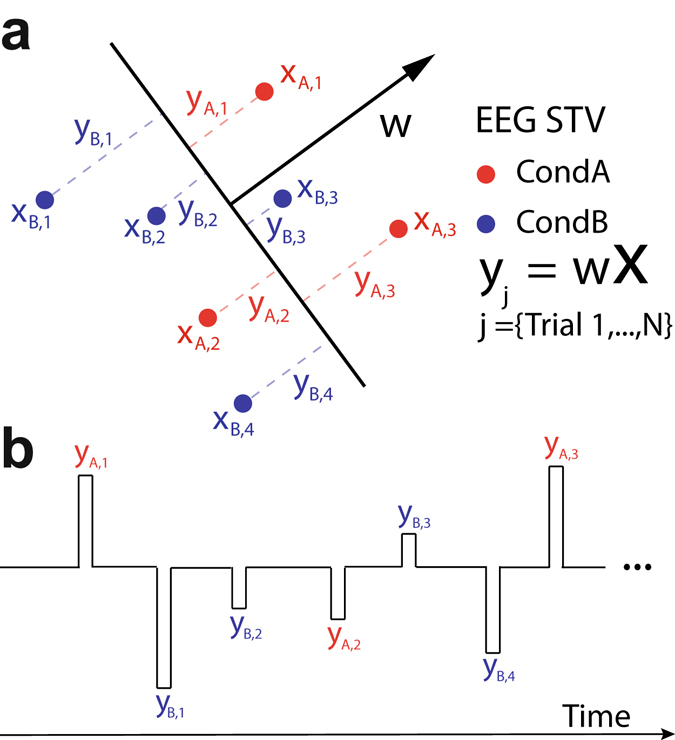
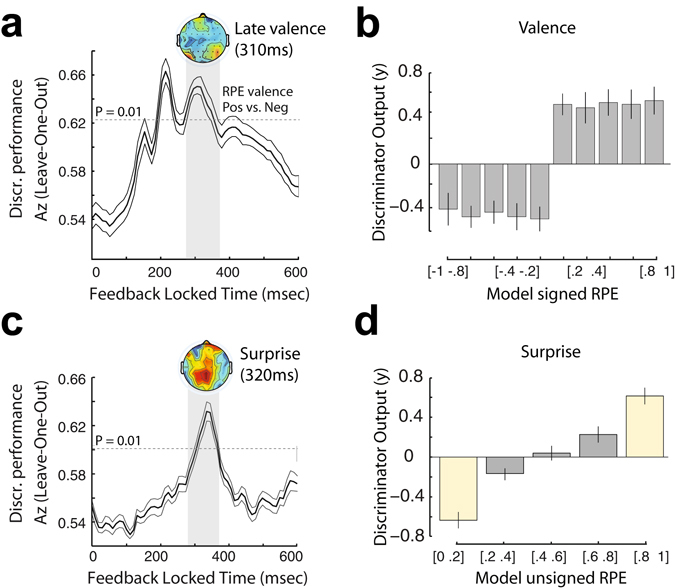
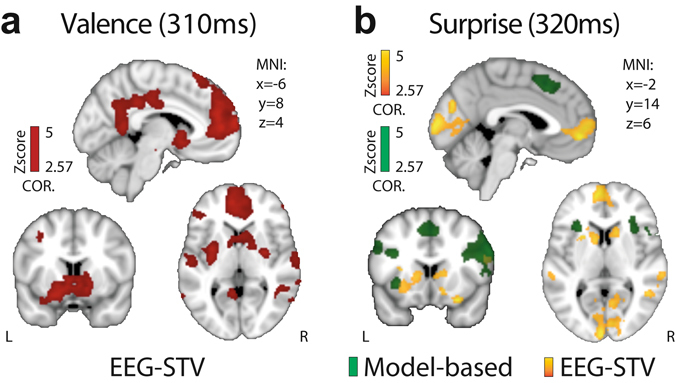
Verification
Claims the paper makes
The claims and statistics of this paper haven’t been checked yet.
Free: it reads the open-access text and checks the first 5 claims that cite a source we can check. Create a free account to check every claim.
Self-check
Percentages, sums and reported differences re-computed from the paper’s own numbers.
The self-check needs the paper’s full text.
Citations
Cites
Reinforcement Learning: An Introduction
Sutton, R. S., & Barto, A. G. (1998) · IEEE Transactions on Neural Networks · doi:10.1109/tnn.1998.712192 · Cited by 27,225 · cited 3×
“Moreover, a significant interaction between RPE valence and surprise (χ(2)(1) = 21.”
InfluentialReinforcement Learning: An Introduction
(2005) · IEEE Transactions on Neural Networks · doi:10.1109/tnn.2004.842673 · Cited by 24,496
Advances in functional and structural MR image analysis and implementation as FSL
Smith, S. M., Jenkinson, M., Woolrich, M. W., Beckmann, C. F., Behrens, T. E. J., Johansen-Berg, H., Bannister, P. R., De Luca, M., Drobnjak, I., Flitney, D. E., et al. (2004) · NeuroImage · doi:10.1016/j.neuroimage.2004.07.051 · Cited by 13,630
A neural substrate of prediction and reward
Schultz, W., Dayan, P., & Montague, P. R. (1997) · Science · doi:10.1126/science.275.5306.1593 · Cited by 9,388 · cited 2×
“negative feedback trials (valence dimension) and (2) high vs.”
Cluster failure: why fMRI inferences for spatial extent have inflated false-positive rates
Eklund, A., Nichols, T. E., & Knutsson, H. (2016) · Proceedings of the National Academy of Sciences · doi:10.1073/pnas.1602413113 · Cited by 3,487
Investigations into resting-state connectivity using independent component analysis
Beckmann, C. F., DeLuca, M., Devlin, J. T., & Smith, S. M. (2005) · Philosophical Transactions of the Royal Society B: Biological Sciences · doi:10.1098/rstb.2005.1634 · Cited by 3,398
Pearce, J. M., & Hall, G. (1980) · Psychological Review · doi:10.1037/0033-295x.87.6.532 · Cited by 3,023
Anticipation of Increasing Monetary Reward Selectively Recruits Nucleus Accumbens
Knutson, B., Adams, C. M., Fong, G. W., & Hommer, D. (2001) · The Journal of Neuroscience · doi:10.1523/jneurosci.21-16-j0002.2001 · Cited by 2,244 · cited 1×
“Highly unpredicted outcomes (either positive or negative) can boost attention and facilitate learning, whereas less surprising outcomes attracting reduced attention might slow down the learning process instead 19, 20 .”
Cortical substrates for exploratory decisions in humans
Daw, N. D., O'Doherty, J. P., Dayan, P., Seymour, B., & Dolan, R. J. (2006) · Nature · doi:10.1038/nature04766 · Cited by 2,224 · cited 2×
“In addition to these known reward structures, we also identified significant clusters in the lingual gyrus (LG), the middle temporal gyrus (MTG) and the precuneus, areas that have previously been implicated in memory retrieval and adaptive visual learning processes 39 .”
Discrete coding of reward probability and uncertainty by dopamine neurons
Fiorillo, C. D., Tobler, P. N., & Schultz, W. (2003) · Science · doi:10.1126/science.1077349 · Cited by 2,085 · cited 1×
“σ β φ = − − P i v i v i ( ) ( ( ( ) ( )) ) (3) A A B”
Research works printed but not linked: 2
- Pearce, J. M. & Mackintosh, N. J. in Attention and Associative Learning: From Brain to Behaviour (eds Mitchell, C. & Le Pelley, M. E.) 11–39 (Oxford University Press, 2010).
- Duda, R. O., Hart, P. E. & Stork, D. G. Pattern Classification. (Wiley-Interscience, 2000).
Cited by
Beyond the FRN: Broadening the time-course of EEG and ERP components implicated in reward processing
Glazer, J. E., Kelley, N. J., Pornpattananangkul, N., Mittal, V. A., & Nusslock, R. (2018) · International Journal of Psychophysiology · doi:10.1016/j.ijpsycho.2018.02.002 · Cited by 361
Fouragnan, E. F., Chau, B. K. H., Folloni, D., Kolling, N., Verhagen, L., Klein-Flügge, M., Tankelevitch, L., Papageorgiou, G. K., Aubry, J.-F., Sallet, J., et al. (2019) · Nature Neuroscience · doi:10.1038/s41593-019-0375-6 · Cited by 213
Self-citationPisauro, M. A., Fouragnan, E., Retzler, C., & Philiastides, M. G. (2017) · Nature Communications · doi:10.1038/ncomms15808 · Cited by 208
Self-citationFouragnan, E., Retzler, C., & Philiastides, M. G. (2018) · Human Brain Mapping · doi:10.1002/hbm.24047 · Cited by 176
“…identify potential regions integrating valence and surprise either into a signed RPE representation or a linear superposition of the two signals (Fouragnan et al., 2017), we performed a conjunction analysis between the valence (pattern A), the surprise (pattern B) and signed RPE (pattern C)…”
InfluentialSelf-citationHaarsma, J., Fletcher, P. C., Griffin, J. D., Taverne, H. J., Ziauddeen, H., Spencer, T. J., Miller, C., Katthagen, T., Goodyer, I., Diederen, K. M. J., et al. (2021) · Molecular Psychiatry · doi:10.1038/s41380-020-0803-8 · Cited by 108
“…and dACC is in line with earlier findings by Hayden (et al., 2011) who found unsigned prediction errors in the dACC of monkeys, and with prior fMRI studies in humans (Fletcher et al 2001, Turner et al 2004, Fouragnan et al., 2017; Fouragnan et al 2018; Metereau & Dreher 2012; Ide et al., 2013).”
Human VMPFC encodes early signatures of confidence in perceptual decisions
Gherman, S., & Philiastides, M. G. (2018) · eLife · doi:10.7554/elife.38293 · Cited by 107
Self-citationDebates on the dorsomedial prefrontal/dorsal anterior cingulate cortex: insights for future research
Clairis, N., & Lopez‐Persem, A. (2023) · Brain · doi:10.1093/brain/awad263 · Cited by 123
“78 It 85–89”
Global reward state affects learning and activity in raphe nucleus and anterior insula in monkeys
Wittmann, M. K., Fouragnan, E., Folloni, D., Klein-Flügge, M. C., Chau, B. K. H., Khamassi, M., & Rushworth, M. F. S. (2020) · Nature Communications · doi:10.1038/s41467-020-17343-w · Cited by 87
“We used hierarchical model fi tting 24 – 26 over all three data sets collapsed.”
Self-citationFrank, G., Shott, M. E., Stoddard, J., Swindle, S., & Pryor, T. L. (2021) · JAMA Psychiatry · doi:10.1001/jamapsychiatry.2021.1580 · Cited by 95
“Regular menses occurred in 16 participants with AN (18%, mean [SD] 15 [7] days from last cycle), 17 with OSFEDr (50%, mean [SD] 16 [8] days), all with HC (mean [SD] 6 [3] days), 33 with BN (59%, mean [SD] 12 [8] days), and 6 with BED (38%, mean [SD] 10 [6] days).”
Folloni, D., Fouragnan, E., Wittmann, M. K., Roumazeilles, L., Tankelevitch, L., Verhagen, L., Attali, D., Aubry, J.-F., Sallet, J., & Rushworth, M. F. S. (2021) · Science Advances · doi:10.1126/sciadv.abg7700 · Cited by 75
Self-citationHomberg, J. R., & Jagiellowicz, J. (2021) · Molecular Psychiatry · doi:10.1038/s41380-021-01047-8 · Cited by 89
Influence of vmPFC on dmPFC Predicts Valence-Guided Belief Formation
Kuzmanovic, B., Rigoux, L., & Tittgemeyer, M. (2018) · Journal of Neuroscience · doi:10.1523/jneurosci.0266-18.2018 · Cited by 69
“…and the anterior insula have been associated with error processing, novelty, and task difficulty (Wessel et al., 2012; Klein et al., 2013; Shenhav et al., 2014; Kolling et al., 2016; Bastin et al., 2017; Fouragnan et al., 2017) and thus were expected to increase activity with increasing error size.”
Anterior Cingulate Cortex Signals the Need to Control Intrusive Thoughts during Motivated Forgetting
Crespo‐García, M., Wang, Y., Jiang, M., Anderson, M. C., & Lei, X. (2022) · Journal of Neuroscience · doi:10.1523/jneurosci.1711-21.2022 · Cited by 65
“This cluster size was used as a threshold to correct the original statistical maps (Fouragnan et al., 2017).”
Seow, T. X. F., Benoit, E., Dempsey, C., Jennings, M., Maxwell, A., O'Connell, R., & Gillan, C. M. (2021) · The Journal of Neuroscience · doi:10.1523/jneurosci.0031-21.2021 · Cited by 51
“As such, we focused on the posterior alpha band (9–13 Hz), which, in addition to reflecting surprising outcomes (Fouragnan et al., 2017), is considered a general marker of mental activity and attention (Laufs et al., 2003; Klimesch, 2012) and is suppressed in conditions where increased mental…”
Gorrell, S., Shott, M. E., & Frank, G. (2022) · Biological Psychology · doi:10.1016/j.biopsycho.2022.108350 · Cited by 63
Queirazza, F., Fouragnan, E. F., Steele, J. D., Cavanagh, J., & Philiastides, M. G. (2019) · Science Advances · doi:10.1126/sciadv.aav4962 · Cited by 53
Self-citationCorrêa, C. M. C., Noorman, S., Jiang, J., Palminteri, S., Cohen, M. X., Lebreton, M. P., & van Gaal, S. (2018) · Journal of Neuroscience · doi:10.1523/jneurosci.0457-18.2018 · Cited by 45
“Overall, these results show that several cognitive processes important for reward-based learning, namely PE computation, surprise and switch/stay implementation are processed in the human brain and these cognitive processes are temporally and spatially dissociated in time (Fouragnan et al. 2017).”
InfluentialInferring Macroscale Brain Dynamics via Fusion of Simultaneous EEG-fMRI
Philiastides, M. G., Tu, T., & Sajda, P. (2021) · Annual Review of Neuroscience · doi:10.1146/annurev-neuro-100220-093239 · Cited by 51
Self-citationPisauro, M. A., Fouragnan, E. F., Arabadzhiyska, D. H., Apps, M. A. J., & Philiastides, M. G. (2022) · Nature Communications · doi:10.1038/s41467-022-34509-w · Cited by 46
“Unsigned prediction errors are crucial for signalling the salience and thus importance for attending to information, but do not carry valence information that is useful for adapting behaviour 52,53,78 .”
BackgroundSelf-citationFractionating adaptive learning: A meta-analysis of the reversal learning paradigm
Yaple, Z. A., & Yu, R. (2019) · Neuroscience & Biobehavioral Reviews · doi:10.1016/j.neubiorev.2019.04.006 · Cited by 36
Human VMPFC encodes early signatures of confidence in perceptual decisionsPreprint
Gherman, S., & Philiastides, M. G. (2017) · bioRxiv (Cold Spring Harbor Laboratory) · doi:10.1101/224337 · Cited by 30
Self-citationValence precedes value in neural encoding of prediction error
Stewardson, H. J., & Sambrook, T. D. (2023) · Psychophysiology · doi:10.1111/psyp.14266 · Cited by 28
Non-invasive ultrasonic neuromodulation of the human nucleus accumbens impacts reward sensitivity
Yaakub, S. N., Eraifej, J., Bault, N., Lojkiewiez, M., Bellec, E., Roberts, J., Philip, N. S., Zand, A. P. D., Green, A. L., Rushworth, M. F. S., et al. (2025) · Nature Communications · doi:10.1038/s41467-025-65080-9 · Cited by 46
“We employed the same task in previous work in humans 34,35 and macaques 14,15 .”
Self-citationSebastian, A., Konken, A. M., Schaum, M., Lieb, K., Tüscher, O., & Jung, P. (2020) · Journal of Neuroscience · doi:10.1523/jneurosci.1681-20.2020 · Cited by 26
“…to a network comprising, inter alia, the right anterior insula and right IFC, midcingulate cortex/preSMA, dorsal striatum, inferior parietal lobule and middle temporal gyrus (Fouragnan et al., 2018) and thus to a network largely overlapping with the network resulting from our conjunction analysis.”
InfluentialWeiss, A. R., Gillies, M. J., Philiastides, M. G., Apps, M. A. J., Whittington, M. A., FitzGerald, J. J., Boccard, S., Aziz, T. Z., & Green, A. L. (2018) · Frontiers in Human Neuroscience · doi:10.3389/fnhum.2018.00203 · Cited by 29
“…detail by running a multivariate discriminant analysis on the broadband signal to integrate information across DBS electrodes and generate an aggregate discriminator channel that best dichotomized outcomes into positive (correct) and negative (incorrect) outcomes (Fouragnan et al., 2015, 2017).”
Self-citationFrom Desire to Dread—A Neurocircuitry Based Model for Food Avoidance in Anorexia Nervosa
Frank, G. (2021) · Journal of Clinical Medicine · doi:10.3390/jcm10112228 · Cited by 29
“better or worse outcome into account [65,66].”
Timing along the cardiac cycle modulates neural signals of reward-based learning
Fouragnan, E. F., Hosking, B., Cheung, Y. B., Prakash, B. A., Rushworth, M. F. S., & Sel, A. (2024) · Nature Communications · doi:10.1038/s41467-024-46921-5 · Cited by 28
“This method has been well established in EEG data analysis 30,31 .”
BackgroundMethodSelf-citationReward prediction error in learning-related behaviors
Yujun, D., Song, D. F., Ni, J., Qing, H., & Quan, Z. (2023) · Frontiers in Neuroscience · doi:10.3389/fnins.2023.1171612 · Cited by 34
“Also, Reward prediction error is tightly correlated to other learning-related behaviors, such as reversal learning and reinforcement learning (Rescorla and Wagner, 1972a; Fouragnan et al., 2017; Katthagen et al., 2020).”
BackgroundGold, B. P., Pearce, M. T., McIntosh, A. R., Chang, C., Dagher, A., & Zatorre, R. J. (2023) · Frontiers in Neuroscience · doi:10.3389/fnins.2023.1209398 · Cited by 23
A Common Neural Account for Social and Nonsocial Decisions
Arabadzhiyska, D. H., Garrod, O., Fouragnan, E. F., Luca, E. D., Schyns, P. G., & Philiastides, M. G. (2022) · Journal of Neuroscience · doi:10.1523/jneurosci.0375-22.2022 · Cited by 24
Self-citationFormalizing the Function of Anterior Insula in Rapid Adaptation
Bossaerts, P. L. (2018) · Frontiers in Integrative Neuroscience · doi:10.3389/fnint.2018.00061 · Cited by 16
Balsdon, T., Pisauro, M. A., & Philiastides, M. G. (2024) · Nature Communications · doi:10.1038/s41467-024-49538-w · Cited by 15
“EEG preprocessing was performed using EEGLAB [63] and custom scripts [37,63-65] implemented in 459 MATLAB (MathWorks Inc).”
MethodSelf-citationThe Anterior Insula Processes a Time-Resolved Subjective Risk Prediction Error
Kim, J.-C., Hellrung, L., Nebe, S., & Tobler, P. N. (2025) · The Journal of Neuroscience · doi:10.1523/jneurosci.2302-24.2025 · Cited by 12
“In contrast, to underpin a more domain-general encoding of subjective risk prediction errors (Fouragnan et al., 2017; Hau fl er et al., 2022), the anterior insula may receive and process also inputs from regions that encode subjective risk prediction errors preferentially in the appetitive domain.”
Gorrell, S., Shott, M. E., Pryor, T. L., & Frank, G. (2023) · Biological Psychiatry: Cognitive Neuroscience and Neuroimaging · doi:10.1016/j.bpsc.2023.07.007 · Cited by 10
Haarsma, J., Fletcher, P. C., Ziauddeen, H., Spencer, T. J., Diederen, K. M. J., & Murray, G. K. (2018) · bioRxiv (Cold Spring Harbor Laboratory) · doi:10.1101/288936 · Cited by 13
“The coding of unsigned prediction errors in the SFC/dACC is in line with earlier findings by Hayden (et al., 2011) who found unsigned prediction errors in the dACC of monkeys, and with prior fMRI studies in humans (Fouragnan et al., 2017; Metereau et al., 2013; Ide et al., 2013).”
The Reward Positivity signals a goal prediction error
Cavanagh, J. F., & Holroyd, C. B. (2026) · Trends in Cognitive Sciences · doi:10.1016/j.tics.2025.11.005 · Cited by 18
Frank, G., Shott, M. E., Pryor, T. L., Swindle, S., & Stoddard, J. (2022) · International Journal of Eating Disorders · doi:10.1002/eat.23814 · Cited by 10
Chowdhury, M. E. H., Khandakar, A. A., Hossain, B., & Alzoubi, K. (2018) · Applied Sciences · doi:10.3390/app8101969 · Cited by 10
At‐risk alcohol users have disrupted valence discrimination during reward anticipation
Komarnyckyj, M., Retzler, C., Cao, Z., Ganis, G., Murphy, A., Whelan, R., & Fouragnan, E. F. (2022) · Addiction Biology · doi:10.1111/adb.13174 · Cited by 10
“The second phase, reward outcome, happens when an outcome is delivered that generates a prediction error, which ultimately triggers learning.(9,10) Reward outcomes have been extensively studied using both functional magnetic resonance imaging (fMRI) and electroencephalography (EEG).”
BackgroundSelf-citationChen, X., & Kwak, Y. (2022) · NeuroImage · doi:10.1016/j.neuroimage.2022.119300 · Cited by 11
Haarsma, J., Fletcher, P. C., Griffin, J. D., Taverne, H., Ziauddeen, H., Spencer, T. J., Goodyer, I. M., Diederen, K. M. J., & Murray, G. K. (2019) · bioRxiv (Cold Spring Harbor Laboratory) · doi:10.1101/558478 · Cited by 10
Carvalheiro, J., & Philiastides, M. G. (2023) · Cell Reports · doi:10.1016/j.celrep.2023.113589 · Cited by 11
“45,48,80 It is thus possible that the early system generates a fast alertness response in the presence of negative outcomes, and in parallel, it downregulates the late value-updating system to generate avoidance behavior and promote learning.”
BackgroundSelf-citationPrecision-dependent modulation of social attention
Gao, W., Zhu, C., Si, B., Zhou, L., & Zhou, K. (2025) · NeuroImage · doi:10.1016/j.neuroimage.2025.121166 · Cited by 6
Action in auctions: neural and computational mechanisms of bidding behaviour
Martinez‐Saito, M., Коновалов, Р. Н., Пирадов, М. А., Шестакова, А. Н., Gutkin, B. S., & Klucharev, V. A. (2019) · European Journal of Neuroscience · doi:10.1111/ejn.14492 · Cited by 8
“One possibility is that both learning systems operate concurrently, perhaps distributed over a broader network, as recent work that showed multiple distributed RPE valence and surprise representations (Fouragnan et al., 2017).”
BackgroundResultDistinct outcome processing in deterministic and probabilistic reversal learning
Alaoui, S. H., Adam‐Darqué, A., Ptak, R., & Schnider, A. (2021) · Cortex · doi:10.1016/j.cortex.2021.04.008 · Cited by 7
Keogh, C., Deli, A., Zand, A. P. D., Zorman, M., Boccard, S., Parrott, M., Sigalas, C., Weiss, A. R., Stein, J. F., FitzGerald, J. J., et al. (2022) · Frontiers in Human Neuroscience · doi:10.3389/fnhum.2022.780047 · Cited by 4
Queirazza, F., Cavanagh, J., Philiastides, M. G., & Krishnadas, R. (2024) · Brain Behavior and Immunity · doi:10.1016/j.bbi.2024.03.044 · Cited by 3
“2 and was previously described in (Fouragnan, Queirazza, Retzler, Mullinger, & Philiastides, 2017; Fouragnan, Retzler, Mullinger, & Philiastides, 2015; Queirazza, Fouragnan, Steele, Cavanagh, & Phi-liastides, 2019).”
Self-citationWestwood, S., & Philiastides, M. G. (2024) · Human Brain Mapping · doi:10.1002/hbm.70072 · Cited by 5
“…component, appearing at around 220 ms post-feedback (Philiastides et al. 2010), that has previously been shown to emerge following reward omissions, with a subsequent downstream influence on a separate value processing stage (Fouragnan et al. 2015, 2017; Fouragnan, Retzler, and Philiastides 2018).”
InfluentialSelf-citationCooperative update of beliefs and state-transition functions in human reinforcement learning
Higashi, H., Minami, T., & Nakauchi, S. (2019) · Scientific Reports · doi:10.1038/s41598-019-53600-9 · Cited by 3
Queirazza, F., & Philiastides, M. G. (2025) · npj Mental Health Research · doi:10.1038/s44184-025-00165-3 · Cited by 2
“12,59,60 and is shown in Fig.”
Self-citationMotivational state determines error-sensitive learning modes in visual perceptual learning
Kim, D., Wang, Z., Sakagami, M., Sasaki, Y., & Watanabe, T. (2026) · Cerebral Cortex · doi:10.1093/cercor/bhag006 · Cited by 2
The Value and Utilization of Social Evaluative Feedback: A Neurodevelopmental Perspective
Rodman, A. M. (2018) · Digital Access to Scholarship at Harvard (DASH) (Harvard University)
Fleming, S. M. (2019) · Faculty Opinions – Post-Publication Peer Review of the Biomedical Literature · doi:10.3410/f.734068306.793559296
Classification of human trust in AI using brain activity data
Bandara, D., Liao, R., Chowdhury, F., & Abbott, L. (2025) · Northeast Journal of Complex Systems · doi:10.63562/2577-8439.1108 · Cited by 1
Early Arousal Signals Drive Reward Learning and Subsequent Choice BehaviourPreprint
Ban, K., Fouragnan, E. F., & Philiastides, M. G. (2025) · bioRxiv (Cold Spring Harbor Laboratory) · doi:10.1101/2025.11.25.690494
Self-citationGharesi, N., Kalaska, J. F., & Baillet, S. (2026) · bioRxiv (Cold Spring Harbor Laboratory) · doi:10.64898/2026.01.23.701339
Komarnyckyj, M., Retzler, C., Murphy, A., Delis, I., & Fouragnan, E. F. (2026) · Clinical Neurophysiology · doi:10.1016/j.clinph.2026.2111922
Self-citationFluctuations in arousal reflect latent state transitions that facilitate behavioural optimization
Li, T., Marble, H., Chen, T., Razmi, N., & Nassar, M. R. (2026) · Nature Human Behaviour · doi:10.1038/s41562-026-02533-1 · Cited by 2
“While the latent state transition theory (LSTT) accounts for a wealth of data linking arousal signals to surprise 1,37–41 , prediction errors (PEs) 4,42–45 , and behaviours including learning 2,6,29,46–48 and perceptual biases 20,21,23,24,49,50 , it also makes a number of novel predictions that…”
Effort-based decision-making: A value-guided dissection and arousal-focused synthesis
Clairis, N., & Tobler, P. N. (2026) · Neuroscience & Biobehavioral Reviews · doi:10.1016/j.neubiorev.2026.107062
Metadata
- Authors
- Fouragnan, E., Queirazza, F., Retzler, C., Mullinger, K. J., & Philiastides, M. G.
- Affiliations
- University of Oxford (GB)
- University of Glasgow (GB)
- University of Huddersfield (GB)
- University of Nottingham (GB)
- Corresponding author
- Fouragnan, Elsa
- Philiastides, Marios G.
- Venue
- Scientific Reports
- Published
- 2017-07-06
- Volume
- 7
- Issue
- 1
- Pages
- 4762-4762
- ISSN
- 2045-2322 (ISSN-L)
- PMC
- PMC5500565
- OpenAlex
- W2620599308
- Cited by
- 61
- References
- 92
- Citations by year
- 2026: 6 · 2025: 7 · 2024: 5 · 2023: 6 · 2022: 8 · 2021: 7 · 2020: 3 · 2019: 7 · 2018: 10 · 2017: 2
- FWCI
- 3.45
- Type
- journal article
- Language
- en
- Open access
- gold
- doi.org
- Licence
- cc-by
- creativecommons.org/licenses/by/4.0 (tdm)
- creativecommons.org/licenses/by/4.0 (vor)
- Locations
- Scientific Reports (publishedVersion, cc-by)
- bioRxiv (Cold Spring Harbor Laboratory) (acceptedVersion, cc-by-nc-nd)
- Europe PMC (PubMed Central) (publishedVersion, cc-by)
- PubMed Central (publishedVersion, cc-by)
- PubMed (publishedVersion)
- University of Huddersfield Repository (University of Huddersfield) (acceptedVersion)
- ENLIGHTEN (Jurnal Bimbingan dan Konseling Islam) (acceptedVersion)
- Repository@Nottingham (University of Nottingham) (submittedVersion, cc-by)
- PEARL (University of Plymouth) (submittedVersion)
- DOAJ (DOAJ: Directory of Open Access Journals) (submittedVersion, cc-by-sa)
- Nottingham ePrints (University of Nottingham) (submittedVersion, cc-by)
- Huddersfield Research Portal (University of Huddersfield) (submittedVersion, cc-by)
- University of Birmingham Research Portal (University of Birmingham) (submittedVersion, cc-by)
- Funders
- Directorate for Biological Sciences
- Medical Research Council (MR/J000914/1, MR/N003403/1)
- Biotechnology and Biological Sciences Research Council (BB/J015393/2, BB/J015393/1, BB/J015393/1-2)
- Economic and Social Research Council (ES/L012995/1)
- Topics
- Life Sciences › Neuroscience › Cognitive Neuroscience › Neural and Behavioral Psychology Studies
- Life Sciences › Neuroscience › Cellular and Molecular Neuroscience › Neurotransmitter Receptor Influence on Behavior
- Life Sciences › Neuroscience › Cognitive Neuroscience › Neural dynamics and brain function
- Keywords
- reward prediction error, reward learning, probabilistic reversal learning, attentional networks, reward network, single-trial EEG, reinforcement learning
- MeSH terms
- Attention, Avoidance Learning, Brain, Brain Mapping, Choice Behavior, Electroencephalography, Female, Humans, Magnetic Resonance Imaging, Male, Nerve Net, Reinforcement, Verbal, Reward, Young Adult, Anticipation, Psychological
About these checks
Registry, retraction, Cites and statistics results are computed, not judged, with one exception: a printed reference that no index lists is read once by a model before it counts as a citation error. Claims are extracted by a model and kept only when their quote appears verbatim in the text; each cited source is then checked, with a model’s help, for whether it says what the claim relies on. Those verdicts can be wrong — read the claim’s quote and the cited source before relying on one.
Statistics and arithmetic are recomputed, not judged.
Confidence bands are shown only for fields calibrated on our annotated test set. None is calibrated yet, so no band is shown.
What counts as a claim ›How we measure confidence ›How we check this ›
Are you an author, or do you see a problem with this page? Request a review
Data sources
Bibliographic data: Semantic Scholar, OpenAlex, Crossref.
Contains information from the Semantic Scholar Academic Graph Datasets, made available under the ODC Attribution License (ODC-BY 1.0).
Semantic Scholar’s data is described in: Kinney, R., et al. (2023). The Semantic Scholar Open Data Platform. arXiv:2301.10140.
