

Cardiac spheroids as promising in vitro models to study the human heart microenvironment
Open accessThe DOI matches its Crossref record; 64 of the 64 references it cites were found in a registry or an index.
Abstract
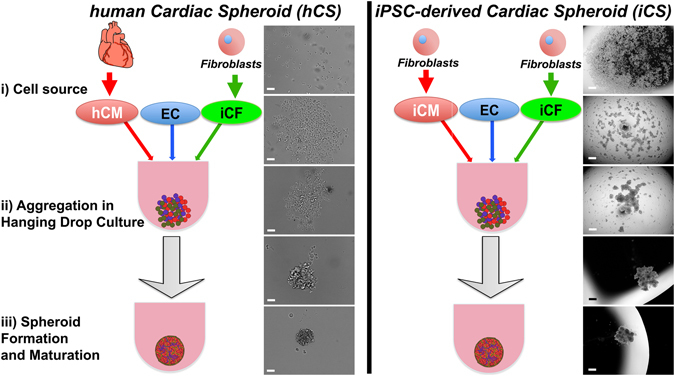
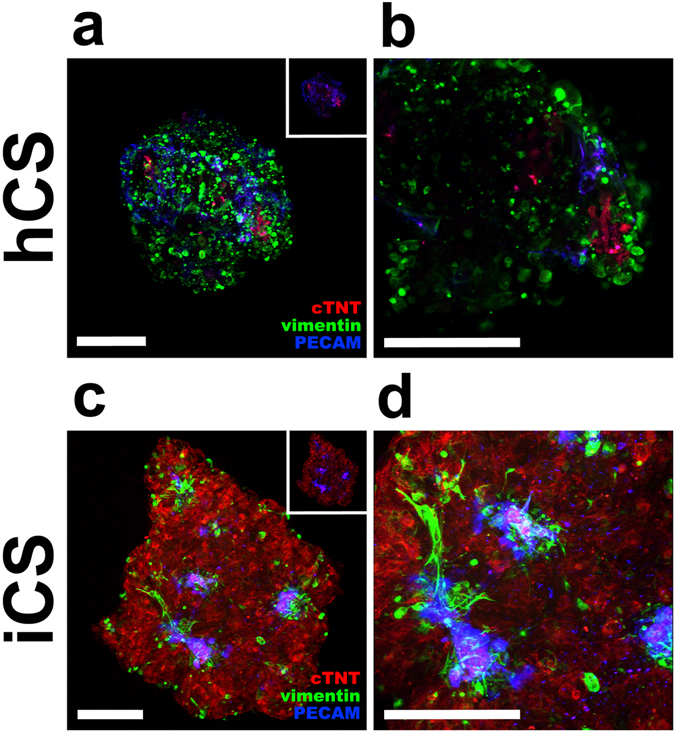
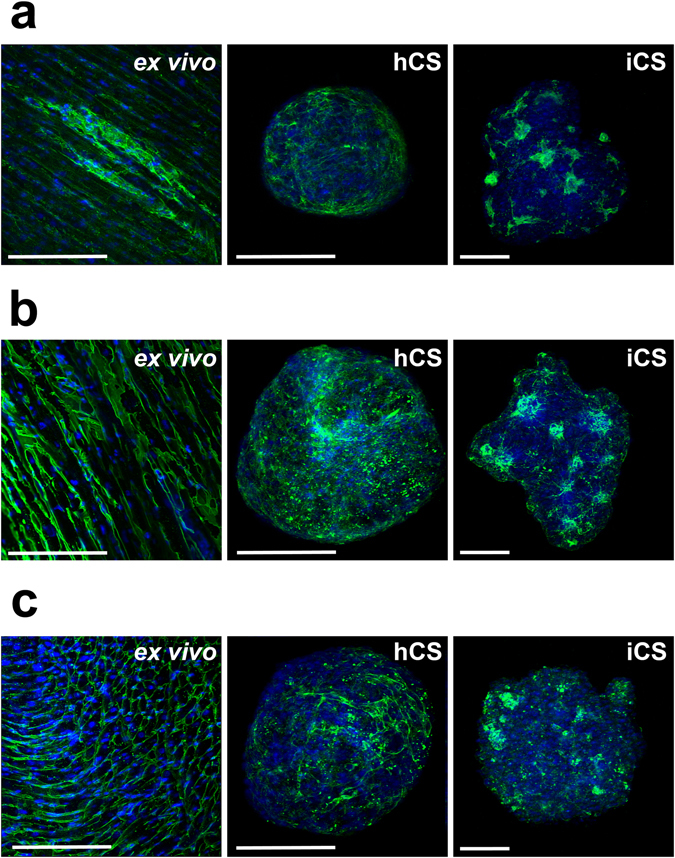
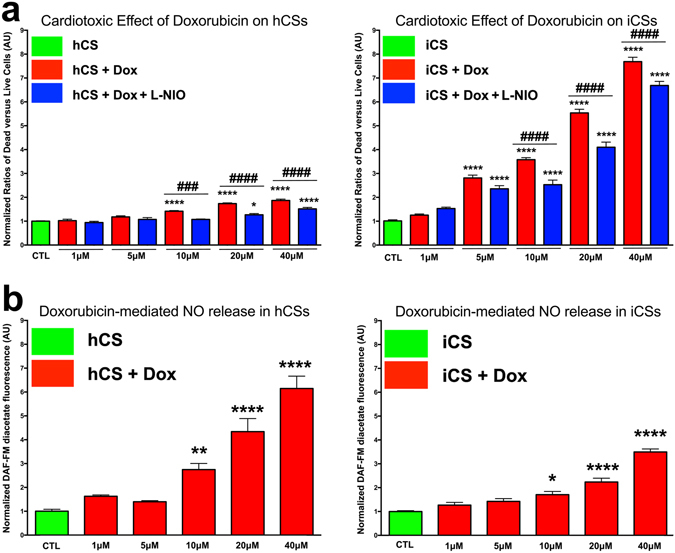
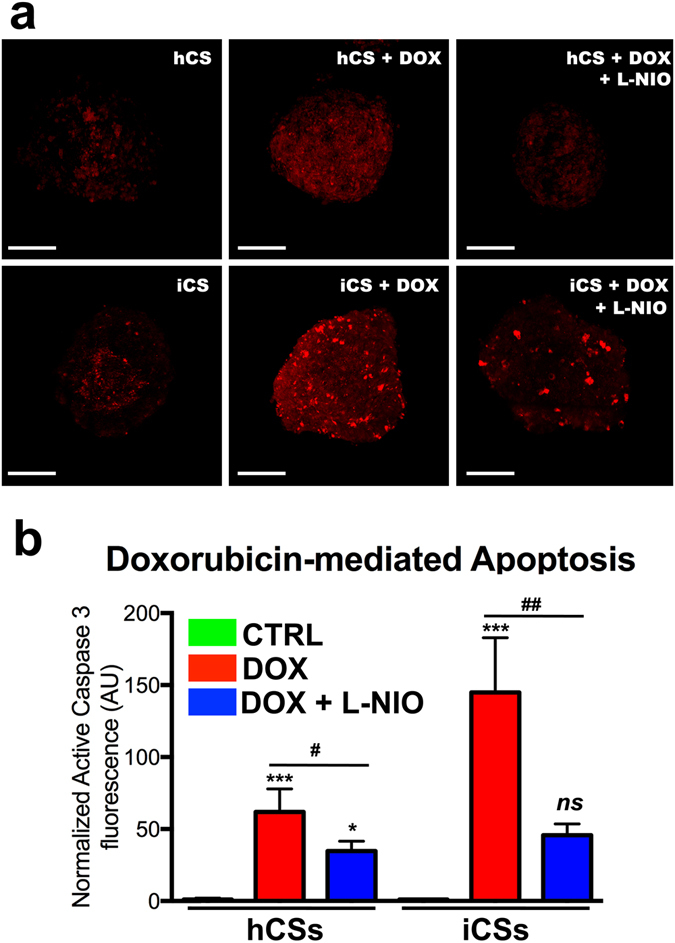
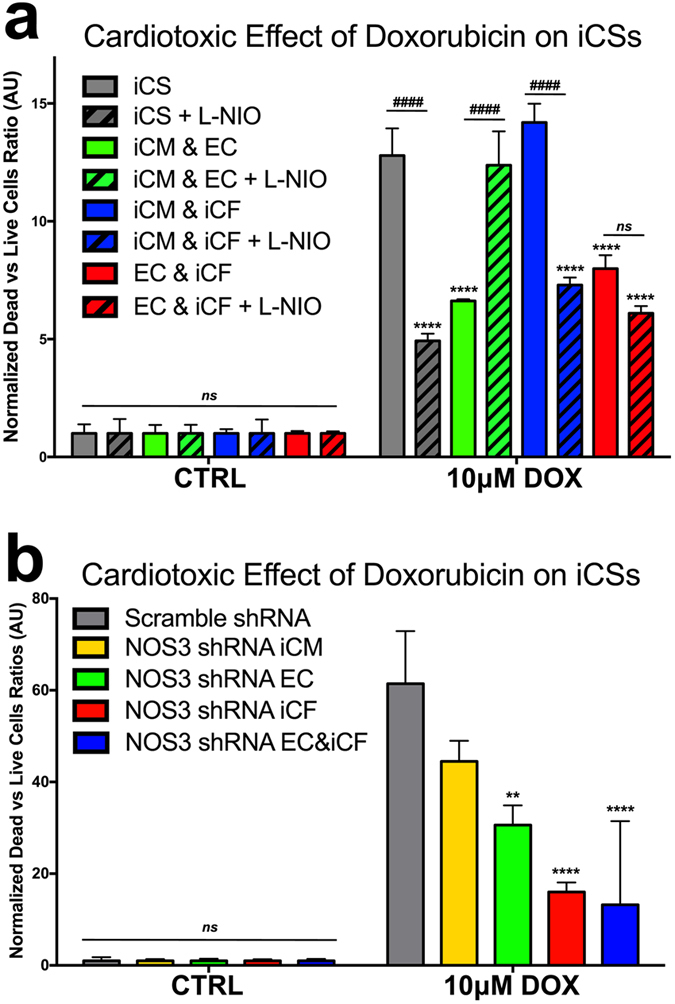
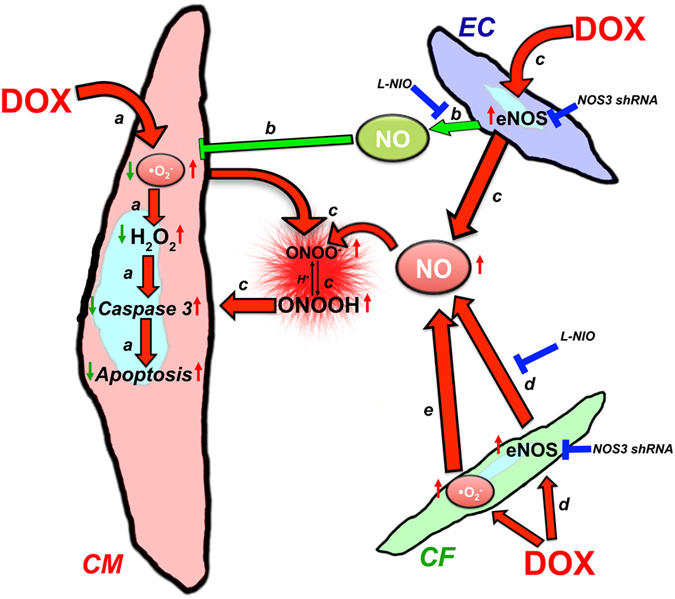
Three-dimensional in vitro cell systems are a promising alternative to animals to study cardiac biology and disease. We have generated three-dimensional in vitro models of the human heart (“cardiac spheroids”, CSs) by co-culturing human primary or iPSC-derived cardiomyocytes, endothelial cells and fibroblasts at ratios approximating those present in vivo. The cellular organisation, extracellular matrix and microvascular network mimic human heart tissue. These spheroids have been employed to investigate the dose-limiting cardiotoxicity of the common anti-cancer drug doxorubicin. Viability/cytotoxicity assays indicate dose-dependent cytotoxic effects, which are inhibited by the nitric oxide synthase (NOS) inhibitor L-NIO, and genetic inhibition of endothelial NOS, implicating peroxynitrous acid as a key damaging agent. These data indicate that CSs mimic important features of human heart morphology, biochemistry and pharmacology in vitro, offering a promising alternative to animals and standard cell cultures with regard to mechanistic insights and prediction of toxic effects in human heart tissue.
Overview
The claims and statistics of this paper haven’t been checked yet.
Free: it reads the open-access text and checks the first 5 claims that cite a source we can check. Create a free account to check every claim.
Integrity signals
Registry
Cites
Statistics
Figures
Verification
Claims the paper makes
The claims and statistics of this paper haven’t been checked yet.
Free: it reads the open-access text and checks the first 5 claims that cite a source we can check. Create a free account to check every claim.
Claims other papers make about this one
Each is checked against this paper’s own text: does it say what the citing paper says it does?
In the citing paper
“Engineered cardiac tissues are being widely used as models to study drug toxicities and efficacy in vitro6,43–45,60.”
From 3D bioprinting of high cell-density heterogeneous tissue models through spheroid fusion within self-healing hydrogels (2021) · cites this paper as [45]
Self-check
Percentages, sums and reported differences re-computed from the paper’s own numbers.
The self-check needs the paper’s full text.
Citations
Cites
Identification of the molecular basis of doxorubicin-induced cardiotoxicity
Zhang, S., Liu, X., Bawa-Khalfe, T., Lu, L.-S., Lyu, Y. L., Liu, L. F., & Yeh, E. T. H. (2012) · Nature Medicine · doi:10.1038/nm.2919 · Cited by 1,948
Doxorubicin-Induced Cardiomyopathy
Singal, P. K., & Iliskovic, N. (1998) · New England Journal of Medicine · doi:10.1056/nejm199809243391307 · Cited by 1,845
Adriamycin-Induced DNA Damage Mediated by Mammalian DNA Topoisomerase II
Tewey, K. M., Rowe, T. C., Yang, L., Halligan, B. D., & Liu, L. F. (1984) · Science · doi:10.1126/science.6093249 · Cited by 1,538 · cited 1×
“53 for (a) hCS, F (df 10, 143) = 253 for (a) iCS, F (5, 30) = 37.”
Cardiovascular Complications of Cancer Therapy
Yeh, E. T. H., & Bickford, C. L. (2009) · Journal of the American College of Cardiology · doi:10.1016/j.jacc.2009.02.050 · Cited by 1,275 · cited 2×
“…effects 21 , increased levels of NO associated with oxidative stress and peroxynitrous acid generation, have been suggested to be responsible for the undesired cardiotoxic effects of anthracyclines, such as DOX 22–25 dramatically limiting their use as chemotherapeutic agents 26–29 .”
BackgroundDrug-induced oxidative stress and toxicity
Deavall, D. G., Martin, E. A., Horner, J. M., & Roberts, R. (2012) · Journal of Toxicology · doi:10.1155/2012/645460 · Cited by 689
Lyu, Y. L., Kerrigan, J. E., Lin, C.-P., Azarova, A. M., Tsai, Y.-C., Ban, Y., & Liu, L. F. (2007) · Cancer Research · doi:10.1158/0008-5472.can-07-1649 · Cited by 612
Tissue engineering of vascularized cardiac muscle from human embryonic stem cells
Caspi, O., Lesman, A., Basevitch, Y., Gepstein, A., Arbel, G., Habib, I. H. M., Gepstein, L., & Levenberg, S. (2007) · Circulation Research · doi:10.1161/01.res.0000257776.05673.ff · Cited by 558
Engineered In Vitro Disease Models
Benam, K. H., Dauth, S., Hassell, B., Herland, A., Jain, A., Jang, K.-J., Karalis, K., Kim, H. J., MacQueen, L., Mahmoodian, R., et al. (2015) · Annual Review of Pathology: Mechanisms of Disease · doi:10.1146/annurev-pathol-012414-040418 · Cited by 554
Cardioprotective interventions for cancer patients receiving anthracyclines
van Dalen, E. C., Caron, H. N., Dickinson, H. O., & Kremer, L. C. (2011) · Cochrane Database of Systematic Reviews · doi:10.1002/14651858.cd003917.pub4 · Cited by 553
Subcellular effects of adriamycin in the heart: A concise review
SINGAL, P., DEALLY, C., & WEINBERG, L. (1987) · Journal of Molecular and Cellular Cardiology · doi:10.1016/s0022-2828(87)80392-9 · Cited by 465
Cited by
Items 201–236 of 236
Development of small-scale fluidised bed bioreactor for 3D cell culture
da Silva, M., & Rafaela, J. (2020) · UCL Discovery (University College London) · Cited by 1
Development of conducting polymer devices for the monitoring of in vitro barrier tissue models
Ferro, M. (2018) · theses.fr (ABES) · doi:10.70675/3df5df41z9454z449bz970az6db9ac90dc45
The role of MAP4K4 in cardiac muscle cell death
Jenkins, M. (2018) · Spiral (Imperial College London) · doi:10.25560/62638
Développement d'un réseau microvasculaire sur puce microfluidique pour la reconstruction tissulaire
Krammer, T. (2019) · theses.fr (ABES) · doi:10.70675/97039148z56f3z4e12z976azd7199b5b5653
Ritchie, R. H., Galougahi, K. K., & Figtree, G. A. (2020) · European Journal of Heart Failure · doi:10.1002/ejhf.1942
Self-citationNewer Models of Cardiac Tissue
Lin, Z., & George, S. A. (2021) · Springer eBooks · doi:10.1007/978-3-030-63355-4_16
Seguret, M., Davidson, P., Robben, S., Jouve, C., Pereira, C., Cerveau, C., Berre, M. L., Ribeiro, R. S. R., & Hulot, J. (2023) · eLife · doi:10.7554/elife.87739.1.sa3
Gill, J. H., & Shnyder, S. D. (2023) · Springer eBooks · doi:10.1007/978-3-030-73317-9_20-1
Popov, V. L., & Nakano, K. (2023) · AIP conference proceedings · doi:10.1063/5.0162896
Role of stem cells in cardiac bioengineering
Dave, M., & Mukherjee, R. (2023) · Elsevier eBooks · doi:10.1016/b978-0-443-18800-8.00015-0
Popov, V. L., & Nakano, K. (2023) · Tribology online · doi:10.2474/trol.18.319
“Since it is difficult to look inside a beating heart, especially at the cellular level, in recent years, laboratory studies on Cardiac Spheroids (CSs), microscopic spherical clusters of heart cells that are grown and studied in culture, have become widespread [1].”
Anh, D. T. M., & Nguyen, X. (2023) · VNU Journal of Science Natural Sciences and Technology · doi:10.25073/2588-1140/vnunst.5581
“Cardiomyocytes (CMs) cultured in a 3D environment exhibit enhanced physiological relevance, as they retain their contractile properties and display prolonged viability compared to monolayer cultures [7].”
BackgroundResultGrunow, B., & Leonardo, V. D. (2023) · Biochemistry · doi:10.5772/intechopen.113858
Vascularization of organoids in microfluidic chips
Raji, R. G., Anjali, K., & Kumar, V. B. S. (2024) · Elsevier eBooks · doi:10.1016/b978-0-443-13782-2.00026-7
Lipase hormono-sensible nucléaire et signalisation TGFbeta de l'adipocyte
Dufau, J. (2022) · theses.fr (ABES) · doi:10.70675/5a5833a0zb3cez4613zae42zcdd95af9ff09
Gill, J. H., & Shnyder, S. D. (2024) · Springer eBooks · doi:10.1007/978-3-031-35529-5_20
El-Hashash, A. H. K. (2025) · Elsevier eBooks · doi:10.1016/b978-0-443-29890-5.00007-5
Heart-Derived Stromal Cells and In Vitro 3D Models in Cardiotoxicity Assessment
Sun, D., & Thankam, F. G. (2025) · Advances in biochemistry in health and disease · doi:10.1007/978-3-031-90598-8_31
Richards, C., Sesperez, K., Chhor, M., Ghorbanpour, S. M., Rennie, C., Ming, C. L. C., Evenhuis, C., Nikolic, V. N., Orlic, N. K., Miković, Ž., et al. (2021) · Figshare · doi:10.6084/m9.figshare.14456856
Self-citationHasse, M. (2024) · Qucosa (Saxon State and University Library Dresden)
Setting Up an Engineered Heart Tissue Model
Kulmala, L. (2024) · Tampere University Institutional Repository (Tampere University)
Vision–language model-based morphological scoring predicts cardiac spheroid functional outcomes
Kolamuri, S. R., Fang, Y., Garbarine, I., Liu, Y.-W., Huang, C., & Ong, C. S. (2026) · Array · doi:10.1016/j.array.2026.101473
Holotomography Reveals Protein Concentration Changes in Cardiac Spheroids under Ischemic StressPreprint
Sackho, K., Campagnolo, P., & Kim, Y. (2026) · bioRxiv (Cold Spring Harbor Laboratory) · doi:10.64898/2026.06.09.731124
“These cardiac spheroids have demonstrated microvascular formation, functional cardiomyocyte alignment, appropriate ECM deposition and toxicological responses presenting a promising platform for therapeutic and toxicological evaluation 3,8–10 ,12– 14 .”
Kinematic‐calcium loops unravel impaired excitation–contraction coupling in MELAS‐affected cardioids
Burattini, M., Pisano, A., Pignataro, M. G., d’Amati, G., Pinelli, S., Hoang, M. L., Muzio, F. P. L., & Miragoli, M. (2026) · The Journal of Physiology · doi:10.1113/jp290473
Lu, K., O’Kane, E. C., Wang, W., Parker, L. E., Karra, R., Miller, D. A., & Wax, A. P. (2026) · Biomedical Optics Express · doi:10.1364/boe.609131
“Current analysis relies on 2D bright-field microscopy [24], which is inherently limited by a lack of deep-tissue structural insight.”
Paw, M., Minder, L., Laimbacher, A., Kaczara, P., Czepiec, M., Bobis‐Wozowicz, S., Wnuk, D., Kutryb-Zając, B. A., Braczko, A., Sarna, M., et al. (2026) · bioRxiv (Cold Spring Harbor Laboratory) · doi:10.64898/2026.08.18.745414
SphereChip attaches spheroids and organoids to planar multielectrode arrays with microfluidics
Hoebart, C., Lux, M., Beyl, S., Baltov, B., & Hering, S. (2026) · Lab on a Chip · doi:10.1039/d6lc00522e
Rosero, G., Peñaherrera, A., & Pérez-Sosa, C. (2026) · Bioengineering · doi:10.3390/bioengineering13091062
“Despite these advanced physiological features and their high adaptability to high-throughput drug safety and toxicity testing in vitro [93], cardiac spheroids present intrinsic physical and biomechanical limitations.”
Zhang, W. L., Porter, E. G. P., & Gifford, C. A. (2026) · Current Cardiology Reports · doi:10.1007/s11886-026-02418-9
“One study used cardiac spheroids to investigate doxorubicin toxicity and demonstrated a nitric oxide (NO)-dependent mechanism of apoptosis across cell types [14].”
Human iPSC models of myocardial infarction: From injury to repair and therapeutic discovery
Johnson, B. B., Mummery, C. L., & Davis, R. P. (2026) · Cell Reports Medicine · doi:10.1016/j.xcrm.2026.103079
Fratard, A., Kalogianni, G., Kindt, N., Sánchez, X. C., Scandurra, A., Mais, G., Polonchuk, L., Coats, A. J. S., CARLIER, S. G., & Gentile, C. (2026) · European Heart Journal – Cardio-Oncology · doi:10.1093/ehjco/aabag015
Self-citationPopa, M. A., Jobran, F. A. S., León, J. I. S. D., Oya, J. M. S., Gilmore, L. D., Lozano-Velasco, E., & Franco, D. (2026) · Hearts · doi:10.3390/hearts7040032
Engineering regenerative cell therapy products through biofabrication
Niltongkam, P., Song, X., Liu, Y., Hu, J., Xiong, Z., & Fang, Y. (2026) · Trends in biotechnology · doi:10.1016/j.tibtech.2026.10.009
Metadata
- Authors
- Polonchuk, L., Chabria, M., Badi, L., Hoflack, J.-C., Figtree, G., Davies, M. J., & Gentile, C.
- Affiliations
- F. Hoffmann-La Roche AG (CH)
- The University of Sydney (AU)
- University of Copenhagen (DK)
- Corresponding author
- Gentile, Carmine
- Venue
- Scientific Reports
- Published
- 2017-08-01
- Volume
- 7
- Issue
- 1
- Pages
- 7005-7005
- ISSN
- 2045-2322 (ISSN-L)
- PMC
- PMC5539326
- OpenAlex
- W2737012672
- Cited by
- 223
- References
- 64
- Citations by year
- 2026: 18 · 2025: 20 · 2024: 22 · 2023: 28 · 2022: 33 · 2021: 50 · 2020: 28 · 2019: 11 · 2018: 11 · 2017: 1
- FWCI
- 10.79
- Type
- journal article
- Language
- en
- Open access
- gold
- doi.org
- Licence
- cc-by
- creativecommons.org/licenses/by/4.0 (tdm)
- creativecommons.org/licenses/by/4.0 (vor)
- Locations
- Scientific Reports (publishedVersion, cc-by)
- Europe PMC (PubMed Central) (publishedVersion, cc-by)
- PubMed Central (publishedVersion, cc-by)
- PubMed (publishedVersion)
- Research at the University of Copenhagen (University of Copenhagen) (publishedVersion, cc-by)
- Digital Access to Scholarship at Harvard (DASH) (Harvard University) (submittedVersion, cc-by)
- DOAJ (DOAJ: Directory of Open Access Journals) (submittedVersion, cc-by-sa)
- Funders
- Adobe Systems
- Heart Research Institute
- Novo Nordisk (NNF13OC0004294)
- Novo Nordisk Fonden (NNF13OC0004294)
- National Institutes of Health
- Topics
- Health Sciences › Medicine › Cardiology and Cardiovascular Medicine › Chemotherapy-induced cardiotoxicity and mitigation
- Health Sciences › Veterinary › Small Animals › Animal testing and alternatives
- Health Sciences › Medicine › Surgery › Tissue Engineering and Regenerative Medicine
- Keywords
- cardiac spheroids, 3D in vitro model, iPSC-derived cardiomyocytes, extracellular matrix, microvascular networks, doxorubicin cardiotoxicity, nitric oxide synthase, endothelial NOS, peroxynitrous acid, alternatives to animal testing, cardiotoxicity prediction
- MeSH terms
- Antineoplastic Agents, Cell Survival, Doxorubicin, Fibroblasts, Heart, Humans, Models, Biological, Spheroids, Cellular, Myocytes, Cardiac, Endothelial Cells
About these checks
Registry, retraction, Cites and statistics results are computed, not judged, with one exception: a printed reference that no index lists is read once by a model before it counts as a citation error. Claims are extracted by a model and kept only when their quote appears verbatim in the text; each cited source is then checked, with a model’s help, for whether it says what the claim relies on. Those verdicts can be wrong — read the claim’s quote and the cited source before relying on one.
Statistics and arithmetic are recomputed, not judged.
Confidence bands are shown only for fields calibrated on our annotated test set. None is calibrated yet, so no band is shown.
What counts as a claim ›How we measure confidence ›How we check this ›
Are you an author, or do you see a problem with this page? Request a review
Data sources
Bibliographic data: Semantic Scholar, OpenAlex, Crossref.
Contains information from the Semantic Scholar Academic Graph Datasets, made available under the ODC Attribution License (ODC-BY 1.0).
Semantic Scholar’s data is described in: Kinney, R., et al. (2023). The Semantic Scholar Open Data Platform. arXiv:2301.10140.
