

Cardiac spheroids as promising in vitro models to study the human heart microenvironment
Open accessThe DOI matches its Crossref record; 64 of the 64 references it cites were found in a registry or an index.
Abstract
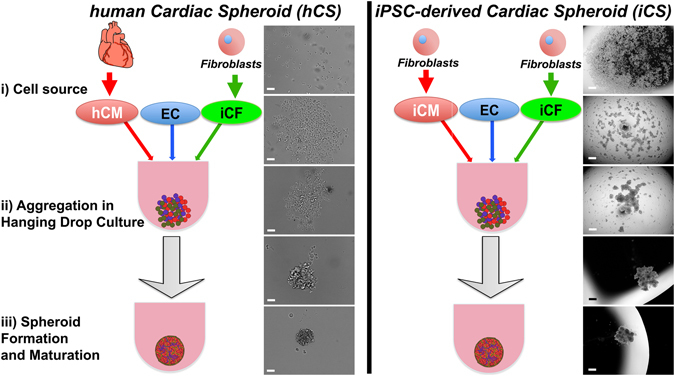
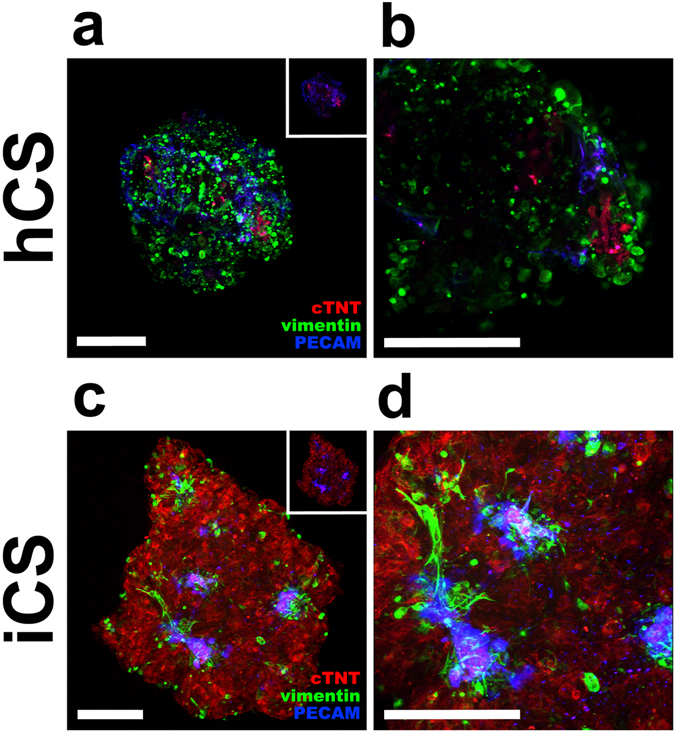
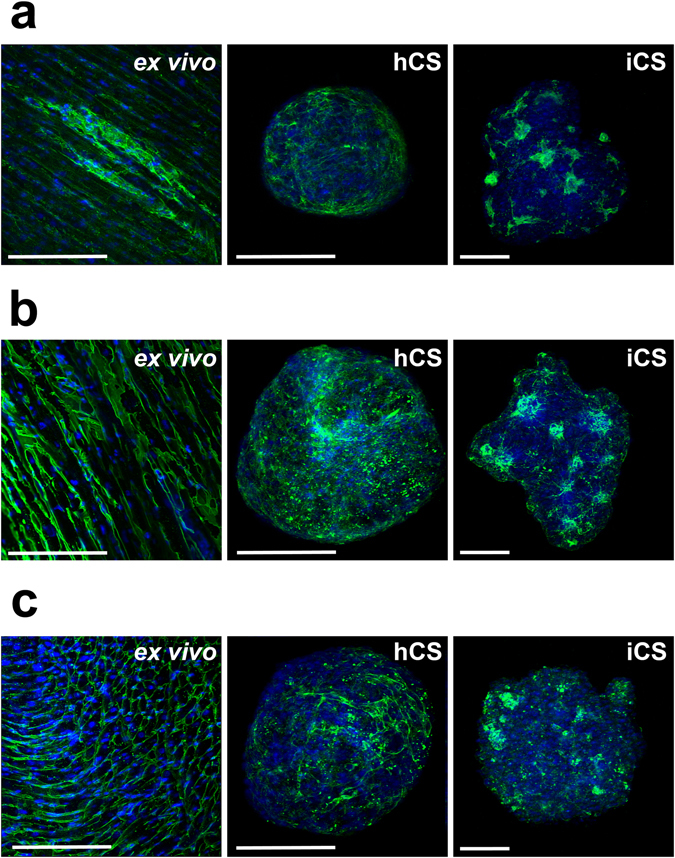
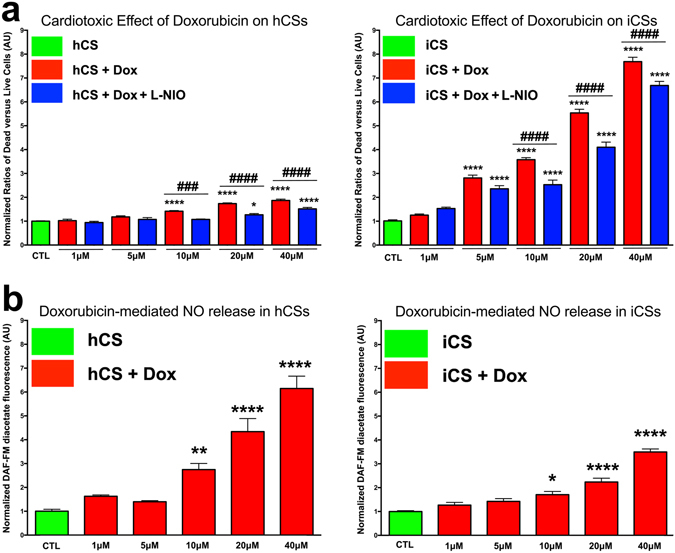
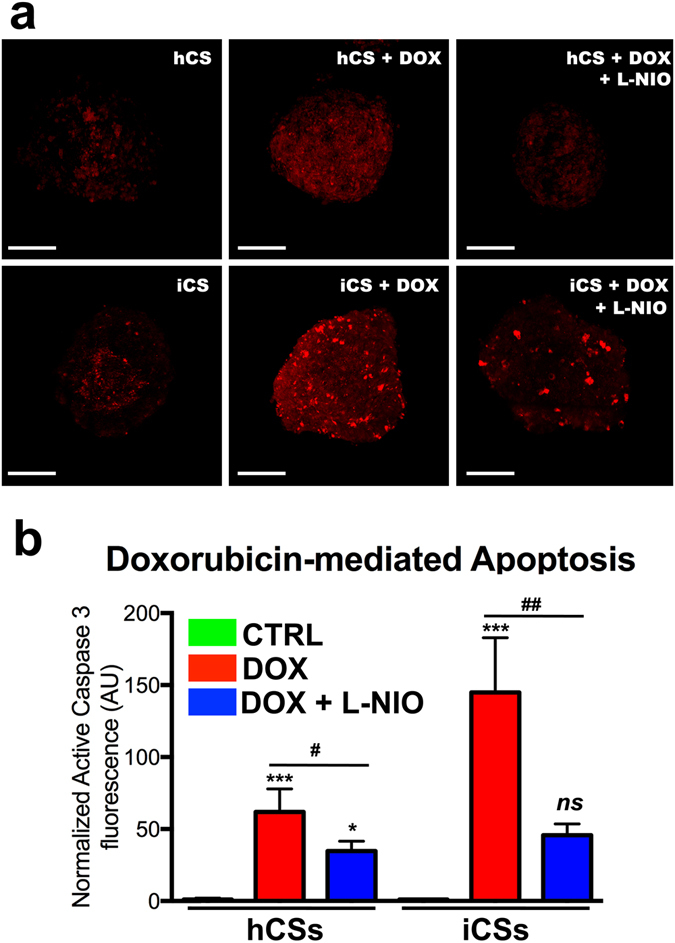
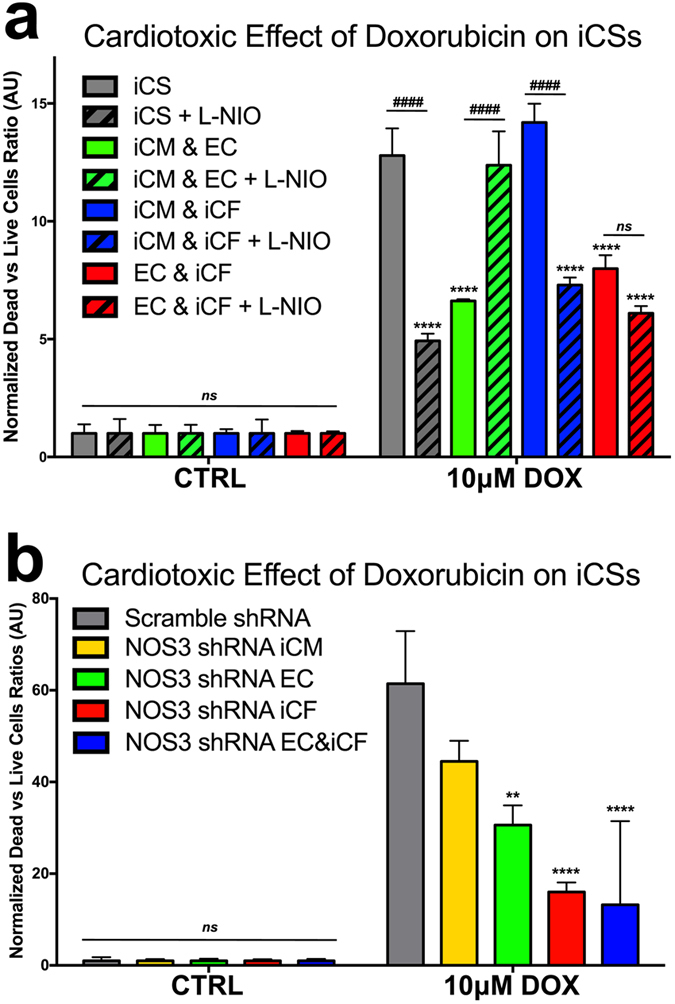
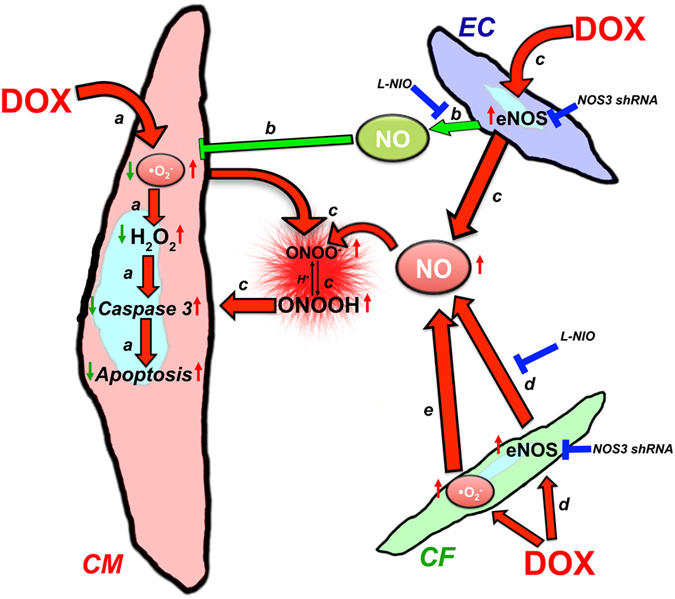
Three-dimensional in vitro cell systems are a promising alternative to animals to study cardiac biology and disease. We have generated three-dimensional in vitro models of the human heart (“cardiac spheroids”, CSs) by co-culturing human primary or iPSC-derived cardiomyocytes, endothelial cells and fibroblasts at ratios approximating those present in vivo. The cellular organisation, extracellular matrix and microvascular network mimic human heart tissue. These spheroids have been employed to investigate the dose-limiting cardiotoxicity of the common anti-cancer drug doxorubicin. Viability/cytotoxicity assays indicate dose-dependent cytotoxic effects, which are inhibited by the nitric oxide synthase (NOS) inhibitor L-NIO, and genetic inhibition of endothelial NOS, implicating peroxynitrous acid as a key damaging agent. These data indicate that CSs mimic important features of human heart morphology, biochemistry and pharmacology in vitro, offering a promising alternative to animals and standard cell cultures with regard to mechanistic insights and prediction of toxic effects in human heart tissue.
Overview
The claims and statistics of this paper haven’t been checked yet.
Free: it reads the open-access text and checks the first 5 claims that cite a source we can check. Create a free account to check every claim.
Integrity signals
Registry
Cites
Statistics
Figures
Verification
Claims the paper makes
The claims and statistics of this paper haven’t been checked yet.
Free: it reads the open-access text and checks the first 5 claims that cite a source we can check. Create a free account to check every claim.
Claims other papers make about this one
Each is checked against this paper’s own text: does it say what the citing paper says it does?
In the citing paper
“Engineered cardiac tissues are being widely used as models to study drug toxicities and efficacy in vitro6,43–45,60.”
From 3D bioprinting of high cell-density heterogeneous tissue models through spheroid fusion within self-healing hydrogels (2021) · cites this paper as [45]
Self-check
Percentages, sums and reported differences re-computed from the paper’s own numbers.
The self-check needs the paper’s full text.
Citations
Cites
Identification of the molecular basis of doxorubicin-induced cardiotoxicity
Zhang, S., Liu, X., Bawa-Khalfe, T., Lu, L.-S., Lyu, Y. L., Liu, L. F., & Yeh, E. T. H. (2012) · Nature Medicine · doi:10.1038/nm.2919 · Cited by 1,948
Doxorubicin-Induced Cardiomyopathy
Singal, P. K., & Iliskovic, N. (1998) · New England Journal of Medicine · doi:10.1056/nejm199809243391307 · Cited by 1,845
Adriamycin-Induced DNA Damage Mediated by Mammalian DNA Topoisomerase II
Tewey, K. M., Rowe, T. C., Yang, L., Halligan, B. D., & Liu, L. F. (1984) · Science · doi:10.1126/science.6093249 · Cited by 1,538 · cited 1×
“53 for (a) hCS, F (df 10, 143) = 253 for (a) iCS, F (5, 30) = 37.”
Cardiovascular Complications of Cancer Therapy
Yeh, E. T. H., & Bickford, C. L. (2009) · Journal of the American College of Cardiology · doi:10.1016/j.jacc.2009.02.050 · Cited by 1,275 · cited 2×
“…effects 21 , increased levels of NO associated with oxidative stress and peroxynitrous acid generation, have been suggested to be responsible for the undesired cardiotoxic effects of anthracyclines, such as DOX 22–25 dramatically limiting their use as chemotherapeutic agents 26–29 .”
BackgroundDrug-induced oxidative stress and toxicity
Deavall, D. G., Martin, E. A., Horner, J. M., & Roberts, R. (2012) · Journal of Toxicology · doi:10.1155/2012/645460 · Cited by 689
Lyu, Y. L., Kerrigan, J. E., Lin, C.-P., Azarova, A. M., Tsai, Y.-C., Ban, Y., & Liu, L. F. (2007) · Cancer Research · doi:10.1158/0008-5472.can-07-1649 · Cited by 612
Tissue engineering of vascularized cardiac muscle from human embryonic stem cells
Caspi, O., Lesman, A., Basevitch, Y., Gepstein, A., Arbel, G., Habib, I. H. M., Gepstein, L., & Levenberg, S. (2007) · Circulation Research · doi:10.1161/01.res.0000257776.05673.ff · Cited by 558
Engineered In Vitro Disease Models
Benam, K. H., Dauth, S., Hassell, B., Herland, A., Jain, A., Jang, K.-J., Karalis, K., Kim, H. J., MacQueen, L., Mahmoodian, R., et al. (2015) · Annual Review of Pathology: Mechanisms of Disease · doi:10.1146/annurev-pathol-012414-040418 · Cited by 554
Cardioprotective interventions for cancer patients receiving anthracyclines
van Dalen, E. C., Caron, H. N., Dickinson, H. O., & Kremer, L. C. (2011) · Cochrane Database of Systematic Reviews · doi:10.1002/14651858.cd003917.pub4 · Cited by 553
Subcellular effects of adriamycin in the heart: A concise review
SINGAL, P., DEALLY, C., & WEINBERG, L. (1987) · Journal of Molecular and Cellular Cardiology · doi:10.1016/s0022-2828(87)80392-9 · Cited by 465
Sekine, H., Shimizu, T., Hobo, K., Sekiya, S., Yang, J., Yamato, M., Kurosawa, H., Kobayashi, E., & Okano, T. (2008) · Circulation · doi:10.1161/circulationaha.107.757286 · Cited by 373
Prevascularization of cardiac patch on the omentum improves its therapeutic outcome
Dvir, T., Kedem, A., Ruvinov, E., Levy, O., Freeman, I., Landa, N., Holbova, R., Feinberg, M. S., Dror, S., Etzion, Y., et al. (2009) · Proceedings of the National Academy of Sciences · doi:10.1073/pnas.0812242106 · Cited by 345
Doxorubicin induced heart failure: Phenotype and molecular mechanisms
Mitry, M. A., & Edwards, J. G. (2016) · IJC Heart & Vasculature · doi:10.1016/j.ijcha.2015.11.004 · Cited by 311 · cited 1×
“Several studies have demonstrated a complex mechanism of DOX action on human heart tissue involving free radical formation, calcium dysregulation, mitochondrial dysfunction and topoisomerase II inhibition 46 .”
BackgroundCell Communications in the Heart
Tirziu, D., Giordano, F. J., & Simons, M. (2010) · Circulation · doi:10.1161/circulationaha.108.847731 · Cited by 303
Greene, R. F., Collins, J. M., Jenkins, J., Speyer, J. L., & Myers, C. E. (1983) · PubMed · Cited by 292
Mechanisms of Anthracycline Cardiac Injury: Can We Identify Strategies for Cardioprotection?
Sawyer, D. B., Peng, X., Chen, B., Pentassuglia, L., & Lim, C. C. (2010) · Progress in Cardiovascular Diseases · doi:10.1016/j.pcad.2010.06.007 · Cited by 270 · cited 2×
“…effects 21 , increased levels of NO associated with oxidative stress and peroxynitrous acid generation, have been suggested to be responsible for the undesired cardiotoxic effects of anthracyclines, such as DOX 22–25 dramatically limiting their use as chemotherapeutic agents 26–29 .”
BackgroundMitcheson, J. (1998) · Cardiovascular Research · doi:10.1016/s0008-6363(98)00128-x · Cited by 251
Dose-effect and structure-function relationships in doxorubicin cardiomyopathy
Bristow, M. R., Mason, J. W., Billingham, M. E., & Daniels, J. R. (1981) · American Heart Journal · doi:10.1016/0002-8703(81)90096-x · Cited by 245 · cited 2×
“…effects 21 , increased levels of NO associated with oxidative stress and peroxynitrous acid generation, have been suggested to be responsible for the undesired cardiotoxic effects of anthracyclines, such as DOX 22–25 dramatically limiting their use as chemotherapeutic agents 26–29 .”
BackgroundKalivendi, S. V., Kotamraju, S., Zhao, H., Joseph, J., & Kalyanaraman, B. (2001) · Journal of Biological Chemistry · doi:10.1074/jbc.m106829200 · Cited by 225 · cited 1×
“62 showed that both chemical and genetic inhibition of eNOS in ECs exacerbated DOX-induced ROS production, providing evidence for cross-talk between ROS and NO synthesis in ECs.”
BackgroundTowards organ printing: engineering an intra-organ branched vascular tree
Visconti, R. P., Kasyanov, V., Gentile, C., Zhang, J., Markwald, R. R., & Mironov, V. (2010) · Expert Opinion on Biological Therapy · doi:10.1517/14712590903563352 · Cited by 224 · cited 2×
“These properties make them suitable for generation of bioengineered models of the human heart of both increased size and complexity, including studies on blood flow and mechanical stimuli 12, 52 .”
BackgroundSelf-citationRibeiro, M. C., Tertoolen, L. G., Guadix, J. A., Bellin, M., Kosmidis, G., D'Aniello, C., Monshouwer-Kloots, J., Goumans, M.-J., Wang, Y.-L., Feinberg, A. W., et al. (2015) · Biomaterials · doi:10.1016/j.biomaterials.2015.01.067 · Cited by 214 · cited 1×
“There are clear limitations associated with the use of iPSC-CMs containing iCSs, as these cells retain an embryonic/neonatal phenotype compared to primary cells (e.g. sponta-neous beating in culture 11 ).”
BackgroundLate anthracycline cardiotoxicity after childhood cancer: A prospective longitudinal study
Sorensen, K., Levitt, G. A., Bull, C., Dorup, I., & Sullivan, I. D. (2003) · Cancer · doi:10.1002/cncr.11274 · Cited by 214
Doxorubicin-Induced Cardiac Toxicity
Doroshow, J. H. (1991) · New England Journal of Medicine · doi:10.1056/nejm199103213241210 · Cited by 198
Birket, M. J., Ribeiro, M. C., Kosmidis, G., Ward, D., Leitoguinho, A. R., van de Pol, V., Dambrot, C., Devalla, H. D., Davis, R. P., Mastroberardino, P. G., et al. (2015) · Cell Reports · doi:10.1016/j.celrep.2015.09.025 · Cited by 194
Adriamycin-Induced Early Changes in Myocardial Antioxidant Enzymes and Their Modulation by Probucol
Li, T., & Singal, P. K. (2000) · Circulation · doi:10.1161/01.cir.102.17.2105 · Cited by 187
Anversa, P. (1980) · Journal of Molecular and Cellular Cardiology · doi:10.1016/0022-2828(80)90080-2 · Cited by 186
Timolati, F., Ott, D., Pentassuglia, L., Giraud, M.-N., Perriard, J.-C., Suter, T. M., & Zuppinger, C. (2006) · Journal of Molecular and Cellular Cardiology · doi:10.1016/j.yjmcc.2006.08.002 · Cited by 178 · cited 3×
“Co-cultured hCMs and ECs formed small aggregates but these did not coalesce into a single large spheroid (data not shown).”
BackgroundInfluentialNeilan, T. G., Blake, S. L., Ichinose, F., Raher, M. J., Buys, E. S., Jassal, D. S., Furutani, E., Perez-Sanz, T. M., Graveline, A., Janssens, S. P., et al. (2007) · Circulation · doi:10.1161/circulationaha.106.652339 · Cited by 167
Chen, J., Shearer, G. C., Chen, Q., Healy, C. L., Beyer, A. J., Nareddy, V. B., Gerdes, A. M., Harris, W. S., O'Connell, T. D., & Wang, D. (2011) · Circulation · doi:10.1161/circulationaha.110.971853 · Cited by 163
Beauchamp, P., Moritz, W., Kelm, J. M., Ullrich, N. D., Agarkova, I., Anson, B. D., Suter, T. M., & Zuppinger, C. (2015) · Tissue Engineering Part C: Methods · doi:10.1089/ten.tec.2014.0376 · Cited by 161
Beauchamp, P., Ullrich, N. D., Jens, K., Moritz, W., Agarkova, I. V., Anson, B. D., Suter, T. M., & Zuppinger, C. (2015) · BORIS (University Library Bern) · doi:10.7892/boris.72049 · Cited by 160
Transcriptome of human foetal heart compared with cardiomyocytes from pluripotent stem cells
van den Berg, C. W., Okawa, S., Chuva de Sousa Lopes, S. M., van Iperen, L., Passier, R., Braam, S. R., Tertoolen, L. G., del Sol, A., Davis, R. P., & Mummery, C. L. (2015) · Development · doi:10.1242/dev.123810 · Cited by 159
Barpe, D. R., Rosa, D. D., & Froehlich, P. E. (2010) · European Journal of Pharmaceutical Sciences · doi:10.1016/j.ejps.2010.07.015 · Cited by 159 · cited 1×
“A severe late-onset dilated cardiomyopathy (more than one year after completion of treatment) is often observed in DOX-treated young patients with a dose > 250 mg/m 2 24, 53, 54 , and in both overweight 55 and other adults at a cumulative dose > 450 mg/m 2 56 .”
BackgroundAnticancer drugs and cardiotoxicity: Insights and perspectives in the era of targeted therapy
Raschi, E., Vasina, V., Ursino, M. G., Boriani, G., Martoni, A., & De Ponti, F. (2010) · Pharmacology & Therapeutics · doi:10.1016/j.pharmthera.2009.10.002 · Cited by 150 · cited 2×
“…effects 21 , increased levels of NO associated with oxidative stress and peroxynitrous acid generation, have been suggested to be responsible for the undesired cardiotoxic effects of anthracyclines, such as DOX 22–25 dramatically limiting their use as chemotherapeutic agents 26–29 .”
BackgroundBiphasic response of cardiac NO synthase isoforms to ischemic preconditioning in conscious rabbits
Xuan, Y.-T., Tang, X.-L., Qiu, Y., Banerjee, S., Takano, H., Han, H., & Bolli, R. (2000) · American Journal of Physiology-Heart and Circulatory Physiology · doi:10.1152/ajpheart.2000.279.5.h2360 · Cited by 140 · cited 1×
“Constitutive synthesis of NO in the heart has been associated with a cardioprotective role played by this molecule in both an autocrine 18, 19 and paracrine 20 manner ( via ECs).”
BackgroundFernandes, S., Chong, J. J. H., Paige, S. L., Iwata, M., Torok‐Storb, B., Keller, G. M., Reinecke, H., & Murry, C. E. (2015) · Stem Cell Reports · doi:10.1016/j.stemcr.2015.09.011 · Cited by 117
Ravenscroft, S. M., Pointon, A., Williams, A. W., Cross, M. J., & Sidaway, J. E. (2016) · Toxicological Sciences · doi:10.1093/toxsci/kfw069 · Cited by 115 · cited 2×
“51 who demonstrated that co-cultured microtis-sues better replicate the biochemical and physiological properties of the human heart compared to iCMs alone.”
BackgroundResultROS signalling between endothelial cells and cardiac cells
Zhang, M., & Shah, A. M. (2014) · Cardiovascular Research · doi:10.1093/cvr/cvu050 · Cited by 111 · cited 1×
“Reactive oxygen species (ROS) have been suggested to be responsible for most of the toxic effects in ECs in the human heart via eNOS uncoupling and peroxynitrous acid generation, with the latter arising from reaction of nitric oxide with superoxide 47 .”
BackgroundModelling sarcomeric cardiomyopathies in the dish: from human heart samples to iPSC cardiomyocytes
Eschenhagen, T., Mummery, C., & Knollmann, B. C. (2015) · Cardiovascular Research · doi:10.1093/cvr/cvv017 · Cited by 97
Ge, Z., Pravdić, D., Bienengraeber, M., Pratt, P. F., Auchampach, J. A., Gross, G. J., Kersten, J. R., & Warltier, D. C. (2009) · Anesthesiology · doi:10.1097/aln.0b013e3181c4a607 · Cited by 92 · cited 1×
“Constitutive synthesis of NO in the heart has been associated with a cardioprotective role played by this molecule in both an autocrine 18, 19 and paracrine 20 manner ( via ECs).”
BackgroundWhat if stem cells turn into embryos in a dish?
Pera, M. F., de Wert, G. M. W. R., Dondorp, W., Lovell-Badge, R. H., Mummery, C. L., Munsie, M., & Tam, P. (2015) · Nature Methods · doi:10.1038/nmeth.3586 · Cited by 85
Garzoni, L. R., Rossi, M. I. D., de Barros, A. P. D. N., Guarani, V., Kéramidas, M., Balottin, L. B. L., Adesse, D., Takiya, C. M., Manso, P. P. D. A., Otazu, I. B., et al. (2009) · Experimental Cell Research · doi:10.1016/j.yexcr.2009.09.016 · Cited by 79
Wei, L., Surma, M. L., Gina, G., Shi, S., Lambert-Cheatham, N. A., Chang, J., & Shi, J. (2015) · PLoS ONE · doi:10.1371/journal.pone.0131763 · Cited by 78
Inhibition of endothelial nitric oxide synthase induces and enhances myocardial fibrosis
Kazakov, A., Hall, R. A., Jagoda, P., Bachelier, K., Müller-Best, P., Semenov, A., Lammert, F., Böhm, M., & Laufs, U. (2013) · Cardiovascular Research · doi:10.1093/cvr/cvt181 · Cited by 73 · cited 1×
“Few previous reports have demonstrated eNOS expression in CFs, possibly due to the culture conditions and cell stage 57–61 .”
BackgroundEndothelial–cardiomyocyte crosstalk enhances pharmacological cardioprotection
Leucker, T. M., Bienengraeber, M., Muravyeva, M., Baotic, I., Weihrauch, D., Brzezinska, A. K., Warltier, D. C., Kersten, J. R., & Pratt, P. F. (2011) · Journal of Molecular and Cellular Cardiology · doi:10.1016/j.yjmcc.2011.06.026 · Cited by 72 · cited 1×
“Constitutive synthesis of NO in the heart has been associated with a cardioprotective role played by this molecule in both an autocrine 18, 19 and paracrine 20 manner ( via ECs).”
BackgroundDifferentiation of Human Pluripotent Stem Cells to Cardiomyocytes Under Defined Conditions
van den Berg, C. W., Elliott, D. A., Braam, S. R., Mummery, C. L., & Davis, R. P. (2014) · Methods in molecular biology · doi:10.1007/7651_2014_178 · Cited by 66
Gentile, C., Muise‐Helmericks, R. C., & Drake, C. J. (2012) · Developmental Biology · doi:10.1016/j.ydbio.2012.10.020 · Cited by 53
Self-citationApoptosis in Anthracycline Cardiomyopathy
Shi, J., Abdelwahid, E., & Wei, L. (2011) · Current Pediatric Reviews · doi:10.2174/157339611796892265 · Cited by 52 · cited 1×
“A severe late-onset dilated cardiomyopathy (more than one year after completion of treatment) is often observed in DOX-treated young patients with a dose > 250 mg/m 2 24, 53, 54 , and in both overweight 55 and other adults at a cumulative dose > 450 mg/m 2 56 .”
BackgroundStatins revert doxorubicin resistance via nitric oxide in malignant mesothelioma
Riganti, C., Orecchia, S., Pescarmona, G., Betta, P. G., Ghigo, D., & Bosia, A. (2006) · International Journal of Cancer · doi:10.1002/ijc.21832 · Cited by 48
Pluripotent stem cell derived cardiovascular progenitors – A developmental perspective
Birket, M. J., & Mummery, C. L. (2015) · Developmental Biology · doi:10.1016/j.ydbio.2015.01.012 · Cited by 47
Late cardiotoxicity after bolus versus infusion anthracycline therapy for childhood cancers
Gupta‐Malhotra, M., Steinherz, P. G., Cheung, N. V., & Steinherz, L. J. (2003) · Medical and Pediatric Oncology · doi:10.1002/mpo.10298 · Cited by 39 · cited 1×
“A severe late-onset dilated cardiomyopathy (more than one year after completion of treatment) is often observed in DOX-treated young patients with a dose > 250 mg/m 2 24, 53, 54 , and in both overweight 55 and other adults at a cumulative dose > 450 mg/m 2 56 .”
BackgroundFabrication and characterization of optogenetic, multi-strip cardiac muscles
Chan, V., Neal, D. M., Uzel, S. G. M., Kim, H., Bashir, R., & Asada, H. H. (2015) · Lab on a Chip · doi:10.1039/c5lc00222b · Cited by 39 · cited 1×
“53 for (a) hCS, F (df 10, 143) = 253 for (a) iCS, F (5, 30) = 37.”
Deng, S., Krüger, A., Schmidt, A. G., Metzger, A., Yan, T., Gödtel‐Armbrust, U., Hasenfuss, G. P., Brünner, F., & Wojnowski, L. (2009) · Naunyn-Schmiedeberg s Archives of Pharmacology · doi:10.1007/s00210-009-0407-y · Cited by 38 · cited 1×
“These findings suggest an alternative mechanism to target DOX/ROS-mediated cardiotoxic effects involving eNOS 37 .”
BackgroundMonoclonal gammopathies in adult T-cell leukemia
Matsuzaki, H., Yamaguchi, K., Kagimoto, T., Nakai, R., Takatsuki, K., & Oyama, W. (1985) · Cancer · doi:10.1002/1097-0142(19850915)56:6<1361::aid-cncr2820560624>3.0.co;2-s · Cited by 36 · cited 1×
“A severe late-onset dilated cardiomyopathy (more than one year after completion of treatment) is often observed in DOX-treated young patients with a dose > 250 mg/m 2 24, 53, 54 , and in both overweight 55 and other adults at a cumulative dose > 450 mg/m 2 56 .”
BackgroundGentile, C. (2016) · Current Stem Cell Research & Therapy · doi:10.2174/1574888x10666151001114848 · Cited by 36 · cited 2×
“These properties make them suitable for generation of bioengineered models of the human heart of both increased size and complexity, including studies on blood flow and mechanical stimuli 12, 52 .”
BackgroundSelf-citationEckes, J., Schmah, O., Siebers, J. W., Groh, U., Zschiedrich, S., Rautenberg, B., Hasenburg, A., Jansen, M., Hug, M. J., Winkler, K., et al. (2011) · BMC Cancer · doi:10.1186/1471-2407-11-337 · Cited by 35
THE PERSISTENCE OF ADRIAMYCIN IN MAN AND RAT
Wilkinson, P. M., & Mawer, G. E. (1974) · British Journal of Clinical Pharmacology · doi:10.1111/j.1365-2125.1974.tb00244.x · Cited by 34
Nicorandil Inhibits Angiotensin-II-Induced Proliferation of Cultured Rat Cardiac Fibroblasts
Liou, J.-Y., Hong, H.-J., Sung, L., Chao, H., Chen, P., Cheng, T., Chan, P., & Liu, J. (2011) · Pharmacology · doi:10.1159/000323555 · Cited by 29
Cell shape and organization of the contractile apparatus in cultured adult cardiac myocytes
Decker, M. L. (1991) · Journal of Molecular and Cellular Cardiology · doi:10.1016/0022-2828(91)90215-8 · Cited by 27
Propofol Depresses Angiotensin II–induced Cell Proliferation in Rat Cardiac Fibroblasts
Cheng, T., Leung, Y., Cheung, C.-W., Chen, C., Chen, Y., & Wong, K. (2009) · Anesthesiology · doi:10.1097/01.anes.0000365960.74268.21 · Cited by 26
Gunv�n, P., Theve, N. O., & Peterson, C. O. (1986) · Cancer Chemotherapy and Pharmacology · doi:10.1007/bf00306745 · Cited by 23
Dudka, J., Burdan, F., Korga-Plewko, A., Iwan, M., Madej, B., Cendrowska‐Pinkosz, M., Korobowicz‐Markiewicz, A., Jodłowska‐Jędrych, B., & Matysiak, W. (2012) · Oxidative Medicine and Cellular Longevity · doi:10.1155/2012/139327 · Cited by 17 · cited 1×
“Prior to our study, it was not clear whether DOX-induced toxic effects in these cells occured upstream of eNOS, or via other isoforms such as iNOS 38 .”
BackgroundChiusa, M., Timolati, F., Perriard, J., Suter, T. M., & Zuppinger, C. (2012) · European Journal of Histochemistry · doi:10.4081/ejh.2012.15 · Cited by 17
Thuringer, D. (2000) · Cardiovascular Research · doi:10.1016/s0008-6363(00)00141-3 · Cited by 9 · cited 1×
“Few previous reports have demonstrated eNOS expression in CFs, possibly due to the culture conditions and cell stage 57–61 .”
Background
Cited by
Three-dimensional in vitro cell culture models in drug discovery and drug repositioning
Langhans, S. A. (2018) · Frontiers in Pharmacology · doi:10.3389/fphar.2018.00006 · Cited by 1,522
“The cardiac spheroids mimicked important in vivo features of the human heart biochemically and pharmacologically offering a 3D cell culture model to study toxic effects in human heart tissue (Polonchuk et al., 2017).”
BackgroundBasic Mechanisms of Diabetic Heart Disease
Ritchie, R. H., & Abel, E. D. (2020) · Circulation Research · doi:10.1161/circresaha.120.315913 · Cited by 708
Daly, A. C., Davidson, M. D., & Burdick, J. A. (2021) · Nature Communications · doi:10.1038/s41467-021-21029-2 · Cited by 470
Capturing Cardiogenesis in Gastruloids
Rossi, G., Broguiere, N., Miyamoto, M., Boni, A., Guiet, R., Girgin, M., Kelly, R. G., Kwon, C., & Lutolf, M. P. (2021) · Cell Stem Cell · doi:10.1016/j.stem.2020.10.013 · Cited by 306
“, 2019) or cardiac spheroids (Giacomelli et al., 2017; Polonchuk et al., 2017), have been developed, the in vitro modeling of heart morphogenesis has been out of reach.”
Engineering Vascularized Organoid-on-a-Chip Models
Shirure, V. S., Hughes, C. C. W., & George, S. C. (2021) · Annual Review of Biomedical Engineering · doi:10.1146/annurev-bioeng-090120-094330 · Cited by 193
“A coculture of (a) human coronary artery ECs, (b) cardiac fibroblasts, and (c) adult cardiomyocytes or iPS cell–derived cardiomyocytes in a hanging drop resulted in vascularization of the tissue (87).”
Metadata
- Authors
- Polonchuk, L., Chabria, M., Badi, L., Hoflack, J.-C., Figtree, G., Davies, M. J., & Gentile, C.
- Affiliations
- F. Hoffmann-La Roche AG (CH)
- The University of Sydney (AU)
- University of Copenhagen (DK)
- Corresponding author
- Gentile, Carmine
- Venue
- Scientific Reports
- Published
- 2017-08-01
- Volume
- 7
- Issue
- 1
- Pages
- 7005-7005
- ISSN
- 2045-2322 (ISSN-L)
- PMC
- PMC5539326
- OpenAlex
- W2737012672
- Cited by
- 223
- References
- 64
- Citations by year
- 2026: 18 · 2025: 20 · 2024: 22 · 2023: 28 · 2022: 33 · 2021: 50 · 2020: 28 · 2019: 11 · 2018: 11 · 2017: 1
- FWCI
- 10.79
- Type
- journal article
- Language
- en
- Open access
- gold
- doi.org
- Licence
- cc-by
- creativecommons.org/licenses/by/4.0 (tdm)
- creativecommons.org/licenses/by/4.0 (vor)
- Locations
- Scientific Reports (publishedVersion, cc-by)
- Europe PMC (PubMed Central) (publishedVersion, cc-by)
- PubMed Central (publishedVersion, cc-by)
- PubMed (publishedVersion)
- Research at the University of Copenhagen (University of Copenhagen) (publishedVersion, cc-by)
- Digital Access to Scholarship at Harvard (DASH) (Harvard University) (submittedVersion, cc-by)
- DOAJ (DOAJ: Directory of Open Access Journals) (submittedVersion, cc-by-sa)
- Funders
- Adobe Systems
- Heart Research Institute
- Novo Nordisk (NNF13OC0004294)
- Novo Nordisk Fonden (NNF13OC0004294)
- National Institutes of Health
- Topics
- Health Sciences › Medicine › Cardiology and Cardiovascular Medicine › Chemotherapy-induced cardiotoxicity and mitigation
- Health Sciences › Veterinary › Small Animals › Animal testing and alternatives
- Health Sciences › Medicine › Surgery › Tissue Engineering and Regenerative Medicine
- Keywords
- cardiac spheroids, 3D in vitro model, iPSC-derived cardiomyocytes, extracellular matrix, microvascular networks, doxorubicin cardiotoxicity, nitric oxide synthase, endothelial NOS, peroxynitrous acid, alternatives to animal testing, cardiotoxicity prediction
- MeSH terms
- Antineoplastic Agents, Cell Survival, Doxorubicin, Fibroblasts, Heart, Humans, Models, Biological, Spheroids, Cellular, Myocytes, Cardiac, Endothelial Cells
About these checks
Registry, retraction, Cites and statistics results are computed, not judged, with one exception: a printed reference that no index lists is read once by a model before it counts as a citation error. Claims are extracted by a model and kept only when their quote appears verbatim in the text; each cited source is then checked, with a model’s help, for whether it says what the claim relies on. Those verdicts can be wrong — read the claim’s quote and the cited source before relying on one.
Statistics and arithmetic are recomputed, not judged.
Confidence bands are shown only for fields calibrated on our annotated test set. None is calibrated yet, so no band is shown.
What counts as a claim ›How we measure confidence ›How we check this ›
Are you an author, or do you see a problem with this page? Request a review
Data sources
Bibliographic data: Semantic Scholar, OpenAlex, Crossref.
Contains information from the Semantic Scholar Academic Graph Datasets, made available under the ODC Attribution License (ODC-BY 1.0).
Semantic Scholar’s data is described in: Kinney, R., et al. (2023). The Semantic Scholar Open Data Platform. arXiv:2301.10140.
