

Honey-based hydrogel: In vitro and comparative In vivo evaluation for burn wound healing
Open accessThe DOI matches its Crossref record; 77 of the 77 references it cites were found in a registry or an index; none of the 32 sources its claims cite is checked for support yet.
Abstract
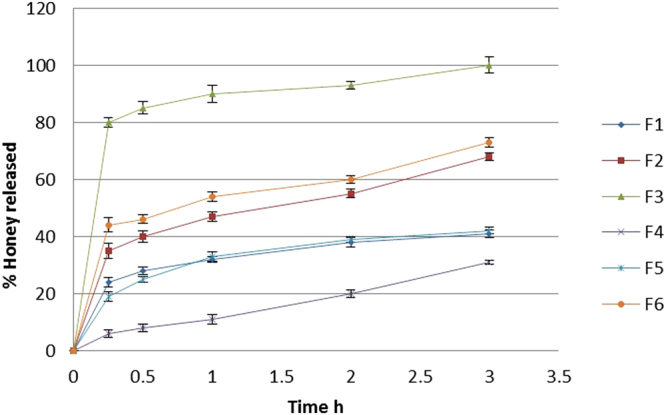
Honey was used to treat wounds since ancient times till nowadays. The present study aimed at preparing a honey-based hydrogel and assay its antimicrobial properties and wound healing activity; in-vitro and in-vivo. Topical honey hydrogel formulations were prepared using three honey concentrations with gelling agents; chitosan and carbopol 934. The prepared formulae were evaluated for pH, spreadability, swelling index, in-vitro release and antimicrobial activity. The pH and spreadability were in the range of 4.3–6.8 and 5.7–8.6 cm, respectively. Chitosan-based hydrogel showed higher in-vitro honey release with diffusional exponent ‘n ≤ 0.5 indicates Fickian diffusion mechanism. Hydrogel formulae were assessed for in-vitro antimicrobial activity using Disc Diffusion antibiotic sensitivity test against common burn infections bacteria; Pseudomonas aeruginosa, Staphylococcus aureus, Klebsiella pneumonia and Streptococcus pyogenes. The 75% honey-chitosan hydrogel showed highest antimicrobial activity. This formula was tested for in-vivo burn healing using burn-induced wounds in mice. The formula was evaluated for burn healing and antibacterial activities compared to commercial product. 75% honey-chitosan hydrogel was found to possess highest healing rate of burns. The present study concludes that 75% honey-chitosan hydrogel possesses greater wound healing activity compared to commercial preparation and could be safely used as an effective natural topical wound healing treatment.
Overview
CoChat Summary
TL;DR
A 75% honey–chitosan hydrogel (F3) showed the highest in vitro antimicrobial activity among six honey hydrogel formulations and produced the greatest burn-wound contraction in mice compared with pure honey, silver sulphadiazine, and saline. The authors conclude it could be a safe, effective natural topical wound-healing treatment.
Key findings
- Formulated hydrogels had pH 4.3–6.8 and spreadability 5.7–8.6 cm; F3 (75% honey–chitosan) had pH 4.34 ± 0.02 and spreadability 8.6 ± 0.03 cm.
- Chitosan-based hydrogels showed higher in vitro honey release than carbopol 934 formulations, with release exponent n ≤ 0.5 indicating Fickian diffusion; F3 showed better in vitro honey release than other formulations.
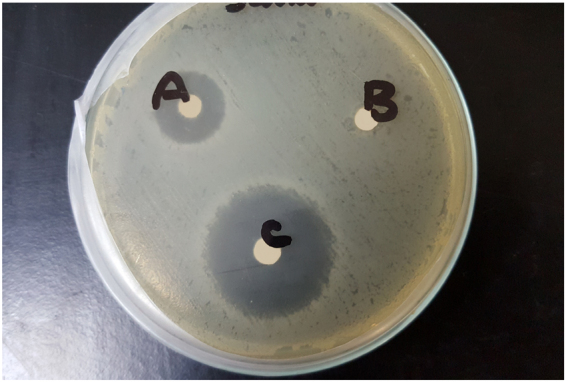
- F3 produced the largest inhibition zones against burn-infection bacteria: P. aeruginosa 21.5 ± 0.7 mm, S. aureus 20.2 ± 0.4 mm, K. pneumoniae 19.5 ± 0.5 mm, and S. pyogenes 18.7 ± 0.4 mm.
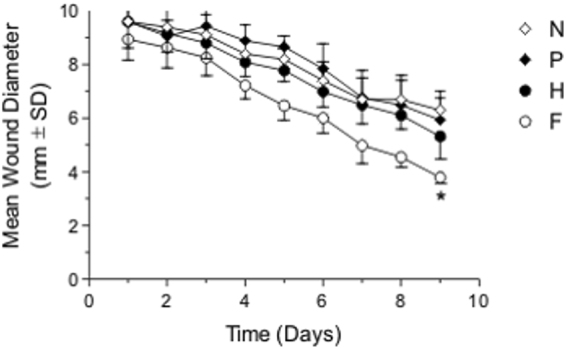
- In vivo, by day 9 F3-treated burns had a mean wound diameter of 3.8 ± 0.2 mm versus pure honey 5.3 ± 0.8 mm, silver sulphadiazine 5.9 ± 0.8 mm, and normal saline 6.3 ± 0.7 mm; F3 was significantly more effective than either control or pure honey (p < 0.001).
Methods
- Six honey hydrogel formulations were prepared with 25%, 50%, or 75% honey using either chitosan or carbopol 934, then evaluated for visual appearance, pH, swelling index, spreadability, in vitro release, and antimicrobial activity.
- In vitro antimicrobial testing used the Disc Diffusion antibiotic sensitivity test against Pseudomonas aeruginosa, Staphylococcus aureus, Klebsiella pneumonia, and Streptococcus pyogenes; F3 was selected for further testing.
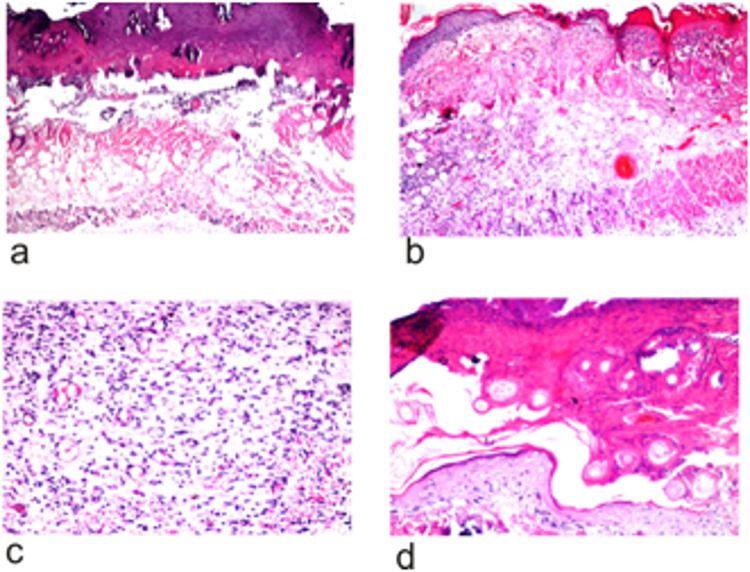
- In vivo burn healing used 10 albino mice with four burn positions per mouse treated daily for nine days with F3, pure honey, silver sulphadiazine (positive control), or normal saline (negative control); outcomes included daily wound diameter, surface swabs for bacterial growth, and histopathological analysis, with two-way ANOVA and one-way ANOVA followed by Tukey post-hoc test (p < 0.05).
Limitations
- The paper does not state a limitations section.
- Evident from the text: the in vivo study used only 10 albino mice and a 9-day treatment period, and no bacterial growth was detected on swabs from any treatment position, so the in vivo antibacterial contribution could not be distinguished.
- Evident from the text: histopathological findings are descriptive/qualitative, and the study tested honey from a single local source; no blinding or sample-size calculation is reported.
Model-written summary. Check it against the paper before relying on it.
Integrity signals
Registry
Cites
Statistics
Figures
Verification
Claims the paper makes
0 Valid · 0 Not valid · 19 Not checked · 54 Own results and interpretations
A result the paper reports from its own data — it cites no other source for it, so there is none to check. The quote shows it is in the paper.
In the paper
“All formulations prepared represented homogenous, transparent three-dimensional networks”
§ Honey-based hydrogel: In vitro and comparative In vivo evaluation for burn wound healing > Results and Discussion > Preparation and Physicochemical Evaluation of Honey hydrogel Formulae
plain- Asserted: passes — The authors put it forward as true.
- Checkable: passes — It can be checked against evidence.
- Load-bearing: unclear — It is unclear whether the paper’s conclusions depend on it.
- Based: passes — The paper gives a reason why it holds.
A result the paper reports from its own data — it cites no other source for it, so there is none to check. The quote shows it is in the paper.
In the paper
“The pH and spreadability were in the range of 4.3–6.8 and 5.7–8.6 cm, respectively.”
- Also stated in: § Preparation and Physicochemical Evaluation of Honey hydrogel Formulae · plain
“The pH of formulated hydrogels was found to be in the range of 4.3 to 6.8”
§ Honey-based hydrogel: In vitro and comparative In vivo evaluation for burn wound healing > Abstract
plain- Asserted: passes — The authors put it forward as true.
- Checkable: passes — It can be checked against evidence.
- Load-bearing: passes — The paper’s conclusions depend on it.
- Based: passes — The paper gives a reason why it holds.
- Also stated in: § Preparation and Physicochemical Evaluation of Honey hydrogel Formulae · plain
A result the paper reports from its own data — it cites no other source for it, so there is none to check. The quote shows it is in the paper.
In the paper
“The results indicated that the process employed to prepare hydrogel formulations in this study was capable of producing formulations with uniform drug content and minimal variability.”
§ Honey-based hydrogel: In vitro and comparative In vivo evaluation for burn wound healing > Results and Discussion > Preparation and Physicochemical Evaluation of Honey hydrogel Formulae
hedgedstates a cause- Asserted: passes — The authors put it forward as true.
- Checkable: passes — It can be checked against evidence.
- Load-bearing: passes — The paper’s conclusions depend on it.
- Based: passes — The paper gives a reason why it holds.
A result the paper states — it cites no source for it, so there is none to check. The quote shows it is in the paper.
In the paper
“Hydrogel containing 75% honey was slightly acidic (pH 4.3, 4.7) compared to other 25, 50% honey hydrogels.”
§ Honey-based hydrogel: In vitro and comparative In vivo evaluation for burn wound healing > Results and Discussion > Preparation and Physicochemical Evaluation of Honey hydrogel Formulae
plainstates an association- Asserted: passes — The authors put it forward as true.
- Checkable: passes — It can be checked against evidence.
- Load-bearing: unclear — It is unclear whether the paper’s conclusions depend on it.
- Based: passes — The paper gives a reason why it holds.
A result the paper reports from its own data — it cites no other source for it, so there is none to check. The quote shows it is in the paper.
In the paper
“Honey was dispersed uniformly throughout the hydrogel.”
§ Honey-based hydrogel: In vitro and comparative In vivo evaluation for burn wound healing > Results and Discussion > Preparation and Physicochemical Evaluation of Honey hydrogel Formulae
plain- Asserted: passes — The authors put it forward as true.
- Checkable: passes — It can be checked against evidence.
- Load-bearing: passes — The paper’s conclusions depend on it.
- Based: passes — The paper gives a reason why it holds.
44 more claims
Create a free account to see all 73 claims and to verify the 32 references still open.
- The quote only partly states this claim. 5
- Probably not a substantial claim. 5
- It may state two separate claims as one. 18
Claims other papers make about this one
Each is checked against this paper’s own text: does it say what the citing paper says it does?
In the citing paper
“El-Kased et al., in their study, successfully enhanced the wound-healing process in mice using a honey-chitosan suspension. However, unlike our results, the suspension they obtained was unable to achieve full wound closure after 10 days [64,65].”
From Antibacterial Activity of Honey/Chitosan Nanofibers Loaded with Capsaicin and Gold Nanoparticles for Wound Dressing (2020) · cites this paper as [64]
In the citing paper
“The antioxidant capacity conferred by flavonoids and phenolic acids presents anti-inflammatory properties in wounds [22].”
Self-check
Percentages, sums and reported differences re-computed from the paper’s own numbers.
Each contradiction between two passages listed here was confirmed by an independent check.
Rated minor: it would not touch a result — a value no result rests on, a p-value that stays on the same side of the significance level, or a conflict that is clerical, resolved elsewhere in the paper, or outside its own findings.
In the paper
§ Honey-based hydrogel: In vitro and comparative In vivo evaluation for burn wound healing > Results and Discussion > In vitro antimicrobial examination of honey formulations
“| F4 | 5.5 ± 0.4 | 5.9 ± 0.4 | 5.6 ± 0.4 | 5.7 ± 0.7 |”
§ Honey-based hydrogel: In vitro and comparative In vivo evaluation for burn wound healing > Materials and Methods > In vitro antimicrobial examination of honey formulations
“Cheesbrough42 method was used for preparing filter paper disks (6 mm diameter).”
Citations
Cites
Antibiotic Susceptibility Testing by a Standardized Single Disk Method
Bauer, A. W., Kirby, W. M. M., Sherris, J. C., & Turck, M. (1966) · American Journal of Clinical Pathology · doi:10.1093/ajcp/45.4_ts.493 · Cited by 18,523
Hydrogel: Preparation, characterization, and applications: A review
Ahmed, E. M. (2015) · Journal of Advanced Research · doi:10.1016/j.jare.2013.07.006 · Cited by 5,800
Hydrogels for biomedical applications
Hoffman, A. S. (2002) · Advanced Drug Delivery Reviews · doi:10.1016/s0169-409x(01)00239-3 · Cited by 4,864
Hydrogels in Biology and Medicine: From Molecular Principles to Bionanotechnology
Peppas, N. A., Hilt, J. Z., Khademhosseini, A., & Langer, R. (2006) · Advanced Materials · doi:10.1002/adma.200501612 · Cited by 4,109
Hydrogels in pharmaceutical formulations
Peppas, N. (2000) · European Journal of Pharmaceutics and Biopharmaceutics · doi:10.1016/s0939-6411(00)00090-4 · Cited by 4,011
Chitosan-based hydrogels for controlled, localized drug delivery
Bhattarai, N., Gunn, J., & Zhang, M. (2010) · Advanced Drug Delivery Reviews · doi:10.1016/j.addr.2009.07.019 · Cited by 2,451
Novel crosslinking methods to design hydrogels
Hennink, W. E., & van Nostrum, C. F. (2002) · Advanced Drug Delivery Reviews · doi:10.1016/s0169-409x(01)00240-x · Cited by 1,962
Encyclopedia of Pharmaceutical Technology
Swarbrick, J. (2013) · CRC Press eBooks · doi:10.1201/b19309 · Cited by 1,794
Pathophysiology of acute wound healing
Li, J., Chen, J., & Kirsner, R. (2007) · Clinics in Dermatology · doi:10.1016/j.clindermatol.2006.09.007 · Cited by 1,486
Thermosensitive sol-gel reversible hydrogels
Jeong, B., Kim, S. W., & Bae, Y. H. (2002) · Advanced Drug Delivery Reviews · doi:10.1016/s0169-409x(01)00242-3 · Cited by 1,478
Research works printed but not linked: 18
- Azim MK Sajid M Evaluation of nematocidal activity in natural honey Pak. J. Bot. 2009 41 3261 3264
- Honrao MS Pabari R Gels The Indian Pharmacist. 2004 5 16 21
- Klich, C. M. Jels & Jellies. In: Encyclopedia of Pharmaceutical Technology. (Swarbrick J, Boylan JC, eds.) 415–439 (Marcel Dekker Inc; 1992).
- Bhuvaneshwari S Sruthi D Sivasubramanian V Niranjana kalyani and Sugunabai J. Development and characterization of chitosan film Int. J. Eng. Res. Appl. 2011 1 292 299
- Shelma R Paul W CF. S Chitin nanofibre reinforced thin chitosan films for Wound healing application Trends Biomater. Artif. Organs. 2008 22 107 111
- Mercy HP Halim AS Hussein AR Chitosan-Derivatives As Hemostatic Agents: Their Role In Tissue Regeneration Regen. Med. 2012 1 38 46
- Orwoll, Robert A.; Yong, Chong S. Poly (acrylic acid). (Mark, James E. Polymer Data Handbook). 252–253 (Oxford University Press, Inc. 1999).
- Todica M UV-Vis fluorescence investigation of some poly (acrylic) gels Studia UBB Chemia. 2015 1 7 17
- Cheesbrough, M. District Laboratory Practice in Tropical Countries. Part II. 1933–1934 (Cambridge University Press 2000).
- Koneman, E. W., Allen, S. D., Janda, W. M., Schreckenberger, P. C. & Winn, W. C. Diagnostic Microbiology, (5th edn, Philadelphia, Lippincott) 803–841(1997).
- Knapczyk, L. et al. Requirements of chitosan for pharmaceutical and biomedical applications, in: G. Skak-Braek, T. Anthonsen, P. Sandford (Eds), Chitin and Chitosan: Sources, Chemistry, Biochemistry, Physical Properties and Applications, Elsevier, London, 657–663 (1989).
- Martin, A. Martin’s Physical Pharmacy and Pharmaceutical Sciences: Physical Chemical and Biopharmaceutical Principles in the Pharmaceutical Sciences; 565–569 (Fifth edition, Lippincott Williams & Wilkins (2006).
- Aljady AM Kamaruddin MY Jamal AM Mohd-Yassim MY Biochemical study on the efficacy of Malaysian Honey on inflicted wounds: an animal model Med. J. Islamic World Acad. Sci. 2000 13 125 132
- Roopa G Bhat RS Wound healing activity of a prepared long acting gel loaded with ciprofloxacin HCL microspheres in albino rat Pharmacology 2010 2 1010 1016
- Parsons D Bowler PG Myles V Jones S Silver antimicrobial dressings in wound management: a comparison of antibacterial, physical, and chemical characteristics Wounds 2005 17 222 232
- Kumar A Sharma V Singh H Prakash P Singh S Efficacy of some indigenous drugs in tissue repair in buffaloes Indian Vet J 1993 70 42 44
- Gupta S Singh H Varshney A Prakash P Therapeutic efficacy of honey in infected wounds in buffaloes Indian J Anim Sci 1992 62 521 523
- Bulman M Honey as a surgical dressing Middlesex Hosp J 1955 55 188 189
Cited by
Functional Hydrogels as Wound Dressing to Enhance Wound Healing
Liang, Y., He, J., & Guo, B. (2021) · ACS Nano · doi:10.1021/acsnano.1c04206 · Cited by 3,135
Markiewicz-Gospodarek, A., Kozioł, M. M., Tobiasz, M., Baj, J., Radzikowska-Büchner, E., & Przekora, A. (2022) · International Journal of Environmental Research and Public Health · doi:10.3390/ijerph19031338 · Cited by 513
Antibacterial biomaterials for skin wound dressing
Liang, Y., Liang, Y., Zhang, H., & Guo, B. (2022) · Asian Journal of Pharmaceutical Sciences · doi:10.1016/j.ajps.2022.01.001 · Cited by 440
Structural and biological engineering of 3D hydrogels for wound healing
Norahan, M. H., Pedroza-González, S. C., Sánchez-Salazar, M. G., Álvarez, M. M., & Trujillo de Santiago, G. (2023) · Bioactive Materials · doi:10.1016/j.bioactmat.2022.11.019 · Cited by 338
Natural Polymer-Based Antimicrobial Hydrogels without Synthetic Antibiotics as Wound Dressings
Zhong, Y., Xiao, H., Seidi, F., & Jin, Y. (2020) · Biomacromolecules · doi:10.1021/acs.biomac.0c00760 · Cited by 337
Design Considerations for Hydrogel Wound Dressings: Strategic and Molecular Advances
Op 't Veld, R. C., Walboomers, X. F., Jansen, J. A., & Wagener, F. A. D. T. G. (2020) · Tissue Engineering Part B: Reviews · doi:10.1089/ten.teb.2019.0281 · Cited by 276
Hassan, M. A., Omer, A. M., Abbas, E., Baset, W. M. A., & Tamer, T. M. (2018) · Scientific Reports · doi:10.1038/s41598-018-29650-w · Cited by 255
Chopra, H., Bibi, S., Kumar, S., Khan, M. S., Kumar, P., & Singh, I. (2022) · Gels · doi:10.3390/gels8020111 · Cited by 245
“studied the use of honey-based hydrogels made of chitosan and carbopol 934 for burn wounds and antibacterial action against Pseudomonas aeruginosa, Staphylococcus aureus, Streptococcus pyogenes and Klebsiella pneumonia [7].”
BackgroundThermoresponsive gels containing gold nanoparticles as smart antibacterial and wound healing agents
Arafa, M. G., El-Kased, R. F., & Elmazar, M. M. (2018) · Scientific Reports · doi:10.1038/s41598-018-31895-4 · Cited by 244
Self-citationChitosan-Based Biomaterial in Wound Healing: A Review
Rajinikanth, S. B., Raj, R. D. S., Keerthika, K., & Vijayaragavan, V. (2024) · Cureus · doi:10.7759/cureus.55193 · Cited by 232
Chinnasamy, G., Chandrasekharan, S., Koh, T. W., & Bhatnagar, S. (2021) · Frontiers in Microbiology · doi:10.3389/fmicb.2021.611560 · Cited by 186
“6 cm (El-Kased et al., 2017) which was met by AI-AgNPs-PF127 hydrogel.”
Characterisation of hydrogels: Linking the nano to the microscale
Raghuwanshi, V. S., & Garnier, G. (2019) · Advances in Colloid and Interface Science · doi:10.1016/j.cis.2019.102044 · Cited by 173
An Overview of Recent Developments in the Management of Burn Injuries
Radzikowska-Büchner, E., Łopuszyńska, I., Flieger, W., Tobiasz, M., Maciejewski, R., & Flieger, J. (2023) · International Journal of Molecular Sciences · doi:10.3390/ijms242216357 · Cited by 170
Huang, Y., Bai, L., Yang, Y., Yin, Z., & Guo, B. (2022) · Journal of Colloid and Interface Science · doi:10.1016/j.jcis.2021.10.131 · Cited by 166
Wound healing applications of creams and “smart” hydrogels
Stan, D., Tanase, C., Avram, M., Apetrei, R., Mincu, N., Bocancia-Mateescu, L.-A., & Stan, D. (2021) · Experimental Dermatology · doi:10.1111/exd.14396 · Cited by 162
Gull, N., Khan, S. M., Khalid, S., Zia, S., Islam, A., Sabir, A., Sultan, M., Hussain, F., Khan, R. U., & Butt, M. T. Z. (2020) · International Journal of Biological Macromolecules · doi:10.1016/j.ijbiomac.2020.09.031 · Cited by 158
Shah, A., Buabeid, M. A., Arafa, E. A., Hussain, I., Li, L., & Murtaza, G. (2019) · International Journal of Pharmaceutics · doi:10.1016/j.ijpharm.2019.04.046 · Cited by 149
A review of accelerated wound healing approaches: biomaterial- assisted tissue remodeling
Nour, S., Baheiraei, N., Imani, R., Khodaei, M., Alizadeh, A., Rabiee, N., & Moazzeni, S. M. (2019) · Journal of Materials Science Materials in Medicine · doi:10.1007/s10856-019-6319-6 · Cited by 146
Formulation and evaluation of Ocimum basilicum-based emulgel for wound healing using animal model
Khan, B. A., Ullah, S., Khan, M. K., Alshahrani, S. M., & Braga, V. A. (2020) · Saudi Pharmaceutical Journal · doi:10.1016/j.jsps.2020.11.011 · Cited by 137
Natural Extracts for Antibacterial Applications
Chen, C., Chen, L., Mao, C., Jin, L., Wu, S., Zheng, Y., Cui, Z., Li, Z., Zhang, Y., Zhu, S., et al. (2023) · Small · doi:10.1002/smll.202306553 · Cited by 132
Al-Musawi, S., Albukhaty, S., Al-Karagoly, H., Sulaiman, G. M., Alwahibi, M. S., Dewir, Y. H., Soliman, D. A., & Rizwana, H. (2020) · Molecules · doi:10.3390/molecules25204770 · Cited by 131
Honey: An Advanced Antimicrobial and Wound Healing Biomaterial for Tissue Engineering Applications
Yupanqui Mieles, J., Vyas, C., Aslan, E., Humphreys, G., Diver, C., & Bartolo, P. (2022) · Pharmaceutics · doi:10.3390/pharmaceutics14081663 · Cited by 128
Nour, S., Imani, R., Chaudhry, G. R., & Sharifi, A. M. (2020) · Journal of Biomedical Materials Research Part A · doi:10.1002/jbm.a.37105 · Cited by 126
Role of Honey in Advanced Wound Care
Scepankova, H., Combarros-Fuertes, P., Fresno, J. M., Tornadijo, M. E., Dias, M. S., Pinto, C. A., Saraiva, J. A., & Estevinho, L. M. (2021) · Molecules · doi:10.3390/molecules26164784 · Cited by 126
Govindasamy, G. A., Mydin, R. B. S. M. N., Sreekantan, S., & Harun, N. H. (2021) · Scientific Reports · doi:10.1038/s41598-020-79547-w · Cited by 122
Therapeutic strategies for chronic wound infection
Liu, Y., Ni, P., Huang, Y., & Xie, T. (2021) · Chinese Journal of Traumatology · doi:10.1016/j.cjtee.2021.07.004 · Cited by 121
Divband, B., Aghazadeh, M., Al‐qaim, Z. H., Samiei, M., Hussein, F. H., Shaabani, A., Shahi, S., & Sedghi, R. (2021) · Carbohydrate Polymers · doi:10.1016/j.carbpol.2021.118589 · Cited by 118
Polymeric wound dressings, an insight into polysaccharide-based electrospun membranes
Gruppuso, M., Turco, G., Marsich, E., & Porrelli, D. (2021) · Applied Materials Today · doi:10.1016/j.apmt.2021.101148 · Cited by 114
Kumar, M., Kumar, D., Garg, Y., Mahmood, S., Chopra, S., & Bhatia, A. (2023) · International Journal of Biological Macromolecules · doi:10.1016/j.ijbiomac.2023.127331 · Cited by 112
Polyphenols: A Promising Avenue in Therapeutic Solutions for Wound Care
Guimarães, I., Baptista-Silva, S., Pintado, M., & Oliveira, A. L. (2021) · Applied Sciences · doi:10.3390/app11031230 · Cited by 109
Molecular mechanism-based therapeutic properties of honey
Talebi, M., Talebi, M., Farkhondeh, T., & Samarghandian, S. (2020) · Biomedicine & Pharmacotherapy · doi:10.1016/j.biopha.2020.110590 · Cited by 104
Lamei, E., & Hasanzadeh, M. (2022) · International Journal of Biological Macromolecules · doi:10.1016/j.ijbiomac.2022.03.117 · Cited by 98
Honey-Based Medicinal Formulations: A Critical Review
Hossain, M. L., Lim, L. Y., Hammer, K. A., Hettiarachchi, D. S., & Locher, C. (2021) · Applied Sciences · doi:10.3390/app11115159 · Cited by 93
3D Bioprinting of Gelatin–Xanthan Gum Composite Hydrogels for Growth of Human Skin Cells
Piola, B., Sabbatini, M., Gino, S., Invernizzi, M., & Renò, F. (2022) · International Journal of Molecular Sciences · doi:10.3390/ijms23010539 · Cited by 89
Ishfaq, B., Khan, I. U., Khalid, S. H., & Asghar, S. (2023) · Frontiers in Bioengineering and Biotechnology · doi:10.3389/fbioe.2023.1042077 · Cited by 83
Esa, N. E. F., Ansari, M. N. M., Razak, S. I. A., Ismail, N. I., Jusoh, N., Zawawi, N. A., Jamaludin, M. I., Sagadevan, S., & Nayan, N. H. M. (2022) · Molecules · doi:10.3390/molecules27103080 · Cited by 81
Development and Evaluation of Hydrogel Wound Dressings Loaded with Herbal Extracts
Gavan, A. D., Colobățiu, L., Hanganu, D., Bogdan, C., Oláh, N.-K., Achim, M., & Mirel, S. (2022) · Processes · doi:10.3390/pr10020242 · Cited by 78
The Expanded Role of Chitosan in Localized Antimicrobial Therapy
Hemmingsen, L. M., Škalko‐Basnet, N., & Jøraholmen, M. W. (2021) · Marine Drugs · doi:10.3390/md19120697 · Cited by 77
Martínez‐Higuera, A., Rodríguez-Beas, C., Villalobos-Noriega, J. M. A., Arizmendi-Grijalva, A., Ochoa-Sánchez, C., Larios-Rodríguez, E. A., Martínez‐Soto, J. M., Rodríguez-León, E., Ibarra-Zazueta, C., Mora-Monroy, R., et al. (2021) · Scientific Reports · doi:10.1038/s41598-021-90763-w · Cited by 75
Bee-Derived Products: Chemical Composition and Applications in Skin Tissue Engineering
Dumitru, C. D., Neacșu, I. A., Grumezescu, A. M., & Andronescu, E. (2022) · Pharmaceutics · doi:10.3390/pharmaceutics14040750 · Cited by 75
Datta, S., Sarkar, R., Vyas, V., Bhutoria, S., Barui, A., Chowdhury, A. R., & Datta, P. (2018) · Journal of materials research/Pratt's guide to venture capital sources · doi:10.1557/jmr.2018.202 · Cited by 74
Tiwari, N., Kumar, D., Priyadarshani, A., Jain, G. K., Mittal, G., Kesharwani, P., & Aggarwal, G. (2023) · Journal of Drug Delivery Science and Technology · doi:10.1016/j.jddst.2023.104319 · Cited by 74
Development of Hydrogel‐Based Sprayable Wound Dressings for Second‐ and Third‐Degree Burns
He, J. J., McCarthy, C., & Camci‐Unal, G. (2021) · Advanced NanoBiomed Research · doi:10.1002/anbr.202100004 · Cited by 74
Neres Santos, A. M., Duarte Moreira, A. P., Piler Carvalho, C. W., Luchese, R., Ribeiro, E., McGuinness, G. B., Fernandes Mendes, M., & Nunes Oliveira, R. (2019) · Materials · doi:10.3390/ma12040559 · Cited by 73
Dhlamini, K. S., Selepe, C. T., Ramalapa, B., Tshweu, L. L., & Ray, S. S. (2024) · Macromolecular Materials and Engineering · doi:10.1002/mame.202400018 · Cited by 72
Nezhad‐Mokhtari, P., Javanbakht, S., Asadi, N., Ghorbani, M., Milani, M., Hanifehpour, Y., Gholizadeh, P., & Akbarzadeh, A. (2021) · Journal of Drug Delivery Science and Technology · doi:10.1016/j.jddst.2021.102789 · Cited by 72
Biomaterial design strategies to address obstacles in craniomaxillofacial bone repair
Dewey, M. J., & Harley, B. A. C. (2021) · RSC Advances · doi:10.1039/d1ra02557k · Cited by 71
β-Glucan-Based Wet Dressing for Cutaneous Wound Healing
Muthuramalingam, K., Choi, S. I., Hyun, C. L., Kim, Y. M., & Cho, M. (2019) · Advances in Wound Care · doi:10.1089/wound.2018.0843 · Cited by 71
Effect of Polysaccharides from Bletilla striata on the Healing of Dermal Wounds in Mice
Zhang, C., He, Y., Chen, Z., Shi, J., Qu, Y., & Zhang, J. (2019) · Evidence-based Complementary and Alternative Medicine · doi:10.1155/2019/9212314 · Cited by 70
A Critical Review and Perspective of Honey in Tissue Engineering and Clinical Wound Healing
Hixon, K. R., Klein, R. C., Eberlin, C. T., Linder, H. R., Ona, W. J., Gonzalez, H. A., & Sell, S. A. (2019) · Advances in Wound Care · doi:10.1089/wound.2018.0848 · Cited by 69
Saberian, M., Seyedjafari, E., Zargar, S. J., Mahdavi, F. S., & Sanaei‐rad, P. (2021) · Journal of Applied Polymer Science · doi:10.1002/app.51398 · Cited by 68
Nanoengineered Shear-Thinning Hydrogel Barrier for Preventing Postoperative Abdominal Adhesions
Ruiz-Esparza, G. U., Wang, X., Zhang, X., Jimenez-Vazquez, S., Diaz-Gomez, L., Lavoie, A.-M., Afewerki, S., Fuentes-Baldemar, A. A., Parra-Saldivar, R., Jiang, N., et al. (2021) · Nano-Micro Letters · doi:10.1007/s40820-021-00712-5 · Cited by 67
Govindasamy, G. A., Mydin, R. B. S. M. N., Effendy, W. N. F. W. E., & Sreekantan, S. (2022) · Materials Today Communications · doi:10.1016/j.mtcomm.2022.104545 · Cited by 66
Aghmiuni, A. I., Keshel, S. H., Sefat, F., & Khiyavi, A. A. (2019) · International Journal of Biological Macromolecules · doi:10.1016/j.ijbiomac.2019.10.008 · Cited by 64
Honey Combination Therapies for Skin and Wound Infections: A Systematic Review of the Literature
McLoone, P., Tabys, D., & Fyfe, L. (2020) · Clinical Cosmetic and Investigational Dermatology · doi:10.2147/ccid.s282143 · Cited by 63
Khan, B. A., Khan, A., Khan, M. K., & Braga, V. A. (2020) · Journal of Drug Delivery Science and Technology · doi:10.1016/j.jddst.2020.102227 · Cited by 62
Le Thi, P., Lee, Y., Hoang Thi, T. T., Park, K. M., & Park, K. D. (2018) · Materials Science and Engineering: C · doi:10.1016/j.msec.2018.06.037 · Cited by 61
Gaydhane, M. K., Kanuganti, J. S., & Sharma, C. S. (2020) · Journal of materials research/Pratt's guide to venture capital sources · doi:10.1557/jmr.2020.52 · Cited by 61
Govindasamy, G. A., Mydin, R. B. S. M. N., Gadaime, N. K. R., & Sreekantan, S. (2023) · Journal of Polymers and the Environment · doi:10.1007/s10924-023-02902-1 · Cited by 60
Akgün, N., Çelik, Ö., & Kelebekli, L. (2021) · Journal of Food Measurement & Characterization · doi:10.1007/s11694-021-00937-3 · Cited by 60
Khan, B. A., Ullah, S., Khan, M. K., Uzair, B., Menaa, F., & Braga, V. A. (2020) · AAPS PharmSciTech · doi:10.1208/s12249-020-01866-y · Cited by 58
Kamaruzzaman, N. F., Tan, L. P., Mat Yazid, K. A., Saeed, S. I., Hamdan, R. H., Choong, S. S., Wong, W. K., Chivu, A., & Gibson, A. J. (2018) · Materials · doi:10.3390/ma11091705 · Cited by 56
Lotfinia, F., Norouzi, M., Ghasemi‐Mobarakeh, L., & Naeimirad, M. (2023) · Journal of Functional Biomaterials · doi:10.3390/jfb14020072 · Cited by 56
Singh, P., Verma, C., Mukhopadhyay, S., Gupta, A., & Gupta, B. (2022) · International Journal of Pharmaceutics · doi:10.1016/j.ijpharm.2022.121661 · Cited by 54
Emerging stimuli-responsive hydrogels for enhancing chronic wound healing
Yun, M., Langford, L., Russell, L., Ndiforamang, N., Zhang, A., & Bai, W. (2026) · RSC Applied Polymers · doi:10.1039/d5lp00092k · Cited by 53
Angioi, R., Morrin, A., & White, B. (2021) · Applied Sciences · doi:10.3390/app11115192 · Cited by 53
Krishnakumar, G. S., Mahendiran, B., Gopalakrishnan, S., Muthusamy, S., & Elangovan, S. M. (2020) · Wound Medicine · doi:10.1016/j.wndm.2020.100188 · Cited by 53
Preparation and characterization of vancomycin-loaded chitosan/PVA/PEG hydrogels for wound dressing
Naeimi, M., Tajedin, R., Farahmandfar, F., Naeimi, M., & Monajjemi, M. (2020) · Materials Research Express · doi:10.1088/2053-1591/abb154 · Cited by 53
Rana, M. M., Rahman, M. S., Ullah, M. A., Siddika, A., Hossain, M. L., Akhter, M. S., Hasan, M. Z., & Asaduzzaman, S. M. (2020) · Bio-Medical Materials and Engineering · doi:10.3233/bme-201076 · Cited by 52
El-Didamony, S. E., Gouda, H. I. A.-A., Zidan, M. M. M., & Amer, R. I. (2024) · Biotechnology Reports · doi:10.1016/j.btre.2024.e00862 · Cited by 51
Self-citationHydrogel formulations containing non-ionic polymers for topical delivery of bacteriophages
Chang, R. Y. K., Okamoto, Y., Morales, S., Kutter, E. M., & Chan, H. (2021) · International Journal of Pharmaceutics · doi:10.1016/j.ijpharm.2021.120850 · Cited by 51
An Updated Account on Formulations and Strategies for the Treatment of Burn Infection – A Review
Kumar, M., Mahmood, S., & Mandal, U. K. (2022) · Current Pharmaceutical Design · doi:10.2174/1381612828666220519145859 · Cited by 51
The Potential of Honeybee Products for Biomaterial Applications
Rossi, M., & Marrazzo, P. (2021) · Biomimetics · doi:10.3390/biomimetics6010006 · Cited by 51
Multifunctional nanozyme-hydrogel system in bacterial-infected wounds
Cui, Y., Niu, Q., Hu, Z., He, H. H., Wei, X., Wang, M., Chen, X., & Wang, X. (2025) · Cell Biomaterials · doi:10.1016/j.celbio.2025.100074 · Cited by 49
“Green” Biomaterials: The Promising Role of Honey
Bonsignore, G., Patrone, M., Martinotti, S., & Ranzato, E. (2021) · Journal of Functional Biomaterials · doi:10.3390/jfb12040072 · Cited by 48
Fathi, A., Gholami, M., Motasadizadeh, H., Malek-Khatabi, A., Sedghi, R., & Dinarvand, R. (2024) · Carbohydrate Polymers · doi:10.1016/j.carbpol.2024.121856 · Cited by 48
Govindasamy, G. A., Mydin, R. B. S. M. N., Harun, N. H., Effendy, W. N. F. W. E., & Sreekantan, S. (2022) · Chemical Papers · doi:10.1007/s11696-022-02513-5 · Cited by 48
Biopolymers and biocomposites: Nature’s tools for wound healing and tissue engineering
Osmani, R. A. M., Singh, E., Jadhav, K. V., Jadhav, S., & Banerjee, R. (2021) · Elsevier eBooks · doi:10.1016/b978-0-12-820484-9.00023-4 · Cited by 47
Antioxidant Thermogelling Formulation for Burn Wound Healing
Liu, M., Chen, Y., Zhu, Q., Tao, J., Tang, C., Ruan, H., Wu, Y., & Loh, X. J. (2022) · Chemistry - An Asian Journal · doi:10.1002/asia.202200396 · Cited by 47
A Comprehensive Review of Honey-Containing Hydrogel for Wound Healing Applications
Zainuddin, A. N. Z., Mustakim, N. N., Rosemanzailani, F. A., Fadilah, N. I. M., Maarof, M., & Fauzi, M. B. (2025) · Gels · doi:10.3390/gels11030194 · Cited by 47
Pati, B. A., Kurata, W. E., Horseman, T. S., & Pierce, L. M. (2021) · Wound Repair and Regeneration · doi:10.1111/wrr.12890 · Cited by 45
Kazim, T., Tariq, A., Usman, M., Ayoob, M. F., & Khan, A. (2021) · RSC Advances · doi:10.1039/d1ra06283b · Cited by 45
Wounds and the Microbiota: The Healing Interplay Between Host and Microbial Communities
Al-Taweel, R., Hammad, A. S., Tajammul, A., Crovella, S., & Al‐Asmakh, M. (2025) · International Journal of Molecular Sciences · doi:10.3390/ijms262311365 · Cited by 43
Chopra, H., Bibi, S., Mohanta, Y. K., Mohanta, T. K., Kumar, S., Singh, I., Khan, M. S., Rauta, P. R., Alshammari, A., Alharbi, M., et al. (2023) · Gels · doi:10.3390/gels9050394 · Cited by 43
Evaluation of the Effect of Honey-Containing Chitosan/Hyaluronic Acid Hydrogels on Wound Healing
Şalva, E., Akdağ, A. E., Alan, S., Arısoy, S., & Akbuğa, F. J. (2023) · Gels · doi:10.3390/gels9110856 · Cited by 42
Hixon, K. R., Bogner, S. J., Ronning-Arnesen, G., Janowiak, B. E., & Sell, S. A. (2019) · Gels · doi:10.3390/gels5020021 · Cited by 42
Peršurić, Ž., & Pavelić, S. K. (2021) · Molecules · doi:10.3390/molecules26123770 · Cited by 41
Machado, A., Toubarro, D., Baptista, J., Tejera, E., & Álvarez-Suárez, J. M. (2025) · Future Microbiology · doi:10.1080/17460913.2025.2498233 · Cited by 40
Effect of CMC Concentration on Cell Growth Behavior of PVA/CMC Hydrogel
Shin, J., Lee, D. Y., Yoon, J. I., & Song, Y.-S. (2020) · Macromolecular Research · doi:10.1007/s13233-020-8106-0 · Cited by 40
Huang, T., Wang, G., Tseng, C.-C., & Su, W. (2019) · Materials Science and Engineering C · doi:10.1016/j.msec.2019.109986 · Cited by 40
Polymer-Based Hydrogel Loaded With Honey in Drug Delivery System for Wound Healing Applications
Yasin, S. N. N., Said, Z., Halib, N., Rahman, Z. A., & Mokhzani, N. I. (2023) · Polymers · doi:10.3390/polym15143085 · Cited by 39
Gel formulations of Merremia mammosa (Lour.) accelerated wound healing of the wound in diabetic rats
Marchianti, A. C. N., Sakinah, E. N., Elfiah, U., Putri, N. K. S., Wahyuliswari, D. I., Maulana, M. R., & Ulfa, E. U. (2019) · Journal of Traditional and Complementary Medicine · doi:10.1016/j.jtcme.2019.12.002 · Cited by 39
Enhancing Whole Phage Therapy and Their Derived Antimicrobial Enzymes through Complex Formulation
Cooper, C. J., Koonjan, S., & Nilsson, A. S. (2018) · Pharmaceuticals · doi:10.3390/ph11020034 · Cited by 39
Gelsedine-type alkaloids: Discovery of natural neurotoxins presented in toxic honey
Yang, S., Liu, Y., Sun, F., Zhang, J., Jin, Y., Li, Y., Zhou, J., Li, Y., & Zhu, K. (2019) · Journal of Hazardous Materials · doi:10.1016/j.jhazmat.2019.120999 · Cited by 39
Development and pharmacological evaluation of vancomycin loaded chitosan films
Kausar, R., Khan, A., Jamil, B., Shahzad, Y., & Haq, I. U. (2020) · Carbohydrate Polymers · doi:10.1016/j.carbpol.2020.117565 · Cited by 38
Therapeutic Potential of Honey and Propolis on Ocular Disease
Rashid, N. A., Mohammed, S. N. F., Halim, S. A. S. A., Ghafar, N. A., & Jalil, N. A. A. (2022) · Pharmaceuticals · doi:10.3390/ph15111419 · Cited by 37
Renewable marine polysaccharides for microenvironment-responsive wound healing
Liu, Q., Hu, L., Wang, C., Cheng, M., Liu, M., Wang, L., Pan, P., & Chen, J. (2022) · International Journal of Biological Macromolecules · doi:10.1016/j.ijbiomac.2022.11.109 · Cited by 36
El‐Kased, R. F., & El‐Kersh, D. M. (2022) · Life · doi:10.3390/life12101587 · Cited by 36
Self-citationSamraj, M. D., Kirupha, S. D., Santhini, E., & Vadodaria, K. (2020) · Journal of Drug Delivery Science and Technology · doi:10.1016/j.jddst.2020.102271 · Cited by 36
Lee, Y., Ricky, S., Lim, T. H., Jang, K.-S., Kim, H., Song, Y., Kim, S. Y., & Chung, K. (2019) · Journal of Burn Care & Research · doi:10.1093/jbcr/irz120 · Cited by 35
Metadata
- Authors
- El-Kased, R. F., Amer, R. I., Attia, D., & Elmazar, M. M.
- Affiliations
- Al-Azhar University (EG)
- British University in Egypt (EG)
- Venue
- Scientific Reports
- Published
- 2017-08-29
- Volume
- 7
- Issue
- 1
- Pages
- 9692-9692
- ISSN
- 2045-2322 (ISSN-L)
- PMC
- PMC5575255
- OpenAlex
- W2749036976
- Semantic Scholar
- f9af1d9453c4f6579988bef537f89feceb8aed69
- Cited by
- 314
- References
- 76
- Citations by year
- 2026: 26 · 2025: 41 · 2024: 50 · 2023: 35 · 2022: 49 · 2021: 50 · 2020: 26 · 2019: 24 · 2018: 11 · 2017: 2
- FWCI
- 15.88
- Type
- journal article
- Language
- en
- Open access
- gold
- doi.org
- Licence
- cc-by
- creativecommons.org/licenses/by/4.0 (tdm)
- creativecommons.org/licenses/by/4.0 (vor)
- Locations
- Scientific Reports (publishedVersion, cc-by)
- PubMed Central (publishedVersion, cc-by)
- PubMed (publishedVersion)
- Topics
- Health Sciences › Medicine › Surgery › Wound Healing and Treatments
- Life Sciences › Agricultural and Biological Sciences › Insect Science › Bee Products Chemical Analysis
- Physical Sciences › Materials Science › Biomaterials › Hydrogels: synthesis, properties, applications
- Keywords
- burn wound healing, chitosan, Carbopol 934, topical wound dressing, antimicrobial activity, Pseudomonas aeruginosa, Staphylococcus aureus, Klebsiella pneumoniae, Streptococcus pyogenes, Fickian diffusion, in vivo wound healing, burn wound infection
- MeSH terms
- Animals, Anti-Infective Agents, Burns, Drug Compounding, Female, Honey, Male, Microbial Sensitivity Tests, Wound Healing, Wound Infection, Hydrogels, Mice, Chemical Phenomena
About these checks
Registry, retraction, Cites and statistics results are computed, not judged, with one exception: a printed reference that no index lists is read once by a model before it counts as a citation error. Claims are extracted by a model and kept only when their quote appears verbatim in the text; each cited source is then checked, with a model’s help, for whether it says what the claim relies on. Those verdicts can be wrong — read the claim’s quote and the cited source before relying on one.
A language model drew the claims from the paper on 2026-11-22, under version 3 of the claim definition (model deepseek-v4.1-flash, prompt extract-v3).
A second model labelled each claim on 2026-11-22 (model jev-1.13-20260917, definition revision gold-guideline-v0.2).
Statistics and arithmetic are recomputed, not judged.
Confidence bands are shown only for fields calibrated on our annotated test set. None is calibrated yet, so no band is shown.
What counts as a claim ›How we measure confidence ›How we check this ›
Are you an author, or do you see a problem with this page? Request a review
Data sources
Bibliographic data: Semantic Scholar, OpenAlex, Crossref.
Contains information from the Semantic Scholar Academic Graph Datasets, made available under the ODC Attribution License (ODC-BY 1.0).
Semantic Scholar’s data is described in: Kinney, R., et al. (2023). The Semantic Scholar Open Data Platform. arXiv:2301.10140.
