

Honey-based hydrogel: In vitro and comparative In vivo evaluation for burn wound healing
Open accessThe DOI matches its Crossref record; 77 of the 77 references it cites were found in a registry or an index; none of the 32 sources its claims cite is checked for support yet.
Abstract
Honey was used to treat wounds since ancient times till nowadays. The present study aimed at preparing a honey-based hydrogel and assay its antimicrobial properties and wound healing activity; in-vitro and in-vivo. Topical honey hydrogel formulations were prepared using three honey concentrations with gelling agents; chitosan and carbopol 934. The prepared formulae were evaluated for pH, spreadability, swelling index, in-vitro release and antimicrobial activity. The pH and spreadability were in the range of 4.3–6.8 and 5.7–8.6 cm, respectively. Chitosan-based hydrogel showed higher in-vitro honey release with diffusional exponent ‘n ≤ 0.5 indicates Fickian diffusion mechanism. Hydrogel formulae were assessed for in-vitro antimicrobial activity using Disc Diffusion antibiotic sensitivity test against common burn infections bacteria; Pseudomonas aeruginosa, Staphylococcus aureus, Klebsiella pneumonia and Streptococcus pyogenes. The 75% honey-chitosan hydrogel showed highest antimicrobial activity. This formula was tested for in-vivo burn healing using burn-induced wounds in mice. The formula was evaluated for burn healing and antibacterial activities compared to commercial product. 75% honey-chitosan hydrogel was found to possess highest healing rate of burns. The present study concludes that 75% honey-chitosan hydrogel possesses greater wound healing activity compared to commercial preparation and could be safely used as an effective natural topical wound healing treatment.
Overview
CoChat Summary
TL;DR
A 75% honey–chitosan hydrogel (F3) showed the highest in vitro antimicrobial activity among six honey hydrogel formulations and produced the greatest burn-wound contraction in mice compared with pure honey, silver sulphadiazine, and saline. The authors conclude it could be a safe, effective natural topical wound-healing treatment.
Key findings
- Formulated hydrogels had pH 4.3–6.8 and spreadability 5.7–8.6 cm; F3 (75% honey–chitosan) had pH 4.34 ± 0.02 and spreadability 8.6 ± 0.03 cm.
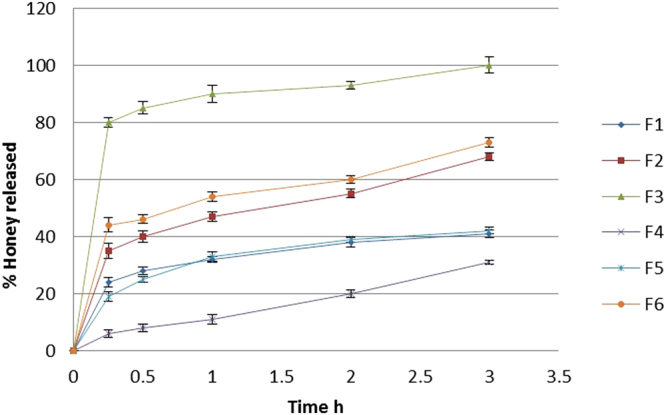
- Chitosan-based hydrogels showed higher in vitro honey release than carbopol 934 formulations, with release exponent n ≤ 0.5 indicating Fickian diffusion; F3 showed better in vitro honey release than other formulations.
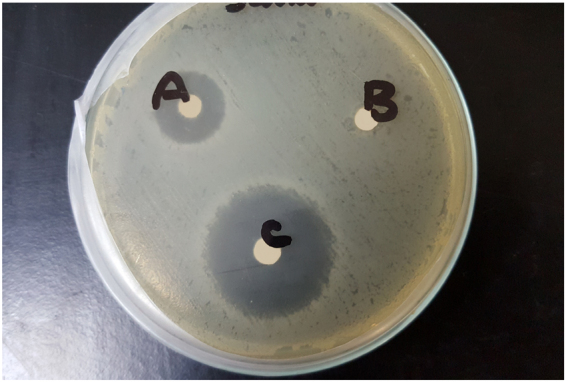
- F3 produced the largest inhibition zones against burn-infection bacteria: P. aeruginosa 21.5 ± 0.7 mm, S. aureus 20.2 ± 0.4 mm, K. pneumoniae 19.5 ± 0.5 mm, and S. pyogenes 18.7 ± 0.4 mm.
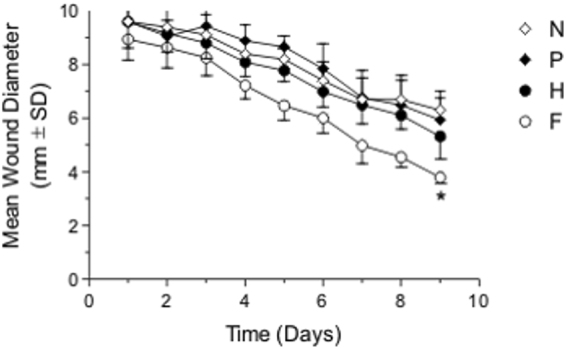
- In vivo, by day 9 F3-treated burns had a mean wound diameter of 3.8 ± 0.2 mm versus pure honey 5.3 ± 0.8 mm, silver sulphadiazine 5.9 ± 0.8 mm, and normal saline 6.3 ± 0.7 mm; F3 was significantly more effective than either control or pure honey (p < 0.001).
Methods
- Six honey hydrogel formulations were prepared with 25%, 50%, or 75% honey using either chitosan or carbopol 934, then evaluated for visual appearance, pH, swelling index, spreadability, in vitro release, and antimicrobial activity.
- In vitro antimicrobial testing used the Disc Diffusion antibiotic sensitivity test against Pseudomonas aeruginosa, Staphylococcus aureus, Klebsiella pneumonia, and Streptococcus pyogenes; F3 was selected for further testing.
- In vivo burn healing used 10 albino mice with four burn positions per mouse treated daily for nine days with F3, pure honey, silver sulphadiazine (positive control), or normal saline (negative control); outcomes included daily wound diameter, surface swabs for bacterial growth, and histopathological analysis, with two-way ANOVA and one-way ANOVA followed by Tukey post-hoc test (p < 0.05).
Limitations
- The paper does not state a limitations section.
- Evident from the text: the in vivo study used only 10 albino mice and a 9-day treatment period, and no bacterial growth was detected on swabs from any treatment position, so the in vivo antibacterial contribution could not be distinguished.
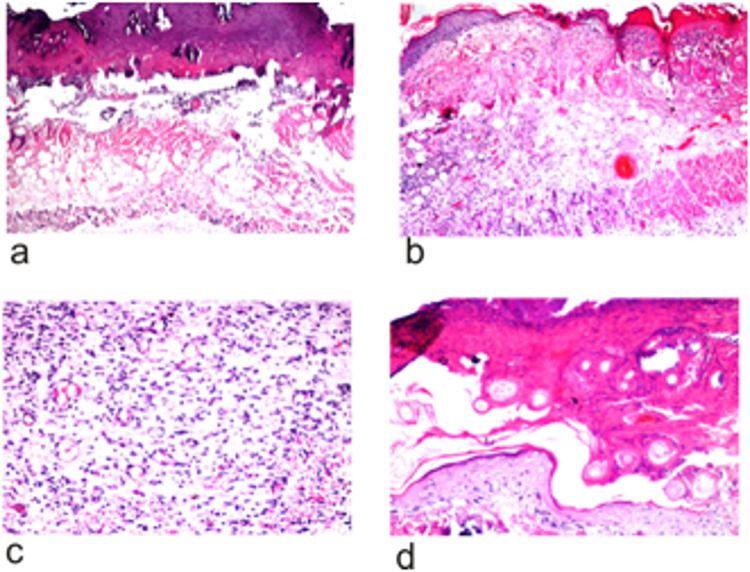
- Evident from the text: histopathological findings are descriptive/qualitative, and the study tested honey from a single local source; no blinding or sample-size calculation is reported.
Model-written summary. Check it against the paper before relying on it.
Integrity signals
Registry
Cites
Statistics
Figures
Verification
Claims the paper makes
0 Valid · 0 Not valid · 19 Not checked · 54 Own results and interpretations
A result the paper reports from its own data — it cites no other source for it, so there is none to check. The quote shows it is in the paper.
In the paper
“All formulations prepared represented homogenous, transparent three-dimensional networks”
§ Honey-based hydrogel: In vitro and comparative In vivo evaluation for burn wound healing > Results and Discussion > Preparation and Physicochemical Evaluation of Honey hydrogel Formulae
plain- Asserted: passes — The authors put it forward as true.
- Checkable: passes — It can be checked against evidence.
- Load-bearing: unclear — It is unclear whether the paper’s conclusions depend on it.
- Based: passes — The paper gives a reason why it holds.
A result the paper reports from its own data — it cites no other source for it, so there is none to check. The quote shows it is in the paper.
In the paper
“The pH and spreadability were in the range of 4.3–6.8 and 5.7–8.6 cm, respectively.”
- Also stated in: § Preparation and Physicochemical Evaluation of Honey hydrogel Formulae · plain
“The pH of formulated hydrogels was found to be in the range of 4.3 to 6.8”
§ Honey-based hydrogel: In vitro and comparative In vivo evaluation for burn wound healing > Abstract
plain- Asserted: passes — The authors put it forward as true.
- Checkable: passes — It can be checked against evidence.
- Load-bearing: passes — The paper’s conclusions depend on it.
- Based: passes — The paper gives a reason why it holds.
- Also stated in: § Preparation and Physicochemical Evaluation of Honey hydrogel Formulae · plain
A result the paper reports from its own data — it cites no other source for it, so there is none to check. The quote shows it is in the paper.
In the paper
“The results indicated that the process employed to prepare hydrogel formulations in this study was capable of producing formulations with uniform drug content and minimal variability.”
§ Honey-based hydrogel: In vitro and comparative In vivo evaluation for burn wound healing > Results and Discussion > Preparation and Physicochemical Evaluation of Honey hydrogel Formulae
hedgedstates a cause- Asserted: passes — The authors put it forward as true.
- Checkable: passes — It can be checked against evidence.
- Load-bearing: passes — The paper’s conclusions depend on it.
- Based: passes — The paper gives a reason why it holds.
A result the paper states — it cites no source for it, so there is none to check. The quote shows it is in the paper.
In the paper
“Hydrogel containing 75% honey was slightly acidic (pH 4.3, 4.7) compared to other 25, 50% honey hydrogels.”
§ Honey-based hydrogel: In vitro and comparative In vivo evaluation for burn wound healing > Results and Discussion > Preparation and Physicochemical Evaluation of Honey hydrogel Formulae
plainstates an association- Asserted: passes — The authors put it forward as true.
- Checkable: passes — It can be checked against evidence.
- Load-bearing: unclear — It is unclear whether the paper’s conclusions depend on it.
- Based: passes — The paper gives a reason why it holds.
A result the paper reports from its own data — it cites no other source for it, so there is none to check. The quote shows it is in the paper.
In the paper
“Honey was dispersed uniformly throughout the hydrogel.”
§ Honey-based hydrogel: In vitro and comparative In vivo evaluation for burn wound healing > Results and Discussion > Preparation and Physicochemical Evaluation of Honey hydrogel Formulae
plain- Asserted: passes — The authors put it forward as true.
- Checkable: passes — It can be checked against evidence.
- Load-bearing: passes — The paper’s conclusions depend on it.
- Based: passes — The paper gives a reason why it holds.
44 more claims
Create a free account to see all 73 claims and to verify the 32 references still open.
- The quote only partly states this claim. 5
- Probably not a substantial claim. 5
- It may state two separate claims as one. 18
Claims other papers make about this one
Each is checked against this paper’s own text: does it say what the citing paper says it does?
In the citing paper
“El-Kased et al., in their study, successfully enhanced the wound-healing process in mice using a honey-chitosan suspension. However, unlike our results, the suspension they obtained was unable to achieve full wound closure after 10 days [64,65].”
From Antibacterial Activity of Honey/Chitosan Nanofibers Loaded with Capsaicin and Gold Nanoparticles for Wound Dressing (2020) · cites this paper as [64]
In the citing paper
“The antioxidant capacity conferred by flavonoids and phenolic acids presents anti-inflammatory properties in wounds [22].”
Self-check
Percentages, sums and reported differences re-computed from the paper’s own numbers.
Each contradiction between two passages listed here was confirmed by an independent check.
Rated minor: it would not touch a result — a value no result rests on, a p-value that stays on the same side of the significance level, or a conflict that is clerical, resolved elsewhere in the paper, or outside its own findings.
In the paper
§ Honey-based hydrogel: In vitro and comparative In vivo evaluation for burn wound healing > Results and Discussion > In vitro antimicrobial examination of honey formulations
“| F4 | 5.5 ± 0.4 | 5.9 ± 0.4 | 5.6 ± 0.4 | 5.7 ± 0.7 |”
§ Honey-based hydrogel: In vitro and comparative In vivo evaluation for burn wound healing > Materials and Methods > In vitro antimicrobial examination of honey formulations
“Cheesbrough42 method was used for preparing filter paper disks (6 mm diameter).”
Citations
Cites
Antibiotic Susceptibility Testing by a Standardized Single Disk Method
Bauer, A. W., Kirby, W. M. M., Sherris, J. C., & Turck, M. (1966) · American Journal of Clinical Pathology · doi:10.1093/ajcp/45.4_ts.493 · Cited by 18,523
Hydrogel: Preparation, characterization, and applications: A review
Ahmed, E. M. (2015) · Journal of Advanced Research · doi:10.1016/j.jare.2013.07.006 · Cited by 5,800
Hydrogels for biomedical applications
Hoffman, A. S. (2002) · Advanced Drug Delivery Reviews · doi:10.1016/s0169-409x(01)00239-3 · Cited by 4,864
Hydrogels in Biology and Medicine: From Molecular Principles to Bionanotechnology
Peppas, N. A., Hilt, J. Z., Khademhosseini, A., & Langer, R. (2006) · Advanced Materials · doi:10.1002/adma.200501612 · Cited by 4,109
Hydrogels in pharmaceutical formulations
Peppas, N. (2000) · European Journal of Pharmaceutics and Biopharmaceutics · doi:10.1016/s0939-6411(00)00090-4 · Cited by 4,011
Chitosan-based hydrogels for controlled, localized drug delivery
Bhattarai, N., Gunn, J., & Zhang, M. (2010) · Advanced Drug Delivery Reviews · doi:10.1016/j.addr.2009.07.019 · Cited by 2,451
Novel crosslinking methods to design hydrogels
Hennink, W. E., & van Nostrum, C. F. (2002) · Advanced Drug Delivery Reviews · doi:10.1016/s0169-409x(01)00240-x · Cited by 1,962
Encyclopedia of Pharmaceutical Technology
Swarbrick, J. (2013) · CRC Press eBooks · doi:10.1201/b19309 · Cited by 1,794
Pathophysiology of acute wound healing
Li, J., Chen, J., & Kirsner, R. (2007) · Clinics in Dermatology · doi:10.1016/j.clindermatol.2006.09.007 · Cited by 1,486
Thermosensitive sol-gel reversible hydrogels
Jeong, B., Kim, S. W., & Bae, Y. H. (2002) · Advanced Drug Delivery Reviews · doi:10.1016/s0169-409x(01)00242-3 · Cited by 1,478
Research works printed but not linked: 18
- Azim MK Sajid M Evaluation of nematocidal activity in natural honey Pak. J. Bot. 2009 41 3261 3264
- Honrao MS Pabari R Gels The Indian Pharmacist. 2004 5 16 21
- Klich, C. M. Jels & Jellies. In: Encyclopedia of Pharmaceutical Technology. (Swarbrick J, Boylan JC, eds.) 415–439 (Marcel Dekker Inc; 1992).
- Bhuvaneshwari S Sruthi D Sivasubramanian V Niranjana kalyani and Sugunabai J. Development and characterization of chitosan film Int. J. Eng. Res. Appl. 2011 1 292 299
- Shelma R Paul W CF. S Chitin nanofibre reinforced thin chitosan films for Wound healing application Trends Biomater. Artif. Organs. 2008 22 107 111
- Mercy HP Halim AS Hussein AR Chitosan-Derivatives As Hemostatic Agents: Their Role In Tissue Regeneration Regen. Med. 2012 1 38 46
- Orwoll, Robert A.; Yong, Chong S. Poly (acrylic acid). (Mark, James E. Polymer Data Handbook). 252–253 (Oxford University Press, Inc. 1999).
- Todica M UV-Vis fluorescence investigation of some poly (acrylic) gels Studia UBB Chemia. 2015 1 7 17
- Cheesbrough, M. District Laboratory Practice in Tropical Countries. Part II. 1933–1934 (Cambridge University Press 2000).
- Koneman, E. W., Allen, S. D., Janda, W. M., Schreckenberger, P. C. & Winn, W. C. Diagnostic Microbiology, (5th edn, Philadelphia, Lippincott) 803–841(1997).
- Knapczyk, L. et al. Requirements of chitosan for pharmaceutical and biomedical applications, in: G. Skak-Braek, T. Anthonsen, P. Sandford (Eds), Chitin and Chitosan: Sources, Chemistry, Biochemistry, Physical Properties and Applications, Elsevier, London, 657–663 (1989).
- Martin, A. Martin’s Physical Pharmacy and Pharmaceutical Sciences: Physical Chemical and Biopharmaceutical Principles in the Pharmaceutical Sciences; 565–569 (Fifth edition, Lippincott Williams & Wilkins (2006).
- Aljady AM Kamaruddin MY Jamal AM Mohd-Yassim MY Biochemical study on the efficacy of Malaysian Honey on inflicted wounds: an animal model Med. J. Islamic World Acad. Sci. 2000 13 125 132
- Roopa G Bhat RS Wound healing activity of a prepared long acting gel loaded with ciprofloxacin HCL microspheres in albino rat Pharmacology 2010 2 1010 1016
- Parsons D Bowler PG Myles V Jones S Silver antimicrobial dressings in wound management: a comparison of antibacterial, physical, and chemical characteristics Wounds 2005 17 222 232
- Kumar A Sharma V Singh H Prakash P Singh S Efficacy of some indigenous drugs in tissue repair in buffaloes Indian Vet J 1993 70 42 44
- Gupta S Singh H Varshney A Prakash P Therapeutic efficacy of honey in infected wounds in buffaloes Indian J Anim Sci 1992 62 521 523
- Bulman M Honey as a surgical dressing Middlesex Hosp J 1955 55 188 189
Cited by
Items 101–200 of 313
Engineered cartilage utilizing fetal cartilage-derived progenitor cells for cartilage repair
Park, D. Y., Min, B., Park, S. R., Oh, H. J., Truong, M., Kim, M., Choi, J., Park, I., & Choi, B. H. (2020) · Scientific Reports · doi:10.1038/s41598-020-62580-0 · Cited by 35
Recent Advances in Honey-Based Nanoparticles for Wound Dressing: A Review
Bahari, N., Hashim, N., Akim, A. M., & Maringgal, B. (2022) · Nanomaterials · doi:10.3390/nano12152560 · Cited by 35
Govindasamy, G. A., Mydin, R. B. S. M. N., Sreekantan, S., & Harun, N. H. (2021) · Advances in Natural Sciences Nanoscience and Nanotechnology · doi:10.1088/2043-6262/abe8da · Cited by 35
Hussain, K., Aslam, Z., Ullah, S., & Shah, M. R. (2021) · Chemistry and Physics of Lipids · doi:10.1016/j.chemphyslip.2021.105101 · Cited by 35
Gellan gum/guar gum films incorporated with honey as potential wound dressings
Bal‐Öztürk, A., Torkay, G., İdil, N., Özkahraman, B., & Özbaş, Z. (2023) · Polymer Bulletin · doi:10.1007/s00289-023-04763-z · Cited by 35
Reducing Infections and Improving Healing in Complex Wounds: A Systematic Review and Meta-Analysis
Millán-Reyes, M. J., Afanador-Restrepo, D. F., Carcelén‐Fraile, M. D. C., Aibar‐Almazán, A., Sánchez-Alcalá, M., Cano-Sánchez, J., Mesas-Aróstegui, M. A., & Castellote‐Caballero, Y. (2025) · Journal of Clinical Medicine · doi:10.3390/jcm14093237 · Cited by 33
Turabee, M. H., Thambi, T., & Lee, D. S. (2019) · ACS Applied Bio Materials · doi:10.1021/acsabm.9b00204 · Cited by 33
Bhardwaj, H., & Jangde, R. (2024) · European Journal of Pharmaceutics and Biopharmaceutics · doi:10.1016/j.ejpb.2024.114371 · Cited by 33
Gene therapy in wound healing using nanotechnology
Pang, C., Fan, K. S., Wei, L., & Kolar, M. K. (2020) · Wound Repair and Regeneration · doi:10.1111/wrr.12881 · Cited by 32
Monfared-Hajishirkiaee, R., Ehtesabi, H., Rezaei, A., & Nobar, S. N. (2023) · Journal of Industrial and Engineering Chemistry · doi:10.1016/j.jiec.2023.06.027 · Cited by 32
Self-Assembled DNA-THPS Hydrogel as a Topical Antibacterial Agent for Wound Healing
Jiang, X., Li, M., Guo, X., Chen, H., Yang, M., & Rasooly, A. (2019) · ACS Applied Bio Materials · doi:10.1021/acsabm.8b00818 · Cited by 32
Zhang, H., Zheng, S., Chen, C., & Zhang, D. (2021) · RSC Advances · doi:10.1039/d0ra09106e · Cited by 31
Sanyal, A., Ghosh, A., Roy, C., Mazumder, I., & Marrazzo, P. (2023) · Journal of Functional Biomaterials · doi:10.3390/jfb14070352 · Cited by 31
Radoor, S., Karayil, J., Jayakumar, A., Siengchin, S., & Parameswaranpillai, J. (2021) · Journal of Polymer Research · doi:10.1007/s10965-021-02415-2 · Cited by 30
Jha, B., Majie, A., Roy, K., Lim, W., & Gorain, B. (2024) · ACS Applied Bio Materials · doi:10.1021/acsabm.4c01212 · Cited by 30
Incorporation of natural and synthetic polymers into honey hydrogel for wound healing: A review
Chin, S. W., Azman, A. S., & Tan, J. W. (2024) · Health Science Reports · doi:10.1002/hsr2.2251 · Cited by 30
Rathinamoorthy, R., & Sasikala, L. (2019) · Wound Medicine · doi:10.1016/j.wndm.2019.100162 · Cited by 29
Torgal, S., Subramani, G., & Manian, R. (2024) · Biomass Conversion and Biorefinery · doi:10.1007/s13399-024-06350-2 · Cited by 29
Khan, A., Andleeb, A., Azam, M., Tehseen, S., Mehmood, A., & Yar, M. (2022) · Journal of Biomedical Materials Research Part B Applied Biomaterials · doi:10.1002/jbm.b.35153 · Cited by 29
Honey based hydrogel as delivery system for wound healing
Abraham, S. A., Yashavanth, G., Deveswaran, R., Srinivasan, B., Azamathulla, M., & Shanmuganathan, S. (2021) · Materials Today Proceedings · doi:10.1016/j.matpr.2021.07.488 · Cited by 29
Khaleghi, M., Haghi, F., Gholami, M., Hourfar, H., Shahi, F., Zekoloujeh, A. M. M., Aliakbari, F., Ahmadi, E., & Morshedi, D. (2023) · AMB Express · doi:10.1186/s13568-023-01533-y · Cited by 28
Nanostructured Non-Newtonian Drug Delivery Barrier Prevents Postoperative Intrapericardial Adhesions
Wang, X., Liu, Z., Sandoval-Salaiza, D. A., Afewerki, S., Jiménez-Rodríguez, M. G., Sanchez-Melgar, L., Güemes-Aguilar, G., Gonzalez-Sanchez, D. G., Noble, O., Lerma, C., et al. (2021) · ACS Applied Materials & Interfaces · doi:10.1021/acsami.0c20084 · Cited by 28
Li, M., Xiao, H., Su, Y., Cheng, D., Jia, Y. J., Li, Y., Yin, Q., Gao, J., Tang, Y., & Bai, Q. (2023) · Pathogens · doi:10.3390/pathogens12030501 · Cited by 26
Khoshnood, N., & Zamanian, A. (2022) · Journal of Applied Polymer Science · doi:10.1002/app.52227 · Cited by 26
Preparation and Characterization of Etodolac as a Topical Nanosponges Hydrogel
Abass, M. M., & Rajab, N. A. (2019) · Iraqi Journal of Pharmaceutical Sciences · doi:10.31351/vol28iss1pp64-74 · Cited by 26
Dewey, M. J., Collins, A. J., Tiffany, A., Barnhouse, V. R., Lu, C., Kolliopoulos, V., Mutreja, I., Hickok, N. J., & Harley, B. A. C. (2023) · Biomaterials · doi:10.1016/j.biomaterials.2023.122015 · Cited by 25
Balakrishnan, S. B., Kuppu, S., & Thambusamy, S. (2021) · Journal of Molecular Structure · doi:10.1016/j.molstruc.2021.131195 · Cited by 25
Prolotherapy: Potential for the Treatment of Chronic Wounds?
Siadat, A. H., & Isseroff, R. R. (2019) · Advances in Wound Care · doi:10.1089/wound.2018.0866 · Cited by 24
Kurowska, A. K., Ghate, V., Kodoth, A. K., Shah, A. A., Shah, A., Badalamoole, V., Prakash, B., & Lewis, S. A. (2019) · Pharmaceutical Research · doi:10.1007/s11095-019-2658-8 · Cited by 24
Functional properties and bioaccessibility of alginate based phycocyanin-honey hydrogels
Şahin, O. I., Uzuner, K., Dündar, A. N., Parlak, M. E., Gül, L. B., Dağdelen, A. F., Sarıcaoğlu, F. T., & Şimşek, Ş. (2023) · LWT · doi:10.1016/j.lwt.2023.115099 · Cited by 24
Enhancement of the Antioxidant Capacity of Thyme and Chestnut Honey by Addition of Bee Products
Sánchez-Martín, V., Morales, P., González‐Porto, A. V., Iriondo‐DeHond, A., López-Parra, M. B., del Castillo, M. D., Fernández, M., Hierro, E. M., & Haza, A. I. (2022) · Foods · doi:10.3390/foods11193118 · Cited by 24
Uzair, B., Syed, N., Kanwal, A., Samin, G., Niazi, M. B. K., Abbas, S., Alotaibi, A. S., Ghabban, H., Albalawi, A. E., Alsowayeh, N., et al. (2024) · Materials Today Communications · doi:10.1016/j.mtcomm.2024.109286 · Cited by 24
Yassin, G. E., Dawoud, M., Wasfi, R., Maher, A., & Fayez, A. M. (2019) · Drug Development and Industrial Pharmacy · doi:10.1080/03639045.2019.1620269 · Cited by 24
Efficacy of Graphene-Based Nanocomposite Gels as a Promising Wound Healing Biomaterial
Shanmugam, D. K., Madhavan, Y., Aashabharathi, M., Kaliaraj, G. S., Mohanraj, K. G., Kandhasamy, N., & Kirubaharan, A. M. K. (2022) · Gels · doi:10.3390/gels9010022 · Cited by 23
Structural variation in gelatin networks from low to high-solid systems effected by honey addition
Nguyen, H. T. L., Katopo, L., Pang, E., Mantri, N. L., & Kasapis, S. (2019) · Food Research International · doi:10.1016/j.foodres.2019.03.048 · Cited by 23
The Natural Cryoprotectant Honey for Fertility Cryopreservation
Cheepa, F. F., Liu, H., & Zhao, G. (2022) · Bioengineering · doi:10.3390/bioengineering9030088 · Cited by 22
Shawan, M. M. A. K., Islam, M. N., Aziz, S., Khatun, N., Sarker, S. R., Hossain, M., Hossan, T., Morshed, M., Sarkar, M., Shakil, M. S., et al. (2019) · Modern Applied Science · doi:10.5539/mas.v13n3p101 · Cited by 21
An, W., Li, S., & Qin, L. (2021) · Food & Function · doi:10.1039/d0fo02808h · Cited by 21
Sajid, A., Amjad, M., Manzoor, Q., Wazir, S., Sajid, A., Alwadai, N. M., Iqbal, M., & Tamam, N. M. (2024) · International Journal of Biological Macromolecules · doi:10.1016/j.ijbiomac.2024.133194 · Cited by 20
Nawaz, A. S., Safi, S. Z., Sikandar, S., Zeeshan, R., Zulfiqar, S., Mehmood, N., Alobaid, H. M., Rehman, F., Imran, M., Tariq, M., et al. (2022) · Materials · doi:10.3390/ma15196683 · Cited by 20
Majeed, S., Abidin, N. B. Z., Muthukumarasamy, R., Danish, M., Mahmad, A., Ibrahim, M. N. M., Alanazi, A. M., Ansari, M. T., & Sisinthy, S. P. (2023) · Inorganic Chemistry Communications · doi:10.1016/j.inoche.2023.111692 · Cited by 20
Lamei, E., & Hasanzadeh, M. (2023) · International Journal of Polymeric Materials · doi:10.1080/00914037.2023.2191199 · Cited by 20
Khosroshahi, R. A., Talebi, S., Zeraattalab-Motlagh, S., Imani, H., Rashidi, A., Travica, N., & Mohammadi, H. (2023) · Nutrition Reviews · doi:10.1093/nutrit/nuac105 · Cited by 19
Zhang, X., Wang, Y., Wei, X., Li, L., Wu, H., Wang, H., Wang, Z., Huang, L., & Tang, J. (2025) · International Journal of Biological Macromolecules · doi:10.1016/j.ijbiomac.2025.139921 · Cited by 19
Geleta, G. S., Zhao, Z., & Wang, Z. (2018) · Analytical Methods · doi:10.1039/c8ay01675e · Cited by 19
Rahmani, A. H., & Babiker, A. Y. (2025) · Open Life Sciences · doi:10.1515/biol-2025-1069 · Cited by 18
Patel, P. V., Thanki, A., Viradia, D., & Shah, P. (2022) · Current Drug Delivery · doi:10.2174/1567201819666220516092359 · Cited by 18
Behjat, E., Tajabadi, M., Naghib, S. M., & Rezaie, H. R. (2024) · Polymer · doi:10.1016/j.polymer.2024.127897 · Cited by 18
Wang, J., Xing, Y., Dai, Y., Li, Y., Xiang, W., Dai, J., & Xu, F. (2022) · Molecules · doi:10.3390/molecules27134268 · Cited by 17
Honey: classification, composition, safety, quality issues and health benefits
Dar, S. A., Farook, U. B., Rasool, K., & Ahad, S. (2024) · Elsevier eBooks · doi:10.1016/b978-0-443-13175-2.00012-x · Cited by 17
Aloe gel: manipulation and characterization of physical-chemical quality adjustment
Aciole, I. H. M., Júnior, F. P. D. A., Cordeiro, L. V., & de Souza, J. B. P. (2020) · Revista Colombiana de Ciencias Químico Farmacéuticas · doi:10.15446/rcciquifa.v49n3.91345 · Cited by 17
Islam, M., Karmakar, P. C., Al-Arafat, T., Arifuzzaman, M., Karim, N., Akhtar, N., & Asaduzzaman, S. M. (2022) · Regenerative Engineering and Translational Medicine · doi:10.1007/s40883-022-00280-z · Cited by 16
Barbosa, B. F., de Moraes, F. C. A., da Silva, B. A. A., Barbosa, C. B., da Silva, I. P., da Silva, E. R., Barros, J. C. M., Rebouças, L. W. C., dos Santos, N. P. C., & Fernandes, M. R. (2024) · Nutrients · doi:10.3390/nu16020185 · Cited by 16
Dhandi, S., Yeshna, Vishal, V., Monika, Goel, B., Chauhan, S., Nishal, S., Singh, M., & Jhawat, V. (2024) · Tissue and Cell · doi:10.1016/j.tice.2024.102578 · Cited by 16
Trends in the Treatment of Chronic Wounds
Sharma, R., Hruška, J., Peter, L., Randlová, K., & Kuča, K. (2024) · Current Medicinal Chemistry · doi:10.2174/0109298673312649240829103906 · Cited by 16
Badie, M. A., Teaima, M. H. M., El-Nabarawi, M. A., & Badawi, N. M. (2024) · International Journal of Pharmaceutics · doi:10.1016/j.ijpharm.2024.124763 · Cited by 16
El‐Kersh, D. M., El-Ezz, R. F. A., Ramadan, E. S., & El‐Kased, R. F. (2024) · PLoS ONE · doi:10.1371/journal.pone.0302795 · Cited by 16
Self-citationDu, Z., Yan, Z., Guo, Y., Ye, R., Tehoungue, A., Li, Y., Zhang, G., & Zhang, Y. (2024) · Polymer · doi:10.1016/j.polymer.2024.127929 · Cited by 16
Manfaat Olesan Madu Pada Penyembuhan Luka Kulit
Lomban, A., Kalangi, S. J. R., & Pasiak, T. F. (2021) · Jurnal e-Biomedik · doi:10.35790/ebm.v8i2.31902 · Cited by 16
Trindade, G. A. D. M., Alves, L. A., Lazo, R. E. L., Dallabrida, K. G., Reolon, J. B., Bonini, J. S., Nunes, K. C., Garcia, F. P., Nakamura, C. V., Rego, F. G. D. M., et al. (2024) · Pharmaceutics · doi:10.3390/pharmaceutics16111426 · Cited by 15
A Narrative Review of the Potential Roles of Lipid-Based Vesicles (Vesiculosomes) in Burn Management
Rasool, B. K. A., Mahri, N. A., Alburaimi, N., Abdallah, F., & Shamma, A. S. B. (2022) · Scientia Pharmaceutica · doi:10.3390/scipharm90030039 · Cited by 15
Hemoadhican-Based Bioabsorbable Hydrogel for Preventing Postoperative Adhesions
Lu, W., Wang, X., Kong, C., Chen, S., Hu, C., & Zhang, J. (2024) · ACS Applied Materials & Interfaces · doi:10.1021/acsami.4c01088 · Cited by 14
Nosheen, S., Mukhtar, H., Haider, S., Khan, R., & Sharif, F. (2024) · International Journal of Biological Macromolecules · doi:10.1016/j.ijbiomac.2024.132282 · Cited by 14
El-Dein, A. N., Soliman, T. N., Ezzat, A., El-Fattah, M. A. A., Aly, H. F., Younis, E. A., & Flefil, N. S. (2025) · Probiotics and Antimicrobial Proteins · doi:10.1007/s12602-025-10635-x · Cited by 14
Gopal, R., Lo, A. Z. K., Masrol, M., Lai, C., Zain, N. M., & Saidin, S. (2021) · Malaysian Journal of Fundamental and Applied Sciences · doi:10.11113/mjfas.v17n3.2049 · Cited by 14
Wei, Y., Li, Y., Li, Y., Xu, G., Wu, T., Li, X., Ye, R., Xi, M., Li, X., Zhang, G., et al. (2024) · Biomedical Materials · doi:10.1088/1748-605x/ad2ed4 · Cited by 14
Zahra, D., Shokat, Z., Sufyan, M., Chaudhary, Z., & Ashfaq, U. A. (2024) · International Journal of Biological Macromolecules · doi:10.1016/j.ijbiomac.2024.135896 · Cited by 14
Honey Composition, Therapeutic Potential and Authentication through Novel Technologies: An Overview
Talha, M., Imran, M., Ahmad, M. H., Ahmad, R. S., Khan, M. K., Rahim, M. A., & Afzal, M. F. (2023) · IntechOpen eBooks · doi:10.5772/intechopen.110007 · Cited by 14
Tanjung, S. A., Silalahi, J., & Reveny, J. (2022) · Open Access Macedonian Journal of Medical Sciences · doi:10.3889/oamjms.2022.8589 · Cited by 14
Dalmagro, M., Pinc, M. M., Donadel, G., Tominc, G. C., Jacomassi, E., Lourenço, E. L. B., Gasparotto, A., Boscarato, A. G., Belettini, S. T., Alberton, O., et al. (2023) · Pharmaceuticals · doi:10.3390/ph16081068 · Cited by 14
Gościniak, A., Attard, E., Malesza, I. J., Kamiński, A., & Cielecka‐Piontek, J. (2025) · Applied Sciences · doi:10.3390/app15189997 · Cited by 13
Nezhad‐Mokhtari, P., Asadi, N., Bakhshayesh, A. R. D., Milani, M., Gama, M., Ghorbani, M., & Akbarzadeh, A. (2022) · Journal of Biomedical Nanotechnology · doi:10.1166/jbn.2022.3368 · Cited by 13
Hossain, M. L., Lim, L. Y., Hammer, K. A., Hettiarachchi, D. S., & Locher, C. (2023) · Pharmaceutics · doi:10.3390/pharmaceutics15051483 · Cited by 13
Rat Burn Model to Study Full-Thickness Cutaneous Thermal Burn and Infection
Sharma, R., Yeshwante, S., Vallé, Q., Hussein, M. H., Thombare, V. J., McCann, S., Maile, R., Li, J., Velkov, T., & Rao, G. G. (2022) · Journal of Visualized Experiments · doi:10.3791/64345 · Cited by 13
Honey Targets Ribosome Biogenesis Components to Suppress the Growth of Human Pancreatic Cancer Cells
Bangash, A. A., Alvi, S. S., Bangash, M. A., Ahsan, H., Khan, S., Shareef, R., Villanueva, G., Bansal, D., Ahmad, M., Kim, D. J., et al. (2024) · Cancers · doi:10.3390/cancers16193431 · Cited by 12
Călina, I. C., Scărișoreanu, A., Demeter, M., Manaila, E. N., & Craciun, G. D. (2025) · Polymers · doi:10.3390/polym17233105 · Cited by 12
KHAN, B. A., KARIM, F., Khan, M. K., Haider, M. F., & KHAN, S. (2021) · Biocell · doi:10.32604/biocell.2021.015323 · Cited by 12
Pandey, A., Yadav, P. D., Mishra, S., Srivastava, S., & Parashar, P. (2024) · Journal of Drug Delivery Science and Technology · doi:10.1016/j.jddst.2024.106145 · Cited by 12
Ciarleglio, G., Clarizia, V., Toto, E., & Santonicola, M. G. (2025) · Gels · doi:10.3390/gels11100840 · Cited by 12
Govindharaj, P., Deepa, M., Devadharshini, M., Gopan, G., Mani, M., & Kannan, S. (2024) · Biomaterials Advances · doi:10.1016/j.bioadv.2024.213989 · Cited by 12
Bradić, J., Petrović, A., Nikolić, M. V., Nedeljković, N. V., Andjic, M. M., Baljak, J., Jakovljevic, V. L., Kočović, A. G., Tadić, V., Stojanović, A., et al. (2024) · International Journal of Molecular Sciences · doi:10.3390/ijms25179389 · Cited by 12
Nakamura-García, A. K., Santos-Garfias, E. D. C., Alonso-Martínez, D. I., Garambullo-Peña, T. I., Covián-Nares, J. F., Gómez-Barroso, M., & Montoya-Pérez, R. (2022) · Revista Mexicana de Ingeniería Biomédica · doi:10.17488/rmib.43.1.2 · Cited by 11
Hydrogel dressing composed of nanoAg@QAC promotes the healing of bacterial infected diabetic wounds
Zhou, Y., Huang, H., Yuan, Q. X., Ren, J., Wu, J., Zhao, X., Lin, Y.-C., Lin, Z., & Xu, L. (2024) · Biomaterials Advances · doi:10.1016/j.bioadv.2024.214143 · Cited by 11
Honey-loaded 3D bioprinted scaffolds: A promising fabrication with wound healing properties
Firmanda, A., Mahardika, M., Fahma, F., Gozan, M., Pratama, A. W., Mardawati, E., Millar, A. A., Rahmadanis, Amelia, D., & Habib, A. A. Y. (2024) · Biocatalysis and Agricultural Biotechnology · doi:10.1016/j.bcab.2024.103247 · Cited by 11
Advances in the Study of Liposomes Gel with Stimulus Responsiveness in Disease Treatment
Yang, Q., Luo, S., Tong, S., Zhao, H., Chen, R., Song, B., & Wu, J. (2023) · Journal of Cluster Science · doi:10.1007/s10876-023-02510-y · Cited by 11
Vuković, J. S., Perisic, S. D., Nikolić, A., Milošević, I., Mirilović, M., Prokić, B., & Božinovski, T. L. (2025) · Pharmaceutics · doi:10.3390/pharmaceutics17050578 · Cited by 11
Khan, Z. A., Prabhu, N., Ahmed, N., Lal, A., Issrani, R., Maqsood, A., Alam, M. K., Alanazi, S. H., Aljohani, F. M., Almndel, M. N., et al. (2021) · Applied Sciences · doi:10.3390/app12010006 · Cited by 11
Repurposing of Nano-Engineered Piroxicam as an Approach for Cutaneous Wound Healing
Alsofany, J. M., & Khater, S. E. (2024) · Journal of Pharmaceutical Sciences · doi:10.1016/j.xphs.2024.06.003 · Cited by 10
Sotirova, Y., Kiselova-Kaneva, Y. D., Vankova, D. G., Tasinov, O., Ivanova, D. G., Popov, H., Hristova, M., Nikolova, K. T., & Andonova, V. (2024) · Gels · doi:10.3390/gels10050341 · Cited by 10
Muniz, J. D. L. D. B., Cavalcante, M. D. P., & de Menezes, L. R. (2024) · Polymer Bulletin · doi:10.1007/s00289-024-05346-2 · Cited by 10
Chandra, P., Shahjad, Porwal, M., Rastogi, V., Mittal, P., Verma, A. K., Sachan, N., Prabahar, A. E., & Gautam, M. K. (2025) · Current Diabetes Reviews · doi:10.2174/0115733998350164250228174809 · Cited by 9
Harnessing the benefits of utilizing the optimal pH in conjunction with a hydrogel for wound care
Sim, P., Song, Y., Abraham, S., & Garg, S. (2023) · Journal of Drug Delivery Science and Technology · doi:10.1016/j.jddst.2023.105027 · Cited by 9
Abdulhady, Y., El-Shazly, M. M., & El‐Kased, R. F. (2017) · Journal of Environmental Science and Health Part A · doi:10.1080/10934529.2017.1387012 · Cited by 9
Self-citationChitosan-based hydrogels to treat hydrofluoric acid burns and prevent infection
Huang, S.-W. A., Yeh, F., Ji, Y., Su, Y.-F., Su, Y.-S., Chiang, M., Tzeng, S., Fu, C., Cheng, A., Wang, Y.-C., et al. (2021) · Drug Delivery and Translational Research · doi:10.1007/s13346-021-01007-3 · Cited by 9
Egyptian fennel honey and/or propolis against MRSA harboring both mecA & icaAgenes
Abdul-Hafeez, M. M. (2018) · International Journal of Complementary & Alternative Medicine · doi:10.15406/ijcam.2018.11.00392 · Cited by 9
Development and characterization of chitosan-collagen films loaded with honey
Mora-López, D. S. D. L., Madera-Santana, T. J., López-Cervantes, J., Sánchez-Machado, D. I., Ayala-Zavala, J. F., & Soto-Valdez, H. (2023) · Polímeros · doi:10.1590/0104-1428.20230031 · Cited by 8
“The presence of flavonoids and phenolic compounds has favored the antioxidant roles of honey, which provide anti-inflammatory responses in wounds [12] .”
BackgroundServín de la Mora-López, D., Olivera-Castillo, L., López-Cervantes, J., Sánchez-Machado, D. I., Ayala-Zavala, J. F., Soto-Valdez, H., & Madera-Santana, T. J. (2025) · Polymers · doi:10.3390/polym17172379 · Cited by 8
Sharma, S., Anwar, M. F., Dinda, A. K., Singhal, M., Dua, A., & Malik, A. (2022) · Journal of Biomaterials Applications · doi:10.1177/08853282221076708 · Cited by 8
Santos, C. E., Carvalho, M. D. G. D. S., Costa, B. E., Júnior, W. G. F., de Lima, C. C., Corsetti, P. P., & Garcia, J. A. D. (2020) · Arquivo Brasileiro de Medicina Veterinária e Zootecnia · doi:10.1590/1678-4162-11630 · Cited by 8
Wannaboworn, S., Lethongkam, S., Bilhman, S., Waen‐ngoen, T., Yingkajorn, M., Phengmak, M., Voravuthikunchai, S. P., & Paosen, S. (2024) · Journal of Drug Delivery Science and Technology · doi:10.1016/j.jddst.2024.106001 · Cited by 8
Metadata
- Authors
- El-Kased, R. F., Amer, R. I., Attia, D., & Elmazar, M. M.
- Affiliations
- Al-Azhar University (EG)
- British University in Egypt (EG)
- Venue
- Scientific Reports
- Published
- 2017-08-29
- Volume
- 7
- Issue
- 1
- Pages
- 9692-9692
- ISSN
- 2045-2322 (ISSN-L)
- PMC
- PMC5575255
- OpenAlex
- W2749036976
- Semantic Scholar
- f9af1d9453c4f6579988bef537f89feceb8aed69
- Cited by
- 314
- References
- 76
- Citations by year
- 2026: 26 · 2025: 41 · 2024: 50 · 2023: 35 · 2022: 49 · 2021: 50 · 2020: 26 · 2019: 24 · 2018: 11 · 2017: 2
- FWCI
- 15.88
- Type
- journal article
- Language
- en
- Open access
- gold
- doi.org
- Licence
- cc-by
- creativecommons.org/licenses/by/4.0 (tdm)
- creativecommons.org/licenses/by/4.0 (vor)
- Locations
- Scientific Reports (publishedVersion, cc-by)
- PubMed Central (publishedVersion, cc-by)
- PubMed (publishedVersion)
- Topics
- Health Sciences › Medicine › Surgery › Wound Healing and Treatments
- Life Sciences › Agricultural and Biological Sciences › Insect Science › Bee Products Chemical Analysis
- Physical Sciences › Materials Science › Biomaterials › Hydrogels: synthesis, properties, applications
- Keywords
- burn wound healing, chitosan, Carbopol 934, topical wound dressing, antimicrobial activity, Pseudomonas aeruginosa, Staphylococcus aureus, Klebsiella pneumoniae, Streptococcus pyogenes, Fickian diffusion, in vivo wound healing, burn wound infection
- MeSH terms
- Animals, Anti-Infective Agents, Burns, Drug Compounding, Female, Honey, Male, Microbial Sensitivity Tests, Wound Healing, Wound Infection, Hydrogels, Mice, Chemical Phenomena
About these checks
Registry, retraction, Cites and statistics results are computed, not judged, with one exception: a printed reference that no index lists is read once by a model before it counts as a citation error. Claims are extracted by a model and kept only when their quote appears verbatim in the text; each cited source is then checked, with a model’s help, for whether it says what the claim relies on. Those verdicts can be wrong — read the claim’s quote and the cited source before relying on one.
A language model drew the claims from the paper on 2026-11-22, under version 3 of the claim definition (model deepseek-v4.1-flash, prompt extract-v3).
A second model labelled each claim on 2026-11-22 (model jev-1.13-20260917, definition revision gold-guideline-v0.2).
Statistics and arithmetic are recomputed, not judged.
Confidence bands are shown only for fields calibrated on our annotated test set. None is calibrated yet, so no band is shown.
What counts as a claim ›How we measure confidence ›How we check this ›
Are you an author, or do you see a problem with this page? Request a review
Data sources
Bibliographic data: Semantic Scholar, OpenAlex, Crossref.
Contains information from the Semantic Scholar Academic Graph Datasets, made available under the ODC Attribution License (ODC-BY 1.0).
Semantic Scholar’s data is described in: Kinney, R., et al. (2023). The Semantic Scholar Open Data Platform. arXiv:2301.10140.
