

Differential effects of antidepressant treatment on long-range and short-range functional connectivity strength in patients with major depressive disorder
Open accessThe DOI matches its Crossref record; 64 of the 65 references it cites were found in a registry or an index.
Abstract
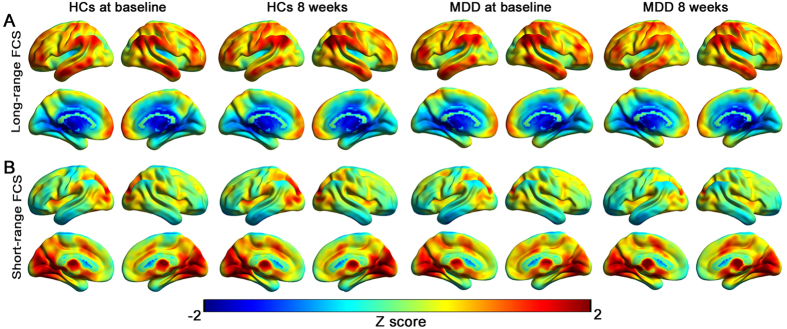
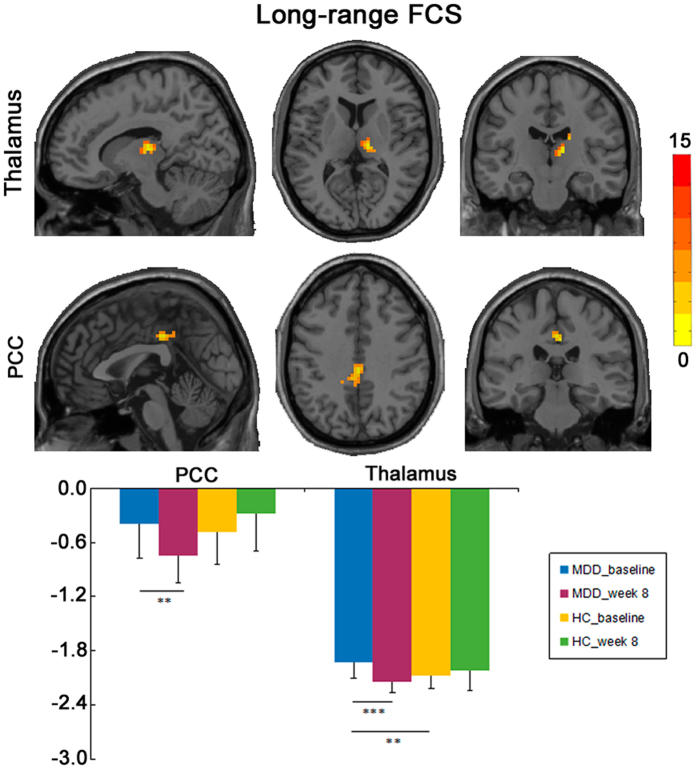
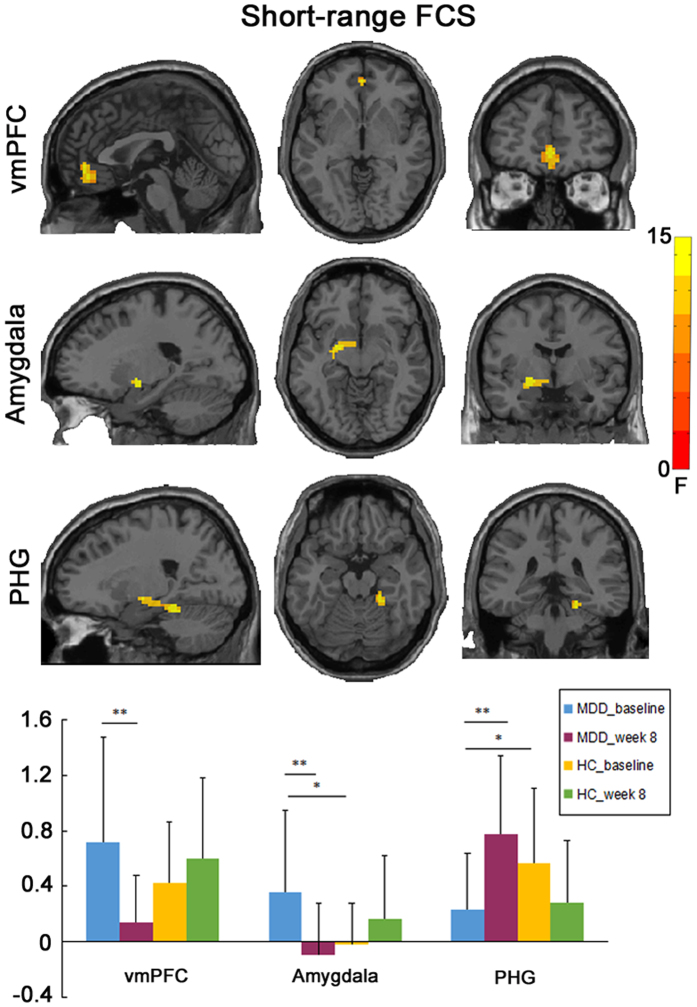
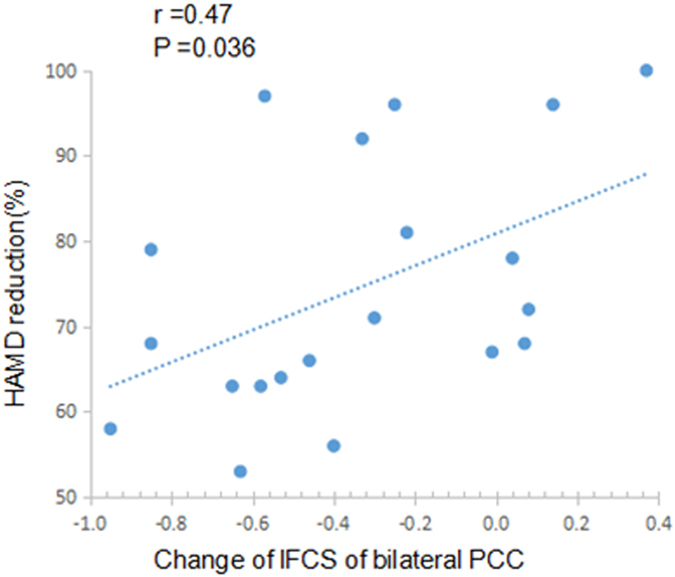
Abstarct: Although we have some basic understanding of the neurochemical mechanisms of the antidepressants, the network-level effect of antidepressant treatment is still not fully understood. This study was conducted to investigate the effects of antidepressant on functional brain networks of patients with major depressive disorder (MDD). We performed resting-state fMRI scans on 20 first-episode drug-naive MDD patients at baseline and after escitalopram medication for 8 weeks. Twenty healthy controls also received MRI scans with an 8-week interval. The graph theory indices, long- and short-range functional connectivity strength (FCS), were computed to characterize the brain connectivity. The analysis of covariance was conducted on FCS maps of patients and controls to obtain the interaction effect of group and time, which indicate treatment-related effect. Following treatment, increased long-range FCS in the bilateral posterior cingulate cortex/precuneus and right thalamus in MDD patients at baseline were reduced. Meanwhile, increased short-range FCS in the bilateral ventromedial prefrontal cortex and left amygdala in patients were reduced, while reduced short-range FCS in the right parahippocampal gyrus was increased. Results suggest that the brain regions associated with negative emotional processing and regulation, and self-referential function could be modulated by escitalopram treatment; long- and short-range FCS are differentially affected by antidepressant.
Overview
The claims and statistics of this paper haven’t been checked yet.
Free: it reads the open-access text and checks the first 5 claims that cite a source we can check. Create a free account to check every claim.
Integrity signals
Registry
Cites
Statistics
Figures
Verification
Claims the paper makes
The claims and statistics of this paper haven’t been checked yet.
Free: it reads the open-access text and checks the first 5 claims that cite a source we can check. Create a free account to check every claim.
Claims other papers make about this one
Each is checked against this paper’s own text: does it say what the citing paper says it does?
The cited source says what the claim attributes to it.
In the citing paper
“The results of studies examining the impact of ADM initiation on connectivity are heterogeneous28–39.”
From The relationship between resting-state functional connectivity, antidepressant discontinuation and depression relapse (2020) · cites this paper as [28]
Self-check
Percentages, sums and reported differences re-computed from the paper’s own numbers.
The self-check needs the paper’s full text.
Citations
Cites
(1998) · The Journal of Clinical Psychiatry · Cited by 19,139
Complex brain networks: graph theoretical analysis of structural and functional systems
Bullmore, E., & Sporns, O. (2009) · Nature Reviews Neuroscience · doi:10.1038/nrn2575 · Cited by 11,820
(1998) · PubMed · Cited by 10,216
Development of a Rating Scale for Primary Depressive Illness
HAMILTON, M. (1967) · British Journal of Social and Clinical Psychology · doi:10.1111/j.2044-8260.1967.tb00530.x · Cited by 8,410
Spontaneous fluctuations in brain activity observed with functional magnetic resonance imaging
Fox, M. D., & Raichle, M. E. (2007) · Nature Reviews Neuroscience · doi:10.1038/nrn2201 · Cited by 6,700
DPARSF: a MATLAB toolbox for “pipeline” data analysis of resting-state fMRI
Yan (2010) · Frontiers in System Neuroscience · doi:10.3389/fnsys.2010.00013 · Cited by 3,475
The economy of brain network organization
Bullmore, E., & Sporns, O. (2012) · Nature Reviews Neuroscience · doi:10.1038/nrn3214 · Cited by 3,284
Buckner, R. L., Sepulcre, J., Talukdar, T., Krienen, F. M., Liu, H., Hedden, T., Andrews-Hanna, J. R., Sperling, R. A., & Johnson, K. A. (2009) · The Journal of Neuroscience · doi:10.1523/jneurosci.5062-08.2009 · Cited by 2,862
Kaiser, R. H., Andrews-Hanna, J. R., Wager, T. D., & Pizzagalli, D. A. (2015) · JAMA Psychiatry · doi:10.1001/jamapsychiatry.2015.0071 · Cited by 2,281
Greicius, M. D., Flores, B. H., Menon, V., Glover, G. H., Solvason, H. B., Kenna, H., Reiss, A. L., & Schatzberg, A. F. (2007) · Biological Psychiatry · doi:10.1016/j.biopsych.2006.09.020 · Cited by 2,214
Cited by
Graph theory approach for the structural-functional brain connectome of depression
Yun, J., & Kim, Y. (2021) · Progress in Neuro-Psychopharmacology and Biological Psychiatry · doi:10.1016/j.pnpbp.2021.110401 · Cited by 136
“Of note, improvement of depressive symptom after the pharmacotherapy is proportional to the magnitude of nodal strength increment for posterior cingulate cortex (An et al., 2017).”
BackgroundInfluentialFunctional MRI findings, pharmacological treatment in major depression and clinical response
Arnone, D. (2019) · Progress in Neuro-Psychopharmacology and Biological Psychiatry · doi:10.1016/j.pnpbp.2018.08.004 · Cited by 99
“…(Fu et al., 2008)(Light et al., 2011)(Godlewska et al., 2012)(Wang et al., 2014a) (Wang et al., 2014b)(Fang et al., 2015), (Ruhé et al., 2014)(An et al., 2017)(Wang et al., 2017), used polypharmacy (Rizvi et al., 2013), tested experimental pharmacological interventions (Furey et al.,…”
Joffe, M. E., Santiago, C. I., Oliver, K. H., Maksymetz, J., Harris, N. A., Engers, J. L., Lindsley, C. W., Winder, D. G., & Conn, P. J. (2020) · Neuron · doi:10.1016/j.neuron.2019.09.044 · Cited by 76
Haynos, A. F., Hall, L. M. J., Lavender, J. M., Peterson, C. B., Crow, S. J., Klimes‐Dougan, B., Cullen, K. R., Lim, K. O., & Camchong, J. (2018) · Human Brain Mapping · doi:10.1002/hbm.24402 · Cited by 72
“…(Brooks et al., 2011; Frank, Shott, Hagman, & Mittal, 2013; Holsen et al., 2012; Steward et al., 2017), as well as those associated with habit (Bailer et al., 2017; Foerde et al., 2015; Rothemund et al., 2011; Titova, Hjorth, Schiöth, & Brooks, 2013) including the dorsal striatum and…”
BackgroundA flour mill sanitation manual
Mills, R., & Pedersen, J. (1990) · Cited by 58
Dunlop, B. W., Cha, J., Choi, K. S., Rajendra, J. K., Nemeroff, C. B., Craighead, W. E., & Mayberg, H. S. (2023) · American Journal of Psychiatry · doi:10.1176/appi.ajp.21070727 · Cited by 76
Shi, Y., Li, J., Feng, Z., Xie, H., Duan, J., Chen, F., & Yang, H. (2020) · Progress in Neuro-Psychopharmacology and Biological Psychiatry · doi:10.1016/j.pnpbp.2019.109759 · Cited by 56
Reconfiguration of Cortical Networks in MDD Uncovered by Multiscale Community Detection with fMRI
He, Y., Lim, S., Fortunato, S., Sporns, O., Zhang, L., Qiu, J., Xie, P., & Zuo, X.-N. (2018) · Cerebral Cortex · doi:10.1093/cercor/bhx335 · Cited by 54
“This suggests that there might be a general normalization effect across antidepressant treatments (Lisiecka et al. 2011; McCabe and Mishor 2011; Li et al. 2013; Wang et al. 2015; Fu et al. 2015; An et al. 2017).”
BackgroundBrain-based mechanisms of late-life depression: Implications for novel interventions
Gunning, F. M., Oberlin, L. E., Schier, M. M., & Victoria, L. W. (2021) · Seminars in Cell and Developmental Biology · doi:10.1016/j.semcdb.2021.05.002 · Cited by 54
Berwian, I. M., Wenzel, J. G., Kuehn, L., Schnuerer, I., Kasper, L., Veer, I. M., Seifritz, E., Stephan, K. E., Walter, H., & Huys, Q. J. M. (2020) · Scientific Reports · doi:10.1038/s41598-020-79170-9 · Cited by 29
Tassone, V. K., Demchenko, I., Salvo, J. J., Mahmood, R., Passa, A.-M. D., Kuburi, S., Rueda, A., & Bhat, V. (2022) · Psychiatry Research Neuroimaging · doi:10.1016/j.pscychresns.2022.111517 · Cited by 35
Paolini, M., Harrington, Y. A., Colombo, F., Bettonagli, V., Poletti, S., Carminati, M., Colombo, C., Benedetti, F., & Zanardi, R. (2023) · Journal of Psychopharmacology · doi:10.1177/02698811231190859 · Cited by 38
“…functional connectivity strength in the right parahippocampal gyrus was observed after 8 weeks of escitalopram treatment, suggesting that antidepressant treatment normalizes the diminished parahip-pocampal rs-FC observed in MDD patients at the baseline (An et al., 2017; Wang et al., 2015).”
BackgroundLechinger, J., Koch, J. M., Weinhold, S. L., Seeck-Hirschner, M., Stingele, K., Kropp, C., Braun, M., Drews, H. J., Aldenhoff, J. B., Huchzermeier, C., et al. (2020) · Journal of Psychiatric Research · doi:10.1016/j.jpsychires.2020.12.009 · Cited by 30
Dong, D., Li, C., Ming, Q., Zhong, X., Zhang, X., Sun, X., Jiang, Y., Gao, Y., Wang, X., & Yao, S. (2019) · Journal of Affective Disorders · doi:10.1016/j.jad.2019.03.030 · Cited by 26
Xiao, H., Yuan, M., Li, H., Li, S., Du, Y., Wang, M., Zhu, H., Zhang, W., Qiu, C., & Huang, X. (2021) · Journal of Affective Disorders · doi:10.1016/j.jad.2021.05.013 · Cited by 28
Tassone, V. K., Nezhad, F. G., Demchenko, I., Rueda, A., & Bhat, V. (2024) · Psychiatry Research Neuroimaging · doi:10.1016/j.pscychresns.2023.111777 · Cited by 35
Chen, F., Lv, X., Fang, J., Li, T., Xu, J., Wang, X., Yang, H., Hong, L., Wang, J., Wang, W., et al. (2021) · Translational Psychiatry · doi:10.1038/s41398-021-01637-8 · Cited by 27
“Also when receiving negative valanced emotional stimulus, antidepressant medication such as selective serotonin reuptake inhibitors (SSRIs) inhibit the enhanced activity of the amygdala, thalamus, and other limbic regions in MDD patients [25, 26].”
BackgroundHippocampal BMP signaling as a common pathway for antidepressant action
Tunc‐Ozcan, E., Brooker, S. M., Bonds, J. A., Tsai, Y., Rawat, R., McGuire, T. L., Peng, C., & Kessler, J. A. (2021) · Cellular and Molecular Life Sciences · doi:10.1007/s00018-021-04026-y · Cited by 26
“Multiple brain regions outside of the hippocampus are involved in MDD [8, 9, 69], which is therefore sometimes considered as a disease of neuronal circuitry [3, 10, 11].”
BackgroundSon, S. J., Park, B., Choi, J. W., Roh, H. W., Kim, N., Sin, J. E., Kim, H., Lim, H. K., & Hong, C. H. (2019) · Frontiers in Psychiatry · doi:10.3389/fpsyt.2019.00615 · Cited by 23
“For instance, brain regions’ FCs associated with negative emotional processing and regulation, and self-referential function could be modulated and affected by antidepressant treatment (6).”
BackgroundIonescu, T. M., Amend, M., Hafiz, R., Biswal, B. B., Maurer, A., Pichler, B. J., Wehrl, H. F., & Herfert, K. (2021) · NeuroImage · doi:10.1016/j.neuroimage.2021.118501 · Cited by 18
Dai, Y., Wu, Y., Chen, X., Zeng, Y., Li, K., Li, J., Su, Y., Zhu, L.-L., Yan, C., & Si, T. (2023) · Journal of Affective Disorders · doi:10.1016/j.jad.2023.02.126 · Cited by 20
Self-citationLi, H., Huang, Z., Gao, Z., Zhu, W., Li, Y., Zhou, S., Li, X., & Yu, Y. (2022) · Neuroscience · doi:10.1016/j.neuroscience.2022.12.001 · Cited by 20
Papp, N., Vas, S., Bogáthy, E., Kátai, Z., Kostyalik, D., & Bagdy, G. (2018) · European Journal of Pharmaceutical Sciences · doi:10.1016/j.ejps.2018.06.012 · Cited by 19
Effects of escitalopram therapy on functional brain controllability in major depressive disorder
Fang, F. Z., Godlewska, B. R., Cho, R. Y., Savitz, S. I., Selvaraj, S., & Zhang, Y. (2022) · Journal of Affective Disorders · doi:10.1016/j.jad.2022.04.123 · Cited by 18
Jones, J. S., Goldstein, S. J., Wang, J., Gardus, J. D., Yang, J., Parsey, R. V., & DeLorenzo, C. (2022) · Translational Psychiatry · doi:10.1038/s41398-022-02153-z · Cited by 14
Kuai, C., Pu, J., Wang, D., Tan, Z., Wang, Y., & Xue, S. (2024) · Scientific Reports · doi:10.1038/s41598-024-56866-w · Cited by 13
Li, C., Hu, Q., Zhang, D., Hoffstaedter, F., Bauer, A., & Elmenhorst, D. (2022) · Neuroscience & Biobehavioral Reviews · doi:10.1016/j.neubiorev.2022.104643 · Cited by 10
Rayan, N. A., Aow, J., Lim, M. G. L., Arcego, D. M., Ryan, R., Nourbakhsh, N., de Lima, R. M. S., Craig, K., Zhang, T., Goh, Y. T., et al. (2024) · Molecular Psychiatry · doi:10.1038/s41380-024-02619-0 · Cited by 13
Imai, H., Noma, H., & Furukawa, T. A. (2020) · European Archives of Psychiatry and Clinical Neuroscience · doi:10.1007/s00406-020-01173-4 · Cited by 10
Enhanced positive functional connectivity strength in left-sided chronic subcortical stroke
Diao, Q., Liu, J., & Zhang, X. (2020) · Brain Research · doi:10.1016/j.brainres.2020.146727 · Cited by 8
Yang, J., Hellerstein, D. J., Chen, Y., McGrath, P. J., Stewart, J. W., Peterson, B. S., & Wang, Z. (2022) · Brain Communications · doi:10.1093/braincomms/fcac100 · Cited by 10
“19 Our prior study also indicated that SNRI antidepressants can enhance the regional segregation of the morphology covariance network in patients with PDD. 20 Taken together, we extend our prior investigations by investigating how SNRI antidepressants affect the topological organization of…”
Zhao, L., Wang, D., Xue, S., Tan, Z., Hong, L., Wang, Y., Li, H., Pan, C., Fu, S., Hu, X., et al. (2022) · Frontiers in Psychiatry · doi:10.3389/fpsyt.2021.771147 · Cited by 7
Li, G., Huang, B., Wang, Y., Zhou, B., Hu, F., & Wang, L. (2025) · Journal of Affective Disorders · doi:10.1016/j.jad.2025.120424 · Cited by 9
Self-citationNießen, D., Rajkumar, R., Altinok, D. C. A., Schnellbächer, G. J., Ramkiran, S., Hagen, J., Shah, N. J., Veselinović, T., & Neuner, I. (2025) · Translational Psychiatry · doi:10.1038/s41398-025-03435-y · Cited by 6
“This may ultimately prove bene fi cial for prevention, early detection, treatment selection, and prognosis assessment and pave the way towards precision psychiatry.”
Effects of selective serotonin reuptake inhibitors on the placenta
Ellenberger, D. T., Herrington, R. T. B., Seda, S. E., Lambert, A. N., & Rosenfeld, C. S. (2025) · Biology of Reproduction · doi:10.1093/biolre/ioaf141 · Cited by 5
Uygur, A. B., Yıldız, S., Velioğlu, H. A., Özşimşek, A., Öktem, E. Ö., Bayraktaroğlu, Z., Ergün, T., Lakadamyalı, H., Hanoğlu, L., Çankaya, Ş., et al. (2020) · Journal of Clinical Neuroscience · doi:10.1016/j.jocn.2020.12.001 · Cited by 4
Joffe, M. E., Santiago, C. I., Oliver, K. H., Harris, N. A., Engers, J. L., Lindsley, C. W., Winder, D. G., & Conn, P. J. (2019) · SSRN Electronic Journal · doi:10.2139/ssrn.3381951 · Cited by 4
Effects of Oral Contraceptive Pills on Brain Networks: A Conceptual Replication and Extension
Haase, G., Liu, J., Jordan, T., Rapkin, A. J., London, E. D., & Petersen, N. (2025) · Human Brain Mapping · doi:10.1002/hbm.70318 · Cited by 3
“…between small, regional differences in connectivity and whole-brain activity (Betzel and Bassett 2017) that correlates to a specific behavior, offering an intermediate approach in determining the effects of pharmaceuticals in eliciting certain behaviors (An et al. 2017; Gudayol-Ferré et al. 2015).”
Escitalopram and functional connectivity in major depressive disorder: A systematic review
Turiaco, F., Arnone, F., Drago, A., Muscatello, M. R. A., Bruno, A., & Iannuzzo, F. (2025) · Journal of Psychopharmacology · doi:10.1177/02698811251370998 · Cited by 3
“…in individuals with MDD, restoring it to levels comparable to healthy controls, could possibly reflect its stabilizing effects on negatively polarized cognitive-affective self-reflection and excessive negative autobiographical memory recall (An et al., 2017; Cui et al., 2021; Wang et al., 2015).”
InfluentialEllenberger, D. T., Lyu, Z., Herrington, R. T. B., Kinkade, J. A., Leone, G. W., Sze, J. Y., Bivens, N. J., Baker, R. F., Roberts, R. M., Joshi, T., et al. (2025) · International Journal of Molecular Sciences · doi:10.3390/ijms27010436 · Cited by 4
Mecca, F. F. (2019) · Digital Library of Theses and Dissertations (Universidade de São Paulo) · doi:10.11606/d.17.2019.tde-27052020-074722 · Cited by 2
Zamarrenho, L. G. (2020) · Digital Library of Theses and Dissertations (Universidade de São Paulo) · doi:10.11606/t.17.2020.tde-23082020-104553
Frank, G. (2019) · Faculty Opinions – Post-Publication Peer Review of the Biomedical Literature · doi:10.3410/f.734076201.793558792
Effects of oral contraceptive pills on brain networks: A replication and extensionPreprint
Haase, G., Liu, J., Jordan, T., Rapkin, A. J., London, E. D., & Petersen, N. (2024) · bioRxiv (Cold Spring Harbor Laboratory) · doi:10.1101/2024.10.10.617472
“…between small, regional differences in connectivity and whole-brain activity (Betzel & Bassett, 2017) that correlates to a specific behavior, offering an intermediate approach in determining the effects of pharmaceuticals in eliciting certain behaviors (An et al., 2017; Gudayol-Ferré et al., 2015).”
BackgroundQian, R., Gao, H., Qiu, B., Li, Z., Gu, B., Ye, T., Wu, D., & Zhao, Z. (2024) · medRxiv · doi:10.1101/2024.11.20.24317665 · Cited by 1
Stengel, C., Schwartzmann, B., Chatterjee, R., Atluri, S., Vaghei, Y., Arnott, S. R., Blier, P., Dhami, P., Foster, J. A., Frey, B. N., et al. (2025) · The Canadian Journal of Psychiatry · doi:10.1177/07067437251408188
“58 We speculate that the positive association between symptom improvement and complexity at coarse timescales measured in our data may be related to the early negative association with complexity at fi ne timescales.”
Song, Z., Wang, H., Jin, M., Liu, J., Yuan, L., Zhu, Y., Lian, J., Xu, X., & Shen, Z. (2026) · Psychiatry Research Neuroimaging · doi:10.1016/j.pscychresns.2026.112199
Hu, Y., Zhu, T., Xu, H., Chen, H., Song, J., Du, X., Chen, Y., Li, B., Wang, Z., Xu, J., et al. (2026) · Journal of Affective Disorders · doi:10.1016/j.jad.2026.121736
Metadata
- Authors
- An, J., Wang, L., Li, K., Zeng, Y., Su, Y., Jin, Z., Yu, X., & Si, T.
- Affiliations
- Peking University (CN)
- PLA 306 Hospital (CN)
- Corresponding author
- Si, Tianmei
- Venue
- Scientific Reports
- Published
- 2017-08-31
- Volume
- 7
- Issue
- 1
- Pages
- 10214-10214
- ISSN
- 2045-2322 (ISSN-L)
- PMC
- PMC5578968
- OpenAlex
- W2748828445
- Cited by
- 48
- References
- 65
- Citations by year
- 2026: 2 · 2025: 7 · 2024: 5 · 2023: 3 · 2022: 7 · 2021: 6 · 2020: 6 · 2019: 7 · 2018: 3 · 2017: 1
- FWCI
- 2.67
- Type
- journal article
- Language
- en
- Open access
- gold
- doi.org
- Licence
- cc-by
- creativecommons.org/licenses/by/4.0 (tdm)
- creativecommons.org/licenses/by/4.0 (vor)
- Locations
- Scientific Reports (publishedVersion, cc-by)
- PubMed Central (publishedVersion, cc-by)
- PubMed (publishedVersion)
- DOAJ (DOAJ: Directory of Open Access Journals) (submittedVersion)
- Funders
- National Natural Science Foundation of China (973 Program, 81630031)
- National Key Research and Development Program of China (2013CB531305, 2015BAI13B01)
- Topics
- Life Sciences › Neuroscience › Cognitive Neuroscience › Functional Brain Connectivity Studies
- Health Sciences › Medicine › Pharmacology (medical) › Treatment of Major Depression
- Social Sciences › Psychology › Experimental and Cognitive Psychology › Mental Health Research Topics
- Keywords
- major depressive disorder, escitalopram, antidepressant treatment, functional connectivity, long-range functional connectivity, resting-state fMRI, graph theory, posterior cingulate cortex, precuneus, thalamus, ventromedial prefrontal cortex, amygdala, parahippocampal gyrus, emotional processing, self-referential processing
- MeSH terms
- Adult, Amygdala, Antidepressive Agents, Brain Mapping, Major Depressive Disorder, Depressive Disorder, Major, Emotions, Female, Gyrus Cinguli, Humans, Magnetic Resonance Imaging, Male, Middle Aged, Thalamus, Citalopram, Case-Control Studies, Treatment Outcome, Prefrontal Cortex, Young Adult
About these checks
Registry, retraction, Cites and statistics results are computed, not judged, with one exception: a printed reference that no index lists is read once by a model before it counts as a citation error. Claims are extracted by a model and kept only when their quote appears verbatim in the text; each cited source is then checked, with a model’s help, for whether it says what the claim relies on. Those verdicts can be wrong — read the claim’s quote and the cited source before relying on one.
Statistics and arithmetic are recomputed, not judged.
Confidence bands are shown only for fields calibrated on our annotated test set. None is calibrated yet, so no band is shown.
What counts as a claim ›How we measure confidence ›How we check this ›
Are you an author, or do you see a problem with this page? Request a review
Data sources
Bibliographic data: Semantic Scholar, OpenAlex, Crossref.
Contains information from the Semantic Scholar Academic Graph Datasets, made available under the ODC Attribution License (ODC-BY 1.0).
Semantic Scholar’s data is described in: Kinney, R., et al. (2023). The Semantic Scholar Open Data Platform. arXiv:2301.10140.
