

Lack of NLRP3-inflammasome leads to gut-liver axis derangement, gut dysbiosis and a worsened phenotype in a mouse model of NAFLD
Open accessThe DOI matches its Crossref record; 71 of the 71 references it cites were found in a registry or an index.
Abstract
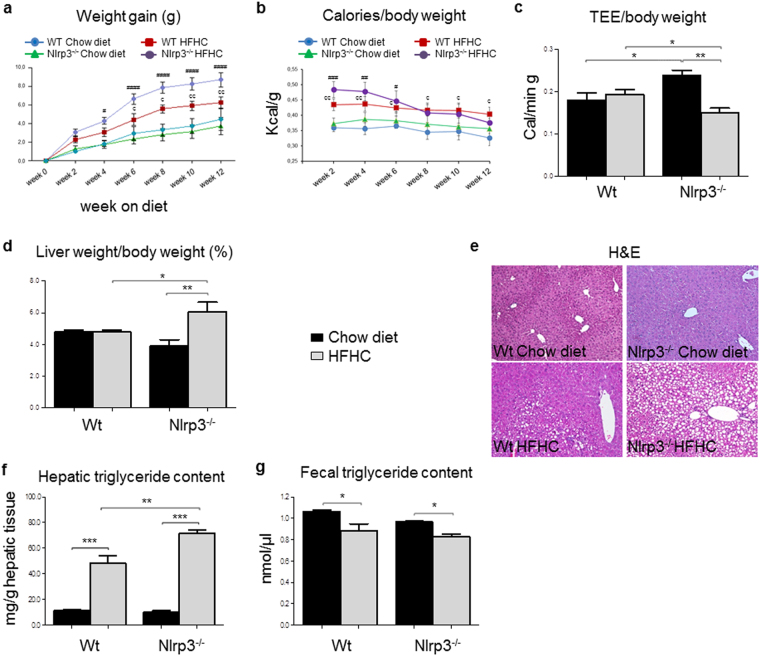
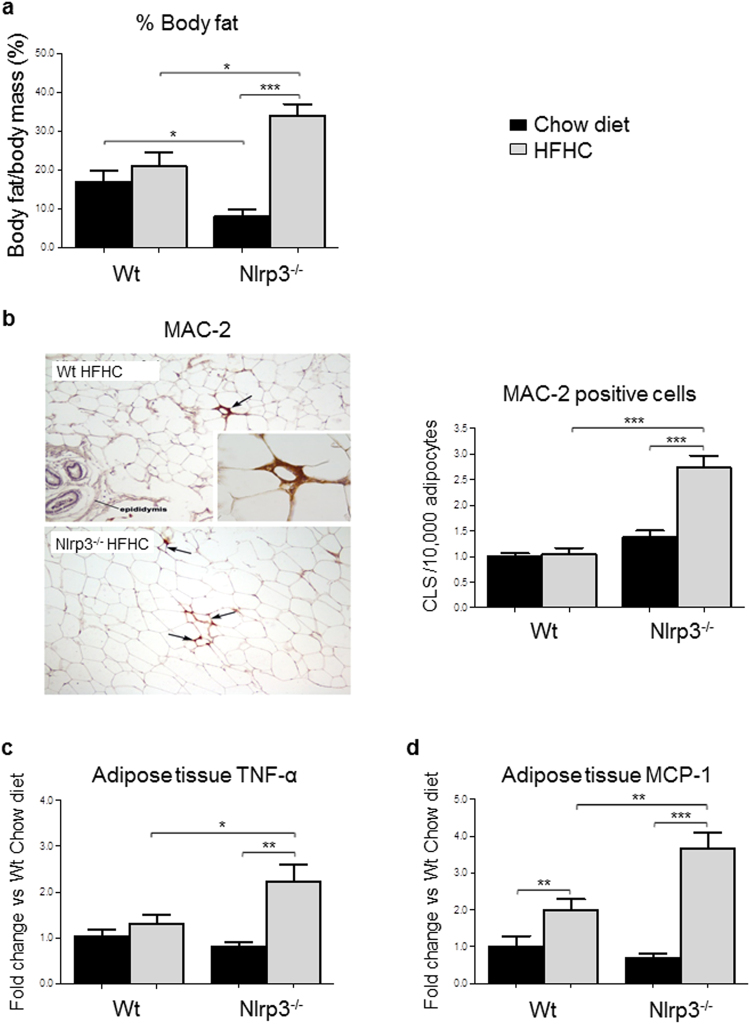
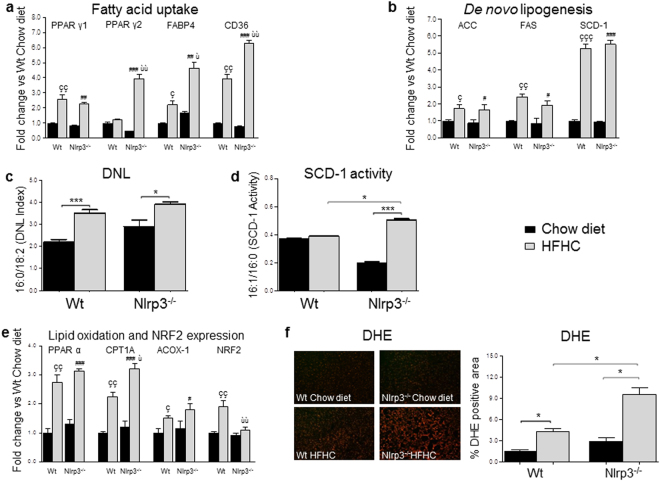
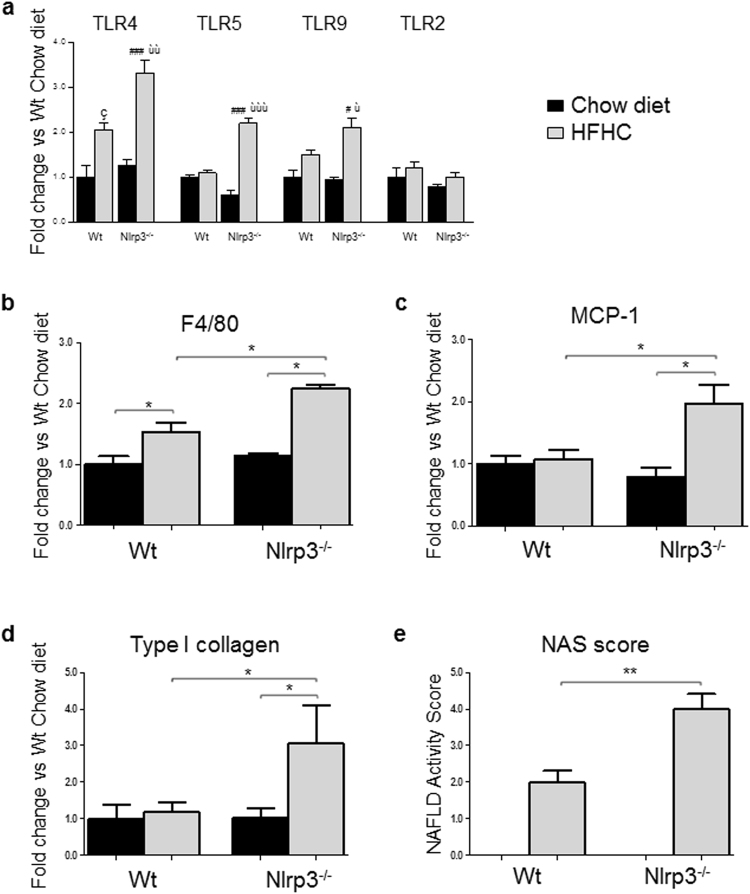
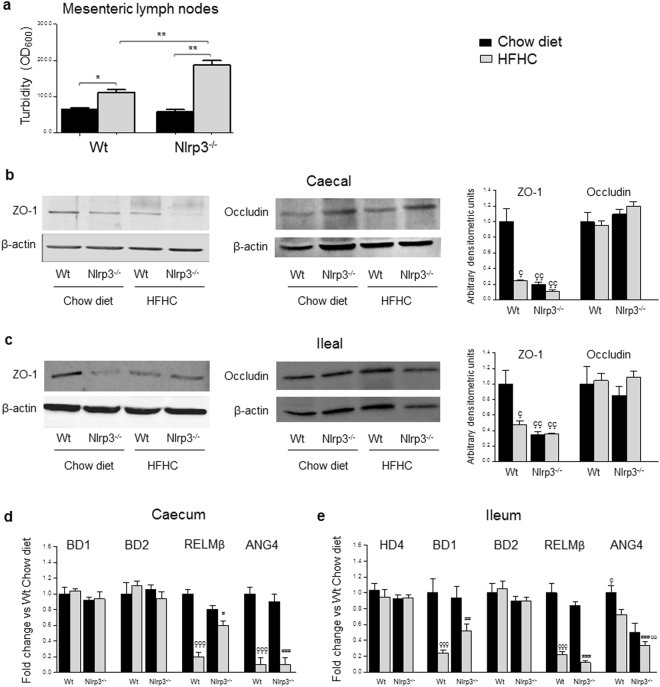
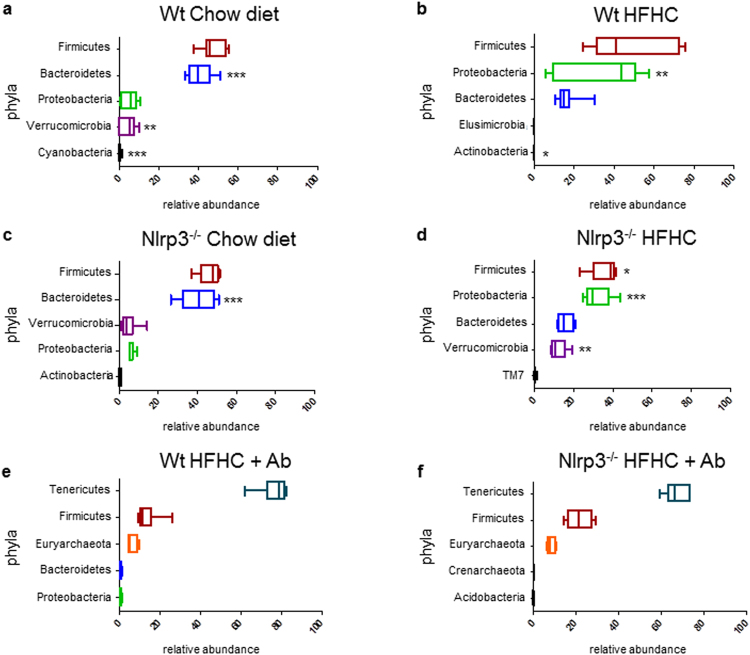
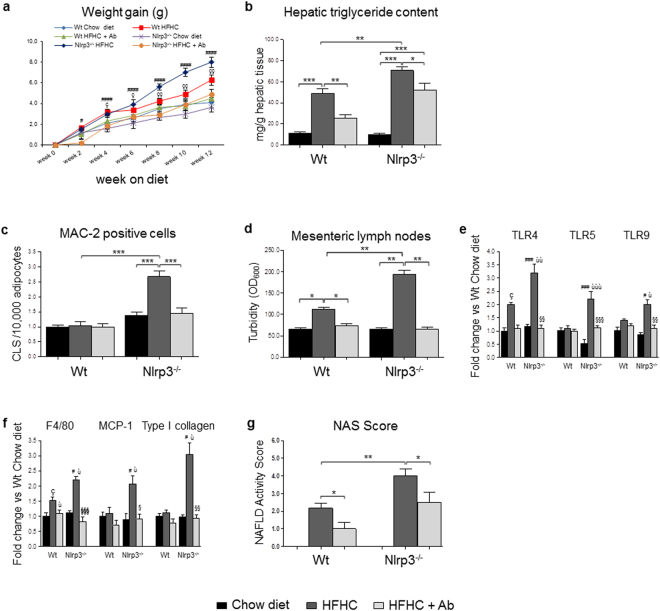
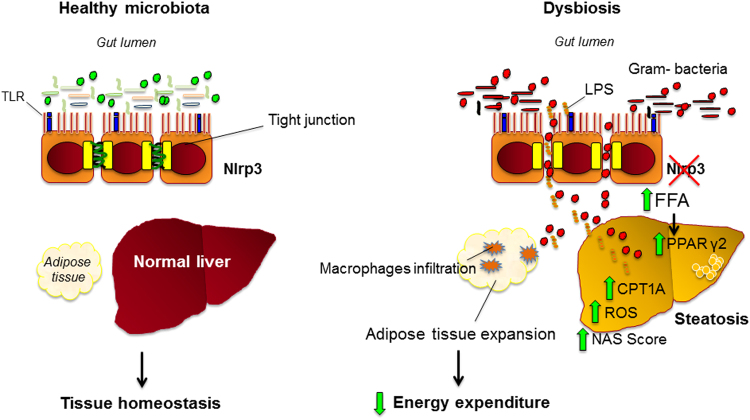
Non-Alcoholic Fatty Liver Disease (NAFLD) represents the most common form of chronic liver injury and can progress to cirrhosis and hepatocellular carcinoma. A “multi-hit” theory, involving high fat diet and signals from the gut-liver axis, has been hypothesized. The role of the NLRP3-inflammasome, which senses dangerous signals, is controversial. Nlrp3 −/− and wild-type mice were fed a Western-lifestyle diet with fructose in drinking water (HFHC) or a chow diet. Nlrp3 −/− -HFHC showed higher hepatic expression of PPAR γ2 (that regulates lipid uptake and storage) and triglyceride content, histological score of liver injury and greater adipose tissue inflammation. In Nlrp3 −/− -HFHC, dysregulation of gut immune response with impaired antimicrobial peptides expression, increased intestinal permeability and the occurrence of a dysbiotic microbiota led to bacterial translocation, associated with higher hepatic expression of TLR4 (an LPS receptor) and TLR9 (a receptor for double-stranded bacterial DNA). After antibiotic treatment, gram-negative species and bacterial translocation were reduced, and adverse effects restored both in liver and adipose tissue. In conclusion, the combination of a Western-lifestyle diet with innate immune dysfunction leads to NAFLD progression, mediated at least in part by dysbiosis and bacterial translocation, thus identifying new specific targets for NAFLD therapy.
Overview
The claims and statistics of this paper haven’t been checked yet.
Free: it reads the open-access text and checks the first 5 claims that cite a source we can check. Create a free account to check every claim.
Integrity signals
Registry
Cites
Statistics
Figures
Verification
Claims the paper makes
The claims and statistics of this paper haven’t been checked yet.
Free: it reads the open-access text and checks the first 5 claims that cite a source we can check. Create a free account to check every claim.
Claims other papers make about this one
Each is checked against this paper’s own text: does it say what the citing paper says it does?
The source backs part of the claim, not all of it — or backs it for a different population, condition or comparison.
In the citing paper
“Bacterial translocation can be defined as the passage of bacteria, or bacterial products such as LPS, into the portal circulation and happens when the complex regulation of the mechanisms of the gut barrier is lost [276], which has been linked with the occurrence of NAFLD, NASH, hepatic fibrosis, and HCC in several rodent models [227,228,277].”
From Gut-pancreas-liver Axis as a target for treatment of NAFLD/NASH (2020) · cites this paper as [227]
Experimental — accuracy not yet measuredThe source backs part of the claim, not all of it — or backs it for a different population, condition or comparison.
In the citing paper
“Increased intestinal permeability has been found in several conditions including exposure to HFD, specific microbiota, gliadin, allergens or even hyperglycemia [227,269].”
From Gut-pancreas-liver Axis as a target for treatment of NAFLD/NASH (2020) · cites this paper as [227]
Experimental — accuracy not yet measuredThe cited source says what the claim attributes to it.
In the citing paper
“Either in patients with NASH or animal models, the expression of inflammasome components was increased, indicating the potential role in the pathogenesis of liver injury [226,227,288,289,290,291].”
From Gut-pancreas-liver Axis as a target for treatment of NAFLD/NASH (2020) · cites this paper as [227]
In the citing paper
“In addition, it has been recently shown that a Western lifestyle diet associated with lack of NLRP3-inflammasome, increased fat storage in adipose tissue and liver leading to a more severe liver injury.”
From Gut-pancreas-liver Axis as a target for treatment of NAFLD/NASH (2020) · cites this paper as [227]
In the citing paper
“This effect was associated with the expansion of Gram-negative Proteobacteria and Verrucomicrobia [227], the main pathobionts responsible of liver injury in a model of HFD and fibrosis [228], and together with Verrucomicrobia are known to be mucus-degrading bacteria, favoring bacterial translocation.”
From Gut-pancreas-liver Axis as a target for treatment of NAFLD/NASH (2020) · cites this paper as [227]
3 more claims about this paper
Create a free account to see every claim other papers make about this one.
Self-check
Percentages, sums and reported differences re-computed from the paper’s own numbers.
The self-check needs the paper’s full text.
Citations
Cites
A SIMPLE METHOD FOR THE ISOLATION AND PURIFICATION OF TOTAL LIPIDES FROM ANIMAL TISSUES
Folch, J., Lees, M., & Stanley, G. H. S. (1957) · Journal of Biological Chemistry · doi:10.1016/s0021-9258(18)64849-5 · Cited by 65,189
QIIME allows analysis of high-throughput community sequencing data
Caporaso, J. G., Kuczynski, J., Stombaugh, J., Bittinger, K., Bushman, F. D., Costello, E. K., Fierer, N., Peña, A. G., Goodrich, J. K., Gordon, J. I., et al. (2010) · Nature Methods · doi:10.1038/nmeth.f.303 · Cited by 34,887
Search and clustering orders of magnitude faster than BLAST
Edgar, R. C. (2010) · Bioinformatics · doi:10.1093/bioinformatics/btq461 · Cited by 20,826
Greengenes, a Chimera-Checked 16S rRNA Gene Database and Workbench Compatible with ARB
DeSantis, T. Z., Hugenholtz, P., Larsen, N., Rojas, M., Brodie, E. L., Keller, K., Huber, T., Dalevi, D., Hu, P., & Andersen, G. L. (2006) · Applied and Environmental Microbiology · doi:10.1128/aem.03006-05 · Cited by 10,891
Design and validation of a histological scoring system for nonalcoholic fatty liver disease†
Kleiner, D. E., Brunt, E. M., Van Natta, M., Behling, C., Contos, M. J., Cummings, O. W., Ferrell, L. D., Liu, Y., Torbenson, M. S., Unalp‐Arida, A., et al. (2005) · Hepatology · doi:10.1002/hep.20701 · Cited by 10,791 · cited 1×
“NAFLD was first described in 1980 and is divided into the histological categories of (1) Non-Alcoholic Fatty Liver, which includes patients with isolated hepatic steatosis and patients with steatosis and mild non-specific inflammation, and (2) Non-Alcoholic Steatohepatitis (NASH), which is distinguished from the forme…”
MethodCross-talk between Akkermansia muciniphila and intestinal epithelium controls diet-induced obesity
Everard, A., Belzer, C., Geurts, L., Ouwerkerk, J. P., Druart, C., Bindels, L. B., Guiot, Y., Derrien, M., Muccioli, G. G., Delzenne, N. M., et al. (2013) · Proceedings of the National Academy of Sciences · doi:10.1073/pnas.1219451110 · Cited by 4,511
Donnelly, K. L., Smith, C. I., Schwarzenberg, S. J., Jessurun, J., Boldt, M. D., & Parks, E. J. (2005) · Journal of Clinical Investigation · doi:10.1172/jci23621 · Cited by 3,604
The innate immune response to bacterial flagellin is mediated by Toll-like receptor 5
Hayashi, F., Smith, K. D., Ozinsky, A., Hawn, T. R., Yi, E. C., Goodlett, D. R., Eng, J. K., Akira, S., Underhill, D. M., & Aderem, A. (2001) · Nature · doi:10.1038/35074106 · Cited by 3,601
Inflammasomes: mechanism of action, role in disease, and therapeutics
Guo, H., Callaway, J. B., & Ting, J. P.-Y. (2015) · Nature Medicine · doi:10.1038/nm.3893 · Cited by 3,340
The NLRP3 inflammasome instigates obesity-induced inflammation and insulin resistance
Vandanmagsar, B., Youm, Y.-H., Ravussin, A., Galgani, J. E., Stadler, K., Mynatt, R. L., Ravussin, E., Stephens, J. M., & Dixit, V. D. (2011) · Nature Medicine · doi:10.1038/nm.2279 · Cited by 2,655
Cited by
Lipotoxicity and the gut-liver axis in NASH pathogenesis
Marra, F., & Svegliati-Baroni, G. (2018) · Journal of Hepatology · doi:10.1016/j.jhep.2017.11.014 · Cited by 847
“Bacteria are presented as phylum, order, family, genus, or species, in relative abundance values and more than 90% of the microbiota belongs to two phyla, i.e. Firmicutes and Bacteroidetes, followed by Actinobacteria and Verrucomicrobia [80].”
BackgroundInfluentialSelf-citationRole of Oxidative Stress in Pathophysiology of Nonalcoholic Fatty Liver Disease
Masarone, M., Rosato, V., Dallio, M., Gravina, A. G., Aglitti, A., Loguercio, C., Federico, A., & Persico, M. (2018) · Oxidative Medicine and Cellular Longevity · doi:10.1155/2018/9547613 · Cited by 648
“More recently, these data were reconfirmed in a high-fat- and highcarbohydrate-diet mice model, showing that an abundance of Verrucomicrobia and Proteobacteria was associated to a lack in NPRL-3 inflammasome and a higher hepatic expression of TLR4 and TLR9, resulting in a worse degree of liver injury that was restored…”
Diverging inflammasome signals in tumorigenesis and potential targeting
Karki, R., & Kanneganti, T.-D. (2019) · Nature Reviews Cancer · doi:10.1038/s41568-019-0123-y · Cited by 641
Contribution of the Intestinal Microbiome and Gut Barrier to Hepatic Disorders
Chopyk, D. M., & Grakoui, A. (2020) · Gastroenterology · doi:10.1053/j.gastro.2020.04.077 · Cited by 490
Role of inflammatory response in liver diseases: Therapeutic strategies
Campo, J. A. D., Gallego, P., & Grande, L. (2018) · World Journal of Hepatology · doi:10.4254/wjh.v10.i1.1 · Cited by 348
Taru, V., Szabo, G., Mehal, W., & Reiberger, T. (2024) · Journal of Hepatology · doi:10.1016/j.jhep.2024.06.016 · Cited by 344
Inflammasomes in the gastrointestinal tract: infection, cancer and gut microbiota homeostasis
Man, S. M. (2018) · Nature Reviews Gastroenterology & Hepatology · doi:10.1038/s41575-018-0054-1 · Cited by 302
Focus on the Role of NLRP3 Inflammasome in Diseases
Fusco, R., Siracusa, R., Genovese, T., Cuzzocrea, S., & Di Paola, R. (2020) · International Journal of Molecular Sciences · doi:10.3390/ijms21124223 · Cited by 290
“These events, in turn, led to bacterial translocation and the increased expressions of both the LPS receptor, TLR4, and the double-stranded bacterial DNA receptor, TLR9, in the liver [102].”
BackgroundVallianou, N., Christodoulatos, G. S., Karampela, I., Tsilingiris, D., Magkos, F., Stratigou, T., Kounatidis, D., & Dalamaga, M. (2021) · Biomolecules · doi:10.3390/biom12010056 · Cited by 289
“, 2017 [45] NLRP3 Knockout mice ↓ Gram negative species ↓ Bacterial translocation after treatment with antibiotics”
BackgroundThe role of inflammasomes in human diseases and their potential as therapeutic targets
Yao, J., Sterling, K., Wang, Z., Zhang, Y., & Song, W. (2024) · Signal Transduction and Targeted Therapy · doi:10.1038/s41392-023-01687-y · Cited by 245
“279 The inhibition of the NLRP3 in fl ammasome signi fi - cantly reduced in fl ammation, lipid accumulation, and fi brosis in FLD. 280,281 In contrast, there is evidence that NLRP3 de fi ciency plays a harmful role via increasing serum alanine transaminase (ALT) and aspartate transaminase (AST) levels.”
BackgroundNonalcoholic Fatty Liver Disease: Modulating Gut Microbiota to Improve Severity?
Aron-Wisnewsky, J., Warmbrunn, M. V., Nieuwdorp, M., & Clément, K. (2020) · Gastroenterology · doi:10.1053/j.gastro.2020.01.049 · Cited by 239
Heyens, L. J. M., Busschots, D., Koek, G. H., Robaeys, G., & Francque, S. (2021) · Frontiers in Medicine · doi:10.3389/fmed.2021.615978 · Cited by 234
Mechanisms of Environmental Contributions to Fatty Liver Disease
Wahlang, B., Jin, J., Beier, J. I., Hardesty, J., Daly, E. F., Schnegelberger, R. D., Falkner, K. C., Prough, R. A., Kirpich, I., & Cave, M. C. (2019) · Current Environmental Health Reports · doi:10.1007/s40572-019-00232-w · Cited by 165
Plaza-Díaz, J., Solís-Urra, P., Rodríguez-Rodríguez, F., Olivares-Arancibia, J., Navarro-Oliveros, M., Abadía-Molina, F., & Álvarez-Mercado, A. I. (2020) · International Journal of Molecular Sciences · doi:10.3390/ijms21218351 · Cited by 145
“After antibiotic treatment, these changes were abridged, and unfavorable effects were reestablished [79].”
BackgroundYu, L., Hong, W., Lu, S., Li, Y., Guan, Y., Weng, X., & Feng, Z. (2022) · Frontiers in Pharmacology · doi:10.3389/fphar.2022.780496 · Cited by 149
Host genetic control of gut microbiome composition
Bubier, J. A., Chesler, E. J., & Weinstock, G. M. (2021) · Mammalian Genome · doi:10.1007/s00335-021-09884-2 · Cited by 130
From Gut Microbiota through Low-Grade Inflammation to Obesity: Key Players and Potential Targets
Vetrani, C., Nisio, A. D., Paschou, S. Α., Barrea, L., Muscogiuri, G., Graziadio, C., Savastano, S., Colao, A., & On Behalf Of The Obesity Programs Of Nutrition Education Research And Assessment Opera Group (2022) · Nutrients · doi:10.3390/nu14102103 · Cited by 117
“Gut microbiota and inflammasome/cytokines interplay Studies in mice - Dysbiosis increases inflammation and obesity [63] - Prevotella abundance reduces inflammation [64,65]”
BackgroundLau, H. C.-H., Zhang, X., & Yu, J. (2025) · Nature Reviews Gastroenterology & Hepatology · doi:10.1038/s41575-025-01089-1 · Cited by 139
“Notably, the function of the NLRP3 inflammasome can be altered by the gut microbiome as several studies reported that NLRP3 inflammasome deficiency leads to worsened liver steatosis, inflammation and injury in mice with diet-induced MASH in a microbiome-dependent manner 156,157 .”
The gut-liver-kidney axis: Novel regulator of fatty liver associated chronic kidney disease
Raj, D., Tomar, B., Lahiri, A., & Mulay, S. R. (2019) · Pharmacological Research · doi:10.1016/j.phrs.2019.104617 · Cited by 105
Interactions between Host PPARs and Gut Microbiota in Health and Disease
Hasan, A. U., Rahman, A., & Kobori, H. (2019) · International Journal of Molecular Sciences · doi:10.3390/ijms20020387 · Cited by 101
“High‐fat diet‐fed mice models usually show liver steatosis associated with an increase of phyla Firmicutes, Proteobacteria, and Verrucomicrobia [89,90].”
BackgroundInfluentialThe role of the gut microbiome and diet in the pathogenesis of non-alcoholic fatty liver disease
Jennison, E., & Byrne, C. D. (2021) · Clinical and Molecular Hepatology · doi:10.3350/cmh.2020.0129 · Cited by 88
“Pierantonelli et al.(84) demonstrated that, in a Western lifestyle model, the combination between high-fat and high-carbohydrate diet and the lack of the NLRP3-inflammasome increased the degree of liver injury and was associated with an abundance of gram-negative Proteo-”
BackgroundInfluentialInteraction of volatile organic compounds and underlying liver disease: a new paradigm for risk
Lang, A. L., & Beier, J. I. (2018) · Biological Chemistry · doi:10.1515/hsz-2017-0324 · Cited by 83
“Alterations in gut barrier permeability are now known to contribute to, or enhance NAFLD pathogenesis (Cani et al., 2007; Mehal, 2013; Rahman et al., 2016; Irene et al., 2017).”
Pezzino, S., Sofia, M., Faletra, G., Mazzone, C., Litrico, G., Greca, G. L., & Latteri, S. (2022) · Biology · doi:10.3390/biology11111622 · Cited by 88
Mastrocola, R., Ferrocino, I., Liberto, E., Chiazza, F., Cento, A. S., Collotta, D., Querio, G., Nigro, D., Bitonto, V., Cutrin, J. C., et al. (2018) · The Journal of Nutritional Biochemistry · doi:10.1016/j.jnutbio.2018.02.003 · Cited by 68
Gut-pancreas-liver Axis as a target for treatment of NAFLD/NASH
Svegliati-Baroni, G., Patrício, B., Lioci, G., Macedo, M. P., & Gastaldelli, A. (2020) · International Journal of Molecular Sciences · doi:10.3390/ijms21165820 · Cited by 66
Self-citationNLRP3 inflammasome in hepatic diseases: A pharmacological target
Ramos‐Tovar, E., & Muriel, P. (2023) · Biochemical Pharmacology · doi:10.1016/j.bcp.2023.115861 · Cited by 75
Role of Bile Acids in Dysbiosis and Treatment of Nonalcoholic Fatty Liver Disease
Wang, C., Zhu, C., Shao, L., Ye, J., Shen, Y., & Ren, Y. (2019) · Mediators of Inflammation · doi:10.1155/2019/7659509 · Cited by 69
“Elevated permeability leads to translocation of bacterial components that triggers the inflammatory response of the liver through TLR4 (receptor for LPS), TLR5 (receptor for bacterial flagellin), and TLR9 (receptor for bacterial DNA) [74].”
BackgroundChen, Y., Sun, H., Bai, Y., & Zhi, F. C. (2019) · Biochemical and Biophysical Research Communications · doi:10.1016/j.bbrc.2018.12.180 · Cited by 55
Sepsis roadmap: What we know, what we learned, and where we are going
Kumar, V. (2019) · Clinical Immunology · doi:10.1016/j.clim.2019.108264 · Cited by 54
Adapted Immune Responses of Myeloid-Derived Cells in Fatty Liver Disease
Hundertmark, J., Krenkel, O., & Tacke, F. (2018) · Frontiers in Immunology · doi:10.3389/fimmu.2018.02418 · Cited by 44
“In contrast, lack of the NLRP3 inflammasome results in decreased levels of IL-18 and other cytokines in the intestine and is related to an altered gut microbiota and derangement of the gut-liver-axis (10, 75).”
BackgroundHamamah, S., Iatcu, O. C., & Covașă, M. (2024) · Nutrients · doi:10.3390/nu17010143 · Cited by 58
Role of NLRP3 inflammasome in liver disease
Mamun, A. A., Akter, A., Hossain, S., Sarker, T., Safa, S. A., Mustafa, Q. G., Muhammad, S. A., & Munir, F. (2020) · Journal of Digestive Diseases · doi:10.1111/1751-2980.12918 · Cited by 47
Galectin-3 in Inflammasome Activation and Primary Biliary Cholangitis Development
Arsenijević, A., Stojanović, B., Milovanović, J., Arsenijević, D., Arsenijević, N., & Milovanović, M. (2020) · International Journal of Molecular Sciences · doi:10.3390/ijms21145097 · Cited by 42
Longo, L., Ferrari, J. T., Rampelotto, P. H., Dellavia, G. H., Pasqualotto, A., de Oliveira, C. P. M. S., Cerski, C. T. S., da Silveira, T. R., Cruz, C. U., & Álvares‐da‐Silva, M. R. (2020) · Clinical and Experimental Gastroenterology · doi:10.2147/ceg.s262879 · Cited by 48
The Role of the Intestinal Microbiota in Nonalcoholic Steatohepatitis
Xiang, H., Sun, D., Liu, X., She, Z., & Chen, Y. (2022) · Frontiers in Endocrinology · doi:10.3389/fendo.2022.812610 · Cited by 40
“org 5 derangement, dysbiosis, steatohepatitis and liver damage in HFHC-fed Nlrp3 mice (66).”
BackgroundPengrattanachot, N., Thongnak, L., & Lungkaphin, A. (2022) · Food & Function · doi:10.1039/d1fo04428a · Cited by 42
NLRP3 inflammasome in digestive diseases: From mechanism to therapy
Qiang, R., Li, Y., Dai, X.-C., & Lv, W. (2022) · Frontiers in Immunology · doi:10.3389/fimmu.2022.978190 · Cited by 40
“The NAFLD mouse model lack of NLRP3 showed higher triglyceride content, histological score of liver injury and greater adipose tissue inflammation (61).”
BackgroundResultPanera, N., Barbaro, B., Corte, C. D., Mosca, A., Nobili, V., & Alisi, A. (2018) · Nutrition Research · doi:10.1016/j.nutres.2018.05.002 · Cited by 40
Yu, T., Luo, L., Xue, J., Tang, W., Wu, X., & Fan, Y. (2024) · Clinics and Research in Hepatology and Gastroenterology · doi:10.1016/j.clinre.2024.102458 · Cited by 50
Pharmacotherapy of Liver Fibrosis and Hepatitis: Recent Advances
Zhao, L., Tang, H., & Cheng, Z. (2024) · Pharmaceuticals · doi:10.3390/ph17121724 · Cited by 40
“For instance, mice lacking the NLRP3 gene and fed a high-fat diet exhibited worsened liver steatosis, increased macrophage infiltration, and heightened liver injury [102].”
Host–Microbiota Interactions in Liver Inflammation and Cancer
Giraud, J., & Saleh, M. (2021) · Cancers · doi:10.3390/cancers13174342 · Cited by 33
“This has been demonstrated in mouse models of NASH induced by a HFD or a choline and methionine deficient (MCD) diet [49], and a mouse model of cirrhosis induced by bile duct ligation combined with carbon tetrachloride (CCL4)-mediated liver injury [50].”
BackgroundInfluentialYu, L., Gao, F., Li, Y., Su, D., Han, L., Li, Y., Zhang, X., & Feng, Z. (2024) · Biomedicine & Pharmacotherapy · doi:10.1016/j.biopha.2024.116724 · Cited by 41
Roles of the inflammasome in the gut‑liver axis (Review)
Wang, J., Dong, R., & Zheng, S. (2018) · Molecular Medicine Reports · doi:10.3892/mmr.2018.9679 · Cited by 43
“Pierantonelli et al (26) demonstrated that NLRP3-/- mice fed a Western diet, provided with water containing fructose, exhibited impaired intestinal antimicrobial peptide synthesis.”
BackgroundPlaza‐Díaz, J., Solis‐Urra, P., Aragón‐Vela, J., Rodríguez‐Rodríguez, F., Arancibia, J. E. O., & Álvarez‐Mercado, A. I. (2021) · Biomedicines · doi:10.3390/biomedicines9020145 · Cited by 31
“After antibiotic treatment, the abundance of Gram-negative species and translocation of bacteria were reduced, and adverse effects were repaired both in the liver and adipose tissue [61].”
BackgroundInfluentialPellegrini, C., Fornai, M., Benvenuti, L., Colucci, R., Caputi, V., Palazón‐Riquelme, P., Giron, M. C., Nericcio, A., Garelli, F., D’Antongiovanni, V., et al. (2021) · British Journal of Pharmacology · doi:10.1111/bph.15532 · Cited by 31
“Of note, some studies have reported that NLRP3 can also play a protective role in liver inflammation associated with obesity (Pierantonelli et al., 2017).”
BackgroundThe Effect of Bioactive Aliment Compounds and Micronutrients on Non-Alcoholic Fatty Liver Disease
Munteanu, C., & Schwartz, B. (2023) · Antioxidants · doi:10.3390/antiox12040903 · Cited by 30
The Intestinal Microbiota in the Development of Chronic Liver Disease: Current Status
Stojić, J., Kukla, M., & Grgurević, I. (2023) · Diagnostics · doi:10.3390/diagnostics13182960 · Cited by 25
Metformin ameliorates maternal high-fat diet-induced maternal dysbiosis and fetal liver apoptosis
Huang, S., Ou, Y., Tang, K.-S., Yu, H., Huang, L., Tain, Y., Lin, I.-C., Sheen, J., Hou, C., Tsai, C., et al. (2021) · Lipids in Health and Disease · doi:10.1186/s12944-021-01521-w · Cited by 22
“The findings of this study are consistent with those of most studies in mouse models, which showed that high-fat or high-calorie diets increased the abundance of Verrucomicrobia, which is associated with liver steatosis progression [31].”
ResultImmunometabolism in type 2 diabetes mellitus: tissue-specific interactions
Pinheiro-Machado, E., Gurgul-Convey, E., & Marzec, M. (2020) · Archives of Medical Science · doi:10.5114/aoms.2020.92674 · Cited by 27
“The activation of inflammasomes is also suggested to contribute to gut microbiome perturbations [163, 164].”
BackgroundNutrients and Immunometabolism: Role of Macrophage NLRP3
Larson, K., Alvine, T., Wu, D., Kalupahana, N. S., Moustaïd‐Moussa, N., & Roemmich, J. N. (2020) · Journal of Nutrition · doi:10.1093/jn/nxaa085 · Cited by 17
Khanmohammadi, S., Ramos‐Molina, B., & Kuchay, M. S. (2023) · Diabetes & Metabolic Syndrome Clinical Research & Reviews · doi:10.1016/j.dsx.2023.102788 · Cited by 19
Long-term high fructose intake promotes lacrimal gland dysfunction by inducing gut dysbiosis in mice
Qi, D., Zou, S., Lu, D., Pei, X., Huang, S., Huang, D., Liu, J., Si, H., & Li, Z. (2023) · Experimental Eye Research · doi:10.1016/j.exer.2023.109573 · Cited by 17
Human liver microbiota modeling strategy at the early onset of fibrosis
Champion, C., Neagoe, R. M., Effernberger, M., Sala, D. T., Servant, F., Christensen, J. E., Arnoriaga‐Rodríguez, M., Amar, J., Lelouvier, B., Loubières, P., et al. (2023) · BMC Microbiology · doi:10.1186/s12866-023-02774-4 · Cited by 16
Amatya, R., Lee, D.-H., Min, K. A., & Shin, M. C. (2023) · Pharmaceutics · doi:10.3390/pharmaceutics15071963 · Cited by 15
“, toll-like receptor-4 (TLR-4) and TLR-9) and exacerbate NASH [18].”
BackgroundCostabile, A., Corona, G., Sarnsamak, K., Atar-Zwillenberg, D., Yit, C., King, A., Vauzour, D., Barone, M., Turroni, S., Brigidi, P., et al. (2022) · Frontiers in Microbiology · doi:10.3389/fmicb.2022.1004679 · Cited by 16
“Similar outcomes have also been observed in T2D rodent models (Ley et al., 2005; Serino et al., 2012; Ishioka et al., 2017; Pierantonelli et al., 2017).”
ResultZhu, M., Cheng, Y., Tang, Y., Li, S., Rao, P., Zhang, G., Xiao, L., & Liu, J. (2024) · Frontiers in Microbiology · doi:10.3389/fmicb.2023.1271835 · Cited by 19
Zhu, L., Liu, C., Li, Z.-R., Niu, C., & Wu, J. (2021) · Laboratory Investigation · doi:10.1038/s41374-021-00535-3 · Cited by 13
“argued that NLRP3 deficiency led to a worsened phenotype of NAFLD due to altered gut microbiota [17, 18].”
BackgroundAriaee, A., Noueihad, K., Hunter, A., Wignall, A. D., Wardill, H. R., Davies, M. R., Prestidge, C. A., & Joyce, P. M. (2026) · Journal of Controlled Release · doi:10.1016/j.jconrel.2026.114711 · Cited by 14
Mosca, L., Pagano, C., Tafuri, M. G., Maio, G. D., Rejano-Gordillo, C. M., Marca, R. D., D’Angelo, S., Monda, M., Messina, G., Polito, R., et al. (2026) · Nutrients · doi:10.3390/nu18101483 · Cited by 15
“This results in persistent exposure of mucosal and systemic immune cells to microbial-derived ligands such as LPS, peptidoglycans, and bacterial DNA, which continuously engage pattern-recognition receptors and sustain NF-κ B-mediated priming of the NLRP3 inflammasome [43].”
Su, K., Tang, M., Wu, J., Ye, N., Jiang, X., Zhao, M., Zhang, R., Cai, X., Zhang, X., Li, N., et al. (2025) · European Journal of Medicinal Chemistry · doi:10.1016/j.ejmech.2025.117476 · Cited by 12
Li, S., Liu, A.-B., Yu, Y., & Ma, J.-H. (2024) · Frontiers in Cell and Developmental Biology · doi:10.3389/fcell.2024.1407738 · Cited by 16
Common Pathogenetic Pathways of Non-Alcoholic Fatty Liver Disease and Type 2 Diabetes Mellitus
Giannopoulos, C., Tzima, I. G., Tentolouris, N., & Vasileiadis, I. (2023) · Current Diabetes Reviews · doi:10.2174/1573399819666230216112032 · Cited by 14
Lin, Y., Fang, Q., Fu, S.-N., Li, X., Shi, R., Du, C., Qiao, X., Yin, X., Zeng, Y.-C., Zhao, X., et al. (2023) · Frontiers in Pharmacology · doi:10.3389/fphar.2023.1143785 · Cited by 9
Sheriff, L., & Lalor, P. F. (2021) · Livers · doi:10.3390/livers1020007 · Cited by 7
NLRP3 Deficiency in Nonimmune Cells Averts Obesity-Induced Fatty Liver Disease
Grigg, L. M., Shrkihe, B. A., Efimova, I., Solodeev, I., Shteingard, Y., Shani, N., Zvibel, I., & Varol, C. (2023) · Laboratory Investigation · doi:10.1016/j.labinv.2023.100308 · Cited by 8
Thoen, R. U., Longo, L., Leonhard, L. C., Pereira, M. H. M., Rampelotto, P. H., Cerski, C. T. S., & Álvares‐da‐Silva, M. R. (2022) · Nutrition · doi:10.1016/j.nut.2022.111888 · Cited by 8
Alterations of gut microbiota during the development of a hyperuricemia rat model
Lu, C., Li, L., Shi, T., Li, Y., & Zhou, Y. (2025) · Medicine in Microecology · doi:10.1016/j.medmic.2025.100120 · Cited by 1
Chen, Y., Kidd, J. M., Bhat, O. M., Yuan, X., Hong, J., He, X., & Li, P. (2019) · Frontiers in Physiology · doi:10.3389/fphys.2019.01213 · Cited by 1
“There is evidence that failure to activate the NLRP3 inflammasome can lead to gut–liver axis derangement, gut dysbiosis, and a worsened phenotype in a mouse model of non-alcoholic fatty liver disease (NAFLD) (Henao-Mejia et al., 2012; Pierantonelli et al., 2017).”
BackgroundRole of NLRP3 Inflammasomes in Disorders of Children’s Digestive Systems: A Narrative Review
ELMeneza, S. (2025) · Pediatric Reports · doi:10.3390/pediatric17050103 · Cited by 1
“Also, during bowel inflammation, it manages the innate immune responses, contributing to the support of the ongoing inflammation and the disruption of the enteric barrier through an adaptation of the tight junction proteins and cell apoptosis [24].”
ANTI-INFLAMMATORY EFFECTS OF POLYPHENOL-ENRICHED EXTRACTS AND THEIR GUT MICROBIAL METABOLITES
DaSilva, N. A. (2019) · Digital Commons - URI (University of Rhode Island) · doi:10.23860/diss-dasilva-nicholas-2019
Benedetti, A., Campanati, A., Martina, E., Simonetti, O., Bendia, E., Sario, A. D., Maroni, L., Marzioni, M., Pierantonelli, I., Sassaroli, P., et al. (2020) · Springer eBooks · doi:10.1007/978-3-030-33832-9_16
Self-citationHsp90 Regulates the NLRP3 Inflammasome via the NF-kB Signaling Pathway
Sparksman, S. (2020) · doi:10.11575/prism/37689 · Cited by 1
Naftalin, R. J. (2019) · Faculty Opinions – Post-Publication Peer Review of the Biomedical Literature · doi:10.3410/f.736735640.793566030
HFD-exacerbated Metabolic Side Effects of Olanzapine Are Suppressed by ER Stress Inhibitor
Zuo, Y.-F., Zhang, B., Guo, M.-R., Li, B.-B., Wang, B.-C., Duan, D., Wang, Y., Xi, J., He, M. X., & Sun, T. (2023) · Current Medical Science · doi:10.1007/s11596-023-2781-y · Cited by 1
“Nlrp3-knockout mice exhibited decreased food intake but higher weight gain and higher liver TG levels, indicating the importance of NLPR3 in regulating liver TG uptake and storage [74] .”
Balemba, O. B., & Gulbransen, B. D. (2024) · Acta Physiologica · doi:10.1111/apha.14258
“8,9 The lack of weight gain raises the question of whether the absence of changes to the glial was directly linked to NLRP3 or to a less or overall inflammatory stimulus.”
Toxicants as Risk Factors or Modifiers for Liver Disease
Beier, J. I. (2025) · Elsevier eBooks · doi:10.1016/b978-0-323-95488-4.00279-5
Additional file 1 of Human liver microbiota modeling strategy at the early onset of fibrosis
Champion, C., Neagoe, R. M., Effernberger, M., Sala, D. T., Servant, F., Christensen, J. E., Arnoriaga‐Rodríguez, M., Amar, J., Lelouvier, B., Loubières, P., et al. (2023) · Figshare · doi:10.6084/m9.figshare.26564922
Chen, C., Zou, J., Li, L., Liu, S., Liu, Z., Yao, L., Peng, P., Liang, J., Chen, Z. B., Huang, H., et al. (2026) · Frontiers in Nutrition · doi:10.3389/fnut.2026.1804917 · Cited by 1
“Gut inflammasome activation shows close NAFLD association (93), and combined L-carnitine and vitamin E supplementation upregulated gut inflammasome-related genes while ameliorating liver inflammation and fibrosis in a NASH mouse model (94).”
Bong, S. H. S., Teh, K. K., & Wong, V. W. (2026) · Clinical and Molecular Hepatology · doi:10.3350/cmh.2026.0125 · Cited by 3
Inflammasomes in digestive diseases: mechanisms and therapeutic potential
Zhang, Y., Zhao, X., Tian, Z., Li, M., Luo, N., Chu, X., Chen, S., Jiang, T., Wang, S., & Liu, Z. (2026) · Molecular Biology Reports · doi:10.1007/s11033-026-12245-4
Metadata
- Authors
- Pierantonelli, I., Rychlicki, C., Agostinelli, L., Giordano, D. M., Gaggini, M., Fraumene, C., Saponaro, C., Manghina, V., Sartini, L., Mingarelli, E., Pinto, C., Buzzigoli, E., Trozzi, L., Giordano, A., Marzioni, M., Minicis, S. D., Uzzau, S., Cinti, S., Gastaldelli, A., & Svegliati-Baroni, G.
- Affiliations
- Marche Polytechnic University (IT)
- Istituto di Fisiologia Clinica (IT)
- University of Sassari (IT)
- ORCID
- Venue
- Scientific Reports
- Published
- 2017-09-22
- Volume
- 7
- Issue
- 1
- Pages
- 12200-12200
- ISSN
- 2045-2322 (ISSN-L)
- PMC
- PMC5610266
- OpenAlex
- W2754155267
- Cited by
- 82
- References
- 71
- Citations by year
- 2026: 5 · 2025: 5 · 2024: 9 · 2023: 12 · 2022: 8 · 2021: 10 · 2020: 13 · 2019: 10 · 2018: 9 · 2017: 1
- FWCI
- 7.07
- Type
- journal article
- Language
- en
- Update notices
- correction (2017-12-11)
- Open access
- gold
- doi.org
- Licence
- cc-by
- creativecommons.org/licenses/by/4.0 (tdm)
- creativecommons.org/licenses/by/4.0 (vor)
- Locations
- Scientific Reports (publishedVersion, cc-by)
- Europe PMC (PubMed Central) (publishedVersion, cc-by)
- PubMed Central (publishedVersion, cc-by)
- PubMed (publishedVersion)
- CINECA IRIS Institutial research information system (University of Pisa) (submittedVersion)
- Funders
- European Commission (241762)
- Ministero della Salute (GR-2010, GR-2010-2306996)
- Ministero dell’Istruzione, dell’Università e della Ricerca (2007–2013, PRIN 2009, FIRB2010)
- Topics
- Health Sciences › Medicine › Hepatology › Liver Disease Diagnosis and Treatment
- Life Sciences › Biochemistry, Genetics and Molecular Biology › Molecular Biology › Gut microbiota and health
- Life Sciences › Biochemistry, Genetics and Molecular Biology › Molecular Biology › Inflammasome and immune disorders
- Keywords
- NLRP3 inflammasome, non-alcoholic fatty liver disease, gut-liver axis, gut dysbiosis, bacterial translocation, Western diet, fructose, PPARγ, adipose tissue inflammation, intestinal permeability, antimicrobial peptides, TLR4, TLR9, innate immunity, antibiotic therapy, Gram-negative bacteria
- MeSH terms
- Gastrointestinal Microbiome, NLR Family, Pyrin Domain-Containing 3 Protein, Animals, Anti-Bacterial Agents, Disease Models, Animal, Fructose, Humans, Immunity, Innate, Intestinal Mucosa, Male, Mice, Inbred C57BL, Permeability, Phenotype, Mice, Knockout, Disease Progression, Bacterial Translocation, Toll-Like Receptor 4, Toll-Like Receptor 9, Mice, Inflammasomes, Dysbiosis, Non-alcoholic Fatty Liver Disease, Diet, Western
About these checks
Registry, retraction, Cites and statistics results are computed, not judged, with one exception: a printed reference that no index lists is read once by a model before it counts as a citation error. Claims are extracted by a model and kept only when their quote appears verbatim in the text; each cited source is then checked, with a model’s help, for whether it says what the claim relies on. Those verdicts can be wrong — read the claim’s quote and the cited source before relying on one.
Statistics and arithmetic are recomputed, not judged.
Confidence bands are shown only for fields calibrated on our annotated test set. None is calibrated yet, so no band is shown.
What counts as a claim ›How we measure confidence ›How we check this ›
Are you an author, or do you see a problem with this page? Request a review
Data sources
Bibliographic data: Semantic Scholar, OpenAlex, Crossref.
Contains information from the Semantic Scholar Academic Graph Datasets, made available under the ODC Attribution License (ODC-BY 1.0).
Semantic Scholar’s data is described in: Kinney, R., et al. (2023). The Semantic Scholar Open Data Platform. arXiv:2301.10140.
