

Lack of NLRP3-inflammasome leads to gut-liver axis derangement, gut dysbiosis and a worsened phenotype in a mouse model of NAFLD
Open accessThe DOI matches its Crossref record; 71 of the 71 references it cites were found in a registry or an index.
Abstract
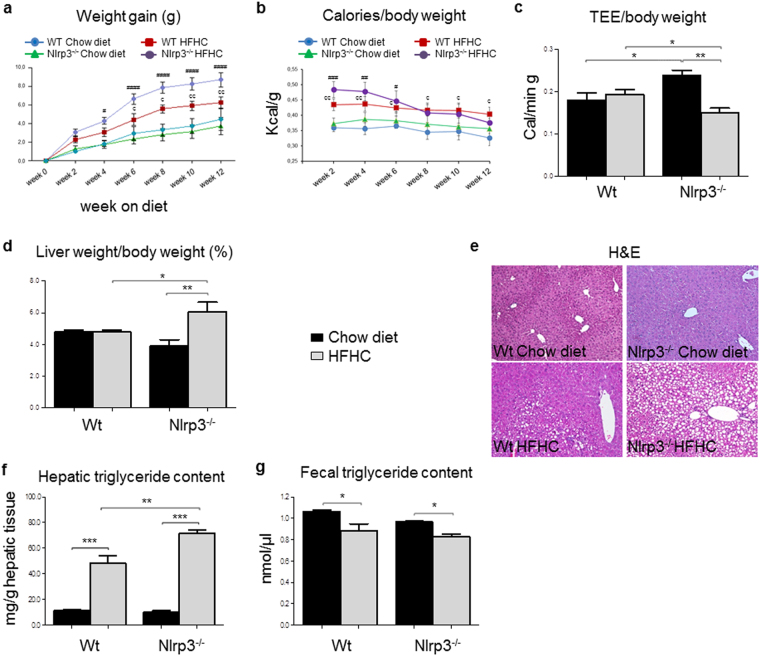
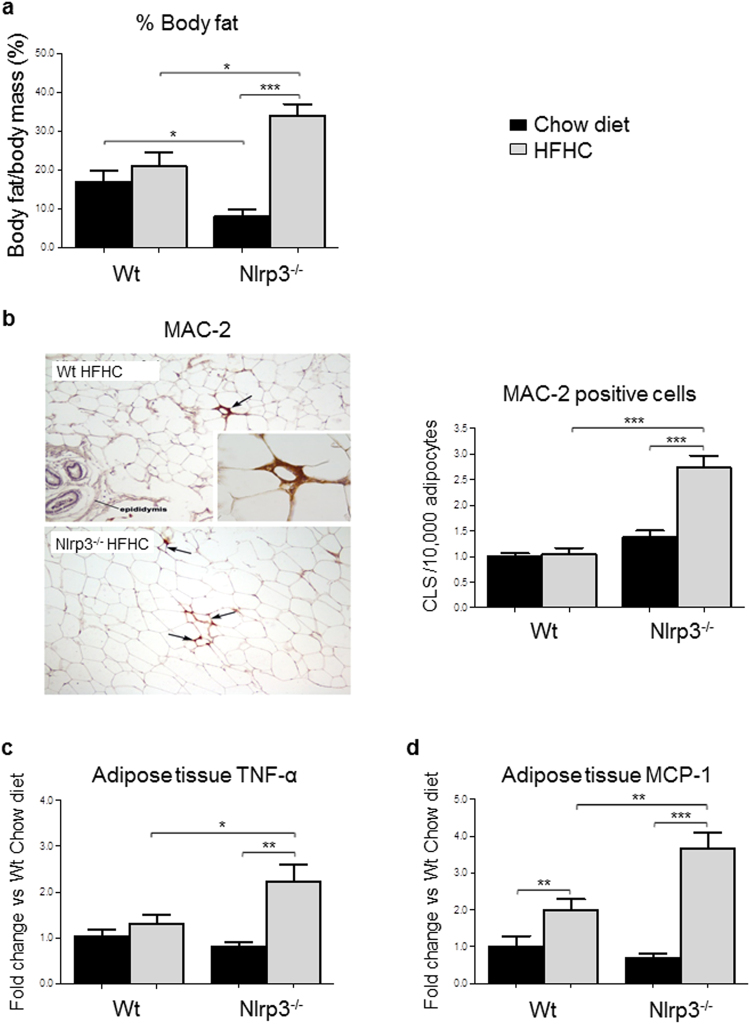
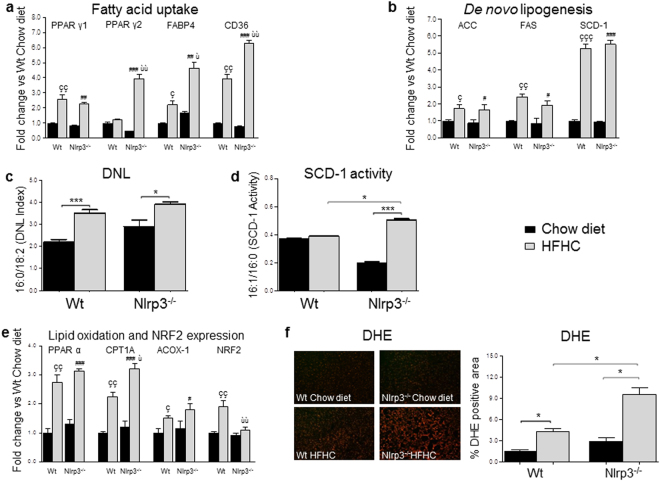
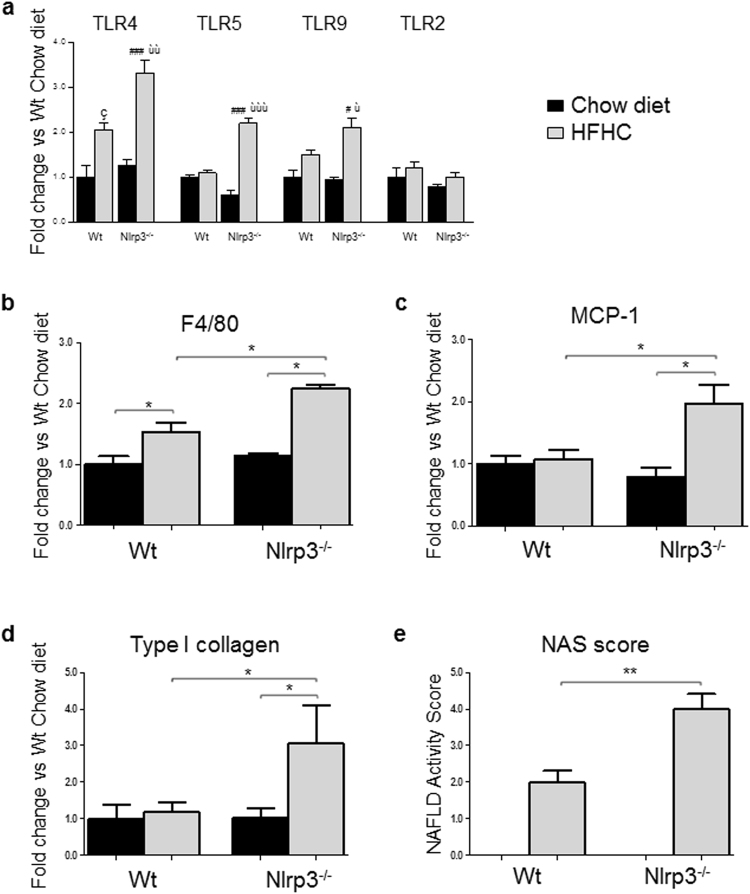
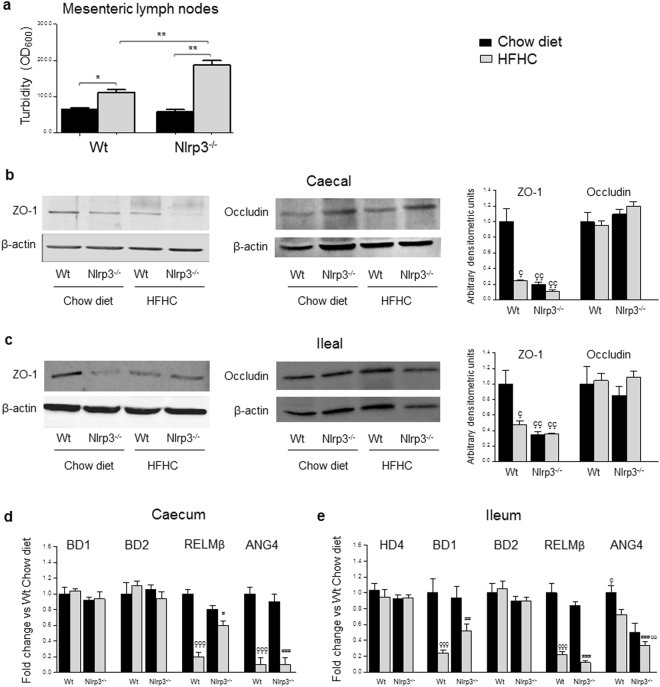
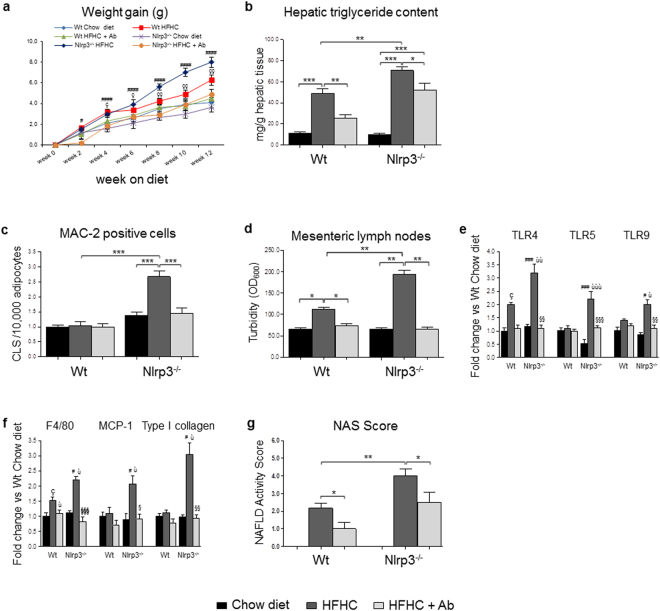
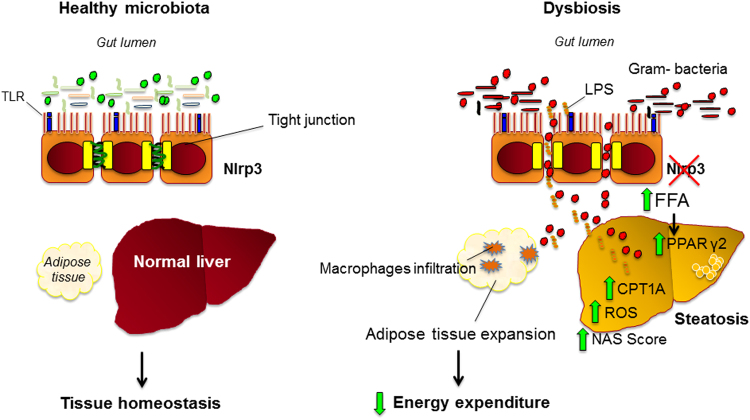
Non-Alcoholic Fatty Liver Disease (NAFLD) represents the most common form of chronic liver injury and can progress to cirrhosis and hepatocellular carcinoma. A “multi-hit” theory, involving high fat diet and signals from the gut-liver axis, has been hypothesized. The role of the NLRP3-inflammasome, which senses dangerous signals, is controversial. Nlrp3 −/− and wild-type mice were fed a Western-lifestyle diet with fructose in drinking water (HFHC) or a chow diet. Nlrp3 −/− -HFHC showed higher hepatic expression of PPAR γ2 (that regulates lipid uptake and storage) and triglyceride content, histological score of liver injury and greater adipose tissue inflammation. In Nlrp3 −/− -HFHC, dysregulation of gut immune response with impaired antimicrobial peptides expression, increased intestinal permeability and the occurrence of a dysbiotic microbiota led to bacterial translocation, associated with higher hepatic expression of TLR4 (an LPS receptor) and TLR9 (a receptor for double-stranded bacterial DNA). After antibiotic treatment, gram-negative species and bacterial translocation were reduced, and adverse effects restored both in liver and adipose tissue. In conclusion, the combination of a Western-lifestyle diet with innate immune dysfunction leads to NAFLD progression, mediated at least in part by dysbiosis and bacterial translocation, thus identifying new specific targets for NAFLD therapy.
Overview
The claims and statistics of this paper haven’t been checked yet.
Free: it reads the open-access text and checks the first 5 claims that cite a source we can check. Create a free account to check every claim.
Integrity signals
Registry
Cites
Statistics
Figures
Verification
Claims the paper makes
The claims and statistics of this paper haven’t been checked yet.
Free: it reads the open-access text and checks the first 5 claims that cite a source we can check. Create a free account to check every claim.
Claims other papers make about this one
Each is checked against this paper’s own text: does it say what the citing paper says it does?
The source backs part of the claim, not all of it — or backs it for a different population, condition or comparison.
In the citing paper
“Bacterial translocation can be defined as the passage of bacteria, or bacterial products such as LPS, into the portal circulation and happens when the complex regulation of the mechanisms of the gut barrier is lost [276], which has been linked with the occurrence of NAFLD, NASH, hepatic fibrosis, and HCC in several rodent models [227,228,277].”
From Gut-pancreas-liver Axis as a target for treatment of NAFLD/NASH (2020) · cites this paper as [227]
Experimental — accuracy not yet measuredThe source backs part of the claim, not all of it — or backs it for a different population, condition or comparison.
In the citing paper
“Increased intestinal permeability has been found in several conditions including exposure to HFD, specific microbiota, gliadin, allergens or even hyperglycemia [227,269].”
From Gut-pancreas-liver Axis as a target for treatment of NAFLD/NASH (2020) · cites this paper as [227]
Experimental — accuracy not yet measuredThe cited source says what the claim attributes to it.
In the citing paper
“Either in patients with NASH or animal models, the expression of inflammasome components was increased, indicating the potential role in the pathogenesis of liver injury [226,227,288,289,290,291].”
From Gut-pancreas-liver Axis as a target for treatment of NAFLD/NASH (2020) · cites this paper as [227]
In the citing paper
“In addition, it has been recently shown that a Western lifestyle diet associated with lack of NLRP3-inflammasome, increased fat storage in adipose tissue and liver leading to a more severe liver injury.”
From Gut-pancreas-liver Axis as a target for treatment of NAFLD/NASH (2020) · cites this paper as [227]
In the citing paper
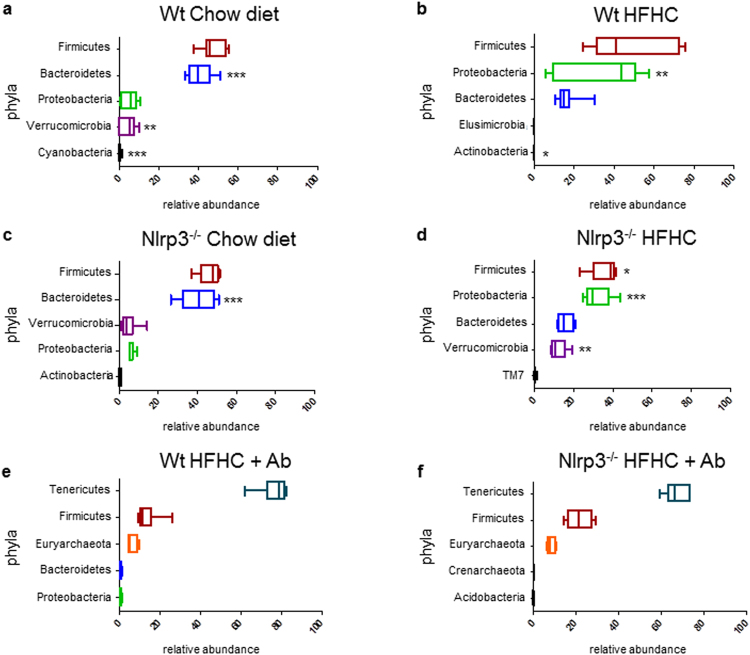
“This effect was associated with the expansion of Gram-negative Proteobacteria and Verrucomicrobia [227], the main pathobionts responsible of liver injury in a model of HFD and fibrosis [228], and together with Verrucomicrobia are known to be mucus-degrading bacteria, favoring bacterial translocation.”
From Gut-pancreas-liver Axis as a target for treatment of NAFLD/NASH (2020) · cites this paper as [227]
3 more claims about this paper
Create a free account to see every claim other papers make about this one.
Self-check
Percentages, sums and reported differences re-computed from the paper’s own numbers.
The self-check needs the paper’s full text.
Citations
Cites
A SIMPLE METHOD FOR THE ISOLATION AND PURIFICATION OF TOTAL LIPIDES FROM ANIMAL TISSUES
Folch, J., Lees, M., & Stanley, G. H. S. (1957) · Journal of Biological Chemistry · doi:10.1016/s0021-9258(18)64849-5 · Cited by 65,189
QIIME allows analysis of high-throughput community sequencing data
Caporaso, J. G., Kuczynski, J., Stombaugh, J., Bittinger, K., Bushman, F. D., Costello, E. K., Fierer, N., Peña, A. G., Goodrich, J. K., Gordon, J. I., et al. (2010) · Nature Methods · doi:10.1038/nmeth.f.303 · Cited by 34,887
Search and clustering orders of magnitude faster than BLAST
Edgar, R. C. (2010) · Bioinformatics · doi:10.1093/bioinformatics/btq461 · Cited by 20,826
Greengenes, a Chimera-Checked 16S rRNA Gene Database and Workbench Compatible with ARB
DeSantis, T. Z., Hugenholtz, P., Larsen, N., Rojas, M., Brodie, E. L., Keller, K., Huber, T., Dalevi, D., Hu, P., & Andersen, G. L. (2006) · Applied and Environmental Microbiology · doi:10.1128/aem.03006-05 · Cited by 10,891
Design and validation of a histological scoring system for nonalcoholic fatty liver disease†
Kleiner, D. E., Brunt, E. M., Van Natta, M., Behling, C., Contos, M. J., Cummings, O. W., Ferrell, L. D., Liu, Y., Torbenson, M. S., Unalp‐Arida, A., et al. (2005) · Hepatology · doi:10.1002/hep.20701 · Cited by 10,791 · cited 1×
“NAFLD was first described in 1980 and is divided into the histological categories of (1) Non-Alcoholic Fatty Liver, which includes patients with isolated hepatic steatosis and patients with steatosis and mild non-specific inflammation, and (2) Non-Alcoholic Steatohepatitis (NASH), which is distinguished from the forme…”
MethodCross-talk between Akkermansia muciniphila and intestinal epithelium controls diet-induced obesity
Everard, A., Belzer, C., Geurts, L., Ouwerkerk, J. P., Druart, C., Bindels, L. B., Guiot, Y., Derrien, M., Muccioli, G. G., Delzenne, N. M., et al. (2013) · Proceedings of the National Academy of Sciences · doi:10.1073/pnas.1219451110 · Cited by 4,511
Donnelly, K. L., Smith, C. I., Schwarzenberg, S. J., Jessurun, J., Boldt, M. D., & Parks, E. J. (2005) · Journal of Clinical Investigation · doi:10.1172/jci23621 · Cited by 3,604
The innate immune response to bacterial flagellin is mediated by Toll-like receptor 5
Hayashi, F., Smith, K. D., Ozinsky, A., Hawn, T. R., Yi, E. C., Goodlett, D. R., Eng, J. K., Akira, S., Underhill, D. M., & Aderem, A. (2001) · Nature · doi:10.1038/35074106 · Cited by 3,601
Inflammasomes: mechanism of action, role in disease, and therapeutics
Guo, H., Callaway, J. B., & Ting, J. P.-Y. (2015) · Nature Medicine · doi:10.1038/nm.3893 · Cited by 3,340
The NLRP3 inflammasome instigates obesity-induced inflammation and insulin resistance
Vandanmagsar, B., Youm, Y.-H., Ravussin, A., Galgani, J. E., Stadler, K., Mynatt, R. L., Ravussin, E., Stephens, J. M., & Dixit, V. D. (2011) · Nature Medicine · doi:10.1038/nm.2279 · Cited by 2,655
Cinti, S., Mitchell, G., Barbatelli, G., Murano, I., Ceresi, E., Faloia, E., Wang, S., Fortier, M., Greenberg, A. S., & Obin, M. S. (2005) · Journal of Lipid Research · doi:10.1194/jlr.m500294-jlr200 · Cited by 2,529
Self-citationInflammasome-mediated dysbiosis regulates progression of NAFLD and obesity
Henao-Mejia, J., Elinav, E., Jin, C., Hao, L., Mehal, W. Z., Strowig, T., Thaiss, C. A., Kau, A. L., Eisenbarth, S. C., Jurczak, M. J., et al. (2012) · Nature · doi:10.1038/nature10809 · Cited by 2,435
Nonalcoholic Fatty Liver Disease: A Systematic Review
Rinella, M. E. (2015) · JAMA · doi:10.1001/jama.2015.5370 · Cited by 2,267
Plovier, H., Everard, A., Druart, C., Depommier, C., Van Hul, M., Geurts, L., Chilloux, J., Ottman, N., Duparc, T., Lichtenstein, L., et al. (2017) · Nature Medicine · doi:10.1038/nm.4236 · Cited by 2,204
Wong, R. J., Aguilar, M., Cheung, R., Perumpail, R. B., Harrison, S. A., Younossi, Z. M., & Ahmed, A. (2015) · Gastroenterology · doi:10.1053/j.gastro.2014.11.039 · Cited by 1,819
Intestinal permeability – a new target for disease prevention and therapy
Bischoff, S. C., Barbara, G., Buurman, W., Ockhuizen, T., Schulzke, J.-D., Serino, M., Tilg, H., Watson, A., & Wells, J. M. (2014) · BMC Gastroenterology · doi:10.1186/s12876-014-0189-7 · Cited by 1,755
Pawlak, M., Lefebvre, P., & Staels, B. (2015) · Journal of Hepatology · doi:10.1016/j.jhep.2014.10.039 · Cited by 1,578
Macia, L., Tan, J., Vieira, A. T., Leach, K., Stanley, D., Luong, S., Maruya, M., Ian McKenzie, C., Hijikata, A., Wong, C., et al. (2015) · Nature Communications · doi:10.1038/ncomms7734 · Cited by 1,439
The tight junction: a multifunctional complex
Schneeberger, E. E., & Lynch, R. D. (2004) · American Journal of Physiology-Cell Physiology · doi:10.1152/ajpcell.00558.2003 · Cited by 1,409
Non-alcoholic fatty liver disease as a cause and a consequence of metabolic syndrome
Yki-Järvinen, H. (2014) · The Lancet Diabetes & Endocrinology · doi:10.1016/s2213-8587(14)70032-4 · Cited by 1,259
Brunt, E. M., Kleiner, D. E., Wilson, L. A., Belt, P., & Neuschwander-Tetri, B. A. (2011) · Hepatology · doi:10.1002/hep.24127 · Cited by 1,251
Oxidative stress as a crucial factor in liver diseases
Cichoż-Lach, H. (2014) · World Journal of Gastroenterology · doi:10.3748/wjg.v20.i25.8082 · Cited by 1,216
NLRP3 inflammasome blockade reduces liver inflammation and fibrosis in experimental NASH in mice
Mridha, A. R., Wree, A., Robertson, A. A. B., Yeh, M. M., Johnson, C. D., Van Rooyen, D. M., Haczeyni, F., Teoh, N. C.-H., Savard, C., Ioannou, G. N., et al. (2017) · Journal of Hepatology · doi:10.1016/j.jhep.2017.01.022 · Cited by 1,110
Loss of stearoyl–CoA desaturase-1 function protects mice against adiposity
Ntambi, J. M., Miyazaki, M., Stoehr, J. P., Lan, H., Kendziorski, C. M., Yandell, B. S., Song, Y., Cohen, P., Friedman, J. M., & Attie, A. D. (2002) · Proceedings of the National Academy of Sciences · doi:10.1073/pnas.132384699 · Cited by 1,095
Oxidative stress in health and disease: The therapeutic potential of Nrf2 activation
Hybertson, B. M., Gao, B., Bose, S. K., & McCord, J. M. (2011) · Molecular Aspects of Medicine · doi:10.1016/j.mam.2011.10.006 · Cited by 1,015
Fasano, A. (2011) · Physiological Reviews · doi:10.1152/physrev.00003.2008 · Cited by 1,003
Zaki, M. H., Boyd, K. L., Vogel, P., Kastan, M. B., Lamkanfi, M., & Kanneganti, T.-D. (2010) · Immunity · doi:10.1016/j.immuni.2010.03.003 · Cited by 989
Murphy, E. F., Cotter, P. D., Healy, S., Marques, T. M., O'Sullivan, O., Fouhy, F., Clarke, S. F., O'Toole, P. W., Quigley, E. M., Stanton, C., et al. (2010) · Gut · doi:10.1136/gut.2010.215665 · Cited by 946
Gaggini, M., Morelli, M., Buzzigoli, E., DeFronzo, R., Bugianesi, E., & Gastaldelli, A. (2013) · Nutrients · doi:10.3390/nu5051544 · Cited by 822
Self-citationSchneeberger, M., Everard, A., Gómez-Valadés, A. G., Matamoros, S., Ramírez, S., Delzenne, N. M., Gomis, R., Claret, M., & Cani, P. D. (2015) · Scientific Reports · doi:10.1038/srep16643 · Cited by 798
Inflammasome is a central player in the induction of obesity and insulin resistance
Stienstra, R., van Diepen, J. A., Tack, C. J., Zaki, M. H., van de Veerdonk, F. L., Perera, D., Neale, G. A., Hooiveld, G. J., Hijmans, A., Vroegrijk, I., et al. (2011) · Proceedings of the National Academy of Sciences · doi:10.1073/pnas.1100255108 · Cited by 727
Wlodarska, M., Thaiss, C. A., Nowarski, R., Henao-Mejia, J., Zhang, J.-P., Brown, E. M., Frankel, G., Levy, M., Katz, M. N., Philbrick, W. M., et al. (2014) · Cell · doi:10.1016/j.cell.2014.01.026 · Cited by 708
Gavrilova, O., Haluzik, M., Matsusue, K., Cutson, J. J., Johnson, L., Dietz, K. R., Nicol, C. J., Vinson, C., Gonzalez, F. J., & Reitman, M. L. (2003) · Journal of Biological Chemistry · doi:10.1074/jbc.m300043200 · Cited by 707
Hepatic steatosis: a role for de novo lipogenesis and the transcription factor SREBP‐1c
Ferré, P., & Foufelle, F. (2010) · Diabetes, Obesity and Metabolism · doi:10.1111/j.1463-1326.2010.01275.x · Cited by 704
Fasano, A., Not, T., Wang, W., Uzzau, S., Berti, I., Tommasini, A., & Goldblum, S. E. (2000) · The Lancet · doi:10.1016/s0140-6736(00)02169-3 · Cited by 670
Self-citationSterile inflammation in the liver
Kubes, P., & Mehal, W. Z. (2012) · Gastroenterology · doi:10.1053/j.gastro.2012.09.008 · Cited by 666
Regulation of PPAR gamma gene expression by nutrition and obesity in rodents.
Vidal-Puig, A., Jimenez-Liñan, M., Lowell, B. B., Hamann, A., Hu, E., Spiegelman, B., Flier, J. S., & Moller, D. E. (1996) · Journal of Clinical Investigation · doi:10.1172/jci118703 · Cited by 655
Csak, T., Ganz, M., Pespisa, J., Kodys, K., Dolganiuc, A., & Szabo, G. (2011) · Hepatology · doi:10.1002/hep.24341 · Cited by 645
Radioactive and Stable Isotope Tracers in Biomedicine: Principles and Practice of Kinetic Analysis
Wolfe, R. R. (1992) · Medical Entomology and Zoology · Cited by 610
Inflammasome activation and function in liver disease
Szabo, G., & Petrasek, J. (2015) · Nature Reviews Gastroenterology & Hepatology · doi:10.1038/nrgastro.2015.94 · Cited by 597
The Subtle Balance between Lipolysis and Lipogenesis: A Critical Point in Metabolic Homeostasis
Saponaro, C., Gaggini, M., Carli, F., & Gastaldelli, A. (2015) · Nutrients · doi:10.3390/nu7115475 · Cited by 529
Self-citationGanesh, B. P., Klopfleisch, R., Loh, G., & Blaut, M. (2013) · PLoS ONE · doi:10.1371/journal.pone.0074963 · Cited by 522
NLRP3 inflammasome activation is required for fibrosis development in NAFLD
Wree, A., McGeough, M. D., Peña, C. A., Schlattjan, M., Li, H., Inzaugarat, M. E., Messer, K., Canbay, A., Hoffman, H. M., & Feldstein, A. E. (2014) · Journal of Molecular Medicine · doi:10.1007/s00109-014-1170-1 · Cited by 486
NLRP3 inflammasome plays a key role in the regulation of intestinal homeostasis
Hirota, S. A., Ng, J., Lueng, A., Khajah, M., Parhar, K., Li, Y., Lam, V., Potentier, M. S., Ng, K., Bawa, M., et al. (2011) · Inflammatory Bowel Diseases · doi:10.1002/ibd.21478 · Cited by 431
de Wit, N., Derrien, M., Bosch-Vermeulen, H., Oosterink, E., Keshtkar, S., Duval, C., de Vogel-van den Bosch, J., Kleerebezem, M., Müller, M., & van der Meer, R. (2012) · American Journal of Physiology-Gastrointestinal and Liver Physiology · doi:10.1152/ajpgi.00488.2011 · Cited by 428
Mitochondrial metabolism mediates oxidative stress and inflammation in fatty liver
Satapati, S., Kucejova, B., Duarte, J. A. G., Fletcher, J. A., Reynolds, L., Sunny, N. E., He, T., Nair, L. A., Livingston, K., Fu, X., et al. (2015) · Journal of Clinical Investigation · doi:10.1172/jci82204 · Cited by 399
Morán‐Salvador, E., López‐Parra, M., García‐Alonso, V., Titos, E., Martínez‐Clemente, M., González‐Périz, A., López‐Vicario, C., Barak, Y., Arroyo, V., & Clària, J. (2011) · The FASEB Journal · doi:10.1096/fj.10-173716 · Cited by 389
Kohli, R., Kirby, M., Xanthakos, S. A., Softic, S., Feldstein, A. E., Saxena, V., Tang, P. H., Miles, L., Miles, M. V., Balistreri, W. F., et al. (2010) · Hepatology · doi:10.1002/hep.23797 · Cited by 376
PPARγ2 regulates lipogenesis and lipid accumulation in steatotic hepatocytes
Schadinger, S. E., Bucher, N. L. R., Schreiber, B. M., & Farmer, S. R. (2005) · American Journal of Physiology-Endocrinology and Metabolism · doi:10.1152/ajpendo.00513.2004 · Cited by 376
Antimicrobial peptides and gut microbiota in homeostasis and pathology
Ostaff, M. J., Stange, E. F., & Wehkamp, J. (2013) · EMBO Molecular Medicine · doi:10.1002/emmm.201201773 · Cited by 329
Toll-like receptors as targets in chronic liver diseases
Mencin, A., Kluwe, J., & Schwabe, R. F. (2009) · Gut · doi:10.1136/gut.2008.156307 · Cited by 329
Dietary fructose in nonalcoholic fatty liver disease
Vos, M. B., & Lavine, J. E. (2013) · Hepatology · doi:10.1002/hep.26299 · Cited by 314
NLRP3 at the interface of metabolism and inflammation
Haneklaus, M., & O'Neill, L. A. J. (2015) · Immunological Reviews · doi:10.1111/imr.12285 · Cited by 294
Food, immunity, and the microbiome
Tilg, H., & Moschen, A. R. (2015) · Gastroenterology · doi:10.1053/j.gastro.2014.12.036 · Cited by 292
Dysbiosis contributes to fibrogenesis in the course of chronic liver injury in mice
De Minicis, S., Rychlicki, C., Agostinelli, L., Saccomanno, S., Candelaresi, C., Trozzi, L., Mingarelli, E., Facinelli, B., Magi, G., Palmieri, C., et al. (2014) · Hepatology · doi:10.1002/hep.26695 · Cited by 279
Self-citationIntestinal antimicrobial peptides during homeostasis, infection, and disease
Muniz, L. R., Knosp, C., & Yeretssian, G. (2012) · Frontiers in Immunology · doi:10.3389/fimmu.2012.00310 · Cited by 252
Tomas, J., Mulet, C., Saffarian, A., Cavin, J.-B., Ducroc, R., Regnault, B., Kun Tan, C., Duszka, K., Burcelin, R., Wahli, W., et al. (2016) · Proceedings of the National Academy of Sciences · doi:10.1073/pnas.1612559113 · Cited by 249
The Gordian Knot of dysbiosis, obesity and NAFLD
Mehal, W. Z. (2013) · Nature Reviews Gastroenterology & Hepatology · doi:10.1038/nrgastro.2013.146 · Cited by 175
A 360-degree overview of paediatric NAFLD: Recent insights
Nobili, V., Svegliati-Baroni, G., Alisi, A., Miele, L., Valenti, L., & Vajro, P. (2013) · Journal of Hepatology · doi:10.1016/j.jhep.2012.12.003 · Cited by 171
Self-citationYang, G., Lee, H. E., & Lee, J. Y. (2016) · Scientific Reports · doi:10.1038/srep24399 · Cited by 170
Palmitoleic acid is elevated in fatty liver disease and reflects hepatic lipogenesis
Lee, J. J., Lambert, J. E., Hovhannisyan, Y., Ramos-Roman, M. A., Trombold, J. R., Wagner, D. A., & Parks, E. J. (2015) · The American Journal of Clinical Nutrition · doi:10.3945/ajcn.114.092262 · Cited by 164
Ratsimandresy, R. A., Indramohan, M., Dorfleutner, A., & Stehlik, C. (2017) · Cellular & Molecular Immunology · doi:10.1038/cmi.2016.35 · Cited by 161
Intestinal Dysbiosis Contributes to the Delayed Gastrointestinal Transit in High-Fat Diet Fed Mice
Anitha, M., Reichardt, F., Tabatabavakili, S., Nezami, B. G., Chassaing, B., Mwangi, S., Vijay-Kumar, M., Gewirtz, A., & Srinivasan, S. (2016) · Cellular and Molecular Gastroenterology and Hepatology · doi:10.1016/j.jcmgh.2015.12.008 · Cited by 129
Inflammasomes of the intestinal epithelium
Sellin, M. E., Maslowski, K. M., Maloy, K. J., & Hardt, W. (2015) · Trends in Immunology · doi:10.1016/j.it.2015.06.002 · Cited by 101
HCC Development Is Associated to Peripheral Insulin Resistance in a Mouse Model of NASH
De Minicis, S., Agostinelli, L., Rychlicki, C., Sorice, G. P., Saccomanno, S., Candelaresi, C., Giaccari, A., Trozzi, L., Pierantonelli, I., Mingarelli, E., et al. (2014) · PLoS ONE · doi:10.1371/journal.pone.0097136 · Cited by 97
Self-citationRole of Inflammasomes in Intestinal Inflammation and Crohnʼs Disease
Opipari, A. W., & Franchi, L. (2014) · Inflammatory Bowel Diseases · doi:10.1097/mib.0000000000000230 · Cited by 84
Aminzadeh, M. A., Reisman, S. A., Vaziri, N. D., Khazaeli, M., Yuan, J. J., & Meyer, C. J. (2013) · Xenobiotica · doi:10.3109/00498254.2013.852705 · Cited by 79
Ectopic fat: the true culprit linking obesity and cardiovascular disease?
Morelli, M., Gaggini, M., Daniele, G., Marraccini, P., Sicari, R., & Gastaldelli, A. (2013) · Thrombosis and Haemostasis · doi:10.1160/th13-04-0285 · Cited by 68
Self-citationCYP3A induction aggravates endotoxemic liver injury via reactive oxygen species in male rats
Minamiyama, Y., Takemura, S., Toyokuni, S., Imaoka, S., Funae, Y., Hirohashi, K., Yoshikawa, T., & Okada, S. (2004) · Free Radical Biology and Medicine · doi:10.1016/j.freeradbiomed.2004.05.022 · Cited by 42
Ringling, R. E., Gastecki, M. L., Woodford, M. L., Lum‐Naihe, K., Grant, R. W., Pulakat, L., Vieira‐Potter, V. J., & Padilla, J. (2016) · PLoS ONE · doi:10.1371/journal.pone.0161939 · Cited by 30
Oberbach, A., Haange, S., Schlichting, N. S., Heinrich, M., Lehmann, S., Till, H., Hugenholtz, F., Kullnick, Y., Smidt, H., Frank, K., et al. (2017) · Journal of Proteome Research · doi:10.1021/acs.jproteome.6b00973 · Cited by 27
Cited by
Lipotoxicity and the gut-liver axis in NASH pathogenesis
Marra, F., & Svegliati-Baroni, G. (2018) · Journal of Hepatology · doi:10.1016/j.jhep.2017.11.014 · Cited by 847
“Bacteria are presented as phylum, order, family, genus, or species, in relative abundance values and more than 90% of the microbiota belongs to two phyla, i.e. Firmicutes and Bacteroidetes, followed by Actinobacteria and Verrucomicrobia [80].”
BackgroundInfluentialSelf-citationRole of Oxidative Stress in Pathophysiology of Nonalcoholic Fatty Liver Disease
Masarone, M., Rosato, V., Dallio, M., Gravina, A. G., Aglitti, A., Loguercio, C., Federico, A., & Persico, M. (2018) · Oxidative Medicine and Cellular Longevity · doi:10.1155/2018/9547613 · Cited by 648
“More recently, these data were reconfirmed in a high-fat- and highcarbohydrate-diet mice model, showing that an abundance of Verrucomicrobia and Proteobacteria was associated to a lack in NPRL-3 inflammasome and a higher hepatic expression of TLR4 and TLR9, resulting in a worse degree of liver injury that was restored…”
Diverging inflammasome signals in tumorigenesis and potential targeting
Karki, R., & Kanneganti, T.-D. (2019) · Nature Reviews Cancer · doi:10.1038/s41568-019-0123-y · Cited by 641
Contribution of the Intestinal Microbiome and Gut Barrier to Hepatic Disorders
Chopyk, D. M., & Grakoui, A. (2020) · Gastroenterology · doi:10.1053/j.gastro.2020.04.077 · Cited by 490
Role of inflammatory response in liver diseases: Therapeutic strategies
Campo, J. A. D., Gallego, P., & Grande, L. (2018) · World Journal of Hepatology · doi:10.4254/wjh.v10.i1.1 · Cited by 348
Metadata
- Authors
- Pierantonelli, I., Rychlicki, C., Agostinelli, L., Giordano, D. M., Gaggini, M., Fraumene, C., Saponaro, C., Manghina, V., Sartini, L., Mingarelli, E., Pinto, C., Buzzigoli, E., Trozzi, L., Giordano, A., Marzioni, M., Minicis, S. D., Uzzau, S., Cinti, S., Gastaldelli, A., & Svegliati-Baroni, G.
- Affiliations
- Marche Polytechnic University (IT)
- Istituto di Fisiologia Clinica (IT)
- University of Sassari (IT)
- ORCID
- Venue
- Scientific Reports
- Published
- 2017-09-22
- Volume
- 7
- Issue
- 1
- Pages
- 12200-12200
- ISSN
- 2045-2322 (ISSN-L)
- PMC
- PMC5610266
- OpenAlex
- W2754155267
- Cited by
- 82
- References
- 71
- Citations by year
- 2026: 5 · 2025: 5 · 2024: 9 · 2023: 12 · 2022: 8 · 2021: 10 · 2020: 13 · 2019: 10 · 2018: 9 · 2017: 1
- FWCI
- 7.07
- Type
- journal article
- Language
- en
- Update notices
- correction (2017-12-11)
- Open access
- gold
- doi.org
- Licence
- cc-by
- creativecommons.org/licenses/by/4.0 (tdm)
- creativecommons.org/licenses/by/4.0 (vor)
- Locations
- Scientific Reports (publishedVersion, cc-by)
- Europe PMC (PubMed Central) (publishedVersion, cc-by)
- PubMed Central (publishedVersion, cc-by)
- PubMed (publishedVersion)
- CINECA IRIS Institutial research information system (University of Pisa) (submittedVersion)
- Funders
- European Commission (241762)
- Ministero della Salute (GR-2010, GR-2010-2306996)
- Ministero dell’Istruzione, dell’Università e della Ricerca (2007–2013, PRIN 2009, FIRB2010)
- Topics
- Health Sciences › Medicine › Hepatology › Liver Disease Diagnosis and Treatment
- Life Sciences › Biochemistry, Genetics and Molecular Biology › Molecular Biology › Gut microbiota and health
- Life Sciences › Biochemistry, Genetics and Molecular Biology › Molecular Biology › Inflammasome and immune disorders
- Keywords
- NLRP3 inflammasome, non-alcoholic fatty liver disease, gut-liver axis, gut dysbiosis, bacterial translocation, Western diet, fructose, PPARγ, adipose tissue inflammation, intestinal permeability, antimicrobial peptides, TLR4, TLR9, innate immunity, antibiotic therapy, Gram-negative bacteria
- MeSH terms
- Gastrointestinal Microbiome, NLR Family, Pyrin Domain-Containing 3 Protein, Animals, Anti-Bacterial Agents, Disease Models, Animal, Fructose, Humans, Immunity, Innate, Intestinal Mucosa, Male, Mice, Inbred C57BL, Permeability, Phenotype, Mice, Knockout, Disease Progression, Bacterial Translocation, Toll-Like Receptor 4, Toll-Like Receptor 9, Mice, Inflammasomes, Dysbiosis, Non-alcoholic Fatty Liver Disease, Diet, Western
About these checks
Registry, retraction, Cites and statistics results are computed, not judged, with one exception: a printed reference that no index lists is read once by a model before it counts as a citation error. Claims are extracted by a model and kept only when their quote appears verbatim in the text; each cited source is then checked, with a model’s help, for whether it says what the claim relies on. Those verdicts can be wrong — read the claim’s quote and the cited source before relying on one.
Statistics and arithmetic are recomputed, not judged.
Confidence bands are shown only for fields calibrated on our annotated test set. None is calibrated yet, so no band is shown.
What counts as a claim ›How we measure confidence ›How we check this ›
Are you an author, or do you see a problem with this page? Request a review
Data sources
Bibliographic data: Semantic Scholar, OpenAlex, Crossref.
Contains information from the Semantic Scholar Academic Graph Datasets, made available under the ODC Attribution License (ODC-BY 1.0).
Semantic Scholar’s data is described in: Kinney, R., et al. (2023). The Semantic Scholar Open Data Platform. arXiv:2301.10140.
