

Short term changes in the proteome of human cerebral organoids induced by 5-MeO-DMT
Open accessPublished version of a preprint
The DOI matches its Crossref record; 91 of the 91 references it cites were found in a registry or an index.
Abstract
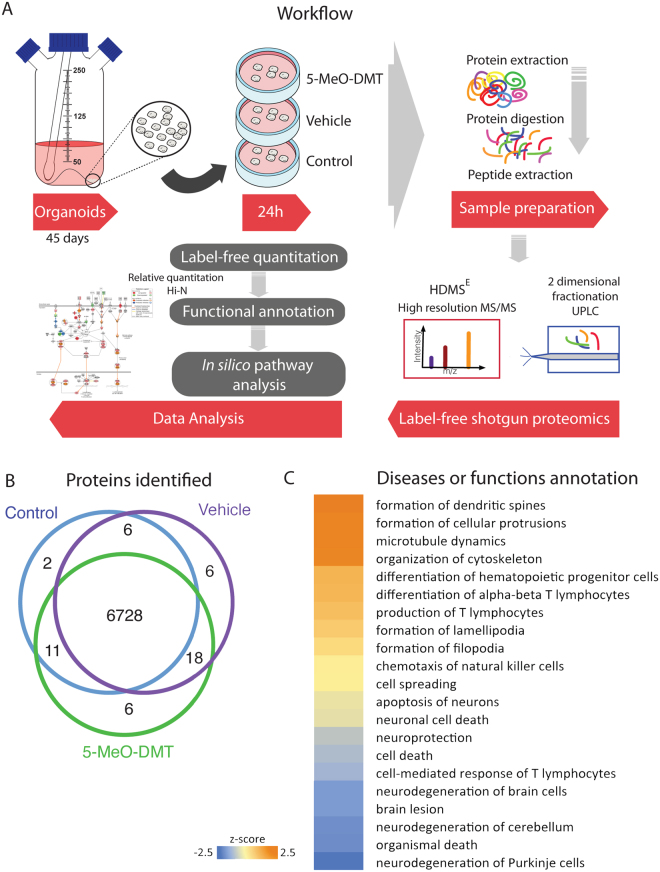
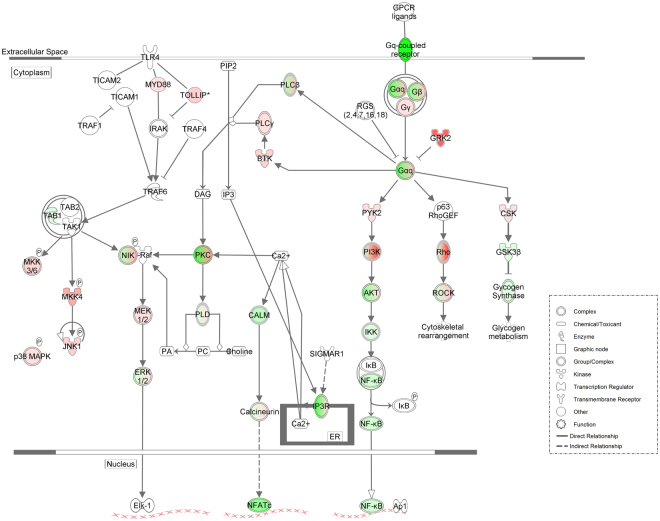
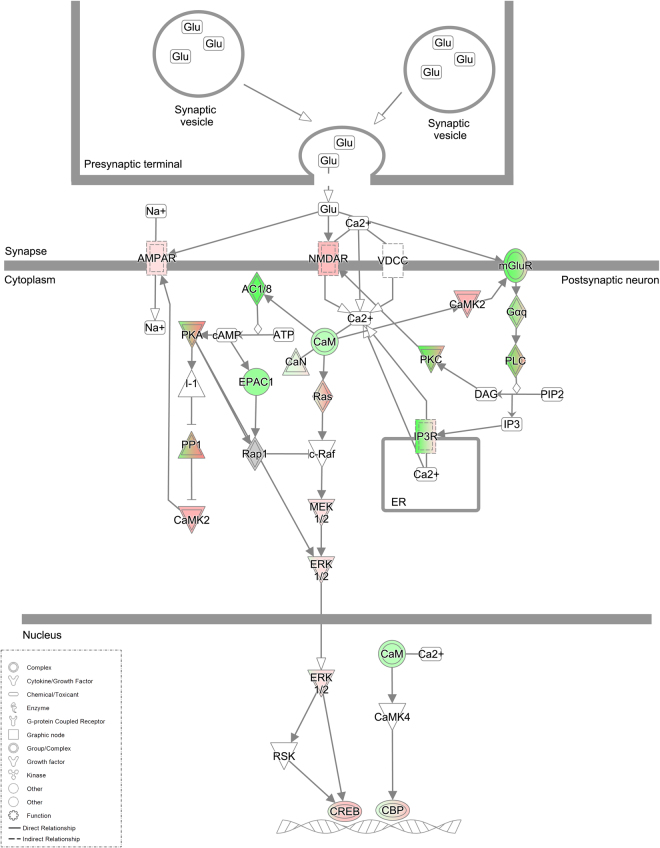
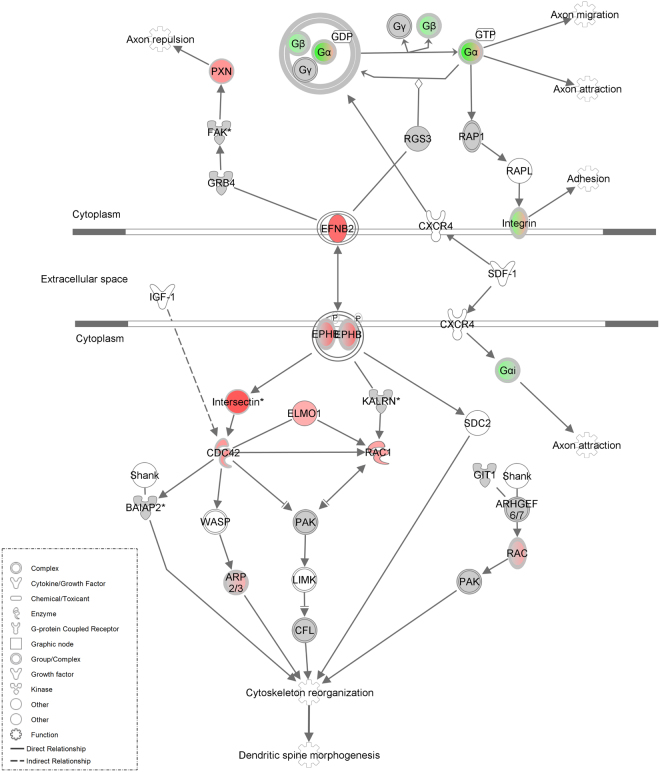
Dimethyltryptamines are entheogenic serotonin-like molecules present in traditional Amerindian medicine recently associated with cognitive gains, antidepressant effects, and changes in brain areas related to attention. Legal restrictions and the lack of adequate experimental models have limited the understanding of how such substances impact human brain metabolism. Here we used shotgun mass spectrometry to explore proteomic differences induced by 5-methoxy-N,N-dimethyltryptamine (5-MeO-DMT) on human cerebral organoids. Out of the 6,728 identified proteins, 934 were found differentially expressed in 5-MeO-DMT-treated cerebral organoids. In silico analysis reinforced previously reported anti-inflammatory actions of 5-MeO-DMT and revealed modulatory effects on proteins associated with long-term potentiation, the formation of dendritic spines, including those involved in cellular protrusion formation, microtubule dynamics, and cytoskeletal reorganization. Our data offer the first insight about molecular alterations caused by 5-MeO-DMT in human cerebral organoids.
Overview
The claims and statistics of this paper haven’t been checked yet.
Free: it reads the open-access text and checks the first 5 claims that cite a source we can check. Create a free account to check every claim.
Integrity signals
Registry
Cites
Statistics
Figures
Verification
Claims the paper makes
The claims and statistics of this paper haven’t been checked yet.
Free: it reads the open-access text and checks the first 5 claims that cite a source we can check. Create a free account to check every claim.
Claims other papers make about this one
Each is checked against this paper’s own text: does it say what the citing paper says it does?
The source backs part of the claim, not all of it — or backs it for a different population, condition or comparison.
In the citing paper
“In human cerebral organoids (n = 4–5), 5-MeO-DMT (13 μM) administered for 24 h directly resulted in the stimulated synthesis of proteins involved in plasticity-related intracellular signaling pathways such as NMDAR, alpha-amino-3-hydroxy-methyl-5-4-isoxazolpropionic receptor (AMPAR), and Eprhin B2 (43).”
From Psychedelics and Neuroplasticity: A Systematic Review Unraveling the Biological Underpinnings of Psychedelics. (2021) · cites this paper as [43]
Experimental — accuracy not yet measuredThe source backs part of the claim, not all of it — or backs it for a different population, condition or comparison.
In the citing paper
“Increased glutamate in the cortex release can further stimulate synaptic plasticity via AMPAR on pyramidal neurons in cortical layer V and subsequent transportation (trafficking) of AMPAR to the postsynaptic cell membrane (43).”
From Psychedelics and Neuroplasticity: A Systematic Review Unraveling the Biological Underpinnings of Psychedelics. (2021) · cites this paper as [43]
Experimental — accuracy not yet measuredThe source backs part of the claim, not all of it — or backs it for a different population, condition or comparison.
In the citing paper
“in vitro studies have recently provided evidence of anti-inflammatory, neuroregenerative, and anti-addictive effects induced by 5-MeO-DMT (Dakic et al. 2017).”
From Prospective examination of synthetic 5-methoxy-N,N-dimethyltryptamine inhalation: effects on salivary IL-6, cortisol levels, affect, and non-judgment (2020) · cites this paper as Dakic et al. 2017
Experimental — accuracy not yet measuredThe cited source says what the claim attributes to it.
In the citing paper
“Evidence from in vitro studies (n = 5) suggests that psychedelics stimulate molecular and cellular neuroplasticity (41–44, 53).”
From Psychedelics and Neuroplasticity: A Systematic Review Unraveling the Biological Underpinnings of Psychedelics. (2021) · cites this paper as [43]
Self-check
Percentages, sums and reported differences re-computed from the paper’s own numbers.
The self-check needs the paper’s full text.
Citations
Cites
(2023) · doi:10.1126/science · Cited by 6,063
Cerebral organoids model human brain development and microcephaly
Lancaster, M. A., Renner, M., Martin, C.-A., Wenzel, D., Bicknell, L. S., Hurles, M. E., Homfray, T., Penninger, J. M., Jackson, A. P., & Knoblich, J. A. (2013) · Nature · doi:10.1038/nature12517 · Cited by 5,372
Malenka, R. C., & Bear, M. F. (2004) · Neuron · doi:10.1016/j.neuron.2004.09.012 · Cited by 3,968
Organogenesis in a dish: Modeling development and disease using organoid technologies
Lancaster, M. A., & Knoblich, J. A. (2014) · Science · doi:10.1126/science.1247125 · Cited by 2,931
Tononi, G., & Cirelli, C. (2014) · Neuron · doi:10.1016/j.neuron.2013.12.025 · Cited by 2,356
Brain-Region-Specific Organoids Using Mini-bioreactors for Modeling ZIKV Exposure
Qian, X., Nguyen, H. N., Song, M. M., Hadiono, C., Ogden, S. C., Hammack, C., Yao, B., Hamersky, G. R., Jacob, F., Zhong, C., et al. (2016) · Cell · doi:10.1016/j.cell.2016.04.032 · Cited by 2,127
Generation of cerebral organoids from human pluripotent stem cells
Lancaster, M. A., & Knoblich, J. A. (2014) · Nature Protocols · doi:10.1038/nprot.2014.158 · Cited by 1,823
Synaptic plasticity and depression: new insights from stress and rapid-acting antidepressants
Duman, R. S., Aghajanian, G. K., Sanacora, G., & Krystal, J. H. (2016) · Nature Medicine · doi:10.1038/nm.4050 · Cited by 1,750
Griffiths, R. R., Richards, W. A., McCann, U., & Jesse, R. (2006) · Psychopharmacology · doi:10.1007/s00213-006-0457-5 · Cited by 1,684
Synaptic Dysfunction in Depression: Potential Therapeutic Targets
Duman, R. S., & Aghajanian, G. K. (2012) · Science · doi:10.1126/science.1222939 · Cited by 1,651
Research works printed but not linked: 1
- Holmstedt B Lindgren J Chemical constituents and pharmacology of South American snuffs Psychopharmacol Bull 1967 4 16 5615549
Cited by
Items 101–133 of 133
Heesen, S. H., Chang, M., Wehr, M. C., & Rossner, M. J. (2026) · Current Opinion in Genetics & Development · doi:10.1016/j.gde.2025.102425 · Cited by 3
The protective effect of DMT against neurodegeneration
Frecska, E., Kovacs, A. I., & Szabó, A. (2025) · International review of neurobiology · doi:10.1016/bs.irn.2025.04.010 · Cited by 4
Low, Z. X. B., Yong, S. J., AlRasheed, H. A., Al‐Subaie, M. F., Kaabi, N. A., Alfaresi, M. S., Albayat, H., Alotaibi, J., bshabshe, A. A. A. A., Alwashmi, A. S. S., et al. (2025) · Progress in Neuro-Psychopharmacology and Biological Psychiatry · doi:10.1016/j.pnpbp.2025.111279 · Cited by 4
Psilocin fosters neuroplasticity in iPSC-derived human cortical neurons
Schmidt, M., Hoffrichter, A., Davoudi, M., Horschitz, S., Lau, T., Meinhardt, M. W., Spanagel, R., Ladewig, J., Köhr, G., & Koch, P. (2026) · eLife · doi:10.7554/elife.104006.3 · Cited by 10
Bernal, A. M. O., Raison, C. L., Lancelotta, R., Timmermann, C., Sepeda, N. D., & Davis, A. K. (2025) · Journal of Psychoactive Drugs · doi:10.1080/02791072.2025.2577305 · Cited by 1
Early maladaptive schemas and depression: Epigenetics as a possible link
Amiri, S., & Razmi, A. (2023) · Medical Hypotheses · doi:10.1016/j.mehy.2023.111151 · Cited by 2
The Potential Use of Dimethyltryptamine against Ischemia-reperfusion Injury of the Brain
Attila, K., Mathe, A., & Frecska, E. (2024) · Journal of Neuroscience and Neurological Disorders · doi:10.29328/journal.jnnd.1001097 · Cited by 2
Arzaluz, C. R., Flores, M., Pérez, J., Gallegos, E., Cárdenas, M., Ayala, M. E., & Aragón, A. (2022) · Systems Biology in Reproductive Medicine · doi:10.1080/19396368.2022.2116369 · Cited by 2
“MeO-DMT) upregulate Elmo1 through the 5-HT2A receptor (Dakic et al. 2017); thus, disruption of sero-”
BackgroundBatalla, M. (2023) · Science Reviews Biology · doi:10.57098/scirevs.biology.2.2.1 · Cited by 2
Psilocin fosters neuroplasticity in iPSC-derived human cortical neuronsPreprint
Schmidt, M., Hoffrichter, A., Davoudi, M., Horschitz, S., Lau, T., Meinhardt, M. W., Spanagel, R., Ladewig, J., Köhr, G., & Koch, P. (2025) · eLife · doi:10.7554/elife.104006.1 · Cited by 4
A Protein-Centric View of in Vitro Biological Model Systems for Schizophrenia
Chandrasekaran, A., Jensen, P., Mohamed, F. A., Lancaster, M. A., Benros, M. E., Larsen, M. R., & Freude, K. (2021) · Stem Cells · doi:10.1002/stem.3447 · Cited by 1
“To date very few studies on cerebral organoids have used proteomics.(75,76) Nascimento et al analyzed human embryonic stem cellderived cerebral organoids using proteomics and identified around 3000 proteins associated with different developmental stages being”
BackgroundKorsmo, H. W. (2024) · Livers · doi:10.3390/livers4040043 · Cited by 1
Shadani, S., Greaves, E., Andrews, Z. B., & Foldi, C. J. (2026) · Psychedelics. · doi:10.61373/pp026a.0003 · Cited by 2
Psychedelic-assisted pharmacotherapy: clinical applications and regulatory considerations
Marazziti, D., Gambini, M., Gurrieri, R., Russomanno, G., Sità, G., Pescini, E., DIGIUSEPPE, F. R., & Mucci, F. (2026) · Expert Opinion on Pharmacotherapy · doi:10.1080/14656566.2026.2654682 · Cited by 2
“Short-acting tryptamines such as DMT and 5-MeO-DMT are in earlier stages: proof-of-concept studies in depression suggest that very brief but intense psy-chedelic experiences can be harnessed therapeutically [60,61], but no regulatory designations or rescheduling have occurred.”
Mechlińska, A., Kwaśny, A., Pastuszak, M., & Cubała, W. J. (2026) · Nutritional Psychiatry · doi:10.1016/j.nupsyc.2026.100036 · Cited by 1
dos Santos, B. C., Reis, A. K. G., Nucci, R. A. B., Campos, A. C. P., Martins, D. O., Daldegan‐Bueno, D., & Pagano, R. L. (2024) · Brain Behavior and Immunity Integrative · doi:10.1016/j.bbii.2024.100087 · Cited by 1
Human-specific approaches to brain research for the 21st century: a South American perspective
Triunfol, M., Rehen, S. K., Simian, M., & Seidle, T. (2018) · Drug Discovery Today · doi:10.1016/j.drudis.2018.06.001 · Cited by 1
Self-citationCerebral Organoids: A Model of Brain Development
Sukhinich, K. K., & Aleksandrova, M. A. (2020) · Russian Journal of Developmental Biology · doi:10.1134/s1062360420040074 · Cited by 1
Kelley, D. P., Venable, K. E., Billac, G. B., Destouni, A., Ebenezer, P. J., Stadler, K., Nichols, C. D., Barker, S. A., & Francis, J. (2021) · Research Square · doi:10.21203/rs.3.rs-602961/v1 · Cited by 1
Duchesne, A., Dong, J., Bayne, A. N., Mohamed, N., Yi, W., Mathur, M., Fon, E. A., Durcan, T. M., & Trempe, J. (2021) · bioRxiv (Cold Spring Harbor Laboratory) · doi:10.1101/2021.09.30.462679 · Cited by 1
Kelley, D. P. (2022) · Louisiana State University · doi:10.31390/gradschool_dissertations.5761 · Cited by 1
Transformative Psychopharmacology: the Case of 5-Methoxy-N,N-Dimethyltryptamine
Hesselink, J. M. K. (2019) · International Journal of Psychotherapy Practice and Research · doi:10.14302/issn.2574-612x.ijpr-18-2503 · Cited by 1
Proceedings 榊原カンファレンス 今回の症例 : 心房細動 : 薬物療法の経過からカテーテルアブレーション実施に至るまで
梅村, 純. (2012) · CORE journal循環器 : current opinion & review for the next stage
Incilius alvarius cell-based synthesis of 5-MeO-DMTPreprint
Lerer, L. B., Reynolds, E., Varia, J. C., Blakolmer, K., & Lerer, B. (2022) · bioRxiv (Cold Spring Harbor Laboratory) · doi:10.1101/2022.05.20.492789
Overall, J. S. (2025) · Applied Psychology Research · doi:10.59400/apr3074
Shadani, S., Greaves, E., Andrews, Z. B., & Foldi, C. J. (2025) · bioRxiv (Cold Spring Harbor Laboratory) · doi:10.1101/2025.10.14.682467
“In this respect, serotonergic psychedelics that bind to 5-HTRs represent an interesting point of convergence, considering the anti-inflammatory effects of dimethyltryptamine (DMT) are well-documented (Dakic et al., 2017; Kelley et al., 2022; Nardai et al., 2020).”
Ma, K., Yang, Z., Li, Z., Guo, J., Lian, D., Wang, Z., Ma, H., Zhang, S., Fu, L., Lyu, H., et al. (2026) · bioRxiv (Cold Spring Harbor Laboratory) · doi:10.64898/2026.01.14.699191
Psilocin fosters neuroplasticity in iPSC-derived human cortical neuronsPreprint
Schmidt, M., Hoffrichter, A., Davoudi, M., Horschitz, S., Lau, T., Meinhardt, M. W., Spanagel, R., Ladewig, J., Köhr, G., & Koch, P. J. (2026) · eLife · doi:10.7554/elife.104006.2 · Cited by 1
Predictors of the Effectiveness of Psychedelics in Treating Depression—A Scoping Review
Chmiel, J., & Rybakowski, F. (2026) · International Journal of Molecular Sciences · doi:10.3390/ijms27052202 · Cited by 2
“…agonism (e.g., (R)-DOI) suppresses TNF-α /NF-κ B-driven inflammatory cascades in vitro and in vivo [157–159]; tryptamines in ayahuasca (DMT/5-MeO-DMT) activate the sigma-1 receptor to shift human dendritic cells [160] and cerebral organoids toward anti-inflammatory transcriptional states [161].”
Inserra, A., VanderZwaag, J., Campanale, A., Murray, C. J., & Szabo, A. J. (2026) · Elsevier eBooks · doi:10.1016/b978-0-443-27340-7.00008-5
Bernal, A. M. O., Raison, C. L., Prieto, A. M. V., & Davis, A. K. (2026) · Psychedelics · doi:10.1016/j.psyche.2026.100012 · Cited by 1
Zhang, Z., Wang, Y., Chen, L., & Ming, D. (2026) · Experimental Neurology · doi:10.1016/j.expneurol.2026.115877
Kelly, C., Cooley, B. J., Zeng, L., Hurzeler, T. P., Manning, V., McNally, G. P., Watt, J., Haber, P., & Morley, K. C. (2026) · Neuroscience & Biobehavioral Reviews · doi:10.1016/j.neubiorev.2026.106911
Metadata
- Authors
- Dakic, V., Minardi Nascimento, J., Costa Sartore, R., Maciel, R. D. M., de Araujo, D. B., Ribeiro, S., Martins-de-Souza, D., & Rehen, S. K.
- Affiliations
- Universidade Federal do Rio de Janeiro (BR)
- D’Or Institute for Research and Education (BR)
- Universidade Federal do Rio Grande do Norte (BR)
- Corresponding author
- Rehen, Stevens K.
- Venue
- Scientific Reports
- Published
- 2017-10-09
- Volume
- 7
- Issue
- 1
- Pages
- 12863-12863
- ISSN
- 2045-2322 (ISSN-L)
- PMC
- PMC5634411
- OpenAlex
- W2761558601
- Semantic Scholar
- 86edbffc91d2d1939d10c0c7cfac47db50891c84
- Cited by
- 134
- References
- 91
- Citations by year
- 2026: 14 · 2025: 19 · 2024: 16 · 2023: 12 · 2022: 19 · 2021: 18 · 2020: 15 · 2019: 11 · 2018: 8
- FWCI
- 11.42
- Type
- journal article
- Language
- en
- Open access
- gold
- doi.org
- Licence
- cc-by
- creativecommons.org/licenses/by/4.0 (tdm)
- creativecommons.org/licenses/by/4.0 (vor)
- Locations
- Scientific Reports (publishedVersion, cc-by)
- bioRxiv (Cold Spring Harbor Laboratory) (acceptedVersion, cc-by-nc-nd)
- PubMed Central (publishedVersion, cc-by)
- PubMed (publishedVersion)
- LA Referencia (Red Federada de Repositorios Institucionales de Publicaciones Científicas) (publishedVersion, other-oa)
- Americanae (AECID Library) (submittedVersion, other-oa)
- Funders
- Fundação de Amparo à Pesquisa do Estado de São Paulo (2014/, 2013/0 8711–3, 2014/21035-0, 13/08711-3, 2014/10 068–4, 14/10068-4)
- Coordenação de Aperfeiçoamento de Pessoal de Nível Superior (2014/10068-4, 2013/08711-3)
- Conselho Nacional de Desenvolvimento Científico e Tecnológico (2014/10068-4, 2013/08711-3)
- Fundação Carlos Chagas Filho de Amparo à Pesquisa do Estado do Rio de Janeiro
- Financiadora de Estudos e Projetos
- Banco Nacional de Desenvolvimento Econômico e Social
- Topics
- Social Sciences › Psychology › Clinical Psychology › Psychedelics and Drug Studies
- Physical Sciences › Chemistry › Spectroscopy › Advanced Proteomics Techniques and Applications
- Life Sciences › Pharmacology, Toxicology and Pharmaceutics › Toxicology › Forensic Toxicology and Drug Analysis
- Keywords
- 5-MeO-DMT, dimethyltryptamine, entheogens, brain organoids, proteome changes, differentially expressed proteins, anti-inflammatory activity, long-term potentiation, dendritic spines, microtubule dynamics, cytoskeletal remodeling, brain metabolism
- MeSH terms
- Cell Line, Cytoskeleton, Humans, Methoxydimethyltryptamines, Morphogenesis, Nerve Tissue Proteins, Organoids, Time Factors, Signal Transduction, Biomarkers, NF-kappa B, Long-Term Potentiation, Proteome, Proteomics, Dendritic Spines, NFATC Transcription Factors, Neural Stem Cells
About these checks
Registry, retraction, Cites and statistics results are computed, not judged, with one exception: a printed reference that no index lists is read once by a model before it counts as a citation error. Claims are extracted by a model and kept only when their quote appears verbatim in the text; each cited source is then checked, with a model’s help, for whether it says what the claim relies on. Those verdicts can be wrong — read the claim’s quote and the cited source before relying on one.
Statistics and arithmetic are recomputed, not judged.
Confidence bands are shown only for fields calibrated on our annotated test set. None is calibrated yet, so no band is shown.
What counts as a claim ›How we measure confidence ›How we check this ›
Are you an author, or do you see a problem with this page? Request a review
Data sources
Bibliographic data: Semantic Scholar, OpenAlex, Crossref.
Contains information from the Semantic Scholar Academic Graph Datasets, made available under the ODC Attribution License (ODC-BY 1.0).
Semantic Scholar’s data is described in: Kinney, R., et al. (2023). The Semantic Scholar Open Data Platform. arXiv:2301.10140.
