

Short term changes in the proteome of human cerebral organoids induced by 5-MeO-DMT
Open accessPublished version of a preprint
The DOI matches its Crossref record; 91 of the 91 references it cites were found in a registry or an index.
Abstract
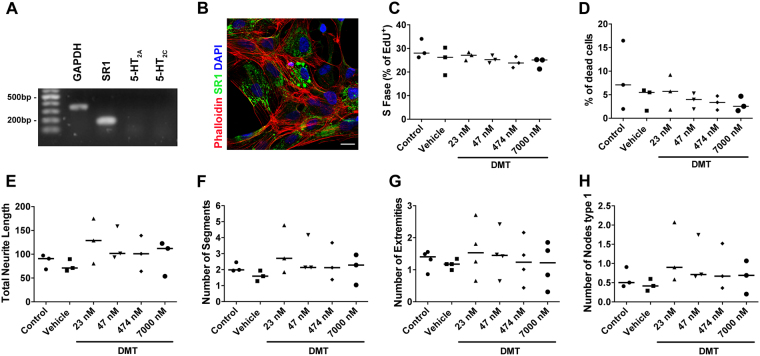
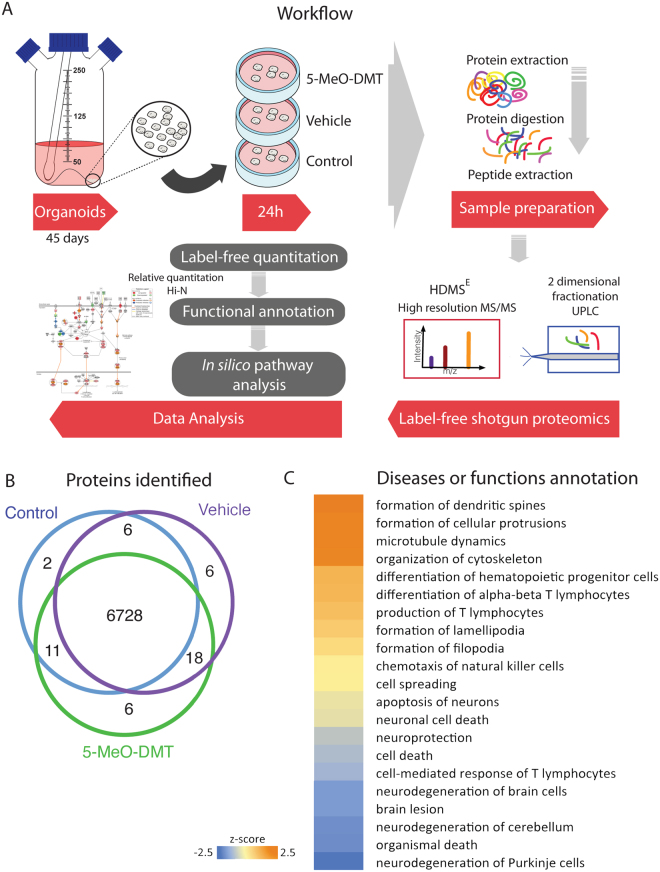
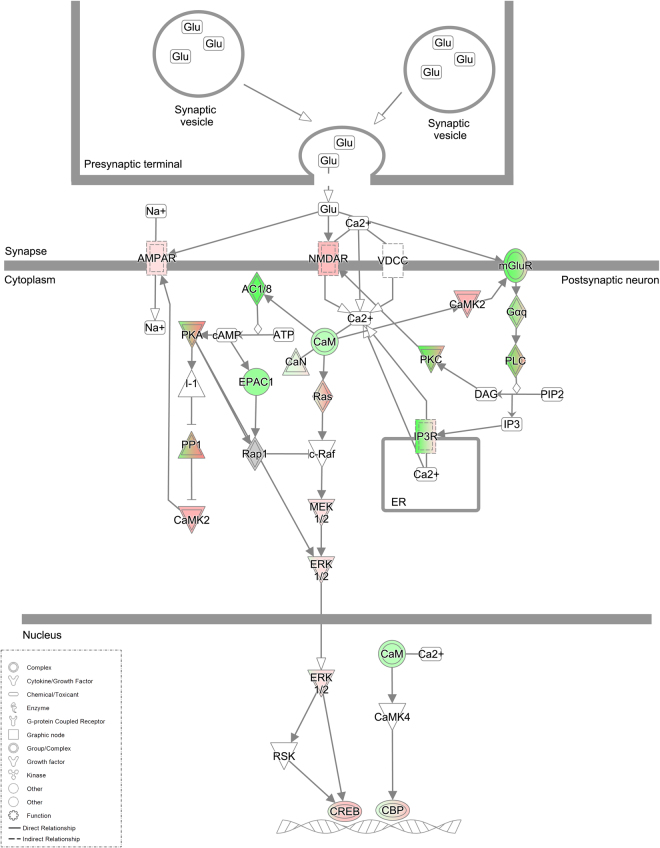
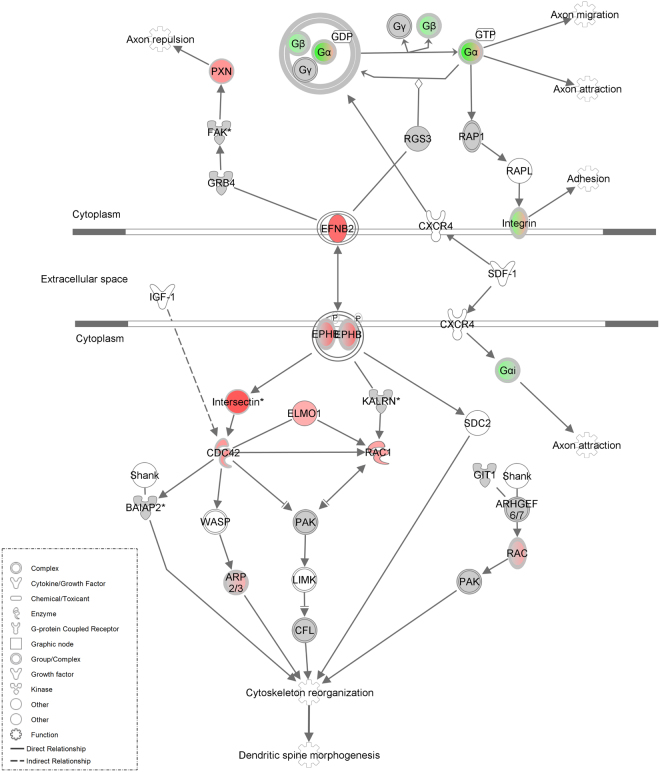
Dimethyltryptamines are entheogenic serotonin-like molecules present in traditional Amerindian medicine recently associated with cognitive gains, antidepressant effects, and changes in brain areas related to attention. Legal restrictions and the lack of adequate experimental models have limited the understanding of how such substances impact human brain metabolism. Here we used shotgun mass spectrometry to explore proteomic differences induced by 5-methoxy-N,N-dimethyltryptamine (5-MeO-DMT) on human cerebral organoids. Out of the 6,728 identified proteins, 934 were found differentially expressed in 5-MeO-DMT-treated cerebral organoids. In silico analysis reinforced previously reported anti-inflammatory actions of 5-MeO-DMT and revealed modulatory effects on proteins associated with long-term potentiation, the formation of dendritic spines, including those involved in cellular protrusion formation, microtubule dynamics, and cytoskeletal reorganization. Our data offer the first insight about molecular alterations caused by 5-MeO-DMT in human cerebral organoids.
Overview
The claims and statistics of this paper haven’t been checked yet.
Free: it reads the open-access text and checks the first 5 claims that cite a source we can check. Create a free account to check every claim.
Integrity signals
Registry
Cites
Statistics
Figures
Verification
Claims the paper makes
The claims and statistics of this paper haven’t been checked yet.
Free: it reads the open-access text and checks the first 5 claims that cite a source we can check. Create a free account to check every claim.
Claims other papers make about this one
Each is checked against this paper’s own text: does it say what the citing paper says it does?
The source backs part of the claim, not all of it — or backs it for a different population, condition or comparison.
In the citing paper
“In human cerebral organoids (n = 4–5), 5-MeO-DMT (13 μM) administered for 24 h directly resulted in the stimulated synthesis of proteins involved in plasticity-related intracellular signaling pathways such as NMDAR, alpha-amino-3-hydroxy-methyl-5-4-isoxazolpropionic receptor (AMPAR), and Eprhin B2 (43).”
From Psychedelics and Neuroplasticity: A Systematic Review Unraveling the Biological Underpinnings of Psychedelics. (2021) · cites this paper as [43]
Experimental — accuracy not yet measuredThe source backs part of the claim, not all of it — or backs it for a different population, condition or comparison.
In the citing paper
“Increased glutamate in the cortex release can further stimulate synaptic plasticity via AMPAR on pyramidal neurons in cortical layer V and subsequent transportation (trafficking) of AMPAR to the postsynaptic cell membrane (43).”
From Psychedelics and Neuroplasticity: A Systematic Review Unraveling the Biological Underpinnings of Psychedelics. (2021) · cites this paper as [43]
Experimental — accuracy not yet measuredThe source backs part of the claim, not all of it — or backs it for a different population, condition or comparison.
In the citing paper
“in vitro studies have recently provided evidence of anti-inflammatory, neuroregenerative, and anti-addictive effects induced by 5-MeO-DMT (Dakic et al. 2017).”
From Prospective examination of synthetic 5-methoxy-N,N-dimethyltryptamine inhalation: effects on salivary IL-6, cortisol levels, affect, and non-judgment (2020) · cites this paper as Dakic et al. 2017
Experimental — accuracy not yet measuredThe cited source says what the claim attributes to it.
In the citing paper
“Evidence from in vitro studies (n = 5) suggests that psychedelics stimulate molecular and cellular neuroplasticity (41–44, 53).”
From Psychedelics and Neuroplasticity: A Systematic Review Unraveling the Biological Underpinnings of Psychedelics. (2021) · cites this paper as [43]
Self-check
Percentages, sums and reported differences re-computed from the paper’s own numbers.
The self-check needs the paper’s full text.
Citations
Cites
(2023) · doi:10.1126/science · Cited by 6,063
Cerebral organoids model human brain development and microcephaly
Lancaster, M. A., Renner, M., Martin, C.-A., Wenzel, D., Bicknell, L. S., Hurles, M. E., Homfray, T., Penninger, J. M., Jackson, A. P., & Knoblich, J. A. (2013) · Nature · doi:10.1038/nature12517 · Cited by 5,372
Malenka, R. C., & Bear, M. F. (2004) · Neuron · doi:10.1016/j.neuron.2004.09.012 · Cited by 3,968
Organogenesis in a dish: Modeling development and disease using organoid technologies
Lancaster, M. A., & Knoblich, J. A. (2014) · Science · doi:10.1126/science.1247125 · Cited by 2,931
Tononi, G., & Cirelli, C. (2014) · Neuron · doi:10.1016/j.neuron.2013.12.025 · Cited by 2,356
Brain-Region-Specific Organoids Using Mini-bioreactors for Modeling ZIKV Exposure
Qian, X., Nguyen, H. N., Song, M. M., Hadiono, C., Ogden, S. C., Hammack, C., Yao, B., Hamersky, G. R., Jacob, F., Zhong, C., et al. (2016) · Cell · doi:10.1016/j.cell.2016.04.032 · Cited by 2,127
Generation of cerebral organoids from human pluripotent stem cells
Lancaster, M. A., & Knoblich, J. A. (2014) · Nature Protocols · doi:10.1038/nprot.2014.158 · Cited by 1,823
Synaptic plasticity and depression: new insights from stress and rapid-acting antidepressants
Duman, R. S., Aghajanian, G. K., Sanacora, G., & Krystal, J. H. (2016) · Nature Medicine · doi:10.1038/nm.4050 · Cited by 1,750
Griffiths, R. R., Richards, W. A., McCann, U., & Jesse, R. (2006) · Psychopharmacology · doi:10.1007/s00213-006-0457-5 · Cited by 1,684
Synaptic Dysfunction in Depression: Potential Therapeutic Targets
Duman, R. S., & Aghajanian, G. K. (2012) · Science · doi:10.1126/science.1222939 · Cited by 1,651
Research works printed but not linked: 1
- Holmstedt B Lindgren J Chemical constituents and pharmacology of South American snuffs Psychopharmacol Bull 1967 4 16 5615549
Cited by
Building Models of Brain Disorders with Three-Dimensional Organoids
Amin, N. D., & Paşca, S. P. (2018) · Neuron · doi:10.1016/j.neuron.2018.10.007 · Cited by 312
de Vos, C. M. H., Mason, N. L., & Kuypers, K. P. C. (2021) · Frontiers in Psychiatry · doi:10.3389/fpsyt.2021.724606 · Cited by 269
“In human cerebral organoids (n = 4–5), 5-MeO-DMT (13μM) administered for 24 h directly resulted in the stimulated synthesis of proteins involved in plasticity-related intracellular signaling pathways such as NMDAR, alpha-amino-3-hydroxy-methyl-54-isoxazolpropionic receptor (AMPAR), and Eprhin B2 (43).”
BackgroundPsychedelics in Psychiatry: Neuroplastic, Immunomodulatory, and Neurotransmitter Mechanisms
Inserra, A., De Gregorio, D., & Gobbi, G. (2021) · Pharmacological Reviews · doi:10.1124/pharmrev.120.000056 · Cited by 232
Uthaug, M. V., Lancelotta, R., van Oorsouw, K., Kuypers, K. P. C., Mason, N., Rak, J., Šuláková, A., Jurok, R., Maryška, M., Kuchař, M., et al. (2019) · Psychopharmacology · doi:10.1007/s00213-019-05236-w · Cited by 197
Almeida, R. N. D., Galvão, A. C. D. M., da Silva, F. S., Silva, E. A. D. S., Palhano-Fontes, F., Maia-de-Oliveira, J. P., de Araújo, L.-S. B., Lobão-Soares, B., & Galvão-Coelho, N. L. (2019) · Frontiers in Psychology · doi:10.3389/fpsyg.2019.01234 · Cited by 177
Effects of N,N-Dimethyltryptamine on Rat Behaviors Relevant to Anxiety and Depression
Cameron, L. P., Benson, C. J., Dunlap, L. E., & Olson, D. E. (2018) · ACS Chemical Neuroscience · doi:10.1021/acschemneuro.8b00134 · Cited by 171
Low doses of LSD acutely increase BDNF blood plasma levels in healthy volunteers
Hutten, N. R. P. W., Mason, N. L., Dolder, P. C., Theunissen, E. L., Holze, F., Liechti, M. E., Varghese, N., Eckert, A., Feilding, A., Ramaekers, J. G., et al. (2021) · ACS Pharmacology & Translational Science · doi:10.1021/acsptsci.0c00099 · Cited by 131
Biochemical Mechanisms Underlying Psychedelic-Induced Neuroplasticity
Olson, D. E. (2022) · Biochemistry · doi:10.1021/acs.biochem.1c00812 · Cited by 129
Three-dimensional modeling of human neurodegeneration: brain organoids coming of age
Grenier, K., Kao, J., & Diamandis, P. (2019) · Molecular Psychiatry · doi:10.1038/s41380-019-0500-7 · Cited by 133
Uthaug, M. V., Lancelotta, R., Szabo, A., Davis, A. K., Riba, J., & Ramaekers, J. G. (2020) · Psychopharmacology · doi:10.1007/s00213-019-05414-w · Cited by 117
Reckweg, J. T., Uthaug, M. V., Szabo, A., Davis, A. K., Lancelotta, R., Mason, N. L., & Ramaekers, J. G. (2022) · Journal of Neurochemistry · doi:10.1111/jnc.15587 · Cited by 110
“Of particular importance, the reactivation phenomenon has been reported primarily as a positive or neutral experience from large samples of recreational and ceremonial users (Davis, 2019).”
BackgroundInserra, A. (2018) · Frontiers in Pharmacology · doi:10.3389/fphar.2018.00330 · Cited by 91
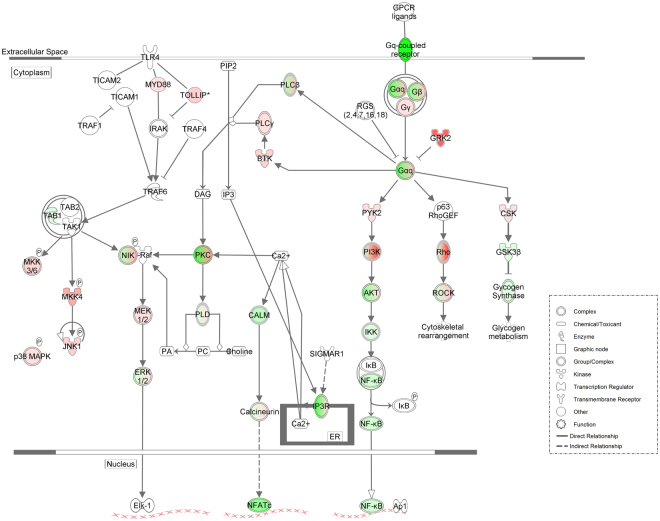
“Significantly, the DMT analogue 5-methoxy-N,N-dimethyltryptamine as well as the synthetic psychedelic 2,5-Dimethoxy-4-iodoamphetamine downregulate this pathway, suggesting that DMT and Ayahuasca might present at least same degree of NFKB pathway modulation (Yu et al., 2008; Dakic et al., 2017).”
BackgroundInnovations in 3D Tissue Models of Human Brain Physiology and Diseases
Lovett, M. L., Nieland, T. J. F., Dingle, Y. L., & Kaplan, D. L. (2020) · Advanced Functional Materials · doi:10.1002/adfm.201909146 · Cited by 91
A narrative synthesis of research with 5-MeO-DMT
Ermakova, A. O., Dunbar, F., Rucker, J., & Johnson, M. W. (2022) · Journal of Psychopharmacology · doi:10.1177/02698811211050543 · Cited by 86
“Dakic et al. (2017) studied the effects of 5-MeO-DMT on proteins in human brain organoids.”
BackgroundDavis, A. K., Averill, L. A., Sepeda, N. D., Barsuglia, J. P., & Amoroso, T. (2020) · Chronic Stress · doi:10.1177/2470547020939564 · Cited by 84
“Score range for each measure: PTSD symptoms (0–80; scores above 31–33 suggest need for PTSD treatment; decrease of 10 or more considered clinically meaningful)(48); depression symptoms (0–6; score above 3 suggests major depressive disorder likely)(49); anxiety symptoms (0–6; score above 3 suggests generalized anxiety…”
BackgroundKozłowska, U., Nichols, C. D., Wiatr, K., & Figiel, M. (2021) · Journal of Neurochemistry · doi:10.1111/jnc.15509 · Cited by 89
“…of 5- MeO- DMT in human cerebellar organoids results in down- regulation of NF- κβ and nuclear factor of activated T cells (NFAT) pathways, as well as modulation of the Gαq- RhoA- ROCK pathway involved in cytoskeleton rearrangement (Dakic et al., 2017) and phagocytosis (Kim et al., 2017).”
BackgroundPsychedelics as a novel approach to treating autoimmune conditions
Thompson, C., & Szabo, A. (2020) · Immunology Letters · doi:10.1016/j.imlet.2020.10.001 · Cited by 71
3D cell culture models and organ‐on‐a‐chip: Meet separation science and mass spectrometry
Lin, A., Skottvoll, F. S., Rayner, S., Pedersen‐Bjergaard, S., Sullivan, G. J., Krauss, S. J. K., Wilson, S. R., & Harrison, S. P. (2019) · Electrophoresis · doi:10.1002/elps.201900170 · Cited by 76
Weiss, F., Magnesa, A., Gambini, M., Gurrieri, R., Annuzzi, E., Elefante, C., Perugi, G., & Marazziti, D. (2025) · Brain Sciences · doi:10.3390/brainsci15020117 · Cited by 74
“…treated with 5-MeO-DMT, revealed a significant upregulation of proteins involved in synaptic plasticity (e.g., NMDAR, CaMK2, CREB) and plasticity-related cytoskeletal reorganization (e.g., EFNB2, EPHB, CDC42), together with an inhibition of the pro-inflammatory NF-κ B signaling pathway [73].”
Psychedelic‐inspired approaches for treating neurodegenerative disorders
Saeger, H. N., & Olson, D. E. (2021) · Journal of Neurochemistry · doi:10.1111/jnc.15544 · Cited by 74
A beginner’s guide on the use of brain organoids for neuroscientists: a systematic review
Mulder, L., Depla, J. A., Sridhar, A., Wolthers, K. C., Pajkrt, D., & de Sá, R. V. (2023) · Stem Cell Research & Therapy · doi:10.1186/s13287-023-03302-x · Cited by 74
Colaço, C. S., Alves, S. S., Nolli, L. M., Pinheiro, W. O., de Oliveira, D. G. R., Santos, B. W. L., Pic-Taylor, A., Mortari, M. R., & Caldas, E. D. (2020) · Metabolic Brain Disease · doi:10.1007/s11011-020-00547-w · Cited by 58
“…β-carbolines and harmol, the main harmine metabolite in humans, have been shown to stimulate neurogenesis in vitro (Morales-García et al., 2017), and the potential neuroprotective and neuroplasticity-enhancing effects of DMT and 5-MeO-DMT have been described (Szabo et al. 2016; Dakic et al. 2017).”
Background5-MeO-DMT modifies innate behaviors and promotes structural neural plasticity in mice
Jefferson, S. J., Gregg, I., Dibbs, M., Liao, C., Wu, H., Davoudian, P. A., Woodburn, S. C., Wehrle, P. H., Sprouse, J. S., Sherwood, A. M., et al. (2023) · Neuropsychopharmacology · doi:10.1038/s41386-023-01572-w · Cited by 65
“expression of inflammatory and LTP-associated proteins in human brain organoids [30], and perturb prefrontal cortical activity in rats [31].”
BackgroundGoto-Silva, L., Ayad, N. M. E., Herzog, I. L., Silva, N. P., Lamien, B., Orlande, H. R. B., da Costa Souza, A., Ribeiro, S., Martins, M., Domont, G. B., et al. (2019) · BMC Developmental Biology · doi:10.1186/s12861-019-0183-y · Cited by 56
“Several research groups have used this model to study the development of diseases such as microcephaly, lissencephaly [5, 6], and Zika infection [7], as well as for drug testing [8].”
Self-citationVenkataraman, L., Fair, S. R., McElroy, C. A., Hester, M. E., & Fu, H. (2020) · Stem Cell Reviews and Reports · doi:10.1007/s12015-020-10068-9 · Cited by 56
Exploring DMT: Endogenous role and therapeutic potential
Schimmelpfennig, J., & Jankowiak-Siuda, K. (2025) · Neuropharmacology · doi:10.1016/j.neuropharm.2025.110314 · Cited by 58
Wolf, G., Singh, S., Blakolmer, K., Lerer, L. B., Lifschytz, T., Heresco‐Levy, U., Lotan, A., & Lerer, B. (2022) · Molecular Psychiatry · doi:10.1038/s41380-022-01832-z · Cited by 53
Modeling neurological disorders using brain organoids
Zhang, D. Y., Song, H., & Ming, G. (2020) · Seminars in Cell and Developmental Biology · doi:10.1016/j.semcdb.2020.05.026 · Cited by 54
Serotonergic Psychedelics: Experimental Approaches for Assessing Mechanisms of Action
Canal, C. E. (2018) · Handbook of experimental pharmacology · doi:10.1007/164_2018_107 · Cited by 53
“, CaMKII, ephrin-B2, and NF-κB, respectively (Dakic et al. 2017).”
BackgroundAdvancing preclinical models of psychiatric disorders with human brain organoid cultures
Dixon, T. A., & Muotri, A. R. (2022) · Molecular Psychiatry · doi:10.1038/s41380-022-01708-2 · Cited by 54
“5-MeO-DMT also caused significant upregulation of ephrin-B2 (EFNB2), and ephrin type-B receptor (EPHB), and other secondary messengers in dendritic spine formation [191].”
BackgroundKelley, D. P., Venable, K., Destouni, A., Billac, G., Ebenezer, P., Stadler, K., Nichols, C., Barker, S., & Francis, J. (2022) · ACS Chemical Neuroscience · doi:10.1021/acschemneuro.1c00660 · Cited by 42
Barsuglia, J. P., Polanco, M., Palmer, R., Malcolm, B. J., Kelmendi, B., & Calvey, T. (2018) · Progress in Brain Research · doi:10.1016/bs.pbr.2018.08.002 · Cited by 38
Catalysts for change: the cellular neurobiology of psychedelics
Banks, M. I., Zahid, Z., Jones, N. T., Sultan, Z. W., & Wenthur, C. J. (2021) · Molecular Biology of the Cell · doi:10.1091/mbc.e20-05-0340 · Cited by 37
“A single administered dose of psilocybin induces changes in neural plasticity–related gene expression in the hippocampus and PFC (Jefsen et al., 2020), and 5-MeO-DMT induces large-scale changes in protein expression in cultured human brain tissue (Dakic et al., 2017).”
BackgroundPsychedelics for acquired brain injury: a review of molecular mechanisms and therapeutic potential
Allen, J., Dames, S., Foldi, C. J., & Shultz, S. R. (2024) · Molecular Psychiatry · doi:10.1038/s41380-023-02360-0 · Cited by 47
Dean, J. G. (2018) · Frontiers in Neuroscience · doi:10.3389/fnins.2018.00232 · Cited by 37
“Dakic et al. (2017) also identified a down-regulation of metabotropic glutamate receptor 5, and knockout of this protein or its antagonism in mice leads to attenuation of addictive behaviors (Dakic et al., 2017).”
BackgroundInfluentialPsychedelics for Brain Injury: A Mini-Review
Khan, M., Carter, G. T., Aggarwal, S. K., & Holland, J. A. (2021) · Frontiers in Neurology · doi:10.3389/fneur.2021.685085 · Cited by 43
“S1R agonists produce neuroprotective effects via regulation of intracellular calcium, reducing expression of pro-apoptotic genes, and inhibiting antiapoptotic activity by the Bcl-2 gene (22).”
BackgroundInfluentialNootropic effects of LSD: Behavioral, molecular and computational evidence
Ornelas, I. M., da Silva, F. A. C., Wießner, I., Marcos, E., de Araújo, D. B., Goto‐Silva, L., Nascimento, J. M., Silva, S. R. B., Costa, M., Falchi-Carvalho, M., et al. (2022) · Experimental Neurology · doi:10.1016/j.expneurol.2022.114148 · Cited by 38
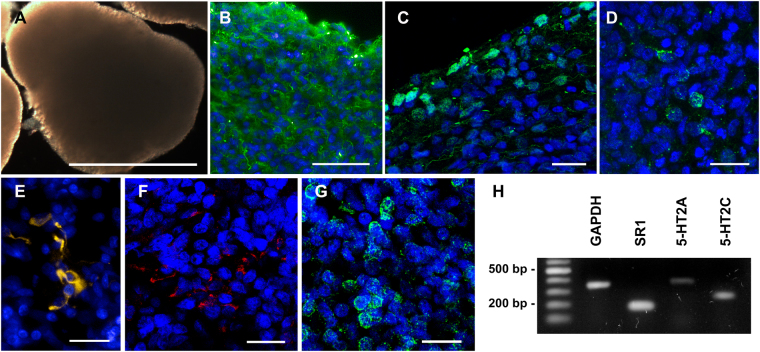
“Although we have evidence that brain organoids express the 5-HT2A receptor (Dakic et al., 2017) we cannot claim that the LSD effects observed on brain organoids are mediated by that”
BackgroundInfluentialSelf-citationBorbély, E., Varga, V. É., Szögi, T., Schuster, I., Bozsó, Z., Penke, B., & Fülöp, L. (2022) · International Journal of Molecular Sciences · doi:10.3390/ijms23052514 · Cited by 39
Jacob, F., Schnoll, J. G., Song, H., & Ming, G. (2021) · Current topics in developmental biology/Current Topics in Developmental Biology · doi:10.1016/bs.ctdb.2020.12.011 · Cited by 39
Nascimento, J. M., Saia-Cereda, V. M., Zuccoli, G. S., Reis‐de‐Oliveira, G., Carregari, V. C., Smith, B. J., Rehen, S. K., & Martins‐de‐Souza, D. (2022) · Cell & Bioscience · doi:10.1186/s13578-022-00928-x · Cited by 37
“Characterization of this culture has been previously published [16].”
BackgroundSelf-citationThe Effects of Psychedelics on Neuronal Physiology
Hatzipantelis, C. J., & Olson, D. E. (2023) · Annual Review of Physiology · doi:10.1146/annurev-physiol-042022-020923 · Cited by 44
“Moreover, proteomic analysis of human cerebral organoids following treatment with 5-methoxy-N , N - dimethyltryptamine (5-MeO-DMT) or LSD revealed increased expression of proteins involved in structural and functional neuroplasticity (79, 80).”
Benefits and Challenges of Ultra-Fast, Short-Acting Psychedelics in the Treatment of Depression
Ramaekers, J. G., Reckweg, J. T., & Mason, N. L. (2025) · American Journal of Psychiatry · doi:10.1176/appi.ajp.20230890 · Cited by 39
Serotonergic Psychedelics in Neural Plasticity
Lukasiewicz, K., Baker, J. J., Zuo, Y., & Lu, J. (2021) · Frontiers in Molecular Neuroscience · doi:10.3389/fnmol.2021.748359 · Cited by 31
Sarieva, K., & Mayer, S. (2021) · Frontiers in Molecular Biosciences · doi:10.3389/fmolb.2021.686410 · Cited by 33
Darke, S. G., Duflou, J. A., Peacock, A., Farrell, M., & Lappin, J. (2019) · Drug and Alcohol Dependence · doi:10.1016/j.drugalcdep.2019.107556 · Cited by 29
Beating pain with psychedelics: Matter over mind?
Elman, I., Pustilnik, A. C., & Borsook, D. (2021) · Neuroscience & Biobehavioral Reviews · doi:10.1016/j.neubiorev.2021.12.005 · Cited by 31
How does ayahuasca work from a psychiatric perspective? Pros and cons of the entheogenic therapy
Orsolini, L., Chiappini, S., Papanti, D., Latini, R., Volpe, U., Fornaro, M., Tomasetti, C., Vellante, F., & Berardis, D. D. (2020) · Human Psychopharmacology Clinical and Experimental · doi:10.1002/hup.2728 · Cited by 37
“…main alkaloids contained in B caapi, and the harmine metabolite harmol, seemed to intervene in the modulation of brain plasticity and neurogenesis mechanisms (Dakic et al., 2017; Morales-García et al., 2017), thus contributing in reducing symptoms associated with depression (Dakic et al., 2016).”
BackgroundThe potential of psychedelics for the treatment of Alzheimer's disease and related dementias
Winkelman, M., Szabó, A., & Frecska, E. (2023) · European Neuropsychopharmacology · doi:10.1016/j.euroneuro.2023.07.003 · Cited by 36
Bernal, A. M. O., Raison, C. L., Lancelotta, R., & Davis, A. K. (2022) · Frontiers in Psychiatry · doi:10.3389/fpsyt.2022.1049643 · Cited by 35
“Pre-clinical data offer evidence of 5-MeO-DMT’s antiinflammatory, neuro-regenerative and anti-addictive potential through its interaction with Sigma 1 receptors, as well of its effects on glutamate receptors (16, 17, 28), both of which may have relevance in the treatment of mental health disorders.”
Backgroundda Silva, M. G., Daros, G. C., Santos, F. P., Yonamine, M., & de Bitencourt, R. M. (2022) · Behavioural Brain Research · doi:10.1016/j.bbr.2022.114007 · Cited by 29
Greń, J., Tylš, F., Lasocik, M., & Kiraly, C. (2023) · Frontiers in Psychology · doi:10.3389/fpsyg.2023.1054692 · Cited by 37
“This concerns primarily neuroplasticity, which is the ability of brain neural networks to change through growth, forming new connections, and reorganization (Jones et al., 2009; Szabo et al., 2016; Dakic et al., 2017; Ly et al., 2018).”
BackgroundColaço, C. S., Alves, S. S., Nolli, L. M., Pinheiro, W. O., de Oliveira, D. G. R., Santos, B. W. L., Taylor, A. P., Mortari, M. R., & Caldas, E. D. (2021) · Metabolic Brain Disease · doi:10.1007/s11011-021-00854-w · Cited by 23
da Silva, M. G., Daros, G. C., & de Bitencourt, R. M. (2020) · Behavioural Brain Research · doi:10.1016/j.bbr.2020.113003 · Cited by 28
Bedside to bench: the outlook for psychedelic research
Acero, V. P., Cribas, E. S., Browne, K. D., Rivellini, O. M., Burrell, J. C., O’Donnell, J. C., Das, S., & Cullen, D. K. (2023) · Frontiers in Pharmacology · doi:10.3389/fphar.2023.1240295 · Cited by 28
Updated View on the Relation of the Pineal Gland to Autism Spectrum Disorders
Shomrat, T., & Nesher, N. (2019) · Frontiers in Endocrinology · doi:10.3389/fendo.2019.00037 · Cited by 28
“(5-HT2AR agonists) like LSD andDMT structure analogs (66) on neuroplasticity, through cellular mechanisms such as the BDNF pathway, and even long term influence on gene expression in the brain (67, 68).”
BackgroundThe immunomodulatory effects of classical psychedelics: A systematic review of preclinical studies
Low, Z. X. B., Ng, W. S., Lim, E. S. Y., Goh, B. H., & Kumari, Y. (2024) · Progress in Neuro-Psychopharmacology and Biological Psychiatry · doi:10.1016/j.pnpbp.2024.111139 · Cited by 27
“…et al., 2018; Rudin et al., 2023), three studies with 5-methoxy-N , N -dimethyltrypta- mine (5-MeO-DMT) (Szabo et al., 2014; Flanagan et al., 2021; Dakic et al., 2017), three studies with psilocin (4-HO-DMT) (Flanagan et al., 2021; Laabi et al., 2024; Rudin et al., 2023), and two studies with…”
BackgroundMethodInfluentialNogueira, M., Golbert, D. C. F., de Menezes, R. S. T., de Almeida, R. N., Coelho, N. L. G., Siroky, A. N., Lima, T. Z., Maia, H., Leão, K. E., & Leão, R. N. (2024) · Molecular Psychiatry · doi:10.1038/s41380-024-02655-w · Cited by 26
(2021) · Springer eBooks · doi:10.1007/978-3-030-55688-4 · Cited by 19
Tap, S. C. (2024) · Addiction Biology · doi:10.1111/adb.13386 · Cited by 17
“2,143,144 Third, 5-MeO-DMT is able to induce anti-inflammatory effects through inhibition of the NF-κ B signalling pathway 64 and the sigma-1 receptor that inhibited pro-inflammatory cytokines (i.e., IL-1 β , IL-6, TNF α , and IL-8) and increased anti-inflammatory cytokines (i.e., IL-10).”
BackgroundInfluentialde Camargo, R. W., Joaquim, L. D. S., Machado, R. S., Ramos, S. D. S., da Rosa, L. R., Júnior, L. R. D. N., Mathias, K., Maximiano, L., Strickert, Y. R., Nord, R., et al. (2024) · Molecular Neurobiology · doi:10.1007/s12035-024-04597-4 · Cited by 22
“AYA extracts also elicit significant effects on executive function [15], depression [16, 17], neuroinflammation [4, 18, 19], well-being, self-compassion [20, 21], neurogenesis [22], neuroplasticity [12, 23, 24], and neuropsychological performance [15].”
Human organoids to model the developing human neocortex in health and disease
Khakipoor, S., Crouch, E. E., & Mayer, S. (2020) · Brain Research · doi:10.1016/j.brainres.2020.146803 · Cited by 17
Evidence on the impairing effects of Ayahuasca on fear memory reconsolidation
Daneluz, D. M., Sohn, J. M. B., Silveira, G. D. O., Yonamine, M., & Stern, C. A. J. (2022) · Psychopharmacology · doi:10.1007/s00213-022-06217-2 · Cited by 22
“2009), and 5-MeO-DMT, a DMT analog, inhibits NF-κB signaling pathway (Dakic et al. 2017).”
BackgroundGuglielmo, R., & Hasler, G. (2022) · Neuroscience & Biobehavioral Reviews · doi:10.1016/j.neubiorev.2022.104906 · Cited by 18
The impact of antidepressants on human neurodevelopment: Brain organoids as experimental tools
Marinho, L. S. R., Chiarantin, G. M. D., Ikebara, J. M., Cardoso, D. S., de Lima-Vasconcellos, T. H., Higa, G. S. V., Ferraz, M. S. A., Pasquale, R. D., Takada, S. H., Papes, F., et al. (2022) · Seminars in Cell and Developmental Biology · doi:10.1016/j.semcdb.2022.09.007 · Cited by 36
Cozzi, N. V., & Daley, P. F. (2020) · Drug Testing and Analysis · doi:10.1002/dta.2889 · Cited by 15
Natural psychedelics in the treatment of depression; a review focusing on neurotransmitters
Jahanabadi, S., Amiri, S., Karkeh-abadi, M., & Razmi, A. (2023) · Fitoterapia · doi:10.1016/j.fitote.2023.105620 · Cited by 16
Whole Organisms or Pure Compounds? Entourage Effect Versus Drug Specificity
Ribeiro, S. T. G. (2018) · Springer eBooks · doi:10.1007/978-3-319-76720-8_8 · Cited by 17
Self-citation5-Methoxy-N,N-dimethyltryptamine: An Ego-Dissolving Endogenous Neurochemical Catalyst of Creativity
Germann, C. B. (2019) · Activitas Nervosa Superior · doi:10.1007/s41470-019-00063-y · Cited by 17
Lin, V. J. T., Hu, J., Zolekar, A., Salick, M. R., Mittal, P., Bird, J. T., Hoffmann, P., Kaykas, A., Byrum, S. D., & Wang, Y.-C. (2022) · Cell Death and Disease · doi:10.1038/s41419-022-04693-0 · Cited by 16
Beretta, E., Cuboni, G., & Deidda, G. (2025) · International Journal of Molecular Sciences · doi:10.3390/ijms26125508 · Cited by 12
“Taken together, these studies provide evidence that these effects are associated with an ability to stimulate neurogenesis and neuroplasticity [217,252–254], shaping a new and intriguing milieu for investigating psychoplastogenic arrangements (Table 1).”
Lin, V. J. T., Hu, J., Zolekar, A., Yan, L., & Wang, Y.-C. (2020) · Frontiers in Cell and Developmental Biology · doi:10.3389/fcell.2020.00304 · Cited by 12
Multiscale engineering of brain organoids for disease modeling
Xu, C., Alameri, A., Leong, W., Johnson, E., Chen, Z., Xu, B., & Leong, K. W. (2024) · Advanced Drug Delivery Reviews · doi:10.1016/j.addr.2024.115344 · Cited by 16
Recent Evidence on the Antidepressant Effects of Ayahuasca
Palhano-Fontes, F., Mota-Rolim, S. A., Soares, B. L., Coelho, N. L. G., Maia‐de‐Oliveira, J. P., & de Araújo, D. B. (2021) · Springer eBooks · doi:10.1007/978-3-030-55688-4_2 · Cited by 14
The promise of organoids for unraveling the proteomic landscape of the developing human brain
Melliou, S., Sangster, K. T., Djuric, U., & Diamandis, P. (2021) · Molecular Psychiatry · doi:10.1038/s41380-021-01354-0 · Cited by 11
Barman, R., Bora, P. K., Saikia, J., Konwar, P., Sarkar, A., Kemprai, P., Saikia, S. P., Haldar, S., Slater, R. J., & Banik, D. (2023) · Phytochemistry · doi:10.1016/j.phytochem.2023.113928 · Cited by 11
Colosimo, F. A., Borsellino, P., Krider, R. I., Márquez, R., & Vida, T. A. (2024) · Psychoactives · doi:10.3390/psychoactives3010007 · Cited by 11
Dong, J., Duchesne, A., Bayne, A. N., Mohamed, N., Yi, W., Mathur, M., Chen, C. X. ‐., You, Z., Abdian, N., Taylor, L., et al. (2022) · Methods · doi:10.1016/j.ymeth.2022.03.011 · Cited by 10
d-Lysergic acid diethylamide has major potential as a cognitive enhancerPreprint
da Silva, F. A. C., Ornelas, I. M., Marcos, E., Goto‐Silva, L., Nascimento, J. M., Ruschi, S., Salerno, J. A., Karmirian, K., Costa, M., Sequerra, E. B., et al. (2019) · bioRxiv (Cold Spring Harbor Laboratory) · doi:10.1101/866814 · Cited by 10
Self-citationSousa, D. D. N., Azevedo, M. D. A., dos Santos, M. L., Borges, T. K. D. S., de Oliveira, D. M., & Caldas, E. D. (2025) · Metabolic Brain Disease · doi:10.1007/s11011-025-01650-6 · Cited by 13
“…also affects the glutamatergic system through NMDA (N-Methyl-D-Aspartate) and AMPA (α-amino-3-hydroxy-5-methyl-4-isoxazolepropionic acid) receptors (Dakic et al. 2017 ; Lima da Cruz et al. 2018; Ly et al. 2018), which are involved in synaptic plasticity and immune responses by inhibiting nuclear…”
Are we hallucinating or can psychedelic drugs modulate the immune system to control inflammation?
Qureshi, O., Cowley, J., Pegg, A., Cooper, A. J., Gordon, J., Brady, C., Belli, A., Butterworth, S., Upthegrove, R., Andrews, N., et al. (2025) · British Journal of Pharmacology · doi:10.1111/bph.70138 · Cited by 13
“Evidence for psychedelics to reduce human neuroinflammation is also available from human cerebral organoids (Dakic et al., 2017) where the psychedelic tryptamine secreted by the Colorado river toad ( Incilius alvarius ), 5-MeO-DMT, suppressed NFAT and NF-kB signalling that would deliver an…”
da Cruz, R. V. L., Costa, R. B. G. D. M., de Queiroz, G. M., Stojanovic, T., Moulin, T. C., & Leão, R. N. (2026) · Translational Psychiatry · doi:10.1038/s41398-026-03852-7 · Cited by 11
“In parallel, 5-HT2C receptors in fl uence the survival and differentiation of late-stage progenitors, exerting additional control over neurogenic output in the DG [21].”
A novel framework for ketamine-assisted couple therapy
Khalifian, C. E., Rashkovsky, K. T., Mitchell, E., Bismark, A. W., Wagner, A. C., & Knopp, K. C. (2024) · Frontiers in Psychiatry · doi:10.3389/fpsyt.2024.1376646 · Cited by 12
Souza, A. C., Souza, B. C., França, A. S. C., Moradi, M., Souza, N. C., Leão, K. E., Tort, A. B. L., Leão, R. N., Lopes‐dos‐Santos, V., & Ribeiro, S. T. G. (2024) · Scientific Reports · doi:10.1038/s41598-024-61474-9 · Cited by 11
Self-citationThuery, G., Sheridan, C., Iusan, P., Brar, G., Ledden, K., Freyne, A., Kelly, J. R., & Harkin, A. (2025) · Acta Neuropsychiatrica · doi:10.1017/neu.2025.10030 · Cited by 8
Maltby, C. J., Klein, A. K., Paschen, E., Pinto, J., Dvořák, D., Hedde, J. R., Hanks, A. N., Bianchi, M., & Hughes, Z. A. (2026) · Journal of Psychopharmacology · doi:10.1177/02698811251395386 · Cited by 11
“…are likely preceded by cytoskeletal re-organization to facilitate both the structural changes associated with neurite outgrowth and spine enlargement, and delivery of key molecular components to drive functional synaptic connectivity (Dakic et al., 2017; Ohtani et al., 2014; Schätzle et al., 2018).”
Human pluripotent stem cells as a translational toolkit in psychedelic research in vitro
Salerno, J. A., & Rehen, S. K. (2024) · iScience · doi:10.1016/j.isci.2024.109631 · Cited by 7
Self-citationPsychedelic Medicines in Major Depression: Progress and Future Challenges
Bouso, J. C., Oña, G., SANTOS, R. G. D., & Hallak, J. E. C. (2021) · Advances in experimental medicine and biology · doi:10.1007/978-981-33-6044-0_26 · Cited by 11
Al-Imam, A., Motyka, M. A., Hoffmann, B., Magowska, A. M., & Michalak, M. (2023) · Pharmaceuticals · doi:10.3390/ph16060831 · Cited by 7
“(2017) confirmed the occurrence of “short-term changes in the proteome of human cerebral organoids induced by 5-MeO-DMT” [75].”
BackgroundMyers, M. G., & Toal, C. B. (1995) · PubMed · Cited by 7
Reed-McBain, C. A., Turaga, R. V., Zima, S. R. T., Patel, J. D., Faletti, A., Mixdorf, J. C., Wehner, L. E., Engle, J. W., Hernandez, R. T., Rehen, S. K., et al. (2025) · Biofabrication · doi:10.1088/1758-5090/ade1fb · Cited by 6
“The differentiation of iPS cells into cerebral organoids was based on a previously described protocol [22, 24, 25].”
Self-citationExamining the potential of psilocybin and 5-MeO-DMT as therapeutics for traumatic brain injury
Plummer, Z., Allen, J., Brand, J., Mayo, L. M., Shultz, S. R., & Christie, B. R. (2025) · Progress in Neuro-Psychopharmacology and Biological Psychiatry · doi:10.1016/j.pnpbp.2025.111448 · Cited by 6
Costa, M. N., Goto‐Silva, L., Nascimento, J. M., Domith, I., Karmirian, K., Feilding, A., Trindade, P., Martins‐de‐Souza, D., & Rehen, S. K. (2024) · ACS Omega · doi:10.1021/acsomega.4c04712 · Cited by 9
“LSD modulates proteins involved in various aspects of the proteostasis network, including protein synthesis, folding, maturation, transport, autophagy, and proteasomal degradation.”
BackgroundSelf-citationVitkauskas, M., & Mathuru, A. S. (2020) · International Journal of Molecular Sciences · doi:10.3390/ijms21186525 · Cited by 5
“Signaling cascades indicative of increased anti-inflammatory effects and modulation of proteins implicated in spine morphogenesis and function, such as those participating in protrusion, microtubule dynamics, cytoskeletal reorganization, and Long Term Potentiation (LTP), were detected [111].”
BackgroundPsilocin fosters neuroplasticity in iPSC-derived human cortical neuronsPreprint
Schmidt, M., Hoffrichter, A., Davoudi, M., Horschitz, S., Lau, T., Meinhardt, M. W., Spanagel, R., Ladewig, J., Köhr, G., & Koch, P. (2024) · Research Square · doi:10.21203/rs.3.rs-4242829/v1 · Cited by 5
Psilocin fosters neuroplasticity in iPSC-derived human cortical neuronsPreprint
Schmidt, M., Hoffrichter, A., Davoudi, M., Horschitz, S., Lau, T., Meinhardt, M. W., Spanagel, R., Ladewig, J., Köhr, G., & Koch, P. (2026) · eLife · doi:10.7554/elife.104006 · Cited by 14
“Moreover, serotonergic psychedelics have already been shown to promote the 5- HT2A- R-mediated growth of dendritic spines and modulate neurotransmission ( Ly et al., 2018 ; Shao et al., 2021 ; Dakic et al., 2017 ).”
Zahid, Z., Sultan, Z. W., Krause, B. M., Wenthur, C. J., Pearce, R. A., & Banks, M. I. (2024) · Psychedelic Medicine · doi:10.1089/psymed.2023.0061 · Cited by 4
Androni, X., Boyd, R. J., Rosenberg, P. B., & Mahairaki, V. (2025) · Frontiers in Dementia · doi:10.3389/frdem.2025.1605051 · Cited by 4
Evaluation of the In Vitro Wound-Healing Potential of Ayahuasca
Gonçalves, J., Luís, Â., Gallardo, E., & Duarte, A. P. (2022) · Molecules · doi:10.3390/molecules27185760 · Cited by 10
From molecules to meaning: unpacking the antidepressant mechanisms of psychedelic drugs
Acero, V. P., Flatt, T. A., Gooch, P. M., Gaughan, S. J., Levin, A. W., & Davis, A. K. (2025) · Expert Review of Clinical Pharmacology · doi:10.1080/17512433.2025.2515866 · Cited by 4
Sudhakaran, G., Chakraborty, S., Kumar, A., Bharti, S., Csaba, V., Arasu, M. V., Namasivayam, S. K. R., & Arockiaraj, J. (2025) · Current Microbiology · doi:10.1007/s00284-025-04379-8 · Cited by 5
Metadata
- Authors
- Dakic, V., Minardi Nascimento, J., Costa Sartore, R., Maciel, R. D. M., de Araujo, D. B., Ribeiro, S., Martins-de-Souza, D., & Rehen, S. K.
- Affiliations
- Universidade Federal do Rio de Janeiro (BR)
- D’Or Institute for Research and Education (BR)
- Universidade Federal do Rio Grande do Norte (BR)
- Corresponding author
- Rehen, Stevens K.
- Venue
- Scientific Reports
- Published
- 2017-10-09
- Volume
- 7
- Issue
- 1
- Pages
- 12863-12863
- ISSN
- 2045-2322 (ISSN-L)
- PMC
- PMC5634411
- OpenAlex
- W2761558601
- Semantic Scholar
- 86edbffc91d2d1939d10c0c7cfac47db50891c84
- Cited by
- 134
- References
- 91
- Citations by year
- 2026: 14 · 2025: 19 · 2024: 16 · 2023: 12 · 2022: 19 · 2021: 18 · 2020: 15 · 2019: 11 · 2018: 8
- FWCI
- 11.42
- Type
- journal article
- Language
- en
- Open access
- gold
- doi.org
- Licence
- cc-by
- creativecommons.org/licenses/by/4.0 (tdm)
- creativecommons.org/licenses/by/4.0 (vor)
- Locations
- Scientific Reports (publishedVersion, cc-by)
- bioRxiv (Cold Spring Harbor Laboratory) (acceptedVersion, cc-by-nc-nd)
- PubMed Central (publishedVersion, cc-by)
- PubMed (publishedVersion)
- LA Referencia (Red Federada de Repositorios Institucionales de Publicaciones Científicas) (publishedVersion, other-oa)
- Americanae (AECID Library) (submittedVersion, other-oa)
- Funders
- Fundação de Amparo à Pesquisa do Estado de São Paulo (2014/, 2013/0 8711–3, 2014/21035-0, 13/08711-3, 2014/10 068–4, 14/10068-4)
- Coordenação de Aperfeiçoamento de Pessoal de Nível Superior (2014/10068-4, 2013/08711-3)
- Conselho Nacional de Desenvolvimento Científico e Tecnológico (2014/10068-4, 2013/08711-3)
- Fundação Carlos Chagas Filho de Amparo à Pesquisa do Estado do Rio de Janeiro
- Financiadora de Estudos e Projetos
- Banco Nacional de Desenvolvimento Econômico e Social
- Topics
- Social Sciences › Psychology › Clinical Psychology › Psychedelics and Drug Studies
- Physical Sciences › Chemistry › Spectroscopy › Advanced Proteomics Techniques and Applications
- Life Sciences › Pharmacology, Toxicology and Pharmaceutics › Toxicology › Forensic Toxicology and Drug Analysis
- Keywords
- 5-MeO-DMT, dimethyltryptamine, entheogens, brain organoids, proteome changes, differentially expressed proteins, anti-inflammatory activity, long-term potentiation, dendritic spines, microtubule dynamics, cytoskeletal remodeling, brain metabolism
- MeSH terms
- Cell Line, Cytoskeleton, Humans, Methoxydimethyltryptamines, Morphogenesis, Nerve Tissue Proteins, Organoids, Time Factors, Signal Transduction, Biomarkers, NF-kappa B, Long-Term Potentiation, Proteome, Proteomics, Dendritic Spines, NFATC Transcription Factors, Neural Stem Cells
About these checks
Registry, retraction, Cites and statistics results are computed, not judged, with one exception: a printed reference that no index lists is read once by a model before it counts as a citation error. Claims are extracted by a model and kept only when their quote appears verbatim in the text; each cited source is then checked, with a model’s help, for whether it says what the claim relies on. Those verdicts can be wrong — read the claim’s quote and the cited source before relying on one.
Statistics and arithmetic are recomputed, not judged.
Confidence bands are shown only for fields calibrated on our annotated test set. None is calibrated yet, so no band is shown.
What counts as a claim ›How we measure confidence ›How we check this ›
Are you an author, or do you see a problem with this page? Request a review
Data sources
Bibliographic data: Semantic Scholar, OpenAlex, Crossref.
Contains information from the Semantic Scholar Academic Graph Datasets, made available under the ODC Attribution License (ODC-BY 1.0).
Semantic Scholar’s data is described in: Kinney, R., et al. (2023). The Semantic Scholar Open Data Platform. arXiv:2301.10140.
