

Short term changes in the proteome of human cerebral organoids induced by 5-MeO-DMT
Open accessPublished version of a preprint
The DOI matches its Crossref record; 91 of the 91 references it cites were found in a registry or an index.
Abstract
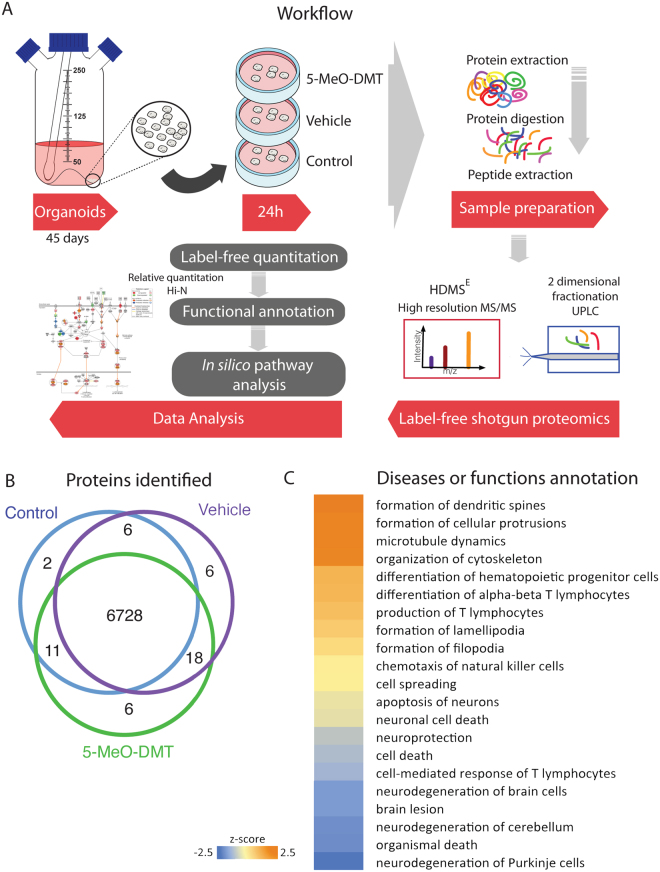
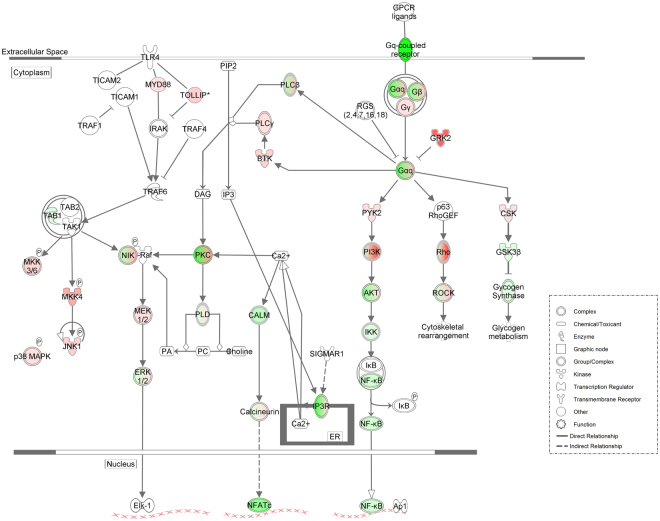
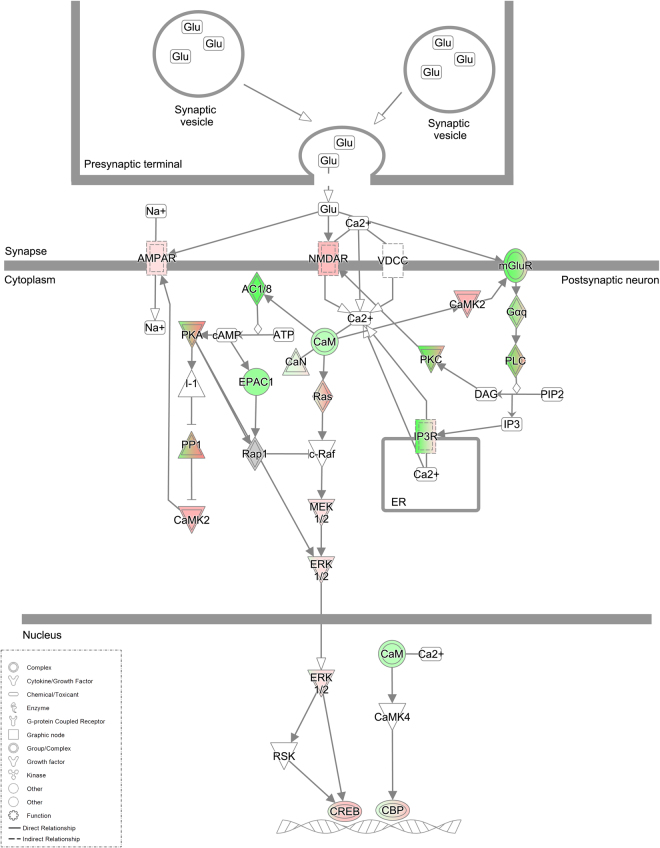
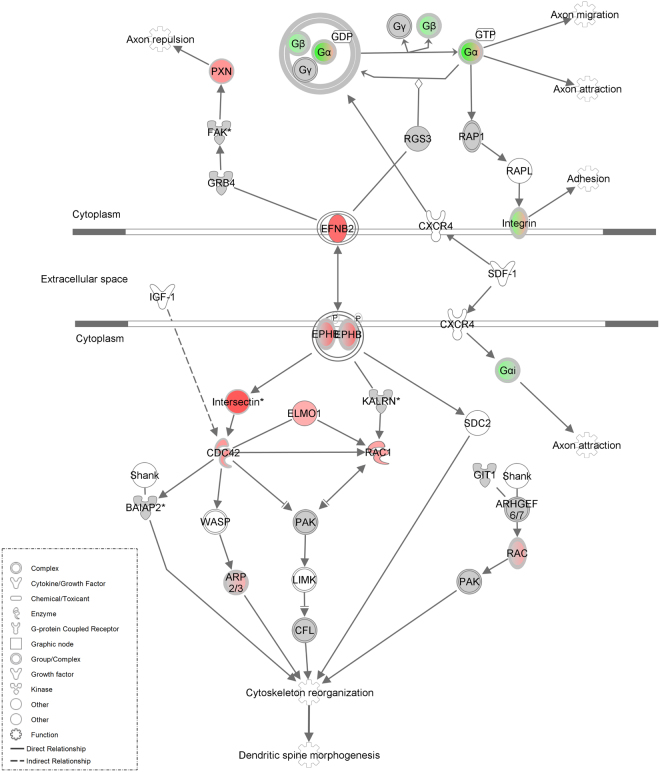
Dimethyltryptamines are entheogenic serotonin-like molecules present in traditional Amerindian medicine recently associated with cognitive gains, antidepressant effects, and changes in brain areas related to attention. Legal restrictions and the lack of adequate experimental models have limited the understanding of how such substances impact human brain metabolism. Here we used shotgun mass spectrometry to explore proteomic differences induced by 5-methoxy-N,N-dimethyltryptamine (5-MeO-DMT) on human cerebral organoids. Out of the 6,728 identified proteins, 934 were found differentially expressed in 5-MeO-DMT-treated cerebral organoids. In silico analysis reinforced previously reported anti-inflammatory actions of 5-MeO-DMT and revealed modulatory effects on proteins associated with long-term potentiation, the formation of dendritic spines, including those involved in cellular protrusion formation, microtubule dynamics, and cytoskeletal reorganization. Our data offer the first insight about molecular alterations caused by 5-MeO-DMT in human cerebral organoids.
Overview
The claims and statistics of this paper haven’t been checked yet.
Free: it reads the open-access text and checks the first 5 claims that cite a source we can check. Create a free account to check every claim.
Integrity signals
Registry
Cites
Statistics
Figures
Verification
Claims the paper makes
The claims and statistics of this paper haven’t been checked yet.
Free: it reads the open-access text and checks the first 5 claims that cite a source we can check. Create a free account to check every claim.
Claims other papers make about this one
Each is checked against this paper’s own text: does it say what the citing paper says it does?
The source backs part of the claim, not all of it — or backs it for a different population, condition or comparison.
In the citing paper
“In human cerebral organoids (n = 4–5), 5-MeO-DMT (13 μM) administered for 24 h directly resulted in the stimulated synthesis of proteins involved in plasticity-related intracellular signaling pathways such as NMDAR, alpha-amino-3-hydroxy-methyl-5-4-isoxazolpropionic receptor (AMPAR), and Eprhin B2 (43).”
From Psychedelics and Neuroplasticity: A Systematic Review Unraveling the Biological Underpinnings of Psychedelics. (2021) · cites this paper as [43]
Experimental — accuracy not yet measuredThe source backs part of the claim, not all of it — or backs it for a different population, condition or comparison.
In the citing paper
“Increased glutamate in the cortex release can further stimulate synaptic plasticity via AMPAR on pyramidal neurons in cortical layer V and subsequent transportation (trafficking) of AMPAR to the postsynaptic cell membrane (43).”
From Psychedelics and Neuroplasticity: A Systematic Review Unraveling the Biological Underpinnings of Psychedelics. (2021) · cites this paper as [43]
Experimental — accuracy not yet measuredThe source backs part of the claim, not all of it — or backs it for a different population, condition or comparison.
In the citing paper
“in vitro studies have recently provided evidence of anti-inflammatory, neuroregenerative, and anti-addictive effects induced by 5-MeO-DMT (Dakic et al. 2017).”
From Prospective examination of synthetic 5-methoxy-N,N-dimethyltryptamine inhalation: effects on salivary IL-6, cortisol levels, affect, and non-judgment (2020) · cites this paper as Dakic et al. 2017
Experimental — accuracy not yet measuredThe cited source says what the claim attributes to it.
In the citing paper
“Evidence from in vitro studies (n = 5) suggests that psychedelics stimulate molecular and cellular neuroplasticity (41–44, 53).”
From Psychedelics and Neuroplasticity: A Systematic Review Unraveling the Biological Underpinnings of Psychedelics. (2021) · cites this paper as [43]
Self-check
Percentages, sums and reported differences re-computed from the paper’s own numbers.
The self-check needs the paper’s full text.
Citations
Cites
(2023) · doi:10.1126/science · Cited by 6,063
Cerebral organoids model human brain development and microcephaly
Lancaster, M. A., Renner, M., Martin, C.-A., Wenzel, D., Bicknell, L. S., Hurles, M. E., Homfray, T., Penninger, J. M., Jackson, A. P., & Knoblich, J. A. (2013) · Nature · doi:10.1038/nature12517 · Cited by 5,372
Malenka, R. C., & Bear, M. F. (2004) · Neuron · doi:10.1016/j.neuron.2004.09.012 · Cited by 3,968
Organogenesis in a dish: Modeling development and disease using organoid technologies
Lancaster, M. A., & Knoblich, J. A. (2014) · Science · doi:10.1126/science.1247125 · Cited by 2,931
Tononi, G., & Cirelli, C. (2014) · Neuron · doi:10.1016/j.neuron.2013.12.025 · Cited by 2,356
Brain-Region-Specific Organoids Using Mini-bioreactors for Modeling ZIKV Exposure
Qian, X., Nguyen, H. N., Song, M. M., Hadiono, C., Ogden, S. C., Hammack, C., Yao, B., Hamersky, G. R., Jacob, F., Zhong, C., et al. (2016) · Cell · doi:10.1016/j.cell.2016.04.032 · Cited by 2,127
Generation of cerebral organoids from human pluripotent stem cells
Lancaster, M. A., & Knoblich, J. A. (2014) · Nature Protocols · doi:10.1038/nprot.2014.158 · Cited by 1,823
Synaptic plasticity and depression: new insights from stress and rapid-acting antidepressants
Duman, R. S., Aghajanian, G. K., Sanacora, G., & Krystal, J. H. (2016) · Nature Medicine · doi:10.1038/nm.4050 · Cited by 1,750
Griffiths, R. R., Richards, W. A., McCann, U., & Jesse, R. (2006) · Psychopharmacology · doi:10.1007/s00213-006-0457-5 · Cited by 1,684
Synaptic Dysfunction in Depression: Potential Therapeutic Targets
Duman, R. S., & Aghajanian, G. K. (2012) · Science · doi:10.1126/science.1222939 · Cited by 1,651
Cell diversity and network dynamics in photosensitive human brain organoids
Quadrato, G., Nguyen, T., Macosko, E. Z., Sherwood, J. L., Min Yang, S., Berger, D. R., Maria, N., Scholvin, J., Goldman, M., Kinney, J. P., et al. (2017) · Nature · doi:10.1038/nature22047 · Cited by 1,321
Zika virus impairs growth in human neurospheres and brain organoids
Garcez, P. P., Loiola, E. C., Madeiro da Costa, R., Higa, L. M., Trindade, P., Delvecchio, R., Nascimento, J. M., Brindeiro, R., Tanuri, A., & Rehen, S. K. (2016) · Science · doi:10.1126/science.aaf6116 · Cited by 1,184
Self-citationHuman cerebral organoids recapitulate gene expression programs of fetal neocortex development
Camp, J. G., Badsha, F., Florio, M., Kanton, S., Gerber, T., Wilsch-Bräuninger, M., Lewitus, E., Sykes, A., Hevers, W., Lancaster, M., et al. (2015) · Proceedings of the National Academy of Sciences · doi:10.1073/pnas.1520760112 · Cited by 1,130
Transcription Factors in Long-Term Memory and Synaptic Plasticity
Alberini, C. M. (2009) · Physiological Reviews · doi:10.1152/physrev.00017.2008 · Cited by 991
Glucose Metabolism Regulates T Cell Activation, Differentiation, and Functions
Palmer, C. S., Ostrowski, M., Balderson, B., Christian, N., & Crowe, S. M. (2015) · Frontiers in Immunology · doi:10.3389/fimmu.2015.00001 · Cited by 988
Balancing Structure and Function at Hippocampal Dendritic Spines
Bourne, J. N., & Harris, K. M. (2008) · Annual Review of Neuroscience · doi:10.1146/annurev.neuro.31.060407.125646 · Cited by 916
The neurobiology of psychedelic drugs: implications for the treatment of mood disorders
Vollenweider, F. X., & Kometer, M. (2010) · Nature Reviews Neuroscience · doi:10.1038/nrn2884 · Cited by 723
Takenawa, T., & Miki, H. (2001) · Journal of Cell Science · doi:10.1242/jcs.114.10.1801 · Cited by 604
Reinforcing and locomotor stimulant effects of cocaine are absent in mGluR5 null mutant mice
Chiamulera, C., Epping-Jordan, M. P., Zocchi, A., Marcon, C., Cottiny, C., Tacconi, S., Corsi, M., Orzi, F., & Conquet, F. (2001) · Nature Neuroscience · doi:10.1038/nn0901-873 · Cited by 554
The Hallucinogen N,N -Dimethyltryptamine (DMT) Is an Endogenous Sigma-1 Receptor Regulator
Fontanilla, D., Johannessen, M., Hajipour, A. R., Cozzi, N. V., Jackson, M. B., & Ruoho, A. E. (2009) · Science · doi:10.1126/science.1166127 · Cited by 535
Osório, F. D. L., Sanches, R. F., Macedo, L. R., dos Santos, R. G., Maia-de-Oliveira, J. P., Wichert-Ana, L., de Araujo, D. B., Riba, J., Crippa, J. A., & Hallak, J. E. (2015) · Revista Brasileira de Psiquiatria · doi:10.1590/1516-4446-2014-1496 · Cited by 488 · cited 1×
“P06756 ITGAV 16 (7) Integrin alpha-V −2.”
Modulation of NMDA Receptor- Dependent Calcium Influx and Gene Expression Through EphB Receptors
Takasu, M. A., Dalva, M. B., Zigmond, R. E., & Greenberg, M. E. (2002) · Science · doi:10.1126/science.1065983 · Cited by 487
Drift time-specific collision energies enable deep-coverage data-independent acquisition proteomics
Distler, U., Kuharev, J., Navarro, P., Levin, Y., Schild, H., & Tenzer, S. (2014) · Nature Methods · doi:10.1038/nmeth.2767 · Cited by 481
Sanches, R. F., de Lima Osório, F., dos Santos, R. G., Macedo, L. R. H., Maia-de-Oliveira, J. P., Wichert-Ana, L., de Araujo, D. B., Riba, J., Crippa, J. A. S., & Hallak, J. E. C. (2016) · Journal of Clinical Psychopharmacology · doi:10.1097/jcp.0000000000000436 · Cited by 466
Bidirectional modulation of synaptic functions by Eph/ephrin signaling
Klein, R. (2009) · Nature Neuroscience · doi:10.1038/nn.2231 · Cited by 423
Stem Cell Models of Human Brain Development
Kelava, I., & Lancaster, M. A. (2016) · Cell Stem Cell · doi:10.1016/j.stem.2016.05.022 · Cited by 378 · cited 1×
“Q9UKG1 APPL1 43 (21) DCC-interacting protein 13-alpha −0.”
Therapeutic targeting of EPH receptors and their ligands
Boyd, A. W., Bartlett, P. F., & Lackmann, M. (2014) · Nature Reviews Drug Discovery · doi:10.1038/nrd4175 · Cited by 341
Effects of Schedule I drug laws on neuroscience research and treatment innovation
Nutt, D. J., King, L. A., & Nichols, D. E. (2013) · Nature Reviews Neuroscience · doi:10.1038/nrn3530 · Cited by 337
Ayahuasca-Assisted Therapy for Addiction: Results from a Preliminary Observational Study in Canada
Thomas, G., Lucas, P., Capler, N., Tupper, K., & Martin, G. (2013) · Current Drug Abuse Reviews · doi:10.2174/15733998113099990003 · Cited by 330
McKenna, D. J. (2004) · Pharmacology & Therapeutics · doi:10.1016/j.pharmthera.2004.03.002 · Cited by 321 · cited 6×
“P23229 ITGA6 21 (3) Integrin alpha-6 3.”
InfluentialInduction of innate immune genes in brain create the neurobiology of addiction
Crews, F. T., Zou, J., & Qin, L. (2011) · Brain, Behavior, and Immunity · doi:10.1016/j.bbi.2011.03.003 · Cited by 313
Bouso, J. C., González, D., Fondevila, S., Cutchet, M., Fernández, X., Ribeiro Barbosa, P. C., Alcázar-Córcoles, M. Á., Araújo, W. S., Barbanoj, M. J., Fábregas, J. M., et al. (2012) · PLoS ONE · doi:10.1371/journal.pone.0042421 · Cited by 313
Multiple EphB receptor tyrosine kinases shape dendritic spines in the hippocampus
Henkemeyer, M., Itkis, O. S., Ngo, M., Hickmott, P. W., & Ethell, I. M. (2003) · The Journal of Cell Biology · doi:10.1083/jcb.200306033 · Cited by 302
EphB receptors regulate dendritic spine development via intersectin, Cdc42 and N-WASP
Irie, F., & Yamaguchi, Y. (2002) · Nature Neuroscience · doi:10.1038/nn964 · Cited by 286
Emerging treatment mechanisms for depression: focus on glutamate and synaptic plasticity
Gerhard, D. M., Wohleb, E. S., & Duman, R. S. (2016) · Drug Discovery Today · doi:10.1016/j.drudis.2016.01.016 · Cited by 261
Assessment of addiction severity among ritual users of ayahuasca.
Fábregas, J. M., González, D., Fondevila, S., Cutchet, M., Fernández, X., Barbosa, P. C. R., Alcázar-Córcoles, M. Á., Barbanoj, M. J., Riba, J., & Bouso, J. C. (2010) · Drug and Alcohol Dependence · doi:10.1016/j.drugalcdep.2010.03.024 · Cited by 227
Rapid modulation of spine morphology by the 5-HT 2A serotonin receptor through kalirin-7 signaling
Jones, K. A., Srivastava, D. P., Allen, J. A., Strachan, R. T., Roth, B. L., & Penzes, P. (2009) · Proceedings of the National Academy of Sciences · doi:10.1073/pnas.0905884106 · Cited by 226
Intracellular and Trans-Synaptic Regulation of Glutamatergic Synaptogenesis by EphB Receptors
Kayser, M. S., McClelland, A. C., Hughes, E. G., & Dalva, M. B. (2006) · The Journal of Neuroscience · doi:10.1523/jneurosci.3072-06.2006 · Cited by 222
Bouso, J. C., Palhano-Fontes, F., Rodríguez-Fornells, A., Ribeiro, S., Sanches, R., Crippa, J. A. S., Hallak, J. E. C., de Araujo, D. B., & Riba, J. (2015) · European Neuropsychopharmacology · doi:10.1016/j.euroneuro.2015.01.008 · Cited by 218
Self-citationYu, B., Becnel, J., Zerfaoui, M., Rohatgi, R., Boulares, A. H., & Nichols, C. D. (2008) · The Journal of Pharmacology and Experimental Therapeutics · doi:10.1124/jpet.108.143461 · Cited by 210
The novel Rho-GTPase activating gene MEGAP / srGAP3 has a putative role in severe mental retardation
Endris, V., Wogatzky, B., Leimer, U., Bartsch, D., Zatyka, M., Latif, F., Maher, E. R., Tariverdian, G., Kirsch, S., Karch, D., et al. (2002) · Proceedings of the National Academy of Sciences · doi:10.1073/pnas.162241099 · Cited by 209
Shi, Y., & Ethell, I. M. (2006) · The Journal of Neuroscience · doi:10.1523/jneurosci.4091-05.2006 · Cited by 200
Serotonin 5-HT2A Receptor Activation Blocks TNF-α Mediated Inflammation In Vivo
Nau, F., Yu, B., Martin, D., & Nichols, C. D. (2013) · PLoS ONE · doi:10.1371/journal.pone.0075426 · Cited by 198
Swimming muscles power suction feeding in largemouth bass
Camp, A. L., Roberts, T. J., & Brainerd, E. L. (2015) · Proceedings of the National Academy of Sciences · doi:10.1073/pnas.1508055112 · Cited by 194
SubpathwayMiner: a software package for flexible identification of pathways
Li, C., Li, X., Miao, Y., Wang, Q., Jiang, W., Xu, C., Li, J., Han, J., Zhang, F., Gong, B., et al. (2009) · Nucleic Acids Research · doi:10.1093/nar/gkp667 · Cited by 193
Neurotoxicity of MDMA (ecstasy): the limitations of scaling from animals to humans
de la Torre, R., & Farré, M. (2004) · Trends in Pharmacological Sciences · doi:10.1016/j.tips.2004.08.001 · Cited by 192
Szabo, A., Kovacs, A., Frecska, E., & Rajnavolgyi, E. (2014) · PLoS ONE · doi:10.1371/journal.pone.0106533 · Cited by 191
New Insights in Anorexia Nervosa
Gorwood, P., Blanchet-Collet, C., Chartrel, N., Duclos, J., Dechelotte, P., Hanachi, M., Fetissov, S., Godart, N., Melchior, J.-C., Ramoz, N., et al. (2016) · Frontiers in Neuroscience · doi:10.3389/fnins.2016.00256 · Cited by 190
Bozdagi, O., Nagy, V., Kwei, K. T., & Huntley, G. W. (2007) · Journal of Neurophysiology · doi:10.1152/jn.00202.2007 · Cited by 182
The sigma-1 receptor enhances brain plasticity and functional recovery after experimental stroke
Ruscher, K., Shamloo, M., Rickhag, M., Ladunga, I., Soriano, L., Gisselsson, L., Toresson, H., Ruslim-Litrus, L., Oksenberg, D., Urfer, R., et al. (2011) · Brain · doi:10.1093/brain/awq367 · Cited by 176
Shen, H.-W., Jiang, X.-L., C. Winter, J., & Yu, A.-M. (2010) · Current Drug Metabolism · doi:10.2174/138920010794233495 · Cited by 170 · cited 1×
“Q8NEU8 APPL2 37 (11) DCC-interacting protein 13-beta −0.”
Tsai, S.-Y., Hayashi, T., Harvey, B. K., Wang, Y., Wu, W. W., Shen, R.-F., Zhang, Y., Becker, K. G., Hoffer, B. J., & Su, T.-P. (2009) · Proceedings of the National Academy of Sciences · doi:10.1073/pnas.0909089106 · Cited by 159
Rapid eye movement sleep promotes cortical plasticity in the developing brain
Dumoulin Bridi, M. C., Aton, S. J., Seibt, J., Renouard, L., Coleman, T., & Frank, M. G. (2015) · Science Advances · doi:10.1126/sciadv.1500105 · Cited by 157
Animal Models of Serotonergic Psychedelics
Hanks, J. B., & González-Maeso, J. (2013) · ACS Chemical Neuroscience · doi:10.1021/cn300138m · Cited by 156
Psychedelics and Immunomodulation: Novel Approaches and Therapeutic Opportunities
Szabo, A. (2015) · Frontiers in Immunology · doi:10.3389/fimmu.2015.00358 · Cited by 150
DCC expression by neurons regulates synaptic plasticity in the adult brain
Horn, K. E., Glasgow, S. D., Gobert, D., Bull, S.-J., Luk, T., Girgis, J., Tremblay, M.-E., McEachern, D., Bouchard, J.-F., Haber, M., et al. (2013) · Cell Reports · doi:10.1016/j.celrep.2012.12.005 · Cited by 147
Ayahuasca and the process of regulation in Brazil and internationally: Implications and challenges
Labate, B. C., & Feeney, K. (2012) · International Journal of Drug Policy · doi:10.1016/j.drugpo.2011.06.006 · Cited by 146 · cited 1×
“Q9H0C8 ILKAP 13 (6) Integrin-linked kinaseassociated serine/threonine phosphatase 2 C 0.”
Barker, S. A., McIlhenny, E. H., & Strassman, R. (2012) · Drug Testing and Analysis · doi:10.1002/dta.422 · Cited by 142 · cited 1×
“P20702 ITGAX 5 (1) Integrin alpha-X −1.”
Bufo alvarius: a potent hallucinogen of animal origin
Weil, A., & Davis, W. (1994) · Journal of Ethnopharmacology · doi:10.1016/0378-8741(94)90051-5 · Cited by 142 · cited 1×
“P16144 ITGB4 42 (12) Integrin beta-4 1.”
The extracellular matrix and synapses
Dityatev, A., & Schachner, M. (2006) · Cell and Tissue Research · doi:10.1007/s00441-006-0217-1 · Cited by 128
Report on psychoactive drug use among adolescents using ayahuasca within a religious context.
Doering-Silveira, E., Grob, C. S., de Rios, M. D., Lopez, E., Alonso, L. K., Tacla, C., & Da Silveira, D. X. (2005) · Journal of Psychoactive Drugs · doi:10.1080/02791072.2005.10399794 · Cited by 122
Szabo, A., Kovacs, A., Riba, J., Djurovic, S., Rajnavolgyi, E., & Frecska, E. (2016) · Frontiers in Neuroscience · doi:10.3389/fnins.2016.00423 · Cited by 121 · cited 1×
“P05556 ITGB1 34 (15) Integrin beta-1 1.”
Health status of ayahuasca users
Barbosa, P. C. R., Mizumoto, S., Bogenschutz, M. P., & Strassman, R. J. (2012) · Drug Testing and Analysis · doi:10.1002/dta.1383 · Cited by 112
Frecska, E., Szabo, A., Winkelman, M. J., Luna, L. E., & McKenna, D. J. (2013) · Journal of Neural Transmission · doi:10.1007/s00702-013-1024-y · Cited by 109
Neural differentiation from human embryonic stem cells in a defined adherent culture condition
Baharvand, H., Mehrjardi, N.-Z., Hatami, M., Kiani, S., Rao, M. S., & Haghighi, M.-M. (2007) · The International Journal of Developmental Biology · doi:10.1387/ijdb.072280hb · Cited by 104
Phillips, A. T., Stauft, C. B., Aboellail, T. A., Toth, A. M., Jarvis, D. L., Powers, A. M., & Olson, K. E. (2013) · PLoS ONE · doi:10.1371/journal.pone.0053462 · Cited by 101
Schubert, K. O., Föcking, M., & Cotter, D. R. (2015) · Schizophrenia Research · doi:10.1016/j.schres.2015.02.002 · Cited by 95
Tchedre, K. T., & Yorio, T. (2008) · Investigative Opthalmology & Visual Science · doi:10.1167/iovs.07-1101 · Cited by 94
Oliveira-Lima, A. J., Santos, R., Hollais, A. W., Gerardi-Junior, C. A., Baldaia, M. A., Wuo-Silva, R., Yokoyama, T. S., Costa, J. L., Malpezzi-Marinho, E. L. A., Ribeiro-Barbosa, P. C., et al. (2015) · Physiology & Behavior · doi:10.1016/j.physbeh.2015.01.032 · Cited by 91
Daytime Ayahuasca administration modulates REM and slow-wave sleep in healthy volunteers
Barbanoj, M. J., Riba, J., Clos, S., Giménez, S., Grasa, E., & Romero, S. (2007) · Psychopharmacology · doi:10.1007/s00213-007-0963-0 · Cited by 91
Harmine stimulates proliferation of human neural progenitors
Dakic, V., Maciel, R. D. M., Drummond, H., Nascimento, J. M., Trindade, P., & Rehen, S. K. (2016) · PeerJ · doi:10.7717/peerj.2727 · Cited by 87
Self-citationFraga, A. M., Sukoyan, M. A., Rajan, P., Braga, D. P. D. A. F., Iaconelli, A., Franco, J. G., Jr., Borges, E., & Pereira, L. V. (2010) · Cell Transplantation · doi:10.3727/096368910x522261 · Cited by 70
Ott, J. (2001) · Journal of Psychoactive Drugs · doi:10.1080/02791072.2001.10400574 · Cited by 69 · cited 2×
“P26006 ITGA3 22 (4) Integrin alpha-3 0.”
Metabotropic glutamate 5 receptors regulate sensitivity to ethanol in mice
Bird, M. K., Kirchhoff, J., Djouma, E., & Lawrence, A. J. (2008) · The International Journal of Neuropsychopharmacology · doi:10.1017/s1461145708008572 · Cited by 68
Ribeiro, S. (2012) · Pflügers Archiv - European Journal of Physiology · doi:10.1007/s00424-011-1031-5 · Cited by 63
Self-citationMueller, B. H., Park, Y., Daudt, D. R., Ma, H.-Y., Akopova, I., Stankowska, D. L., Clark, A. F., & Yorio, T. (2013) · Experimental Eye Research · doi:10.1016/j.exer.2012.11.002 · Cited by 62
Synaptic Homeostasis and Restructuring across the Sleep-Wake Cycle
Blanco, W., Pereira, C. M., Cota, V. R., Souza, A. C., Rennó-Costa, C., Santos, S., Dias, G., Guerreiro, A. M. G., Tort, A. B. L., Neto, A. D., et al. (2015) · PLOS Computational Biology · doi:10.1371/journal.pcbi.1004241 · Cited by 62
Self-citationAyahuasca, caapi, yage. Psychotropic properties of the harmala alkaloids.
Holmstedt, B. R., & Lindgren, J. ‐. (1967) · PubMed · Cited by 57
LC-MSE, Multiplex MS/MS, Ion Mobility, and Label-Free Quantitation in Clinical Proteomics
Souza, G. H. M. F., Guest, P. C., & Martins‐de‐Souza, D. (2016) · Methods in molecular biology · doi:10.1007/978-1-4939-6730-8_4 · Cited by 53
Self-citationConnor, T. J., Kelly, J. P., McGee, M., & Leonard, B. E. (2000) · Life Sciences · doi:10.1016/s0024-3205(00)00743-8 · Cited by 44
Immunological Consequences of In Vitro Exposure to Lysergic Acid Diethylamide (LSD)
House, R. V., Thomas, P. T., & Bhargava, H. N. (1994) · Immunopharmacology and Immunotoxicology · doi:10.3109/08923979409029898 · Cited by 43
Methylenedioxymethamphetamine (‘Ecstasy’)‐induced immunosuppression: a cause for concern?
Boyle, N. T., & Connor, T. J. (2010) · British Journal of Pharmacology · doi:10.1111/j.1476-5381.2010.00899.x · Cited by 41
Stoker, A. K., Olivier, B., & Markou, A. (2012) · Psychopharmacology · doi:10.1007/s00213-011-2578-8 · Cited by 40
Neural differentiation from human embryonic stem cells in a defined adherent culture condition
Baharvand, H., Mehrjardi, N.-Z., Hatami, M., et al. (2007) · The International Journal of Developmental Biology · doi:10.1387/ijdb.72280hb · Cited by 37
Proteomics Tackling Schizophrenia as a Pathway Disorder
Martins‐de‐Souza, D. (2012) · Schizophrenia Bulletin · doi:10.1093/schbul/sbs094 · Cited by 30
Self-citationMartins‐de‐Souza, D., Maccarrone, G., Ising, M., Kloiber, S. M., Lucae, S., Holsboer, F., & Turck, C. W. (2014) · Biological Psychiatry · doi:10.1016/j.biopsych.2014.01.022 · Cited by 27
Self-citationTrace elements during primordial plexiform network formation in human cerebral organoids
Sartore, R., Cardoso, S. C., Lages, Y., Paraguassu, J. M., Stelling, M. P., da Costa, R. M., Guimarães, M. Z. P., Perez, C. A., & Rehen, S. K. (2017) · PeerJ · doi:10.7717/peerj.2927 · Cited by 25
Self-citationB-plexins control microtubule dynamics and dendrite morphology of hippocampal neurons
Laht, P., Otsus, M., Remm, J., & Veske, A. (2014) · Experimental Cell Research · doi:10.1016/j.yexcr.2014.06.005 · Cited by 14
Brain Quantitative Proteomics Combining GeLC-MS and Isotope-Coded Protein Labeling (ICPL)
Maccarrone, G., Lebar, M., & Martins‐de‐Souza, D. (2014) · Methods in molecular biology · doi:10.1007/978-1-4939-0685-7_11 · Cited by 12
Self-citationMechanism of Lysergic Acid Diethylamide Interference with Rabbit Antibody Biosynthesis
Voss, E. W., & Winkelhake, J. L. (1974) · Proceedings of the National Academy of Sciences · doi:10.1073/pnas.71.4.1061 · Cited by 7
(2014) · Institutional Repository University of Antioquia (University of Antioquia) · doi:10.1371/journal.pone
Research works printed but not linked: 1
- Holmstedt B Lindgren J Chemical constituents and pharmacology of South American snuffs Psychopharmacol Bull 1967 4 16 5615549
Cited by
Building Models of Brain Disorders with Three-Dimensional Organoids
Amin, N. D., & Paşca, S. P. (2018) · Neuron · doi:10.1016/j.neuron.2018.10.007 · Cited by 312
de Vos, C. M. H., Mason, N. L., & Kuypers, K. P. C. (2021) · Frontiers in Psychiatry · doi:10.3389/fpsyt.2021.724606 · Cited by 269
“In human cerebral organoids (n = 4–5), 5-MeO-DMT (13μM) administered for 24 h directly resulted in the stimulated synthesis of proteins involved in plasticity-related intracellular signaling pathways such as NMDAR, alpha-amino-3-hydroxy-methyl-54-isoxazolpropionic receptor (AMPAR), and Eprhin B2 (43).”
BackgroundPsychedelics in Psychiatry: Neuroplastic, Immunomodulatory, and Neurotransmitter Mechanisms
Inserra, A., De Gregorio, D., & Gobbi, G. (2021) · Pharmacological Reviews · doi:10.1124/pharmrev.120.000056 · Cited by 232
Uthaug, M. V., Lancelotta, R., van Oorsouw, K., Kuypers, K. P. C., Mason, N., Rak, J., Šuláková, A., Jurok, R., Maryška, M., Kuchař, M., et al. (2019) · Psychopharmacology · doi:10.1007/s00213-019-05236-w · Cited by 197
Almeida, R. N. D., Galvão, A. C. D. M., da Silva, F. S., Silva, E. A. D. S., Palhano-Fontes, F., Maia-de-Oliveira, J. P., de Araújo, L.-S. B., Lobão-Soares, B., & Galvão-Coelho, N. L. (2019) · Frontiers in Psychology · doi:10.3389/fpsyg.2019.01234 · Cited by 177
Metadata
- Authors
- Dakic, V., Minardi Nascimento, J., Costa Sartore, R., Maciel, R. D. M., de Araujo, D. B., Ribeiro, S., Martins-de-Souza, D., & Rehen, S. K.
- Affiliations
- Universidade Federal do Rio de Janeiro (BR)
- D’Or Institute for Research and Education (BR)
- Universidade Federal do Rio Grande do Norte (BR)
- Corresponding author
- Rehen, Stevens K.
- Venue
- Scientific Reports
- Published
- 2017-10-09
- Volume
- 7
- Issue
- 1
- Pages
- 12863-12863
- ISSN
- 2045-2322 (ISSN-L)
- PMC
- PMC5634411
- OpenAlex
- W2761558601
- Semantic Scholar
- 86edbffc91d2d1939d10c0c7cfac47db50891c84
- Cited by
- 134
- References
- 91
- Citations by year
- 2026: 14 · 2025: 19 · 2024: 16 · 2023: 12 · 2022: 19 · 2021: 18 · 2020: 15 · 2019: 11 · 2018: 8
- FWCI
- 11.42
- Type
- journal article
- Language
- en
- Open access
- gold
- doi.org
- Licence
- cc-by
- creativecommons.org/licenses/by/4.0 (tdm)
- creativecommons.org/licenses/by/4.0 (vor)
- Locations
- Scientific Reports (publishedVersion, cc-by)
- bioRxiv (Cold Spring Harbor Laboratory) (acceptedVersion, cc-by-nc-nd)
- PubMed Central (publishedVersion, cc-by)
- PubMed (publishedVersion)
- LA Referencia (Red Federada de Repositorios Institucionales de Publicaciones Científicas) (publishedVersion, other-oa)
- Americanae (AECID Library) (submittedVersion, other-oa)
- Funders
- Fundação de Amparo à Pesquisa do Estado de São Paulo (2014/, 2013/0 8711–3, 2014/21035-0, 13/08711-3, 2014/10 068–4, 14/10068-4)
- Coordenação de Aperfeiçoamento de Pessoal de Nível Superior (2014/10068-4, 2013/08711-3)
- Conselho Nacional de Desenvolvimento Científico e Tecnológico (2014/10068-4, 2013/08711-3)
- Fundação Carlos Chagas Filho de Amparo à Pesquisa do Estado do Rio de Janeiro
- Financiadora de Estudos e Projetos
- Banco Nacional de Desenvolvimento Econômico e Social
- Topics
- Social Sciences › Psychology › Clinical Psychology › Psychedelics and Drug Studies
- Physical Sciences › Chemistry › Spectroscopy › Advanced Proteomics Techniques and Applications
- Life Sciences › Pharmacology, Toxicology and Pharmaceutics › Toxicology › Forensic Toxicology and Drug Analysis
- Keywords
- 5-MeO-DMT, dimethyltryptamine, entheogens, brain organoids, proteome changes, differentially expressed proteins, anti-inflammatory activity, long-term potentiation, dendritic spines, microtubule dynamics, cytoskeletal remodeling, brain metabolism
- MeSH terms
- Cell Line, Cytoskeleton, Humans, Methoxydimethyltryptamines, Morphogenesis, Nerve Tissue Proteins, Organoids, Time Factors, Signal Transduction, Biomarkers, NF-kappa B, Long-Term Potentiation, Proteome, Proteomics, Dendritic Spines, NFATC Transcription Factors, Neural Stem Cells
About these checks
Registry, retraction, Cites and statistics results are computed, not judged, with one exception: a printed reference that no index lists is read once by a model before it counts as a citation error. Claims are extracted by a model and kept only when their quote appears verbatim in the text; each cited source is then checked, with a model’s help, for whether it says what the claim relies on. Those verdicts can be wrong — read the claim’s quote and the cited source before relying on one.
Statistics and arithmetic are recomputed, not judged.
Confidence bands are shown only for fields calibrated on our annotated test set. None is calibrated yet, so no band is shown.
What counts as a claim ›How we measure confidence ›How we check this ›
Are you an author, or do you see a problem with this page? Request a review
Data sources
Bibliographic data: Semantic Scholar, OpenAlex, Crossref.
Contains information from the Semantic Scholar Academic Graph Datasets, made available under the ODC Attribution License (ODC-BY 1.0).
Semantic Scholar’s data is described in: Kinney, R., et al. (2023). The Semantic Scholar Open Data Platform. arXiv:2301.10140.
