

The Retinol Binding Protein Receptor 2 (Rbpr2) is required for Photoreceptor Outer Segment Morphogenesis and Visual Function in Zebrafish
Open accessThe DOI matches its Crossref record; 61 of the 62 references it cites were found in a registry or an index, and 1 are not checked yet.
Abstract
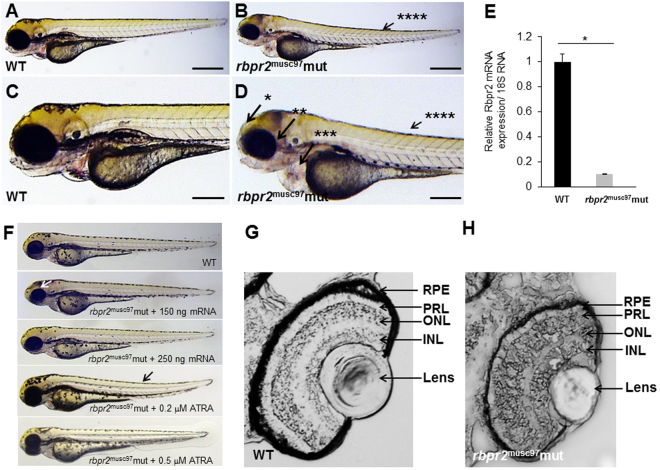
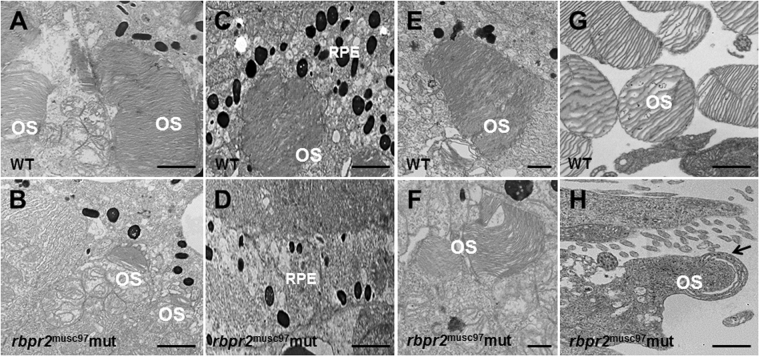
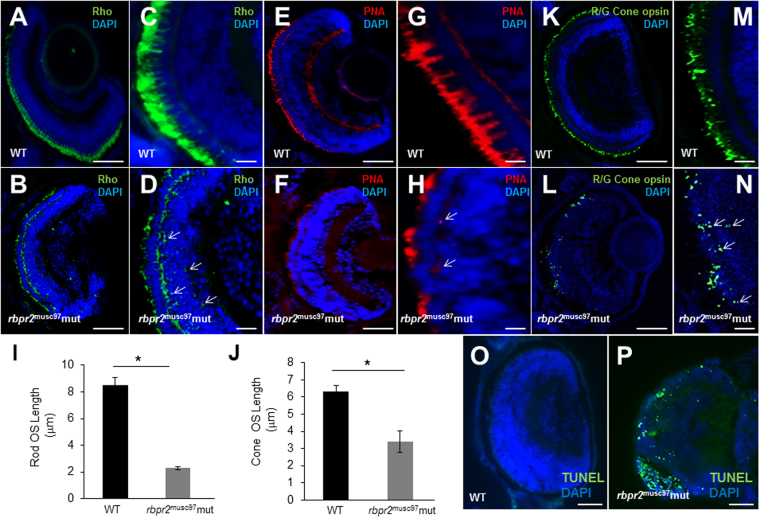
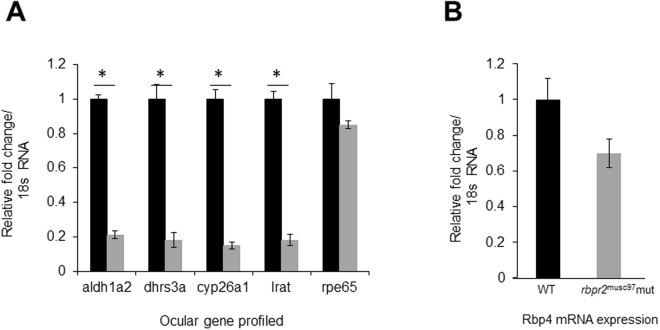
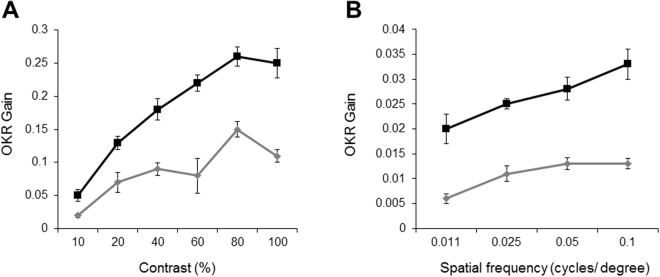
Vitamin A (all-trans retinol) plays critical roles in mammalian development and vision. Since vitamin A is food-derived, tissue-specific uptake and storage mechanism are needed. In the eye, uptake of RBP4-retinol is mediated by the receptor Stra6, whereas the receptor mediating RBP4 binding and retinol transport into the liver has just recently been discovered. Here we examined the role of zebrafish retinol binding protein receptor 2 (Rbpr2) for RBP4-retinol uptake in developing embryos, using eye development and vision as sensitive readouts. In cultured cells, Rbpr2 localized to membranes and promoted RBP4-retinol uptake. In larvae, Rbpr2 expression was detected in developing intestinal enterocytes and liver hepatocytes. Two rbpr2 mutant zebrafish lines, each resulting in Rbpr2 deficiency, exhibit a small eye defect, and systemic malformations including hydrocephaly and cardiac edema, phenotypes associated with vitamin A deficiency. In the retina, Rbpr2 loss resulted in shorter photoreceptor outer segments, mislocalization and decrease in visual pigments, decreased expression of retinoic acid-responsive genes and photoreceptor cell loss, overall leading to a reduction of visual function. Together, these results demonstrate that Rbpr2-mediated RBP4-retinol uptake in developing liver and intestine is necessary to provide sufficient substrate for ocular retinoid production required for photoreceptor cell maintenance and visual function.
Overview
The claims and statistics of this paper haven’t been checked yet.
Free: it reads the open-access text and checks the first 5 claims that cite a source we can check. Create a free account to check every claim.
Integrity signals
Registry
Cites
Statistics
Figures
Verification
Claims the paper makes
The claims and statistics of this paper haven’t been checked yet.
Free: it reads the open-access text and checks the first 5 claims that cite a source we can check. Create a free account to check every claim.
Claims other papers make about this one
Each is checked against this paper’s own text: does it say what the citing paper says it does?
The source backs part of the claim, not all of it — or backs it for a different population, condition or comparison.
In the citing paper
“Publications from our lab showed shown that Rbpr2 was also highly expressed in 11.5 hpf zebrafish embryos at the start of ocular development and in the intestines and pancreas of zebrafish larvae; however, mammalian expression-function patterns of RBPR2 still need further study [40].”
From Vitamin A Transporters in Visual Function: A Mini Review on Membrane Receptors for Dietary Vitamin A Uptake, Storage, and Transport to the Eye (2021) · cites this paper as [40]
Experimental — accuracy not yet measuredThe source backs part of the claim, not all of it — or backs it for a different population, condition or comparison.
In the citing paper
“Mutant and deficient RBPR2 has also been linked to symptoms seen in vitamin A deficiency (VAD), such as night blindness, microphthalmia, shortening of rods and cones, and retinal degeneration in zebrafish despite the protein not being expressed in the eye [40,42].”
From Vitamin A Transporters in Visual Function: A Mini Review on Membrane Receptors for Dietary Vitamin A Uptake, Storage, and Transport to the Eye (2021) · cites this paper as [40]
Experimental — accuracy not yet measuredThe cited source says what the claim attributes to it.
In the citing paper
“The incidence of VAD phenotypes in the eyes of RBPR2 mutants shows the importance of RBPR2 in eye development and in maintaining vitamin A homeostasis, though further study will need to be conducted using mammalian models.”
From Vitamin A Transporters in Visual Function: A Mini Review on Membrane Receptors for Dietary Vitamin A Uptake, Storage, and Transport to the Eye (2021) · cites this paper as [40]
Self-check
Percentages, sums and reported differences re-computed from the paper’s own numbers.
The self-check needs the paper’s full text.
Citations
Cites
Stages of embryonic development of the zebrafish
Kimmel, C. B., Ballard, W. W., Kimmel, S. R., Ullmann, B., & Schilling, T. F. (1995) · Developmental Dynamics · doi:10.1002/aja.1002030302 · Cited by 12,037
Rpe65 is necessary for production of 11-cis-vitamin A in the retinal visual cycle
Redmond., T. M., Yu, S., Lee, E., Bok, D., Hamasaki, D., Chen, N., Goletz, P., Ma, J.-X., Crouch, R. K., & Pfeifer, K. (1998) · Nature Genetics · doi:10.1038/3813 · Cited by 929
A Membrane Receptor for Retinol Binding Protein Mediates Cellular Uptake of Vitamin A
Kawaguchi, R., Yu, J., Honda, J., Hu, J., Whitelegge, J., Ping, P., Wiita, P., Bok, D., & Sun, H. (2007) · Science · doi:10.1126/science.1136244 · Cited by 836
Functional brain mapping of the relaxation response and meditation
Lazar, S. W., Bush, G., Gollub, R. L., Fricchione, G. L., Khalsa, G., & Benson, H. (2000) · NeuroReport · doi:10.1097/00001756-200005150-00042 · Cited by 717
Zygotic Genome Activation During the Maternal-to-Zygotic Transition
Lee, M. T., Bonneau, A. R., & Giraldez, A. J. (2014) · Annual Review of Cell and Developmental Biology · doi:10.1146/annurev-cellbio-100913-013027 · Cited by 644
Transport and Storage of Vitamin A
Blomhoff, R., Green, M. H., Berg, T., & Norum, K. R. (1990) · Science · doi:10.1126/science.2218545 · Cited by 611
Vitamin A metabolism: An update
D’Ambrosio, D. N., Clugston, R. D., & Blaner, W. S. (2011) · Nutrients · doi:10.3390/nu3010063 · Cited by 562
THE BIOLOGICAL FUNCTION OF VITAMIN A ACID
Dowling, J. E., & Wald, G. (1960) · Proceedings of the National Academy of Sciences · doi:10.1073/pnas.46.5.587 · Cited by 451
Diseases Caused by Defects in the Visual Cycle: Retinoids as Potential Therapeutic Agents
Travis, G. H., Golczak, M., Moise, A. R., & Palczewski, K. (2007) · Annual Review of Pharmacology and Toxicology · doi:10.1146/annurev.pharmtox.47.120505.105225 · Cited by 419
Mechanisms involved in the intestinal absorption of dietary vitamin A and provitamin A carotenoids
Harrison, E. H. (2012) · Biochimica et Biophysica Acta (BBA) - Molecular and Cell Biology of Lipids · doi:10.1016/j.bbalip.2011.06.002 · Cited by 365
The Cone-specific visual cycle
Wang, J.-S., & Kefalov, V. J. (2011) · Progress in Retinal and Eye Research · doi:10.1016/j.preteyeres.2010.11.001 · Cited by 335
Absorption of Vitamin A and Carotenoids by the Enterocyte: Focus on Transport Proteins
Reboul, E. (2013) · Nutrients · doi:10.3390/nu5093563 · Cited by 290
Function of Vitamin A in Vertebrate Embryonic Development
Zile, M. H. (2001) · The Journal of Nutrition · doi:10.1093/jn/131.3.705 · Cited by 263
A class B scavenger receptor mediates the cellular uptake of carotenoids in Drosophila
Kiefer, C., Sumser, E., Wernet, M. F., & von Lintig, J. (2002) · Proceedings of the National Academy of Sciences · doi:10.1073/pnas.162182899 · Cited by 255
Lobo, G. P., Hessel, S., Eichinger, A., Noy, N., Moise, A. R., Wyss, A., Palczewski, K., & Von Lintig, J. (2010) · The FASEB Journal · doi:10.1096/fj.09-150995 · Cited by 248
Self-citationCONGENITAL MALFORMATIONS INDUCED IN RATS BY MATERNAL VITAMIN A DEFICIENCY: I. Defects of the Eye
WARKANY, J. (1946) · Archives of Ophthalmology · doi:10.1001/archopht.1946.00890200155008 · Cited by 207
Isken, A., Golczak, M., Oberhauser, V., Hunzelmann, S., Driever, W., Imanishi, Y., Palczewski, K., & von Lintig, J. (2008) · Cell Metabolism · doi:10.1016/j.cmet.2008.01.009 · Cited by 194
Feedback mechanisms regulate retinoic acid production and degradation in the zebrafish embryo
Dobbs-McAuliffe, B., Zhao, Q., & Linney, E. A. (2004) · Mechanisms of Development · doi:10.1016/j.mod.2004.02.008 · Cited by 157
Vitamin A--functions, dietary requirements and safety in humans.
GERSTER, H. (1997) · PubMed · Cited by 154
Liver Retinol Transporter and Receptor for Serum Retinol-binding Protein (RBP4)
Alapatt, P., Guo, F., Komanetsky, S. M., Wang, S., Cai, J., Sargsyan, A., Rodríguez Díaz, E., Bacon, B. T., Aryal, P., & Graham, T. E. (2013) · Journal of Biological Chemistry · doi:10.1074/jbc.m112.369132 · Cited by 150
Lobo, G. P., Amengual, J., Li, H. N. M., Golczak, M., Bonet, M. L., Palczewski, K., & von Lintig, J. (2010) · Journal of Biological Chemistry · doi:10.1074/jbc.m110.132571 · Cited by 149
Self-citationZnoiko, S. L., Rohrer, B., Lu, K., Lohr, H. R., Crouch, R. K., & Ma, J.-X. (2005) · Investigative Opthalmology & Visual Science · doi:10.1167/iovs.04-0653 · Cited by 146
Self-citationGenetics and diet regulate vitamin A production via the homeobox transcription factor ISX
Lobo, G. P., Amengual, J., Baus, D., Shivdasani, R. A., Taylor, D., & von Lintig, J. (2013) · Journal of Biological Chemistry · doi:10.1074/jbc.m112.444240 · Cited by 138
Self-citationLampert, J. M., Holzschuh, J., Hessel, S., Driever, W., Vogt, K., & von Lintig, J. (2003) · Development · doi:10.1242/dev.00437 · Cited by 138
Goodman, D. S. (1980) · PubMed · Cited by 138
During, A., & Harrison, E. H. (2007) · Journal of Lipid Research · doi:10.1194/jlr.m700263-jlr200 · Cited by 137
Warkany, J., & Roth, C. (1948) · Journal of Nutrition · doi:10.1093/jn/35.1.1 · Cited by 134
STRA6 is critical for cellular Vitamin A uptake and homeostasis
Amengual, J., Zhang, N., Kemerer, M., Maeda, T., Palczewski, K., & Von Lintig, J. (2014) · Human Molecular Genetics · doi:10.1093/hmg/ddu258 · Cited by 134
Cone Opsin Mislocalization in Rpe65−/−Mice: A Defect That Can Be Corrected by 11-cis Retinal
Rohrer, B., Lohr, H. R., Humphries, P., Redmond, T. M., Seeliger, M. W., & Crouch, R. K. (2005) · Investigative Opthalmology & Visual Science · doi:10.1167/iovs.05-0533 · Cited by 133
Self-citationA genetic dissection of intestinal fat-soluble vitamin and carotenoid absorption
Widjaja-Adhi, M. A. K., Lobo, G. P., Golczak, M., & Von Lintig, J. (2015) · Human Molecular Genetics · doi:10.1093/hmg/ddv072 · Cited by 126
Self-citationMammalian Carotenoid-oxygenases: Key players for carotenoid function and homeostasis
Lobo, G. P., Amengual, J., Palczewski, G., Babino, D., & von Lintig, J. (2012) · Biochimica et Biophysica Acta (BBA) - Molecular and Cell Biology of Lipids · doi:10.1016/j.bbalip.2011.04.010 · Cited by 125
Self-citationBCDO2 acts as a carotenoid scavenger and gatekeeper for the mitochondrial apoptotic pathway
Lobo, G. P., Isken, A., Hoff, S., Babino, D., & von Lintig, J. (2012) · Development · doi:10.1242/dev.079632 · Cited by 112
Self-citationDevelopment of the Vertebrate Eye and Retina
Stenkamp, D. L. (2015) · Progress in Molecular Biology and Translational Science · doi:10.1016/bs.pmbts.2015.06.006 · Cited by 108
Rpe65−/−and Lrat−/−Mice: Comparable Models of Leber Congenital Amaurosis
Fan, J., Rohrer, B., Frederick, J. M., Baehr, W., & Crouch, R. K. (2008) · Investigative Opthalmology & Visual Science · doi:10.1167/iovs.08-1727 · Cited by 95
Self-citationMetabolism of carotenoids and retinoids related to vision
von Lintig, J. (2012) · Journal of Biological Chemistry · doi:10.1074/jbc.r111.303990 · Cited by 91
Retina, retinol, retinal and the natural history of vitamin A as a light sensor
Zhong, M., Kawaguchi, R., Kassai, M., & Sun, H. (2012) · Nutrients · doi:10.3390/nu4122069 · Cited by 89
STRA6: role in cellular retinol uptake and efflux.
Kelly, M., & Lintig, J. V. (2015) · Europe PMC (PubMed Central) · doi:10.3978/j.issn.2304-3881.2015.01.12 · Cited by 85
Wilson, J. G., & Warkany, J. (1950) · Pediatrics · doi:10.1542/peds.5.4.708 · Cited by 77
Vitamin A: recent advances in the biotransformation, transport, and metabolism of retinoids
Ross, A. C., Zolfaghari, R., & Weisz, J. (2001) · Current Opinion in Gastroenterology · doi:10.1097/00001574-200103000-00015 · Cited by 75
Expression of cyp26b1 during zebrafish early development
Zhao, Q., Dobbs-McAuliffe, B., & Linney, E. A. (2004) · Gene Expression Patterns · doi:10.1016/j.modgep.2004.09.011 · Cited by 70
Mitchell, D. M., Stevens, C. B., Frey, R. A., Hunter, S. S., Ashino, R., Kawamura, S., & Stenkamp, D. L. (2015) · PLoS Genetics · doi:10.1371/journal.pgen.1005483 · Cited by 70
Dhrs3 Protein Attenuates Retinoic Acid Signaling and Is Required for Early Embryonic Patterning
Kam, R. K. T., Shi, W., Chan, S. O., Chen, Y., Xu, G., Lau, C. B., Fung, K., Chan, W. Y., & Zhao, H. (2013) · Journal of Biological Chemistry · doi:10.1074/jbc.m113.514984 · Cited by 60
Topology and Membrane Association of Lecithin: Retinol Acyltransferase
Moise, A. R., Golczak, M., Imanishi, Y., & Palczewski, K. (2007) · Journal of Biological Chemistry · doi:10.1074/jbc.m608315200 · Cited by 59
Efficient Design and Assembly of Custom TALENs Using the Golden Gate Platform
Čermák, T., Starker, C. G., & Voytas, D. F. (2014) · Methods in molecular biology · doi:10.1007/978-1-4939-1862-1_7 · Cited by 57
The exocyst is required for photoreceptor ciliogenesis and retinal development
Lobo, G. P., Fulmer, D. B., Guo, L., Zuo, X., Dang, Y., Kim, S. H., Su, Y., George, K. D., Obert, E., Fogelgren, B., et al. (2017) · Journal of Biological Chemistry · doi:10.1074/jbc.m117.795674 · Cited by 52
Self-citationRetinoid regulation of the zebrafish cyp26a1 promoter
Hu, P., Tian, M., Bao, J., Xing, G., Gu, X., Gao, X., Linney, E. A., & Zhao, Q. (2008) · Developmental Dynamics · doi:10.1002/dvdy.21801 · Cited by 51
Sun, H. (2012) · Biochimica et Biophysica Acta (BBA) - Molecular and Cell Biology of Lipids · doi:10.1016/j.bbalip.2011.06.010 · Cited by 46
Retinoic acid and dexamethasone regulate the expression of PEDF in retinal and endothelial cells
Tombran‐Tink, J., Lara, N., Apricio, S. E., Potluri, P., Gee, S., Ma, J., Chader, G. J., & Barnstable, C. J. (2004) · Experimental Eye Research · doi:10.1016/j.exer.2003.12.013 · Cited by 45
Li, Z., Korzh, V. P., & Gong, Z. (2007) · BMC Developmental Biology · doi:10.1186/1471-213x-7-117 · Cited by 43
Uptake of Dietary Retinoids at the Maternal-Fetal Barrier
Wassef, L., & Quadro, L. (2011) · Journal of Biological Chemistry · doi:10.1074/jbc.m111.253070 · Cited by 43
Uchida, H., Hayashi, H., Kuroki, M., Uno, K., Yamada, H., Yamashita, Y., Tombran‐Tink, J., Kuroki, M., & Oshima, K. (2004) · Experimental Eye Research · doi:10.1016/j.exer.2004.08.004 · Cited by 38
Sequestration of Retinyl Esters Is Essential for Retinoid Signaling in the Zebrafish Embryo
Isken, A., Holzschuh, J., Lampert, J. M., Fischer, L., Oberhauser, V., Palczewski, K., & von Lintig, J. (2007) · Journal of Biological Chemistry · doi:10.1074/jbc.m609109200 · Cited by 37
Plasticity revealed by transcranial magnetic stimulation of early visual cortex
Corthout, E., Uttl, B., Walsh, V., Hallet, M., & Cowey, A. (2000) · NeuroReport · doi:10.1097/00001756-200005150-00040 · Cited by 35
Xie, Y., Lashuel, H. A., Miroy, G. J., Dikler, S., & Kelly, J. W. (1998) · Protein Expression and Purification · doi:10.1006/prep.1998.0944 · Cited by 35
Daniele, L. L., Emran, F., Lobo, G. P., Gaivin, R. J., & Perkins, B. D. (2016) · Investigative Ophthalmology & Visual Science · doi:10.1167/iovs.15-18996 · Cited by 29
Self-citationKishi, H., Kuroda, E., Mishima, H. K., & Yamashita, U. (2001) · Cell Biology International · doi:10.1006/cbir.2001.0795 · Cited by 26
Involvement of Endoplasmic Reticulum Stress in TULP1 Induced Retinal Degeneration
Lobo, G. P., Au, A. C., Kiser, P. D., & Hagstrom, S. A. (2016) · PLoS ONE · doi:10.1371/journal.pone.0151806 · Cited by 26
Self-citationEffect of all-trans retinoic acid on the barrier function in human retinal pigment epithelial cells
Rong, J., & Liu, S. (2011) · Biochemical and Biophysical Research Communications · doi:10.1016/j.bbrc.2011.03.080 · Cited by 23
Biehlmaier, O., Lampert, J. M., Lintig, J. V., & Köhler, K. (2005) · European Journal of Neuroscience · doi:10.1111/j.1460-9568.2004.03830.x · Cited by 20
Yasunari, T., Yanagihara, N., Komatsu, T., Moriwaki, M., Shiraki, K., Miki, T., Yano, Y., & Otani, S. (1998) · Ophthalmic Research · doi:10.1159/000055509 · Cited by 14
Perusek, L., Maeda, A., & Maeda, T. (2015) · Methods in molecular biology · doi:10.1007/978-1-4939-2330-4_22 · Cited by 8
Janssen, J. J. M., Kuhlmann, E. D., van Vugt, A. H. M., Winkens, H. J., Janssen, B. P. M., Deutman, A. F., & Driessen, C. A. G. G. (2000) · NeuroReport · doi:10.1097/00001756-200005150-00041 · Cited by 1
Cited by
Biological Functions of RBP4 and Its Relevance for Human Diseases
Steinhoff, J. S., Lass, A., & Schupp, M. (2021) · Frontiers in Physiology · doi:10.3389/fphys.2021.659977 · Cited by 181
“However, STRA6L mutant fish exhibit visual defects that are likely due to systemic vitamin A deficiency that was observed in these fish (Shi et al., 2017).”
BackgroundLeveraging Zebrafish to Study Retinal Degenerations
Angueyra, J. M., & Kindt, K. S. (2018) · Frontiers in Cell and Developmental Biology · doi:10.3389/fcell.2018.00110 · Cited by 92
“In addition to antibodies, cones can also easily be labeled using fluorescently-tagged peanut agglutinin (or PNA), a lectin protein that binds to the cone sheath (Hageman and Johnson, 1986; Shi et al., 2017).”
BackgroundRetinoid Homeostasis and Beyond: How Retinol Binding Protein 4 Contributes to Health and Disease
Steinhoff, J. S., Lass, A., & Schupp, M. (2022) · Nutrients · doi:10.3390/nu14061236 · Cited by 82
“Strikingly, STRA6L is not expressed in the zebrafish’s eye itself, indicating that STRA6L functions in this context through alterations in systemic retinoid homeostasis [89].”
BackgroundThe molecular aspects of absorption and metabolism of carotenoids and retinoids in vertebrates
Widjaja‐Adhi, M. A. K., & Golczak, M. (2019) · Biochimica et Biophysica Acta (BBA) - Molecular and Cell Biology of Lipids · doi:10.1016/j.bbalip.2019.158571 · Cited by 72
“The deletion of rbpr2 in zebrafish impaired the transport and distribution of retinol from the yolk of developing larvae, leading to developmental defects associated with vitamin A deficiency such as microphthalmia, hydrocephaly, and cardiac edema [403].”
BackgroundMechanisms of Feedback Regulation of Vitamin A Metabolism
O'Connor, C. M., Varshosaz, P., & Moise, A. R. (2022) · Nutrients · doi:10.3390/nu14061312 · Cited by 76
Metadata
- Authors
- Shi, Y., Obert, E., Rahman, B., Rohrer, B., & Lobo, G. P.
- Affiliations
- Medical University of South Carolina (US)
- Corresponding author
- Lobo, Glenn P.
- Venue
- Scientific Reports
- Published
- 2017-11-24
- Volume
- 7
- Issue
- 1
- Pages
- 16207-16207
- ISSN
- 2045-2322 (ISSN-L)
- PMC
- PMC5701214
- OpenAlex
- W2769250134
- Cited by
- 31
- References
- 61
- Citations by year
- 2025: 4 · 2024: 3 · 2023: 2 · 2022: 5 · 2021: 7 · 2020: 2 · 2019: 4 · 2018: 4
- FWCI
- 1.12
- Type
- journal article
- Language
- en
- Open access
- gold
- doi.org
- Licence
- cc-by
- creativecommons.org/licenses/by/4.0 (tdm)
- creativecommons.org/licenses/by/4.0 (vor)
- Locations
- Scientific Reports (publishedVersion, cc-by)
- Europe PMC (PubMed Central) (publishedVersion, cc-by)
- PubMed Central (publishedVersion, cc-by)
- PubMed (publishedVersion)
- Funders
- U.S. Department of Veterans Affairs (I01 BX003050, I01 RX000444)
- Medical University of South Carolina
- Cleveland Clinic
- Case Western Reserve University
- University of South Carolina
- Ögonfonden
- National Eye Institute (R21EY025034, EY025034, R01EY024581)
- Topics
- Health Sciences › Medicine › Ophthalmology › Retinal Development and Disorders
- Life Sciences › Biochemistry, Genetics and Molecular Biology › Molecular Biology › Retinoids in leukemia and cellular processes
- Health Sciences › Medicine › Ophthalmology › Retinal Diseases and Treatments
- Keywords
- vitamin A, retinol transport, photoreceptor loss, eye development, hydrocephalus, cardiac edema, vitamin A metabolism, zebrafish
- MeSH terms
- Animals, Morphogenesis, Vision, Ocular, Zebrafish, Gene Expression Regulation, Developmental, Enterocytes, Hepatocytes, Membrane Transport Proteins, Zebrafish Proteins, Retinal Photoreceptor Cell Outer Segment
About these checks
Registry, retraction, Cites and statistics results are computed, not judged, with one exception: a printed reference that no index lists is read once by a model before it counts as a citation error. Claims are extracted by a model and kept only when their quote appears verbatim in the text; each cited source is then checked, with a model’s help, for whether it says what the claim relies on. Those verdicts can be wrong — read the claim’s quote and the cited source before relying on one.
Statistics and arithmetic are recomputed, not judged.
Confidence bands are shown only for fields calibrated on our annotated test set. None is calibrated yet, so no band is shown.
What counts as a claim ›How we measure confidence ›How we check this ›
Are you an author, or do you see a problem with this page? Request a review
Data sources
Bibliographic data: Semantic Scholar, OpenAlex, Crossref.
Contains information from the Semantic Scholar Academic Graph Datasets, made available under the ODC Attribution License (ODC-BY 1.0).
Semantic Scholar’s data is described in: Kinney, R., et al. (2023). The Semantic Scholar Open Data Platform. arXiv:2301.10140.
