

Blood-Brain Glucose Transfer in Alzheimer’s disease: Effect of GLP-1 Analog Treatment
Open accessThe DOI matches its Crossref record; 66 of the 66 references it cites were found in a registry or an index.
Abstract
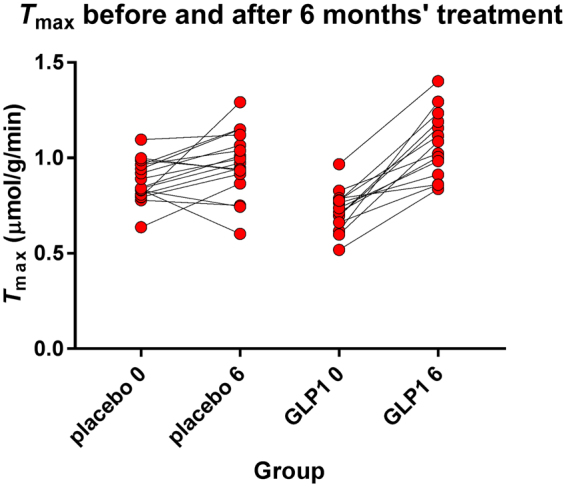
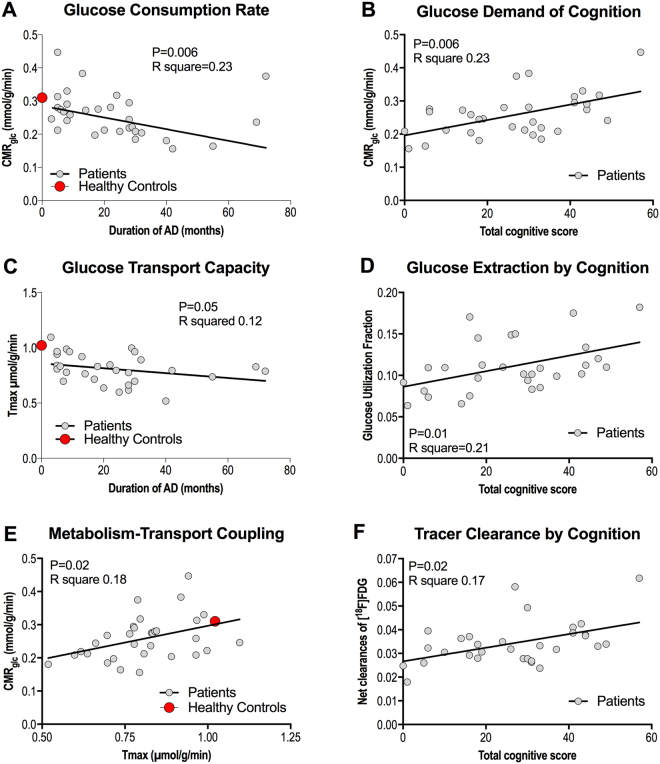
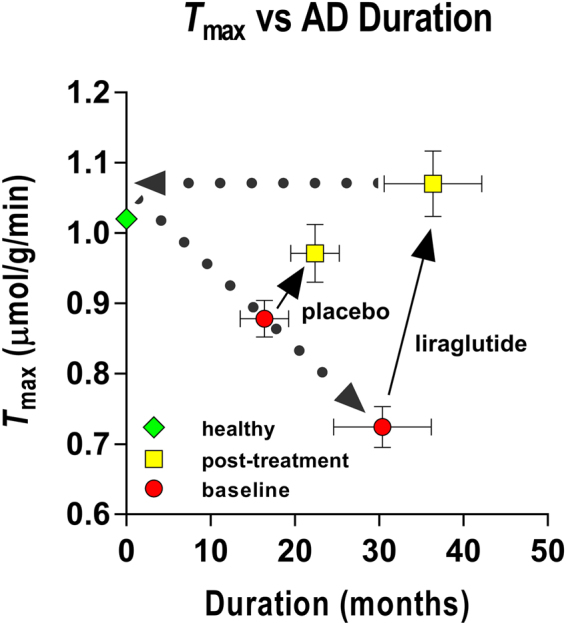
There are fewer than normal glucose transporters at the blood-brain barrier (BBB) in Alzheimer’s disease (AD). When reduced expression of transporters aggravates the symptoms of AD, the transporters become a potential target of therapy. The incretin hormone GLP-1 prevents the decline of cerebral metabolic rate for glucose (CMR glc) in AD, and GLP-1 may serve to raise transporter numbers. We hypothesized that the GLP-1 analog liraglutide would prevent the decline of CMR glc in AD by raising blood-brain glucose transfer, depending on the duration of disease. We randomized 38 patients with AD to treatment with liraglutide (n = 18) or placebo (n = 20) for 6 months, and determined the blood-brain glucose transfer capacity (Tmax) in the two groups and a healthy age matched control group (n = 6). In both AD groups at baseline, Tmax estimates correlated inversely with the duration of AD, as did the estimates of CMR glc that in turn were positively correlated with cognition. The GLP-1 analog treatment, compared to placebo, highly significantly raised the Tmax estimates of cerebral cortex from 0.72 to 1.1 umol/g/min, equal to Tmax estimates in healthy volunteers. The result is consistent with the claim that GLP-1 analog treatment restores glucose transport at the BBB.
Overview
The claims and statistics of this paper haven’t been checked yet.
Free: it reads the open-access text and checks the first 5 claims that cite a source we can check. Create a free account to check every claim.
Integrity signals
Registry
Cites
Statistics
Figures
Verification
Claims the paper makes
The claims and statistics of this paper haven’t been checked yet.
Free: it reads the open-access text and checks the first 5 claims that cite a source we can check. Create a free account to check every claim.
Claims other papers make about this one
Each is checked against this paper’s own text: does it say what the citing paper says it does?
The cited source says what the claim attributes to it.
In the citing paper
“GLP1-RAs is known for its neuroprotective action, and more recent results have emerged, showing a potential benefit in people with AD [85,86,87].”
From Treatment of Alzheimer’s Disease: Beyond Symptomatic Therapies (2023) · cites this paper as [87]
In the citing paper
“a study randomized 38 AD patients to receive liraglutide or placebo and reported that liraglutide reversed AD-related glucose transporter dysfunction.522”
From Antiageing strategy for neurodegenerative diseases: from mechanisms to clinical advances (2025) · cites this paper as [522]
Self-check
Percentages, sums and reported differences re-computed from the paper’s own numbers.
The self-check needs the paper’s full text.
Citations
Cites
Neurovascular pathways to neurodegeneration in Alzheimer’s disease and other disorders
Zlokovic, B. V. (2011) · Nature Reviews Neuroscience · doi:10.1038/nrn3114 · Cited by 2,969
The projected effect of risk factor reduction on Alzheimer's disease prevalence
Barnes, D. E., & Yaffe, K. (2011) · The Lancet Neurology · doi:10.1016/s1474-4422(11)70072-2 · Cited by 2,666
Beach, T. G., Monsell, S. E., Phillips, L. E., & Kukull, W. (2012) · Journal of Neuropathology & Experimental Neurology · doi:10.1097/nen.0b013e31824b211b · Cited by 1,103
The arcuate nucleus mediates GLP-1 receptor agonist liraglutide-dependent weight loss
Secher, A., Jelsing, J., Baquero, A. F., Hecksher-Sørensen, J., Cowley, M. A., Dalbøge, L. S., Hansen, G., Grove, K. L., Pyke, C., Raun, K., et al. (2014) · Journal of Clinical Investigation · doi:10.1172/jci75276 · Cited by 961
De Vivo, D. C., Trifiletti, R. R., Jacobson, R. I., Ronen, G. M., Behmand, R. A., & Harik, S. I. (1991) · New England Journal of Medicine · doi:10.1056/nejm199109053251006 · Cited by 800
Brain metabolism dictates the polarity of astrocyte control over arterioles
Gordon, G. R. J., Choi, H. B., Rungta, R. L., Ellis-Davies, G. C. R., & MacVicar, B. A. (2008) · Nature · doi:10.1038/nature07525 · Cited by 744
Amyloid deposition, hypometabolism, and longitudinal cognitive decline
Landau, S. M., Mintun, M. A., Joshi, A. D., Koeppe, R. A., Petersen, R. C., Aisen, P. S., Weiner, M. W., Jagust, W. J., & Initiative, F. T. A. D. N. (2012) · Annals of Neurology · doi:10.1002/ana.23650 · Cited by 727
Mosconi, L., Tsui, W. H., Herholz, K., Pupi, A., Drzezga, A., Lucignani, G., Reiman, E. M., Holthoff, V., Kalbe, E., Sorbi, S., et al. (2008) · Journal of Nuclear Medicine · doi:10.2967/jnumed.107.045385 · Cited by 726
GLUT1 reductions exacerbate Alzheimer's disease vasculo-neuronal dysfunction and degeneration
Winkler, E. A., Nishida, Y., Sagare, A. P., Rege, S. V., Bell, R. D., Perlmutter, D., Sengillo, J. D., Hillman, S., Kong, P., Nelson, A. R., et al. (2015) · Nature Neuroscience · doi:10.1038/nn.3966 · Cited by 689
Two-year follow-up of amyloid deposition in patients with Alzheimer's disease
Engler, H., Forsberg, A., Almkvist, O., Blomquist, G., Larsson, E., Savitcheva, I., Wall, A., Ringheim, A., Langstrom, B., & Nordberg, A. (2006) · Brain · doi:10.1093/brain/awl178 · Cited by 617
Cited by
Items 101–169 of 169
Liraglutide Ameliorates Cerebral Ischemia in Mice via Antipyroptotic Pathways
Yang, L., Cheng, J., Shi, G., Zhang, C., Du, Y., Chen, L., Qiao, H., Chen, R., & Zhang, X. (2022) · Neurochemical Research · doi:10.1007/s11064-022-03574-4 · Cited by 18
Immunometabolism Reframes Alzheimer’s Disease: From Systemic Dysmetabolism to Glial Rewiring
Bach, D., & Nguyen, L. L. (2026) · Cellular and Molecular Neurobiology · doi:10.1007/s10571-026-01691-0 · Cited by 18
“Agents that restore endothelial metabolism AMPK/ SIRT1 pathway modulators and GLP-1 receptor agonists show BBB-protective and perfusion/glucose-transfer benefits in preclinical and early clinical studies (Zlokovic 2011; Winkler et al. 2015; Gejl et al. 2017).”
Koychev, I. G., Adler, A., Edison, P., Tom, B. D. M., Milton, J. E., Butchart, J., Hampshire, A., Marshall, C. R., Coulthard, E. J., Zetterberg, H., et al. (2024) · BMJ Open · doi:10.1136/bmjopen-2023-081401 · Cited by 20
“12 While the pilot trial did not find an effect on amyloid accumulation in a secondary analysis, there is now evidence that tau protein changes are more tightly related to IR.”
BackgroundSabbagh, M. N., Cummings, J. L., Ballard, C. G., van der Flier, W. M., Heneka, M. T., Holst, J. J., Knudsen, L. B., Salloway, S., Tansey, M. G., & Drucker, D. J. (2025) · Nature Aging · doi:10.1038/s43587-025-01029-3 · Cited by 17
“The trials enrolled participants aged 55–85 years across 40 countries who had biomarker-confirmed MCI or mild AD dementia (positive for amyloid or with abnormal CSF amyloid levels).”
Exploring the Biological Effects of Anti-Diabetic Vanadium Compounds in the Liver, Heart and Brain
Dayanand, Y., Pather, R., Xulu, N. D., Booysen, I. N., Sibiya, N. H., Khathi, A., & Ngubane, P. S. (2024) · Diabetes Metabolic Syndrome and Obesity · doi:10.2147/dmso.s417700 · Cited by 16
“76 Glucose metabolism provides neuronal and non-neuronal brain cells with glucose to produce ATP and neurotransmitter synthesis.”
BackgroundYu, Z.-W., Liu, R., Li, X., Wang, Y., Fu, Y., Li, H.-Y., Yuan, Y., & Gao, X. (2020) · Mechanisms of Ageing and Development · doi:10.1016/j.mad.2020.111294 · Cited by 15
Lithium Enhances Hippocampal Glucose Metabolism in an In Vitro Mice Model of Alzheimer’s Disease
Gherardelli, C., Cisternas, P., & Inestrosa, N. C. (2022) · International Journal of Molecular Sciences · doi:10.3390/ijms23158733 · Cited by 18
Toljan, K., & Homolak, J. (2021) · Handbook of clinical neurology · doi:10.1016/b978-0-12-819975-6.00018-2 · Cited by 16
Fakorede, S., Sodiq, T. A., Ajagbe͓, A. O., Adeleke, A. J., Edafetanure-Ibeh, O. M., Awobona, T. A., & Aborode, A. T. (2025) · Journal of Alzheimer s Disease · doi:10.1177/13872877251377793 · Cited by 190
“97”
Corraliza-Gómez, M., Vargas-Soria, M., & García-Alloza, M. (2025) · Molecular Neurodegeneration · doi:10.1186/s13024-025-00894-1 · Cited by 16
Lu, C., Xu, C., & Yang, J. (2024) · Medicina · doi:10.3390/medicina61010017 · Cited by 14
Repurposing metabolic drugs as anti-inflammatory agents
Hogan, A. E., Davis, C., Jenkins, B. J., Jones, N., & O'Shea, D. B. (2025) · Trends in Endocrinology and Metabolism · doi:10.1016/j.tem.2025.07.003 · Cited by 15
Repurposing Licensed Drugs for Use Against Alzheimer’s Disease
Norins, L. C. (2021) · Journal of Alzheimer s Disease · doi:10.3233/jad-210080 · Cited by 15
The Role of Long Noncoding RNAs in Diabetic Alzheimer’s Disease
Kim, Y., & Song, J. (2018) · Journal of Clinical Medicine · doi:10.3390/jcm7110461 · Cited by 13
“Risk factors for type 2 diabetes mellitus (T2DM), including impaired glucose homeostasis and insulin resistance, are believed to contribute to the onset and progression of AD [12–14].”
BackgroundInfluentialWang, S., Shi, Y., Xin, R., Kang, H., Xiong, H., & Ren, J. (2025) · Frontiers in Endocrinology · doi:10.3389/fendo.2025.1614006 · Cited by 17
“Six months of treatment signi fi cantly enhances blood-brain barrier glucose transport, improves cerebral glucose metabolism, and reverses AD-related brain glucose transport abnormalities, supporting its role in brain energy metabolism and AD therapy (197).”
Regulation of Diabetes: a Therapeutic Strategy for Alzheimer's Disease?
Ahn, K.-C., Learman, C. R., Baker, G. B., Weaver, C. L., Chung, P., Kim, H., & Song, M.-S. (2019) · Journal of Korean Medical Science · doi:10.3346/jkms.2019.34.e297 · Cited by 14
Turner, D. A., Degan, S., Hoffmann, U., Galeffi, F., & Colton, C. A. (2021) · Alzheimer s & Dementia · doi:10.1002/alz.12289 · Cited by 11
Insulin signaling as a therapeutic target in Alzheimer’s disease: Efficacy of apomorphine
Ohyagi, Y., & Takei, S. (2020) · Neurology and Clinical Neuroscience · doi:10.1111/ncn3.12369 · Cited by 10
Salau, V. F., Erukainure, O. L., Bharuth, V., & Islam, M. S. (2020) · Journal of Biochemical and Molecular Toxicology · doi:10.1002/jbt.22610 · Cited by 10
Physiology and pharmacology of glucagon-like peptide-1 receptor
Куркин, Д. В., Bakulin, D. A., Morkovin, E. I., Petrov, V. I., Strygin, A. V., Koryanova, K. N., Gorbunova, Y. V., Kolosov, Y. A., Ivanova, O. V., Pavlova, E. V., et al. (2024) · Pharmacy & Pharmacology · doi:10.19163/2307-9266-2023-11-4-347-380 · Cited by 13
The role of type 2 Diabetes mellitus as a risk factor for Alzheimer's and Parkinson's diseases
Rocha, K. M. A., Goulart, A. D. S., Costa, M. T., Salgueiro, A. C. F., & Folmer, V. (2021) · Research Society and Development · doi:10.33448/rsd-v10i1.11673 · Cited by 9
“Post-mortem investigations of the brain of AD patients showed decreased protein levels of GLUT1 and GLUT3, especially in the cerebral cortex, with significant loss of GLUT3 (Gejl et al., 2017; Szablewski, 2017).”
BackgroundErukainure, O. L., Matsabisa, M. G., Salau, V. F., & Islam, M. S. (2020) · Frontiers in Pharmacology · doi:10.3389/fphar.2020.592981 · Cited by 10
The effects of incretin hormones on cerebral glucose metabolism in health and disease
Nilsson, M. S. D., GJEDDE, A. H., Brock, B., Gejl, M., & Rungby, J. (2017) · Neuropharmacology · doi:10.1016/j.neuropharm.2017.12.031 · Cited by 11
Self-citationSalau, V. F., Erukainure, O. L., Bharuth, V., Ibeji, C. U., Olasehinde, T. A., & Islam, M. S. (2020) · Neuroscience Research · doi:10.1016/j.neures.2020.06.008 · Cited by 10
Effects of glucagon-like peptide-1 receptor agonists on psychiatric disorders: a systematic review
Lee, S., Yin, L., Teopiz, K. M., Wong, S., Le, G. H., Xiao, N., Stahl, S. M., Valentino, K., Ho, R., Zhang, M. C., et al. (2025) · Therapeutic Advances in Psychopharmacology · doi:10.1177/20451253251396304 · Cited by 10
Beyond lecanemab: Examining Phase III potential in Alzheimer's therapeutics
Osaka, H., Nishida, K., & Kanazawa, T. (2024) · Psychiatry and Clinical Neurosciences Reports · doi:10.1002/pcn5.185 · Cited by 12
“33 – 35 Research also indicates the involvement of brain GLP ‐ 1 receptors in learning and neuroprotection.”
BackgroundWatve, M., & Sardeshmukh, A. K. (2024) · Exploration of Neuroprotective Therapy · doi:10.37349/ent.2024.00074 · Cited by 7
Yin, H., Lu, Z., Deng, Y., Tian, X., & Gong, Q. (2026) · Ageing Research Reviews · doi:10.1016/j.arr.2025.102952 · Cited by 6
Mohammed, O., & Kelemu, T. (2025) · Health Science Reports · doi:10.1002/hsr2.71065 · Cited by 6
“During a phase II clinical study, liraglutide greatly improved glucose transport at the BBB, increasing its metabolic rate and reversing glucose transport defects in the brain that are frequently linked to AD pathology [98].”
The historical progression of positron emission tomography research in neuroendocrinology
Bini, J. (2023) · Frontiers in Neuroendocrinology · doi:10.1016/j.yfrne.2023.101081 · Cited by 6
Emerging Radioligands as Tools to Track Multi-Organ Senescence
Gagliardi, A., Migliari, S., Guercio, A., Baldari, G., Graziani, T., Cervati, V., Ruffini, L., & Scarlattei, M. (2025) · Diagnostics · doi:10.3390/diagnostics15192518 · Cited by 7
“For example, liraglutide prevents a decrease in cerebral metabolic rate for glucose in AD patients compared with placebo [131], while long-term treatment with dulaglutide demonstrated beneficial effects on cognitive impairment in patients aged ≥ 50 years with T2DM [132], and a 12 month-exenatide…”
Incretin Mimetics as Potential Disease Modifying Treatment for Alzheimer’s Disease
Crook, H., & Edison, P. (2024) · Journal of Alzheimer s Disease · doi:10.3233/jad-240730 · Cited by 6
“Furthermore, glucose transport across the blood-brain barrier was restored to healthy control levels following liraglutide treatment [67], however, no differences in A (cid:2) deposition or cognitive performance were found between treated and untreated groups [66].”
Disruption of Glucose Metabolism in Aged Octodon degus: A Sporadic Model of Alzheimer's Disease
Cisternas, P., Gherardelli, C., Salazar, P. L., & Inestrosa, N. C. (2021) · Frontiers in Integrative Neuroscience · doi:10.3389/fnint.2021.733007 · Cited by 5
Beyond weight loss: multisystem benefits of obesity medications
Savas, M., Kuckuck, S., Boon, M. R., & van Rossum, E. F. C. (2026) · The Lancet Diabetes & Endocrinology · doi:10.1016/s2213-8587(26)00100-2 · Cited by 5
Rytter, M. E., Svane, C. A. B., Størling, J., & Chen, W. (2025) · Neural Regeneration Research · doi:10.4103/nrr.nrr-d-24-01591 · Cited by 4
“Intriguingly, liraglutide has also shown the ability to restore brain glucose metabolism in clinical studies (Gejl et al., 2017), indicating a potential protective mechanism against AD.”
Ormazabal, P., Gherardelli, C., Pinto, C., Servili, E., Méndez‐Orellana, C., Wong, G. W., Contreras, R., Cisternas, P., & Inestrosa, N. C. (2025) · Journal of Biological Chemistry · doi:10.1016/j.jbc.2025.110607 · Cited by 5
“The causes of reduced glucose metabolism remain unclear; however, multiple studies suggest that enhancing glucose uptake could potentially improve memory and cognitive function (8–10).”
Albar, N. Y., Hassaballa, H., Shikh, H., Albar, Y., Ibrahim, A. S., Mousa, A. H., Alshanberi, A. M., Elgebaly, A. S., & Bahbah, E. I. (2024) · Postgraduate Medicine · doi:10.1080/00325481.2024.2360887 · Cited by 6
RetractedGLP-1R agonists activate human hypothalamic neuronsPreprint
Mazzaferro, S., Chen, H. C., Cahn, O., Yang, A., Shepilov, D., Seah, E., Chen, J., Jawahar, B., Alcaino, C., Macarelli, V., et al. (2024) · bioRxiv (Cold Spring Harbor Laboratory) · doi:10.1101/2024.04.02.587825 · Cited by 4
Sleep and Circadian Effects on the Incretin System
Yuan, R. K., & Zitting, K. (2025) · Current Sleep Medicine Reports · doi:10.1007/s40675-025-00337-9 · Cited by 3
Mouhammad, Z. A., Tribble, J. R., Nicol, A., Andreopoulou, E., García-Bermúdez, M. Y., Aldana, B. I., Vohra, R., Kolko, M., & Williams, P. A. (2026) · Investigative Ophthalmology & Visual Science · doi:10.1167/iovs.67.2.25 · Cited by 4
“GLP-1RAs have previously been shown to enhance GLUT-1-mediated glucose transport across the blood-brain barrier 77,78 and to increase hexokinase activity, 78 thereby promoting intra-cellular trapping of glucose as glucose-6-phosphate.”
Attia, M. S. M., Ahmad, S. F., Nadeem, A., Ansari, M. A., Al‐Hamamah, M. A., Harisa, G. I., Bakheet, S. A., Emran, T. B., Singh, T., & Attia, S. M. (2026) · Metabolic Brain Disease · doi:10.1007/s11011-026-01870-4 · Cited by 4
“GLP-1 receptor agonists exert direct effects on synaptic and microglial activity and possess neuroprotective proper - ties by restoring brain energy metabolism (Gejl et al. 2017 ).”
Shobako, M., Kawano, K., Taniguchi, E., & Ohinata, K. (2025) · Scientific Reports · doi:10.1038/s41598-025-94129-4 · Cited by 3
“Previous studies reported that the GLP-1 analog liraglutide, which is used to treat diabetes, improved cognitive function in humans and animals 34,35 .”
Knezović, A., Hosch, M., Hamann, C. S., Popp, S., Ortega, G., Barilar, J. O., Grünblatt, E., Monoranu, C., Riederer, P. F., Šalković‐Petrišić, M., et al. (2025) · Journal of Neural Transmission · doi:10.1007/s00702-025-02979-z · Cited by 5
“Gejl and colleagues demonstrated via FDG-PET-MRI that treatment with GLP-1 analogues restores glucose transport at the blood–brain barrier, which is typically impaired in AD patients (Gejl et al. 2017).”
Mahoon, D. A., Hamad, O., & Butler, A. E. (2026) · International Journal of Molecular Sciences · doi:10.3390/ijms27093967 · Cited by 2
“While this drug class was in its early stages in 2013, recent randomized trials have yielded new findings; specifically, these studies demonstrate its capacity to restore maximal blood-brain glucose transfer and prevent regional declines in cerebral glucose metabolism [32,33,40].”
InfluentialGLP-1 and Parkinson’s Disease: A Comprehensive Review of Biology, Mechanisms and Efficacy
Mezabrovschi, R., Gegg, M. E., & Schapira, A. H. V. (2026) · Cells · doi:10.3390/cells15090804 · Cited by 3
“A 2016 study involving 38 participants demonstrated that 26 weeks of liraglutide treatment prevented decline in cerebral glucose consumption, although no significant effects on cognitive performance were observed [180].”
Elghanam, Y., & Kim, E. (2026) · Archives of Pharmacal Research · doi:10.1007/s12272-026-01615-y · Cited by 3
“Three post hoc analyses were considered qualitatively (Aviles-Olmos et al. 2014; Gejl et al. 2017; Athauda et al. 2018).”
Strategies for Neuroprotection in Alzheimer's Disease
Jasutkar, H. G. (2025) · Wiley eBooks · doi:10.1002/9783527844678.ch5 · Cited by 1
Gonçalves, A. J., Alotaibi, M., Carlin, A., Chen, Y., Wong, C., Djoukhadar, I., Krokos, G., Jackson, A., Coope, D. J., & Asselin, M. (2021) · Journal of Cerebral Blood Flow & Metabolism · doi:10.1177/0271678x211061050 · Cited by 1
Repurposed Agents in Alzheimer’s Disease Drug Development
Ballard, C. G., & Sultana, J. (2022) · Cambridge University Press eBooks · doi:10.1017/9781108975759.006
New advances in the treatment of Alzheimer's disease with antidiabetic drugs
Wang, J. (2023) · International Journal of Frontiers in Medicine · doi:10.25236/ijfm.2023.051012
GLP1R Agonists Activate Human POMC NeuronsPreprint
Mazzaferro, S., Chen, H. C., Cahn, O., Yang, A., Shepilov, D., Chen, J., Alcaino, C., Macarelli, V., Mali, I. D., Gribble, F. M., et al. (2024) · SSRN Electronic Journal · doi:10.2139/ssrn.4855485
Pilśniak, J., Węgrzynek‐Gallina, J., Bednarczyk, B., Buczek, A., Pilśniak, A., Chmiela, T., Jarosińska, A., Siuda, J. S., & Holecki, M. T. (2025) · Life · doi:10.3390/life15121893 · Cited by 2
“In addition, the study populations varied considerably, including individuals at different stages of AD (long-term AD [27,41] or early AD [43]), as well as patients with MCI [44] and individuals with normal cognitive function reporting subjective complaints [42].”
InfluentialCandeias, E. M. (2021) · Portuguese National Funding Agency for Science, Research and Technology (RCAAP Project by FCT)
Carranza-Naval, M. J. (2022) · RODIN (Universidad de Cádiz)
Clark, M. (2023) · White Rose eTheses Online (University of Leeds, The University of Sheffield, University of York)
Yi, W., Lian, J., & Deng, C. (2026) · Behavioural Brain Research · doi:10.1016/j.bbr.2026.116143
Ozsoy, F., Yanar, K., Sayılı, U., Atukeren, P., & Uzun, H. (2026) · Nutrients · doi:10.3390/nu18050867
de Tredern, É. (2019) · theses.fr (ABES) · doi:10.70675/b8f18056za2f8z41f8zb198z8ee14a609cc9 · Cited by 1
Mechanism of GLP-1 Receptor Agonists in Weight Loss through Appetite Suppression
姚, 张. (2026) · Advances in Clinical Medicine · doi:10.12677/acm.2026.1641386
Neurovascular coupling and energy substrate delivery in Alzheimer’s disease
Malviya, S., Saha, D., Kamble, A., Singh, D. R., Sundaram, S. M., & Devanathan, V. (2026) · International review of neurobiology · doi:10.1016/bs.irn.2026.05.001
Grycan, M., Zyśk, R., Grycan, G., Jakiel, G., Dudek, A., & Gromadzka, G. (2026) · International Journal of Molecular Sciences · doi:10.3390/ijms27177521
“GLP-1 receptor agonists reduce body weight, improve glycemic control, and decrease cardiovascular risk in individuals with obesity and metabolic disorders [84,85].”
GLP-1 receptor agonists in diabetes-associated neurological disorders
Rasooli, R., Sharifzadeh, M., Rassouli, A., & Bekheir, S. A. (2026) · Brain Disorders · doi:10.1016/j.dscb.2026.100326
Brucar, L. R., Miller, K. M., & Volkow, N. D. (2026) · Neuroscience & Biobehavioral Reviews · doi:10.1016/j.neubiorev.2026.106990
“After 26 weeks of liraglutide treatment, individuals with AD demonstrated significant decreases in weight, blood pressure, and fasting plasma glucose compared with placebo, however, no significant changes were observed regarding cognitive functioning (Gejl et al., 2016;Gejl et al., 2017).”
Méndez, F., Cisternas, P., Ormazabal, P., Gherardelli, C., Frangópulos, M., Mansilla, A., & Inestrosa, N. C. (2026) · Pharmaceuticals · doi:10.3390/ph19091489
Abbatecola, A. M., Migliara, G., D’Agostino, F., Veronese, N., Giuliani, A., Caponnetto, S., Corbi, G., Signoriello, E., Incalzi, R. A., & Paolisso, G. (2026) · Nutrients · doi:10.3390/nu18203312
“GLP-1RA(s) can cross the blood–brain barrier and preclinical studies have suggested neuroprotective mechanisms, including effects on amyloid-related pathways, tau phosphorylation, oxidative stress, synaptic function, and neuronal plasticity [7,33,34].”
Lakshmi, S. M., Singh, V., Vanangamudi, M., Taj, T., Shahin, H., Nath, R., Dutta, G., Avvari, S. K., Sridhar, S. B., Panigrahy, U. P., et al. (2026) · European Journal of Neuroscience · doi:10.1111/ejn.70718
“This is merely indirect evidence of CNS entry, though, as it might have been managed by another peripheral channel (Gejl et al. 2017).”
InfluentialCheng, Y.-C., Huang, Y., Chen, J., Wu, V., Chen, R.-M., Lu, K., Kuo, K., Lu, C.-L., Cai-Mei, Z., & Hou¹, Y.-C. (2026) · Frontiers in Endocrinology · doi:10.3389/fendo.2026.1963944
Santerre, M., Shcherbik, N., & Sawaya, B. E. (2026) · Metabolism · doi:10.1016/j.metabol.2026.156810
Metadata
- Authors
- Gejl, M., Brock, B., Egefjord, L., Vang, K., Rungby, J., & Gjedde, A.
- Affiliations
- Aarhus University (DK)
- Aarhus University Hospital (DK)
- University of Copenhagen (DK)
- Corresponding author
- Gejl, Michael
- Venue
- Scientific Reports
- Published
- 2017-12-13
- Volume
- 7
- Issue
- 1
- Pages
- 17490-17490
- ISSN
- 2045-2322 (ISSN-L)
- PMC
- PMC5727512
- OpenAlex
- W2773040321
- Cited by
- 163
- References
- 66
- Citations by year
- 2026: 20 · 2025: 28 · 2024: 19 · 2023: 14 · 2022: 19 · 2021: 21 · 2020: 24 · 2019: 13 · 2018: 4 · 2017: 1
- FWCI
- 8.43
- Type
- journal article
- Language
- en
- Open access
- gold
- doi.org
- Licence
- cc-by
- creativecommons.org/licenses/by/4.0 (tdm)
- creativecommons.org/licenses/by/4.0 (vor)
- Locations
- Scientific Reports (publishedVersion, cc-by)
- PubMed Central (publishedVersion, cc-by)
- PubMed (publishedVersion)
- Research at the University of Copenhagen (University of Copenhagen) (publishedVersion, cc-by)
- University of Southern Denmark Research Portal (University of Southern Denmark) (submittedVersion, cc-by)
- DOAJ (DOAJ: Directory of Open Access Journals) (submittedVersion)
- Funders
- Aarhus Universitet
- Aarhus Universitetshospital
- Novo Nordisk
- Region Midtjylland
- Health Research Fund of Central Denmark Region
- Topics
- Life Sciences › Neuroscience › Cellular and Molecular Neuroscience › Alzheimer's disease research and treatments
- Life Sciences › Neuroscience › Neurology › Barrier Structure and Function Studies
- Health Sciences › Medicine › Psychiatry and Mental health › Dementia and Cognitive Impairment Research
- Keywords
- Alzheimer's disease, blood-brain barrier, glucose transport, liraglutide, GLP-1 analogues, cerebral metabolic rate of glucose, glucose transporters, disease duration, cognitive function, cerebral cortex
- MeSH terms
- Liraglutide, Aged, Alzheimer Disease, Blood-Brain Barrier, Cognition, Double-Blind Method, Glucose, Humans, Hypoglycemic Agents, Middle Aged, Treatment Outcome, Fluorodeoxyglucose F18, Positron-Emission Tomography, Glucagon-Like Peptide 1
About these checks
Registry, retraction, Cites and statistics results are computed, not judged, with one exception: a printed reference that no index lists is read once by a model before it counts as a citation error. Claims are extracted by a model and kept only when their quote appears verbatim in the text; each cited source is then checked, with a model’s help, for whether it says what the claim relies on. Those verdicts can be wrong — read the claim’s quote and the cited source before relying on one.
Statistics and arithmetic are recomputed, not judged.
Confidence bands are shown only for fields calibrated on our annotated test set. None is calibrated yet, so no band is shown.
What counts as a claim ›How we measure confidence ›How we check this ›
Are you an author, or do you see a problem with this page? Request a review
Data sources
Bibliographic data: Semantic Scholar, OpenAlex, Crossref.
Contains information from the Semantic Scholar Academic Graph Datasets, made available under the ODC Attribution License (ODC-BY 1.0).
Semantic Scholar’s data is described in: Kinney, R., et al. (2023). The Semantic Scholar Open Data Platform. arXiv:2301.10140.
