

Blood-Brain Glucose Transfer in Alzheimer’s disease: Effect of GLP-1 Analog Treatment
Open accessThe DOI matches its Crossref record; 66 of the 66 references it cites were found in a registry or an index.
Abstract
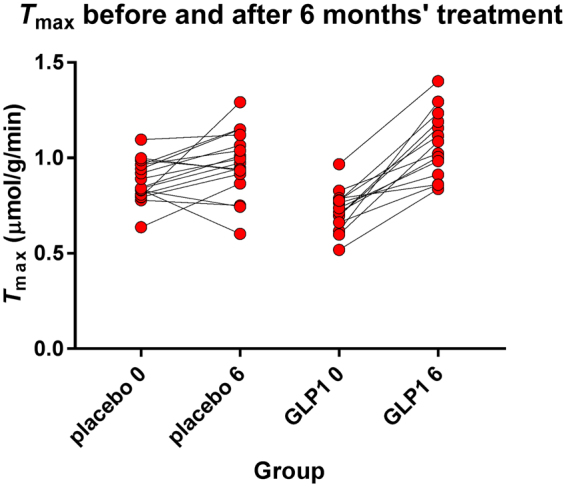
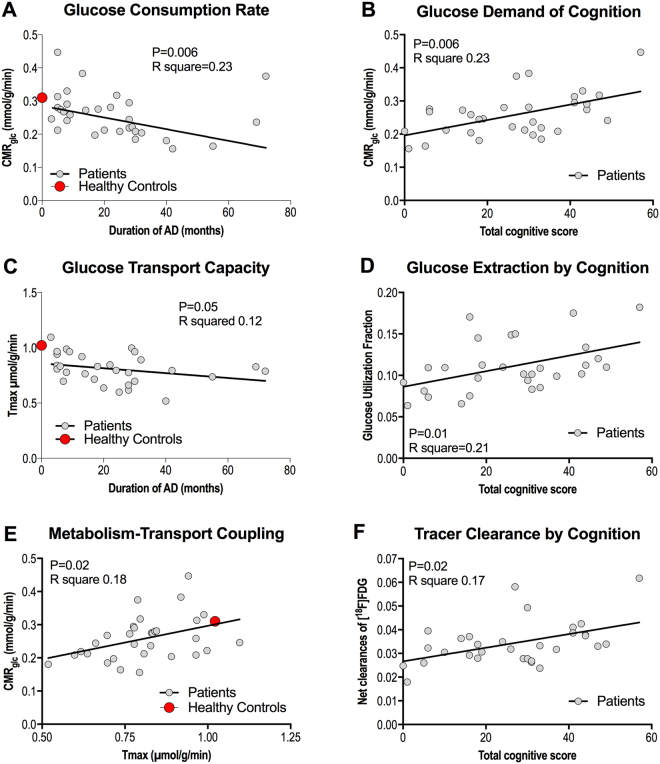
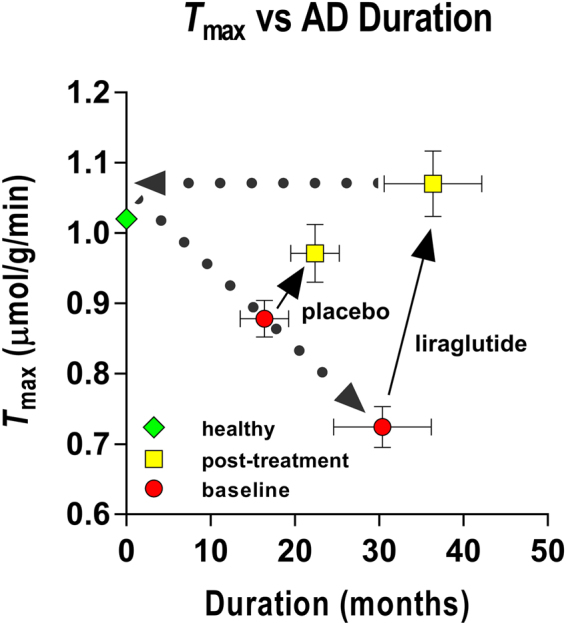
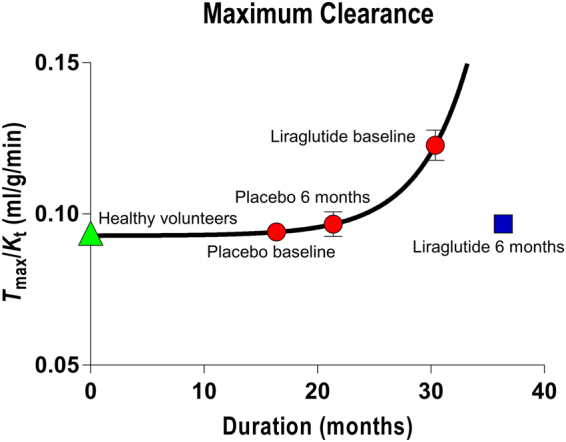
There are fewer than normal glucose transporters at the blood-brain barrier (BBB) in Alzheimer’s disease (AD). When reduced expression of transporters aggravates the symptoms of AD, the transporters become a potential target of therapy. The incretin hormone GLP-1 prevents the decline of cerebral metabolic rate for glucose (CMR glc) in AD, and GLP-1 may serve to raise transporter numbers. We hypothesized that the GLP-1 analog liraglutide would prevent the decline of CMR glc in AD by raising blood-brain glucose transfer, depending on the duration of disease. We randomized 38 patients with AD to treatment with liraglutide (n = 18) or placebo (n = 20) for 6 months, and determined the blood-brain glucose transfer capacity (Tmax) in the two groups and a healthy age matched control group (n = 6). In both AD groups at baseline, Tmax estimates correlated inversely with the duration of AD, as did the estimates of CMR glc that in turn were positively correlated with cognition. The GLP-1 analog treatment, compared to placebo, highly significantly raised the Tmax estimates of cerebral cortex from 0.72 to 1.1 umol/g/min, equal to Tmax estimates in healthy volunteers. The result is consistent with the claim that GLP-1 analog treatment restores glucose transport at the BBB.
Overview
The claims and statistics of this paper haven’t been checked yet.
Free: it reads the open-access text and checks the first 5 claims that cite a source we can check. Create a free account to check every claim.
Integrity signals
Registry
Cites
Statistics
Figures
Verification
Claims the paper makes
The claims and statistics of this paper haven’t been checked yet.
Free: it reads the open-access text and checks the first 5 claims that cite a source we can check. Create a free account to check every claim.
Claims other papers make about this one
Each is checked against this paper’s own text: does it say what the citing paper says it does?
The cited source says what the claim attributes to it.
In the citing paper
“GLP1-RAs is known for its neuroprotective action, and more recent results have emerged, showing a potential benefit in people with AD [85,86,87].”
From Treatment of Alzheimer’s Disease: Beyond Symptomatic Therapies (2023) · cites this paper as [87]
In the citing paper
“a study randomized 38 AD patients to receive liraglutide or placebo and reported that liraglutide reversed AD-related glucose transporter dysfunction.522”
From Antiageing strategy for neurodegenerative diseases: from mechanisms to clinical advances (2025) · cites this paper as [522]
Self-check
Percentages, sums and reported differences re-computed from the paper’s own numbers.
The self-check needs the paper’s full text.
Citations
Cites
Neurovascular pathways to neurodegeneration in Alzheimer’s disease and other disorders
Zlokovic, B. V. (2011) · Nature Reviews Neuroscience · doi:10.1038/nrn3114 · Cited by 2,969
The projected effect of risk factor reduction on Alzheimer's disease prevalence
Barnes, D. E., & Yaffe, K. (2011) · The Lancet Neurology · doi:10.1016/s1474-4422(11)70072-2 · Cited by 2,666
Beach, T. G., Monsell, S. E., Phillips, L. E., & Kukull, W. (2012) · Journal of Neuropathology & Experimental Neurology · doi:10.1097/nen.0b013e31824b211b · Cited by 1,103
The arcuate nucleus mediates GLP-1 receptor agonist liraglutide-dependent weight loss
Secher, A., Jelsing, J., Baquero, A. F., Hecksher-Sørensen, J., Cowley, M. A., Dalbøge, L. S., Hansen, G., Grove, K. L., Pyke, C., Raun, K., et al. (2014) · Journal of Clinical Investigation · doi:10.1172/jci75276 · Cited by 961
De Vivo, D. C., Trifiletti, R. R., Jacobson, R. I., Ronen, G. M., Behmand, R. A., & Harik, S. I. (1991) · New England Journal of Medicine · doi:10.1056/nejm199109053251006 · Cited by 800
Brain metabolism dictates the polarity of astrocyte control over arterioles
Gordon, G. R. J., Choi, H. B., Rungta, R. L., Ellis-Davies, G. C. R., & MacVicar, B. A. (2008) · Nature · doi:10.1038/nature07525 · Cited by 744
Amyloid deposition, hypometabolism, and longitudinal cognitive decline
Landau, S. M., Mintun, M. A., Joshi, A. D., Koeppe, R. A., Petersen, R. C., Aisen, P. S., Weiner, M. W., Jagust, W. J., & Initiative, F. T. A. D. N. (2012) · Annals of Neurology · doi:10.1002/ana.23650 · Cited by 727
Mosconi, L., Tsui, W. H., Herholz, K., Pupi, A., Drzezga, A., Lucignani, G., Reiman, E. M., Holthoff, V., Kalbe, E., Sorbi, S., et al. (2008) · Journal of Nuclear Medicine · doi:10.2967/jnumed.107.045385 · Cited by 726
GLUT1 reductions exacerbate Alzheimer's disease vasculo-neuronal dysfunction and degeneration
Winkler, E. A., Nishida, Y., Sagare, A. P., Rege, S. V., Bell, R. D., Perlmutter, D., Sengillo, J. D., Hillman, S., Kong, P., Nelson, A. R., et al. (2015) · Nature Neuroscience · doi:10.1038/nn.3966 · Cited by 689
Two-year follow-up of amyloid deposition in patients with Alzheimer's disease
Engler, H., Forsberg, A., Almkvist, O., Blomquist, G., Larsson, E., Savitcheva, I., Wall, A., Ringheim, A., Langstrom, B., & Nordberg, A. (2006) · Brain · doi:10.1093/brain/awl178 · Cited by 617
Cited by
Glucagon-like peptide 1 (GLP-1)
Müller, T. D., Finan, B., Bloom, S. R., D'Alessio, D., Drucker, D. J., Flatt, P. R., Fritsche, A., Gribble, F., Grill, H. J., Habener, J. F., et al. (2019) · Molecular Metabolism · doi:10.1016/j.molmet.2019.09.010 · Cited by 1,868
“AD is frequently reported to be accompanied by decreased glucose transport across the BBB and 6 month treatment of AD patients with liraglutide improved BBB glucose transfer relative to placebo controls [837].”
BackgroundThe role of brain vasculature in neurodegenerative disorders
Sweeney, M. D., Kisler, K., Montagne, A., Toga, A. W., & Zlokovic, B. V. (2018) · Nature Neuroscience · doi:10.1038/s41593-018-0234-x · Cited by 998
The Discovery and Development of Liraglutide and Semaglutide
Knudsen, L. B., & Lau, J. (2019) · Frontiers in Endocrinology · doi:10.3389/fendo.2019.00155 · Cited by 970
Vascular dysfunction—The disregarded partner of Alzheimer's disease
Sweeney, M. D., Montagne, A., Sagare, A. P., Nation, D. A., Schneider, L. S., Chui, H. C., Harrington, M. G., Pa, J., Law, M., Wang, D. J. J., et al. (2019) · Alzheimer's & Dementia · doi:10.1016/j.jalz.2018.07.222 · Cited by 711
“[95] Gejl M, Brock B, Egefjord L, Vang K, Rungby J, Gjedde A.”
Effects of Ketone Bodies on Brain Metabolism and Function in Neurodegenerative Diseases
Jensen, N. J., Wodschow, H. Z., Nilsson, M., & Rungby, J. (2020) · International Journal of Molecular Sciences · doi:10.3390/ijms21228767 · Cited by 446
“Hypometabolism may be caused by a reduced density or activity of terminal neuronal fields and/or reduced glial metabolism [63] or by a reduced transport capacity [64].”
BackgroundSelf-citationKopp, K. O., Glotfelty, E. J., Li, Y., & Greig, N. H. (2022) · Pharmacological Research · doi:10.1016/j.phrs.2022.106550 · Cited by 298
The Impact of Disease Comorbidities in Alzheimer’s Disease
Santiago, J. A., & Potashkin, J. A. (2021) · Frontiers in Aging Neuroscience · doi:10.3389/fnagi.2021.631770 · Cited by 259
Reich, N., & Hölscher, C. (2022) · Frontiers in Neuroscience · doi:10.3389/fnins.2022.970925 · Cited by 248
Metabolic Dysregulation Contributes to the Progression of Alzheimer’s Disease
Yan, X., Hu, Y., Wang, B., Wang, S., & Zhang, X. (2020) · Frontiers in Neuroscience · doi:10.3389/fnins.2020.530219 · Cited by 220
“Moreover, the role of reduced cerebral glucose uptake in age-related cognitive impairment has been verified in clinical studies (Gejl et al., 2017).”
BackgroundDrug repositioning and repurposing for Alzheimer disease
Ballard, C., Aarsland, D., Cummings, J., O’Brien, J., Mills, R., Molinuevo, J. L., Fladby, T., Williams, G., Doherty, P., Corbett, A., et al. (2020) · Nature Reviews Neurology · doi:10.1038/s41582-020-0397-4 · Cited by 201
Salameh, T. S., Rhea, E. M., Talbot, K., & Banks, W. A. (2020) · Biochemical Pharmacology · doi:10.1016/j.bcp.2020.114187 · Cited by 188
“The single IRAs thus far demonstrating the greatest promise as AD and/or PD therapeutics are the FDA approved GLP-1 receptor agonists (GLP-1RAs) exendin-4 (Byetta®) [42, 43, 56-58, 65-67, 84], liraglutide (Victoza®) [36-41, 43, 48-50, 53, 85], lixisenatide (Adlyxin® in the U.”
BackgroundInfluentialSingle-nucleus multiregion transcriptomic analysis of brain vasculature in Alzheimer’s disease
Sun, N., Akay, L. A., Murdock, M. H., Park, Y., Galiana-Melendez, F., Bubnys, A., Galani, K., Mathys, H., Jiang, X., Ng, A. P., et al. (2023) · Nature Neuroscience · doi:10.1038/s41593-023-01334-3 · Cited by 164
A Systematic Review of Glucose Transport Alterations in Alzheimer's Disease
Kyrtata, N., Emsley, H. C. A., Sparasci, O., Parkes, L. M., & Dickie, B. R. (2021) · Frontiers in Neuroscience · doi:10.3389/fnins.2021.626636 · Cited by 171
“In a small randomized control trial, Gejl et al. (2017) examined the effects of GLP1 analog treatment in patients with a clinical diagnosis of AD.”
BackgroundMethodThe blood–brain barrier as an endocrine tissue
Banks, W. A. (2019) · Nature Reviews Endocrinology · doi:10.1038/s41574-019-0213-7 · Cited by 163
Antiageing strategy for neurodegenerative diseases: from mechanisms to clinical advances
Jiang, Q., Liu, J., Huang, S., Wang, X.-Y., Chen, X., Liu, G.-H., Ye, K., Song, W., Masters, C. L., Wang, J., et al. (2025) · Signal Transduction and Targeted Therapy · doi:10.1038/s41392-025-02145-7 · Cited by 165
“522 Another single-blind, phase 2 trial evaluated exenatide, which improved motor de fi cits in PD patients for more than 12 months.”
Neural correlates of liraglutide effects in persons at risk for Alzheimer’s disease
Watson, K. T., Wroolie, T. E., Tong, G., Foland-Ross, L. C., Frangou, S., Singh, M., McIntyre, R. S., Roat-Shumway, S., Myoraku, A., Reiss, A. L., et al. (2019) · Behavioural Brain Research · doi:10.1016/j.bbr.2018.08.006 · Cited by 134
“In a randomized controlled trial of patients with AD, liraglutide appears to protect cerebral metabolism, and hence, cognition by means of increasing the glucose transporters at the blood-brain barrier [45].”
GLP-1’s role in neuroprotection: a systematic review
Erbil, D., Eren, C. Y., Demirel, C., Küçüker, M. U., Solaroğlu, I., & Eser, H. Y. (2019) · Brain Injury · doi:10.1080/02699052.2019.1587000 · Cited by 126
The mechanism and efficacy of GLP-1 receptor agonists in the treatment of Alzheimer’s disease
Du, H., Meng, X., Yao, Y., & Xu, J. (2022) · Frontiers in Endocrinology · doi:10.3389/fendo.2022.1033479 · Cited by 125
Wang, Z.-J., Li, X.-R., Chai, S.-F., Li, W.-R., Li, S., Hou, M., Li, J.-L., Ye, Y.-C., Cai, H.-Y., Hölscher, C., et al. (2023) · Neuropharmacology · doi:10.1016/j.neuropharm.2023.109716 · Cited by 125
Xie, J., Gonzalez-Carter, D., Tockary, T. A., Nakamura, N., Xue, Y., Nakakido, M., Akiba, H., Dirisala, A., Liu, X., Toh, K., et al. (2020) · ACS Nano · doi:10.1021/acsnano.9b09991 · Cited by 115
Zheng, M., & Wang, P. (2021) · 3 Biotech · doi:10.1007/s13205-021-02738-3 · Cited by 293
“IR could stimulate amyloid deposition by reducing the degradation of Aβ by IDE and clearance of Aβ by impairing BBB.”
BackgroundInfluentialGLP-1a: Going beyond Traditional Use
Laurindo, L. F., Barbalho, S. M., Guiguer, E. L., da Silva Soares de Souza, M., de Souza, G. A., Fidalgo, T. M., Araújo, A. C., de Souza Gonzaga, H. F., de Bortoli Teixeira, D., de Oliveira Silva Ullmann, T., et al. (2022) · International Journal of Molecular Sciences · doi:10.3390/ijms23020739 · Cited by 102
“This trial presents the same population as the study described above [31].”
BackgroundResultInfluentialVascular cognitive impairment and dementia in type 2 diabetes mellitus: An overview
Lyu, F., Wu, D., Wei, C., & Wu, A. (2020) · Life Sciences · doi:10.1016/j.lfs.2020.117771 · Cited by 109
Alzheimer’s disease as type 3 diabetes: understanding the link and implications
Kciuk, M., Kruczkowska, W., Gałęziewska, J., Wanke, K., Kałuzińska-Kołat, Ż., Aleksandrowicz, M., & Kontek, R. (2024) · International Journal of Molecular Sciences · doi:10.3390/ijms252211955 · Cited by 98
The Role of Neurovascular System in Neurodegenerative Diseases
Ahmad, A., Patel, V., Xiao, J., & Khan, M. M. (2020) · Molecular Neurobiology · doi:10.1007/s12035-020-02023-z · Cited by 107
“GLUT1 protein levels are decreased in the brain microvessels of AD patients [25, 26, 224].”
BackgroundGrammatikopoulou, M. G., Goulis, D. G., Gkiouras, K., Theodoridis, X., Gkouskou, K. K., Evangeliou, A., Dardiotis, E., & Bogdanos, D. P. (2020) · Advances in Nutrition · doi:10.1093/advances/nmaa073 · Cited by 75
“Although the low glucose uptake of the aging brain has long been identified in AD (97, 98) and has been associated with cognitive decline (99, 100), very few AD-related therapies have focused on addressing the issue of the induced energy availability (101, 102).”
BackgroundTreatment of Alzheimer’s Disease: Beyond Symptomatic Therapies
Buccellato, F. R., D’Anca, M., Tartaglia, G. M., Del Fabbro, M., Scarpini, E., & Galimberti, D. (2023) · International Journal of Molecular Sciences · doi:10.3390/ijms241813900 · Cited by 94
“GLP1-RAs is known for its neuroprotective action, and more recent results have emerged, showing a potential benefit in people with AD [85–87].”
Duarte, A. I., Candeias, E., Alves, I. N., Mena, D., Silva, D. F., Machado, N. J., Campos, E. J., Santos, M. S., Oliveira, C. R., & Moreira, P. I. (2020) · International Journal of Molecular Sciences · doi:10.3390/ijms21051746 · Cited by 90
“Although the precise nature of such metabolic improvement remains unknown, evidence suggests a role for the recovered neurovascular unit (involving a NF-κB-induced balance between the vasoconstrictor endothelin-1 and the vasodilator endothelial nitric oxide synthase (eNOS)) [84,85] and the normalization of (cerebral)…”
BackgroundGlucose metabolism, neural cell senescence and Alzheimer's disease
Wang, Q., Duan, L., Li, X., Wang, Y., Guo, W., Guan, F., & Ma, S. (2022) · International Journal of Molecular Sciences · doi:10.3390/ijms23084351 · Cited by 90
“Liraglutide, a glucagon-like peptide-1 (GLP-1) analogue, could increase the transport capacity of the glucose transport carriers and prevent the development of AD [104].”
BackgroundSzablewski, L. (2021) · International Journal of Molecular Sciences · doi:10.3390/ijms22158142 · Cited by 84
Cheng, D., Yang, S., Zhao, X., & Wang, G. (2022) · Drug Design, Development and Therapy · doi:10.2147/dddt.s348055 · Cited by 84
Chang, Y., Chan, M., Yang, Y., Li, C., & Hsiao, M. (2023) · Cancer Letters · doi:10.1016/j.canlet.2023.216179 · Cited by 83
Zhou, Z., Shu, T., Sun, Y., Si, H., Peng, P., Su, L., & Zhang, X. (2021) · Biosensors and Bioelectronics · doi:10.1016/j.bios.2021.113530 · Cited by 81
Li, Q., Jia, M., Yan, Z., Li, Q., Sun, F., He, C., Li, Y., Zhou, X., Zhang, H., Liu, X., et al. (2021) · Journal of the American Heart Association · doi:10.1161/jaha.120.020734 · Cited by 77
Cheng, H., Zhang, Z., Zhang, B., Zhang, W., Wang, J., Ni, W., Miao, Y., Liu, J., & Bi, Y. (2022) · Diabetes Care · doi:10.2337/dc21-2064 · Cited by 70
Clinical Evidence for GLP-1 Receptor Agonists in Alzheimer’s Disease: A Systematic Review
Liang, Y., Doré, V., Rowe, C. C., & Krishnadas, N. (2024) · Journal of Alzheimer s Disease Reports · doi:10.3233/adr-230181 · Cited by 80
Dysregulation of energy metabolism in Alzheimer's disease
Yuan, Y., Zhao, G., & Zhao, Y. (2024) · Journal of Neurology · doi:10.1007/s00415-024-12800-8 · Cited by 254
Peng, W., Zhou, R., Sun, Z.-F., Long, J.-W., & Gong, Y.-Q. (2022) · Aging and disease · doi:10.14336/ad.2021.0928 · Cited by 71
Neuromodulatory effects of anti-diabetes medications: A mechanistic review
Yaribeygi, H., Ashrafizadeh, M., Henney, N. C., Sathyapalan, T., Jamialahmadi, T., & Sahebkar, A. (2020) · Pharmacological Research · doi:10.1016/j.phrs.2019.104611 · Cited by 69
Wang, Y., Hu, H., Liu, X., & Guo, X. (2023) · Frontiers in Pharmacology · doi:10.3389/fphar.2023.1138499 · Cited by 76
“A randomized study also demonstrated that liraglutide restored blood-brain glucose transfer capacity at BBB (Gejl et al., 2017).”
BackgroundReconsidering the role of blood-brain barrier in Alzheimer’s disease: From delivery to target
Sousa, J. A., Bernardes, C., Bernardo-Castro, S., Lino, M. M., Albino, I., Ferreira, L., Brás, J., Guerreiro, R. J., Tábuas‐Pereira, M., Baldeiras, I., et al. (2023) · Frontiers in Aging Neuroscience · doi:10.3389/fnagi.2023.1102809 · Cited by 72
West, J., Li, M., Wong, S., Le, G. H., Teopiz, K. M., Valentino, K., Dri, C. E., & McIntyre, R. S. (2025) · Neurology and Therapy · doi:10.1007/s40120-025-00724-y · Cited by 73
“Gejl et al. (2017) reported that, in persons with AD, liraglutide increased levels of glucose by interacting with and increasing GLUT expression [22].”
InfluentialL., K., Ng, T. K. S., Wee, H. N., & Ching, J. (2023) · Mechanisms of Ageing and Development · doi:10.1016/j.mad.2023.111787 · Cited by 58
“Glucagon-like peptide-1 (GLP-1) agonists are another antidiabetic drug that has shown promise in improving cognitive function in AD preclinical models and lowered Aβ42 levels in extracellular vesicles in patients with AD, although not producing significant improvements in cognitive function or positive changes in CSF…”
BackgroundTargeting redox imbalance in neurodegeneration: characterizing the role of GLP-1 receptor agonists
Ghosh, P., Fontanella, R. A., Scisciola, L., Pesapane, A., Taktaz, F., Franzese, M., Puocci, A., Ceriello, A., Prattichizzo, F., Rizzo, M. R., et al. (2023) · Theranostics · doi:10.7150/thno.86831 · Cited by 73
“A clinical study with 38 AD patients receiving Liraglutide for six months showed increased brain glucose transfer capacity from 0.72 to 1.1 umol/g/min [117].”
BackgroundInfluentialGuo, X., Lei, M., Zhao, J., Wu, M., Ren, Z., Yang, X., Ouyang, C., Liu, X., Liu, C., & Chen, Q. (2023) · Frontiers in Pharmacology · doi:10.3389/fphar.2023.1146960 · Cited by 59
Ren, W., Chen, J., Wang, W., Li, Q., Yin, X., Zhuang, G., Zhou, H., & Zeng, W. (2024) · Neuron · doi:10.1016/j.neuron.2023.12.012 · Cited by 68
Ferreira, S. T. (2021) · Journal of Neuroendocrinology · doi:10.1111/jne.12959 · Cited by 59
Inventing Liraglutide, a Glucagon-Like Peptide-1 Analogue, for the Treatment of Diabetes and Obesity
Knudsen, L. B. (2019) · ACS Pharmacology & Translational Science · doi:10.1021/acsptsci.9b00048 · Cited by 56
Antidiabetic Drugs in Alzheimer’s Disease and Mild Cognitive Impairment: A Systematic Review
Muñoz-Jiménez, M., Zaarkti, A., García-Arnés, J. A., & García-Casares, N. (2020) · Dementia and Geriatric Cognitive Disorders · doi:10.1159/000510677 · Cited by 56
Giagulli, V. A., Castellana, M., Carbone, M. D., Pelusi, C., Ramunni, M. I., Pergola, G. D., Guastamacchia, E., & Triggiani, V. (2020) · Andrology · doi:10.1111/andr.12754 · Cited by 54
Effects of GLP-1 receptor agonists on neurological complications of diabetes
García-Casares, N., González-González, G., de la Cruz-Cosme, C., Garzón-Maldonado, F. J., de Rojas-Leal, C., Ariza, M. J., Narváez, M., Barbancho, M. Á., García-Arnés, J. A., & Tinahones, F. J. (2023) · Reviews in Endocrine and Metabolic Disorders · doi:10.1007/s11154-023-09807-3 · Cited by 45
Erukainure, O. L., Oyebode, O. A., Ibeji, C. U., Koorbanally, N. A., & Islam, M. S. (2019) · Metabolic Brain Disease · doi:10.1007/s11011-018-0363-7 · Cited by 56
Erukainure, O. L., Ijomone, O. M., Sanni, O., Aschner, M., & Islam, M. S. (2019) · Metabolic Brain Disease · doi:10.1007/s11011-019-00444-x · Cited by 53
Mechanistic Insights for Drug Repurposing and the Design of Hybrid Drugs for Alzheimer’s Disease
Padhi, D., & Govindaraju, T. (2022) · Journal of Medicinal Chemistry · doi:10.1021/acs.jmedchem.2c00335 · Cited by 47
Fonseca‐Santos, B., & Chorilli, M. (2020) · International Journal of Pharmaceutics · doi:10.1016/j.ijpharm.2020.119832 · Cited by 50
From Liver to Brain: How MAFLD/MASLD Impacts Cognitive Function
Medina‐Julio, D., Ramírez-Mejía, M. M., Córdova‐Gallardo, J., Peniche-Luna, E., Cantú-Brito, C. G., & Méndez‐Sánchez, N. (2024) · Medical Science Monitor · doi:10.12659/msm.943417 · Cited by 54
“A clinical trial with liraglutide in AD patients increased glucose transport in the blood–brain barrier, increasing the cerebral glucose metabolic rate [107].”
BackgroundNeuroprotective effects of GLP-1 class drugs in Parkinson’s disease
Lv, D., Feng, P., Guan, X., Liu, Z., Li, D., Xue, C., Bai, B., & Hölscher, C. (2024) · Frontiers in Neurology · doi:10.3389/fneur.2024.1462240 · Cited by 49
Expression of glucose transporters in human neurodegenerative diseases
Głuchowska, K., Pliszka, M., & Szablewski, L. (2021) · Biochemical and Biophysical Research Communications · doi:10.1016/j.bbrc.2020.12.067 · Cited by 47
Glucagon-like peptide-1 receptor agonists for major neurocognitive disorders
Giorgi, R. D., Ghenciulescu, A., Yotter, C. N., Taquet, M., & Koychev, I. G. (2025) · Journal of Neurology Neurosurgery & Psychiatry · doi:10.1136/jnnp-2024-335593 · Cited by 48
Role of liraglutide in Alzheimer’s disease pathology
Vargas-Soria, M., Carranza-Naval, M. J., del Marco, A., & Garcia-Alloza, M. (2021) · Alzheimer's Research & Therapy · doi:10.1186/s13195-021-00853-0 · Cited by 44
“While this did not translate into cognitive differences between study groups after 12 weeks of treatment [37], other studies have shown that treatment with LRGT to AD patients for 6 months raises blood-brain glucose transfer capacity, restoring glucose transport [38], as an initial requirement to improve brain alterat…”
ResultType 2 Diabetes and Alzheimer’s Disease: The Emerging Role of Cellular Lipotoxicity
Marrano, N., Biondi, G., Borrelli, A., Rella, M., Zambetta, T., Gioia, L. D., Caporusso, M., Logroscino, G., Perrini, S., Giorgino, F., et al. (2023) · Biomolecules · doi:10.3390/biom13010183 · Cited by 51
“Additional two trials confirmed no cognitive differences in patients with AD or cognitive impairment treated with liraglutide [218,219].”
BackgroundShao, S., Zhang, X., Xu, Q., Pan, R., & Chen, Y. (2022) · Pharmacology & Therapeutics · doi:10.1016/j.pharmthera.2022.108270 · Cited by 46
Urkon, M., Ferencz, E., Szász, J. A., Szabó, M. I. M., Orbán-Kis, K., Szatmári, S., & Nagy, E. E. (2025) · Pharmaceuticals · doi:10.3390/ph18050614 · Cited by 45
“Although there was no measurable positive effect of liraglutide on A β and cognition after 6 months, preservation of cerebral glucose transfer and metabolism of AD patients was detected compared to placebo [267,268].”
Woo, Y. S., Lim, H. K., Wang, S., & Bahk, W. (2020) · International Journal of Molecular Sciences · doi:10.3390/ijms21186969 · Cited by 47
“GLP-1 is also able to facilitate glucose transport across the BBB, which is crucial in the homeostasis of brain metabolism [190].”
BackgroundYassine, H. N., Solomon, V., Thakral, A., Sheikh‐Bahaei, N., Chui, H. C., Braskie, M. N., Schneider, L. S., & Talbot, K. (2022) · Alzheimer's & Dementia · doi:10.1002/alz.12474 · Cited by 43
Dei, A., Micheli, M. M., Aldigeri, R., Gardini, S., Pellegrini, F. F., Perini, M., Messa, G., Antonini, M., Spigoni, V., Cinquegrani, G., et al. (2024) · Journal of Endocrinological Investigation · doi:10.1007/s40618-024-02320-7 · Cited by 48
Katsenos, A. P., Davri, A. S., Simos, Y. V., Nikas, I. P., Bekiari, C., Paschou, S. A., Peschos, D., Konitsiotis, S., Vezyraki, P., & Tsamis, K. I. (2022) · Expert Opinion on Investigational Drugs · doi:10.1080/13543784.2022.2022122 · Cited by 40
GLP-1 and the Degenerating Brain: Exploring Mechanistic Insights and Therapeutic Potential
Moaket, O. S., Obaid, S. E., Obaid, F. E., Shakeeb, Y. A., Elsharief, S. M., Tania, A., Darwish, R., Butler, A. E., & Moin, A. S. M. (2025) · International Journal of Molecular Sciences · doi:10.3390/ijms262110743 · Cited by 46
“Alzheimer's disease” is neither “Alzheimer's clinical syndrome” nor “dementia”
Jagust, W. J., Jack, C. R., Bennett, D. A., Blennow, K., Haeberlein, S. B., Holtzman, D. M., Jessen, F., Karlawish, J. H., Liu, E., Molinuevo, J. L., et al. (2019) · Alzheimer s & Dementia · doi:10.1016/j.jalz.2018.11.002 · Cited by 43
Atabi, F., Moassesfar, M., Nakhaie, T., Bagherian, M., Hosseinpour, N., & Hashemi, M. (2025) · Diabetology & Metabolic Syndrome · doi:10.1186/s13098-025-01930-2 · Cited by 46
“PVT1, another lncRNA, stimulated by glucose, has been associated with both T1D and T2D [105].”
Arredouani, A. (2025) · Pharmacology & Therapeutics · doi:10.1016/j.pharmthera.2025.108824 · Cited by 36
Zeng, S.-S., Bai, J.-J., Jiang, H., Zhu, J.-J., Fu, C.-C., He, M.-Z., Zhu, J.-H., Chen, S.-Q., Li, P.-J., Fu, X.-Q., et al. (2020) · Frontiers in Cellular Neuroscience · doi:10.3389/fncel.2019.00585 · Cited by 35
Intermittent fasting and neurodegenerative diseases: Molecular mechanisms and therapeutic potential
Lv, R., Liu, B., Jiang, Z., Zhou, R., Liu, X., Lu, T., Bao, Y., Huang, C., Zou, G., Zhang, Z., et al. (2024) · Metabolism · doi:10.1016/j.metabol.2024.156104 · Cited by 37
Tseng, P., Zeng, B., Hsu, C.-W., Hung, C., Carvalho, A. F., Stubbs, B., Chen, Y., Chen, T., Lei, W., Chen, J.-J., et al. (2025) · BMC Medicine · doi:10.1186/s12916-025-04018-w · Cited by 36
The promise of GLP-1 receptor agonists for neurodegenerative diseases
Athauda, D. S., Greig, N. H., Meissner, W. G., Foltynie, T., & Gandhi, S. (2026) · Journal of Clinical Investigation · doi:10.1172/jci194745 · Cited by 44
“In patients with AD, 6 months of liraglutide increased blood-brain glucose transfer (likely via GLUT upregulation) (73), and stabilized cerebral glucose metabolism on FDG-PET (74).”
Rizza, S., Piciucchi, G., Mavilio, M., Longo, S., Montagna, M., Tatonetti, R., Nucera, A., & Federici, M. (2021) · Biomedicine & Pharmacotherapy · doi:10.1016/j.biopha.2021.112341 · Cited by 35
Erukainure, O. L., Ijomone, O. M., Oyebode, O. A., Chukwuma, C. I., Aschner, M., & Islam, M. S. (2019) · Food and Chemical Toxicology · doi:10.1016/j.fct.2019.03.044 · Cited by 32
Teixeira, L. C. R., Luizon, M. R., & Gomes, K. B. (2025) · Receptors · doi:10.3390/receptors4010002 · Cited by 31
In Alzheimer's disease, amyloid beta accumulation is a protective mechanism that ultimately fails
Rischel, E. B., Gejl, M., Brock, B., Rungby, J., & GJEDDE, A. H. (2022) · Alzheimer s & Dementia · doi:10.1002/alz.12701 · Cited by 28
Self-citationKhazaei, H., Pesce, M., Patruno, A., Aneva, I. Y., & Farzaei, M. H. (2020) · Phytotherapy Research · doi:10.1002/ptr.6903 · Cited by 28
“Therefore, one of the complications of diabetes is memory loss (Gejl et al., 2017).”
BackgroundIncretin-based therapeutics for the treatment of neurodegenerative diseases
Vear, A., Heneka, M. T., & Clemmensen, C. (2025) · Nature Metabolism · doi:10.1038/s42255-025-01263-4 · Cited by 26
“After 6 months of liraglutide treatment, people with AD showed an improved capacity for glucose transfer across the BBB compared with those receiving placebo 92 , supporting the notion that GLP-1 analogues can restore glucose transport at this site.”
Contrasting Metabolic Insufficiency in Aging and Dementia
Turner, D. A. (2021) · Aging and Disease · doi:10.14336/ad.2021.0104 · Cited by 28
“Possible factors include altered blood vessels and stroke [6], insufficient neurovascular coupling and/or inadequate glucose delivery to capillaries [7, 28], reduced glucose transport across the blood brain barrier [38], as well as intrinsic changes in metabolism within neurons, such as changes in oxidative phosphoryl…”
BackgroundVulturar, R., Chiş, A., Pintilie, S. R., Farcaș, I. M., Botezatu, A., Login, C., Sitar-Tăut, A., Orasan, O. H., Stan, A. D., Lazea, C., et al. (2022) · Biomedicines · doi:10.3390/biomedicines10061249 · Cited by 28
Chinraj, V., & Sureshkumar, R. (2022) · Journal of Applied Pharmaceutical Science · doi:10.7324/japs.2022.120701 · Cited by 25
“, 2016; Wilkinson and El Khoury, 2012) and downregulation of low-density lipoprotein transporter (Helbecque and Amouyel, 2000) and glucose transporter (Gejl et al., 2017).”
Glycolytic reprogramming during microglial polarization in neurological diseases
Li, X., Fang, C., Li, Y., Xiong, X., Xu, X., & Gu, L. (2025) · Frontiers in Immunology · doi:10.3389/fimmu.2025.1648887 · Cited by 34
Connecting vascular aging and frailty in Alzheimer’s disease
Sabbatinelli, J., Ramini, D., Giuliani, A., Recchioni, R., Spazzafumo, L., & Olivieri, F. (2021) · Mechanisms of Ageing and Development · doi:10.1016/j.mad.2021.111444 · Cited by 25
Wu, P., Zhao, Y., Zhuang, X., Sun, A., Zhang, Y., & Ni, Y. (2018) · Clinical Neurology and Neurosurgery · doi:10.1016/j.clineuro.2018.08.012 · Cited by 24
Governing transport principles for nanotherapeutic application in the brain
Helmbrecht, H., Joseph, A., McKenna, M., Zhang, M., & Nance, E. A. (2020) · Current Opinion in Chemical Engineering · doi:10.1016/j.coche.2020.08.010 · Cited by 24
“In Alzheimer’s and Huntington’s disease, glucose transport is decreased across the BBB and into target cells, which hinders the trafficking of nanotherapeutic targeted for the glucose pathway in these diseases [48,49].”
BackgroundHunt, N. J., Wahl, D., Westwood, L. J., Lockwood, G. P., Couteur, D. G. L., & Cogger, V. C. (2022) · Advanced Drug Delivery Reviews · doi:10.1016/j.addr.2022.114537 · Cited by 22
“Brain insulin resistance and impaired glucose metabolism are features of AD that correlate with the severity of cognitive impairment [93,94].”
BackgroundSečník, J., Xu, H., Schwertner, E., Hammar, N., Alvarsson, M., Winblad, B. G., Eriksdotter, M., Ptacek, S. G., & Religa, D. (2020) · Journal of Alzheimer s Disease · doi:10.3233/jad-200618 · Cited by 21
“Conversely, there is some evidence for decreased risk of dementia associated with incretin therapies [42], as well as alleviation of cerebral brain transport through GLP-1 receptors [43], thus their dispensation could be especially valuable to dementia patients.”
BackgroundAndrographolide restores glucose uptake in rat hippocampal neurons
Gherardelli, C., Cisternas, P., Gutiérrez, J., Martínez, M., & Inestrosa, N. C. (2020) · Journal of Neurochemistry · doi:10.1111/jnc.15229 · Cited by 21
Barron, A. M., Ji, B., Fujinaga, M., Zhang, M., Suhara, T., Sahara, N., Aoki, I., Tsukada, H., & Higuchi, M. (2020) · Neurobiology of Aging · doi:10.1016/j.neurobiolaging.2020.05.003 · Cited by 21
Ruze, R., Xu, Q., Liu, G., Li, Y., Chen, W., Cheng, Z., Xiong, Y., Liu, S., Zhang, G., Hu, S., et al. (2021) · American Journal of Physiology-Endocrinology and Metabolism · doi:10.1152/ajpendo.00126.2021 · Cited by 20
Incretins and the cardiovascular system: bridging digestion with metabolism
Avogaro, A., & Fadini, G. P. (2025) · The Lancet Diabetes & Endocrinology · doi:10.1016/s2213-8587(25)00166-4 · Cited by 21
Raut, S., & Cucullo, L. (2025) · Antioxidants · doi:10.3390/antiox14121490 · Cited by 22
“A notable small randomized control trial, RCT, found that 6-month liraglutide stabilized brain glucose metabolism in mild Alzheimer’s, with significantly reduced decline in FDG-PET uptake compared to placebo ( p ≈ 0.01), although cognitive scores were unchanged [116].”
InfluentialLongo, M., Meo, I. D., Caruso, P., Muscio, M. F., Scappaticcio, L., Maio, A., Maiorino, M. I., Bellastella, G., Signoriello, G., Knop, F. K., et al. (2023) · Diabetes Research and Clinical Practice · doi:10.1016/j.diabres.2023.110688 · Cited by 20
Exploring the link between GLP-1 receptor agonists and dementia: A comprehensive review
Chuansangeam, M., Phadungsaksawasdi, P., Park, H. J., & Yang, Y. (2025) · Journal of Alzheimer s Disease Reports · doi:10.1177/25424823251342182 · Cited by 31
Williams, L. M., Fujimoto, T., Weaver, R. R., Logsdon, A. F., Wilson, M., Evitts, K. M., Young, J. E., Banks, W. A., & Erickson, M. A. (2022) · Fluids and Barriers of the CNS · doi:10.1186/s12987-022-00307-1 · Cited by 20
The impact of diabetes mellitus on the development of psychiatric and neurological disorders
Kelly, O., Sullivan, J., Carris, N., Geci, S., Martinez, A., Liashenko, V., Colvin, J., Misko, E., Vanderlaan, G., He, L., et al. (2024) · Brain Disorders · doi:10.1016/j.dscb.2024.100135 · Cited by 20
Effect and mechanism of GLP-1 on cognitive function in diabetes mellitus
Dou, X., Zhao, L., Li, J., & Jiang, Y. (2025) · Frontiers in Neuroscience · doi:10.3389/fnins.2025.1537898 · Cited by 19
Metadata
- Authors
- Gejl, M., Brock, B., Egefjord, L., Vang, K., Rungby, J., & Gjedde, A.
- Affiliations
- Aarhus University (DK)
- Aarhus University Hospital (DK)
- University of Copenhagen (DK)
- Corresponding author
- Gejl, Michael
- Venue
- Scientific Reports
- Published
- 2017-12-13
- Volume
- 7
- Issue
- 1
- Pages
- 17490-17490
- ISSN
- 2045-2322 (ISSN-L)
- PMC
- PMC5727512
- OpenAlex
- W2773040321
- Cited by
- 163
- References
- 66
- Citations by year
- 2026: 20 · 2025: 28 · 2024: 19 · 2023: 14 · 2022: 19 · 2021: 21 · 2020: 24 · 2019: 13 · 2018: 4 · 2017: 1
- FWCI
- 8.43
- Type
- journal article
- Language
- en
- Open access
- gold
- doi.org
- Licence
- cc-by
- creativecommons.org/licenses/by/4.0 (tdm)
- creativecommons.org/licenses/by/4.0 (vor)
- Locations
- Scientific Reports (publishedVersion, cc-by)
- PubMed Central (publishedVersion, cc-by)
- PubMed (publishedVersion)
- Research at the University of Copenhagen (University of Copenhagen) (publishedVersion, cc-by)
- University of Southern Denmark Research Portal (University of Southern Denmark) (submittedVersion, cc-by)
- DOAJ (DOAJ: Directory of Open Access Journals) (submittedVersion)
- Funders
- Aarhus Universitet
- Aarhus Universitetshospital
- Novo Nordisk
- Region Midtjylland
- Health Research Fund of Central Denmark Region
- Topics
- Life Sciences › Neuroscience › Cellular and Molecular Neuroscience › Alzheimer's disease research and treatments
- Life Sciences › Neuroscience › Neurology › Barrier Structure and Function Studies
- Health Sciences › Medicine › Psychiatry and Mental health › Dementia and Cognitive Impairment Research
- Keywords
- Alzheimer's disease, blood-brain barrier, glucose transport, liraglutide, GLP-1 analogues, cerebral metabolic rate of glucose, glucose transporters, disease duration, cognitive function, cerebral cortex
- MeSH terms
- Liraglutide, Aged, Alzheimer Disease, Blood-Brain Barrier, Cognition, Double-Blind Method, Glucose, Humans, Hypoglycemic Agents, Middle Aged, Treatment Outcome, Fluorodeoxyglucose F18, Positron-Emission Tomography, Glucagon-Like Peptide 1
About these checks
Registry, retraction, Cites and statistics results are computed, not judged, with one exception: a printed reference that no index lists is read once by a model before it counts as a citation error. Claims are extracted by a model and kept only when their quote appears verbatim in the text; each cited source is then checked, with a model’s help, for whether it says what the claim relies on. Those verdicts can be wrong — read the claim’s quote and the cited source before relying on one.
Statistics and arithmetic are recomputed, not judged.
Confidence bands are shown only for fields calibrated on our annotated test set. None is calibrated yet, so no band is shown.
What counts as a claim ›How we measure confidence ›How we check this ›
Are you an author, or do you see a problem with this page? Request a review
Data sources
Bibliographic data: Semantic Scholar, OpenAlex, Crossref.
Contains information from the Semantic Scholar Academic Graph Datasets, made available under the ODC Attribution License (ODC-BY 1.0).
Semantic Scholar’s data is described in: Kinney, R., et al. (2023). The Semantic Scholar Open Data Platform. arXiv:2301.10140.
