

Blood-Brain Glucose Transfer in Alzheimer’s disease: Effect of GLP-1 Analog Treatment
Open accessThe DOI matches its Crossref record; 66 of the 66 references it cites were found in a registry or an index.
Abstract
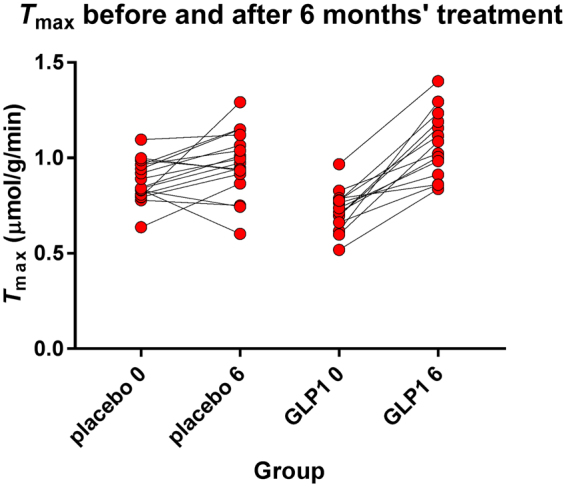
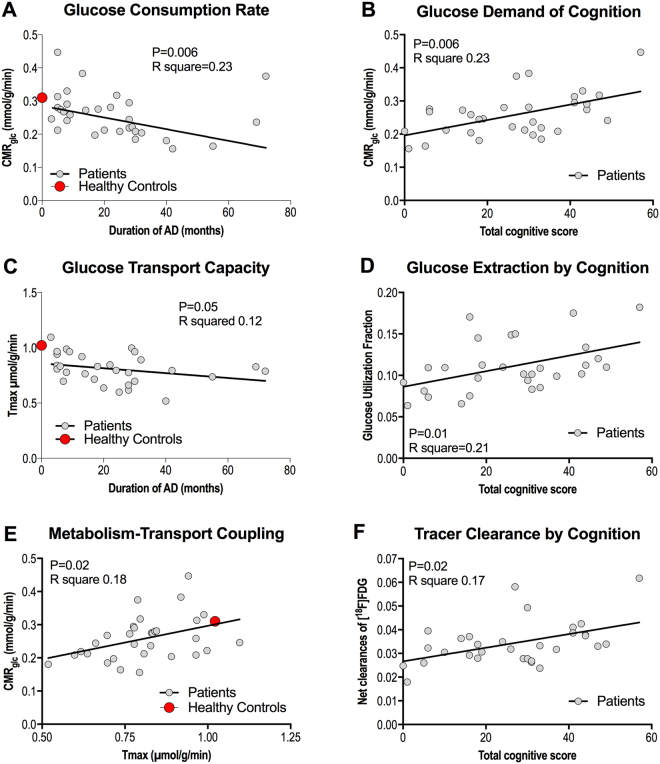
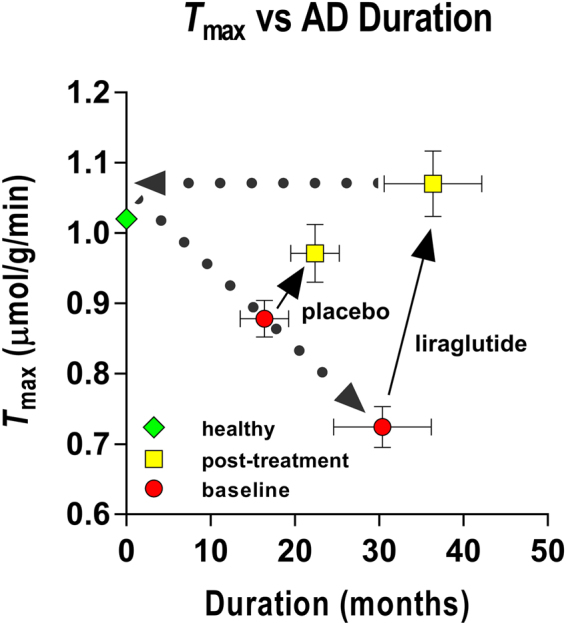
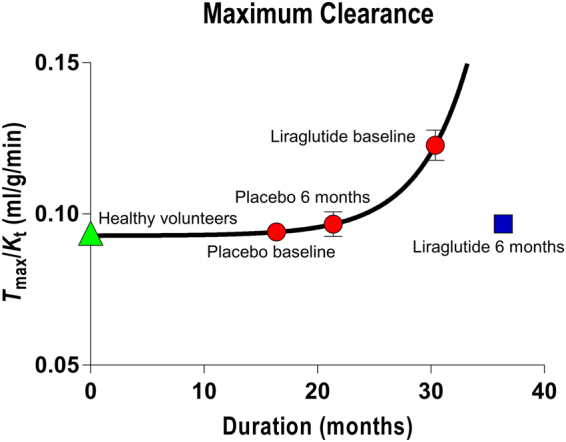
There are fewer than normal glucose transporters at the blood-brain barrier (BBB) in Alzheimer’s disease (AD). When reduced expression of transporters aggravates the symptoms of AD, the transporters become a potential target of therapy. The incretin hormone GLP-1 prevents the decline of cerebral metabolic rate for glucose (CMR glc) in AD, and GLP-1 may serve to raise transporter numbers. We hypothesized that the GLP-1 analog liraglutide would prevent the decline of CMR glc in AD by raising blood-brain glucose transfer, depending on the duration of disease. We randomized 38 patients with AD to treatment with liraglutide (n = 18) or placebo (n = 20) for 6 months, and determined the blood-brain glucose transfer capacity (Tmax) in the two groups and a healthy age matched control group (n = 6). In both AD groups at baseline, Tmax estimates correlated inversely with the duration of AD, as did the estimates of CMR glc that in turn were positively correlated with cognition. The GLP-1 analog treatment, compared to placebo, highly significantly raised the Tmax estimates of cerebral cortex from 0.72 to 1.1 umol/g/min, equal to Tmax estimates in healthy volunteers. The result is consistent with the claim that GLP-1 analog treatment restores glucose transport at the BBB.
Overview
The claims and statistics of this paper haven’t been checked yet.
Free: it reads the open-access text and checks the first 5 claims that cite a source we can check. Create a free account to check every claim.
Integrity signals
Registry
Cites
Statistics
Figures
Verification
Claims the paper makes
The claims and statistics of this paper haven’t been checked yet.
Free: it reads the open-access text and checks the first 5 claims that cite a source we can check. Create a free account to check every claim.
Claims other papers make about this one
Each is checked against this paper’s own text: does it say what the citing paper says it does?
The cited source says what the claim attributes to it.
In the citing paper
“GLP1-RAs is known for its neuroprotective action, and more recent results have emerged, showing a potential benefit in people with AD [85,86,87].”
From Treatment of Alzheimer’s Disease: Beyond Symptomatic Therapies (2023) · cites this paper as [87]
In the citing paper
“a study randomized 38 AD patients to receive liraglutide or placebo and reported that liraglutide reversed AD-related glucose transporter dysfunction.522”
From Antiageing strategy for neurodegenerative diseases: from mechanisms to clinical advances (2025) · cites this paper as [522]
Self-check
Percentages, sums and reported differences re-computed from the paper’s own numbers.
The self-check needs the paper’s full text.
Citations
Cites
Neurovascular pathways to neurodegeneration in Alzheimer’s disease and other disorders
Zlokovic, B. V. (2011) · Nature Reviews Neuroscience · doi:10.1038/nrn3114 · Cited by 2,969
The projected effect of risk factor reduction on Alzheimer's disease prevalence
Barnes, D. E., & Yaffe, K. (2011) · The Lancet Neurology · doi:10.1016/s1474-4422(11)70072-2 · Cited by 2,666
Beach, T. G., Monsell, S. E., Phillips, L. E., & Kukull, W. (2012) · Journal of Neuropathology & Experimental Neurology · doi:10.1097/nen.0b013e31824b211b · Cited by 1,103
The arcuate nucleus mediates GLP-1 receptor agonist liraglutide-dependent weight loss
Secher, A., Jelsing, J., Baquero, A. F., Hecksher-Sørensen, J., Cowley, M. A., Dalbøge, L. S., Hansen, G., Grove, K. L., Pyke, C., Raun, K., et al. (2014) · Journal of Clinical Investigation · doi:10.1172/jci75276 · Cited by 961
De Vivo, D. C., Trifiletti, R. R., Jacobson, R. I., Ronen, G. M., Behmand, R. A., & Harik, S. I. (1991) · New England Journal of Medicine · doi:10.1056/nejm199109053251006 · Cited by 800
Brain metabolism dictates the polarity of astrocyte control over arterioles
Gordon, G. R. J., Choi, H. B., Rungta, R. L., Ellis-Davies, G. C. R., & MacVicar, B. A. (2008) · Nature · doi:10.1038/nature07525 · Cited by 744
Amyloid deposition, hypometabolism, and longitudinal cognitive decline
Landau, S. M., Mintun, M. A., Joshi, A. D., Koeppe, R. A., Petersen, R. C., Aisen, P. S., Weiner, M. W., Jagust, W. J., & Initiative, F. T. A. D. N. (2012) · Annals of Neurology · doi:10.1002/ana.23650 · Cited by 727
Mosconi, L., Tsui, W. H., Herholz, K., Pupi, A., Drzezga, A., Lucignani, G., Reiman, E. M., Holthoff, V., Kalbe, E., Sorbi, S., et al. (2008) · Journal of Nuclear Medicine · doi:10.2967/jnumed.107.045385 · Cited by 726
GLUT1 reductions exacerbate Alzheimer's disease vasculo-neuronal dysfunction and degeneration
Winkler, E. A., Nishida, Y., Sagare, A. P., Rege, S. V., Bell, R. D., Perlmutter, D., Sengillo, J. D., Hillman, S., Kong, P., Nelson, A. R., et al. (2015) · Nature Neuroscience · doi:10.1038/nn.3966 · Cited by 689
Two-year follow-up of amyloid deposition in patients with Alzheimer's disease
Engler, H., Forsberg, A., Almkvist, O., Blomquist, G., Larsson, E., Savitcheva, I., Wall, A., Ringheim, A., Langstrom, B., & Nordberg, A. (2006) · Brain · doi:10.1093/brain/awl178 · Cited by 617
Astrocytic Insulin Signaling Couples Brain Glucose Uptake with Nutrient Availability
García-Cáceres, C., Quarta, C., Varela, L., Gao, Y., Gruber, T., Legutko, B., Jastroch, M., Johansson, P., Ninkovic, J., Yi, C.-X., et al. (2016) · Cell · doi:10.1016/j.cell.2016.07.028 · Cited by 521
Deficient brain insulin signalling pathway in Alzheimer's disease and diabetes
Liu, Y., Liu, F., Grundke‐Iqbal, I., Iqbal, K., & Gong, C. (2011) · The Journal of Pathology · doi:10.1002/path.2912 · Cited by 502
Simpson, I. A., Chundu, K. R., Davies‐Hill, T., Honer, W. G., & Davies, P. (1994) · Annals of Neurology · doi:10.1002/ana.410350507 · Cited by 490
Gejl, M., Gjedde, A., Egefjord, L., Møller, A., Hansen, S. B., Vang, K., Rodell, A., Brændgaard, H., Gottrup, H., Schacht, A., et al. (2016) · Frontiers in Aging Neuroscience · doi:10.3389/fnagi.2016.00108 · Cited by 480
Self-citationThe use of PET in Alzheimer disease
Nordberg, A., Rinne, J. O., Kadir, A., & Långström, B. (2010) · Nature Reviews Neurology · doi:10.1038/nrneurol.2009.217 · Cited by 449
Gjedde, A. (1982) · Brain Research Reviews · doi:10.1016/0165-0173(82)90018-2 · Cited by 414
Self-citationLiu, Y., Liu, F., Iqbal, K., Grundke-Iqbal, I., & Gong, C.-X. (2008) · FEBS Letters · doi:10.1016/j.febslet.2007.12.035 · Cited by 394
Glucose Transporters at the Blood-Brain Barrier: Function, Regulation and Gateways for Drug Delivery
Patching, S. G. (2017) · Molecular Neurobiology · doi:10.1007/s12035-015-9672-6 · Cited by 361
Ross, J. M., Öberg, J., Brené, S., Coppotelli, G., Terzioglu, M., Pernold, K., Goiny, M., Sitnikov, R., Kehr, J., Trifunovic, A., et al. (2010) · Proceedings of the National Academy of Sciences · doi:10.1073/pnas.1008189107 · Cited by 299
(2006) · PubMed · Cited by 269
Myeloid-Cell-Derived VEGF Maintains Brain Glucose Uptake and Limits Cognitive Impairment in Obesity
Jais, A., Solas, M., Backes, H., Chaurasia, B., Kleinridders, A., Theurich, S., Mauer, J., Steculorum, S. M., Hampel, B., Goldau, J., et al. (2016) · Cell · doi:10.1016/j.cell.2016.03.033 · Cited by 252
Comparison of GLUT4 and GLUT1 subcellular trafficking in basal and insulin-stimulated 3T3-L1 cells.
Yang, J., & Holman, G. D. (1993) · Journal of Biological Chemistry · doi:10.1016/s0021-9258(18)53438-4 · Cited by 249
GLUT-1 Expression in the Cerebra of Patients with Alzheimer’s Disease
Mooradian, A. D., Chung, H. C., & Shah, G. N. (1997) · Neurobiology of Aging · doi:10.1016/s0197-4580(97)00111-5 · Cited by 199
Liu, Y., Liu, F., Grundke‐Iqbal, I., Iqbal, K., & Gong, C. (2009) · Journal of Neurochemistry · doi:10.1111/j.1471-4159.2009.06320.x · Cited by 193
Diminished Glucose Transport in Alzheimer's Disease: Dynamic PET Studies
Jagust, W. J., Seab, J. P., Huesman, R. H., Valk, P. E., Mathis, C. A., Reed, B. R., Coxson, P. G., & Budinger, T. F. (1991) · Journal of Cerebral Blood Flow & Metabolism · doi:10.1038/jcbfm.1991.65 · Cited by 187
On the Evaluation of the Constants V m and K M in Enzyme Reactions
Eadie, G. S. (1952) · Science · doi:10.1126/science.116.3025.688 · Cited by 168
Neurobarrier coupling in the brain: a partner of neurovascular and neurometabolic coupling?
Leybaert, L. (2005) · Journal of Cerebral Blood Flow & Metabolism · doi:10.1038/m0qdlguz-o1ys-8rd0-u5blu3ewbs9zqr57 · Cited by 164
Choi, I.-Y., Lee, S.-P., Kim, S.-G., & Gruetter, R. (2001) · Journal of Cerebral Blood Flow & Metabolism · doi:10.1097/00004647-200106000-00003 · Cited by 152
Piert, M., Koeppe, R. A., Giordani, B., Berent, S., & KUHL, D. E. (1996) · PubMed · Cited by 148
Reduced cerebral glucose metabolism in patients at risk for Alzheimer's disease
Hunt, A., Schönknecht, P., Henze, M., Seidl, U., Haberkorn, U., & Schröder, J. (2007) · Psychiatry Research: Neuroimaging · doi:10.1016/j.pscychresns.2006.12.003 · Cited by 146
Insulin increases glucose transfer across the blood-brain barrier in man.
Hertz, M. M., Paulson, O. B., Barry, D. I., Christiansen, J. S., & Svendsen, P. A. (1981) · Journal of Clinical Investigation · doi:10.1172/jci110073 · Cited by 115
Differentiation of Glucose Transport in Human Brain Gray and White Matter
de Graaf, R. A., Pan, J. W., Telang, F., Lee, J.-H., Brown, P., Novotny, E. J., Hetherington, H. P., & Rothman, D. L. (2001) · Journal of Cerebral Blood Flow & Metabolism · doi:10.1097/00004647-200105000-00002 · Cited by 110
Xiuli, G., Geng, M., & Du, G. (2005) · Biochemical Genetics · doi:10.1007/s10528-005-1510-5 · Cited by 109
Zeller, K., Rahner-Welsch, S., & Kuschinsky, W. (1997) · Journal of Cerebral Blood Flow & Metabolism · doi:10.1097/00004647-199702000-00010 · Cited by 106 · cited 1×
“⁎ τ = − C J k ( CMR )/ (5) tissue 1 glc 2”
Is lactate a volume transmitter of metabolic states of the brain?
Bergersen, L. H., & Gjedde, A. (2012) · Frontiers in Neuroenergetics · doi:10.3389/fnene.2012.00005 · Cited by 105
Self-citationAndreozzi, F., Raciti, G. A., Nigro, C., Mannino, G. C., Procopio, T., Davalli, A. M., Beguinot, F., Sesti, G., Miele, C., & Folli, F. (2016) · Journal of Translational Medicine · doi:10.1186/s12967-016-0985-7 · Cited by 102
Kuwabara, H., Evans, A. C., & GJEDDE, A. H. (1990) · Journal of Cerebral Blood Flow & Metabolism · doi:10.1038/jcbfm.1990.33 · Cited by 98
Self-citationGlucose deficit triggers tau pathology and synaptic dysfunction in a tauopathy mouse model
Lauretti, E., Li, J.-G., Di Meco, A., & Praticò, D. (2017) · Translational Psychiatry · doi:10.1038/tp.2016.296 · Cited by 96
Samuraki, M., Matsunari, I., Chen, W.-P., Yajima, K., Yanase, D., Fujikawa, A., Takeda, N., Nishimura, S., Matsuda, H., & Yamada, M. (2007) · European Journal of Nuclear Medicine and Molecular Imaging · doi:10.1007/s00259-007-0454-x · Cited by 92
Egefjord, L., Gejl, M., Møller, A., Brændgaard, H., Gottrup, H., Antropova, O., Møller, N., Poulsen, H. E., GJEDDE, A. H., Brock, B., et al. (2012) · PubMed · Cited by 92
Self-citationBlood–Brain Transfer of Glucose and Glucose Analogs in Newborn Rats
Fuglsang, A., Lomholt, M., & GJEDDE, A. H. (1986) · Journal of Neurochemistry · doi:10.1111/j.1471-4159.1986.tb01757.x · Cited by 89
Self-citationXiao-Yun, X., Zhao-Hui, M., Ke, C., Hong-Hui, H., & Yan-Hong, X. (2011) · Medical Science Monitor · doi:10.12659/msm.881383 · Cited by 88
Estimates of Michaelis-Menten Constants for the Two Membranes of the Brain Endothelium
Gjedde, A., & Christensen, O. (1984) · Journal of Cerebral Blood Flow & Metabolism · doi:10.1038/jcbfm.1984.33 · Cited by 85
Self-citationGlucose transporter plasticity during memory processing
Choeiri, C., Staines, W. A., Miki, T., Seino, S., & Messier, C. (2004) · Neuroscience · doi:10.1016/j.neuroscience.2004.09.011 · Cited by 84 · cited 1×
“1038/s41598-017-17718-y = ⁎ K C CMR /LC (4) a glc”
Graphical analysis of single enzyme systems.
Bh, H. (1956) · PubMed · Cited by 79
Regulation of cell surface GLUT1, GLUT3, and GLUT4 by insulin and IGF‐I in L6 myotubes
Wilson, C. M., Mitsumoto, Y., Maher, F., & Klip, A. (1995) · FEBS Letters · doi:10.1016/0014-5793(95)00589-2 · Cited by 73
The insulin‐like growth factor I receptor regulates glucose transport by astrocytes
Hernandez‐Garzón, E., Fernandez, A. M., Perez‐Alvarez, A., Genis, L., Bascuñana, P., Fernandez de la Rosa, R., Delgado, M., Angel Pozo, M., Moreno, E., McCormick, P. J., et al. (2016) · Glia · doi:10.1002/glia.23035 · Cited by 72
Brooks, D. J., Gibbs, J. S. R., Sharp, P., Herold, S., Turton, D. R., Luthra, S. K., Kohner, E. M., Bloom, S. R., & Jones, T. (1986) · Journal of Cerebral Blood Flow & Metabolism · doi:10.1038/jcbfm.1986.37 · Cited by 61
D-[U-11C]glucose uptake and metabolism in the brain of insulin-dependent diabetic subjects
Gutniak, M., Blomqvist, G., Widen, L., Stone-Elander, S., Hamberger, B., & Grill, V. (1990) · American Journal of Physiology-Endocrinology and Metabolism · doi:10.1152/ajpendo.1990.258.5.e805 · Cited by 60
Hasselbalch, S. G., Madsen, P. L., Knudsen, G. M., Holm, S., & Paulson, O. B. (1998) · Journal of Cerebral Blood Flow & Metabolism · doi:10.1097/00004647-199802000-00005 · Cited by 59
Blomqvist, G., GJEDDE, A. H., Gutniak, M., Grill, V., Wid�n, L., Stone‐Elander, S., & Hellstrand, E. (1991) · European Journal of Nuclear Medicine and Molecular Imaging · doi:10.1007/bf00175064 · Cited by 57
Self-citationAllen, A., & Messier, C. (2012) · Behavioural Brain Research · doi:10.1016/j.bbr.2012.11.025 · Cited by 55 · cited 1×
“The fluxes across the membranes of the BBB can be regulated (1) by changing the concentration gradients in the directions of the tissue, thereby changing the differences between the fluxes in both directions across the endothelial membranes, (2) by changing the affinity of the transporters separately or jointly for th…”
BackgroundBrooks, D. J., Beaney, R. P., Lammertsma, A. A., Herold, S., Turton, D. R., Luthra, S. K., Frackowiak, R. S. J., Thomas, D. G. T., Marshall, J., & Jones, T. (1986) · Journal of Cerebral Blood Flow & Metabolism · doi:10.1038/jcbfm.1986.36 · Cited by 50
Gejl, M., Egefjord, L., Lerche, S., Vang, K., Bibby, B. M., Holst, J. J., Mengel, A., Møller, N., Rungby, J., Brock, B., et al. (2012) · Journal of Cerebral Blood Flow & Metabolism · doi:10.1038/jcbfm.2012.118 · Cited by 49
Self-citationKelly, P., McClean, P. L., Ackermann, M., Konerding, M. A., Hölscher, C., & Mitchell, C. A. (2015) · Microcirculation · doi:10.1111/micc.12186 · Cited by 46
Regulation of brain insulin mRNA by glucose and glucagon-like peptide 1
Madadi, G., Dalvi, P. S., & Belsham, D. D. (2008) · Biochemical and Biophysical Research Communications · doi:10.1016/j.bbrc.2008.09.054 · Cited by 40
Feinendegen, L. E., Herzog, H. R., Wieler, H. J., Patton, D. D., & Schmid, A. (1986) · PubMed · Cited by 39
Hertz, M. M., & Paulson, O. B. (1982) · Microvascular Research · doi:10.1016/0026-2862(82)90023-1 · Cited by 38
Targeting amyloid-beta by glucagon-like peptide -1 (GLP-1) in Alzheimer's disease and diabetes
Bak, A. M., Egefjord, L., Gejl, M., Steffensen, C., Stecher, C. W., Smidt, K., Brock, B., & Rungby, J. (2011) · Expert Opinion on Therapeutic Targets · doi:10.1517/14728222.2011.600691 · Cited by 36
Self-citationGJEDDE, A. H. (1992) · Handbook of experimental pharmacology · doi:10.1007/978-3-642-76894-1_4 · Cited by 32
Self-citationKuwabara, H., & GJEDDE, A. H. (1991) · PubMed · Cited by 31
Self-citationGejl, M., Lerche, S. S., Egefjord, L., Brock, B., Møller, N., Vang, K., Rodell, A. B., Bibby, B. M., Holst, J. J., Rungby, J., et al. (2013) · Frontiers in Neuroenergetics · doi:10.3389/fnene.2013.00002 · Cited by 31
Self-citationGejl, M., Rungby, J., Brock, B., & Gjedde, A. (2014) · Basic & Clinical Pharmacology & Toxicology · doi:10.1111/bcpt.12240 · Cited by 27 · cited 2×
“The results are consistent with the claims (1) that the maximum blood-brain transfer capacity declines with duration of Alzheimer’s disease, and (2) that GLP-1 analog treatment raises the GLUT1 activity in the barrier as a potential future target for treatment of the neurovascular dysfunction in Alzheimer’s disease.”
BackgroundResultSelf-citationHölscher, C. (2016) · Cardiovascular Endocrinology · doi:10.1097/xce.0000000000000087 · Cited by 25
Hilsabeck, R. C., Holdnack, J. A., Cullum, C. M., Drozdick, L. W., Edelstein, B. A., Fiske, A., Lacritz, L. H., McCoy, K. J. M., & Wahlstrom, D. (2015) · Archives of Clinical Neuropsychology · doi:10.1093/arclin/acv037 · Cited by 16
Brain glucose metabolism (revision number 10)
Gejl, M., & Gjedde, A. (2014) · Diapedia.org eBooks · doi:10.14496/dia.5105374816.10 · Cited by 1
Self-citation
Cited by
Glucagon-like peptide 1 (GLP-1)
Müller, T. D., Finan, B., Bloom, S. R., D'Alessio, D., Drucker, D. J., Flatt, P. R., Fritsche, A., Gribble, F., Grill, H. J., Habener, J. F., et al. (2019) · Molecular Metabolism · doi:10.1016/j.molmet.2019.09.010 · Cited by 1,868
“AD is frequently reported to be accompanied by decreased glucose transport across the BBB and 6 month treatment of AD patients with liraglutide improved BBB glucose transfer relative to placebo controls [837].”
BackgroundThe role of brain vasculature in neurodegenerative disorders
Sweeney, M. D., Kisler, K., Montagne, A., Toga, A. W., & Zlokovic, B. V. (2018) · Nature Neuroscience · doi:10.1038/s41593-018-0234-x · Cited by 998
The Discovery and Development of Liraglutide and Semaglutide
Knudsen, L. B., & Lau, J. (2019) · Frontiers in Endocrinology · doi:10.3389/fendo.2019.00155 · Cited by 970
Vascular dysfunction—The disregarded partner of Alzheimer's disease
Sweeney, M. D., Montagne, A., Sagare, A. P., Nation, D. A., Schneider, L. S., Chui, H. C., Harrington, M. G., Pa, J., Law, M., Wang, D. J. J., et al. (2019) · Alzheimer's & Dementia · doi:10.1016/j.jalz.2018.07.222 · Cited by 711
“[95] Gejl M, Brock B, Egefjord L, Vang K, Rungby J, Gjedde A.”
Effects of Ketone Bodies on Brain Metabolism and Function in Neurodegenerative Diseases
Jensen, N. J., Wodschow, H. Z., Nilsson, M., & Rungby, J. (2020) · International Journal of Molecular Sciences · doi:10.3390/ijms21228767 · Cited by 446
“Hypometabolism may be caused by a reduced density or activity of terminal neuronal fields and/or reduced glial metabolism [63] or by a reduced transport capacity [64].”
BackgroundSelf-citation
Metadata
- Authors
- Gejl, M., Brock, B., Egefjord, L., Vang, K., Rungby, J., & Gjedde, A.
- Affiliations
- Aarhus University (DK)
- Aarhus University Hospital (DK)
- University of Copenhagen (DK)
- Corresponding author
- Gejl, Michael
- Venue
- Scientific Reports
- Published
- 2017-12-13
- Volume
- 7
- Issue
- 1
- Pages
- 17490-17490
- ISSN
- 2045-2322 (ISSN-L)
- PMC
- PMC5727512
- OpenAlex
- W2773040321
- Cited by
- 163
- References
- 66
- Citations by year
- 2026: 20 · 2025: 28 · 2024: 19 · 2023: 14 · 2022: 19 · 2021: 21 · 2020: 24 · 2019: 13 · 2018: 4 · 2017: 1
- FWCI
- 8.43
- Type
- journal article
- Language
- en
- Open access
- gold
- doi.org
- Licence
- cc-by
- creativecommons.org/licenses/by/4.0 (tdm)
- creativecommons.org/licenses/by/4.0 (vor)
- Locations
- Scientific Reports (publishedVersion, cc-by)
- PubMed Central (publishedVersion, cc-by)
- PubMed (publishedVersion)
- Research at the University of Copenhagen (University of Copenhagen) (publishedVersion, cc-by)
- University of Southern Denmark Research Portal (University of Southern Denmark) (submittedVersion, cc-by)
- DOAJ (DOAJ: Directory of Open Access Journals) (submittedVersion)
- Funders
- Aarhus Universitet
- Aarhus Universitetshospital
- Novo Nordisk
- Region Midtjylland
- Health Research Fund of Central Denmark Region
- Topics
- Life Sciences › Neuroscience › Cellular and Molecular Neuroscience › Alzheimer's disease research and treatments
- Life Sciences › Neuroscience › Neurology › Barrier Structure and Function Studies
- Health Sciences › Medicine › Psychiatry and Mental health › Dementia and Cognitive Impairment Research
- Keywords
- Alzheimer's disease, blood-brain barrier, glucose transport, liraglutide, GLP-1 analogues, cerebral metabolic rate of glucose, glucose transporters, disease duration, cognitive function, cerebral cortex
- MeSH terms
- Liraglutide, Aged, Alzheimer Disease, Blood-Brain Barrier, Cognition, Double-Blind Method, Glucose, Humans, Hypoglycemic Agents, Middle Aged, Treatment Outcome, Fluorodeoxyglucose F18, Positron-Emission Tomography, Glucagon-Like Peptide 1
About these checks
Registry, retraction, Cites and statistics results are computed, not judged, with one exception: a printed reference that no index lists is read once by a model before it counts as a citation error. Claims are extracted by a model and kept only when their quote appears verbatim in the text; each cited source is then checked, with a model’s help, for whether it says what the claim relies on. Those verdicts can be wrong — read the claim’s quote and the cited source before relying on one.
Statistics and arithmetic are recomputed, not judged.
Confidence bands are shown only for fields calibrated on our annotated test set. None is calibrated yet, so no band is shown.
What counts as a claim ›How we measure confidence ›How we check this ›
Are you an author, or do you see a problem with this page? Request a review
Data sources
Bibliographic data: Semantic Scholar, OpenAlex, Crossref.
Contains information from the Semantic Scholar Academic Graph Datasets, made available under the ODC Attribution License (ODC-BY 1.0).
Semantic Scholar’s data is described in: Kinney, R., et al. (2023). The Semantic Scholar Open Data Platform. arXiv:2301.10140.
