

The DOI matches its Crossref record; 32 of the 32 references it cites were found in a registry or an index.
Cromolyn Reduces Levels of the Alzheimer’s Disease-Associated Amyloid β-Protein by Promoting Microglial Phagocytosis
Open accessAbstract
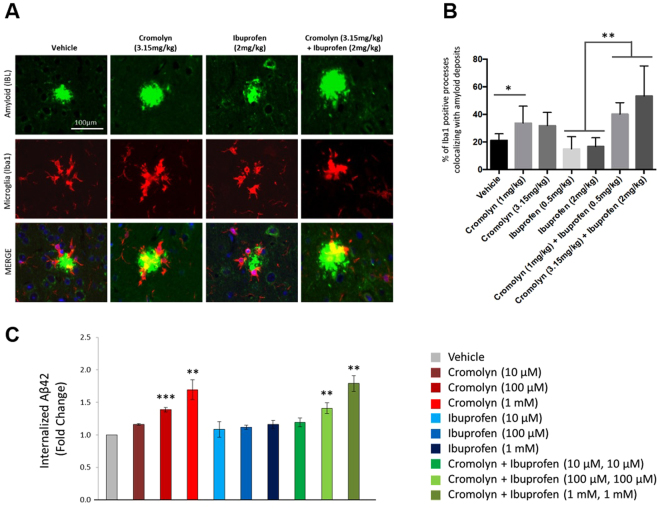
Amyloid-beta protein (Aβ) deposition is a pathological hallmark of Alzheimer’s disease (AD). Aβ deposition triggers both pro-neuroinflammatory microglial activation and neurofibrillary tangle formation. Cromolyn sodium is an asthma therapeutic agent previously shown to reduce Aβ levels in transgenic AD mouse brains after one-week of treatment. Here, we further explored these effects as well as the mechanism of action of cromolyn, alone, and in combination with ibuprofen in APP Swedish-expressing Tg2576 mice. Mice were treated for 3 months starting at 5 months of age, when the earliest stages of β-amyloid deposition begin. Cromolyn, alone, or in combination with ibuprofen, almost completely abolished longer insoluble Aβ species, i.e. Aβ40 and Aβ42, but increased insoluble Aβ38 levels. In addition to its anti-aggregation effects on Aβ, cromolyn, alone, or plus ibuprofen, but not ibuprofen alone, increased microglial recruitment to, and phagocytosis of β-amyloid deposits in AD mice. Cromolyn also promoted Aβ42 uptake in microglial cell-based assays. Collectively, our data reveal robust effects of cromolyn, alone, or in combination with ibuprofen, in reducing aggregation-prone Aβ levels and inducing a neuroprotective microglial activation state favoring Aβ phagocytosis versus a pro-neuroinflammatory state. These findings support the use of cromolyn, alone, or with ibuprofen, as a potential AD therapeutic.
Overview
The claims and statistics of this paper haven’t been checked yet.
Run the check — free, no account needed. It reads the open-access text and checks the sources it cites.
Integrity signals
Registry
Cites
Statistics
Figures
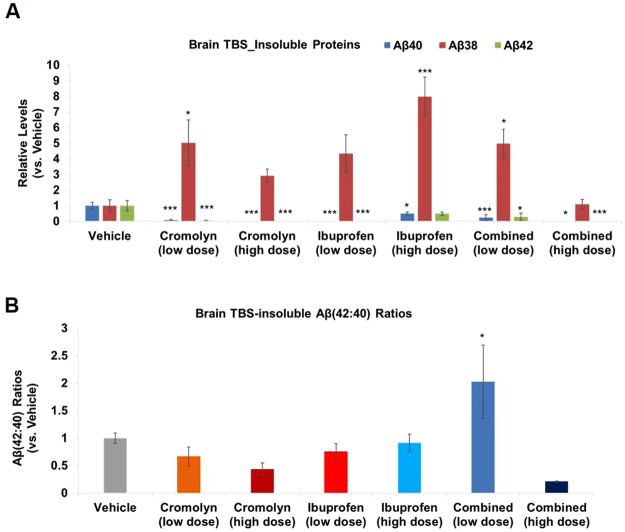
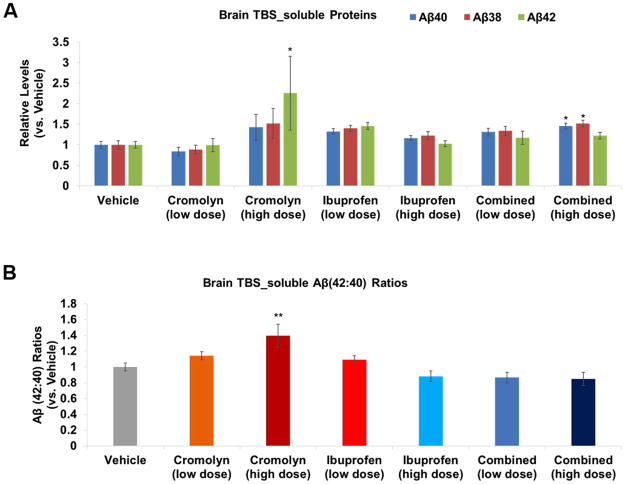
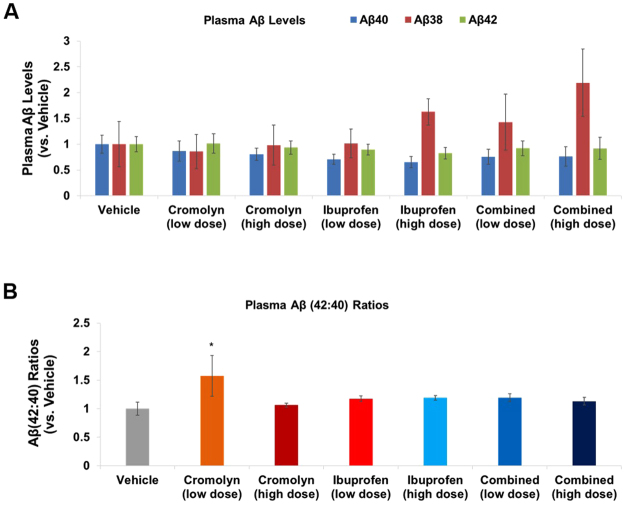
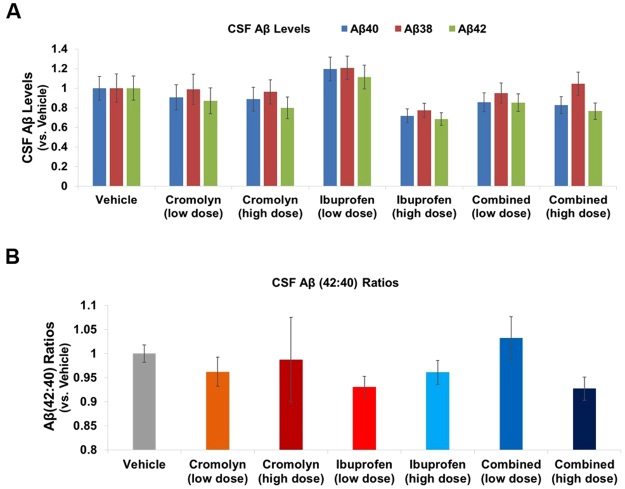
Verification
Claims the paper makes
The claims and statistics of this paper haven’t been checked yet.
Run the check — free, no account needed. It reads the open-access text and checks the sources it cites.
Claims other papers make about this one
Each is checked against this paper’s own text: does it say what the citing paper says it does?
In the citing paper
“An efficacy study in in vivo AD mouse model evidenced better effects of the drug combination compared with cromolyn and ibuprofen alone.59”
From From combinations to multitarget-directed ligands: A continuum in Alzheimer’s disease polypharmacology (2021) · cites this paper as [59]
Self-check
Percentages, sums and reported differences re-computed from the paper’s own numbers.
The self-check needs the paper’s full text.
Citations
Cites
The Amyloid Hypothesis of Alzheimer’s Disease: Progress and Problems on the Road to Therapeutics
Hardy, J., & Selkoe, D. J. (2002) · Science · doi:10.1126/science.1072994 · Cited by 13,864
Amyloid oligomers exacerbate tau pathology in a mouse model of tauopathy
Selenica, M.-L. B., Brownlow, M., Jimenez, J. P., Lee, D. C., Pena, G., Dickey, C. A., Gordon, M. N., & Morgan, D. (2013) · Neurodegenerative Diseases · doi:10.1159/000337230 · Cited by 10,359
Correlative Memory Deficits, Aβ Elevation, and Amyloid Plaques in Transgenic Mice
Hsiao, K., Chapman, P., Nilsen, S., Eckman, C., Harigaya, Y., Younkin, S., Yang, F., & Cole, G. (1996) · Science · doi:10.1126/science.274.5284.99 · Cited by 4,210
Neurovascular pathways to neurodegeneration in Alzheimer’s disease and other disorders
Zlokovic, B. V. (2011) · Nature Reviews Neuroscience · doi:10.1038/nrn3114 · Cited by 2,969
Karran, E., Mercken, M., & Strooper, B. D. (2011) · Nature Reviews Drug Discovery · doi:10.1038/nrd3505 · Cited by 2,188
Intracellular amyloid-β in Alzheimer's disease
LaFerla, F. M., Green, K. N., & Oddo, S. (2007) · Nature Reviews Neuroscience · doi:10.1038/nrn2168 · Cited by 1,942
Twenty years of the Alzheimer's disease amyloid hypothesis: a genetic perspective
Tanzi, R. E., & Bertram, L. (2005) · Cell · doi:10.1016/j.cell.2005.02.008 · Cited by 1,849
Self-citationMicroglial Dysfunction and Defective β-Amyloid Clearance Pathways in Aging Alzheimer's Disease Mice
Hickman, S. E., Allison, E. K., & El Khoury, J. (2008) · The Journal of Neuroscience · doi:10.1523/jneurosci.0616-08.2008 · Cited by 1,329
A three-dimensional human neural cell culture model of Alzheimer’s disease
Choi, S. H., Kim, Y. H., Hebisch, M., Sliwinski, C., Lee, S., D’Avanzo, C., Chen, H., Hooli, B., Asselin, C., Muffat, J., et al. (2014) · Nature · doi:10.1038/nature13800 · Cited by 1,195
Self-citationCummings, J. L. (2004) · New England Journal of Medicine · doi:10.1056/nejmra040223 · Cited by 1,152
Cited by
Sorted by citations
Neuroinflammation in neurodegenerative disorders: the roles of microglia and astrocytes
Kwon, H. S., & Koh, S.-H. (2020) · Translational Neurodegeneration · doi:10.1186/s40035-020-00221-2 · Cited by 2,595
Microglia in neurodegenerative diseases: mechanism and potential therapeutic targets
Gao, C., Jiang, J., Tan, Y., & Chen, S. (2023) · Signal Transduction and Targeted Therapy · doi:10.1038/s41392-023-01588-0 · Cited by 1,616
Astrocytic and microglial cells as the modulators of neuroinflammation in Alzheimer’s disease
Singh, D. (2022) · Journal of Neuroinflammation · doi:10.1186/s12974-022-02565-0 · Cited by 569
Yiannopoulou, K. G., Anastasiou, A. I., Zachariou, V., & Pelidou, S.-H. (2019) · Biomedicines · doi:10.3390/biomedicines7040097 · Cited by 330
Innate Immune Cell Death in Neuroinflammation and Alzheimer’s Disease
Rajesh, Y., & Kanneganti, T. (2022) · Cells · doi:10.3390/cells11121885 · Cited by 269
Glial Cell-Mediated Neuroinflammation in Alzheimer’s Disease
Al-Ghraiybah, N. F., Wang, J., Alkhalifa, A. E., Roberts, A. B., Raj, R., Yang, E., & Kaddoumi, A. (2022) · International Journal of Molecular Sciences · doi:10.3390/ijms231810572 · Cited by 217
The benefits of neuroinflammation for the repair of the injured central nervous system
Yong, H. Y. F., Rawji, K. S., Ghorbani, S., Xue, M., & Yong, V. W. (2019) · Cellular & Molecular Immunology · doi:10.1038/s41423-019-0223-3 · Cited by 190
Albertini, C., Salerno, A., de Sena Murteira Pinheiro, P., & Bolognesi, M. L. (2021) · Medicinal Research Reviews · doi:10.1002/med.21699 · Cited by 179
Recent development of boronic acid-based fluorescent sensors
Fang, G., Wang, H., Bian, Z., Sun, J., Liu, A., Fang, H., Liu, B., Yao, Q., & Wu, Z. (2018) · RSC Advances · doi:10.1039/c8ra04503h · Cited by 132
Developing Effective Alzheimer’s Disease Therapies: Clinical Experience and Future Directions
Elmaleh, D. R., Farlow, M. R., Conti, P. S., Tompkins, R. G., Kundakovic, L., & Tanzi, R. E. (2019) · Journal of Alzheimer’s Disease · doi:10.3233/jad-190507 · Cited by 129
Self-citationNeuroinflammation, Its Role in Alzheimer's Disease and Therapeutic Strategies
Király, M., Foss, J. F., & Giordano, T. (2023) · The Journal of Prevention of Alzheimer s Disease · doi:10.14283/jpad.2023.109 · Cited by 111
Critical Appraisal of Amyloid Lowering Agents in AD
Decourt, B., Boumelhem, F., Pope, E. D., Shi, J., Mari, Z. K., & Sabbagh, M. N. (2021) · Current Neurology and Neuroscience Reports · doi:10.1007/s11910-021-01125-y · Cited by 87
Anti-amyloid-β protein agents for the treatment of Alzheimer’s disease: an update on emerging drugs
Lozupone, M., Solfrizzi, V., D’Urso, F., Di Gioia, I., Sardone, R., Dibello, V., Stallone, R., Liguori, A., Ciritella, C., Daniele, A., et al. (2020) · Expert Opinion on Emerging Drugs · doi:10.1080/14728214.2020.1808621 · Cited by 77
Therapy for Alzheimer’s disease: Missing targets and functional markers?
Stoiljković, M., Horváth, T. L., & Hajós, M. (2021) · Ageing Research Reviews · doi:10.1016/j.arr.2021.101318 · Cited by 74
Melchiorri, D., Merlo, S., Micallef, B., Borg, J.-J., & Dráfi, F. (2023) · Frontiers in Pharmacology · doi:10.3389/fphar.2023.1196413 · Cited by 73
Morató, X., Pytel, V., Jofresa, S., Ruiz, A., & Boada, M. (2022) · International Journal of Molecular Sciences · doi:10.3390/ijms23169305 · Cited by 53
Marine Natural Products, Multitarget Therapy and Repurposed Agents in Alzheimer’s Disease
Martins, M., Silva, R. V. D. S., Pinto, M. M. M., & Sousa, E. (2020) · Pharmaceuticals · doi:10.3390/ph13090242 · Cited by 56
Status and future directions of clinical trials in Alzheimer's disease
Plascencia‐Villa, G., & Perry, G. L. (2020) · International review of neurobiology · doi:10.1016/bs.irn.2020.03.022 · Cited by 49
Cromolyn inhibits the secretion of inflammatory cytokines by human microglia (HMC3)
Wang, Y.-J., Monteagudo, A., Downey, M. A., Ashton‐Rickardt, P. G., & Elmaleh, D. R. (2021) · Scientific Reports · doi:10.1038/s41598-021-85702-8 · Cited by 47
Self-citationInnate Immunity and Cell Death in Alzheimer’s Disease
Lee, S., Cho, H., & Ryu, J. (2021) · ASN NEURO · doi:10.1177/17590914211051908 · Cited by 44
Drug Repositioning for Alzheimer’s Disease: Finding Hidden Clues in Old Drugs
Ihara, M., & Saitô, S. (2020) · Journal of Alzheimer s Disease · doi:10.3233/jad-200049 · Cited by 45
Kempuraj, D., Ahmed, M. E., Selvakumar, G. P., Thangavel, R., Raikwar, S. P., Zaheer, S. A., Iyer, S. S., Govindarajan, R., Nattanmai Chandrasekaran, P., Burton, C., et al. (2021) · Neurotoxicity Research · doi:10.1007/s12640-020-00288-9 · Cited by 43
Neuroinflammation in Alzheimer's disease and beneficial action of luteolin
Delgado, A., Cholevas, C., & Theoharides, T. C. (2021) · BioFactors · doi:10.1002/biof.1714 · Cited by 48
Laval, K., & Enquist, L. W. (2021) · Frontiers in Neurology · doi:10.3389/fneur.2021.658695 · Cited by 43
Neuroinflammation of Microglial Regulation in Alzheimer’s Disease: Therapeutic Approaches
Chen, H., Zeng, Y., Wang, D., Li, Y., Xing, J., Zeng, Y., Liu, Z., Zhou, X., & Fan, H. J. (2024) · Molecules · doi:10.3390/molecules29071478 · Cited by 41
Granucci, E. J., Griciuc, A., Mueller, K. A., Mills, A. N., Le, H., Dios, A. M., McGinty, D., Pereira, J. D., Elmaleh, D. R., Berry, J. D., et al. (2019) · Scientific Reports · doi:10.1038/s41598-019-53982-w · Cited by 37
Self-citationTherapeutic Advances in Diabetes, Autoimmune, and Neurological Diseases
Liu, J., Ting, J. P., Al-Azzam, S., Ding, Y., & Afshar, S. (2021) · International Journal of Molecular Sciences · doi:10.3390/ijms22062805 · Cited by 37
New insights in drug development for Alzheimer's disease based on microglia function
Qiao, O., Ji, H., Zhang, Y., Zhang, X., Zhang, X., Liu, N., Huang, L., Liu, C., & Gao, W. (2021) · Biomedicine & Pharmacotherapy · doi:10.1016/j.biopha.2021.111703 · Cited by 35
Liu, A., Fernandes, B. S., Citu, C., & Zhao, Z. (2024) · Alzheimer s Research & Therapy · doi:10.1186/s13195-023-01372-w · Cited by 34
Raven, F., Ward, J. F., Zoltowska, K. M., Wan, Y., Bylykbashi, E., Miller, S., Shen, X., Choi, S. H., Rynearson, K. D., Berezovska, O., et al. (2017) · EBioMedicine · doi:10.1016/j.ebiom.2017.08.028 · Cited by 35
Self-citationWan, Y., Liang, Y., Liang, F., Shen, N., Shinozuka, K., Yu, J., Ran, C., Quan, Q., Tanzi, R. E., & Zhang, C. M. (2019) · Journal of Alzheimer s Disease · doi:10.3233/jad-190562 · Cited by 31
Self-citationDecourt, B., Noorda, K., Noorda, K. J., Shi, J., & Sabbagh, M. N. (2022) · Journal of Experimental Pharmacology · doi:10.2147/jep.s265626 · Cited by 33
Potentially repurposable drugs for schizophrenia identified from its interactome
Karunakaran, K. B., Chaparala, S., & Ganapathiraju, M. K. (2019) · Scientific Reports · doi:10.1038/s41598-019-48307-w · Cited by 29
Advances in Drug Therapy for Alzheimer’s Disease
Zhu, C.-C., Fu, S., Chen, Y., Li, L., Mao, R., Wang, J., Liu, R., Liu, Y., & Wang, X. (2020) · Current Medical Science · doi:10.1007/s11596-020-2281-2 · Cited by 34
The age-related microglial transformation in Alzheimer's disease pathogenesis
Yuan, C., Aierken, A., Xie, Z., Li, N., Zhao, J., & Qing, H. (2020) · Neurobiology of Aging · doi:10.1016/j.neurobiolaging.2020.03.024 · Cited by 27
Liang, Y., Raven, F., Ward, J. F., Zhen, S. Y., Zhang, S., Sun, H., Miller, S., Choi, S. H., Tanzi, R. E., & Zhang, C. M. (2020) · Journal of Alzheimer s Disease · doi:10.3233/jad-200128 · Cited by 29
Self-citationMast cell deficiency improves cognition and enhances disease-associated microglia in 5XFAD mice
Lin, C., Hérisson, F., Le, H., Jaafar, N., Chetal, K., Oram, M. K., Flynn, K. L., Gavrilles, E. P., Sadreyev, R. I., Schiffino, F. L., et al. (2023) · Cell Reports · doi:10.1016/j.celrep.2023.113141 · Cited by 29
Self-citationAlzheimer’s Disease Etiology Hypotheses and Therapeutic Strategies: A Perspective
Scarano, N., Musumeci, F., Casini, B., Brullo, C., D’Ursi, P., Fossa, P., Schenone, S., & Cichero, E. (2025) · International Journal of Molecular Sciences · doi:10.3390/ijms26146980 · Cited by 32
Gauthier, S. G., Aisen, P. S. S., Cummings, J. L., Detke, M. J., Longo, F. M., Raman, R., Sabbagh, M. N., Schneider, L. S., Tanzi, R. E., Tariot, P. N., et al. (2020) · The Journal of Prevention of Alzheimer s Disease · doi:10.14283/jpad.2020.18 · Cited by 29
Self-citationCao, Y., Yu, F., Lyu, Y., & Lu, X. (2022) · Frontiers in Neurology · doi:10.3389/fneur.2022.1034243 · Cited by 26
Advances in the discovery of heterocyclic-based drugs against Alzheimer’s disease
Sánchez, J. D., Alcántara, A. R., González, J. F., & Sánchez-Montero, J. M. (2023) · Expert Opinion on Drug Discovery · doi:10.1080/17460441.2023.2264766 · Cited by 26
Combination Therapy in Alzheimer’s Disease: Is It Time?
Salehipour, A., Bagheri, M., Sabahi, M., Dolatshahi, M., & Boche, D. (2022) · Journal of Alzheimer s Disease · doi:10.3233/jad-215680 · Cited by 22
Puzzovio, P. G., Brüggemann, T. R., Pahima, H. T., Mankuta, D., Levy, B. D., & Levi‐Schaffer, F. (2022) · Pharmacological Research · doi:10.1016/j.phrs.2022.106172 · Cited by 22
ALZT-OP1: an experimental combination regimen for the treatment of Alzheimer’s disease
Lozupone, M., Berardino, G., Mollica, A., Sardone, R., Dibello, V., Zupo, R., Lampignano, L., Castellana, F., Bortone, I., Stallone, R., et al. (2022) · Expert Opinion on Investigational Drugs · doi:10.1080/13543784.2022.2095261 · Cited by 22
Aberrant NLRP3 Inflammasome Activation Ignites the Fire of Inflammation in Neuromuscular Diseases
Péladeau, C. L., & Sandhu, J. K. (2021) · International Journal of Molecular Sciences · doi:10.3390/ijms22116068 · Cited by 20
Tiwari, R. K., Moin, A., Rizvi, S. M. D., Shahid, S. M. A., & Bajpai, P. (2021) · Metabolic Brain Disease · doi:10.1007/s11011-021-00696-6 · Cited by 19
Liu, G., Mondal, P., Sang, N., Li, Z., Ding, W., Yang, L., Liu, Y., Birar, V. C., Gomm, A., Tanzi, R. E., et al. (2023) · European Journal of Medicinal Chemistry · doi:10.1016/j.ejmech.2023.115327 · Cited by 17
Self-citationKim, J., Jeon, H., Kim, H. Y., & Kim, Y. S. (2023) · ChemBioChem · doi:10.1002/cbic.202300328 · Cited by 17
Sun, P., Hu, Y., Xing, Q., Deng, W., Ou, Y., Pan, G., Zhong, X., & Hu, W. (2020) · ACS Pharmacology & Translational Science · doi:10.1021/acsptsci.0c00073 · Cited by 15
Evaluation of Fluorinated Cromolyn Derivatives as Potential Therapeutics for Alzheimer’s Disease
Shoup, T. M., Griciuc, A., Normandin, M. D., Quinti, L., Walsh, L. V., Dhaynaut, M., Moon, S., Guehl, N. J., Brugarolas, P., Elmaleh, D. R., et al. (2021) · Journal of Alzheimer s Disease · doi:10.3233/jad-201419 · Cited by 14
Self-citationSmart Data for Genomic Information Systems: the SILE Method
Palacio, A. L., & Pastor, Ó. (2018) · Complex Systems Informatics and Modeling Quarterly · doi:10.7250/csimq.2018-17.01 · Cited by 14
A Chronological Review of Potential Disease-Modifying Therapeutic Strategies for Alzheimer’s Disease
Ettcheto, M., Busquets, O., Espinosa-Jiménez, T., Verdaguer, E., Auladell, C., & Camins, A. (2020) · Current Pharmaceutical Design · doi:10.2174/1381612826666200211121416 · Cited by 13
Bai, P., Mondal, P., Liu, Y., Gomm, A., Suen, C., Yang, L., Zhu, B., Sun, H., Ran, C., Shen, S., et al. (2025) · Alzheimer s & Dementia · doi:10.1002/alz.14616 · Cited by 13
Self-citationAlzheimer's disease approaches - Focusing on pathology, biomarkers and clinical trial candidates
Hroudová, J., & Fišar, Z. (2024) · Progress in Neuro-Psychopharmacology and Biological Psychiatry · doi:10.1016/j.pnpbp.2024.111069 · Cited by 13
From big data to smart data: A genomic information systems perspective
Palacio, A. L., & Pastor, Ó. (2018) · International Conference on Research Challenges in Information Science (RCIS) · doi:10.1109/rcis.2018.8406658 · Cited by 12
Wang, Y.-J., Downey, M. A., Choi, S., Shoup, T. M., & Elmaleh, D. R. (2021) · Scientific Reports · doi:10.1038/s41598-021-00465-6 · Cited by 14
Self-citationPharmacotherapeutic combinations for the treatment of Alzheimer’s disease.
Nagata, T., Shinagawa, S., Nakajima, S., Noda, Y., & Mimura, M. (2022) · Expert Opinion on Pharmacotherapy · doi:10.1080/14656566.2022.2042514 · Cited by 11
The endocrine pancreas of old obesehyperglycemic mice.
Westman, S. (1968) · PubMed · Cited by 11
Roles of Microglia in AD Pathology
Gao, R., Wu, H., Li, Q., & Zhao, J. (2023) · Current Alzheimer Research · doi:10.2174/1567205020666230203112351 · Cited by 10
Microglial Priming in Bilirubin-Induced Neurotoxicity
Huang, H., Li, S., Zhang, Y., He, C., & Hua, Z. (2023) · Neurotoxicity Research · doi:10.1007/s12640-023-00643-6 · Cited by 9
Albertini, C., Naldi, M., Petralla, S., Strocchi, S., Grifoni, D., Monti, B., Bartolini, M., & Bolognesi, M. L. (2021) · Molecules · doi:10.3390/molecules26041112 · Cited by 9
Liang, Y., Lee, D. Y. W., Zhen, S. Y., Sun, H., Zhu, B., Liu, J., Lei, D., Lin, C., Zhang, S., Jacques, N. A., et al. (2022) · Phytomedicine · doi:10.1016/j.phymed.2022.154158 · Cited by 11
Self-citationMulti-Target-Directed Ligand Approach in Anti-Alzheimer’s Drug Discovery
Patil, V. M., Masand, N., Gautam, V., Kaushik, S., & Wu, D. H. (2023) · Springer eBooks · doi:10.1007/978-981-99-2657-2_13 · Cited by 9
Rodríguez, I., Bello, J. F., Valcárcel, J. M. S., & López-Mejías, V. (2020) · ACS Omega · doi:10.1021/acsomega.0c03320 · Cited by 8
Erol, A. Y. G., Koçancı, F. G., Dora, D. D., & Uysal, H. (2022) · Chemico-Biological Interactions · doi:10.1016/j.cbi.2022.109808 · Cited by 8
Alzheimer’s Disease Pharmacology
Plascencia‐Villa, G., & Perry, G. L. (2021) · Elsevier eBooks · doi:10.1016/b978-0-12-820472-6.00018-9 · Cited by 6
Biby, S., Mondal, P., Xu, Y., Gomm, A., Kaur, B., Namme, J. N., Wang, C., Tanzi, R. E., Zhang, S., & Zhang, C. M. (2024) · ACS Chemical Neuroscience · doi:10.1021/acschemneuro.4c00512 · Cited by 6
Self-citationFerroptosis-inducing effects of cromolyn in microglia through NCOA4-mediated ferritinophagy
Kilic, M., Hacıoğlu, C., Tuncer, S., Taskesen, A., & Tuncer, C. (2025) · Metabolic Brain Disease · doi:10.1007/s11011-025-01729-0 · Cited by 5
Advances in Alzheimer’s disease: mechanistic insights and therapeutic targets
Jia, Y.-J., Ge, Y., Li, B., Yang, Y., Chen, H., Liu, J., Guo, J., Yu, J., Ye, K., Wang, J., et al. (2026) · Science China Life Sciences · doi:10.1007/s11427-025-2991-7 · Cited by 6
Precision health in Alzheimer disease: Risk assessment‐based strategies
Azar, J., Salama, M., Chidambaram, S. B., Al‐Balushi, B., Essa, M. M., & Qoronfleh, M. W. (2021) · Precision Medical Sciences · doi:10.1002/prm2.12036 · Cited by 7
Advances in how the peripheral immune system interacts with the brain in health and disease
Ruiz-Rodríguez, V. M., Cuellar-Santoyo, A. O., & Estrada‐Sánchez, A. M. (2025) · Neuroscience · doi:10.1016/j.neuroscience.2025.12.059 · Cited by 4
Suppression of amyloid-β fibril growth by drug-engineered polymorph transformation
Mafimoghaddam, S., Xu, Y., Sherman, M. B., Orlova, E. V., Karki, P., Orman, M. A., & Vekilov, P. G. (2022) · Journal of Biological Chemistry · doi:10.1016/j.jbc.2022.102662 · Cited by 4
Genome-Wide Epistasis Study of Cerebrospinal Fluid Hyperphosphorylated Tau in ADNI Cohort
Chen, D., Li, J., Liu, H., Liu, X., Zhang, C., Luo, H., Wei, Y., Xi, Y., Liang, H., & Zhang, Q. (2023) · Genes · doi:10.3390/genes14071322 · Cited by 4
Self-citationda Silva, E. A., Faber, J., Penitente, A. R., Fernandes, J., Bertolucci, P. H. F., Longo, B. M., & Arida, R. M. (2025) · Experimental Neurology · doi:10.1016/j.expneurol.2025.115217 · Cited by 3
Nowe strategie terapeutyczne choroby Alzheimera
Nowak, D., Słupski, W., & Rutkowska, M. (2021) · Postępy Higieny i Medycyny Doświadczalnej · doi:10.5604/01.3001.0014.9532 · Cited by 5
Cromolyn prevents cerebral vasospasm and dementia by targeting WDR43
Wang, X., Kong, F., & Lin, Z. (2023) · Frontiers in Aging Neuroscience · doi:10.3389/fnagi.2023.1132733 · Cited by 3
Alzheimer Hastalığı ve Anti-Alzheimer Etkili Bileşiklerin Yapılarının Araştırılması
Tari, O., & YAĞMURTAŞAN, R. (2023) · Hacettepe University Journal of the Faculty of Pharmacy · doi:10.52794/hujpharm.1175099 · Cited by 3
Alzheimer's disease model explains Alzheimer’s disease incidences
Chan, J. C.-Y. (2025) · Journal of Alzheimer s Disease Reports · doi:10.1177/25424823251395616 · Cited by 2
Lee, J.-H., Perumal, N. L., Kwon, S., Kim, H., Ahn, N.-H., Choi, S.-B., Hwang, E., Song, H.-R., Elmaleh, D. R., Kim, A., et al. (2023) · Current Medicinal Chemistry · doi:10.2174/0929867330666230123101934 · Cited by 2
Self-citationBlomgren, F., Rodin, A., Chrobak, W., Pacut, D. W., Swenson, J., & Ermilova, I. (2022) · RSC Advances · doi:10.1039/d2ra01963a · Cited by 2
Ju, H., Pachhapure, S., Mufida, A., Kim, A., Elmaleh, D. R., Choi, S., & Jang, B. (2022) · Gyemyeong uidae haksulji · doi:10.46308/kmj.2022.00199 · Cited by 2
Self-citationLiu, A., Fernandes, B. S., Citu, C., & Zhao, Z. (2023) · Research Square · doi:10.21203/rs.3.rs-3335643/v1 · Cited by 2
Lu, M., Wang, D., Ye, C.-J., Yan, G.-J., Song, J., Shi, X.-Y., Li, S., Liu, L.-N., Zhang, H.-X., Dong, X.-H., et al. (2024) · Molecular Neurobiology · doi:10.1007/s12035-024-04317-y · Cited by 1
Kanda, A., & Rani, A. (2026) · Journal of Pharmaceutical Innovation · doi:10.1007/s12247-026-10485-2 · Cited by 1
Sodium Cromolyn Modulates Carrageenan-Induced Acute Inflammation Through the Interleukin-6 Levels
Hemmati, A. A., Ghafourian, M., Khodayar, M. J., Zarin, H., Rounkian, M. S., & Jalali, A. (2024) · Jundishapur Journal of Natural Pharmaceutical Products · doi:10.5812/jjnpp-140822 · Cited by 1
Strategies for Neuroprotection in Alzheimer's Disease
Jasutkar, H. G. (2025) · Wiley eBooks · doi:10.1002/9783527844678.ch5 · Cited by 1
Immune Transformations for Therapeutic Gain in Neurodegenerative Disease
Sapkota, R., & Mosley, R. L. (2024) · Springer eBooks · doi:10.1007/978-3-031-68237-7_50
Kashani, N., Sabbaghian, A., EmamiPari, F., Gorjimahalleh, M. K., & Aalikhani, M. (2025) · Egyptian Journal of Medical Human Genetics · doi:10.1186/s43042-025-00648-0
Mueller matrix polarimetry for mouse brain tissue analysis
Sharma, G., Siby, M., Pahnke, J., & Roth, B. (2025) · Polarized Light and Optical Angular Momentum for Biomedical Diagnostics · doi:10.1117/12.3042290
Raghuvanshi, S., Mazumder, A., & Das, S. (2025) · CNS & Neurological Disorders - Drug Targets · doi:10.2174/0118715273378092250623064748
Anti-inflammatory and immunomodulating agents
Britten, J. L. (2025) · Elsevier eBooks · doi:10.1016/b978-0-443-30008-0.00014-4
Liu, A., Fernandes, B. S., Citu, C., & Zhao, Z. (2024) · Figshare · doi:10.6084/m9.figshare.26658997
Liu, A., Fernandes, B. S., Citu, C., & Zhao, Z. (2024) · Figshare · doi:10.6084/m9.figshare.26658994
Liu, A., Fernandes, B. S., Citu, C., & Zhao, Z. (2024) · Figshare · doi:10.6084/m9.figshare.24934656
Liu, A., Fernandes, B. S., Citu, C., & Zhao, Z. (2024) · Figshare · doi:10.6084/m9.figshare.24934307
Liu, A., Fernandes, B. S., Citu, C., & Zhao, Z. (2024) · Figshare · doi:10.6084/m9.figshare.26659003
Liu, A., Fernandes, B. S., Citu, C., & Zhao, Z. (2024) · Figshare · doi:10.6084/m9.figshare.26659000
Liu, A., Fernandes, B. S., Citu, C., & Zhao, Z. (2024) · Figshare · doi:10.6084/m9.figshare.26658991
BioMNEDR: mechanism-guided network embedding for drug repurposing
Zeng, Y., Wang, L., & Liu, X. (2026) · Briefings in Bioinformatics · doi:10.1093/bib/bbag101
Miller, S. J., Prokopenko, D., Bai, P., Mondal, P., Scott, A., Zhang, W., Gomm, A., Zhang, S., Child, D. D., Shen, N., et al. (2026) · Alzheimer s & Dementia · doi:10.1002/alz.71271
Self-citation
Metadata
- Authors
- Zhang, C., Griciuc, A., Hudry, E., Wan, Y., Quinti, L., Ward, J., Forte, A. M., Shen, X., Ran, C., Elmaleh, D. R., & Tanzi, R. E.
- Affiliations
- Harvard University (US)
- Corresponding author
- Tanzi, Rudolph E.
- Venue
- Scientific Reports
- Published
- 2018-01-18
- Volume
- 8
- Issue
- 1
- Pages
- 1144-1144
- ISSN
- 2045-2322 (ISSN-L)
- PMC
- PMC5773545
- OpenAlex
- W2782619707
- Cited by
- 99
- References
- 32
- Citations by year
- 2026: 8 · 2025: 11 · 2024: 9 · 2023: 15 · 2022: 15 · 2021: 16 · 2020: 14 · 2019: 6 · 2018: 3
- FWCI
- 6.69
- Type
- journal article
- Language
- en
- Open access
- gold
- doi.org
- Locations
- Scientific Reports (publishedVersion, cc-by)
- PubMed Central (publishedVersion, cc-by)
- PubMed (publishedVersion)
- Digital Access to Scholarship at Harvard (DASH) (Harvard University) (submittedVersion, cc-by)
- DOAJ (DOAJ: Directory of Open Access Journals) (submittedVersion)
- Funders
- Cure Alzheimer's Fund
- National Institute on Aging (R00AG047336)
- Topics
- Life Sciences › Neuroscience › Cellular and Molecular Neuroscience › Alzheimer's disease research and treatments
- Life Sciences › Neuroscience › Neurology › Neuroinflammation and Neurodegeneration Mechanisms
- Health Sciences › Medicine › Psychiatry and Mental health › Dementia and Cognitive Impairment Research
- Keywords
- disodium cromoglycate, amyloid-beta, Alzheimer's disease, microglial phagocytosis, ibuprofen, amyloid-beta aggregation, amyloid-beta 42, Aβ40, microglial recruitment, neuroinflammation, Tg2576 mice, anti-aggregation therapy
- MeSH terms
- Alzheimer Disease, Animals, Brain, Disease Models, Animal, Cromolyn Sodium, Drug Combinations, Humans, Ibuprofen, Male, Mice, Transgenic, Neurons, Peptide Fragments, Phagocytosis, Gene Expression, Amyloid beta-Peptides, Amyloid beta-Protein Precursor, Microglia, Neuroprotective Agents, Anti-Asthmatic Agents, Transgenes, Mice, Drug Repositioning
About these checks
Registry, retraction, Cites and statistics results are computed, not judged, with one exception: a printed reference that no index lists is read once by a model before it counts as a citation error. Claims are extracted by a model and kept only when their quote appears verbatim in the text; each cited source is then checked, with a model’s help, for whether it says what the claim relies on. Those verdicts can be wrong — read the claim’s quote and the cited source before relying on one.
Statistics and arithmetic are recomputed, not judged.
Confidence bands are shown only for fields calibrated on our annotated test set. None is calibrated yet, so no band is shown.
What counts as a claim ›How we measure confidence ›How we check this ›
Are you an author, or do you see a problem with this page? Request a review
