

Global transcriptomic analysis suggests carbon dioxide as an environmental stressor in spaceflight: A systems biology GeneLab case study
Open accessThe DOI matches its Crossref record; 53 of the 55 references it cites were found in a registry or an index.
Abstract
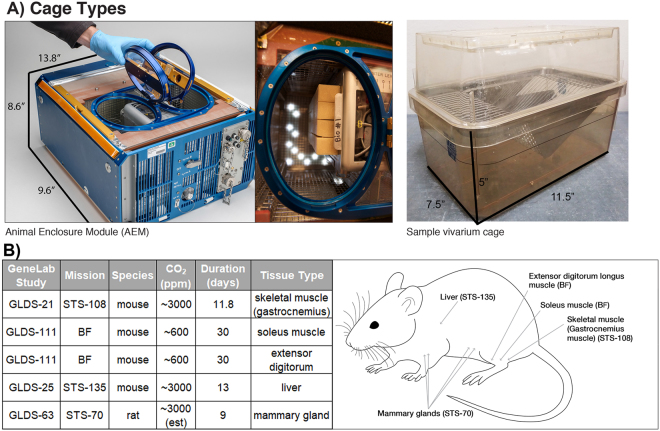
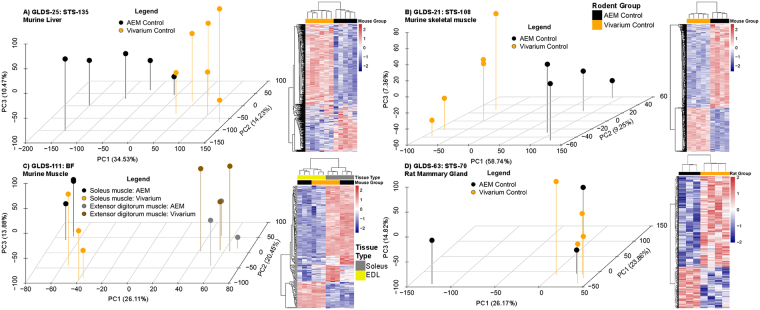
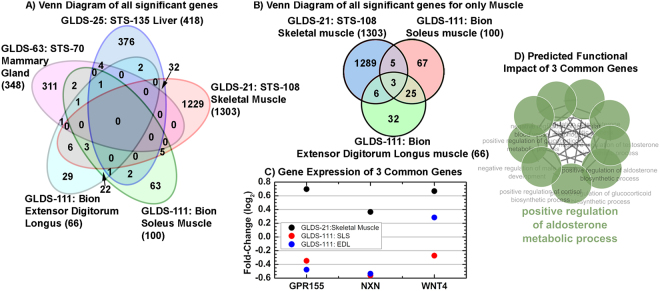
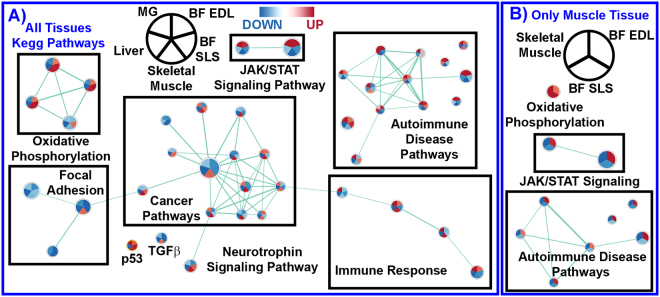
Spaceflight introduces a combination of environmental stressors, including microgravity, ionizing radiation, changes in diet and altered atmospheric gas composition. In order to understand the impact of each environmental component on astronauts it is important to investigate potential influences in isolation. Rodent spaceflight experiments involve both standard vivarium cages and animal enclosure modules (AEMs), which are cages used to house rodents in spaceflight. Ground control AEMs are engineered to match the spaceflight environment. There are limited studies examining the biological response invariably due to the configuration of AEM and vivarium housing. To investigate the innate global transcriptomic patterns of rodents housed in spaceflight-matched AEM compared to standard vivarium cages we utilized publicly available data from the NASA GeneLab repository. Using a systems biology approach, we observed that AEM housing was associated with significant transcriptomic differences, including reduced metabolism, altered immune responses, and activation of possible tumorigenic pathways. Although we did not perform any functional studies, our findings revealed a mild hypoxic phenotype in AEM, possibly due to atmospheric carbon dioxide that was increased to match conditions in spaceflight. Our investigation illustrates the process of generating new hypotheses and informing future experimental research by repurposing multiple space-flown datasets.
Overview
The claims and statistics of this paper haven’t been checked yet.
Free: it reads the open-access text and checks the first 5 claims that cite a source we can check. Create a free account to check every claim.
Integrity signals
Registry
Cites
Statistics
Figures
Verification
Claims the paper makes
The claims and statistics of this paper haven’t been checked yet.
Free: it reads the open-access text and checks the first 5 claims that cite a source we can check. Create a free account to check every claim.
Claims other papers make about this one
Each is checked against this paper’s own text: does it say what the citing paper says it does?
The source backs part of the claim, not all of it — or backs it for a different population, condition or comparison.
In the citing paper
“Our results in muscle tissue are consistent with previous findings (Beheshti et al., 2018), suggesting reduced muscle loading due to microgravity is a strong driver of gene regulation that can influence transcriptional responses to spaceflight.”
From Comprehensive Multi-omics Analysis Reveals Mitochondrial Stress as a Central Biological Hub for Spaceflight Impact (2020) · cites this paper as Beheshti et al., 2018
Experimental — accuracy not yet measured
Self-check
Percentages, sums and reported differences re-computed from the paper’s own numbers.
The self-check needs the paper’s full text.
Citations
Cites
Subramanian, A., Tamayo, P., Mootha, V. K., Mukherjee, S., Ebert, B. L., Gillette, M. A., Paulovich, A., Pomeroy, S. L., Golub, T. R., Lander, E. S., et al. (2005) · Proceedings of the National Academy of Sciences · doi:10.1073/pnas.0506580102 · Cited by 53,625
Bolstad, B. M., Irizarry, R. A., Åstrand, M., & Speed, T. P. (2003) · Bioinformatics · doi:10.1093/bioinformatics/19.2.185 · Cited by 8,266
Bindea, G., Mlecnik, B., Hackl, H., Charoentong, P., Tosolini, M., Kirilovsky, A., Fridman, W.-H., Pagès, F., Trajanoski, Z., & Galon, J. (2009) · Bioinformatics · doi:10.1093/bioinformatics/btp101 · Cited by 6,280
(1992) · Applied Ergonomics · doi:10.1016/0003-6870(92)90318-p · Cited by 5,737
[9] TM4 Microarray Software Suite
Saeed, A. I., Bhagabati, N. K., Braisted, J. C., Liang, W., Sharov, V., Howe, E. A., Li, J., Thiagarajan, M., White, J. A., & Quackenbush, J. (2006) · Methods in Enzymology · doi:10.1016/s0076-6879(06)11009-5 · Cited by 1,983
TGF-β and epithelial-to-mesenchymal transitions
Zavadil, J., & Böttinger, E. P. (2005) · Oncogene · doi:10.1038/sj.onc.1208927 · Cited by 1,578
Allen, J. G., MacNaughton, P., Satish, U., Santanam, S., Vallarino, J., & Spengler, J. D. (2016) · Environmental Health Perspectives · doi:10.1289/ehp.1510037 · Cited by 977
Census and evaluation of p53 target genes
Fischer, M. (2017) · Oncogene · doi:10.1038/onc.2016.502 · Cited by 971
p21: a two-faced genome guardian.
Georgakilas, A. G., Martin, O. A., & Bonner, W. M. (2017) · Trends in Molecular Medicine · doi:10.1016/j.molmed.2017.02.001 · Cited by 489
Jaisser, F., & Farman, N. (2016) · Pharmacological Reviews · doi:10.1124/pr.115.011106 · Cited by 327
Cited by
The NASA Twins Study: A multidimensional analysis of a year-long human spaceflight
Garrett-Bakelman, F. E., Darshi, M., Green, S. J., Gur, R. C., Lin, L., Macias, B. R., McKenna, M. J., Meydan, C., Mishra, T., Nasrini, J., et al. (2019) · Science · doi:10.1126/science.aau8650 · Cited by 1,128
“Although differential expression of these genetic pathways is observed in response to hypoxic stimuli in a rodent model (43), the partial pressure of oxygen levels on ISS were near sea-level values (fig.”
BackgroundDirect human health risks of increased atmospheric carbon dioxide
Jacobson, T. A., Kler, J. S., Hernke, M. T., Braun, R. K., Meyer, K. C., & Funk, W. E. (2019) · Nature Sustainability · doi:10.1038/s41893-019-0323-1 · Cited by 609
Fundamental Biological Features of Spaceflight: Advancing the Field to Enable Deep-Space Exploration
Afshinnekoo, E., Scott, R. T., MacKay, M. J., Pariset, E., Cekanaviciute, E., Barker, R., Gilroy, S., Hassane, D., Smith, S. M., Zwart, S. R., et al. (2020) · Cell · doi:10.1016/j.cell.2020.10.050 · Cited by 478
Self-citationda Silveira, W. A., Fazelinia, H., Rosenthal, S. B., Laiakis, E. C., Kim, M. S., Meydan, C., Kidane, Y., Rathi, K. S., Smith, S. M., Stear, B., et al. (2020) · Cell · doi:10.1016/j.cell.2020.11.002 · Cited by 402
“Our results in muscle tissue are consistent with previous findings (Beheshti et al., 2018), suggesting reduced muscle loading due to microgravity is a strong driver of gene regulation that can influence transcriptional responses to spaceflight.”
Self-citationHydrogen generation electrolyzers: Paving the way for sustainable energy
Akyüz, E. S., Telli, E., & Farsak, M. (2024) · International Journal of Hydrogen Energy · doi:10.1016/j.ijhydene.2024.07.175 · Cited by 159
Tomsia, M., Cieśla, J., Śmieszek, J., Florek, S., Macionga, A. A., Michalczyk, K., & Stygar, D. M. (2024) · Frontiers in Physiology · doi:10.3389/fphys.2024.1284644 · Cited by 137
Jiang, P., Green, S. J., Chlipala, G. E., Turek, F. W., & Vitaterna, M. H. (2019) · Microbiome · doi:10.1186/s40168-019-0724-4 · Cited by 134
NASA GeneLab: interfaces for the exploration of space omics data
Berrios, D. C., Galazka, J. M., Grigorev, K. A., Gebre, S., & Costes, S. V. (2020) · Nucleic Acids Research · doi:10.1093/nar/gkaa887 · Cited by 132
Self-citationGeneLab: Omics database for spaceflight experiments
Ray, S., Gebre, S., Fogle, H. W., Berrios, D. C., Tran, P. B., Galazka, J. M., & Costes, S. V. (2018) · Bioinformatics · doi:10.1093/bioinformatics/bty884 · Cited by 108
Self-citationCentral Nervous System Responses to Simulated Galactic Cosmic Rays
Cekanaviciute, E., Rosi, S., & Costes, S. V. (2018) · International Journal of Molecular Sciences · doi:10.3390/ijms19113669 · Cited by 100
Self-citationA New Era for Space Life Science: International Standards for Space Omics Processing
Rutter, L. A., Barker, R. J., Bezdan, D., Cope, H., Costes, S. V., Degoricija, L., Fisch, K. M., Gabitto, M. I., Gebre, S., Giacomello, S., et al. (2020) · Patterns · doi:10.1016/j.patter.2020.100148 · Cited by 81
Self-citationLeveraging Spaceflight to Advance Cardiovascular Research on Earth
Scott, J. M., Stoudemire, J., Dolan, L. B., & Downs, M. E. (2022) · Circulation Research · doi:10.1161/circresaha.121.319843 · Cited by 63
Beheshti, A., Ray, S., Fogle, H. W., Berrios, D. C., & Costes, S. V. (2018) · PLoS ONE · doi:10.1371/journal.pone.0199621 · Cited by 57
Self-citationZhang, J., Pang, L., Cao, X., Wanyan, X., Wang, X., Liang, J., & Zhang, L. (2020) · Building and Environment · doi:10.1016/j.buildenv.2020.106938 · Cited by 49
Fundamental Biological Features of Spaceflight: Advancing the Field to Enable Deep-Space Exploration
Afshinnekoo, E., Scott, R. T., MacKay, M. J., Pariset, E., Cekanaviciute, E., Barker, R., Gilroy, S., Hassane, D. C., Smith, S. M., Zwart, S. R., et al. (2021) · Cell · doi:10.1016/j.cell.2021.11.008 · Cited by 40
Self-citationBeheshti, A., McDonald, J. T., Miller, J., Grabham, P. W., & Costes, S. V. (2019) · International Journal of Molecular Sciences · doi:10.3390/ijms20030661 · Cited by 39
Self-citationNASA open science data repository: open science for life in space
Gebre, S., Scott, R. T., Saravia-Butler, A., Lopez, D. K., Sanders, L., & Costes, S. V. (2024) · Nucleic Acids Research · doi:10.1093/nar/gkae1116 · Cited by 37
Self-citationFAIRness and Usability for Open-access Omics Data Systems.
Berrios, D. C., Beheshti, A., & Costes, S. V. (2018) · Europe PMC (PubMed Central) · Cited by 35
Self-citationNASA GeneLab Platform Utilized for Biological Response to Space Radiation in Animal Models
McDonald, J. T., Stainforth, R., Miller, J., Cahill, T., da Silveira, W. A., Rathi, K. S., Hardiman, G., Taylor, D. M., Costes, S. V., Chauhan, V., et al. (2020) · Cancers · doi:10.3390/cancers12020381 · Cited by 32
Self-citationYaashikaa, P. R., Saravanan, A., Kumar, P. S., Thamarai, P., & Rangasamy, G. (2023) · International Journal of Hydrogen Energy · doi:10.1016/j.ijhydene.2023.05.307 · Cited by 32
Time Domains of Hypoxia Responses and -Omics Insights
Yu, J. J., Non, A. L., Heinrich, E. C., Gu, W., Alcock, J., Moya, E. A., Lawrence, E. S., Tift, M. S., O’Brien, K. A., Storz, J. F., et al. (2022) · Frontiers in Physiology · doi:10.3389/fphys.2022.885295 · Cited by 30
Integrated RNA-seq Analysis Indicates Asynchrony in Clock Genes between Tissues under Spaceflight
Fujita, S.-I., Rutter, L. A., Ong, Q., & Muratani, M. (2020) · Life · doi:10.3390/life10090196 · Cited by 30
Kisielinski, K., Wagner, S., Hirsch, O., Klosterhalfen, B., & Prescher, A. (2023) · Heliyon · doi:10.1016/j.heliyon.2023.e14117 · Cited by 28
Caenorhabditis elegans in microgravity: An omics perspective
Scott, A., Willis, C. R. G., Muratani, M., Higashitani, A., Etheridge, T., Szewczyk, N. J., & Deane, C. S. (2023) · iScience · doi:10.1016/j.isci.2023.107189 · Cited by 26
Kamal, K. Y., van Loon, J. J. W. A., Medina, F. J., & Herranz, R. (2019) · Genomics · doi:10.1016/j.ygeno.2019.01.007 · Cited by 22
Exploring the Effects of Spaceflight on Mouse Physiology using the Open Access NASA GeneLab Platform
Beheshti, A., Shirazi‐Fard, Y., Choi, S. Y., Berrios, D. C., Gebre, S., Galazka, J. M., & Costes, S. V. (2019) · Journal of Visualized Experiments · doi:10.3791/58447 · Cited by 21
Self-citationCharacteristics of fine and ultrafine aerosols in the London underground
Kumar, P., Zavala‐Reyes, J. C., Kalaiarasan, G., Abubakar-Waziri, H., Young, G. R., Mudway, I., Dilliway, C., Lakhdar, R., Mumby, S. E., Kłosowski, M. M., et al. (2022) · The Science of The Total Environment · doi:10.1016/j.scitotenv.2022.159315 · Cited by 21
Stroud, J. E., Gale, M. S., Zwart, S. R., Heer, M. A., Smith, S. M., Montina, T., & Metz, G. A. S. (2022) · Cellular and Molecular Life Sciences · doi:10.1007/s00018-022-04566-x · Cited by 20
Indoor CO2 removal: decentralized carbon capture by air conditioning
Tian, H., Zhu, L., Ni, J., Wei, T., Wang, P., Xiao, H., & Chen, X. (2023) · Materials Today Sustainability · doi:10.1016/j.mtsust.2023.100369 · Cited by 20
Protective alleles and precision healthcare in crewed spaceflight
Rutter, L. A., MacKay, M. J., Cope, H., Szewczyk, N. J., Kim, J., Overbey, E. G., Tierney, B. T., Muratani, M., Lamm, B., Bezdan, D., et al. (2024) · Nature Communications · doi:10.1038/s41467-024-49423-6 · Cited by 18
Han, W., BANAT, F. A., Taher, H., Chia, W. Y., & Show, P. L. (2025) · Sustainable Development · doi:10.1002/sd.3436 · Cited by 17
The human biology of spaceflight
Sarma, M. S., & Shelhamer, M. (2024) · American Journal of Human Biology · doi:10.1002/ajhb.24048 · Cited by 16
Advancements in health monitoring technologies for astronauts in deep space missions: A Review
Gupta, R., & Ghosh, P. S. (2025) · Life Sciences in Space Research · doi:10.1016/j.lssr.2025.06.011 · Cited by 12
Gravitational and mechanical forces shape mitochondrial translation
Wakigawa, T., Kimura, Y., Mito, M., Tsubaki, T., Lee, M., Nakamura, K., Khan, A. H., Saito, H., Yamamori, T., Yamazaki, T., et al. (2026) · Nature Communications · doi:10.1038/s41467-026-74493-z · Cited by 8
Guarnieri, J. W., Maghsoudi, Z., Kim, J., Bya, P., Widjaja, G. A., Barker, R., Burke, M., Cen, Z., Fazelinia, H., Tsoy, S., et al. (2025) · SSRN Electronic Journal · doi:10.2139/ssrn.5087025 · Cited by 6
Self-citationAdamopoulos, K. I., Sanders, L., & Costes, S. V. (2024) · npj Microgravity · doi:10.1038/s41526-024-00392-6 · Cited by 6
Self-citationHayat, M., Sarfaraz, M., Mohsin, M. R., & Bukhari, S. A. R. (2024) · European Polymer Journal · doi:10.1016/j.eurpolymj.2024.112930 · Cited by 6
Toxic gas removal with kaolinite, metakaolinite, radiolarite, and diatomite
Bayram, A., Arkan, E., & Sütçü, M. (2022) · Chemosphere · doi:10.1016/j.chemosphere.2022.137707 · Cited by 5
Sarma, M. S., Niclou, A. M., & Hurd, K. J. (2025) · Wilderness and Environmental Medicine · doi:10.1177/10806032251349436 · Cited by 5
Casaletto, J. A., Zhao, T., Yeung, J., Ansari, A., Raj, A., Mishra, A., Fry, A., Sun, K., Lendahl, S., Guan, W., et al. (2026) · JMIRx Bio · doi:10.2196/73041 · Cited by 5
Self-citationOribello, J. (2021) · San José State University ScholarWorks (San Jose State University) · doi:10.31979/etd.d4e7-x2g3 · Cited by 4
Visualizing Omics Data from Spaceflight Samples using the NASA GeneLab Platform
Berrios, D. C., Weitz, E. M., Grigorev, K. A., Costes, S. V., Gebre, S., & Beheshti, A. (2020) · EPiC series in computing · doi:10.29007/rh7n · Cited by 4
Self-citationMonserrat-Mesquida, M., Bouzas, C., García, S., Quetglas‐Llabrés, M. M., Mateos, D., Ugarriza, L., Gómez, C., Sureda, A., & Tur, J. A. (2023) · Nutrients · doi:10.3390/nu15245050 · Cited by 3
Adesoye, T., Sridhar, M. K. C., Coker, A. O., & Adejumo, M. (2019) · International Journal of Environmental Monitoring and Analysis · doi:10.11648/j.ijema.20190705.11 · Cited by 3
Risks and benefits of face masks in children
Kisielinski, K., Steigleder‐Schweiger, C., Wagner, S., Korupp, S., Hockertz, S., & Hirsch, O. (2026) · Frontiers in Pediatrics · doi:10.3389/fped.2026.1679586 · Cited by 1
Intention to Use Induction Electric Stove According to Theory of Trying
Kurniawan, Y. (2023) · INTERNATIONAL JOURNAL OF MULTIDISCIPLINARY RESEARCH AND ANALYSIS · doi:10.47191/ijmra/v6-i4-41 · Cited by 1
Assessing the effect of spaceflight stress on DNA sequence mutation using RNA-sequencing data
Knight, M., Doherty, C. J., & Nielsen, D. M. (2025) · Gravitational and Space Research · doi:10.2478/gsr-2025-0009 · Cited by 1
Reducing Virus Infection Risk in Space Environments through Nutrient Supplementation
Li, H., Xue, Y.-W., Yuan, Q., & Zhang, H. (2022) · Genes · doi:10.3390/genes13091536 · Cited by 1
Science for Sustainability and Wellbeing in the Anthropocene: Opportunities, Challenges, and AI
(2026) · Libreria Editrice Vaticana eBooks · doi:10.65398/mxjw4309 · Cited by 1
Beyond Earth: Recent Advancements in Microgravity Biomedical and Genetic Research in Saudi Arabia
Hawsawi, Y. M., Jamous, Y. F., Alghannam, S. F., Aldahshan, H., Alothman, L., Fitaihi, R. A., Aljawini, N., Alqarni, S. S., Alfaraj, R., Aldkheil, E. A., et al. (2026) · International Journal of Molecular Sciences · doi:10.3390/ijms27177613
Thomson, J. E., Angelos, E. R., Gaza, R., Dimapilis, D. I., Zhang, Y., Scott, K., O'Keefe, J., & Brandizzí, F. (2026) · Research Square · doi:10.21203/rs.3.rs-9226546/v1
Health Risks of Hypermutation in Mice on the International Space StationPreprint
Štolc, V., Karhánek, M., Freund, F., Griko, Y. V., Loftus, D. J., & Ohayon, M. M. (2022) · SSRN Electronic Journal · doi:10.2139/ssrn.4102633
Aging in Spaceflight, Oxidative Stress, and Microbiome Dysbiosis: A Comprehensive Review
Naney, C., Graves, J. L., & Harrison, S. H. (2026) · International Journal of Molecular Sciences · doi:10.3390/ijms27177644
Namkhah, Z., Zareian, M., Abbaspour, N., & Sobhani, S. R. (2026) · The Journal of Climate Change and Health · doi:10.1016/j.joclim.2026.100687
FAIRsharing record for: NASA GeneLab
FAIRsharing Team, & Costes, S. (2018) · FAIRsharing.org · doi:10.25504/fairsharing.64mr5a
Self-citationExtracellular Vesicles for Space Biomedical Research
Ali, S., Diaz, B. I. M., Zhuang, P., Greenberg, Z., Zhang, Y., Richards, J., Carlos, D., Countryman, S. M., Leeuwenburgh, C., Lee, L. P., et al. (2026) · Journal of Extracellular Vesicles · doi:10.1002/jev2.70397
Indoor CO2 interactions with earthen materials : from sorption mechanisms to buffering potential
Arris-Roucan, S. (2024) · theses.fr (ABES) · doi:10.70675/edba862czf26ez480fza4afz842ec0ccdd03
Accelerating space life sciences via astronaut omics collection and integrated analyses
Cope, H. (2024) · Nottingham ePrints (University of Nottingham)
Supporting information 1 of Time Domains of Hypoxia Responses and -Omics Insights
Yu, J. J., Non, A. L., Heinrich, E. C., Gu, W., Alcock, J., Moya, E. A., Lawrence, E. S., Tift, M. S., O'Brien, K. A., Storz, J. F., et al. (2022) · doi:10.3389/fphys.2022.885295.s001
NASA's GeneLab: An Integrated Omics Data Commons and Workbench
Berrios, D. C., Costes, S. V., & Tran, P. (2018) · NASA STI Repository (National Aeronautics and Space Administration)
Self-citationΆμεσες επιπτώσεις του CO2 στην υγεία των ζωντανών οργανισμών
Liossi, S. (2020) · DSpace - NTUA (National Technical University of Athens) · doi:10.26240/heal.ntua.20120
FAIRness and Usability for Open-access Omics Data Systems
Beheshti, A., Costes, S. V., & Berrios, D. C. (2018) · NASA STI Repository (National Aeronautics and Space Administration)
Self-citationLarina, I. М., Vilesov, G. P., Kashirina, D. N., Pastushkova, L. K., & Orlov, O. (2026) · Extreme Medicine · doi:10.47183/mes.2026-563
Metadata
- Authors
- Beheshti, A., Cekanaviciute, E., Smith, D. J., & Costes, S. V.
- Affiliations
- Ames Research Center (US)
- Corresponding author
- Beheshti, Afshin
- Costes, Sylvain V.
- Venue
- Scientific Reports
- Published
- 2018-03-08
- Volume
- 8
- Issue
- 1
- Pages
- 4191-4191
- ISSN
- 2045-2322 (ISSN-L)
- PMC
- PMC5843582
- OpenAlex
- W2806335872
- Cited by
- 59
- References
- 55
- Citations by year
- 2026: 8 · 2025: 5 · 2024: 7 · 2023: 8 · 2022: 9 · 2021: 1 · 2020: 8 · 2019: 8 · 2018: 5
- FWCI
- 3.95
- Type
- journal article
- Language
- en
- Open access
- gold
- doi.org
- Licence
- cc-by
- creativecommons.org/licenses/by/4.0 (tdm)
- creativecommons.org/licenses/by/4.0 (vor)
- Locations
- Scientific Reports (publishedVersion, cc-by)
- PubMed Central (publishedVersion, cc-by)
- PubMed (publishedVersion)
- DOAJ (DOAJ: Directory of Open Access Journals) (submittedVersion)
- Funders
- National Aeronautics and Space Administration
- Ames Research Center
- Topics
- Health Sciences › Medicine › Physiology (medical) › Spaceflight effects on biology
- Social Sciences › Political Science and International Relations › Space exploration and regulation
- Life Sciences › Biochemistry, Genetics and Molecular Biology › Molecular Biology › Gene expression and cancer classification
- Keywords
- carbon dioxide, spaceflight, rodent housing, transcriptomics, hypoxia, microgravity, immune response, metabolism, GeneLab, systems biology, data reuse
- MeSH terms
- Animals, Carbon Dioxide, Female, Male, Radiation, Ionizing, Space Flight, Stress, Physiological, Weightlessness, Gene Expression Profiling, Systems Biology, Mice, Rats, Transcriptome
About these checks
Registry, retraction, Cites and statistics results are computed, not judged, with one exception: a printed reference that no index lists is read once by a model before it counts as a citation error. Claims are extracted by a model and kept only when their quote appears verbatim in the text; each cited source is then checked, with a model’s help, for whether it says what the claim relies on. Those verdicts can be wrong — read the claim’s quote and the cited source before relying on one.
Statistics and arithmetic are recomputed, not judged.
Confidence bands are shown only for fields calibrated on our annotated test set. None is calibrated yet, so no band is shown.
What counts as a claim ›How we measure confidence ›How we check this ›
Are you an author, or do you see a problem with this page? Request a review
Data sources
Bibliographic data: Semantic Scholar, OpenAlex, Crossref.
Contains information from the Semantic Scholar Academic Graph Datasets, made available under the ODC Attribution License (ODC-BY 1.0).
Semantic Scholar’s data is described in: Kinney, R., et al. (2023). The Semantic Scholar Open Data Platform. arXiv:2301.10140.
