

Analysis of Long Term Study Indicates Both Agronomic Optimal Plant Density and Increase Maize Yield per Plant Contributed to Yield Gain
Open accessThe DOI matches its Crossref record; 36 of the 36 references it cites were found in a registry or an index.
Abstract
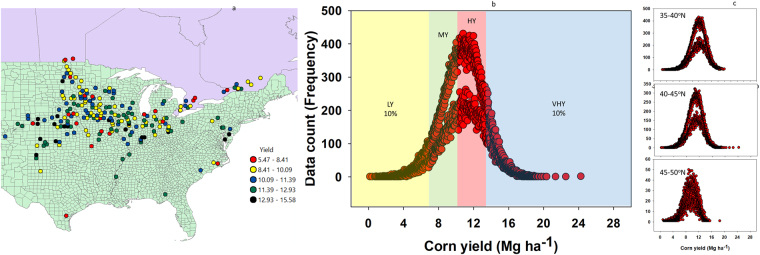
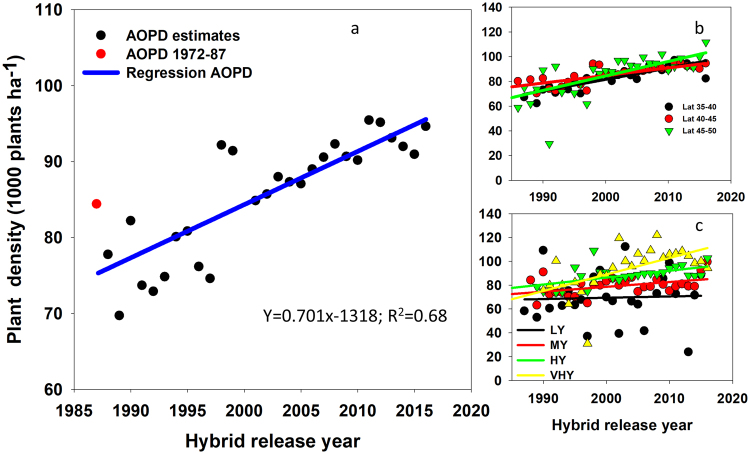
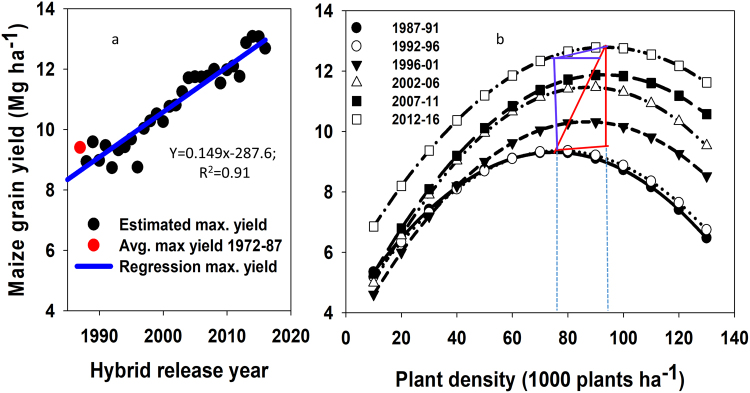
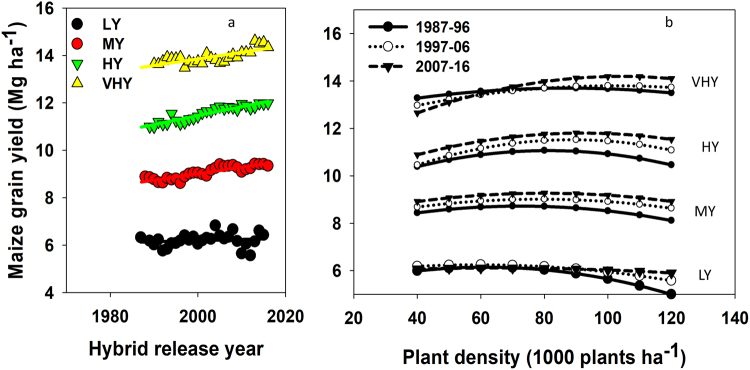
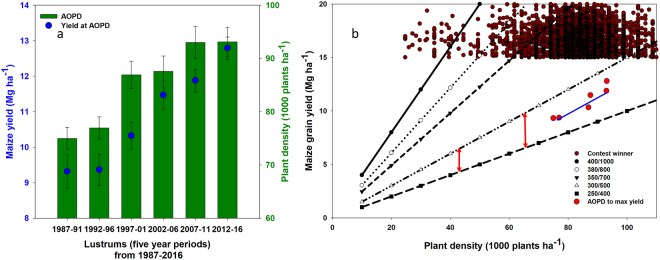
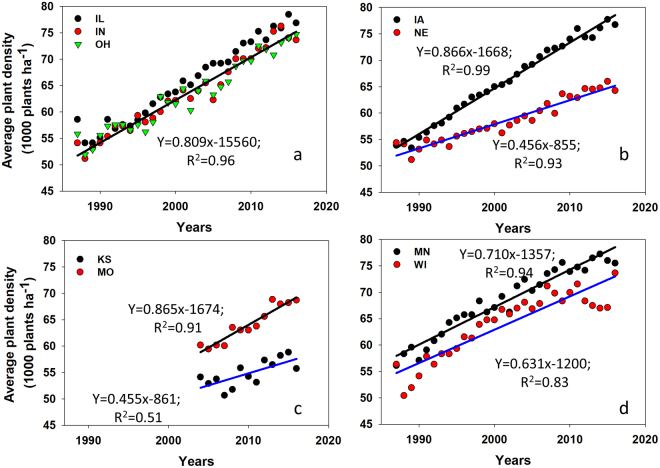
Concurrent to yield, maize ( Zea Mays L.) plant density has significantly increased over the years. Unlike yield, however, the rate of change in plant density and its contribution to maize yield gain are rarely reported. The main objectives of this study were to examine the trend in the agronomic optimum plant density (AOPD) and quantify the contribution of plant density to yield gain. Maize hybrid by seeding rate trials were conducted from 1987–2016 across North America (187,662 data points). Mixed model, response surface, and simple linear regression analyses were applied on the meta-data. New outcomes from this analysis are: (i) an increase in the AOPD at rate of 700 plant ha −1 yr −1 , (ii) increase in the AOPD of 1386, 580 and 404 plants ha −1 yr −1 for very high yielding (VHY, > 13 Mg ha −1 ), high yielding (HY, 10–13 Mg ha −1 ) and medium yielding (MY, 7–10 Mg ha −1 ), respectively, with a lack of change for the low yielding (LY, < 7 Mg ha −1 ) environment; (iii) plant density contribution to maize yield gain ranged from 8.5% to 17%, and (iv) yield improvement was partially explained by changes in the AOPD but we also identified positive impacts on yield components as other sources for yield gain.
Overview
The claims and statistics of this paper haven’t been checked yet.
Free: it reads the open-access text and checks the first 5 claims that cite a source we can check. Create a free account to check every claim.
Integrity signals
Registry
Cites
Statistics
Figures
Verification
Claims the paper makes
The claims and statistics of this paper haven’t been checked yet.
Free: it reads the open-access text and checks the first 5 claims that cite a source we can check. Create a free account to check every claim.
Claims other papers make about this one
Each is checked against this paper’s own text: does it say what the citing paper says it does?
The source backs part of the claim, not all of it — or backs it for a different population, condition or comparison.
In the citing paper
“Elements of the theory and practice for exploiting G–M technology combinations, within the context of G × E × M interactions, as defined above, can be recognised in the well-documented contributions of hybrid-by-density interactions to the historical increase in on-farm yield productivity of maize in the US corn-belt (Duvick et al. 2004, Duvick 2005a, b; Hammer et al. 2009; Assefa et al. 2018).”
From Tackling G × E × M interactions to close on-farm yield-gaps: creating novel pathways for crop improvement by predicting contributions of genetics and management to crop productivity (2021) · cites this paper as Assefa et al. 2018
Experimental — accuracy not yet measured
Self-check
Percentages, sums and reported differences re-computed from the paper’s own numbers.
The self-check needs the paper’s full text.
Citations
Cites
The Contribution of Breeding to Yield Advances in maize (Zea mays L.)
Duvick, D. N. (2005) · Advances in Agronomy · doi:10.1016/s0065-2113(05)86002-x · Cited by 1,214 · cited 2×
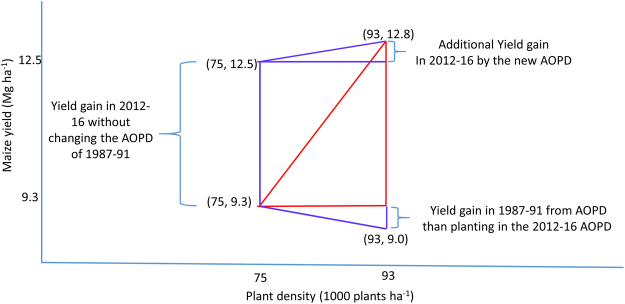
“Using the first approach, yield gain due to changes in plant density was calculated as the difference between (1) yield gain in 2012–16 compared with 1987–91 both at the new AOPD (Eq.”
MethodGreater Sensitivity to Drought Accompanies Maize Yield Increase in the U.S. Midwest
Lobell, D. B., Roberts, M. J., Schlenker, W., Braun, N., Little, B. B., Rejesus, R. M., & Hammer, G. L. (2014) · Science · doi:10.1126/science.1251423 · Cited by 1,094
Yield potential, yield stability and stress tolerance in maize
Tollenaar, M., & Lee, E. A. (2002) · Field Crops Research · doi:10.1016/s0378-4290(02)00024-2 · Cited by 717 · cited 1×
“− − − − − Yield Yield Mg ha Mg ha Mg ha 12 5 9 3 3 2 (7) 2012 16,75 1987 91,75 1 1 1”
Duvick, D. N., & Cassman, K. G. (1999) · Crop Science · doi:10.2135/cropsci1999.3961622x · Cited by 706
Yield Improvement in Temperate Maize is Attributable to Greater Stress Tolerance
Tollenaar, M., & Wu, J. (1999) · Crop Science · doi:10.2135/cropsci1999.3961597x · Cited by 609
Ciampitti, I. A., & Vyn, T. J. (2012) · Field Crops Research · doi:10.1016/j.fcr.2012.03.008 · Cited by 572
Self-citationSangoi, L. (2001) · Ciência Rural · doi:10.1590/s0103-84782001000100027 · Cited by 371
Tokatlidis, I. S., & Koutroubas, S. D. (2004) · Field Crops Research · doi:10.1016/j.fcr.2003.11.013 · Cited by 320 · cited 1×
“− − − − − Yield Yield Mg ha Mg ha Mg ha 12 8 9 3 3 5 (8) 2012 16,93 1987 91,75 1 1 1”
Response of Brazilian maize hybrids from different eras to changes in plant density
Sangoi, L., Gracietti, M. A., Rampazzo, C., & Bianchetti, P. (2002) · Field Crops Research · doi:10.1016/s0378-4290(02)00124-7 · Cited by 280
Yield Responses to Planting Density for US Modern Corn Hybrids: A Synthesis‐Analysis
Assefa, Y., Vara Prasad, P. V., Carter, P., Hinds, M., Bhalla, G., Schon, R., Jeschke, M., Paszkiewicz, S., & Ciampitti, I. A. (2016) · Crop Science · doi:10.2135/cropsci2016.04.0215 · Cited by 198 · cited 1×
“The yield-density relationship within 40–100 thousand plants ha−1 can be described as declining, constant, increasing to a plateau, and ever-increasing for LY, MY, HY, and VHY environments, respectively; in agreement to Assefa et al.16.”
ResultSelf-citation
Research works printed but not linked: 2
- Assefa Y A New Insight into Corn Yield-Trend from 1987 through 2016 Crop Sci. 2017 56 2802 2817 10.2135/cropsci2016.04.0215 · DOI · Paper page
- Russell WA Agronomic performance of maize cultivars representing different eras of breeding Maydica 1984 29 375 390
Cited by
Items 101–200 of 223
Sales, C. R. G., Ribeiro, R. V., Marchiori, P. E. R., Kromdijk, J., & Machado, E. C. (2023) · Environmental and Experimental Botany · doi:10.1016/j.envexpbot.2023.105351 · Cited by 16
A perspective on changes across the U.S. Corn Belt
Hunt, E., Birgé, H. E., Laingen, C. R., Licht, M. A., McMechan, J., Baule, W., & Connor, T. (2020) · Environmental Research Letters · doi:10.1088/1748-9326/ab9333 · Cited by 12
“Second, farmers have increased adoption of soil conservation measures, such as no-till and cover crops (Basche et al 2016) and increased plant population density and optimized row spacing (Assefa et al 2018, Licht et al 2019).”
BackgroundYe, D., Chen, J., Wang, X., Sun, Y., Yu, Z., Zhang, R., Saddique, M. A. B., Su, D. G., & Muneer, M. A. (2023) · Agronomy · doi:10.3390/agronomy13112672 · Cited by 9
Gao, F., Wang, L., Zhao, R., Wang, Y., Ma, Y., Yang, R., Zhang, Q., & Wang, C. (2024) · Plants · doi:10.3390/plants13101327 · Cited by 9
“Planting density is the main constraining factor for the formation of yield per unit area, and a reasonable increase in planting density is an effective measure to increase maize production [21].”
BackgroundHao, B., Ma, J., Si, S., Wang, X., Wang, S., Li, F., & Jiang, L. (2024) · Agricultural Water Management · doi:10.1016/j.agwat.2024.108880 · Cited by 13
Jiang, L., Ning, A., Liu, M., Zhu, Y., Huang, J., Guo, Y., Feng, W., Fu, D., Wang, H., & Wang, J. (2025) · Agriculture · doi:10.3390/agriculture15050542 · Cited by 9
Shi, L. G., Wang, Q., Zhang, G., Li, S., & Xue, J. (2023) · Water · doi:10.3390/w15030529 · Cited by 8
Wang, M., Luo, J., Li, H., Ge, C., Jing, F., Guo, J., Zhang, Q., Gao, X., Cheng, C., & Zhou, D. (2024) · Environmental Science Nano · doi:10.1039/d4en00763h · Cited by 8
Huang, G., Guo, Y., Tan, W., Zhang, M., Li, Z., Zhou, Y., & Duan, L. (2025) · Field Crops Research · doi:10.1016/j.fcr.2025.109828 · Cited by 9
Integrating molecular genetics with plant breeding to deliver impact
Sharma, R. K., Yang, C. J., Rossi, N., Irving, E., Tuffin, A., Aliki, H., Powell, W., & Dawson, I. K. (2025) · PLANT PHYSIOLOGY · doi:10.1093/plphys/kiaf087 · Cited by 14
“Here, yield improvements since the 1930s have been founded on a combination of genetic and agronomic interventions (Assefa et al. 2018).”
Lei, R., Wang, Y., Zhou, J., & Xiang, H. (2025) · Agronomy · doi:10.3390/agronomy15040861 · Cited by 12
Revisiting plant density by environment interaction in maize across contrasting sowing dates
Mauro, G. D., Rotili, D. H., Parra, G., Gambín, B. L., Costanzi, J., Micheloud, J. R., Martini, G., Paolini, M., & Schwalbert, R. A. (2025) · Field Crops Research · doi:10.1016/j.fcr.2025.109917 · Cited by 8
Physiological quality and seed chemical composition of soybean seeds under different altitude
Capelin, M. A., Madella, L. A., Panho, M. C., Meira, D., Barrionuevo, F., Rodrigues, A. P. D. C., & Benin, G. (2022) · Bragantia · doi:10.1590/1678-4499.20210244 · Cited by 8
Amas, J. I., Curín, F., D’Andrea, K. E., Luque, S. F., & Otegui, M. E. (2024) · Field Crops Research · doi:10.1016/j.fcr.2024.109520 · Cited by 12
Perez, R. P. A., Vezy, R., Brancheriau, L., Boudon, F., Grand, F., Ramel, M., Raharjo, D. A., Caliman, J., & Dauzat, J. (2022) · in silico Plants · doi:10.1093/insilicoplants/diac009 · Cited by 11
The Impacts of Interplant Variation on Aboveground Biomass, Grain Yield, and Harvest Index in Maize
Tokatlidis, I. S., & Remountakis, E. (2019) · International Journal of Plant Production · doi:10.1007/s42106-019-00067-3 · Cited by 8
“The adverse influence of crop variation on crop yield have been extensively studied (e.g. in maize studies of Bergamaschi et al. 2007; Berzsenyi and Tokatlidis 2012; Liu et al. 2013; Ray et al. 2015; Solomon et al. 2017; Assefa et al. 2018; Huffman et al. 2018).”
BackgroundUncertainty and learning in a technologically dynamic industry: Seed density in U.S. maize
Perry, E. D., Hennessy, D. A., & Moschini, G. (2022) · American Journal of Agricultural Economics · doi:10.1111/ajae.12276 · Cited by 7
Gao, S., Ming, B., Liu, G., Zhang, G., Li, Y.-Y., Xue, J., Wang, K., Zhou, S.-L., Xie, R.-Z., & Li, S. (2024) · Annals of Agricultural Science Cairo · doi:10.1016/j.aoas.2024.07.001 · Cited by 8
An, D., Yang, Q., Li, G., Dong, X., & Shen, Y. (2025) · Industrial Crops and Products · doi:10.1016/j.indcrop.2025.121007 · Cited by 7
Wang, X., Gao, S., Yang, H., Li, E., Xie, R., Wang, K., Zhang, G., Yu, H., Ming, B., & Li, S. (2025) · Crop and Environment · doi:10.1016/j.crope.2025.100116 · Cited by 7
Sinapidou, E., Pankou, C. I., Gekas, F., Sistanis, I., Tzantarmas, C., Tokamani, M., Mylonas, I. G., Papadopoulos, I. I., Kargiotidou, A., Ninou, E. G., et al. (2020) · Agronomy · doi:10.3390/agronomy10081203 · Cited by 8
Dilrukshi, R. P. W. A., Hettiarachchi, M. H. S. M., Sriskumar, S., Chandrasekara, E. D. C. T., Dissanayake, D. M. M. R., & Wijerathna, R. M. S. (2021) · Sri Lanka Journal of Food and Agriculture · doi:10.4038/sljfa.v7i2.98 · Cited by 9
Interactive Effects of Planting Density and Row Spacing on Maize Root Distribution and Yield
Wang, J., Chen, Z., Liang, Z., Yin, Y., Huang, S., Meng, Q., Cui, Z., & Wang, P. (2025) · Agronomy · doi:10.3390/agronomy15112552 · Cited by 12
Crop management practices are more important for modern than past maize genotypes
Ruiz, A., DeBruin, J. L., Tang, T., Zinselmeier, C., Rotundo, J. L., Oliver, P., & Borrás, L. (2025) · Field Crops Research · doi:10.1016/j.fcr.2025.110257 · Cited by 9
Shio, B. J., Guo, S., Zhang, R., Tanveer, S. K., & Hai, J. (2022) · Sustainability · doi:10.3390/su14095261 · Cited by 6
“An increase in planting density is primarily attributed to the rise in yield rather than rising per plant yield, and this is because per plant yield potential remains the same while maize achievement at high planting density improves [54].”
BackgroundBabić, V., Stanisavljević, D., Zorić, M., Mikić, S., Mitrović, B., Andjelković, V., & Kravić, N. (2022) · Agronomy · doi:10.3390/agronomy12081939 · Cited by 6
Maize Row Spacing and Seeding Rate Informed by Space-per-Plant Geometry
Noland, R. L., Dowdy, M., & Harris, G. H. (2025) · Agronomy · doi:10.3390/agronomy15020374 · Cited by 9
Pesaresi, P., Bono, P., Corn, S., Crosatti, C., Daniotti, S., Jensen, J. D., Frébort, I., Groli, E. L., Halpin, C., HANSSON, M. G., et al. (2025) · The Plant Journal · doi:10.1111/tpj.17264 · Cited by 8
“…current densities of over 80 000 plants per hectare in the US Corn Belt compared to 30 000 plants per hectare in the 1930s, which largely account for yield increases in the past decades (Assefa et al., 2018; Duvick, 2005; Tian et al., 2011; see Mantilla-Perez & Salas Fernandez, 2017 for a review).”
KNMAIZE–A Model to Investigate the Dynamics of Kernel Set in Maize
Egli, D. B. (2019) · Agronomy Journal · doi:10.2134/agronj2018.11.0722 · Cited by 5
ZmHOX32 is related to photosynthesis and likely functions in plant architecture of maize
Miao, X., Zhu, W., Jin, Q., Song, Z., & Li, L. (2023) · Frontiers in Plant Science · doi:10.3389/fpls.2023.1119678 · Cited by 5
“), a most widely planted crop in the world, is particularly important in ensuring food security (Assefa et al., 2018).”
BackgroundReproductive resilience but not root architecture underpin yield improvement in maize ( Zea mays L.)Preprint
Messina, C. D., Cooper, M., McDonald, D., Poffenbarger, H., Clark, R., Salinas, A., Fang, Y., Gho, C., Tang, T., & Graham, G. (2020) · bioRxiv (Cold Spring Harbor Laboratory) · doi:10.1101/2020.09.30.320937 · Cited by 6
Optimizing Nitrogen Input Increased Yield and Efficiency in Maize-Soybean Strip Intercropping System
Liang, Y., Liu, Q., Zeng, J., Xiong, F., Guo, J. P., Li, G., & Lu, D. (2024) · Agronomy · doi:10.3390/agronomy14112472 · Cited by 4
Bilgici, M., Ebrahimi, E., de Miranda, L. P., Lira, S., Borrás, L., Young, T., Yavuz, R., Moore, K. J., Dixon, P. M., & Lübberstedt, T. (2026) · Frontiers in Plant Science · doi:10.3389/fpls.2026.1829321 · Cited by 4
“Key drivers of yield gains in modern hybrids include tolerance to higher planting densities (Assefa et al., 2018) and resistance to drought and lodging (Campos et al., 2006; Cooper et al., 2014), which led to changes in plant stature (Hammer et al., 2009; Borra ́ s and Vitantonio-Mazzini, 2018;…”
US maize yield gains have decoupled from the need for higher plant densities
Borrás, L., Ruiz, A., Krause, M. D., Zinselmeier, C., Hoffman, N., Podlich, D., & Smalley, M. (2026) · Field Crops Research · doi:10.1016/j.fcr.2026.110456 · Cited by 4
Zhai, L., Song, S., Zhang, L., Huang, J., Lv, L., Dong, Z., Cui, Y., Zheng, M., Hou, W., Zhang, J., et al. (2023) · Journal of Integrative Agriculture · doi:10.1016/j.jia.2023.12.021 · Cited by 4
Bing, L., Li, J., Zhao, X., Lei, X., Chen, G., Tian, P., Wu, Y., Yong, T., Yang, F., Wang, X., et al. (2025) · Plants · doi:10.3390/plants14071081 · Cited by 4
Larrosa, F. H., & Borrás, L. (2022) · Frontiers in Plant Science · doi:10.3389/fpls.2021.771739 · Cited by 9
“Although evidence is available that both components have changed with breeding for yield, the latter component has been more successfully increased by breeding and is responsible for the most yield improvements (Tollenaar and Wu, 1999; Duvick et al., 2004; Tokatlidis and Koutroubas, 2004; Egli, 2015; Assefa et al., 20…”
BackgroundTesting Taylor's Power Law association of maize interplant variation with mean grain yield
Pankou, C. I., KOULYMBOUDI, L., Papathanasiou, F., Gekas, F., Papadopoulos, I. I., Sinapidou, E., & Tokatlidis, I. S. (2022) · Journal of Integrative Agriculture · doi:10.1016/j.jia.2022.08.103 · Cited by 4
Assessing the effect of cultural practices on Mississippi corn production: 1. Grain yield
Dew, J., Li, X., Oglesby, C., Fox, A. A. A., Sharma, R. K., Singh, G., McCoy, J. M., Kaur, G., Gajula, P. K., & Dhillon, J. S. (2023) · Crop Forage & Turfgrass Management · doi:10.1002/cft2.20267 · Cited by 4
Menzel, C. M. (2024) · The Journal of Horticultural Science and Biotechnology · doi:10.1080/14620316.2024.2400127 · Cited by 4
“The optimum density for maximum yields has increased in crops such as maize over time due to improvements in plant architecture (e.g. Assefa et al., 2018 in north America; and He et al., 2022b in China).”
Cheng, Y., Wei, P., Chen, D., Zheng, Y., & Bi, S. (2025) · Annals of Applied Biology · doi:10.1111/aab.12980 · Cited by 3
Li, T., Wang, J., Dong, X., Hu, Y., Sun, F., Zhang, X., Xiao, Y., Zhang, D., & Sun, H. (2025) · European Journal of Agronomy · doi:10.1016/j.eja.2025.127745 · Cited by 4
Reyes, A., Ruiz, A., Salinas, A., Gomara, N., Rotundo, J. L., & Borrás, L. (2025) · Field Crops Research · doi:10.1016/j.fcr.2025.110188 · Cited by 5
Yan, B., Cui, Z., Wen, M., Wu, B., Wang, H., Wang, Y., & Gao, Y. (2025) · European Journal of Agronomy · doi:10.1016/j.eja.2025.127949 · Cited by 3
Wang, Z.-W., Huang, C., Chen, Z., Hong, B., Zhou, Y.-T., Liang, X., Chen, X.-M., Zhou, S., & Shen, S. (2026) · Field Crops Research · doi:10.1016/j.fcr.2026.110473 · Cited by 3
En, L., Wenyan, Y. A. N. G., Liu, M. Y., Wang, X., Yixin, Y. A. N. G., ZHANG, X., Zhang, H., Wang, X., Abou‐Elwafa, S. F., Liu, C. J., et al. (2026) · Maize Sciences · doi:10.2738/ms.2026.0008 · Cited by 4
Research on the Influence of the Law of Diminishing Marginal Returns in Agriculture
Liang, X. (2023) · Advances in Economics Management and Political Sciences · doi:10.54254/2754-1169/8/20230323 · Cited by 3
Chen, Z., Niu, J., Cao, X., Jiang, W., Cui, J., Wang, Q., & Zhang, Q. (2019) · Scientific Reports · doi:10.1038/s41598-019-54586-0 · Cited by 3
Tsivelikas, A. L., Ghanem, H. B., El-Baouchi, A., & Kehel, Z. (2022) · Frontiers in Plant Science · doi:10.3389/fpls.2022.838536 · Cited by 4
“, 2018) or in the best-case scenario, a positive impact on yield components as other sources for yield gain was also identified (Assefa et al., 2018).”
BackgroundZhang, X., Xue, J., Tian, M., Zhang, G., Ming, B., Wang, K., Hou, P., Xie, R., Tang, Q., & Li, S. (2022) · Plants · doi:10.3390/plants11202723 · Cited by 3
“With increasing density, the grain yield per unit area increases well until it reaches a certain level, then it decreases as density increases, and there was a quadratic correlation [21,22].”
BackgroundResponse of sweet corn varieties to plant density and tiller removal: preliminary studies
Hutuliac, R. A., Precupeanu, C., Vasilachi, I. C., Cojocaru, A., Roşca, M., & Stoleru, V. (2024) · Journal of Applied Life Sciences and Environment · doi:10.46909/alse-572134 · Cited by 3
“The process of selecting corn species to enhance and sustain a consistent yield over time has led to increased plant density, particularly in highly productive regions (Assefa et al. , 2018).”
BackgroundAlvez, C. M., Perdomo, C., & del Pino, A. (2024) · Agriculture · doi:10.3390/agriculture14122123 · Cited by 5
OPTIMASI PERTUMBUHAN DAN HASIL JAGUNG MANIS PADA BERBAGAI KERAPATAN TANAM
Saputra, H., & Mutaqin, Z. (2020) · J-Plantasimbiosa · doi:10.25181/jplantasimbiosa.v2i2.1737 · Cited by 3
Editorial: Crop response to density: Optimization of resource use to promote sustainability
Tokatlidis, I. S., Chauhan, Y. S., & Assefa, Y. (2022) · Frontiers in Plant Science · doi:10.3389/fpls.2022.969332 · Cited by 3
“In this collection, most of the accepted submissions (7 out of 11) concerned maize, a crop whose average crop population has increased over the years across the globe (Assefa et al., 2018).”
BackgroundSelf-citationGao, Z., Lu, L., Wang, X., Zhen, W., Ding, Z., Li, C., Liu, Z., Zhao, M., Wang, Z., & Zhou, B. (2025) · Plant and Soil · doi:10.1007/s11104-025-07272-2 · Cited by 2
“Due to the limitation of arable land area, improving the yield per hectare by increasing planting density has been considered as an effective way to expand the overall maize production (Assefa et al. 2018; Luo et al. 2023).”
Munareto, G. G., Menza, N. C. L., Tagliapietra, E. L., Bonfanti, L., Quintero, C. E., Alves, A. F., Streck, N. A., da Silva, E. H. F. M., Marin, F. R., & Zanon, A. J. (2025) · Crop and Environment · doi:10.1016/j.crope.2025.06.002 · Cited by 2
Radosevich, D. L., Abel, C. A., Head, G., Carroll, M. W., & Gassmann, A. J. (2025) · Journal of Economic Entomology · doi:10.1093/jee/toaf264 · Cited by 2
Guo, Y., Wang, G., Zhang, Z., Guo, X., Li, T., Wang, Q., Wei, J., Li, P., Chen, H., Abdalla, M., et al. (2025) · Journal of Agriculture and Food Research · doi:10.1016/j.jafr.2025.102461 · Cited by 11
Irfan, M., Wang, Y., Yokamo, S., Wang, B., Lu, D., Chen, X., & Wang, H. (2025) · Plant and Soil · doi:10.1007/s11104-025-08069-z · Cited by 2
“Increasing planting density has emerged as a key strategy to enhance maize productivity around the globe (Xu et al. 2017; Assefa et al. 2018; Hou et al. 2020; Zhang et al. 2025).”
Zeng, Z., Wu, L., Liu, J., Li, Z., Li, B., Duan, Z., & Zhang, W. (2026) · Scientific Reports · doi:10.1038/s41598-026-36007-1 · Cited by 2
“Synergistic high grain yields and higher nitrogen use efficiency rely on integrated technologies, such as right variety, rational planting density, and rational water and fertilization 22,26 .”
Agronomic optimal plant density for corn in subtropical environments
Friedrich, E. D., Ribeiro, B. S. M. R., Inklman, V. B., Pilecco, I. B., Streck, N. A., Bortoluzzi, M. P., Nied, A. H., & Zanon, A. J. (2022) · Pesquisa Agropecuária Brasileira · doi:10.1590/s1678-3921.pab2022.v57.02963 · Cited by 3
Effects of Nitrogen Application Rate and Plant Density on Severity of Tar Spot of Corn
Check, J. C., Byrne, A. M., Singh, M. P., Steinke, K., Widdicombe, W. D., & Chilvers, M. I. (2023) · Plant Health Progress · doi:10.1094/php-12-22-0125-rs · Cited by 2
Djalović, I. G., Prasad, P. V. V., Dunđerski, D., Katanski, S., Latković, D. S., & Kolarić, L. (2024) · Plants · doi:10.3390/plants13131799 · Cited by 8
“…technology, the number of plants per unit area in the period from 1940 to 1990 was at the level of 5.6 plants m − 2 , while with the intensification and application of molecular genetics in the first decade of the 21st century, the number of plants rapidly increased to 7.1 plants m − 2 [42].”
BackgroundInfluentialKernel number and kernel weight stability can vary across corn hybrids
Kim, J., Sullivan, P., Caldwell, L. M., Downey, J., Hooker, D. C., & Nasielski, J. (2024) · Agronomy Journal · doi:10.1002/agj2.21640 · Cited by 3
Zhao, H. Q., Zhang, Y., Lu, X., Zhao, Y., Wang, C., Wen, W., Duan, M., Zhao, S., Wang, J., & Guo, X. (2024) · Journal of Plant Research · doi:10.1007/s10265-024-01565-w · Cited by 2
“…the compatibility of advanced breeding techniques (Tian et al. 2019; Wang et al. 2020; Yang et al. 2021b ) and high-efficiency cultivation measures (Assefa et al. 2018; Ciampitti and Vyn 2012; Wu et al. 2022b; Zhang et al. 2022), the production and storage of photosynthate in crops have been…”
Temeche, D., Getachew, E., & Hailu, G. (2024) · Heliyon · doi:10.1016/j.heliyon.2024.e36367 · Cited by 2
“Plant density is related to production environments because when density exceeds the ideal level for a given environment, there is a negative impact per plant, which reduces crop yield [14].”
BackgroundGambín, B. L., Trifunović, S., & Archontoulis, S. V. (2025) · Field Crops Research · doi:10.1016/j.fcr.2025.110092 · Cited by 4
Jawahir, V., Adam, S., Griffiths, M., Wesley, T. L., Phippen, W. B., Heller, N. J., Borphukan, B., Sanguinet, K. A., & Nusinow, D. A. (2026) · Plant Cell & Environment · doi:10.1111/pce.70379 · Cited by 3
Hernández, G. G., Díaz, R. A., Estrada-Campuzano, G., Rueda, C. G. M., & López, A. D. (2022) · Revista Mexicana de Ciencias Agrícolas · doi:10.29312/remexca.v13i4.2927 · Cited by 2
“…estas silicuas cuajen (Shahin y Valiollah, 2009; Assefa et al., 2018) y es un carácter que compensa pérdidas en rendimiento por baja densidad en ambientes potencialmente buenos, debido a un mayor número de silicuas por rama productiva cuando la densidad de siembra es reducida (Assefa et al. 2018).”
BackgroundHuzsvai, L., Bodnár, E., Kovács, E., Zsembeli, J., Harsányi, E., Juhász, C., & Szőke, S. (2022) · Agronomy · doi:10.3390/agronomy12071602 · Cited by 2
Dancing in the sun: maize azimuthal canopy re-orientation for efficient light capture
Jhu, M.-Y., & Nakayama, H. (2024) · The Plant Cell · doi:10.1093/plcell/koae026 · Cited by 2
“Over the last seven decades, high-density planting has helped increase US maize grain yields, reaching more than 93,000 plants/ha in the mid-2010s (Assefa et al. 2018).”
Genome-Wide Dissection of Shade Tolerance in Soybean at Seedling Stage
Hu, L., Arshad, K., Zheng, M., Ou, R., Song, Y., Xie, M., Wei, Y., Ling, L.-Y., Zeng, W., & Zhang, J.-P. (2025) · Agronomy · doi:10.3390/agronomy15061382 · Cited by 1
Integrating genetic and ecophysiology frameworks for crop adaptation
Desbiez-Piat, A., & Wisser, R. J. (2025) · Advances in agronomy · doi:10.1016/bs.agron.2025.07.005 · Cited by 1
Rong, L., Jia, Q., Gong, K., Duan, F., Li, X., Li, C., Liu, P., Lu, D., Zhao, G., Yao, N., et al. (2026) · Journal of Integrative Agriculture · doi:10.1016/j.jia.2026.02.005 · Cited by 1
Connecting the dots: Sulfur uptake efficiency as a key player in climate-resilient Brassicas
Aslam, M. M., Saeed, N., Ali, A., Zulfiqar, S., Farhat, F., Abbas, M., Ali, J., Rehman, S., Sial, S., Saeed, M., et al. (2026) · Plant Stress · doi:10.1016/j.stress.2026.101292 · Cited by 2
Spatial Proximity to Perennial Groundcover Triggers Shade Avoidance Responses in Corn
Moro, A., Goggi, A. S., Moore, K. J., Fei, S., & Kaleita, A. L. (2026) · Agronomy · doi:10.3390/agronomy16070729 · Cited by 1
Wang, Z. P., Huang, C. C., Liang, X., Chen, X. S., Chen, Z., Lin, S., Kefauver, S. C., Wang, X., Zhou, S., & Shen, S. (2026) · PLANT PHYSIOLOGY · doi:10.1093/plphys/kiag442 · Cited by 1
Maize science and production in China: A decade of progress and future prospects
Ming, B., Dong, Z., Weng, J., Shen, S., Fu, J., Zhang, X., Cui, T., Yang, Z., Qin, H., Jiao, Y., et al. (2026) · Journal of Integrative Agriculture · doi:10.1016/j.jia.2026.09.032 · Cited by 1
Maize yield performance altered by trinexapac-ethyl rates and plant population
Pricinotto, L. F., Ferreira, A. S., Fonseca, I. C. D. B., Spolaor, L. T., & Zucareli, C. (2021) · Revista CERES · doi:10.1590/0034-737x202168050005 · Cited by 1
“These results demonstrate that plant densities above the recommended range are possible, as long as the edaphoclimatic conditions are favorable and the cultivation practices are adequate as discussed by Assefa et al. (2018).”
Куценко, О. М., Ляшенко, В. В., & Кеда, Л. Ю. (2023) · Scientific Progress & Innovations · doi:10.31210/spi2023.26.04.06 · Cited by 1
Agronomic performance associated with fungicide use in subtropical corn farming
Bolzan, F. T., Follmann, D. N., Filho, A. C., Marchioro, V. S., Maldaner, I. C., da Rosa, G. B., Eggers, H. S., & Klein, L. A. (2024) · Ciência Rural · doi:10.1590/0103-8478cr20220531 · Cited by 1
Paraginski, J. A., Toebe, M. J., Mello, A. C., de Souza, R. R., Moraes, M. P., & Marchioro, V. S. (2024) · Revista CERES · doi:10.1590/0034-737x2024710025 · Cited by 1
Tolimir, M., Kresović, B., Gajić, K., Andjelković, V., Brankov, M., Dugalić, M., & Gajić, B. (2024) · Plant Soil and Environment · doi:10.17221/155/2024-pse · Cited by 1
Irrigated corn yield and soil phosphorus response to long‐term phosphorus fertilization
Balboa, G. R., Ferguson, R., & Puntel, L. A. (2024) · Agronomy Journal · doi:10.1002/agj2.21650 · Cited by 1
Tsyhanskyi, V., & Mykutskyi, Y. (2024) · Agriculture and Forestry · doi:10.37128/2707-5826-2024-2-4 · Cited by 1
Nascimento, L. D. O., Ferreira, J. B., Nascimento, G. D. O., dos Santos, V. B., de Souza, C. S., de Lima, A. F. B., & Nascimento, F. I. D. O. (2020) · Australian Journal of Crop Science · doi:10.21475/ajcs.20.14.07.p2630 · Cited by 1
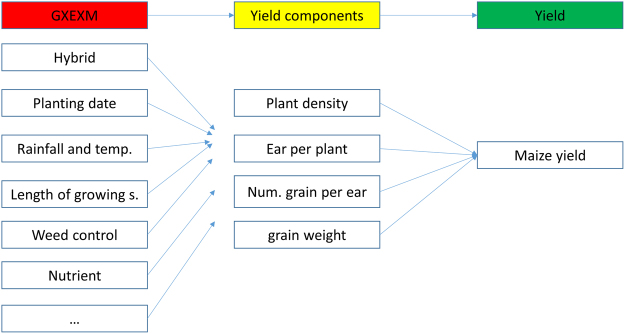
“According to Assefa et al. (2018), maize grain yield is result of the sum of the effects of traits number of ears per plant, number of beans per ear and grain mass.”
BackgroundStack, G. M., Carlson, C. H., Toth, J. A., Philippe, G., Crawford, J. L., Hansen, J. L., Viands, D. R., Rose, J. K. C., & Smart, L. B. (2022) · bioRxiv (Cold Spring Harbor Laboratory) · doi:10.1101/2022.12.02.518916 · Cited by 1
Dissecting the interaction of nitrogen, density, and genetics in maize
King, K. A. (2021) · Iowa State University Digital Repository (Iowa State University) · doi:10.31274/etd-20210609-91 · Cited by 1
“Plant density is consistently increasing over time (Jeschke, 2019), and agronomic optimum density has also been increasing (Assefa et al. 2018).”
BackgroundPHENOTYPIC RESPONSE OF CORN GENOTYPES TO DIFFERENT AGROTECHNICAL MANAGEMENT
Andreea, O. N. A., Varga, A., Muntean, L. S., Berindean, I. V., & Ionuț, R. A. C. Z. (2021) · LIFE SCIENCE AND SUSTAINABLE DEVELOPMENT · doi:10.58509/lssd.v2i1.81
“Maize plant density has significantly increased over the years (ASSEFA et al., 2018) worldwide: United States (DUVICK, 2005), Canada (TOLLENAAR and WU, 1999), Brazil (SANGOI et al., 2002), China (QIAN et al., 2016), and other corn producing countries (DERIEUX et al., 1987; DI MATEO et al., 2016).”
BackgroundOmar, M., Rabie, H. A., Mowafy, S., Othman, H. T., & Ali, M. (2023) · Zagazig Journal of Agricultural Research · doi:10.21608/zjar.2023.289457
Du, Z., Li, Y., Zhang, D., Cui, T., He, X., Xiao, T., Li, H., Xing, S., & Xie, C. (2023) · SSRN Electronic Journal · doi:10.2139/ssrn.4463186
Akamatsu, Y., Morita, S., Sunaga, Y., & Kanno, T. (2023) · Grassland Science · doi:10.1111/grs.12414
Aleman-Perez, R., Bravo, C., & Ibarra, E. M. (2024) · Agrociencia · doi:10.47163/agrociencia.v58i1.3036
Solving the maize maze? Look to the lower leaves
Singh, R. (2024) · PLANT PHYSIOLOGY · doi:10.1093/plphys/kiae236
Tian, Y., Wang, J., Chen, J., Yu, D., Zeng, Z., Fu, J., Zhang, F., Cao, H., Liu, F., & Liang, T. (2024) · Agronomy · doi:10.3390/agronomy14122754
Wang, Y., Liu, Q., Yao, J., Liu, Q., Zhai, J., Zang, L., Tarimbek, M., Ming, B., Xue, J., & Li, S. (2026) · Journal of Integrative Agriculture · doi:10.1016/j.jia.2026.08.014
Wang, Y., Xue, J., Zhang, G., Liu, Q., Wang, K., Xie, R., Ming, B., Hou, P., & Li, S. (2025) · SSRN Electronic Journal · doi:10.2139/ssrn.5155537
Optimizing Maize Yield With Hybrids Tolerant of High Plant Density in West and Central Africa
Ygzaw, W., Ifie, B. E., Ribeiro, P. F., Adu, G. B., Danquah, E. Y., Offei, S. K., & Tongoona, P. B. (2025) · Plant-Environment Interactions · doi:10.1002/pei3.70046 · Cited by 4
Metadata
- Authors
- Assefa, Y., Carter, P., Hinds, M., Bhalla, G., Schon, R., Jeschke, M., Paszkiewicz, S., Smith, S., & Ciampitti, I. A.
- Affiliations
- Kansas State University (US)
- Pioneer Hi-Bred (US)
- Iowa State University (US)
- Corresponding author
- Assefa, Yared
- Ciampitti, Ignacio A.
- Venue
- Scientific Reports
- Published
- 2018-03-21
- Volume
- 8
- Issue
- 1
- Pages
- 4937-4937
- ISSN
- 2045-2322 (ISSN-L)
- PMC
- PMC5862987
- OpenAlex
- W2806985348
- Semantic Scholar
- 33711a48ce3c452d69ba6d48787b593eca9b0ce6
- Cited by
- 222
- References
- 36
- Citations by year
- 2026: 30 · 2025: 37 · 2024: 40 · 2023: 31 · 2022: 31 · 2021: 21 · 2020: 18 · 2019: 14
- FWCI
- 22.39
- Type
- journal article
- Language
- en
- Open access
- gold
- doi.org
- Licence
- cc-by
- creativecommons.org/licenses/by/4.0 (tdm)
- creativecommons.org/licenses/by/4.0 (vor)
- Locations
- Scientific Reports (publishedVersion, cc-by)
- Europe PMC (PubMed Central) (publishedVersion, cc-by)
- PubMed Central (publishedVersion, cc-by)
- PubMed (publishedVersion)
- DOAJ (DOAJ: Directory of Open Access Journals) (submittedVersion)
- Topics
- Life Sciences › Agricultural and Biological Sciences › Agronomy and Crop Science › Crop Yield and Soil Fertility
- Life Sciences › Agricultural and Biological Sciences › Plant Science › Soybean genetics and cultivation
- Life Sciences › Agricultural and Biological Sciences › Agronomy and Crop Science › Agricultural Productivity and Crop Improvement
- Keywords
- maize, plant density, yield improvement, yield components, seeding rate, maize hybrids, long-term trends
- MeSH terms
- Crop Production, Zea mays, North America, Time Factors
About these checks
Registry, retraction, Cites and statistics results are computed, not judged, with one exception: a printed reference that no index lists is read once by a model before it counts as a citation error. Claims are extracted by a model and kept only when their quote appears verbatim in the text; each cited source is then checked, with a model’s help, for whether it says what the claim relies on. Those verdicts can be wrong — read the claim’s quote and the cited source before relying on one.
Statistics and arithmetic are recomputed, not judged.
Confidence bands are shown only for fields calibrated on our annotated test set. None is calibrated yet, so no band is shown.
What counts as a claim ›How we measure confidence ›How we check this ›
Are you an author, or do you see a problem with this page? Request a review
Data sources
Bibliographic data: Semantic Scholar, OpenAlex, Crossref.
Contains information from the Semantic Scholar Academic Graph Datasets, made available under the ODC Attribution License (ODC-BY 1.0).
Semantic Scholar’s data is described in: Kinney, R., et al. (2023). The Semantic Scholar Open Data Platform. arXiv:2301.10140.
