

The DOI matches its Crossref record.
The leaf transcriptome of fennel (Foeniculum vulgare Mill.) enables characterization of the t-anethole pathway and the discovery of microsatellites and single-nucleotide variants
Abstract
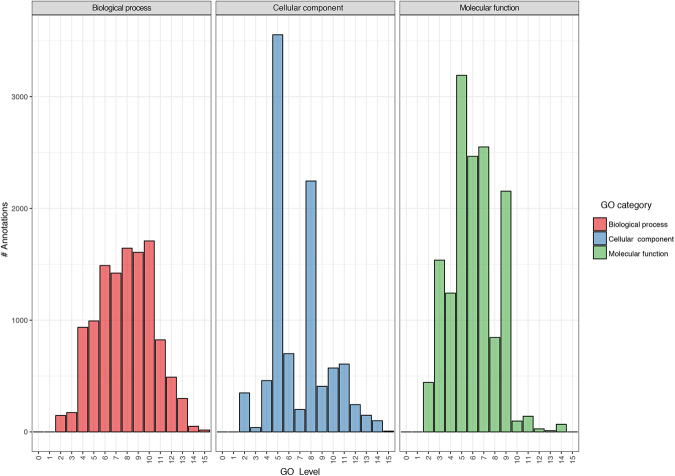
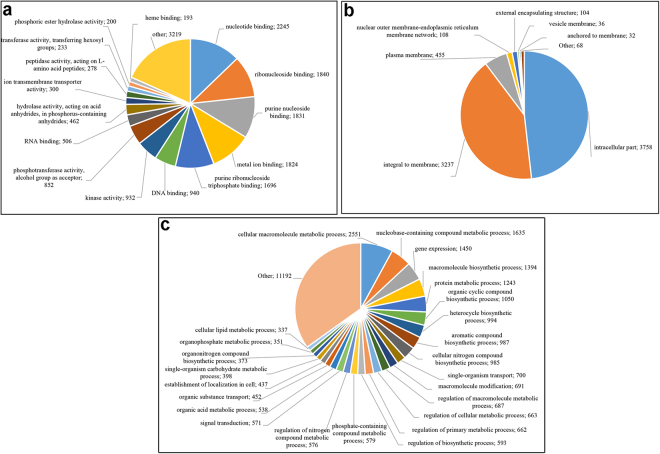
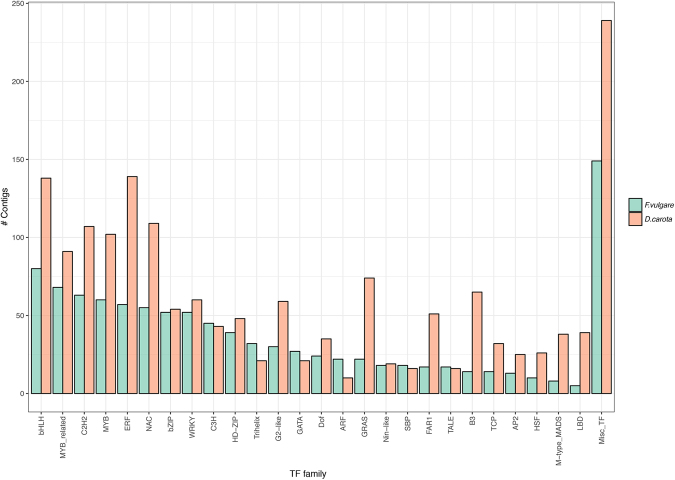
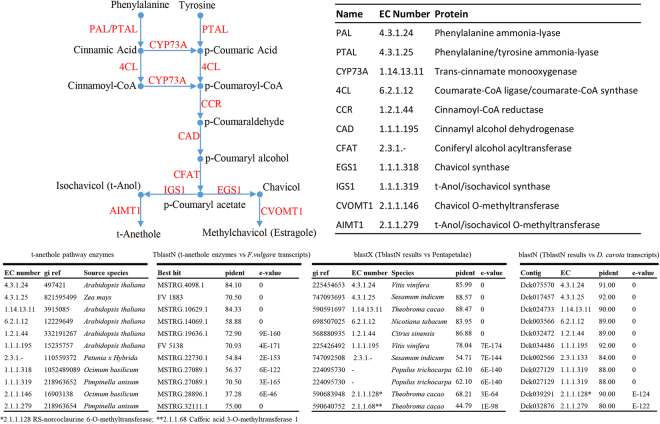
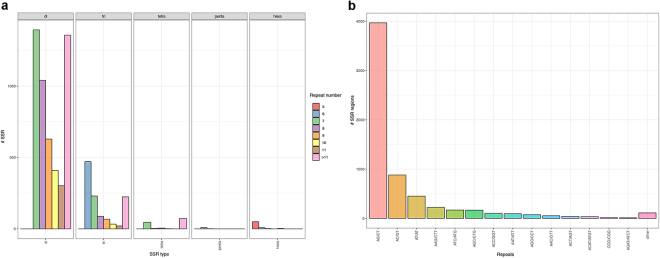
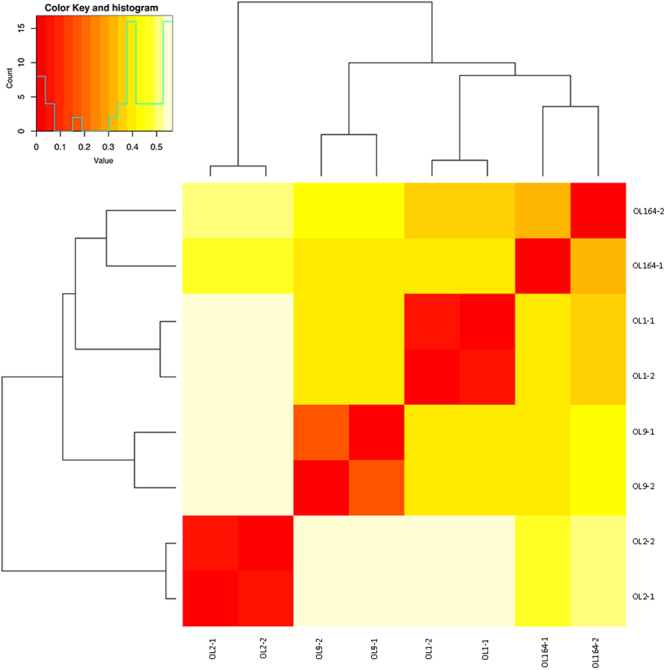
Fennel is a plant species of both agronomic and pharmaceutical interest that is characterized by a shortage of genetic and molecular data. Taking advantage of NGS technology, we sequenced and annotated the first fennel leaf transcriptome using material from four different lines and two different bioinformatic approaches: de novo and genome-guided transcriptome assembly. A reference transcriptome for assembly was produced by combining these two approaches. Among the 79,263 transcripts obtained, 47,775 were annotated using BLASTX analysis performed against the NR protein database subset with 11,853 transcripts representing putative full-length CDS. Bioinformatic analyses revealed 1,011 transcripts encoding transcription factors, mainly from the BHLH, MYB-related, C2H2, MYB, and ERF families, and 6,411 EST-SSR regions. Single-nucleotide variants of SNPs and indels were identified among the 8 samples at a frequency of 0.5 and 0.04 variants per Kb, respectively. Finally, the assembled transcripts were screened to identify genes related to the biosynthesis of t-anethole, a compound well-known for its nutraceutical and medical properties. For each of the 11 genes encoding structural enzymes in the t-anethole biosynthetic pathway, we identified at least one transcript showing a significant match. Overall, our work represents a treasure trove of information exploitable both for marker-assisted breeding and for in-depth studies on thousands of genes, including those involved in t-anethole biosynthesis.
Overview
The claims and statistics of this paper haven’t been checked yet.
Run the check — free, no account needed. It reads the open-access text and checks the sources it cites.
Integrity signals
Registry
Cites
Statistics
Figures
Verification
Claims the paper makes
The claims and statistics of this paper haven’t been checked yet.
Run the check — free, no account needed. It reads the open-access text and checks the sources it cites.
Claims other papers make about this one
Each is checked against this paper’s own text: does it say what the citing paper says it does?
In the citing paper
“A comprehensive leaf transcriptome revealed key genes involved in the biosynthesis of tanethole, an important aromatic compound, alongside numerous microsatellite and SNP markers, supporting marker-assisted breeding (Palumbo et al. 2018).”
From Unlocking the Apiaceae: comprehensive advances in agronomy, biotechnology, phytochemistry, and health applications of major seed spices (2025) · cites this paper as Palumbo et al. 2018
Self-check
Percentages, sums and reported differences re-computed from the paper’s own numbers.
The self-check needs the paper’s full text.
Citations
Cites
No references could be resolved yet.
Research works printed but not linked: 61
- Rather, M. A., Dar, B. A., Sofi, S. N., Bhat, B. A. & Qurishi, M. A. Foeniculum vulgare: A comprehensive review of its traditional use, phytochemistry, pharmacology, and safety. Arab. J. Chem. 9, 1574–1583 (2016). · DOI
- Díaz-Maroto, M. C., Pérez-Coello, M. S., Esteban, J. & Sanz, J. Comparison of the volatile composition of wild fennel samples (Foeniculum vulgare Mill.) from Central Spain. J. Agric. Food Chem. 54, 6814–6818 (2006). · DOI
- Asano, T., Aida, S., Suemasu, S. & Mizushima, T. Anethole restores delayed gastric emptying and impaired gastric accommodation in rodents. Biochem. Biophys. Res. Commun. 472, 125–130 (2016). · DOI
- Tognolini, M. et al. Protective effect of Foeniculum vulgare essential oil and anethole in an experimental model of thrombosis. Pharmacol. Res. 56, 254–260 (2007). · DOI
- Bardai, S. E., Lyoussi, B., Wibo, M. & Morel, N. Pharmacological evidence of hypotensive activitiy of Marrubium vulgare and Foeniculum vulgare in spontaneously hypertensive rat. Clin. Exp. Hypertens. 23, 329–343 (2001). · DOI
- Senatore, F. et al. Chemical composition, antimicrobial and antioxidant activities of anethole-rich oil from leaves of selected varieties of fennel [Foeniculum vulgare Mill. ssp. vulgare var. azoricum (Mill.) Thell]. Fitoterapia 90, 214–219 (2013). · DOI
- Kubo, I., Fujita, K. & Nihei, K. Antimicrobial activity of anethole and related compounds from aniseed. J. Sci. Food Agric. 88, 242–247 (2008). · DOI
- Knio, K. M., Usta, J., Dagher, S., Zournajian, H. & Kreydiyyeh, S. Larvicidal activity of essential oils extracted from commonly used herbs in Lebanon against the seaside mosquito, Ochlerotatus caspius. Bioresour. Technol. 99, 763–768 (2008). · DOI
- Unamba, C. I. N., Nag, A. & Sharma, R. K. Next Generation Sequencing Technologies: The Doorway to the Unexplored Genomics of Non-Model Plants. Front. Plant Sci. 6, 15036 (2015). · DOI
- Lu, B. X., Zeng, Z. B. & Shi, L. T. Comparative study of de novo assembly and genome-guided assembly strategies for transcriptome reconstruction based on RNA-Seq. Sci. China Life Sci. 56, 143–155 (2013). · DOI
- Marçais, G. & Kingsford, C. A fast, lock-free approach for efficient parallel counting of occurrences of k-mers. Bioinformatics 27, 764–770 (2011). · DOI · Paper page
- Vurture, G. W. et al. GenomeScope: Fast reference-free genome profiling from short reads. Bioinformatics 33, 2202–2204 (2017). · DOI
- Luo, R. et al. SOAPdenovo2: an empirically improved memory-efficient short-read de novo assembler. Gigascience 1, 1–6 (2012). · DOI
- Simão, F. A., Waterhouse, R. M., Ioannidis, P., Kriventseva, E. V. & Zdobnov, E. M. BUSCO: Assessing genome assembly and annotation completeness with single-copy orthologs. Bioinformatics 31, 3210–3212 (2015). · DOI · Paper page
- Novák, P., Neumann, P., Pech, J., Steinhaisl, J. & MacAs, J. RepeatExplorer: A Galaxy-based web server for genome-wide characterization of eukaryotic repetitive elements from next-generation sequence reads. Bioinformatics 29, 792–793 (2013). · DOI
- Yang, Y. & Smith, S. A. Optimizing de novo assembly of short-read RNA-seq data for phylogenomics. BMC Genomics 14, 1 (2013). · DOI · Paper page
- Thiel, T., Michalek, W., Varshney, R. & Graner, A. Exploiting EST databases for the development and characterization of gene-derived SSR-markers in barley (Hordeum vulgare L.). Theor. Appl. Genet. 106, 411–422 (2003). · DOI · Paper page
- Huang, X. et al. De novo Transcriptome Analysis and Molecular Marker Development of Two Hemarthria Species. Front. Plant Sci. 7 (2016). · DOI
- Palumbo, F., Galla, G., Vitulo, N. & Barcaccia, G. First draft genome sequencing of fennel (Foeniculum Vulgare Mill.): identification of simple sequence repeats and their application in marker-assisted breeding. Mol. Breed (2018). · DOI
- Kidwell, M. G. Transposable elements and the evolution of genome size in eukaryotes. Genetica 115, 49–63 (2002). · DOI
- Chen, G. et al. Revealing the missing expressed genes beyond the human reference genome by RNA-Seq. BMC Genomics 12, 590 (2011). · DOI
- Xu, Z., Tan, H., Wang, F. & Hou, X. CarrotDB: a genomic and transcriptomic database for carrot. Database 2014, 1–8 (2014). · DOI
- Vatanparast, M. et al. Transcriptome sequencing and marker development in winged bean (Psophocarpus tetragonolobus; Leguminosae). Sci. Rep. 6, 29070 (2016). · DOI
- Hiremath, P. J. et al. Large-scale transcriptome analysis in chickpea (Cicer arietinum L.), an orphan legume crop of the semi-arid tropics of Asia and Africa. Plant Biotechnol. J. 9, 922–931 (2011). · DOI
- Toledo-Ortiz, G., Huq, E. & Quail, P. H. The Arabidopsis Basic/Helix-Loop-Helix Transcription Factor Family. Plant Cell 15, 1749–1770 (2003). · DOI
- Serna, L. & Martin, C. Trichomes: different regulatory networks lead to convergent structures. Trends Plant Sci. 11, 274–280 (2006). · DOI
- Gupta, P. K. & Rustgi, S. Molecular markers from the transcribed/expressed region of the genome in higher plants. Funct. Integr. Genomics 4, 139–162 (2004). · DOI
- Cordeiro, G., Casu, R., McIntyre, C., Manners, J. & Henry, R. Microsatellite markers from sugarcane (Saccharum spp.) ESTs cross transferable to erianthus and sorghum. Plant Sci. 160, 1115–1123 (2001). · DOI · Paper page
- Feng, S. P., Li, W. G., Huang, H. S., Wang, J. Y. & Wu, Y. T. Development, characterization and cross-species/genera transferability of EST-SSR markers for rubber tree (Hevea brasiliensis). Mol. Breed. 23, 85–97 (2009). · DOI
- Varshney, R. K. et al. Interspecific transferability and comparative mapping of barley EST-SSR markers in wheat, rye and rice. Plant Sci. 168, 195–202 (2005). · DOI
- Chabane, K., Ablett, G. A., Cordeiro, G. M., Valkoun, J. & Henry, R. J. EST versus genomic derived microsatellite markers for genotyping wild and cultivated barley. Genet. Resour. Crop Evol. 52, 903–909 (2005). · DOI
- Tehrani, M. S., Mardi, M., Sahebi, J., Catalán, P. & Díaz-Pérez, A. Genetic diversity and structure among Iranian tall fescue populations based on genomic-SSR and EST-SSR marker analysis. Plant Syst. Evol. 282, 57–70 (2009). · DOI
- Zhang, M., Mao, W., Zhang, G. & Wu, F. Development and characterization of polymorphic ESTSSR and genomic SSR markers for tibetan annual wild barley. PLoS One 9, 1–10 (2014).
- Li, M.-Y., Wang, F., Jiang, Q., Ma, J. & Xiong, A.-S. Identification of SSRs and differentially expressed genes in two cultivars of celery (Apium graveolens L.) by deep transcriptome sequencing. Hortic. Res. 1, 10 (2014). · DOI
- Wei, W. et al. Characterization of the sesame (Sesamum indicum L.) global transcriptome using Illumina paired-end sequencing and development of EST-SSR markers. BMC Genomics 12, 451 (2011). · DOI
- Jung, S., Abbott, A., Jesudurai, C., Tomkins, J. & Main, D. Frequency, type, distribution and annotation of simple sequence repeats in Rosaceae ESTs. Funct Integr genomics 5, 136–143 (2005). · DOI
- Fraser, L., Harvey, C., Crowhurst, R. & De Silva, H. EST-derived microsatellites from Actinidia species and their potential for mapping. Theor. Appl. Genet. 108, 1010–1016 (2004). · DOI
- Temnykh, S. et al. Mapping and genome organization of microsatellite sequences in rice (Oryza sativa L.). TAG Theor. Appl. Genet. 100, 697–712 (2000). · DOI
- Gupta, P. et al. Transferable EST-SSR markers for the study of polymorphism and genetic diversity in bread wheat. Mol. Genet. genomics 270, 315–323 (2003). · DOI · Paper page
- Scott, K. D. et al. Analysis of SSRs derived from grape ESTs. TAG Theor. Appl. Genet. 100, 723–726 (2000). · DOI
- Rong, J. et al. New insights into domestication of carrot from root transcriptome analyses. BMC Genomics 15, 895 (2014). · DOI
- Badgujar, S. B., Patel, V. V. & Bandivdekar, A. H. Foeniculum vulgare Mill: A review of its botany, phytochemistry, pharmacology, contemporary application, and toxicology. Biomed Res. Int. 2014, 842674 (2014). · DOI
- Koeduka, T., Baiga, T. J., Noel, J. P. & Pichersky, E. Biosynthesis of t-anethole in anise: characterization of t-anol/isoeugenol synthase and an O-methyltransferase specific for a C7-C8 propenyl side chain. Plant Physiol. 149, 384–394 (2009). · DOI
- Aprotosoaie, A. C. et al. The chemical profile of essential oils obtained from fennel fruits (Foeniculum vulgare Mill.). Farmacia 58, 46–53 (2010).
- Doyle, J. A rapid DNA isolation procedure for small quantities of fresh leaf tissue. Phytochem Bull 19, 11–15 (1987).
- Bolger, A. M., Lohse, M. & Usadel, B. Genome analysis Trimmomatic: a flexible trimmer for Illumina sequence data. Bioinformatics 30, 2114–2120 (2014). · DOI · Paper page
- Patel, R. K. & Jain, M. NGS QC Toolkit: A Toolkit for Quality Control of Next Generation Sequencing Data. PLoS One 7, e30619 (2012). · DOI
- Haas, B. J. et al. De novo transcript sequence reconstruction from RNA-seq using the Trinity platform for reference generation and analysis. Nat. Protoc. 8, 1494–1512 (2013). · DOI · Paper page
- Nakasugi, K., Crowhurst, R., Bally, J. & Waterhouse, P. Combining transcriptome assemblies from multiple de novoassemblers in the allo-tetraploid plant nicotiana benthamiana. PLoS One 9 (2014). · DOI
- Stavrianakou, M. et al. Draft de novo transcriptome assembly and proteome characterization of the electric lobe of Tetronarce californica: a molecular tool for the study of cholinergic neurotransmission in the electric organ. BMC Genomics 18, 611 (2017). · DOI
- Blande, D., Halimaa, P., Tervahauta, A. I., Aarts, M. G. M. & Kärenlampi, S. O. De novo transcriptome assemblies of four accessions of the metal hyperaccumulator plant Noccaea caerulescens. Sci. Data 4, 1–9 (2017). · DOI
- Weisberg, A. J., Kim, G., Westwood, J. H. & Jelesko, J. G. Sequencing and de novo assembly of the Toxicodendron radicans (Poison Ivy) transcriptome. Genes (Basel). 8 (2017). · DOI
- Kim, D., Langmead, B. & Salzberg, S. L. HISAT: a fast spliced aligner with low memory requirements. Nat. Methods 12, 357–360 (2015). · DOI · Paper page
- Pertea, M. et al. StringTie enables improved reconstruction of a transcriptome from RNA-seq reads. Nat. Biotechnol. 33, 290–295 (2016). · DOI
- Fu, L., Niu, B., Zhu, Z., Wu, S. & Li, W. CD-HIT: accelerated for clustering the next-generation sequencing data. Bioinformatics 28, 3150–3152 (2012). · DOI · Paper page
- Szcześniak, M. W., Rosikiewicz, W. & Makałowska, I. CANTATAdb: A collection of plant long non-coding RNAs. Plant Cell Physiol. 57, e8 (2016). · DOI
- The UniProt Consortium. UniProt: the universal protein knowledgebase. Nucleic Acids Res 45, 158–169 (2017). · DOI · Paper page
- Conesa, A. et al. Blast2GO: a universal tool for annotation, visualization and analysis in functional genomics research. Bioinforma Oxf Engl 21, 3674–3676 (2005). · DOI
- Jin, J. et al. PlantTFDB 4. 0: toward a central hub for transcription factors and regulatory interactions in plants. Nucleic Acids Res. 45, 1040–1045 (2017). · DOI
- Li, H. & Durbin, R. Fast and accurate short read alignment with Burrows-Wheeler transform. Bioinformatics 25, 1754–1760 (2009). · DOI · Paper page
- McKenna, A. et al. The Genome Analysis Toolkit: a MapReduce framework for analyzing next-generation DNA sequencing data. Genome Res 20, 1297–1303 (2010). · DOI · Paper page
Cited by
Singh, R., Choudhary, S., Kumari, V., Meena, R. S., Meena, N. K., Y, R., & Verma, A. K. (2025) · Journal of Agriculture and Ecology · doi:10.58628/jae-2521-101
Metadata
- Authors
- Palumbo, F., Vannozzi, A., Vitulo, N., Lucchin, M., & Barcaccia, G.
- Venue
- Scientific Reports
- Published
- 2018-07-11
- Volume
- 8
- Issue
- 1
- ISSN
- 2045-2322
- PMC
- PMC6041299
- Cited by
- 24
- References
- 0
- Language
- en
About these checks
Registry, retraction, Cites and statistics results are computed, not judged, with one exception: a printed reference that no index lists is read once by a model before it counts as a citation error. Claims are extracted by a model and kept only when their quote appears verbatim in the text; each cited source is then checked, with a model’s help, for whether it says what the claim relies on. Those verdicts can be wrong — read the claim’s quote and the cited source before relying on one.
Statistics and arithmetic are recomputed, not judged.
Confidence bands are shown only for fields calibrated on our annotated test set. None is calibrated yet, so no band is shown.
What counts as a claim ›How we measure confidence ›How we check this ›
Are you an author, or do you see a problem with this page? Request a review
Data sources
Bibliographic data: Semantic Scholar, OpenAlex, Crossref.
Contains information from the Semantic Scholar Academic Graph Datasets, made available under the ODC Attribution License (ODC-BY 1.0).
Semantic Scholar’s data is described in: Kinney, R., et al. (2023). The Semantic Scholar Open Data Platform. arXiv:2301.10140.
