

IL-1β, IL-6, TNF- α and CRP in Elderly Patients with Depression or Alzheimer’s disease: Systematic Review and Meta-Analysis
Open accessThe DOI matches its Crossref record; 103 of the 103 references it cites were found in a registry or an index.
Abstract
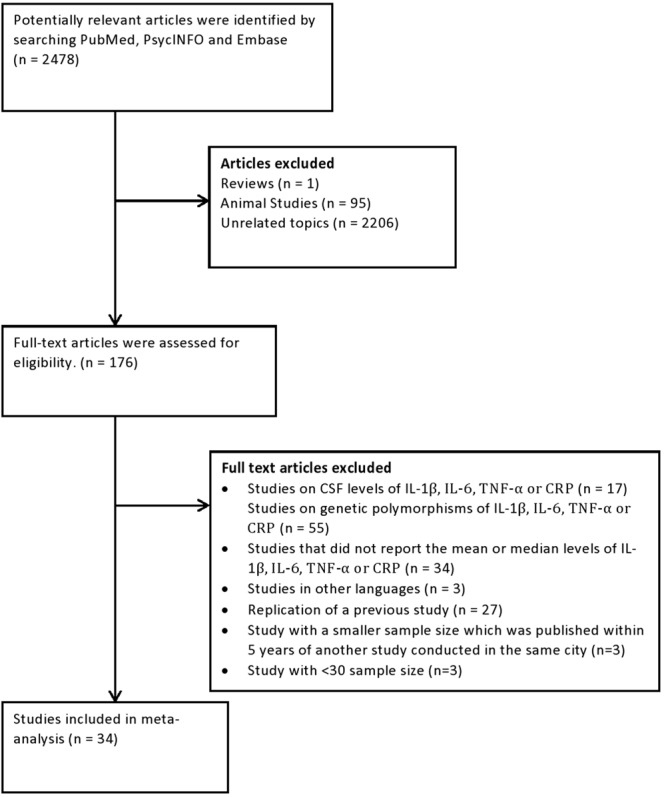
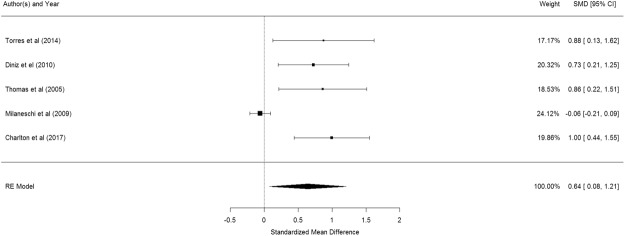
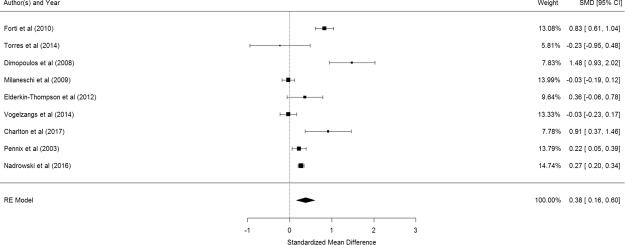
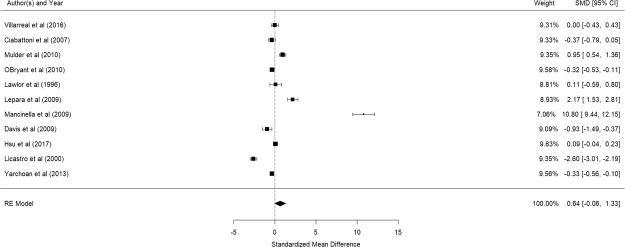
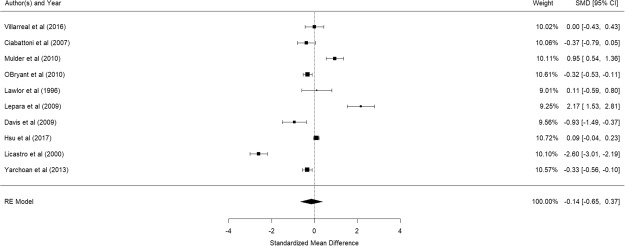
We carried out systematic review and meta-analysis to evaluate whether peripheral levels of pro-inflammatory markers including Interleukin-1 beta (IL-1β), Interleukin-6 (IL-6), Tumor Necrosis Factor-α (TNF- α) and C-Reactive Protein (CRP) are significantly higher in elderly with depression and Alzheimer’s disease. We searched Pubmed, PsycINFO and Embase, and thirty-four relevant studies (2609 with Depression, 1645 with Alzheimer’s disease and 14363 Controls) were included. Compared with controls, IL-1β (pooled standardized mean difference [SMD]: 0.642; 95% confidence interval [CI]: 0.078–1.206; significant heterogeneity: I 2 = 86.28%) and IL-6 (pooled SMD: 0.377; 95% CI: 0.156–0.598; significant heterogeneity: I 2 = 88.75%) were significantly elevated in depression. There was no difference in TNF-α (p = 0.351) and CRP (p = 0.05) between those with depression and controls. Compared with controls, IL-1β (pooled SMD: 1.37, 95% CI: 0.06–2.68, significant heterogeneity: I 2 = 96.01%) was significantly elevated in Alzheimer’s disease. There were no differences in IL-6 (p = 0.138), TNF-α (p = 0.451) and CRP (p = 0.07) between elderly with Alzheimer’s disease and controls. After Bonferroni adjustment, only IL-6 remained significantly higher in depression. Elderly with depression have higher IL-6 than controls, while those with Alzheimer’s disease did not have higher peripheral inflammatory markers.
Overview
The claims and statistics of this paper haven’t been checked yet.
Free: it reads the open-access text and checks the first 5 claims that cite a source we can check. Create a free account to check every claim.
Integrity signals
Registry
Cites
Statistics
Figures
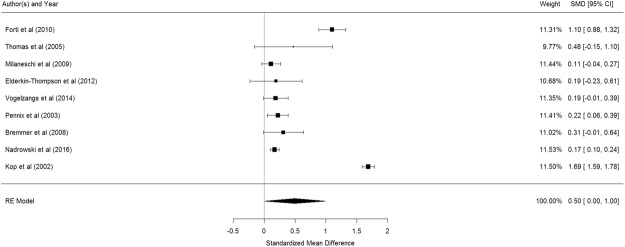
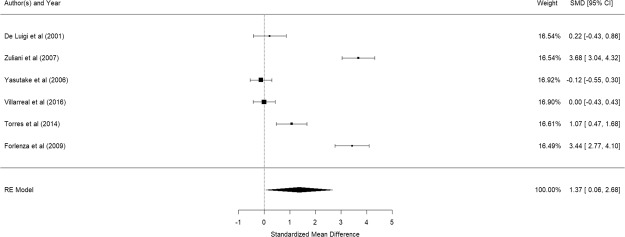
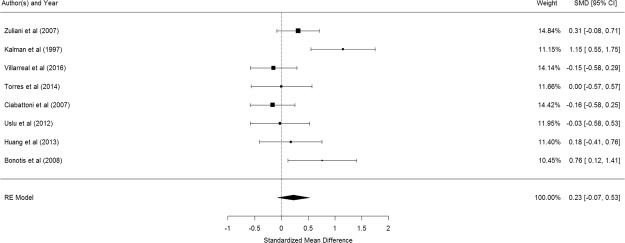
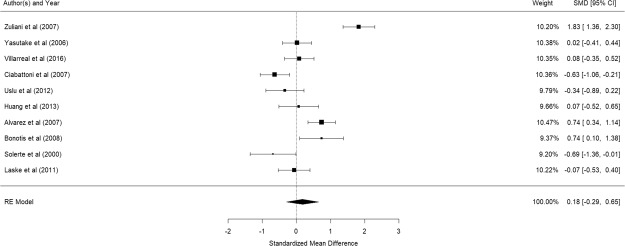
Verification
Claims the paper makes
The claims and statistics of this paper haven’t been checked yet.
Free: it reads the open-access text and checks the first 5 claims that cite a source we can check. Create a free account to check every claim.
Claims other papers make about this one
Each is checked against this paper’s own text: does it say what the citing paper says it does?
The source backs part of the claim, not all of it — or backs it for a different population, condition or comparison.
In the citing paper
“A meta-analysis concluded that IL-1β was significantly elevated in patients with depression and Alzheimer’s disease (AD), while IL-6 was elevated only in patients with depression [38].”
From Selected biomarkers of depression: what are the effects of cytokines and inflammation (2022) · cites this paper as [38]
Experimental — accuracy not yet measuredIn the citing paper
“A meta-analysis concluded that IL-1β was significantly elevated in patients with depression and Alzheimer’s disease (AD), while IL-6 was elevated only in patients with depression [38].”
From Selected biomarkers of depression: what are the effects of cytokines and inflammation (2022) · cites this paper as [38]
In the citing paper
“A meta-analysis concluded that IL-1β was significantly elevated in patients with depression and Alzheimer’s disease (AD), while IL-6 was elevated only in patients with depression [38].”
From Selected biomarkers of depression: what are the effects of cytokines and inflammation (2022) · cites this paper as [38]
In the citing paper
“IL-1β was found to be elevated in 38.5% and 75.6% of studies, respectively [38,39].”
From Selected biomarkers of depression: what are the effects of cytokines and inflammation (2022) · cites this paper as [38]
In the citing paper
“The primary conclusion was that there was no difference in the TNF levels between study groups and controls in either of the reviewed disease entities [38].”
From Selected biomarkers of depression: what are the effects of cytokines and inflammation (2022) · cites this paper as [38]
Self-check
Percentages, sums and reported differences re-computed from the paper’s own numbers.
The self-check needs the paper’s full text.
Citations
Cites
Preferred Reporting Items for Systematic Reviews and Meta-Analyses: the PRISMA statement
Moher, D., Liberati, A., Tetzlaff, J., Altman, D. G., & for the PRISMA Group (2009) · BMJ · doi:10.1136/bmj.b2535 · Cited by 83,823
Preferred reporting items for systematic reviews and meta-analyses: the PRISMA Statement.
(2009) · PubMed Central · Cited by 44,859
Preferred reporting items for systematic reviews and meta-analyses: The PRISMA statement
Moher, D., Liberati, A., Tetzlaff, J., Altman, D. G., & the PRISMA Group* (2009) · Annals of Internal Medicine · doi:10.7326/0003-4819-151-4-200908180-00135 · Cited by 37,554
Molecular Mechanisms of Depression: Perspectives on New Treatment Strategies
Lang, U. E., & Borgwardt, S. (2013) · Cellular Physiology and Biochemistry · doi:10.1159/000350094 · Cited by 8,475
Gene regulation and DNA damage in the ageing human brain
Lu, T., Pan, Y., Kao, S.-Y., Li, C., Kohane, I., Chan, J., & Yankner, B. A. (2004) · Nature · doi:10.1038/nature02661 · Cited by 1,874
Interleukin-1 stimulates the secretion of hypothalamic corticotropin-releasing factor
Sapolsky, R., Rivier, C., Yamamoto, G., Plotsky, P., & Vale, W. (1987) · Science · doi:10.1126/science.2821621 · Cited by 1,504
Gene-expression profile of the ageing brain in mice
Lee, C.-K., Weindruch, R., & Prolla, T. A. (2000) · Nature Genetics · doi:10.1038/77046 · Cited by 1,055
Liu, Y., Ho, R. C.-M., & Mak, A. (2012) · Journal of Affective Disorders · doi:10.1016/j.jad.2011.08.003 · Cited by 948
Self-citationGruver, A., Hudson, L., & Sempowski, G. (2007) · The Journal of Pathology · doi:10.1002/path.2104 · Cited by 834
Maes, M., Bosmans, E., De Jongh, R., Kenis, G., Vandoolaeghe, E., & Neels, H. (1997) · Cytokine · doi:10.1006/cyto.1997.0238 · Cited by 728
Research works printed but not linked: 1
- Puri, B., Hall, A. & Ho, R. Revision Notes in Psychiatry, Third Edition, Taylor & Francis (2013).
Cited by
Items 401–500 of 576
Chronic Inflammation and Aging (Inflammaging)
Tan, B. L., & Norhaizan, M. E. (2021) · Springer eBooks · doi:10.1007/978-3-030-82859-2_4 · Cited by 6
Maiorani, C., Fernández, I., Tummino, V., Verdi, D., Gallina, E., & Pagani, M. (2022) · Journal of Integrative Neuroscience · doi:10.31083/j.jin2105143 · Cited by 4
Borda, M. G., Sanchis, P. L., Baldera, J. P., Tarazona‐Santabalbina, F. J., Chavarro‐Carvajal, D. A., Salazar‐Londoño, S., Bocharova, M., Aarsland, D., & Martin-Marco, A. (2024) · Archives of Medical Research · doi:10.1016/j.arcmed.2024.103003 · Cited by 4
Neuroprotective roles of flavonoid "hispidulin" in the central nervous system: A review.
Mustapha, S., Magaji, R. A., Magaji, M. G., Bako, I. G., Umar, B., Yusha’u, Y., Daku, A. B., Chiroma, S. M., Jaafar, A., Mehat, M. Z., et al. (2024) · PubMed Central · doi:10.22038/ijbms.2024.76605.16573 · Cited by 9
Rockson, C., Girish, C., Natarajan, H., & Menon, V. (2024) · Indian Journal of Psychological Medicine · doi:10.1177/02537176241279110 · Cited by 4
Characteristics of geriatric and somatic status in patients with osteoporosis
Khovasova, N. O., Naumov, A. V., Ткачева, О. Н., & Dudinskaya, Е. N. (2021) · Problems of Endocrinology · doi:10.14341/probl12751 · Cited by 6
Cao, B., Li, R., Ding, L., Xu, J., Ma, H., Liu, J., & Xue, J. (2021) · BMJ Open · doi:10.1136/bmjopen-2020-048162 · Cited by 6
Association between depressive symptoms and pericardial fat in healthy older men and women
Miller, N. E., & Steptoe, A. (2022) · Scientific Reports · doi:10.1038/s41598-022-17888-4 · Cited by 5
Huang, H., Liao, X., Zhang, A., Qiu, B., Mei, F., Liu, F., Zeng, K., Yang, C., Ma, H., Ding, W., et al. (2023) · Molecular Neurobiology · doi:10.1007/s12035-023-03693-1 · Cited by 4
The Neglected Sibling: NLRP2 Inflammasome in the Nervous System
Ducza, L., & Gaál, B. (2023) · Aging and Disease · doi:10.14336/ad.2023.0926-1 · Cited by 8
“Neuroinflammation has been recognised in dementia and is typically linked to cognitive decline with elevated levels of proinflammatory markers (IL-1, IL-6, IL-8, C-reactive protein) in patients suffering from dementia [217-219].”
Backman, E. A., Saari, L., Parkkola, R. K., Koikkalainen, J. R., Gardberg, M., & Kaasinen, V. (2023) · Journal of the Neurological Sciences · doi:10.1016/j.jns.2023.122804 · Cited by 6
Ischemic Stroke and Depression Biomarkers: Are There Specific Markers for Post-Stroke Depression?
Kasatkina, M. Y., Zhanin, I. S., & Gulyaeva, N. V. (2020) · Neurochemical Journal · doi:10.1134/s1819712420040030 · Cited by 4
Zhang, Z., Qi, B., Xu, Y., Yan, J., & Gao, B. (2021) · Journal of Healthcare Engineering · doi:10.1155/2021/6645515 · Cited by 5
“At the same time, studies have shown that the levels of IL-6 and IL-8 in the serum of depressed patients increase hugely, and the levels are remarkably reduced after drug treatment [17, 18].”
BackgroundRetractedYu, J., Li, Y., Zhu, B., Shen, J., & Miao, L. (2025) · Frontiers in Medicine · doi:10.3389/fmed.2025.1538048 · Cited by 11
Lazaridou, A., Sivakumar, S., Biefer, H. R. C., Weilenmann, S., Princip, M., Zuccarella‐Hackl, C., Petzschner, F. H., Heinzle, J., Stephan, K. E., Dzemali, O., et al. (2025) · BMJ Open · doi:10.1136/bmjopen-2025-108061 · Cited by 5
Li, C.-R., Xu, Z.-Y., Sun, L., Wu, L., Zeng, W.-F., Zhou, J., Lian, Y., Wang, Y., & Wang, Y.-X. (2025) · ALPHA PSYCHIATRY · doi:10.31083/ap47820 · Cited by 3
Yamaoka, K., Ishii, Y., & Terasawa, Y. (2025) · Brain Behavior & Immunity - Health · doi:10.1016/j.bbih.2025.101135 · Cited by 5
Sani, A., Kwak, H., Khan, M. I., Zafar, S., Raza, Z., Shah, K. U., Din, F. U., Seo, E. K., & Khan, S. (2025) · Results in Chemistry · doi:10.1016/j.rechem.2025.102948 · Cited by 4
Matits, L., Gumpp, A. M., Kolassa, I., Behnke, A., & Mack, M. (2022) · Zeitschrift für Klinische Psychologie und Psychotherapie · doi:10.1026/1616-3443/a000666 · Cited by 4
Gu, Z.-W., Zhang, C.-P., Chen, L., & Huang, X. (2024) · World Journal of Psychiatry · doi:10.5498/wjp.v14.i5.653 · Cited by 3
Verlinden, S. F. F. (2024) · Frontiers in Aging · doi:10.3389/fragi.2024.1452453 · Cited by 5
Bai, Y., Fang, Z., Dai, H., Zhang, Q., & You, P. (2025) · Frontiers in Psychiatry · doi:10.3389/fpsyt.2025.1580151 · Cited by 8
Sun, X., Liu, H., Li, W., Li, L., Tian, Q., Cao, Q., Meng, Y., Shen, Y., Che, F., Chiu, J. C., et al. (2025) · Journal of Inflammation · doi:10.1186/s12950-025-00449-7 · Cited by 8
“Studies have shown that the levels of inflammatory cytokines in microglia of AD patients was 30 times greater than that of the control group [63], and the increased inflammatory cytokines inhibited phagocytosis of microglia, weakened the ability to clear Aβ, led to Aβ deposition, and further…”
Tang, Y., Zhang, K., Tang, X., Zhang, Y., Li, J.-X., Jia, X., He, X., Chen, X., Hu, J., Ye, Z., et al. (2025) · European journal of medical research · doi:10.1186/s40001-025-03203-0 · Cited by 5
“On one hand, the association between IL-6 and depression exhibits heterogeneity, with some studies failing to observe a direct correlation [55].”
Ai, R., Jin, X., Tang, B., Yang, G., Niu, Z., & Fang, E. F. (2021) · Springer eBooks · doi:10.1007/978-3-030-58080-3_74-1 · Cited by 10
The Impact of Uremic Toxins on Alzheimer's Disease
Zheng, Y., Ji, B., Chen, S., Zhou, R., & Ni, R. (2022) · Current Alzheimer Research · doi:10.2174/1567205019666220120113305 · Cited by 3
Duong, A., Jeong, H., Sabbagh, D. E. S. E., & Andreazza, A. C. (2022) · Biological Psychiatry Global Open Science · doi:10.1016/j.bpsgos.2022.01.006 · Cited by 3
Zhang, L., Zheng, H., Zhao, J., & Guo, W. (2023) · Asian Journal of Psychiatry · doi:10.1016/j.ajp.2023.103465 · Cited by 3
PGAGP: Predicting pathogenic genes based on adaptive network embedding algorithm
Zhang, Y., Xiang, J., Tang, L., Yang, J., & Li, J. (2023) · Frontiers in Genetics · doi:10.3389/fgene.2022.1087784 · Cited by 3
Wendler, S. A., Nunes, J. R., Dranski, L. F., Cordeiro, M. E. R., Mainardes, R. M., Machado, C. S., Bini, A. C. D., Schiewe, J. A., Miranda, L. H. G., & Kerppers, I. I. (2024) · Journal of Advances in Medicine and Medical Research · doi:10.9734/jammr/2024/v36i15356 · Cited by 6
Ceprián, N., de Toda, I. M., Maté, I., Garrido, A., Giménez‐Llort, L., & la Fuente, M. D. (2024) · International Journal of Molecular Sciences · doi:10.3390/ijms25136976 · Cited by 7
Yan, Q., Zhang, F., Qiao, Z., Jin, Y., Zheng, R., & Wu, J. (2024) · Medicine · doi:10.1097/md.0000000000038785 · Cited by 4
“[17] In our study, a total of 313 active ingredients of PDA and their corresponding targets for the treatment of acne were obtained.”
BackgroundRelationship between IL-6, IL-1β, and vitamin D on frailty status in elderly women
Ngestiningsih, D., Dayanti, J. K., & Batubara, L. (2021) · Bali Medical Journal · doi:10.15562/bmj.v10i1.2177 · Cited by 4
Zhang, D., Dai, W., Hu, H., Chen, W., Liu, Y., Guan, Z., Zhang, S., & Xu, H. (2021) · Nanoscale · doi:10.1039/d0nr08407g · Cited by 3
Moradi, A., Aslani, F., Boskabady, M. H., Pahlavan, Y., & Aslani, M. R. (2025) · Inflammopharmacology · doi:10.1007/s10787-025-01668-3 · Cited by 2
“Pro-inflammatory cytokines such as interleukin (IL)-1β, tumor necrosis factor α (TNF-α), and IL-6 stimulate the production of C-reactive protein (CRP) as part of the acute-phase response (Ng et al. 2018).”
Chen, T., Zheng, W., Zhang, Y., & Xu, Q. (2025) · PLoS ONE · doi:10.1371/journal.pone.0321226 · Cited by 3
“The presence of these inflammatory factors is associated with the development of neurodegenerative conditions, including Alzheimer’s disease and Parkinson’s disease [30–33], both characterized by elevated sNfL levels [13–15].”
Combining GWAS Summary Data and Proteomics Identified Potential Drug Targets in Dementia
Zhao, Y., Lu, F., & Duan, Y. (2025) · Molecular Neurobiology · doi:10.1007/s12035-025-04967-6 · Cited by 3
“On top of that, C1R interacted with pro-inflammatory markers [30, 31]—CRP and IL6, and also formed connections with the drug targets of Donepezil [32, 33]—NFKB1 and IL1B separately via AD-associated proteins C5a anaphylatoxin chemotactic receptor 1 (C5AR1), and α− 2-macroglobulin (A2M).”
Gastaldo-Jordán, I., Villalba-Pita, C., Martínez-Raga, J., Sanz, Y., & Medina-Rodriguez, E. M. (2025) · Neuroscience & Biobehavioral Reviews · doi:10.1016/j.neubiorev.2025.106421 · Cited by 4
Gulbaz, Z.-U.-A., Mirza, S., Naveed, S., Azeem, M. W., Husain, N., & Cheema, M. I. (2025) · Psychiatric Quarterly · doi:10.1007/s11126-025-10223-w · Cited by 6
Asiri, R., & Alashmali, S. M. (2025) · Nutrients · doi:10.3390/nu17243851 · Cited by 2
Qu, C., Wang, R., Liu, A., Liu, Y., Zhao, Z., Hao, W., & Chen, J. (2026) · Chinese Medicine · doi:10.1186/s13020-025-01315-7 · Cited by 5
“Elevated pro-inflammatory cytokines, including tumor necrosis factor-α (TNF-α), interleukin-1β (IL-1β), and interleukin-6 (IL-6), have been observed in both patients and animal models of depression [12].”
Castroflorio, E., Cabot, J., Miralles, M., Suau, M., Péter, M., Balogh, G. E., Török, Z., Rodríguez, E., Sánchez‐Juan, P., Fernández‐García, P., et al. (2026) · Molecular Neurobiology · doi:10.1007/s12035-026-05849-1 · Cited by 3
“…mediated by chronic peripheral inflammation related to AD progression, characterized by elevated circulating levels of pro-inflammatory mediators [79], which stimulate the liver to increase lipogenesis and enhance the secretion of lipoproteins via upregulation of SREBP-1c, inhibition of insulin…”
Chahuan, S., Grover, S., & Singh, S. (2022) · Drug and Chemical Toxicology · doi:10.1080/01480545.2022.2105862 · Cited by 4
“Ng et al. reported the increased level of inflammatory markers in the brain of patients suffering from simple depression and MDD (Ng et al. 2018).”
BackgroundXiang, J.-J., Hong, S. L., Ran, L., Zeng, Q., Kong, Y., Zhang, C., Liao, J., & Kuang, L. (2023) · PubMed Central · doi:10.12182/20230360204 · Cited by 7
Sun, T., Chen, Q., Mei, J., & Li, Y. (2023) · BMC Psychiatry · doi:10.1186/s12888-023-05248-z · Cited by 6
“MDD is considered, in some sense, to be a chronic inflammatory disease with altered serum levels of cytokines [21, 22].”
BackgroundLu, S., Qian, T., Cao, F., Kang, T., Liu, X., Wang, C., Xia, Y. F., & Hou, X. (2023) · International Journal of Rheumatic Diseases · doi:10.1111/1756-185x.14959 · Cited by 2
Mishra, S., Kaur, S., Bansal, G., & Bansal, Y. (2024) · European Journal of Medicinal Chemistry Reports · doi:10.1016/j.ejmcr.2024.100180 · Cited by 4
Guo, P., Xing, X., Wu, K., Wang, Y., Chen, Z. Z., Cao, L., Li, X., & Li, F. (2025) · PLoS ONE · doi:10.1371/journal.pone.0323323 · Cited by 3
“The question of whether elevated levels of IL-6 and CRP in serum definitively precipitate neuroinflammatory responses, neuronal deterioration, and cognitive impairments remains inconclusive, with research outcomes presenting a contradictory landscape [19–23].”
Kitagawa, K., Toi, S., Yoshizawa, H., Sato, Y., & Todo, K. (2025) · Journal of Atherosclerosis and Thrombosis · doi:10.5551/jat.65763 · Cited by 3
Liu, Z., Kuang, L., Zhou, X., Zhao, J., Chen, Q., Yin, H., Liu, X., Liu, D., Wu, S.-G., & Wu, L.-C. (2025) · Brain Research · doi:10.1016/j.brainres.2025.150009 · Cited by 7
Jadhav, D., Saraswat, N., Vyawahare, N. S., & Shirode, D. S. (2023) · Current Nutraceuticals · doi:10.2174/0126659786275281231207115631 · Cited by 3
Quessada, L. P. M., Nascimento, C. M. C., Orlandi, F. D. S., Gratão, A. C. M., Vasilceac, F. A., Pavarini, S. C. I., Gramani‐Say, K., Gomes, G. A. D. O., Zazzetta, M. S., Cominetti, M. R., et al. (2021) · Experimental Gerontology · doi:10.1016/j.exger.2021.111503 · Cited by 2
El mito de Edipo en la tradición culta occidental y sus interpretaciones
Ferrer, J. J. P. (2006) · Revista de folklore · Cited by 6
Panyard, D. J., McKetney, J., Deming, Y. K., Morrow, A. R., Ennis, G. E., Jonaitis, E. M., Hulle, C. A. V., Yang, C., Sung, Y. J., Ali, M., et al. (2021) · medRxiv · doi:10.1101/2021.09.02.21262642 · Cited by 2
“Notably, IL-6 — a cytokine that has been explored as a possible marker of AD-related neuroinflammation — was alone in lacking statistically significant protein associations, supporting a meta-analysis that found no significant difference in peripheral IL-6 levels between AD and controls 92 .”
Mahendran, N., & Vincent, P. M. D. R. (2022) · Research Square · doi:10.21203/rs.3.rs-1628234/v1 · Cited by 2
Han, J.-Y., Park, M., & Lee, H. (2023) · Molecular & Cellular Toxicology · doi:10.1007/s13273-023-00399-2 · Cited by 1
“In this study, Aβ promoted the release of IL-1β and IL-6, which was significantly reduced by treatment with 100 and 200 μg/mL SPL.”
InfluentialKhatun, M. M., Oni, M., Shadin, M., & Bodiuzzaman, B. S. M. (2025) · Journal of Medicinal Chemistry and Therapeutics · doi:10.71193/jmct.20250001 · Cited by 1
Pan, S., Li, Z., Zhou, J., Shang, X., Gu, T., Sun, X.-M., & Zhu, Z. (2025) · Current Neuropharmacology · doi:10.2174/011570159x353752250227113751 · Cited by 2
Xu, R., & Gao, Y. (2025) · Dementia and Geriatric Cognitive Disorders · doi:10.1159/000546762 · Cited by 1
Neuroprotective effects of SOUL-tang and isoacteoside via antioxidant properties
Kim, H., Jeong, K.-M., Choi, Y., Jung, H., Park, J., Kim, H.-M., & Jeong, H. (2025) · Molecular & Cellular Toxicology · doi:10.1007/s13273-025-00559-6 · Cited by 1
“This inflammatory environment also worsens neuronal damage and contributes to the development and progression of depression (Ng et al. 2018).”
Palladini, M., Azzalin, A. A., Bessi, M., LORENZO, R. D., Rovere, P. Q., Benedetti, F., & Mazza, M. G. (2025) · Journal of Neuroimmune Pharmacology · doi:10.1007/s11481-025-10247-w · Cited by 1
“High levels of inflammatory compounds in circulating blood and and Tumor Necrosis Factor (TNF)-α (Dowlati et al. 2010; Ellul et al. 2016 ; Ng et al. 2018 ; Osimo et al. 2020 ).”
Bao, W., Chen, H., Zhang, Z., Wu, J., Lin, J., Tang, D., & Liu, J. (2025) · Scientific Reports · doi:10.1038/s41598-025-20235-y · Cited by 1
Li, J., Zhang, W., Li, X., Liu, Z., & He, Y. (2025) · Journal of Affective Disorders · doi:10.1016/j.jad.2025.120457 · Cited by 2
Management of patients with iron deficiency anemia in the context of primary health care. Guidelines
Drapkina, O. M., Avalueva, E. B., Бакулин, И. Г., Бакиров, Б. А., Baranov, I. I., Георгиевна, В. Н., Vinogradova, M. A., Гапонова, Т. В., Gaus, O. V., Gilyarevskiy, S. R., et al. (2025) · Primary Health Care (Russian Federation) · doi:10.15829/3034-4123-2025-61 · Cited by 3
Chen, B., Liang, B., Li, W., Wang, L., Wang, J., Xiong, L., & Gao, F. (2025) · Frontiers in Neuroscience · doi:10.3389/fnins.2025.1688649 · Cited by 1
Association between atherogenic index of plasma and depression risk: a meta-analysis
Chen, G., Chen, G.-X., & Wan, W. (2025) · Frontiers in Psychiatry · doi:10.3389/fpsyt.2025.1665118 · Cited by 1
Comparable Immune Alterations and Inflammatory Signatures in ME/CFS and Long COVID
Петров, С. В., Bozhkova, M., Ivanovska, M., Kalfova, T., Dudova, D., Nikolova, R., Vaseva, K., Todorova, Y., Aleksova, M., Nikolova, M., et al. (2025) · Biomedicines · doi:10.3390/biomedicines13123001 · Cited by 2
“The activation of the HPA axis can result in increased cortisol production, which may reduce serotonin and catecholamine levels, thereby contributing to the clinical presentation of depression [85].”
Antidepressants as modulators of P2X7 receptor activity
Vidal, V. N., Teixeira, G. P., Faria, J. V., Oliveira, J. A. D. S., Bello, M. L., Rocha, L., & Faria, R. X. (2025) · Neuroscience · doi:10.1016/j.neuroscience.2025.12.042 · Cited by 1
Jo, H., Shin, J., Lee, H., Bae, G., & Kim, S. (2025) · Nutrients · doi:10.3390/nu18010008 · Cited by 2
“These convergent pathways underscore the central role of cytokine-driven cascades in shaping microglial activation and neuroinflammatory responses [63,64].”
Ganesan, V. K. (2026) · Current Research in Translational Medicine · doi:10.1016/j.retram.2026.103568 · Cited by 2
Zhao, Y., Chen, W., & Zhou, F. (2026) · Experimental Neurology · doi:10.1016/j.expneurol.2026.115729 · Cited by 2
The metabolic roots of memory loss: interlinking the Diabetes-Alzheimer’s hypothesis
Gupta, T., Kumar, S., Singh, T. G., & Singh, R. (2026) · Metabolic Brain Disease · doi:10.1007/s11011-026-01824-w · Cited by 1
Exosomes in depression: mechanistic insights, diagnostic potential, and therapeutic opportunities
Fei, W., Yang, J., & Wang, G. H. (2026) · Molecular Psychiatry · doi:10.1038/s41380-026-03622-3 · Cited by 6
Spagnuolo, M. S., Petecca, N., Palma, F. D., Troise, A. D., Porzio, A. D., Barrella, V., Saggese, A., Pascale, S. D., Stefano, M. D., Scaloni, A., et al. (2026) · Molecular Medicine · doi:10.1186/s10020-026-01479-4 · Cited by 1
“Interestingly, the levels of pro-inflammatory mediators TNF-α and IL-6, which are key contributors to the neuroinflammatory processes implicated in neurological disorders, such as AD (Ng et al. 2018), were increased in hippocampus tissues.”
Masi, M., Oliviero, C., Govoni, S. M., Wolozin, B. L., Racchi, M., & Buoso, E. (2026) · European Journal of Pharmacology · doi:10.1016/j.ejphar.2026.179033 · Cited by 2
Neuroinflammatory Mechanisms in Depression: From Biomarkers to Anti-Inflammatory Therapy
Li, S., Wang, Q., Li, J., & Luo, Q. (2026) · Brain Sciences · doi:10.3390/brainsci16060632 · Cited by 4
Depression in neurodegenerative disease: neurobiological mechanisms and emerging treatments
Costello, H., Reeves, S., Glue, P., Young, A. H., & Howard, R. J. (2026) · Molecular Psychiatry · doi:10.1038/s41380-026-03728-8 · Cited by 3
“In contrast, meta-analyses of peripheral pro-in fl ammatory cytokines have shown no difference in AD, suggesting that central in fl ammatory processes are more prominent in the condition [178].”
Amin, A., & Ávila-Quezada, G. D. (2026) · Frontiers in Pharmacology · doi:10.3389/fphar.2026.1877182 · Cited by 1
VGF Expression by Monocytes in Patients with Alzheimer’s Disease and Vascular Dementia
Busse, S., Meyer, E., Dobrowolny, H., Mawrin, C., Hartig, R., Bogerts, B., & Busse, M. (2021) · GeroPsych · doi:10.1024/1662-9647/a000263 · Cited by 1
De oudere met stemmings- en angststoornissen
Sobczak, S., Gulpers, B. J. A., & Israel, P. (2022) · Bohn Stafleu van Loghum eBooks · doi:10.1007/978-90-368-2835-2_15 · Cited by 1
Bioinformatic analysis of biological pathways in coronary heart disease and Alzheimer’s disease
Chasovskikh, N. Y., & Chizhik, E. E. (2023) · Bulletin of Siberian Medicine · doi:10.20538/1682-0363-2022-4-193-204 · Cited by 2
Sleep Disturbances Generate Alzheimer’s Disease Through Inflammation
Liao, Z., & Yu, L. (2023) · Highlights in Science Engineering and Technology · doi:10.54097/hset.v36i.5682 · Cited by 1
Xiao, G., Weng, M., & Wang, P. (2023) · PubMed Central · Cited by 1
Inhibitory Effects of Tagetes erecta L. in Neuroinflammation
Kim, S. S., Lee, E. H., & Seo, S. R. (2023) · Korean Journal of Medicinal Crop Science · doi:10.7783/kjmcs.2023.31.4.259 · Cited by 1
Peilstöcker, D., Meisinger, C., Linseisen, J., Baumgärtner, J., Hasan, A., Schmauß, M., & Kirchberger, I. (2023) · Journal of Psychiatric Research · doi:10.1016/j.jpsychires.2023.09.009 · Cited by 1
Rico, E. M. G., Joseph, P., Noutsos, C., & Poon, K. (2024) · Neuroscience · doi:10.1016/j.neuroscience.2024.07.007 · Cited by 1
Heikal, S. A., Fawi, G., Moustafa, S. A., Barakat, M., Ragab, G., Hegazy, M. T., ElFarash, S., & Salama, M. (2024) · Alzheimer s & Dementia · doi:10.1002/alz.093274 · Cited by 3
Mafla-España, M. A., Vitale, E., Torregrosa, M. D., & Cauli, O. (2025) · Seminars in Oncology Nursing · doi:10.1016/j.soncn.2025.151845 · Cited by 1
Validity and reliability of the Persian version of the Cornell Scale for Depression in Dementia
Mahmoudi, M., Noroozıan, M., Mahboobi, M., Vahabi, Z., Sharifi, F., & Etesam, F. (2021) · Applied Neuropsychology Adult · doi:10.1080/23279095.2021.1944862 · Cited by 1
Sun, X., Li, W., Li, L., Tian, Q., Cao, Q., Fu, Q., Meng, Y., Shen, Y., Yu, J., & Che, F. (2023) · Research Square · doi:10.21203/rs.3.rs-3481982/v1 · Cited by 1
Wendler, S. A., Nunes, J. R., Dranski, L. F., Mainardes, R. M., Machado, C. S., Bini, A. C. D., Schiewe, J. A., Miranda, L. H. G., & Kerppers, I. I. (2024) · Research Square · doi:10.21203/rs.3.rs-3759026/v2 · Cited by 1
Belloy, M., Schmitt, B. A. M., Marty, F. H., Paut, C., Emilie, B.-P., Aïda, A., Alis, M., Ecalard, R., Boursereau, R., Gonzalez‐Dunia, D., et al. (2024) · bioRxiv (Cold Spring Harbor Laboratory) · doi:10.1101/2024.02.03.578747 · Cited by 1
Maes, M. H. J., Zhang, Y., Plaimas, K., Suratanee, A., Li, J., & Almulla, A. F. (2024) · medRxiv · doi:10.1101/2024.11.05.24316765 · Cited by 2
Colon, Z. A., Chan, S. C., & Maguire‐Zeiss, K. A. (2025) · bioRxiv (Cold Spring Harbor Laboratory) · doi:10.1101/2025.09.10.675190 · Cited by 1
“Additionally, elevated IL-428 1β in the hippocampus is associated with amyloid and tau pathology, as it promotes neuroinflammation, disrupts synaptic function, and inhibits neurogenesis in AD patients (56–58).”
Alasmari, F. F., Al-Harbi, N. O., Alanazi, M. M., Alasmari, A. F., & Sari, Y. (2019) · Springer eBooks · doi:10.1007/978-981-13-7142-4_5
Compilação sobre possíveis biomarcadores para doença de Alzheimer
Ribeiro, M., & Urbano, P. R. P. (2020) · Revista Brasileira de Ciências Biomédicas · doi:10.46675/rbcbm.v1i2.13 · Cited by 2
“, (2018) apontam que TNF-α não obteve diferenças significantes entre pacientes com DA e saudáveis, mas acrescenta que, pacientes com DA leve a moderada possuem TNF-α significantemente menores que em pacientes com DA grave[47].”
BackgroundBioinformatic Annotation of Genes for Alzheimer’s Disease and Coronary Heart Disease
Chasovskikh, N. Y., Chizhik, E. E., & Bobrysheva, A. A. (2021) · Russian Journal of Genetics · doi:10.1134/s102279542111003x
Abu a-Qasim al-Zahrawi's contribution to neurosurgery
Asharaf, A. B. M., & Shuriye, A. O. (2011) · IIUM Press eBooks
Ai, R., Jin, X., Tang, B., Yang, G., Niu, Z., & Fang, E. F. (2022) · Springer eBooks · doi:10.1007/978-3-030-64573-1_74
Progress in Neurophysiological Mechanisms of Depression
卢, 玺. (2021) · Advances in Psychology · doi:10.12677/ap.2021.117196
Metadata
- Authors
- Ng, A., Tam, W. W., Zhang, M. W., Ho, C. S., Husain, S. F., McIntyre, R. S., & Ho, R. C.
- Affiliations
- National University Health System (SG)
- National University of Singapore (SG)
- University Health Network (CA)
- Corresponding author
- Ho, Cyrus S.
- Venue
- Scientific Reports
- Published
- 2018-08-13
- Volume
- 8
- Issue
- 1
- Pages
- 12050-12050
- ISSN
- 2045-2322 (ISSN-L)
- PMC
- PMC6089986
- OpenAlex
- W2886676544
- Cited by
- 572
- References
- 103
- Citations by year
- 2026: 42 · 2025: 90 · 2024: 80 · 2023: 84 · 2022: 119 · 2021: 73 · 2020: 53 · 2019: 25 · 2018: 3
- FWCI
- 3.36
- Type
- journal article
- Language
- en
- Open access
- gold
- doi.org
- Licence
- cc-by
- creativecommons.org/licenses/by/4.0 (tdm)
- creativecommons.org/licenses/by/4.0 (vor)
- Locations
- Scientific Reports (publishedVersion, cc-by)
- Europe PMC (PubMed Central) (publishedVersion, other-oa)
- PubMed Central (publishedVersion, cc-by)
- PubMed (publishedVersion)
- National University of Singapore (submittedVersion)
- DOAJ (DOAJ: Directory of Open Access Journals) (submittedVersion)
- Rare & Special e-Zone (The Hong Kong University of Science and Technology) (submittedVersion)
- Topics
- Life Sciences › Neuroscience › Biological Psychiatry › Tryptophan and brain disorders
- Life Sciences › Neuroscience › Behavioral Neuroscience › Stress Responses and Cortisol
- Life Sciences › Neuroscience › Neurology › Neuroinflammation and Neurodegeneration Mechanisms
- Keywords
- IL-1β, interleukin-6, TNF-α, C-reactive protein, depression, Alzheimer's disease, older adults, peripheral inflammatory markers, neuroinflammation
- MeSH terms
- Aged, Alzheimer Disease, C-Reactive Protein, Depression, Depressive Disorder, Humans, Inflammation, Middle Aged, Proteins, Interleukin-6, Adaptor Proteins, Signal Transducing, Interleukin-1beta
About these checks
Registry, retraction, Cites and statistics results are computed, not judged, with one exception: a printed reference that no index lists is read once by a model before it counts as a citation error. Claims are extracted by a model and kept only when their quote appears verbatim in the text; each cited source is then checked, with a model’s help, for whether it says what the claim relies on. Those verdicts can be wrong — read the claim’s quote and the cited source before relying on one.
Statistics and arithmetic are recomputed, not judged.
Confidence bands are shown only for fields calibrated on our annotated test set. None is calibrated yet, so no band is shown.
What counts as a claim ›How we measure confidence ›How we check this ›
Are you an author, or do you see a problem with this page? Request a review
Data sources
Bibliographic data: Semantic Scholar, OpenAlex, Crossref.
Contains information from the Semantic Scholar Academic Graph Datasets, made available under the ODC Attribution License (ODC-BY 1.0).
Semantic Scholar’s data is described in: Kinney, R., et al. (2023). The Semantic Scholar Open Data Platform. arXiv:2301.10140.
