

IL-1β, IL-6, TNF- α and CRP in Elderly Patients with Depression or Alzheimer’s disease: Systematic Review and Meta-Analysis
Open accessThe DOI matches its Crossref record; 103 of the 103 references it cites were found in a registry or an index.
Abstract
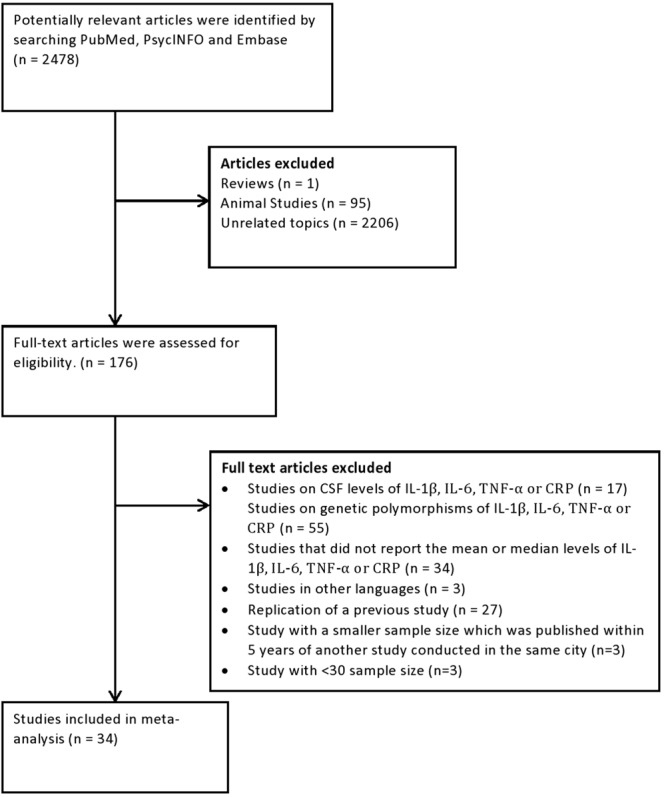
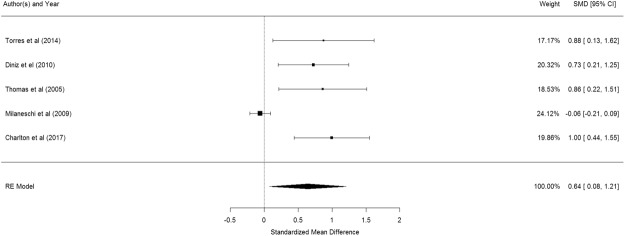
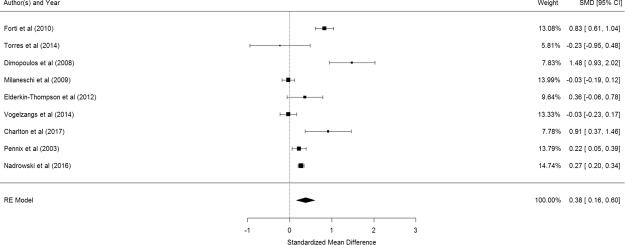
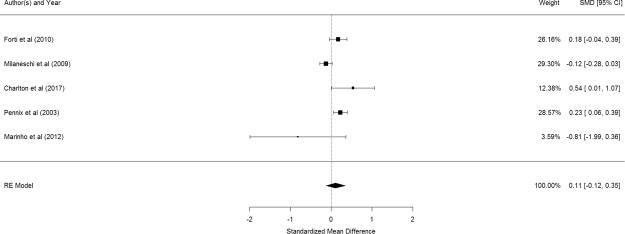
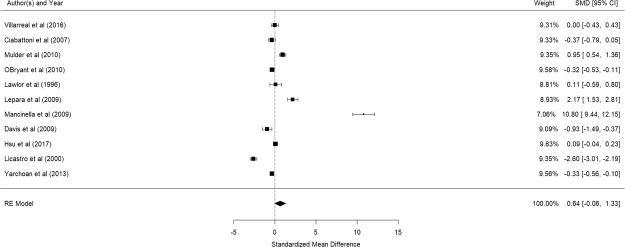
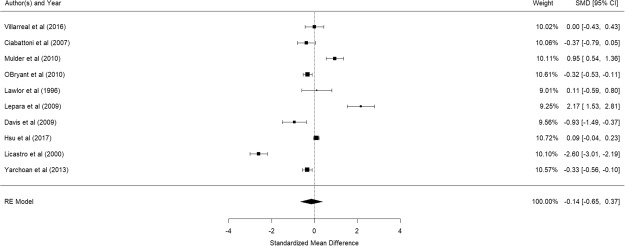
We carried out systematic review and meta-analysis to evaluate whether peripheral levels of pro-inflammatory markers including Interleukin-1 beta (IL-1β), Interleukin-6 (IL-6), Tumor Necrosis Factor-α (TNF- α) and C-Reactive Protein (CRP) are significantly higher in elderly with depression and Alzheimer’s disease. We searched Pubmed, PsycINFO and Embase, and thirty-four relevant studies (2609 with Depression, 1645 with Alzheimer’s disease and 14363 Controls) were included. Compared with controls, IL-1β (pooled standardized mean difference [SMD]: 0.642; 95% confidence interval [CI]: 0.078–1.206; significant heterogeneity: I 2 = 86.28%) and IL-6 (pooled SMD: 0.377; 95% CI: 0.156–0.598; significant heterogeneity: I 2 = 88.75%) were significantly elevated in depression. There was no difference in TNF-α (p = 0.351) and CRP (p = 0.05) between those with depression and controls. Compared with controls, IL-1β (pooled SMD: 1.37, 95% CI: 0.06–2.68, significant heterogeneity: I 2 = 96.01%) was significantly elevated in Alzheimer’s disease. There were no differences in IL-6 (p = 0.138), TNF-α (p = 0.451) and CRP (p = 0.07) between elderly with Alzheimer’s disease and controls. After Bonferroni adjustment, only IL-6 remained significantly higher in depression. Elderly with depression have higher IL-6 than controls, while those with Alzheimer’s disease did not have higher peripheral inflammatory markers.
Overview
The claims and statistics of this paper haven’t been checked yet.
Free: it reads the open-access text and checks the first 5 claims that cite a source we can check. Create a free account to check every claim.
Integrity signals
Registry
Cites
Statistics
Figures
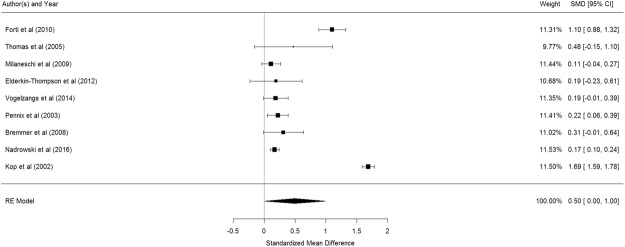
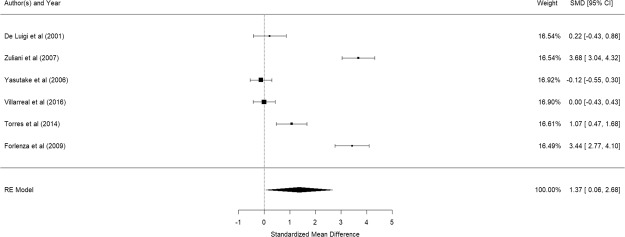
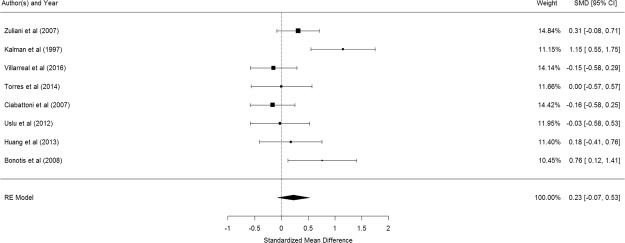
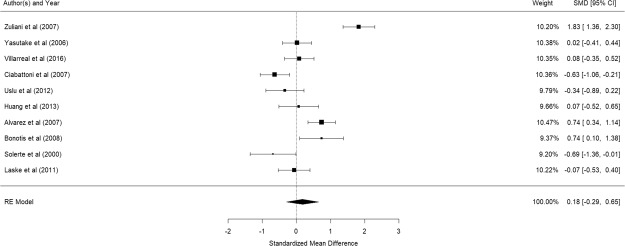
Verification
Claims the paper makes
The claims and statistics of this paper haven’t been checked yet.
Free: it reads the open-access text and checks the first 5 claims that cite a source we can check. Create a free account to check every claim.
Claims other papers make about this one
Each is checked against this paper’s own text: does it say what the citing paper says it does?
The source backs part of the claim, not all of it — or backs it for a different population, condition or comparison.
In the citing paper
“A meta-analysis concluded that IL-1β was significantly elevated in patients with depression and Alzheimer’s disease (AD), while IL-6 was elevated only in patients with depression [38].”
From Selected biomarkers of depression: what are the effects of cytokines and inflammation (2022) · cites this paper as [38]
Experimental — accuracy not yet measuredIn the citing paper
“A meta-analysis concluded that IL-1β was significantly elevated in patients with depression and Alzheimer’s disease (AD), while IL-6 was elevated only in patients with depression [38].”
From Selected biomarkers of depression: what are the effects of cytokines and inflammation (2022) · cites this paper as [38]
In the citing paper
“A meta-analysis concluded that IL-1β was significantly elevated in patients with depression and Alzheimer’s disease (AD), while IL-6 was elevated only in patients with depression [38].”
From Selected biomarkers of depression: what are the effects of cytokines and inflammation (2022) · cites this paper as [38]
In the citing paper
“IL-1β was found to be elevated in 38.5% and 75.6% of studies, respectively [38,39].”
From Selected biomarkers of depression: what are the effects of cytokines and inflammation (2022) · cites this paper as [38]
In the citing paper
“The primary conclusion was that there was no difference in the TNF levels between study groups and controls in either of the reviewed disease entities [38].”
From Selected biomarkers of depression: what are the effects of cytokines and inflammation (2022) · cites this paper as [38]
Self-check
Percentages, sums and reported differences re-computed from the paper’s own numbers.
The self-check needs the paper’s full text.
Citations
Cites
Preferred Reporting Items for Systematic Reviews and Meta-Analyses: the PRISMA statement
Moher, D., Liberati, A., Tetzlaff, J., Altman, D. G., & for the PRISMA Group (2009) · BMJ · doi:10.1136/bmj.b2535 · Cited by 83,823
Preferred reporting items for systematic reviews and meta-analyses: the PRISMA Statement.
(2009) · PubMed Central · Cited by 44,859
Preferred reporting items for systematic reviews and meta-analyses: The PRISMA statement
Moher, D., Liberati, A., Tetzlaff, J., Altman, D. G., & the PRISMA Group* (2009) · Annals of Internal Medicine · doi:10.7326/0003-4819-151-4-200908180-00135 · Cited by 37,554
Molecular Mechanisms of Depression: Perspectives on New Treatment Strategies
Lang, U. E., & Borgwardt, S. (2013) · Cellular Physiology and Biochemistry · doi:10.1159/000350094 · Cited by 8,475
Gene regulation and DNA damage in the ageing human brain
Lu, T., Pan, Y., Kao, S.-Y., Li, C., Kohane, I., Chan, J., & Yankner, B. A. (2004) · Nature · doi:10.1038/nature02661 · Cited by 1,874
Interleukin-1 stimulates the secretion of hypothalamic corticotropin-releasing factor
Sapolsky, R., Rivier, C., Yamamoto, G., Plotsky, P., & Vale, W. (1987) · Science · doi:10.1126/science.2821621 · Cited by 1,504
Gene-expression profile of the ageing brain in mice
Lee, C.-K., Weindruch, R., & Prolla, T. A. (2000) · Nature Genetics · doi:10.1038/77046 · Cited by 1,055
Liu, Y., Ho, R. C.-M., & Mak, A. (2012) · Journal of Affective Disorders · doi:10.1016/j.jad.2011.08.003 · Cited by 948
Self-citationGruver, A., Hudson, L., & Sempowski, G. (2007) · The Journal of Pathology · doi:10.1002/path.2104 · Cited by 834
Maes, M., Bosmans, E., De Jongh, R., Kenis, G., Vandoolaeghe, E., & Neels, H. (1997) · Cytokine · doi:10.1006/cyto.1997.0238 · Cited by 728
Research works printed but not linked: 1
- Puri, B., Hall, A. & Ho, R. Revision Notes in Psychiatry, Third Edition, Taylor & Francis (2013).
Cited by
Items 201–300 of 576
Jing, Z., Li, J., Fu, P., Wang, Y., Yuan, Y., Zhao, D., Hao, W., Yu, C., & Zhou, C. (2021) · BMC Psychiatry · doi:10.1186/s12888-021-03087-4 · Cited by 24
Liver and inflammatory biomarker relationships to depression symptoms in healthy older adults
Savage, K. M., Porter, C., Bunnett, E. R., Hana, M., Keegan, A. P., Ogden, E., Stough, C. K. K., & Pipingas, A. (2023) · Experimental Gerontology · doi:10.1016/j.exger.2023.112186 · Cited by 26
Hochuli, N., Kadyan, S., Park, G., Patoine, C., & Nagpal, R. (2023) · Microbiome Research Reports · doi:10.20517/mrr.2023.39 · Cited by 32
Neurological and psychiatric presentations associated with COVID-19
He, X., Zhang, D., Zhang, L., Zheng, X., Zhang, G., Pan, K., Yu, H., Zhang, L., & Hu, X. (2021) · European Archives of Psychiatry and Clinical Neuroscience · doi:10.1007/s00406-021-01244-0 · Cited by 24
Jia, S., Guan, H., Zhang, S., & Li, Q. (2024) · Actas Españolas de Psiquiatría · doi:10.62641/aep.v52i5.1680 · Cited by 23
“TNF-α works in synergy with IL-1 β and IL-6 to promote the inflammatory response in the brain [16].”
BackgroundAlrouji, M., Alshammari, M. S., Syed, T., & Shamsi, A. (2025) · Antioxidants · doi:10.3390/antiox14070774 · Cited by 26
“This chronic state is further exacerbated by mitochondrial dysfunction, defective autophagy, and oxidative stress, which all contribute to an increase in production of pro-inflammatory cytokines, such as IL-6, TNF-α , and IL-1 β [168,169].”
Natale, G., Clouston, S., & Smith, D. M. (2021) · The Journals of Gerontology Series A · doi:10.1093/gerona/glab282 · Cited by 22
Wu, X., Dai, B., Yan, F., Chen, Y., Xu, Y., Xia, Q., & Zhang, X. (2022) · Clinical Interventions in Aging · doi:10.2147/cia.s361459 · Cited by 29
Díez, G. G., Anitua, E., Castellanos, N. P., Vázquez, C., Galindo‐Villardón, P., & Alkhraisat, M. H. (2022) · PLoS ONE · doi:10.1371/journal.pone.0276734 · Cited by 34
“However, the meta-analysis by Ng et al. showed that older people with depression had significantly higher peripheral IL-1 β levels than people in the control group and along the same lines [53].”
Schmidt-Morgenroth, I., Michaud, P., Gasparini, F., & Avraméas, A. (2023) · International Journal of Molecular Sciences · doi:10.3390/ijms241310523 · Cited by 27
“High CRP blood levels have been associated with neurological disease and depression, but little is known about the relationship between CSF and blood levels [27,64].”
BackgroundMechanisms of comorbidity between Alzheimer's disease and pain
Yao, K., Wang, S., Xu, Z., Fan, Z., Chen, Z., Jia, P., Tu, S., Liu, Y., Lin, X., Xu, Y., et al. (2025) · Alzheimer s & Dementia · doi:10.1002/alz.14605 · Cited by 23
“99,100 This process activates glial cells, intensifying neuroinflammation.”
Jadhav, V. S., & Khatri, D. K. (2025) · Ageing Research Reviews · doi:10.1016/j.arr.2025.102872 · Cited by 24
Kong, C., Jia, L., & Jia, J. (2022) · European Journal of Pharmacology · doi:10.1016/j.ejphar.2022.174744 · Cited by 24
Microbial–Immune Crosstalk in Elderly-Onset Inflammatory Bowel Disease: Unchartered Territory
Meng, G., Monaghan, T. M., Duggal, N. A., Tighe, P., & Peerani, F. (2023) · Journal of Crohn s and Colitis · doi:10.1093/ecco-jcc/jjad025 · Cited by 23
Wang, J., Wu, S., Zhang, J., Li, Y., Wu, Y., & Qi, X. (2023) · BMC Nephrology · doi:10.1186/s12882-023-03410-z · Cited by 21
Haniff, Z. R., Bocharova, M., Mantingh, T., Rucker, J., Velayudhan, L., Taylor, D. M., Young, A. H., Aarsland, D., Vernon, A. C., & Thuret, S. (2024) · Pharmacology & Therapeutics · doi:10.1016/j.pharmthera.2024.108641 · Cited by 22
“…axis (Bellavance & Rivest, 2014; Jeon & Kim, 2016) and it is established that patients with major depression and dementia have increased levels of peripheral pro-in fl ammatory cytokines such as interleukin (IL)-1 β , IL-6 and tumor necrosis factor (TNF)- α (Khemka et al., 2014; Ng et al., 2018).”
Association between dietary magnesium intake, inflammation, and neurodegeneration
Alateeq, K., Walsh, E., Ambikairajah, A., & Cherbuin, N. (2024) · European Journal of Nutrition · doi:10.1007/s00394-024-03383-1 · Cited by 24
Neuroimmune Advance in Depressive Disorder
Zhao, G., & Liu, X. (2019) · Advances in Experimental Medicine and Biology · doi:10.1007/978-981-32-9271-0_4 · Cited by 20
Chen, T., Shou, L., Guo, X., Wei, M., Zheng, H., & Tao, T. (2021) · Bioengineered · doi:10.1080/21655979.2021.2009975 · Cited by 20
“T STZ results in the release of pro-inflammatory cytokines such as TNF-α, IL-6, and CRP by activating the microglia, and finally contributes to neuroinflammation [6,40,41].”
RetractedBallesio, A., Zagaria, A., Ottaviani, C., Steptoe, A., & Lombardo, C. (2022) · Psychoneuroendocrinology · doi:10.1016/j.psyneuen.2022.105770 · Cited by 22
Anghelescu, A., Onose, G., Popescu, C., Băilă, M., Stoica, S. I., POSTOIU, R. L., Brumă, E., Petcu, I., Ciobanu, V., & Munteanu, C. (2022) · Biomedicines · doi:10.3390/biomedicines10051000 · Cited by 22
Peripheral sTREM2-Related Inflammatory Activity Alterations in Early-Stage Alzheimer’s Disease
Weber, G. E., Khrestian, M., Tuason, E. D., Shao, Y. Y., Pillai, J. A., Rao, S. M., Feng, H., Zhou, Y., Cheng, F., DeSilva, T. M., et al. (2022) · The Journal of Immunology · doi:10.4049/jimmunol.2100771 · Cited by 23
Role of high mobility group box protein 1 in depression: A mechanistic and therapeutic perspective
Wang, S., Guan, Y., Zhu, Y., & Wang, M. (2022) · World Journal of Psychiatry · doi:10.5498/wjp.v12.i6.779 · Cited by 23
Therapeutic potential for P2Y2 receptor antagonism
Jasmer, K. J., Forti, K. M., Woods, L. T., Cha, S., & Weisman, G. A. (2022) · Purinergic Signalling · doi:10.1007/s11302-022-09900-3 · Cited by 23
MicroRNAs in mouse and rat models of experimental epilepsy and potential therapeutic targets
Martinez, B., & Peplow, P. V. (2023) · Neural Regeneration Research · doi:10.4103/1673-5374.369093 · Cited by 20
“The expression levels of interleukin (IL)-1β, IL-6, and tumor necrosis factor alpha (TNF-α), which are important proinflammatory factors (Ng et al., 2018), were significantly upregulated in the epilepsy group vs.”
BackgroundHuang, X., Huang, S., Fu, F., Song, J., Zhang, Y., & Yue, F. (2024) · Alzheimer s Research & Therapy · doi:10.1186/s13195-024-01416-9 · Cited by 25
“Individuals with increased levels of proinflammatory cytokines (IL-1, IL-6, and TNF-α) also have a higher risk of developing AD [42, 43].”
Yao, H., Mizoguchi, Y., Monji, A., Yakushiji, Y., Takashima, Y., Uchino, A., Yuzuriha, T., & Hashimoto, M. (2019) · International Journal of Molecular Sciences · doi:10.3390/ijms20081905 · Cited by 21
“Recent meta-analyses revealed that elevated levels of inflammation markers were found to be associated with an increased risk of depression in the general population [15,16].”
BackgroundFactors associated with health‐related quality of life in community‐dwelling elderly people in China
Wang, Q., Liu, X., Zhu, M., Pang, H., Kang, L., Zeng, P., Ge, N., Qu, X., Chen, W., & Hong, X. (2020) · Geriatrics and gerontology international/Geriatrics & gerontology international · doi:10.1111/ggi.13895 · Cited by 23
Inflammatory biomarkers profiles and cognition among older adults
Thomas, A., Guo, J., Reyes‐Dumeyer, D., Sanchez, D. L., Scarmeas, N., Manly, J. J., Brickman, A. M., Lantigua, R., Mayeux, R. P., & Gu, Y. (2025) · Scientific Reports · doi:10.1038/s41598-025-86309-z · Cited by 26
Afzal, M., Al-Abbasi, F. A., Kazmi, I. A., Imam, S. S., Alshehri, S., Ghoneim, M. M., Almalki, W. H., Nadeem, M. S., & Sayyed, N. (2021) · ACS Chemical Neuroscience · doi:10.1021/acschemneuro.1c00712 · Cited by 18
Patel, P., & Shah, J. (2022) · Metabolic Brain Disease · doi:10.1007/s11011-022-01086-2 · Cited by 22
Okamoto, N., Hoshikawa, T., Honma, Y., Chibaatar, E., Ikenouchi, A., Harada, M., & Yoshimura, R. (2023) · European Archives of Psychiatry and Clinical Neuroscience · doi:10.1007/s00406-023-01713-8 · Cited by 22
“A previous systematic review and meta-analysis showed no difference in TNF-α levels between patients with MDD and healthy controls [35].”
MethodPalamarchuk, I. S., Slavich, G. M., Vaillancourt, T., & Rajji, T. K. (2023) · BMC Neuroscience · doi:10.1186/s12868-023-00831-2 · Cited by 32
“…responses (e.g., levels of IL-6, TNF-α, and C-reactive protein), as well as the polymorphisms in IL6, IL1β , IL10 , and TNFIα , appear to contribute to a potential increased susceptibility to depression, cognitive impairment, and dementia/Alzheimer’s disease [e.g., 445–452].”
BackgroundCognitive Control as a 5-HT1A-Based Domain That Is Disrupted in Major Depressive Disorder
Langenecker, S. A., Mickey, B. J., Eichhammer, P., Sen, S., Elverman, K. H., Kennedy, S. E., Heitzeg, M. M., Ribeiro, S. M., Love, T. M., Hsu, D. T., et al. (2019) · Frontiers in Psychology · doi:10.3389/fpsyg.2019.00691 · Cited by 18
“…Ramage and Villalon, 2008; Quek et al., 2017; Ho et al., 2018), and changes in 5-HT1A function are coassociated with changes in proinflammatory cytokines including interleukin-1 beta (IL-1β), IL17, and tumor necrosis factor – alpha (TNF-α) (Aune et al., 1993; Lu et al., 2017; Ng et al., 2018).”
BackgroundGao, X., Li, Y., Sun, Z., Xu, H., Ma, G., Deng, Q., Zhang, C. X., & Li, R. (2021) · Molecular Neurobiology · doi:10.1007/s12035-021-02313-0 · Cited by 22
L- lactate inhibits lipopolysaccharide-induced inflammation of microglia in the hippocampus
Liang, L., Liu, P., Deng, Y., Li, J., & Zhao, S. (2022) · International Journal of Neuroscience · doi:10.1080/00207454.2022.2084089 · Cited by 21
Akter, M. S., Emon, F. A., Nahar, Z., Qusar, M. S., Islam, S. M. A., Shahriar, M., Bhuiyan, M. A., & Islam, M. R. (2023) · BMC Psychiatry · doi:10.1186/s12888-023-05354-y · Cited by 20
Li, X., Wang, J., Dong, S., Fu, J., & Liu, J. (2020) · Frontiers in Public Health · doi:10.3389/fpubh.2019.00417 · Cited by 20
Nanoparticle-based 3D membrane for impedimetric biosensor applications
Cao, L., Kiely, J., Piano, M., & Luxton, R. W. (2020) · Bioelectrochemistry · doi:10.1016/j.bioelechem.2020.107593 · Cited by 18
Psychological impact of COVID‐19 on hospital workers in nursing care hospitals
Yang, S., Kwak, S. G., & Chang, M. C. (2020) · Nursing Open · doi:10.1002/nop2.628 · Cited by 23
“The mortality rate is especially high in older adults due to chronic illness and deterioration of the immune system (Ng et al., 2018).”
BackgroundNFL strongly correlates with TNF-R1 in the plasma of AD patients, but not with cognitive decline
Delaby, C., Julian, A. G., Page, G., Ragot, S., Lehmann, S., & Paccalin, M. (2021) · Scientific Reports · doi:10.1038/s41598-021-89749-5 · Cited by 19
Advances in the research of comorbid insomnia and depression: mechanisms, impacts, and interventions
Gao, T., Xiang, H., Wu, Q. N., Zhu, L. S., Pei, W. J., Fu, W. J., & Chou, T. S. (2025) · Frontiers in Psychiatry · doi:10.3389/fpsyt.2025.1468212 · Cited by 17
“In fl ammation plays an important role in adult psychiatric disorders (82).”
Song, Y., & Chung, J. (2023) · Current Issues in Molecular Biology · doi:10.3390/cimb45080416 · Cited by 20
Bocharova, M., Borza, T., Watne, L. O., Engedal, K., O'Brien, J. T., Selbæk, G., Idland, A., Hodsoll, J. P., Young, A. H., & Aarsland, D. (2025) · Molecular Psychiatry · doi:10.1038/s41380-025-02908-2 · Cited by 21
Jin, Z., Lu, Y., Tang, H., & Cui, H. (2025) · Alzheimer s & Dementia · doi:10.1002/alz.70472 · Cited by 27
“95,96 GFAP is an astrocyte-specific and well-established biomarker of neuroinflammation, with greater plasma increases in AD than in CSF. 97 Besides, YKL-40, a glycoprotein produced by active astrocytes in AD and reflecting neuroinflammation, is also a promising biomarker for diagnosis and…”
Gędek, A., Modrzejewski, S., Materna, M., Iwański, M., Wichniak, A., & Dominiak, M. (2025) · International Journal of Molecular Sciences · doi:10.3390/ijms262110362 · Cited by 28
Systemic Inflammation Predicts Alzheimer Pathology in Community Samples without Dementia
Cherbuin, N., Walsh, E., Leach, L., Brüstle, A., Burns, R. A., Anstey, K. J., Sachdev, P. S., & Baune, B. T. (2022) · Biomedicines · doi:10.3390/biomedicines10061240 · Cited by 18
Aranđelović, J., Santrač, A., Batinić, B., Todorović, L., Stevanović, V., Tiruveedhula, V. V. N. P. B., Sharmin, D., Rashid, F., Stanojević, B., Cook, J. M., et al. (2022) · CNS Neuroscience & Therapeutics · doi:10.1111/cns.13914 · Cited by 16
Overview of Federated Facility to Harmonize, Analyze and Management of Missing Data in Cohorts
Rajula, H. S. R., Odintsova, V. V., Manchia, M., & Fanos, V. (2019) · Applied Sciences · doi:10.3390/app9194103 · Cited by 18
Earlier age of onset is associated with a pro-inflammatory state in major depressive disorder
Anzolin, A. P., Feiten, J. G., Bristot, G., Possebon, G. M. P., Fleck, M. P. D. A., Caldieraro, M. A., & Kauer‐Sant’Anna, M. (2022) · Psychiatry Research · doi:10.1016/j.psychres.2022.114601 · Cited by 19
Gender Differences in the Impact of Depression on Cognitive Decline Among Korean Older Adults
Hwang, J., Kim, S.-J., & Kim, S. (2020) · Asia-Pacific journal of public health · doi:10.1177/1010539520961715 · Cited by 15
Postu, P. A., Mihăşan, M., Gorgan, L., Sadiki, F. Z., Idrissi, M. E., & Hriţcu, L. (2022) · Biomedicines · doi:10.3390/biomedicines10092300 · Cited by 21
“Exacerbated inflammatory background [37,38], unbalanced oxidant–antioxidant status [39], decreased neurotrophin levels [40–42], impairments in neurotransmitter systems [43], and elevated levels of neurofibrillary tangles (NFTs) [44,45] appear as common ground for AD and depression, while the co-occurrence of AD and an…”
BackgroundSchröder, S., Heck, J., Groh, A., Frieling, H., Bleich, S., Kahl, K. G., Bosch, J. J., Krichevsky, B., & Westhoff, M. S. (2022) · Brain Sciences · doi:10.3390/brainsci12111424 · Cited by 16
“The significance of inflammatory markers such as CRP, which can readily be determined in peripheral blood, has also been investigated repeatedly, especially in AD, with partly contradictory results [26,35,36].”
BackgroundResultArab, H. H., Khames, A., Mohammad, M. K., Alsufyani, S. E., Ashour, A. M., El‐Sheikh, A. A. K., Darwish, H. W., & Gad, A. M. (2023) · Pharmaceuticals · doi:10.3390/ph16060848 · Cited by 16
“Accordingly, suppression of the neuroinflammation component of depression may pave the way for more advanced personalized depression management [51,63].”
BackgroundA link between ghrelin and major depressive disorder: a mini review
Lis, M., Miłuch, T., Majdowski, M., & Zawodny, T. (2024) · Frontiers in Psychiatry · doi:10.3389/fpsyt.2024.1367523 · Cited by 23
Psychological and physiological effects of viewing a money plant by older adults
Hassan, A., Chen, Q., Yinggao, L., Jiang, T., Li, G., Jiang, M., Li, N., & Lv, B. (2019) · Brain and Behavior · doi:10.1002/brb3.1359 · Cited by 20
Zhang, Y., Jiang, L., & Han, Y. (2022) · Genetics Research · doi:10.1155/2022/1384609 · Cited by 18
“Enormous studies have manifested increased levels of proinflammatory cytokines such as CRP, IL-1β, IL-6, and TNF-α in elderly patients with depression ([31] and the patients underwent surgery) [32, 33].”
BackgroundMandal, G., Alboni, S., Cattane, N., Marizzoni, M., Saleri, S., Arslanovski, N., Mariani, N., Kirkpatrick, M., Cattaneo, A., Pariante, C. M., et al. (2025) · Molecular Psychiatry · doi:10.1038/s41380-025-03119-5 · Cited by 16
Cellular Senescence and Immunosenescence in Melanoma: Insights From the Tumor Microenvironment
Xiong, L., & Cheng, J. (2025) · Cancer Medicine · doi:10.1002/cam4.71223 · Cited by 17
“Elevated systemic levels of IL-6, TNF-α, and CRP are frequently observed in older patients and correlate with poorer responses to ICIs [69].”
Wang, C., Jiang, H., Liu, H., Chen, S., Guo, H., Ma, S., Han, W., Li, Y., & Wang, D. (2023) · Food Science and Human Wellness · doi:10.1016/j.fshw.2023.02.035 · Cited by 16
Zuccarella‐Hackl, C., Princip, M., Auschra, B., Meister‐Langraf, R. E., Barth, J., & von Känel, R. (2023) · Neuroscience & Biobehavioral Reviews · doi:10.1016/j.neubiorev.2023.105186 · Cited by 17
da Silva, D. M. A., Lopes, I. S., Oliveira, J. V. S., Júnior, M. A. S., Rebouças, M. D. O., Valentim, J. T., Vale, L. D. C., Capibaribe, V. C. C., de Carvalho, M. A. J., de Aquino, P. É. A., et al. (2024) · Pharmacology Biochemistry and Behavior · doi:10.1016/j.pbb.2024.173778 · Cited by 20
Chauhan, R., Dande, S., Hood, D. B., Chirwa, S., Langston, M. A., Grady, S. K., Dojcsak, L., Tabatabai, M., Wilus, D. M., Valdez, R. B., et al. (2025) · Journal of Toxicology and Environmental Health Part B · doi:10.1080/10937404.2025.2450354 · Cited by 24
Shao, K.-D., Mao, P.-W., Li, Q., Li, L.-D.-J., Wang, Y., & Zhou, X. (2019) · Food and Agricultural Immunology · doi:10.1080/09540105.2019.1686467 · Cited by 15
“It is well recognized that TNF-α is a pro-inflammatory cytokine and plays an essential role in the immune responses and inflammation (Ng et al., 2018).”
BackgroundWu, X., Zhang, Z., Zhang, X. L., Guo, Y., Liu, F., Gong, J., Li, L., Chen, X., & Li, Z. (2023) · International Immunopharmacology · doi:10.1016/j.intimp.2023.110552 · Cited by 15
Oluwagbemigun, K., Anesi, A., Vrhovšek, U., Mattivi, F., Adami, P. V. M., Pentzek, M., Scherer, M., Riedel-Heller, S. G., Weyerer, S. B., Bickel, H., et al. (2023) · Molecular Neurobiology · doi:10.1007/s12035-023-03513-6 · Cited by 19
Young, J. J., Park, H., Kim, M., Par‐Young, J., Bartlett, H. H., Kim, H. S., Ünlü, S., Osmani, L., Shin, M. S., Bucala, R., et al. (2023) · Immunity & Ageing · doi:10.1186/s12979-023-00396-y · Cited by 17
Xu, S., Zhou, Y., Wang, S., Li, Q., Feng, Y., Chen, L., & Duan, K. (2024) · European Journal of Obstetrics & Gynecology and Reproductive Biology · doi:10.1016/j.ejogrb.2024.03.024 · Cited by 14
Relationship Between Obesity and Depression Considering the Inflammatory Theory
Oracz, A. J., Zwierz, M., Naumowicz, M., Suprunowicz, M., & Waszkiewicz, N. (2025) · International Journal of Molecular Sciences · doi:10.3390/ijms26114966 · Cited by 25
“Animal studies have shown that ghrelin administration affects specific proinflammatory cytokines often associated with depression [126,127], leading to lower levels of these cytokines—a finding confirmed in both a clinical trial involving patients with MDD [128], as well as in a study on male…”
Sochocka, M., Ochnik, M., Sobczyński, M., Siemieniec, I., Orzechowska, B., Naporowski, P., & Leszek, J. (2019) · Journal of Neuroinflammation · doi:10.1186/s12974-019-1520-6 · Cited by 16
Ye, L., Wang, Z., Kim, Y., Elias, P. M., Li, T., Wen, S., Song, J., Lv, C., Yang, B., & Man, M. (2022) · Journal of the European Academy of Dermatology and Venereology · doi:10.1111/jdv.18162 · Cited by 17
Inflammation and Trauma-Related Psychopathology in Syrian and Iraqi Refugees
Grasser, L. R., Burghardt, P. R., Daugherty, A. M., Amirsadri, A., & Javanbakht, A. (2020) · Behavioral Sciences · doi:10.3390/bs10040075 · Cited by 14
Lee, S., Lee, K. H., Park, K. M., Park, S. J., Kim, W. J., Lee, J., Kronbichler, A., Smith, L., Solmi, M., Stubbs, B., et al. (2021) · Psychological Medicine · doi:10.1017/s0033291721003767 · Cited by 15
Fan, Z., Ma, H., Li, Y., Wu, Y., Wang, J., Xiong, L., Fang, Z., & Zhang, X. (2022) · Frontiers in Pharmacology · doi:10.3389/fphar.2022.884821 · Cited by 13
“Some systematic reviews and meta-analyses have shown that only IL-6 expression is significantly higher in depression (Ng et al., 2018).”
BackgroundToledano, R. S., & Akirav, I. (2025) · Neuropsychopharmacology · doi:10.1038/s41386-025-02213-0 · Cited by 18
“Our study found no effect of STZ on IL-6 levels, consistent with fi ndings that IL-6 is less frequently elevated in AD [82].”
NLRP3 Inflammasome: A New Target for the Treatment of CVD and Depression Comorbidity
Chen, C., Zhang, S., Sheng, M., & Shao, W. (2025) · Mediators of Inflammation · doi:10.1155/mi/4330574 · Cited by 18
“Elevated IL-1 β levels are observed in patients with MDD [169, 170].”
Koy, E. H. S., Labauge, P. M., Baillet, A. C., Prati, C., Marotte, H., & Pers, Y. (2021) · Therapeutic Advances in Musculoskeletal Disease · doi:10.1177/1759720x211025894 · Cited by 20
Hao, Y., Guo, X., Wang, X., Shi, X., Shi, M., Meng, L., Gong, M., Fu, Y., Zhao, Y., Du, Y., et al. (2022) · Toxicology and Applied Pharmacology · doi:10.1016/j.taap.2022.116131 · Cited by 14
Lee, C., Min, S. H., & Niitsu, K. (2022) · Biological Research For Nursing · doi:10.1177/10998004221110602 · Cited by 15
“…can be argued that CRP might not be the optimal candidate inflammatory marker of depression in old age; according to a meta-analysis of peripheral inflammatory markers (Ng et al., 2018), not CRP, but IL-6 was significantly elevated in older patients with depression compared to control counterparts.”
ResultBasutkar, R. S., Sudarsan, P., Robin, S. M., Bhaskar, V., Viswanathan, B., & Ponnusankar, S. (2023) · Neurology India · doi:10.4103/0028-3886.391397 · Cited by 17
Dragović, I. R., Popović, N., Ždralević, M., Radulović, L., Vuković, T., Marzano, F., Tullo, A., & Radunović, M. (2022) · Journal of Alzheimer s Disease · doi:10.3233/jad-220676 · Cited by 18
Yirün, A., Çakır, D. A., Sanajou, S., KÖSE, S. B. E., Balcı, A., Zeybek, N. D., Bozdemir, Ö., Baydar, T., & Erkekoğlu, P. (2023) · Journal of Applied Toxicology · doi:10.1002/jat.4471 · Cited by 14
“New evidence suggests that complement system proteins are also neuroprotective (especially in the preclinical stages of AD) and have neuroinflammatory effects (Ng et al., 2018; Shah et al., 2021).”
Dong, Z., Kuang, W., Shen, X., & Tian, L. (2021) · Psychiatry Research · doi:10.1016/j.psychres.2021.113723 · Cited by 13
Nie, J., Fang, Y., Chen, Y., Aisikeer, A., Qiu, Q., Zhao, L., Liu, X., Sun, L., Li, Y., Zhong, C., et al. (2022) · Frontiers in Immunology · doi:10.3389/fimmu.2021.803633 · Cited by 15
“Previous research found that plasma circulating IL-6 may be a useful indication for future cognitive function (26), and increased IL-6 levels were reported in LLD patients in peripheral blood (27).”
BackgroundInsights for Alzheimer's disease pharmacotherapy and current clinical trials
do Nascimento, A. L. C. S., Fernandes, R. P., Carvalho, A. C. S., Frigieri, I., Alves, R. C., & Chorilli, M. (2022) · Neurochemistry International · doi:10.1016/j.neuint.2022.105401 · Cited by 14
Bullous Dermatoses and Depression: A Systematic Review
Pourali, S. P., Gutierrez, Y., Kucharik, A. H., Rajkumar, J. R., Jones, M. E., Ortiz, I., David, M., & Armstrong, A. W. (2021) · JAMA Dermatology · doi:10.1001/jamadermatol.2021.4055 · Cited by 13
fNIRS Assessment during Cognitive Tasks in Elderly Patients with Depressive Symptoms
Kang, M. J., Cho, S.-Y., Choi, J., & Yang, Y. (2023) · Brain Sciences · doi:10.3390/brainsci13071054 · Cited by 12
Ferrari, S., Mulè, S., Rosso, G., Parini, F., Galla, R., Molinari, C. G., & Uberti, F. (2024) · International Journal of Molecular Sciences · doi:10.3390/ijms25094774 · Cited by 16
Ali, A., Sultana, N., Waheed, A., Ali, M. H., Emad, N. A., Aqil, M., Sultana, Y., & Mujeeb, M. (2024) · Journal of Drug Delivery Science and Technology · doi:10.1016/j.jddst.2024.105947 · Cited by 15
Biofluid biomarkers for Alzheimer’s disease: past, present, and future
An, C., Cai, H., Ren, Z., Fu, X., Quan, S., & Jia, L. (2024) · Medical Review · doi:10.1515/mr-2023-0071 · Cited by 14
“Interleukin (IL) has emerged as a potential biomarker in numerous studies, focusing on alterations in pro-in fl ammatory cytokines like IL-1 α , IL-1 β , and IL-6 in individuals with AD [128].”
Komal, K., Ghosh, R., Sil, D., Sharma, R., Kumar, S., Pandey, P., & Kumar, M. (2025) · Inflammopharmacology · doi:10.1007/s10787-024-01636-3 · Cited by 16
Bjørklund, G., Butnariu, M., Caunii, A., & Peana, M. (2026) · Molecular Neurobiology · doi:10.1007/s12035-026-05672-8 · Cited by 13
Simões, J. L. B., Sobierai, L. D., Leal, I. F., dos Santos, M. V. R., Coiado, J. V., & Bagatini, M. D. (2022) · Neuroscience · doi:10.1016/j.neuroscience.2022.12.007 · Cited by 11
Chen, J., Zou, C., Guan, H., Zhou, X., Hou, L., Cui, Y., Xu, J., Luan, P., & Dong, Z. (2024) · CNS Neuroscience & Therapeutics · doi:10.1111/cns.14823 · Cited by 10
Experimental peri-implantitis induces neuroinflammation: An exploratory study in rats
Cafferata, E. A., Ramanauskaitė, A., Cuypers, A., Obreja, K., Dohle, E., Ghanaati, S., & Schwarz, F. (2024) · BMC Oral Health · doi:10.1186/s12903-024-04995-z · Cited by 12
“…differences between a state of health or disease may rely on IL-6 differential signaling pathways, i.e., cis or trans, rather than the concentration of the cytokine [55, 57], thus drawing attention to the development of functional studies on IL-6 signaling role during neuroinflammatory pathologies.”
Sun, Y., Shi, X., Ohm, M., Körte, M., & Zagrebelsky, M. (2025) · Scientific Reports · doi:10.1038/s41598-025-95546-1 · Cited by 15
Circulating Biomarkers for the Early Diagnosis of Alzheimer’s Disease
Nunkoo, V. S., Jurcău, A., Les, M., Cristian, A., Militaru, M., Marge, C., Iovanovici, D. C., & Jurcău, M. C. (2025) · International Journal of Molecular Sciences · doi:10.3390/ijms26157268 · Cited by 15
“…(TGF)- β , tumor necrosis factor (TNF)- α [107] or IL-2, CXCL10, C reactive protein, and interferon-γ [108] in the blood of AD patients, while other studies show no significant differences between AD and non-AD subjects in the peripheral levels of IL-1 β , TNF-α , IL-6, or C reactive protein [109].”
Imaging Biomarkers for Monitoring the Inflammatory Redox Landscape in the Brain
Fernandes, E. F. A., & Özcelik, D. (2021) · Antioxidants · doi:10.3390/antiox10040528 · Cited by 14
Hoshikawa, T., Okamoto, N., Natsuyama, T., Fujii, R., Ikenouchi, A., Honma, Y., Harada, M., & Yoshimura, R. (2022) · Neuropsychiatric Disease and Treatment · doi:10.2147/ndt.s350121 · Cited by 13
“Moreover, meta-analysis showed that plasma levels of TNF-α also increased in major depression.(6,23,24) Taken together, plasma levels of TNF-α is considered to additively and/or synergistically increased in patients with type 2 diabetes mellitus.”
BackgroundWang, J. Y., & Sun, Y. (2022) · Frontiers in Molecular Biosciences · doi:10.3389/fmolb.2022.942303 · Cited by 16
“Meanwhile, while IL-1β can also increase the activity of TNFα, and then promotes inflammatory response (Ng et al., 2018).”
Background
Metadata
- Authors
- Ng, A., Tam, W. W., Zhang, M. W., Ho, C. S., Husain, S. F., McIntyre, R. S., & Ho, R. C.
- Affiliations
- National University Health System (SG)
- National University of Singapore (SG)
- University Health Network (CA)
- Corresponding author
- Ho, Cyrus S.
- Venue
- Scientific Reports
- Published
- 2018-08-13
- Volume
- 8
- Issue
- 1
- Pages
- 12050-12050
- ISSN
- 2045-2322 (ISSN-L)
- PMC
- PMC6089986
- OpenAlex
- W2886676544
- Cited by
- 572
- References
- 103
- Citations by year
- 2026: 42 · 2025: 90 · 2024: 80 · 2023: 84 · 2022: 119 · 2021: 73 · 2020: 53 · 2019: 25 · 2018: 3
- FWCI
- 3.36
- Type
- journal article
- Language
- en
- Open access
- gold
- doi.org
- Licence
- cc-by
- creativecommons.org/licenses/by/4.0 (tdm)
- creativecommons.org/licenses/by/4.0 (vor)
- Locations
- Scientific Reports (publishedVersion, cc-by)
- Europe PMC (PubMed Central) (publishedVersion, other-oa)
- PubMed Central (publishedVersion, cc-by)
- PubMed (publishedVersion)
- National University of Singapore (submittedVersion)
- DOAJ (DOAJ: Directory of Open Access Journals) (submittedVersion)
- Rare & Special e-Zone (The Hong Kong University of Science and Technology) (submittedVersion)
- Topics
- Life Sciences › Neuroscience › Biological Psychiatry › Tryptophan and brain disorders
- Life Sciences › Neuroscience › Behavioral Neuroscience › Stress Responses and Cortisol
- Life Sciences › Neuroscience › Neurology › Neuroinflammation and Neurodegeneration Mechanisms
- Keywords
- IL-1β, interleukin-6, TNF-α, C-reactive protein, depression, Alzheimer's disease, older adults, peripheral inflammatory markers, neuroinflammation
- MeSH terms
- Aged, Alzheimer Disease, C-Reactive Protein, Depression, Depressive Disorder, Humans, Inflammation, Middle Aged, Proteins, Interleukin-6, Adaptor Proteins, Signal Transducing, Interleukin-1beta
About these checks
Registry, retraction, Cites and statistics results are computed, not judged, with one exception: a printed reference that no index lists is read once by a model before it counts as a citation error. Claims are extracted by a model and kept only when their quote appears verbatim in the text; each cited source is then checked, with a model’s help, for whether it says what the claim relies on. Those verdicts can be wrong — read the claim’s quote and the cited source before relying on one.
Statistics and arithmetic are recomputed, not judged.
Confidence bands are shown only for fields calibrated on our annotated test set. None is calibrated yet, so no band is shown.
What counts as a claim ›How we measure confidence ›How we check this ›
Are you an author, or do you see a problem with this page? Request a review
Data sources
Bibliographic data: Semantic Scholar, OpenAlex, Crossref.
Contains information from the Semantic Scholar Academic Graph Datasets, made available under the ODC Attribution License (ODC-BY 1.0).
Semantic Scholar’s data is described in: Kinney, R., et al. (2023). The Semantic Scholar Open Data Platform. arXiv:2301.10140.
