

The UV/Visible Radiation Boundary Region (385–405 nm) Damages Skin Cells and Induces “dark” Cyclobutane Pyrimidine Dimers in Human Skin in vivo
Open accessThe DOI matches its Crossref record; 67 of the 67 references it cites were found in a registry or an index.
Abstract
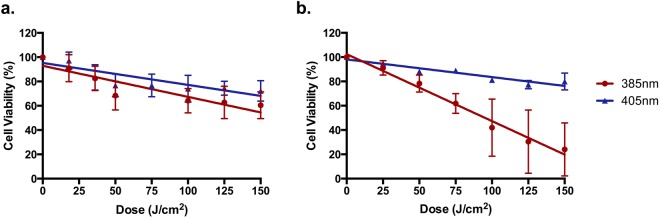
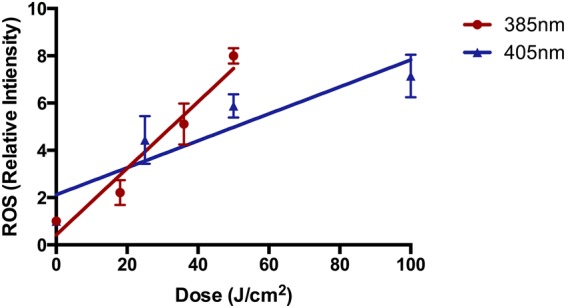
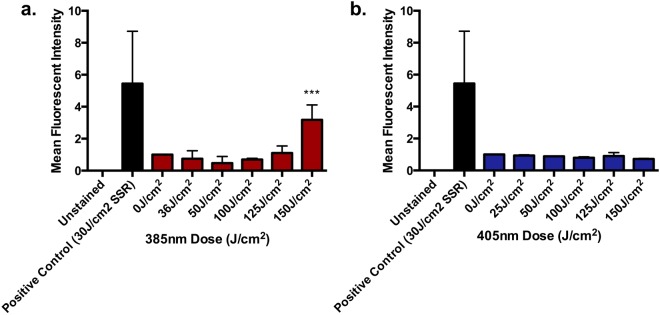
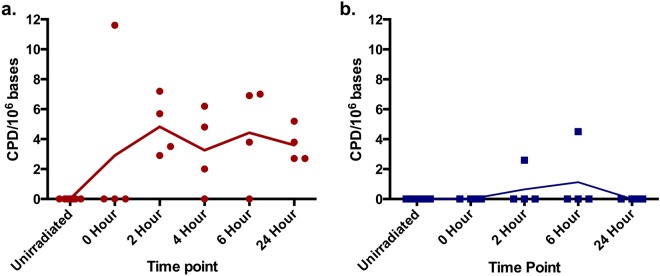
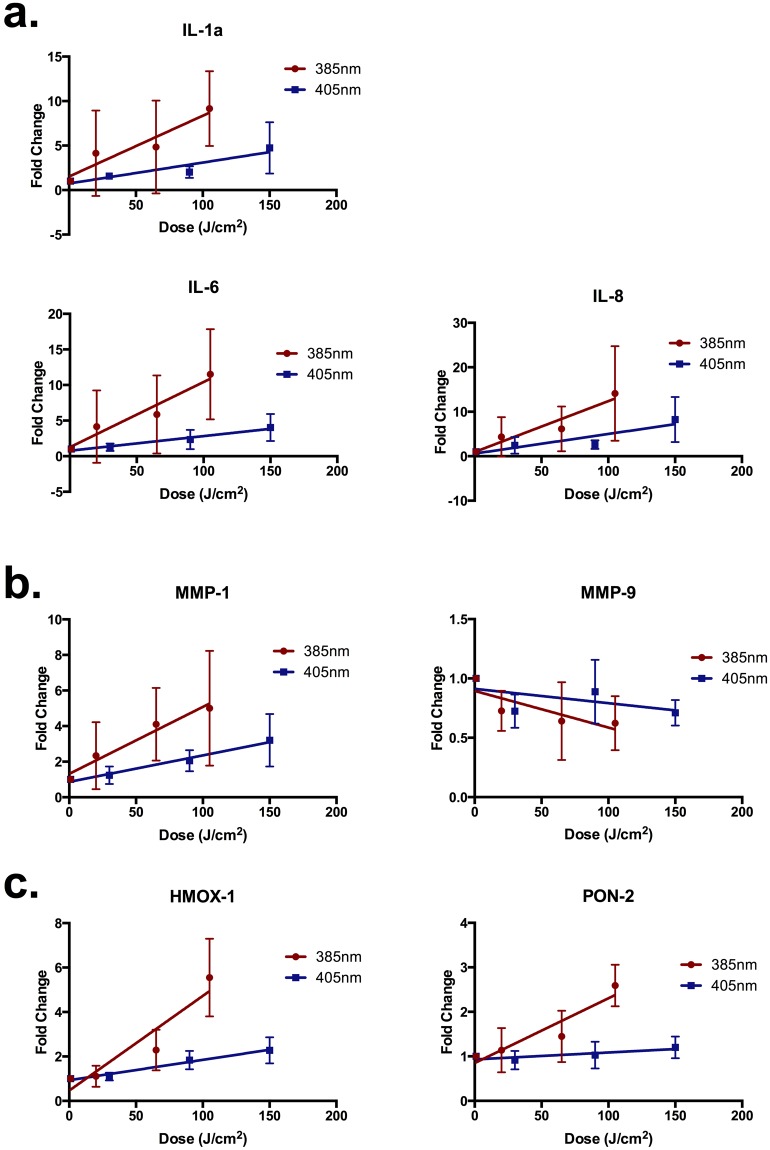
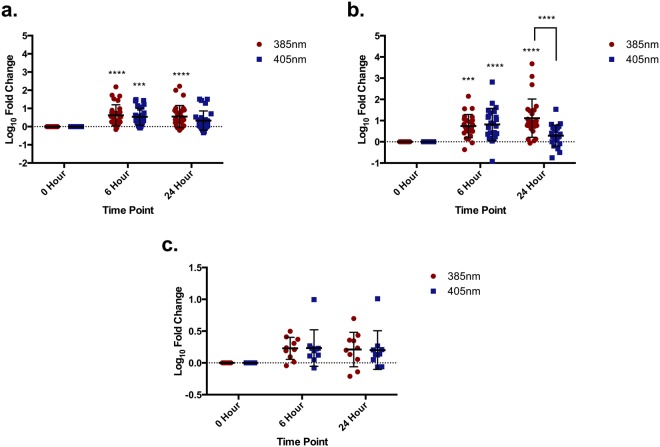
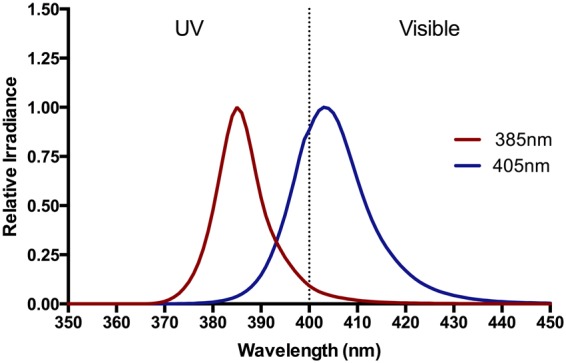
The adverse effects of terrestrial solar ultraviolet radiation (UVR) (~295–400 nm) on the skin are well documented, especially in the UVB region (~295–320 nm). The effects of very long-wave UVA (>380 nm) and visible radiation (≥400 nm) are much less known. Sunscreens have been beneficial in inhibiting a wide range of photodamage, however most formulations provide very little protection in the long wave UVA region (380–400 nm) and almost none from shortwave visible wavelengths (400–420 nm). We demonstrate photodamage in this region for a number of different endpoints including cell viability, DNA damage (delayed cyclobutane pyrimidine dimers), differential gene expression (for genes associated with inflammation, oxidative stress and photoageing) and induction of oxidizing species in vitro in HaCaT keratinocytes and in vivo in human volunteers. This work has implications for phototherapy and photoprotection.
Overview
The claims and statistics of this paper haven’t been checked yet.
Free: it reads the open-access text and checks the first 5 claims that cite a source we can check. Create a free account to check every claim.
Integrity signals
Registry
Cites
Statistics
Figures
Verification
Claims the paper makes
The claims and statistics of this paper haven’t been checked yet.
Free: it reads the open-access text and checks the first 5 claims that cite a source we can check. Create a free account to check every claim.
Claims other papers make about this one
Each is checked against this paper’s own text: does it say what the citing paper says it does?
The claim comes from somewhere else, not from this source.
In the citing paper
“In keratinocytes, the dCPDs were blocked by vitamin E.”
From Chemiexcitation: Mammalian Photochemistry in the Dark† (2023) · cites this paper as [37]
Checked by a reasoning model — may be wrong.
Experimental — accuracy not yet measuredThe source backs part of the claim, not all of it — or backs it for a different population, condition or comparison.
In the citing paper
“Since the initial finding, UV-induced chemiexcitation has been confirmed in keratinocyte cell cultures and human skin”
From Chemiexcitation: Mammalian Photochemistry in the Dark† (2023) · cites this paper as [37]
Experimental — accuracy not yet measured
Self-check
Percentages, sums and reported differences re-computed from the paper’s own numbers.
The self-check needs the paper’s full text.
Citations
Cites
Analysis of Relative Gene Expression Data Using Real-Time Quantitative PCR and the 2−ΔΔCT Method
Livak, K. J., & Schmittgen, T. D. (2001) · Methods · doi:10.1006/meth.2001.1262 · Cited by 180,860
Molecular Mechanisms of Stress-Responsive Changes in Collagen and Elastin Networks in Skin
Aziz, J., Shezali, H., Radzi, Z., Yahya, N. A., Abu Kassim, N. H., Czernuszka, J., & Rahman, M. T. (2016) · Skin Pharmacology and Physiology · doi:10.1159/000447017 · Cited by 7,323
Mutation of the mouse klotho gene leads to a syndrome resembling ageing
Kuro-o, M., Matsumura, Y., Aizawa, H., Kawaguchi, H., Suga, T., Utsugi, T., Ohyama, Y., Kurabayashi, M., Kaname, T., Kume, E., et al. (1997) · Nature · doi:10.1038/36285 · Cited by 3,837
Measuring reactive oxygen and nitrogen species with fluorescent probes: challenges and limitations
Kalyanaraman, B., Darley-Usmar, V., Davies, K. J. A., Dennery, P. A., Forman, H. J., Grisham, M. B., Mann, G. E., Moore, K., Roberts, L. J., & Ischiropoulos, H. (2012) · Free Radical Biology and Medicine · doi:10.1016/j.freeradbiomed.2011.09.030 · Cited by 1,774
Matrix-Degrading Metalloproteinases in Photoaging
Quan, T., Qin, Z., Xia, W., Shao, Y., Voorhees, J. J., & Fisher, G. J. (2009) · Journal of Investigative Dermatology Symposium Proceedings · doi:10.1038/jidsymp.2009.8 · Cited by 740
Wavelength dependence of oxidative DNA damage induced by UV and visible light
Kielbassa, C. (1997) · Carcinogenesis · doi:10.1093/carcin/18.4.811 · Cited by 616
Tests for departure from normality. Empirical results for the distributions of b2 and √b1
D'AGOSTINO, R., & PEARSON, E. S. (1973) · Biometrika · doi:10.1093/biomet/60.3.613 · Cited by 606
Chemiexcitation of melanin derivatives induces DNA photoproducts long after UV exposure
Premi, S., Wallisch, S., Mano, C. M., Weiner, A. B., Bacchiocchi, A., Wakamatsu, K., Bechara, E. J. H., Halaban, R., Douki, T., & Brash, D. E. (2015) · Science · doi:10.1126/science.1256022 · Cited by 550
Self-citationDouki, T., Reynaud-Angelin, A., Cadet, J., & Sage, E. (2003) · Biochemistry · doi:10.1021/bi034593c · Cited by 452
Self-citationHow UV Light Touches the Brain and Endocrine System Through Skin, and Why
Slominski, A. T., Zmijewski, M. A., Plonka, P. M., Szaflarski, J. P., & Paus, R. (2018) · Endocrinology · doi:10.1210/en.2017-03230 · Cited by 452
Cited by
Items 101–146 of 146
Pérez-González, L. A., Martínez‐Pascual, M. A., Toledano‐Macías, E., Jara-Laguna, R. C., Fernández-Guarino, M., & Hernández‐Bule, M. L. (2024) · International Journal of Molecular Sciences · doi:10.3390/ijms252212145 · Cited by 4
Optical Cell Tagging for Spatially Resolved Single‐Cell RNA Sequencing
Tang, Q., Liu, L., Guo, Y., Zhang, X., Zhang, S., Yan, J., Du, Y., Cheng, B., Yang, L. C., Huang, Y., et al. (2021) · Angewandte Chemie · doi:10.1002/ange.202113929 · Cited by 4
Phototherapy and DNA Damage: A Systematic Review.
Oulee, A., Ahn, G. S., Javadi, S. S., & Wu, J. J. (2023) · PubMed Central · Cited by 8
Fraikin, G. Y. (2024) · Moscow University Biological Sciences Bulletin · doi:10.3103/s009639252460100x · Cited by 4
Assessment of the Influence of UVR in Cutaneous Melanoma
Walker, G. J., & Khosrotehrani, K. (2025) · Photodermatology Photoimmunology & Photomedicine · doi:10.1111/phpp.70024 · Cited by 4
ELTUĞRAL, N. (2021) · Düzce Üniversitesi Bilim ve Teknoloji Dergisi · doi:10.29130/dubited.876999 · Cited by 3
“In this study, it is aimed to assess the degree of UVR protection provided by ZnO NPs impregnated into the three textile fabrics: flax, polyester, and nylon.”
BackgroundInfluentialRajeshwar Reddy, A., & Narsimlu, N. (2024) · Optical Materials · doi:10.1016/j.optmat.2024.115687 · Cited by 3
Plavskiĭ, V. Y. (2024) · Journal of Biomedical Research & Environmental Sciences · doi:10.37871/jbres2042 · Cited by 4
Sato, K., Sato, T., Hirotani, R., & Bam, M. (2024) · Cytotechnology · doi:10.1007/s10616-024-00654-x · Cited by 2
“Shorter wavelengths of visible light may cause the formation of CPD and other photoproducts (Lawrence et al. 2018).”
Xiong, S., Ji, J., Cheng, W., Pang, Q., Lin, C., & Wei, P. (2026) · Plastic and Aesthetic Research · doi:10.20517/2347-9264.2025.123 · Cited by 5
Lawrence, K. P., Douki, T., Sarkany, R., Acker, S., Herzog, B., & Young, A. R. (2024) · JEADV Clinical Practice · doi:10.1002/jvc2.586 · Cited by 3
Self-citationUltraviolet Cherenkov-Channeling Radiation by Protons
Korotchenko, K. B., Eikhorn, Y. L., & Dabagov, S. B. (2020) · Radiation Physics and Chemistry · doi:10.1016/j.radphyschem.2020.108719 · Cited by 2
Nanocosmetics for broadband light protection sun care products
Tonolli, P. N., Tasso, T. T., & Baptista, M. S. (2020) · Elsevier eBooks · doi:10.1016/b978-0-12-822286-7.00008-5 · Cited by 2
Metastructure-inspired ultraviolet and blue light filter
Choi, Y. K., Yoo, Y. J., Park, S. Y., Lim, T., Jeong, S., & Ju, S. (2020) · AIP Advances · doi:10.1063/5.0020178 · Cited by 2
Recommendations for Reporting Methods in Phototesting Studies
Tisack, A., Pourang, A., Kohli, I., Lim, H. W., & Hamzavi, I. H. (2021) · Photochemistry and Photobiology · doi:10.1111/php.13493 · Cited by 2
Bozhynov, V., Kovács, Z., Císař, P., & Urban, J. (2021) · Photonics · doi:10.3390/photonics8090391 · Cited by 2
The landscape of photoaging: From bench to bedside in a bibliometric analysis
Sun, P. H., Yan, W. T., Tian, R. F., Sun, Y., & Wu, Y. (2022) · Frontiers in Public Health · doi:10.3389/fpubh.2022.972766 · Cited by 3
“It should be reminded that the sun also includes visible light and infrared light which may play a vital role in photoaging and photodamage (43, 44).”
BackgroundRole of Various UV-Induced DNA Lesions in Human Skin Carcinogenesis
Fraikin, G. Y. (2024) · Journal of Biomedical Research & Environmental Sciences · doi:10.37871/jbres1916 · Cited by 3
Lee, J., Choi, C., Patel, M., Nguyen, T. T., Ghosh, S., Cho, S., & Kim, J. (2025) · Materials Science in Semiconductor Processing · doi:10.1016/j.mssp.2025.110089 · Cited by 1
McKay, R. L., & Wu, S. (2025) · Journal of Dermato-Oncology · doi:10.1080/29944376.2025.2595383 · Cited by 3
“Importantly, CPDs can also form in the absence of direct irradiation through “dark” CPD (dCPD) pathways. dCPDs emerge 1–2 hours post-UVR, peak in the epidermis, and may persist for up to 24 hours [44,57,58].”
InfluentialFraikin, G. Y. (2024) · Vestnik Moskovskogo universiteta Seria 16 Biologia · doi:10.55959/msu0137-0952-16-79-3-1 · Cited by 1
Biological effects of blue light on cultured keratinocytes - a systematic review
Plum, F., Moeini, S., Rossi, F., Magni, G., Burian, E. A., Rasul, A., Karmisholt, K. E., & Kirketerp‐Møller, K. (2026) · Photodiagnosis and Photodynamic Therapy · doi:10.1016/j.pdpdt.2026.105667 · Cited by 1
Metal-Oxide Based Transparent Heater with Interdigitated Electrodes
Lee, J., Choi, C., Muhammad, K., Priyanka, B., Malkeshkumar, P., & Kim, J. (2024) · Journal of the Korean Solar Energy Society · doi:10.7836/kses.2024.44.3.055 · Cited by 1
Self-Assembled Hybrid Halide Perovskite Quantum Wire Bundle/Dot for Multiband Applications
Jeon, H. C., Kim, S., & Kim, Y. (2024) · Nanomaterials · doi:10.3390/nano14171443 · Cited by 1
Introducing BDNF and SNAI1 as the Crucial Targeted Genes by UV Radiation
Mansouri, V., Arjmand, B., Moghadam, M. H., Razzaghi, Z., Khodadoost, M., Rezaei–Tavirani, M., Tavirani, M. R., & Ahmadzadeh, A. (2022) · Journal of lasers in medical sciences · doi:10.34172/jlms.2022.76 · Cited by 2
Photosensitization of Lipofuscin in Skin Keratinocytes: Effect of Visible Light on Human Skin
Tonolli, P. N. (2018) · Digital Library of Theses and Dissertations (Universidade de São Paulo) · doi:10.11606/t.46.2018.tde-12122018-114252 · Cited by 1
Calculating photochemical reaction mechanisms with multiconfigurational calculations and dynamics
Adrion, D. (2023) · Digital Repository Service (Northeastern University) · doi:10.17760/d20621549 · Cited by 2
Young, A. R. (2019) · British Journal of Dermatology · doi:10.1111/bjd.17498
Self-citationプレストレストコンクリート原子炉圧力容器(PCRV)構造物に関する研究 : その13 三角形パターンのコンクリート多孔板の有効禅性定数 : 構造
山口, 恒., 武田, 寿., 竹本, 靖., & 井元, 勝. (1975) · 学術講演梗概集. 構造系
INSIGHTS INTO BIOPRINTED SMOOTH MUSCLE TISSUE MODELS FOR TREATMENT OF URETHRAL STRICTURES
Xuan, Z. (2022) · VBN Forskningsportal (Aalborg Universitet) · doi:10.54337/aau513984105
Chen, T., Kuo, S.-C., & Ku, K.-C. (2023) · Coastal Management · doi:10.1080/08920753.2023.2199740
Young, A. R. (2024) · Wiley eBooks · doi:10.1002/9781119709268.rook010
Self-citationCombined Imaging and Soft and Complex 3D Bioprinting Using Light Sheet Fluorescence Microscopy
Breideband, L., Hafa, L., Reynaud, E. G., & Pampaloni, F. (2025) · Reference series in biomedical engineering · doi:10.1007/978-3-030-85569-7_22-1
Kadhim, H. Y., Abbas, A. H., & Ibrahim, T. A. (2025) · Iraqi Journal of Science · doi:10.24996/ijs.2025.66.4.10
“BCC typically occurs in sunlight-exposed areas, particularly the head and neck region, because this region is more exposed to sunlight than other areas [5].”
Schwandt, R. J. (2025) · Digital Commons - Michigan Tech (Michigan Technological University) · doi:10.37099/mtu.dc.etdr/1929
Combined Imaging and Soft and Complex 3D Bioprinting Using Light Sheet Fluorescence Microscopy
Breideband, L., Hafa, L., Reynaud, E. G., & Pampaloni, F. (2025) · Reference series in biomedical engineering · doi:10.1007/978-3-031-91544-4_22
Actinic Damage: The Major Cause of Skin Aging
Tanaka, Y., Aganahi, A., & Parker, R. (2025) · Journal of Cosmetics Dermatological Sciences and Applications · doi:10.4236/jcdsa.2025.153009
Characterising the urinary excretion of thymidine dimer photolesions in mice
Pihl, C., Granborg, J. R., Turki, A. M., Gregersen, T., Heydenreich, J., Wulf, H. C., Philipsen, P. A., & Lerche, C. M. (2026) · Photochemical & Photobiological Sciences · doi:10.1007/s43630-026-00899-9
“While UVA radiation has been shown to generate T < > Ts in the skin [1, 30], available UVA sources often have a small irradiance peak within the UVB range that may drive T < > T induction [31, 32].”
(2026) · Frontiers research topics · doi:10.3389/978-2-8325-7947-3
Introduction to nanotechnology and skin cancer management
Jain, P., Virmani, T., Kumar, G., Dagar, N., Virmani, R., & Pathak, K. (2026) · Elsevier eBooks · doi:10.1016/b978-0-443-26564-8.00001-3
Granados-Soler, J. L., Story, M. M., & Allavena, R. (2026) · Veterinary Sciences · doi:10.3390/vetsci13070605
UV-Induced Reactions of Direct and Sensitized DNA Damage in Model and Cellular Systems
Fraikin, G. Y., & Rubin, A. B. (2026) · BIOPHYSICS · doi:10.1134/s0006350926700065
Juvonen, R. O., Weiss, A., Draeger, J., Hemmer, J., Finel, M., Kessler, S. M., Schneider, M., Kiemer, A. K., & Jung, G. (2026) · Research Square · doi:10.21203/rs.3.rs-10510026/v1
Azevedo, B., Lorigo, M., & Cairrão, E. (2026) · Current Issues in Molecular Biology · doi:10.3390/cimb48090921
“[47] The aqueous extract of Polypodium leucotomos (Fernblock ® ) was tested.”
Srivastava, J., Cooke, M. S., & Premi, S. (2026) · Photochemistry and Photobiology · doi:10.1111/php.70154
Klijnhout, J. A., Bruno, S. P., Pell, N., Paolini, A., Murdoch, C., Dubrac, S., Rheinwald, J. G., van den Bogaard, E. H. J., Ali, N., Masotti, A., et al. (2026) · Journal of Investigative Dermatology · doi:10.1016/j.jid.2026.07.029 · Cited by 1
Metadata
- Authors
- Lawrence, K. P., Douki, T., Sarkany, R. P. E., Acker, S., Herzog, B., & Young, A. R.
- Affiliations
- Guy's Hospital (GB)
- Centre National de la Recherche Scientifique (FR)
- BASF (Germany) (DE)
- Corresponding author
- Lawrence, Karl P.
- Young, Antony R.
- Venue
- Scientific Reports
- Published
- 2018-08-24
- Volume
- 8
- Issue
- 1
- Pages
- 12722-12722
- ISSN
- 2045-2322 (ISSN-L)
- PMC
- PMC6109054
- OpenAlex
- W2888268024
- Cited by
- 143
- References
- 67
- Citations by year
- 2026: 12 · 2025: 20 · 2024: 21 · 2023: 18 · 2022: 19 · 2021: 25 · 2020: 13 · 2019: 12 · 2018: 2
- FWCI
- 14.06
- Type
- journal article
- Language
- en
- Open access
- gold
- doi.org
- Licence
- cc-by
- creativecommons.org/licenses/by/4.0 (tdm)
- creativecommons.org/licenses/by/4.0 (vor)
- Locations
- Scientific Reports (publishedVersion, cc-by)
- Europe PMC (PubMed Central) (publishedVersion, other-oa)
- PubMed Central (publishedVersion, cc-by)
- PubMed (publishedVersion)
- HAL (submittedVersion, other-oa)
- DOAJ (DOAJ: Directory of Open Access Journals) (submittedVersion)
- Research Portal (King's College London) (submittedVersion, cc-by)
- Funders
- National Institute for Health and Care Research
- King's College London
- Topics
- Health Sciences › Medicine › Dermatology › Skin Protection and Aging
- Health Sciences › Medicine › Ophthalmology › Ocular and Laser Science Research
- Health Sciences › Medicine › Radiology, Nuclear Medicine and Imaging › Effects of Radiation Exposure
- Keywords
- UVA, visible light, photodamaged skin, cyclobutane pyrimidine dimers, DNA damage, HaCaT keratinocytes, gene expression, oxidative stress, inflammation, photoaging, photoprotection, sunscreen, phototherapy
- MeSH terms
- Cell Line, Cell Survival, Gene Expression Regulation, Humans, Oxidation-Reduction, Pyrimidine Dimers, Skin, Statistics as Topic, Keratinocytes, Reactive Oxygen Species
About these checks
Registry, retraction, Cites and statistics results are computed, not judged, with one exception: a printed reference that no index lists is read once by a model before it counts as a citation error. Claims are extracted by a model and kept only when their quote appears verbatim in the text; each cited source is then checked, with a model’s help, for whether it says what the claim relies on. Those verdicts can be wrong — read the claim’s quote and the cited source before relying on one.
Statistics and arithmetic are recomputed, not judged.
Confidence bands are shown only for fields calibrated on our annotated test set. None is calibrated yet, so no band is shown.
What counts as a claim ›How we measure confidence ›How we check this ›
Are you an author, or do you see a problem with this page? Request a review
Data sources
Bibliographic data: Semantic Scholar, OpenAlex, Crossref.
Contains information from the Semantic Scholar Academic Graph Datasets, made available under the ODC Attribution License (ODC-BY 1.0).
Semantic Scholar’s data is described in: Kinney, R., et al. (2023). The Semantic Scholar Open Data Platform. arXiv:2301.10140.
