

The UV/Visible Radiation Boundary Region (385–405 nm) Damages Skin Cells and Induces “dark” Cyclobutane Pyrimidine Dimers in Human Skin in vivo
Open accessThe DOI matches its Crossref record; 67 of the 67 references it cites were found in a registry or an index.
Abstract
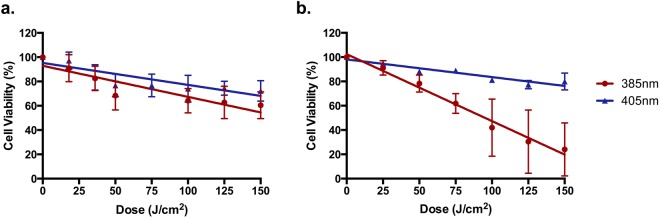
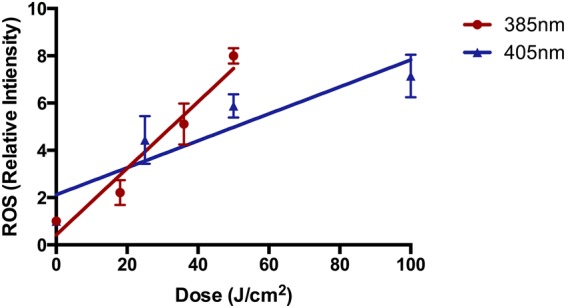
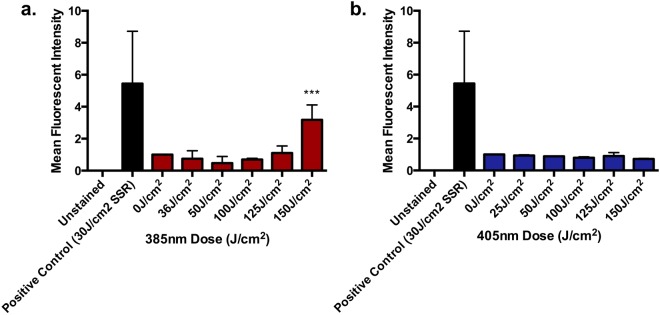
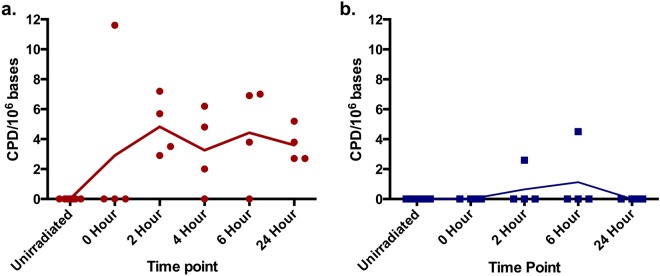
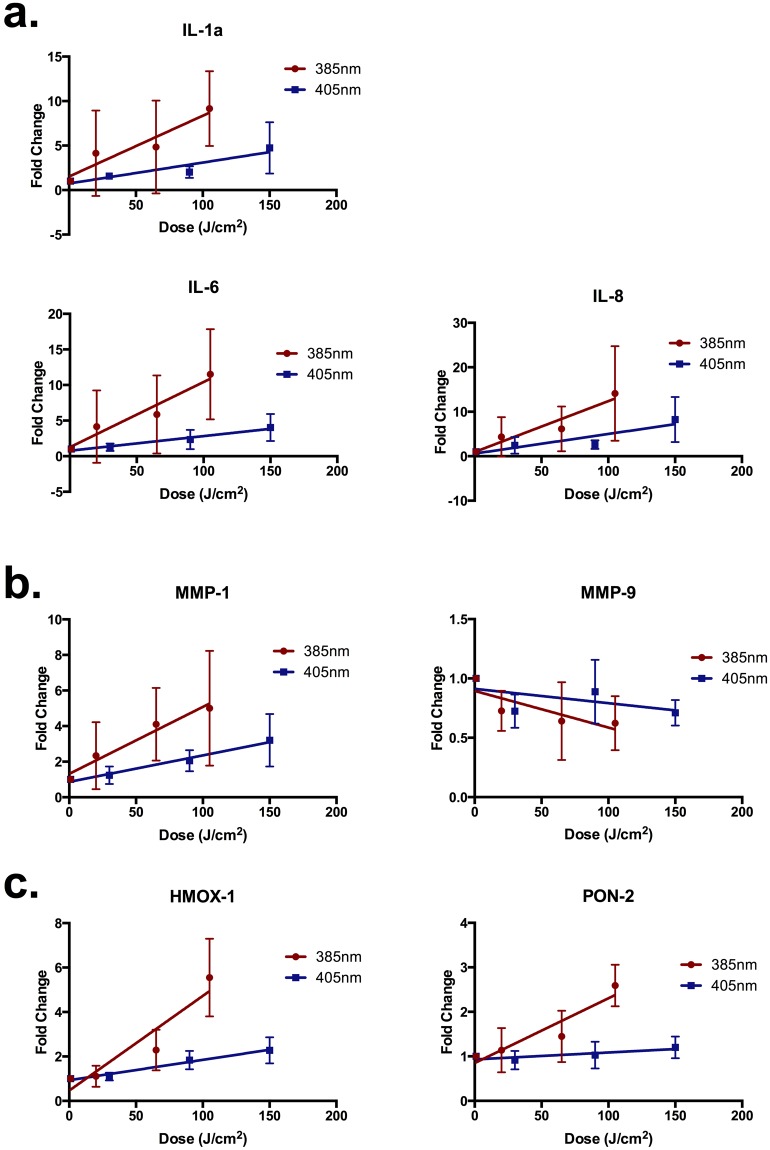
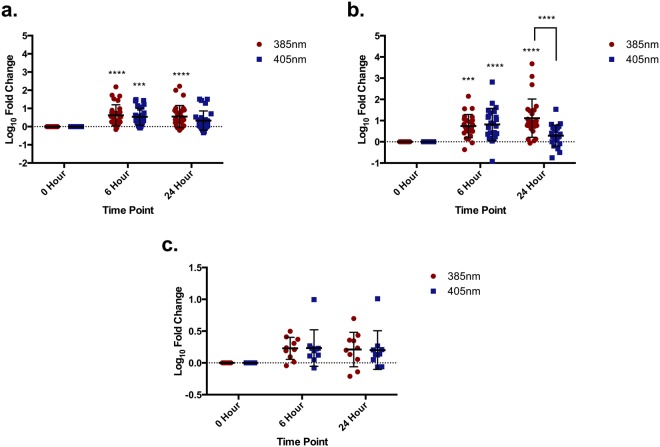
The adverse effects of terrestrial solar ultraviolet radiation (UVR) (~295–400 nm) on the skin are well documented, especially in the UVB region (~295–320 nm). The effects of very long-wave UVA (>380 nm) and visible radiation (≥400 nm) are much less known. Sunscreens have been beneficial in inhibiting a wide range of photodamage, however most formulations provide very little protection in the long wave UVA region (380–400 nm) and almost none from shortwave visible wavelengths (400–420 nm). We demonstrate photodamage in this region for a number of different endpoints including cell viability, DNA damage (delayed cyclobutane pyrimidine dimers), differential gene expression (for genes associated with inflammation, oxidative stress and photoageing) and induction of oxidizing species in vitro in HaCaT keratinocytes and in vivo in human volunteers. This work has implications for phototherapy and photoprotection.
Overview
The claims and statistics of this paper haven’t been checked yet.
Free: it reads the open-access text and checks the first 5 claims that cite a source we can check. Create a free account to check every claim.
Integrity signals
Registry
Cites
Statistics
Figures
Verification
Claims the paper makes
The claims and statistics of this paper haven’t been checked yet.
Free: it reads the open-access text and checks the first 5 claims that cite a source we can check. Create a free account to check every claim.
Claims other papers make about this one
Each is checked against this paper’s own text: does it say what the citing paper says it does?
The claim comes from somewhere else, not from this source.
In the citing paper
“In keratinocytes, the dCPDs were blocked by vitamin E.”
From Chemiexcitation: Mammalian Photochemistry in the Dark† (2023) · cites this paper as [37]
Checked by a reasoning model — may be wrong.
Experimental — accuracy not yet measuredThe source backs part of the claim, not all of it — or backs it for a different population, condition or comparison.
In the citing paper
“Since the initial finding, UV-induced chemiexcitation has been confirmed in keratinocyte cell cultures and human skin”
From Chemiexcitation: Mammalian Photochemistry in the Dark† (2023) · cites this paper as [37]
Experimental — accuracy not yet measured
Self-check
Percentages, sums and reported differences re-computed from the paper’s own numbers.
The self-check needs the paper’s full text.
Citations
Cites
Analysis of Relative Gene Expression Data Using Real-Time Quantitative PCR and the 2−ΔΔCT Method
Livak, K. J., & Schmittgen, T. D. (2001) · Methods · doi:10.1006/meth.2001.1262 · Cited by 180,860
Molecular Mechanisms of Stress-Responsive Changes in Collagen and Elastin Networks in Skin
Aziz, J., Shezali, H., Radzi, Z., Yahya, N. A., Abu Kassim, N. H., Czernuszka, J., & Rahman, M. T. (2016) · Skin Pharmacology and Physiology · doi:10.1159/000447017 · Cited by 7,323
Mutation of the mouse klotho gene leads to a syndrome resembling ageing
Kuro-o, M., Matsumura, Y., Aizawa, H., Kawaguchi, H., Suga, T., Utsugi, T., Ohyama, Y., Kurabayashi, M., Kaname, T., Kume, E., et al. (1997) · Nature · doi:10.1038/36285 · Cited by 3,837
Measuring reactive oxygen and nitrogen species with fluorescent probes: challenges and limitations
Kalyanaraman, B., Darley-Usmar, V., Davies, K. J. A., Dennery, P. A., Forman, H. J., Grisham, M. B., Mann, G. E., Moore, K., Roberts, L. J., & Ischiropoulos, H. (2012) · Free Radical Biology and Medicine · doi:10.1016/j.freeradbiomed.2011.09.030 · Cited by 1,774
Matrix-Degrading Metalloproteinases in Photoaging
Quan, T., Qin, Z., Xia, W., Shao, Y., Voorhees, J. J., & Fisher, G. J. (2009) · Journal of Investigative Dermatology Symposium Proceedings · doi:10.1038/jidsymp.2009.8 · Cited by 740
Wavelength dependence of oxidative DNA damage induced by UV and visible light
Kielbassa, C. (1997) · Carcinogenesis · doi:10.1093/carcin/18.4.811 · Cited by 616
Tests for departure from normality. Empirical results for the distributions of b2 and √b1
D'AGOSTINO, R., & PEARSON, E. S. (1973) · Biometrika · doi:10.1093/biomet/60.3.613 · Cited by 606
Chemiexcitation of melanin derivatives induces DNA photoproducts long after UV exposure
Premi, S., Wallisch, S., Mano, C. M., Weiner, A. B., Bacchiocchi, A., Wakamatsu, K., Bechara, E. J. H., Halaban, R., Douki, T., & Brash, D. E. (2015) · Science · doi:10.1126/science.1256022 · Cited by 550
Self-citationDouki, T., Reynaud-Angelin, A., Cadet, J., & Sage, E. (2003) · Biochemistry · doi:10.1021/bi034593c · Cited by 452
Self-citationHow UV Light Touches the Brain and Endocrine System Through Skin, and Why
Slominski, A. T., Zmijewski, M. A., Plonka, P. M., Szaflarski, J. P., & Paus, R. (2018) · Endocrinology · doi:10.1210/en.2017-03230 · Cited by 452
p53 Mutations in human immortalized epithelial cell lines
Lehman, T. A., Modali, R., Boukamp, P., Stanek, J., Bennett, W. P., Welsh, J. A., Metcalf, R. A., Stampfer, M. R., Fusenig, N., Rogan, E. M., et al. (1993) · Carcinogenesis · doi:10.1093/carcin/14.5.833 · Cited by 447
Irradiation of Skin with Visible Light Induces Reactive Oxygen Species and Matrix-Degrading Enzymes
Liebel, F., Kaur, S., Ruvolo, E., Kollias, N., & Southall, M. D. (2012) · Journal of Investigative Dermatology · doi:10.1038/jid.2011.476 · Cited by 439
Wondrak, G. T., Jacobson, M. K., & Jacobson, E. L. (2006) · Photochemical & Photobiological Sciences · doi:10.1039/b504573h · Cited by 411
Brash, D. E. (2015) · Photochemistry and Photobiology · doi:10.1111/php.12377 · Cited by 401
Induction of oxidative DNA base damage in human skin cells by UV and near visible radiation
Kvam, E. (1997) · Carcinogenesis · doi:10.1093/carcin/18.12.2379 · Cited by 344
Melanocytes Sense Blue Light and Regulate Pigmentation through Opsin-3
Regazzetti, C., Sormani, L., Debayle, D., Bernerd, F., Tulic, M. K., De Donatis, G. M., Chignon-Sicard, B., Rocchi, S., & Passeron, T. (2018) · Journal of Investigative Dermatology · doi:10.1016/j.jid.2017.07.833 · Cited by 336
Melanoma induction by ultraviolet A but not ultraviolet B radiation requires melanin pigment
Noonan, F. P., Zaidi, M. R., Wolnicka-Glubisz, A., Anver, M. R., Bahn, J., Wielgus, A., Cadet, J., Douki, T., Mouret, S., Tucker, M. A., et al. (2012) · Nature Communications · doi:10.1038/ncomms1893 · Cited by 331
Self-citationSinglet Oxygen Induces Oxidation of Cellular DNA
Ravanat, J.-L., Di Mascio, P., Martinez, G. R., Medeiros, M. H. G., & Cadet, J. (2000) · Journal of Biological Chemistry · doi:10.1074/jbc.m006681200 · Cited by 326
Freeman, S. E., Hacham, H., Gange, R. W., Maytum, D. J., Sutherland, J. C., & Sutherland, B. M. (1989) · Proceedings of the National Academy of Sciences · doi:10.1073/pnas.86.14.5605 · Cited by 311
Skin photosensitizing agents and the role of reactive oxygen species in photoaging
Carbonare, M. D., & Pathak, M. A. (1992) · Journal of Photochemistry and Photobiology B: Biology · doi:10.1016/1011-1344(92)85086-a · Cited by 236
Young, A. R., Harrison, G. I., Chadwick, C. A., Nikaido, O., Ramsden, J., & Potten, C. S. (1998) · Journal of Investigative Dermatology · doi:10.1046/j.1523-1747.1998.00436.x · Cited by 235
Self-citationBlue light-induced oxidative stress in live skin
Nakashima, Y., Ohta, S., & Wolf, A. M. (2017) · Free Radical Biology and Medicine · doi:10.1016/j.freeradbiomed.2017.03.010 · Cited by 220
UV‐induced DNA damage initiates release of MMP‐1 in human skin
Dong, K. K., Damaghi, N., Picart, S. D., Markova, N. G., Obayashi, K., Okano, Y., Masaki, H., Grether‐Beck, S., Krutmann, J., Smiles, K. A., et al. (2008) · Experimental Dermatology · doi:10.1111/j.1600-0625.2008.00747.x · Cited by 201
Rosenstein, B. S., & Mitchell, D. L. (1987) · Photochemistry and Photobiology · doi:10.1111/j.1751-1097.1987.tb07881.x · Cited by 188
Opländer, C., Volkmar, C. M., Paunel-Görgülü, A., van Faassen, E. E., Heiss, C., Kelm, M., Halmer, D., Mürtz, M., Pallua, N., & Suschek, C. V. (2009) · Circulation Research · doi:10.1161/circresaha.109.207019 · Cited by 174
Clinical and histological effects of blue light on normal skin
Kleinpenning, M. M., Smits, T., Frunt, M. H. A., van Erp, P. E. J., van de Kerkhof, P. C. M., & Gerritsen, R. M. J. P. (2010) · Photodermatology, Photoimmunology & Photomedicine · doi:10.1111/j.1600-0781.2009.00474.x · Cited by 167
Young, A. R., Chadwick, C. A., Harrison, G. I., Hawk, J. L. M., Nikaido, O., & Potten, C. S. (1996) · Journal of Investigative Dermatology · doi:10.1111/1523-1747.ep12349031 · Cited by 158
Self-citationCourdavault, S., Baudouin, C., Charveron, M., Canguilhem, B., Favier, A., Cadet, J., & Douki, T. (2005) · DNA Repair · doi:10.1016/j.dnarep.2005.05.001 · Cited by 156
Self-citationUVA-induced cyclobutane pyrimidine dimers in DNA: a direct photochemical mechanism?
Mouret, S., Philippe, C., Gracia-Chantegrel, J., Banyasz, A., Karpati, S., Markovitsi, D., & Douki, T. (2010) · Organic & Biomolecular Chemistry · doi:10.1039/b924712b · Cited by 149
Self-citationCourdavault, S., Baudouin, C., Charveron, M., Favier, A., Cadet, J., & Douki, T. (2004) · Mutation Research - Fundamental and Molecular Mechanisms of Mutagenesis · doi:10.1016/j.mrfmmm.2004.07.011 · Cited by 145
Self-citationUV Light, Beta-carotene and Human Skin—Beneficial and Potentially Harmful Effects
Biesalski, H. K., & Obermueller-Jevic, U. C. (2001) · Archives of Biochemistry and Biophysics · doi:10.1006/abbi.2001.2313 · Cited by 143
Reactive Molecule Species and Antioxidative Mechanisms in Normal Skin and Skin Aging
Wölfle, U., Seelinger, G., Bauer, G., Meinke, M. C., Lademann, J., & Schempp, C. M. (2014) · Skin Pharmacology and Physiology · doi:10.1159/000360092 · Cited by 142
UVA1 induces cyclobutane pyrimidine dimers but not 6-4 photoproducts in human skin in vivo
Tewari, A., Sarkany, R. P., & Young, A. R. (2012) · Journal of Investigative Dermatology · doi:10.1038/jid.2011.283 · Cited by 141
Self-citationPhotodegradation of Eumelanin and Pheomelanin and Its Pathophysiological Implications
Ito, S., Wakamatsu, K., & Sarna, T. (2018) · Photochemistry and Photobiology · doi:10.1111/php.12837 · Cited by 136
Cho, S., Lee, M. J., Kim, M. S., Lee, S., Kim, Y. K., Lee, D. H., Lee, C. W., Cho, K. H., & Chung, J. H. (2008) · Journal of Dermatological Science · doi:10.1016/j.jdermsci.2007.11.009 · Cited by 134
Douki, T. (2013) · Photochemical & Photobiological Sciences · doi:10.1039/c3pp25451h · Cited by 132
Self-citationMelanin photosensitization and the effect of visible light on epithelial cells
Chiarelli-Neto, O., Ferreira, A. S., Martins, W. K., Pavani, C., Severino, D., Faião-Flores, F., Maria-Engler, S. S., Aliprandini, E., Martinez, G. R., Di Mascio, P., et al. (2014) · PLoS ONE · doi:10.1371/journal.pone.0113266 · Cited by 131
Young, A. R., Potten, C. S., Nikaido, O., Parsons, P. G., Boenders, J., Ramsden, J. M., & Chadwick, C. A. (1998) · Journal of Investigative Dermatology · doi:10.1046/j.1523-1747.1998.00435.x · Cited by 117
Self-citationUV causation of melanoma in Xiphophorus is dominated by melanin photosensitized oxidant production
Wood, S. R., Berwick, M., Ley, R. D., Walter, R. B., Setlow, R. B., & Timmins, G. S. (2006) · Proceedings of the National Academy of Sciences · doi:10.1073/pnas.0511248103 · Cited by 116
Visible light induces melanogenesis in human skin through a photoadaptive response
Randhawa, M., Seo, I., Liebel, F., Southall, M. D., Kollias, N., & Ruvolo, E. (2015) · PLOS ONE · doi:10.1371/journal.pone.0130949 · Cited by 108
Opländer, C., Deck, A., Volkmar, C. M., Kirsch, M., Liebmann, J., Born, M., van Abeelen, F. A., van Faassen, E. E., Kröncke, K., Windolf, J., et al. (2013) · Free Radical Biology and Medicine · doi:10.1016/j.freeradbiomed.2013.09.022 · Cited by 106
Fajuyigbe, D., Lwin, S. M., Diffey, B. L., Baker, R., Tobin, D. J., Sarkany, R. P. E., & Young, A. R. (2018) · The FASEB Journal · doi:10.1096/fj.201701472r · Cited by 106
Self-citationKim, M., Kim, Y. K., Cho, K. H., & Chung, J. H. (2006) · Mechanisms of Ageing and Development · doi:10.1016/j.mad.2006.09.007 · Cited by 98
Sun and Ski Holidays Improve Vitamin D Status, but Are Associated with High Levels of DNA Damage
Petersen, B., Wulf, H. C., Mas, M. T., Philipsen, P. A., Thieden, E., Olsen, P., Heydenreich, J., Dadvand, P., Basagaña, X., Liljendahl, T. S., et al. (2014) · Journal of Investigative Dermatology · doi:10.1038/jid.2014.223 · Cited by 95
Self-citationDelinasios, G. J., Karbaschi, M., Cooke, M. S., & Young, A. R. (2018) · Scientific Reports · doi:10.1038/s41598-017-18924-4 · Cited by 95
Self-citationBeltrán-García, M. J., Prado, F. M., Oliveira, M. S., Ortiz-Mendoza, D., Scalfo, A. C., Pessoa, A., Medeiros, M. H. G., White, J. F., & Di Mascio, P. (2014) · PLoS ONE · doi:10.1371/journal.pone.0091616 · Cited by 88
Schmitz, S., Thomas, P. D., Allen, T. M., Poznansky, M. J., & Jimbow, K. (1995) · Photochemistry and Photobiology · doi:10.1111/j.1751-1097.1995.tb09883.x · Cited by 86
McAdam, E., Brem, R., & Karran, P. (2016) · Molecular Cancer Research · doi:10.1158/1541-7786.mcr-16-0053 · Cited by 86
Gambichler, T., Terras, S., & Kreuter, A. (2013) · Clinics in Dermatology · doi:10.1016/j.clindermatol.2013.01.011 · Cited by 82
Szewczyk, G., Zadlo, A., Sarna, M., Ito, S., Wakamatsu, K., & Sarna, T. (2016) · Pigment Cell & Melanoma Research · doi:10.1111/pcmr.12514 · Cited by 69
Lawrence, K. P., Gacesa, R., Long, P. F., & Young, A. R. (2018) · British Journal of Dermatology · doi:10.1111/bjd.16125 · Cited by 69
Self-citationUltraviolet Radiation-Induced Production of Nitric Oxide:A multi-cell and multi-donor analysis
Holliman, G., Lowe, D., Cohen, H., Felton, S., & Raj, K. (2017) · Scientific Reports · doi:10.1038/s41598-017-11567-5 · Cited by 64
Young, A. R., Orchard, G. E., Harrison, G. I., & Klock, J. L. (2006) · Journal of Investigative Dermatology · doi:10.1038/sj.jid.5700606 · Cited by 61
Self-citationProtoporphyrin IX-dependent photodynamic production of endogenous ROS stimulates cell proliferation
Blázquez‐Castro, A., Carrasco, E., Calvo-Sánchez, M. I., Jaén, P., STOCKERT, J. C., Juarranz, Á., Sanz-Rodríguez, F., & Espada, J. (2012) · European Journal of Cell Biology · doi:10.1016/j.ejcb.2011.12.001 · Cited by 60
Eumelanin Causes DNA Strand Breaks and Kills Cells
HILL, H. Z., & HILL, G. J. (1987) · Pigment Cell Research · doi:10.1111/j.1600-0749.1987.tb00408.x · Cited by 54
5-Methyltetrahydrofolate can be photodegraded by endogenous photosensitizers
Juzeniene, A., Tam, T. T. T., Iani, V., & Moan, J. E. (2009) · Free Radical Biology and Medicine · doi:10.1016/j.freeradbiomed.2009.07.030 · Cited by 47
Ultraviolet A1 phototherapy: a British Photodermatology Group workshop report
Kerr, A. C., Ferguson, J., Attili, S. K., Beattie, P. E., Coleman, A. J., Dawe, R. S., Eberlein, B., Goulden, V., Ibbotson, S. H., Menagé, H. D. P., et al. (2012) · Clinical and Experimental Dermatology · doi:10.1111/j.1365-2230.2011.04256.x · Cited by 45
Self-citationSolar Spectral Irradiance and Summary Outputs Using Excel
Diffey, B. (2015) · Photochemistry and Photobiology · doi:10.1111/php.12422 · Cited by 42
Singlet oxygen induces oxidation of cellular DNA.
Ravanat, J.-L., Di Mascio, P., Martinez, G. R., Medeiros, M. G., & Cadet, J. (2001) · Journal of Biological Chemistry · doi:10.1016/s0021-9258(19)46360-6 · Cited by 42
Labelled sunscreen SPFs may overestimate protection in natural sunlight
Diffey, B. L., & Osterwalder, U. (2017) · Photochemical & Photobiological Sciences · doi:10.1039/c7pp00260b · Cited by 36
Mizutani, T., Sumida, H., Sagawa, Y., Okano, Y., & Masaki, H. (2016) · Journal of Dermatological Science · doi:10.1016/j.jdermsci.2016.09.016 · Cited by 32
Light - Instead of UV Protection: New Requirements for Skin Cancer Prevention.
Zastrow, L., & Lademann, J. M. (2016) · PubMed · Cited by 30
Tewari, A., Lahmann, C., Sarkany, R., Bergemann, J., & Young, A. R. (2012) · Photochemical & Photobiological Sciences · doi:10.1039/c1pp05243h · Cited by 28
Self-citationSuccessful treatment of microstomia with UVA1 phototherapy in systemic sclerosis
Tewari, A., Garibaldinos, T., Lai‐Cheong, J. E., Groves, R. W., Sarkany, R., & Novakovic, L. (2011) · Photodermatology Photoimmunology & Photomedicine · doi:10.1111/j.1600-0781.2011.00570.x · Cited by 22
Self-citationErythropoietic protoporphyria (EPP) at 40. Where are we now?
Sarkany, R. (2002) · Photodermatology Photoimmunology & Photomedicine · doi:10.1034/j.1600-0781.2002.00708.x · Cited by 15
Self-citation621 Melanocytes sense blue-light and regulate the pigmentation through the Opsin 3
Regazzetti, C., Sormani, L., Debayle, D., Bernerd, F., Donatis, G. M. D., Chignon‐Sicard, B., Rocchi, S., & Passeron, T. (2017) · Journal of Investigative Dermatology · doi:10.1016/j.jid.2017.07.297 · Cited by 10
The cellular and molecular effects of UVA1 on human skin in vivo : impact on human health
Tewari, A. (2016) · Research Portal (King's College London) · Cited by 2
Cited by
Sunscreens and Photoaging: A Review of Current Literature
Guan, L. L., Lim, H. W., & Mohammad, T. F. (2021) · American Journal of Clinical Dermatology · doi:10.1007/s40257-021-00632-5 · Cited by 313
“Effects of photoaging have also been observed with irradiation of skin within the UV/VL boundary region (385–405 nm), demonstrating differential expression of genes involved in inflammation, oxidative stress, and photoaging when compared with nonirradiated skin [24].”
BackgroundVisible light. Part I: Properties and cutaneous effects of visible light
Austin, E., Geisler, A. N., Nguyen, J., Kohli, I., Hamzavi, I., Lim, H. W., & Jagdeo, J. (2021) · Journal of the American Academy of Dermatology · doi:10.1016/j.jaad.2021.02.048 · Cited by 238
Photosensitization Reactions of Biomolecules: Definition, Targets and Mechanisms
Baptista, M. S., Cadet, J., Greer, A., & Thomas, A. H. (2021) · Photochemistry and Photobiology · doi:10.1111/php.13470 · Cited by 203
Magnetically Actuated Drug Delivery Helical Microrobot with Magnetic Nanoparticle Retrieval Ability
Lee, H., Kim, D.-I., Kwon, S.-H., & Park, S. (2021) · ACS Applied Materials & Interfaces · doi:10.1021/acsami.1c01742 · Cited by 160
Kwon, K.-R., Alam, M. B., Park, J.-H., Kim, T.-H., & Lee, S.-H. (2019) · Nutrients · doi:10.3390/nu11061341 · Cited by 155
Metadata
- Authors
- Lawrence, K. P., Douki, T., Sarkany, R. P. E., Acker, S., Herzog, B., & Young, A. R.
- Affiliations
- Guy's Hospital (GB)
- Centre National de la Recherche Scientifique (FR)
- BASF (Germany) (DE)
- Corresponding author
- Lawrence, Karl P.
- Young, Antony R.
- Venue
- Scientific Reports
- Published
- 2018-08-24
- Volume
- 8
- Issue
- 1
- Pages
- 12722-12722
- ISSN
- 2045-2322 (ISSN-L)
- PMC
- PMC6109054
- OpenAlex
- W2888268024
- Cited by
- 143
- References
- 67
- Citations by year
- 2026: 12 · 2025: 20 · 2024: 21 · 2023: 18 · 2022: 19 · 2021: 25 · 2020: 13 · 2019: 12 · 2018: 2
- FWCI
- 14.06
- Type
- journal article
- Language
- en
- Open access
- gold
- doi.org
- Licence
- cc-by
- creativecommons.org/licenses/by/4.0 (tdm)
- creativecommons.org/licenses/by/4.0 (vor)
- Locations
- Scientific Reports (publishedVersion, cc-by)
- Europe PMC (PubMed Central) (publishedVersion, other-oa)
- PubMed Central (publishedVersion, cc-by)
- PubMed (publishedVersion)
- HAL (submittedVersion, other-oa)
- DOAJ (DOAJ: Directory of Open Access Journals) (submittedVersion)
- Research Portal (King's College London) (submittedVersion, cc-by)
- Funders
- National Institute for Health and Care Research
- King's College London
- Topics
- Health Sciences › Medicine › Dermatology › Skin Protection and Aging
- Health Sciences › Medicine › Ophthalmology › Ocular and Laser Science Research
- Health Sciences › Medicine › Radiology, Nuclear Medicine and Imaging › Effects of Radiation Exposure
- Keywords
- UVA, visible light, photodamaged skin, cyclobutane pyrimidine dimers, DNA damage, HaCaT keratinocytes, gene expression, oxidative stress, inflammation, photoaging, photoprotection, sunscreen, phototherapy
- MeSH terms
- Cell Line, Cell Survival, Gene Expression Regulation, Humans, Oxidation-Reduction, Pyrimidine Dimers, Skin, Statistics as Topic, Keratinocytes, Reactive Oxygen Species
About these checks
Registry, retraction, Cites and statistics results are computed, not judged, with one exception: a printed reference that no index lists is read once by a model before it counts as a citation error. Claims are extracted by a model and kept only when their quote appears verbatim in the text; each cited source is then checked, with a model’s help, for whether it says what the claim relies on. Those verdicts can be wrong — read the claim’s quote and the cited source before relying on one.
Statistics and arithmetic are recomputed, not judged.
Confidence bands are shown only for fields calibrated on our annotated test set. None is calibrated yet, so no band is shown.
What counts as a claim ›How we measure confidence ›How we check this ›
Are you an author, or do you see a problem with this page? Request a review
Data sources
Bibliographic data: Semantic Scholar, OpenAlex, Crossref.
Contains information from the Semantic Scholar Academic Graph Datasets, made available under the ODC Attribution License (ODC-BY 1.0).
Semantic Scholar’s data is described in: Kinney, R., et al. (2023). The Semantic Scholar Open Data Platform. arXiv:2301.10140.
