

Characterization of human breast tissue microbiota from core needle biopsies through the analysis of multi hypervariable 16S-rRNA gene regions
Open accessThe DOI matches its Crossref record; 45 of the 45 references it cites were found in a registry or an index.
Abstract
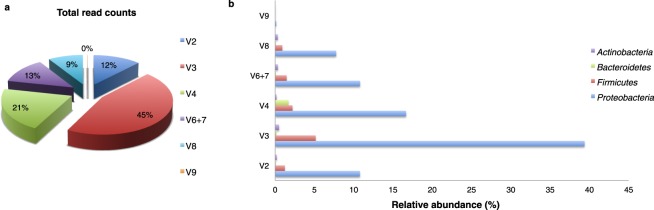
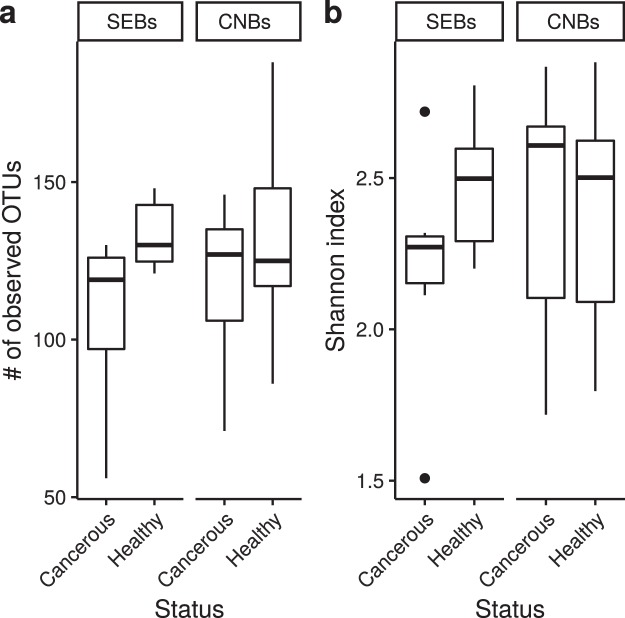
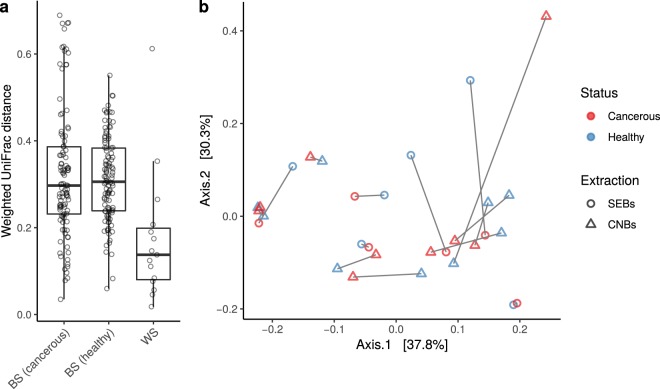
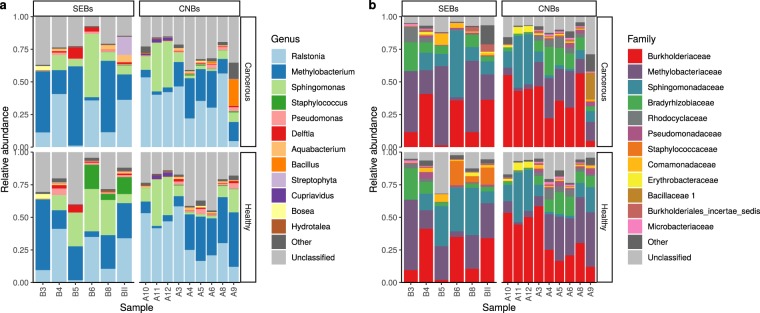
Breast microbiota compositions are not well understood, and a few recent reports have begun to explore the correlation between breast tissue dysbiosis and cancer. Given that various methods for breast microbiota detection were used, the aim of the present paper was to clarify which hypervariable region of the 16S-rRNA gene (V2, V3, V4, V6 + 7, V8, and V9) is the most informative for breast tissue microbiota. Core needle biopsies (CNBs) were compared with surgical excision biopsies (SEBs) to find a less invasive form of recovery useful for the analysis of a larger statistical population and potentially for diagnostic use of breast tissue microbiota. Finally, this study was the first to analyse the breast microbiota of tumours and paired normal tissues of a Mediterranean population. Our findings showed that the V3 region is the most informative for breast tissue microbiota, accounting for 45% of all reads. No significant differences were found between CNB and SEB specimens in terms of total reads and numbers of Operational Taxonomic Units (OTUs). Moreover, we find that more similarities than differences exist between tumours and adjacent normal tissues. Finally, the presence of the Ralstonia genus is associated with breast tissue.
Overview
The claims and statistics of this paper haven’t been checked yet.
Free: it reads the open-access text and checks the first 5 claims that cite a source we can check. Create a free account to check every claim.
Integrity signals
Registry
Cites
Statistics
Figures
Verification
Claims the paper makes
The claims and statistics of this paper haven’t been checked yet.
Free: it reads the open-access text and checks the first 5 claims that cite a source we can check. Create a free account to check every claim.
Claims other papers make about this one
Each is checked against this paper’s own text: does it say what the citing paper says it does?
The cited source says what the claim attributes to it.
In the citing paper
“Intratumor bacteria have been reported in many tumor types (2-19)”
From The human tumor microbiome is composed of tumor type–specific intracellular bacteria (2020) · cites this paper as [5]
Self-check
Percentages, sums and reported differences re-computed from the paper’s own numbers.
The self-check needs the paper’s full text.
Citations
Cites
Naïve Bayesian Classifier for Rapid Assignment of rRNA Sequences into the New Bacterial Taxonomy
Wang, Q., Garrity, G. M., Tiedje, J. M., & Cole, J. R. (2007) · Applied and Environmental Microbiology · doi:10.1128/aem.00062-07 · Cited by 19,885
Structure, function and diversity of the healthy human microbiome
The Human Microbiome Project Consortium (2012) · Nature · doi:10.1038/nature11234 · Cited by 11,726
VSEARCH: a versatile open source tool for metagenomics
(2016) · doi:10.7717/peerj.2584 · Cited by 10,773
Generalized linear mixed models: a practical guide for ecology and evolution
Bolker, B. M., Brooks, M. E., Clark, C. J., Geange, S. W., Poulsen, J. R., Stevens, M. H. H., & White, J.-S. S. (2009) · Trends in Ecology & Evolution · doi:10.1016/j.tree.2008.10.008 · Cited by 8,910
Sequencing technologies – the next generation
Metzker, M. L. (2010) · Nature Reviews Genetics · doi:10.1038/nrg2626 · Cited by 7,066
Dewhirst, F. E., Chen, T., Izard, J., Paster, B. J., Tanner, A. C. R., Yu, W.-H., Lakshmanan, A., & Wade, W. G. (2010) · Journal of Bacteriology · doi:10.1128/jb.00542-10 · Cited by 3,352
Grice, E. A., & Segre, J. A. (2011) · Nature Reviews Microbiology · doi:10.1038/nrmicro2537 · Cited by 3,143
Rescigno, M., Urbano, M., Valzasina, B., Francolini, M., Rotta, G., Bonasio, R., Granucci, F., Kraehenbuhl, J.-P., & Ricciardi-Castagnoli, P. (2001) · Nature Immunology · doi:10.1038/86373 · Cited by 2,553
Intestinal inflammation targets cancer-inducing activity of the microbiota
Arthur, J. C., Perez-Chanona, E., Mühlbauer, M., Tomkovich, S., Uronis, J. M., Fan, T.-J., Campbell, B. J., Abujamel, T., Dogan, B., Rogers, A. B., et al. (2012) · Science · doi:10.1126/science.1224820 · Cited by 2,263
Takahashi, S., Tomita, J., Nishioka, K., Hisada, T., & Nishijima, M. (2014) · PLoS ONE · doi:10.1371/journal.pone.0105592 · Cited by 1,506
Cited by
The human tumor microbiome is composed of tumor type–specific intracellular bacteria
Nejman, D., Livyatan, I., Fuks, G., Gavert, N., Zwang, Y., Geller, L. T., Rotter-Maskowitz, A., Weiser, R., Mallel, G., Gigi, E., et al. (2020) · Science · doi:10.1126/science.aay9189 · Cited by 2,464
Tumor-resident intracellular microbiota promotes metastatic colonization in breast cancer
Fu, A., Yao, B., Dong, T., Chen, Y., Yao, J., Liu, Y., Li, H., Bai, H., Liu, X., Zhang, Y., et al. (2022) · Cell · doi:10.1016/j.cell.2022.02.027 · Cited by 981
Tzeng, A., Sangwan, N., Jia, M., Liu, C.-C., Keslar, K. S., Downs-Kelly, E., Fairchild, R. L., Al-Hilli, Z., Grobmyer, S. R., & Eng, C. (2021) · Genome Medicine · doi:10.1186/s13073-021-00874-2 · Cited by 275
Parida, S., Wu, S., Siddharth, S., Wang, G., Muniraj, N., Nagalingam, A., Hum, C., Mistriotis, P., Hao, H., Talbot, C. C., et al. (2021) · Cancer Discovery · doi:10.1158/2159-8290.cd-20-0537 · Cited by 251
“Few recent studies report the presence of breast microbiota and have identified some bacterial species as selective inhabitants of breast tumors (10,14,16-19,31).”
BackgroundMicrobiome—Microbial Metabolome—Cancer Cell Interactions in Breast Cancer—Familiar, but Unexplored
Mikó, E., Kovács, T., Sebő, É., Tóth, J., Csonka, T., Ujlaki, G., Sipos, A., Szabó, J., Méhes, G., & Bai, P. (2019) · Cells · doi:10.3390/cells8040293 · Cited by 220
Breast and Gut Microbiota Action Mechanisms in Breast Cancer Pathogenesis and Treatment
Laborda-Illanes, A., Sanchez-Alcoholado, L., Dominguez-Recio, M. E., Jimenez-Rodriguez, B., Lavado, R., Comino-Méndez, I., Alba, E., & Queipo-Ortuño, M. I. (2020) · Cancers · doi:10.3390/cancers12092465 · Cited by 206
Sári, Z., Mikó, E., Kovàcs, T., Jankó, L., Csonka, T., Lente, G., Sebő, É., Tóth, J., Tóth, D., Árkosy, P., et al. (2020) · Cancers · doi:10.3390/cancers12092411 · Cited by 169
Microbiome and Breast Cancer: New Role for an Ancient Population
Eslami-S, Z., Majidzadeh-A, K., Halvaei, S., Babapirali, F., & Esmaeili, R. (2020) · Frontiers in Oncology · doi:10.3389/fonc.2020.00120 · Cited by 153
Current understanding of the intratumoral microbiome in various tumors
Xue, C., Chu, Q., Zheng, Q., Yuan, X., Su, Y., Bao, Z., Lu, J., & Li, L. (2023) · Cell Reports Medicine · doi:10.1016/j.xcrm.2022.100884 · Cited by 135
Costa, D. A., Nobre, J. G., Batista, M. V., Ribeiro, C., Callé, C., Cortés, A., Marhold, M., Negreiros, I., Borralho, P., Brito, M., et al. (2021) · Frontiers in Microbiology · doi:10.3389/fmicb.2021.584332 · Cited by 140
“There is accumulating evidence that intrauterine human foetal environment is not sterile and that placental microbial flora includes nonpathogenic commensal microbes of phyla Tenericutes, Firmicutes, Bacteroidetes, Proteobacteria, and Fusobacteria (Aagaard et al., 2014).”
BackgroundResultInfluentialSmith, A., Pierre, J. F., Makowski, L., Tolley, E. A., Lyn‐Cook, B. D., Lu, L., Vidal, G. A., & Starlard‐Davenport, A. (2019) · Scientific Reports · doi:10.1038/s41598-019-48348-1 · Cited by 134
Gut Microbiota and Breast Cancer: The Dual Role of Microbes
Álvarez‐Mercado, A. I., Cano, A. D. V., Fernández, M. F., & Fontana, L. (2023) · Cancers · doi:10.3390/cancers15020443 · Cited by 105
The Emerging Role of the Microbiota in Breast Cancer Progression
Bernardo, G., Noci, V. L., Modica, M. D., Montanari, E., Triulzi, T., Pupa, S. M., Tagliabue, E., Sommariva, M., & Sfondrini, L. (2023) · Cells · doi:10.3390/cells12151945 · Cited by 93
Microbial Alterations and Risk Factors of Breast Cancer: Connections and Mechanistic Insights
Parida, S., & Sharma, D. (2020) · Cells · doi:10.3390/cells9051091 · Cited by 81
Exploring breast tissue microbial composition and the association with breast cancer risk factors
German, R., Marino, N., Hemmerich, C. M., Podicheti, R., Rusch, D. B., Stiemsma, L. T., Gao, H., Xuei, X., Rockey, P., & Storniolo, A. M. (2023) · Breast Cancer Research · doi:10.1186/s13058-023-01677-6 · Cited by 92
“However, a study with a Mediterranean population found more similarities than differences between NAT and tumors [50].”
ResultTesei, D., Jewczynko, A., Lynch, A., & Urbaniak, C. (2022) · Life · doi:10.3390/life12040495 · Cited by 88
“Human breast tissue, once thought of as sterile, is now accepted as having a stable microbial population [13,14].”
BackgroundHuman Gut Microbiota in Health and Selected Cancers
Sędzikowska, A., & Szablewski, L. (2021) · International Journal of Molecular Sciences · doi:10.3390/ijms222413440 · Cited by 78
Esposito, M. V., Fosso, B., Nunziato, M., Casaburi, G., D’Argenio, V., Calabrese, A., D’Aiuto, M., Botti, G., Pesole, G., & Salvatore, F. (2022) · BMC Cancer · doi:10.1186/s12885-021-09074-y · Cited by 75
Li, D., He, R., Hou, G., Ming, W., Fan, T. T., Chen, L., Zhang, L., Jiang, W., Wang, W., Lu, Z., et al. (2020) · Frontiers in Cellular and Infection Microbiology · doi:10.3389/fcimb.2020.00268 · Cited by 70
“Ralstonia was the most abundant genus in normal breast tissue and gastric cancer (Tseng et al., 2016; Costantini et al., 2018).”
BackgroundSignificance of human microbiome in breast cancer: Tale of an invisible and an invincible
Chadha, J., Nandi, D., Atri, Y., & Nag, A. (2020) · Seminars in Cancer Biology · doi:10.1016/j.semcancer.2020.07.010 · Cited by 63
Sári, Z., Mikó, E., Kovàcs, T., Boratkó, A., Ujlaki, G., Jankó, L., Kiss, B., Uray, K., & Bai, P. (2020) · Cancers · doi:10.3390/cancers12102915 · Cited by 64
Proteomics and its applications in breast cancer.
Neagu, A.-N., Whitham, D., Buonanno, E., Jenkins, A., Alexa‐Stratulat, T., Tamba, B.-I., & Darie, C. C. (2021) · PubMed Central · Cited by 70
Human gut, breast, and oral microbiome in breast cancer: A systematic review and meta-analysis
Thu, M. S., Chotirosniramit, K., Nopsopon, T., Hirankarn, N., & Pongpirul, K. (2023) · Frontiers in Oncology · doi:10.3389/fonc.2023.1144021 · Cited by 60
Komorowski, A. S., & Pezo, R. C. (2019) · Breast Cancer Research and Treatment · doi:10.1007/s10549-019-05472-w · Cited by 57
Can we modulate the breastfed infant gut microbiota through maternal diet?
Sindi, A. S., Geddes, D. T., Wlodek, M. E., Mühlhäusler, B. S., Payne, M. S., & Stinson, L. F. (2021) · FEMS Microbiology Reviews · doi:10.1093/femsre/fuab011 · Cited by 58
Kovàcs, T., Mikó, E., Ujlaki, G., Yousef, H., Csontos, V., Uray, K., & Bai, P. (2021) · Cancer and Metastasis Reviews · doi:10.1007/s10555-021-10013-3 · Cited by 57
Singla, R. K., Wang, X., Gundamaraju, R., Joon, S., Tsagkaris, C., Behzad, S., Khan, J., Gautam, R. K., Goyal, R., Rakmai, J., et al. (2022) · Critical Reviews in Food Science and Nutrition · doi:10.1080/10408398.2022.2097196 · Cited by 58
Arnone, A. A., & Cook, K. L. (2022) · Endocrinology · doi:10.1210/endocr/bqac177 · Cited by 55
Exploring the Potential of Breast Microbiota as Biomarker for Breast Cancer and Therapeutic Response
Dieleman, S., Aarnoutse, R., Ziemons, J., Kooreman, L. F. S., Boleij, A., & Smidt, M. L. (2021) · American Journal Of Pathology · doi:10.1016/j.ajpath.2021.02.020 · Cited by 50
“org followed by Methylobacterium and Sphingomonas, had the highest abundance.(15,17) In normal adjacent breast tissue, the family Enterobacteriaceae, of which Escherichia coli is a member, was increased compared with healthy controls.”
BackgroundThe Relationship Between Microbial Community and Breast Cancer
Song, X., Wei, C., & Li, X. (2022) · Frontiers in Cellular and Infection Microbiology · doi:10.3389/fcimb.2022.849022 · Cited by 47
“(Wang et al., 2017) Breast tissue 16 Mediterranean patients with BC (12 samples were collected from core needle biopsies (CNB) and 7 from surgical excision biopsies (SEB); 3 patients were processed with both procedure) V3 16S-rRNA gene amplicons sequencing (Ion Torrent) ↑Ralstonia in breast tissue.”
BackgroundInfluentialT-cell-based breast cancer immunotherapy
Pilipow, K., Darwich, A., & Losurdo, A. (2020) · Seminars in Cancer Biology · doi:10.1016/j.semcancer.2020.05.019 · Cited by 46
Characterizing the breast cancer lipidome and its interaction with the tissue microbiota
Giallourou, N., Urbaniak, C., Puebla-Barragan, S., Vorkas, P. A., Swann, J. R., & Reid, G. (2021) · Communications Biology · doi:10.1038/s42003-021-02710-0 · Cited by 46
Circulating tumor cells clusters and their role in Breast cancer metastasis; a review of literature
Sayed, Z. S., Khattap, M. G., Madkour, M. A., Yasen, N. S., Elbary, H. A., Elsayed, R. A., Abdelkawy, D. A., Wadan, A. S., Omar, I., & Nafady, M. H. (2024) · Discover Oncology · doi:10.1007/s12672-024-00949-7 · Cited by 44
Microbiota composition in bilateral healthy breast tissue and breast tumors
Klann, E. M., Williamson, J. M., Tagliamonte, M. S., Ukhanova, M., Asirvatham, J. R., Chim, H., Yaghjyan, L., & Mai, V. (2020) · Cancer Causes & Control · doi:10.1007/s10552-020-01338-5 · Cited by 50
Chen, F., Yang, J., Guo, Y., Su, D., Sheng, Y., & Wu, Y. (2023) · Frontiers in Immunology · doi:10.3389/fimmu.2023.1140995 · Cited by 45
Parida, S., Siddharth, S., Gatla, H. R., Wu, S., Wang, G., Gabrielson, K. L., Sears, C. L., Ladle, B. H., & Sharma, D. (2023) · Frontiers in Immunology · doi:10.3389/fimmu.2023.1194931 · Cited by 41
Wu, R., Yu, I., Tokumaru, Y., Asaoka, M., Oshi, M., Yan, L., Okuda, S., Ishikawa, T., & Takabe, K. (2022) · PubMed · Cited by 43
Hadžega, D., Minárik, G., Karaba, M., Kaľavská, K., Benca, J., Čierniková, S., Sedláčková, T., Nemcova, P., Boháč, M., Pinďák, D., et al. (2021) · International Journal of Molecular Sciences · doi:10.3390/ijms22169058 · Cited by 40
Wang, N., Yang, J., Han, W., Han, M., Liu, X., Jiang, L., Cao, H., Jing, M., Sun, T., & Xu, J. (2022) · Frontiers in Cellular and Infection Microbiology · doi:10.3389/fcimb.2022.1029905 · Cited by 39
Benítez‐Páez, A., Olivares, M., Szajewska, H., Pieścik‐Lech, M., Polanco, I., Castillejo, G., Nunez, M. D. C., Ribes‐Koninckx, C., Korponay-Szabo, I. R., Koletzko, S., et al. (2020) · Frontiers in Microbiology · doi:10.3389/fmicb.2020.01335 · Cited by 37
“of Methylobacterium (among other environmental microbes such as Ralstonia) in healthy and cancerous breast biopsies (Costantini et al., 2018), supporting the presence of these type of microbes in human breast-related samples.”
BackgroundMetabolomics-Microbiome Crosstalk in the Breast Cancer Microenvironment
Al‐Ansari, M. M., AlMalki, R. H., Dahabiyeh, L. A., & Rahman, A. M. A. (2021) · Metabolites · doi:10.3390/metabo11110758 · Cited by 36
Impact of intestinal dysbiosis on breast cancer metastasis and progression
Zhang, J., Xie, Q., Huo, X., Liu, Z., Da, M., Yuan, M., Zhao, Y. D., & Shen, G. (2022) · Frontiers in Oncology · doi:10.3389/fonc.2022.1037831 · Cited by 35
Bacterial infection and microbiota in carcinogenesis and tumor development
Li, Q. (2023) · Frontiers in Cellular and Infection Microbiology · doi:10.3389/fcimb.2023.1294082 · Cited by 34
“Costantini et al. identi fi ed the bacterial composition in breast cancer through analysis of multi hypervariable 16S-rRNA gene regions (Costantini et al., 2018).”
BackgroundMethodInfluentialThe Link Between the Microbiota and HER2+ Breast Cancer: The New Challenge of Precision Medicine
Modica, M. D., Arlotta, V., Sfondrini, L., Tagliabue, E., & Triulzi, T. (2022) · Frontiers in Oncology · doi:10.3389/fonc.2022.947188 · Cited by 36
Benchmarking microbial DNA enrichment protocols from human intestinal biopsies
Marchukov, D., Li, J., Juillerat, P., Misselwitz, B., & Yılmaz, B. (2023) · Frontiers in Genetics · doi:10.3389/fgene.2023.1184473 · Cited by 31
Endocrine Disruptors in Food, Estrobolome and Breast Cancer
Filippone, A., Rossi, C., Rossi, M. M., Micco, A. D., Maggiore, C., Forcina, L., Natale, M. E., Costantini, L., Merendino, N., Leone, A. D., et al. (2023) · Journal of Clinical Medicine · doi:10.3390/jcm12093158 · Cited by 31
Self-citationMicrobiomes, Their Function, and Cancer: How Metatranscriptomics Can Close the Knowledge Gap
Aitmanaitė, L., Širmonaitis, K., & Russo, G. (2023) · International Journal of Molecular Sciences · doi:10.3390/ijms241813786 · Cited by 30
“…in BC than in healthy tissue [27–29]. tumour-adjacent di ff er signi fi cantly, as some studies did not fi nd any di ff erences [28, In addition, there is no clear consensus on whether tumour and tumour-adjacent tissue differ significantly, as some studies did not find any differences [28,30,31].”
BackgroundGut microbiota in women: The secret of psychological and physical well-being
Marano, G., Traversi, G., Gaetani, E., Gasbarrini, A., & Mazza, M. (2023) · World Journal of Gastroenterology · doi:10.3748/wjg.v29.i45.5945 · Cited by 32
“Costantini et al [46] pointed out that the microbiota may predispose to neoplastic transformation.”
Helmersen, K., & Aamot, H. V. (2020) · Scientific Reports · doi:10.1038/s41598-020-59957-6 · Cited by 29
Microbial community compositions in breast implant biofilms associated with contracted capsules
Crowe, S. A., Simister, R. L., Spence, J. S., Kenward, P. A., Slyke, A. C. V., Lennox, P. A., & Carr, N. J. (2021) · PLoS ONE · doi:10.1371/journal.pone.0249261 · Cited by 29
“Microbial communities associated with contracted capsules are comprised of 24–664 species (chao 1) and are similar in diversity to healthy breast tissue (121 taxa [39], 125–130 [40]) but far less diverse than, for example the, 10(3) species commonly found in the human gut [41], 10(4) species on human skin [42], or the…”
BackgroundBiopsy bacterial signature can predict patient tissue malignancy
Hogan, G. E., Eckenberger, J., Narayanen, N., Walker, S. P., Claesson, M. J., Corrigan, M. A., O'Hanlon, D. M., & Tangney, M. (2021) · Scientific Reports · doi:10.1038/s41598-021-98089-3 · Cited by 29
Gao, J., Tang, L., Fu, C., Cao, Y., Liu, H., Yin, Y., Li, Z., Zhu, Y., Shu, W., Zhang, Y., et al. (2025) · Nano Letters · doi:10.1021/acs.nanolett.5c00298 · Cited by 29
Intratumor microbiota: a novel tumor component
Gong, Y., Huang, X., Wang, M., & Liang, X. (2023) · Journal of Cancer Research and Clinical Oncology · doi:10.1007/s00432-023-04576-7 · Cited by 28
Sanjulián, L., Lamas, A., Barreiro, R., Cepeda, A., Fente, C. A., & Regal, P. (2021) · Nutrients · doi:10.3390/nu13072414 · Cited by 27
Microbiota substances modulate dendritic cells activity: A critical view
Shvets, Y. V., Khranovska, N., Senchylo, N., Ostapchenko, D., Tymoshenko, I., Onysenko, S., Kobyliak, N. M., & Falalyeyeva, T. M. (2024) · Heliyon · doi:10.1016/j.heliyon.2024.e27125 · Cited by 28
Cancer and the Microbiome of the Human Body
Herrera‐Quintana, L., Vázquez‐Lorente, H., López-Garzón, M., Cortés‐Martín, A., & Plaza‐Díaz, J. (2024) · Nutrients · doi:10.3390/nu16162790 · Cited by 27
Muccee, F., Ghazanfar, S., Ajmal, W., & Al-Zahrani, M. (2022) · Genes · doi:10.3390/genes13091545 · Cited by 28
Amaro-da-Cruz, A., Rubio‐Tomás, T., & Álvarez‐Mercado, A. I. (2024) · Clinical & Translational Oncology · doi:10.1007/s12094-024-03554-w · Cited by 26
Zhao, H., Zhang, L., Du, D., Mai, L., Liu, Y., Morigen, M., & Fan, L. (2024) · International Immunopharmacology · doi:10.1016/j.intimp.2024.113195 · Cited by 25
Metagenomics Analysis of Breast Microbiome Highlights the Abundance of Rothia Genus in Tumor Tissues
Kartti, S., Bendani, H., Boumajdi, N., Bouricha, E. M., Zarrik, O., Agouri, H. E., Fokar, M., Aghlallou, Y., Jaoudi, R. E., Belyamani, L., et al. (2023) · Journal of Personalized Medicine · doi:10.3390/jpm13030450 · Cited by 22
Is the skin microbiota a modifiable risk factor for breast disease?: A systematic review
Wang, K., Nakano, K., Naderi, N., Bajaj‐Elliott, M., & Mosahebi, A. (2021) · The Breast · doi:10.1016/j.breast.2021.07.014 · Cited by 24
Agents of cancer immunosurveillance: HSPs and dsDNA
Nayak, D. A., & Binder, R. J. (2022) · Trends in Immunology · doi:10.1016/j.it.2022.03.004 · Cited by 23
The impact of microbiome dysbiosis on T cell function within the tumor microenvironment (TME)
DiPalma, M. P., & Blattman, J. N. (2023) · Frontiers in Cell and Developmental Biology · doi:10.3389/fcell.2023.1141215 · Cited by 24
Ujlaki, G., Kovács, T., Vida, A., Kókai, E., Rauch, B., Schwarcz, S., Mikó, E., Janka, E. A., Sipos, A., Hegedűs, C., et al. (2023) · Molecules · doi:10.3390/molecules28155898 · Cited by 24
The microbiome: a link between obesity and breast cancer risk
Gaber, M. K., Arnone, A. A., Vidi, P., & Cook, K. L. (2024) · Frontiers in Microbiomes · doi:10.3389/frmbi.2024.1394719 · Cited by 21
Rad, S. K., Yeo, K. K. L., Wu, F., Li, R., Nourmohammadi, S., Tomita, Y., Price, T. J., Ingman, W. V., Townsend, A. R., & Smith, E. (2025) · Microorganisms · doi:10.3390/microorganisms13020467 · Cited by 24
“Eleven lacked project accession numbers [14,18,21,23,24,26,27,32–34, 36 ],”
InfluentialMicrobiome-targeted nanoplatforms and engineering approaches in breast cancer therapy
Sabeel, Z., & Zhao, Y. (2025) · Molecular Cancer · doi:10.1186/s12943-025-02456-x · Cited by 21
“…disparities, with tumors from Black women showing increased abundance of metastasis-associated Ralstonia species compared to other ethnic groups [13, 40, 41], while advanced-stage tumors across populations demonstrate characteristic enrichment of Bacteroidetes and Clostridium species [13, 14].”
New Developments and Opportunities of Microbiota in Treating Breast Cancers
Meng, Z., Ye, Z., Zhu, P., Zhu, J., Fang, S., Qiu, T., Li, Y., & Meng, L. (2022) · Frontiers in Microbiology · doi:10.3389/fmicb.2022.818793 · Cited by 19
Cui, J., Sachaphibulkij, K., Teo, W. S., Lim, H. M., Zou, L., Ong, C. N., Alberts, R., Chen, J., & Lim, L. H. K. (2022) · Theranostics · doi:10.7150/thno.68611 · Cited by 18
The intratumoral microbiota in breast cancer: from basic research to clinical translation
Xu, Y., & Wang, M. (2025) · Gut Microbes · doi:10.1080/19490976.2025.2560695 · Cited by 22
“87,88 Ralstonia (Proteus) is more abundant in normal tissues near breast tumors and malignant tumors (Figure 4).”
Relationship between tumor microbiota transcriptional activity and gene expression in breast cancer
Liu, E., Zhang, F., Xu, T., Ye, L., Qian, S. S., & Ji, Z. (2023) · BMC Cancer · doi:10.1186/s12885-023-10726-4 · Cited by 17
Sun, J., Germain, A., Kaglan, G., Servant, F., Lelouvier, B., Federici, M., Fernández‐Real, J. M., Sala, D. T., Neagoe, R. M., Bouloumié, A., et al. (2023) · International Journal of Obesity · doi:10.1038/s41366-023-01341-1 · Cited by 16
The Influence of Microbiota on Breast Cancer: A Review
Neagoe, C.-X.-R., Ionică, M., Neagoe, O. C., & Trifa, A. P. (2024) · Cancers · doi:10.3390/cancers16203468 · Cited by 19
“The healthy mammary tissue is mostly colonized by the Acetobacter genus ( Proteobacteria phylum ) and Liquorilactobacillus genus ( Firmicutes phylum ) [51,52].”
Salihoğlu, R., & Önal-Süzek, T. (2021) · Frontiers in Genetics · doi:10.3389/fgene.2021.585556 · Cited by 16
“Although the microbiome profiles of malignant and benign breast tumors are different (Costantini et al., 2018; Meng et al., 2018), there are some significant similarities in the profiles of normal and tumor breast tissues revealed by 16S rRNA amplicon sequencing (Urbaniak et al., 2016) (Table 1).”
BackgroundBody Microbiota and Its Relationship With Benign and Malignant Breast Tumors: A Systematic Review
Samkari, A., Alsulami, M., Bataweel, L. A., Altaifi, R., Altaifi, A., Saleem, A., Farsi, A., Iskanderani, O. F., Akeel, N. Y., Malibary, N., et al. (2022) · Cureus · doi:10.7759/cureus.25473 · Cited by 19
Wang, S., Liu, R., Shan, Y., & Ping, Z. (2025) · International Journal of Women s Health · doi:10.2147/ijwh.s536970 · Cited by 15
Human liver microbiota modeling strategy at the early onset of fibrosis
Champion, C., Neagoe, R. M., Effernberger, M., Sala, D. T., Servant, F., Christensen, J. E., Arnoriaga‐Rodríguez, M., Amar, J., Lelouvier, B., Loubières, P., et al. (2023) · BMC Microbiology · doi:10.1186/s12866-023-02774-4 · Cited by 16
Chang, C., & Lam, H. Y. P. (2024) · Anticancer Research · doi:10.21873/anticanres.17035 · Cited by 15
“The unique breast microbiota population consists of a majority of the phylum Proteobacteria , followed by Firmicutes , Actinobacteria , and Bacteroidetes (11, 77).”
BackgroundGuideline for designing microbiome studies in neoplastic diseases
Mikó, E., Sipos, A., Tóth, E., Lehoczki, A., Fekete, M., Sebő, É., Kardos, G., & Bai, P. (2024) · GeroScience · doi:10.1007/s11357-024-01255-4 · Cited by 16
Interaction between the breast tumor microenvironment and gut microbiome
Tang, G., Millar, E. K. A., Graham, P., & Beretov, J. (2025) · Gut Microbes · doi:10.1080/19490976.2025.2514136 · Cited by 15
“Methylobacterium , family Methylobacteriaceae , is reported to be elevated in breast cancer tissue 6,22,28 and the sentinel lymph nodes of breast cancer patients, and associated with increasing cancer stage.”
Effects of gut microbiota in breast cancer
Kang, L., Chen, H., He, C., & Li, J. (2025) · Frontiers in Oncology · doi:10.3389/fonc.2025.1617410 · Cited by 14
From Dysbiosis to Diagnosis: The Role of Gut Microbiota in Breast Cancer Etiology and Management
Mishra, P., Mishra, S. P., Pattnaik, A., Singh, S., Shakri, A. R., Badhai, J., Ganguly, S., Guria, A., & Cheekatla, S. S. (2025) · Applied Microbiology · doi:10.3390/applmicrobiol5040134 · Cited by 15
“Here, they can modulate the phenotypes of immune cells, cytokine production, and the behavior of tumor cells, thereby acting as functional modulators of cancer progression [112–114].”
The Breast Microbiome in Breast Cancer Risk and Progression: A Narrative Review
Peters, B. A., Kelly, L., Wang, T., Loudig, O. D., & Rohan, T. E. (2023) · Cancer Epidemiology Biomarkers & Prevention · doi:10.1158/1055-9965.epi-23-0965 · Cited by 15
Rivera‐Buendía, F., Franco‐Cendejas, R., Román-López, C., Colín‐Castro, C. A., Becerra-Lobato, N., García-Hernández, M. D. L., Cornejo‐Juárez, P., Bargalló‐Rocha, E., Medina‐Franco, H., & Vilar‐Compte, D. (2019) · Annals of Surgical Oncology · doi:10.1245/s10434-019-07631-1 · Cited by 13
Elucidating the roles of the mammary and gut microbiomes in breast cancer development
Hoskinson, C., Jiang, R., & Stiemsma, L. T. (2023) · Frontiers in Oncology · doi:10.3389/fonc.2023.1198259 · Cited by 13
Walker, J. N., Hanson, B., Hunter, T. B., Simar, S. R., Ramirez, J. M. D., Obernuefemann, C. L. P., Parikh, R. P., Tenenbaum, M. M. J., Margenthaler, J. A., Hultgren, S. J., et al. (2023) · Microbiology Spectrum · doi:10.1128/spectrum.01430-23 · Cited by 11
“…within the composition of the breast microbiota between the side with cancer and contralateral controls, these findings are consistent with previous work showing similar levels of richness and diversity between specimens associated with breast cancer and normal controls within individuals (19, 82).”
BackgroundResultActis, S., Cazzaniga, M., Bounous, V. E., D’Alonzo, M., Rosso, R., Accomasso, F., Minella, C., & Biglia, N. (2023) · Carcinogenesis · doi:10.1093/carcin/bgad071 · Cited by 11
Microbiome in cancer: A comparative analysis between humans and dogs
Dell’Anno, F., Guardone, L., Listorti, V., & Razzuoli, E. (2024) · The Veterinary Journal · doi:10.1016/j.tvjl.2024.106145 · Cited by 10
Rozani, S., & Lykoudis, P. M. (2024) · The American Journal of Surgery · doi:10.1016/j.amjsurg.2024.115795 · Cited by 9
Prospect of bacteria for tumor diagnosis and treatment
Xu, Y., Zhao, C., Ma, X., & Zhang, H. (2022) · Life Sciences · doi:10.1016/j.lfs.2022.121215 · Cited by 9
Marwaha, A., Morris, J. A., & Rigby, R. J. (2019) · Medical Hypotheses · doi:10.1016/j.mehy.2019.109530 · Cited by 10
D’Angelo, A., Zenoniani, A., Masci, M., Aceto, G. M., Piattelli, A., & Curia, M. C. (2025) · Microorganisms · doi:10.3390/microorganisms13091995 · Cited by 8
“A study by Constantini et al. [111] shows that the genus Ralstonia is present in breast tissue, including in tumors and adjacent normal tissue.”
Microbial Signatures in Breast Cancer: Exploring New Potentials Across Body Niches
Wong, A. Y. W., Bicchieraro, G., Palumbo, I., Ciabattoni, A., Aristei, C., & Spaccapelo, R. (2025) · International Journal of Molecular Sciences · doi:10.3390/ijms26178654 · Cited by 8
“These findings reinforce previous observations of S. yanoikuyae enrichment in healthy breast tissue compared to tumor tissue, suggesting a potential protective or homeostatic role for these bacteria [21,24].”
InfluentialImplications of the microbiome and metabolic intermediaries produced by bacteria in breast cancer
D’Afonseca, V., Valdés-Muñoz, E., Leal, A. L., Suazo, P., & Parra-Cid, C. (2024) · Genetics and Molecular Biology · doi:10.1590/1678-4685-gmb-2023-0316 · Cited by 9
“Currently, normal breast tissue hosts a dominant microbial community inclusive of Proteobacteria , Firmicutes (Urbaniak et al. , 2014), Sphingomonas yanoikuyae (Xuan et al. , 2014) , Actinobacteria (Thompson et al. , 2017) , Methylobacterium (Wang et al. , 2017) , Ralstonia (Constantini et al. , 2018) , Bacteroidaceae…”
Microbiome dynamics in breast cancer: Mechanisms, therapeutic impacts and research gaps
Effiong, M. E., Ikeji, N. C., Bella-Omunagbe, M., Afolabi, I. S., & Chinedu, S. N. (2025) · Critical Reviews in Oncology/Hematology · doi:10.1016/j.critrevonc.2025.104879 · Cited by 8
Canzian, J., Jacobs, F., Floreani, A., Miggiano, C., Tiberio, P., Pozzi, C., Santoro, A., Zambelli, A., Rescigno, M., & Sanctis, R. D. (2025) · Critical Reviews in Oncology/Hematology · doi:10.1016/j.critrevonc.2025.105035 · Cited by 8
A pro-carcinogenic oral microbe internalized by breast cancer cells promotes mammary tumorigenesis
Parida, S., Nandi, D., Verma, D., Yi, M., Yende, A. S., Queen, J., Gabrielson, K. L., Sears, C. L., & Sharma, D. (2026) · Cell Communication and Signaling · doi:10.1186/s12964-025-02635-9 · Cited by 8
“Diversity observed in the breast tissue microbiota composition [8, 9] indicates that breast microbial dysbiosis may play an important role in breast cancer growth as well as metastatic progression.”
Endurance Training in Humans Modulates the Bacterial DNA Signature of Skeletal Muscle
Villarroel, J., Donkin, I., Champion, C., Burcelin, R., & Barrès, R. (2021) · Biomedicines · doi:10.3390/biomedicines10010064 · Cited by 7
Food and omics: unraveling the role of food in breast cancer development
Regal, P., Fente, C. A., Cepeda, A., & Silva, E. (2021) · Current Opinion in Food Science · doi:10.1016/j.cofs.2021.03.008 · Cited by 6
Chang, C., Lam, L. Y., Lam, H. Y. P., Kao, P.-Y., Hsu, S.-T., Wu, W.-J., Chang, K., & Huang, K. C. (2025) · Journal of Microbiology Immunology and Infection · doi:10.1016/j.jmii.2025.05.008 · Cited by 8
Metadata
- Authors
- Costantini, L., Magno, S., Albanese, D., Donati, C., Molinari, R., Filippone, A., Masetti, R., & Merendino, N.
- Affiliations
- Università degli Studi della Tuscia (IT)
- Agostino Gemelli University Polyclinic (IT)
- Fondazione Edmund Mach (IT)
- Università Cattolica del Sacro Cuore (IT)
- Corresponding author
- Costantini, Lara
- ORCID
- Venue
- Scientific Reports
- Published
- 2018-11-15
- Volume
- 8
- Issue
- 1
- Pages
- 16893-16893
- ISSN
- 2045-2322 (ISSN-L)
- PMC
- PMC6237987
- OpenAlex
- W2899973763
- Semantic Scholar
- 1401d7e80556faa5af3cebc250065849e9a4490b
- Cited by
- 144
- References
- 45
- Citations by year
- 2026: 12 · 2025: 21 · 2024: 16 · 2023: 28 · 2022: 20 · 2021: 25 · 2020: 13 · 2019: 8
- FWCI
- 4.09
- Type
- journal article
- Language
- en
- Open access
- gold
- doi.org
- Licence
- cc-by
- creativecommons.org/licenses/by/4.0 (tdm)
- creativecommons.org/licenses/by/4.0 (vor)
- Locations
- Scientific Reports (publishedVersion, cc-by)
- Europe PMC (PubMed Central) (publishedVersion, cc-by)
- PubMed Central (publishedVersion, cc-by)
- PubMed (publishedVersion)
- CINECA IRIS Institutional Research Information System (Fondazione Edmund Mach) (submittedVersion, cc-by)
- PubliCatt (Università Cattolica del Sacro Cuore) (submittedVersion, cc-by)
- DOAJ (DOAJ: Directory of Open Access Journals) (submittedVersion)
- UnitusOpen (Tuscia University) (submittedVersion, cc-by)
- Topics
- Life Sciences › Biochemistry, Genetics and Molecular Biology › Molecular Biology › Gut microbiota and health
- Health Sciences › Dentistry › Periodontics › Oral microbiology and periodontitis research
- Physical Sciences › Environmental Science › Ecology › Microbial Community Ecology and Physiology
- Keywords
- breast cancer, core needle biopsy, excisional biopsy, V3 region, dysbiosis, Ralstonia, operational taxonomic units, Mediterranean populations
- MeSH terms
- Aged, Breast, Humans, Middle Aged, Phylogeny, RNA, Ribosomal, 16S, Biodiversity, Biopsy, Large-Core Needle, Microbiota
About these checks
Registry, retraction, Cites and statistics results are computed, not judged, with one exception: a printed reference that no index lists is read once by a model before it counts as a citation error. Claims are extracted by a model and kept only when their quote appears verbatim in the text; each cited source is then checked, with a model’s help, for whether it says what the claim relies on. Those verdicts can be wrong — read the claim’s quote and the cited source before relying on one.
Statistics and arithmetic are recomputed, not judged.
Confidence bands are shown only for fields calibrated on our annotated test set. None is calibrated yet, so no band is shown.
What counts as a claim ›How we measure confidence ›How we check this ›
Are you an author, or do you see a problem with this page? Request a review
Data sources
Bibliographic data: Semantic Scholar, OpenAlex, Crossref.
Contains information from the Semantic Scholar Academic Graph Datasets, made available under the ODC Attribution License (ODC-BY 1.0).
Semantic Scholar’s data is described in: Kinney, R., et al. (2023). The Semantic Scholar Open Data Platform. arXiv:2301.10140.
