

Characterization of human breast tissue microbiota from core needle biopsies through the analysis of multi hypervariable 16S-rRNA gene regions
Open accessThe DOI matches its Crossref record; 45 of the 45 references it cites were found in a registry or an index.
Abstract
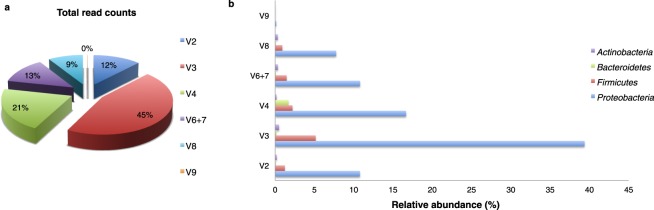
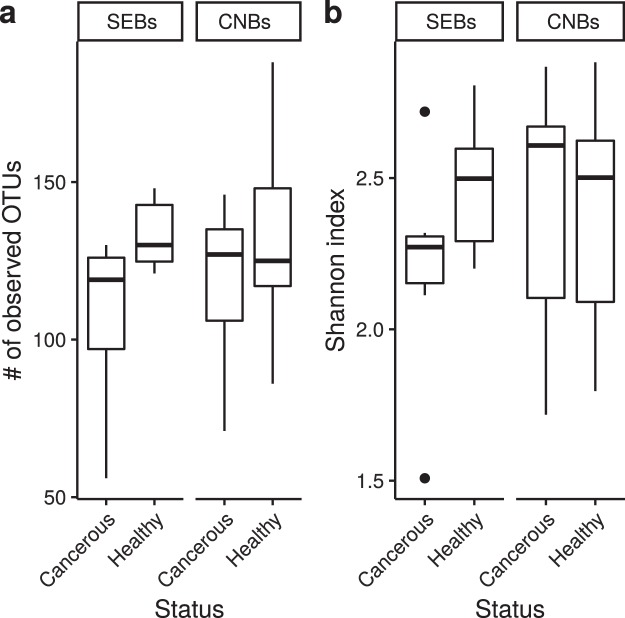
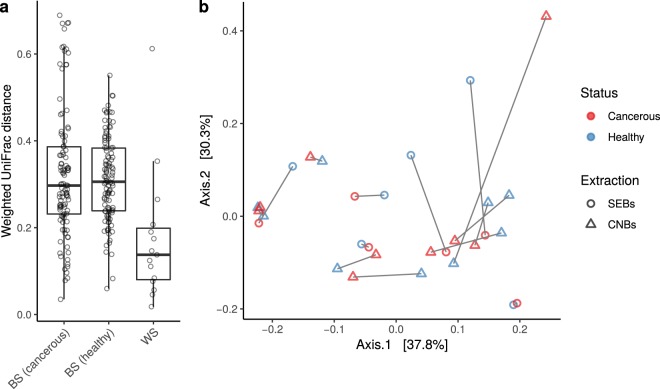
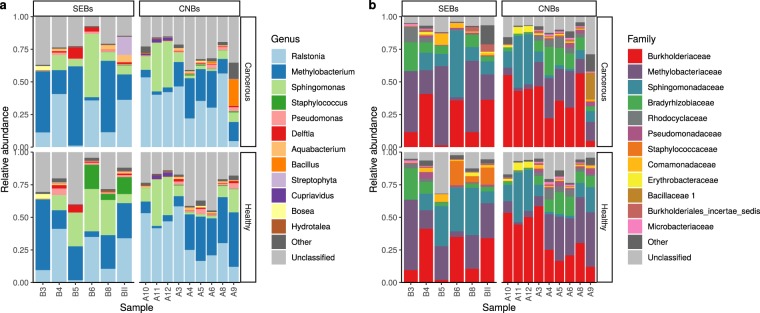
Breast microbiota compositions are not well understood, and a few recent reports have begun to explore the correlation between breast tissue dysbiosis and cancer. Given that various methods for breast microbiota detection were used, the aim of the present paper was to clarify which hypervariable region of the 16S-rRNA gene (V2, V3, V4, V6 + 7, V8, and V9) is the most informative for breast tissue microbiota. Core needle biopsies (CNBs) were compared with surgical excision biopsies (SEBs) to find a less invasive form of recovery useful for the analysis of a larger statistical population and potentially for diagnostic use of breast tissue microbiota. Finally, this study was the first to analyse the breast microbiota of tumours and paired normal tissues of a Mediterranean population. Our findings showed that the V3 region is the most informative for breast tissue microbiota, accounting for 45% of all reads. No significant differences were found between CNB and SEB specimens in terms of total reads and numbers of Operational Taxonomic Units (OTUs). Moreover, we find that more similarities than differences exist between tumours and adjacent normal tissues. Finally, the presence of the Ralstonia genus is associated with breast tissue.
Overview
The claims and statistics of this paper haven’t been checked yet.
Free: it reads the open-access text and checks the first 5 claims that cite a source we can check. Create a free account to check every claim.
Integrity signals
Registry
Cites
Statistics
Figures
Verification
Claims the paper makes
The claims and statistics of this paper haven’t been checked yet.
Free: it reads the open-access text and checks the first 5 claims that cite a source we can check. Create a free account to check every claim.
Claims other papers make about this one
Each is checked against this paper’s own text: does it say what the citing paper says it does?
The cited source says what the claim attributes to it.
In the citing paper
“Intratumor bacteria have been reported in many tumor types (2-19)”
From The human tumor microbiome is composed of tumor type–specific intracellular bacteria (2020) · cites this paper as [5]
Self-check
Percentages, sums and reported differences re-computed from the paper’s own numbers.
The self-check needs the paper’s full text.
Citations
Cites
Naïve Bayesian Classifier for Rapid Assignment of rRNA Sequences into the New Bacterial Taxonomy
Wang, Q., Garrity, G. M., Tiedje, J. M., & Cole, J. R. (2007) · Applied and Environmental Microbiology · doi:10.1128/aem.00062-07 · Cited by 19,885
Structure, function and diversity of the healthy human microbiome
The Human Microbiome Project Consortium (2012) · Nature · doi:10.1038/nature11234 · Cited by 11,726
VSEARCH: a versatile open source tool for metagenomics
(2016) · doi:10.7717/peerj.2584 · Cited by 10,773
Generalized linear mixed models: a practical guide for ecology and evolution
Bolker, B. M., Brooks, M. E., Clark, C. J., Geange, S. W., Poulsen, J. R., Stevens, M. H. H., & White, J.-S. S. (2009) · Trends in Ecology & Evolution · doi:10.1016/j.tree.2008.10.008 · Cited by 8,910
Sequencing technologies – the next generation
Metzker, M. L. (2010) · Nature Reviews Genetics · doi:10.1038/nrg2626 · Cited by 7,066
Dewhirst, F. E., Chen, T., Izard, J., Paster, B. J., Tanner, A. C. R., Yu, W.-H., Lakshmanan, A., & Wade, W. G. (2010) · Journal of Bacteriology · doi:10.1128/jb.00542-10 · Cited by 3,352
Grice, E. A., & Segre, J. A. (2011) · Nature Reviews Microbiology · doi:10.1038/nrmicro2537 · Cited by 3,143
Rescigno, M., Urbano, M., Valzasina, B., Francolini, M., Rotta, G., Bonasio, R., Granucci, F., Kraehenbuhl, J.-P., & Ricciardi-Castagnoli, P. (2001) · Nature Immunology · doi:10.1038/86373 · Cited by 2,553
Intestinal inflammation targets cancer-inducing activity of the microbiota
Arthur, J. C., Perez-Chanona, E., Mühlbauer, M., Tomkovich, S., Uronis, J. M., Fan, T.-J., Campbell, B. J., Abujamel, T., Dogan, B., Rogers, A. B., et al. (2012) · Science · doi:10.1126/science.1224820 · Cited by 2,263
Takahashi, S., Tomita, J., Nishioka, K., Hisada, T., & Nishijima, M. (2014) · PLoS ONE · doi:10.1371/journal.pone.0105592 · Cited by 1,506
Cited by
Items 101–145 of 145
Role of human microbiota in facilitating the metastatic journey of cancer cells
Shah, H., Patel, P., Nath, A., Shah, U., & Sarkar, R. (2025) · Naunyn-Schmiedeberg s Archives of Pharmacology · doi:10.1007/s00210-025-03957-8 · Cited by 5
“The most prevalent bacteria found in healthy breast cells are Firmicutes , Sphingomonas yanoikuyae , Proteobacteria , Actinobacteria (Thompson et al. 2017), Methylobac-terium , Ralstonia (Costantini et al. 2018), Bacteroidaceae (Meng et al. 2018), Prevotella , Lactococcus , Streptococcus , Corynebacterium , and Staphy…”
Intratumoral microbiota composition in women’s cancers: a systematic review and meta-analysis
Wen, Q., Wang, S., Fu, S., Zhou, X., Min, Y., Lang, J., & Chen, M. (2025) · Frontiers in Oncology · doi:10.3389/fonc.2025.1544786 · Cited by 5
Processing human urine and ureteral stents for 16S rRNA amplicon sequencing
Al, K. F., & Burton, J. P. (2021) · STAR Protocols · doi:10.1016/j.xpro.2021.100435 · Cited by 4
“An alternate, ultra-sensitive method of DNA extraction may be considered for crucial samples, or an entirely different methodological approach may be warranted instead of 16S rRNA amplicon sequencing (Costantini et al., 2018).”
Wu, Y., Zhang, Y., Zhang, W., Huang, Y., Lu, X., Shang, L., Zhou, Z., Chen, X., Li, S., Cheng, S., et al. (2023) · Journal of Cancer Research and Clinical Oncology · doi:10.1007/s00432-023-05014-4 · Cited by 4
Valsecchi, A. A., Ferrari, G., Paratore, C., Dionisio, R., Vignani, F., Sperone, P., Vellani, G., Novello, S., & Maïo, M. D. (2024) · Critical Reviews in Oncology/Hematology · doi:10.1016/j.critrevonc.2024.104328 · Cited by 4
Relevance of oncobiome in breast cancer evolution in an Argentine cohort
Dandeu, L. N. R., Lachovsky, J., Sidlik, S., Marenco, P., Orschanski, D., Aguilera, P., Vázquez, M., Carballo, M. D. P., Fernández, E. F., Steinhardt, A. P., et al. (2025) · mSphere · doi:10.1128/msphere.00597-24 · Cited by 3
“In relation to previous reports (13, 14, 20, 21), in our samples, the most abundant phylum included Proteobacteria , followed by Firmicutes , Bacteroidota , and Actinobacteria , which together represented more than 90% of the total phyla.”
Bulale, S., Shi, K., Wang, Y., Song, L., Zhang, M., Gong, Z., Zhao, Y., Xiong, Y., & He, L. (2025) · Sensors and Actuators B Chemical · doi:10.1016/j.snb.2025.138367 · Cited by 3
Unraveling the microbiome’s role in breast cancer progression and treatment response
Taki, A. G., Shareef, A., Arora, V., Oweis, R. J., Jyothi, S. R., Singh, U., Sahoo, S., Chauhan, A. S., Alimova, F., Sameer, H. N., et al. (2025) · Current Problems in Cancer · doi:10.1016/j.currproblcancer.2025.101264 · Cited by 3
Mou, E., Guo, R., Yi, Y., Li, Y., Yao, Y., & Xu, J. (2026) · npj Biofilms and Microbiomes · doi:10.1038/s41522-026-01074-9 · Cited by 3
“…that differs from skin and gut populations, and culture-independent surveys from multiple cohorts have identi fi ed reproducible taxa enriched in tumor versus adjacent normal tissue, which supports the biological plausibility of locally mediated microbial in fl uences onmammarycarcinogenesis 70,71 .”
Mammary Gland Microbiota in Benign Breast Diseases
Ukraincev, N. I., Kashutina, M. I., Касаткина, Л. И., Бахтиерович, А. А., & Zhernov, Y. V. (2025) · International Journal of Molecular Sciences · doi:10.3390/ijms26209951 · Cited by 2
The human microbiome reshapes the breast cancer immune-metabolic-hormonal microenvironment
Wang, Q., 张富荣, Xin, Y., Yang, R., Tang, Z., Wu, Z., & Ming, J. (2026) · Frontiers in Immunology · doi:10.3389/fimmu.2026.1774211 · Cited by 2
“For breast tissue samples, sterile collection is essential, with clear differentiation between tumor tissue, adjacent normal tissue, and distal normal tissue to prevent cross-contamination and interference from background microorganisms (8, 13, 14).”
Epigenetic Modulations by Microbiome in Breast Cancer
Zhao, Y., & Bhatnagar, S. (2024) · Advances in experimental medicine and biology · doi:10.1007/978-3-031-66686-5_4 · Cited by 2
Davidson, A. L., Driscoll, C. R., Luther, V. P., & Katz, A. J. (2022) · Plastic & Reconstructive Surgery Global Open · doi:10.1097/gox.0000000000004395 · Cited by 2
The Microbiome as an Endocrine Organ
Masetti, G. (2021) · Elsevier eBooks · doi:10.1016/b978-0-12-820472-6.00118-3 · Cited by 1
Microbiota relationship between breast, colorectal, and lung cancer types
Kanimdan, E., Bundgaard‐Nielsen, C., Yenigun, V. B., Gül, B., Güçin, Z., Komurcu, H. E., Elagöz, Ş., Pasin, O., Sørensen, S., & Arıcan, E. (2025) · Medical Oncology · doi:10.1007/s12032-025-03170-w · Cited by 1
“Primary tumor tissues were enriched in Staphylococcaceae (Firmicutes) and Corynebacteriaceae (Actinobacteria), whereas families such as Lactobacilla-ceae, which were abundant in healthy tissue, were markedly reduced in tumors [24, 25].”
Zhang, Z., Ma, X. Y., Zhang, J., Wu, S., Zhang, X., & Yang, C. (2026) · Journal of Translational Medicine · doi:10.1186/s12967-026-08187-x · Cited by 1
“It is hypothesized that dysbiosis may serve as a precursor to carcinogenic events, establishing a tumor-promoting microenvironment [34].”
Al‐Ansari, M. M., Mahmood, S. M., & Al-Alwan, M. M. (2026) · International Journal of Molecular Sciences · doi:10.3390/ijms27114723 · Cited by 2
Clinical Connections Between the Microbiota and Breast Cancer (Onset, Progression and Management)
Filippone, A., & Magno, S. (2021) · Elsevier eBooks · doi:10.1016/b978-0-12-819265-8.00099-1 · Cited by 1
Self-citationLaya, A., Koubala, B. B., Pathak, K., & Bueno, V. (2021) · International Journal of Cancer and Clinical Research · doi:10.23937/2378-3419/1410162 · Cited by 1
(2021) · Cancer Studies and Therapeutics · doi:10.31038/cst.2021613 · Cited by 1
“As regards breast cancer, microbiome seems to be relevant for at least five reasons: the impact of dysbiosis on immune competence [1], systemic inflammation [2], hormonal milieu through the so called “estrobolome” [3-5], the emotional balance (psychobiotic) [6] and breast tissue microbial composition [7].”
BackgroundCancer and Immunology – The Homeostasis Dance
Ekine-Afolabi, B. A. (2023) · Springer eBooks · doi:10.1007/978-3-030-80962-1_3-1 · Cited by 1
Boix-Amorós, A. (2019) · RiuNet (Universitat Politècnica de València) · doi:10.4995/thesis/10251/129870 · Cited by 2
Carvajal, J., & Carvajal, M. (2019) · Aesthetic Surgery Journal · doi:10.1093/asj/sjz076
Microbiota development and mucosal IgA responses during childhood in health and allergic disease
Dzidic, M. (2019) · RiuNet (Universitat Politècnica de València) · doi:10.4995/thesis/10251/125479
The Important Role of Breast Microbiota in Breast CancerPreprint
Su, K.-Y., Lee, W.-L., & Balasubramaniam, V. R. M. T. (2020) · Preprints.org · doi:10.20944/preprints202010.0437.v1
The Key Role of Human Microbiota in Breast CancerPreprint
Filippone, A., Rossi, C., Rossi, M. M., Guarino, D., Maggiore, C., Micco, A. D., Ticca, L., Palma, S. D., Bolognino, R., Sánchez, A. M., et al. (2021) · Preprints.org · doi:10.20944/preprints202102.0393.v1
Self-citationCase presentation: full mouth implant treatment via a trio of modalities.
Shapiro, S. A. (2011) · PubMed · Cited by 1
Research Progress of Microbiome in Breast Cancer
蘧, 曼. (2022) · Advances in Clinical Medicine · doi:10.12677/acm.2022.123224
From Leaky Gut to Tissue Microbiota in Metabolic Diseases
Burcelin, R. (2023) · Endocrinology · doi:10.1007/978-3-031-08115-6_4-1
From Leaky Gut to Tissue Microbiota in Metabolic Diseases
Burcelin, R. (2024) · Endocrinology · doi:10.1007/978-3-031-35064-1_4
Cancer and Immunology: The Homeostasis Dance
Ekine-Afolabi, B. A. (2025) · Springer eBooks · doi:10.1007/978-3-032-00749-0_3
Additional file 1 of Human liver microbiota modeling strategy at the early onset of fibrosis
Champion, C., Neagoe, R. M., Effernberger, M., Sala, D. T., Servant, F., Christensen, J. E., Arnoriaga‐Rodríguez, M., Amar, J., Lelouvier, B., Loubières, P., et al. (2023) · Figshare · doi:10.6084/m9.figshare.26564922
Liu, E., Zhang, F., Xu, T., Ye, L., Ma, S. S. Q., & Ji, Z.-S. (2023) · Figshare · doi:10.6084/m9.figshare.22619062
Tzeng, A., Sangwan, N., Jia, M. R., Liu, C.-C., Keslar, K. S., Downs-Kelly, E. P., Fairchild, R., Al‐Hilli, Z., Grobmyer, S. R., & Eng, C. (2021) · Figshare · doi:10.6084/m9.figshare.14443107
German, R., Marino, N., Hemmerich, C. M., Podicheti, R., Rusch, D. B., Stiemsma, L. T., Gao, H., Xuei, X., Rockey, P., & Storniolo, A. M. (2024) · Figshare · doi:10.6084/m9.figshare.26603284
German, R., Marino, N., Hemmerich, C. M., Podicheti, R., Rusch, D. B., Stiemsma, L. T., Gao, H., Xuei, X., Rockey, P., & Storniolo, A. M. (2024) · Figshare · doi:10.6084/m9.figshare.26603287
Estudo prospectivo da expressão da proteína p16 por imuno-histoquímica em câncer de mama
do NASCIMENTO, Í. P. (2023) · LA Referencia (Red Federada de Repositorios Institucionales de Publicaciones Científicas)
Introduction to microbiome analysis in relation to cancer
Zaheer, S. M. F., & Javed, S. (2026) · Elsevier eBooks · doi:10.1016/b978-0-443-40551-8.00010-x
Li, Y., Zhang, D., Tan, L., Xu, J., Sun, Y., Zhang, R., Cheng, Y., Li, Y., Guo, T., Jiang, H., et al. (2026) · mSystems · doi:10.1128/msystems.00500-26
“There are also some studies showing that the composition of the bacterial community is not distinct between normal and cancerous tissues in other tumors (31, 32), supporting our conclusion.”
Dardouri, A., Jazouli, M., Benhessou, M., M’kacher, R., & Amine, A. (2026) · World Journal of Microbiology and Biotechnology · doi:10.1007/s11274-026-05246-9
Tumor-linked microbiota in the breast: a systematic review and meta-analysis
Dardouri, A., Chahbouni, M., Elkhair, M. M., Lazar, S., & Amine, A. (2026) · Future Microbiology · doi:10.1080/17460913.2026.2728819
Narasimhamurthy, R. K., N, R. K., Rajendra, V. K., & Shetty, P. (2026) · Translational research · doi:10.1016/j.trsl.2026.09.007
Missaoui, N. (2026) · IntechOpen eBooks · doi:10.5772/intechopen.1017577
Intratumoral Microbiota in Fueling Cancer and Steering Treatment Response
Xu, M., Yu, J., Chen, Y., Ge, S., Ye, L., Wang, Y., 周一雄, & Jia, R. (2026) · MedComm · doi:10.1002/mco2.71052
“The selection of amplicon regions within the 16S rRNA gene is a common source of this heterogeneity because the gene contains nine hypervariable regions (V1–V9) interspersed with 10 conserved regions [ 38 ].”
Cossu, C., Adamo, M., Lorenzo, A. D., & Conti, L. (2026) · Frontiers in Immunology · doi:10.3389/fimmu.2026.1944056
“Current evidence indicates that bacteria may reach breast tissue through systemic dissemination via the bloodstream or lymphatic circulation, potentially translocating from the gut, oral cavity, or skin microbiota (33, 46).”
Metadata
- Authors
- Costantini, L., Magno, S., Albanese, D., Donati, C., Molinari, R., Filippone, A., Masetti, R., & Merendino, N.
- Affiliations
- Università degli Studi della Tuscia (IT)
- Agostino Gemelli University Polyclinic (IT)
- Fondazione Edmund Mach (IT)
- Università Cattolica del Sacro Cuore (IT)
- Corresponding author
- Costantini, Lara
- ORCID
- Venue
- Scientific Reports
- Published
- 2018-11-15
- Volume
- 8
- Issue
- 1
- Pages
- 16893-16893
- ISSN
- 2045-2322 (ISSN-L)
- PMC
- PMC6237987
- OpenAlex
- W2899973763
- Semantic Scholar
- 1401d7e80556faa5af3cebc250065849e9a4490b
- Cited by
- 144
- References
- 45
- Citations by year
- 2026: 12 · 2025: 21 · 2024: 16 · 2023: 28 · 2022: 20 · 2021: 25 · 2020: 13 · 2019: 8
- FWCI
- 4.09
- Type
- journal article
- Language
- en
- Open access
- gold
- doi.org
- Licence
- cc-by
- creativecommons.org/licenses/by/4.0 (tdm)
- creativecommons.org/licenses/by/4.0 (vor)
- Locations
- Scientific Reports (publishedVersion, cc-by)
- Europe PMC (PubMed Central) (publishedVersion, cc-by)
- PubMed Central (publishedVersion, cc-by)
- PubMed (publishedVersion)
- CINECA IRIS Institutional Research Information System (Fondazione Edmund Mach) (submittedVersion, cc-by)
- PubliCatt (Università Cattolica del Sacro Cuore) (submittedVersion, cc-by)
- DOAJ (DOAJ: Directory of Open Access Journals) (submittedVersion)
- UnitusOpen (Tuscia University) (submittedVersion, cc-by)
- Topics
- Life Sciences › Biochemistry, Genetics and Molecular Biology › Molecular Biology › Gut microbiota and health
- Health Sciences › Dentistry › Periodontics › Oral microbiology and periodontitis research
- Physical Sciences › Environmental Science › Ecology › Microbial Community Ecology and Physiology
- Keywords
- breast cancer, core needle biopsy, excisional biopsy, V3 region, dysbiosis, Ralstonia, operational taxonomic units, Mediterranean populations
- MeSH terms
- Aged, Breast, Humans, Middle Aged, Phylogeny, RNA, Ribosomal, 16S, Biodiversity, Biopsy, Large-Core Needle, Microbiota
About these checks
Registry, retraction, Cites and statistics results are computed, not judged, with one exception: a printed reference that no index lists is read once by a model before it counts as a citation error. Claims are extracted by a model and kept only when their quote appears verbatim in the text; each cited source is then checked, with a model’s help, for whether it says what the claim relies on. Those verdicts can be wrong — read the claim’s quote and the cited source before relying on one.
Statistics and arithmetic are recomputed, not judged.
Confidence bands are shown only for fields calibrated on our annotated test set. None is calibrated yet, so no band is shown.
What counts as a claim ›How we measure confidence ›How we check this ›
Are you an author, or do you see a problem with this page? Request a review
Data sources
Bibliographic data: Semantic Scholar, OpenAlex, Crossref.
Contains information from the Semantic Scholar Academic Graph Datasets, made available under the ODC Attribution License (ODC-BY 1.0).
Semantic Scholar’s data is described in: Kinney, R., et al. (2023). The Semantic Scholar Open Data Platform. arXiv:2301.10140.
