

The interplay between prematurity, maternal stress and children’s intelligence quotient at age 11: A longitudinal study
Open accessThe DOI matches its Crossref record; 51 of the 52 references it cites were found in a registry or an index.
Abstract
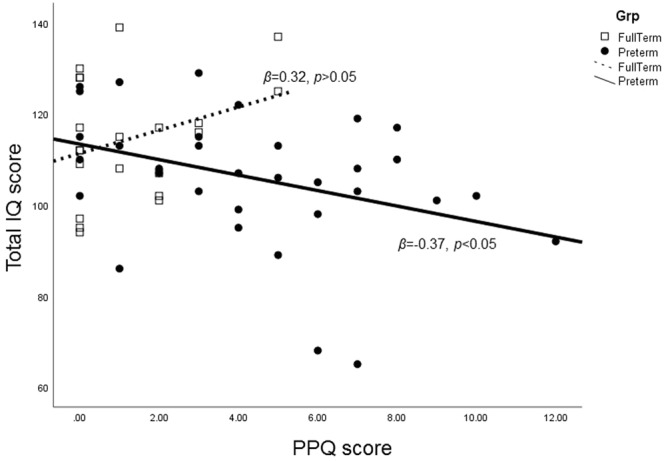
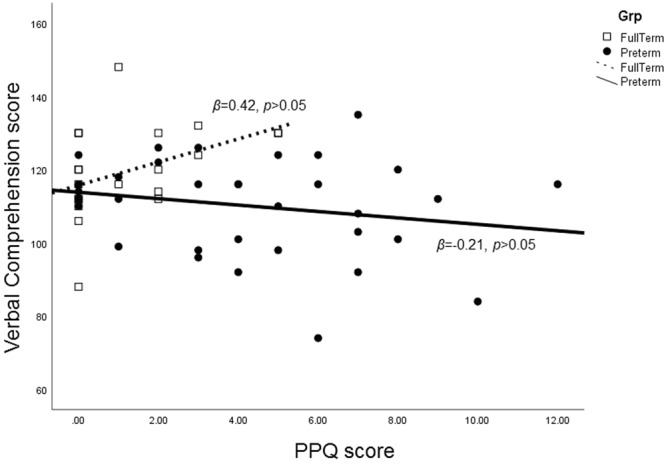
Very premature children (<33 weeks of gestational age (GA)) experience greater academic difficulties and have lower, though normal-range, intelligence quotients (IQs) versus their full-term peers. These differences are often attributed to GA or familial socio-economic status (SES). However, additional factors are increasingly recognized as likely contributors. Parental stress after a child’s premature birth can present as post-traumatic stress disorder (PTSD) symptoms and can in turn reinforce difficulties in parent-child interaction pattern. Following a longitudinal design, we studied the interplay between a premature child’s perinatal history and maternal PTSD symptoms on intelligence abilities assessed at 11 years of age. Thirty-three very preterm and 21 full-term mother-children dyads partook in the study. Children’s perinatal risk was evaluated at hospital discharge, maternal PTSD symptoms were assessed when the children were 18 months old, and children’s IQ was measured at 11 years old. IQ was significantly lower for preterm than full-term children, without reliable influences from perinatal risk scores. However, lower maternal PTSD symptoms predicted higher IQ in preterm children. This preliminary study highlights the importance detecting maternal PTSD symptoms after a preterm birth and suggests interventions should target reducing maternal PTSD symptoms during early childhood to enhance very preterm children’s intelligence development.
Overview
The claims and statistics of this paper haven’t been checked yet.
Free: it reads the open-access text and checks the first 5 claims that cite a source we can check. Create a free account to check every claim.
Integrity signals
Registry
Cites
Statistics
Figures
Verification
Claims the paper makes
The claims and statistics of this paper haven’t been checked yet.
Free: it reads the open-access text and checks the first 5 claims that cite a source we can check. Create a free account to check every claim.
Claims other papers make about this one
Each is checked against this paper’s own text: does it say what the citing paper says it does?
The cited source says what the claim attributes to it.
In the citing paper
“A few studies that report comparative results observed a difference in level of PTSS symptoms at birth, 6 and 18 months respectively (Greene et al., 2019; Hall et al., 2017; Turpin et al., 2019) and five years (Barthel et al., 2020).”
From Parental stress and mental health outcomes following very preterm birth: A systematic review of recent findings (2024) · cites this paper as Turpin et al., 2019
The cited source says what the claim attributes to it.
In the citing paper
“Turpin et al. (2019) on the other hand, found that PTSS was higher in VPT ( n = 33) than in FT mothers when children were aged 18 months.”
From Parental stress and mental health outcomes following very preterm birth: A systematic review of recent findings (2024) · cites this paper as Turpin et al., 2019
Self-check
Percentages, sums and reported differences re-computed from the paper’s own numbers.
The self-check needs the paper’s full text.
Citations
Cites
Diagnostic and Statistical Manual of Mental Disorders
Williams, J. B. W., & First, M. (2013) · Encyclopedia of Social Work · doi:10.1093/acrefore/9780199975839.013.104 · Cited by 109,519
Faul, F., Erdfelder, E., Lang, A.-G., & Buchner, A. (2007) · Behavior Research Methods · doi:10.3758/bf03193146 · Cited by 65,971
Cohen, J. (1992) · Psychological Bulletin · doi:10.1037//0033-2909.112.1.155 · Cited by 8,771
Cognitive and Behavioral Outcomes of School-Aged Children Who Were Born Preterm: A Meta-analysis
Bhutta, A. T., Cleves, M. A., Casey, P. H., Cradock, M. M., & Anand, K. J. S. (2002) · JAMA · doi:10.1001/jama.288.6.728 · Cited by 2,392
Meta-Analysis of Neurobehavioral Outcomes in Very Preterm and/or Very Low Birth Weight Children
Aarnoudse-Moens, C. S. H., Weisglas-Kuperus, N., van Goudoever, J. B., & Oosterlaan, J. (2009) · Pediatrics · doi:10.1542/peds.2008-2816 · Cited by 1,587
Wechsler Intelligence Scale for Children, Fourth Edition
Wechsler, D. (2012) · PsycTESTS Dataset · doi:10.1037/t15174-000 · Cited by 1,577
Regional brain volume abnormalities and long-term cognitive outcome in preterm infants
Peterson, B. S. (2000) · JAMA · doi:10.1001/jama.284.15.1939 · Cited by 981
Procedural pain and brain development in premature newborns
Brummelte, S., Grunau, R. E., Chau, V., Poskitt, K. J., Brant, R., Vinall, J., Gover, A., Synnes, A. R., & Miller, S. P. (2012) · Annals of Neurology · doi:10.1002/ana.22267 · Cited by 737
Kangaroo Mother Care and Neonatal Outcomes: A Meta-analysis
Boundy, E. O., Dastjerdi, R., Spiegelman, D., Fawzi, W. W., Missmer, S. A., Lieberman, E., Kajeepeta, S., Wall, S., & Chan, G. J. (2016) · Pediatrics · doi:10.1542/peds.2015-2238 · Cited by 661
Long-term consequences of pain in human neonates
Grunau, R. E., Holsti, L., & Peters, J. W. B. (2006) · Seminars in Fetal and Neonatal Medicine · doi:10.1016/j.siny.2006.02.007 · Cited by 558
Research works printed but not linked: 1
- Smith G NICU Stress Is Associated with Brain Development in Preterm Infants Ann Neurol 2011 70 541 549 10.1002/ana.22545 21976396 PMC4627473 · DOI · Paper page
Cited by
Visitation restrictions: is it right and how do we support families in the NICU during COVID-19?
Murray, P. D., & Swanson, J. R. (2020) · Journal of Perinatology · doi:10.1038/s41372-020-00781-1 · Cited by 138
Cena, L., Biban, P., JANOS, J. A., Lavelli, M., Langfus, J. A., Tsai, A., Youngstrom, E. A., & Stefana, A. (2021) · Frontiers in Psychology · doi:10.3389/fpsyg.2021.630594 · Cited by 84
“, 2018), and worse infant/child developmental outcomes (Turpin et al., 2019; Cheong et al., 2020).”
BackgroundSandnes, R., Le Floch, M., Riquin, E., Nocus, I., Müller, J. B., & Bacro, F. (2024) · Journal of Affective Disorders · doi:10.1016/j.jad.2024.03.154 · Cited by 57
Posttraumatic stress symptoms in mothers and fathers of very preterm infants over the first 2 years
Pace, C. C., Anderson, P. J., Lee, K. J., Spittle, A. J., & Treyvaud, K. (2020) · Journal of Developmental & Behavioral Pediatrics · doi:10.1097/dbp.0000000000000828 · Cited by 49
“The effects of early PTSSs on child development may also be long lasting, with a recent study reporting that higher PTSSs at 18 months in mothers of VPT children were associated with lower intelligence scores at 11 years of age.(8) Strengths of our study are the inclusion of fathers, the longitudinal design, and the u…”
ResultMaitre, N. L., Key, A. P. F., Slaughter, J. C., Yoder, P. J., Neel, M. L., Richard, C., Wallace, M. T., & Murray, M. M. (2020) · Brain Topography · doi:10.1007/s10548-020-00791-4 · Cited by 41
Self-citationMeesters, N. J., van Dijk, M., de Carvalho, F. S., Haverman, L., Reiss, I. K. M., Simons, S. H. P., & van den Bosch, G. E. (2021) · Journal of Pediatric Nursing · doi:10.1016/j.pedn.2021.09.024 · Cited by 37
Assche, I. A. V., Veld, E. A. H. I. ’., Calsteren, K. V., van Gerwen, M., Blommaert, J., Cardonick, E. H., Halaška, M. J., Fruscio, R., Fumagalli, M., Lemiere, J., et al. (2023) · Journal of Clinical Oncology · doi:10.1200/jco.22.02005 · Cited by 34
“A longitudinal study in the general population also demonstrates multicollinearity between the impact of early-life adversity exposure and prematurity.(18) As maternal death was not associated with cancer type, cancer stage, or treatment type, it could be possible that maternal stress or an insecure mother-child attac…”
BackgroundPolloni, L., Cavallin, F., Lolli, E., Schiavo, R., Bua, M., Volpe, B., Meneghelli, M., Baraldi, E., & Trevisanuto, D. (2021) · Children · doi:10.3390/children8090755 · Cited by 36
Big data, machine learning, and population health: predicting cognitive outcomes in childhood
Bowe, A. K., Lightbody, G., Staines, A. S., & Murray, D. M. (2022) · Pediatric Research · doi:10.1038/s41390-022-02137-1 · Cited by 39
Intelligence Quotient (IQ) in school-aged preterm infants: A systematic review
Lacalle, L., Martínez‐Shaw, M. L., Almagro, Y. M., & Sánchez‐Sandoval, Y. (2023) · Frontiers in Psychology · doi:10.3389/fpsyg.2023.1216825 · Cited by 33
“compared with a full-term group, the studies reported lower scores in preterm children (Hutchinson et al., 2013; Grunewaldt et al., 2014; Turpin et al., 2019; Domellöf et al., 2020; Kaul et al., 2021b).”
BackgroundResultThe Soundscape of Neonatal Intensive Care: A Mixed-Methods Study of the Parents’ Experience
Chifa, M., Hadar, T., Politimou, N., Reynolds, G., & Franco, F. (2021) · Children · doi:10.3390/children8080644 · Cited by 22
“There was no overall significant relationship between PPQ scores and the birth weights of the infants, which is inconsistent with the literature suggesting that maternal PTSD is linked to low birth weight [127,128] but align with the suggestion that all parents who experience an NICU stay can potentially display PTSD…”
BackgroundResultUrfer, A., Turpin, H., Dimitrova, N., Borghini, A., Plessen, K. J., Harari, M. M., & Urben, S. (2021) · Children · doi:10.3390/children9010009 · Cited by 14
Self-citationWagenaar, J., Mah, C., Bodell, F. K., Reiss, I. K. M., Kleinsmann, M. S., Obermann-Borst, S. A., & Taal, H. R. (2024) · JMIR Pediatrics and Parenting · doi:10.2196/60610 · Cited by 16
“Parental well-being, referring to the overall mental, emotional, and physical health of parents during and directly after the medical journey of their newborn, influences child development [3,4] and the risk of developing long-term psychological morbidities for the parents [5].”
Veld, E. A. H. I. ’., Assche, I. A. V., Calsteren, K. V., Salaets, T., Slieker, M. G., Cardonick, E. H., van Grotel, M., Halaska, M. J., Fontana, C., Fruscio, R., et al. (2025) · Annals of Oncology · doi:10.1016/j.annonc.2025.04.011 · Cited by 13
The fundamentals of a parental peer-to-peer support program in the NICU: a scoping review
Pascual, A., Wielenga, J. M., Ruhe, K., van Kaam, A. H., Denswil, N. P., & Maaskant, J. M. (2024) · Maternal Health Neonatology and Perinatology · doi:10.1186/s40748-024-00190-8 · Cited by 20
“These mental health issues can interfere with the parents’ ability to parent their infant [6] and may also lead to negative neurodevelopmental outcomes of infants [7–9].”
BackgroundParental access to hospitalised children during infectious disease pandemics such as COVID-19
Goga, A. E., Feucht, U. D., Pillay, S., Reubenson, G., Jeena, P. M., Mahdi, S. A., Mayet, N. T., Velaphi, S., McKerrow, N., Mathivha, L. R., et al. (2021) · South African Medical Journal · doi:10.7196/samj.2021.v111i2.15388 · Cited by 9
Longstanding Auditory Sensory and Semantic Differences in Preterm Born Children
Retsa, C., Turpin, H., Geiser, E., Ansermet, F., Müller‐Nix, C., & Murray, M. M. (2023) · Brain Topography · doi:10.1007/s10548-023-01022-2 · Cited by 10
Self-citationLionetti, F., Sperati, A., Spinelli, M., Dellagiulia, A., Fasolo, M., & Pluess, M. (2025) · Neuroscience & Biobehavioral Reviews · doi:10.1016/j.neubiorev.2025.106216 · Cited by 11
“…(Gueron-Sela et al., 2016), executive functions such as attention and inhibitory abilities (Breslau and Chilcoat, 2000; Verkerk et al., 2011), IQ (Turpin et al., 2019), and school achievement, including verbal, reading, and numerical skills (Jaekel et al., 2015; O ’ Brien et al., 2023; Burger et…”
Perceived stress of mothers and fathers on two NICUs before and during the SARS-CoV-2 pandemic
Deindl, P., Witting, A., Dür, M., Berger, A., Klebermaß-Schrehof, K., Singer, D., Giordano, V., & Fuiko, R. (2023) · Scientific Reports · doi:10.1038/s41598-023-40836-9 · Cited by 11
Francisco, A. P., Motta, G. L. C. L., Zortéa, F., Mugnol, F. E., Acosta, J. R., Kohmann, A. M., Brun, J. B., Souza, A. C. M. L., Ramos, B. R., Bogie, B. J. M., et al. (2019) · Journal of Affective Disorders · doi:10.1016/j.jad.2019.09.083 · Cited by 6
Negative affectivity moderated by preterm birth predicted toddlers’ behavior problems
Martins, C. B. S., Cassiano, R. G. M., & Linhares, M. B. M. (2021) · Infant Behavior and Development · doi:10.1016/j.infbeh.2021.101544 · Cited by 8
Heterogeneity of the attentional system’s efficiency among very prematurely born pre-schoolers
Walczak‐Kozłowska, T., Chrzan‐Dętkoś, M., & Harciarek, M. (2021) · Child Neuropsychology · doi:10.1080/09297049.2021.1961702 · Cited by 5
“…of depressive disorders and higher severity of parental stress (Becker et al., 2016; Erickson et al., 2019; Gray et al., 2013; Suttora et al., 2014; Turpin et al., 2019), that may unfavorably influence a mother’s attitude toward her child, lower her sensitivity to its needs, which results in the…”
BackgroundMigliorelli, L., Cacciatore, A., Ottaviani, V., Berardini, D., Dellacà, R. L., Frontoni, E., & Moccia, S. (2022) · Medical & Biological Engineering & Computing · doi:10.1007/s11517-022-02696-9 · Cited by 7
Filippa, M., Lordier, L., Lejeune, F., de Almeida, J. S., Hüppi, P. S., Munoz, F. B., Monaci, M. G., & Borradori-Tolsa, C. (2024) · Frontiers in Psychology · doi:10.3389/fpsyg.2024.1443080 · Cited by 7
“…collectively shape maternal sensitivity and responsiveness during interactions with their infants, thereby exerting a profound impact on the child’s developmental trajectory (Forcada-Guex et al., 2011), with enduring ramifications for their socio-emotional competencies (Turpin et al., 2019).”
BackgroundChanges in Clinical Care of the Newborn During COVID-19 Pandemic
Doctor, P. N., Kamat, D., & Sood, B. G. (2021) · Pediatric Clinics of North America · doi:10.1016/j.pcl.2021.05.008 · Cited by 5
“Parental stress arising from NICU admission has been associated with poor neurodevelopmental outcomes in preterm babies.(86) Especially in the pandemic, parental stress can worsen owing to restricted visitation.”
Shipley, L., & Sharkey, D. (2024) · Acta Paediatrica · doi:10.1111/apa.17334 · Cited by 3
“12 Our study has some limitations.”
Parenting Stress in Preterm and Full-term Infant Mothers by Their Children’s Developmental Stages
Kim, K.-E., & Lee, H. (2020) · JOURNAL OF THE KOREAN SOCIETY OF MATERNAL AND CHILD HEALTH · doi:10.21896/jksmch.2020.24.3.162 · Cited by 2
FATHIMA, A. S., & Jeevanandan, G. (2023) · Cureus · doi:10.7759/cureus.50752 · Cited by 2
Risk factors for postpartum posttraumatic stress disorder after emergency admission
Du, F., Zha, J., Li, Y., Fang, L., Xia, S., & Yu, Y. (2023) · World Journal of Emergency Medicine · doi:10.5847/wjem.j.1920-8642.2024.013 · Cited by 2
Auditory Risk Factors at Birth and Language Development at 2 Years of Age: A Longitudinal Analysis
Benítez, Y. R., Castillo, Y., Vanega, S. A., & Pagani, L. S. (2024) · Global Pediatric Health · doi:10.1177/2333794x241273201 · Cited by 1
Boissel, L., Pinchaux, E., Guilé, M., Corde, P., Crovetto, C., Diouf, M., Mariana, C., Meynier, J., Picard, C., Scoury, D., et al. (2022) · Frontiers in Psychiatry · doi:10.3389/fpsyt.2022.938482 · Cited by 1
“Mothers who experienced a preterm birth are at higher risk of developing post-traumatic stress disorder (10) (REF).”
BackgroundMutualité et synchronie : ce que le temps nous a appris sur le développement de l’enfant
Borghini, A. (2019) · Périnatalité · doi:10.3166/rmp-2019-0060 · Cited by 1
Self-citationWang, P., Xu, Y., & Zhang, L. (2020) · Springer eBooks · doi:10.1007/978-981-15-4415-6_6 · Cited by 1
de la Paz, C.-R. M., Jiménez-Quiróz, R., Gámez, N. P., Angélica, R. P., Claudia, L. B., Angélica, G.-C. M., & Mercedes, C. S. R. L. (2021) · Acta Scientific Women s Health · doi:10.31080/aswh.2021.03.0246 · Cited by 1
Pouraboli, B., Arianfar, M., Abadian, L., Abazari, F., & Dehghan, M. (2022) · Research Square · doi:10.21203/rs.3.rs-1187247/v1 · Cited by 1
deRegnier, R.-A. O. (2022) · The Journal of Pediatrics · doi:10.1016/j.jpeds.2022.07.044 · Cited by 1
Teodoro, A. T. H. (2020) · Digital Library of Theses and Dissertations (Universidade de São Paulo) · doi:10.11606/d.25.2020.tde-01102021-150624
Álvarez, M. L. V., Fonseca-Beltrán, L., & Romero-Acosta, K. (2021) · doi:10.21892/9786287515024.1
Intelligence, Religiosity, and Environmental Emissions
Squalli, J. (2022) · Eastern Economic Journal · doi:10.1057/s41302-022-00212-3
Fatores de risco associados ao parto prematuro: estudo caso-controle
Artiga, D. H. A. (2022) · Digital Library of Theses and Dissertations (Universidade de São Paulo) · doi:10.11606/d.22.2022.tde-10112022-145852 · Cited by 1
Anxiety and Depression of Neonatal Intensive Care Unit Mothers During the COVID-19 Pandemic
Güneş, A. O., & Atli, N. (2022) · Harran Üniversitesi Tıp Fakültesi Dergisi · doi:10.35440/hutfd.1123087
“…it is important to consider the short and long-term psychological effects of the pandemic on NICU families, especially NICU mothers, and it is advisable to make every effort to prevent or reverse the negative effects of perinatal mental health disorders on both mothers and children (9,22-25).”
Backgroundzhang, X., Yuan, N., Sun, J., Zhao, D., & Xu, X. (2022) · Research Square · doi:10.21203/rs.3.rs-2351951/v1
Cuidado domiciliar pós alta do prematuro durante a pandemia Covid-19
Martinelle, E., da Silva, A. D., Machineski, G. G., dos Reis, A. C. E., & Viera, C. S. (2023) · Revista de Enfermagem da UFSM · doi:10.5902/2179769283804
Conséquences psychiques maternelles de la prématurité et conséquences chez l’enfant
Muller, J. (2025) · Contraste · doi:10.3917/cont.062.0081
Zheng, W., Wang, Y., Liu, J., Ye, L., Zhang, Y., Cao, J., & Zhao, L. (2026) · Frontiers in Pediatrics · doi:10.3389/fped.2026.1847139
Metadata
- Authors
- Turpin, H., Urben, S., Ansermet, F., Borghini, A., Murray, M. M., & Müller-Nix, C.
- Affiliations
- Centre Hospitalier Universitaire Vaudois (CH)
- University Hospital of Geneva (CH)
- Vanderbilt University (US)
- Corresponding author
- Turpin, Hélène
- Venue
- Scientific Reports
- Published
- 2019-01-24
- Volume
- 9
- Issue
- 1
- Pages
- 450-450
- ISSN
- 2045-2322 (ISSN-L)
- PMC
- PMC6345959
- OpenAlex
- W2913935704
- Cited by
- 45
- References
- 52
- Citations by year
- 2026: 1 · 2025: 3 · 2024: 6 · 2023: 7 · 2022: 9 · 2021: 11 · 2020: 6 · 2019: 2
- FWCI
- 7.28
- Type
- journal article
- Language
- en
- Open access
- gold
- doi.org
- Licence
- cc-by
- creativecommons.org/licenses/by/4.0 (tdm)
- creativecommons.org/licenses/by/4.0 (vor)
- Locations
- Scientific Reports (publishedVersion, cc-by)
- Europe PMC (PubMed Central) (publishedVersion, cc-by)
- PubMed Central (publishedVersion, cc-by)
- PubMed (publishedVersion)
- SERVAL (Université de Lausanne) (publishedVersion, cc-by)
- IRIS (submittedVersion, cc-by)
- DOAJ (DOAJ: Directory of Open Access Journals) (submittedVersion)
- Funders
- Oak Foundation
- Topics
- Health Sciences › Medicine › Pediatrics, Perinatology and Child Health › Infant Development and Preterm Care
- Health Sciences › Medicine › Public Health, Environmental and Occupational Health › Maternal Mental Health During Pregnancy and Postpartum
- Health Sciences › Medicine › Obstetrics and Gynecology › Preterm Birth and Chorioamnionitis
- Keywords
- very preterm birth, maternal stress, intelligence quotient, cognitive development, perinatal risk, parent-child interaction, early childhood
- MeSH terms
- Child, Child Development, Child, Preschool, Female, Gestational Age, Humans, Infant, Infant, Premature, Diseases, Intelligence, Intelligence Tests, Longitudinal Studies, Male, Parent-Child Relations, Pregnancy, Stress Disorders, Post-Traumatic, Premature Birth
About these checks
Registry, retraction, Cites and statistics results are computed, not judged, with one exception: a printed reference that no index lists is read once by a model before it counts as a citation error. Claims are extracted by a model and kept only when their quote appears verbatim in the text; each cited source is then checked, with a model’s help, for whether it says what the claim relies on. Those verdicts can be wrong — read the claim’s quote and the cited source before relying on one.
Statistics and arithmetic are recomputed, not judged.
Confidence bands are shown only for fields calibrated on our annotated test set. None is calibrated yet, so no band is shown.
What counts as a claim ›How we measure confidence ›How we check this ›
Are you an author, or do you see a problem with this page? Request a review
Data sources
Bibliographic data: Semantic Scholar, OpenAlex, Crossref.
Contains information from the Semantic Scholar Academic Graph Datasets, made available under the ODC Attribution License (ODC-BY 1.0).
Semantic Scholar’s data is described in: Kinney, R., et al. (2023). The Semantic Scholar Open Data Platform. arXiv:2301.10140.
