

The interplay between prematurity, maternal stress and children’s intelligence quotient at age 11: A longitudinal study
Open accessThe DOI matches its Crossref record; 51 of the 52 references it cites were found in a registry or an index.
Abstract
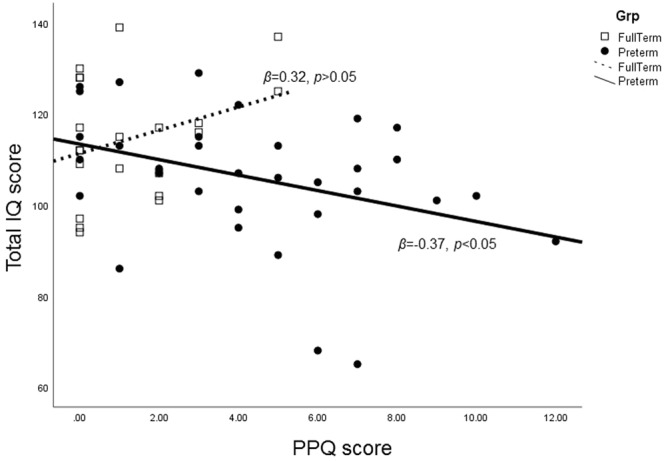
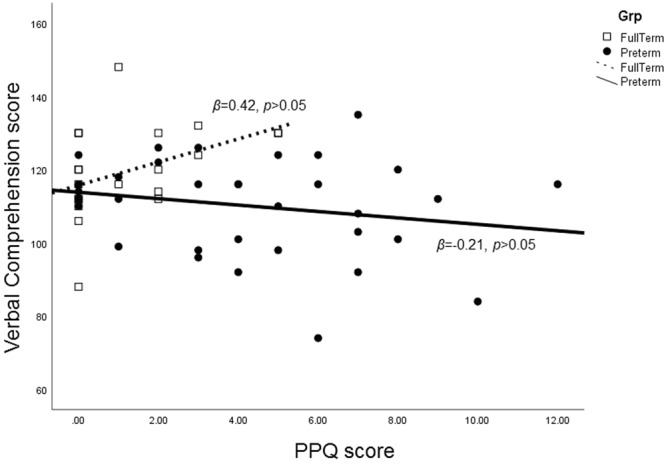
Very premature children (<33 weeks of gestational age (GA)) experience greater academic difficulties and have lower, though normal-range, intelligence quotients (IQs) versus their full-term peers. These differences are often attributed to GA or familial socio-economic status (SES). However, additional factors are increasingly recognized as likely contributors. Parental stress after a child’s premature birth can present as post-traumatic stress disorder (PTSD) symptoms and can in turn reinforce difficulties in parent-child interaction pattern. Following a longitudinal design, we studied the interplay between a premature child’s perinatal history and maternal PTSD symptoms on intelligence abilities assessed at 11 years of age. Thirty-three very preterm and 21 full-term mother-children dyads partook in the study. Children’s perinatal risk was evaluated at hospital discharge, maternal PTSD symptoms were assessed when the children were 18 months old, and children’s IQ was measured at 11 years old. IQ was significantly lower for preterm than full-term children, without reliable influences from perinatal risk scores. However, lower maternal PTSD symptoms predicted higher IQ in preterm children. This preliminary study highlights the importance detecting maternal PTSD symptoms after a preterm birth and suggests interventions should target reducing maternal PTSD symptoms during early childhood to enhance very preterm children’s intelligence development.
Overview
The claims and statistics of this paper haven’t been checked yet.
Free: it reads the open-access text and checks the first 5 claims that cite a source we can check. Create a free account to check every claim.
Integrity signals
Registry
Cites
Statistics
Figures
Verification
Claims the paper makes
The claims and statistics of this paper haven’t been checked yet.
Free: it reads the open-access text and checks the first 5 claims that cite a source we can check. Create a free account to check every claim.
Claims other papers make about this one
Each is checked against this paper’s own text: does it say what the citing paper says it does?
The cited source says what the claim attributes to it.
In the citing paper
“A few studies that report comparative results observed a difference in level of PTSS symptoms at birth, 6 and 18 months respectively (Greene et al., 2019; Hall et al., 2017; Turpin et al., 2019) and five years (Barthel et al., 2020).”
From Parental stress and mental health outcomes following very preterm birth: A systematic review of recent findings (2024) · cites this paper as Turpin et al., 2019
The cited source says what the claim attributes to it.
In the citing paper
“Turpin et al. (2019) on the other hand, found that PTSS was higher in VPT ( n = 33) than in FT mothers when children were aged 18 months.”
From Parental stress and mental health outcomes following very preterm birth: A systematic review of recent findings (2024) · cites this paper as Turpin et al., 2019
Self-check
Percentages, sums and reported differences re-computed from the paper’s own numbers.
The self-check needs the paper’s full text.
Citations
Cites
Diagnostic and Statistical Manual of Mental Disorders
Williams, J. B. W., & First, M. (2013) · Encyclopedia of Social Work · doi:10.1093/acrefore/9780199975839.013.104 · Cited by 109,519
Faul, F., Erdfelder, E., Lang, A.-G., & Buchner, A. (2007) · Behavior Research Methods · doi:10.3758/bf03193146 · Cited by 65,971
Cohen, J. (1992) · Psychological Bulletin · doi:10.1037//0033-2909.112.1.155 · Cited by 8,771
Cognitive and Behavioral Outcomes of School-Aged Children Who Were Born Preterm: A Meta-analysis
Bhutta, A. T., Cleves, M. A., Casey, P. H., Cradock, M. M., & Anand, K. J. S. (2002) · JAMA · doi:10.1001/jama.288.6.728 · Cited by 2,392
Meta-Analysis of Neurobehavioral Outcomes in Very Preterm and/or Very Low Birth Weight Children
Aarnoudse-Moens, C. S. H., Weisglas-Kuperus, N., van Goudoever, J. B., & Oosterlaan, J. (2009) · Pediatrics · doi:10.1542/peds.2008-2816 · Cited by 1,587
Wechsler Intelligence Scale for Children, Fourth Edition
Wechsler, D. (2012) · PsycTESTS Dataset · doi:10.1037/t15174-000 · Cited by 1,577
Regional brain volume abnormalities and long-term cognitive outcome in preterm infants
Peterson, B. S. (2000) · JAMA · doi:10.1001/jama.284.15.1939 · Cited by 981
Procedural pain and brain development in premature newborns
Brummelte, S., Grunau, R. E., Chau, V., Poskitt, K. J., Brant, R., Vinall, J., Gover, A., Synnes, A. R., & Miller, S. P. (2012) · Annals of Neurology · doi:10.1002/ana.22267 · Cited by 737
Kangaroo Mother Care and Neonatal Outcomes: A Meta-analysis
Boundy, E. O., Dastjerdi, R., Spiegelman, D., Fawzi, W. W., Missmer, S. A., Lieberman, E., Kajeepeta, S., Wall, S., & Chan, G. J. (2016) · Pediatrics · doi:10.1542/peds.2015-2238 · Cited by 661
Long-term consequences of pain in human neonates
Grunau, R. E., Holsti, L., & Peters, J. W. B. (2006) · Seminars in Fetal and Neonatal Medicine · doi:10.1016/j.siny.2006.02.007 · Cited by 558
Neonatal intensive care unit stress is associated with brain development in preterm infants
Smith, G. C., Gutovich, J., Smyser, C., Pineda, R., Newnham, C., Tjoeng, T. H., Vavasseur, C., Wallendorf, M., Neil, J., & Inder, T. (2011) · Annals of Neurology · doi:10.1002/ana.22545 · Cited by 549
Grunau, R. E., Whitfield, M. F., Petrie-Thomas, J., Synnes, A. R., Cepeda, I. L., Keidar, A., Rogers, M., MacKay, M., Hubber-Richard, P., & Johannesen, D. (2009) · Pain · doi:10.1016/j.pain.2009.02.014 · Cited by 502
Prematurity, maternal stress and mother–child interactions
Muller-Nix, C., Forcada-Guex, M., Pierrehumbert, B., Jaunin, L., Borghini, A., & Ansermet, F. (2004) · Early Human Development · doi:10.1016/j.earlhumdev.2004.05.002 · Cited by 495
Self-citationCook, N., Ayers, S., & Horsch, A. (2018) · Journal of Affective Disorders · doi:10.1016/j.jad.2017.07.045 · Cited by 480
Early Dyadic Patterns of Mother–Infant Interactions and Outcomes of Prematurity at 18 Months
Forcada-Guex, M., Pierrehumbert, B., Borghini, A., Moessinger, A., & Muller-Nix, C. (2006) · Pediatrics · doi:10.1542/peds.2005-1145 · Cited by 473
Self-citationSaigal, S., Hoult, L. A., Streiner, D. L., Stoskopf, B. L., & Rosenbaum, P. L. (2000) · Pediatrics · doi:10.1542/peds.105.2.325 · Cited by 415
Feldman, R., & Eidelman, A. I. (2003) · Developmental Medicine & Child Neurology · doi:10.1017/s0012162203000525 · Cited by 397
Kangaroo mother care: 25 years after
Charpak, N., Gabriel Ruiz, J., Zupan, J., Cattaneo, A., Figueroa, Z., Tessier, R., Cristo, M., Anderson, G., Ludington, S., Mendoza, S., et al. (2005) · Acta Paediatrica · doi:10.1111/j.1651-2227.2005.tb01930.x · Cited by 364
Prematurity, maternal posttraumatic stress and consequences on the mother-infant relationship
Forcada-Guex, M., Borghini, A., Pierrehumbert, B., Ansermet, F., & Muller-Nix, C. (2011) · Early Human Development · doi:10.1016/j.earlhumdev.2010.09.006 · Cited by 359
Self-citationEckstein Grunau, R. (2013) · Rambam Maimonides Medical Journal · doi:10.5041/rmmj.10132 · Cited by 353
Cognitive and behavioural outcomes following very preterm birth
Johnson, S. (2007) · Seminars in Fetal and Neonatal Medicine · doi:10.1016/j.siny.2007.05.004 · Cited by 342
Pierrehumbert, B., Nicole, A., Muller-Nix, C., Forcada-Guex, M., & Ansermet, F. (2003) · Archives of Disease in Childhood - Fetal and Neonatal Edition · doi:10.1136/fn.88.5.f400 · Cited by 328
Self-citationRanger, M., Chau, C. M. Y., Garg, A., Woodward, T. S., Beg, M. F., Bjornson, B., Poskitt, K., Fitzpatrick, K., Synnes, A. R., Miller, S. P., et al. (2013) · PLoS ONE · doi:10.1371/journal.pone.0076702 · Cited by 288
Maternal posttraumatic stress response after the birth of a very low-birth-weight infant
Kersting, A., Dorsch, M., Wesselmann, U., Lüdorff, K., Witthaut, J., Ohrmann, P., Hörnig-Franz, I., Klockenbusch, W., Harms, E., & Arolt, V (2004) · Journal of Psychosomatic Research · doi:10.1016/j.jpsychores.2004.03.011 · Cited by 267
Invasive Procedures in Preterm Children: Brain and Cognitive Development at School Age
Vinall, J., Miller, S. P., Bjornson, B. H., Fitzpatrick, K. P. V., Poskitt, K. J., Brant, R., Synnes, A. R., Cepeda, I. L., & Grunau, R. E. (2014) · Pediatrics · doi:10.1542/peds.2013-1863 · Cited by 255
ORTON, J., SPITTLE, A., DOYLE, L., ANDERSON, P., & BOYD, R. (2009) · Developmental Medicine & Child Neurology · doi:10.1111/j.1469-8749.2009.03414.x · Cited by 241
Sensory Deprivation Stress and Supplemental Stimulation in the Rat Pup and Preterm Human Neonate
Schanberg, S. M., & Field, T. M. (1987) · Child Development · doi:10.1111/j.1467-8624.1987.tb03856.x · Cited by 233
Litt, J., Taylor, H. G., Klein, N., & Hack, M. (2005) · Journal of Learning Disabilities · doi:10.1177/00222194050380020301 · Cited by 222
Ketamine Reduces the Cell Death Following Inflammatory Pain in Newborn Rat Brain
Anand, K. J. S., Garg, S., Rovnaghi, C. R., Narsinghani, U., Bhutta, A. T., & Hall, R. W. (2007) · Pediatric Research · doi:10.1203/pdr.0b013e3180986d2f · Cited by 219
Early school-based learning difficulties in children born very preterm
Pritchard, V. E., Clark, C. A. C., Liberty, K. A., CHAMPION, P. R., Wilson, K., & Woodward, L. J. (2008) · Early Human Development · doi:10.1016/j.earlhumdev.2008.10.004 · Cited by 186
The dual nature of early-life experience on somatosensory processing in the human infant brain
Maitre, N. L., Key, A. P., Chorna, O. D., Slaughter, J. C., Matusz, P. J., Wallace, M. T., & Murray, M. M. (2017) · Current Biology · doi:10.1016/j.cub.2017.02.036 · Cited by 177
Self-citationNeuro‐cognitive performance of very preterm or very low birth weight adults at 26 years
Eryigit Madzwamuse, S., Baumann, N., Jaekel, J., Bartmann, P., & Wolke, D. (2015) · Journal of Child Psychology and Psychiatry · doi:10.1111/jcpp.12358 · Cited by 174
Impact of family structure and stability on academic outcome in preterm children at 10 years of age
Gross, S. J., Mettelman, B. B., Dye, T., & Slagle, T. A. (2001) · The Journal of Pediatrics · doi:10.1067/mpd.2001.111945 · Cited by 165
Very preterm birth: maternal experiences of the neonatal intensive care environment
Woodward, L. J., Bora, S., Clark, C. A. C., Montgomery-Hönger, A., Pritchard, V. E., Spencer, C., & Austin, N. C. (2014) · Journal of Perinatology · doi:10.1038/jp.2014.43 · Cited by 164
Ranger, M., Synnes, A. R., Vinall, J., & Grunau, R. E. (2014) · European Journal of Pain · doi:10.1002/j.1532-2149.2013.00431.x · Cited by 157
Lorant, V., Demarest, S., Miermans, P.-J., & Van Oyen, H. (2007) · International Journal of Epidemiology · doi:10.1093/ije/dym191 · Cited by 135
Jaekel, J., Pluess, M., Belsky, J., & Wolke, D. (2015) · Journal of Child Psychology and Psychiatry · doi:10.1111/jcpp.12331 · Cited by 130
Wolke, D., Jaekel, J., Hall, J., & Baumann, N. (2013) · Journal of Adolescent Health · doi:10.1016/j.jadohealth.2013.06.014 · Cited by 123
Convergent and discriminant validity of the perinatal PTSD questionnaire (PPQ): a preliminary study
Quinnell, F. A., & Hynan, M. T. (1999) · Journal of Traumatic Stress · doi:10.1023/a:1024714903950 · Cited by 114
Carter, J. D., Mulder, R. T., & Darlow, B. A. (2007) · Personality and Mental Health · doi:10.1002/pmh.4 · Cited by 113
Borghini, A., Habersaat, S., Forcada-Guex, M., Nessi, J., Pierrehumbert, B., Ansermet, F., & Müller-Nix, C. (2014) · Infant Behavior and Development · doi:10.1016/j.infbeh.2014.08.003 · Cited by 102
Self-citationGueron-Sela, N., Atzaba-Poria, N., Meiri, G., & Marks, K. (2015) · Child Development · doi:10.1111/cdev.12359 · Cited by 100
Prediction of Developmental Outcome Using a Perinatal Risk Inventory
Schemer, A. P., & Sexton, M. E. (1991) · Pediatrics · doi:10.1542/peds.88.6.1135 · Cited by 83
Differential loss of participants does not necessarily cause selection bias
Carter, K. N., Gunasekara, F. I., McKenzie, S., & Blakely, T. A. (2012) · Australian and New Zealand Journal of Public Health · doi:10.1111/j.1753-6405.2012.00867.x · Cited by 77
Cassiano, R. G. M., Gaspardo, C. M., & Linhares, M. B. M. (2016) · Infant Mental Health Journal · doi:10.1002/imhj.21563 · Cited by 77
Neonatal predictors of cognitive ability in adults born very preterm: a prospective cohort study
Breeman, L. D., Jaekel, J., Baumann, N., Bartmann, P., & Wolke, D. (2017) · Developmental Medicine & Child Neurology · doi:10.1111/dmcn.13380 · Cited by 63
Child care in the preschool years: Attachment, behaviour problems and cognitive development
Pierrehumbert, B., Ramstein, T., Karmaniola, A., & Halfon, O. (1996) · European Journal of Psychology of Education · doi:10.1007/bf03172725 · Cited by 59
Faure, N., Habersaat, S., Harari, M. M., Müller‐Nix, C., Borghini, A., Ansermet, F., Tolsa, J., & Urben, S. (2016) · Research on Child and Adolescent Psychopathology · doi:10.1007/s10802-016-0194-0 · Cited by 59
Self-citationPierrehumbert, B., Borghini, A., Forcada‐Guex, M., Jaunin, L., Müller‐Nix, C., & Ansermet, F. (2004) · Annales Médico-psychologiques revue psychiatrique · doi:10.1016/j.amp.2003.10.017 · Cited by 53
Self-citationBozkurt, O., Eras, Z., Sarı, F. N., Dizdar, E. A., Uraş, N., Canpolat, F. E., & Oğuz, Ş. S. (2016) · Early Human Development · doi:10.1016/j.earlhumdev.2016.11.006 · Cited by 49
Rambam Maimonides Medical Journal
Natour, A., & Fishman, S. (2026) · Rambam Maimonides Medical Journal · doi:10.5041/rmmj.20769172 · Cited by 30
Research works printed but not linked: 1
- Smith G NICU Stress Is Associated with Brain Development in Preterm Infants Ann Neurol 2011 70 541 549 10.1002/ana.22545 21976396 PMC4627473 · DOI · Paper page
Cited by
Visitation restrictions: is it right and how do we support families in the NICU during COVID-19?
Murray, P. D., & Swanson, J. R. (2020) · Journal of Perinatology · doi:10.1038/s41372-020-00781-1 · Cited by 138
Cena, L., Biban, P., JANOS, J. A., Lavelli, M., Langfus, J. A., Tsai, A., Youngstrom, E. A., & Stefana, A. (2021) · Frontiers in Psychology · doi:10.3389/fpsyg.2021.630594 · Cited by 84
“, 2018), and worse infant/child developmental outcomes (Turpin et al., 2019; Cheong et al., 2020).”
BackgroundSandnes, R., Le Floch, M., Riquin, E., Nocus, I., Müller, J. B., & Bacro, F. (2024) · Journal of Affective Disorders · doi:10.1016/j.jad.2024.03.154 · Cited by 57
Posttraumatic stress symptoms in mothers and fathers of very preterm infants over the first 2 years
Pace, C. C., Anderson, P. J., Lee, K. J., Spittle, A. J., & Treyvaud, K. (2020) · Journal of Developmental & Behavioral Pediatrics · doi:10.1097/dbp.0000000000000828 · Cited by 49
“The effects of early PTSSs on child development may also be long lasting, with a recent study reporting that higher PTSSs at 18 months in mothers of VPT children were associated with lower intelligence scores at 11 years of age.(8) Strengths of our study are the inclusion of fathers, the longitudinal design, and the u…”
ResultMaitre, N. L., Key, A. P. F., Slaughter, J. C., Yoder, P. J., Neel, M. L., Richard, C., Wallace, M. T., & Murray, M. M. (2020) · Brain Topography · doi:10.1007/s10548-020-00791-4 · Cited by 41
Self-citation
Metadata
- Authors
- Turpin, H., Urben, S., Ansermet, F., Borghini, A., Murray, M. M., & Müller-Nix, C.
- Affiliations
- Centre Hospitalier Universitaire Vaudois (CH)
- University Hospital of Geneva (CH)
- Vanderbilt University (US)
- Corresponding author
- Turpin, Hélène
- Venue
- Scientific Reports
- Published
- 2019-01-24
- Volume
- 9
- Issue
- 1
- Pages
- 450-450
- ISSN
- 2045-2322 (ISSN-L)
- PMC
- PMC6345959
- OpenAlex
- W2913935704
- Cited by
- 45
- References
- 52
- Citations by year
- 2026: 1 · 2025: 3 · 2024: 6 · 2023: 7 · 2022: 9 · 2021: 11 · 2020: 6 · 2019: 2
- FWCI
- 7.28
- Type
- journal article
- Language
- en
- Open access
- gold
- doi.org
- Licence
- cc-by
- creativecommons.org/licenses/by/4.0 (tdm)
- creativecommons.org/licenses/by/4.0 (vor)
- Locations
- Scientific Reports (publishedVersion, cc-by)
- Europe PMC (PubMed Central) (publishedVersion, cc-by)
- PubMed Central (publishedVersion, cc-by)
- PubMed (publishedVersion)
- SERVAL (Université de Lausanne) (publishedVersion, cc-by)
- IRIS (submittedVersion, cc-by)
- DOAJ (DOAJ: Directory of Open Access Journals) (submittedVersion)
- Funders
- Oak Foundation
- Topics
- Health Sciences › Medicine › Pediatrics, Perinatology and Child Health › Infant Development and Preterm Care
- Health Sciences › Medicine › Public Health, Environmental and Occupational Health › Maternal Mental Health During Pregnancy and Postpartum
- Health Sciences › Medicine › Obstetrics and Gynecology › Preterm Birth and Chorioamnionitis
- Keywords
- very preterm birth, maternal stress, intelligence quotient, cognitive development, perinatal risk, parent-child interaction, early childhood
- MeSH terms
- Child, Child Development, Child, Preschool, Female, Gestational Age, Humans, Infant, Infant, Premature, Diseases, Intelligence, Intelligence Tests, Longitudinal Studies, Male, Parent-Child Relations, Pregnancy, Stress Disorders, Post-Traumatic, Premature Birth
About these checks
Registry, retraction, Cites and statistics results are computed, not judged, with one exception: a printed reference that no index lists is read once by a model before it counts as a citation error. Claims are extracted by a model and kept only when their quote appears verbatim in the text; each cited source is then checked, with a model’s help, for whether it says what the claim relies on. Those verdicts can be wrong — read the claim’s quote and the cited source before relying on one.
Statistics and arithmetic are recomputed, not judged.
Confidence bands are shown only for fields calibrated on our annotated test set. None is calibrated yet, so no band is shown.
What counts as a claim ›How we measure confidence ›How we check this ›
Are you an author, or do you see a problem with this page? Request a review
Data sources
Bibliographic data: Semantic Scholar, OpenAlex, Crossref.
Contains information from the Semantic Scholar Academic Graph Datasets, made available under the ODC Attribution License (ODC-BY 1.0).
Semantic Scholar’s data is described in: Kinney, R., et al. (2023). The Semantic Scholar Open Data Platform. arXiv:2301.10140.
