

The effects of childhood maltreatment on epigenetic regulation of stress-response associated genes: an intergenerational approach
Open accessThe DOI matches its Crossref record; 60 of the 60 references it cites were found in a registry or an index.
Abstract
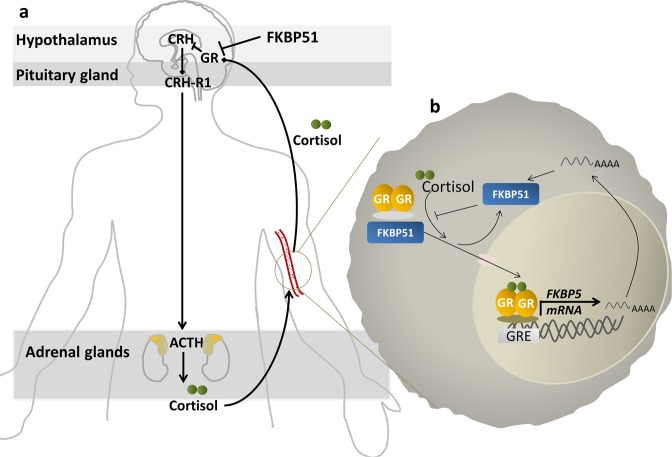
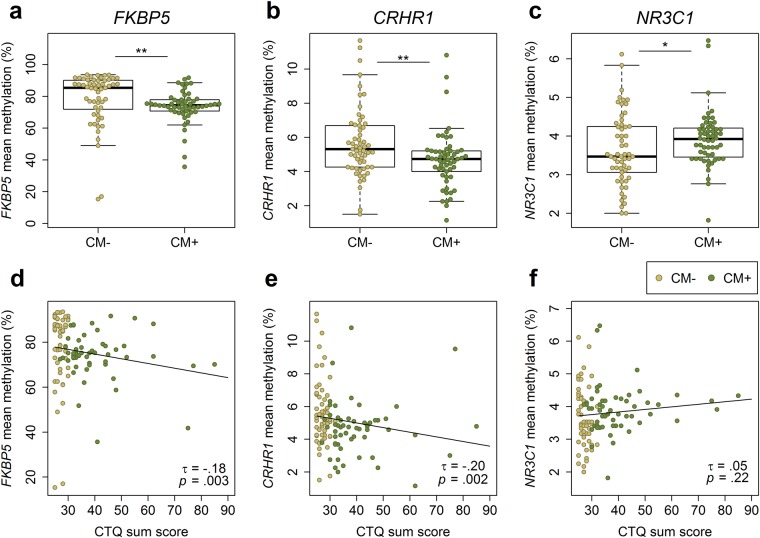
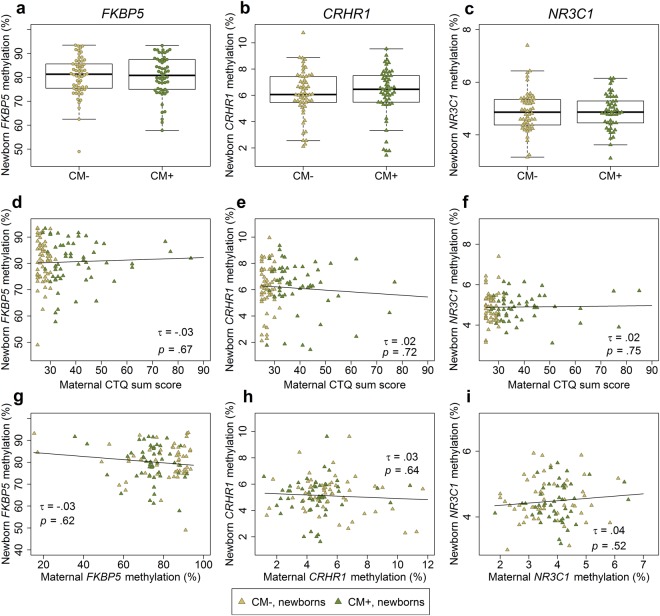
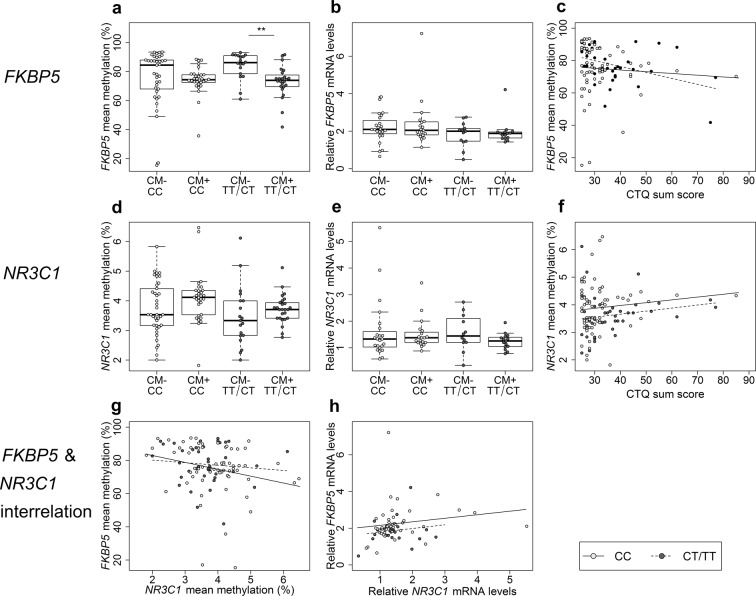
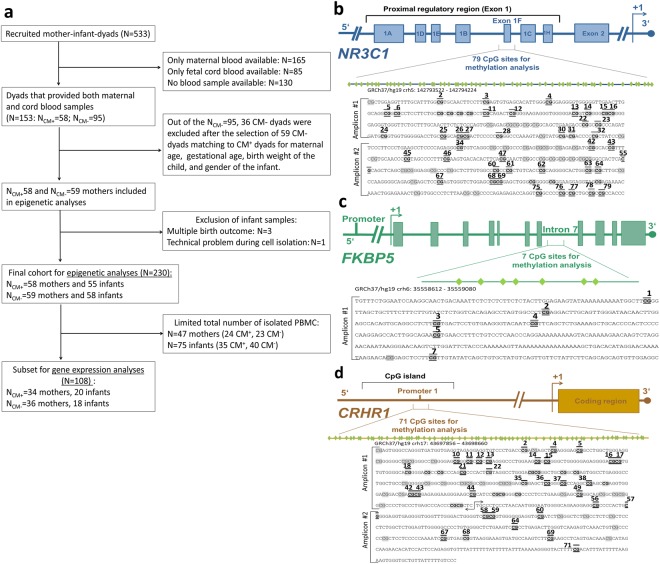
While biological alterations associated with childhood maltreatment (CM) have been found in affected individuals, it remains unknown to what degree these alterations are biologically transmitted to the next generation. We investigated intergenerational effects of maternal CM on DNA methylation and gene expression in N = 113 mother-infant dyads shortly after parturition, additionally accounting for the role of the FKBP5 rs1360780 genotype. Using mass array spectrometry, we assessed the DNA methylation of selected stress-response-associated genes (FK506 binding protein 51 [FKBP5], glucocorticoid receptor [NR3C1], corticotropin-releasing hormone receptor 1 [CRHR1]) in isolated immune cells from maternal blood and neonatal umbilical cord blood. In mothers, CM was associated with decreased levels of DNA methylation of FKBP5 and CRHR1 and increased NR3C1 methylation, but not with changes in gene expression profiles. Rs1360780 moderated the FKBP5 epigenetic CM-associated regulation profiles in a gene × environment interaction. In newborns, we found no evidence for any intergenerational transmission of CM-related methylation profiles for any of the investigated epigenetic sites. These findings support the hypothesis of a long-lasting impact of CM on the biological epigenetic regulation of stress-response mediators and suggest for the first time that these specific epigenetic patterns might not be directly transmitted to the next generation.
Overview
The claims and statistics of this paper haven’t been checked yet.
Free: it reads the open-access text and checks the first 5 claims that cite a source we can check. Create a free account to check every claim.
Integrity signals
Registry
Cites
Statistics
Figures
Verification
Claims the paper makes
The claims and statistics of this paper haven’t been checked yet.
Free: it reads the open-access text and checks the first 5 claims that cite a source we can check. Create a free account to check every claim.
Claims other papers make about this one
Each is checked against this paper’s own text: does it say what the citing paper says it does?
The source backs part of the claim, not all of it — or backs it for a different population, condition or comparison.
In the citing paper
“Coordinated epigenetic variation across multiple stress-regulatory genes, including FKBP5 and CRHR1, supports system-level modulation of stress-response pathways, although variability across generations suggests transmission may depend on environmental context (66).”
From Epigenetic changes associated with multi-generational trauma: characterization, mechanisms, and therapeutics (2026) · cites this paper as [66]
Experimental — accuracy not yet measuredThe source backs part of the claim, not all of it — or backs it for a different population, condition or comparison.
In the citing paper
“FKBP5 methylation differences have been reported across multiple trauma contexts in both survivors and offspring, raising the possibility that stress-response regulatory genes may help distinguish individuals more likely to benefit from specific interventions (38, 66, 83, 84, 136).”
From Epigenetic changes associated with multi-generational trauma: characterization, mechanisms, and therapeutics (2026) · cites this paper as [66]
Experimental — accuracy not yet measuredThe cited source says what the claim attributes to it.
In the citing paper
“Of the five studies that measured FKBP5 DNA methylation, three found lower methylation in the offspring of exposed parents [83,94,99], one found an opposite association with higher methylation [103], and another reported no association [88].”
The check wasn’t confident either way, so it gives no verdict — never disputed.
In the citing paper
“These publications come from 19 independent studies, as in some cases the same study has been used to investigate different genes [87,88,89,90,91].”
From Biological Embedding of Early-Life Adversity and a Scoping Review of the Evidence for Intergenerational Epigenetic Transmission of Stress and Trauma in Humans (2023) · cites this paper as [88]
Experimental — accuracy not yet measured
Self-check
Percentages, sums and reported differences re-computed from the paper’s own numbers.
The self-check needs the paper’s full text.
Citations
Cites
Controlling the False Discovery Rate: A Practical and Powerful Approach to Multiple Testing
Benjamini, Y., & Hochberg, Y. (1995) · Journal of the Royal Statistical Society Series B: Statistical Methodology · doi:10.1111/j.2517-6161.1995.tb02031.x · Cited by 109,482
Jaenisch, R., & Bird, A. (2003) · Nature Genetics · doi:10.1038/ng1089 · Cited by 6,325
Stress and the brain: from adaptation to disease
de Kloet, E. R., Joëls, M., & Holsboer, F. (2005) · Nature Reviews Neuroscience · doi:10.1038/nrn1683 · Cited by 4,621
Epigenetic regulation of the glucocorticoid receptor in human brain associates with childhood abuse
McGowan, P. O., Sasaki, A., D'Alessio, A. C., Dymov, S., Labonté, B., Szyf, M., Turecki, G., & Meaney, M. J. (2009) · Nature Neuroscience · doi:10.1038/nn.2270 · Cited by 3,531
Allele-specific FKBP5 DNA demethylation mediates gene–childhood trauma interactions
Klengel, T., Mehta, D., Anacker, C., Rex-Haffner, M., Pruessner, J. C., Pariante, C. M., Pace, T. W. W., Mercer, K. B., Mayberg, H. S., Bradley, B., et al. (2013) · Nature Neuroscience · doi:10.1038/nn.3275 · Cited by 1,447
Self-citationOberlander, T. F., Weinberg, J., Papsdorf, M., Grunau, R., Misri, S., & Devlin, A. M. (2008) · Epigenetics · doi:10.4161/epi.3.2.6034 · Cited by 1,432
Binder, E. B. (2008) · JAMA · doi:10.1001/jama.299.11.1291 · Cited by 1,362
Self-citationParental olfactory experience influences behavior and neural structure in subsequent generations
Dias, B. G., & Ressler, K. J. (2014) · Nature Neuroscience · doi:10.1038/nn.3594 · Cited by 1,338
Implication of sperm RNAs in transgenerational inheritance of the effects of early trauma in mice
Gapp, K., Jawaid, A., Sarkies, P., Bohacek, J., Pelczar, P., Prados, J., Farinelli, L., Miska, E., & Mansuy, I. M. (2014) · Nature Neuroscience · doi:10.1038/nn.3695 · Cited by 1,306
Epigenetic transmission of the impact of early stress across generations
Franklin, T. B., Russig, H., Weiss, I. C., Gräff, J., Linder, N., Michalon, A., Vizi, S., & Mansuy, I. M. (2010) · Biological Psychiatry · doi:10.1016/j.biopsych.2010.05.036 · Cited by 1,125
Cited by
Glucocorticoid Signaling and Epigenetic Alterations in Stress-Related Disorders
Mourtzi, N., Sertedaki, A., & Charmandari, E. (2021) · International Journal of Molecular Sciences · doi:10.3390/ijms22115964 · Cited by 86
“, 2019 [83] Human Childhood maltreatment demethylation of FKBP5”
BackgroundEpigenetics of childhood trauma: Long term sequelae and potential for treatment
Thumfart, K. M., Jawaid, A., Bright, K., Flachsmann, M., & Mansuy, I. M. (2021) · Neuroscience & Biobehavioral Reviews · doi:10.1016/j.neubiorev.2021.10.042 · Cited by 92
Zhou, A., & Ryan, J. (2023) · Genes · doi:10.3390/genes14081639 · Cited by 57
Childhood trauma, the stress response and metabolic syndrome: A focus on DNA methylation
Womersley, J. S., Nöthling, J., Toikumo, S., Malan‐Müller, S., van den Heuvel, L. L., McGregor, N. W., Seedat, S., & Hemmings, S. M. J. (2021) · European Journal of Neuroscience · doi:10.1111/ejn.15370 · Cited by 60
“CRHR1 methylation in blood was inversely associated with CT experience in Vietnam veteran twin pairs (Ramo-Fern andez et al., 2019).”
BackgroundInfluentialEpigenetic Changes Associated with Different Types of Stressors and Suicide
Dee, G., Ryznar, R. J., & Dee, C. (2023) · Cells · doi:10.3390/cells12091258 · Cited by 58
Prenatal Maternal Stress Causes Preterm Birth and Affects Neonatal Adaptive Immunity in Mice
Garcia‐Flores, V., Romero, R. J., Furcron, A.-E., Levenson, D., Galaz, J., Zou, C., Hassan, S. S., Hsu, C., Olson, D. M., Metz, G. A. S., et al. (2020) · Frontiers in Immunology · doi:10.3389/fimmu.2020.00254 · Cited by 54
Gumpp, A. M., Boeck, C., Behnke, A., Bach, A. M., Ramo‐Fernández, L., Welz, T., Gündel, H., Kolassa, I., & Karabatsiakis, A. (2020) · Proceedings of the National Academy of Sciences · doi:10.1073/pnas.2005885117 · Cited by 55
Self-citationBerretta, E., Guida, E., Forni, D., & Provenzi, L. (2021) · Neuroscience & Biobehavioral Reviews · doi:10.1016/j.neubiorev.2021.03.003 · Cited by 43
Decidual cell FKBP51–progesterone receptor binding mediates maternal stress–induced preterm birth
Guzeloglu‐Kayisli, O., Semerci, N., Guo, X., Larsen, K. A., Özmen, A., Arlıer, S., Mutluay, D., Nwabuobi, C. K., Sipe, B. H., Buhimschi, I. A., et al. (2021) · Proceedings of the National Academy of Sciences · doi:10.1073/pnas.2010282118 · Cited by 46
Maurel, O. M., Torrisi, S. A., Barbagallo, C., Purrello, M., Salomone, S., Drago, F., Ragusa, M., & Leggio, G. M. (2021) · International Journal of Molecular Sciences · doi:10.3390/ijms22105157 · Cited by 44
The Pathways between Cortisol-Related Regulation Genes and PTSD Psychotherapy
Castro-Vale, I., & Carvalho, D. M. (2020) · Healthcare · doi:10.3390/healthcare8040376 · Cited by 46
“The NR3C1, FKBP5, and CRHR1 genes methylation have all been shown to be associated with childhood adversity [8,14,108,154].”
BackgroundCarleial, S., Nätt, D., Unternäehrer, E., Elbert, T. R., Robjant, K., Wilker, S., Vukojević, V., Kolassa, I., Rukundo-Zeller, A. C., & Koebach, A. (2021) · Scientific Reports · doi:10.1038/s41598-021-98067-9 · Cited by 38
Self-citationChildhood maltreatment and DNA methylation: A systematic review
Rubens, M., Bruenig, D., Adams, J. A. M., Suresh, S. M., Sathyanarayanan, A., Haslam, D. M., Shenk, C. E., Mathews, B., & Mehta, D. (2023) · Neuroscience & Biobehavioral Reviews · doi:10.1016/j.neubiorev.2023.105079 · Cited by 43
Epigenetic regulation of pediatric and neonatal immune responses
Bermick, J., & Schaller, M. A. (2021) · Pediatric Research · doi:10.1038/s41390-021-01630-3 · Cited by 34
“Mononuclear cells from neonates born to mothers with childhood maltreatment showed no difference in DNA methylation at any of these sites, suggesting that these epigenetic patterns are not transmitted to the next generation.(144)”
BackgroundEarly childhood stress responses to psychosocial stressors: The state of the science
Bates, R. A., Militello, L. K., Barker, E., Villasanti, H. G., & Schmeer, K. K. (2022) · Developmental Psychobiology · doi:10.1002/dev.22320 · Cited by 34
“There is also debate and mixed findings that the methylation of stress response genes is intergenerationally transmitted (Moog et al., 2018; Ramo-Fernández et al., 2019), suggesting that researchers perhaps consider taking a two-generation approach in understanding offspring’s stress responses.”
BackgroundRamo-Fernández, L., Gumpp, A. M., Boeck, C., Krause, S., Bach, A. M., Waller, C., Kolassa, I.-T., & Karabatsiakis, A. (2021) · Translational Psychiatry · doi:10.1038/s41398-021-01546-w · Cited by 30
Self-citationTrauma-Informed Care in Primary Health Settings—Which Is Even More Needed in Times of COVID-19
Tomaz, T., & Castro-Vale, I. (2020) · Healthcare · doi:10.3390/healthcare8030340 · Cited by 32
“Furthermore, adverse childhood experiences (ACEs)—which dysregulate the hypothalamic–pituitary–adrenal axis [10]—are prevalent among primary care patients with chronic conditions and have been found to be positively correlated with the number of clinic visits and time to screen, which means that trauma-informed health…”
BackgroundFlasbeck, V., & Brüne, M. (2021) · PLoS ONE · doi:10.1371/journal.pone.0248514 · Cited by 34
“Importantly, polymorphic variation of the FKBP5 seems to be involved, as the association of childhood maltreatment with decreased FKBP5 (intron 7) and increased NR3C1 (1F) methylation was moderated by the FKBP5 SNP rs1360780 [19].”
BackgroundResultMaternal DNA Methylation During Pregnancy: a Review
Das, J., & Maitra, A. (2021) · Reproductive Sciences · doi:10.1007/s43032-020-00456-4 · Cited by 38
Mendonça, M. S., Mangiavacchi, P. M., Mendes, A. V., Loureiro, S. R., Martín-Santos, R., Glória, L. S., Marques, W., De Marco, S. P. G., Kanashiro, M. M., Hallak, J. E. C., et al. (2023) · Journal of Affective Disorders · doi:10.1016/j.jad.2023.03.031 · Cited by 24
Epigenetics of early-life adversity in youth: cross-sectional and longitudinal associations
Sumner, J. A., Gambazza, S., Gao, X., Baccarelli, A., Uddin, M., & McLaughlin, K. A. (2022) · Clinical Epigenetics · doi:10.1186/s13148-022-01269-9 · Cited by 24
“In secondary analyses, we interpreted results for CpG sites within nine candidate genes implicated in the HPA axis and stress-related neurodevelopmental and neurotransmitter pathways: NR3C1 (glucocorticoid receptor gene) [42], FKBP5 (FK506 binding protein 5 gene) [43], CRHR1 (corticotropin-releasing hormone receptor g…”
BackgroundNo association between FKBP5 gene methylation and acute and long-term cortisol output
Alexander, N., Kirschbaum, C., Stalder, T., Muehlhan, M., & Vogel, S. (2020) · Translational Psychiatry · doi:10.1038/s41398-020-0846-2 · Cited by 18
Comtois‐Cabana, M., Barr, E., Provençal, N., & Ouellet‐Morin, I. (2023) · PLoS ONE · doi:10.1371/journal.pone.0280203 · Cited by 25
Child maltreatment and resilience in adulthood: a protocol for a systematic review and meta-analysis
Fares‐Otero, N. E., Jiaqing, O., Spies, G., Womersley, J. S., González, C., Ayas, G., Mossie, T. B., Carranza-Neira, J., Lorenzo, J. M. E., Vieta, E., et al. (2023) · European Journal of Psychotraumatology · doi:10.1080/20008066.2023.2282826 · Cited by 19
“…factors (Cahill et al., 2022; Choi et al., 2019; Cicchetti & Rogosch, 2012; Gallardo-Pujol et al., 2013; Goldberg et al., 2013; Miu et al., 2017; Ramo-Fernández et al., 2019), brain structure (Roeckner et al., 2021) and functioning (McCrory et al., 2017; Ohashi et al., 2017; Teicher et al.,…”
BackgroundAlvanzo, A. A. H., Storr, C. L., Reboussin, B. A., Green, K. M., Mojtabai, R., Flair, L. N. L., Cullen, B., Susukida, R., Seamans, M. J., & Crum, R. M. (2020) · Child Abuse & Neglect · doi:10.1016/j.chiabu.2020.104624 · Cited by 20
“The mechanisms by which ACEs confer increased risk for morbidity are likely multifactorial, inclusive of epigenetic changes in the stress response (Cooper, Frone, Russell, & Mudar, 1995; Mehta et al., 2013; Ramo-Fernández et al., 2019; Tyrka, Price, Marsit, Walters, & Carpenter, 2012; Yang et al., 2013) and maladaptiv…”
BackgroundInfant DNA methylation: an early indicator of intergenerational trauma?
Moore, S. R., Merrill, S. M., Sekhon, B., MacIsaac, J. L., Kobor, M. S., Giesbrecht, G. F., & Letourneau, N. L. (2021) · Early Human Development · doi:10.1016/j.earlhumdev.2021.105519 · Cited by 21
Herrero-Roldán, S., & Martín-Rodríguez, A. (2025) · Biomedicines · doi:10.3390/biomedicines13071565 · Cited by 22
“In adults who have experienced maltreatment, lower methylation levels of this gene have been observed, which reduces the activity of glucocorticoid receptors [13,74].”
InfluentialRivi, V., Rigillo, G., Toscano, Y., Benatti, C., & Blom, J. M. C. (2023) · Children · doi:10.3390/children10071217 · Cited by 18
“Secondly, enduring epigenetic marks can exhibit intergenerational or transgenerational heritability, meaning that epigenetic modifications occurring in germline cells can become stable and persist in subsequent generations even in the absence of the original stimuli [223,254].”
BackgroundSanwald, S., Widenhorn‐Müller, K., Montag, C., & Kiefer, M. (2020) · Journal of Affective Disorders · doi:10.1016/j.jad.2020.07.068 · Cited by 14
The shared mother-child epigenetic signature of neglect is related to maternal adverse events
León, I., Herrero-Roldán, S., Rodrigo, M. J., Rodríguez, M. L., Fisher, J., Mitchell, C. M., & Lage‐Castellanos, A. (2022) · Frontiers in Physiology · doi:10.3389/fphys.2022.966740 · Cited by 13
“mothers with childhood maltreatment concerning mothers without maltreatment experience, but not in their newborns (Ramo-Fernández et al., 2019).”
BackgroundEpigenetics in Families: Covariance between Mother and Child Methylation Patterns
van Aswegen, T., Bosmans, G., Goossens, L., Leeuwen, K. G. V., Claes, S. J., Noortgate, W. V. D., & Hankin, B. L. (2021) · Brain Sciences · doi:10.3390/brainsci11020190 · Cited by 16
“However, recent attempts to establish epigenetic inheritance in humans were little successful [49,50].”
BackgroundSalivary cortisol response to psychosocial stress in the late evening depends on CRHR1 genotype
Weeger, J., Ising, M., Müller‐Myhsok, B., Uhr, M., Schmidt, U., & Steiger, A. (2020) · Psychoneuroendocrinology · doi:10.1016/j.psyneuen.2020.104685 · Cited by 11
Stonawski, V., Roetner, J., Goecke, T. W., Fasching, P. A., Beckmann, M. W., Kornhuber, J., Kratz, O., Moll, G. H., Eichler, A., Heinrich, H., et al. (2020) · Epigenetics Insights · doi:10.1177/2516865720932146 · Cited by 10
Hill, S. Y., Locke, J., Zezza, N., Steinhauer, S. R., Sharma, V., & Holmes, B. (2022) · Behavioral Sciences · doi:10.3390/bs12100347 · Cited by 8
“One study of childhood maltreatment found reduced methylation of CRHR1, though no changes in gene expression were reported [87].”
BackgroundKim, K. K., Moss, C., Park, J. J., & Wekerle, C. (2022) · Frontiers in Rehabilitation Sciences · doi:10.3389/fresc.2021.710629 · Cited by 9
Nöthling, J., Womersley, J. S., Mhlongo, S., Lombard, C. J., Abrahams, N., Seedat, S., & Hemmings, S. M. J. (2025) · European Journal of Psychotraumatology · doi:10.1080/20008066.2025.2485707 · Cited by 7
“…previous findings where the CT/TT genotype carriers with lower childhood trauma scores had higher FKBP5 intron 7 methylation compared to CC carriers, although not all studies investigated the exact same sites (Grasso, 2020; Klen-gel et al., 2013; Ramo-fernández et al., 2019; Yehuda et al., 2016b).”
The neuroscientific basis of post-traumatic stress disorder (PTSD): From brain to treatment
Agbaria, L., Mirzaei, F., A'amar, N. O., Raba, F. T., Papazian, G., Bhatnagar, K., Sirimanne, N., Ayoubkhan, A. A., Thilagendra, A. G., & Gupta, A. (2025) · Progress in brain research · doi:10.1016/bs.pbr.2025.01.009 · Cited by 8
Unilateral brain injury to pregnant rats induces asymmetric neurological deficits in the offspring
Carvalho, L. S., Brito, H. M., Lukoyanova, E. A., Maia, G. H., Sarkisyan, D., Nosova, O., Zhang, M., Lukoyanov, N., & Bakalkin, G. Y. (2021) · European Journal of Neuroscience · doi:10.1111/ejn.15243 · Cited by 6
“…that control asymmetry formation (Lukoyanov et al., 2020; Watanabe et al., 2020), and because changes in the neuroendocrine system induced by environmental factors may be intergenerationally transmitted (Bhattacharya et al., 2019; Moisiadis et al., 2017; Ramo-Fernandez et al., 2019).”
BackgroundFries, G. R. (2020) · Progress in inflammation research · doi:10.1007/978-3-030-39335-9_4 · Cited by 5
Mavioglu, R. N., Ramo-Fernandez, L., Gumpp, A. M., Kolassa, I.-T., & Karabatsiakis, A. (2022) · Frontiers in Psychiatry · doi:10.3389/fpsyt.2022.945343 · Cited by 5
“(7) for details about the selection procedure].”
BackgroundMethodResultSelf-citationLabaut, L., Lage‐Castellanos, A., Rodrigo, M. J., Herrero-Roldán, S., Mitchell, C. M., Fisher, J., & León, I. (2024) · Clinical Epigenetics · doi:10.1186/s13148-024-01655-5 · Cited by 6
Exploring the Relationships Between Child Maltreatment and Risk Factors for Pregnancy Complications
Kern, A., Frederickson, A., Hébert, M., Bernier, A., Frappier, J., & Langevin, R. (2021) · Journal of Obstetrics and Gynaecology Canada · doi:10.1016/j.jogc.2021.11.013 · Cited by 4
Rodríguez, L. O. J., Hoyos, J. V. V., Ambrosio, O. M. R., Naranjo, W. A. M., Blanco, J. L. C., & Sánchez, O. F. P. (2024) · Theologica Xaveriana · doi:10.11144/javeriana.tx74.vrtmi · Cited by 3
Mavioğlu, R. N., Gumpp, A. M., Hummel, E. M., Moser, D., Ammerpohl, O., Behnke, A., Mack, M., & Kolassa, I. (2025) · Brain Behavior and Immunity · doi:10.1016/j.bbi.2025.05.022 · Cited by 3
Self-citationThe potential of epigenetic methods to provide evidence of torture
Suárez-López, P. (2020) · Torture Journal · doi:10.7146/torture.v30i2.118632 · Cited by 3
“Even with this caveat in mind, a few studies have explored the association of epigenetic marks with the transmission of trauma and stress to the offspring, albeit with conflicting results (Ramo-Fernández et al., 2019; Yehuda et al., 2014; Yehuda et al., 2016).”
ResultDeussing, J. M. (2020) · Elsevier eBooks · doi:10.1016/b978-0-12-813156-5.00007-8 · Cited by 4
Characterization of the effects of age and childhood maltreatment onELOVL2DNA methylation
Ramo‐Fernández, L., Karabatsiakis, A., Boeck, C., Bach, A. M., Gumpp, A. M., Mavioğlu, R. N., Ammerpohl, O., & Kolassa, I. (2021) · Development and Psychopathology · doi:10.1017/s0954579420001972 · Cited by 3
“The use of fetal immune cells obtained from umbilical cord blood allowed us to compare, in a unique way, whether there is an intergenerational transmission of epigenetic signatures from mothers to their offspring (Ramo-Fernández et al., 2019).”
BackgroundSelf-citationTrojan, E., Frydrych, J. K., Lasoń, W., & Basta‐Kaim, A. (2025) · Current Neuropharmacology · doi:10.2174/011570159x345385241004060055 · Cited by 2
“The deleterious consequences of PS not only affect the first generation of newborns but also may be transmitted across subsequent generations [23, 24] because when the brain is still developing, the effect of PS has more pronounced and longer-lasting detrimental effects compared to that in adults…”
Adverse Childhood Experiences, Genetic Susceptibility, and the Risk of Osteoporosis: A Cohort Study
Shu, Y., Tu, C., Liu, Y., Song, L., Wang, Y., & Wu, M. (2025) · Medicina · doi:10.3390/medicina61081387 · Cited by 2
Yanan, L., Li, F., Wei, Q., Li, Q., Gu, B., Liu, X., & Qianlong, Z. (2026) · Gene Reports · doi:10.1016/j.genrep.2026.102516 · Cited by 2
Legacies of salient environmental experiences—insights from chemosensation
Dias, B. G. (2024) · Chemical Senses · doi:10.1093/chemse/bjae002 · Cited by 2
“Second, a legacy of stress during key developmental stages has the potential to alter how future exposures to stress are calibrated and responded to (Klengel et al. 2013; Yehuda et al. 2016; Harms et al. 2017; Ramo-Fernández et al. 2019; Provençal et al. 2020).”
BackgroundOn the Intergenerational Transmission of Health Inequality
Will, D., & Wang, F. (2021) · Science Insights · doi:10.15354/si.21.re262 · Cited by 2
“Moreover, cumulating evidence showed that abused parents are at increased risk for perpetuating maladaptive parenting practices, which would be transmitted to generations to come through not just intimate (71, 72), but also the underlying uncontrollable epigenetic mechanisms (73).”
BackgroundEpigenetic regulations in neurological disorders
Mondal, P., Sarkar, S., & Das, A. (2023) · Elsevier eBooks · doi:10.1016/b978-0-12-823931-5.00010-4 · Cited by 2
Kac, E., Qi, Q., & Ryznar, R. (2026) · Frontiers in Psychiatry · doi:10.3389/fpsyt.2026.1769422 · Cited by 1
“Coordinated epigenetic variation across multiple stress-regulatory genes, including FKBP5 and CRHR1 , supports system-level modulation of stress-response pathways, although variability across generations suggests transmission may depend on environmental context (66).”
Adverse Childhood Experiences, DNA Methylation, and Depressive Symptoms in Black Pregnant Women
Nowak, A. L., Solberg, M. A., Liang, X., Magaña, F., Misra, D. P., & Giurgescu, C. (2025) · Epigenomes · doi:10.3390/epigenomes9040048 · Cited by 1
“…recent research has investigated a wider range of genes and their effects associated with ACEs, including the NR3C1 co-chaperone FK506 binding protein 5 ( FKBP5 ) [38,45–47], Corticotropin-Releasing Hormone ( CRH ) [34], and its receptor Corticotropin-Releasing Hormone Receptor 1 ( CRHR1 ) [46].”
Towards a Biological Explanation of Sin in Walter M. Miller, Jr.’s "A Canticle for Leibowitz"
Ketcham, C. (2020) · PhilPapers (PhilPapers Foundation) · Cited by 1
Effect of adverse childhood experiences and DNA methylation on male sexual orientation.
Fu, H., Yang, T., Wang, T., Wu, X., Xia, N., & Feng, T. (2021) · PubMed Central · doi:10.11817/j.issn.1672-7347.2021.190280 · Cited by 1
Sixty Years of Child Abuse Awareness: Achievements, Errors and Opportunities
Oates, K. (2022) · Springer eBooks · doi:10.1007/978-981-16-9820-0_2 · Cited by 1
Köse, B., Ersoy, K., Toğa, H., Güler, E. C., Kara, Ö. K., Çelik, C., & Pekçetin, S. (2025) · Children and Youth Services Review · doi:10.1016/j.childyouth.2025.108250 · Cited by 2
STRESS IN CHILDREN PATHOLOGY: FROM PSYCHOSOMATICS TO MOLECULAR BIOLOGY
Buzinschi, S. (2021) · Romanian Journal of Pediatrics · doi:10.37897/rjp.2021.2.1
Une psychothérapie pour guérir les neurones ?
Luerweg, F. (2020) · Cerveau & Psycho · doi:10.3917/cerpsy.127.0040
Beal, S. J., Nause, K., Hamik, E., Unkrich, J., & Greiner, M. V. (2023) · Child maltreatment solutions network · doi:10.1007/978-3-031-33739-0_4
Epigenetic biomarkers in neuropsychiatric disorders
Grayson, D. R., & Peedicayil, J. (2024) · Elsevier eBooks · doi:10.1016/b978-0-443-18516-8.00010-7
Flagg, A. M. (2021) · Scholars Archive - University at Albany (University at Albany, State University of New York) · doi:10.54014/xppp-j66v
Early life stress and gene regulation from a psycho-biological perspective
Müller, S. (2023) · Dokumentenrepositorium der RUB (Ruhr University Bochum) · doi:10.13154/294-9591
Sumner, J. A., Gambazza, S., Gao, X., Baccarelli, A., Uddin, M., & McLaughlin, K. A. (2022) · Figshare · doi:10.6084/m9.figshare.19556175
Geissler, F. (2021) · Digital Library of the University of Innsbruck (University of Innsbruck)
McGurk, M., & McGurk, M. (2025) · UA Campus Repository (The University of Arizona)
Landolt, M. A., Strebel, N. L., Moehrlen, U., Ochsenbein, N., Strübing, N., Burkhardt, T., D'Addario, C., Pucci, M., Bodenmann, A., & Grünblatt, E. (2026) · Epigenetics · doi:10.1080/15592294.2026.2632976
“…of FKBP5 , a key modulator of glucocorticoid receptor sensitivity, has frequently been associated with heightened stress reactivity and greater risk for anxiety and depression [8,21,22], including pronounced hypomethylation and elevated gene expression in the offspring of Holocaust survivors [23].”
Transgenerational Programming of Brain Development and Behaviour in Response to Early-Life Adversity
Bock, J. (2026) · Springer eBooks · doi:10.1007/978-3-032-24295-2_6
Peñaloza-Díaz, G., Pinto‐Cortez, C., & Ferrer‐Urbina, R. (2026) · Revista Iberoamericana de Diagnóstico y Evaluación - e Avaliação Psicológica · doi:10.21865/ridep79.1.03
Genetic, Epigenetic, and Environmental Contributions to Major Depressive Disorder Etiology
Kardan, R., Momeni, A., Shahreza, P. B., & Bayat, H. (2026) · IGI Global eBooks · doi:10.4018/979-8-2600-4270-0.ch001
Metadata
- Authors
- Ramo-Fernández, L., Boeck, C., Koenig, A. M., Schury, K., Binder, E. B., Gündel, H., Fegert, J. M., Karabatsiakis, A., & Kolassa, I.-T.
- Affiliations
- Universität Ulm (DE)
- University Hospital Ulm (DE)
- Emory University (US)
- Corresponding author
- Kolassa, Iris-Tatjana
- ORCID
- Venue
- Scientific Reports
- Published
- 2019-04-18
- Volume
- 9
- Issue
- 1
- Pages
- 983-983
- ISSN
- 2045-2322 (ISSN-L)
- PMC
- PMC7052131
- OpenAlex
- W2937282400
- Cited by
- 67
- References
- 60
- Citations by year
- 2026: 5 · 2025: 8 · 2024: 4 · 2023: 9 · 2022: 8 · 2021: 20 · 2020: 13
- FWCI
- 11.97
- Type
- journal article
- Language
- en
- Open access
- gold
- doi.org
- Licence
- cc-by
- creativecommons.org/licenses/by/4.0 (tdm)
- creativecommons.org/licenses/by/4.0 (vor)
- Locations
- Scientific Reports (publishedVersion, cc-by)
- Europe PMC (PubMed Central) (publishedVersion, cc-by)
- PubMed Central (publishedVersion, cc-by)
- PubMed (publishedVersion)
- MPG.PuRe (Max Planck Society) (submittedVersion, cc-by)
- DOAJ (DOAJ: Directory of Open Access Journals) (submittedVersion)
- OPen Access Repositorium der Universität Ulm (OPARU) (Ulm University) (submittedVersion, other-oa)
- Universität Ulm, Kommunikations- und Informationszentrum (kiz) (cc-by)
- Funders
- Carl-Zeiss-Stiftung
- Bundesministerium für Bildung und Forschung (01KR1304A)
- Universität Ulm
- Topics
- Social Sciences › Psychology › Clinical Psychology › Child Abuse and Trauma
- Life Sciences › Biochemistry, Genetics and Molecular Biology › Molecular Biology › Epigenetics and DNA Methylation
- Life Sciences › Neuroscience › Behavioral Neuroscience › Stress Responses and Cortisol
- Keywords
- child abuse, intergenerational transmission, DNA methylation, epigenetic regulation, stress response genes, FKBP5, NR3C1, CRHR1, gene-environment interaction, mother-infant dyads, umbilical cord blood, glucocorticoid receptor, corticotropin-releasing hormone receptor 1
- MeSH terms
- Adverse Childhood Experiences, CRF Receptor, Type 1, Tacrolimus Binding Protein 5, Adult, Cells, Cultured, Child Abuse, Female, Genotype, Humans, Immunity, Cellular, Infant, Newborn, Male, Mother-Child Relations, Mothers, Receptors, Glucocorticoid, Stress, Psychological, Receptors, Corticotropin-Releasing Hormone, DNA Methylation, Polymorphism, Single Nucleotide, Tacrolimus Binding Proteins, Gene Transfer, Horizontal, Epigenesis, Genetic, Gene-Environment Interaction
About these checks
Registry, retraction, Cites and statistics results are computed, not judged, with one exception: a printed reference that no index lists is read once by a model before it counts as a citation error. Claims are extracted by a model and kept only when their quote appears verbatim in the text; each cited source is then checked, with a model’s help, for whether it says what the claim relies on. Those verdicts can be wrong — read the claim’s quote and the cited source before relying on one.
Statistics and arithmetic are recomputed, not judged.
Confidence bands are shown only for fields calibrated on our annotated test set. None is calibrated yet, so no band is shown.
What counts as a claim ›How we measure confidence ›How we check this ›
Are you an author, or do you see a problem with this page? Request a review
Data sources
Bibliographic data: Semantic Scholar, OpenAlex, Crossref.
Contains information from the Semantic Scholar Academic Graph Datasets, made available under the ODC Attribution License (ODC-BY 1.0).
Semantic Scholar’s data is described in: Kinney, R., et al. (2023). The Semantic Scholar Open Data Platform. arXiv:2301.10140.
