

Depletion of B cell‐activating factor attenuates hepatic fat accumulation in a murine model of nonalcoholic fatty liver disease
Open accessThe DOI matches its Crossref record; 34 of the 35 references it cites were found in a registry or an index.
Abstract
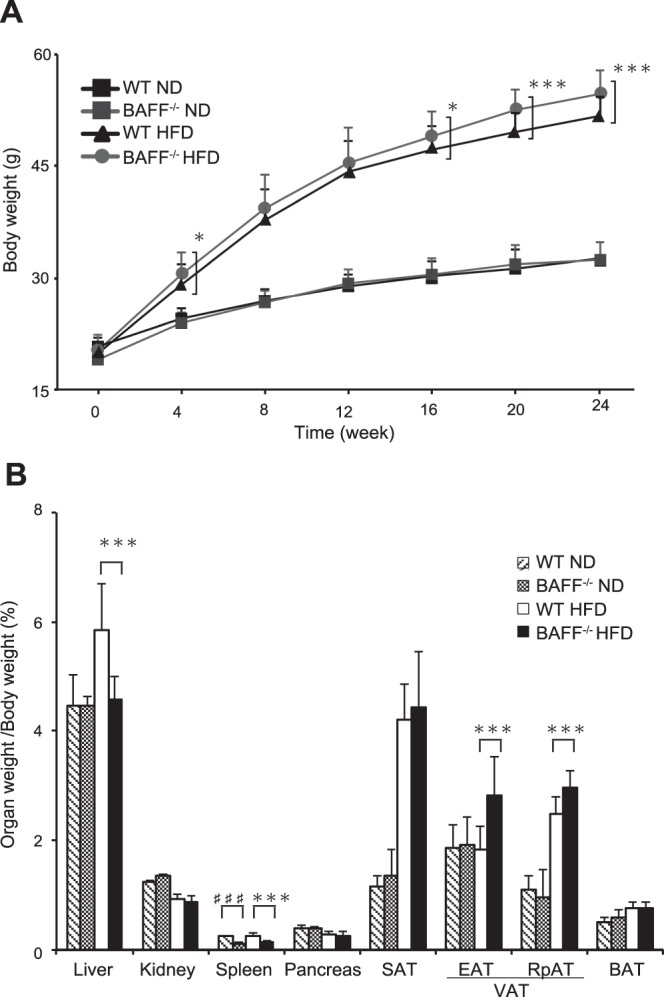
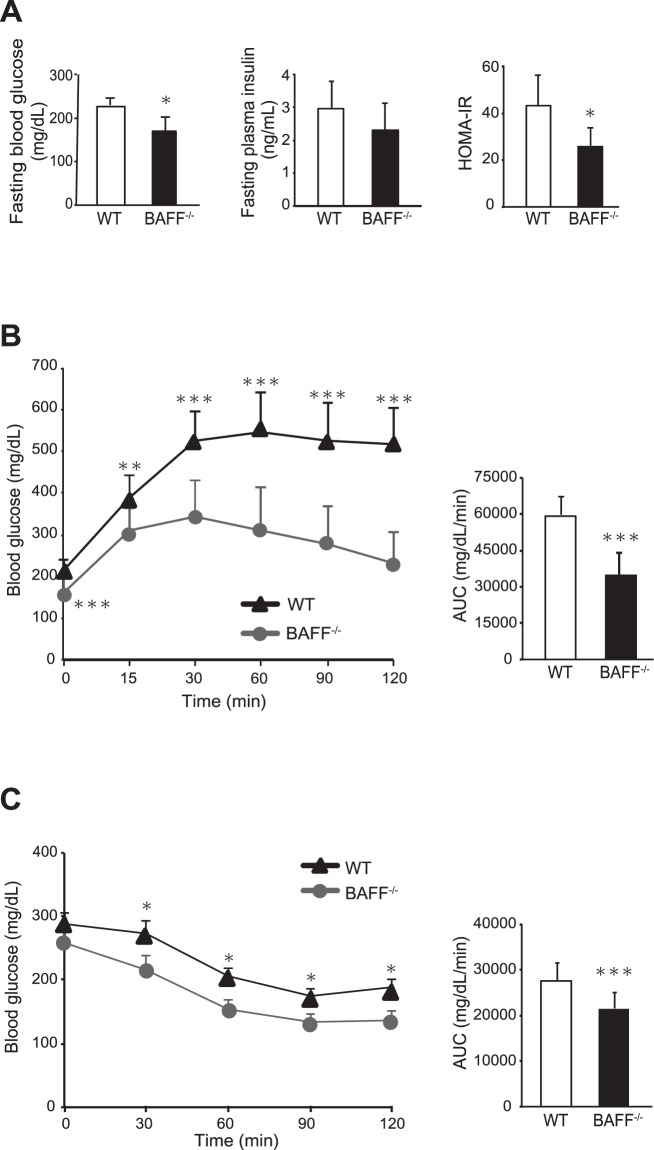
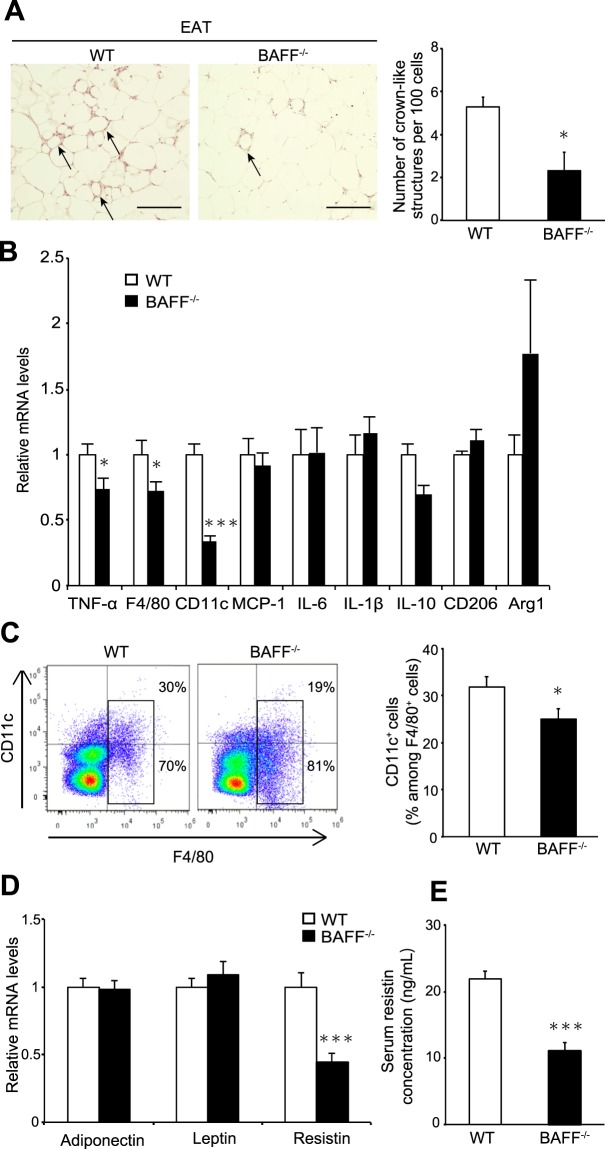
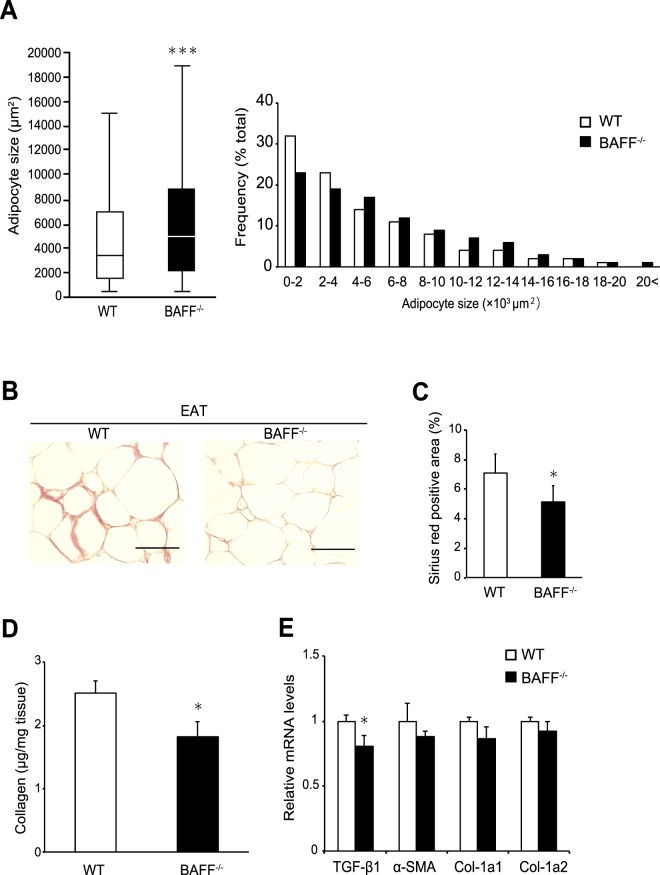
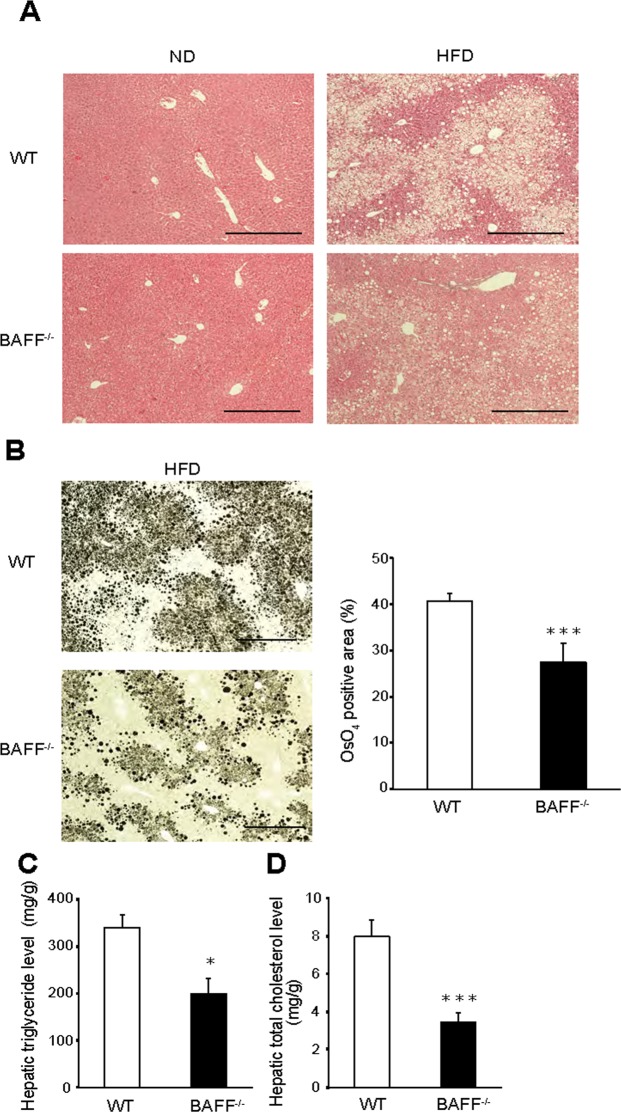
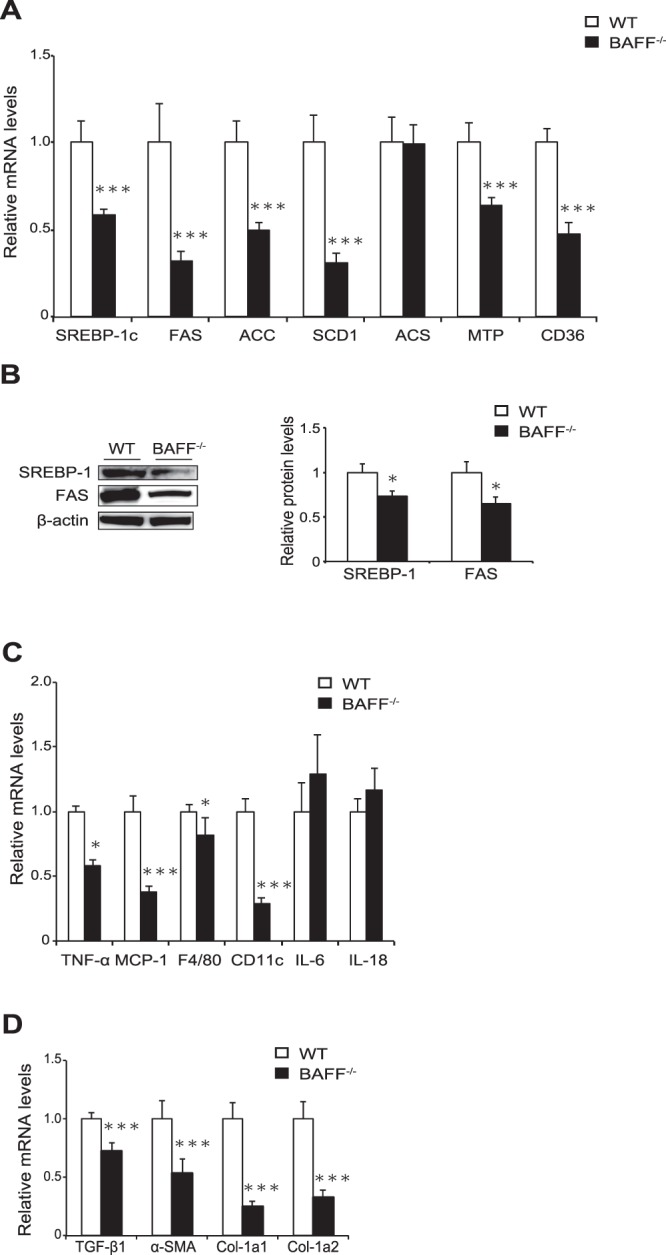
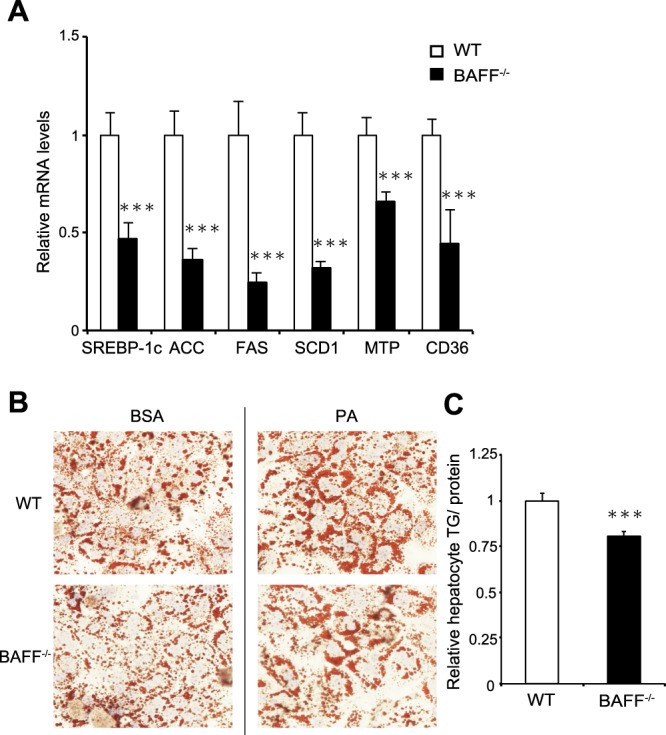
Obesity-induced adipose-tissue dysfunction is a critical contributor to the pathogenesis of nonalcoholic fatty liver disease (NAFLD). B cell-activating factor (BAFF) is an adipokine related to impaired insulin sensitivity, and the serum BAFF concentration is associated with NAFLD severity. In this study, we aimed to determine the direct in vivo role of BAFF in the development of insulin resistance, adipocyte dysfunction, and hepatic steatosis using BAFF −/− mice fed a high-fat diet (HFD). HFD-fed BAFF −/− mice exhibited significantly improved insulin sensitivity despite their increased weight gain and adiposity relative to HFD-fed wild-type mice. Moreover, inflammation, especially the accumulation of CD11c + adipose-tissue macrophages, and fibrosis of epididymal adipose tissue were reduced, contributing to healthy adipose-tissue expansion in obese BAFF −/− mice. In line with metabolically healthy obesity, hepatic steatosis also decreased, and we observed attenuated de novo lipogenesis in both the livers and hepatocytes of BAFF −/− mice. Our data revealed that BAFF serves as a potential stimulator of unhealthy adipose-tissue expansion by triggering inflammation and fibrosis and ultimately leading to enhanced insulin resistance and NAFLD. Therefore, these results suggest that BAFF is a promising target for diabetes and NAFLD treatment.
Overview
The claims and statistics of this paper haven’t been checked yet.
Free: it reads the open-access text and checks the first 5 claims that cite a source we can check. Create a free account to check every claim.
Integrity signals
Registry
Cites
Statistics
Figures
Verification
Claims the paper makes
The claims and statistics of this paper haven’t been checked yet.
Free: it reads the open-access text and checks the first 5 claims that cite a source we can check. Create a free account to check every claim.
Claims other papers make about this one
Each is checked against this paper’s own text: does it say what the citing paper says it does?
The cited source says what the claim attributes to it.
In the citing paper
“Despite increased weight gain and adiposity, BAFF‐deficient mice fed an HFD have improved insulin sensitivity, decreased adipose tissue inflammation, and reduced hepatic steatosis in an adipokine‐like role.( 62 )”
From The Emerging Role of B Cells in the Pathogenesis of NAFLD (2021) · cites this paper as [62]
Self-check
Percentages, sums and reported differences re-computed from the paper’s own numbers.
The self-check needs the paper’s full text.
Citations
Cites
Inflammation and metabolic disorders
Hotamisligil, G. S. (2006) · Nature · doi:10.1038/nature05485 · Cited by 9,199
Mechanisms for Insulin Resistance: Common Threads and Missing Links
Samuel, V. T., & Shulman, G. I. (2012) · Cell · doi:10.1016/j.cell.2012.02.017 · Cited by 2,294
Adipose tissue remodeling and obesity
Sun, K., Kusminski, C. M., & Scherer, P. E. (2011) · Journal of Clinical Investigation · doi:10.1172/jci45887 · Cited by 1,941
Lambert, J. E., Ramos–Roman, M. A., Browning, J. D., & Parks, E. J. (2014) · Gastroenterology · doi:10.1053/j.gastro.2013.11.049 · Cited by 1,069
A position statement on NAFLD/NASH based on the EASL 2009 special conference
Ratziu, V., Bellentani, S., Cortez-Pinto, H., Day, C., & Marchesini, G. (2010) · Journal of Hepatology · doi:10.1016/j.jhep.2010.04.008 · Cited by 1,058
Metabolic Dysregulation and Adipose Tissue Fibrosis: Role of Collagen VI
Khan, T., Muise, E. S., Iyengar, P., Wang, Z. V., Chandalia, M., Abate, N., Zhang, B. B., Bonaldo, P., Chua, S., & Scherer, P. E. (2009) · Molecular and Cellular Biology · doi:10.1128/mcb.01300-08 · Cited by 1,053
Adipose tissue expandability, lipotoxicity and the Metabolic Syndrome — An allostatic perspective
Virtue, S., & Vidal-Puig, A. (2010) · Biochimica et Biophysica Acta (BBA) - Molecular and Cell Biology of Lipids · doi:10.1016/j.bbalip.2009.12.006 · Cited by 1,013
Adipocyte Death, Adipose Tissue Remodeling, and Obesity Complications
Strissel, K. J., Stancheva, Z., Miyoshi, H., Perfield, J. W., DeFuria, J., Jick, Z., Greenberg, A. S., & Obin, M. S. (2007) · Diabetes · doi:10.2337/db07-0767 · Cited by 1,007
Acquired and Inherited Lipodystrophies
Garg, A. (2004) · New England Journal of Medicine · doi:10.1056/nejmra025261 · Cited by 941
Divoux, A., Tordjman, J., Lacasa, D., Veyrie, N., Hugol, D., Aissat, A., Basdevant, A., Guerre-Millo, M., Poitou, C., Zucker, J.-D., et al. (2010) · Diabetes · doi:10.2337/db10-0585 · Cited by 621
Cited by
Non-alcoholic fatty liver disease: the interplay between metabolism, microbes and immunity
Tilg, H., Adolph, T. E., Dudek, M., & Knolle, P. (2021) · Nature Metabolism · doi:10.1038/s42255-021-00501-9 · Cited by 507
Calvo, S. S.-C., Bharath, L. P., Pugh, G. H., SantaCruz-Calvo, L., Lenin, R. R., Lutshumba, J., Liu, R., Bachstetter, A. D., Zhu, B., & Nikolajczyk, B. S. (2021) · Nature Reviews Endocrinology · doi:10.1038/s41574-021-00575-1 · Cited by 162
The bidirectional immune crosstalk in metabolic dysfunction-associated steatotic liver disease
Sawada, K., Chung, H., Softic, S., Moreno-Fernandez, M. E., & Divanovic, S. (2023) · Cell Metabolism · doi:10.1016/j.cmet.2023.10.009 · Cited by 139
The Emerging Role of B Cells in the Pathogenesis of NAFLD
Barrow, F., Khan, S., Wang, H., & Revelo, X. S. (2021) · Hepatology · doi:10.1002/hep.31889 · Cited by 126
TNF superfamily control of tissue remodeling and fibrosis
Steele, H., Cheng, J. H., Willicut, A., Dell, G., Breckenridge, J. E., Culberson, E., Ghastine, A., Tardif, V., & Herro, R. (2023) · Frontiers in Immunology · doi:10.3389/fimmu.2023.1219907 · Cited by 91
“Concordantly, in an in-vivo study of nonalcoholic fatty liver disease (NAFLD), high fat diet-fed BAFF mice displayed reduced adipose tissue fibrosis and hepatic steatosis despite a lack of body weight reduction (98).”
BackgroundPeiseler, M., & Tacke, F. (2021) · Cancers · doi:10.3390/cancers13040730 · Cited by 71
Immunological distinctions between nonalcoholic steatohepatitis and hepatocellular carcinoma
Koo, S.-Y., Park, E.-J., & Lee, C.-W. (2020) · Experimental & Molecular Medicine · doi:10.1038/s12276-020-0480-3 · Cited by 47
Dual roles of B lymphocytes in mouse models of diet-induced nonalcoholic fatty liver disease
Karl, M., Hasselwander, S., Zhou, Y., Reifenberg, G., Kim, Y. O., Park, K., Ridder, D. A., Wang, X., Seidel, E., Hövelmeyer, N., et al. (2022) · Hepatology · doi:10.1002/hep.32428 · Cited by 44
“In a murine B2 cell deficiency model (B cell– activating factor−/−), HFD was recently shown to result in reduced steatosis and liver weight increase.[10] Attenuated steatosis in these mice as well as in our B cell deficiency models correlated with protection from enhanced hepatic de novo lipogenesis as can be conclude…”
BackgroundProgress and Prospects of Non-Canonical NF-κB Signaling Pathway in the Regulation of Liver Diseases
Li, T., Ren, X., Zhai, W., & Chen, Z. (2022) · Molecules · doi:10.3390/molecules27134275 · Cited by 35
The microenvironment in the development of MASLD-MASH-HCC and associated therapeutic in MASH-HCC
Wu, Q., Yang, Y., Lin, S., Geller, D. A., & Yan, Y. (2025) · Frontiers in Immunology · doi:10.3389/fimmu.2025.1569915 · Cited by 32
A BAFF/APRIL axis regulates obesogenic diet-driven weight gain
Chan, C. C., Harley, I. T. W., Pfluger, P. T., Trompette, A., Stankiewicz, T. E., Allen, J. L., Moreno‐Fernandez, M. E., Damen, M. S. M. A., Oates, J. R., Alarcon, P. C., et al. (2021) · Nature Communications · doi:10.1038/s41467-021-23084-1 · Cited by 35
Çebi, M., & Yilmaz, Y. N. (2024) · Frontiers in Immunology · doi:10.3389/fimmu.2024.1445634 · Cited by 30
“Additionally, BAFF depletion has been shown to reduce liver fat accumulation and improve insulin sensitivity in NAFLD mouse models (176).”
BackgroundRole of B Lymphocytes in the Pathogenesis of NAFLD: A 2022 Update
Deng, C., Lo, T.-H., Chan, K.-Y., Li, X., Wu, M., Xiang, Z., & Wong, C. (2022) · International Journal of Molecular Sciences · doi:10.3390/ijms232012376 · Cited by 30
“The key changes of HFD-fed BAFF KO mice are characterized by the attenuation of inflammation in adipose tissues through the reduction of macrophage accumulation and the prevention of hepatic steatosis by decreasing de novo lipogenesis in the livers in BAFF KO mice after HFD treatment [40].”
BackgroundB Cell–Activating Factor Antagonism Attenuates the Growth of Experimental Abdominal Aortic Aneurysm
Spinosa, M., Montgomery, W. G., Lempicki, M. D., Srikakulapu, P., Johnsrude, M. J., McNamara, C. A., Upchurch, G. R., Ailawadi, G., Leitinger, N., & Meher, A. K. (2021) · American Journal Of Pathology · doi:10.1016/j.ajpath.2021.08.012 · Cited by 24
Pathogenesis from Inflammation to Cancer in NASH-Derived HCC
Yu, S., Wang, J., Zheng, H., Wang, R., Johnson, N. L., Li, T., Li, P., Lin, J., Li, Y., Jin, Y., et al. (2022) · Journal of Hepatocellular Carcinoma · doi:10.2147/jhc.s377768 · Cited by 29
“In NASH, adipocytes would secrete B cell activating factor (BAFF), an adipokine related to impaired insulin sensitivity, which promotes B cell development and maturation.(91,92) Several studies have shown that intrahepatic B cells gather in NASH where they promote the production of proinflammatory cytokines such as TN…”
BackgroundThe Tumor Microenvironment of Hepatocellular Carcinoma: Untying an Intricate Immunological Network
Volponi, C., Gazzillo, A., & Bonavita, E. (2022) · Cancers · doi:10.3390/cancers14246151 · Cited by 24
Hanayama, M., Yamamoto, Y., Utsunomiya, H., Yoshida, O., Liu, S., Mogi, M., Matsuura, B., Takeshita, E., Ikeda, Y., & Hiasa, Y. (2021) · Scientific Reports · doi:10.1038/s41598-021-92790-z · Cited by 16
Self-citationKanemitsu‐Okada, K., Abe, M., Nakamura, Y., Miyake, T., Watanabe, T., Yoshida, O., Koizumi, Y., Hirooka, M., Tokumoto, Y., Matsuura, B., et al. (2023) · International Journal of Molecular Sciences · doi:10.3390/ijms24032509 · Cited by 15
“Furthermore, BAFF deficiency prevents fat accumulation in the liver by suppressing the visceral adipose tissue inflammation and de novo lipogenesis in an HFD-fed mouse model [15].”
BackgroundMethodResultSelf-citationPowell, D. R., Revelli, J., Doree, D. D., DaCosta, C. M., Desai, U., Shadoan, M. K., Rodriguez, L., Mullens, M., Yang, Q. M., Ding, Z., et al. (2021) · Diabetes Metabolic Syndrome and Obesity · doi:10.2147/dmso.s322083 · Cited by 16
Jin, J., Cheng, K., Chen, M., Liang, H., & Zhang, W. (2025) · International Journal of Biological Sciences · doi:10.7150/ijbs.117394 · Cited by 16
“Using BAFF-neutralizing monoclonal antibodies or BAFF −/− mice can dramatically ameliorate steatohepatitis and reduce liver weight [138, 142].”
Pontzen, D. L., Bahls, M., Albrecht, D., Felix, S. B., Dörr, M., Ittermann, T., Nauck, M. A., & Friedrich, N. (2023) · Lipids in Health and Disease · doi:10.1186/s12944-023-01856-6 · Cited by 13
“Studies on BAFF knockout mice showed significantly lower hepatic triglyceride and cholesterol levels indicating a lower fatty acid influx and lipogenesis during BAFF deficiency [25].”
Kim, B., & Hyun, C. (2020) · International Journal of Molecular Sciences · doi:10.3390/ijms21145121 · Cited by 12
“This is inconsistent with the results of a recent study, which reported on the ameliorating effect of BAFF depletion on obesity-associated insulin resistance and hepatic steatosis [7].”
BackgroundResultInfluentialKim, N., Kim, M., Yang, Y. M., Jeong, W., Lee, H. W., Kim, W., Kang, S. G., & Han, Y. (2025) · The FASEB Journal · doi:10.1096/fj.202401256r · Cited by 7
“17 Additionally, a recent study reported that gut microbiota activates pro-inflammatory and antigen-presenting B cells in the liver through a TLR-dependent mechanism, resulting in MASH progression.”
Li, X., Jin, K., Fang, J., Ma, X., He, J., Lu, A., Jia, Z., & Shi, A. (2026) · Frontiers in Immunology · doi:10.3389/fimmu.2026.1835197 · Cited by 4
Blocking BAFF Alleviates Hepatic Fibrosis in Schistosoma japonicum-Infected Mice
Dong, P., Mei, C., Yang, Y., Zhou, Y., Xu, Y., Song, L.-J., & Yu, C.-X. (2023) · Pathogens · doi:10.3390/pathogens12060793 · Cited by 4
“BAFF depletion improved the insulin resistance and hepatic steatosis induced by a high-fat diet (HFD), alleviating inflammation and fibrosis in a murine model of nonalcoholic fatty liver disease [26,27].”
BackgroundMiyake, T., Yoshida, O., Furukawa, S., Sato, Y., Murakami, Y., Kanamoto, A., Miyazaki, M., Shiomi, A., Nakaguchi, H., Koizumi, M., et al. (2025) · Journal of Gastroenterology · doi:10.1007/s00535-025-02297-x · Cited by 3
“Blood glucose concentrations were measured using a blood glucose test meter (Antisense III; HORIBA Medical, Kyoto, Japan) at 0, 15, 30, 60, 90, and 120 min after an intraperitoneal injection of glucose [24, 25].”
Self-citationThe immunometabolic nature of MASH: framing immune cells within metabolic dysfunction
González-Serrano, S., Onoiu, A.-I., Jiménez-Franco, A., Cambra-Cortés, V., Camps, J., & Joven, J. (2026) · Frontiers in Immunology · doi:10.3389/fimmu.2026.1797949 · Cited by 4
“Furthermore, BAFF de fi ciency or pharmacological BAFF inhibition in murine models of metabolic steatohepatitis reduces adipose tissue and hepatic in fl ammation and attenuates hepatic steatosis (162, 168).”
Aspects immuno-inflammatoires de la stéatohépatite métabolique
Blanc, M., & Gautier, E. L. (2023) · Médecine des Maladies Métaboliques · doi:10.1016/j.mmm.2023.03.012 · Cited by 1
Thermotherapy has sexually dimorphic responses in APP/PS1 mice
McFadden, S., Peck, M. R., Sime, L. N., Cox, M. F., Ikiz, E. D., Findley, C. A., Quinn, K., Fang, Y., Bartke, A., Hascup, E. R., et al. (2024) · Aging · doi:10.18632/aging.206156 · Cited by 1
“B-cell B-cell activating factor (BAFF) is a member of the tumor necrosis factor (TNF) ligand family that regulates adipose tissue inflammation and impairment of insulin-receptor signaling [24].”
Zheng, J., Chen, T., Guo, X., Ntambi, J. M., & Wu, C. (2020) · Elsevier eBooks · doi:10.1016/b978-0-12-819404-1.00014-2
Role of the nuclear receptor RORα expressed by myeloid cells in metabolic diseases
Sermikli, B. P. (2020) · theses.fr (ABES) · doi:10.70675/936d3f01z98e8z4e8czb2b3zd5239d21aaf0 · Cited by 1
Conditions and trends in development of effective production activity in the domestic industry
Стручкова, Е. С. (2011) · Russian Economic Journal
Immune dysregulation in nonalcoholic steatohepatitis
Chatterjee, A., & Basu, P. (2022) · Elsevier eBooks · doi:10.1016/b978-0-12-821232-5.00023-9
Pontzen, D. L., Bahls, M., Albrecht, D., Felix, S. B., Dörr, M., Ittermann, T., Nauck, M., & Friedrich, N. (2024) · Figshare · doi:10.6084/m9.figshare.26603527
Lo, P. C. K. (2022) · Nottingham ePrints (University of Nottingham)
Fiorillo, A. (2023) · Repository of Digital Objects for Teaching Research and Culture (University of Valencia)
Bai, H., Fan, G., Deng, B., Liu, Y., Zhang, P., Cao, X., & Li, Y. (2026) · International Immunopharmacology · doi:10.1016/j.intimp.2026.117306
Metadata
- Authors
- Nakamura, Y., Abe, M., Kawasaki, K., Miyake, T., Watanabe, T., Yoshida, O., Hirooka, M., Matsuura, B., & Hiasa, Y.
- Affiliations
- Ehime University (JP)
- Corresponding author
- Abe, Masanori
- ORCID
- Venue
- Scientific Reports
- Published
- 2019-01-30
- Volume
- 9
- Issue
- 1
- Pages
- 977-977
- ISSN
- 2045-2322 (ISSN-L)
- PMC
- PMC6353938
- OpenAlex
- W2912238297
- Cited by
- 34
- References
- 35
- Citations by year
- 2026: 3 · 2025: 4 · 2024: 3 · 2023: 6 · 2022: 6 · 2021: 8 · 2020: 3
- FWCI
- 3.24
- Type
- journal article
- Language
- en
- Open access
- gold
- doi.org
- Licence
- cc-by
- creativecommons.org/licenses/by/4.0 (tdm)
- creativecommons.org/licenses/by/4.0 (vor)
- Locations
- Scientific Reports (publishedVersion, cc-by)
- Europe PMC (PubMed Central) (publishedVersion, other-oa)
- PubMed Central (publishedVersion, cc-by)
- PubMed (publishedVersion)
- DOAJ (DOAJ: Directory of Open Access Journals) (submittedVersion)
- Funders
- MEXT | Japan Society for the Promotion of Science (15K09007, 18K07911)
- Topics
- Health Sciences › Medicine › Endocrinology, Diabetes and Metabolism › Adipokines, Inflammation, and Metabolic Diseases
- Health Sciences › Medicine › Hepatology › Liver Disease Diagnosis and Treatment
- Health Sciences › Medicine › Cardiology and Cardiovascular Medicine › Cardiovascular Disease and Adiposity
- Keywords
- B-cell activating factor, BAFF, non-alcoholic fatty liver disease, hepatic steatosis, insulin resistance, adipose tissue dysfunction, adipose tissue macrophages, adipose tissue inflammation, adipose tissue fibrosis, de novo lipogenesis, high-fat diet, metabolically healthy obesity, adipokines
- MeSH terms
- Adipose Tissue, Animals, Disease Models, Animal, Fibrosis, Inflammation, Insulin Resistance, Lipids, Liver, Male, Mice, Inbred C57BL, Down-Regulation, Glucose Intolerance, Hepatocytes, Adiposity, B-Cell Activating Factor, Diet, High-Fat, Non-alcoholic Fatty Liver Disease
About these checks
Registry, retraction, Cites and statistics results are computed, not judged, with one exception: a printed reference that no index lists is read once by a model before it counts as a citation error. Claims are extracted by a model and kept only when their quote appears verbatim in the text; each cited source is then checked, with a model’s help, for whether it says what the claim relies on. Those verdicts can be wrong — read the claim’s quote and the cited source before relying on one.
Statistics and arithmetic are recomputed, not judged.
Confidence bands are shown only for fields calibrated on our annotated test set. None is calibrated yet, so no band is shown.
What counts as a claim ›How we measure confidence ›How we check this ›
Are you an author, or do you see a problem with this page? Request a review
Data sources
Bibliographic data: Semantic Scholar, OpenAlex, Crossref.
Contains information from the Semantic Scholar Academic Graph Datasets, made available under the ODC Attribution License (ODC-BY 1.0).
Semantic Scholar’s data is described in: Kinney, R., et al. (2023). The Semantic Scholar Open Data Platform. arXiv:2301.10140.
