

Cell population balance of cardiovascular spheroids derived from human induced pluripotent stem cells
Open accessThe DOI matches its Crossref record; 70 of the 70 references it cites were found in a registry or an index.
Abstract
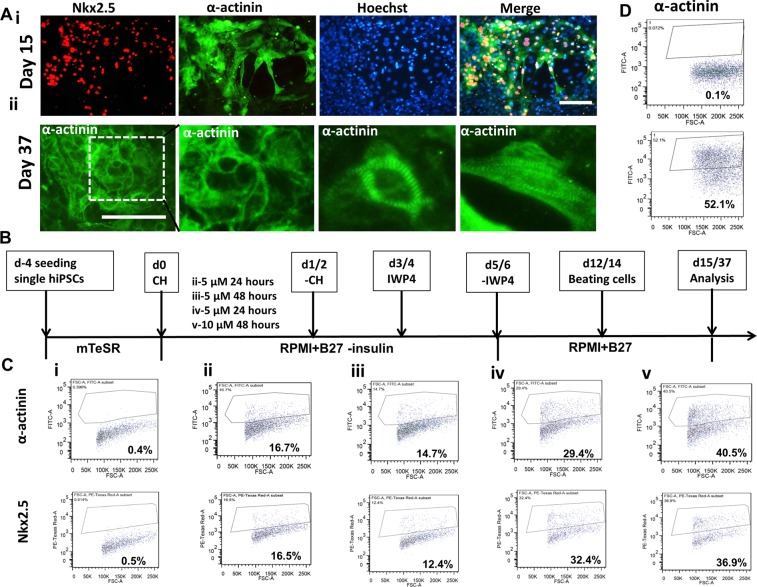
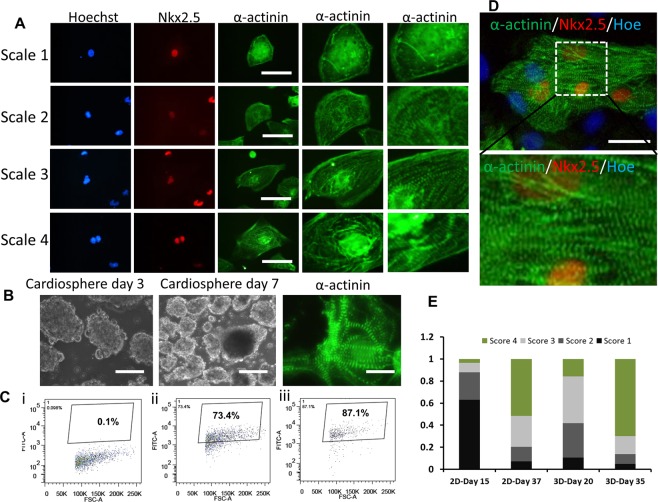
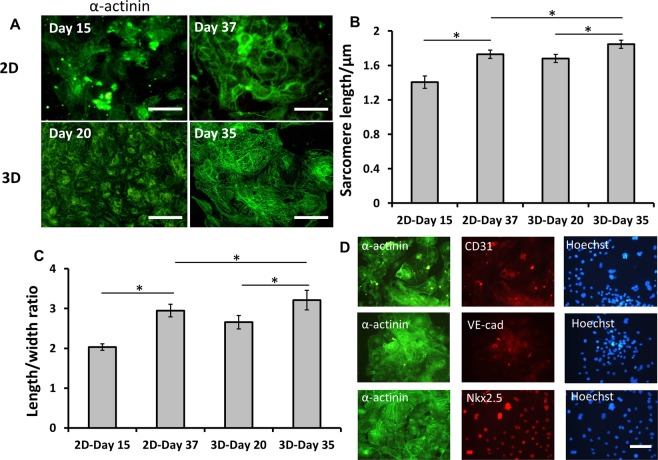
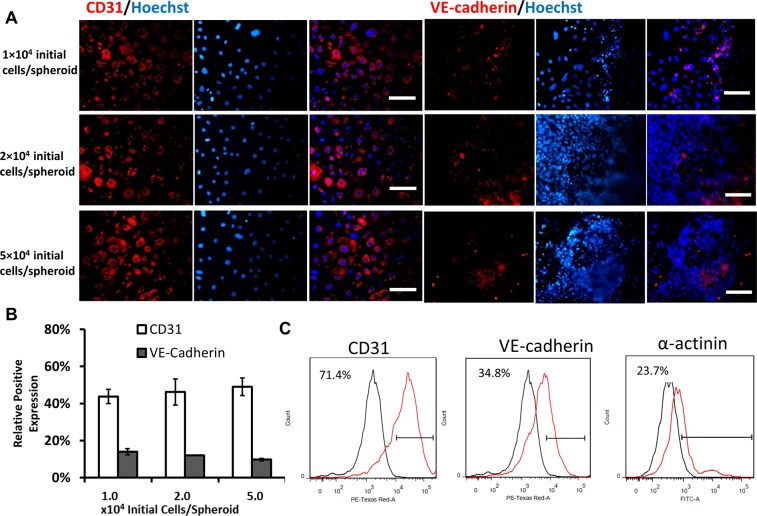
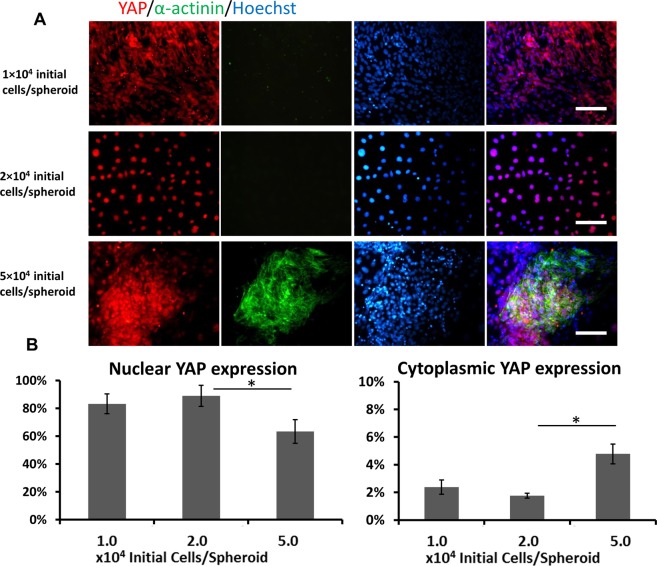
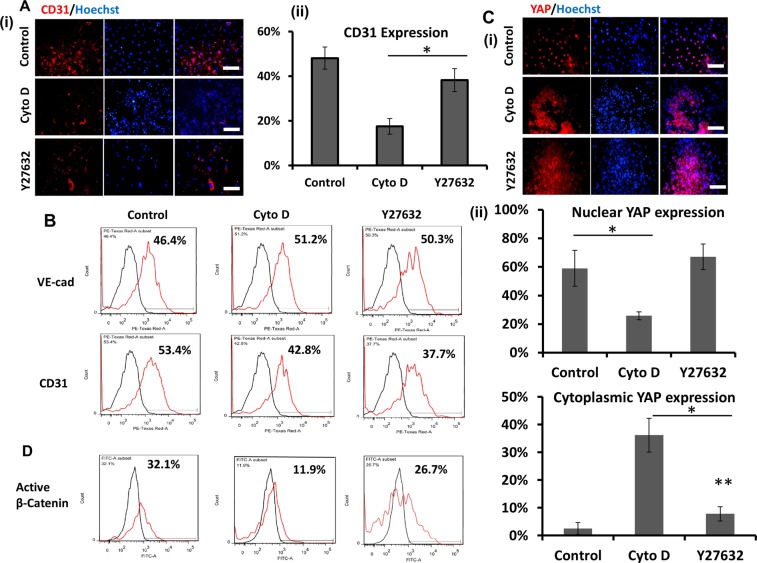
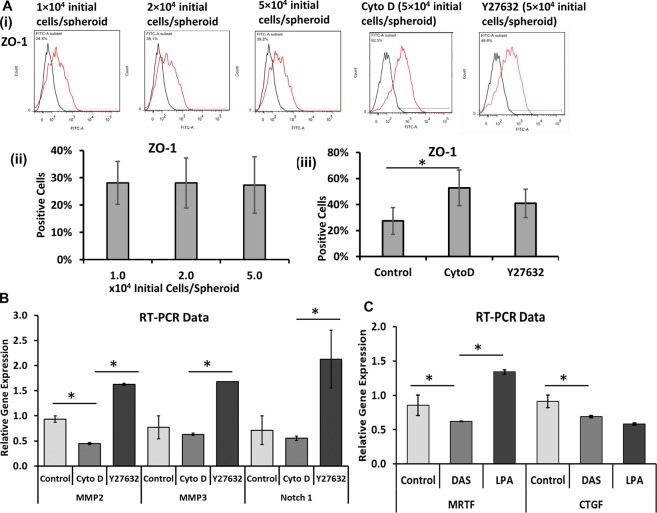
Stem cell-derived cardiomyocytes and vascular cells can be used for a variety of applications such as studying human heart development and modelling human disease in culture. In particular, protocols based on modulation of Wnt signaling were able to produce high quality of cardiomyocytes or vascular cells from human pluripotent stem cells (hPSCs). However, the mechanism behind the development of 3D cardiovascular spheroids into either vascular or cardiac cells has not been well explored. Hippo/Yes-associated protein (YAP) signaling plays important roles in the regulation of organogenesis, but its impact on cardiovascular differentiation has been less evaluated. In this study, the effects of seeding density and a change in YAP signaling on 3D cardiovascular spheroids patterning from hPSCs were evaluated. Compared to 2D culture, 3D cardiovascular spheroids exhibited higher levels of sarcomeric striations and higher length-to-width ratios of α-actinin+ cells. The spheroids with high seeding density exhibited more α-actinin+ cells and less nuclear YAP expression. The 3D cardiovascular spheroids were also treated with different small molecules, including Rho kinase inhibitor (Y27632), Cytochalasin D, Dasatinib, and Lysophosphatidic acid to modulate YAP localization. Nuclear YAP inhibition resulted in lower expression of active β-catenin, vascular marker, and MRTF, the transcription factor mediated by RhoGTPases. Y27632 also promoted the gene expression of MMP-2/-3 (matrix remodeling) and Notch-1 (Notch signaling). These results should help our understanding of the underlying effects for the efficient patterning of cardiovascular spheroids after mesoderm formation from hPSCs.
Overview
The claims and statistics of this paper haven’t been checked yet.
Free: it reads the open-access text and checks the first 5 claims that cite a source we can check. Create a free account to check every claim.
Integrity signals
Registry
Cites
Statistics
Figures
Verification
Claims the paper makes
The claims and statistics of this paper haven’t been checked yet.
Free: it reads the open-access text and checks the first 5 claims that cite a source we can check. Create a free account to check every claim.
Claims other papers make about this one
Each is checked against this paper’s own text: does it say what the citing paper says it does?
The source backs part of the claim, not all of it — or backs it for a different population, condition or comparison.
In the citing paper
“Indeed, the organotypic cell densities in spheroids enhance the cell-cell and cell-extracellular matrix (ECM) interactions that are required to maintain cellular differentiation and phenotype, whereas these interactions are limited in traditional 2D cultures11–14.”
From 3D bioprinting of high cell-density heterogeneous tissue models through spheroid fusion within self-healing hydrogels (2021) · cites this paper as [11]
Experimental — accuracy not yet measured
Self-check
Percentages, sums and reported differences re-computed from the paper’s own numbers.
The self-check needs the paper’s full text.
Citations
Cites
Laflamme, M. A., Chen, K. Y., Naumova, A. V., Muskheli, V., Fugate, J. A., Dupras, S. K., Reinecke, H., Xu, C., Hassanipour, M., Police, S., et al. (2007) · Nature Biotechnology · doi:10.1038/nbt1327 · Cited by 2,206
Lian, X., Zhang, J., Azarin, S. M., Zhu, K., Hazeltine, L. B., Bao, X., Hsiao, C., Kamp, T. J., & Palecek, S. P. (2013) · Nature Protocols · doi:10.1038/nprot.2012.150 · Cited by 1,748
Lian, X., Hsiao, C., Wilson, G., Zhu, K., Hazeltine, L. B., Azarin, S. M., Raval, K. K., Zhang, J., Kamp, T. J., & Palecek, S. P. (2012) · Proceedings of the National Academy of Sciences · doi:10.1073/pnas.1200250109 · Cited by 1,717
Chemically defined generation of human cardiomyocytes
Burridge, P. W., Matsa, E., Shukla, P., Lin, Z. C., Churko, J. M., Ebert, A. D., Lan, F., Diecke, S., Huber, B., Mordwinkin, N. M., et al. (2014) · Nature Methods · doi:10.1038/nmeth.2999 · Cited by 1,606
Highly efficient generation of human hepatocyte-like cells from induced pluripotent stem cells
Si-Tayeb, K., Noto, F. K., Nagaoka, M., Li, J., Battle, M. A., Duris, C., North, P. E., Dalton, S., & Duncan, S. A. (2010) · Hepatology · doi:10.1002/hep.23354 · Cited by 1,282
Advanced maturation of human cardiac tissue grown from pluripotent stem cells
Ronaldson-Bouchard, K., Ma, S. P., Yeager, K., Chen, T., Song, L., Sirabella, D., Morikawa, K., Teles, D., Yazawa, M., & Vunjak-Novakovic, G. (2018) · Nature · doi:10.1038/s41586-018-0016-3 · Cited by 1,272
Davis, G. E., & Senger, D. R. (2005) · Circulation Research · doi:10.1161/01.res.0000191547.64391.e3 · Cited by 1,223
The Hippo pathway in organ size control, tissue regeneration and stem cell self-renewal
Zhao, B., Tumaneng, K., & Guan, K.-L. (2011) · Nature Cell Biology · doi:10.1038/ncb2303 · Cited by 1,205
Notch Signaling in Development, Tissue Homeostasis, and Disease
Siebel, C., & Lendahl, U. (2017) · Physiological Reviews · doi:10.1152/physrev.00005.2017 · Cited by 978
Extracellular matrix dynamics in development and regenerative medicine
Daley, W. P., Peters, S. B., & Larsen, M. (2008) · Journal of Cell Science · doi:10.1242/jcs.006064 · Cited by 971
Cited by
Daly, A. C., Davidson, M. D., & Burdick, J. A. (2021) · Nature Communications · doi:10.1038/s41467-021-21029-2 · Cited by 470
Current Challenges of iPSC-Based Disease Modeling and Therapeutic Implications
Doss, M. X., & Sachinidis, A. (2019) · Cells · doi:10.3390/cells8050403 · Cited by 456
Ahmed, R. E., Anzai, T., Chanthra, N., & Uosaki, H. (2020) · Frontiers in Cell and Developmental Biology · doi:10.3389/fcell.2020.00178 · Cited by 250
The ECM: To Scaffold, or Not to Scaffold, That Is the Question
Valdoz, J. C., Johnson, B. C., Jacobs, D. J., Franks, N. A., Dodson, E. L., Sanders, C., Cribbs, C. G., & Ry, P. M. V. (2021) · International Journal of Molecular Sciences · doi:10.3390/ijms222312690 · Cited by 167
Mazzola, M., & Pasquale, E. D. (2020) · Frontiers in Bioengineering and Biotechnology · doi:10.3389/fbioe.2020.00455 · Cited by 78
“Cardiac spheroids could also be generated by combining CMs with other cell types that typically compose the human heart, such as cardiac fibroblasts (CFs), attempting to recreate the heart microenvironment (Polonchuk et al., 2017; Hoang et al., 2018; Yan et al., 2019).”
BackgroundScalise, M., Marino, F., Salerno, L., Cianflone, E., Molinaro, C., Salerno, N., Angelis, A. D., Viglietto, G., Urbanek, K., & Torella, D. (2021) · International Journal of Molecular Sciences · doi:10.3390/ijms222413180 · Cited by 77
“Successively, Yan and colleagues have demonstrated that cardiovascular spheroids derived from hPSCs and treated for 48 h with CHIR99021 express higher level of α-actinin and higher ratios of sarcomeric striations and Z-lines sarcomeres compared to 2D cultures [129].”
BackgroundChang, P.-H., Chao, H., Chern, E., & Hsu, S. (2020) · Biomaterials · doi:10.1016/j.biomaterials.2020.120575 · Cited by 70
Kronemberger, G. S., Carneiro, F. A., de Rezende, D. F., & Baptista, L. S. (2021) · Artificial Organs · doi:10.1111/aor.13880 · Cited by 42
Marzano, M., Bejoy, J., Cheerathodi, M. R., Sun, L. J., York, S. B., Zhao, J., Kanekiyo, T., Bu, G., Meckes, D. G., & Li, Y. (2019) · Cells · doi:10.3390/cells8090993 · Cited by 46
“At day 6 or 7, the medium was changed to RRMI plus 2% B27 and beating cells were observed at day 12–14 [57].”
Self-citationHuman iPSCs and Genome Editing Technologies for Precision Cardiovascular Tissue Engineering
Gähwiler, E. K. N., Motta, S. E., Martin, M., Nugraha, B., Hoerstrup, S. P., & Emmert, M. Y. (2021) · Frontiers in Cell and Developmental Biology · doi:10.3389/fcell.2021.639699 · Cited by 45
Kang, B., Park, Y., Hwang, D. G., Kim, D., Yong, U., Lim, K. S., & Jang, J. (2022) · Advanced Materials Technologies · doi:10.1002/admt.202100947 · Cited by 37
Engineering and Assessing Cardiac Tissue Complexity
Tadevosyan, K., Iglesias‐García, O., Mazo, M. M., Prósper, F., & Raya, Á. (2021) · International Journal of Molecular Sciences · doi:10.3390/ijms22031479 · Cited by 36
“Different percentages of various cell types have been tested for the generation of cardiac spheroids [153,154].”
BackgroundCardiac Organoids to Model and Heal Heart Failure and Cardiomyopathies
Seguret, M., Vermersch, E., Jouve, C., & Hulot, J. (2021) · Biomedicines · doi:10.3390/biomedicines9050563 · Cited by 34
Three-dimensional scaffold-free microtissues engineered for cardiac repair
Patino-Guerrero, A., Veldhuizen, J., Zhu, W., Migrino, R. Q., & Nikkhah, M. (2020) · Journal of Materials Chemistry B · doi:10.1039/d0tb01528h · Cited by 23
Generation of Heart Organoids Modeling Early Human Cardiac Development Under Defined ConditionsPreprint
Lewis‐Israeli, Y. R., Gabalski, M. A., Ball, K., Wasserman, A. H., Zou, J., Ni, G., Zhou, C., & Aguirre, A. (2020) · SSRN Electronic Journal · doi:10.2139/ssrn.3654622 · Cited by 23
3D bioprinted tissue-specific spheroidal multicellular microarchitectures for advanced cell therapy
Park, Y., Ji, S. T., Yong, U., Das, S., Jang, W. B., Ahn, G., Kwon, S., & Jang, J. (2021) · Biofabrication · doi:10.1088/1758-5090/ac212e · Cited by 19
Min, S., Lee, H., Jin, Y., Kim, Y. H., Sung, J., Choi, H., & Cho, S. (2020) · Nano Letters · doi:10.1021/acs.nanolett.0c01141 · Cited by 19
Size-dependent penetration depth of colloidal nanoparticles into cell spheroids
Zhu, D., Brückner, D., Sosniok, M., Skiba, M., Feliu, N., Gallego, M., Liu, Y., Schulz, F., Falkenberg, G., Parak, W. J., et al. (2025) · Advanced Drug Delivery Reviews · doi:10.1016/j.addr.2025.115593 · Cited by 17
Cytoskeleton systems contribute differently to the functional intrinsic properties of chondrospheres
Gryadunova, A. A., Koudan, E. V., Rodionov, S. A., Pereira, F. D. A. S., Meteleva, N. Y., Kasyanov, V. A., Parfenov, V. A., Av, K., Khesuani, Y. D., Mironov, V. A., et al. (2020) · Acta Biomaterialia · doi:10.1016/j.actbio.2020.10.007 · Cited by 18
Advanced Technologies to Target Cardiac Cell Fate Plasticity for Heart Regeneration
Testa, G., Benedetto, G. D., & Passaro, F. (2021) · International Journal of Molecular Sciences · doi:10.3390/ijms22179517 · Cited by 13
“Cardiac spheroids are established in a self-assembly process by co-culturing in suspension hiPSC-CMs with CFs and cardiac Endothelial Cells (ECs) in order to closely recapitulate the native microenvironment of the myocardium [64,65].”
MethodShi, J., Farzaneh, M., & Khoshnam, S. E. (2020) · Cellular Reprogramming · doi:10.1089/cell.2019.0084 · Cited by 13
“…play an essential role in biological processes across many different species (Harvey and Hariharan, 2012; Kwon et al., 2013; Yu and Guan, 2013) and in regulating function of hPSCs (Beyer et al., 2013; Chen et al., 2018; Mo et al., 2014; Ramos and Ca-margo, 2012; Sun et al., 2014; Yan et al., 2019).”
An updated review of YAP: A promising therapeutic target against cardiac aging?
Leng, J., Wang, C., Liang, Z., Qiu, F., Zhang, S., & Yuan, Y. (2023) · International Journal of Biological Macromolecules · doi:10.1016/j.ijbiomac.2023.127670 · Cited by 12
Kim, S. J., & Jang, J. (2024) · Journal of Cardiovascular Intervention · doi:10.54912/jci.2024.0027 · Cited by 6
Pluripotent Stem Cell Modeling of Anticancer Therapy–Induced Cardiotoxicity
Lyra‐Leite, D. M., & Burridge, P. W. (2020) · Current Cardiology Reports · doi:10.1007/s11886-020-01325-x · Cited by 5
Ke, M., Ji, M., Wang, H., Yao, Y., Wu, Y., & Qi, N. (2020) · Experimental and Therapeutic Medicine · doi:10.3892/etm.2020.8436 · Cited by 6
“Recently, Yan et al (36) demonstrated that the application of Y27632 promoted the gene expression of matrix metalloproteinases 2/3 and Notch-1 signaling to modulate Yes-associated protein‑1 localization in the regulation of efficient patterning of cardiovascular spheroids following mesoderm formation from hPSC.”
BackgroundNewer Models of Cardiac Tissue
Lin, Z., & George, S. A. (2021) · Springer eBooks · doi:10.1007/978-3-030-63355-4_16
Zhang, H., Tu, S., Xu, C., Wu, R., Wu, J., Huang, X., Luo, X., Qu, X., & Qu, X. (2026) · Stem Cells International · doi:10.1155/sci/5540587
“It has been reported that the Wnt signaling pathway, bone morpho-genetic proteins (BMPs), and the activin/nodel signaling pathway play key roles in inducing the differentiation of hPSCs into mesoderm cells [5 – 7].”
Metadata
- Authors
- Yan, Y., Bejoy, J., Xia, J., Griffin, K., Guan, J., & Li, Y.
- Affiliations
- Florida State University (US)
- Corresponding author
- Li, Yan
- Venue
- Scientific Reports
- Published
- 2019-02-04
- Volume
- 9
- Issue
- 1
- Pages
- 1295-1295
- ISSN
- 2045-2322 (ISSN-L)
- PMC
- PMC6362271
- OpenAlex
- W2917220793
- Cited by
- 27
- References
- 70
- Citations by year
- 2026: 1 · 2025: 1 · 2024: 1 · 2023: 1 · 2021: 10 · 2020: 11 · 2019: 2
- FWCI
- 1.90
- Type
- journal article
- Language
- en
- Open access
- gold
- doi.org
- Licence
- cc-by
- creativecommons.org/licenses/by/4.0 (tdm)
- creativecommons.org/licenses/by/4.0 (vor)
- Locations
- Scientific Reports (publishedVersion, cc-by)
- Europe PMC (PubMed Central) (publishedVersion, other-oa)
- PubMed Central (publishedVersion, cc-by)
- PubMed (publishedVersion)
- DOAJ (DOAJ: Directory of Open Access Journals) (submittedVersion)
- Funders
- National Science Foundation (1652992, CAREER)
- Directorate for Biological Sciences
- Topics
- Life Sciences › Biochemistry, Genetics and Molecular Biology › Molecular Biology › Pluripotent Stem Cells Research
- Life Sciences › Biochemistry, Genetics and Molecular Biology › Cell Biology › Hippo pathway signaling and YAP/TAZ
- Life Sciences › Biochemistry, Genetics and Molecular Biology › Molecular Biology › Congenital heart defects research
- Keywords
- human induced pluripotent stem cells, YAP signaling, Hippo signaling pathway, cardiomyocyte differentiation, vascular differentiation, seeding rate, Wnt signaling, Rho kinase inhibition, Y-27632, cytochalasin D, dasatinib, lysophosphatidic acid, β-catenin, Notch signaling, MRTF, matrix remodeling, mesoderm formation
- MeSH terms
- Cell Communication, Cell Differentiation, Fluorescent Antibody Technique, Humans, Immunohistochemistry, Biomarkers, Gene Expression, Spheroids, Cellular, Cell Culture Techniques, Matrix Metalloproteinases, Myocytes, Cardiac, Induced Pluripotent Stem Cells
About these checks
Registry, retraction, Cites and statistics results are computed, not judged, with one exception: a printed reference that no index lists is read once by a model before it counts as a citation error. Claims are extracted by a model and kept only when their quote appears verbatim in the text; each cited source is then checked, with a model’s help, for whether it says what the claim relies on. Those verdicts can be wrong — read the claim’s quote and the cited source before relying on one.
Statistics and arithmetic are recomputed, not judged.
Confidence bands are shown only for fields calibrated on our annotated test set. None is calibrated yet, so no band is shown.
What counts as a claim ›How we measure confidence ›How we check this ›
Are you an author, or do you see a problem with this page? Request a review
Data sources
Bibliographic data: Semantic Scholar, OpenAlex, Crossref.
Contains information from the Semantic Scholar Academic Graph Datasets, made available under the ODC Attribution License (ODC-BY 1.0).
Semantic Scholar’s data is described in: Kinney, R., et al. (2023). The Semantic Scholar Open Data Platform. arXiv:2301.10140.
