

Sex Differences in the Effects of Prenatal Bisphenol A Exposure on Genes Associated with Autism Spectrum Disorder in the Hippocampus
Open accessThe DOI matches its Crossref record; 88 of the 88 references it cites were found in a registry or an index.
Abstract
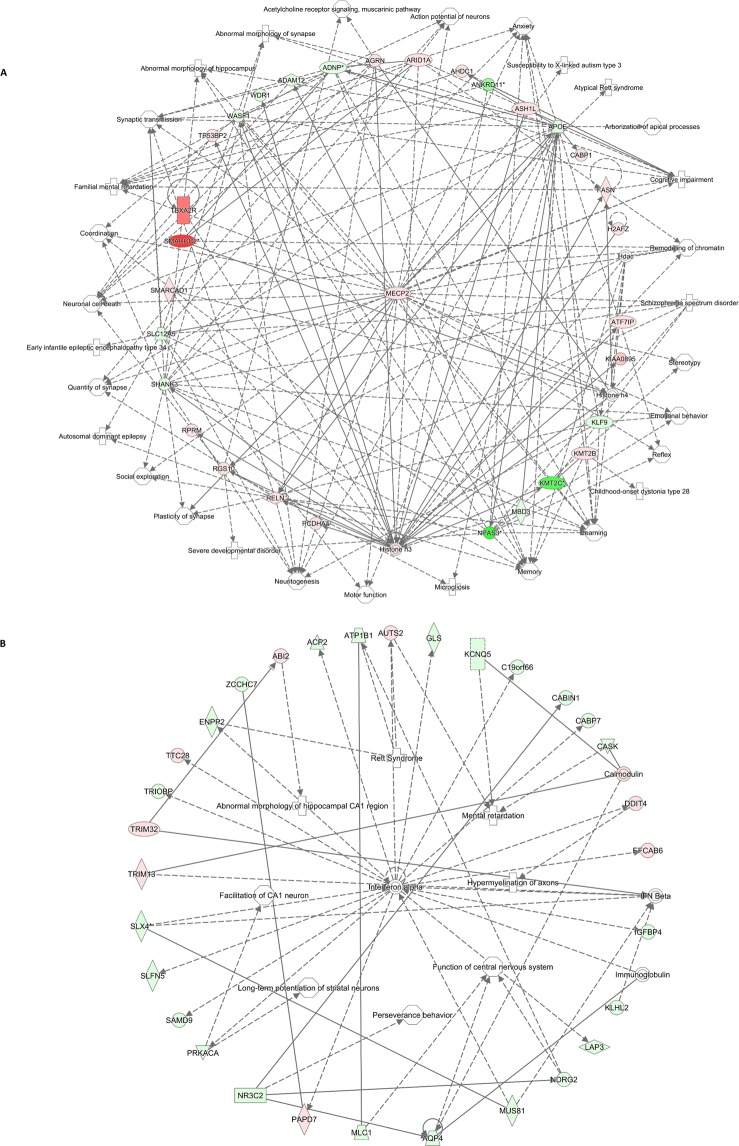
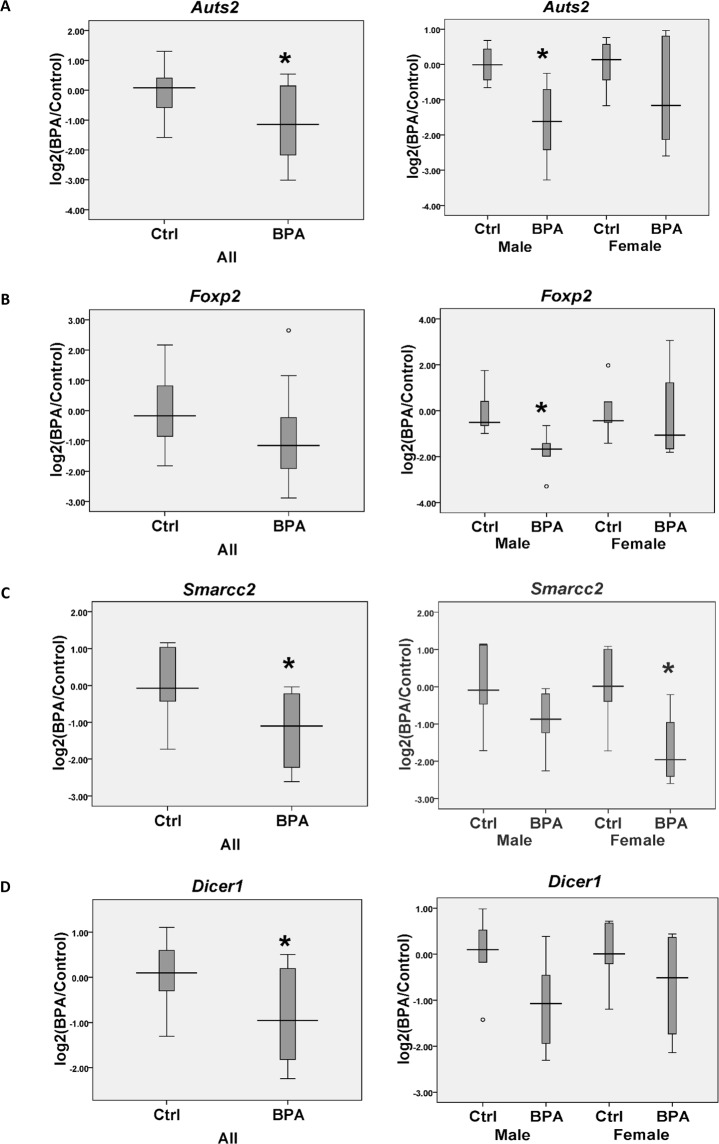
Autism spectrum disorder (ASD) is a neurodevelopmental disorder inexplicably biased towards males. Although prenatal exposure to bisphenol A (BPA) has recently been associated with the ASD risk, whether BPA dysregulates ASD-related genes in the developing brain remains unclear. In this study, transcriptome profiling by RNA-seq analysis of hippocampi isolated from neonatal pups prenatally exposed to BPA was conducted and revealed a list of differentially expressed genes (DEGs) associated with ASD. Among the DEGs, several ASD candidate genes, including Auts2 and Foxp2, were dysregulated and showed sex differences in response to BPA exposure. The interactome and pathway analyses of DEGs using Ingenuity Pathway Analysis software revealed significant associations between the DEGs in males and neurological functions/disorders associated with ASD. Moreover, the reanalysis of transcriptome profiling data from previously published BPA studies consistently showed that BPA-responsive genes were significantly associated with ASD-related genes. The findings from this study indicate that prenatal BPA exposure alters the expression of ASD-linked genes in the hippocampus and suggest that maternal BPA exposure may increase ASD susceptibility by dysregulating genes associated with neurological functions known to be negatively impacted in ASD, which deserves further investigations.
Overview
The claims and statistics of this paper haven’t been checked yet.
Free: it reads the open-access text and checks the first 5 claims that cite a source we can check. Create a free account to check every claim.
Integrity signals
Registry
Cites
Statistics
Figures
Verification
Claims the paper makes
The claims and statistics of this paper haven’t been checked yet.
Free: it reads the open-access text and checks the first 5 claims that cite a source we can check. Create a free account to check every claim.
Claims other papers make about this one
Each is checked against this paper’s own text: does it say what the citing paper says it does?
The source backs part of the claim, not all of it — or backs it for a different population, condition or comparison.
In the citing paper
“Sexually dimorphic outcomes, potentially mediated by disrupted oestrogen receptor-’ signalling, have been associated with altered expression of autism-related genes in the transcriptomes of exposed rat pups276.”
From Sex and gender in neurodevelopmental conditions (2023) · cites this paper as [276]
Experimental — accuracy not yet measured
Self-check
Percentages, sums and reported differences re-computed from the paper’s own numbers.
The self-check needs the paper’s full text.
Citations
Cites
Fast gapped-read alignment with Bowtie 2
Langmead, B., & Salzberg, S. L. (2012) · Nature Methods · doi:10.1038/nmeth.1923 · Cited by 56,400
RSEM: accurate transcript quantification from RNA-Seq data with or without a reference genome
Li, B., & Dewey, C. N. (2011) · BMC Bioinformatics · doi:10.1186/1471-2105-12-323 · Cited by 22,179
Shrestha, S., & Offer, S. M. (2016) · Medical Epigenetics · doi:10.1159/000444713 · Cited by 8,914
Baio, J., Wiggins, L., Christensen, D. L., Maenner, M. J., Daniels, J., Warren, Z., Kurzius-Spencer, M., Zahorodny, W., Robinson, C., Rosenberg, et al. (2018) · MMWR. Surveillance Summaries · doi:10.15585/mmwr.ss6706a1 · Cited by 6,078
TM4: a free, open-source system for microarray data management and analysis
Saeed, A. I., Sharov, V., White, J., Li, J., Liang, W., Bhagabati, N., Braisted, J., Klapa, M., Currier, T., Thiagarajan, M., et al. (2003) · BioTechniques · doi:10.2144/03342mt01 · Cited by 4,837
Endocrine-Disrupting Chemicals: An Endocrine Society Scientific Statement
Diamanti-Kandarakis, E., Bourguignon, J.-P., Giudice, L. C., Hauser, R., Prins, G. S., Soto, A. M., Zoeller, R. T., & Gore, A. C. (2009) · Endocrine Reviews · doi:10.1210/er.2009-0002 · Cited by 4,585
Nan, X., Ng, H.-H., Johnson, C. A., Laherty, C. D., Turner, B. M., Eisenman, R. N., & Bird, A. (1998) · Nature · doi:10.1038/30764 · Cited by 3,440
Transcriptomic Analysis of Autistic Brain Reveals Convergent Molecular Pathology
Voineagu, I., Wang, X., Johnston, P., Lowe, J. K., Tian, Y., Horvath, S., Mill, J., Cantor, R. M., Blencowe, B. J., & Geschwind, D. H. (2011) · Nature · doi:10.1038/nature10110 · Cited by 1,874
Patterns and rates of exonic de novo mutations in autism spectrum disorders
Neale, B. M., Kou, Y., Liu, L., Ma’ayan, A., Samocha, K. E., Sabo, A., Lin, C.-F., Stevens, C., Wang, L.-S., Makarov, V., et al. (2012) · Nature · doi:10.1038/nature11011 · Cited by 1,734
Bisphenol-A: an estrogenic substance is released from polycarbonate flasks during autoclaving
Krishnan, A. V., Stathis, P., Permuth, S. F., Tokes, L., & Feldman, D. I. (1993) · Endocrinology · doi:10.1210/en.132.6.2279 · Cited by 1,613
Cited by
Neuro-toxic and Reproductive Effects of BPA
Santoro, A., Chianese, R., Troisi, J., Richards, S., Nori, S. L., Fasano, S., Guida, M., Plunk, E., Viggiano, A., Pierantoni, R., et al. (2019) · Current Neuropharmacology · doi:10.2174/1570159x17666190726112101 · Cited by 278
Sex and gender in neurodevelopmental conditions
Bölte, S., Neufeld, J., Marschik, P. B., Williams, Z. J., Gallagher, L., & Lai, M.-C. (2023) · Nature Reviews Neurology · doi:10.1038/s41582-023-00774-6 · Cited by 249
A comprehensive review on the carcinogenic potential of bisphenol A: clues and evidence
Khan, N. G., Correia, J., Adiga, D., Rai, P. S., Dsouza, H. S., Chakrabarty, S., & Kabekkodu, S. P. (2021) · Environmental Science and Pollution Research · doi:10.1007/s11356-021-13071-w · Cited by 175
“The liver enzyme UDP-glucuronosyltransferases 2B15 (UGTs) is responsible for the glucuronidation of BPA, followed by its excretion from the body either through bile or urine in the form of BPA glucuronide (Kurebayashi 2003; Genuis et al. 2012; Thongkorn et al. 2019).”
BackgroundHarnett, K. G., Chin, A., & Schuh-Huerta, S. M. (2021) · Ecotoxicology and Environmental Safety · doi:10.1016/j.ecoenv.2021.112210 · Cited by 113
Bisphenols as a Legacy Pollutant, and Their Effects on Organ Vulnerability
Kim, J.-J., Kumar, S., Kumar, V., Kim, Y.-S., Lee, Y.-M., & Kumar, V. (2019) · International Journal of Environmental Research and Public Health · doi:10.3390/ijerph17010112 · Cited by 80
“BPA disrupts the expression of ASD candidate genes (Auts2, Foxp2, and Smarcc2) more significantly in the male hippocampus than in females [128].”
BackgroundCohen, I. C., Cohenour, E. R., Harnett, K. G., & Schuh-Huerta, S. M. (2021) · International Journal of Molecular Sciences · doi:10.3390/ijms22105363 · Cited by 70
Thongkorn, S., Kanlayaprasit, S., Panjabud, P., Saeliw, T., Jantheang, T., Kasitipradit, K., Sarobol, S., Jindatip, D., Hu, V. W., Tencomnao, T., et al. (2021) · Scientific Reports · doi:10.1038/s41598-020-80390-2 · Cited by 76
Self-citationBennett, D. H., Busgang, S. A., Kannan, K., Parsons, P. J., Takazawa, M., Palmer, C. D., Schmidt, R. J., Doucette, J. T., Schweitzer, J. B., Gennings, C., et al. (2022) · Environment International · doi:10.1016/j.envint.2021.107075 · Cited by 67
Sukjamnong, S., Thongkorn, S., Kanlayaprasit, S., Saeliw, T., Hussem, K., Warayanon, W., Hu, V. W., Tencomnao, T., & Sarachana, T. (2020) · Scientific Reports · doi:10.1038/s41598-020-65229-0 · Cited by 59
“As reported by Thongkorn et al. (2019), when all male and female rat pups under the same treatment conditions were combined into one group, as many as 5,624 transcripts corresponding to 4,525 genes were significantly differentially expressed in the hippocampal tissues of BPA-treated rats…”
Self-citationSillapachaiyaporn, C., Chuchawankul, S., Nilkhet, S., Moungkote, N., Sarachana, T., Ung, A. T., Baek, S. J., & Tencomnao, T. (2022) · Food Research International · doi:10.1016/j.foodres.2022.111433 · Cited by 52
Self-citationKanlayaprasit, S., Thongkorn, S., Panjabud, P., Jindatip, D., Hu, V. W., Kikkawa, T., Osumi, N., & Sarachana, T. (2021) · International Journal of Molecular Sciences · doi:10.3390/ijms222413201 · Cited by 43
“Several animal studies have investigated the effects of adult or prenatal BPA exposure on the brain and found that BPA dysregulates gene expression in multiple regions, including the prefrontal cortex [77], the hippocampus [15,78], the hypothalamus [78], the amygdala [80], and the cerebellum [79].”
BackgroundMethodResultInfluentialSelf-citationPichitpunpong, C., Thongkorn, S., Kanlayaprasit, S., Yuwattana, W., Plaingam, W., Sangsuthum, S., Aizat, W. M., Baharum, S. N., Tencomnao, T., Hu, V. W., et al. (2019) · PLoS ONE · doi:10.1371/journal.pone.0214198 · Cited by 44
Self-citationHenriksen, A. D. P., Andrade, A., Harris, E. P., Rissman, E. F., & Wolstenholme, J. T. (2020) · International Journal of Molecular Sciences · doi:10.3390/ijms21093129 · Cited by 40
“pathways (glutamate receptor signaling, axonal guidance signaling, and circadian rhythm signaling) and several neurological functions (morphogenesis of neurons, neuritogenesis, and formation of brain) were significantly associated with in utero BPA [32].”
BackgroundGill, S., & Kumara, V. M. R. (2021) · Cells · doi:10.3390/cells10040793 · Cited by 41
Bisphenol A and its effects on the systemic organs of children
Zulkifli, S., Rahman, A. A., Kadir, S. H. S. A., & Nor, N. S. M. (2021) · European Journal of Pediatrics · doi:10.1007/s00431-021-04085-0 · Cited by 39
“[85] 5 mg/kg/day GD1–end of gestation Intragastric Wistar rats Decreased Auts2 and Foxp2 (♂□,♀□), Smarcc2 (♀□) in the hippocampus at PND0 Transcriptome profiling of neonatal hippocampi demonstrated a list of differentially expressed genes associated with ASD DEGs (differentially expressed genes) inmales were significa…”
BackgroundHarnett, K. G., Moore, L. G., Chin, A., Cohen, I. C., Lautrup, R. R., & Schuh-Huerta, S. M. (2021) · Current Research in Toxicology · doi:10.1016/j.crtox.2021.11.001 · Cited by 40
Saeliw, T., Permpoon, T., Iadsee, N., Tencomnao, T., Hu, V. W., Sarachana, T., GREEN, D. J., & Sae‐Lee, C. (2022) · Scientific Reports · doi:10.1038/s41598-022-18232-6 · Cited by 43
Self-citationThongkorn, S., Kanlayaprasit, S., Kasitipradit, K., Lertpeerapan, P., Panjabud, P., Hu, V. W., Jindatip, D., & Sarachana, T. (2023) · Biology of Sex Differences · doi:10.1186/s13293-023-00496-w · Cited by 34
“Significantly differentially expressed genes (DEGs) in male and female rat pups showed a significant association with ASD, with a stronger association in the male group than in the female group [13].”
BackgroundMethodInfluentialSelf-citationSubacute cannabidiol alters genome‐wide DNA methylation in adult mouse hippocampus
Flack, N., Colwell, M., Drown, C., & Faulk, C. D. (2020) · Environmental and Molecular Mutagenesis · doi:10.1002/em.22396 · Cited by 34
“Abnormalities in the hippocampus have also been identified in association with ASD, MDD, and schizophrenia (SZ) (Snyder et al., 2011; Kundakovic et al., 2015; Rivero et al., 2015; Ito et al., 2017; Lieberman et al., 2018; Thongkorn et al., 2019).”
BackgroundLee, C. Y., Hyun, S., Ko, M. Y., Kim, H. R., Rho, J., Kim, K. K., Kim, W.-Y., & Ka, M. (2021) · Cerebral Cortex · doi:10.1093/cercor/bhab183 · Cited by 29
Chen, L., Fu, Q., Du, Y., Jiang, Z., & Cheng, Y. (2023) · Molecular Neurobiology · doi:10.1007/s12035-023-03560-z · Cited by 24
“…significantly represented among BTBR and En2 (-/-) DEGs, respectively Another transcriptome profile of the hippocampi of a model of prenatal exposure to bisphenol A (BPA) revealed significant associations between the DEGs in males and the neurological functions/disorders associated with ASD [21].”
Endocrine insights into the pathophysiology of autism spectrum disorder
Wilson, H. A., Creighton, C., Scharfman, H., Choleris, E., & MacLusky, N. J. (2021) · The Neuroscientist · doi:10.1177/1073858420952046 · Cited by 23
Saeliw, T., Kanlayaprasit, S., Thongkorn, S., Songsritaya, K., Sanannam, B., Sae‐Lee, C., Jindatip, D., Hu, V. W., & Sarachana, T. (2023) · International Journal of Molecular Sciences · doi:10.3390/ijms24087518 · Cited by 23
Self-citationSex-specific DNA methylation differences in people exposed to polybrominated biphenyl
Curtis, S. W., Gerkowicz, S. A., Cobb, D. O., Kilaru, V., Terrell, M. L., Marder, M. E., Barr, D. B., Marsit, C. J., Marcus, M., Conneely, K. N., et al. (2020) · Epigenomics · doi:10.2217/epi-2019-0179 · Cited by 23
“were more likely to be genes involved in autism spectrum disorder [32,33].”
BackgroundRNA A-to-I editing, environmental exposure, and human diseases
Çayır, A. (2021) · Critical Reviews in Toxicology · doi:10.1080/10408444.2021.1953438 · Cited by 24
“For example, BPA (Bisphenol A) is an endocrine disruptor chemical and the exposure of BPA resulted in increased expression of ADAR in the rat seminiferous tubule and hippocampi isolated from neonatal pups (rat) (Ali et al. 2014; Thongkorn et al. 2019).”
BackgroundJing, J., Pu, Y., Gingrich, J., & Veiga‐Lopez, A. (2019) · Toxicological Sciences · doi:10.1093/toxsci/kfz198 · Cited by 24
“type gene and protein expression similar to previous work (Arambula et al., 2018; Pu et al., 2017; Thongkorn et al., 2019).”
ResultZhang, S., Zhou, Y., Shen, J., Wang, Y., Xia, J., Li, C., Liu, W., Hayat, K., & Qian, M. (2024) · Environmental Science & Technology · doi:10.1021/acs.est.4c04760 · Cited by 22
Mouat, J. S., & LaSalle, J. M. (2022) · Frontiers in Genetics · doi:10.3389/fgene.2022.831221 · Cited by 25
Gonkowski, S. (2020) · International Journal of Molecular Sciences · doi:10.3390/ijms21031079 · Cited by 22
Pang, W., Yi, X., Li, L., Liu, L., Xiang, W., & Xiao, L. (2021) · Frontiers in Psychiatry · doi:10.3389/fpsyt.2021.580433 · Cited by 26
Song, X., Zhou, X., Yang, F., Liang, H., Wang, Z., Li, R., Miao, M., & Yuan, W. (2020) · Environmental Research · doi:10.1016/j.envres.2020.109996 · Cited by 23
Response to Commentaries: Life History Evolution, Causal Mechanisms, and Female Sexual Orientation
Luoto, S., Krams, I. A., & Rantala, M. J. (2019) · Archives of Sexual Behavior · doi:10.1007/s10508-019-1439-0 · Cited by 21
Kanlayaprasit, S., Saeliw, T., Thongkorn, S., Panjabud, P., Kasitipradit, K., Lertpeerapan, P., Songsritaya, K., Yuwattana, W., Jantheang, T., Jindatip, D., et al. (2024) · Biology of Sex Differences · doi:10.1186/s13293-024-00614-2 · Cited by 19
“Our recent studies have demonstrated that prenatal exposure to BPA altered the transcriptome-interactome profiles of genes associated with ASD in the hippocampus and the pre-frontal cortex of neonatal rat offspring in a sex-dependent manner [36, 37].”
BackgroundSelf-citationRepeated measurements of urinary bisphenol A and its analogues in relation to sperm DNA damage
Li, Y.-J., Liu, A.-X., Zeng, J.-Y., Miao, Y., Zhang, M., Liu, X.-Y., Yang, W., Li, R., Zhu, J.-Q., Liu, C., et al. (2025) · Journal of Hazardous Materials · doi:10.1016/j.jhazmat.2025.137157 · Cited by 16
Panjabud, P., Kanlayaprasit, S., Thongkorn, S., Songsritaya, K., Lertpeerapan, P., Kasitipradit, K., Jantheang, T., Sarobol, S., Saeliw, T., Hu, V. W., et al. (2025) · Scientific Reports · doi:10.1038/s41598-025-09909-9 · Cited by 14
“Our recent study demonstrated the effects of prenatal BPA exposure on transcriptome profiling of rat offspring in a sex-dependent manner in both the prefrontal cortex and hippocampus 57,59,61,86 that are associated with neurological diseases and function and behaviors linked to ASD.”
Self-citationFarahani, M., Rezaei–Tavirani, M., Zali, A., & Azodi, M. Z. (2020) · Cellular and Molecular Neurobiology · doi:10.1007/s10571-020-00998-w · Cited by 14
Kasitipradit, K., Thongkorn, S., Kanlayaprasit, S., Saeliw, T., Lertpeerapan, P., Panjabud, P., Jindatip, D., Hu, V. W., Kikkawa, T., Osumi, N., et al. (2025) · Scientific Reports · doi:10.1038/s41598-025-86392-2 · Cited by 15
“Our findings align with those of Thongkorn et al. 39 , who demonstrated that prenatal BPA exposure influences cellular density, neuronal density, and neuronal composition in the hippocampus of offspring in a sex-dependent manner.”
InfluentialSelf-citationRen, J., Wang, Y., Zhang, Y., Jin, H., Cheng, J., Tao, F., & Zhu, Y. (2024) · Environmental Science & Technology · doi:10.1021/acs.est.4c04082 · Cited by 13
Zhang, J., Ma, X., Li, Z., Liu, H., Tian, M., Wen, Y., Wang, S., & Wang, L. (2024) · Frontiers in Aging Neuroscience · doi:10.3389/fnagi.2024.1458476 · Cited by 10
Maggio, A. G., Shu, H. T., Laufer, B. I., Hwang, H., Bi, C., Lai, Y., LaSalle, J. M., & Hu, V. W. (2022) · Frontiers in Genetics · doi:10.3389/fgene.2022.929471 · Cited by 13
“At the genomic level, prenatal exposure of pregnant rats to BPA was associated with sex-dependent transcriptomic changes in both the hippocampus and prefrontal cortex of neonatal rats (Thongkorn et al., 2019; Kanlayaprasit et al., 2021; Thongkorn et al., 2021).”
BackgroundSelf-citationLapp, H. E., Margolis, A. E., & Champagne, F. A. (2022) · NeuroToxicology · doi:10.1016/j.neuro.2022.08.014 · Cited by 12
Impedance-Based E-Screen Cell Biosensor for the Real-Time Screening of Xenoestrogenic Compounds
Pupinyo, N., D’Costa, C., Heiskanen, A. R., Laiwattanapaisal, W., & Emnéus, J. (2022) · ACS ES&T Water · doi:10.1021/acsestwater.1c00383 · Cited by 7
Zulkifli, S., Nor, N. S. M., Kadir, S. H. S. A., Ranai, N. M., Kornain, N. K. M., Zain, W. N. I. W. M., & Aziz, M. A. (2022) · Nutrients · doi:10.3390/nu14122382 · Cited by 7
Arora, A., Becker, M., Marques, C., Oksanen, M., Li, D., Mastropasqua, F., Watts, M. E., Arora, M., Falk, A., Daub, C. O., et al. (2023) · Scientific Reports · doi:10.1038/s41598-023-37488-0 · Cited by 7
Sanannam, B., Looprasertkul, S., Kanlayaprasit, S., Kitkumthorn, N., Sarachana, T., & Jindatip, D. (2021) · International Journal of Molecular Sciences · doi:10.3390/ijms222312667 · Cited by 6
“1000983, Merck Millipore, Darmstadt, Germany) and corn oil by oral administration throughout their pregnancy periods (approximately 21 days) as described in our previously published study [33].”
Self-citationLertpeerapan, P., Kanlayaprasit, S., Thongkorn, S., Kasitipradit, K., Panjabud, P., Songsritaya, K., Jantheang, T., Morita, M., Akaike, T., Hu, V. W., et al. (2025) · Biology of Sex Differences · doi:10.1186/s13293-025-00744-1 · Cited by 5
“Our previous study revealed that prenatal BPA exposure dysregulated ASD candidate genes in the hippocampus [56].”
InfluentialSelf-citationOnline dating, reproductive success and the rise autism spectrum disorder prevalence
de Barros, D. M. P. (2020) · Medical Hypotheses · doi:10.1016/j.mehy.2020.109679 · Cited by 3
The Impacts of Probiotics on Microbiota in Patients With Autism Spectrum Disorder
Chen, H.-J., & Liu, Y.-W. (2021) · Elsevier eBooks · doi:10.1016/b978-0-12-819265-8.00101-7 · Cited by 3
Luhach, K., Sharma, P., Sharma, N., Dhiman, N., Kharkwal, H., & Sharma, B. (2023) · Springer eBooks · doi:10.1007/978-3-031-42383-3_3 · Cited by 4
Rosa, E. V., Campos, A. F. C., Rodrigues, M. O., Henini, M., & Sousa, M. H. (2023) · Elsevier eBooks · doi:10.1016/b978-0-12-820566-2.00006-5 · Cited by 3
Gedzun, V. R., Khukhareva, D., Sarycheva, N. Y., Kotova, M. M., Kabiolskiy, I. А., & Дубынин, В. А. (2023) · Neuroscience and Behavioral Physiology · doi:10.1007/s11055-023-01391-y · Cited by 3
“…confi rmed both at the molecular level (impaired expression of various of the genes which have been shown to be associated with autism disorders [Thongkorn et al., 2019]), and at the behavioral level in animals exposed to BPA (cognitive impairments have been identifi ed in experimental animals…”
BackgroundSukjamnong, S., Saeliw, T., Panjabud, P., Thongkorn, S., Kanlayaprasit, S., Lertpeerapan, P., Hu, V. W., & Sarachana, T. (2026) · Biology Direct · doi:10.1186/s13062-026-00803-6 · Cited by 1
“We reanalyzed published RNA sequencing datasets from Thongkorn et al. (2019) [69] and Kanlayaprasit et al. (2021) [74] to examine whether prenatal BPA exposure alters transcriptomic regionalization between the hippocampus and prefrontal cortex.”
InfluentialSelf-citationChemical Induced Rodent Model of Autism Spectrum Disorders
Chauhan, K., Sharma, V., Khan, H., Kaur, A., & Singh, T. G. (2022) · Journal of Pharmaceutical Technology Research and Management · doi:10.15415/jptrm.2022.102003
Sillapachaiyaporn, C. (2022) · Chula Digiverse · doi:10.58837/chula.the.2022.82
Sanannam, B., Jindatip, D., & Sarachana, T. (2021) · Chula Digiverse · doi:10.58837/chula.the.2021.261
Self-citationWeng, J., Zhu, Y.-Y., Liao, L., Yang, X.-T., Dong, Y., Meng, W., Sun, D., Liu, Y., Peng, W.-Z., & Jiang, Y. P. (2023) · Research Square · doi:10.21203/rs.3.rs-3692941/v1
Animal Models for the Study of Autism
Abdi, S. (2024) · BENTHAM SCIENCE PUBLISHERS eBooks · doi:10.2174/9789815196382124010013
Environmental Carcinogens for Development of Hepatocellular Carcinoma
Saad‐Hussein, A., & Ramadan, H. K. (2025) · Springer eBooks · doi:10.1007/978-981-96-3894-9_4
Kanlayaprasit, S., Saeliw, T., Thongkorn, S., Panjabud, P., Kasitipradit, K., Lertpeerapan, P., Songsritaya, K., Yuwattana, W., Jantheang, T., Jindatip, D., et al. (2024) · Figshare · doi:10.6084/m9.figshare.25834116
Self-citationKanlayaprasit, S., Saeliw, T., Thongkorn, S., Panjabud, P., Kasitipradit, K., Lertpeerapan, P., Songsritaya, K., Yuwattana, W., Jantheang, T., Jindatip, D., et al. (2024) · Figshare · doi:10.6084/m9.figshare.26720940
Self-citationKanlayaprasit, S., Saeliw, T., Thongkorn, S., Panjabud, P., Kasitipradit, K., Lertpeerapan, P., Songsritaya, K., Yuwattana, W., Jantheang, T., Jindatip, D., et al. (2024) · Figshare · doi:10.6084/m9.figshare.26720937
Self-citationKanlayaprasit, S., Saeliw, T., Thongkorn, S., Panjabud, P., Kasitipradit, K., Lertpeerapan, P., Songsritaya, K., Yuwattana, W., Jantheang, T., Jindatip, D., et al. (2024) · Figshare · doi:10.6084/m9.figshare.26720931
Self-citationKanlayaprasit, S., Saeliw, T., Thongkorn, S., Panjabud, P., Kasitipradit, K., Lertpeerapan, P., Songsritaya, K., Yuwattana, W., Jantheang, T., Jindatip, D., et al. (2024) · Figshare · doi:10.6084/m9.figshare.26720922
Self-citationKanlayaprasit, S., Saeliw, T., Thongkorn, S., Panjabud, P., Kasitipradit, K., Lertpeerapan, P., Songsritaya, K., Yuwattana, W., Jantheang, T., Jindatip, D., et al. (2024) · Figshare · doi:10.6084/m9.figshare.26720919
Self-citationKanlayaprasit, S., Saeliw, T., Thongkorn, S., Panjabud, P., Kasitipradit, K., Lertpeerapan, P., Songsritaya, K., Yuwattana, W., Jantheang, T., Jindatip, D., et al. (2024) · Figshare · doi:10.6084/m9.figshare.26720928
Self-citationKanlayaprasit, S., Saeliw, T., Thongkorn, S., Panjabud, P., Kasitipradit, K., Lertpeerapan, P., Songsritaya, K., Yuwattana, W., Jantheang, T., Jindatip, D., et al. (2024) · Figshare · doi:10.6084/m9.figshare.26720943
Self-citationKanlayaprasit, S., Saeliw, T., Thongkorn, S., Panjabud, P., Kasitipradit, K., Lertpeerapan, P., Songsritaya, K., Yuwattana, W., Jantheang, T., Jindatip, D., et al. (2024) · Figshare · doi:10.6084/m9.figshare.25834257
Self-citationKanlayaprasit, S., Saeliw, T., Thongkorn, S., Panjabud, P., Kasitipradit, K., Lertpeerapan, P., Songsritaya, K., Yuwattana, W., Jantheang, T., Jindatip, D., et al. (2024) · Figshare · doi:10.6084/m9.figshare.26720934
Self-citationKanlayaprasit, S., Saeliw, T., Thongkorn, S., Panjabud, P., Kasitipradit, K., Lertpeerapan, P., Songsritaya, K., Yuwattana, W., Jantheang, T., Jindatip, D., et al. (2024) · Figshare · doi:10.6084/m9.figshare.26720925
Self-citationDickerson, A. S., Liu, Y., Ladd-Acosta, C. M., Wang, J., Schendel, D., Weisskopf, M. G., Fallin, M. D., & Hansen, J. (2026) · Occupational and Environmental Medicine · doi:10.1136/oemed-2026-110912
“…possibility that different occupational stressors may impact fetal neurodevelopment in a sex specific manner and that biological mechanisms, such as sex differences in placental function, 34 hormonal pathways, 36 toxicant metabolism 37 and brain development, may underlie these observed differences.”
Jantheang, T., Kanlayaprasit, S., Songsritaya, K., Panjabud, P., Lertpeerapan, P., Kasitipradit, K., Thongkorn, S., Jindatip, D., Hu, V. W., Saeliw, T., et al. (2026) · Biology of Sex Differences · doi:10.1186/s13293-026-00941-6
“Notably, prenatal BPA exposure leads to dysregulation of key ASD candidate genes such as Auts2 , Foxp2 , Sema5a , and Slc9a9 , with distinct patterns observed between male and female offspring [46–48].”
Self-citation
Metadata
- Authors
- Thongkorn, S., Kanlayaprasit, S., Jindatip, D., Tencomnao, T., Hu, V. W., & Sarachana, T.
- Affiliations
- Chulalongkorn University (TH)
- George Washington University (US)
- Corresponding author
- Sarachana, Tewarit
- ORCID
- Venue
- Scientific Reports
- Published
- 2019-02-28
- Volume
- 9
- Issue
- 1
- Pages
- 3038-3038
- ISSN
- 2045-2322 (ISSN-L)
- PMC
- PMC6395584
- OpenAlex
- W2922797338
- Semantic Scholar
- 2af53dcc0718946d2c7bfbd02a053db547ddf2c7
- Cited by
- 66
- References
- 88
- Citations by year
- 2026: 3 · 2025: 5 · 2024: 10 · 2023: 9 · 2022: 10 · 2021: 14 · 2020: 10 · 2019: 5
- FWCI
- 4.21
- Type
- journal article
- Language
- en
- Open access
- gold
- doi.org
- Licence
- cc-by
- creativecommons.org/licenses/by/4.0 (tdm)
- creativecommons.org/licenses/by/4.0 (vor)
- Locations
- Scientific Reports (publishedVersion, cc-by)
- Europe PMC (PubMed Central) (publishedVersion, other-oa)
- PubMed Central (publishedVersion, cc-by)
- PubMed (publishedVersion)
- DOAJ (DOAJ: Directory of Open Access Journals) (submittedVersion)
- Greater South Information System
- Funders
- Asahi Glass Foundation
- Chulalongkorn University
- Thailand Research Fund
- Office of the Higher Education Commission
- Faculty of Allied Health Sciences, Chulalongkorn University
- National Institute of Environmental Health Sciences (R21ES028124, R21ES023061, ES023061)
- Topics
- Physical Sciences › Environmental Science › Health, Toxicology and Mutagenesis › Effects and risks of endocrine disrupting chemicals
- Life Sciences › Neuroscience › Cognitive Neuroscience › Autism Spectrum Disorder Research
- Life Sciences › Biochemistry, Genetics and Molecular Biology › Genetics › Genetics and Neurodevelopmental Disorders
- Keywords
- autism spectrum disorder, bisphenol A, prenatal exposure, sex differences, hippocampus, gene expression, AUTS2, FOXP2, brain development, maternal exposure, endocrine disruptors
- MeSH terms
- Autism Spectrum Disorder, RNA-Seq, Bisphenol A Compounds, Animals, Animals, Newborn, Benzhydryl Compounds, Disease Models, Animal, Female, Hippocampus, Humans, Male, Phenols, Pregnancy, Prenatal Exposure Delayed Effects, Sex Factors, Gene Expression Regulation, Developmental, Rats, Forkhead Transcription Factors
About these checks
Registry, retraction, Cites and statistics results are computed, not judged, with one exception: a printed reference that no index lists is read once by a model before it counts as a citation error. Claims are extracted by a model and kept only when their quote appears verbatim in the text; each cited source is then checked, with a model’s help, for whether it says what the claim relies on. Those verdicts can be wrong — read the claim’s quote and the cited source before relying on one.
Statistics and arithmetic are recomputed, not judged.
Confidence bands are shown only for fields calibrated on our annotated test set. None is calibrated yet, so no band is shown.
What counts as a claim ›How we measure confidence ›How we check this ›
Are you an author, or do you see a problem with this page? Request a review
Data sources
Bibliographic data: Semantic Scholar, OpenAlex, Crossref.
Contains information from the Semantic Scholar Academic Graph Datasets, made available under the ODC Attribution License (ODC-BY 1.0).
Semantic Scholar’s data is described in: Kinney, R., et al. (2023). The Semantic Scholar Open Data Platform. arXiv:2301.10140.
