

Sex Differences in the Effects of Prenatal Bisphenol A Exposure on Genes Associated with Autism Spectrum Disorder in the Hippocampus
Open accessThe DOI matches its Crossref record; 88 of the 88 references it cites were found in a registry or an index.
Abstract
Autism spectrum disorder (ASD) is a neurodevelopmental disorder inexplicably biased towards males. Although prenatal exposure to bisphenol A (BPA) has recently been associated with the ASD risk, whether BPA dysregulates ASD-related genes in the developing brain remains unclear. In this study, transcriptome profiling by RNA-seq analysis of hippocampi isolated from neonatal pups prenatally exposed to BPA was conducted and revealed a list of differentially expressed genes (DEGs) associated with ASD. Among the DEGs, several ASD candidate genes, including Auts2 and Foxp2, were dysregulated and showed sex differences in response to BPA exposure. The interactome and pathway analyses of DEGs using Ingenuity Pathway Analysis software revealed significant associations between the DEGs in males and neurological functions/disorders associated with ASD. Moreover, the reanalysis of transcriptome profiling data from previously published BPA studies consistently showed that BPA-responsive genes were significantly associated with ASD-related genes. The findings from this study indicate that prenatal BPA exposure alters the expression of ASD-linked genes in the hippocampus and suggest that maternal BPA exposure may increase ASD susceptibility by dysregulating genes associated with neurological functions known to be negatively impacted in ASD, which deserves further investigations.
Overview
The claims and statistics of this paper haven’t been checked yet.
Free: it reads the open-access text and checks the first 5 claims that cite a source we can check. Create a free account to check every claim.
Integrity signals
Registry
Cites
Statistics
Figures
Verification
Claims the paper makes
The claims and statistics of this paper haven’t been checked yet.
Free: it reads the open-access text and checks the first 5 claims that cite a source we can check. Create a free account to check every claim.
Claims other papers make about this one
Each is checked against this paper’s own text: does it say what the citing paper says it does?
The source backs part of the claim, not all of it — or backs it for a different population, condition or comparison.
In the citing paper
“Sexually dimorphic outcomes, potentially mediated by disrupted oestrogen receptor-’ signalling, have been associated with altered expression of autism-related genes in the transcriptomes of exposed rat pups276.”
From Sex and gender in neurodevelopmental conditions (2023) · cites this paper as [276]
Experimental — accuracy not yet measured
Self-check
Percentages, sums and reported differences re-computed from the paper’s own numbers.
The self-check needs the paper’s full text.
Citations
Cites
Fast gapped-read alignment with Bowtie 2
Langmead, B., & Salzberg, S. L. (2012) · Nature Methods · doi:10.1038/nmeth.1923 · Cited by 56,400
RSEM: accurate transcript quantification from RNA-Seq data with or without a reference genome
Li, B., & Dewey, C. N. (2011) · BMC Bioinformatics · doi:10.1186/1471-2105-12-323 · Cited by 22,179
Shrestha, S., & Offer, S. M. (2016) · Medical Epigenetics · doi:10.1159/000444713 · Cited by 8,914
Baio, J., Wiggins, L., Christensen, D. L., Maenner, M. J., Daniels, J., Warren, Z., Kurzius-Spencer, M., Zahorodny, W., Robinson, C., Rosenberg, et al. (2018) · MMWR. Surveillance Summaries · doi:10.15585/mmwr.ss6706a1 · Cited by 6,078
TM4: a free, open-source system for microarray data management and analysis
Saeed, A. I., Sharov, V., White, J., Li, J., Liang, W., Bhagabati, N., Braisted, J., Klapa, M., Currier, T., Thiagarajan, M., et al. (2003) · BioTechniques · doi:10.2144/03342mt01 · Cited by 4,837
Endocrine-Disrupting Chemicals: An Endocrine Society Scientific Statement
Diamanti-Kandarakis, E., Bourguignon, J.-P., Giudice, L. C., Hauser, R., Prins, G. S., Soto, A. M., Zoeller, R. T., & Gore, A. C. (2009) · Endocrine Reviews · doi:10.1210/er.2009-0002 · Cited by 4,585
Nan, X., Ng, H.-H., Johnson, C. A., Laherty, C. D., Turner, B. M., Eisenman, R. N., & Bird, A. (1998) · Nature · doi:10.1038/30764 · Cited by 3,440
Transcriptomic Analysis of Autistic Brain Reveals Convergent Molecular Pathology
Voineagu, I., Wang, X., Johnston, P., Lowe, J. K., Tian, Y., Horvath, S., Mill, J., Cantor, R. M., Blencowe, B. J., & Geschwind, D. H. (2011) · Nature · doi:10.1038/nature10110 · Cited by 1,874
Patterns and rates of exonic de novo mutations in autism spectrum disorders
Neale, B. M., Kou, Y., Liu, L., Ma’ayan, A., Samocha, K. E., Sabo, A., Lin, C.-F., Stevens, C., Wang, L.-S., Makarov, V., et al. (2012) · Nature · doi:10.1038/nature11011 · Cited by 1,734
Bisphenol-A: an estrogenic substance is released from polycarbonate flasks during autoclaving
Krishnan, A. V., Stathis, P., Permuth, S. F., Tokes, L., & Feldman, D. I. (1993) · Endocrinology · doi:10.1210/en.132.6.2279 · Cited by 1,613
Molecular evolution of FOXP2, a gene involved in speech and language
Enard, W., Przeworski, M., Fisher, S. E., Lai, C. S. L., Wiebe, V., Kitano, T., Monaco, A. P., & Pääbo, S. (2002) · Nature · doi:10.1038/nature01025 · Cited by 1,603
Anxiety in children and adolescents with autism spectrum disorders
White, S. W., Oswald, D., Ollendick, T., & Scahill, L. (2009) · Clinical Psychology Review · doi:10.1016/j.cpr.2009.01.003 · Cited by 1,427
Endocrine disrupting chemicals and disease susceptibility
Schug, T. T., Janesick, A., Blumberg, B., & Heindel, J. J. (2011) · The Journal of Steroid Biochemistry and Molecular Biology · doi:10.1016/j.jsbmb.2011.08.007 · Cited by 1,087
Estrogenicity of resin-based composites and sealants used in dentistry.
Olea, N., Pulgar, R., Pérez, P., Olea-Serrano, F., Rivas, A., Novillo-Fertrell, A., Pedraza, V, Soto, A. M., & Sonnenschein, C. (1996) · Environmental Health Perspectives · doi:10.1289/ehp.96104298 · Cited by 1,041
The Methyl-CpG-binding Protein MeCP2 Links DNA Methylation to Histone Methylation
Fuks, F., Hurd, P. J., Wolf, D., Nan, X., Bird, A. P., & Kouzarides, T. (2003) · Journal of Biological Chemistry · doi:10.1074/jbc.m210256200 · Cited by 994
Xenoestrogens released from lacquer coatings in food cans.
Brotons, J. A., Olea-Serrano, M. F., Villalobos, M., Pedraza, V, & Olea, N. (1995) · Environmental Health Perspectives · doi:10.1289/ehp.95103608 · Cited by 942
Neuron Number and Size in Prefrontal Cortex of Children With Autism
Courchesne, E., Mouton, P. R., Calhoun, M. E., Semendeferi, K., Ahrens-Barbeau, C., Hallet, M. J., Barnes, C. C., & Pierce, K. (2011) · JAMA · doi:10.1001/jama.2011.1638 · Cited by 779
Butler, M. G., Dasouki, M. J., Zhou, X.-P., Talebizadeh, Z., Brown, M., Takahashi, T. N., Miles, J. H., Wang, C. H., Stratton, R., Pilarski, R., et al. (2005) · Journal of Medical Genetics · doi:10.1136/jmg.2004.024646 · Cited by 778
Why are autism spectrum conditions more prevalent in males?
Baron-Cohen, S., Lombardo, M. V., Auyeung, B., Ashwin, E., Chakrabarti, B., & Knickmeyer, R. (2011) · PLoS Biology · doi:10.1371/journal.pbio.1001081 · Cited by 754
Genome-wide changes in lncRNA, splicing, and regional gene expression patterns in autism
Parikshak, N. N., Swarup, V., Belgard, T. G., Irimia, M., Ramaswami, G., Gandal, M. J., Hartl, C., Leppa, V., Ubieta, L. D. L. T., Huang, J., et al. (2016) · Nature · doi:10.1038/nature20612 · Cited by 685
Jamain, S., Radyushkin, K., Hammerschmidt, K., Granon, S., Boretius, S., Varoqueaux, F., Ramanantsoa, N., Gallego, J., Ronnenberg, A., Winter, D., et al. (2008) · Proceedings of the National Academy of Sciences · doi:10.1073/pnas.0711555105 · Cited by 556
MeCP2 Controls Excitatory Synaptic Strength by Regulating Glutamatergic Synapse Number
Chao, H.-T., Zoghbi, H. Y., & Rosenmund, C. (2007) · Neuron · doi:10.1016/j.neuron.2007.08.018 · Cited by 511
Ropers, H.-H., & Hamel, B. C. J. (2005) · Nature Reviews Genetics · doi:10.1038/nrg1501 · Cited by 501
Functional selectivity of recombinant mammalian SWI/SNF subunits
Kadam, S., McAlpine, G. S., Phelan, M. L., Kingston, R. E., Jones, K. A., & Emerson, B. M. (2000) · Genes & Development · doi:10.1101/gad.828000 · Cited by 497
Kundakovic, M., Gudsnuk, K., Franks, B., Madrid, J., Miller, R. L., Perera, F. P., & Champagne, F. A. (2013) · Proceedings of the National Academy of Sciences · doi:10.1073/pnas.1214056110 · Cited by 490
Neuron Number and Size in Prefrontal Cortex of Children With Autism
Stockman, J. A. (2013) · Yearbook of Pediatrics · doi:10.1016/j.yped.2011.12.022 · Cited by 486
Roberts, E. M., English, P. B., Grether, J. K., Windham, G. C., Somberg, L., & Wolff, C. (2007) · Environmental Health Perspectives · doi:10.1289/ehp.10168 · Cited by 442
GABAA Receptor Downregulation in Brains of Subjects with Autism
Fatemi, S. H., Reutiman, T. J., Folsom, T. D., & Thuras, P. D. (2009) · Journal of Autism and Developmental Disorders · doi:10.1007/s10803-008-0646-7 · Cited by 439
DNA methylation of BDNF as a biomarker of early-life adversity
Kundakovic, M., Gudsnuk, K., Herbstman, J. B., Tang, D., Perera, F. P., & Champagne, F. A. (2015) · Proceedings of the National Academy of Sciences · doi:10.1073/pnas.1408355111 · Cited by 426
Endocrine disruptors and childhood social impairment
Miodovnik, A., Engel, S. M., Zhu, C., Ye, X., Soorya, L. V., Silva, M. J., Calafat, A. M., & Wolff, M. S. (2011) · NeuroToxicology · doi:10.1016/j.neuro.2010.12.009 · Cited by 423
Altered ultrasonic vocalization in mice with a disruption in the Foxp2 gene
Shu, W., Cho, J. Y., Jiang, Y., Zhang, M., Weisz, D., Elder, G. A., Schmeidler, J., De Gasperi, R., Sosa, M. A. G., Rabidou, D., et al. (2005) · Proceedings of the National Academy of Sciences · doi:10.1073/pnas.0503739102 · Cited by 415
Health risk of exposure to Bisphenol A (BPA).
Konieczna, A., Rutkowska, A. Z., & Rachoń, D. (2015) · PubMed · Cited by 407
Nguyen, A., Rauch, T. A., Pfeifer, G. P., & Hu, V. W. (2010) · The FASEB Journal · doi:10.1096/fj.10-154484 · Cited by 350
Self-citationCommon DNA methylation alterations in multiple brain regions in autism
Ladd-Acosta, C., Hansen, K. D., Briem, E., Fallin, M. D., Kaufmann, W. E., & Feinberg, A. P. (2014) · Molecular Psychiatry · doi:10.1038/mp.2013.114 · Cited by 327
Wolstenholme, J. T., Edwards, M., Shetty, S. R. J., Gatewood, J. D., Taylor, J. A., Rissman, E. F., & Connelly, J. J. (2012) · Endocrinology · doi:10.1210/en.2012-1195 · Cited by 319
The profile of memory function in children with autism.
Williams, D. L., Goldstein, G., & Minshew, N. J. (2006) · Neuropsychology · doi:10.1037/0894-4105.20.1.21 · Cited by 310
Histone Acetylome-wide Association Study of Autism Spectrum Disorder
Sun, W., Poschmann, J., Cruz-Herrera del Rosario, R., Parikshak, N. N., Hajan, H. S., Kumar, V., Ramasamy, R., Belgard, T. G., Elanggovan, B., Wong, C. C. Y., et al. (2016) · Cell · doi:10.1016/j.cell.2016.10.031 · Cited by 306
del Gaudio, D., Fang, P., Scaglia, F., Ward, P. A., Craigen, W. J., Glaze, D. G., Neul, J. L., Patel, A., Lee, J. A., Irons, M., et al. (2006) · Genetics in Medicine · doi:10.1097/01.gim.0000250502.28516.3c · Cited by 272
Kalkbrenner, A. E., Schmidt, R. J., & Penlesky, A. C. (2014) · Current Problems in Pediatric and Adolescent Health Care · doi:10.1016/j.cppeds.2014.06.001 · Cited by 268
Placental transfer of conjugated bisphenol A and subsequent reactivation in the rat fetus.
Nishikawa, M., Iwano, H., Yanagisawa, R., Koike, N., Inoue, H., & Yokota, H. (2010) · Environmental Health Perspectives · doi:10.1289/ehp.0901575 · Cited by 229
Sarachana, T., Zhou, R., Chen, G., Manji, H. K., & Hu, V. W. (2010) · Genome Medicine · doi:10.1186/gm144 · Cited by 228
Self-citationRoczniki Państwowego Zakładu Higieny
(2018) · Roczniki Państwowego Zakładu Higieny · doi:10.32394/rpzh · Cited by 213
Xu, X.-H., Zhang, J., Wang, Y.-M., Ye, Y.-P., & Luo, Q.-Q. (2010) · Hormones and Behavior · doi:10.1016/j.yhbeh.2010.02.012 · Cited by 211
The genetic landscape of intellectual disability arising from chromosome X
Gécz, J., Shoubridge, C., & Corbett, M. (2009) · Trends in Genetics · doi:10.1016/j.tig.2009.05.002 · Cited by 207
Guo, W., Patzlaff, N. E., Jobe, E. M., & Zhao, X. (2012) · Nature Protocols · doi:10.1038/nprot.2012.123 · Cited by 199
Hu, V. W., Sarachana, T., Kim, K. S., Nguyen, A., Kulkarni, S., Steinberg, M. E., Luu, T., Lai, Y., & Lee, N. H. (2009) · Autism Research · doi:10.1002/aur.73 · Cited by 198
Self-citationNguyen, M. V. C., Du, F., Felice, C. A., Shan, X., Nigam, A., Mandel, G., Robinson, J. K., & Ballas, N. (2012) · Journal of Neuroscience · doi:10.1523/jneurosci.1316-12.2012 · Cited by 197
Genome-wide, integrative analysis implicates microRNA dysregulation in autism spectrum disorder
Wu, Y. E., Parikshak, N. N., Belgard, T. G., & Geschwind, D. H. (2016) · Nature Neuroscience · doi:10.1038/nn.4373 · Cited by 195
CACNA1D de novo mutations in autism spectrum disorders activate Cav1.3 L-type calcium channels
Pinggera, A., Lieb, A., Benedetti, B., Lampert, M., Monteleone, S., Liedl, K. R., Tuluc, P., & Striessnig, J. (2015) · Biological Psychiatry · doi:10.1016/j.biopsych.2014.11.020 · Cited by 180
Function and Regulation of AUTS2, a Gene Implicated in Autism and Human Evolution
Oksenberg, N., Stevison, L., Wall, J. D., & Ahituv, N. (2013) · PLoS Genetics · doi:10.1371/journal.pgen.1003221 · Cited by 167
Talebizadeh, Z., Butler, M. G., & Theodoro, M. F. (2008) · Autism Research · doi:10.1002/aur.33 · Cited by 157
Zhubi, A., Chen, Y., Dong, E., Cook, E. H., Guidotti, A., & Grayson, D. R. (2014) · Translational Psychiatry · doi:10.1038/tp.2013.123 · Cited by 154
Bisphenol A Exposure in Children With Autism Spectrum Disorders
Stein, T. P., Schluter, M. D., Steer, R. A., Guo, L., & Ming, X. (2015) · Autism Research · doi:10.1002/aur.1444 · Cited by 151
Adams, J. B., AUDHYA, T. K., McDonough-Means, S. I., Rubin, R. A., Quig, D. W., Geis, E., Gehn, E., Loresto, M., Mitchell, J., Atwood, S., et al. (2012) · Biological Trace Element Research · doi:10.1007/s12011-012-9551-1 · Cited by 148
Dysregulation of Cortical Neuron DNA Methylation Profile in Autism Spectrum Disorder
Nardone, S., Sams, D. S., Zito, A., Reuveni, E., & Elliott, E. (2017) · Cerebral Cortex · doi:10.1093/cercor/bhx250 · Cited by 137
Bedogni, F., Hodge, R. D., Nelson, B. R., Frederick, E. A., Shiba, N., Daza, R. A., & Hevner, R. F. (2010) · Gene Expression Patterns · doi:10.1016/j.gep.2009.11.005 · Cited by 130
Sun, Y., Nakashima, M. N., Takahashi, M., Kuroda, N., & Nakashima, K. (2002) · Biomedical Chromatography · doi:10.1002/bmc.161 · Cited by 118
Kardas, F., Bayram, A. K., Demirci, E., Akin, L., Ozmen, S., Kendirci, M., Canpolat, M., Oztop, D. B., Narin, F., Gumus, H., et al. (2016) · Journal of Child Neurology · doi:10.1177/0883073815609150 · Cited by 107
Kaur, K., Chauhan, V. P. S., Gu, F., & Chauhan, A. (2014) · Free Radical Biology and Medicine · doi:10.1016/j.freeradbiomed.2014.07.030 · Cited by 107
The association between placental histopathology and autism spectrum disorder
Straughen, J. K., Misra, D. P., Divine, G., Shah, R., Perez, G., VanHorn, S., Onbreyt, V., Dygulska, B., Schmitt, R., Lederman, S., et al. (2017) · Placenta · doi:10.1016/j.placenta.2017.07.006 · Cited by 105
Chemicals, nutrition, and autism spectrum disorder: a mini-review
Fujiwara, T., Morisaki, N., Honda, Y., Sampei, M., & Tani, Y. (2016) · Frontiers in Neuroscience · doi:10.3389/fnins.2016.00174 · Cited by 99
Decreased expression of axon-guidance receptors in the anterior cingulate cortex in autism
Suda, S., Iwata, K., Shimmura, C., Kameno, Y., Anitha, A., Thanseem, I., Nakamura, K., Matsuzaki, H., Tsuchiya, K. J., Sugihara, G., et al. (2011) · Molecular Autism · doi:10.1186/2040-2392-2-14 · Cited by 96
Tait, S., Tassinari, R., Maranghi, F., & Mantovani, A. (2015) · Journal of Applied Toxicology · doi:10.1002/jat.3176 · Cited by 95
Bisphenol A Impairs Synaptic Plasticity by Both Pre‐ and Postsynaptic Mechanisms
Hu, F., Li, T., Gong, H., Chen, Z., Jin, Y., Xu, G., & Wang, M. (2017) · Advanced Science · doi:10.1002/advs.201600493 · Cited by 92
Are endocrine disrupting compounds environmental risk factors for autism spectrum disorder?
Moosa, A., Shu, H., Sarachana, T., & Hu, V. W. (2018) · Hormones and Behavior · doi:10.1016/j.yhbeh.2017.10.003 · Cited by 87
Self-citationArambula, S. E., Belcher, S. M., Planchart, A., Turner, S. D., & Patisaul, H. B. (2016) · Endocrinology · doi:10.1210/en.2016-1339 · Cited by 87
Şenyıldız, M., Karaman, E. F., Bas, S. S., Arda-Pirincci, P., & Özden, S. (2017) · Toxicology in Vitro · doi:10.1016/j.tiv.2017.07.028 · Cited by 85
Mejias, R., Adamczyk, A., Anggono, V., Niranjan, T., Thomas, G. M., Sharma, K., Skinner, C., Schwartz, C. E., Stevenson, R. E., Fallin, M. D., et al. (2011) · Proceedings of the National Academy of Sciences · doi:10.1073/pnas.1102233108 · Cited by 84
Association between the FOXP2 gene and autistic disorder in Chinese population
Gong, X., Jia, M., Ruan, Y., Shuang, M., Liu, J., Wu, S., Guo, Y., Yang, J., Ling, Y., Yang, X., et al. (2004) · American Journal of Medical Genetics Part B: Neuropsychiatric Genetics · doi:10.1002/ajmg.b.20162 · Cited by 83
Kalkbrenner, A. E., Braun, J. M., Durkin, M. S., Maenner, M. J., Cunniff, C., Lee, L.-C., Pettygrove, S., Nicholas, J. S., & Daniels, J. L. (2012) · Environmental Health Perspectives · doi:10.1289/ehp.1104556 · Cited by 82
High dose bisphenol A impairs hippocampal neurogenesis in female mice across generations
Jang, Y. J., Park, H. R., Kim, T. H., Yang, W.-J., Lee, J.-J., Choi, S. Y., Oh, S. B., Lee, E., Park, J.-H., Kim, H.-P., et al. (2012) · Toxicology · doi:10.1016/j.tox.2012.03.007 · Cited by 82
Saeliw, T., Tangsuwansri, C., Thongkorn, S., Chonchaiya, W., Suphapeetiporn, K., Mutirangura, A., Tencomnao, T., Hu, V. W., & Sarachana, T. (2018) · Molecular Autism · doi:10.1186/s13229-018-0213-9 · Cited by 82
Self-citationFan, Y., Tian, C., Liu, Q., Zhen, X., Zhang, H., Zhou, L., Li, T., Zhang, Y., Ding, S., Dong-liang, H., et al. (2018) · PLoS ONE · doi:10.1371/journal.pone.0192434 · Cited by 80
Komada, M., Asai, Y., Morii, M., Matsuki, M., Sato, M., & Nagao, T. (2012) · Toxicology · doi:10.1016/j.tox.2012.02.013 · Cited by 79
Autism genes keep turning up chromatin
LaSalle, J. (2013) · OA Autism · doi:10.13172/2052-7810-1-2-610 · Cited by 76
Plasma phthalate and bisphenol a levels and oxidant-antioxidant status in autistic children
Kondolot, M., Ozmert, E. N., Ascı, A., Erkekoglu, P., Oztop, D. B., Gumus, H., Kocer-Gumusel, B., & Yurdakok, K. (2016) · Environmental Toxicology and Pharmacology · doi:10.1016/j.etap.2016.03.006 · Cited by 74
Arambula, S. E., Jima, D. D., & Patisaul, H. B. (2017) · NeuroToxicology · doi:10.1016/j.neuro.2017.10.005 · Cited by 72
Desai, M., Ferrini, M. G., Han, G., Jellyman, J. K., & Ross, M. G. (2018) · Environmental Research · doi:10.1016/j.envres.2018.02.011 · Cited by 69
Effects of pre- and neonatal exposure to bisphenol A on murine brain development
Tando, S., Itoh, K., Yaoi, T., Ikeda, J., Fujiwara, Y., & Fushiki, S. (2006) · Brain and Development · doi:10.1016/j.braindev.2006.10.003 · Cited by 68
Tangsuwansri, C., Saeliw, T., Thongkorn, S., Chonchaiya, W., Suphapeetiporn, K., Mutirangura, A., Tencomnao, T., Hu, V. W., & Sarachana, T. (2018) · PLOS ONE · doi:10.1371/journal.pone.0201071 · Cited by 68
Self-citationPotencies of Bisphenol a on the Neuronal Differentiation and Hippocampal Neurogenesis
Kim, K., Son, T. G., Park, H. R., Kim, S. J., Kim, H. S., Kim, H. S., Kim, T. S., Jung, K. K., Han, S. Y., & Lee, J. (2009) · Journal of Toxicology and Environmental Health, Part A · doi:10.1080/15287390903212501 · Cited by 65
Kumar, D., & Thakur, M. K. (2017) · Toxicology · doi:10.1016/j.tox.2017.01.010 · Cited by 60
Blood mercury levels in autism spectrum disorder: is there a threshold level?
D.A., G., T., A., J.K., K., & M.R.*, G. (2010) · Acta Neurobiologiae Experimentalis · doi:10.55782/ane-2010-1789 · Cited by 59
Liu, Y., Zhao, D., Dong, R., Yang, X., Zhang, Y., Tammimies, K., Uddin, M. J., Scherer, S. W., & Gai, Z. (2015) · American Journal of Medical Genetics Part A · doi:10.1002/ajmg.a.37050 · Cited by 43
Jardim, N. S., Sartori, G., Sari, M. H. M., Müller, S. G., & Nogueira, C. W. (2017) · Toxicology and Applied Pharmacology · doi:10.1016/j.taap.2017.05.035 · Cited by 34
Exonic deletions of AUTS2 in Chinese patients with developmental delay and intellectual disability
Fan, Y., Qiu, W., Wang, L., Gu, X., & Yu, Y. (2015) · American Journal of Medical Genetics Part A · doi:10.1002/ajmg.a.37454 · Cited by 22
Chien, Y., Wu, Y., Chen, H.-I., Tsai, W., Chiu, Y., Liu, S.-K., & Gau, S. S. (2017) · Journal of the Formosan Medical Association · doi:10.1016/j.jfma.2016.11.015 · Cited by 11
Toxicogenomic analysis of placenta samples from mice exposed to different doses of BPA
Tait, S., Tassinari, R., Maranghi, F., & Mantovani, A. (2015) · Genomics Data · doi:10.1016/j.gdata.2015.04.004 · Cited by 10
Cited by
Neuro-toxic and Reproductive Effects of BPA
Santoro, A., Chianese, R., Troisi, J., Richards, S., Nori, S. L., Fasano, S., Guida, M., Plunk, E., Viggiano, A., Pierantoni, R., et al. (2019) · Current Neuropharmacology · doi:10.2174/1570159x17666190726112101 · Cited by 278
Sex and gender in neurodevelopmental conditions
Bölte, S., Neufeld, J., Marschik, P. B., Williams, Z. J., Gallagher, L., & Lai, M.-C. (2023) · Nature Reviews Neurology · doi:10.1038/s41582-023-00774-6 · Cited by 249
A comprehensive review on the carcinogenic potential of bisphenol A: clues and evidence
Khan, N. G., Correia, J., Adiga, D., Rai, P. S., Dsouza, H. S., Chakrabarty, S., & Kabekkodu, S. P. (2021) · Environmental Science and Pollution Research · doi:10.1007/s11356-021-13071-w · Cited by 175
“The liver enzyme UDP-glucuronosyltransferases 2B15 (UGTs) is responsible for the glucuronidation of BPA, followed by its excretion from the body either through bile or urine in the form of BPA glucuronide (Kurebayashi 2003; Genuis et al. 2012; Thongkorn et al. 2019).”
BackgroundHarnett, K. G., Chin, A., & Schuh-Huerta, S. M. (2021) · Ecotoxicology and Environmental Safety · doi:10.1016/j.ecoenv.2021.112210 · Cited by 113
Bisphenols as a Legacy Pollutant, and Their Effects on Organ Vulnerability
Kim, J.-J., Kumar, S., Kumar, V., Kim, Y.-S., Lee, Y.-M., & Kumar, V. (2019) · International Journal of Environmental Research and Public Health · doi:10.3390/ijerph17010112 · Cited by 80
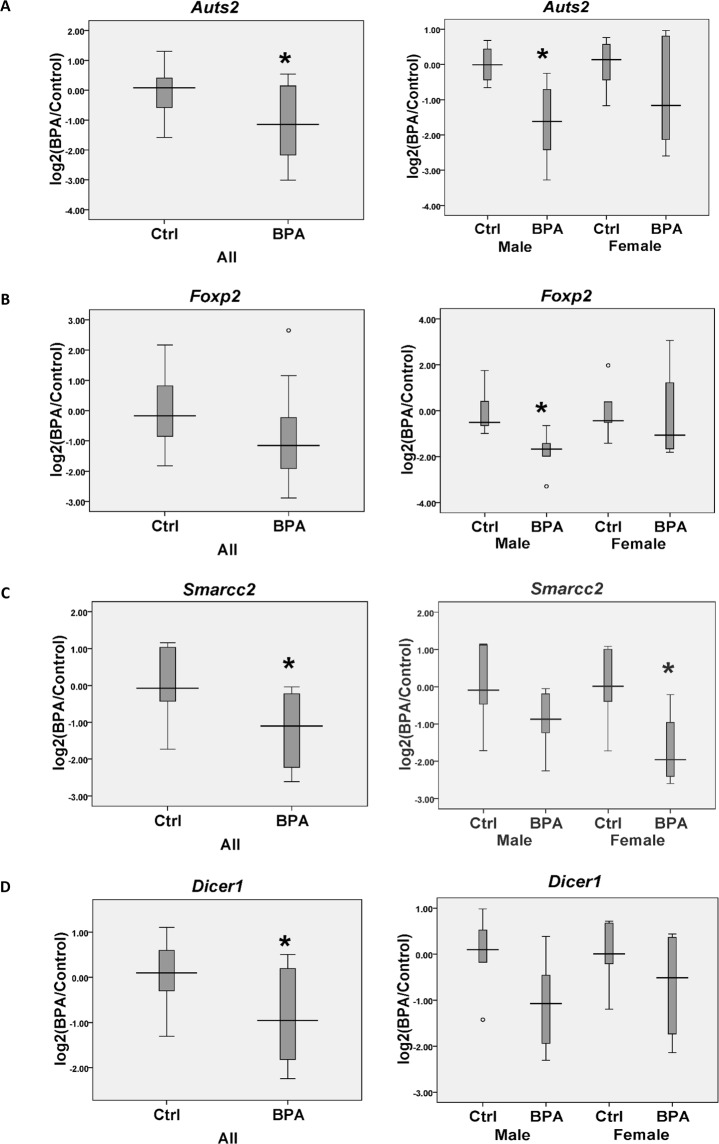
“BPA disrupts the expression of ASD candidate genes (Auts2, Foxp2, and Smarcc2) more significantly in the male hippocampus than in females [128].”
Background
Metadata
- Authors
- Thongkorn, S., Kanlayaprasit, S., Jindatip, D., Tencomnao, T., Hu, V. W., & Sarachana, T.
- Affiliations
- Chulalongkorn University (TH)
- George Washington University (US)
- Corresponding author
- Sarachana, Tewarit
- ORCID
- Venue
- Scientific Reports
- Published
- 2019-02-28
- Volume
- 9
- Issue
- 1
- Pages
- 3038-3038
- ISSN
- 2045-2322 (ISSN-L)
- PMC
- PMC6395584
- OpenAlex
- W2922797338
- Cited by
- 66
- References
- 88
- Citations by year
- 2026: 3 · 2025: 5 · 2024: 10 · 2023: 9 · 2022: 10 · 2021: 14 · 2020: 10 · 2019: 5
- FWCI
- 4.21
- Type
- journal article
- Language
- en
- Open access
- gold
- doi.org
- Licence
- cc-by
- creativecommons.org/licenses/by/4.0 (tdm)
- creativecommons.org/licenses/by/4.0 (vor)
- Locations
- Scientific Reports (publishedVersion, cc-by)
- Europe PMC (PubMed Central) (publishedVersion, other-oa)
- PubMed Central (publishedVersion, cc-by)
- PubMed (publishedVersion)
- DOAJ (DOAJ: Directory of Open Access Journals) (submittedVersion)
- Greater South Information System
- Funders
- Asahi Glass Foundation
- Chulalongkorn University
- Thailand Research Fund
- Office of the Higher Education Commission
- Faculty of Allied Health Sciences, Chulalongkorn University
- National Institute of Environmental Health Sciences (R21ES028124, R21ES023061, ES023061)
- Topics
- Physical Sciences › Environmental Science › Health, Toxicology and Mutagenesis › Effects and risks of endocrine disrupting chemicals
- Life Sciences › Neuroscience › Cognitive Neuroscience › Autism Spectrum Disorder Research
- Life Sciences › Biochemistry, Genetics and Molecular Biology › Genetics › Genetics and Neurodevelopmental Disorders
- Keywords
- autism spectrum disorder, bisphenol A, prenatal exposure, sex differences, hippocampus, gene expression, AUTS2, FOXP2, brain development, maternal exposure, endocrine disruptors
- MeSH terms
- Autism Spectrum Disorder, RNA-Seq, Bisphenol A Compounds, Animals, Animals, Newborn, Benzhydryl Compounds, Disease Models, Animal, Female, Hippocampus, Humans, Male, Phenols, Pregnancy, Prenatal Exposure Delayed Effects, Sex Factors, Gene Expression Regulation, Developmental, Rats, Forkhead Transcription Factors
About these checks
Registry, retraction, Cites and statistics results are computed, not judged, with one exception: a printed reference that no index lists is read once by a model before it counts as a citation error. Claims are extracted by a model and kept only when their quote appears verbatim in the text; each cited source is then checked, with a model’s help, for whether it says what the claim relies on. Those verdicts can be wrong — read the claim’s quote and the cited source before relying on one.
Statistics and arithmetic are recomputed, not judged.
Confidence bands are shown only for fields calibrated on our annotated test set. None is calibrated yet, so no band is shown.
What counts as a claim ›How we measure confidence ›How we check this ›
Are you an author, or do you see a problem with this page? Request a review
Data sources
Bibliographic data: Semantic Scholar, OpenAlex, Crossref.
Contains information from the Semantic Scholar Academic Graph Datasets, made available under the ODC Attribution License (ODC-BY 1.0).
Semantic Scholar’s data is described in: Kinney, R., et al. (2023). The Semantic Scholar Open Data Platform. arXiv:2301.10140.
