

From Louvain to Leiden: guaranteeing well-connected communities
Open accessThe DOI matches its Crossref record; 30 of the 30 references it cites were found in a registry or an index; 1 of the 26 sources its claims cite were checked for support.
Abstract
Community detection is often used to understand the structure of large and complex networks. One of the most popular algorithms for uncovering community structure is the so-called Louvain algorithm. We show that this algorithm has a major defect that largely went unnoticed until now: the Louvain algorithm may yield arbitrarily badly connected communities. In the worst case, communities may even be disconnected, especially when running the algorithm iteratively. In our experimental analysis, we observe that up to 25% of the communities are badly connected and up to 16% are disconnected. To address this problem, we introduce the Leiden algorithm. We prove that the Leiden algorithm yields communities that are guaranteed to be connected. In addition, we prove that, when the Leiden algorithm is applied iteratively, it converges to a partition in which all subsets of all communities are locally optimally assigned. Furthermore, by relying on a fast local move approach, the Leiden algorithm runs faster than the Louvain algorithm. We demonstrate the performance of the Leiden algorithm for several benchmark and real-world networks. We find that the Leiden algorithm is faster than the Louvain algorithm and uncovers better partitions, in addition to providing explicit guarantees.
Overview
CoChat Summary
TL;DR
The Louvain algorithm can yield arbitrarily badly connected communities, including disconnected ones, especially when iterated. The Leiden algorithm guarantees connected communities and, under iteration, converges to subset-optimal partitions while running faster and finding higher-quality partitions.
Key findings
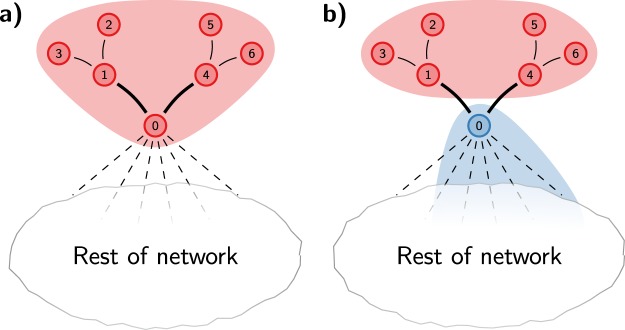
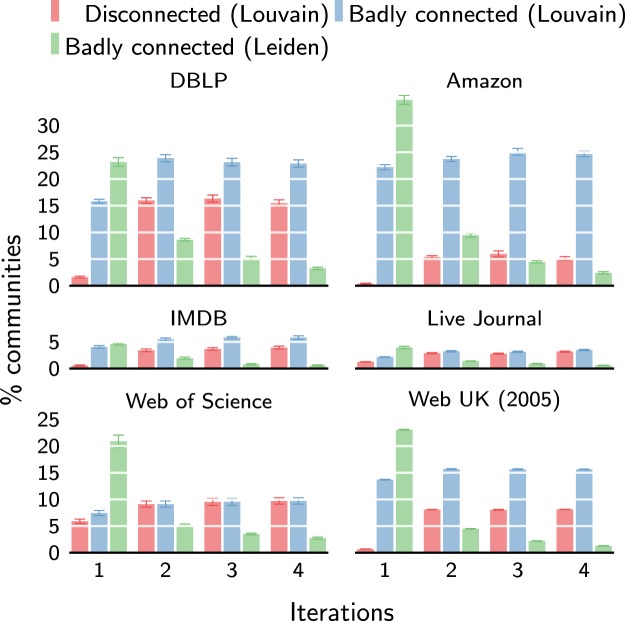
- Louvain may produce arbitrarily badly connected communities; in experiments up to 25% of communities were badly connected and up to 16% were disconnected. First-iteration badly connected percentages included Amazon 23%, DBLP 16%, and Web UK 14%; disconnected communities were usually around 1%, but exceeded 5% for Web of Science in the first iteration and jumped to 16% for DBLP in later iterations. After four iterations, Amazon had 5% disconnected but 25% badly connected communities.
- Leiden guarantees all communities are connected after each iteration, and also γ-separated and γ-connected. After a stable iteration, all nodes are locally optimally assigned and all communities are subpartition γ-dense; asymptotically, all communities are uniformly γ-dense and subset optimal.
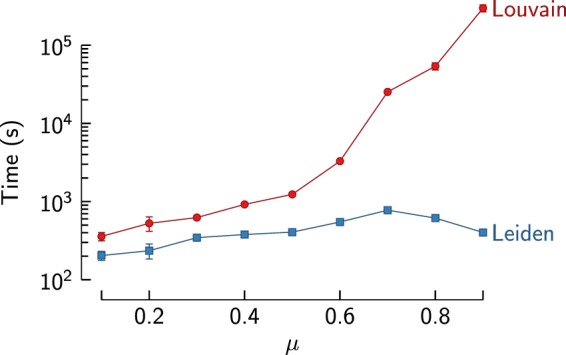
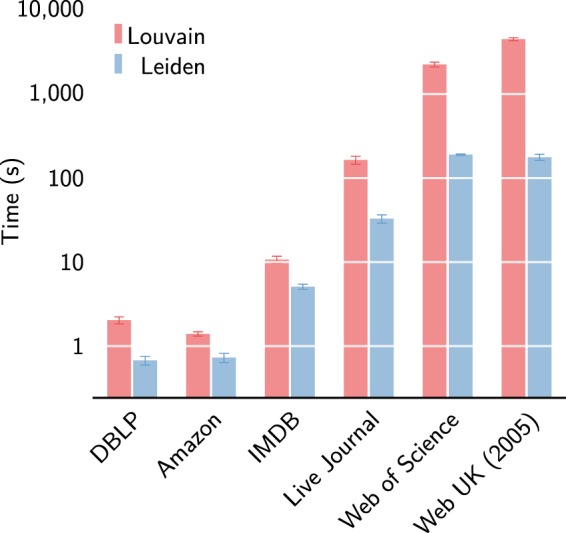
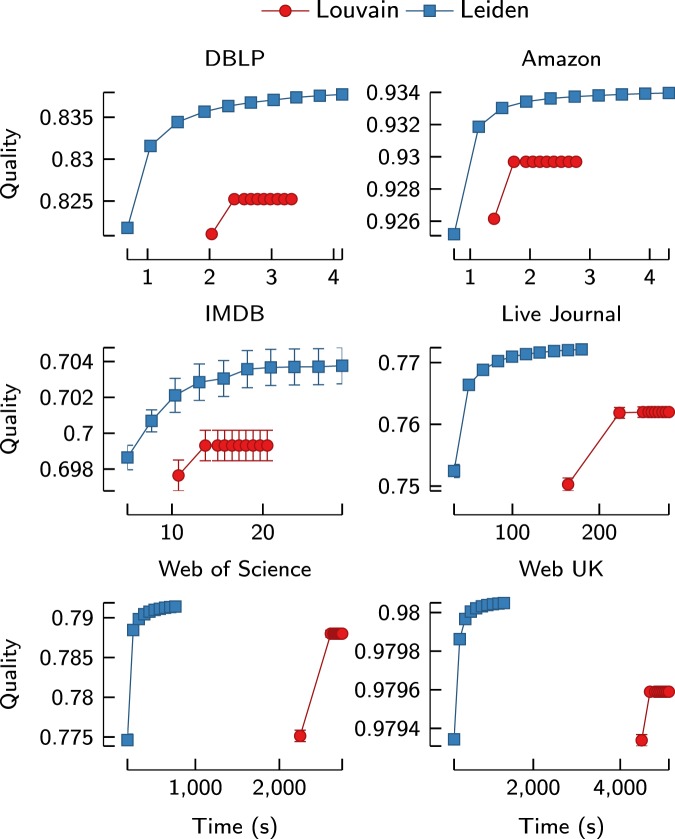
- Leiden was faster than Louvain: first iteration roughly 2–20 times faster on empirical networks, including more than 7× faster for Live Journal, more than 11× for Web of Science, and more than 20× for Web UK. On benchmark networks with difficult partitions (μ = 0.9), Louvain required almost 2.5 days while Leiden needed fewer than 10 minutes; for largest networks Leiden reached 10–100 times faster runtimes.
- Leiden found higher modularity on all six empirical networks: DBLP 0.8387 vs 0.8262, Amazon 0.9341 vs 0.9301, IMDB 0.7069 vs 0.7062, Live Journal 0.7739 vs 0.7653, Web of Science 0.7951 vs 0.7911, and Web UK 0.9801 vs 0.9796.
Methods
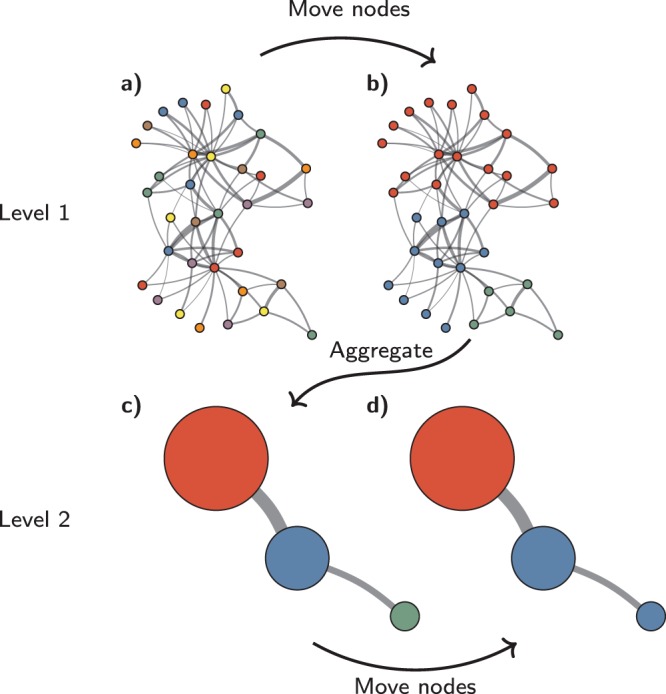
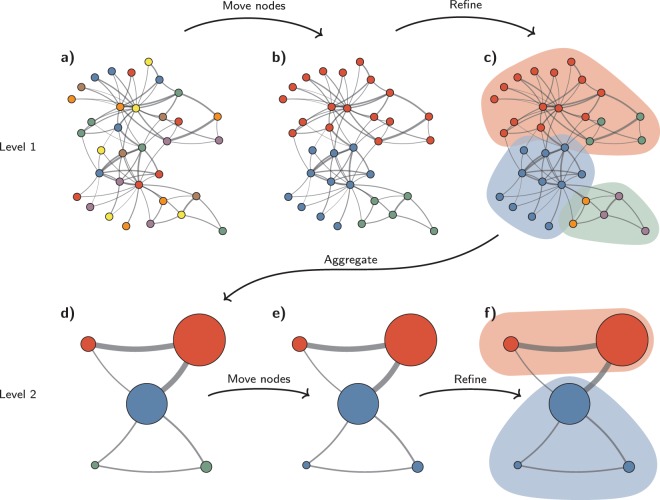
- The paper introduces the Leiden algorithm, which combines local moving, refinement of the partition, and aggregation; proofs of guarantees are relegated to Supplementary Information. It compares Leiden with Louvain on six empirical networks and on benchmark networks.
- Empirical networks: DBLP (317,080 nodes, degree 6.6), Amazon (334,863, 5.6), IMDB (374,511, 80.2), Live Journal (3,997,962, 17.4), Web of Science (9,811,130, 21.2), and Web UK (39,252,879, 39.8). Modularity was used with γ = 1; Table 2 reports maximal modularity after 10 replications of 10 iterations each. Badly connected community analysis was repeated 10 times, with Leiden run on each community’s subnetwork until a stable iteration.
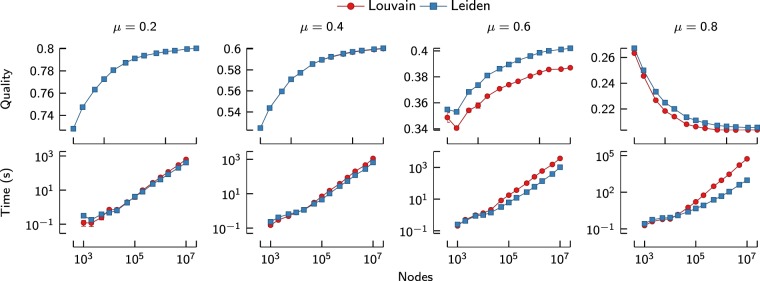
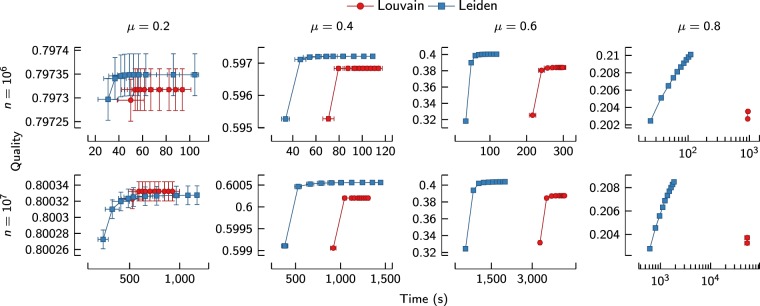
- Benchmark networks ranged from n = 10^3 to n = 10^7 nodes, with community size 50 and CPM as the quality function; the mixing parameter μ varied, 10 iterations were performed, and each parameter set was repeated 10 times. The refinement randomness parameter was θ = 0.01.
Limitations
- The paper states that benchmark networks have only limited value because they are not representative of empirical real-world networks and have a rather simple structure.
- The paper states that counting communities split by Leiden gives only a lower bound on the number of badly connected communities; if Leiden does not find subcommunities, there is no guarantee that modularity cannot be increased by splitting the community.
- Evident from the text: there is no dedicated limitations section; technical details and proofs are relegated to Supplementary Information, and the experimental analysis fixes θ = 0.01 although values roughly in [0.0005, 0.1] are said to provide reasonable results.
Model-written summary. Check it against the paper before relying on it.
Integrity signals
Registry
Cites
Statistics
Figures
Verification
Claims the paper makes
1 Valid · 2 Not valid · 17 Not checked · 142 Own results and interpretations
The cited sources support only part of this claim — read each source’s verdict below.
In the paper
“Hence, the problem of Louvain outlined above is independent from the issue of the resolution limit.”
§ From Louvain to Leiden: guaranteeing well-connected communities > Louvain Algorithm > Badly connected communities
What the sources say
- Partly supportedcites [14] Fortunato S Barthélemy M Resolution Limit in Community Detection Proc. Natl. Acad. Sci. USA 2007 104 36 10.1073/pnas.0605965104 17190818 PMC1765466 sourceExperimental — accuracy not yet measured
Our copy supports the resolution-limit side of the sentence: the Conclusions (VI, p. 7) state that 'the resolution limit of modularity does not rely on particular network structures, but only on the comparison between the sizes of interconnected communities and that of the whole network', the Introduction (p. 1) calls it an 'intrinsic scale' of modularity, and Section V (pp. 5-6) shows the failure persists with simulated annealing, i.e. it is a property of the quality function rather than of one particular optimizer. What the source does not contain is the other term of the comparison: Louvain is never mentioned anywhere in the paper (the Introduction, p. 1, lists only generic greedy procedures [19,20], extremal optimization [21] and simulated annealing [22,23]), and no passage contrasts the resolution limit with an algorithm-specific defect. The independence claim is therefore the citing authors' own inference built on this paper's characterization of the resolution limit. (LLM, conf=0.70)
plain- Asserted: passes — The authors put it forward as true.
- Checkable: passes — It can be checked against evidence.
- Load-bearing: passes — The paper’s conclusions depend on it.
- Based: passes — The paper gives a reason why it holds.
- Partly supported
A result the paper states — it cites no source for it, so there is none to check. The quote shows it is in the paper.
In the paper
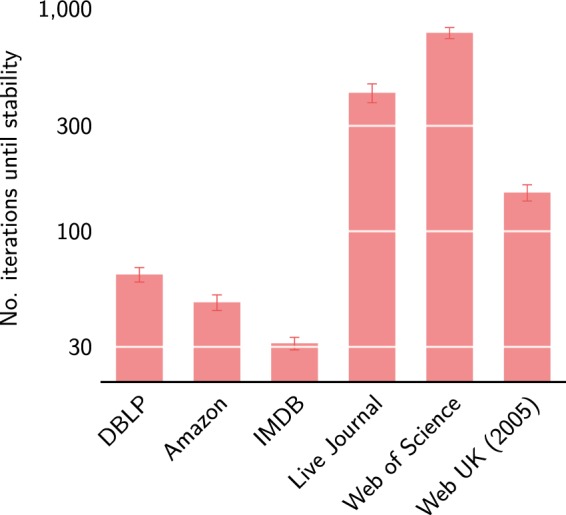
“The percentage of badly connected communities is less affected by the number of iterations of the Louvain algorithm.”
§ From Louvain to Leiden: guaranteeing well-connected communities > Experimental Analysis > Badly connected communities
plain- Asserted: passes — The authors put it forward as true.
- Checkable: passes — It can be checked against evidence.
- Load-bearing: unclear — It is unclear whether the paper’s conclusions depend on it.
- Based: passes — The paper gives a reason why it holds.
A result the paper states — it cites no source for it, so there is none to check. The quote shows it is in the paper.
In the paper
“In addition, we prove that, when the Leiden algorithm is applied iteratively, it converges to a partition in which all subsets of all communities are locally optimally assigned.”
- Also stated in: § Introduction · boosted
“In addition, we prove that the algorithm converges to an asymptotically stable partition in which all subsets of all communities are locally optimally assigned.”
§ From Louvain to Leiden: guaranteeing well-connected communities > Abstract
boostedstates a cause- Asserted: passes — The authors put it forward as true.
- Checkable: passes — It can be checked against evidence.
- Load-bearing: passes — The paper’s conclusions depend on it.
- Based: passes — The paper gives a reason why it holds.
- Also stated in: § Introduction · boosted
A result the paper reports from its own data — it cites no other source for it, so there is none to check. The quote shows it is in the paper.
In the paper
“The second iteration of Louvain shows a large increase in the percentage of disconnected communities.”
§ From Louvain to Leiden: guaranteeing well-connected communities > Experimental Analysis > Badly connected communities
plainstates a cause- Asserted: passes — The authors put it forward as true.
- Checkable: passes — It can be checked against evidence.
- Load-bearing: passes — The paper’s conclusions depend on it.
- Based: passes — The paper gives a reason why it holds.
A result the paper reports from its own data — it cites no other source for it, so there is none to check. The quote shows it is in the paper.
In the paper
“In terms of the percentage of badly connected communities in the first iteration, Leiden performs even worse than Louvain, as can be seen in Fig. 4.”
§ From Louvain to Leiden: guaranteeing well-connected communities > Experimental Analysis > Badly connected communities
plain- Asserted: passes — The authors put it forward as true.
- Checkable: passes — It can be checked against evidence.
- Load-bearing: unclear — It is unclear whether the paper’s conclusions depend on it.
- Based: passes — The paper gives a reason why it holds.
115 more claims
Create a free account to see all 162 claims and to verify the 24 references still open.
- Probably not a substantial claim. 23
- It may state two separate claims as one. 23
- The quote only partly states this claim. 1
Claims other papers make about this one
Each is checked against this paper’s own text: does it say what the citing paper says it does?
The cited source says what the claim attributes to it.
In the citing paper
“When compared to six common clustering algorithms, including Leiden25 and CellHarmony26, VFC was the top performing algorithm on every simulation on the T cell data and best performing, on average, on the zebrafish dataset, with a 57% increase in average performance over Louvain, which was the next best algorithm”
From Quantifying the effect of experimental perturbations at single-cell resolution (2021) · cites this paper as [25]
The cited source says what the claim attributes to it.
In the citing paper
“Louvain’s successor Leiden circumvents this issue by yielding guaranteed connected communities and is computationally more efficient52.”
From Best practices for single-cell analysis across modalities (2023) · cites this paper as [52]
The cited source says what the claim attributes to it.
In the citing paper
“However, the Louvain algorithm can lead to arbitrarily poorly connected communities52.”
From Best practices for single-cell analysis across modalities (2023) · cites this paper as [52]
The cited source says what the claim attributes to it.
In the citing paper
“We found that many t-types had total variance substantially above the variances of the k-means clusters (Fig. 5b) and an alternative analysis using entropies of Leiden clustering35 often highlighted the same t-types as variable (Extended Data Fig. 8).”
From Phenotypic variation of transcriptomic cell types in mouse motor cortex (2021) · cites this paper as [35]
The cited source says what the claim attributes to it.
In the citing paper
“Community detection uses the Leiden algorithm [28] with ModularityVertexPartition, producing hierarchical subclustering to depth 3.”
From SuperLocalMemory: Privacy-Preserving Multi-Agent Memory with Bayesian Trust Defense Against Memory Poisoning (2026) · cites this paper as [28]
6 more claims about this paper
Create a free account to see every claim other papers make about this one.
Citations
Cites
Fast unfolding of communities in large networks
Blondel, V. D., Guillaume, J.-L., Lambiotte, R., & Lefebvre, E. (2008) · Journal of Statistical Mechanics: Theory and Experiment · doi:10.1088/1742-5468/2008/10/p10008 · Cited by 21,424 · cited 3×
“The Louvain algorithm 10 is very simple and elegant.”
MethodFinding and evaluating community structure in networks
Newman, M. E. J., & Girvan, M. (2004) · Physical Review E · doi:10.1103/physreve.69.026113 · Cited by 13,931 · cited 2×
“The Leiden algorithm consists of three phases: (1) local moving of nodes, (2) refinement of the partition and (3) aggregation of the network based on the refined partition, using the non-refined partition to create an initial partition for the aggregate network.”
BackgroundMethodComplex brain networks: graph theoretical analysis of structural and functional systems
Bullmore, E., & Sporns, O. (2009) · Nature Reviews Neuroscience · doi:10.1038/nrn2575 · Cited by 11,820
Fortunato, S. (2010) · Physics Reports · doi:10.1016/j.physrep.2009.11.002 · Cited by 11,293 · cited 4×
“The Leiden algorithm consists of three phases: (1) local moving of nodes, (2) refinement of the partition and (3) aggregation of the network based on the refined partition, using the non-refined partition to create an initial partition for the aggregate network.”
BackgroundMethodInfluentialFinding community structure in very large networks
Clauset, A., Newman, M. E. J., & Moore, C. (2004) · Physical Review E · doi:10.1103/physreve.70.066111 · Cited by 7,390 · cited 1×
“Optimising modularity is NP-hard 5 , and consequentially many heuristic algorithms have been proposed, such as hierarchical agglomeration 6 , extremal optimisation 7 , simulated annealing 4,8 and spectral 9 algorithms.”
MethodFinding community structure in networks using the eigenvectors of matrices
Newman, M. E. J. (2006) · Physical Review E · doi:10.1103/physreve.74.036104 · Cited by 4,761
Functional cartography of complex metabolic networks
Guimerà, R., & Nunes Amaral, L. A. (2005) · Nature · doi:10.1038/nature03288 · Cited by 3,983 · cited 2×
“Optimising modularity is NP-hard 5 , and consequentially many heuristic algorithms have been proposed, such as hierarchical agglomeration 6 , extremal optimisation 7 , simulated annealing 4,8 and spectral 9 algorithms.”
MethodNear linear time algorithm to detect community structures in large-scale networks
Raghavan, U. N., Albert, R., & Kumara, S. (2007) · Physical Review E · doi:10.1103/physreve.76.036106 · Cited by 3,502 · cited 2×
“Trying to fix the problem by simply considering the connected components of communities 19–21 is unsatisfactory because it addresses only the most extreme case and does not resolve the more fundamental problem.”
BackgroundBenchmark graphs for testing community detection algorithms
Lancichinetti, A., Fortunato, S., & Radicchi, F. (2008) · Physical Review E · doi:10.1103/physreve.78.046110 · Cited by 3,051 · cited 1×
“To study the scaling of the Louvain and the Leiden algorithm, we rely on a variant of a well-known approach for constructing benchmark networks 28 .”
MethodResolution limit in community detection
Fortunato, S., & Barthélemy, M. (2007) · Proceedings of the National Academy of Sciences · doi:10.1073/pnas.0605965104 · Cited by 3,024 · cited 2×
“The algorithm may yield arbitrarily badly connected communities, over and above the well-known issue of the resolution limit 14 .”
Background
Research works printed but not linked: 2
- Porter MA Onnela J-P Mucha PJ Communities in Networks Not. AMS 2009 56 1082 1097
- Luecken, M. D. Application of multi-resolution partitioning of interaction networks to the study of complex disease. Ph.D. thesis, (University of Oxford, 2016).
Cited by
Items 4,201–4,300 of 7,288
Dien, V. T., Thompson, C., Rammel, T., Roquero, J., Krivit, M., Yeo, G., Honigfort, D. J., Bhadha, P., Brown-Greaves, C., Dawood, M., et al. (2025) · bioRxiv (Cold Spring Harbor Laboratory) · doi:10.1101/2025.05.06.652479 · Cited by 1
Otten, J., Dan, S., Rostin, L., Profetto, A., Lardenoije, R., & Klengel, T. (2024) · bioRxiv (Cold Spring Harbor Laboratory) · doi:10.1101/2024.09.25.614979 · Cited by 1
García, A. R., Paterou, A., Doherty, R. P., Landry, L. G., Lee, M., Anderson, A. M., Scudder, C. L., Slawinski, H., Ferreira, R. C., Trzupek, D., et al. (2022) · medRxiv · doi:10.1101/2022.05.11.22274678 · Cited by 1
Li, M., Gai, X., Lou, K., & Stein, A. (2024) · International Journal of Digital Earth · doi:10.1080/17538947.2024.2432546 · Cited by 1
Patil, A., Müller-Eigner, A., Rebl, H., Goldammer, T., & Rebl, A. (2026) · Fish & Shellfish Immunology · doi:10.1016/j.fsi.2026.111397 · Cited by 1
The emergence of computational social science: Intellectual integration or persistent fragmentation?Preprint
Pääkkönen, J., Nelimarkka, M., & Reijula, S. (2024) · SocArXiv (OSF Preprints) · doi:10.31235/osf.io/g6m34 · Cited by 1
CDNE: Community deception from node and edge perspectives
Kang, Y., Tang, J., Fan, B., & Yuan, H. (2026) · Neurocomputing · doi:10.1016/j.neucom.2026.133039 · Cited by 1
Progenitor-Derived Regulatory Logic Generates Functionally Related Neuronal SubtypesPreprint
Xu, C., Sastry, R., Newstein, P., Delgado, R. N., Wagh, N., Silies, M., Cepko, C. L., & Doe, C. Q. (2024) · bioRxiv (Cold Spring Harbor Laboratory) · doi:10.1101/2024.09.27.615552 · Cited by 1
Stigmatizing bioterrorism as a public health concern: The case of anthrax in US media
Dabezies, J. M., Freeman, N., Cassolis, N. M., Rakowski, J. J., Xu, E., & Gore, M. L. (2026) · BMC Public Health · doi:10.1186/s12889-026-26851-1 · Cited by 1
Roxo, C., Marcos, J., & Gonçalves, N. (2025) · Lecture notes in computer science · doi:10.1007/978-3-031-99568-2_2 · Cited by 1
Palermo, G. (2022) · Digital Repository Service (Northeastern University) · doi:10.17760/d20467289 · Cited by 1
Revised Adaptive Immune Receptor Data in the Immune Epitope DatabasePreprint
Scheffer, L., Richardson, E., Vita, R., Zarebski, L. M., Blazeska, N., Wheeler, D. K., Cantrell, J. R., Deleuran, S. N., Lees, W., Christley, S., et al. (2026) · bioRxiv (Cold Spring Harbor Laboratory) · doi:10.64898/2026.06.03.728549 · Cited by 1
Global Collaboration in Carbon Dioxide Removal: Navigating a Fragmented Landscape
Presty, R., Massol, O., & da Costa, P. (2025) · Current Sustainable/Renewable Energy Reports · doi:10.1007/s40518-025-00280-x · Cited by 1
Celldega: Integrated Toolkit for Visualization and Analysis of Spatial DataPreprint
Fernandez, N., Ishar, J., Wang, H., Saad, A. B., Lipiński, M., & Farhi, S. L. (2026) · bioRxiv (Cold Spring Harbor Laboratory) · doi:10.64898/2026.08.13.744672 · Cited by 1
Deng, J., Li, Y., Lei, S., Xu, K., Nie, J., Zhai, H., Wang, J., Xu, L., Jian, F., Feng, R., et al. (2026) · bioRxiv (Cold Spring Harbor Laboratory) · doi:10.64898/2026.07.28.735825 · Cited by 1
Genetic ancestry and monogenic disease risk in the Scottish Traveller founder population
Shanmugam, A., Fletcher, B. S., Pala, M., Klarić, L., Kerr, S. M., Donaldson, S. W., Tzoneva, G., Shuldiner, A. R., Richards, M. B., McLaughlin, R. L., et al. (2026) · Nature Communications · doi:10.1038/s41467-026-74969-y · Cited by 1
DiTSim: A Diffusion-Transformers Based Single-Cell ATAC-seq Data Simulator
Dong, S., Tang, S., Liu, D., & Chen, S. (2025) · Interdisciplinary Sciences Computational Life Sciences · doi:10.1007/s12539-025-00773-9 · Cited by 1
Munn, H., & Gallagher, M. R. (2023) · International Joint Conference on Neural Networks (IJCNN) · doi:10.1109/ijcnn54540.2023.10191234 · Cited by 1
Fan, X., & Mysore, S. P. (2024) · bioRxiv (Cold Spring Harbor Laboratory) · doi:10.1101/2024.05.22.595438 · Cited by 1
GeneQuery: Generalized Gene Expression Prediction from Histology Images via Image-Gene QA
Xiong, Y., Liu, L., Cui, Y., Wu, S., Liu, X., Chan, A. B., & Xue, C. J. (2025) · IEEE International Conference on Bioinformatics and Biomedicine (BIBM) · doi:10.1109/bibm66473.2025.11356542 · Cited by 1
Pseudolabel-Guided Disentangled Representation Learning for Cross-Domain Anomalous Sound Detection
Zhang, S., Shan, S., Ye, Z., Shen, Y., Li, C., Zhang, K., & Wei, H. (2026) · IEEE Transactions on Industrial Informatics · doi:10.1109/tii.2026.3697510 · Cited by 1
Farndale, L., Rakovic, K., Powley, I. R., Hatthakarnkul, P., Seyedshahi, F. A., Szalma, S., Santana, L. P. S., Martinelli, S., Ballantyne, F., Baird, R. L., et al. (2025) · bioRxiv (Cold Spring Harbor Laboratory) · doi:10.1101/2025.10.16.682563 · Cited by 1
Chen, Y.-H., Chen, H., Chen, Y., Chen, H., & Chen, H. (2025) · IEEE Access · doi:10.1109/access.2025.3608302 · Cited by 1
Yan, C., He, Z., Ye, L., Zheng, S., Lin, N., Li, G., & Li, W. (2025) · bioRxiv (Cold Spring Harbor Laboratory) · doi:10.1101/2025.09.27.678942 · Cited by 1
Wagle, M. M., Wang, Y., Samanta, S., Liu, Z., Patrick, E., Yang, P., & Kellis, M. (2026) · bioRxiv (Cold Spring Harbor Laboratory) · doi:10.64898/2026.07.21.738207 · Cited by 1
Kim, J., Kim, S., Hwang, S. J., Park, J., & Choi, Y. S. (2026) · Proceedings of the conference - Association for Computational Linguistics. Meeting · doi:10.18653/v1/2026.acl-long.1740 · Cited by 1
Dewitte, M. M. J., der Hallen, R. V., Prinzie, P., Warreyn, P., & Pauw, S. S. W. D. (2026) · European Journal of Personality · doi:10.1177/08902070261423729 · Cited by 1
A natural language processing–driven map of the aging research landscape
Pérez-Maletzki, J., & Sanz‐Ros, J. (2025) · Aging · doi:10.18632/aging.206340 · Cited by 1
Wang, S., Che, Y., Jia, X., Li, Y., Xi, L., Ma, X., & Xiong, S. (2026) · Electronics · doi:10.3390/electronics15122684 · Cited by 1
Type 2 diabetes amplifies environmental Pb toxicity and intergenerational riskPreprint
Zhang, C., Xia, X., Zhang, C., Pei, C., Guo, Z., Li, G., Xu, L., Luo, H., Ma, J., Luo, J., et al. (2026) · bioRxiv (Cold Spring Harbor Laboratory) · doi:10.64898/2026.02.21.707175 · Cited by 1
Direct lineage conversion of postnatal mouse cortical astrocytes to oligodendrocyte lineage cellsPreprint
Bajohr, J., Scott, E., Olfat, A., Sadria, M., Lee, K. C., Fahim, M., Taha, H. T., Casasbuenas, D. L., Derham, A., Yuzwa, S. A., et al. (2024) · bioRxiv (Cold Spring Harbor Laboratory) · doi:10.1101/2024.05.28.596294 · Cited by 1
Direct lineage conversion of postnatal mouse cortical astrocytes to oligodendrocyte lineage cellsPreprint
Bajohr, J., Scott, E., Olfat, A., Sadria, M., Lee, K. C., Fahim, M., Taha, H. T., Casasbuenas, D. L., Derham, A., Yuzwa, S. A., et al. (2025) · eLife · doi:10.7554/elife.98632.2 · Cited by 1
A completely parameter-free method for graph-based single cell RNA-seq clusteringPreprint
Zand, M., & Ruan, J. (2021) · bioRxiv (Cold Spring Harbor Laboratory) · doi:10.1101/2021.07.15.452521 · Cited by 1
Transient MYC Mimicking the Exercise Response Orchestrates Multifaceted Skeletal Muscle AdaptationsPreprint
Jones, R. G., Koopmans, P. J., Serrano, N., Cabrera, A. R., Morena, F., Chambers, T. L., Walters, R., Borowik, A., Taylor, M. E., Wohlgemuth, R. P., et al. (2026) · bioRxiv (Cold Spring Harbor Laboratory) · doi:10.64898/2026.06.29.735332 · Cited by 1
Antiviral CD4+ T and myeloid cell responses to influenza vaccines are attenuated in older adults
Oakes, J. M., Simmons, J., Nochowicz, C. H., Kirk, L. A., Eason, J., Halasa, N., Talbot, H. K., Bailin, S. S., Castilho, J. L., & Kalams, S. A. (2026) · Communications Medicine · doi:10.1038/s43856-026-01586-7 · Cited by 1
Quantifying HLA transcripts by genotype in chimeric mixtures at single-cell resolutionPreprint
Kanaan, S. B., Underwood, J. G., Gladden, R. G., Fan, E., Bhise, S. S., Thakar, M. S., Jaeger-Ruckstuhl, C. A., Stevens, J., Gray, A., Riddell, S. R., et al. (2025) · bioRxiv (Cold Spring Harbor Laboratory) · doi:10.1101/2025.09.12.675951 · Cited by 1
RNA splicing factor mutations drive myeloid neoplasm oncogenesis through protein complex poisoningPreprint
Moura, P. L., Branca, R. M., Kaminskiy, Y., Siavelis, I., Shrung, K. R., Hofmann, S., Perraki, C. M., Argyriou, A., Fazeli, S., Nakagawa, M. M., et al. (2026) · bioRxiv (Cold Spring Harbor Laboratory) · doi:10.64898/2026.09.29.754980 · Cited by 1
Innate immune responses to Plasmodium falciparum disrupt the blood-brain barrierPreprint
Batzilla, A., Dernick, P., Bezney, J., Gschwind, A. R., Nakaki, F., Altadill, M., Fleckenstein, H., Piatti, L., Sanz, S., Fiegl, M., et al. (2025) · bioRxiv (Cold Spring Harbor Laboratory) · doi:10.1101/2025.10.20.683440 · Cited by 1
Dang, Q., Smart, N., Redpath, A. N., & Vieira, J. M. (2026) · Advanced Science · doi:10.1002/advs.202517640 · Cited by 1
Quirós, P., & Álvarez, B. R. C. (2020) · EDBT/ICDT Workshops · Cited by 1
MECP2pedia: A Comprehensive Transcriptome Portal for MECP2 Disease ResearchPreprint
Trostle, A. J., Li, L., Kim, S., Wang, J., Al‐Ouran, R., Yalamanchili, H. K., Liu, Z., & Wan, Y. (2021) · bioRxiv (Cold Spring Harbor Laboratory) · doi:10.1101/2021.11.27.470197 · Cited by 1
SOX2-Dependent Wound Repair Signature Triggers Prohealing Outcome in Hyperglycemic Wounds
O’Neill, C. G., Sawaya, A. P., Mehdizadeh, S., Brooks, S. R., Hasneen, K., Nayak, S., Overmiller, A. M., & Morasso, M. I. (2024) · Journal of Investigative Dermatology · doi:10.1016/j.jid.2024.07.012 · Cited by 1
Traeuble, K., Träuble, J., Schierle, G. S. K., & Heinig, M. (2026) · bioRxiv (Cold Spring Harbor Laboratory) · doi:10.64898/2026.02.26.708154 · Cited by 1
Tsuyuzaki, K., Yaguchi, J., Yamamoto, T., Ikeo, K., & Yaguchi, S. (2026) · Development · doi:10.1242/dev.205025 · Cited by 1
Key Concepts in Transcriptomics Data Analysis in the Era of Next-Gen Sequencing
Kumar, S. (2026) · Advances in experimental medicine and biology · doi:10.1007/978-3-032-18966-0_11 · Cited by 1
MUFFIN: a suite of tools for the analysis of functional sequencing data
de Langen, P., & Ballester, B. (2024) · NAR Genomics and Bioinformatics · doi:10.1093/nargab/lqae051 · Cited by 1
Single-Cell Genomics in Veterinary Science: Methods and Applications
Lim, B., Lim, C., Lee, S.-H., & Kim, J. (2025) · Springer eBooks · doi:10.1007/978-981-97-7395-4_6 · Cited by 1
Vivoli, A., Ghislain, J. J., Filali‐Mouhim, A., Angeles, Z. E., Castell, A., SLADEK, R. M., & Poitout, V. (2022) · doi:10.2337/figshare.21215594 · Cited by 1
Mohammed, A., Solomon, B. D., Slepicka, P. F., Hubka, K. M., Nguyen, H. D., Wang, W., Arreola, M., Chavez, M., Yeh, C. Y., Kim, D. K., et al. (2022) · bioRxiv (Cold Spring Harbor Laboratory) · doi:10.1101/2022.10.02.510339 · Cited by 1
Mehta, P., & Giardina, C. A. (2023) · bioRxiv (Cold Spring Harbor Laboratory) · doi:10.1101/2023.10.25.559143 · Cited by 1
Zhang, H., Lu, B., Qiu, A., Cooper, G. F., Saeed, A., Paisley, J. W., Lu, X., & Chen, L. (2025) · bioRxiv (Cold Spring Harbor Laboratory) · doi:10.1101/2025.04.09.648030 · Cited by 1
Raj, S., Cutia, T., Menghini, S., Alemany‐Ribes, M., Cai, J., Young, M., Jachim, S. K., Capellini, T. D., & Craft, A. M. (2025) · Stem Cell Reports · doi:10.1016/j.stemcr.2025.102685 · Cited by 1
Optimal sequencing depth for single-cell RNA-sequencing in Wasserstein space
Kim, J., Kubal, S., & Schiebinger, G. R. (2025) · The Annals of Statistics · doi:10.1214/25-aos2558 · Cited by 1
He, F., Zu, S., Lin, Y., Shi, J., & Lin, S. (2026) · BMC Women s Health · doi:10.1186/s12905-026-04456-5 · Cited by 1
Saxena, N. (2026) · Computational Biology and Chemistry · doi:10.1016/j.compbiolchem.2026.109100 · Cited by 1
Liu, Y., Cao, W., Jin, Y., & Xu, W. (2026) · PLoS ONE · doi:10.1371/journal.pone.0354524 · Cited by 1
Human microglia clear intraneuronal α-synuclein aggregates by GPNMB-mediated trogocytosis
Chueh, H.-J., Katsikoudi, A., Aragón-González, A., Lam, C. L., Tamon, L., Jainarayanan, A., Agarwal, D., Cowley, S. A., Sims, D., & Tofaris, G. K. (2026) · Science Translational Medicine · doi:10.1126/scitranslmed.adz9258 · Cited by 1
Taylor, J. W., Almaraz, E. R., Demayo, C., Page, M., Velasco, C., Angelo, D., Vo, A. H., & Chang, S. M. (2026) · Neuro-Oncology Practice · doi:10.1093/nop/npag091 · Cited by 1
Lesnovska, K. P., Schäfer, S., Zabana, Y., Anes, I. F., Guagnozzi, D., Mihály, E., Miehlke, S., Madisch, A., Marinoni, B., Latella, G., et al. (2025) · Journal of Crohn s and Colitis · doi:10.1093/ecco-jcc/jjaf153 · Cited by 1
Large scale gene set ranking for survival-related gene sets
Špendl, M., Kokošar, J., Praznik, E., Ausec, L., Štajdohar, M. R., & Zupan, B. (2025) · Artificial Intelligence in Medicine · doi:10.1016/j.artmed.2025.103149 · Cited by 1
Dynamic uterine microenvironment drives endometrial adenocarcinoma carcinogenesis and progression
Conrad, L. B., Yin, S., Feng, B., King, L., Hobson, B., Andersen, K. E., Coté, J. J., Farias‐Eisner, R., Xia, J., & Fu, Y. (2026) · Communications Biology · doi:10.1038/s42003-026-10185-0 · Cited by 1
Lacalamita, A., Monaco, A., Serino, G., Marinazzo, D., Amoroso, N., Bellantuono, L., Rocca, M. L., Maggipinto, T., Pantaleo, E., Piccinno, E., et al. (2025) · PLoS ONE · doi:10.1371/journal.pone.0336379 · Cited by 1
Zheng, C., Wang, M., Yamada, R., & Okada, D. (2023) · Computational and Structural Biotechnology Journal · doi:10.1016/j.csbj.2023.09.042 · Cited by 1
Ai, H., Nie, R., & Wang, X. (2025) · Interdisciplinary Sciences Computational Life Sciences · doi:10.1007/s12539-025-00705-7 · Cited by 1
Niktab, E., Atkinson, P. H., Walterfang, M., Winship, I., Sturley, S. L., & Munkacsi, A. B. (2023) · bioRxiv (Cold Spring Harbor Laboratory) · doi:10.1101/2023.05.18.540731 · Cited by 1
Beyond “Trapped Pets” and “Red Buttons”: Bioinformatics as an Experimental Discipline
Ratti, E., & D’Agostino, G. A. (2025) · Perspectives on Science · doi:10.1162/posc_a_00638 · Cited by 1
Cell-type specific impact of opioid use disorder and HIV on the human forebrain and cerebellumPreprint
Green, A. A., Vashist, T. D., Jakhmola, S., Chen, X., Baidwan, G., Buchanan, J., Tiwari, S. K., Griffin, E. N., Howell, A., Lee, Y., et al. (2026) · bioRxiv (Cold Spring Harbor Laboratory) · doi:10.64898/2026.03.01.708876 · Cited by 1
Meistermann, D. (2020) · theses.fr (ABES) · doi:10.70675/be491d3fz05bez41f6zab4czfc6ab48b8bcf · Cited by 1
DGAT1 regulates keratinocyte proliferation through the modulation of retinoid homeostasis
Kwiecień, K., Bryniarska, N., Morytko, A., Uchańska, A., Pastuszczak, M., Migaczewski, M., Cichy, J., & Kwiecińska, P. (2026) · Journal of Physiology and Biochemistry · doi:10.1007/s13105-026-01196-w · Cited by 1
LaFranchi, B., Maison, D. P., Vinden, J., Rodríguez, A. E., Tout, A., Grimbert, L., Velazquez, E., Vudali, U., Poblano, B. E. A., Dalhuisen, T., et al. (2026) · bioRxiv (Cold Spring Harbor Laboratory) · doi:10.64898/2026.08.07.743616 · Cited by 1
Spatial evolution of a cachexia-promoting microenvironment in pancreatic cancer
Hu, Y., Lv, G., Yuan, H., Zhou, Z., Zhang, S., Ye, Y., Chen, Q., Cai, Y., Yang, J., Zhang, Y., et al. (2026) · Cell · doi:10.1016/j.cell.2026.09.012 · Cited by 1
Inductive Logic Programming for Explainable Graph Clustering
Schramm, S., & Schmid, U. (2023) · IEEE International Conference on Knowledge Graph (ICKG) · doi:10.1109/ickg59574.2023.00034 · Cited by 1
Wei, H., Kong, W., & Wang, S. (2022) · Research Square · doi:10.21203/rs.3.rs-1411661/v1 · Cited by 1
Brain Region-Specific Epigenomic Reorganization and Altered Cell States in Alzheimer’s DiseasePreprint
Wang, W., Berube, P., Yang, B., Castanon, R., Bartlett, A., Komandur, K., Nery, J. R., Barragan, C., Kenworthy, M., Valadon, C., et al. (2025) · bioRxiv (Cold Spring Harbor Laboratory) · doi:10.1101/2025.09.29.678849 · Cited by 2
Ayub, S., Gorman, J. L., Chen, E., Jackson, H. W., Selega, A., & Campbell, K. R. (2026) · Bioinformatics Advances · doi:10.1093/bioadv/vbag010 · Cited by 1
Gur, C., Ravkaie, L., Sharet-Eshed, R., Shalita, R., Avellino, R., Rauchbach, E., Xie, K., David, E., Yagel, G., Zada, M., et al. (2026) · bioRxiv (Cold Spring Harbor Laboratory) · doi:10.64898/2026.07.09.737520 · Cited by 1
Geometry-First Generative Spatial Single-Cell Reconstruction
Azim, E., Alif, M. N., Hwang, T. H., Fu, Y., & Zhang, W. (2026) · ACM SIGKDD Conference on Knowledge Discovery and Data Mining (KDD) · doi:10.1145/3770855.3818141 · Cited by 1
Assessing the interactions between time series signals using weighted horizontal visibility graphs
Teymourlouei, A., Reggia, J. A., & Gentili, R. J. (2025) · Journal of Physics Complexity · doi:10.1088/2632-072x/add3a8 · Cited by 1
Li, W., Li, Y., Shao, Y., & Bi, M. (2025) · ACM Transactions on Asian and Low-Resource Language Information Processing · doi:10.1145/3725733 · Cited by 1
Evolutionary remodeling of non-canonical ORF translation in mammalsPreprint
Chang, Y., Lei, T., Zhou, F., Jiang, J., Huang, Y., Zhu, Z., & Zhang, H. (2025) · eLife · doi:10.1101/2025.09.16.676541 · Cited by 1
Evolutionary remodeling of non-canonical ORF translation in mammalsPreprint
Chang, Y., Lei, T., Zhou, F., Jiang, J., Huang, Y., Zhu, Z., & Zhang, H. (2026) · eLife · doi:10.7554/elife.109128 · Cited by 1
Evolutionary remodeling of non-canonical ORF translation in mammalsPreprint
Chang, Y., Lei, T., Zhou, F., Jiang, J., Huang, Y., Zhu, Z., & Zhang, H. (2025) · eLife · doi:10.7554/elife.109128.1 · Cited by 1
Topographical archetypes of somatic mutagenesis in cancerPreprint
Lynch, A. W., Lee, S. W., Hummel, J. P., Geiger, B., Lawrence, M. S., Jin, H., Gulhan, D., & Park, P. J. (2026) · bioRxiv (Cold Spring Harbor Laboratory) · doi:10.64898/2026.04.18.719374 · Cited by 1
Atlas of cell types and regulatory elements underlying human facial diversity
Erickson, A. G., Gershtein, Y., Galimullina, R., Waern, F., Riba, T., Tesařová, M., Schnyder, D., Li, L., Vaulin, N., Samuelsson, S., et al. (2026) · Nature Genetics · doi:10.1038/s41588-026-02748-y · Cited by 1
Aggregation Queries over Unstructured Text: Benchmark and Agentic MethodPreprint
Zhu, H., Xu, Q., Li, H., Liu, Y., Qiu, H., Chen, J., & Jin, J. (2026) · arXiv (Cornell University) · doi:10.48550/arxiv.2602.01355 · Cited by 1
Cluster-free annotation of single cells using Earth mover’s distance-based classificationPreprint
Forlin, R., Tajvar, P., Wang, N., Dimarogonas, D. V., & Brodin, P. (2024) · bioRxiv (Cold Spring Harbor Laboratory) · doi:10.1101/2024.03.18.585613 · Cited by 1
Chen, X., He, W., Yu, J., & Fang, Z. (2026) · Interdisciplinary Sciences Computational Life Sciences · doi:10.1007/s12539-026-00822-x · Cited by 1
A single-cell atlas of cancer-educated ecotypes across high-risk pediatric sarcomasPreprint
Seitz, C. M., Catacora, K., Scheuermann, S., Fischer, T. T., Engelmann, F., King, A., Imle, R., Nuernbergk, A., Kristmann, B., Mallm, J., et al. (2026) · Research Square · doi:10.21203/rs.3.rs-10374394/v1 · Cited by 1
Faisal, S., Sammad, A., Ejaz, M. R., & Wang, Z. (2026) · Journal of Genetic Engineering and Biotechnology · doi:10.1016/j.jgeb.2026.100777 · Cited by 1
Li, J., Lv, H., Jiang, F., & Yu, B. (2026) · Computational Biology and Chemistry · doi:10.1016/j.compbiolchem.2026.109112 · Cited by 1
PRISM-GEP: Viewing single-cell expression through the lens of topic modeling
Buznah, Y., Ishon, T., & Shaham, U. (2026) · Bioinformatics · doi:10.1093/bioinformatics/btag728 · Cited by 1
Explainable t-SNE for Single-Cell RNA-seq Data Analysis: A Cell-Driven Information Fusion FrameworkPreprint
Han, H., Zhang, T., Niu, L., Wang, J., Han, F., Li, C., Li, J., & Huaixin, C. A. O. (2026) · bioRxiv (Cold Spring Harbor Laboratory) · doi:10.2139/ssrn.7541980 · Cited by 1
Nazari, P., Arnould, A., Andhari, M. D., Fontecha, M., Martín, J., Moor, B. D., Pey, J., Smet, F. D., Bosisio, F. M., & Antoranz, A. (2026) · Cell Reports Methods · doi:10.1101/2025.11.13.688190 · Cited by 1
geneSCOPE: gene spatial co-occurrence of pairwise expression
Zhang, S., Saeki, K., & Haeno, H. (2026) · Briefings in Bioinformatics · doi:10.1093/bib/bbag302 · Cited by 1
CEMUSA: a graph-based integrative metric for evaluating clusters in spatial transcriptomics
Hu, J., Du, Y., Hou, S., Ding, Y., Li, J., Wu, H., & Sun, X. (2026) · Bioinformatics · doi:10.1093/bioinformatics/btag056 · Cited by 1
Wang, C., Chen, L. R., Lin, T.-Y., & Huang, S. (2025) · Journal of Ophthalmology · doi:10.1155/joph/7014745 · Cited by 1
TREM2 restrains myeloid inflammasome activation to protect against photoreceptor degeneration
wang, T., Su, L., Szczepan, M., Wang, X., Gregg, A. T., Guo, J., Smith, L. E. H., & Sun, Y. (2026) · Journal of Neuroinflammation · doi:10.1186/s12974-026-03903-2 · Cited by 1
Citation-augmented text reuse detection
Muther, R. (2024) · Digital Repository Service (Northeastern University) · doi:10.17760/d20649817 · Cited by 1
Metadomain and metaloop genome interactions in mammalian T cells
Dolsten, G. A., Wang, Z.-M., Huang, X. J., Song, S., Wilson, M. J., Bing, X., Ke, W., Cafiero, T. R., Nelson, A. N., Fernando, S., et al. (2026) · Cell Reports · doi:10.1016/j.celrep.2026.117341 · Cited by 1
Boukabene, R., & Tayeb, F. B.-S. (2025) · IEEE Transactions on Artificial Intelligence · doi:10.1109/tai.2025.3586828 · Cited by 1
Metadata
- Authors
- Traag, V. A., Waltman, L., & van Eck, N. J.
- Affiliations
- Leiden University (NL)
- Corresponding author
- Traag, V. A.
- Venue
- Scientific Reports
- Published
- 2019-03-26
- Volume
- 9
- Issue
- 1
- Pages
- 5233-5233
- ISSN
- 2045-2322 (ISSN-L)
- PMC
- PMC6435756
- OpenAlex
- W2897249806
- Semantic Scholar
- 79cdbabb22ef80074f5659430fe6fc97932798f5
- Cited by
- 5,635
- References
- 27
- Citations by year
- 2026: 1250 · 2025: 1281 · 2024: 980 · 2023: 757 · 2022: 639 · 2021: 466 · 2020: 213 · 2019: 46
- FWCI
- 158.78
- Type
- journal article
- Language
- en
- Open access
- gold
- doi.org
- Licence
- cc-by
- creativecommons.org/licenses/by/4.0 (tdm)
- creativecommons.org/licenses/by/4.0 (vor)
- Locations
- Scientific Reports (publishedVersion, cc-by)
- Europe PMC (PubMed Central) (publishedVersion, other-oa)
- PubMed Central (publishedVersion, cc-by)
- PubMed (publishedVersion)
- arXiv (Cornell University) (submittedVersion)
- Leiden Repository (Leiden University) (submittedVersion, cc-by)
- Data Archiving and Networked Services (DANS) (submittedVersion, cc-by)
- DOAJ (DOAJ: Directory of Open Access Journals) (submittedVersion)
- Leiden Repository (Leiden University) (submittedVersion)
- arXiv (Cornell University)
- Topics
- Physical Sciences › Physics and Astronomy › Statistical and Nonlinear Physics › Complex Network Analysis Techniques
- Physical Sciences › Computer Science › Artificial Intelligence › Advanced Clustering Algorithms Research
- Life Sciences › Biochemistry, Genetics and Molecular Biology › Molecular Biology › Bioinformatics and Genomic Networks
- Keywords
- community detection, Louvain algorithm, Leiden algorithm, network partitioning, community connectivity, complex networks
About these checks
Registry, retraction, Cites and statistics results are computed, not judged, with one exception: a printed reference that no index lists is read once by a model before it counts as a citation error. Claims are extracted by a model and kept only when their quote appears verbatim in the text; each cited source is then checked, with a model’s help, for whether it says what the claim relies on. Those verdicts can be wrong — read the claim’s quote and the cited source before relying on one.
The claim verdicts this report counts are experimental: their accuracy is not yet measured.
A language model drew the claims from the paper on 2026-11-23, under version 3 of the claim definition (model deepseek-v4.1-flash, prompt extract-v3).
A second model labelled each claim on 2026-11-23 (model jev-1.13-20260917, definition revision gold-guideline-v0.2).
Cited sources are checked with a language model’s help (qwen3.8-omni-flash).
Statistics and arithmetic are recomputed, not judged.
Confidence bands are shown only for fields calibrated on our annotated test set. None is calibrated yet, so no band is shown.
What counts as a claim ›How we measure confidence ›How we check this ›
Are you an author, or do you see a problem with this page? Request a review
Data sources
Bibliographic data: Semantic Scholar, OpenAlex, Crossref.
Contains information from the Semantic Scholar Academic Graph Datasets, made available under the ODC Attribution License (ODC-BY 1.0).
Semantic Scholar’s data is described in: Kinney, R., et al. (2023). The Semantic Scholar Open Data Platform. arXiv:2301.10140.
