

Reorganization of brain networks and its association with general cognitive performance over the adult lifespan
Open accessThe DOI matches its Crossref record; 91 of the 91 references it cites were found in a registry or an index.
Abstract
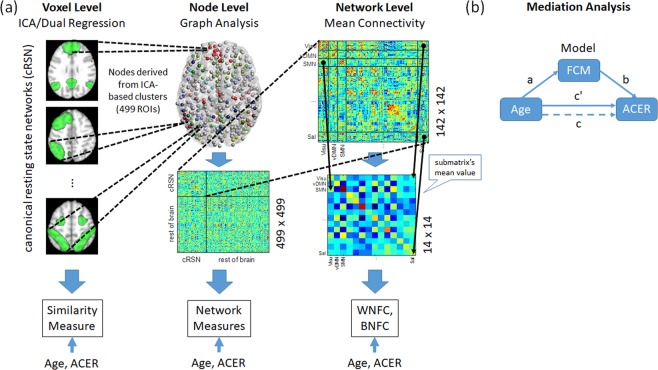
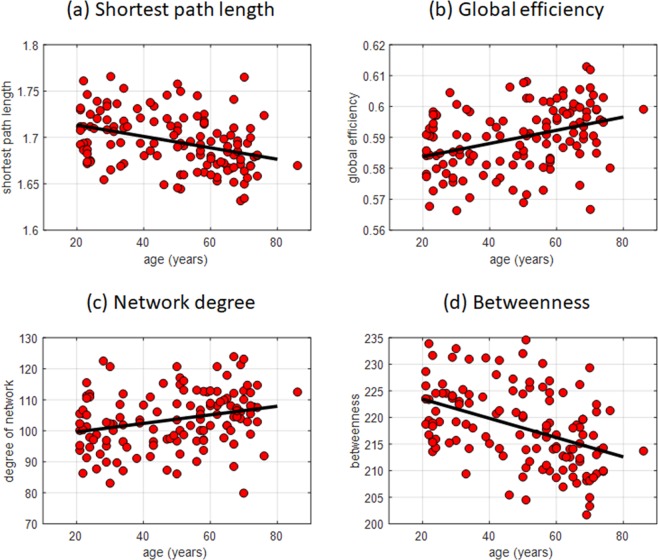
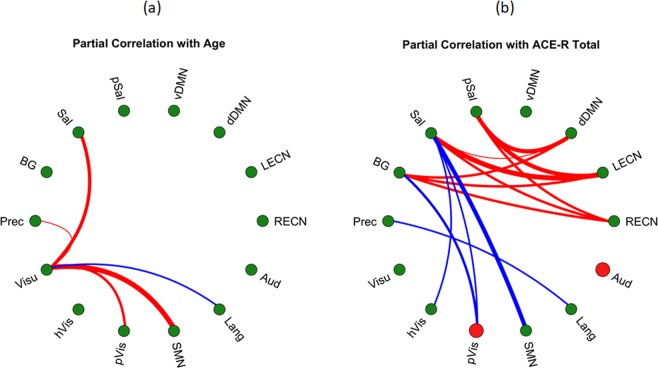
Healthy aging is associated with structural and functional changes in the brain even in individuals who are free of neurodegenerative diseases. Using resting state functional magnetic resonance imaging data from a carefully selected cohort of participants, we examined cross sectional changes in the functional organization of several large-scale brain networks over the adult lifespan and its potential association with general cognitive performance. Converging results from multiple analyses at the voxel, node, and network levels showed widespread reorganization of functional brain networks with increasing age. Specifically, the primary processing (visual and sensorimotor) and visuospatial (dorsal attention) networks showed diminished network integrity, while the so-called core neurocognitive (executive control, salience, and default mode) and basal ganglia networks exhibited relatively preserved between-network connections. The visuospatial and precuneus networks also showed significantly more widespread increased connectivity with other networks. Graph analysis suggested that this reorganization progressed towards a more integrated network topology. General cognitive performance, assessed by Addenbrooke’s Cognitive Examination-Revised total score, was positively correlated with between-network connectivity among the core neurocognitive and basal ganglia networks and the integrity of the primary processing and visuospatial networks. Mediation analyses further indicated that the observed association between aging and relative decline in cognitive performance could be mediated by changes in relevant functional connectivity measures. Overall, these findings provided further evidence supporting widespread age-related brain network reorganization and its potential association with general cognitive performance during healthy aging.
Overview
The claims and statistics of this paper haven’t been checked yet.
Free: it reads the open-access text and checks the first 5 claims that cite a source we can check. Create a free account to check every claim.
Integrity signals
Registry
Cites
Statistics
Figures
Verification
Claims the paper makes
The claims and statistics of this paper haven’t been checked yet.
Free: it reads the open-access text and checks the first 5 claims that cite a source we can check. Create a free account to check every claim.
Claims other papers make about this one
Each is checked against this paper’s own text: does it say what the citing paper says it does?
In the citing paper
“Studies have shown that intranetwork connectivity decreases while extranetwork connectivity increases with age, diminishing the integrity of many large-scale networks.166”
From Antiageing strategy for neurodegenerative diseases: from mechanisms to clinical advances (2025) · cites this paper as [166]
Self-check
Percentages, sums and reported differences re-computed from the paper’s own numbers.
The self-check needs the paper’s full text.
Citations
Cites
Folstein, M. F., Folstein, S. E., & McHugh, P. R. (1975) · Journal of Psychiatric Research · doi:10.1016/0022-3956(75)90026-6 · Cited by 88,282
An inventory for measuring depression
BECK, A. T. (1961) · Archives of General Psychiatry · doi:10.1001/archpsyc.1961.01710120031004 · Cited by 38,032
Kok, J. S., Berg, I. J., & Scherder, E. J. A. (2013) · Dementia and Geriatric Cognitive Disorders Extra · doi:10.1159/000353441 · Cited by 20,589
Older Adults' Reasons for Using Technology while Aging in Place
Peek, S. T. M., Luijkx, K. G., Rijnaard, M. D., Nieboer, M. E., van der Voort, C. S., Aarts, S., van Hoof, J., Vrijhoef, H. J. M., & Wouters, E. J. M. (2016) · Gerontology · doi:10.1159/000430949 · Cited by 19,690
Sensitivity and False Alarm Rate of a Fall Sensor in Long-Term Fall Detection in the Elderly
Kangas, M., Korpelainen, R., Vikman, I., Nyberg, L., & Jämsä, T. (2015) · Gerontology · doi:10.1159/000362720 · Cited by 18,909
A default mode of brain function
Raichle, M. E., MacLeod, A. M., Snyder, A. Z., Powers, W. J., Gusnard, D. A., & Shulman, G. L. (2001) · Proceedings of the National Academy of Sciences · doi:10.1073/pnas.98.2.676 · Cited by 12,190
Jenkinson, M., Beckmann, C. F., Behrens, T. E. J., Woolrich, M. W., & Smith, S. M. (2012) · NeuroImage · doi:10.1016/j.neuroimage.2011.09.015 · Cited by 11,314
Functional connectivity in the motor cortex of resting human brain using echo‐planar mri
Biswal, B., Zerrin Yetkin, F., Haughton, V. M., & Hyde, J. S. (1995) · Magnetic Resonance in Medicine · doi:10.1002/mrm.1910340409 · Cited by 9,812
Ashburner, J., & Friston, K. J. (2005) · NeuroImage · doi:10.1016/j.neuroimage.2005.02.018 · Cited by 7,507
Dissociable intrinsic connectivity networks for salience processing and executive control
Seeley, W. W., Menon, V., Schatzberg, A. F., Keller, J., Glover, G. H., Kenna, H., Reiss, A. L., & Greicius, M. D. (2007) · The Journal of Neuroscience · doi:10.1523/jneurosci.5587-06.2007 · Cited by 7,426
Cited by
Deery, H. A., Di Paolo, R., Moran, C., Egan, G. F., & Jamadar, S. D. (2023) · Psychophysiology · doi:10.1111/psyp.14159 · Cited by 166
Antiageing strategy for neurodegenerative diseases: from mechanisms to clinical advances
Jiang, Q., Liu, J., Huang, S., Wang, X.-Y., Chen, X., Liu, G.-H., Ye, K., Song, W., Masters, C. L., Wang, J., et al. (2025) · Signal Transduction and Targeted Therapy · doi:10.1038/s41392-025-02145-7 · Cited by 165
“166 The default mode network (DMN), which is active during rest and is involved in self-referential thinking, shows altered activity patterns with ageing.”
Functional brain connectivity changes across the human life span: From fetal development to old age
Edde, M., Leroux, G., Altena, E., & Chanraud, S. (2021) · Journal of Neuroscience Research · doi:10.1002/jnr.24669 · Cited by 143
“Age-dependent brain reorganization has been shown through whole-brain FC analyses (Bagarinao et al., 2019; Grayson & Fair, 2017; Sala-Llonch, Bartrés-Faz, & Junqué, 2015; Zuo et al., 2017).”
MethodHoekzema, E. A., van Steenbergen, H., Straathof, M., Beekmans, A., Freund, I. M., Pouwels, P. J. W., & Crone, E. A. (2022) · Nature Communications · doi:10.1038/s41467-022-33884-8 · Cited by 125
Predicting brain age with complex networks: From adolescence to adulthood
Bellantuono, L., Marzano, L., Rocca, M. L., Duncan, D., Lombardi, A., Maggipinto, T., Monaco, A., Tangaro, S., Amoroso, N., & Bellotti, R. (2020) · NeuroImage · doi:10.1016/j.neuroimage.2020.117458 · Cited by 74
Madden, D. J., Jain, S., Monge, Z. A., Cook, A. D., Lee, A., Huang, H., Howard, C. M., & Cohen, J. R. (2020) · Neurobiology of Aging · doi:10.1016/j.neurobiolaging.2020.09.010 · Cited by 63
“…function, covaried for age (i.e., the b path in Table 3, Model 2), was positive, consistent with the previous findings indicating an underlying positive relation between the distinctiveness of functional modules and cognition (Bagarinao et al., 2019; Chan et al., 2014; Chong et al., 2019).”
BackgroundResultInfluentialDynamic functional connectivity profile of the salience network across the life span
Snyder, W. E., Uddin, L. Q., & Nomi, J. S. (2021) · Human Brain Mapping · doi:10.1002/hbm.25581 · Cited by 61
“…& Ribas, 2013) that are largely laid down early in life, largescale functional brain networks markedly remodel throughout all stages of life (Bagarinao et al., 2019; Faghiri, Stephen, Wang, Wilson, & Calhoun, 2019; Grayson & Fair, 2017; Gu et al., 2015; Supekar, Musen, & Menon, 2009; Váša…”
BackgroundKuo, C.-Y., Lee, P., Hung, S., Liu, L.-K., Lee, W., Chung, C., Yang, A. C., Tsai, S., Wang, P., Chen, L., et al. (2020) · Cerebral Cortex · doi:10.1093/cercor/bhaa161 · Cited by 54
“also demonstrated that these distinct anatomical regions could be grouped as a single network system (Huo et al. 2016; Bagarinao et al. 2019).”
BackgroundFunctional connector hubs in the cerebellum
Kawabata, K., Bagarinao, E., Watanabe, H., Maesawa, S., Mori, D., Hara, K., Ohdake, R., Masuda, M., Ogura, A., Kato, T., et al. (2022) · NeuroImage · doi:10.1016/j.neuroimage.2022.119263 · Cited by 52
Self-citationBray, N. W., Pieruccini-Faria, F., Bartha, R., Doherty, T. J., Nagamatsu, L. S., & Montero-Odasso, M. (2021) · Mechanisms of Ageing and Development · doi:10.1016/j.mad.2021.111493 · Cited by 42
Characteristics of Neural Network Changes in Normal Aging and Early Dementia
Watanabe, H., Bagarinao, E., Maesawa, S., Hara, K., Kawabata, K., Ogura, A., Ohdake, R., Shima, S., Mizutani, Y., Ueda, A., et al. (2021) · Frontiers in Aging Neuroscience · doi:10.3389/fnagi.2021.747359 · Cited by 48
Self-citationChoy, S. W., Bagarinao, E., Watanabe, H., Ho, E. T. W., Maesawa, S., Mori, D., Hara, K., Kawabata, K., Yoneyama, N., Ohdake, R., et al. (2020) · Human Brain Mapping · doi:10.1002/hbm.25008 · Cited by 48
“86 years old who participated in our on-going Brain and Mind Research Center Aging Cohort Study (Bagarinao et al., 2018; Bagarinao et al., 2019) were used in the analysis.”
MethodSelf-citationThe Body Across Adulthood: On the Relation Between Interoception and Body Representations
Raimo, S., Boccia, M., Vita, A. D., Cropano, M., Guariglia, C., Grossi, D., & Palermo, L. (2021) · Frontiers in Neuroscience · doi:10.3389/fnins.2021.586684 · Cited by 48
Kawabata, K., Watanabe, H., Bagarinao, E., Ohdake, R., Hara, K., Ogura, A., Masuda, M., Kato, T., Tsuboi, T., Maesawa, S., et al. (2020) · Parkinsonism & Related Disorders · doi:10.1016/j.parkreldis.2020.09.005 · Cited by 45
Self-citationBridging large-scale cortical networks: Integrative and function-specific hubs in the thalamus
Kawabata, K., Bagarinao, E., Watanabe, H., Maesawa, S., Mori, D., Hara, K., Ohdake, R., Masuda, M., Ogura, A., Kato, T., et al. (2021) · iScience · doi:10.1016/j.isci.2021.103106 · Cited by 43
“High-resolution T1-weighted images (T1-WI) and resting-state fMRI data were acquired from all participants (Bagarinao et al., 2018, 2019, 2020).”
BackgroundSelf-citationNeural correlates of compassion – An integrative systematic review
Novák, L., Maliňáková, K., Mikoška, P., van Dijk, J. P., & Tavel, P. (2021) · International Journal of Psychophysiology · doi:10.1016/j.ijpsycho.2021.12.004 · Cited by 44
Painting by lesions: White matter hyperintensities disrupt functional networks and global cognition
Crockett, R. A., Hsu, C. L., Dao, E. A., Tam, R. C., Eng, J. J., Handy, T. C., & Liu-Ambrose, T. Y. L. (2021) · NeuroImage · doi:10.1016/j.neuroimage.2021.118089 · Cited by 39
Wirak, G. S., Florman, J., Alkema, M. J., Connor, C. W., & Gabel, C. V. (2022) · eLife · doi:10.7554/elife.72135 · Cited by 42
“…magnetic resonance imaging (fMRI) have shown that aging alters intrinsic brain connectivity and the functional organization of large-scale resting state networks (Sala-Llonch et al., 2015), which correlates with diminished cognitive performance (Bagarinao et al., 2019) (Varangis et al., 2019).”
BackgroundFoo, H., Thalamuthu, A., Jiang, J., Koch, F. C., Mather, K. A., Wen, W. X., & Sachdev, P. S. (2021) · Frontiers in Aging Neuroscience · doi:10.3389/fnagi.2021.758817 · Cited by 38
“Similarly, another cross-sectional study found that the relationship between aging and general decline in cognition could be mediated by changes in the functional connectivity measures such as path length (Bagarinao et al., 2019).”
BackgroundBagarinao, E., Watanabe, H., Maesawa, S., Mori, D., Hara, K., Kawabata, K., Ohdake, R., Masuda, M., Ogura, A., Kato, T., et al. (2020) · NeuroImage · doi:10.1016/j.neuroimage.2020.117241 · Cited by 32
Self-citationUnveiling whole‐brain dynamics in normal aging through Hidden Markov Models
Moretto, M., Silvestri, E., Zangrossi, A., Corbetta, M., & Bertoldo, A. (2021) · Human Brain Mapping · doi:10.1002/hbm.25714 · Cited by 30
Kato, S., Maesawa, S., Bagarinao, E., Nakatsubo, D., Tsugawa, T., Mizuno, S., Kawabata, K., Tsuboi, T., Suzuki, M., Shibata, M., et al. (2022) · Journal of neurosurgery · doi:10.3171/2022.5.jns22411 · Cited by 28
Self-citationMacCormack, J. K., Stein, A. G., Kang, J., Giovanello, K. S., Satpute, A. B., & Lindquist, K. A. (2020) · Affective Science · doi:10.1007/s42761-020-00016-8 · Cited by 29
Coquelet, N., Wens, V., Mary, A., Niesen, M., Puttaert, D., Ranzini, M., Ghinst, M. V., Bourguignon, M., Peigneux, P., Goldman, S., et al. (2020) · Scientific Reports · doi:10.1038/s41598-020-75858-0 · Cited by 31
Zhukovsky, P., Coughlan, G., Buckley, R., Grady, C., & Voineskos, A. N. (2023) · Human Brain Mapping · doi:10.1002/hbm.26148 · Cited by 26
“…higher Aβ levels were associated with lower PLS1 scores (b) and higher DMN-20 to FPN-6 connectivity (c), which were linked to worse memory recall. previous reports that higher connectivity of the precuneus with superior frontal regions is associated with poorer cognition (Bagarinao et al., 2019).”
BackgroundBray, N. W., Pieruccini‐Faria, F., Witt, S. T., Bartha, R., Doherty, T. J., Nagamatsu, L. S., Almeida, Q. J., Liu-Ambrose, T. Y. L., Middleton, L. E., Bherer, L., et al. (2023) · GeroScience · doi:10.1007/s11357-023-00805-6 · Cited by 29
Age-related Changes in Cortical Excitability Linked to Decreased Attentional and Inhibitory Control
Cespón, J., Pellicciari, M. C., Casula, E. P., & Miniussi, C. (2022) · Neuroscience · doi:10.1016/j.neuroscience.2022.05.021 · Cited by 25
Chang, T.-C., Chen, Y., Huang, Y., Lin, W.-C., & Lu, C. (2021) · BMC Neurology · doi:10.1186/s12883-020-02037-z · Cited by 22
“The explanation for this finding is that executive and visual-spatial functions are a more complex process involving more brain areas [49], and therefore, severe PWM injuries may disrupt more long connections, leading to an obvious deficit.”
BackgroundBagarinao, E., Watanabe, H., Maesawa, S., Mori, D., Hara, K., Kawabata, K., Yoneyama, N., Ohdake, R., Imai, K., Masuda, M., et al. (2020) · Frontiers in Aging Neuroscience · doi:10.3389/fnagi.2020.592469 · Cited by 19
Self-citationMorphological Features of Human Dendritic Spines
Renner, J., & Rasia‐Filho, A. A. (2023) · Advances in neurobiology · doi:10.1007/978-3-031-36159-3_9 · Cited by 20
Cortical Networks Underpinning Compensation of Verbal Fluency in Normal Aging
Gonzalez‐Burgos, L., Pereira, J. B., Mohanty, R., Barroso, J., Westman, E., & Ferreira, D. (2021) · Cerebral Cortex · doi:10.1093/cercor/bhab052 · Cited by 17
“Another explanation is that the right executive–visuospatial network is a large network that involves regions of the left hemisphere as well (Budisavljevic et al. 2017; Bagarinao et al. 2019; Nakajima et al. 2019).”
BackgroundConnectivity impairment of cerebellar and sensorimotor connector hubs in Parkinson’s disease
Bagarinao, E., Kawabata, K., Watanabe, H., Hara, K., Ohdake, R., Ogura, A., Masuda, M., Kato, T., Maesawa, S., Katsuno, M., et al. (2022) · Brain Communications · doi:10.1093/braincomms/fcac214 · Cited by 17
Self-citationTorrealba, E., Aguilar-Zerpa, N., Garcia-Morales, P., & Díaz, M. L. (2023) · Journal of Alzheimer s Disease Reports · doi:10.3233/adr-220116 · Cited by 18
“This may be the explanation of normal performance in both patients who have fulfill AD criteria and those who show conversion to dementia in longitudinal studies [47, 75–83] with initial hyperactivity in MTL [13, 53, 62, 84] and then other cortical areas being frontals and parietals the most prominent [36, 63, 81].”
BackgroundIsing model with variable spin/agent strengths
Krasnytska, M., Berche, B., Holovatch, Y. V., & Kenna, R. (2020) · Journal of Physics Complexity · doi:10.1088/2632-072x/abb654 · Cited by 16
Hsu, C. L., Manor, B. D., Travison, T. G., Pascual‐Leone, Á., & Lipsitz, L. A. (2022) · The Journals of Gerontology Series A · doi:10.1093/gerona/glac193 · Cited by 18
Kato, S., Bagarinao, E., Isoda, H., Koyama, S., Watanabe, H., Maesawa, S., Mori, D., Hara, K., Katsuno, M., Hoshiyama, M., et al. (2020) · Magnetic Resonance in Medical Sciences · doi:10.2463/mrms.mp.2020-0081 · Cited by 15
Self-citationSekar, S., Kannath, S. K., Ramachandran, S., Menon, R. N., & Thomas, B. (2021) · Journal of Magnetic Resonance Imaging · doi:10.1002/jmri.27936 · Cited by 15
“Increased connectivity between the DMN and visuospatial network is noted to act as functional reorganization to maintain cognitive performance during aging.(30) In this study, primary FC changes in DAVF were different from those in other disease processes since decreased connectivity was observed in both the PCC of DM…”
ResultOgura, A., Kawabata, K., Watanabe, H., Choy, S. W., Bagarinao, E., Kato, T., Imai, K., Masuda, M., Ohdake, R., Hara, K., et al. (2021) · European Journal of Neurology · doi:10.1111/ene.15136 · Cited by 13
“We included HCs from our healthy aging cohort study at the Brain and Mind Research Center, Nagoya University, Japan [17,18], who were matched with respect to age and sex using the propensityscore- matching method with the R package MatchIt [19].”
MethodSelf-citationGuardia, T., Mazloum‐Farzaghi, N., Olsen, R. K., Tsvetanov, K. A., & Campbell, K. L. (2023) · Neuroimage Reports · doi:10.1016/j.ynirp.2023.100168 · Cited by 16
Terstege, D. J., Durante, I. M., & Epp, J. R. (2022) · Frontiers in Behavioral Neuroscience · doi:10.3389/fnbeh.2022.907707 · Cited by 14
Revisiting the hypothesis of language retrogenesis from an evolutionary perspective.
Benítez‐Burraco, A., & Ivanova, O. (2023) · Neuropsychology · doi:10.1037/neu0000886 · Cited by 13
The effects of a second pregnancy on women’s brain structure and function
Straathof, M., Halmans, S., Pouwels, P. J. W., Crone, E. A., & Hoekzema, E. A. (2026) · Nature Communications · doi:10.1038/s41467-026-69370-8 · Cited by 13
“The increase in DMN coherence opposes the effect of healthy aging on DMN connectivity, which is characterized by a decrease in within-network DMN connectivity with increasing age 29 and associated with changes in cognitive functioning 30 .”
Higher-order resting state network association with the useful field of view task in older adults
Hardcastle, C., Hausman, H. K., Kraft, J. N., Albizu, A., Evangelista, N. D., Boutzoukas, E. M., O’Shea, A. M., Langer, K. G., Etten, E. J. V., Bharadwaj, P. K., et al. (2021) · GeroScience · doi:10.1007/s11357-021-00441-y · Cited by 12
Morrison, M. A., Walter, S., Mueller, S., Felton, E., Jakary, A., Stoller, S., Molinaro, A. M., Braunstein, S. E., Hess, C. P., & Lupo, J. (2022) · Frontiers in Neurology · doi:10.3389/fneur.2022.921984 · Cited by 11
“Nonetheless, age-normalization here was necessary as ISL test scores are normalized to age-appropriate healthy control data, and furthermore functional connectivity and network variability metrics have shown age-related changes across the lifespan (20).”
MethodBrain topology underlying executive functions across the lifespan: focus on the default mode network
Menardi, A., Spoa, M., & Vallesi, A. (2024) · Frontiers in Psychology · doi:10.3389/fpsyg.2024.1441584 · Cited by 11
61 Network Segregation Predicts Processing Speed in the Cognitively Healthy Oldest-old
Nolin, S. A., Faulkner, M. E., Stewart, P., Fleming, L. L., Merritt, S. S., Rezaei, R. F., Bharadwaj, P., Franchetti, M. K., Raichlen, D. A., Jessup, C. J., et al. (2023) · eLife · doi:10.7554/elife.78076 · Cited by 10
Podgórski, P., Waliszewska‐Prosół, M., Zimny, A., Sąsiadek, M. J., & Bladowska, J. (2021) · Frontiers in Neurology · doi:10.3389/fneur.2021.645974 · Cited by 10
“Nerve networks in the brain restructure in response to the decrease of some sensorial functions (43, 44).”
BackgroundHas, A. C., Nolte, G., Pöttgen, J., Engel, A. K., Heesen, C., Gold, S. M., & Stellmann, J. (2022) · Journal of Neuroscience Research · doi:10.1002/jnr.25135 · Cited by 10
“…studies have revealed that reorganization of brain structure (Coelho et al., 2021; Fjell et al., 2017; Hirsiger et al., 2016) and function (Bagarinao et al., 2019; Malagurski et al., 2020; Stumme et al., 2020) in advanced aging provides a compensatory mechanism to enhance, maintain, or…”
BackgroundUpdate on neuroimaging in Alzheimer's disease
Sintini, I., & Whitwell, J. L. (2021) · Current Opinion in Neurology · doi:10.1097/wco.0000000000000947 · Cited by 10
Stein, A., Thorstensen, J. R., Ho, J. M., Ashley, D. P., Iyer, K. K., & Barlow, K. M. (2023) · Brain Connectivity · doi:10.1089/brain.2023.0067 · Cited by 12
“Brain network reorganization is dynamic across the life-span, where large-scale changes are particularly apparent during childhood and early adolescence, as well as the later years of life (Bagarinao et al., 2019; Sherman et al., 2014).”
Jin, Y., Tang, R., Wu, L., Xu, K., Chen, X., Zhu, Y., Shi, J., & Li, J. (2024) · Journal of Integrative Neuroscience · doi:10.31083/j.jin2312215 · Cited by 9
“In addition to its role in motor preparation and execution, the SMN has recently been found to potentially contribute to cognitive function [26].”
The impact of aging on human brain network target controllability
Bassignana, G., Lacidogna, G., Bartolomeo, P., Colliot, O., & Fallani, F. D. V. (2022) · Brain Structure and Function · doi:10.1007/s00429-022-02584-w · Cited by 11
“Network approaches investigating brain reorganization across the lifespan have constantly reported whole-brain intrinsic connectivity changes by using standard centrality metrics such as node degree [57], strength [58] and betwenness [59].”
BackgroundThe validity of studying healthy aging with cognitive tests measuring different constructs
Hatahet, O., & Seghier, M. L. (2024) · Scientific Reports · doi:10.1038/s41598-024-74488-0 · Cited by 9
“2) might reflect age-related changes in brain networks 7,65 .”
BackgroundPerez, D. C., Hernandez, J. J., Wulfekuhle, G. E., & Gratton, C. (2024) · Neurobiology of Aging · doi:10.1016/j.neurobiolaging.2024.11.010 · Cited by 11
Atypical resting-state gamma band trajectory in adult attention deficit/hyperactivity disorder
Tombor, L., Kakuszi, B., Papp, S., Réthelyi, J., Bitter, I., & Czobor, P. (2021) · Journal of Neural Transmission · doi:10.1007/s00702-021-02368-2 · Cited by 10
“…networks have also been reported over the adult lifespan in healthy individuals, which is reflected by the associations of different network measures with age during normal aging, starting as early as middle-aged adulthood (Bagarinao 2019; Hou 2018; Madhyastha and Grabowski 2014; Siman-Tov et al.”
BackgroundZhang, Y., Hu, M., Fan, S., Cao, S., Du, B., Yin, S., Zhang, L., Tian, Y., Wang, K., & Wei, Q. (2024) · Brain Connectivity · doi:10.1089/brain.2024.0007 · Cited by 8
Ishizaki, T., Maesawa, S., Suzuki, T., Hashida, M., Ito, Y., Yamamoto, H., Tanei, T., Natsume, J., Hoshiyama, M., & Saito, R. (2025) · Epilepsia Open · doi:10.1002/epi4.70018 · Cited by 8
“29,30 Table 1 provides the specific MNI coordinates for these seed regions.”
Self-citationMinnigulova, A., Dragoy, O., & Arutiunian, V. (2025) · Brain Imaging and Behavior · doi:10.1007/s11682-025-01016-7 · Cited by 9
“…processing (Sco - lari et al., 2015; Bartolomeo & Seidel Malkinson, 2019) and cognitive control (Caldinelli & Cusack, 2022; Wood & Nee, 2023) while SMN is typically related to motor performance, coordination (Bernard et al., 2013) and general cognitive functioning (Bagarinao et al., 2019).”
Ishizaki, T., Maesawa, S., Nakatsubo, D., Yamamoto, H., Torii, J., Mutoh, M., Natsume, J., Hoshiyama, M., & Saito, R. (2023) · Scientific Reports · doi:10.1038/s41598-023-37834-2 · Cited by 8
Self-citationYao, F., Zhao, Z., Wang, Y., Li, T., Chen, M., Yao, Z., Jiao, J., & Hu, B. (2024) · Psychophysiology · doi:10.1111/psyp.14702 · Cited by 8
“Widespread age-related reorganization of brain networks and its potential association with overall cognitive performance in healthy aging has been revealed (Bagarinao et al., 2019).”
Resting State Networks Related to the Maintenance of Good Cognitive Performance During Healthy Aging
Maesawa, S., Mizuno, S., Bagarinao, E., Watanabe, H., Kawabata, K., Hara, K., Ohdake, R., Ogura, A., Mori, D., Nakatsubo, D., et al. (2021) · Frontiers in Human Neuroscience · doi:10.3389/fnhum.2021.753836 · Cited by 7
Self-citationCrockett, R. A., Hsu, C. L., Dao, E. A., Tam, R. C., Eng, J. J., Handy, T. C., & Liu-Ambrose, T. Y. L. (2022) · Journal of Alzheimer s Disease · doi:10.3233/jad-220142 · Cited by 7
Individual Differences in Bodily Self-Consciousness and Its Neural Basis
Wu, H., Huang, Y., Qin, P., & Wu, H. (2024) · Brain Sciences · doi:10.3390/brainsci14080795 · Cited by 6
“…studies have put forward the perspective that the decline in bodily representation ability among individuals with heightened interoceptive sensitivity as they age could be attributed to changes in functional brain networks, such as diminished integrity of the visuospatial network [141,142].”
BackgroundZhao, T., Zhang, S., Lv, Q., Li, Y., Li, D., Liu, M., & Yan, L. (2025) · Frontiers in Psychiatry · doi:10.3389/fpsyt.2025.1689119 · Cited by 8
“The combination of globally reduced yet locally enhanced connectivity suggests a reallocation of neural resources during the progression of IGD, potentially aimed at preserving or enhancing cognitive function (42, 43).”
Ohdake, R., Kawabata, K., Watanabe, H., Hara, K., Ogura, A., Kato, T., Masuda, M., Katsuno, M., & Sobue, G. (2020) · Journal of Neural Transmission · doi:10.1007/s00702-020-02248-1 · Cited by 6
Self-citationAge-related changes in the organization of spontaneously occurring behaviors
Oltmanns, J. R. O., Schaeffer, E. A., Blackwell, A. A., Lake, R. I., Einhaus, R. M., Kartje, G. L., & Wallace, D. G. (2022) · Behavioural Processes · doi:10.1016/j.beproc.2022.104713 · Cited by 6
“Biological changes in the brain have been well documented throughout development across both humans and rodents (Bagarinao et al., 2019; Daniel, 2013; Kuhn et al., 1996; Seki and Arai, 1995) with changes in hippocampal neuroplasticity even observed in mid-adulthood (Daniel, 2013; Driscoll et al.,…”
BackgroundEvaluation of mild cognitive impairment in older patients with essential tremor
Hashida, M., Maesawa, S., Mizuno, S., Kato, S., Ito, Y., Mutoh, M., Suzuki, T., Ishizaki, T., Tanei, T., Tsuboi, T., et al. (2024) · Parkinsonism & Related Disorders · doi:10.1016/j.parkreldis.2024.107228 · Cited by 6
Self-citationSirpal, P., Sikora, W. A., & Refai, H. H. (2025) · Journal of Neuroscience Methods · doi:10.1016/j.jneumeth.2025.110375 · Cited by 5
“…the finding of a reduced functional segregation and increased inter-network connectivity demonstrates resting state network reorganization in an integrated topology across age scales (Song, Nov. 2014; Chan et al., Nov. 2014; Damoiseaux, Oct. 2017; Betzel et al., Nov. 2014; Bagarinao, 2019).”
Wei, P.-H., Chen, H., Ye, Q., Zhao, H., Xu, Y., Bai, F., & Initiative, O. B. O. A. D. N. (2021) · Frontiers in Aging Neuroscience · doi:10.3389/fnagi.2021.666437 · Cited by 5
“The connection between the cognitive network and basal ganglia network, which processes the primary integration of information, has been proven to be positively related to visual-spatial performance (Bagarinao et al., 2019; Hucke et al., 2020).”
BackgroundStocks, J. K., Popuri, K., Heywood, A. A., Tosun, D., Alpert, K., Beg, M. F., Rosen, H. J., Wang, L., & Initiative, A. D. N. (2022) · Alzheimer s & Dementia Diagnosis Assessment & Disease Monitoring · doi:10.1002/dad2.12304 · Cited by 5
Artificial intelligence for adaptive neuromodulation in drug‐resistant epilepsy
Daraie, A. H., Damiani, A., Khoshkhou, M., Sanchez, L., Smith, R. J., Agashe, S. H., Gonzalez-Martinez, J. A., Hopp, J. L., Charles, A. S., Sarma, S. V., et al. (2026) · Epilepsia · doi:10.1002/epi.70224 · Cited by 4
Bagarinao, E., Maesawa, S., Kato, S., Mutoh, M., Ito, Y., Ishizaki, T., Tanei, T., Tsuboi, T., Suzuki, M., Watanabe, H., et al. (2024) · Parkinsonism & Related Disorders · doi:10.1016/j.parkreldis.2024.106034 · Cited by 5
Self-citationAging with HIV and HIV-associated neurocognitive impairment
Bennett, T., Walmsley, S. L., & Bendayan, R. (2025) · AIDS · doi:10.1097/qad.0000000000004057 · Cited by 4
Kuang, H., Hong, S., Chen, Y., Peng, H., Li, Z., Xie, Y., Zhou, W., Qin, S., Ru, J., & Jiang, J. P. (2025) · Scientific Reports · doi:10.1038/s41598-025-95925-8 · Cited by 3
“The SMN might contribute to general cognitive function in addition to its specialized handling of sensory stimuli and motor responses 51,52 .”
Monteverdi, A., Ramusino, M. C., Conca, F., Manzon, S., Redolfi, A., Lupi, E., Grazia, M. D., Lorenzi, R. M., Gaviraghi, M., Mazzocchi, L., et al. (2026) · Scientific Reports · doi:10.1038/s41598-026-56387-8 · Cited by 3
Flexible modularity in the human brain: How network architecture reconfigures over time
Finc, K., Adamska-Stolarczyk, I., & Bassett, D. S. (2026) · Neuroscience & Biobehavioral Reviews · doi:10.1016/j.neubiorev.2026.106784 · Cited by 3
Lee, C., Wei, X., Wang, Z., Zhou, H., Yan, C.-Q., Jiang, X., Shi, G., Wang, X., & Liu, C. (2025) · Human Brain Mapping · doi:10.1002/hbm.70194 · Cited by 3
Robalo, B. M. D. B., Vlegels, N., Leemans, A., Reijmer, Y. D., & Biessels, G. J. (2022) · Brain and Behavior · doi:10.1002/brb3.2523 · Cited by 3
“Here, we examined how thresholding affects the natural interindividual variation in the data, necessary to test associations with external variables and perform group comparisons (Bagarinao et al., 2019).”
BackgroundIdentifying the Neurocognitive Difference Between Two Groups Using Supervised Learning
Rimal, R. (2023) · Statistics Optimization & Information Computing · doi:10.19139/soic-2310-5070-1340 · Cited by 6
“…connectivity, the best performance score was obtained from the features using Pearson’s connectivity with the following value of hyperparameters —200-neuron (LSTM) and [70, 40, 10] neuron (GRU), Adam optimizer with a learning rate of 0.005, and 50 epochs with early stopping and patience of 5.”
BackgroundMethodInfluentialQian, X., Ng, K. K., Yeo, S. N., Loke, Y. M., Cheung, Y. B., Feng, L., Chong, M. S., Ng, T. P., Krishnan, K., Guan, C., et al. (2025) · Age and Ageing · doi:10.1093/ageing/afaf250 · Cited by 2
“Furthermore, application of graph theoretical analysis, a powerful tool to elucidate the complex network organisation at regional and system levels [25], further reveals age-related shifts towards a more integrated brain network topology [24].”
Structural covariance network of inhibition and shifting in major depressive disorder
Liu, X., Li, Y., Li, Q., Hu, Y., Fu, C. H. Y., & Gong, Q. (2025) · Cerebral Cortex · doi:10.1093/cercor/bhaf312 · Cited by 2
Kupis, L. B., Goodman, Z. T., Kornfeld, S., Romero, C., Dirks, B., Kircher, L., Chang, C., Llabre, M. M., Nomi, J. S., & Uddin, L. Q. (2021) · Aperture Neuro · doi:10.52294/8944e106-c54b-40d7-a620-925f7b074f99 · Cited by 2
Blueprints for a Creativity Curriculum
Brandt, A. (2022) · Creativity theory and action in education · doi:10.1007/978-3-031-14549-0_1 · Cited by 3
Krasnytska, M. (2024) · Condensed Matter Physics · doi:10.5488/cmp.27.33603 · Cited by 2
Zhang, A., Pagliaccio, D., Marsh, R., & Lee, S. (2022) · bioRxiv (Cold Spring Harbor Laboratory) · doi:10.1101/2022.09.27.509677 · Cited by 4
Shima, S., Ohdake, R., Mizutani, Y., Tatebe, H., Koike, R., Kasai, A., Bagarinao, E., Ueda, A., Ito, M., Jun'ichi, H., et al. (2024) · medRxiv · doi:10.1101/2024.05.01.24306489 · Cited by 2
“Our previous study demonstrated the importance of maintaining sensorimotor, auditory, and visual networks in preserving cognitive function in older adults[36].”
BackgroundSelf-citationAlyan, E., Arnau, S., Getzmann, S., Reiser, J. E., Karthaus, M., & Wascher, E. (2024) · Heliyon · doi:10.1016/j.heliyon.2024.e41164 · Cited by 1
Neuromodulation by repetitive paired-pulse TMS at late I-wave intervals in older adults
Liao, W., Hand, B. J., Rinaldi, G., Semmler, J. G., & Opie, G. M. (2025) · Experimental Brain Research · doi:10.1007/s00221-025-07060-5 · Cited by 1
“The human brain continuously reorganises its intrinsic structure, connections and function throughout the lifespan (Bagarinao et al. 2019; Dinse 2006).”
Yang, L., Wang, S., Wang, J., Wang, S., & Gu, Y. (2025) · Hearing Research · doi:10.1016/j.heares.2025.109415 · Cited by 1
Early structural hub disruption leads to premature functional adaption in multiple sclerosis
Stellmann, J., Maarouf, A., Nicolescu, M., Boutière, C., Rico, A., Zaaraoui, W., Guye, M., Pelletier, J., Ranjeva, J., & Audoin, B. (2025) · Brain Structure and Function · doi:10.1007/s00429-025-03023-2 · Cited by 1
“A more integrated network architecture seems to be physiologic while a preserved optimal interplay between different networks has been identified as crucial for unimpaired cog - nition in the elderly (Bagarinao et al. 2019).”
Penda, V. (2025) · International Journal of Language & Communication Disorders · doi:10.1111/1460-6984.70156 · Cited by 1
Can the entorhinal cortex help distinguish healthy aging brains from pathological aging brains?
Takashima, A., Koike, R., & Soeda, Y. (2022) · Aging Brain · doi:10.1016/j.nbas.2021.100026 · Cited by 1
Gowik, J. K., Goelz, C., Vieluf, S., van den Bongard, F., & Reinsberger, C. (2023) · Scientific Reports · doi:10.1038/s41598-023-31893-1 · Cited by 1
Investigating Healthy Aging and Brain Networks: Insights from Centenarians and Near CentenariansPreprint
Falakshahi, H., Rokham, H., Dotson, V. M., Bookheimer, S. Y., Welsh, R. C., Chen, N., & Calhoun, V. D. (2024) · SSRN Electronic Journal · doi:10.2139/ssrn.4719560 · Cited by 1
Batziou, V., Young, A. L., Rittman, T., & Vuksanović, V. (2025) · medRxiv · doi:10.1101/2025.10.19.25337876 · Cited by 1
“…more likely to be structurally and functionally connected [11, 12], making MSNs relevant for studying large-scale cognitive networks such as the default mode (DMN) and central executive network (CEN), which are especially sensitive to age-related reorganisation and cognitive decline [7, 13, 14].”
Progress and Challenges of Neuroscience and Brain-inspired Artificial Intelligence
Wang, L., & Alexander, C. A. (2020) · Neuroscience International · doi:10.3844/amjnsp.2020.1.9
Watanabe, H. (2021) · AUDIOLOGY JAPAN · doi:10.4295/audiology.64.279
Self-citationAgeing, Grey Matter Loss and Resting-State Effective Connectivity
Korbmacher, M. (2021) · NORA - Norwegian Open Research Archives
Voxel-based Morphometry Analysis for Healthy Aging and Cognitive Function
Mizuno, S., & Maesawa, S. (2020) · Higher Brain Function Research · doi:10.2496/hbfr.40.377
Self-citationYoshida, Y., Yokoi, T., Hara, K., Watanabe, H., Yamaguchi, H., Bagarinao, E., Masuda, M., Kato, T., Ogura, A., Ohdake, R., et al. (2023) · PubMed Central · doi:10.18999/nagjms.85.4.758
“47 This finding may suggest an important association of the role of these regions with general cognition and THK accumulation during aging.”
BackgroundSelf-citation
Metadata
- Authors
- Bagarinao, E., Watanabe, H., Maesawa, S., Mori, D., Hara, K., Kawabata, K., Yoneyama, N., Ohdake, R., Imai, K., Masuda, M., Yokoi, T., Ogura, A., Taoka, T., Koyama, S., Tanabe, H. C., Katsuno, M., Wakabayashi, T., Kuzuya, M., Ozaki, N., Hoshiyama, M., Isoda, H., Naganawa, S., & Sobue, G.
- Affiliations
- Brain & Mind Research Center, Nagoya University (JP)
- Fujita Health University (JP)
- Nagoya University (JP)
- Institutes of Innovation for Future Society, Nagoya University (JP)
- Corresponding author
- Watanabe, Hirohisa
- Sobue, Gen
- ORCID
- Venue
- Scientific Reports
- Published
- 2019-08-06
- Volume
- 9
- Issue
- 1
- Pages
- 11352-11352
- ISSN
- 2045-2322 (ISSN-L)
- PMC
- PMC6684569
- OpenAlex
- W2964902794
- Semantic Scholar
- 0e6bfb3dedd20746fcd15e5f1d05f2d90103b97d
- Cited by
- 108
- References
- 91
- Citations by year
- 2026: 5 · 2025: 20 · 2024: 14 · 2023: 9 · 2022: 20 · 2021: 25 · 2020: 15
- FWCI
- 8.72
- Type
- journal article
- Language
- en
- Open access
- gold
- doi.org
- Licence
- cc-by
- creativecommons.org/licenses/by/4.0 (tdm)
- creativecommons.org/licenses/by/4.0 (vor)
- Locations
- Scientific Reports (publishedVersion, cc-by)
- Europe PMC (PubMed Central) (publishedVersion, cc-by)
- PubMed Central (publishedVersion, cc-by)
- PubMed (publishedVersion)
- DOAJ (DOAJ: Directory of Open Access Journals) (submittedVersion, cc-by-sa)
- Funders
- Ministry of Education, Culture, Sports, Science and Technology (26117002, 80569781)
- Japan Society for the Promotion of Science (15H01846, 17K10890, 19H04025)
- Topics
- Life Sciences › Neuroscience › Cognitive Neuroscience › Functional Brain Connectivity Studies
- Health Sciences › Medicine › Radiology, Nuclear Medicine and Imaging › Advanced Neuroimaging Techniques and Applications
- Health Sciences › Medicine › Psychiatry and Mental health › Dementia and Cognitive Impairment Research
- Keywords
- healthy aging, brain network reorganization, resting-state functional connectivity, large-scale brain networks, network topology, between-network connectivity, dorsal attention network, default mode network, salience network, frontoparietal network, basal ganglia network, precuneus, graph theory
- MeSH terms
- Adult, Age Factors, Aged, Aged, 80 and over, Aging, Brain, Cognition, Female, Humans, Magnetic Resonance Imaging, Male, Middle Aged, Nerve Net, Neural Pathways, Asian People, Young Adult
About these checks
Registry, retraction, Cites and statistics results are computed, not judged, with one exception: a printed reference that no index lists is read once by a model before it counts as a citation error. Claims are extracted by a model and kept only when their quote appears verbatim in the text; each cited source is then checked, with a model’s help, for whether it says what the claim relies on. Those verdicts can be wrong — read the claim’s quote and the cited source before relying on one.
Statistics and arithmetic are recomputed, not judged.
Confidence bands are shown only for fields calibrated on our annotated test set. None is calibrated yet, so no band is shown.
What counts as a claim ›How we measure confidence ›How we check this ›
Are you an author, or do you see a problem with this page? Request a review
Data sources
Bibliographic data: Semantic Scholar, OpenAlex, Crossref.
Contains information from the Semantic Scholar Academic Graph Datasets, made available under the ODC Attribution License (ODC-BY 1.0).
Semantic Scholar’s data is described in: Kinney, R., et al. (2023). The Semantic Scholar Open Data Platform. arXiv:2301.10140.
