

Space-like 56Fe irradiation manifests mild, early sex-specific behavioral and neuropathological changes in wildtype and Alzheimer’s-like transgenic mice
Open accessThe DOI matches its Crossref record; 75 of the 75 references it cites were found in a registry or an index.
Abstract
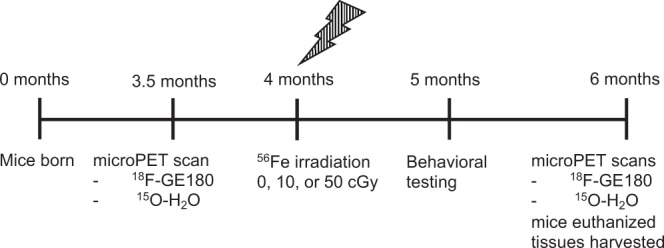
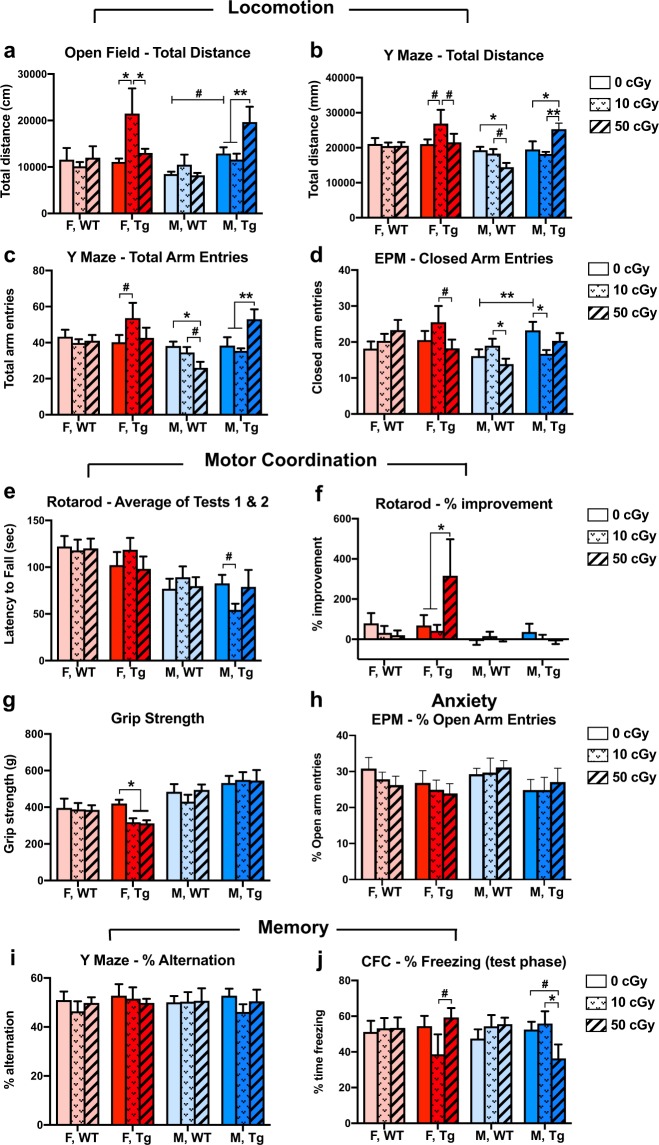
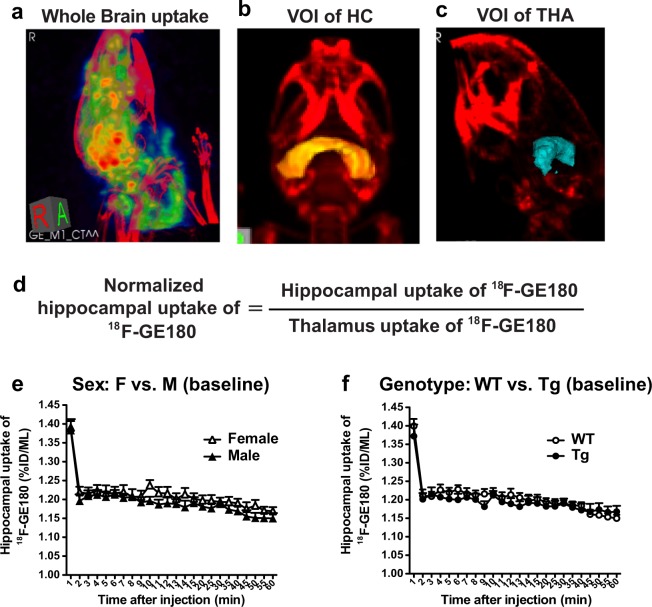
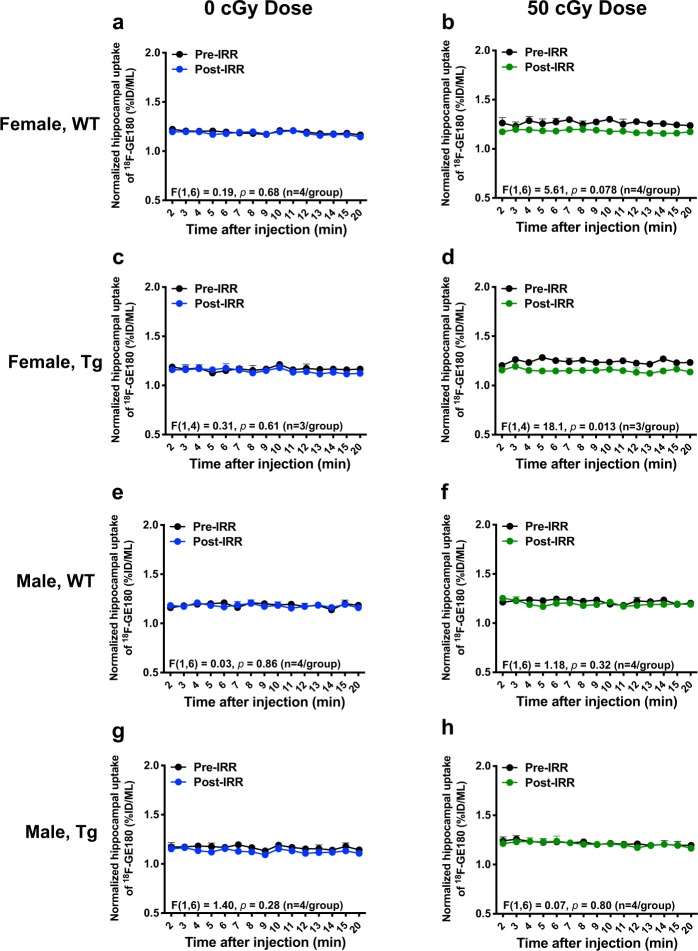
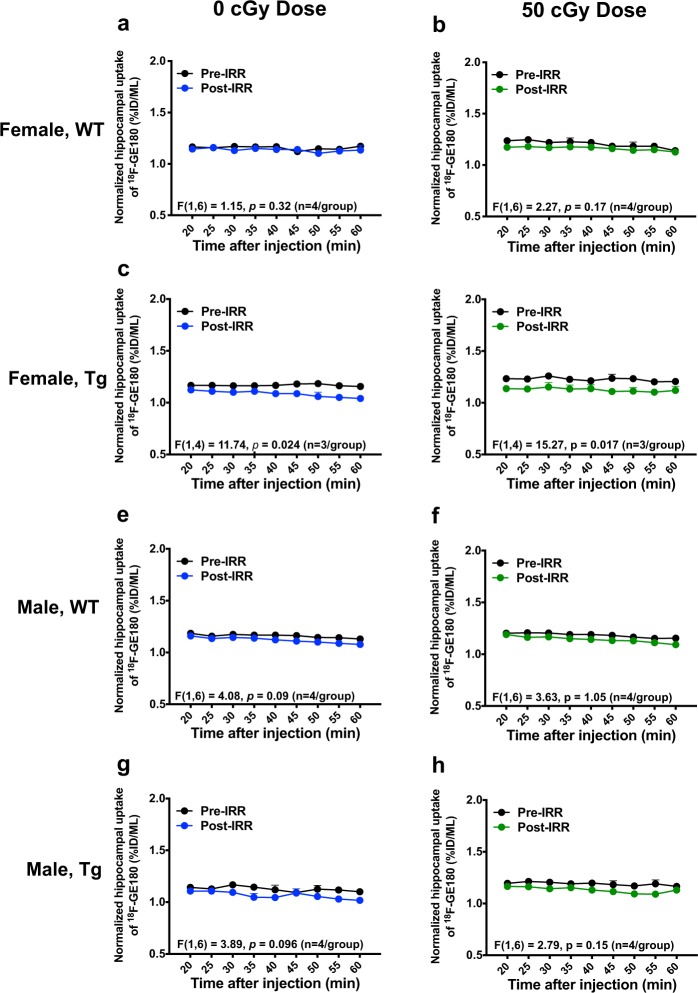
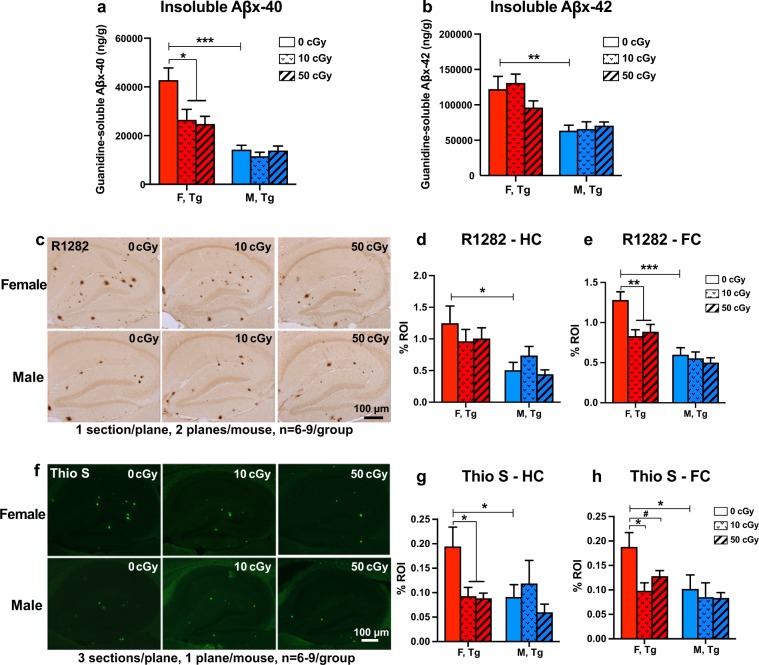
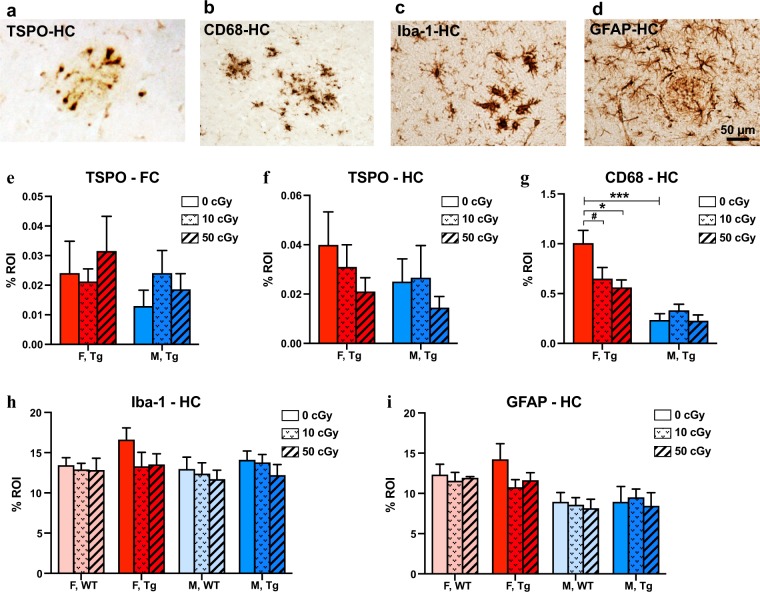
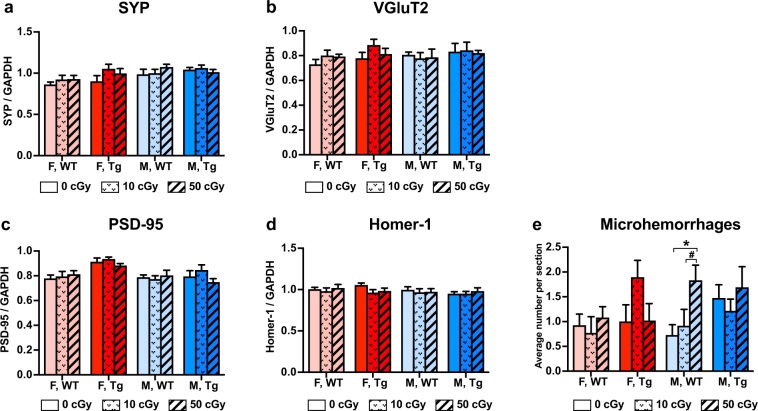
Space travel will expose people to high-energy, heavy particle radiation, and the cognitive deficits induced by this exposure are not well understood. To investigate the short-term effects of space radiation, we irradiated 4-month-old Alzheimer’s disease (AD)-like transgenic (Tg) mice and wildtype (WT) littermates with a single, whole-body dose of 10 or 50 cGy 56 Fe ions (1 GeV/u) at Brookhaven National Laboratory. At ~1.5 months post irradiation, behavioural testing showed sex-, genotype-, and dose-dependent changes in locomotor activity, contextual fear conditioning, grip strength, and motor learning, mainly in Tg but not WT mice. There was little change in general health, depression, or anxiety. Two months post irradiation, microPET imaging of the stable binding of a translocator protein ligand suggested no radiation-specific change in neuroinflammation, although initial uptake was reduced in female mice independently of cerebral blood flow. Biochemical and immunohistochemical analyses revealed that radiation reduced cerebral amyloid-β levels and microglia activation in female Tg mice, modestly increased microhemorrhages in 50 cGy irradiated male WT mice, and did not affect synaptic marker levels compared to sham controls. Taken together, we show specific short-term changes in neuropathology and behaviour induced by 56 Fe irradiation, possibly having implications for long-term space travel.
Overview
The claims and statistics of this paper haven’t been checked yet.
Free: it reads the open-access text and checks the first 5 claims that cite a source we can check. Create a free account to check every claim.
Integrity signals
Registry
Cites
Statistics
Figures
Verification
Claims the paper makes
The claims and statistics of this paper haven’t been checked yet.
Free: it reads the open-access text and checks the first 5 claims that cite a source we can check. Create a free account to check every claim.
Claims other papers make about this one
Each is checked against this paper’s own text: does it say what the citing paper says it does?
The source backs part of the claim, not all of it — or backs it for a different population, condition or comparison.
In the citing paper
“CNS risks would include in-flight detriments of cognition, such as memory and performance detriments, and late effects, including advancement of the age of Alzheimer's disease (Liu et al., 2018) or increases in the incidence of Parkinson's disease (Azizova et al., 2020).”
From A proposed change to astronaut exposures limits is a giant leap backwards for radiation protection (2021) · cites this paper as Liu et al., 2018
Experimental — accuracy not yet measuredThe cited source says what the claim attributes to it.
In the citing paper
“Rodent studies conducted with HZE ions at low, mission-relevant doses and time frames show a variety of structural and functional alterations to neurons and neural circuits with associated performance deficits39–44.”
From Red risks for a journey to the red planet: The highest priority human health risks for a mission to Mars (2020) · cites this paper as [42]
Self-check
Percentages, sums and reported differences re-computed from the paper’s own numbers.
The self-check needs the paper’s full text.
Citations
Cites
Jankowsky, J. L., Fadale, D. J., Anderson, J., Xu, G. M., Gonzales, V., Jenkins, N. A., Copeland, N. G., Lee, M. K., Younkin, L. H., Wagner, S. L., et al. (2004) · Human Molecular Genetics · doi:10.1093/hmg/ddh019 · Cited by 1,575
Role of oxidative stress in Alzheimer’s disease
HUANG, W.-J., ZHANG, X., & CHEN, W.-W. (2016) · Biomedical Reports · doi:10.3892/br.2016.630 · Cited by 1,023
Characterization of amyloid deposition in the APPswe/PS1dE9 mouse model of Alzheimer disease
Garcia-Alloza, M., Robbins, E. M., Zhang-Nunes, S. X., Purcell, S. M., Betensky, R. A., Raju, S., Prada, C., Greenberg, S. M., Bacskai, B. J., & Frosch, M. P. (2006) · Neurobiology of Disease · doi:10.1016/j.nbd.2006.08.017 · Cited by 744
Mars' surface radiation environment measured with the Mars Science Laboratory's Curiosity rover
Hassler, D. M., Zeitlin, C., Wimmer-Schweingruber, R. F., Ehresmann, B., Rafkin, S., Eigenbrode, J. L., Brinza, D. E., Weigle, G., Böttcher, S., Böhm, E., et al. (2014) · Science · doi:10.1126/science.1244797 · Cited by 727
Measurements of energetic particle radiation in transit to Mars on the Mars Science Laboratory
Zeitlin, C., Hassler, D. M., Cucinotta, F. A., Ehresmann, B., Wimmer-Schweingruber, R. F., Brinza, D. E., Kang, S., Weigle, G., Böttcher, S., Böhm, E., et al. (2013) · Science · doi:10.1126/science.1235989 · Cited by 641
Complement C3 deficiency protects against neurodegeneration in aged plaque-rich APP/PS1 mice
Shi, Q., Chowdhury, S., Ma, R., Le, K. X., Hong, S., Caldarone, B. J., Stevens, B., & Lemere, C. A. (2017) · Science Translational Medicine · doi:10.1126/scitranslmed.aaf6295 · Cited by 593
Self-citationHeavy ion carcinogenesis and human space exploration
Durante, M., & Cucinotta, F. A. (2008) · Nature Reviews Cancer · doi:10.1038/nrc2391 · Cited by 578
Environmental Enrichment Mitigates Cognitive Deficits in a Mouse Model of Alzheimer's Disease
Jankowsky, J. L., Melnikova, T., Fadale, D. J., Xu, G. M., Slunt, H. H., Gonzales, V., Younkin, L. H., Younkin, S. G., Borchelt, D. R., & Savonenko, A. V. (2005) · The Journal of Neuroscience · doi:10.1523/jneurosci.5080-04.2005 · Cited by 517
Memory Impairment in Transgenic Alzheimer Mice Requires Cellular Prion Protein
Gimbel, D. A., Nygaard, H. B., Coffey, E. E., Gunther, E. C., Laurén, J., Gimbel, Z. A., & Strittmatter, S. M. (2010) · The Journal of Neuroscience · doi:10.1523/jneurosci.0395-10.2010 · Cited by 418
Savonenko, A., Xu, G. M., Melnikova, T., Morton, J. L., Gonzales, V., Wong, M. P. F., Price, D. L., Tang, F., Markowska, A. L., & Borchelt, D. R. (2005) · Neurobiology of Disease · doi:10.1016/j.nbd.2004.10.022 · Cited by 346
Research works printed but not linked: 2
- Carr H Early effects of 16O radiation on neuronal morphology and cognition in a murine mode l. Life Sci. Sp. Res. 2018 17 63 73 29753415
- Impey S Short- and long-term effects of 56Fe irradiation on cognition and hippocampal DNA methylation and gene expression BMC Genomics 2016 17 825 10.1186/s12864-016-3110-7 27776477 PMC5078898 · DOI · Paper page
Cited by
Exercise hormone irisin is a critical regulator of cognitive function
Islam, M. R., Valaris, S., Young, M. F., Haley, E. B., Luo, R., Bond, S. F., Mazuera, S., Kitchen, R. R., Caldarone, B. J., Bettio, L. E. B., et al. (2021) · Nature Metabolism · doi:10.1038/s42255-021-00438-z · Cited by 403
Self-citationPatel, Z. S., Brunstetter, T. J., Tarver, W. J., Whitmire, A. M., Zwart, S. R., Smith, S. M., & Huff, J. L. (2020) · npj Microgravity · doi:10.1038/s41526-020-00124-6 · Cited by 373
PET Imaging of Neuroinflammation in Alzheimer’s Disease
Zhou, R., Ji, B., Kong, Y., Qin, L., Ren, W., Guan, Y., & Ni, R. (2021) · Frontiers in Immunology · doi:10.3389/fimmu.2021.739130 · Cited by 152
Krukowski, K., Grue, K. A., Becker, M., Elizarraras, E., Frias, E. S., Halvorsen, A. T., Koenig-Zanoff, M., Frattini, V., Nimmagadda, H., Feng, X., et al. (2021) · Science Advances · doi:10.1126/sciadv.abg6702 · Cited by 87
“Previous findings have shown that charged particle exposure causes deficits in one or more of these measured domains ( 9 , 13 , 14 , 18 , 26 – 28 ); however, the current data demonstrate that when combined, the five ions might have different combinatory effects that are not cumulative.”
Microglia as Therapeutic Target for Radiation-Induced Brain Injury
Liu, Q., Yan, H., Duan, M., Yang, Q., Ren, B., & Tang, F. R. (2022) · International Journal of Molecular Sciences · doi:10.3390/ijms23158286 · Cited by 88
TSPO imaging in animal models of brain diseases
Camp, N. V., Lavisse, S., Roost, P., Gubinelli, F., Hillmer, A. T., & Boutin, H. (2021) · European Journal of Nuclear Medicine and Molecular Imaging · doi:10.1007/s00259-021-05379-z · Cited by 76
“) in Tg female mice only • No changes in any of the other groups • No change in CBF • Irradiation induces a reduction in Aβ and CD68 IHC staining in Tg female only • No effect on TSPO, Iba-1 or GFAP staining in any of the group [125]”
BackgroundLow-Dose Ionizing Radiation Modulates Microglia Phenotypes in the Models of Alzheimer’s Disease
Kim, S.-J., Chung, H., Mai, H. N., Nam, Y., Shin, S. J., Park, Y., Chung, M. J., Lee, J. K., Rhee, H. Y., Jahng, G., et al. (2020) · International Journal of Molecular Sciences · doi:10.3390/ijms21124532 · Cited by 71
“It has been known that LDIR reduces the number of amyloid plaques and plaques size [43,45], and improves cognitive decline in the animal models of AD [44,45,47].”
BackgroundSex-specific cognitive deficits following space radiation exposure
Parihar, V. K., Angulo, M. C., Allen, B. D., Syage, A., Usmani, M. T., Passerat de la Chapelle, E., Amin, A. N., Flores, L., Lin, X., Giedzinski, E., et al. (2020) · Frontiers in Behavioral Neuroscience · doi:10.3389/fnbeh.2020.535885 · Cited by 67
Control of Neuroinflammation through Radiation-Induced Microglial Changes
Boyd, A., Byrne, S., Middleton, R. J., Banati, R. B., & Liu, G. J. (2021) · Cells · doi:10.3390/cells10092381 · Cited by 68
Onorato, G., Schiavi, E. D., & Cunto, F. D. (2020) · Frontiers in Physics · doi:10.3389/fphy.2020.00362 · Cited by 65
“Interestingly, even in this case the phenotype showed complex differences between males and females [85].”
BackgroundHinkle, J. J., Olschowka, J. A., Love, T. M., Williams, J. P., & O’Banion, M. K. (2019) · Scientific Reports · doi:10.1038/s41598-019-55366-6 · Cited by 61
Self-citationKim, S., Nam, Y., Kim, C., Lee, H., Hong, S.-J., Kim, H. S., Shin, S. J., Park, Y. H., Mai, H. N., Oh, S., et al. (2020) · International Journal of Molecular Sciences · doi:10.3390/ijms21103678 · Cited by 59
“5 Gy exhibited a reduction in fear memory in a contextual fear conditioning test [22].”
BackgroundHuff, J. L., Poignant, F., Rahmanian, S., Khan, N., Blakely, E. A., Britten, R. A., Chang, P. Y., Fornace, A. J., Hada, M., Kronenberg, A., et al. (2022) · Life Sciences in Space Research · doi:10.1016/j.lssr.2022.09.001 · Cited by 68
Zwart, S. R., Mulavara, A. P., Williams, T. J., George, K. A., & Smith, S. M. (2021) · Neuroscience & Biobehavioral Reviews · doi:10.1016/j.neubiorev.2021.04.026 · Cited by 45
Wadhwa, A., Moreno‐Villanueva, M., Crucian, B. E., & Wu, H. (2024) · Immunity & Ageing · doi:10.1186/s12979-024-00449-w · Cited by 47
Raber, J., Fuentes Anaya, A., Torres, E. R. S., Lee, J., Boutros, S., Grygoryev, D., Hammer, A., Kasschau, K. D., Sharpton, T. J., Turker, M. S., et al. (2020) · Frontiers in Physiology · doi:10.3389/fphys.2020.00959 · Cited by 39
Miller, K. B., Mi, K. L., Nelson, G. A., Norman, R. B., Patel, Z. S., & Huff, J. L. (2022) · Frontiers in Physiology · doi:10.3389/fphys.2022.1008640 · Cited by 42
“There were sex and phenotype specific changes in amyloid beta pathology and microhemorrhages, including a beneficial impact of radiation on cerebral amyloid beta levels and microglia on female transgenic mice (Liu et al., 2019; Schroeder et al., 2021).”
BackgroundA proposed change to astronaut exposures limits is a giant leap backwards for radiation protection
Cucinotta, F. A., Schimmerling, W., Blakely, E. A., & Hei, T. K. (2021) · Life Sciences in Space Research · doi:10.1016/j.lssr.2021.07.005 · Cited by 35
Circadian regulation in aging: Implications for spaceflight and life on earth
Malhan, D., Schoenrock, B., Yalçın, M., Blottner, D., & Relógio, A. (2023) · Aging Cell · doi:10.1111/acel.13935 · Cited by 29
Boutros, S. W., Zimmerman, B., Nagy, S. C., Lee, J. S., Perez, R., & Raber, J. (2021) · Frontiers in Physiology · doi:10.3389/fphys.2021.770502 · Cited by 28
Microglia: Ally and Enemy in Deep Space
Rienecker, K. D. A., Paladini, M. S., Grue, K. A., Krukowski, K., & Rosi, S. (2021) · Neuroscience & Biobehavioral Reviews · doi:10.1016/j.neubiorev.2021.03.036 · Cited by 27
“Dose also matters, as the microglia activation and abundance in the wildtype controls in Liu 2019 was muted after 10 and 50 cGy exposure, but enhanced after 500 cGy 56Fe exposure (Raber et al., 2016; Rola et al., 2008).”
Soler, I., Yun, S., Reynolds, R. P., Whoolery, C. W., Tran, F. H., Kumar, P. L., Rong, Y., DeSalle, M. J., Gibson, A. D., Stowe, A. M., et al. (2021) · Frontiers in Behavioral Neuroscience · doi:10.3389/fnbeh.2021.722780 · Cited by 28
Kiffer, F. C., Luitel, K., Tran, F. H., Patel, R., Guzman, C. S., Soler, I., Xiao, R., Shay, J. W., Yun, S., & Eisch, A. J. (2021) · Behavioural Brain Research · doi:10.1016/j.bbr.2021.113677 · Cited by 26
Schroeder, M. K., Liu, B., Hinshaw, R. G., Park, M., Wang, S., Dubey, S., Liu, G. G., Shi, Q., Holton, P., Reiser, V., et al. (2021) · International Journal of Molecular Sciences · doi:10.3390/ijms222413305 · Cited by 21
“50 Gy 56Fe irradiation decreased tracer uptake in APP/PS1 females [26], possibly related to the reduced amyloid load in brain.”
BackgroundMethodResultInfluentialSelf-citationPre-therapeutic microglia activation and sex determine therapy effects of chronic immunomodulation
Biechele, G., Blume, T., Deussing, M., Zott, B., Shi, Y., Xiang, X., Franzmeier, N., Kleinberger, G., Peters, F., Ochs, K., et al. (2021) · Theranostics · doi:10.7150/thno.64022 · Cited by 20
“Interestingly, a study using the same TSPO radiotracer similarly found a specific response of the PET signal in female APP/PS1dE9 mice to 56Fe radiation [40].”
BackgroundCranial irradiation disrupts homeostatic microglial dynamic behavior
Strohm, A. O., Johnston, C. J., Hernady, E., Marples, B., O’Banion, M. K., & Majewska, A. K. (2024) · Journal of Neuroinflammation · doi:10.1186/s12974-024-03073-z · Cited by 20
Self-citationKokhan, V. S., & Dobynde, M. I. (2023) · Biology · doi:10.3390/biology12030400 · Cited by 24
“5 Gy 56Fe (147 keV/μm) led to a decrease in both cerebral Aβ levels and microglia activation but only in female transgenic AD modeling mice (APPswe/PS1dE9) without affecting naïve animals [16].”
BackgroundSchaeffer, E. A., Blackwell, A. A., Oltmanns, J. R. O., Einhaus, R. M., Lake, R. I., Hein, C., Baulch, J. E., Limoli, C. L., Ton, S. T., Kartje, G. L., et al. (2021) · Behavioural Brain Research · doi:10.1016/j.bbr.2021.113577 · Cited by 16
Hinkle, J. J., Olschowka, J. A., Williams, J. P., & O’Banion, M. K. (2020) · International Journal of Radiation Oncology*Biology*Physics · doi:10.1016/j.ijrobp.2023.12.017 · Cited by 17
Self-citationMicroglia depletion and cognitive functions after brain injury: From trauma to galactic cosmic ray
Paladini, M. S., Feng, X., Krukowski, K., & Rosi, S. (2020) · Neuroscience Letters · doi:10.1016/j.neulet.2020.135462 · Cited by 18
Space exploration and risk of Parkinson’s disease: a perspective review
Ali, N., Beheshti, A., & Hampikian, G. (2025) · npj Microgravity · doi:10.1038/s41526-024-00457-6 · Cited by 14
Yun, S., Kiffer, F. C., Bancroft, G. L., Guzman, C. S., Soler, I., Haas, H. A., Shi, R., Patel, R., Lara‐Jiménez, J., Kumar, P. L., et al. (2024) · Journal of Neurochemistry · doi:10.1111/jnc.16225 · Cited by 14
“…in gross locomotion are scarce in the literature with studies reporting that post-IRR OF locomotion is increased (Boutros et al., 2021; Kokhan et al., 2019; Liu et al., 2019; Sorokina et al., 2020), decreased (Allen et al., 2015; Holshouser et al., 2020), or unchanged (Impey et al., 2023).”
The Effect of Ionizing Radiation on Cognitive Functions in Mouse Models of Alzheimer’s Disease
Chicheva, M. M., Maltsev, A. V., Kokhan, V. S., & Бачурин, С. О. (2020) · Doklady Biological Sciences · doi:10.1134/s0012496620050026 · Cited by 12
The Rationale for Radiation Therapy in Alzheimer's Disease
Wilson, G. D., Rogers, L., Mehta, M. P., Marples, B., Michael, D. B., Welsh, J. S., Martinez, A. A., & Fontanesi, J. (2023) · Radiation Research · doi:10.1667/rade-22-00179.1 · Cited by 13
“8 Gy d ail y WBRT unchanged N/A improved reduced reduced effects seen 4 days after low-dose irradiation 19 Rat injected with Ab (1-42) peptide 5 3 2 Gy da il y WBRT reduced N/A improved N/A N/A alterations in antioxidants defense 20 APP/PS1 mouse, 4 months 4 Gy TBRT reduced reduced improved N/A reduced increased anti-…”
BackgroundInfluentialSharma, S., Gilberto, V. S., Rask, J. C., Chatterjee, A., & Nagpal, P. (2024) · ACS Chemical Neuroscience · doi:10.1021/acschemneuro.4c00160 · Cited by 11
Owlett, L. D., Belcher, E. K., Dionisio-Santos, D. A., Williams, J. P., Olschowka, J. A., & O’Banion, M. K. (2020) · Life Sciences in Space Research · doi:10.1016/j.lssr.2020.08.001 · Cited by 12
Self-citationMicroglia: Rheostats of space radiation effects in the CNS microenvironment
Kerry O'Banion, M. (2022) · Life Sciences in Space Research · doi:10.1016/j.lssr.2022.08.002 · Cited by 10
Kremsky, I., Ali, S., Stanbouly, S., Holley, J. M., Justinen, S., Pecaut, M. J., Crapo, J. D., & Mao, X. W. (2023) · International Journal of Molecular Sciences · doi:10.3390/ijms241713569 · Cited by 10
“Previous studies have shown that space radiation contributes to amyloid pathologies, neuroinflammation, and cognitive function impairments resembling age-associated cognitive decline in animals [4,39,40].”
BackgroundAnschuetz, A., Schwab, K., Harrington, C. R., Wischik, C. M., & Riedel, G. (2025) · Journal of Alzheimer s Disease · doi:10.1177/13872877251362212 · Cited by 8
Iacono, D., Murphy, E. K., Stimpson, C. D., Perl, D. P., & Day, R. M. (2023) · Scientific Reports · doi:10.1038/s41598-023-48146-w · Cited by 8
“Moreover, other types of radiation such as ion-radiation showed sex-specific (female) reduction of amyloid and gliosis in mice 52 , and possibly positive counterbalancing effects of galactic cosmic rays (GCR) have been hypothesized in astronauts 53 .”
BackgroundRubinstein, L., Kiffer, F. C., Puukila, S., Lowe, M. G., Goo, B., Luthens, A., Schreurs, A., Torres, S. M., Steczina, S., Tahimic, C. G. T., et al. (2022) · Life · doi:10.3390/life12111838 · Cited by 8
“Cluster of Differentiation 68 (CD68) is a lysosomal protein expressed at low levels by resting microglia and at high levels by activated phagocytic microglia [7,10,11].”
BackgroundHinshaw, R. G., Schroeder, M. K., Ciola, J., Varma, C., Colletti, B. R., Liu, B., Liu, G. G., Shi, Q., Williams, J. P., O’Banion, M. K., et al. (2023) · International Journal of Molecular Sciences · doi:10.3390/ijms24043615 · Cited by 8
“This suggests less stress-induced behavior in the Tg groups, but this may also be explained by the known hyperactivity phenotype in this transgenic line [11,12].”
BackgroundSelf-citationKhaksarighiri, S., Guo, J., Wimmer-Schweingruber, R. F., Narici, L., & Lohf, H. (2020) · Life Sciences in Space Research · doi:10.1016/j.lssr.2020.07.003 · Cited by 14
Pharmacological Innovations in Space: Challenges and Future Perspectives
Aksoyalp, Z. Ş., Temel, A., & Karpuz, M. (2024) · Pharmaceutical Research · doi:10.1007/s11095-024-03788-x · Cited by 9
Wang, W., Zhao, F., Torres, S. L., Harris, P. L. R., Wang, X., Peng, L., Siedlak, S. L., & Zhu, X. (2024) · Journal of Alzheimer s Disease · doi:10.3233/jad-240570 · Cited by 6
Wieg, L., Ciola, J., Wasén, C., Gaba, F., Colletti, B. R., Schroeder, M. K., Hinshaw, R. G., Ekwudo, M. N., Holtzman, D. M., Saito, T., et al. (2024) · International Journal of Molecular Sciences · doi:10.3390/ijms25179379 · Cited by 6
“Radiation reduced fibrillar amyloid in the hippocampus (HC) of female transgenic mice [25].”
BackgroundMethodResultInfluentialSelf-citationPuukila, S., Siu, O., Rubinstein, L., Tahimic, C. G. T., Lowe, M. G., Ruiz, S. T., Korostenskij, I., Semel, M., Iyer, J. S., Mhatre, S. D., et al. (2023) · Life · doi:10.3390/life13051214 · Cited by 10
“found male mice were more susceptible to radiation-induced changes in activity levels than female mice after 10 or 50 cGy exposure of 56Fe [37].”
BackgroundStrohm, A. O., Oldfield, S., Hernady, E., Johnston, C. J., Marples, B., O’Banion, M. K., & Majewska, A. K. (2024) · Brain Behavior & Immunity - Health · doi:10.1016/j.bbih.2024.100911 · Cited by 6
Self-citationCahoon, D. S., Rabin, B. M., Fisher, D. R., & Shukitt‐Hale, B. (2023) · Radiation Research · doi:10.1667/rade-22-00041.1 · Cited by 6
“In this study, male rats were used because previous studies suggest that males are more susceptible to irradiation-induced CNS changes than female rats ( 33 ), potentially due to the neuroprotective effects of estrogen ( 34 ).”
MethodGuest Edited Collection: Gravitational biology and space medicine
Grimm, D. G. (2019) · Scientific Reports · doi:10.1038/s41598-019-51231-8 · Cited by 7
Varma, C., Schroeder, M. K., Price, B. R., Khan, K., da Costa, E. C., Hochman‐Mendez, C., Caldarone, B. J., & Lemere, C. A. (2024) · International Journal of Molecular Sciences · doi:10.3390/ijms25168948 · Cited by 6
“The elevated plus maze revealed a dose-dependent relationship with M Tg mice, where the 0.5 Gy GCRsim group spent relatively more time in the open arm compared to sham-irradiated mice and significantly more than the 0.75 Gy mice (Figure 2I, p = 0.0326), which suggests that the mice receiving 0.5 Gy…”
BackgroundInfluentialSelf-citationKokhan, V. S., Андреевич, А. Р., Anokhin, P. K., & Shamakina, I. Y. (2025) · Biochemistry (Moscow) · doi:10.1134/s0006297924604453 · Cited by 4
Kokhan, V. S., Levashova, A. I., Nesterov, M. S., Pikalov, V. A., & Chicheva, M. M. (2025) · Biology · doi:10.3390/biology14060682 · Cited by 4
“In contrast, irradiation with 0.1 or 0.5 Gy 56 Fe (147 keV/ µ m) led to a decrease in both cerebral A β level and microglial activation, but only in female APPswe/PS1dE9 mice, without affecting wild-type animals [24].”
InfluentialDose-Dependent Dual Effects of Gradient Ionizing Radiation on Neurocognition
Jian, X., Jiang, B., Li, S., Min, T., Xu, Y., Xu, R., Liu, L., & He, Y. (2026) · International Journal of Molecular Sciences · doi:10.3390/ijms27041842 · Cited by 5
Sex-Dependent Changes in Risk-Taking Predisposition of Rats Following Space Radiation Exposure
Smits, E., Reid, F. E., Tamgue, E. N., Arriaga, P. A., Nguyen, C., & Britten, R. A. (2025) · Life · doi:10.3390/life15030449 · Cited by 5
“In There is an ever-growing number of studies that report di ff erent sex-dependent cognitive outcomes after SR exposure [7,8,13,14,28–35], and, presently, it would appear that the ultimate outcome of SR exposure in male and female rodents is highly dependent upon the cognitive domains being…”
Applicability of the NASA galactic cosmic ray simulator for mice, rats, and minipigs
Rahmanian, S., & Slaba, T. C. (2023) · Acta Astronautica · doi:10.1016/j.actaastro.2023.04.016 · Cited by 3
Effects of Space Flight on Inflammasome Activation in the Brain of Mice
Roy, U., Hadad, R., Rodriguez, A. A., Saju, A., Roy, D., Gil, M., Keane, R. W., Scott, R. T., Mao, X. W., & Vaccari, J. P. D. R. (2025) · Cells · doi:10.3390/cells14060417 · Cited by 2
Hybrid active–passive Galactic Cosmic Ray simulator: In-silico design and optimization
Lunati, L., Pierobon, E., Weber, U. A., Wagner, T., Pfuhl, T., Durante, M., & Schuy, C. (2026) · Life Sciences in Space Research · doi:10.1016/j.lssr.2026.02.003 · Cited by 2
“…are well established for cancer risk estimation, only preliminary RBE-based risk estimates exist for other endpoints such as cardiovascular disease (CVD) [41], and experimental data from rodent studies provide limited insight into potential central nervous system (CNS) effects [42, 43, 44].”
Goloborshcheva, V., Kostikova, Y. S., Kucheryanu, V. G., Morozov, S. G., & Kokhan, V. S. (2026) · International Journal of Molecular Sciences · doi:10.3390/ijms27083368 · Cited by 2
“Moreover, beneficial effects on the central nervous system (CNS) have been observed following exposure to high-LET radiation, such as heavy ions ( 56 Fe, 147 keV/ µ m, 0.5 Gy) [11,12].”
InfluentialCahoon, D. S., Fisher, D. R., Rabin, B. M., Lamon‐Fava, S., Wu, D., Zheng, T., & Shukitt‐Hale, B. (2024) · International Journal of Molecular Sciences · doi:10.3390/ijms25115923 · Cited by 2
Sanford, L. D., Adkins, A. M., Boden, A. F., Luyo, Z. N. M., Singh, N., Britten, R. A., & Wellman, L. L. (2025) · Life Sciences in Space Research · doi:10.1016/j.lssr.2025.10.001 · Cited by 2
Perspectives on ionizing radiation and Parkinson’s disease
Miller, K. B., Ali, N., Beavers, M., Blattnig, S. R., Boice, J. D., Cekanaviciute, E., Costes, S. V., Dauer, L. T., Nelson, G., O’Banion, M. K., et al. (2026) · npj Parkinson's Disease · doi:10.1038/s41531-026-01486-6 · Cited by 1
“Spaceradiation exposure has mixed effects on other motor behaviors, such as muscle strength 142,147,148 , and motor coordination appears to only be impaired after relatively high simulated SPE doses of protons (3 – 4 Gy) 149,150 .”
Self-citationThe space radiation environment and human health risks
Werneth, C. M., & Huff, J. L. (2024) · Elsevier eBooks · doi:10.1016/b978-0-443-22259-7.00010-2 · Cited by 2
Cahoon, D. S., Fisher, D. R., Zheng, T., Lamon‐Fava, S., Wu, D., Rabin, B. M., & Shukitt‐Hale, B. (2025) · Journal of Nutrition · doi:10.1016/j.tjnut.2025.01.011 · Cited by 1
Screening Immunotherapy Targets to Counter Radiation-Induced NeuroinflammationPreprint
Sharma, S., Fallgren, C. M., Weil, M. M., Chatterjee, A., & Nagpal, P. (2022) · bioRxiv (Cold Spring Harbor Laboratory) · doi:10.1101/2022.08.23.505001
Human Health Risks Relevant to Deep Space Mars Exploration Missions
Patel, Z. S., Gibson, C. R., Mader, T. H., Whitmire, A. M., Norcross, J. R., Thompson, M. S., Nemec-Bakk, A. S., Boerma, M., & Huff, J. L. (2023) · American Institute of Aeronautics and Astronautics eBooks · doi:10.2514/5.9781624106545.0487.0542
Additional file 4 of Cranial irradiation disrupts homeostatic microglial dynamic behavior
Strohm, A. O., Johnston, C. J., Hernady, E., Marples, B., O’Banion, M. K., & Majewska, A. K. (2024) · Figshare · doi:10.6084/m9.figshare.26701777
Self-citationAdditional file 1 of Cranial irradiation disrupts homeostatic microglial dynamic behavior
Strohm, A. O., Johnston, C. J., Hernady, E., Marples, B., O’Banion, M. K., & Majewska, A. K. (2024) · Figshare · doi:10.6084/m9.figshare.26701768
Self-citationAdditional file 2 of Cranial irradiation disrupts homeostatic microglial dynamic behavior
Strohm, A. O., Johnston, C. J., Hernady, E., Marples, B., O’Banion, M. K., & Majewska, A. K. (2024) · Figshare · doi:10.6084/m9.figshare.26701771
Self-citationAdditional file 3 of Cranial irradiation disrupts homeostatic microglial dynamic behavior
Strohm, A. O., Johnston, C. J., Hernady, E., Marples, B., O’Banion, M. K., & Majewska, A. K. (2024) · Figshare · doi:10.6084/m9.figshare.26701774
Self-citationO'Connor, S. A., Narain, P., Mahajan, A., Bancroft, G. L., Haas, H. A., Wallen-Friedman, E., Vasisht, S., Takano, H., Kiffer, F. C., Eisch, A. J., et al. (2026) · bioRxiv (Cold Spring Harbor Laboratory) · doi:10.64898/2026.03.26.714605
O'Connor, S. A., Narain, P., Mahajan, A., Bancroft, G. L., Haas, H. A., Wallen-Friedman, E., Vasisht, S., Takano, H., Kiffer, F. C., Eisch, A. J., et al. (2026) · Research Square · doi:10.21203/rs.3.rs-9476558/v1
Space radiation health risks to hematopoietic, neural, and gastrointestinal systems in astronauts
Zhang, L., Yin, Y., Li, R., Wang, G., Li, L., Yu, Y., & Lu, W. (2026) · Frontiers in Public Health · doi:10.3389/fpubh.2026.1926972
“…biomarker translocator protein (TSPO), an outer mitochondrial membrane protein widely used as an in vivo imaging marker of neuroinflammation and reactive gliosis, tends to be upregulated in the hippocampus and prefrontal cortex following space-relevant heavy-ion radiation exposure (52, 53).”
Luyo, Z. N. M., Heerbrandt, R. S., Boden, A. F., Keumeni, F. E. E., Britten, R. A., Wellman, L. L., & Sanford, L. D. (2026) · Life · doi:10.3390/life16101638
Kokhan, V. S., Belokopytova, K. V., Pikalov, V. A., Федорова, Т. Н., Андреевич, А. Р., & Chaprov, K. (2026) · Molecular Neurobiology · doi:10.1007/s12035-026-06283-z
“Irradiation with 56 Fe nuclei (0.1–0.5 Gy, 1 GeV/n) has been shown to improve locomotor abilities despite a decrease in grip strength in a sex-specific manner in APP/PS1 mice, accompanied by altered gliosis and hippocampal Aβ plaque load [13–15].”
Influential
Metadata
- Authors
- Liu, B., Hinshaw, R. G., Le, K. X., Park, M.-A., Wang, S., Belanger, A. P., Dubey, S., Frost, J. L., Shi, Q., Holton, P., Trojanczyk, L., Reiser, V., Jones, P. A., Trigg, W., Di Carli, M. F., Lorello, P., Caldarone, B. J., Williams, J. P., O’Banion, M. K., & Lemere, C. A.
- Affiliations
- Brigham and Women's Hospital (US)
- University of Rochester Medicine (US)
- General Electric (United Kingdom) (GB)
- Harvard University (US)
- Corresponding author
- Lemere, Cynthia A.
- ORCID
- Venue
- Scientific Reports
- Published
- 2019-08-20
- Volume
- 9
- Issue
- 1
- Pages
- 12118-12118
- ISSN
- 2045-2322 (ISSN-L)
- PMC
- PMC6702228
- OpenAlex
- W2969331602
- Cited by
- 73
- References
- 75
- Citations by year
- 2026: 6 · 2025: 8 · 2024: 16 · 2023: 10 · 2022: 6 · 2021: 14 · 2020: 11 · 2019: 2
- FWCI
- 5.66
- Type
- journal article
- Language
- en
- Open access
- gold
- doi.org
- Licence
- cc-by
- creativecommons.org/licenses/by/4.0 (tdm)
- creativecommons.org/licenses/by/4.0 (vor)
- Locations
- Scientific Reports (publishedVersion, cc-by)
- Europe PMC (PubMed Central) (publishedVersion, cc-by)
- PubMed Central (publishedVersion, cc-by)
- PubMed (publishedVersion)
- DOAJ (DOAJ: Directory of Open Access Journals) (submittedVersion)
- Funders
- National Aeronautics and Space Administration (NNX14AI07G)
- Topics
- Health Sciences › Medicine › Physiology (medical) › Spaceflight effects on biology
- Health Sciences › Medicine › Radiology, Nuclear Medicine and Imaging › Effects of Radiation Exposure
- Life Sciences › Neuroscience › Cellular and Molecular Neuroscience › Alzheimer's disease research and treatments
- Keywords
- space radiation, sex differences, cognitive impairment, locomotor activity, contextual fear conditioning, grip strength, motor learning, translocator protein (TSPO), neuroinflammation, cerebral amyloid-beta, microglial activation, microhemorrhages, synaptic markers
- MeSH terms
- Alzheimer Disease, Animals, Behavior, Animal, Brain, Disease Models, Animal, Dose-Response Relationship, Radiation, Female, Humans, Inflammation, Iron Radioisotopes, Learning, Male, Mice, Inbred C57BL, Mice, Transgenic, Motor Activity, Sex Factors, Space Flight, Amyloid beta-Peptides, Microglia, Presenilin-1
About these checks
Registry, retraction, Cites and statistics results are computed, not judged, with one exception: a printed reference that no index lists is read once by a model before it counts as a citation error. Claims are extracted by a model and kept only when their quote appears verbatim in the text; each cited source is then checked, with a model’s help, for whether it says what the claim relies on. Those verdicts can be wrong — read the claim’s quote and the cited source before relying on one.
Statistics and arithmetic are recomputed, not judged.
Confidence bands are shown only for fields calibrated on our annotated test set. None is calibrated yet, so no band is shown.
What counts as a claim ›How we measure confidence ›How we check this ›
Are you an author, or do you see a problem with this page? Request a review
Data sources
Bibliographic data: Semantic Scholar, OpenAlex, Crossref.
Contains information from the Semantic Scholar Academic Graph Datasets, made available under the ODC Attribution License (ODC-BY 1.0).
Semantic Scholar’s data is described in: Kinney, R., et al. (2023). The Semantic Scholar Open Data Platform. arXiv:2301.10140.
