

A global mass budget for positively buoyant macroplastic debris in the ocean
Open accessThe DOI matches its Crossref record; 29 of the 29 references it cites were found in a registry or an index.
Abstract
Predicted global figures for plastic debris accumulation in the ocean surface layer range on the order of hundreds of thousands of metric tons, representing only a few percent of estimated annual emissions into the marine environment. The current accepted explanation for this difference is that positively buoyant macroplastic objects do not persist on the ocean surface. Subject to degradation into microplastics, the major part of the mass is predicted to have settled below the surface. However, we argue that such a simple emission-degradation model cannot explain the occurrence of decades-old objects collected by oceanic expeditions. We show that debris circulation dynamics in coastal environments may be a better explanation for this difference. The results presented here suggest that there is a significant time interval, on the order of several years to decades, between terrestrial emissions and representative accumulation in offshore waters. Importantly, our results also indicate that the current generation of secondary microplastics in the global ocean is mostly a result of the degradation of objects produced in the 1990s and earlier. Finally, we propose a series of future emission scenarios until 2050, discussing the necessity to rapidly reduce emissions and actively remove waste accumulated in the environment to mitigate further microplastic contamination in the global ocean.
Overview
The claims and statistics of this paper haven’t been checked yet.
Free: it reads the open-access text and checks the first 5 claims that cite a source we can check. Create a free account to check every claim.
Integrity signals
Registry
Cites
Statistics
Figures
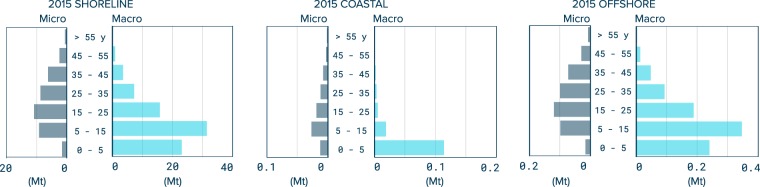
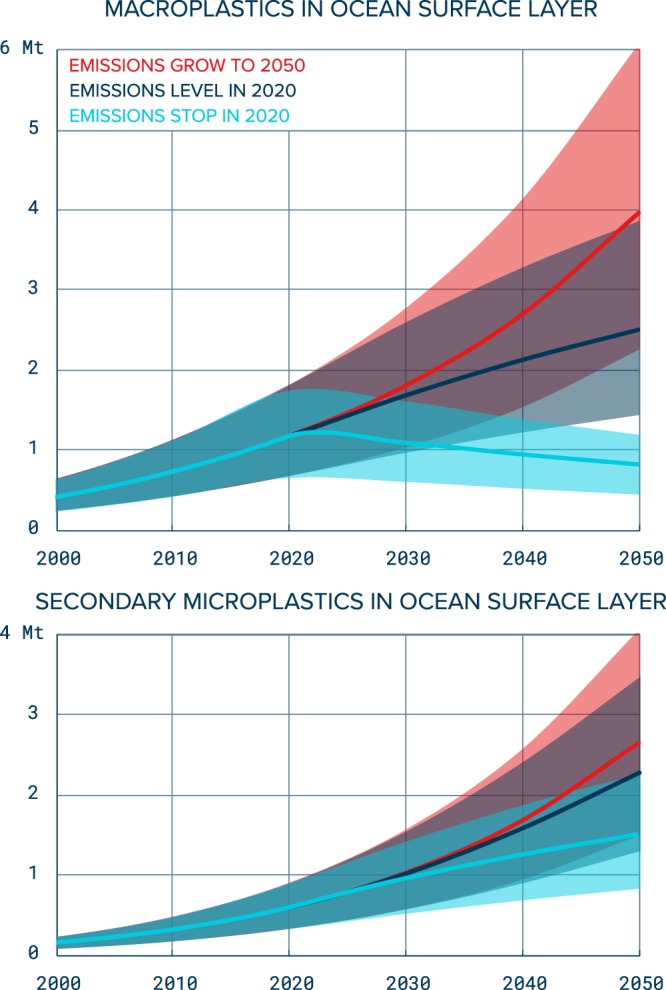
Verification
Claims the paper makes
The claims and statistics of this paper haven’t been checked yet.
Free: it reads the open-access text and checks the first 5 claims that cite a source we can check. Create a free account to check every claim.
Self-check
Percentages, sums and reported differences re-computed from the paper’s own numbers.
The self-check needs the paper’s full text.
Citations
Cites
Production, use, and fate of all plastics ever made
Geyer, R., Jambeck, J. R., & Law, K. L. (2017) · Science Advances · doi:10.1126/sciadv.1700782 · Cited by 18,606
Plastic waste inputs from land into the ocean
Jambeck, J. R., Geyer, R., Wilcox, C., Siegler, T. R., Perryman, M., Andrady, A., Narayan, R., & Law, K. L. (2015) · Science · doi:10.1126/science.1260352 · Cited by 13,163
Microplastics in the marine environment
Andrady, A. L. (2011) · Marine Pollution Bulletin · doi:10.1016/j.marpolbul.2011.05.030 · Cited by 8,105
Accumulation and fragmentation of plastic debris in global environments
Barnes, D. K. A., Galgani, F., Thompson, R. C., & Barlaz, M. (2009) · Philosophical Transactions of the Royal Society B: Biological Sciences · doi:10.1098/rstb.2008.0205 · Cited by 6,126
Eriksen, M., Lebreton, L. C. M., Carson, H. S., Thiel, M., Moore, C. J., Borerro, J. C., Galgani, F., Ryan, P. G., & Reisser, J. (2014) · PLoS ONE · doi:10.1371/journal.pone.0111913 · Cited by 4,710 · cited 1×
“= + ∗ − O y y d O y y ( , ) (1 ) ( 1, ) (8) m O M 0 0”
Self-citationRiver plastic emissions to the world’s oceans
Lebreton, L. C. M., van der Zwet, J., Damsteeg, J.-W., Slat, B., Andrady, A., & Reisser, J. (2017) · Nature Communications · doi:10.1038/ncomms15611 · Cited by 4,011
Self-citationPlastic debris in the open ocean
Cózar, A., Echevarría, F., González-Gordillo, J. I., Irigoien, X., Úbeda, B., Hernández-León, S., Palma, Á. T., Navarro, S., García-de-Lomas, J., Ruiz, A., et al. (2014) · Proceedings of the National Academy of Sciences · doi:10.1073/pnas.1314705111 · Cited by 3,133
What a Waste : A Global Review of Solid Waste Management
Hoornweg, D., & Bhada-Tata, P. (2012) · doi:10.1596/17388 · Cited by 3,129
Evidence that the Great Pacific Garbage Patch is rapidly accumulating plastic
Lebreton, L., Slat, B., Ferrari, F., Sainte-Rose, B., Aitken, J., Marthouse, R., Hajbane, S., Cunsolo, S., Schwarz, A., Levivier, A., et al. (2018) · Scientific Reports · doi:10.1038/s41598-018-22939-w · Cited by 1,839
Self-citationA global inventory of small floating plastic debris
van Sebille, E., Wilcox, C., Lebreton, L., Maximenko, N., Hardesty, B. D., van Franeker, J. A., Eriksen, M., Siegel, D., Galgani, F., & Law, K. L. (2015) · Environmental Research Letters · doi:10.1088/1748-9326/10/12/124006 · Cited by 1,713
Self-citation
Cited by
Items 101–200 of 563
Xu, L., Liang, Y., Liao, C., Xie, T., Zhang, H., Liu, X., Lu, Z., & Wang, D. (2021) · Water Research · doi:10.1016/j.watres.2021.117886 · Cited by 66
Wang, H., Cui, J., Sun, G., Miao, X., Pufang, Z., & Li, N. (2024) · Environmental Pollution · doi:10.1016/j.envpol.2024.123874 · Cited by 80
Global environmental plastic dispersal under OECD policy scenarios toward 2060
Sonke, J. E., Koenig, A. M., Segur, T., & Yakovenko, N. (2025) · Science Advances · doi:10.1126/sciadv.adu2396 · Cited by 114
“Integrated understanding of global plastics dispersal, however, has been challenging thus far, with efforts focused on either marine ( 11 , 12 ) or terrestrial environments, sometimes in interaction with the atmosphere ( 13 – 15 ), but rarely addressing coupled biogeo-chemical cycling of plastics…”
Pěnčík, O., Durdakova, M., Molnárová, K., Kucsera, A., Klofáč, D., Koláčková, M., Adam, V., & Húska, D. (2023) · Journal of Hazardous Materials · doi:10.1016/j.jhazmat.2023.131476 · Cited by 69
Kaandorp, M., Dijkstra, H. A., & van Sebille, E. (2021) · Environmental Research Letters · doi:10.1088/1748-9326/abe9ea · Cited by 89
“Previous studies, such as the ones by Koelmans et al (2017) and Lebreton et al (2019), have tried to quantify marine plastic mass budget using conceptual models.”
BackgroundMethodResultInfluentialLow-pressure hydrothermal processing of mixed polyolefin wastes into clean fuels
Jin, K., Vozka, P., Gentilcore, C., Kılaz, G., & Wang, N. L. (2021) · Fuel · doi:10.1016/j.fuel.2021.120505 · Cited by 68
Modeling the Exposure of the Macaronesia Islands (NE Atlantic) to Marine Plastic Pollution
Cardoso, C., & Caldeira, R. (2021) · Frontiers in Marine Science · doi:10.3389/fmars.2021.653502 · Cited by 73
“Considering that derelict fishing nets can have a draft of several meters and are thus less influenced by the wind (Lebreton et al., 2019), fishing gear with low- or null-windage coefficient collected in Cabo Verde are most likely being discarded by fishing activities off the Western Sahara (disputed territory with Mo…”
BackgroundResultInfluentialKukkola, A. T., Runkel, R. L., Schneidewind, U., Murphy, S. F., Kelleher, L., Smith, G. H. S., Nel, H., Lynch, I., & Krause, S. (2023) · Water Research · doi:10.1016/j.watres.2023.120112 · Cited by 65
The Paleoecology of Microplastic Contamination
Bancone, C. E. P., Turner, S. D., do Sul, J. A. I., & Rose, N. L. (2020) · Frontiers in Environmental Science · doi:10.3389/fenvs.2020.574008 · Cited by 79
“, 2010) and therefore may be circulated for longer, while other materials sink (Lebreton et al., 2019).”
BackgroundA spatially variable scarcity of floating microplastics in the eastern North Pacific Ocean
Egger, M., Nijhof, R., Quiros, L., Leone, G., Royer, S., McWhirter, A., Kantakov, G. A., Радченко, В. И., Pakhomov, E. A., Hunt, B. P. V., et al. (2020) · Environmental Research Letters · doi:10.1088/1748-9326/abbb4f · Cited by 71
“…accumulating in subtropical oceanic gyres is typically older and more degraded (Martí et al 2020), while most of the recent mesoplastic debris discarded into the marine environment is likely still circulating in surface waters of the coastal margins (Lebreton et al 2019, Olivelli et al 2020).”
BackgroundSelf-citationThe Indian Ocean ‘garbage patch’: Empirical evidence from floating macro-litter
Connan, M., Perold, V., Dilley, B. J., Barbraud, C., Cherel, Y., & Ryan, P. G. (2021) · Marine Pollution Bulletin · doi:10.1016/j.marpolbul.2021.112559 · Cited by 74
“However, even if changes are implemented rapidly and effectively, it is likely plastics will continue to pollute aquatic environments for many years due to their long-life spans and their current ubiquity in all environments (Lebreton et al., 2019).”
BackgroundNiemcharoen, S., Haetrakul, T., Palić, D., & Chansue, N. (2022) · Animals · doi:10.3390/ani12233308 · Cited by 66
“Future projections for the accumulated mass of buoyant degraded microplastic materials from the ocean surface layer indicate that over one million tons of these particles will likely be polluting the oceans in the period from 2020 to 2030 [3].”
BackgroundSources of marine debris for Seychelles and other remote islands in the western Indian Ocean
Vogt-Vincent, N., Burt, A., Kaplan, D. M., Mitarai, S., Turnbull, L. A., & Johnson, H. L. (2023) · Marine Pollution Bulletin · doi:10.1016/j.marpolbul.2022.114497 · Cited by 67
Global analysis of marine plastics and implications of control measure strategies
Yu, R.-S., Yang, Y., & Singh, S. (2023) · Frontiers in Marine Science · doi:10.3389/fmars.2023.1305091 · Cited by 73
Dissolved organic carbon leaching from microplastics and bioavailability in coastal ecosystems
Egea, L. G., Brun, F. G., & Jiménez-Ramos, R. (2024) · Science of The Total Environment · doi:10.1016/j.scitotenv.2023.168673 · Cited by 57
Microplastics and anthropogenic fibre concentrations in lakes reflect surrounding land use
Tanentzap, A. J., Cottingham, S., Fonvielle, J., Riley, I., Walker, L. M., Woodman, S. G., Kontou, D., Pichler, C. M., Reisner, E., & Lebreton, L. (2021) · PLoS Biology · doi:10.1371/journal.pbio.3001389 · Cited by 67
“Microparticles can therefore comprise a large portion of the mass budget of open waters [12].”
BackgroundSelf-citationAn Integrative Assessment of the Plastic Debris Load in the Mediterranean Sea
Pedrotti, M. L., Lombard, F., Baudena, A., Galgani, F., Elineau, A., Petit, S., Henry, M., Troublé, R., Reverdin, G., Ser‐Giacomi, E., et al. (2022) · The Science of The Total Environment · doi:10.1016/j.scitotenv.2022.155958 · Cited by 64
Weideman, E. A., Perold, V., Arnold, G., & Ryan, P. G. (2020) · The Science of The Total Environment · doi:10.1016/j.scitotenv.2020.138310 · Cited by 66
Achievements in the production of bioplastics from microalgae
Park, Y.-K., & Lee, J. (2022) · Phytochemistry Reviews · doi:10.1007/s11101-021-09788-8 · Cited by 41
“A large part of the plastic waste degrades and settles below the sea surface on which marine organisms ingest the degraded plastics eventually accumulating in the ecosystem (Lebreton et al. 2019).”
BackgroundSonke, J. E., Koenig, A. M., Yakovenko, N., Hagelskjær, O., Margenat, H., Hansson, S. V., Vleeschouwer, F. D., Magand, O., Roux, G. L., & Thomas, J. L. (2022) · Microplastics and Nanoplastics · doi:10.1186/s43591-022-00048-w · Cited by 67
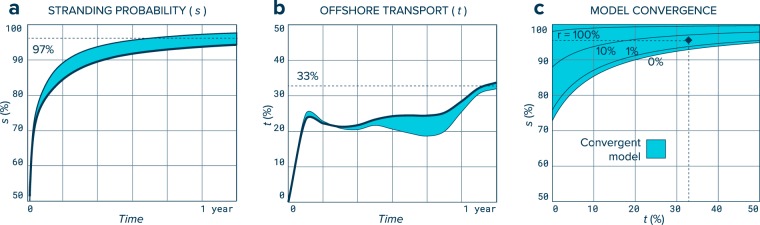
“[16] fitted important beaching of coastal plastics (97% per year).”
BackgroundInfluentialKaandorp, M., Dijkstra, H. A., van Sebille, E., Oceanography, S. P., & Research, M. A. A. (2021) · Utrecht University Repository (Utrecht University) · Cited by 54
Tackling Marine Microplastics Pollution: an Overview of Existing Solutions
Fiore, M., Garofalo, S. F., Migliavacca, A., Mansutti, A., Fino, D., & Tommasi, T. (2022) · Water Air & Soil Pollution · doi:10.1007/s11270-022-05715-5 · Cited by 63
“Moreover, according to a recent study, only 1% of plastics float on the ocean surface and 94% reach the deep sea, where it is estimated that there are over 14 Mt of microplastics (Lebreton et al., 2019).”
InfluentialGurumoorthi, K., & Luis, A. J. (2023) · Environmental Pollution · doi:10.1016/j.envpol.2023.121385 · Cited by 65
A 75-year history of microplastic fragment accumulation rates in a semi-enclosed hypoxic basin
Hinata, H., Kuwae, M., Tsugeki, N. K., Masumoto, I., Tani, Y., HATADA, Y., Kawamata, H., Mase, A., KASAMO, K., Sukenaga, K., et al. (2022) · The Science of The Total Environment · doi:10.1016/j.scitotenv.2022.158751 · Cited by 55
Int-Veen, I., Nogueira, P., Isigkeit, J., Hanel, R., & Kammann, U. (2021) · Marine Pollution Bulletin · doi:10.1016/j.marpolbul.2021.112876 · Cited by 57
Floating marine macro litter in the Black Sea: Toward baselines for large scale assessment
González‐Fernández, D., Hanke, G., Pogojeva, M., Machitadze, N., Kotelnikova, Y., Tretiak, I. P., Savenko, O., Bilashvili, K., Gelashvili, N., Fedorov, A. V., et al. (2022) · Environmental Pollution · doi:10.1016/j.envpol.2022.119816 · Cited by 51
Valsan, G., Warrier, A. K., Amrutha, K., Anusree, S., & Rangel-Buitrago, N. G. (2023) · Marine Pollution Bulletin · doi:10.1016/j.marpolbul.2023.114820 · Cited by 53
Scientists' warning of an imperiled ocean
Georgian, S. E., Hameed, S. O., Morgan, L. E., Amon, D. J., Sumaila, U. R., Johns, D., & Ripple, W. J. (2022) · Biological Conservation · doi:10.1016/j.biocon.2022.109595 · Cited by 55
Biodegradation of polyethylene by the marine fungus Parengyodontium album
Vaksmaa, A., Vielfaure, H., Polerecky, L., Kienhuis, M. V. M., van der Meer, M. T. J., Pflüger, T., Egger, M., & Niemann, H. (2024) · Science of The Total Environment · doi:10.1016/j.scitotenv.2024.172819 · Cited by 52
Self-citationTaking a mass-balance approach to assess marine plastics in the South China Sea
Harris, P. T., Tamelander, J., Lyons, Y. L., Neo, M. L., & Maes, T. (2021) · Marine Pollution Bulletin · doi:10.1016/j.marpolbul.2021.112708 · Cited by 56
Causes of coastal waters pollution with nutrients, chemicals and plastics worldwide
Micella, I., Kroeze, C., Bak, M. P., & Strokal, M. (2023) · Marine Pollution Bulletin · doi:10.1016/j.marpolbul.2023.115902 · Cited by 61
Hermabessière, L., & Rochman, C. M. (2021) · Environmental Toxicology and Chemistry · doi:10.1002/etc.5179 · Cited by 58
“Plastic production has been increasing since the 1950s (Geyer et al., 2017; PlasticsEurope, 2020), and the concentration of microplastics could rise in the oceans if production and use continue in a scenario of business as usual (Lebreton et al., 2019, 2018).”
BackgroundPlastic pollution in the surface water in Jakarta, Indonesia
Sari, M. M., Andarani, P., Notodarmojo, S., Harryes, R. K., Nguyen, M. N., Yokota, K., & Inoue, T. (2022) · Marine Pollution Bulletin · doi:10.1016/j.marpolbul.2022.114023 · Cited by 71
Courtene‐Jones, W., van Gennip, S. J., Pénicaud, J., Penn, E., & Thompson, R. C. (2022) · Marine Pollution Bulletin · doi:10.1016/j.marpolbul.2022.114371 · Cited by 55
“, 2018) whereas others remain within coastal regions (Chenillat et al., 2021; Lebreton et al., 2019; Onink et al., 2021).”
BackgroundRecovery from microplastic-induced marine deoxygenation may take centuries
Kvale, K., & Oschlies, A. (2022) · Nature Geoscience · doi:10.1038/s41561-022-01096-w · Cited by 52
Rohais, S., Armitage, J., Romero‐Sarmiento, M., Pierson, J.-L., Télès, V., Bauer, D., Cassar, C., Sebag, D., Klopffer, M., & Pelerin, M. (2024) · Earth-Science Reviews · doi:10.1016/j.earscirev.2024.104822 · Cited by 51
Microplastics and climate change: the global impacts of a tiny driver
Sunil, S., Bhagwat, G., Vincent, S. G. T., & Thavamani, P. (2024) · The Science of The Total Environment · doi:10.1016/j.scitotenv.2024.174160 · Cited by 50
Enhanced physical, mechanical and barrier properties of chitosan films via tannic acid cross-linking
Tanpichai, S., Yuwawech, K., Wimolmala, E., Srimarut, Y., Woraprayote, W., & Malila, Y. (2025) · RSC Advances · doi:10.1039/d5ra04227e · Cited by 48
Turner, A., Amos, S. L., & Williams, T. (2021) · Marine Pollution Bulletin · doi:10.1016/j.marpolbul.2021.113133 · Cited by 48
“More generally, our observations support the assertions made by Lebreton et al. (2019) that the coastal zone acts to trap and filter marine litter and delay its transport to offshore oceanic waters.”
Trani, A., Mezzapesa, G., Piscitelli, L., Mondelli, D., Nardelli, L., Belmonte, G., Toso, A., Piraino, S., Panti, C., Baini, M., et al. (2022) · Environmental Pollution · doi:10.1016/j.envpol.2022.120702 · Cited by 30
McMullen, K., Vargas, F. H., Calle, P., Alavarado-Cadena, O., Pakhomov, E. A., & Alava, J. J. (2024) · PLoS ONE · doi:10.1371/journal.pone.0296788 · Cited by 46
Maldonado-García, B., Pal, A. K., Misra, M., Gregori, S., & Mohanty, A. K. (2021) · Composites Part C Open Access · doi:10.1016/j.jcomc.2021.100197 · Cited by 59
Abundance and sources of plastic debris on beaches in a plastic hotspot, Nha Trang, Viet Nam
Fruergaard, M., Laursen, S. N., Larsen, M. N., Posth, N. R., Niebe, K. B., Bentzon-Tarp, A., Svenningsen, S. K., Acevedo, L. I., Trinh, B., Tran-Thi, P. T., et al. (2022) · Marine Pollution Bulletin · doi:10.1016/j.marpolbul.2022.114394 · Cited by 54
Albergamo, V., Wohlleben, W., & Plata, D. L. (2023) · Environmental Science Processes & Impacts · doi:10.1039/d2em00415a · Cited by 59
Gouin, T. (2021) · Microplastics and Nanoplastics · doi:10.1186/s43591-021-00016-w · Cited by 56
“[30] are based on a simplified model system, they do represent an incremental step in our efforts as a scientific community to strengthen our understanding of environmental fate and transport processes, which from my perspective demonstrate a level of humility that reminds us that we are attempting to understand highl…”
BackgroundInfluentialPlastic pollution in riverbeds fundamentally affects natural sand transport processes
Russell, C. E., Fernández, R., Parsons, D. R., & Gabbott, S. E. (2023) · Communications Earth & Environment · doi:10.1038/s43247-023-00820-7 · Cited by 54
Monitoring Plastic Beach Litter by Number or by Weight: The Implications of Fragmentation
Smith, L. M., & Turrell, W. R. (2021) · Frontiers in Marine Science · doi:10.3389/fmars.2021.702570 · Cited by 49
Air–Sea Exchange and Atmospheric Deposition of Phthalate Esters in the South China Sea
Mi, L., Xie, Z., Xu, W., Waniek, J. J., Pohlmann, T., & Mi, W. (2023) · Environmental Science & Technology · doi:10.1021/acs.est.2c09426 · Cited by 50
Microplastics impact shell and pearl biomineralization of the pearl oyster Pinctada fucata
Han, Z., Jiang, T., Xie, L., & Zhang, R. (2021) · Environmental Pollution · doi:10.1016/j.envpol.2021.118522 · Cited by 50
Viel, T., Cocca, M., Manfra, L., Caramiello, D., Libralato, G., Zupo, V., & Costantini, M. (2023) · Environmental Pollution · doi:10.1016/j.envpol.2023.122129 · Cited by 49
Egger, M., Schilt, B., Wolter, H., Mani, T., de Vries, R., Zettler, E., & Niemann, H. (2022) · Scientific Reports · doi:10.1038/s41598-022-17742-7 · Cited by 42
Self-citationKurki‐Fox, J. J., Doll, B. A., Monteleone, B., West, K., Putnam, G., Kelleher, L., Krause, S., & Schneidewind, U. (2023) · The Science of The Total Environment · doi:10.1016/j.scitotenv.2023.162940 · Cited by 53
High-precision density mapping of marine debris and floating plastics via satellite imagery
Booth, H., Ma, W., & Karakuş, O. (2023) · Scientific Reports · doi:10.1038/s41598-023-33612-2 · Cited by 55
“F-mask takes raw Sentinel-2 data as an input and produces a mask with integer values of 0-5 representing (0) land, (1) water, (2) cloud shadow, (3) snow, (4) cloud, and (5) no observation, respectively.”
BackgroundMethodInfluentialBaraza, T., & Hasenmueller, E. A. (2023) · Water Research · doi:10.1016/j.watres.2023.120204 · Cited by 44
Effects of nano and microplastics on the reproduction system: In vitro and in vivo studies review
Jaafarzadeh, N., Mohammadi, M. J., & Jahedi, F. (2023) · Food and Chemical Toxicology · doi:10.1016/j.fct.2023.113938 · Cited by 46
Degradation and lifetime prediction of plastics in subsea and offshore infrastructures
Oluwoye, I., Machuca, L. L., Higgins, S. A., Suh, S., Galloway, T. S., Halley, P. J., Tanaka, S., & Iannuzzi, M. (2023) · The Science of The Total Environment · doi:10.1016/j.scitotenv.2023.166719 · Cited by 56
Korshenko, E., Zhurbas, V. M., Osadchiev, A. A., & Belyakova, P. A. (2020) · Marine Pollution Bulletin · doi:10.1016/j.marpolbul.2020.111678 · Cited by 42
Lomwongsopon, P., & Varrone, C. (2022) · Polymers · doi:10.3390/polym14224996 · Cited by 52
“The pathway of plastics from primary production until end-of-life, during the period 1950– 2015, based on the study of Geyer et al. (2017) [9] and Lebreton et al. (2019) [10].”
BackgroundRech, S., Gusmao, J. B., Kiessling, T., Hidalgo‐Ruz, V., Meerhoff, E., Gatta‐Rosemary, M., Moore, C. J., de Vine, R., & Thiel, M. (2020) · The Science of The Total Environment · doi:10.1016/j.scitotenv.2020.143545 · Cited by 45
A review of current and emerging approaches for Quaternary marine sediment dating
Li, W., Li, X., Mei, X., Zhang, F., Xu, J., Liu, C., Wei, C., & Liu, Q. (2021) · The Science of The Total Environment · doi:10.1016/j.scitotenv.2021.146522 · Cited by 45
Tuttle, E. E., Wiman, C., Muñoz, S. E., Law, K. L., & Stubbins, A. (2024) · Environmental Science & Technology · doi:10.1021/acs.est.3c07161 · Cited by 46
Microplastic exposure increases predictability of predator avoidance strategies in hermit crabs
Nanninga, G. B., Horswill, C., Lane, S., Manica, A., & Briffa, M. (2020) · Journal of Hazardous Materials Letters · doi:10.1016/j.hazl.2020.100005 · Cited by 44
“Mathematical projections predict a doubling of MP concentrations in the world’s oceans over the coming decade (Isobe et al., 2019; Lebreton et al., 2019).”
Relative Abundance of Floating Plastic Debris and Neuston in the Eastern North Pacific Ocean
Egger, M., Quiros, L., Leone, G., Ferrari, F. F., Boerger, C. M., & Tishler, M. S. (2021) · Frontiers in Marine Science · doi:10.3389/fmars.2021.626026 · Cited by 46
“To effectively minimize potential adverse effects of plastic pollution on marine life present in subtropical oceanic gyres and the deep sea below, a rapid reduction in plastic emissions into the ocean is needed in combination with removal of legacy plastic debris that has already accumulated in these offshore waters (…”
BackgroundSelf-citationInfluencing factors for microplastic intake in abundant deep-sea lanternfishes (Myctophidae)
Ferreira, G. V. B., Justino, A. K. S., Eduardo, L. N., Schmidt, N., Martins, J. R., Ménard, F., Fauvelle, V., Mincarone, M. M., & Lucena‐Frédou, F. (2023) · The Science of The Total Environment · doi:10.1016/j.scitotenv.2023.161478 · Cited by 51
Nugawela, N. P. P. S., Mahaliyana, A. S., Abhiram, G., & Abeygunawardena, A. P. (2023) · Marine Pollution Bulletin · doi:10.1016/j.marpolbul.2023.115213 · Cited by 44
MLDet: Towards efficient and accurate deep learning method for Marine Litter Detection
Ma, D., Wei, J., Li, Y., Zhao, F., Chen, X., Hu, Y., Yu, S., He, T., Jin, R., Li, Z., et al. (2023) · Ocean & Coastal Management · doi:10.1016/j.ocecoaman.2023.106765 · Cited by 43
Higgins, C. J., Vanneste, J., & van den Bremer, T. S. (2020) · Geophysical Research Letters · doi:10.1029/2020gl089189 · Cited by 42
“Examining the viscous but nonrotating case, Longuet-Higgins (1953) showed that vorticity is transported from the viscous boundary layers into the fluid interior, affecting the mass transport profile (Seshasayanan & Gallet, 2019; Ünlüata & Mei, 1970; Xu & Bowen, 1994).”
BackgroundFang, C., Zhang, Y., Zheng, R., Hong, F., Zhang, M., Zhang, R., Mou, J., Mu, J., Lin, L., & Bo, J. (2021) · The Science of The Total Environment · doi:10.1016/j.scitotenv.2021.150530 · Cited by 42
Marques, J., Ares, A., Costa, J., Marques, M. P. M., de Carvalho, L. A. E. B., & Bessa, F. (2023) · The Science of The Total Environment · doi:10.1016/j.scitotenv.2023.161703 · Cited by 43
“Lebreton et al. (2019) estimated that one-third of the total predicted emissions of buoyant macroplastics since 1950 may already have degraded into microplastics, 22.3 – 60.4 million tons from the shore-line and 0.29 – 0.80 million tons from the ocean.”
InfluentialVertical and Horizontal Plastic Litter Distribution in a Bend of a Tidal River
Blondel-Couprie, E., & Buschman, F. A. (2022) · Frontiers in Environmental Science · doi:10.3389/fenvs.2022.861457 · Cited by 42
“Plastic waste has been accumulating in terrestrial and aquatic environments in the past decades (Thompson et al., 2004; Jambeck et al., 2015; Geyer et al., 2017; Lebreton et al., 2019).”
BackgroundCastro-Rosero, L. M., Hernández, I., Alsina, J. M., & Espino, M. (2023) · Frontiers in Marine Science · doi:10.3389/fmars.2023.1213333 · Cited by 41
Pellegrini, C., Saliu, F., Bosman, A., Sammartino, I., Raguso, C., Mercorella, A., Galvez, D., Petrizzo, A., Madricardo, F., Lasagni, M., et al. (2023) · The Science of The Total Environment · doi:10.1016/j.scitotenv.2023.164908 · Cited by 44
Marchesi, C., Rani, M., Federici, S., Alessandri, I., Vassalini, I., Ducoli, S., Borgese, L., Zacco, A., Núñez‐Delgado, A., Bontempi, E., et al. (2022) · Environmental Research · doi:10.1016/j.envres.2022.114632 · Cited by 42
The dark side of artificial greening: Plastic turfs as widespread pollutants of aquatic environments
de Haan, W. P., Quintana, R., Vílas, C., Cózar, A., Canals, M., Uviedo, O., & Sànchez‐Vidal, A. (2023) · Environmental Pollution · doi:10.1016/j.envpol.2023.122094 · Cited by 42
Xiang, J. K. Z., Bairoliya, S., Salta, M. M., Cho, Z. T., Fong, J., Neo, M. L., Cragg, S. M., & Cao, B. (2023) · Environment International · doi:10.1016/j.envint.2023.108153 · Cited by 38
Pegado, T., de Andrades, R. C., Noleto-Filho, E. M., Franceschini, S., Soares, M. D. O., Chelazzi, D., Russo, T., Martellini, T., Barone, A., Cincinelli, A., et al. (2023) · The Science of The Total Environment · doi:10.1016/j.scitotenv.2023.167769 · Cited by 45
“Coastal ecosystems, such as mangroves and sandy beaches, may also often act as sinks for plastic litter (Lebreton et al., 2019; Martin et al., 2020), which is generated by human activities, both inland and on the open ocean (Jambeck et al., 2015; Karthik et al., 2018).”
Legacy oceanic plastic pollution must be addressed to mitigate possible long-term ecological impacts
Richon, C., Kvale, K., Lebreton, L., & Egger, M. (2023) · Microplastics and Nanoplastics · doi:10.1186/s43591-023-00074-2 · Cited by 45
“An estimated 0.6 to 2.0 MT of plastics is currently floating at the ocean surface globally, with most of this plastic mass contained in larger objects [14, 15].”
BackgroundInfluentialSelf-citationJamali, A., & Mahdianpari, M. (2021) · Water · doi:10.3390/w13182553 · Cited by 41
Model based estimate of transboundary litter pollution on Mediterranean coasts
Macias, D. M., Stips, A., & Hanke, G. (2021) · Marine Pollution Bulletin · doi:10.1016/j.marpolbul.2021.113121 · Cited by 36
Fulfer, V. M., & Walsh, J. P. (2023) · Scientific Reports · doi:10.1038/s41598-023-36228-8 · Cited by 36
Estimating plastic pollution in rivers through harmonized monitoring strategies
van Emmerik, T. H. M., Kirschke, S., Schreyers, L., Nath, S., Schmidt, C., & Wendt‐Potthoff, K. (2023) · Marine Pollution Bulletin · doi:10.1016/j.marpolbul.2023.115503 · Cited by 41
Stile, N., Raguso, C., Pedruzzi, A., Cetojevic, E., Lasagni, M., Sànchez‐Vidal, A., & Saliu, F. (2021) · Marine Pollution Bulletin · doi:10.1016/j.marpolbul.2021.112436 · Cited by 34
Vaksmaa, A., Egger, M., Lüke, C., Martins, P. D., Rosselli, R., Asbun, A. A., & Niemann, H. (2022) · Marine Pollution Bulletin · doi:10.1016/j.marpolbul.2022.113949 · Cited by 36
Self-citationMaroof, L., Khan, I., Hassan, H., Azam, S., & Khan, W. (2022) · World Journal of Microbiology and Biotechnology · doi:10.1007/s11274-022-03389-z · Cited by 40
“5 million tonnes of microplastics including PE, will contaminate the oceans (Lebreton et al. 2019).”
BackgroundAslam, S., Khurram, A., Hussain, R., Qadir, A., & Ahmad, S. R. (2023) · Environmental Monitoring and Assessment · doi:10.1007/s10661-023-11242-5 · Cited by 37
“3b) (Lebreton et al., 2019b).”
Effects of Microplastics on Microbial Community in Zhanjiang Mangrove Sediments
Chen, M., Nie, F., Qamar, A., Zhu, D.-H., Hu, Y., Zhang, M., Song, Q.-L., Lin, H., Chen, Z., Liu, S., et al. (2022) · Bulletin of Environmental Contamination and Toxicology · doi:10.1007/s00128-021-03429-8 · Cited by 32
“65 million tons of plastic waste would have been produced (Lebreton et al. 2019).”
BackgroundGeorge, M., Nallet, F., & Fabre, P. (2023) · Marine Pollution Bulletin · doi:10.1016/j.marpolbul.2023.116012 · Cited by 35
“A lot of studies are devoted to making a mass balance and understanding the fluxes of plastic waste [13, 30–32] but, even in the case of a drastic immediate reduction of waste production, plastic pollution and impacts will affect the ocean life for still many years to come, due to fragmentation.”
BackgroundReducing plastic production: Economic loss or environmental gain?
Cordier, M., Uehara, T., Jorgensen, B., & Baztan, J. (2024) · Cambridge Prisms Plastics · doi:10.1017/plc.2024.3 · Cited by 44
“For plastic debris sinking to S3) provided by Lebreton et al. (2019).”
BackgroundMethodDuraiswamy, S., Neelamegam, P., Vishnupriyan, M., & Alaneme, G. U. (2024) · Scientific Reports · doi:10.1038/s41598-024-78107-w · Cited by 43
“The energy consumption for utilizing plastic fiber could significantly reduce the energy requirement compared to landfill disposal 51 .”
BackgroundBagaev, A., Esiukova, E., Litvinyuk, D. A., Chubarenko, I., Veerasingam, S., Venkatachalapathy, R., & Verzhevskaya, L. V. (2021) · Environmental Science and Pollution Research · doi:10.1007/s11356-021-14183-z · Cited by 34
“Pacific Ocean Introduction Global plastic production, demand, and emission grow extensively, with an expected 4 million tons (Mt) of floating plastic debris in the World Ocean surface layer by 2050 (Lebreton et al. 2019).”
BackgroundCocking, J., Narayanaswamy, B. E., Waluda, C. M., & Williamson, B. J. (2022) · ICES Journal of Marine Science · doi:10.1093/icesjms/fsac006 · Cited by 33
Uhrin, A. V., Hong, S., Burgess, H. K., Lim, S., & Dettloff, K. (2022) · Environmental Pollution · doi:10.1016/j.envpol.2022.119862 · Cited by 34
Satellite monitoring of terrestrial plastic waste
Kruse, C., Boyda, E., Chen, S., Karra, K., Bou-Nahra, T., Hammer, D., Mathis, J., Maddalene, T., Jambeck, J., & Laurier, F. (2023) · PLoS ONE · doi:10.1371/journal.pone.0278997 · Cited by 50
“On reaching the ocean, plastics persist for decades as an insidious pollutant [7, 8].”
BackgroundImplications of a New Test Facility for Fragmentation Investigations on Virgin (Micro)plastics
Born, M. P., Brüll, C., & Schüttrumpf, H. (2023) · Environmental Science & Technology · doi:10.1021/acs.est.3c02189 · Cited by 41
Hines, E., Jaubet, M. L., Cuello, G. V., Elías, R., & Garaffo, G. V. (2023) · Marine Environmental Research · doi:10.1016/j.marenvres.2023.106104 · Cited by 33
Cowger, W., Roscher, L., Jebens, H., Chamas, A., Maurer, B., Gehrke, L., Gerdts, G., & Primpke, S. (2024) · Analytical and Bioanalytical Chemistry · doi:10.1007/s00216-024-05127-w · Cited by 34
“These larger particles often comprise most of the plastic mass in many samples [10, 11].”
BackgroundPu, S., Bushnaq, H., Munro, C. J., Gibert, Y., Sharma, R. S., Mishra, V., & Dumée, L. F. (2024) · npj Clean Water · doi:10.1038/s41545-024-00410-w · Cited by 42
Russell, C. E., Pohl, F., & Fernández, R. (2024) · Earth-Science Reviews · doi:10.1016/j.earscirev.2024.104994 · Cited by 35
A trawl survey of seafloor macrolitter on the South African continental shelf
Ryan, P. G., Weideman, E. A., Perold, V., Durholtz, D., & Fairweather, T. P. (2019) · Marine Pollution Bulletin · doi:10.1016/j.marpolbul.2019.110741 · Cited by 29
Yılmaz, D., Günaydın, B. N., & Yüce, M. (2022) · Emergent Materials · doi:10.1007/s42247-022-00376-w · Cited by 32
Metadata
- Authors
- Lebreton, L., Egger, M., & Slat, B.
- Affiliations
- The Ocean Cleanup (NL)
- Corresponding author
- Lebreton, Laurent
- Venue
- Scientific Reports
- Published
- 2019-09-12
- Volume
- 9
- Issue
- 1
- Pages
- 12922-12922
- ISSN
- 2045-2322 (ISSN-L)
- PMC
- PMC6742645
- OpenAlex
- W2972672030
- Semantic Scholar
- 29aad97df0dcac562c973fe7ec6e062e985217a2
- Cited by
- 563
- References
- 29
- Citations by year
- 2026: 48 · 2025: 87 · 2024: 88 · 2023: 109 · 2022: 96 · 2021: 83 · 2020: 47 · 2019: 5
- FWCI
- 17.30
- Type
- journal article
- Language
- en
- Update notices
- correction (2020-01-30)
- Open access
- gold
- doi.org
- Licence
- cc-by
- creativecommons.org/licenses/by/4.0 (tdm)
- creativecommons.org/licenses/by/4.0 (vor)
- Locations
- Scientific Reports (publishedVersion, cc-by)
- PubMed Central (publishedVersion, cc-by)
- PubMed (publishedVersion)
- DOAJ (DOAJ: Directory of Open Access Journals) (submittedVersion)
- Topics
- Physical Sciences › Environmental Science › Pollution › Microplastics and Plastic Pollution
- Physical Sciences › Environmental Science › Pollution › Oil Spill Detection and Mitigation
- Physical Sciences › Environmental Science › Waste Management and Disposal › Waste Management and Recycling
- Keywords
- microplastics, plastic degradation, plastic emissions, secondary microplastics, marine plastic pollution, emission scenarios
About these checks
Registry, retraction, Cites and statistics results are computed, not judged, with one exception: a printed reference that no index lists is read once by a model before it counts as a citation error. Claims are extracted by a model and kept only when their quote appears verbatim in the text; each cited source is then checked, with a model’s help, for whether it says what the claim relies on. Those verdicts can be wrong — read the claim’s quote and the cited source before relying on one.
Statistics and arithmetic are recomputed, not judged.
Confidence bands are shown only for fields calibrated on our annotated test set. None is calibrated yet, so no band is shown.
What counts as a claim ›How we measure confidence ›How we check this ›
Are you an author, or do you see a problem with this page? Request a review
Data sources
Bibliographic data: Semantic Scholar, OpenAlex, Crossref.
Contains information from the Semantic Scholar Academic Graph Datasets, made available under the ODC Attribution License (ODC-BY 1.0).
Semantic Scholar’s data is described in: Kinney, R., et al. (2023). The Semantic Scholar Open Data Platform. arXiv:2301.10140.
