

A global mass budget for positively buoyant macroplastic debris in the ocean
Open accessThe DOI matches its Crossref record; 29 of the 29 references it cites were found in a registry or an index.
Abstract
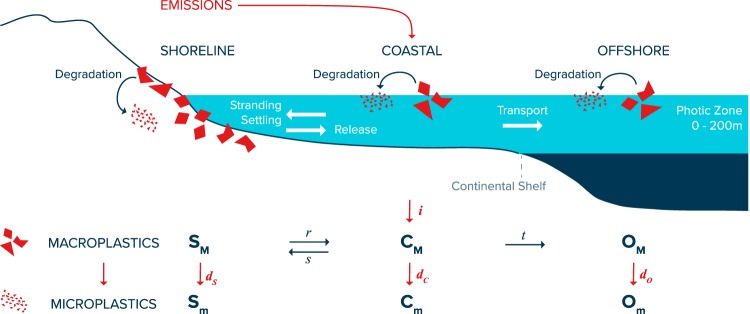
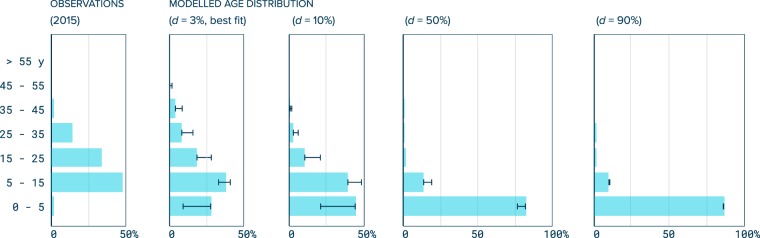
Predicted global figures for plastic debris accumulation in the ocean surface layer range on the order of hundreds of thousands of metric tons, representing only a few percent of estimated annual emissions into the marine environment. The current accepted explanation for this difference is that positively buoyant macroplastic objects do not persist on the ocean surface. Subject to degradation into microplastics, the major part of the mass is predicted to have settled below the surface. However, we argue that such a simple emission-degradation model cannot explain the occurrence of decades-old objects collected by oceanic expeditions. We show that debris circulation dynamics in coastal environments may be a better explanation for this difference. The results presented here suggest that there is a significant time interval, on the order of several years to decades, between terrestrial emissions and representative accumulation in offshore waters. Importantly, our results also indicate that the current generation of secondary microplastics in the global ocean is mostly a result of the degradation of objects produced in the 1990s and earlier. Finally, we propose a series of future emission scenarios until 2050, discussing the necessity to rapidly reduce emissions and actively remove waste accumulated in the environment to mitigate further microplastic contamination in the global ocean.
Overview
The claims and statistics of this paper haven’t been checked yet.
Free: it reads the open-access text and checks the first 5 claims that cite a source we can check. Create a free account to check every claim.
Integrity signals
Registry
Cites
Statistics
Figures
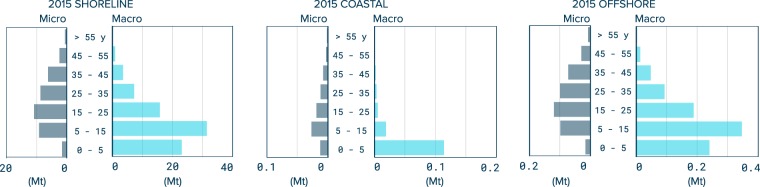
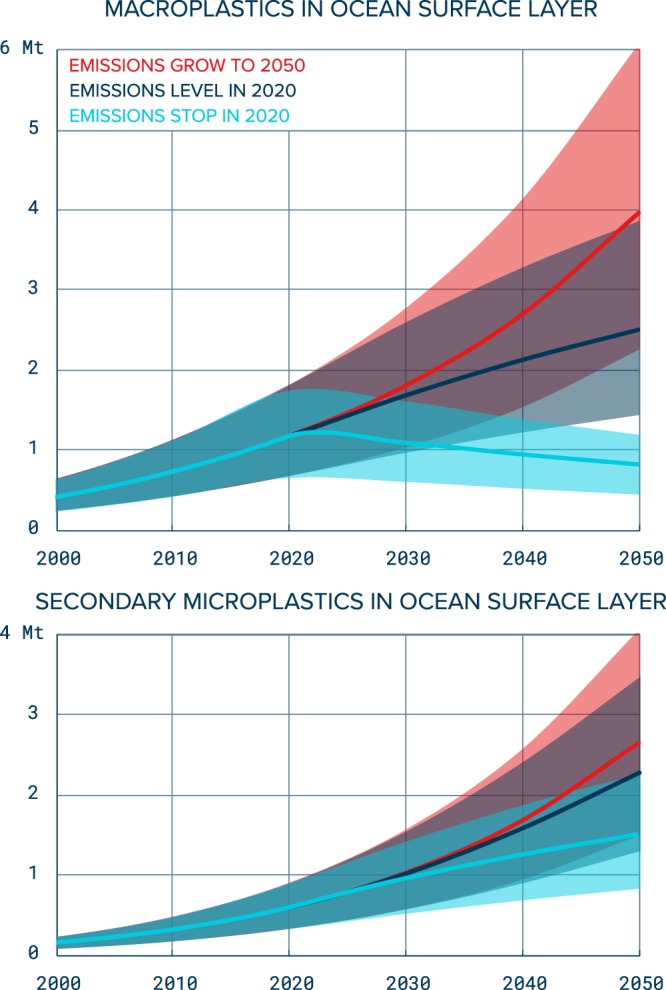
Verification
Claims the paper makes
The claims and statistics of this paper haven’t been checked yet.
Free: it reads the open-access text and checks the first 5 claims that cite a source we can check. Create a free account to check every claim.
Self-check
Percentages, sums and reported differences re-computed from the paper’s own numbers.
The self-check needs the paper’s full text.
Citations
Cites
Production, use, and fate of all plastics ever made
Geyer, R., Jambeck, J. R., & Law, K. L. (2017) · Science Advances · doi:10.1126/sciadv.1700782 · Cited by 18,606
Plastic waste inputs from land into the ocean
Jambeck, J. R., Geyer, R., Wilcox, C., Siegler, T. R., Perryman, M., Andrady, A., Narayan, R., & Law, K. L. (2015) · Science · doi:10.1126/science.1260352 · Cited by 13,163
Microplastics in the marine environment
Andrady, A. L. (2011) · Marine Pollution Bulletin · doi:10.1016/j.marpolbul.2011.05.030 · Cited by 8,105
Accumulation and fragmentation of plastic debris in global environments
Barnes, D. K. A., Galgani, F., Thompson, R. C., & Barlaz, M. (2009) · Philosophical Transactions of the Royal Society B: Biological Sciences · doi:10.1098/rstb.2008.0205 · Cited by 6,126
Eriksen, M., Lebreton, L. C. M., Carson, H. S., Thiel, M., Moore, C. J., Borerro, J. C., Galgani, F., Ryan, P. G., & Reisser, J. (2014) · PLoS ONE · doi:10.1371/journal.pone.0111913 · Cited by 4,710 · cited 1×
“= + ∗ − O y y d O y y ( , ) (1 ) ( 1, ) (8) m O M 0 0”
Self-citationRiver plastic emissions to the world’s oceans
Lebreton, L. C. M., van der Zwet, J., Damsteeg, J.-W., Slat, B., Andrady, A., & Reisser, J. (2017) · Nature Communications · doi:10.1038/ncomms15611 · Cited by 4,011
Self-citationPlastic debris in the open ocean
Cózar, A., Echevarría, F., González-Gordillo, J. I., Irigoien, X., Úbeda, B., Hernández-León, S., Palma, Á. T., Navarro, S., García-de-Lomas, J., Ruiz, A., et al. (2014) · Proceedings of the National Academy of Sciences · doi:10.1073/pnas.1314705111 · Cited by 3,133
What a Waste : A Global Review of Solid Waste Management
Hoornweg, D., & Bhada-Tata, P. (2012) · doi:10.1596/17388 · Cited by 3,129
Evidence that the Great Pacific Garbage Patch is rapidly accumulating plastic
Lebreton, L., Slat, B., Ferrari, F., Sainte-Rose, B., Aitken, J., Marthouse, R., Hajbane, S., Cunsolo, S., Schwarz, A., Levivier, A., et al. (2018) · Scientific Reports · doi:10.1038/s41598-018-22939-w · Cited by 1,839
Self-citationA global inventory of small floating plastic debris
van Sebille, E., Wilcox, C., Lebreton, L., Maximenko, N., Hardesty, B. D., van Franeker, J. A., Eriksen, M., Siegel, D., Galgani, F., & Law, K. L. (2015) · Environmental Research Letters · doi:10.1088/1748-9326/10/12/124006 · Cited by 1,713
Self-citation
Cited by
Items 201–300 of 563
Hink, L., Holzinger, A., Sandfeld, T., Weig, A. R., Schramm, A., Feldhaar, H., & Horn, M. A. (2023) · Environmental Microbiology · doi:10.1111/1462-2920.16386 · Cited by 37
“Although biodegradation by specialized microorganisms originating from plastic polluted sites, landfills or animal intestines has been observed (Gambarini et al., 2021), MPs only degrade slowly in natural environments and persist over decades (Lebreton et al., 2019).”
BackgroundPantoja, J. C. D., de Oliveira, A. E. P., Ferreira, M. A. P., da Costa, L. P., Nunes, Z. M. P., & da Rocha, R. M. (2024) · Marine Pollution Bulletin · doi:10.1016/j.marpolbul.2024.116182 · Cited by 31
Wei, Y., Yu, Y., Cao, X., Wang, B., Yu, D., Wang, J., & Liu, Z. (2024) · Environmental Science & Technology · doi:10.1021/acs.est.4c00296 · Cited by 45
Bansal, M., Santhiya, D., & Sharma, J. G. (2021) · Water Air & Soil Pollution · doi:10.1007/s11270-021-05301-1 · Cited by 30
“Moreover, plastic particles could also get transferred by wind, and tsunami occurring in oceans (Lebreton et al., 2019).”
BackgroundPlastic-microbe interaction in the marine environment: Research methods and opportunities
Xiang, J. K. Z., Bairoliya, S., Cho, Z. T., & Cao, B. (2022) · Environment International · doi:10.1016/j.envint.2022.107716 · Cited by 31
Veer, D. D., Baeza-Álvarez, J., Bolaños, S., Araya, S., Darquea, J. J., Poblete, M. A. D., Domínguez, G. A., Holtmann-Ahumada, G., Honorato‐Zimmer, D., Gaibor, N., et al. (2023) · Marine Pollution Bulletin · doi:10.1016/j.marpolbul.2023.115481 · Cited by 34
Transport and retention of sinking microplastics in a well-mixed estuary
Li, G., Chen, Z., Bowen, M., & Coco, G. (2024) · Marine Pollution Bulletin · doi:10.1016/j.marpolbul.2024.116417 · Cited by 32
Unpacking Plastic: Investigating Plastic Related Ambivalence
Hahn, L., Buttlar, B., & Walther, E. (2021) · Sustainability · doi:10.3390/su13042186 · Cited by 27
“For example, it exists as debris in the oceans [10], and as micro- or nanoparticles in the air [11], agricultural soils [12], and water supplies [13].”
BackgroundIsmail, S. B., Costa, E., Jaziri, H., Morgana, S., Boukthir, M., Ismail, M. A. B., Minetti, R., Montarsolo, A., Narizzano, R., Sammari, C., et al. (2022) · Frontiers in Marine Science · doi:10.3389/fmars.2022.786026 · Cited by 29
“into the marine environment every year (Lebreton et al., 2019).”
Plastic Pollution of the Coastal Surface Water in the Middle and Southern Baikal
Il’ina, O. V., Kolobov, M. Y., & Ильинский, В. В. (2021) · Water Resources · doi:10.1134/s0097807821010188 · Cited by 31
“, biodegradation and accumulation on the shore [22].”
BackgroundThe life of a plastic butter tub in riverine environments
Delorme, A. E., Koumba, G. B., Roussel, E., Delor‐Jestin, F., Peiry, J., Voldoire, O., Garreau, A., Askanian, H., & Verney, V. (2021) · Environmental Pollution · doi:10.1016/j.envpol.2021.117656 · Cited by 26
Floating microplastic loads in the nearshore revealed through citizen science
de Haan, W. P., Uviedo, O., Ballesteros, M., Canales, I., Curto, X., Guart, M., Higueras, S., Molina, A., & Sànchez‐Vidal, A. (2022) · Environmental Research Letters · doi:10.1088/1748-9326/ac5df1 · Cited by 33
Time-course distribution of fluorescent microplastics in target tissues of mussels and polychaetes
Calmão, M., Blasco, N., Benito-Kaesbach, A., Thoppil, R., Fernández, I. T., Castro, K., Izagirre, U., García-Velasco, N., & Soto, M. (2022) · Chemosphere · doi:10.1016/j.chemosphere.2022.137087 · Cited by 29
Usage of Microplastic Beads in Pharmaceuticals and Cosmetics Industry: A Review
Patil, P. M., Mahamuni-Badiger, P. P., Ingavale, R. R., Patel, P. R., & Dhanavade, M. J. (2024) · Springer eBooks · doi:10.1007/978-981-99-8357-5_4 · Cited by 34
The Plastic treaty: What is in it for Africa?
Shomuyiwa, D. O., Onukansi, F. O., Ivanova, M. H., & Lucero‐Prisno, D. E. (2023) · Public Health Challenges · doi:10.1002/puh2.83 · Cited by 25
“It is estimated that plastics close to the ocean shorelines will exceed 3.5 million tonnes by 2050, more than double the 2020 accumulation [4] Although plastic pollution in the ocean has received much attention, most UNEP resolutions for addressing plastic pollution have focused on marine plastic…”
InfluentialPerold, V., Schoombie, S., & Ryan, P. G. (2020) · Marine Pollution Bulletin · doi:10.1016/j.marpolbul.2020.111471 · Cited by 29
Kaandorp, M., Ypma, S., Boonstra, M., Dijkstra, H. A., & van Sebille, E. (2022) · Ocean science · doi:10.5194/os-18-269-2022 · Cited by 31
A colorimetric detection of polystyrene nanoplastics with gold nanoparticles in the aqueous phase
Hong, J., Lee, B.-H., Park, C., & Kim, Y. (2022) · The Science of The Total Environment · doi:10.1016/j.scitotenv.2022.158058 · Cited by 28
Computer vision segmentation model—deep learning for categorizing microplastic debris
Royer, S., Wolter, H., Delorme, A. E., Lebreton, L., & Poirion, O. (2024) · Frontiers in Environmental Science · doi:10.3389/fenvs.2024.1386292 · Cited by 32
Self-citationCleaning technology for marine debris: A review of current status and evaluation
Sugianto, E., Chen, J. H., & Purba, N. P. (2022) · International Journal of Environmental Science and Technology · doi:10.1007/s13762-022-04373-8 · Cited by 33
Size Dependent Transport of Floating Plastics Modeled in the Global Ocean
Klink, D., Peytavin, A., & Lebreton, L. (2022) · Frontiers in Marine Science · doi:10.3389/fmars.2022.903134 · Cited by 26
“Though recent research has made strong headway towards a preliminary understanding of the nearshore behavior of plastic debris (L. Lebreton et al., 2019; Olivelli et al., 2020; Morales-Caselles et al., 2021; Onink et al., 2021b; Ryan & Perold, 2021), these processes are still not well observed on…”
BackgroundSelf-citationGrundlehner, A., Diepens, N. J., Linders, T. E. W., Peeters, E. T. H. M., & Koelmans, A. A. (2023) · Journal of Hazardous Materials · doi:10.1016/j.jhazmat.2023.131984 · Cited by 25
Big brands impact small islands: Sources of plastic pollution in a remote and protected archipelago
Savage, J. M., Chamberlain, A., Fellows, M., Jones, R., Letessier, T. B., Llewellyn, F., Morritt, D., Rowcliffe, J. M., & Koldewey, H. J. (2024) · Marine Pollution Bulletin · doi:10.1016/j.marpolbul.2024.116476 · Cited by 32
Microplastic infiltration into mobile sediments
Alhusban, Z., & Rovelli, L. (2024) · The Science of The Total Environment · doi:10.1016/j.scitotenv.2024.170847 · Cited by 23
Wu, N., Grieve, S., Manning, A. J., & Spencer, K. L. (2025) · Limnology and Oceanography · doi:10.1002/lno.12814 · Cited by 29
“More importantly, small microplastics account only for < 1% of total ocean plastic mass according to recent modeling output (Lebreton, Egger, and Slat 2019; Egger et al. 2020; Kaandorp et al. 2023), and the longevity of large plastic waste is the key to fi lling the last puzzle in understanding the…”
Hajbane, S., Calmanovici, B., Reisser, J., Jolly, A., Summers, V., Ferrari, F. F., Ghadouani, A., & Pattiaratchi, C. B. (2021) · Frontiers in Marine Science · doi:10.3389/fmars.2021.613399 · Cited by 25
“However, these mechanisms do not sufficiently explain the ∼4 orders of magnitude discrepancy between plastics outputs to oceans and those found floating at sea (Lebreton et al., 2019).”
BackgroundFrom inshore to offshore: distribution of microplastics in three Italian seawaters
Sbrana, A., Valente, T., Bianchi, J., Franceschini, S., Piermarini, R., Saccomandi, F., de Lucia, A. G., Camedda, A., Matiddi, M., & Silvestri, C. (2022) · Environmental Science and Pollution Research · doi:10.1007/s11356-022-23582-9 · Cited by 31
Cristi, M. A., Aguilera, M. A., Gallardo, C., Moore, C. J., de Vine, R., Lattin, G., Gamba, A., Luna‐Acosta, A., & Thiel, M. (2023) · Environmental Pollution · doi:10.1016/j.envpol.2023.123157 · Cited by 31
Pelegrini, K., Pereira, T. C. B., Wertheimer, C. C. S., Teodoro, L. D. S., Basso, N. R. D. S., Ligabue, R. A., & Bogo, M. R. (2024) · Water Air & Soil Pollution · doi:10.1007/s11270-024-07541-3 · Cited by 29
“Plastic materials have been used for a wide variety of applications in our daily lives due to their characteristics, such as low cost, easy processing, and durability (Lebreton et al., 2019; Urban-Malinga et al., 2020).”
de Fockert, A., Eleveld, M. A., Bakker, W., Felício, J. M., Costa, T. S., Vala, M., Marques, P. A. C., Leonor, N., Moreira, A. A., Costa, J. R., et al. (2024) · Scientific Reports · doi:10.1038/s41598-024-74332-5 · Cited by 30
“Similarly, the amount of plastics measured at sea 2,25,26 has not kept pace with growth in global plastic production 27 .”
BackgroundZhang, Z., Chen, Z. L., Liu, Y., Yi, Y., Cai, R., Ye, M., Liu, M., Yan, M., Leung, K., & He, D. (2025) · Water Research · doi:10.1016/j.watres.2025.124163 · Cited by 25
Pietz, O., Augenstein, M., Georgakakos, C. B., Singh, K., McDonald, M., & Walter, M. T. (2021) · Journal of Environmental Management · doi:10.1016/j.jenvman.2021.113524 · Cited by 29
Mueller, J. S., Bill, N., Reinach, M. S., Lasut, M. T., Freund, H., & Schupp, P. J. (2022) · Marine Pollution Bulletin · doi:10.1016/j.marpolbul.2022.113369 · Cited by 34
Microplastic in the Marine Environment of the Indian Ocean
Thiemann, T. (2023) · Journal of Environmental Protection · doi:10.4236/jep.2023.144020 · Cited by 29
Macro- and microplastic abundance from recreational beaches along the South Aegean Sea (Türkiye)
Şener, İ., & Yabanlı, M. (2023) · Marine Pollution Bulletin · doi:10.1016/j.marpolbul.2023.115329 · Cited by 25
Global environmental plastics dispersal under OECD policy scenarios towards 2060Preprint
Sonke, J. E., Koenig, A. M., Segur, T., & Yakovenko, N. (2024) · doi:10.31223/x5w990 · Cited by 22
Kvale, K., Andrews, Z. A., & Egger, M. (2024) · Nature Communications · doi:10.1038/s41467-024-53962-3 · Cited by 26
Self-citationChuturkova, R. Z., & Simeonova, A. (2021) · Marine Pollution Bulletin · doi:10.1016/j.marpolbul.2021.113119 · Cited by 23
Dynamics of Transport, Accumulation, and Export of Plastics at Oceanic Fronts
Suaria, G., Berta, M., Griffa, A., Molcard, A., Özgökmen, T. M., Zambianchi, E., & Aliani, S. (2021) · The handbook of environmental chemistry · doi:10.1007/698_2021_814 · Cited by 27
Transforming the Plastic Production System Presents Opportunities to Tackle the Climate Crisis
Jankowska, E., Gorman, M. R., & Frischmann, C. J. (2022) · Sustainability · doi:10.3390/su14116539 · Cited by 24
Saliu, F., Lasagni, M., Andò, S., Ferrero, L., Pellegrini, C., Calafat, A., & Sànchez‐Vidal, A. (2022) · Environmental Science and Pollution Research · doi:10.1007/s11356-022-24772-1 · Cited by 22
Photooxidative degradation and fragmentation behaviors of oriented isotactic polypropylene
An, Y., Kajiwara, T., Padermshoke, A., Nguyen, T. V., Feng, S., Masunaga, H., Kobayashi, Y., Itô, H., Sasaki, S., Isobe, A., et al. (2024) · Polymer Journal · doi:10.1038/s41428-023-00876-4 · Cited by 21
“In 2019, the macro-and microplastics in the ocean surface layer were 1.13 million and ~560,200 tons, respectively [16].”
InfluentialBrenckman, C. M., Borgaonkar, A. D., Pennock, W. H., & Meegoda, J. N. (2026) · Environments · doi:10.3390/environments13010038 · Cited by 29
“At the ecosystem scale, coupled watershed–estuary–coastal models that explicitly include MPs beaching, remobilization, and PFAS load transfer are needed to resolve exposure hot spots and food web implications [136,137].”
Ricker, M., Meyerjürgens, J., Badewien, T. H., & Stanev, E. V. (2021) · The handbook of environmental chemistry · doi:10.1007/698_2021_812 · Cited by 23
Microplastic contamination of sediments across and within three beaches in western Lake Superior
Davidson, B., Batista, K., Samrah, S., Mendoza, L. M. R., & Pujara, N. (2022) · Journal of Great Lakes Research · doi:10.1016/j.jglr.2022.09.011 · Cited by 21
Uehara, T., Asari, M., Sakurai, R., Cordier, M., & Kalyanasundaram, M. (2022) · Journal of Cleaner Production · doi:10.1016/j.jclepro.2022.135609 · Cited by 24
Albergamo, V., Wohlleben, W., & Plata, D. L. (2024) · Environmental Science & Technology · doi:10.1021/acs.est.3c08134 · Cited by 32
Farale, H., Sreevidhya, K. B., Bathinapatla, A., & Kanchi, S. (2025) · Journal of Hazardous Materials Advances · doi:10.1016/j.hazadv.2025.100736 · Cited by 36
Solbakken, V. S., Kleiven, S., & Haarr, M. L. (2022) · Marine Pollution Bulletin · doi:10.1016/j.marpolbul.2022.113533 · Cited by 25
Nagarajan, A. (2022) · Local Environment · doi:10.1080/13549839.2022.2084721 · Cited by 27
“…growth of plastic production and consequent waste, the mismanagement of plastic waste and its impacts on the environment; particularly marine systems (Lebreton, Egger, and Slat 2019; Jambeck et al. 2015; Geyer, Jambeck, and Lavender 2017; Lebreton et al. 2017; Bonanno and Orlando-Bonaca 2018;…”
BackgroundSourcing, thermodynamics, and ring-opening (co)polymerization of substituted δ-lactones: a review
McMichael, P., Schultze, X., Cramail, H., & Peruch, F. (2023) · Polymer Chemistry · doi:10.1039/d3py00657c · Cited by 20
Balabantaray, S. R., Singh, P. K., Pandey, A. K., Chaturvedi, B. K., & Sharma, A. K. (2023) · Environmental Science and Pollution Research · doi:10.1007/s11356-023-30799-9 · Cited by 21
“Microplastic emissions are light-weight materials that usually float on water and constitute less than 0.5 cm in diameter (Maes et al. 2017; Lebreton et al. 2019).”
InfluentialVanstreels, R. E. T., Gallo, L., Serafini, P. P., Santos, A. P., Egert, L., & Uhart, M. (2021) · Marine Pollution Bulletin · doi:10.1016/j.marpolbul.2021.113046 · Cited by 22
Lebreton, L., de Vries, R., Pham, Y., Wolter, H., van Vulpen, M., Puskic, P. S., Sainte-Rose, B., Royer, S., & Egger, M. (2024) · Environmental Research Letters · doi:10.1088/1748-9326/ad78ed · Cited by 21
“…ranging from respectively 1%–3% of floating mass per year, as suggested by laboratory (Gerritse et al 2020, Delre et al 2023) and modelling studies (Lebreton et al 2019), we calculated that 0.9–1.6 kg km − 2 and 2.8–4.7 kg km − 2 , respectively, would have been coming from the degradation of…”
InfluentialSelf-citationJamieson, A. J., & Onda, D. F. L. (2022) · Continental Shelf Research · doi:10.1016/j.csr.2022.104867 · Cited by 19
Ruiz, I., Rubio, A., Abascal, A. J., & Basurko, O. C. (2022) · Ocean science · doi:10.5194/os-18-1703-2022 · Cited by 22
“Indeed, the distribution and fate of floating litter in the marine environment is affected by the metocean conditions (currents, turbulence, wind) but also by the buoyancy of the objects (Ryan, 2015; Lebreton et al., 2019; Maclean et al., 2021).”
BackgroundSchirrmeister, S., Kurzweg, L., Gjashta, X., Socher, M., Fery, A., & Harre, K. (2024) · Environmental Science and Pollution Research · doi:10.1007/s11356-024-33100-8 · Cited by 22
“Moreover, the amount of polymeric material in the oceans might double by 2050 (Lebreton et al. 2019).”
BackgroundAccelerated aging: The hidden harm of microplastic exposure
Huang, H., Hou, J., Xing, B., & Xi, B. (2024) · 中国科学通报:英文版 · doi:10.1016/j.scib.2024.05.020 · Cited by 19
Pae, J., Kim, M. O., Han, T. H., & Moon, J. (2022) · Journal of Building Engineering · doi:10.1016/j.jobe.2022.104829 · Cited by 19
Ghani, S. A. A., Shobier, A. H., El-Sayed, A. A. M., Shreadah, M. A., & Shabaka, S. H. (2023) · The Science of The Total Environment · doi:10.1016/j.scitotenv.2023.166031 · Cited by 18
Høiberg, M. A., Stadler, K., & Verones, F. (2024) · The Science of The Total Environment · doi:10.1016/j.scitotenv.2024.175019 · Cited by 19
Sivaraman, M., Fan, L., & Yan, W. (2024) · The Science of The Total Environment · doi:10.1016/j.scitotenv.2024.176009 · Cited by 17
Dyeing to Know: Harmonizing Nile Red Staining Protocols for Microplastic Identification
Ho, D., & Masura, J. (2025) · Colorants · doi:10.3390/colorants4020020 · Cited by 21
Gomez, N. C. F., Cragg, S. M., Ghiglione, J., & Onda, D. F. L. (2023) · Environmental Pollution · doi:10.1016/j.envpol.2023.122602 · Cited by 22
“Some of the plastics released into the oceans accumulate in coastal environments due to debris circulation dynamics leaving beaches, mangroves, and seagrass beds vulnerable to plastic pollution (Lebreton et al., 2019).”
Hernández, I., Castro-Rosero, L. M., Espino, M., & Alsina, J. M. (2024) · Geoscientific model development · doi:10.5194/gmd-17-2221-2024 · Cited by 26
Kikuchi, J., & Yamada, S. (2021) · RSC Advances · doi:10.1039/d1ra03008f · Cited by 16
Incorporating terrain specific beaching within a lagrangian transport plastics model for Lake Erie
Daily, J., Onink, V., Jongedijk, C. E., Laufkötter, C., & Hoffman, M. J. (2021) · Microplastics and Nanoplastics · doi:10.1186/s43591-021-00019-7 · Cited by 22
“In the oceans, it has recently been proposed that nearshore beaching plastic is the predominant location of this missing plastic [11, 54–57].”
Spencer, M., Culhane, F. E., Chong, F., Powell, M. O., Holst, R. J. R., & Helm, R. R. (2023) · PeerJ · doi:10.7717/peerj.15021 · Cited by 19
The Mediterranean Sea in the Anthropocene
Trincardi, F., Francocci, F., Pellegrini, C., d’Alcalà, M. R., & Sprovieri, M. (2022) · Elsevier eBooks · doi:10.1016/b978-0-12-823692-5.00013-3 · Cited by 19
Experimental Tests for Fluorescence LIDAR Remote Sensing of Submerged Plastic Marine Litter
Palombi, L., & Raimondi, V. (2022) · Remote Sensing · doi:10.3390/rs14235914 · Cited by 18
Three-Dimensional Dispersion of Neutral “Plastic” Particles in a Global Ocean Model
Huck, T., Bajon, R., Grima, N., Portela, E., Molines, J., & Penduff, T. (2022) · Frontiers in Analytical Science · doi:10.3389/frans.2022.868515 · Cited by 17
Taking the sparkle off the sparkling time
Perosa, M., Guerranti, C., Renzi, M., & Bevilacqua, S. (2021) · Marine Pollution Bulletin · doi:10.1016/j.marpolbul.2021.112660 · Cited by 15
Bermúdez, R., Métian, M., Swarzenski, P. W., Bank, M. S., Bjorøy, Ø., Cajas, J., Bucheli, R., González-Muñoz, R., Lynch, J., Piguave-Tarira, E. J., et al. (2025) · Marine Pollution Bulletin · doi:10.1016/j.marpolbul.2025.118437 · Cited by 18
The Fluid Mechanics of Ocean Microplastics
DiBenedetto, M. H. (2025) · Annual Review of Fluid Mechanics · doi:10.1146/annurev-fluid-120423-012604 · Cited by 35
Ko, C., Hsin, Y., & Jeng, M.-S. (2020) · Environmental Research Letters · doi:10.1088/1748-9326/abae29 · Cited by 15
“The relatively even distributions of coastal-source litter accumulation along latitudes and longitudes re-emphasized this global environmental threat (Lebreton et al 2019), and the high latitudes in the Southern Hemisphere seemed to show the greatest vulnerability to such ocean litter problems.”
BackgroundBarbier, E. B. (2023) · Frontiers in Environmental Economics · doi:10.3389/frevc.2023.1096303 · Cited by 14
Gutsa, T., Trois, C., de Vries, R., & Mani, T. (2024) · The Science of The Total Environment · doi:10.1016/j.scitotenv.2024.176791 · Cited by 19
Kuroda, K., Yamamoto, K., Isshiki, R., Tokizawa, R., Shiiba, C., Hino, S., Yamano, N., Usui, E., Miyakawa, T., Miura, T., et al. (2025) · Journal of Hazardous Materials · doi:10.1016/j.jhazmat.2025.137202 · Cited by 15
Can Young Generations Recognize Marine Plastic Waste as a Systemic Issue?
Uehara, T. (2020) · Sustainability · doi:10.3390/su12072586 · Cited by 14
Current Status and Issues of Microplastic Pollution Research
Otsuka, Y., Takada, H., NIHEI, Y., Kameda, Y., & Nishikawa, K. (2021) · Journal of Japan Society on Water Environment · doi:10.2965/jswe.44.35 · Cited by 20
Evaluating the environmental impact of cleaning the North Pacific Garbage Patch
Egger, M., Booth, A. M., Bosker, T., Everaert, G., Garrard, S. L., Havas, V., Huntley, H. S., Koelmans, A. A., Kvale, K., Lebreton, L., et al. (2025) · Scientific Reports · doi:10.1038/s41598-025-00619-w · Cited by 18
“As a baseline for 2015, we used reported average NPGP macro-and microplastics concentrations by Lebreton et al. 19 of 67 kg/km 2 (lower–upper estimate: 48–89 kg/km 2 ) and 678,000 #/km 2 (422,000–1,360,000 #/km 2 ).”
InfluentialSelf-citationSimulating the distribution of beached litter on the northwest coast of Scotland
Allison, N. L., Dale, A., Turrell, W. R., Aleynik, D. L., & Narayanaswamy, B. E. (2022) · Frontiers in Environmental Science · doi:10.3389/fenvs.2022.940892 · Cited by 13
“Therefore, in order to determine if deposition on the coastline explains the whereabouts of missing plastics from the surface of the ocean, it is important to apply reliable beaching conditions, in particle tracking model simulations to estimate the variability of beach-loadings (Maximenko et al., 2012; Lebreton et al…”
BackgroundMonica, A. V., Anbalagan, K., & Becky Miriyam, I. (2023) · Water Science & Technology · doi:10.2166/wst.2023.280 · Cited by 15
Seasonality of Marine Litter Hotspots in the Wider Caribbean Region
Xu, X., Chassignet, E. P., Miron, P., & Zavala‐Romero, O. (2024) · Journal of Marine Science and Engineering · doi:10.3390/jmse12020319 · Cited by 16
“A stochastic approach was implemented in some recent Lagrangian studies [64, 69, 70], in which they consider that particles located within a proximity distance 𝛥𝑥 of a coastline (and model land cells) have a probability p of beaching.”
MethodViel, T., Cocca, M., Esposito, R., Amato, A., Russo, T., Cosmo, A. D., Polese, G., Manfra, L., Libralato, G., Zupo, V., et al. (2024) · The Science of The Total Environment · doi:10.1016/j.scitotenv.2024.172586 · Cited by 16
Zhang, Y., Jiang, F., Li, F., ShaoYong, L., Liu, Z., Wang, Y., Chi, Y., Jiang, C., Zhang, L., Chen, Q., et al. (2024) · Journal of Hazardous Materials · doi:10.1016/j.jhazmat.2024.134572 · Cited by 16
Su, Z. W., Wei, L., Zhi, L., Huang, X., Wang, X., & Wang, J. (2024) · TrAC Trends in Analytical Chemistry · doi:10.1016/j.trac.2024.117760 · Cited by 15
Frontal processes as drivers of floating marine debris in coastal areas
Le, P. T. D., Hardesty, B. D., Auman, H. J., & Fischer, A. M. (2024) · Marine Environmental Research · doi:10.1016/j.marenvres.2024.106654 · Cited by 17
Long-Term Changes in the Abundance, Size, and Morphotype of Marine Plastics in the North Pacific
Miyazono, K., Tadokoro, K., Thushari, G. G. N., Miyamoto, H., Takasuka, A., Watai, M., Yasuda, T., Sato, T., Yamashita, R., Kodama, T., et al. (2025) · Environmental Science & Technology · doi:10.1021/acs.est.4c09706 · Cited by 17
Knowing the rules can effectively enhance plastic waste separation on campus
Uehara, T., Asari, M., & Sakurai, R. (2022) · Frontiers in Sustainability · doi:10.3389/frsus.2022.1023605 · Cited by 16
“Furthermore, as plastic waste degrades into microplastics with time (Lebreton et al., 2019), eliminating the possibility of efficient complete removal from the environment, immediate and substantial efforts to reverse the net flow are urgent (Uehara, 2020).”
BackgroundZahari, N. Z., Vincent, S. D., Cleophas, F., Budin, K., & Sabullah, M. K. (2023) · Water · doi:10.3390/w15152681 · Cited by 16
de Miranda, C. O., de Souza, J. J. L. L., Schaefer, C. E. G. R., Lwanga, E. H., & Villela, F. N. J. (2024) · Environmental Pollution · doi:10.1016/j.envpol.2024.123791 · Cited by 17
Microplastic atmospheric pollution in an urban Southern Brazil region: What can spider webs tell us?
da Costa, M. B., Schuab, J. M., Sad, C. M. D. S., Yapuchura, E. R., Otegui, M. B. P., Motta, D. G., Menezes, K. M., Caniçali, F. B., Marins, A. A. L., Dalbó, G. Z., et al. (2024) · Journal of Hazardous Materials · doi:10.1016/j.jhazmat.2024.135190 · Cited by 17
Low Incidence of Microplastics in Coral Reefs of KāneʻOhe Bay, HawaiʻI, USA
Axworthy, J. B., Lasdin, K. S., & Padilla‐Gamiño, J. L. (2024) · Marine Pollution Bulletin · doi:10.1016/j.marpolbul.2024.116996 · Cited by 15
Pitt, J. A., Gallager, S. M., Youngs, S., Michel, A. P. M., Hahn, M. E., & Aluru, N. (2024) · Microplastics and Nanoplastics · doi:10.1186/s43591-024-00101-w · Cited by 19
“One of the key challenges is that small MPs (smaller than 50 μm), the most prevalent size of environmental plastics [43], are difficult to find and identify in environmental samples [43].”
BackgroundThe first baseline estimation of marine litter in Port Elizabeth, South Africa
Barnardo, T., van Niekerk, T. M., Pichegru, L., & Marlin, D. (2021) · Marine Pollution Bulletin · doi:10.1016/j.marpolbul.2021.112903 · Cited by 13
Atmospheric Transport, a Major Pathway of Microplastics to Remote RegionsPreprint
Evangeliou, N., Grythe, H., Klimont, Z., Heyes, C., Eckhardt, S., López-Aparicio, S., & Stohl, A. (2020) · Preprints.org · doi:10.20944/preprints202003.0385.v1 · Cited by 14
Data driven AI (artificial intelligence) detection furnish economic pathways for microplastics
Latwal, M., Arora, S., & Murthy, K. S. (2024) · Journal of Contaminant Hydrology · doi:10.1016/j.jconhyd.2024.104365 · Cited by 13
Calvert, R., Peytavin, A., Pham, Y., Duhamel, A., van der Zanden, J., van Essen, S., Sainte-Rose, B., & van den Bremer, T. S. (2024) · Journal of Geophysical Research Oceans · doi:10.1029/2023jc020661 · Cited by 15
Potential role of microplastic in sediment as an indicator of Anthropocene
Yin, Q., Gong, P., & Wang, X. (2024) · Earth Critical Zone · doi:10.1016/j.ecz.2024.100016 · Cited by 16
Metadata
- Authors
- Lebreton, L., Egger, M., & Slat, B.
- Affiliations
- The Ocean Cleanup (NL)
- Corresponding author
- Lebreton, Laurent
- Venue
- Scientific Reports
- Published
- 2019-09-12
- Volume
- 9
- Issue
- 1
- Pages
- 12922-12922
- ISSN
- 2045-2322 (ISSN-L)
- PMC
- PMC6742645
- OpenAlex
- W2972672030
- Semantic Scholar
- 29aad97df0dcac562c973fe7ec6e062e985217a2
- Cited by
- 563
- References
- 29
- Citations by year
- 2026: 48 · 2025: 87 · 2024: 88 · 2023: 109 · 2022: 96 · 2021: 83 · 2020: 47 · 2019: 5
- FWCI
- 17.30
- Type
- journal article
- Language
- en
- Update notices
- correction (2020-01-30)
- Open access
- gold
- doi.org
- Licence
- cc-by
- creativecommons.org/licenses/by/4.0 (tdm)
- creativecommons.org/licenses/by/4.0 (vor)
- Locations
- Scientific Reports (publishedVersion, cc-by)
- PubMed Central (publishedVersion, cc-by)
- PubMed (publishedVersion)
- DOAJ (DOAJ: Directory of Open Access Journals) (submittedVersion)
- Topics
- Physical Sciences › Environmental Science › Pollution › Microplastics and Plastic Pollution
- Physical Sciences › Environmental Science › Pollution › Oil Spill Detection and Mitigation
- Physical Sciences › Environmental Science › Waste Management and Disposal › Waste Management and Recycling
- Keywords
- microplastics, plastic degradation, plastic emissions, secondary microplastics, marine plastic pollution, emission scenarios
About these checks
Registry, retraction, Cites and statistics results are computed, not judged, with one exception: a printed reference that no index lists is read once by a model before it counts as a citation error. Claims are extracted by a model and kept only when their quote appears verbatim in the text; each cited source is then checked, with a model’s help, for whether it says what the claim relies on. Those verdicts can be wrong — read the claim’s quote and the cited source before relying on one.
Statistics and arithmetic are recomputed, not judged.
Confidence bands are shown only for fields calibrated on our annotated test set. None is calibrated yet, so no band is shown.
What counts as a claim ›How we measure confidence ›How we check this ›
Are you an author, or do you see a problem with this page? Request a review
Data sources
Bibliographic data: Semantic Scholar, OpenAlex, Crossref.
Contains information from the Semantic Scholar Academic Graph Datasets, made available under the ODC Attribution License (ODC-BY 1.0).
Semantic Scholar’s data is described in: Kinney, R., et al. (2023). The Semantic Scholar Open Data Platform. arXiv:2301.10140.
