

A global mass budget for positively buoyant macroplastic debris in the ocean
Open accessThe DOI matches its Crossref record; 29 of the 29 references it cites were found in a registry or an index.
Abstract
Predicted global figures for plastic debris accumulation in the ocean surface layer range on the order of hundreds of thousands of metric tons, representing only a few percent of estimated annual emissions into the marine environment. The current accepted explanation for this difference is that positively buoyant macroplastic objects do not persist on the ocean surface. Subject to degradation into microplastics, the major part of the mass is predicted to have settled below the surface. However, we argue that such a simple emission-degradation model cannot explain the occurrence of decades-old objects collected by oceanic expeditions. We show that debris circulation dynamics in coastal environments may be a better explanation for this difference. The results presented here suggest that there is a significant time interval, on the order of several years to decades, between terrestrial emissions and representative accumulation in offshore waters. Importantly, our results also indicate that the current generation of secondary microplastics in the global ocean is mostly a result of the degradation of objects produced in the 1990s and earlier. Finally, we propose a series of future emission scenarios until 2050, discussing the necessity to rapidly reduce emissions and actively remove waste accumulated in the environment to mitigate further microplastic contamination in the global ocean.
Overview
The claims and statistics of this paper haven’t been checked yet.
Free: it reads the open-access text and checks the first 5 claims that cite a source we can check. Create a free account to check every claim.
Integrity signals
Registry
Cites
Statistics
Figures
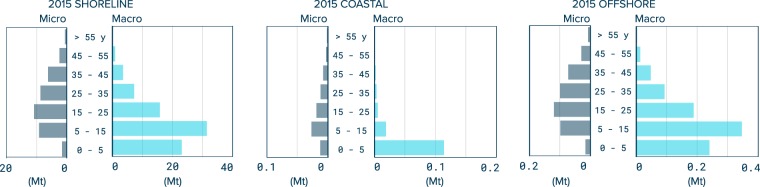
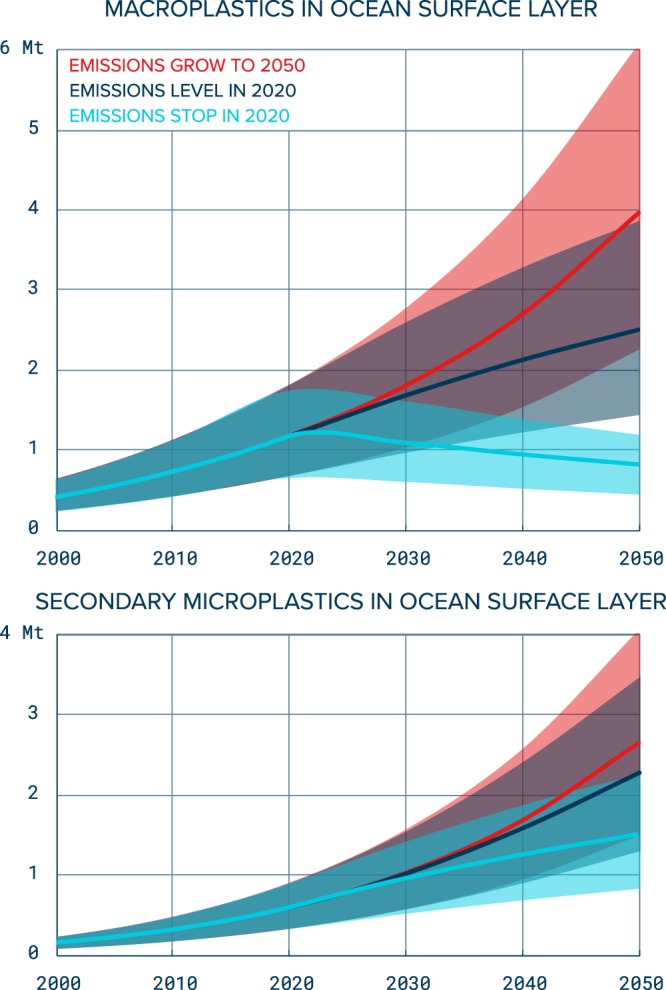
Verification
Claims the paper makes
The claims and statistics of this paper haven’t been checked yet.
Free: it reads the open-access text and checks the first 5 claims that cite a source we can check. Create a free account to check every claim.
Self-check
Percentages, sums and reported differences re-computed from the paper’s own numbers.
The self-check needs the paper’s full text.
Citations
Cites
Production, use, and fate of all plastics ever made
Geyer, R., Jambeck, J. R., & Law, K. L. (2017) · Science Advances · doi:10.1126/sciadv.1700782 · Cited by 18,606
Plastic waste inputs from land into the ocean
Jambeck, J. R., Geyer, R., Wilcox, C., Siegler, T. R., Perryman, M., Andrady, A., Narayan, R., & Law, K. L. (2015) · Science · doi:10.1126/science.1260352 · Cited by 13,163
Microplastics in the marine environment
Andrady, A. L. (2011) · Marine Pollution Bulletin · doi:10.1016/j.marpolbul.2011.05.030 · Cited by 8,105
Accumulation and fragmentation of plastic debris in global environments
Barnes, D. K. A., Galgani, F., Thompson, R. C., & Barlaz, M. (2009) · Philosophical Transactions of the Royal Society B: Biological Sciences · doi:10.1098/rstb.2008.0205 · Cited by 6,126
Eriksen, M., Lebreton, L. C. M., Carson, H. S., Thiel, M., Moore, C. J., Borerro, J. C., Galgani, F., Ryan, P. G., & Reisser, J. (2014) · PLoS ONE · doi:10.1371/journal.pone.0111913 · Cited by 4,710 · cited 1×
“= + ∗ − O y y d O y y ( , ) (1 ) ( 1, ) (8) m O M 0 0”
Self-citationRiver plastic emissions to the world’s oceans
Lebreton, L. C. M., van der Zwet, J., Damsteeg, J.-W., Slat, B., Andrady, A., & Reisser, J. (2017) · Nature Communications · doi:10.1038/ncomms15611 · Cited by 4,011
Self-citationPlastic debris in the open ocean
Cózar, A., Echevarría, F., González-Gordillo, J. I., Irigoien, X., Úbeda, B., Hernández-León, S., Palma, Á. T., Navarro, S., García-de-Lomas, J., Ruiz, A., et al. (2014) · Proceedings of the National Academy of Sciences · doi:10.1073/pnas.1314705111 · Cited by 3,133
What a Waste : A Global Review of Solid Waste Management
Hoornweg, D., & Bhada-Tata, P. (2012) · doi:10.1596/17388 · Cited by 3,129
Evidence that the Great Pacific Garbage Patch is rapidly accumulating plastic
Lebreton, L., Slat, B., Ferrari, F., Sainte-Rose, B., Aitken, J., Marthouse, R., Hajbane, S., Cunsolo, S., Schwarz, A., Levivier, A., et al. (2018) · Scientific Reports · doi:10.1038/s41598-018-22939-w · Cited by 1,839
Self-citationA global inventory of small floating plastic debris
van Sebille, E., Wilcox, C., Lebreton, L., Maximenko, N., Hardesty, B. D., van Franeker, J. A., Eriksen, M., Siegel, D., Galgani, F., & Law, K. L. (2015) · Environmental Research Letters · doi:10.1088/1748-9326/10/12/124006 · Cited by 1,713
Self-citation
Cited by
Items 301–400 of 563
Hernández, I., Castro-Rosero, L. M., Espino, M., & Alsina, J. M. (2025) · Frontiers in Marine Science · doi:10.3389/fmars.2024.1534678 · Cited by 13
Microplastic ingestion and retention in penaeid shrimp from the Arabian Sea
Morris, S., Sarlin, P. J., Morris, S., & Joseph, P. (2025) · Discover Environment · doi:10.1007/s44274-025-00212-y · Cited by 16
“Polluted rivers like the Ganges and Indus play an important part in this [29–31].”
Surface properties and rising velocities of pristine and weathered plastic pellets
Bond, T., Morton, J. K., Al‐Rekabi, Z., Cant, D. J. H., Davidson, S., & Pei, Y. (2022) · Environmental Science Processes & Impacts · doi:10.1039/d1em00495f · Cited by 16
Gomez, N. C. F., & Onda, D. F. L. (2022) · Archives of Microbiology · doi:10.1007/s00203-022-03366-y · Cited by 11
“Among marine habitats, coastal areas or beaches have been suggested as one of the most vulnerable since the majority of plastics tend to accumulate on the coasts aided by wave motion or wind influence (Harrison et al. 2014; De Tender et al. 2015; Lebreton et al. 2019; Cruz and Shimozono 2021), leaving these ecosystems…”
BackgroundMuthusubramanian, B., Neelamegam, P., Ramar, V., & Suresh, V. (2023) · Environmental Science and Pollution Research · doi:10.1007/s11356-023-29933-4 · Cited by 15
“However, reducing plastic pollution starting in 2020 will result in a significant decrease in plastic waste by 2050 (Lebreton et al. 2019).”
BackgroundGlobal Coastline Plastic Emissions into the Oceans
Han, Y., Zhang, Y., Liu, X., Liu, Y., Ma, W., & Wen, Z. (2026) · Environmental Science & Technology · doi:10.1021/acs.est.5c15230 · Cited by 10
Micella, I., Kroeze, C., Bak, M. P., Tang, T., Wada, Y., & Strokal, M. (2024) · Earth s Future · doi:10.1029/2024ef004712 · Cited by 15
Baak, J. E., Brown, Z. O., Provencher, J. F., & Mallory, M. L. (2022) · Marine Pollution Bulletin · doi:10.1016/j.marpolbul.2022.113641 · Cited by 11
Biodegradable Bio-based Plastics Toward Climate Change Mitigation
Morais, A. M. M. B., Morais, R. M. S. C., Drew, D., Mustakhimov, I. I., & Lackner, M. K. (2022) · Springer eBooks · doi:10.1007/978-3-030-72579-2_91 · Cited by 14
Hollow Wing Technique to Enhancing Conveyor Performance on Marine Debris Collection
Sugianto, E., & Chen, J.-H. (2022) · Evergreen · doi:10.5109/6625727 · Cited by 16
Fung, Y. H., Han, J., Tam, N. F. Y., Chen, J. L., Chan, S. M. N., Cheung, S. G., Zhou, H., Lo, C., & Ma, Y. (2023) · Environmental Technology & Innovation · doi:10.1016/j.eti.2023.103086 · Cited by 11
Anfuso, G., Álvarez, Ó., Dilauro, G., Sabato, G., Scardino, G., Sozio, A., & Rizzo, A. (2024) · Water · doi:10.3390/w16030409 · Cited by 10
Brandler, K. G., & Carlton, J. T. (2023) · Marine Pollution Bulletin · doi:10.1016/j.marpolbul.2023.114631 · Cited by 11
Little evidence for bioaccumulation or biomagnification of microplastics in a deep-sea food web
Hermabessière, L., Thaysen, C., Sherlock, C., Choy, C. A., & Rochman, C. M. (2023) · Marine Ecology Progress Series · doi:10.3354/meps14458 · Cited by 11
(Bio)degradation of biopolymer and biocomposite in deep-sea environments
Chamley, A., Baley, C., Gayet, N., Sarrazin, J., Fuchs, S., Freyermouth, F., & Davies, P. (2024) · Marine Pollution Bulletin · doi:10.1016/j.marpolbul.2024.117230 · Cited by 9
Beaumont, N., Börger, T., Clark, J. R., Hanley, N. D., Johnston, R. J., Meginnis, K., Stapenhurst, C., & de Vries, F. P. (2025) · Communications Earth & Environment · doi:10.1038/s43247-025-02115-5 · Cited by 11
“Theseinclude,butarenotlimitedto,accumulationin rivers 46 , beaching 47 and coastal trapping 48 .”
Efficient Detection of Microplastics on Edge Devices With Tailored Compiler for TinyML Applications
Cerioli, A., Petrosino, L., Sasso, D., Laroche, C., Piechowiak, T., Pezzarossa, L., Merone, M., Vollero, L., & Sabatini, A. (2025) · IEEE Access · doi:10.1109/access.2025.3567816 · Cited by 11
“Microplastics have grown exponentially in recent years, becoming an increasingly worrying topic for humanity and the environment [1].”
Strong Convergence of Floating Microplastics at a Small-Scale Estuarine Surface Front
Jong, M., Tong, X., Chen, M., Tay, S. H. X., Trinh, D. H., Cao, Y., Zhao, S., Lu, S., Park, E., Shi, H., et al. (2025) · Environmental Science & Technology Letters · doi:10.1021/acs.estlett.5c00322 · Cited by 11
Monsoonal influence on floating marine litter pathways in the Bay of Bengal
Harrison, L. C., Graham, J. A., Chowdhury, P. D., Silva, T. A. M., Hoehn, D. P., Samanta, A., Chakraborty, K., Joseph, S., Nair, T. M. B., & Kumar, T. S. (2025) · Ocean science · doi:10.5194/os-21-1369-2025 · Cited by 10
Tracking the exposure of a pelagic seabird to marine plastic pollution
Blanco, G. S., Tonini, M. H., Gallo, L., Dell’Omo, G., & Quintana, F. (2022) · Marine Pollution Bulletin · doi:10.1016/j.marpolbul.2022.113767 · Cited by 11
van Klink, D., Wiering, M. A., van Eerd, M. C. J., & Schoor, M. M. (2022) · Water · doi:10.3390/w14121978 · Cited by 9
Ypma, S., Bohte, Q., Forryan, A., Garabato, A. C. N., Donnelly, A., & van Sebille, E. (2022) · Ocean science · doi:10.5194/os-18-1477-2022 · Cited by 10
“Marine plastic debris is abundant in the global ocean (Browne et al., 2015; Lebreton et al., 2019) and is likely to increase in the coming decades if waste-management systems across the globe do not improve (Lebreton and Andrady, 2019; Lau et al.”
BackgroundWillingness-to-pay for precautionary control of microplastics, a comparison of hybrid choice models
King, P. M. (2022) · Journal of Environmental Economics and Policy · doi:10.1080/21606544.2022.2146757 · Cited by 11
“As the stock of this unreco-verable pollutant is forecast to increase given growth in plastic production (Lebreton, Egger, and Slat 2019), the chance of microplastics being ingested by marine or even human life may increase.”
BackgroundImpacts of Nanofluids and Nanomaterials on Environment and Human Health: A Review
Bhattacharjee, B., Dutta, S., Maity, T., Dey, S., Mondal, S., & Bhowmick, S. (2023) · Nanoscience & Nanotechnology-Asia · doi:10.2174/2210681213666230601103342 · Cited by 11
Sánchez-García, N., Alomar, C., Rios-Fuster, B., Vazquez-Bonales, J. A., Calleja-Setién, E., Ventero, A., Iglesias, M., & Deudero, S. (2024) · The Science of The Total Environment · doi:10.1016/j.scitotenv.2024.176860 · Cited by 8
Editorial: Impact of marine debris on marine ecosystems and organisms
Ouyang, X., Panti, C., Stefano Cannicci, A., Li, R., & Tam, N. F. Y. (2023) · Frontiers in Marine Science · doi:10.3389/fmars.2023.1136431 · Cited by 9
“2% in 2050 from 2,510,400 metric tons in 2020 (Lebreton et al., 2019).”
Hogan, S., & Urban-Rich, J. (2024) · Journal of Geoscience Education · doi:10.1080/10899995.2024.2333725 · Cited by 10
“Recent research suggests that the bulk of plastic pollution in the marine environment is located below the surface and is comprised of small micro-and nano-plastics (Lebreton et al., 2019).”
Delorme, A. E., Poirion, O., Lebreton, L., Gac, P. L., Kāne, K., & Royer, S.-J. (2025) · Marine Pollution Bulletin · doi:10.1016/j.marpolbul.2025.117712 · Cited by 11
Self-citationA Review on Microplastics in Offshore and Nearshore Waters
Thiemann, T. (2025) · Journal of Water Resource and Protection · doi:10.4236/jwarp.2025.173009 · Cited by 8
“Observational and modelling studies find that a large proportion of plastics converge and may accumulate within subtropical oceanic gyres [11] [43] [224] [237] whereas others remain within coastal regions [219] [238] [239].”
Perold, V., Moloney, C. L., & Ryan, P. G. (2025) · Environmental Pollution · doi:10.1016/j.envpol.2025.126125 · Cited by 8
Hendriks, L., Egger, M., & Mitrano, D. M. (2025) · Journal of Analytical Atomic Spectrometry · doi:10.1039/d5ja00223k · Cited by 10
Self-citationMicroplastic pollution in water Systems of the Global South: A review
Saadat, A. M., Emami, S. K., Hamidifar, H., & Shilsar, M. J. F. (2025) · Journal of Contaminant Hydrology · doi:10.1016/j.jconhyd.2025.104729 · Cited by 9
Kumari, S., Nagpal, S., Khan, S. A., & Chinglenthoiba, C. (2025) · Emerging Contaminants and Environmental Health · doi:10.20517/eceh.2025.08 · Cited by 11
Beaching model for buoyant marine debris in bore-driven swash
Davidson, B., Brenner, J., & Pujara, N. (2023) · Flow · doi:10.1017/flo.2023.31 · Cited by 8
“…models concerning particle deposition is to consider a particle potentially beached if that particle is in a computational cell along the coast (Atwood et al., 2019; Collins & Hermes, 2019; Kaandorp, Dijkstra, & van Sebille, 2020; Lebreton, Egger, & Slat, 2019; Lebreton, Greer, & Borrero, 2012).”
BackgroundSasso, D., Merone, M., Nicolai, E., Vollero, L., & Sabatini, A. (2024) · IEEE Access · doi:10.1109/access.2024.3362240 · Cited by 8
“The exponential growth of the use of plastic in common life made it become an increasingly worrying topic [1].”
BackgroundAlrshoudi, F., Samad, U. A., & Alothman, O. Y. (2022) · Polymers · doi:10.3390/polym14142806 · Cited by 11
“The majority of this ocean-disposed waste degrades, settles below the surface of the sea, and becomes a part of marine organisms, damaging the ecosystem [4], and which could possess undesired effects on the ecological environment and human health [5,6].”
BackgroundMicroplastics particles in coastal zone: Approach of physical oceanography
Chubarenko, I., Esiukova, E., Bagaev, A., Isachenko, I. A., Zobkov, M., Bagaeva, M., Khatmullina, L., & Fetisov, S. (2024) · Elsevier eBooks · doi:10.1016/b978-0-443-15332-7.00005-3 · Cited by 10
Size-Dependent Microplastic Fragmentation Model
Pérez-Muñuzuri, V. (2024) · Journal of Marine Science and Engineering · doi:10.3390/jmse12071213 · Cited by 8
“PSD data often shows a maximum for small pieces and a power law for bigger fragments [2,4,7,23–25].”
BackgroundImpact of coagulation characteristics on the aggregation of microplastics in upper-ocean turbulence
Pizzi, F., Rahmani, M., Romera-Castillo, C., Peters, F., Grau, J., Capuano, F., & Jofre, L. (2024) · Advances in Water Resources · doi:10.1016/j.advwatres.2024.104798 · Cited by 7
Cai, C., Hong, B., Zhu, L., Xu, H., & Wang, L. (2024) · Ocean Modelling · doi:10.1016/j.ocemod.2024.102492 · Cited by 7
Tian, Z., Kim, S., & Kim, K. (2025) · Journal of Hazardous Materials · doi:10.1016/j.jhazmat.2025.137190 · Cited by 7
Le, P. T. D., Fischer, A. M., Hardesty, B. D., Auman, H. J., & Wilcox, C. (2023) · Marine Pollution Bulletin · doi:10.1016/j.marpolbul.2023.115818 · Cited by 8
Almeida, F. N., Leray, C., Souc, C., Scotto, S., Selmi, S., Hammouda, A., Ramos, R., ter Halle, A., McCoy, K. D., & Vittecoq, M. (2024) · Marine Pollution Bulletin · doi:10.1016/j.marpolbul.2024.116508 · Cited by 10
Xia, X., Wang, L., Pei, H., Dong, C., Zhang, Y., & Ding, J. (2024) · Environmental Pollution · doi:10.1016/j.envpol.2024.124663 · Cited by 8
Zhuo, T., Chai, B., & You, X. (2024) · Aquatic Toxicology · doi:10.1016/j.aquatox.2024.107210 · Cited by 8
Sustainable Use of the Environment, Planetary Boundaries and Market Power
Barbier, E. B., & Burgess, J. C. (2021) · Sustainability · doi:10.3390/su13020949 · Cited by 10
Mayer, M., & Kohl, P. A. (2024) · Frontiers in Communication · doi:10.3389/fcomm.2024.1337332 · Cited by 10
Unlocking Passive Collection of Microplastics in Coral Reefs by Adhesion Measurements
Kim, A.-R., Mitra, S. K., & Zhao, B. (2024) · ACS ES&T Water · doi:10.1021/acsestwater.4c00650 · Cited by 6
Would the Oceans Become Toxic to Humanity Due to Use and Mismanagement of Plastics?
Meegoda, J. N., Pennock, W. H., Brenckman, C. M., & Borgaonkar, A. D. (2024) · International Journal of Environmental Research and Public Health · doi:10.3390/ijerph22010017 · Cited by 6
“However, there is now a growing effort to explore deeper waters, sediments, freshwater sources, soil, air, and various biological systems for plastic debris.”
InfluentialCorradini, R., Menéndez, M. C., Gonella, F. M., Baleani, C. A., Teixeira, V. G., Valdivia, A. E. L., Huillca, C. J. V., Oliva, A. L., & Arias, A. H. (2025) · Environmental Pollution · doi:10.1016/j.envpol.2025.126772 · Cited by 8
Teng, Y. Y., Zheng, Y., Wang, Z., Wang, Z., Hu, H., Zheng, H., Duan, J., Meng, Y., Zhou, Y., & Hall, P. (2025) · Frontiers in Marine Science · doi:10.3389/fmars.2025.1625561 · Cited by 10
Microplastic Removal by Flotation: Systematic Review, Meta-Analysis, and Research Trends
Phengsaart, T., Srichonphaisarn, P., Villacorte-Tabelin, M., Silwamba, M., Janjaroen, D., Tabelin, C. B., Alonzo, D., Ta, A. T., & Juntarasakul, O. (2025) · Water · doi:10.3390/w17233394 · Cited by 11
McMichael, P., Schultze, X., Cramail, H., & Peruch, F. (2024) · European Polymer Journal · doi:10.1016/j.eurpolymj.2024.112859 · Cited by 6
Villanova-Solano, C., Pereira, J. M., Hernández-Sánchez, C., Hernández‐Borges, J., & Pham, C. K. (2024) · Journal of Hazardous Materials · doi:10.1016/j.jhazmat.2024.135324 · Cited by 7
Little change in plastic loads in South Atlantic seabirds since the 1980s
Perold, V., Ronconi, R. A., Moloney, C. L., Dilley, B. J., Connan, M., & Ryan, P. G. (2024) · The Science of The Total Environment · doi:10.1016/j.scitotenv.2024.175343 · Cited by 7
An estimation of the abundance of plastic litter generated by beach users nationwide in Japan
Hinata, H., Hamamoto, R., Tachibana, K., Yamaguchi, N., Furukawa, K., & KASAMO, K. (2024) · Marine Pollution Bulletin · doi:10.1016/j.marpolbul.2024.117293 · Cited by 6
Castro-Rosero, L. M., Hernandez, I., Mestres, M., Liste, M., Alsina, J. M., & Espino, M. (2025) · Marine Pollution Bulletin · doi:10.1016/j.marpolbul.2025.117602 · Cited by 6
Experimental Study of the Effect of a Solid Wing Conveyor on Marine Debris Collection
Sugianto, E., & Chen, J.-H. (2022) · Journal of marine science and technology · doi:10.51400/2709-6998.2584 · Cited by 12
“There are 275 million metric tons of debris dumped into the sea from 192 coastal countries [10], and 86% of this pollution comes from Asian rivers [11].”
BackgroundGoehlich, H., Luna‐Jorquera, G., Picard, A. D., Pantoja, J. F., Tala, F., & Thiel, M. (2023) · Marine Biology · doi:10.1007/s00227-023-04336-8 · Cited by 6
Kawamura, K., OGURI, K., Toyofuku, T., Radakovitch, O., Fontanier, C., Sasaki, K., Fujii, M., & Murayama, M. (2020) · Geological Society London Special Publications · doi:10.1144/sp501-2019-45 · Cited by 6
Importation of plastic fragments into a seabird colony: accident or design, threat or benign?
van de Crommenacker, J., SOARES, J. H., Larose, C., & Feare, C. J. (2021) · Bird Conservation International · doi:10.1017/s0959270921000538 · Cited by 7
“Many plastics are buoyant in seawater (Lavers and Bond 2017) and thus susceptible to dispersal by winds, ocean currents and waves (Lebreton et al. 2019), leading to widespread concentration of plastic debris at the ocean surface.”
BackgroundTransport and Fate of All-Time Released Plastics in the Global OceanPreprint
Wu, P., Xu, R., Wang, X., Schartup, A. T., Luijendijk, A. P., & Zhang, Y. (2021) · EarthArXiv (California Digital Library) · doi:10.31223/x50w58 · Cited by 7
“We find the beaching rate a major source of uncertainty, as beaches are a major reservoir for marine plastics (Lebreton et al., 2012) but the rate is largely unconstrained.”
BackgroundRole of microbial enzymes in the degradation of plastics
Zoysa, H. K. S. D., Thushari, G. G. N., Liyanage, N. P. P., Bamunuarachchige, T. C., & Senevirathna, J. D. M. (2025) · Elsevier eBooks · doi:10.1016/b978-0-443-23599-3.00030-7 · Cited by 8
Turner, A., Jones, K. L., & Filella, M. (2025) · The Science of The Total Environment · doi:10.1016/j.scitotenv.2025.179457 · Cited by 5
Segur, T., & Sonke, J. E. (2025) · Biogeosciences · doi:10.5194/bg-22-5139-2025 · Cited by 6
Global ocean change in the era of the triple planetary crisis
von Schuckmann, K., Gues, F., Moreira, L., Liné, A., & Collar, Á. D. P. (2025) · State of the Planet · doi:10.5194/sp-6-osr9-2-2025 · Cited by 12
Qin, Y., Su, Y., Zhang, Y., Li, T., Liu, J., Wang, H., & Diao, X. (2025) · Marine Pollution Bulletin · doi:10.1016/j.marpolbul.2025.118942 · Cited by 7
Surface dispersion of coastal discharges in North America towards the Great Pacific Garbage Patch
Amador, M. F. G., & Sansón, L. Z. (2023) · Marine Pollution Bulletin · doi:10.1016/j.marpolbul.2023.114961 · Cited by 5
Purba, N. P., Faizal, I., Christie, D. G. S., Pratama, M. B., Valino, D. A. M., Martasuganda, M. K., Herawati, T., Wulandari, A. T., Utami, S. T., Aryanto, N. C. D., et al. (2024) · Scientific Reports · doi:10.1038/s41598-024-73373-0 · Cited by 9
“Along the coast of South Sulawesi, stranded debris indicated from several stations including Selayar Island (2, 3), Flores and Makassar Strait (9, 10, 11), and Sulawesi itself (12, 13).”
BackgroundInfluentialNatasya, A. P. G., & Nugroho, A. P. (2025) · Marine Pollution Bulletin · doi:10.1016/j.marpolbul.2025.118523 · Cited by 9
Rodríguez, A. M., Martín, M. N. D., Pérez, E. M. R., Amey, J., Hernández‐Borges, J., Nuez, E. F., Machín, F., & Moreno, D. V. (2025) · Marine Pollution Bulletin · doi:10.1016/j.marpolbul.2025.118836 · Cited by 7
Current perspectives on the remediation methods of marine plastic pollution: a review
Lup, A., Gorea, M., Bruhs, D., CĂPRIȚĂ, O., & VAJDA, P. (2020) · Studia Universitatis Babeş-Bolyai Biologia · doi:10.24193/subbbiol.2020.2.04 · Cited by 5
Modelling the transportation of marine plastics over the ocean surface by Cellular Automata
Ng, P. S., Maqueda, M. Á. M., & Goh, K. L. (2023) · Marine Pollution Bulletin · doi:10.1016/j.marpolbul.2023.114950 · Cited by 7
Role of Microplastics as Attachment Media for the Growth of Microorganisms
Ukil, M., Roy, S., Choudhury, A. R., & Palani, S. G. (2022) · Environmental footprints and eco-design of products and processes · doi:10.1007/978-981-16-8440-1_14 · Cited by 7
Russell, C., Pohl, F., & Fernández, R. (2023) · doi:10.31223/x5fh3r · Cited by 5
Mani, T., Ebner, R. M., Lebreton, L., Khamdahsag, P., Phihusut, D., Hawangchu, Y., Lohwacharin, J., & Piemjaiswang, R. (2025) · Marine Pollution Bulletin · doi:10.1016/j.marpolbul.2025.117605 · Cited by 5
Self-citationPang, K., Feng, Y., Zheng, Y., Fang, C., & Xu, X. (2025) · Frontiers in Marine Science · doi:10.3389/fmars.2024.1494809 · Cited by 5
Photodegradation behavior of different polyurethane: A comparison study of foam and leather
Shi, L., Gong, Z., Xie, M., Shao, W., Cheng, H., & Gao, S. (2025) · Journal of Environmental Sciences · doi:10.1016/j.jes.2025.07.054 · Cited by 4
Pollet, I. L., Baak, J. E., Feld, L., Grøsvik, B. E., Liboiron, M., Mallory, M. L., Provencher, J. F., & Strand, J. (2023) · Arctic Science · doi:10.1139/as-2022-0047 · Cited by 4
Slow biological microplastics removal under ocean pollution phase-out trajectories
Andrews, Z. A., Kvale, K., & Hunt, C. F. (2024) · Environmental Research Letters · doi:10.1088/1748-9326/ad472c · Cited by 6
Castellanos-Tapia, F., Fernández, G., Ruiz‐Luna, A., Cervantes‐Escobar, A., & Berlanga-Robles, C. A. (2022) · Research Square · doi:10.21203/rs.3.rs-1777673/v1 · Cited by 4
Rajwa-Kuligiewicz, A., Bojarczuk, A., Lenart-Boroń, A. M., Kaflińska, O., & Suwalska, W. (2025) · The Science of The Total Environment · doi:10.1016/j.scitotenv.2025.179916 · Cited by 4
Lobchuk, O., Kileso, A., & Esiukova, E. (2025) · Marine Pollution Bulletin · doi:10.1016/j.marpolbul.2025.118802 · Cited by 3
Hernández, I., Castro-Rosero, L. M., Uviedo, O., de Haan, W. P., Liste, M., Sànchez‐Vidal, A., Espino, M., & Alsina, J. M. (2025) · Marine Pollution Bulletin · doi:10.1016/j.marpolbul.2025.118876 · Cited by 5
Shahariar, M. N. K., Haque, A., Holsen, T. M., & Baki, A. B. M. (2025) · Microplastics · doi:10.3390/microplastics4040106 · Cited by 5
“Plastic pollution has emerged as one of the defining environmental crises of our era, with contamination now pervasive throughout marine ecosystems worldwide via riverine transport systems [1,2].”
Belli, I. M., Vieira, E. S., Oliveira, A. R., Pinto, L., Garbossa, L. H. P., Bayard, R., Franco, D., Dantas, D. V., & de Castilhos, A. B. (2025) · The Science of The Total Environment · doi:10.1016/j.scitotenv.2025.181224 · Cited by 4
Bruschi, R., Piccardo, M., Bentivoglio, T., Anselmi, S., Cabanel, P., Bevilacqua, S., Gardossi, L., & Renzi, M. (2026) · Microplastics · doi:10.3390/microplastics5010024 · Cited by 4
“Even if plastic production ceased today, the environmental concentration of plastic debris would increase for decades due to the long lifetime of plastic objects and the long-lasting degradation of plastic waste [2].”
Plastic debris budget and fluxes along the Barcelona coastline
Hernández, I., Castro-Rosero, L. M., Uviedo, O., Haan, W. D., Liste, M., Sànchez‐Vidal, A., Espino, M., & Alsina, J. M. (2026) · The Science of The Total Environment · doi:10.1016/j.scitotenv.2026.181609 · Cited by 3
Donnarumma, V., Suaria, G., Paluselli, A., Aliani, S., Pasanisi, E., Maffucci, F., Azzolin, M., Campana, I., Castelli, A., Costantino, M., et al. (2026) · Environmental Pollution · doi:10.1016/j.envpol.2026.128391 · Cited by 3
Shipping and fishing vessels as sources of marine plastic debris for the Seychelles
Albinski, A., Johnson, H. L., Savage, J., Burt, A., & Vogt-Vincent, N. (2026) · Marine Pollution Bulletin · doi:10.1016/j.marpolbul.2026.120064 · Cited by 3
Long-term changes in the incidence and characteristics of plastic ingested by White-chinned Petrels
Campbell, A., Perold, V., & Ryan, P. G. (2025) · Marine Pollution Bulletin · doi:10.1016/j.marpolbul.2025.117904 · Cited by 3
Removal of microplastic and plasticizer from waterbodies; A review
Mukherjee, S., Chander, T., Tripathy, D. B., & Pradhan, S. (2025) · Cleaner Chemical Engineering · doi:10.1016/j.clce.2025.100198 · Cited by 5
Geospatial environmental sources of inhaled microplastics: A case in Zhuhai, China
Zhong, C., Lan, M., Chen, C., Fan, L., Shen, H., He, M., Wang, J., Fang, J., Lu, W., Xu, X., et al. (2025) · Journal of Hazardous Materials · doi:10.1016/j.jhazmat.2025.139537 · Cited by 4
Offshore Conceptual Plastic Waste Collection and Treatment Towards Clean Ocean
Nevrlý, V., Šomplák, R., Szásziová, L., Pluskal, J., & Procházka, V. (2021) · Waste and Biomass Valorization · doi:10.1007/s12649-021-01474-2 · Cited by 3
Extracting microplastic decay rates from field data
Metz, T., Koch, M., & Lenz, P. (2022) · Scientific Reports · doi:10.1038/s41598-022-04912-w · Cited by 4
“This means, for example, that reaction (8) represents a decay of a particle in bin 1, that decays into two particles that are again size-wise belonging to bin 1.”
Backgroundde Miranda, C. O., Schaefer, C., de Souza, J. L. L. D., Guimarães, L. M., Maia, P. V. A., & Sul, J. A. I. D. (2023) · Anais da Academia Brasileira de Ciências · doi:10.1590/0001-3765202320230283 · Cited by 7
Goudriaan, M., Zeghal, E., Witte, H. J., Vaksmaa, A., & Niemann, H. (2024) · Environmental Advances · doi:10.1016/j.envadv.2024.100518 · Cited by 4
Pratap, J. K., & Krishnan, K. (2024) · Springer eBooks · doi:10.1007/978-3-031-51967-3_17 · Cited by 3
Biodegradable Bio-Based Plastics Toward Climate Change Mitigation
Morais, A. M. M. B., Morais, R. M. S. C., & Lackner, M. K. (2024) · Springer eBooks · doi:10.1007/978-1-4614-6431-0_91-3 · Cited by 5
Menuey, E. M., Zhou, J. L., Tian, S., Brenner, R. E., Ren, Z., Hua, D. H., Kilway, K. V., & Moteki, S. A. (2022) · Organic & Biomolecular Chemistry · doi:10.1039/d2ob00439a · Cited by 3
Metadata
- Authors
- Lebreton, L., Egger, M., & Slat, B.
- Affiliations
- The Ocean Cleanup (NL)
- Corresponding author
- Lebreton, Laurent
- Venue
- Scientific Reports
- Published
- 2019-09-12
- Volume
- 9
- Issue
- 1
- Pages
- 12922-12922
- ISSN
- 2045-2322 (ISSN-L)
- PMC
- PMC6742645
- OpenAlex
- W2972672030
- Semantic Scholar
- 29aad97df0dcac562c973fe7ec6e062e985217a2
- Cited by
- 563
- References
- 29
- Citations by year
- 2026: 48 · 2025: 87 · 2024: 88 · 2023: 109 · 2022: 96 · 2021: 83 · 2020: 47 · 2019: 5
- FWCI
- 17.30
- Type
- journal article
- Language
- en
- Update notices
- correction (2020-01-30)
- Open access
- gold
- doi.org
- Licence
- cc-by
- creativecommons.org/licenses/by/4.0 (tdm)
- creativecommons.org/licenses/by/4.0 (vor)
- Locations
- Scientific Reports (publishedVersion, cc-by)
- PubMed Central (publishedVersion, cc-by)
- PubMed (publishedVersion)
- DOAJ (DOAJ: Directory of Open Access Journals) (submittedVersion)
- Topics
- Physical Sciences › Environmental Science › Pollution › Microplastics and Plastic Pollution
- Physical Sciences › Environmental Science › Pollution › Oil Spill Detection and Mitigation
- Physical Sciences › Environmental Science › Waste Management and Disposal › Waste Management and Recycling
- Keywords
- microplastics, plastic degradation, plastic emissions, secondary microplastics, marine plastic pollution, emission scenarios
About these checks
Registry, retraction, Cites and statistics results are computed, not judged, with one exception: a printed reference that no index lists is read once by a model before it counts as a citation error. Claims are extracted by a model and kept only when their quote appears verbatim in the text; each cited source is then checked, with a model’s help, for whether it says what the claim relies on. Those verdicts can be wrong — read the claim’s quote and the cited source before relying on one.
Statistics and arithmetic are recomputed, not judged.
Confidence bands are shown only for fields calibrated on our annotated test set. None is calibrated yet, so no band is shown.
What counts as a claim ›How we measure confidence ›How we check this ›
Are you an author, or do you see a problem with this page? Request a review
Data sources
Bibliographic data: Semantic Scholar, OpenAlex, Crossref.
Contains information from the Semantic Scholar Academic Graph Datasets, made available under the ODC Attribution License (ODC-BY 1.0).
Semantic Scholar’s data is described in: Kinney, R., et al. (2023). The Semantic Scholar Open Data Platform. arXiv:2301.10140.
