

The DOI matches its Crossref record; 63 of the 63 references it cites were found in a registry or an index.
Modulation of Wnt/β-catenin signaling promotes blood-brain barrier phenotype in cultured brain endothelial cells
Open accessAbstract
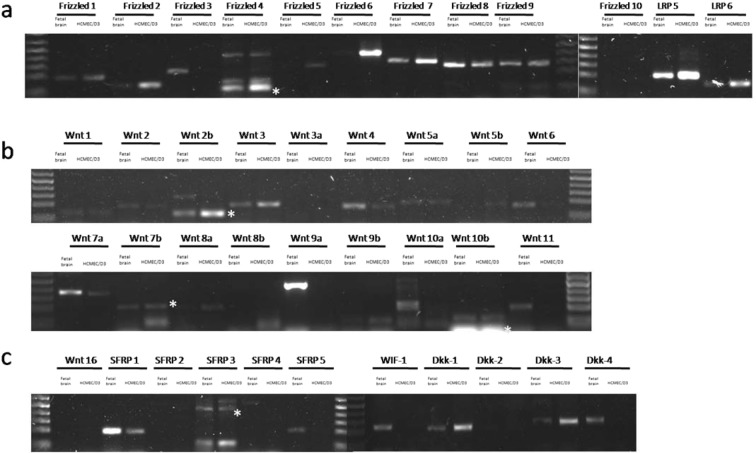
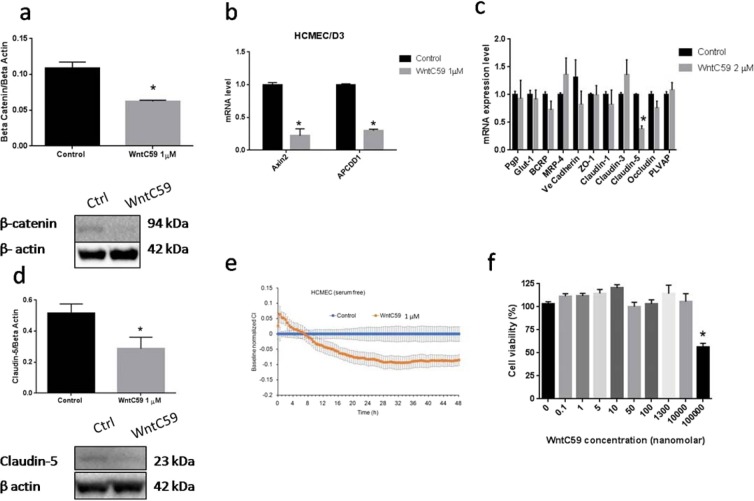
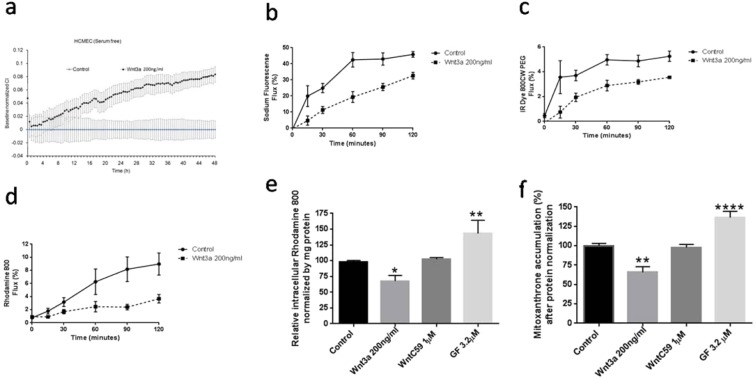
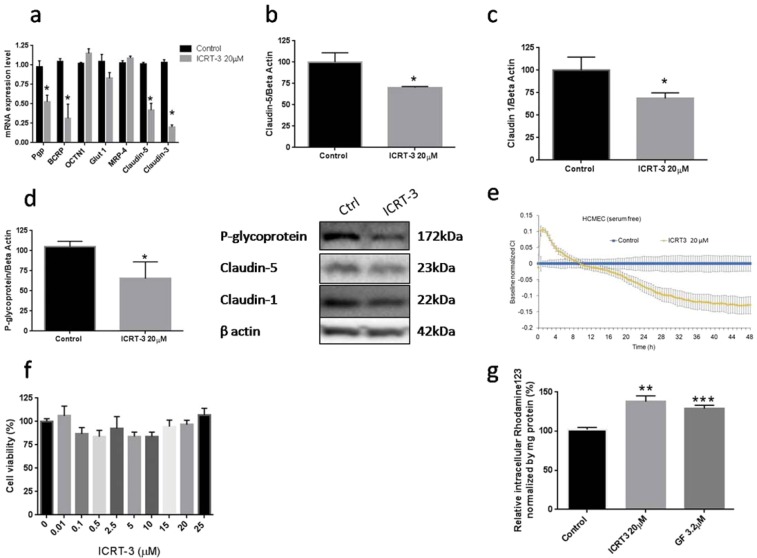
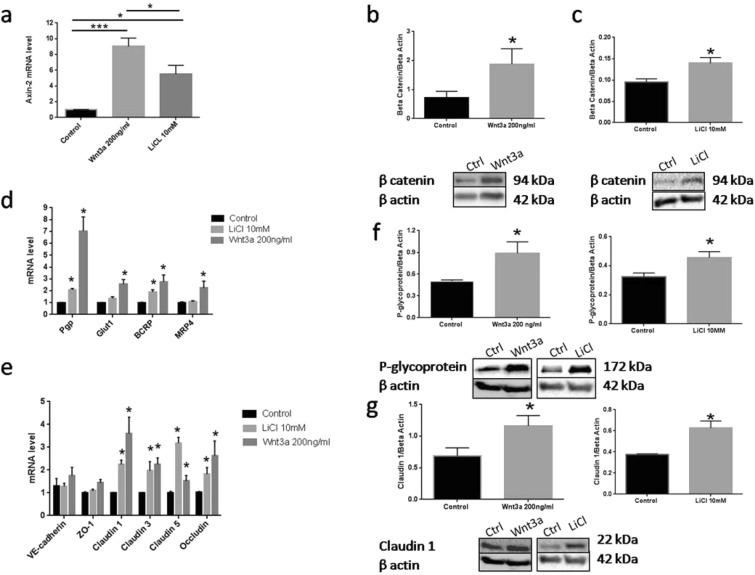
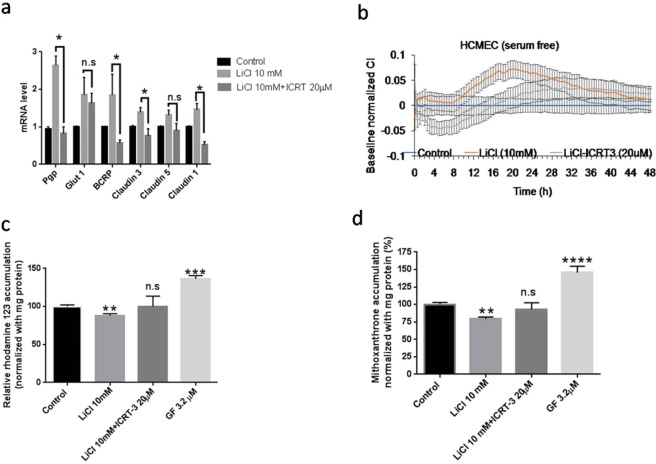
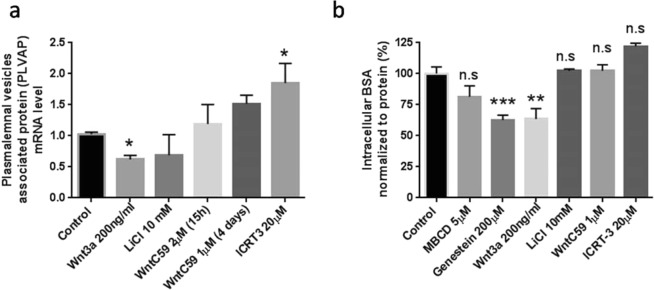
Wnt/β-catenin signaling is important for blood-brain barrier (BBB) development and is implicated in BBB breakdown under various pathophysiological conditions. In the present study, a comprehensive characterization of the relevant genes, transport and permeability processes influenced by both the autocrine and external activation of Wnt signaling in human brain endothelial cells was examined using hCMEC/D3 culture model. The hCMEC/D3 expressed a full complement of Wnt ligands and receptors. Preventing Wnt ligand release from hCMEC/D3 produced minimal changes in brain endothelial function, while inhibition of intrinsic/autocrine Wnt/β-catenin activity through blocking β-catenin binding to Wnt transcription factor caused more modest changes. In contrast, activation of Wnt signaling using exogenous Wnt ligand (Wnt3a) or LiCl (GSK3 inhibitor) improved the BBB phenotypes of the hCMEC/D3 culture model, resulting in reduced paracellular permeability, and increased P-glycoprotein (P-gp) and breast cancer resistance associated protein (BCRP) efflux transporter activity. Further, Wnt3a reduced plasmalemma vesicle associated protein (PLVAP) and vesicular transport activity in hCMEC/D3. Our data suggest that this in vitro model of the BBB has a more robust response to exogenous activation of Wnt/β-catenin signaling compared to autocrine activation, suggesting that BBB regulation may be more dependent on external activation of Wnt signaling within the brain microvasculature.
Overview
The claims and statistics of this paper haven’t been checked yet.
Run the check — free, no account needed. It reads the open-access text and checks the sources it cites.
Integrity signals
Registry
Cites
Statistics
Figures
Verification
Claims the paper makes
The claims and statistics of this paper haven’t been checked yet.
Run the check — free, no account needed. It reads the open-access text and checks the sources it cites.
Claims other papers make about this one
Each is checked against this paper’s own text: does it say what the citing paper says it does?
The cited source says what the claim attributes to it.
In the citing paper
“Consistently, exogenous Wnt activation enhances endothelial barrier function, 77 suggesting that ApoE3Ch‐EVs may act as modulators of this pathway.”
From Plasma extracellular vesicles from APOE3 Christchurch carriers display a protective phenotype in early stages of autosomal dominant Alzheimer's disease (2026) · cites this paper as [77]
Self-check
Percentages, sums and reported differences re-computed from the paper’s own numbers.
The self-check needs the paper’s full text.
Citations
Cites
Structure and function of the blood–brain barrier
Abbott, N. J., Patabendige, A. A. K., Dolman, D. E. M., Yusof, S. R., & Begley, D. J. (2010) · Neurobiology of Disease · doi:10.1016/j.nbd.2009.07.030 · Cited by 5,185
Daneman, R., & Prat, A. (2015) · Cold Spring Harbor Perspectives in Biology · doi:10.1101/cshperspect.a020412 · Cited by 3,437
Convergence of Wnt, ß-Catenin, and Cadherin Pathways
Nelson, W. J., & Nusse, R. (2004) · Science · doi:10.1126/science.1094291 · Cited by 2,537
Wnt Signaling: Multiple Pathways, Multiple Receptors, and Multiple Transcription Factors
Gordon, M. D., & Nusse, R. (2006) · Journal of Biological Chemistry · doi:10.1074/jbc.r600015200 · Cited by 1,333
Blood‐brain barrier‐specific properties of a human adult brain endothelial cell line
Weksler, B. B., Subileau, E.-A., Perrière, N., Charneau, P., Holloway, K. E., Leveque, M., Tricoire-Leignel, H., Nicotra, A., Bourdoulous, S., Turowski, P., et al. (2005) · The FASEB Journal · doi:10.1096/fj.04-3458fje · Cited by 1,325
Lithium inhibits glycogen synthase kinase-3 activity and mimics wingless signalling in intact cells
Stambolic, V., Ruel, L., & Woodgett, J. R. (1996) · Current Biology · doi:10.1016/s0960-9822(02)70790-2 · Cited by 1,321
Functional morphology of the blood–brain barrier in health and disease
Liebner, S., Dijkhuizen, R. M., Reiss, Y., Plate, K. H., Agalliu, D., & Constantin, G. (2018) · Acta Neuropathologica · doi:10.1007/s00401-018-1815-1 · Cited by 872
Wnt/β-catenin signaling controls development of the blood–brain barrier
Liebner, S., Corada, M., Bangsow, T., Babbage, J., Taddei, A., Czupalla, C. J., Reis, M., Felici, A., Wolburg, H., Fruttiger, M., et al. (2008) · The Journal of Cell Biology · doi:10.1083/jcb.200806024 · Cited by 860
Helms, H. C., Abbott, N. J., Burek, M., Cecchelli, R., Couraud, P.-O., Deli, M. A., Förster, C., Galla, H. J., Romero, I. A., Shusta, E. V., et al. (2016) · Journal of Cerebral Blood Flow & Metabolism · doi:10.1177/0271678x16630991 · Cited by 843
Monounsaturated Fatty Acid Modification of Wnt Protein: Its Role in Wnt Secretion
Takada, R., Satomi, Y., Kurata, T., Ueno, N., Norioka, S., Kondoh, H., Takao, T., & Takada, S. (2006) · Developmental Cell · doi:10.1016/j.devcel.2006.10.003 · Cited by 807
Cited by
Sorted by citations
Takata, F., Nakagawa, S., Matsumoto, J., & Dohgu, S. (2021) · Frontiers in Cellular Neuroscience · doi:10.3389/fncel.2021.661838 · Cited by 651
Vojdani, A., Vojdani, E., & Kharrazian, D. (2021) · Frontiers in Immunology · doi:10.3389/fimmu.2020.617089 · Cited by 322
Activation of Wnt/β-catenin pathway mitigates blood–brain barrier dysfunction in Alzheimer’s disease
Wang, Q., Huang, X., Su, Y., Yin, G., Wang, S., Yu, B., Li, H., Qi, J., Chen, H., Zeng, W., et al. (2022) · Brain · doi:10.1093/brain/awac236 · Cited by 226
Juvale, I. I. A., Hamid, A. A. A., Halim, K. B. A., & Has, A. T. C. (2022) · Heliyon · doi:10.1016/j.heliyon.2022.e09777 · Cited by 215
Schulz, J., Hartz, A. M. S., & Bauer, B. (2023) · Pharmacological Reviews · doi:10.1124/pharmrev.120.000025 · Cited by 116
Regulation of P-Glycoprotein in the Brain
Chai, A. B., Callaghan, R., & Gelissen, I. C. (2022) · International Journal of Molecular Sciences · doi:10.3390/ijms232314667 · Cited by 108
Peptides as Pharmacological Carriers to the Brain: Promises, Shortcomings and Challenges
Parrasia, S., Szabó, I., Zoratti, M., & Biasutto, L. (2022) · Molecular Pharmaceutics · doi:10.1021/acs.molpharmaceut.2c00523 · Cited by 95
A review on in vitro model of the blood-brain barrier (BBB) based on hCMEC/D3 cells
Qi, D., Lin, H., Hu, B., & Wei, Y. (2023) · Journal of Controlled Release · doi:10.1016/j.jconrel.2023.04.020 · Cited by 93
Crosstalk of Brain and Bone—Clinical Observations and Their Molecular Bases
Otto, E., Knapstein, P., Jahn, D., Appelt, J., Frosch, K., Tsitsilonis, S., & Keller, J. (2020) · International Journal of Molecular Sciences · doi:10.3390/ijms21144946 · Cited by 88
Gastfriend, B. D., Nishihara, H., Canfield, S. G., Foreman, K. L., Engelhardt, B., Palecek, S. P., & Shusta, E. V. (2021) · eLife · doi:10.7554/elife.70992 · Cited by 88
Microglia and Macrophages in Neuroprotection, Neurogenesis, and Emerging Therapies for Stroke
Var, S. R., Shetty, A. V., Grande, A. W., Low, W. C., & Cheeran, M. C. ‐. (2021) · Cells · doi:10.3390/cells10123555 · Cited by 86
Dysregulated Wnt Signalling in the Alzheimer’s Brain
Aghaizu, N. D., Jin, H., & Whiting, P. J. (2020) · Brain Sciences · doi:10.3390/brainsci10120902 · Cited by 70
Ding, J., Lee, S., Vlahos, L. J., Yuki, K., Rada, C. C., van Unen, V., Vuppalapaty, M., Chen, H., Sura, A., McCormick, A. K., et al. (2023) · Nature Communications · doi:10.1038/s41467-023-37689-1 · Cited by 72
Hussain, B., Fang, C., Huang, X., Feng, Z., Yao, Y., Wang, Y., & Chang, J. (2022) · Frontiers in Molecular Neuroscience · doi:10.3389/fnmol.2022.895429 · Cited by 59
Blood–Brain Barrier Transporters: Opportunities for Therapeutic Development in Ischemic Stroke
Nilles, K. L., Williams, E. I., Betterton, R. D., Davis, T. P., & Ronaldson, P. T. (2022) · International Journal of Molecular Sciences · doi:10.3390/ijms23031898 · Cited by 59
Claudin-5: A Pharmacological Target to Modify the Permeability of the Blood–Brain Barrier
Hashimoto, Y., Campbell, M., Tachibana, K., Okada, Y., & Kondoh, M. (2021) · Biological and Pharmaceutical Bulletin · doi:10.1248/bpb.b21-00408 · Cited by 54
Mechanosensitive brain tumor cells construct blood-tumor barrier to mask chemosensitivity
Chen, X., Momin, A., Wanggou, S., Wang, X., Min, H.-K., Dou, W., Gong, Z., Chan, J., Dong, W., Fan, J. J., et al. (2022) · Neuron · doi:10.1016/j.neuron.2022.10.007 · Cited by 54
Karve, A. S., Desai, J. M., Gadgil, S. N., Dave, N., Wise-Draper, T. M., Gudelsky, G. A., Phoenix, T. N., Dasgupta, B., Yogendran, L., Sengupta, S., et al. (2024) · International Journal of Molecular Sciences · doi:10.3390/ijms25063217 · Cited by 52
Yue, Q., Leng, X., Xie, N., Zhang, Z., Yang, D., & Hoi, M. P. M. (2024) · CNS Neuroscience & Therapeutics · doi:10.1111/cns.70079 · Cited by 48
Harati, R., Hammad, S., Tlili, A., Mahfood, M., Mabondzo, A. M., & Hamoudi, R. (2022) · PLoS ONE · doi:10.1371/journal.pone.0262152 · Cited by 50
Yang, F., Zhang, Y., Zhu, J., Wang, J., Jiang, Z., Zhao, C., Yang, Q., Huang, Y., Yao, W., Pang, W., et al. (2020) · Frontiers in Bioengineering and Biotechnology · doi:10.3389/fbioe.2020.00647 · Cited by 42
Dynamic modulation of the blood–brain barrier in the healthy brain
Friedman, A., Prager, O., Serlin, Y., & Kaufer, D. (2025) · Nature reviews. Neuroscience · doi:10.1038/s41583-025-00976-5 · Cited by 44
Multiplexed chemogenetics in astrocytes and motoneurons restore blood–spinal cord barrier in ALS
Alami, N. O., Tang, L., Wiesner, D., Commisso, B., Bayer, D., Weishaupt, J. H., Dupuis, L., Wong, P. C., Baumann, B., Wirth, T., et al. (2020) · Life Science Alliance · doi:10.26508/lsa.201900571 · Cited by 40
Behrooz, A. B., & Syahir, A. (2021) · Frontiers in Oncology · doi:10.3389/fonc.2021.642719 · Cited by 38
Synergistic induction of blood–brain barrier properties
Porkoláb, G., Mészáros, M., Szecskó, A., Vigh, J. P., Walter, F. R., de Figueiredo, R. M., Kálomista, I., Hoyk, Z., Vizsnyiczai, G., Gróf, I., et al. (2024) · Proceedings of the National Academy of Sciences · doi:10.1073/pnas.2316006121 · Cited by 37
Aging of the Vascular System and Neural Diseases
Watanabe, C., Imaizumi, T., Kawai, H., Suda, K., Honma, Y., Ichihashi, M., Ema, M., & Mizutani, K. (2020) · Frontiers in Aging Neuroscience · doi:10.3389/fnagi.2020.557384 · Cited by 38
Lab-on-a-chip models of the blood–brain barrier: evolution, problems, perspectives
Deli, M. A., Porkoláb, G., Kincses, A., Mészáros, M., Szecskó, A., Kocsis, A. E., Vigh, J. P., Valkai, S., Veszelka, S., Walter, F. R., et al. (2024) · Lab on a Chip · doi:10.1039/d3lc00996c · Cited by 35
Knotek, T., Janečková, L., Kriška, J., Kořínek, V., & Anděrová, M. (2020) · Genes · doi:10.3390/genes11070804 · Cited by 36
Gama, C. S. D., & Morin‐Brureau, M. (2022) · Frontiers in Cellular Neuroscience · doi:10.3389/fncel.2022.863836 · Cited by 36
Williams, E. I., Betterton, R. D., Davis, T. P., & Ronaldson, P. T. (2020) · Pharmaceutics · doi:10.3390/pharmaceutics12020154 · Cited by 36
On the Common Journey of Neural Cells through Ischemic Brain Injury and Alzheimer’s Disease
Kriška, J., Heřmanová, Z., Knotek, T., Turečková, J., & Anděrová, M. (2021) · International Journal of Molecular Sciences · doi:10.3390/ijms22189689 · Cited by 33
The Role of MiR-181 Family Members in Endothelial Cell Dysfunction and Tumor Angiogenesis
Yang, C., Gibson, V. P., & Hardy, P. (2022) · Cells · doi:10.3390/cells11101670 · Cited by 31
Transporter Regulation in Critical Protective Barriers: Focus on Brain and Placenta
Taggi, V., Riera‐Romo, M., Piquette‐Miller, M., zu Schwabedissen, H. E. M., & Neuhoff, S. (2022) · Pharmaceutics · doi:10.3390/pharmaceutics14071376 · Cited by 30
Nagu, P., Sharma, V., Behl, T., Pathan, A. K., & Mehta, V. (2022) · Journal of Molecular Neuroscience · doi:10.1007/s12031-021-01940-5 · Cited by 28
A guide for blood–brain barrier models
Soliman, Y., Al‐khodor, J., Koken, G. Y., & Mustafaoğlu, N. (2024) · FEBS Letters · doi:10.1002/1873-3468.15053 · Cited by 30
The Role of the Wnt Pathway in VEGF/Anti-VEGF-Dependent Control of the Endothelial Cell Barrier
Li, Y., Baccouche, B., Olayinka, O., Serikbaeva, A., & Kazlauskas, A. (2021) · Investigative Ophthalmology & Visual Science · doi:10.1167/iovs.62.12.17 · Cited by 26
Influence of traumatic brain injury on extracellular tau elimination at the blood–brain barrier
Eisenbaum, M., Pearson, A., Gratkowski, A., Mouzon, B., MULLAN, M. J., Crawford, F., Ojo, J. O., & Bachmeier, C. J. (2021) · Fluids and Barriers of the CNS · doi:10.1186/s12987-021-00283-y · Cited by 25
ShamsEldeen, A. M., Mehesen, M. N., Aboulhoda, B. E., Rashed, L. A., Elsebaie, M. M., Mohamed, E. A., & Gamal, M. (2021) · Physiological Reports · doi:10.14814/phy2.14925 · Cited by 22
Ke, Z., Huang, Y., Xu, J., Liu, Y., Zhang, Y., Wang, Y., Zhang, Y. Y., & Liu, Y. (2024) · Liver International · doi:10.1111/liv.15823 · Cited by 23
Impact of Wnt/β‐catenin signaling on ethanol‐induced changes in brain endothelial cell permeability
Laksitorini, M. D., Yathindranath, V., Xiong, W., Parkinson, F. E., Thliveris, J. A., & Miller, D. W. (2020) · Journal of Neurochemistry · doi:10.1111/jnc.15203 · Cited by 25
Self-citationCogill, S. A., Lee, J.-H., Jeon, M., Kim, D.-G., & Chang, Y. (2024) · Cells · doi:10.3390/cells13100789 · Cited by 20
Choublier, N., Müller, Y., Baisac, L. G., Laedermann, J., de Rham, C., Declèves, X., & Roux, A. (2021) · Applied Sciences · doi:10.3390/app11125584 · Cited by 21
Nuthikattu, S., Milenković, D., Norman, J., & Villablanca, A. C. (2023) · Biochimica et Biophysica Acta (BBA) - Molecular Basis of Disease · doi:10.1016/j.bbadis.2023.166970 · Cited by 21
Mehra, S., Ahsan, A. U., Sharma, M., Budhwar, M., & Chopra, M. (2023) · Molecular Neurobiology · doi:10.1007/s12035-023-03826-6 · Cited by 18
Tong, Y., An, P., Tang, P., Mu, R., Zeng, Y., Sun, H., Zhao, M., Lv, Z., Wang, P., Han, W., et al. (2024) · Acta Pharmaceutica Sinica B · doi:10.1016/j.apsb.2024.03.024 · Cited by 18
Verma, M., Garg, M., Khan, A. S., Yadav, P., Rahman, S. S., Ali, A., & Kamthan, M. (2024) · Ecotoxicology and Environmental Safety · doi:10.1016/j.ecoenv.2024.116337 · Cited by 19
Maes, M. H. J., Kubera, M., & Kotańska, M. (2022) · Frontiers in Psychiatry · doi:10.3389/fpsyt.2022.822382 · Cited by 18
Dynamics of Endothelial Cell Diversity and Plasticity in Health and Disease
Larionov, A. A., Hammer, C. M., Fiedler, K., & Filgueira, L. (2024) · Cells · doi:10.3390/cells13151276 · Cited by 21
Mikkelsen, A. C. D., Kjærgaard, K., Mookerjee, R. P., Vilstrup, H., Wegener, G., Bay-Richter, C., & Thomsen, K. L. (2022) · Neurochemical Research · doi:10.1007/s11064-022-03551-x · Cited by 17
Macrophage-derived Wnt signaling increases endothelial permeability during skeletal muscle injury
Tusavitz, S., Keoonela, S., Kalkstein, M., McCormick, S., Gasser, B., Arrigale, M., Rafferty, P., & Carpenter, A. C. (2020) · Inflammation Research · doi:10.1007/s00011-020-01397-z · Cited by 15
Schneider, D. J., Lynch, S. A., Gelinas, A. D., Ostroff, R. M., Rohloff, J. C., Williams, P., Janjić, N., & Drolet, D. W. (2022) · Elsevier eBooks · doi:10.1016/b978-0-12-821595-1.00007-5 · Cited by 14
Causal associations and genetic overlap between COVID-19 and intelligence
Cao, H., Baranova, A. V., Song, Y., Chen, J., & Zhang, F. (2023) · QJM · doi:10.1093/qjmed/hcad122 · Cited by 15
Wnt7a Decreases Brain Endothelial Barrier Function Via β-Catenin Activation
Manukjan, N., Chau, S., Caiment, F., van Herwijnen, M. H. M., Smeets, H. J. M., Fulton, D. J., Ahmed, Z., Blankesteijn, W. M., & Foulquier, S. (2023) · Molecular Neurobiology · doi:10.1007/s12035-023-03872-0 · Cited by 16
Regulation of P-glycoprotein by miR-27a-3p at the Brain Endothelial Barrier
Hammad, S., Mabondzo, A. M., Hamoudi, R., & Harati, R. (2021) · Journal of Pharmaceutical Sciences · doi:10.1016/j.xphs.2021.10.021 · Cited by 15
Senthilathiban, D. P., Kuduvalli, S. S., Purushothaman, M., Marimuthu, P., Muralidharan, A. R., & Anitha, T. S. (2021) · Current Molecular Pharmacology · doi:10.2174/1874467214666210420115431 · Cited by 13
Blood‑brain barrier dysfunction in schizophrenia: Mechanisms and implications (Review)
Lv, S., & Luo, C. (2025) · International Journal of Molecular Medicine · doi:10.3892/ijmm.2025.5594 · Cited by 18
Maaz, A., Blagbrough, I. S., & Bank, P. D. (2024) · Molecular Pharmaceutics · doi:10.1021/acs.molpharmaceut.3c00639 · Cited by 13
Huang, L., Liu, M., Jiang, W., Ding, H., Han, Y., Wen, M., Li, Y., Liu, X., & Zeng, H. (2022) · Journal of Biochemical and Molecular Toxicology · doi:10.1002/jbt.23213 · Cited by 13
Zhang, H., Yamaguchi, T., & Kawabata, K. (2023) · Fluids and Barriers of the CNS · doi:10.1186/s12987-023-00408-5 · Cited by 13
Liu, H., Liang, M., Deng, Y., & Li, Y. (2023) · International Journal of Molecular Sciences · doi:10.3390/ijms24065438 · Cited by 13
Xu, X., Xu, K., Chen, F., Yu, D., & Wang, X. (2024) · Hearing Research · doi:10.1016/j.heares.2024.109048 · Cited by 12
Borziak, K., & Finkelstein, J. (2022) · Multiple Sclerosis and Related Disorders · doi:10.1016/j.msard.2022.104065 · Cited by 13
Molecular Heterogeneity of the Brain Endothelium
Alnaqbi, N., Mohammad, M. G., Hamoudi, R., Mabondzo, A. M., & Harati, R. (2023) · Current Issues in Molecular Biology · doi:10.3390/cimb45040227 · Cited by 12
Li, C.-X., Talukder, M., Wang, Z., Zhu, S., Xu, Y., Li, X., & Li, J. (2024) · The Science of The Total Environment · doi:10.1016/j.scitotenv.2024.173249 · Cited by 10
Mechanical factors influence β-catenin localization and barrier properties
Wu, X., Cesarovic, N., Falk, V., Mazza, E., & Giampietro, C. (2024) · Integrative Biology · doi:10.1093/intbio/zyae013 · Cited by 10
Ma, K., Chen, X., Zhao, X., Chen, S., & Yang, J. (2022) · Heliyon · doi:10.1016/j.heliyon.2022.e10298 · Cited by 10
Sharma, H. S., Lafuente, J. V., Feng, L., Muresanu, D. F., Menon, P. K., Nozari, A., Sahib, S., Tian, Z. R., Buzoianu, A. D., Sjöquist, P.-O. B., et al. (2021) · Progress in brain research · doi:10.1016/bs.pbr.2021.06.008 · Cited by 9
Repairing blood-CNS barriers: Future therapeutic approaches for neuropsychiatric disorders
Bicker, J., Alves, G., Fonseca, C., Falcão, A. C., & Fortuna, A. C. (2020) · Pharmacological Research · doi:10.1016/j.phrs.2020.105226 · Cited by 9
Godinho-Pereira, J., Lopes, M. D., Garcia, A. R., Botelho, H. M., Malhó, R., Figueira, I., & Brito, M. A. (2022) · Biomedicines · doi:10.3390/biomedicines10081988 · Cited by 8
Protocadherin gamma C3: a new player in regulating vascular barrier function
Burek, M., Kaupp, V., Blecharz-Lang, K. G., Dilling, C., & Meybohm, P. (2022) · Neural Regeneration Research · doi:10.4103/1673-5374.343896 · Cited by 7
Breast Cancer Brain Metastasis: Bridging Biological Mechanisms to Therapeutic Innovations
Feng, J. Q., Tao, Y., Li, F., & Liu, S. (2025) · MedComm – Oncology · doi:10.1002/mog2.70043 · Cited by 6
Li, G., Ma, Y., Zhang, S., Lin, W., Yao, X. Y., Zhou, Y., Zhao, Y., Rao, Q., Qu, Y.-J., Gao, Y., et al. (2024) · Redox Biology · doi:10.1016/j.redox.2024.103415 · Cited by 7
de Jager, C., Soliman, E., & Theus, M. H. (2025) · Molecular and Cellular Neuroscience · doi:10.1016/j.mcn.2025.104003 · Cited by 6
Tight Junction Regulation in Blood–Brain Barrier Integrity and Neurological Diseases
Nguyen, T. H., Pham, T. K. A., Tran, T. T. T., Trinh, K. N., Dhananjayan, S. S., Bui, A. T. T., Kim, N. D. T., Ho, H. H. N., Rai, A., Lee, C.-W., et al. (2026) · Journal of physiological investigation. · doi:10.4103/ejpi.ejpi-d-25-00078 · Cited by 5
Schofield, C. L., Rodrigo‐Navarro, A., Dalby, M. J., Agtmael, T. V., & Salmerón‐Sánchez, M. (2021) · Advanced NanoBiomed Research · doi:10.1002/anbr.202000068 · Cited by 5
Choi, J. S., Doo, H. M., Kim, B., Lee, S. H., Sung, S., Go, G., Suarez, A., Kim, Y., Weon, B. M., Choi, B., et al. (2023) · Advanced Healthcare Materials · doi:10.1002/adhm.202301124 · Cited by 5
Meng, X., Sun, Y., Wang, L., Li, Y., Ouyang, R., Yuan, P., & Miao, Y. (2021) · Annals of Translational Medicine · doi:10.21037/atm-20-8137 · Cited by 5
Pineda‐Lopez, L., Aguillon, D., Villar‐Vesga, J., Valderrama‐Carmona, P., Guerrero, A., Upreti, A., Arevalo‐Alquichire, S., Correa, L., Mendez‐Castellanos, K., Castaño, D., et al. (2026) · Alzheimer's & Dementia · doi:10.1002/alz.71148 · Cited by 4
Interaction of major facilitator superfamily domain containing 2A with the blood–brain barrier
Ma, Y., Dong, T., Luan, F., Yang, J., Feng, M., & Wei, P. (2024) · Neural Regeneration Research · doi:10.4103/nrr.nrr-d-24-00191 · Cited by 4
Teles, R. H. G., Villarinho, N. J., Yamagata, A. S., Hiroki, C. T., de Oliveira, M. C., Terçarioli, G. R., Jaeger, R. G., Meybohm, P., Burek, M., & Freitas, V. M. (2024) · BBA Advances · doi:10.1016/j.bbadva.2024.100130 · Cited by 4
The association of the Wnt/β-catenin signaling pathway with Alzheimer's disease
Ma, J., Liu, Y., Lu, D., & Sun, Q. (2025) · Neuropharmacology · doi:10.1016/j.neuropharm.2025.110754 · Cited by 5
Konstantinou, G., & Warsh, J. J. (2026) · Neuroscience & Biobehavioral Reviews · doi:10.1016/j.neubiorev.2026.106658 · Cited by 6
Cleary, R. T., Fu, Y., Giles, D., Yuan, J., Garcia, D. P. M., Palmer, D., Han, R. H., Woodiwiss, T. R., Yang, A. B., Mathios, D., et al. (2026) · Neuro-Oncology · doi:10.1093/neuonc/noag080 · Cited by 4
Transport pathways across the blood-brain barrier for waste clearance and drug delivery
Gröbner, L. S., & Pietrzik, C. U. (2026) · Fluids and Barriers of the CNS · doi:10.1186/s12987-026-00812-7 · Cited by 4
Wnt-Regulated Therapeutics for Blood-Brain Barrier Modulation and Cancer Therapy
An, P., Tong, Y., Mu, R., & Han, L. (2024) · Bioconjugate Chemistry · doi:10.1021/acs.bioconjchem.4c00537 · Cited by 4
Ji, Y. S., Fang, S., Yang, Y., & Wu, Z. (2021) · Journal of Animal Science · doi:10.1093/jas/skab268 · Cited by 4
Gastfriend, B. D., Nishihara, H., Canfield, S. G., Foreman, K. L., Engelhardt, B., Palecek, S. P., & Shusta, E. V. (2021) · bioRxiv (Cold Spring Harbor Laboratory) · doi:10.1101/2021.05.12.443828 · Cited by 4
SARS-CoV-2 Infection Influences Wnt/β-Catenin Pathway Components in Astrocytes
Robinson, K. F., Ahiya, A. I., Richner, J. M., & Lutz, S. E. (2025) · Pathogens · doi:10.3390/pathogens14100994 · Cited by 3
Danna, R., Kondle, S., Amar, O., Mabourakh, M., Chen, G., Fadol, W. B., & Mohieldin, A. M. (2025) · Biology · doi:10.3390/biology14121787 · Cited by 2
Albino, I., Ambrosetti, E., Vaz, M., Teixeira, A. I., Sampaio, P., Lino, M. M., & Ferreira, L. (2026) · Journal of Controlled Release · doi:10.1016/j.jconrel.2026.114974 · Cited by 2
Chen, Y., Huang, X., Chen, H., & Yi, C. (2024) · Heliyon · doi:10.1016/j.heliyon.2024.e33077 · Cited by 2
Role of the WNT signalling pathway in physiological and pathological blood-brain barrier
Yang, F., Wang, F., Jiang, Y., Qian, D., & Chen, L. (2026) · Annals of Medicine · doi:10.1080/07853890.2026.2657638 · Cited by 2
Dong, X., Sun, H., Mao, J., Zhang, S., & Meng, C. (2021) · PubMed Central · doi:10.11817/j.issn.1672-7347.2021.200692 · Cited by 1
Blood brain barrier disruption following COVID-19 infection and neurological manifestations
Deshwal, S., Dhiman, N., & Sandhir, R. (2023) · Elsevier eBooks · doi:10.1016/b978-0-443-15256-6.00005-2 · Cited by 1
Ding, J., Lee, S., Vlahos, L. J., Yuki, K., Rada, C. C., van Unen, V., Vuppalapaty, M., Chen, H., Sura, A., McCormick, A. K., et al. (2022) · bioRxiv (Cold Spring Harbor Laboratory) · doi:10.1101/2022.10.13.510564 · Cited by 1
Control of Neuroinflammation and Protecting the Integrity of the Blood-Brain Barrier
Rom, S., & Persidsky, Y. (2024) · Springer eBooks · doi:10.1007/978-3-031-68237-7_42
Zhang, X., Wang, L., Li, Y., Liu, Z., Zhang, T., Yeqi, W. A. N. G., & Wang, G. (2025) · SSRN Electronic Journal · doi:10.2139/ssrn.5149581
Kulkarni, A. D., Alagundagi, D. B., Bhide, M. R., & Patil, P. (2025) · Journal of Molecular Neuroscience · doi:10.1007/s12031-025-02400-0 · Cited by 1
Zhang, H., Yamaguchi, T., & Kawabata, K. (2024) · Figshare · doi:10.6084/m9.figshare.26565687
Yeretz‐Peretz, Y., Anzi, S., Bell, B., & Ben‐Zvi, A. (2026) · bioRxiv (Cold Spring Harbor Laboratory) · doi:10.64898/2026.03.14.711770
Metadata
- Authors
- Laksitorini, M. D., Yathindranath, V., Xiong, W., Hombach-Klonisch, S., & Miller, D. W.
- Affiliations
- Universitas Gadjah Mada (ID)
- University of Manitoba (CA)
- Health Sciences Centre (CA)
- Corresponding author
- Miller, Donald W.
- Venue
- Scientific Reports
- Published
- 2019-12-23
- Volume
- 9
- Issue
- 1
- Pages
- 19718-19718
- ISSN
- 2045-2322 (ISSN-L)
- PMC
- PMC6928218
- OpenAlex
- W2997752650
- Cited by
- 105
- References
- 63
- Citations by year
- 2026: 13 · 2025: 9 · 2024: 21 · 2023: 12 · 2022: 21 · 2021: 19 · 2020: 10
- FWCI
- 5.50
- Type
- journal article
- Language
- en
- Open access
- gold
- doi.org
- Locations
- Scientific Reports (publishedVersion, cc-by)
- Europe PMC (PubMed Central) (publishedVersion, cc-by)
- PubMed Central (publishedVersion, cc-by)
- PubMed (publishedVersion)
- DOAJ (DOAJ: Directory of Open Access Journals) (submittedVersion)
- Funders
- Manitoba Health Research Council
- University of Manitoba
- Canadian Breast Cancer Foundation
- Cancer Research Society
- Topics
- Life Sciences › Neuroscience › Neurology › Barrier Structure and Function Studies
- Health Sciences › Medicine › Oncology › Drug Transport and Resistance Mechanisms
- Life Sciences › Biochemistry, Genetics and Molecular Biology › Molecular Biology › Wnt/β-catenin signaling in development and cancer
- Keywords
- Wnt/β-catenin signaling, blood-brain barrier, brain endothelial cells, hCMEC/D3, Wnt3a, paracellular permeability, P-glycoprotein, ABCG2, efflux pumps, PLVAP, vesicle trafficking, GSK3 inhibition, blood-brain barrier disruption
- MeSH terms
- Blood-Brain Barrier, Cells, Cultured, Endocytosis, Gene Expression Regulation, Humans, Ligands, Membrane Proteins, Oxazoles, Phenotype, Receptors, Cell Surface, Lithium Chloride, Autocrine Communication, Endothelial Cells, Wnt Signaling Pathway
About these checks
Registry, retraction, Cites and statistics results are computed, not judged, with one exception: a printed reference that no index lists is read once by a model before it counts as a citation error. Claims are extracted by a model and kept only when their quote appears verbatim in the text; each cited source is then checked, with a model’s help, for whether it says what the claim relies on. Those verdicts can be wrong — read the claim’s quote and the cited source before relying on one.
Statistics and arithmetic are recomputed, not judged.
Confidence bands are shown only for fields calibrated on our annotated test set. None is calibrated yet, so no band is shown.
What counts as a claim ›How we measure confidence ›How we check this ›
Are you an author, or do you see a problem with this page? Request a review
