

The DOI matches its Crossref record; 63 of the 63 references it cites were found in a registry or an index.
Modulation of Wnt/β-catenin signaling promotes blood-brain barrier phenotype in cultured brain endothelial cells
Open accessAbstract
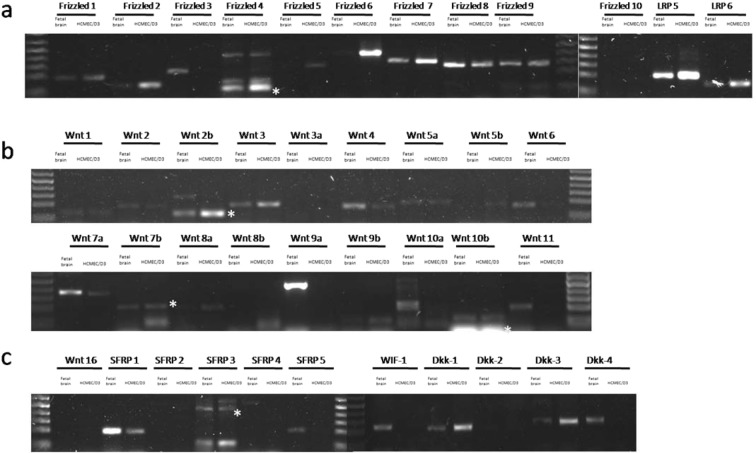
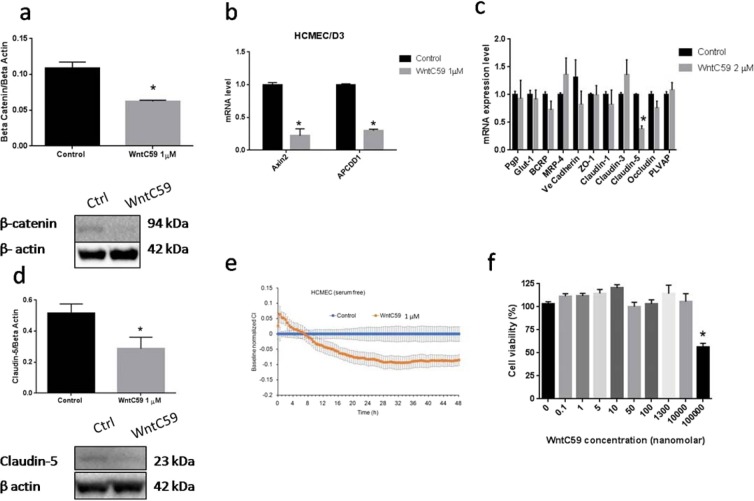
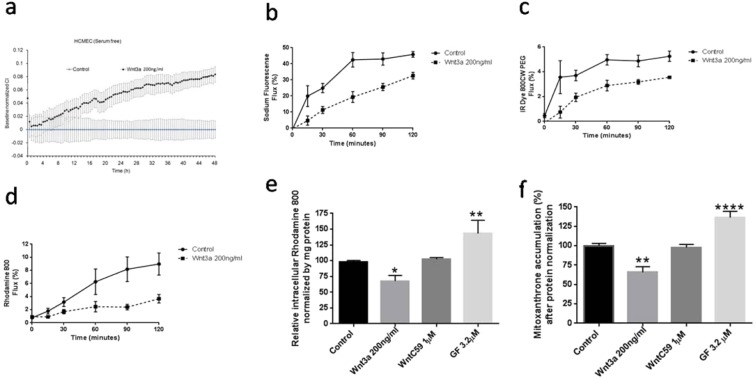
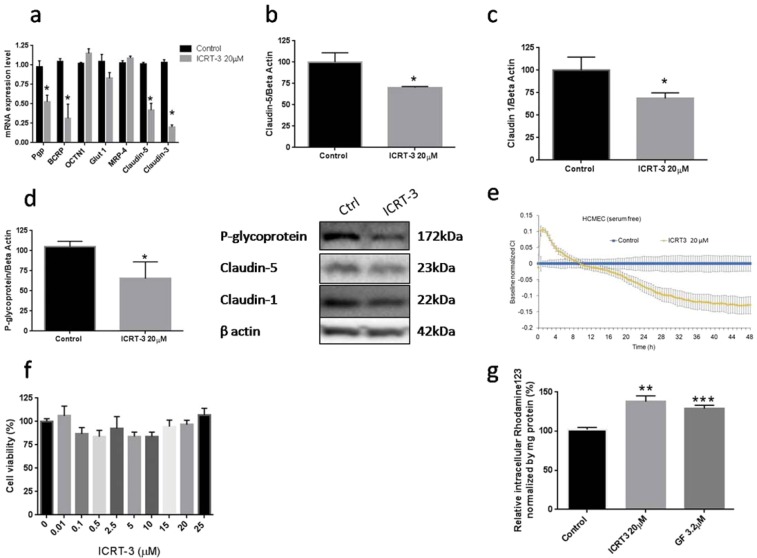
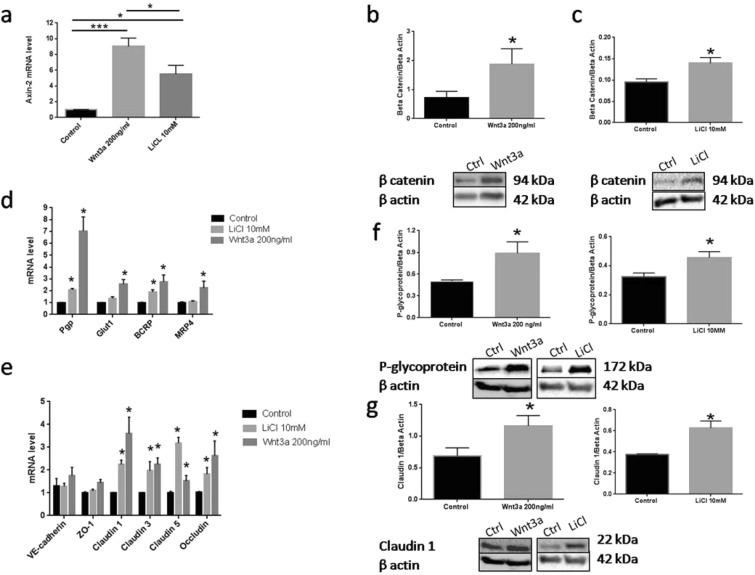
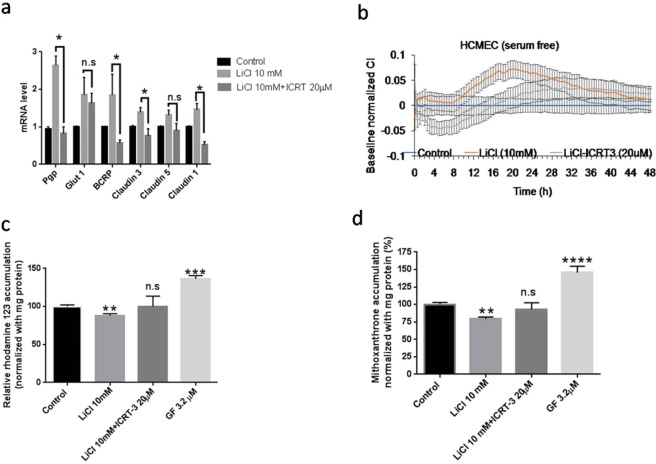
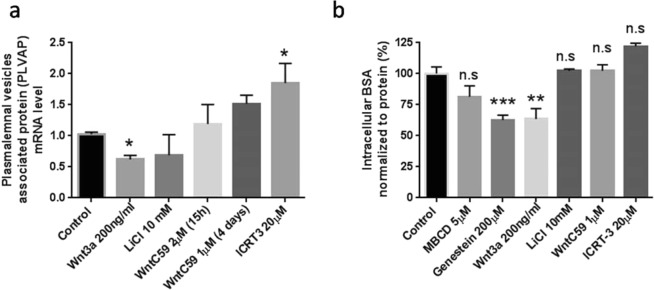
Wnt/β-catenin signaling is important for blood-brain barrier (BBB) development and is implicated in BBB breakdown under various pathophysiological conditions. In the present study, a comprehensive characterization of the relevant genes, transport and permeability processes influenced by both the autocrine and external activation of Wnt signaling in human brain endothelial cells was examined using hCMEC/D3 culture model. The hCMEC/D3 expressed a full complement of Wnt ligands and receptors. Preventing Wnt ligand release from hCMEC/D3 produced minimal changes in brain endothelial function, while inhibition of intrinsic/autocrine Wnt/β-catenin activity through blocking β-catenin binding to Wnt transcription factor caused more modest changes. In contrast, activation of Wnt signaling using exogenous Wnt ligand (Wnt3a) or LiCl (GSK3 inhibitor) improved the BBB phenotypes of the hCMEC/D3 culture model, resulting in reduced paracellular permeability, and increased P-glycoprotein (P-gp) and breast cancer resistance associated protein (BCRP) efflux transporter activity. Further, Wnt3a reduced plasmalemma vesicle associated protein (PLVAP) and vesicular transport activity in hCMEC/D3. Our data suggest that this in vitro model of the BBB has a more robust response to exogenous activation of Wnt/β-catenin signaling compared to autocrine activation, suggesting that BBB regulation may be more dependent on external activation of Wnt signaling within the brain microvasculature.
Overview
The claims and statistics of this paper haven’t been checked yet.
Run the check — free, no account needed. It reads the open-access text and checks the sources it cites.
Integrity signals
Registry
Cites
Statistics
Figures
Verification
Claims the paper makes
The claims and statistics of this paper haven’t been checked yet.
Run the check — free, no account needed. It reads the open-access text and checks the sources it cites.
Claims other papers make about this one
Each is checked against this paper’s own text: does it say what the citing paper says it does?
The cited source says what the claim attributes to it.
In the citing paper
“Consistently, exogenous Wnt activation enhances endothelial barrier function, 77 suggesting that ApoE3Ch‐EVs may act as modulators of this pathway.”
From Plasma extracellular vesicles from APOE3 Christchurch carriers display a protective phenotype in early stages of autosomal dominant Alzheimer's disease (2026) · cites this paper as [77]
Self-check
Percentages, sums and reported differences re-computed from the paper’s own numbers.
The self-check needs the paper’s full text.
Citations
Cites
Structure and function of the blood–brain barrier
Abbott, N. J., Patabendige, A. A. K., Dolman, D. E. M., Yusof, S. R., & Begley, D. J. (2010) · Neurobiology of Disease · doi:10.1016/j.nbd.2009.07.030 · Cited by 5,185
Daneman, R., & Prat, A. (2015) · Cold Spring Harbor Perspectives in Biology · doi:10.1101/cshperspect.a020412 · Cited by 3,437
Convergence of Wnt, ß-Catenin, and Cadherin Pathways
Nelson, W. J., & Nusse, R. (2004) · Science · doi:10.1126/science.1094291 · Cited by 2,537
Wnt Signaling: Multiple Pathways, Multiple Receptors, and Multiple Transcription Factors
Gordon, M. D., & Nusse, R. (2006) · Journal of Biological Chemistry · doi:10.1074/jbc.r600015200 · Cited by 1,333
Blood‐brain barrier‐specific properties of a human adult brain endothelial cell line
Weksler, B. B., Subileau, E.-A., Perrière, N., Charneau, P., Holloway, K. E., Leveque, M., Tricoire-Leignel, H., Nicotra, A., Bourdoulous, S., Turowski, P., et al. (2005) · The FASEB Journal · doi:10.1096/fj.04-3458fje · Cited by 1,325
Lithium inhibits glycogen synthase kinase-3 activity and mimics wingless signalling in intact cells
Stambolic, V., Ruel, L., & Woodgett, J. R. (1996) · Current Biology · doi:10.1016/s0960-9822(02)70790-2 · Cited by 1,321
Functional morphology of the blood–brain barrier in health and disease
Liebner, S., Dijkhuizen, R. M., Reiss, Y., Plate, K. H., Agalliu, D., & Constantin, G. (2018) · Acta Neuropathologica · doi:10.1007/s00401-018-1815-1 · Cited by 872
Wnt/β-catenin signaling controls development of the blood–brain barrier
Liebner, S., Corada, M., Bangsow, T., Babbage, J., Taddei, A., Czupalla, C. J., Reis, M., Felici, A., Wolburg, H., Fruttiger, M., et al. (2008) · The Journal of Cell Biology · doi:10.1083/jcb.200806024 · Cited by 860
Helms, H. C., Abbott, N. J., Burek, M., Cecchelli, R., Couraud, P.-O., Deli, M. A., Förster, C., Galla, H. J., Romero, I. A., Shusta, E. V., et al. (2016) · Journal of Cerebral Blood Flow & Metabolism · doi:10.1177/0271678x16630991 · Cited by 843
Monounsaturated Fatty Acid Modification of Wnt Protein: Its Role in Wnt Secretion
Takada, R., Satomi, Y., Kurata, T., Ueno, N., Norioka, S., Kondoh, H., Takao, T., & Takada, S. (2006) · Developmental Cell · doi:10.1016/j.devcel.2006.10.003 · Cited by 807
Cited by
Sorted by citations
Takata, F., Nakagawa, S., Matsumoto, J., & Dohgu, S. (2021) · Frontiers in Cellular Neuroscience · doi:10.3389/fncel.2021.661838 · Cited by 651
Vojdani, A., Vojdani, E., & Kharrazian, D. (2021) · Frontiers in Immunology · doi:10.3389/fimmu.2020.617089 · Cited by 322
Activation of Wnt/β-catenin pathway mitigates blood–brain barrier dysfunction in Alzheimer’s disease
Wang, Q., Huang, X., Su, Y., Yin, G., Wang, S., Yu, B., Li, H., Qi, J., Chen, H., Zeng, W., et al. (2022) · Brain · doi:10.1093/brain/awac236 · Cited by 226
Juvale, I. I. A., Hamid, A. A. A., Halim, K. B. A., & Has, A. T. C. (2022) · Heliyon · doi:10.1016/j.heliyon.2022.e09777 · Cited by 215
Schulz, J., Hartz, A. M. S., & Bauer, B. (2023) · Pharmacological Reviews · doi:10.1124/pharmrev.120.000025 · Cited by 116
Metadata
- Authors
- Laksitorini, M. D., Yathindranath, V., Xiong, W., Hombach-Klonisch, S., & Miller, D. W.
- Affiliations
- Universitas Gadjah Mada (ID)
- University of Manitoba (CA)
- Health Sciences Centre (CA)
- Corresponding author
- Miller, Donald W.
- Venue
- Scientific Reports
- Published
- 2019-12-23
- Volume
- 9
- Issue
- 1
- Pages
- 19718-19718
- ISSN
- 2045-2322 (ISSN-L)
- PMC
- PMC6928218
- OpenAlex
- W2997752650
- Cited by
- 105
- References
- 63
- Citations by year
- 2026: 13 · 2025: 9 · 2024: 21 · 2023: 12 · 2022: 21 · 2021: 19 · 2020: 10
- FWCI
- 5.50
- Type
- journal article
- Language
- en
- Open access
- gold
- doi.org
- Locations
- Scientific Reports (publishedVersion, cc-by)
- Europe PMC (PubMed Central) (publishedVersion, cc-by)
- PubMed Central (publishedVersion, cc-by)
- PubMed (publishedVersion)
- DOAJ (DOAJ: Directory of Open Access Journals) (submittedVersion)
- Funders
- Manitoba Health Research Council
- University of Manitoba
- Canadian Breast Cancer Foundation
- Cancer Research Society
- Topics
- Life Sciences › Neuroscience › Neurology › Barrier Structure and Function Studies
- Health Sciences › Medicine › Oncology › Drug Transport and Resistance Mechanisms
- Life Sciences › Biochemistry, Genetics and Molecular Biology › Molecular Biology › Wnt/β-catenin signaling in development and cancer
- Keywords
- Wnt/β-catenin signaling, blood-brain barrier, brain endothelial cells, hCMEC/D3, Wnt3a, paracellular permeability, P-glycoprotein, ABCG2, efflux pumps, PLVAP, vesicle trafficking, GSK3 inhibition, blood-brain barrier disruption
- MeSH terms
- Blood-Brain Barrier, Cells, Cultured, Endocytosis, Gene Expression Regulation, Humans, Ligands, Membrane Proteins, Oxazoles, Phenotype, Receptors, Cell Surface, Lithium Chloride, Autocrine Communication, Endothelial Cells, Wnt Signaling Pathway
About these checks
Registry, retraction, Cites and statistics results are computed, not judged, with one exception: a printed reference that no index lists is read once by a model before it counts as a citation error. Claims are extracted by a model and kept only when their quote appears verbatim in the text; each cited source is then checked, with a model’s help, for whether it says what the claim relies on. Those verdicts can be wrong — read the claim’s quote and the cited source before relying on one.
Statistics and arithmetic are recomputed, not judged.
Confidence bands are shown only for fields calibrated on our annotated test set. None is calibrated yet, so no band is shown.
What counts as a claim ›How we measure confidence ›How we check this ›
Are you an author, or do you see a problem with this page? Request a review
