

The DOI matches its Crossref record; 72 of the 72 references it cites were found in a registry or an index.
Single-cell transcriptional profiles in human skeletal muscle
Open accessAbstract
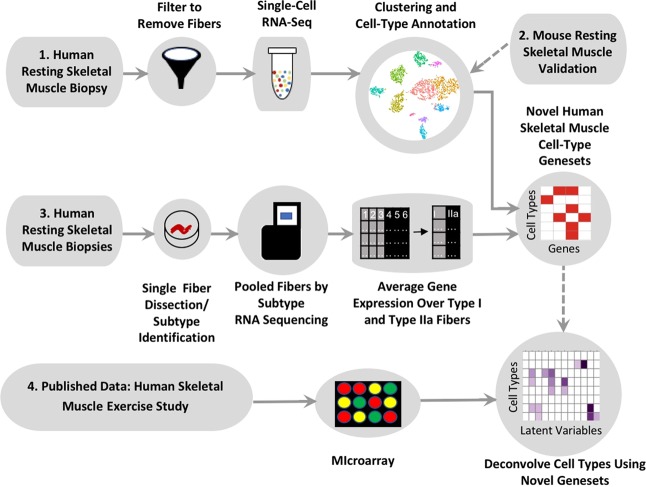
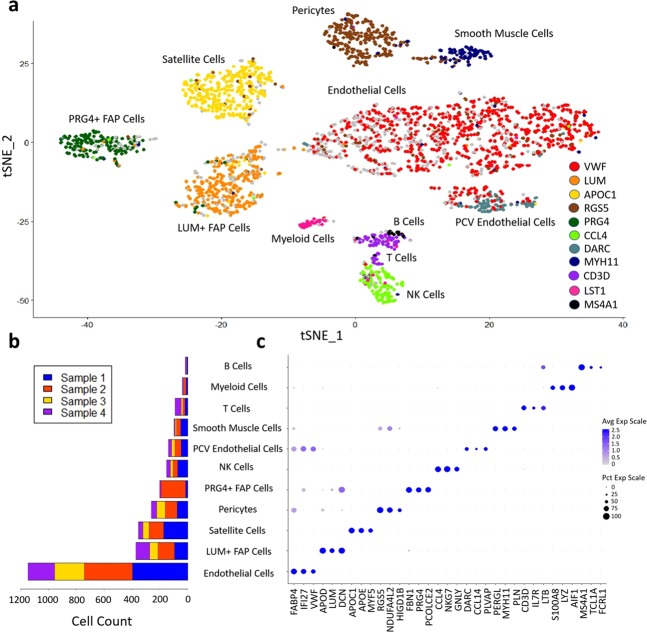
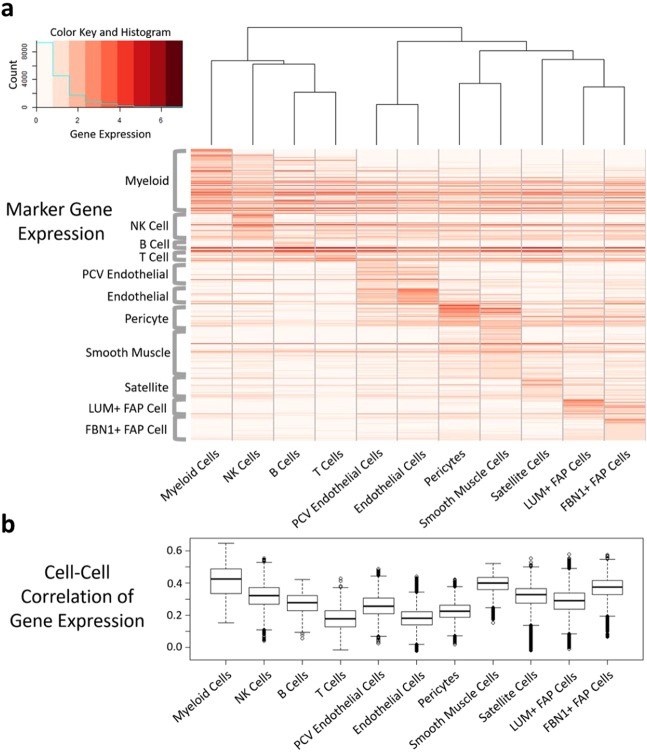
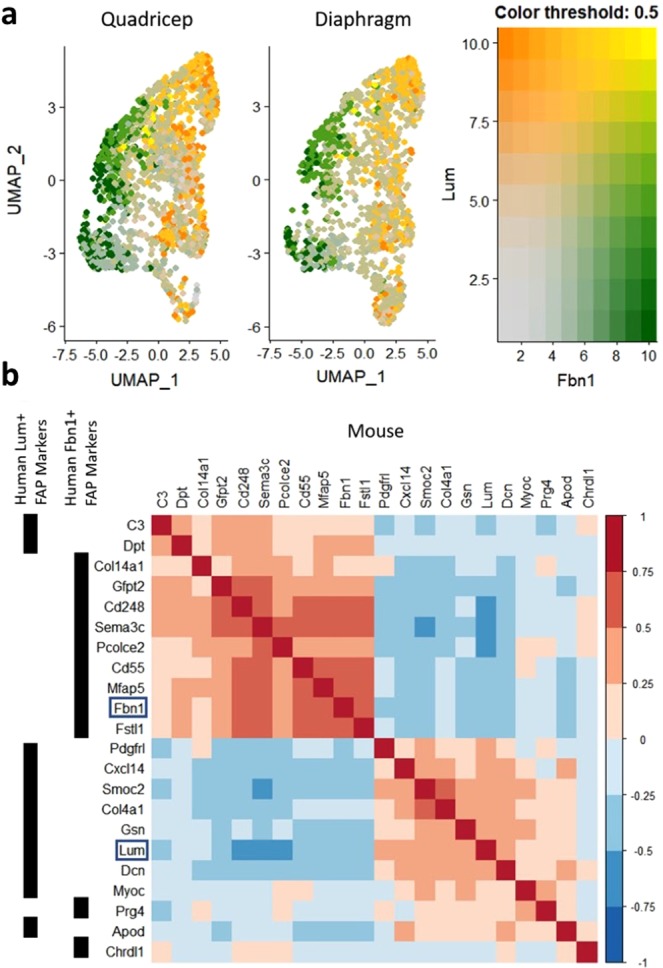
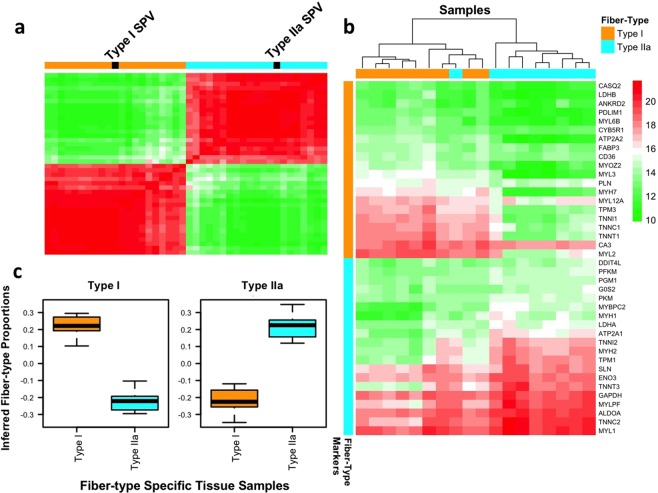
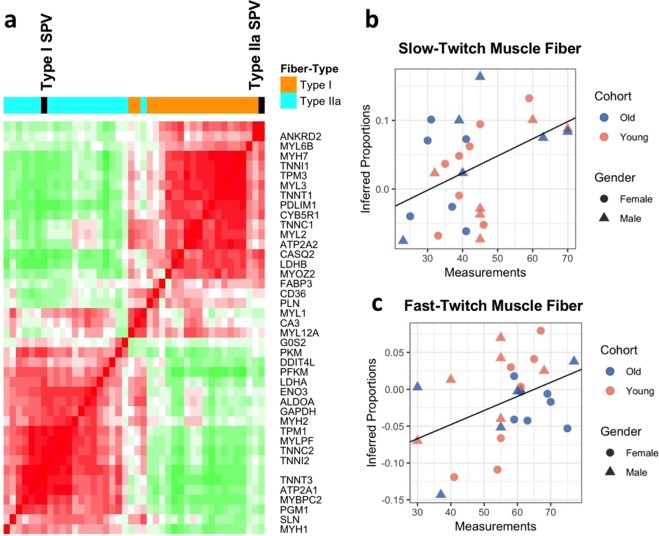
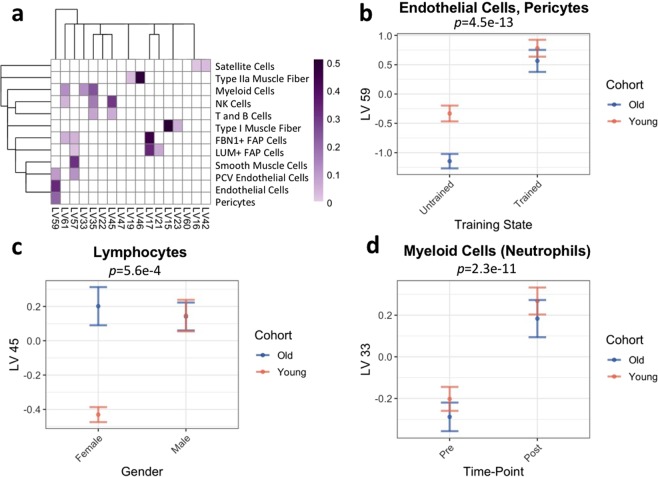
Skeletal muscle is a heterogeneous tissue comprised of muscle fiber and mononuclear cell types that, in addition to movement, influences immunity, metabolism and cognition. We investigated the gene expression patterns of skeletal muscle cells using RNA-seq of subtype-pooled single human muscle fibers and single cell RNA-seq of mononuclear cells from human vastus lateralis, mouse quadriceps, and mouse diaphragm. We identified 11 human skeletal muscle mononuclear cell types, including two fibro-adipogenic progenitor (FAP) cell subtypes. The human FBN1+ FAP cell subtype is novel and a corresponding FBN1+ FAP cell type was also found in single cell RNA-seq analysis in mouse. Transcriptome exercise studies using bulk tissue analysis do not resolve changes in individual cell-type proportion or gene expression. The cell-type gene signatures provide the means to use computational methods to identify cell-type level changes in bulk studies. As an example, we analyzed public transcriptome data from an exercise training study and revealed significant changes in specific mononuclear cell-type proportions related to age, sex, acute exercise and training. Our single-cell expression map of skeletal muscle cell types will further the understanding of the diverse effects of exercise and the pathophysiology of muscle disease.
Overview
The claims and statistics of this paper haven’t been checked yet.
Run the check — free, no account needed. It reads the open-access text and checks the sources it cites.
Integrity signals
Registry
Cites
Statistics
Figures
Verification
Claims the paper makes
The claims and statistics of this paper haven’t been checked yet.
Run the check — free, no account needed. It reads the open-access text and checks the sources it cites.
Claims other papers make about this one
Each is checked against this paper’s own text: does it say what the citing paper says it does?
The source backs part of the claim, not all of it — or backs it for a different population, condition or comparison.
In the citing paper
“In vivo measurement of ribosomal turnover in humans frequently forces researchers to rely on bulk total RNA quantification from percutaneous biopsies”
From Ribosome Biogenesis as a Putative Bottleneck to Skeletal Muscle Hypertrophy: Mechanisms, Human Evidence, and Practical Modulators (2026) · cites this paper as [49]
Experimental — accuracy not yet measuredThe source backs part of the claim, not all of it — or backs it for a different population, condition or comparison.
In the citing paper
“In human clinical and sports science trials, the quantification of total bulk RNA extracted from muscle homogenates serves as the ubiquitous primary proxy for cellular ribosomal density [36,49].”
From Ribosome Biogenesis as a Putative Bottleneck to Skeletal Muscle Hypertrophy: Mechanisms, Human Evidence, and Practical Modulators (2026) · cites this paper as [49]
Experimental — accuracy not yet measuredThe source backs part of the claim, not all of it — or backs it for a different population, condition or comparison.
In the citing paper
“Key angiogenic regulators and endothelial cell content in skeletal muscle are reduced during aging.”
From Skeletal muscle aging, cellular senescence, and senotherapeutics: current knowledge and future directions (2021) · cites this paper as Rubenstein et al., 2020
Experimental — accuracy not yet measuredThe check wasn’t confident either way, so it gives no verdict — never disputed.
In the citing paper
“The definitive frontier lies in single-nucleus RNA sequencing (snRNA-seq), which permits the high-resolution isolation of nucleolar output specifically from myofiber-derived myonuclei, effectively decoupling the analysis from non-muscle cellular noise, such as infiltrating immune cells and fibroblasts [49].”
From Ribosome Biogenesis as a Putative Bottleneck to Skeletal Muscle Hypertrophy: Mechanisms, Human Evidence, and Practical Modulators (2026) · cites this paper as [49]
Experimental — accuracy not yet measuredIn the citing paper
“Corresponding declines in skeletal muscle perfusion may directly influence anabolic resistance and contribute to sarcopenia”
From Skeletal muscle aging, cellular senescence, and senotherapeutics: current knowledge and future directions (2021) · cites this paper as Rubenstein et al., 2020
Self-check
Percentages, sums and reported differences re-computed from the paper’s own numbers.
The self-check needs the paper’s full text.
Citations
Cites
Controlling the False Discovery Rate: A Practical and Powerful Approach to Multiple Testing
Benjamini, Y., & Hochberg, Y. (1995) · Journal of the Royal Statistical Society Series B: Statistical Methodology · doi:10.1111/j.2517-6161.1995.tb02031.x · Cited by 109,482
Moderated estimation of fold change and dispersion for RNA-seq data with DESeq2
Love, M. I., Huber, W., & Anders, S. (2014) · Genome Biology · doi:10.1186/s13059-014-0550-8 · Cited by 95,106
STAR: ultrafast universal RNA-seq aligner
Dobin, A., Davis, C. A., Schlesinger, F., Drenkow, J., Zaleski, C., Jha, S., Batut, P., Chaisson, M., & Gingeras, T. R. (2013) · Bioinformatics · doi:10.1093/bioinformatics/bts635 · Cited by 51,709
KEGG: Kyoto Encyclopedia of Genes and Genomes
Ogata, H., Goto, S., Sato, K., Fujibuchi, W., Bono, H., & Kanehisa, M. (1999) · Nucleic Acids Research · doi:10.1093/nar/27.1.29 · Cited by 31,232
featureCounts: an efficient general purpose program for assigning sequence reads to genomic features
Liao, Y., Smyth, G. K., & Shi, W. (2014) · Bioinformatics · doi:10.1093/bioinformatics/btt656 · Cited by 27,219
Comprehensive Integration of Single-Cell Data
Stuart, T., Butler, A., Hoffman, P., Hafemeister, C., Papalexi, E., Mauck, W. M., Hao, Y., Stoeckius, M., Smibert, P., & Satija, R. (2019) · Cell · doi:10.1016/j.cell.2019.05.031 · Cited by 15,453
Integrating single-cell transcriptomic data across different conditions, technologies, and species
Butler, A., Hoffman, P., Smibert, P., Papalexi, E., & Satija, R. (2018) · Nature Biotechnology · doi:10.1038/nbt.4096 · Cited by 13,174
Massively parallel digital transcriptional profiling of single cells
Zheng, G. X. Y., Terry, J. M., Belgrader, P., Ryvkin, P., Bent, Z. W., Wilson, R., Ziraldo, S. B., Wheeler, T. D., McDermott, G. P., Zhu, J., et al. (2017) · Nature Communications · doi:10.1038/ncomms14049 · Cited by 7,353
The Reactome pathway Knowledgebase
Fabregat, A., Sidiropoulos, K., Garapati, P., Gillespie, M., Hausmann, K., Haw, R., Jassal, B., Jupe, S., Korninger, F., McKay, S., et al. (2016) · Nucleic Acids Research · doi:10.1093/nar/gkv1351 · Cited by 5,605
Fiber Types in Mammalian Skeletal Muscles
Schiaffino, S., & Reggiani, C. (2011) · Physiological Reviews · doi:10.1152/physrev.00031.2010 · Cited by 3,022
Cited by
Sorted by citations
Transfer learning enables predictions in network biology
Theodoris, C. V., Xiao, L., Chopra, A., Chaffin, M. D., Al Sayed, Z. R., Hill, M. C., Mantineo, H., Brydon, E. M., Zeng, Z., Liu, X. S., et al. (2023) · Nature · doi:10.1038/s41586-023-06139-9 · Cited by 1,193
The Tabula Sapiens: A multiple-organ, single-cell transcriptomic atlas of humans
The Tabula Sapiens Consortium*, Jones, R. C., Karkanias, J., Krasnow, M. A., Pisco, A. O., Quake, S. R., Salzman, J., Yosef, N., Bulthaup, B., Brown, P., et al. (2022) · Science · doi:10.1126/science.abl4896 · Cited by 1,056
Csapo, R., Gumpenberger, M., & Wessner, B. (2020) · Frontiers in Physiology · doi:10.3389/fphys.2020.00253 · Cited by 463
Single-nucleus cross-tissue molecular reference maps toward understanding disease gene function
Eraslan, G., Drokhlyansky, E., Anand, S. K., Fiškin, E., Subramanian, A., Slyper, M., Wang, J., Wittenberghe, N. V., Rouhana, J. M., Waldman, J., et al. (2022) · Science · doi:10.1126/science.abl4290 · Cited by 406
Bao, H., Cao, J., Chen, M., Min, C., Chen, W., Chen, X., Chen, Y., Chen, Y., Chen, Y., Chen, Z., et al. (2023) · Science China Life Sciences · doi:10.1007/s11427-023-2305-0 · Cited by 402
Self-citation
Metadata
- Authors
- Rubenstein, A. B., Smith, G. R., Raue, U., Begue, G., Minchev, K., Ruf-Zamojski, F., Nair, V. D., Wang, X., Zhou, L., Zaslavsky, E., Trappe, T. A., Trappe, S., & Sealfon, S. C.
- Affiliations
- Icahn School of Medicine at Mount Sinai (US)
- Ball State University (US)
- Boston University (US)
- Corresponding author
- Sealfon, Stuart C.
- ORCID
- Venue
- Scientific Reports
- Published
- 2020-01-14
- Volume
- 10
- Issue
- 1
- Pages
- 229-229
- ISSN
- 2045-2322 (ISSN-L)
- PMC
- PMC6959232
- OpenAlex
- W2999612022
- Cited by
- 323
- References
- 72
- Citations by year
- 2026: 41 · 2025: 53 · 2024: 57 · 2023: 59 · 2022: 52 · 2021: 37 · 2020: 24
- FWCI
- 13.94
- Type
- journal article
- Language
- en
- Open access
- gold
- doi.org
- Locations
- Scientific Reports (publishedVersion, cc-by)
- PubMed Central (publishedVersion, cc-by)
- PubMed (publishedVersion)
- DOAJ (DOAJ: Directory of Open Access Journals) (submittedVersion)
- Funders
- U.S. Department of Health & Human Services | NIH | National Institute of Arthritis and Musculoskeletal and Skin Diseases (1R01AR074428)
- U.S. Department of Health & Human Services | National Institutes of Health (AG038576, AG184809, U24 DK112331)
- Ball State University (Academic Excellence Award)
- Empire State Development's Division of Science, Technology and Innovation
- Topics
- Life Sciences › Biochemistry, Genetics and Molecular Biology › Molecular Biology › Single-cell and spatial transcriptomics
- Life Sciences › Biochemistry, Genetics and Molecular Biology › Molecular Biology › Muscle Physiology and Disorders
- Health Sciences › Medicine › Physiology (medical) › Adipose Tissue and Metabolism
- Keywords
- skeletal muscle, muscle fiber heterogeneity, fibro-adipogenic progenitor cells, exercise training, vastus lateralis, quadriceps, diaphragm, single-cell transcriptomics, cell type proportions
- MeSH terms
- Animals, Diaphragm, Female, Humans, Male, Biomarkers, Muscle, Skeletal, Adipogenesis, Mice, Quadriceps Muscle, Single-Cell Analysis, Transcriptome
About these checks
Registry, retraction, Cites and statistics results are computed, not judged, with one exception: a printed reference that no index lists is read once by a model before it counts as a citation error. Claims are extracted by a model and kept only when their quote appears verbatim in the text; each cited source is then checked, with a model’s help, for whether it says what the claim relies on. Those verdicts can be wrong — read the claim’s quote and the cited source before relying on one.
Statistics and arithmetic are recomputed, not judged.
Confidence bands are shown only for fields calibrated on our annotated test set. None is calibrated yet, so no band is shown.
What counts as a claim ›How we measure confidence ›How we check this ›
Are you an author, or do you see a problem with this page? Request a review
