

The DOI matches its Crossref record; 72 of the 72 references it cites were found in a registry or an index.
Single-cell transcriptional profiles in human skeletal muscle
Open accessAbstract
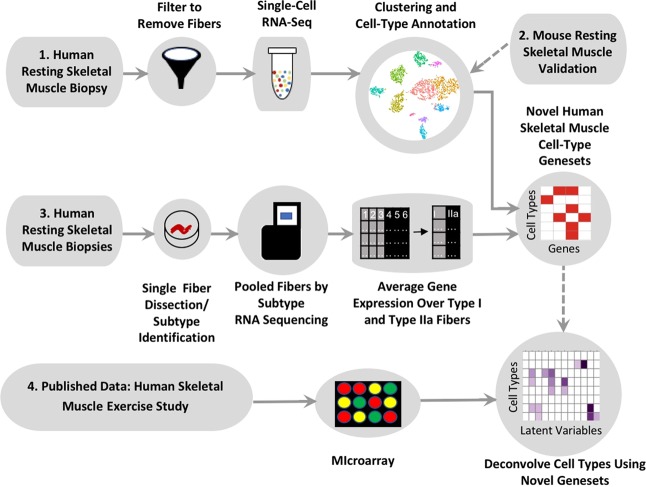
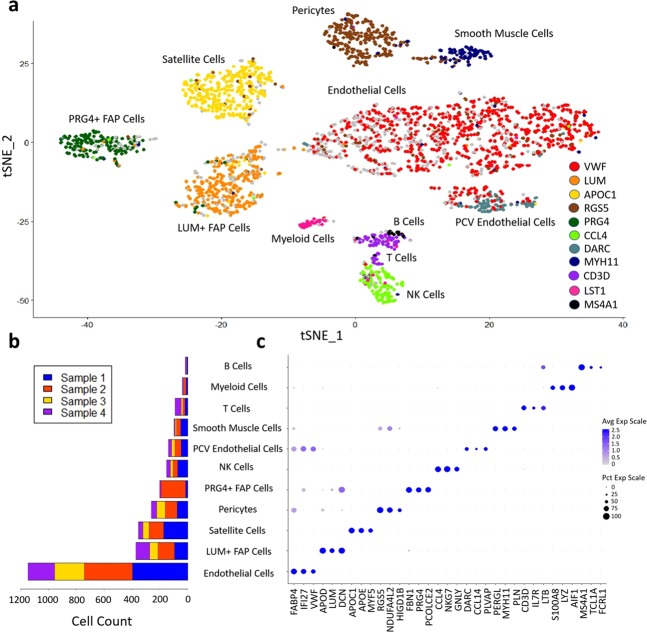
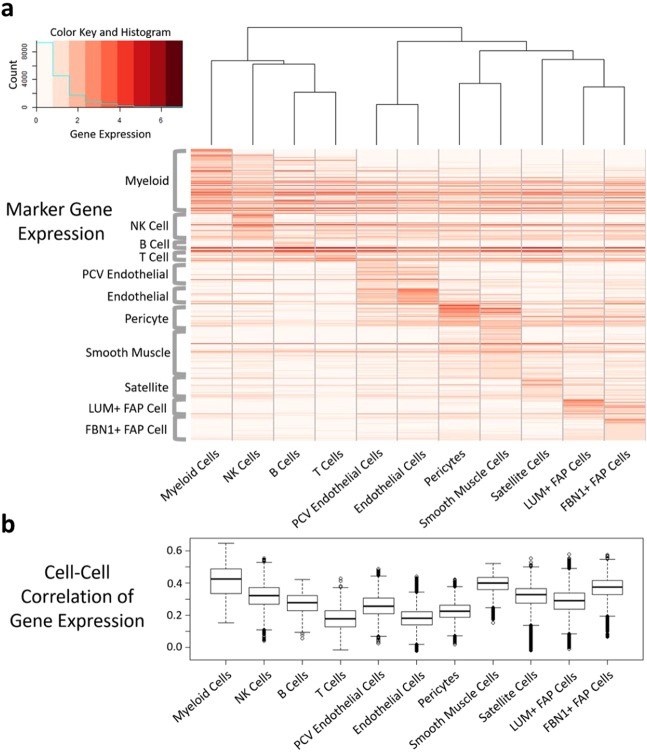
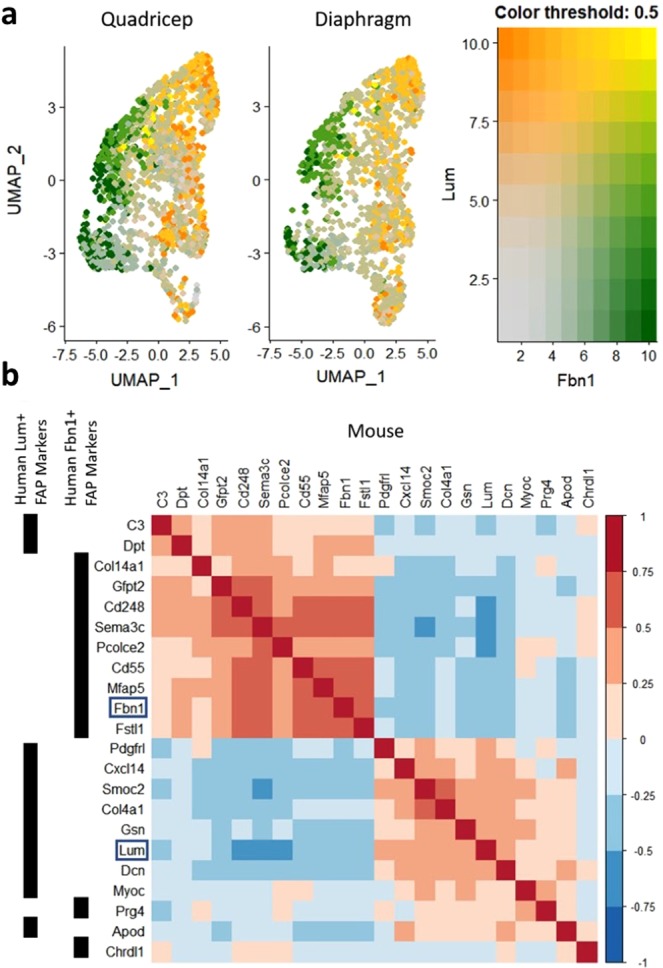
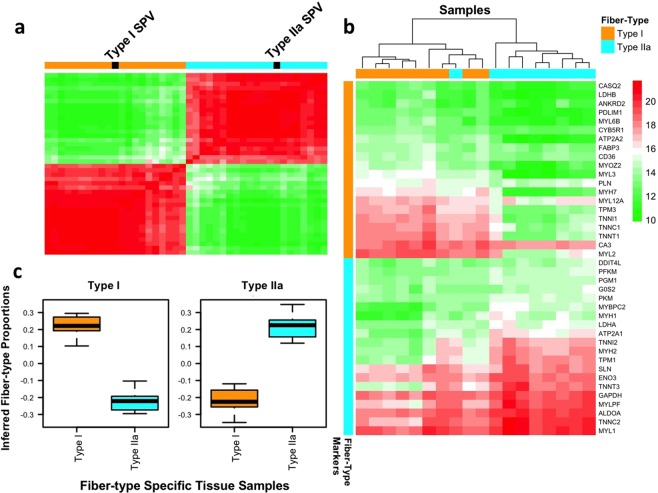
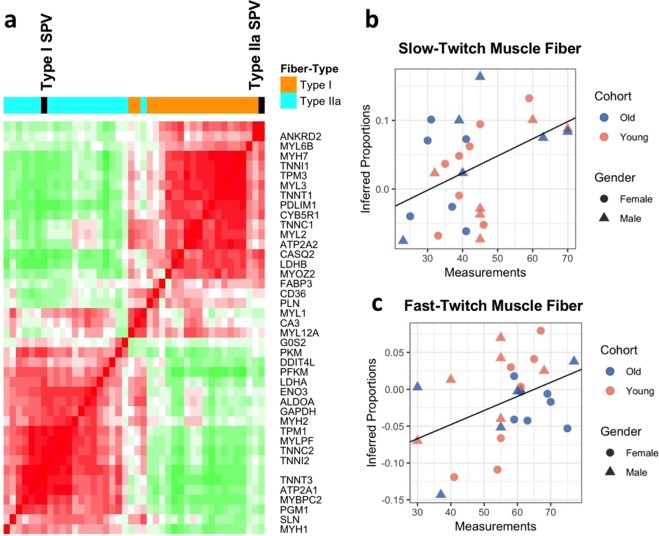
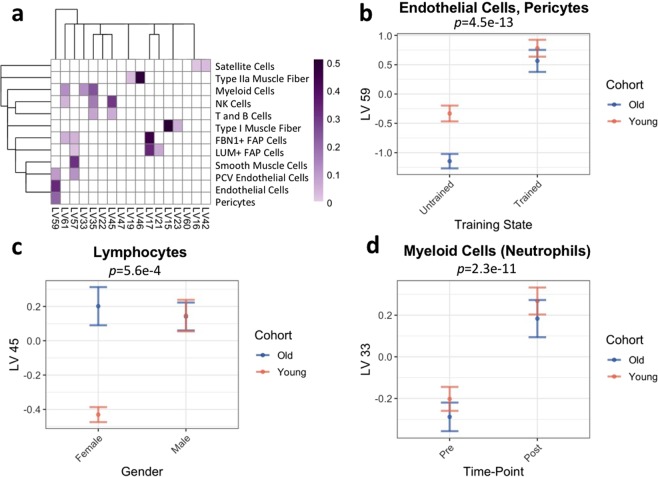
Skeletal muscle is a heterogeneous tissue comprised of muscle fiber and mononuclear cell types that, in addition to movement, influences immunity, metabolism and cognition. We investigated the gene expression patterns of skeletal muscle cells using RNA-seq of subtype-pooled single human muscle fibers and single cell RNA-seq of mononuclear cells from human vastus lateralis, mouse quadriceps, and mouse diaphragm. We identified 11 human skeletal muscle mononuclear cell types, including two fibro-adipogenic progenitor (FAP) cell subtypes. The human FBN1+ FAP cell subtype is novel and a corresponding FBN1+ FAP cell type was also found in single cell RNA-seq analysis in mouse. Transcriptome exercise studies using bulk tissue analysis do not resolve changes in individual cell-type proportion or gene expression. The cell-type gene signatures provide the means to use computational methods to identify cell-type level changes in bulk studies. As an example, we analyzed public transcriptome data from an exercise training study and revealed significant changes in specific mononuclear cell-type proportions related to age, sex, acute exercise and training. Our single-cell expression map of skeletal muscle cell types will further the understanding of the diverse effects of exercise and the pathophysiology of muscle disease.
Overview
The claims and statistics of this paper haven’t been checked yet.
Run the check — free, no account needed. It reads the open-access text and checks the sources it cites.
Integrity signals
Registry
Cites
Statistics
Figures
Verification
Claims the paper makes
The claims and statistics of this paper haven’t been checked yet.
Run the check — free, no account needed. It reads the open-access text and checks the sources it cites.
Claims other papers make about this one
Each is checked against this paper’s own text: does it say what the citing paper says it does?
The source backs part of the claim, not all of it — or backs it for a different population, condition or comparison.
In the citing paper
“In vivo measurement of ribosomal turnover in humans frequently forces researchers to rely on bulk total RNA quantification from percutaneous biopsies”
From Ribosome Biogenesis as a Putative Bottleneck to Skeletal Muscle Hypertrophy: Mechanisms, Human Evidence, and Practical Modulators (2026) · cites this paper as [49]
Experimental — accuracy not yet measuredThe source backs part of the claim, not all of it — or backs it for a different population, condition or comparison.
In the citing paper
“In human clinical and sports science trials, the quantification of total bulk RNA extracted from muscle homogenates serves as the ubiquitous primary proxy for cellular ribosomal density [36,49].”
From Ribosome Biogenesis as a Putative Bottleneck to Skeletal Muscle Hypertrophy: Mechanisms, Human Evidence, and Practical Modulators (2026) · cites this paper as [49]
Experimental — accuracy not yet measuredThe source backs part of the claim, not all of it — or backs it for a different population, condition or comparison.
In the citing paper
“Key angiogenic regulators and endothelial cell content in skeletal muscle are reduced during aging.”
From Skeletal muscle aging, cellular senescence, and senotherapeutics: current knowledge and future directions (2021) · cites this paper as Rubenstein et al., 2020
Experimental — accuracy not yet measuredThe check wasn’t confident either way, so it gives no verdict — never disputed.
In the citing paper
“The definitive frontier lies in single-nucleus RNA sequencing (snRNA-seq), which permits the high-resolution isolation of nucleolar output specifically from myofiber-derived myonuclei, effectively decoupling the analysis from non-muscle cellular noise, such as infiltrating immune cells and fibroblasts [49].”
From Ribosome Biogenesis as a Putative Bottleneck to Skeletal Muscle Hypertrophy: Mechanisms, Human Evidence, and Practical Modulators (2026) · cites this paper as [49]
Experimental — accuracy not yet measuredIn the citing paper
“Corresponding declines in skeletal muscle perfusion may directly influence anabolic resistance and contribute to sarcopenia”
From Skeletal muscle aging, cellular senescence, and senotherapeutics: current knowledge and future directions (2021) · cites this paper as Rubenstein et al., 2020
Self-check
Percentages, sums and reported differences re-computed from the paper’s own numbers.
The self-check needs the paper’s full text.
Citations
Cites
Controlling the False Discovery Rate: A Practical and Powerful Approach to Multiple Testing
Benjamini, Y., & Hochberg, Y. (1995) · Journal of the Royal Statistical Society Series B: Statistical Methodology · doi:10.1111/j.2517-6161.1995.tb02031.x · Cited by 109,482
Moderated estimation of fold change and dispersion for RNA-seq data with DESeq2
Love, M. I., Huber, W., & Anders, S. (2014) · Genome Biology · doi:10.1186/s13059-014-0550-8 · Cited by 95,106
STAR: ultrafast universal RNA-seq aligner
Dobin, A., Davis, C. A., Schlesinger, F., Drenkow, J., Zaleski, C., Jha, S., Batut, P., Chaisson, M., & Gingeras, T. R. (2013) · Bioinformatics · doi:10.1093/bioinformatics/bts635 · Cited by 51,709
KEGG: Kyoto Encyclopedia of Genes and Genomes
Ogata, H., Goto, S., Sato, K., Fujibuchi, W., Bono, H., & Kanehisa, M. (1999) · Nucleic Acids Research · doi:10.1093/nar/27.1.29 · Cited by 31,232
featureCounts: an efficient general purpose program for assigning sequence reads to genomic features
Liao, Y., Smyth, G. K., & Shi, W. (2014) · Bioinformatics · doi:10.1093/bioinformatics/btt656 · Cited by 27,219
Comprehensive Integration of Single-Cell Data
Stuart, T., Butler, A., Hoffman, P., Hafemeister, C., Papalexi, E., Mauck, W. M., Hao, Y., Stoeckius, M., Smibert, P., & Satija, R. (2019) · Cell · doi:10.1016/j.cell.2019.05.031 · Cited by 15,453
Integrating single-cell transcriptomic data across different conditions, technologies, and species
Butler, A., Hoffman, P., Smibert, P., Papalexi, E., & Satija, R. (2018) · Nature Biotechnology · doi:10.1038/nbt.4096 · Cited by 13,174
Massively parallel digital transcriptional profiling of single cells
Zheng, G. X. Y., Terry, J. M., Belgrader, P., Ryvkin, P., Bent, Z. W., Wilson, R., Ziraldo, S. B., Wheeler, T. D., McDermott, G. P., Zhu, J., et al. (2017) · Nature Communications · doi:10.1038/ncomms14049 · Cited by 7,353
The Reactome pathway Knowledgebase
Fabregat, A., Sidiropoulos, K., Garapati, P., Gillespie, M., Hausmann, K., Haw, R., Jassal, B., Jupe, S., Korninger, F., McKay, S., et al. (2016) · Nucleic Acids Research · doi:10.1093/nar/gkv1351 · Cited by 5,605
Fiber Types in Mammalian Skeletal Muscles
Schiaffino, S., & Reggiani, C. (2011) · Physiological Reviews · doi:10.1152/physrev.00031.2010 · Cited by 3,022
Cited by
Sorted by citations
Transfer learning enables predictions in network biology
Theodoris, C. V., Xiao, L., Chopra, A., Chaffin, M. D., Al Sayed, Z. R., Hill, M. C., Mantineo, H., Brydon, E. M., Zeng, Z., Liu, X. S., et al. (2023) · Nature · doi:10.1038/s41586-023-06139-9 · Cited by 1,193
The Tabula Sapiens: A multiple-organ, single-cell transcriptomic atlas of humans
The Tabula Sapiens Consortium*, Jones, R. C., Karkanias, J., Krasnow, M. A., Pisco, A. O., Quake, S. R., Salzman, J., Yosef, N., Bulthaup, B., Brown, P., et al. (2022) · Science · doi:10.1126/science.abl4896 · Cited by 1,056
Csapo, R., Gumpenberger, M., & Wessner, B. (2020) · Frontiers in Physiology · doi:10.3389/fphys.2020.00253 · Cited by 463
Single-nucleus cross-tissue molecular reference maps toward understanding disease gene function
Eraslan, G., Drokhlyansky, E., Anand, S. K., Fiškin, E., Subramanian, A., Slyper, M., Wang, J., Wittenberghe, N. V., Rouhana, J. M., Waldman, J., et al. (2022) · Science · doi:10.1126/science.abl4290 · Cited by 406
Bao, H., Cao, J., Chen, M., Min, C., Chen, W., Chen, X., Chen, Y., Chen, Y., Chen, Y., Chen, Z., et al. (2023) · Science China Life Sciences · doi:10.1007/s11427-023-2305-0 · Cited by 402
Self-citationOsorio, D., Zhong, Y., Li, G., Xu, Q., Yang, Y., Hillhouse, A., Chen, J., Davidson, L. A., Tian, Y., Chapkin, R. S., et al. (2021) · Patterns · doi:10.1016/j.patter.2022.100434 · Cited by 406
Egan, B., & Sharples, A. P. (2023) · Physiological Reviews · doi:10.1152/physrev.00054.2021 · Cited by 278
The molecular athlete: exercise physiology from mechanisms to medals
Furrer, R., Hawley, J. A., & Handschin, C. (2023) · Physiological Reviews · doi:10.1152/physrev.00017.2022 · Cited by 253
Human skeletal muscle aging atlas
Kedlian, V. R., Wang, Y., Liu, T., Chen, X., Bolt, L., Tudor, C., Shen, Z., Fasouli, E. S., Prigmore, E., Kleshchevnikov, V., et al. (2024) · Nature Aging · doi:10.1038/s43587-024-00613-3 · Cited by 218
Micheli, A. J. D., Spector, J. A., Elemento, O., & Cosgrove, B. D. (2020) · Skeletal Muscle · doi:10.1186/s13395-020-00236-3 · Cited by 218
McKellar, D. W., Walter, L. D., Song, L. T., Mantri, M., Wang, M. F. Z., Vlaminck, I. D., & Cosgrove, B. D. (2021) · Communications Biology · doi:10.1038/s42003-021-02810-x · Cited by 224
Kim, M., Franke, V., Brandt, B., Lowenstein, E. D., Schoewel, V., Spuler, S., Akalin, A., & Birchmeier, C. (2020) · Nature Communications · doi:10.1038/s41467-020-20064-9 · Cited by 217
Inflammation balance in skeletal muscle damage and repair
Tu, H., & Li, Y. (2023) · Frontiers in Immunology · doi:10.3389/fimmu.2023.1133355 · Cited by 226
Xi, H., Langerman, J., Sabri, S., Chien, P., Young, C. S., Younesi, S., Hicks, M. R., Gonzalez, K. M., Fujiwara, W., Marzi, J., et al. (2020) · Cell stem cell · doi:10.1016/j.stem.2020.04.017 · Cited by 160
Contreras, O., Rossi, F. M. V., & Théret, M. (2021) · Skeletal Muscle · doi:10.1186/s13395-021-00265-6 · Cited by 163
Chemello, F., Wang, Z., Li, H. Z., McAnally, J., Liu, N., Bassel‐Duby, R., & Olson, E. N. (2020) · Proceedings of the National Academy of Sciences · doi:10.1073/pnas.2018391117 · Cited by 141
Multipotent stromal cells: One name, multiple identities
Soliman, H., Theret, M., Scott, W., Hill, L., Underhill, T. M., Hinz, B., & Rossi, F. M. V. (2021) · Cell Stem Cell · doi:10.1016/j.stem.2021.09.001 · Cited by 147
Functionally heterogeneous human satellite cells identified by single cell RNA sequencing
Barruet, E., Garcia, S. M., Striedinger, K., Wu, J., Lee, S., Byrnes, L. E., Wong, A., Sun, X., Tamaki, S. J., Brack, A. S., et al. (2020) · eLife · doi:10.7554/elife.51576 · Cited by 142
Kendal, A. R., Layton, T., Al‐Mossawi, H., Appleton, L., Dakin, S. G., Brown, R., Loizou, C. L., Rogers, M., Sharp, R. J., & Carr, A. J. (2020) · Scientific Reports · doi:10.1038/s41598-020-70786-5 · Cited by 141
Giuliani, G., Rosina, M., & Reggio, A. (2021) · FEBS Journal · doi:10.1111/febs.16080 · Cited by 144
The Role of Innate and Adaptive Immune Cells in Skeletal Muscle Regeneration
Ziemkiewicz, N., Hilliard, G. M., Pullen, N., & Garg, K. (2021) · International Journal of Molecular Sciences · doi:10.3390/ijms22063265 · Cited by 124
Yang, J., Vamvini, M. T., Nigro, P., Ho, L., Galani, K., Alvarez, M., Tanigawa, Y., Renfro, A., Carbone, N. P., Laakso, M., et al. (2022) · Cell Metabolism · doi:10.1016/j.cmet.2022.09.004 · Cited by 110
Pérez, K., Ciotlos, S., McGirr, J., Limbad, C., Doi, R., Nederveen, J. P., Nilsson, M. I., Winer, D. A., Evans, W. J., Tarnopolsky, M. A., et al. (2022) · Aging · doi:10.18632/aging.204435 · Cited by 114
Englund, D. A., Zhang, X., Aversa, Z., & LeBrasseur, N. K. (2021) · Mechanisms of Ageing and Development · doi:10.1016/j.mad.2021.111595 · Cited by 94
The Role of the Skeletal Muscle Secretome in Mediating Endurance and Resistance Training Adaptations
Leuchtmann, A. B., Adak, V., Dilbaz, S., & Handschin, C. (2021) · Frontiers in Physiology · doi:10.3389/fphys.2021.709807 · Cited by 84
“Exercise can induce changes in the proportion of these cell types as well as affect activation, polarization and secretory profiles (Rubenstein et al., 2020).”
BackgroundPassive stiffness of fibrotic skeletal muscle in mdx mice relates to collagen architecture
Brashear, S. E., Wohlgemuth, R. P., Gonzalez, G., & Smith, L. (2020) · The Journal of Physiology · doi:10.1113/jp280656 · Cited by 78
Mechanisms of exercise as a preventative measure to muscle wasting
Graham, Z., Lavin, K. M., O’Bryan, S. M., Thalacker‐Mercer, A. E., Buford, T. W., Ford, K. M., Broderick, T. J., & Bamman, M. M. (2021) · American Journal of Physiology-Cell Physiology · doi:10.1152/ajpcell.00056.2021 · Cited by 88
Fitzgerald, G., Turiel, G., Gorski, T., Soro-Arnáiz, I., Zhang, J., Casartelli, N. C., Masschelein, E., Maffiuletti, N. A., Sutter, R., Leunig, M., et al. (2023) · Communications Biology · doi:10.1038/s42003-023-04504-y · Cited by 85
Molecular and spatial landmarks of early mouse skin development
Jacob, T., Annusver, K., Czarnewski, P., Dalessandri, T., Kalk, C., Levron, C. L., Sanz, N. C., Kastriti, M. E., Mikkola, M. L., Rendl, M., et al. (2023) · Developmental Cell · doi:10.1016/j.devcel.2023.07.015 · Cited by 80
Exercise is associated with younger methylome and transcriptome profiles in human skeletal muscle
Voisin, S. A. C., Seale, K., Jacques, M., Landen, S., Harvey, N. R., Haupt, L. M., Griffiths, L. R., Ashton, K. J., Coffey, V. G., Thompson, J. M., et al. (2023) · Aging Cell · doi:10.1111/acel.13859 · Cited by 80
Kalai, F. Z., Boulaaba, M., Ferdousi, F., & Isoda, H. (2022) · International Journal of Molecular Sciences · doi:10.3390/ijms23020704 · Cited by 78
Decoding the transcriptome of denervated muscle at single‐nucleus resolution
Lin, H., Ma, X., Sun, Y., Peng, H., Wang, Y., Thomas, S. S., & Hu, Z. (2022) · Journal of Cachexia Sarcopenia and Muscle · doi:10.1002/jcsm.13023 · Cited by 72
Flores‐Opazo, M., Kopinke, D., Helmbacher, F., Fernández‐Verdejo, R., Tuñón‐Suárez, M., Lynch, G. S., & Contreras, O. (2024) · Molecular Aspects of Medicine · doi:10.1016/j.mam.2024.101277 · Cited by 66
Ma, L., Meng, Y., An, Y., Han, P., Zhang, C., Yue, Y., Wen, C., Shi, X., Jin, J., Yang, G., et al. (2024) · Journal of Cachexia Sarcopenia and Muscle · doi:10.1002/jcsm.13484 · Cited by 66
Single-cell analysis of bovine muscle-derived cell types for cultured meat production
Meßmer, T., Dohmen, R. G. J., Schaeken, L., Melzener, L., Hueber, R., Godec, M., Didoss, C., Post, M. J., & Flack, J. E. (2023) · Frontiers in Nutrition · doi:10.3389/fnut.2023.1212196 · Cited by 65
Human skeletal muscle fiber heterogeneity beyond myosin heavy chains
Moreno‐Justicia, R., der Stede, T. V., Stocks, B., Laitila, J. M., Seaborne, R. A. E., de Loock, A. V., Lievens, E., Samodova, D., Marín-Arraiza, L., Dmytriyeva, O., et al. (2025) · Nature Communications · doi:10.1038/s41467-025-56896-6 · Cited by 71
Lavin, K. M., Coen, P. M., Baptista, L. C. P., Bell, M. B., Drummer, D. J., Harper, S. A., Lixandrão, M. E., McAdam, J. S., O’Bryan, S. M., Ramos, S. V., et al. (2022) · Comprehensive physiology · doi:10.1002/cphy.c200033 · Cited by 78
Brorson, J., Lin, L., Wang, J., Bæk, A., Billeskov, T. B., Thybo, F. F., Just, J., Haskó, J., Ravn, C., Hansen, R. L., et al. (2025) · Nature Communications · doi:10.1038/s41467-025-60627-2 · Cited by 60
Landen, S., Jacques, M., Hiam, D., Alvarez‐Romero, J., Harvey, N. R., Haupt, L. M., Griffiths, L. R., Ashton, K. J., Lamon, S., Voisin, S. A. C., et al. (2021) · Clinical Epigenetics · doi:10.1186/s13148-021-01188-1 · Cited by 60
Single-nucleus profiling unveils a geroprotective role of the FOXO3 in primate skeletal muscle aging
Jing, Y., Zuo, Y., Yu, Y., Sun, L., Yu, Z., Ma, S., Zhao, Q., Sun, G., Hu, H., Li, J., et al. (2022) · Protein & Cell · doi:10.1093/procel/pwac061 · Cited by 59
Orchard, P., Manickam, N., Varshney, A., Vadlamudi, S., Burant, C., Parker, S. C. J., Kaplan, J., Lalancette, C., Mohlke, K. L., Gallagher, K., et al. (2021) · Genome Research · doi:10.1101/gr.268482.120 · Cited by 58
Mechanisms of cooperative cell-cell interactions in skeletal muscle regeneration
Koike, H., Manabe, I., & Oishi, Y. (2022) · Inflammation and Regeneration · doi:10.1186/s41232-022-00234-6 · Cited by 58
Xhuti, D., Nilsson, M. I., Manta, K., Tarnopolsky, M. A., & Nederveen, J. P. (2023) · The Journal of Physiology · doi:10.1113/jp282663 · Cited by 63
Molecular aspects of the exercise response and training adaptation in skeletal muscle
Furrer, R., & Handschin, C. (2024) · Free Radical Biology and Medicine · doi:10.1016/j.freeradbiomed.2024.07.026 · Cited by 68
Xu, D., Wan, B., Qiu, K., Wang, Y., Zhang, X., Jiao, N., Yan, E., Wu, J. W., Yu, R., Gao, S., et al. (2023) · Advanced Science · doi:10.1002/advs.202305080 · Cited by 55
Brightwell, C. R., Latham, C. M., Thomas, N. T., Keeble, A. R., Murach, K. A., & Fry, C. S. (2022) · American Journal of Physiology-Cell Physiology · doi:10.1152/ajpcell.00200.2022 · Cited by 52
Wang, L., Zhao, X.-Y., Liu, S., You, W.-J., Huang, Y., Zhou, Y., Chen, W., Zhang, S., Wang, J.-Y., Zheng, Q., et al. (2023) · npj Science of Food · doi:10.1038/s41538-023-00203-4 · Cited by 38
Mavrommatis, L., Jeong, H., Kindler, U., Gomez‐Giro, G., Kienitz, M., Stehling, M., Psathaki, O. E., Zeuschner, D., Bixel, M. G., Han, D., et al. (2023) · eLife · doi:10.7554/elife.87081 · Cited by 62
D’Ercole, C., D’Angelo, P., Ruggieri, V., Proietti, D., Virtanen, L., Parisi, C., Riera, C. S., Renzini, A., Macone, A., Marzullo, M., et al. (2022) · Cell Reports · doi:10.1016/j.celrep.2022.111861 · Cited by 48
Whytock, K. L., & Goodpaster, B. H. (2025) · Circulation Research · doi:10.1161/circresaha.125.325532 · Cited by 57
Scripture-Adams, D. D., Chesmore, K. N., Barthélémy, F., Wang, R. T., Nieves‐Rodriguez, S., Wang, D. W., Mokhonova, E. I., Douine, E. D., Wan, J., Little, I., et al. (2022) · Communications Biology · doi:10.1038/s42003-022-03938-0 · Cited by 46
Single-cell sequencing deconvolutes cellular responses to exercise in human skeletal muscle
Lovrić, A., Rassolie, A., Alam, S., Mandić, M., Saini, A. S., Altun, M., Fernandez‐Gonzalo, R., Gustafsson, T. P., & Rullman, E. (2022) · Communications Biology · doi:10.1038/s42003-022-04088-z · Cited by 51
Edman, S., Horwath, O., der Stede, T. V., Blackwood, S. J., Moberg, I., Strömlind, H., Nordström, F., Ekblom, M., Katz, A., Apró, W., et al. (2024) · Function · doi:10.1093/function/zqae005 · Cited by 50
Muscle aging and sarcopenia: The pathology, etiology, and most promising therapeutic targets
Grima-Terrén, M., Campanario, S., Ramírez‐Pardo, I., Cisneros, A., Hong, X., Perdiguero, E., Serrano, A. L., Isern, J., & Muñoz‐Cánoves, P. (2024) · Molecular Aspects of Medicine · doi:10.1016/j.mam.2024.101319 · Cited by 52
Karlsen, A., Yeung, C. C., Schjerling, P., Denz, L., Hoegsbjerg, C., Jakobsen, J. R., Krogsgaard, M. R., Koch, M., Schiaffino, S., Kjær, M., et al. (2023) · Journal of Cell Science · doi:10.1242/jcs.260913 · Cited by 44
Suárez‐Calvet, X., Fernández‐Simón, E., Benito, D. N., Jou, C., Piñol‐Jurado, P., Villalobos, E., Ortez, C., Monceau, A., Schiava, M., Codina, A., et al. (2023) · Cell Death and Disease · doi:10.1038/s41419-023-06103-5 · Cited by 46
Senolysis induced by 25-hydroxycholesterol targets CRYAB in multiple cell types
Limbad, C., Doi, R., McGirr, J., Ciotlos, S., Pérez, K., Clayton, Z. S., Daya, R., Seals, D. R., Campisi, J., & Melov, S. (2022) · iScience · doi:10.1016/j.isci.2022.103848 · Cited by 46
Single-cell RNA sequencing in skeletal muscle developmental biology
Cai, C., Yue, Y., & Yue, B. (2023) · Biomedicine & Pharmacotherapy · doi:10.1016/j.biopha.2023.114631 · Cited by 45
Williams, K., Yokomori, K., & Mortazavi, A. (2022) · Frontiers in Genetics · doi:10.3389/fgene.2022.835099 · Cited by 46
Comparative Transcriptome Analysis of Slow-Twitch and Fast-Twitch Muscles in Dezhou Donkeys
Li, Y., Ma, Q., Shi, X., Yuan, W., Liu, G., & Wang, C. (2022) · Genes · doi:10.3390/genes13091610 · Cited by 41
Rubenstein, A. B., Hinkley, J. M., Nair, V. D., Nudelman, G., Standley, R. A., Yi, F., Yu, G., Trappe, T. A., Bamman, M. M., Trappe, S. W., et al. (2022) · American Journal of Physiology-Endocrinology and Metabolism · doi:10.1152/ajpendo.00378.2021 · Cited by 40
Self-citationCardiac fibroblast diversity in health and disease
Soliman, H. S., & Rossi, F. M. V. (2020) · Matrix Biology · doi:10.1016/j.matbio.2020.05.003 · Cited by 40
Taglietti, V., Kefi, K., Rivera, L., Bergiers, O., Cardone, N., Coulpier, F., Gioftsidi, S., Drayton‐Libotte, B., Hou, C., Authier, F., et al. (2023) · Science Translational Medicine · doi:10.1126/scitranslmed.add5275 · Cited by 44
Thrown for a loop: fibro-adipogenic progenitors in skeletal muscle fibrosis
Loomis, T., & Smith, L. (2023) · American Journal of Physiology-Cell Physiology · doi:10.1152/ajpcell.00245.2023 · Cited by 39
Taglietti, V., Kefi, K., Bronisz-Budzyńska, I., Mirciloglu, B., Rodrigues, M., Cardone, N., Coulpier, F., Periou, B., Gentil, C., Goddard, M. A., et al. (2022) · Acta Neuropathologica Communications · doi:10.1186/s40478-022-01355-2 · Cited by 49
Genetic variation of putative myokine signaling is dominated by biological sex and sex hormones
Vélez, L. M., Van, C., Moore, T. M., Zhou, Z., Johnson, C., Hevener, A. L., & Seldin, M. M. (2022) · eLife · doi:10.7554/elife.76887 · Cited by 37
Lavin, K. M., Bell, M. B., McAdam, J. S., Peck, B. D., Walton, R. G., Windham, S. T., Tuggle, S. C., Long, D. E., Kern, P. A., Peterson, C. A., et al. (2021) · Physiological Genomics · doi:10.1152/physiolgenomics.00154.2020 · Cited by 34
Collins, B. C., & Kardon, G. (2021) · Development · doi:10.1242/dev.199861 · Cited by 40
van den Heuvel, A., Lassche, S., Mul, K., Greco, A., León, D. S., Heerschap, A., Küsters, B., Tapscott, S. J., Voermans, N. C., van Engelen, B. G. M., et al. (2022) · Scientific Reports · doi:10.1038/s41598-022-04817-8 · Cited by 35
DNA methylation of exercise-responsive genes differs between trained and untrained men
Geiger, C., Needhamsen, M., Emanuelsson, E. B., Norrbom, J., Steindorf, K., Sundberg, C. J., Reitzner, S. M., & Lindholm, M. E. (2024) · BMC Biology · doi:10.1186/s12915-024-01938-6 · Cited by 40
Petrilli, L. L., Spada, F., Palma, A., Reggio, A., Rosina, M., Gargioli, C., Castagnoli, L., Fuoco, C., & Cesareni, G. (2020) · Cells · doi:10.3390/cells9071723 · Cited by 37
Négroni, E., Kondili, M., Muraine, L., Bensalah, M., Butler-Browne, G. S., Mouly, V., Bigot, A., & Trollet, C. (2022) · Frontiers in Cell and Developmental Biology · doi:10.3389/fcell.2022.952041 · Cited by 42
Single‐cell profiling of muscle‐infiltrating T cells in idiopathic inflammatory myopathies
Argyriou, A., Horuluoglu, B., Galindo‐Feria, A. S., Boada, J. S. D., Sijbranda, M., Notarnicola, A., Dani, L., van Vollenhoven, A., Ramsköld, D., Nennesmo, I., et al. (2023) · EMBO Molecular Medicine · doi:10.15252/emmm.202217240 · Cited by 33
Senescent fibro-adipogenic progenitors are potential drivers of pathology in inclusion body myositis
Nelke, C., Schroeter, C. B., Theissen, L., Preuße, C., Pawlitzki, M., Räuber, S. J., Dobelmann, V., Cengiz, D., Kleefeld, F., Roos, A., et al. (2023) · Acta Neuropathologica · doi:10.1007/s00401-023-02637-2 · Cited by 33
Wischnewski, S., Thäwel, T., Ikenaga, C., Kocharyan, A., Lerma-Martin, C., Zulji, A., Rausch, H.-W., Brenner, D., Thomas, L., Kutza, M., et al. (2024) · Nature Aging · doi:10.1038/s43587-024-00645-9 · Cited by 34
Macrophages on the run: Exercise balances macrophage polarization for improved health
Voskoboynik, Y., McCulloch, A. D., & Sahoo, D. (2024) · Molecular Metabolism · doi:10.1016/j.molmet.2024.102058 · Cited by 31
Price, F. D., Matyas, M. N., Gehrke, A. R., Chen, W., Wolin, E., Holton, K. M., Gibbs, R. M., Lee, A. E., Singu, P. S., Sakakeeny, J. S., et al. (2024) · Nature Biotechnology · doi:10.1038/s41587-024-02344-7 · Cited by 29
Moyle, L. A., Jacques, E., & Gilbert, P. M. (2020) · Current Opinion in Biomedical Engineering · doi:10.1016/j.cobme.2020.05.006 · Cited by 32
Actions and interactions of IGF-I and MMPs during muscle regeneration
Kok, H. J., & Barton, E. R. (2021) · Seminars in Cell and Developmental Biology · doi:10.1016/j.semcdb.2021.04.018 · Cited by 29
Myofibre injury induces capillary disruption and regeneration of disorganized microvascular networks
Jacobsen, N. L., Norton, C. E., Shaw, R. L., Cornelison, D., & Segal, S. S. (2021) · The Journal of Physiology · doi:10.1113/jp282292 · Cited by 31
Application of Single-Cell and Spatial Omics in Musculoskeletal Disorder Research
Feng, S., Li, J., Tian, J., Lu, S., & Zhao, Y. (2023) · International Journal of Molecular Sciences · doi:10.3390/ijms24032271 · Cited by 29
Integrative analysis of the human brain mural cell transcriptome
Gastfriend, B. D., Foreman, K. L., Katt, M. E., Palecek, S. P., & Shusta, E. V. (2021) · Journal of Cerebral Blood Flow & Metabolism · doi:10.1177/0271678x211013700 · Cited by 28
Bengtsen, M., Winje, I. M., Eftestøl, E., Landskron, J., Sun, C., Nygård, K., Domańska, D., Millay, D. P., Meza‐Zepeda, L. A., & Gundersen, K. (2021) · PLoS Genetics · doi:10.1371/journal.pgen.1009907 · Cited by 26
Clenbuterol exerts antidiabetic activity through metabolic reprogramming of skeletal muscle cells
Meister, J., Bone, D. B. J., Knudsen, J. R., Barella, L. F., Velenosi, T. J., Akhmedov, D., Lee, R. J., Cohen, A. H., Gavrilova, O., Cui, Y., et al. (2022) · Nature Communications · doi:10.1038/s41467-021-27540-w · Cited by 31
Cortés, C. J., & Miguel, Z. D. (2022) · Brain Plasticity · doi:10.3233/bpl-220139 · Cited by 34
Molecular constraints of sarcopenia in the ageing muscle
Damanti, S., Senini, E., LORENZO, R. D., Merolla, A., Santoro, S., Festorazzi, C., Messina, M., Vitali, G., Sciorati, C., Manfredi, A. A., et al. (2025) · Frontiers in Aging · doi:10.3389/fragi.2025.1588014 · Cited by 33
The Aging Athlete: Paradigm of Healthy Aging
Gries, K. J., & Trappe, S. W. (2022) · International Journal of Sports Medicine · doi:10.1055/a-1761-8481 · Cited by 33
Self-citationWang, J., Broer, T., Chavez, T., Zhou, C. J., Tran, S., Xiang, Y., Khodabukus, A., Diao, Y., & Bursac, N. (2022) · Biomaterials · doi:10.1016/j.biomaterials.2022.121508 · Cited by 28
der Stede, T. V., Spaas, J., de Jager, S., Brandt, J. D., Hansen, C. C., Stautemas, J., Vercammen, B., Baere, S. D., Croubels, S., Assche, C. V., et al. (2023) · Acta Physiologica · doi:10.1111/apha.14020 · Cited by 27
DNA Methylation in the Adaptive Response to Exercise
Bittel, A. J., & Chen, Y.-W. (2024) · Sports Medicine · doi:10.1007/s40279-024-02011-6 · Cited by 30
Patsalos, A., Halász, L., Oleksak, D., Wei, X., Nagy, G. N., Tzerpos, P., Conrad, T., Hammers, D. W., Sweeney, H. L., & Nagy, L. (2024) · Journal of Clinical Investigation · doi:10.1172/jci173858 · Cited by 26
Transcriptome analysis of collagen VI‐related muscular dystrophy muscle biopsies
Guadagnin, E., Mohassel, P., Johnson, K. R., Yang, L., Santi, M., Uapinyoying, P., Dastgir, J., Hu, Y., Dillmann, A., Cookson, M., et al. (2021) · Annals of Clinical and Translational Neurology · doi:10.1002/acn3.51450 · Cited by 26
Mass spectrometry‐based proteomics approaches to interrogate skeletal muscle adaptations to exercise
Cervone, D. T., Moreno‐Justicia, R., Quesada, J. P., & Deshmukh, A. S. (2023) · Scandinavian Journal of Medicine and Science in Sports · doi:10.1111/sms.14334 · Cited by 30
Lavin, K. M., Ge, Y., Sealfon, S. C., Nair, V. D., Wilk, K., McAdam, J. S., Windham, S. T., Kumar, P. L., McDonald, M., & Bamman, M. M. (2020) · Frontiers in Physiology · doi:10.3389/fphys.2020.00653 · Cited by 23
Self-citationCell selectivity in succinate receptor SUCNR1 /GPR91 signaling in skeletal muscle
Abdelmoez, A. M., Dmytriyeva, O., Zurke, Y.-X., Trauelsen, M., Marica, A. A., Savikj, M., Smith, J. A. B., Monaco, C. G., Schwartz, T. W., Krook, A., et al. (2023) · American Journal of Physiology-Endocrinology and Metabolism · doi:10.1152/ajpendo.00009.2023 · Cited by 25
Yi, L., Li, Q., Zhu, J., Cheng, W., Xie, Y., Huang, Y., Zhao, H., Hao, M., Wei, H., & Zhao, S. (2024) · BMC Genomics · doi:10.1186/s12864-024-10488-8 · Cited by 26
der Stede, T. V., de Loock, A. V., Turiel, G., Hansen, C. C., Tamariz‐Ellemann, A., Ullrich, M., Lievens, E., Spaas, J., Yigit, N., Anckaert, J., et al. (2025) · Cell Metabolism · doi:10.1016/j.cmet.2024.12.011 · Cited by 26
Transcriptional control of macrophage inflammatory shift during skeletal muscle regeneration
Juban, G. (2021) · Seminars in Cell and Developmental Biology · doi:10.1016/j.semcdb.2021.06.011 · Cited by 28
Exercise and health: historical perspectives and new insights
Hargreaves, M. (2021) · Journal of Applied Physiology · doi:10.1152/japplphysiol.00242.2021 · Cited by 26
Endothelial Reactive Oxygen Species: Key Players in Cardiovascular Health and Disease
Craige, S. M., Kaur, G., Bond, J. M., Caliz, A. D., Kant, S., & Keaney, J. F. (2024) · Antioxidants and Redox Signaling · doi:10.1089/ars.2024.0706 · Cited by 24
Metadata
- Authors
- Rubenstein, A. B., Smith, G. R., Raue, U., Begue, G., Minchev, K., Ruf-Zamojski, F., Nair, V. D., Wang, X., Zhou, L., Zaslavsky, E., Trappe, T. A., Trappe, S., & Sealfon, S. C.
- Affiliations
- Icahn School of Medicine at Mount Sinai (US)
- Ball State University (US)
- Boston University (US)
- Corresponding author
- Sealfon, Stuart C.
- ORCID
- Venue
- Scientific Reports
- Published
- 2020-01-14
- Volume
- 10
- Issue
- 1
- Pages
- 229-229
- ISSN
- 2045-2322 (ISSN-L)
- PMC
- PMC6959232
- OpenAlex
- W2999612022
- Cited by
- 323
- References
- 72
- Citations by year
- 2026: 41 · 2025: 53 · 2024: 57 · 2023: 59 · 2022: 52 · 2021: 37 · 2020: 24
- FWCI
- 13.94
- Type
- journal article
- Language
- en
- Open access
- gold
- doi.org
- Locations
- Scientific Reports (publishedVersion, cc-by)
- PubMed Central (publishedVersion, cc-by)
- PubMed (publishedVersion)
- DOAJ (DOAJ: Directory of Open Access Journals) (submittedVersion)
- Funders
- U.S. Department of Health & Human Services | NIH | National Institute of Arthritis and Musculoskeletal and Skin Diseases (1R01AR074428)
- U.S. Department of Health & Human Services | National Institutes of Health (AG038576, AG184809, U24 DK112331)
- Ball State University (Academic Excellence Award)
- Empire State Development's Division of Science, Technology and Innovation
- Topics
- Life Sciences › Biochemistry, Genetics and Molecular Biology › Molecular Biology › Single-cell and spatial transcriptomics
- Life Sciences › Biochemistry, Genetics and Molecular Biology › Molecular Biology › Muscle Physiology and Disorders
- Health Sciences › Medicine › Physiology (medical) › Adipose Tissue and Metabolism
- Keywords
- skeletal muscle, muscle fiber heterogeneity, fibro-adipogenic progenitor cells, exercise training, vastus lateralis, quadriceps, diaphragm, single-cell transcriptomics, cell type proportions
- MeSH terms
- Animals, Diaphragm, Female, Humans, Male, Biomarkers, Muscle, Skeletal, Adipogenesis, Mice, Quadriceps Muscle, Single-Cell Analysis, Transcriptome
About these checks
Registry, retraction, Cites and statistics results are computed, not judged, with one exception: a printed reference that no index lists is read once by a model before it counts as a citation error. Claims are extracted by a model and kept only when their quote appears verbatim in the text; each cited source is then checked, with a model’s help, for whether it says what the claim relies on. Those verdicts can be wrong — read the claim’s quote and the cited source before relying on one.
Statistics and arithmetic are recomputed, not judged.
Confidence bands are shown only for fields calibrated on our annotated test set. None is calibrated yet, so no band is shown.
What counts as a claim ›How we measure confidence ›How we check this ›
Are you an author, or do you see a problem with this page? Request a review
